YOKAI.JP
Cool Yokai

Cool Yokai

68 yokai
Featured

When people think of Japanese yokai, “scary” and “eerie” often come to mind. Yet among them are countless figures so striking you can’t help but admire them. Ferocious oni with piercing eyes, seductive apparitions that appear with effortless grace, and heroic beings etched into legend—their presence goes beyond fear, embodying power, beauty, and charisma. This collection showcases standout yokai celebrated for their cool allure, drawn from historic picture scrolls and folklore. Enjoy meeting the strongest, coolest yokai that are sure to capture your imagination.

Updated: 1/12/2026
yokaiJapanese folklorecool yokaionisupernatural creaturesJapanese legendsmythological beingsyokai collectionfolklore artyokai guide

Included Yokai

68 yokai are included

These yokai also have art cards

107 cards — ukiyo-e, modern Japan & more

Ittan-Momen

Ittan-Momen

Epic

ee-tahn moh-men

薩摩夜空の絞め布・一反木綿(民間伝承版)

Household SpiritsKagoshima

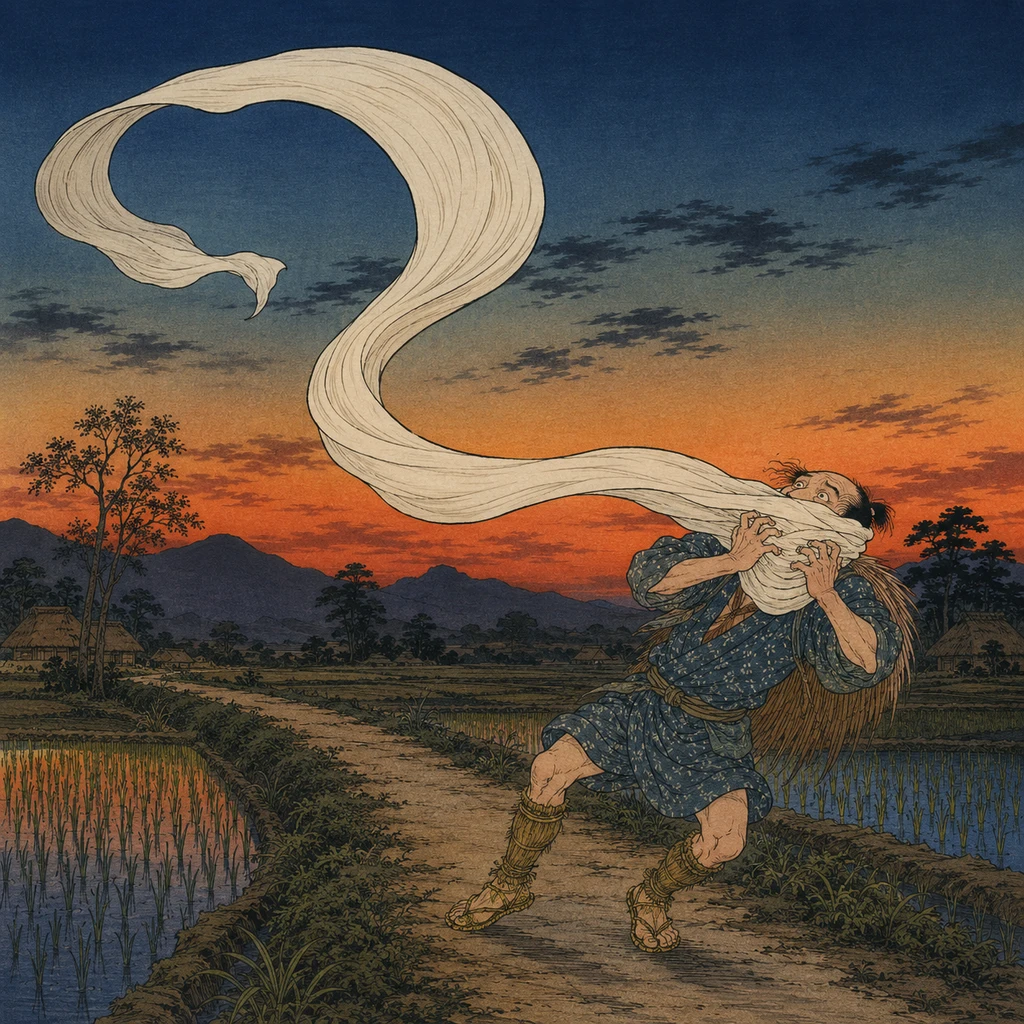
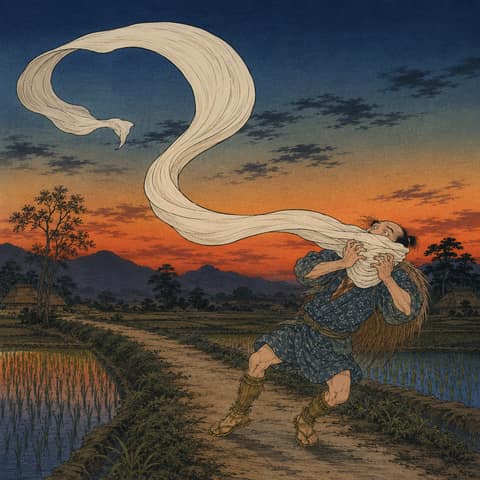
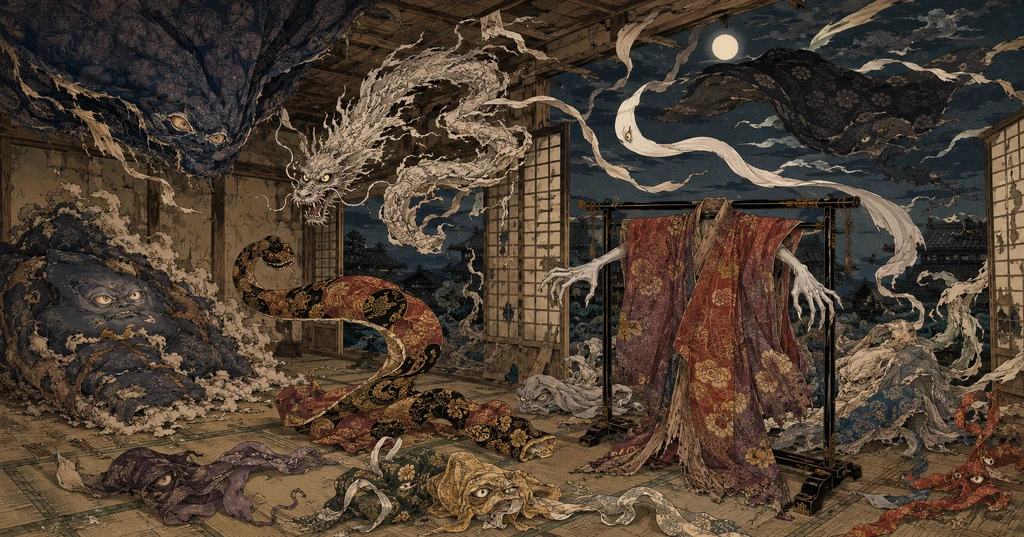
Ittan-Momen is a yokai from Kagoshima Prefecture, described as a strip of cotton cloth about ten meters long (one tan, a traditional unit of fabric length) and roughly nine centimeters wide. At dusk or nighttime, it is said to flutter through the air and wrap itself around a person’s face or neck, suffocating them. Its form is nothing more than a piece of cloth, voiceless and silent in its movements. The name appears in Ōsumi Kimotsuki-gun Dialect Collection (by Denji Nomura, with contributions from Kunio Yanagita), where it was told as a cautionary tale for children. Interpretations vary: some see it as a discarded cloth transformed into a spirit (tsukumogami), while others view it as a manifestation of the wind.

Issun-boshi

Issun-boshi

Legendary

EE-soon BOH-shee

針刀と策略の一寸法師

Human-Yokai / Half-Human Half-YokaiOsakaKyoto

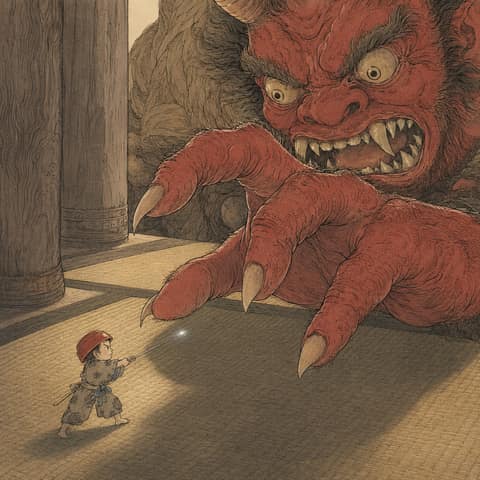
Issun-boshi is widely recognized in modern times as a pure and righteous fairytale hero for children—a "brave little boy who rides in a bowl-boat and defeats oni with a needle-sword." However, his original depiction in the Muromachi period literature *Otogizoushi* reveals a dark hero (or a half-human, half-yokai trickster) overflowing with ambition and cunning, fully willing to employ despicable schemes to achieve social advancement. In folkloric classification, he belongs to the "Chiisako" (Little Child) archetype connected to Japanese mythology. Born from an abnormal prayer by an old couple and retaining a physical stature of merely one sun (about 3 centimeters) no matter how many years pass, this trait indicates he is not purely human, but a "liminal existence" belonging to the realm of the otherworld or divine spirits. The motif of arriving from the waterside (Naniwa Bay) in a bowl deeply inherits the mythological lineage of Sukunabikona-no-Kami, a tiny deity who crossed the sea from the eternal land (Tokoyo) riding in a Metaplexis pod boat. He compensates for his overwhelming physical handicap with abnormal intelligence, glibness, and a lack of ethical constraint. Upon ascending to the capital and infiltrating the mansion of a powerful chancellor, he uses not martial prowess but "scheming" to claim a beautiful princess as his own. Ultimately, by stealing the oni's treasure (the Miracle Mallet), he literally transforms into a "human man of great power." This is no mere adventure tale, but an extremely realistic, Machiavellian story of social upheaval, where a deformed existence at the very bottom of society climbs to the absolute pinnacle using intellect and deceit.

Karakasa-kozou

Karakasa-kozou

Uncommon

KAH-rah-KAH-sah koh-ZOH

夜道で跳ねる古傘・からかさ小僧

Dwellings & ObjectsAll over Japan ── A tsukumogami of an old umbrella, without a specific origin.

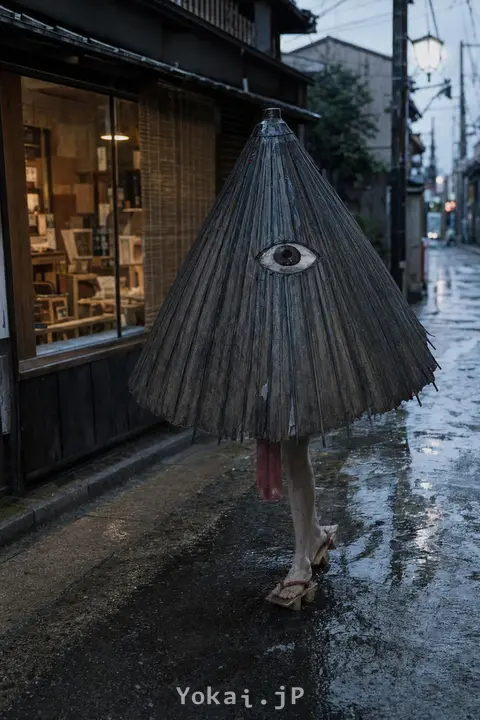
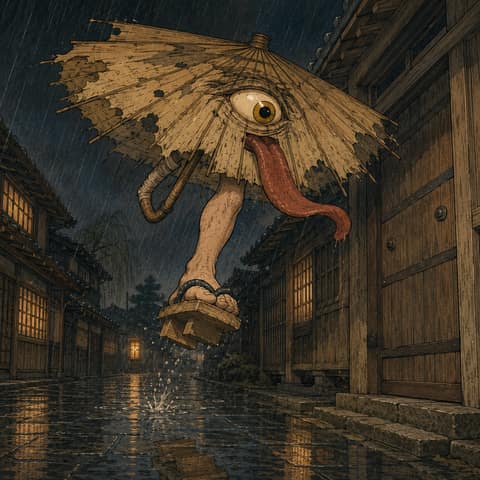
Karakasa-kozou is a pop icon representing Japanese yokai and is synonymous with tsukumogami (object yokai). Its most famous appearance is hopping around on one leg wearing a geta (wooden clog), with one large eye wide open and a long tongue hanging out. However, this iconic imagery did not naturally emerge from folklore; it was artificially shaped by the publishing culture and toys of the early modern Edo period. Umbrella yokai are depicted in the Muromachi period's *Hyakki Yagyo Emaki* (Night Parade of One Hundred Demons Scroll), but there they take the form of humanoid demons wearing closed umbrellas on their heads, differing from the one-legged figure we know today. It was during the late Edo period that the "one-eyed, one-legged" characteristics became fixed through kusazoushi (illustrated storybooks), toy prints, monster playing cards, and kabuki stage props, making it widely loved by the public as a charming and comical monster.

Amabie

Amabie

Legendary

ah-mah-BEE-eh

肥後沖の予言光霊・アマビエ

Half-Human BeingsKumamoto

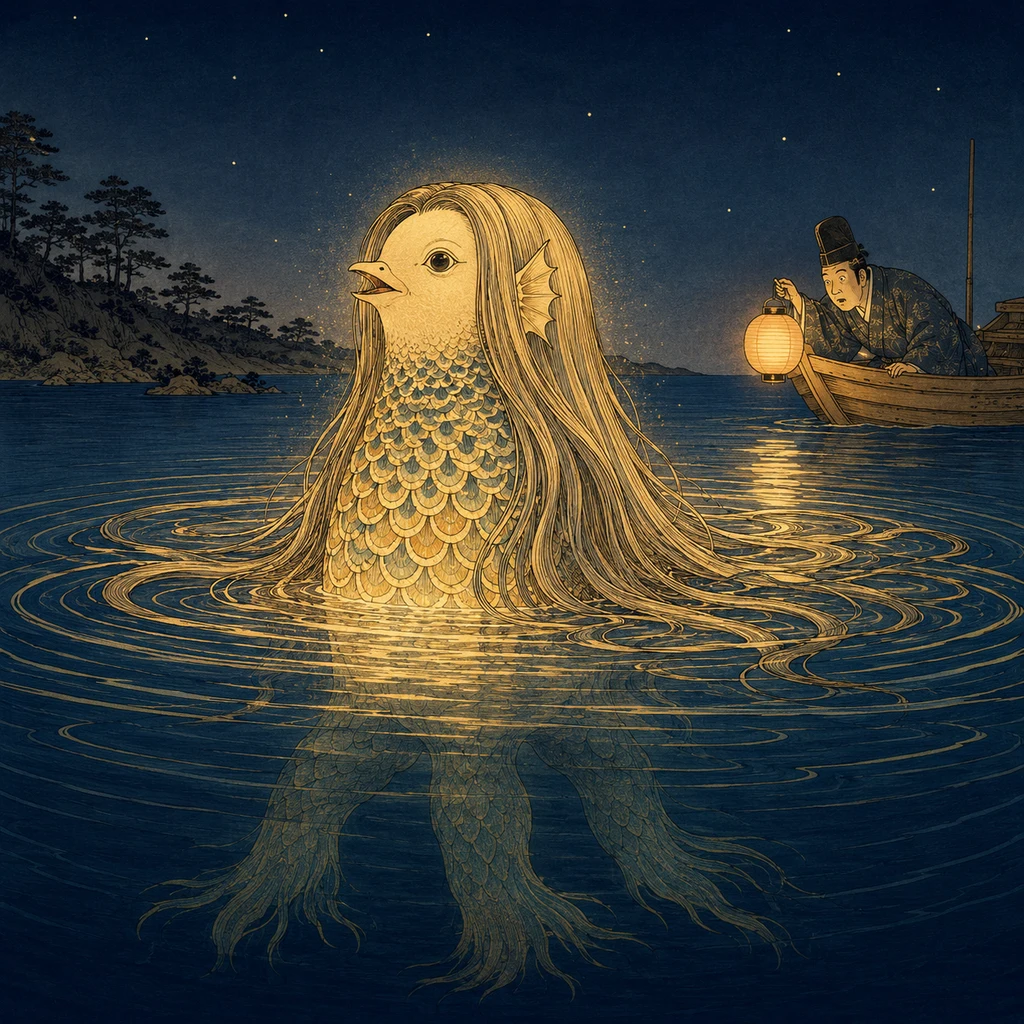
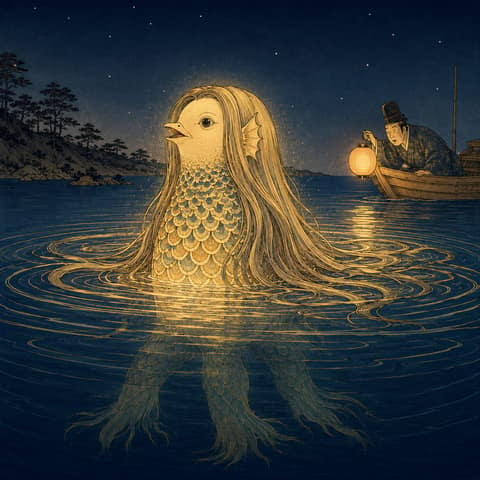
A prophetic yokai said to have appeared at sea in mid-April of Kōka 3 (1846) off Higo Province. It shone nightly from the water, revealed itself to a government official, and named itself Amabie. It foretold six years of abundant harvests alongside outbreaks of epidemic disease, instructing people to show its likeness to ward off the calamity before returning to the sea. Only a single kawaraban (woodblock news-sheet) record is known; details remain uncertain.

Itsumade

Itsumade

Epic

e-tsu-mah-deh

いつまでと鳴く死告・以津真天

Animal YokaiKyotoShiga

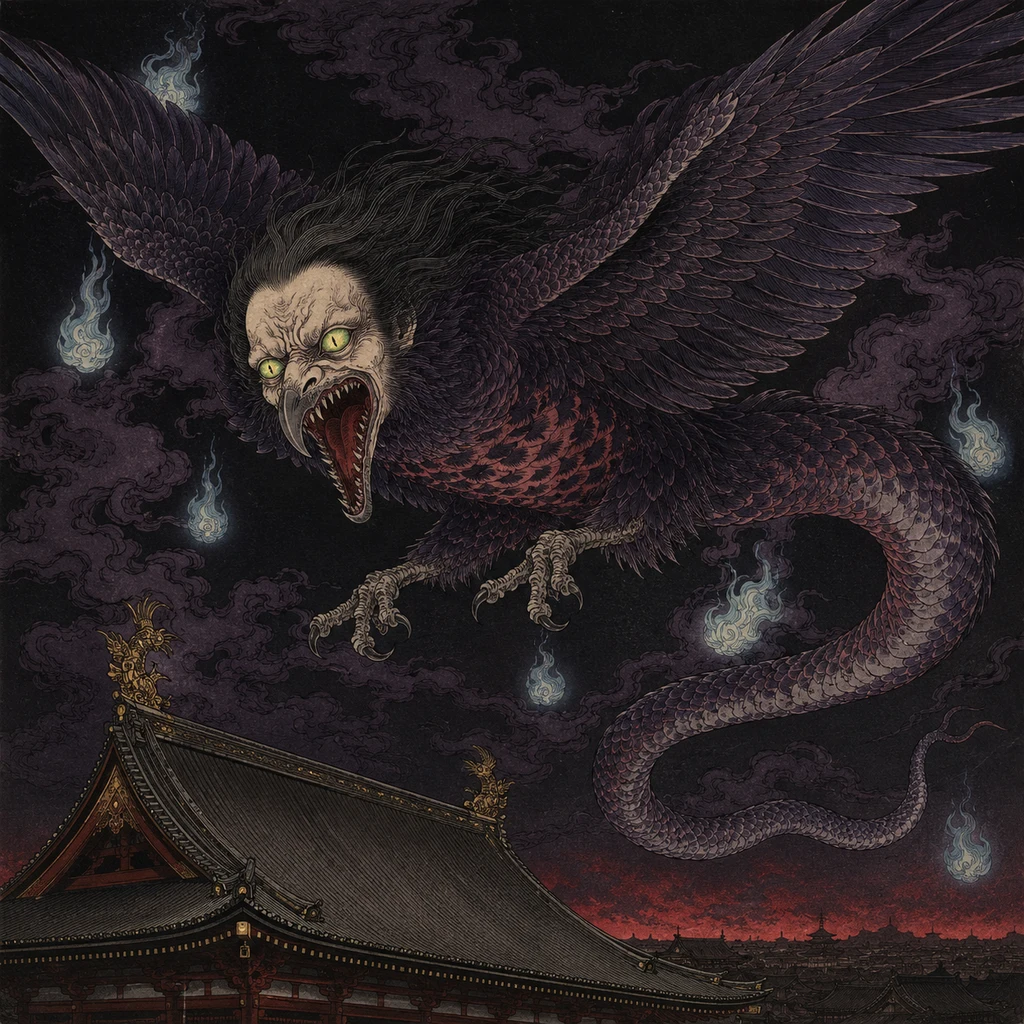
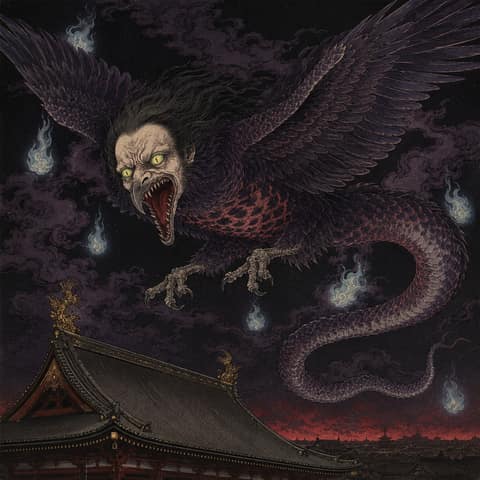
The Itsumade (以津真天) is a gigantic monster bird with a human-like face, a curved beak lined with saw-like teeth, a long serpentine body, and sharp sword-like spurs on its legs. Said to possess a wingspan of up to one *jō* six *shaku* (approximately 4.8 meters), it terrifies people by echoing its eerie cry of "Itsumade, itsumade" ("Until when? Until when?") from the night sky. The primary source of this yokai is an anecdote about an unnamed "monster bird" recorded in Volume 12, "The Matter of Hiroari Shooting the Monster Bird," of the pinnacle of war chronicles, the *Taiheiki* (established in the 14th century). According to the legend, in the autumn of the first year of the Kenmu era (1334), as an epidemic ravaged Heian-kyō (Kyoto) and claimed countless lives, this creature flew above the Shishinden (the Kyoto Imperial Palace) every night, letting out its ominous cry until it was brilliantly shot down by the master archer Oki no Jirōzaemon Hiroari. Crucially, in classical texts, this bird was consistently referred to only as a "monster bird" and lacked a specific proper name. It wasn't until the Edo period that the painter Toriyama Sekien included it in his *Konjaku Gazu Zoku Hyakki* (1779), applying the kanji "以津真天" (Itsumade) to its cry, that it crystallized as a distinct named yokai for the first time. In modern yokai encyclopedias, it is often explained that it "appears beside corpses left abandoned due to war or famine, crying out in protest, 'Until when (will you leave them exposed to the elements)?'" However, this direct connection to "corpses" is absent from medieval and early modern literature; it is a later interpretation added in modern times that logically reinterprets the *Taiheiki*'s backdrop of a rampant epidemic.

Roaring Cauldron (Narigama)

Roaring Cauldron (Narigama)

Uncommon

nah-ree-GAH-mah

夜鳴る古釜の付喪・鳴釜

Household SpiritsOkayama

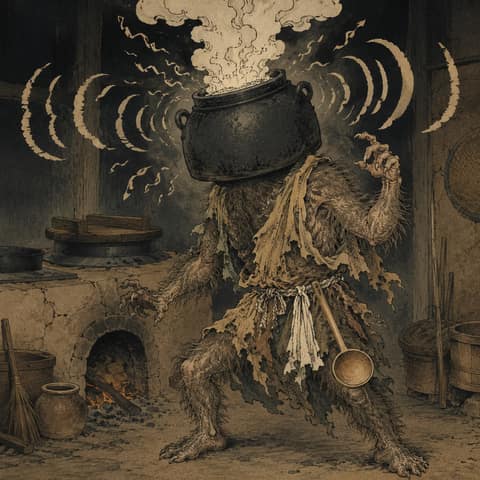
A tsukumogami said to arise when an iron cooking cauldron, used for many years, gains a spirit and takes on a humanlike form. The name ties to old beliefs that the rumbling or moaning a kettle makes during cooking could foretell good or bad fortune, with its tones read as omens. In paintings it appears with a cauldron for a head, emerging late at night to make ringing sounds and test people’s hearts.

Giant Centipede

Giant Centipede

Epic

OH-oh-MOO-kah-deh

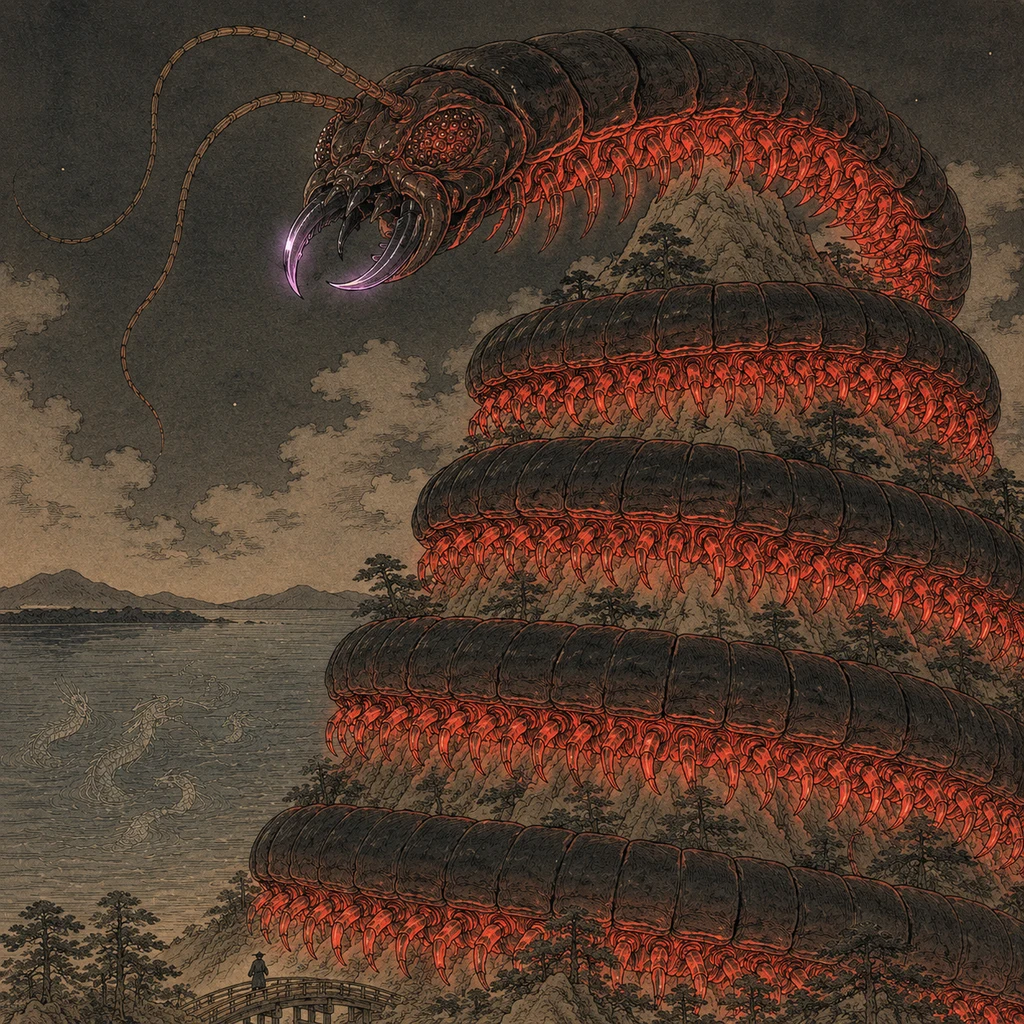
三上山七巻きの大百足

Demons & GiantsShigaTochigi

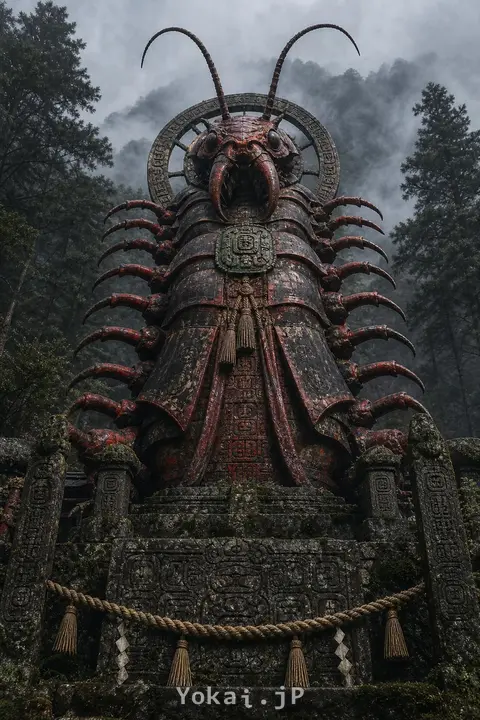
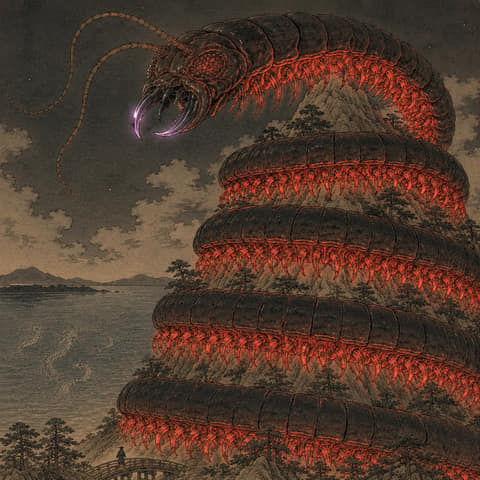
The Giant Centipede is a monstrous centipede yokai whose carapace is so hard it deflects blades and arrows. Its body is long enough to coil around mountains, its many legs glow a fiery red, and its venomous fangs were said to bite through armor. It is portrayed as an adversary of great serpents and dragons—water deities—with whom it battles in lakes, marshes, and the wilds. Centipedes symbolized fearless resolve and were seen as auspicious by warriors and merchants, though details of this creature vary widely by region.

Phantom Locomotive

Phantom Locomotive

Uncommon

nee-SEH-kee-shah

鉄路に現れ消える幻・偽汽車

General ClassificationsTokyoEhime

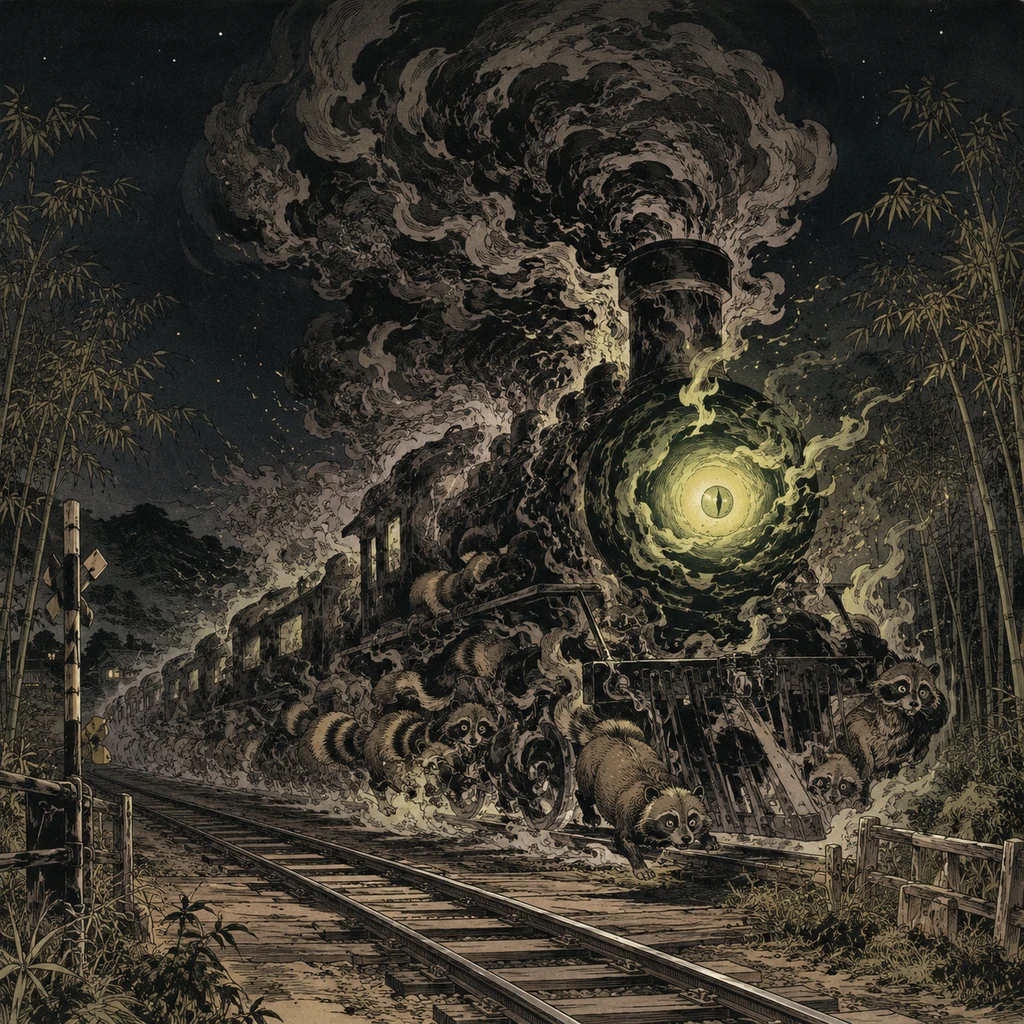
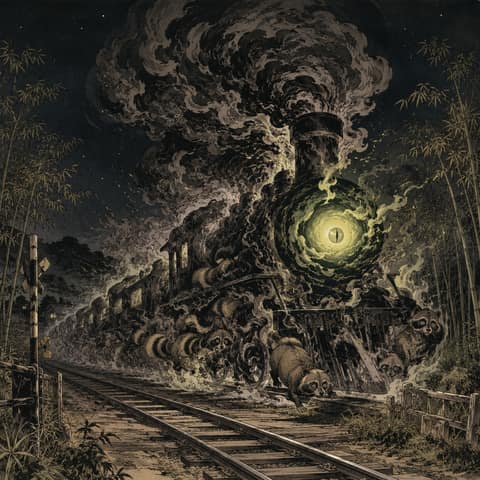
The Phantom Locomotive is a modern-era yokai tale from the age of steam, in which a train that does not exist appears on the tracks, rushes forward, and vanishes at the last moment. Many accounts explain it as a fox, tanuki, or especially a mujina (badger) transforming into a train to mislead people. After the disappearance, the body of a run-over animal is often found beside the line. The belief reflects a folk interpretation that the novel whistles and rattle of night trains in the hills were the work of shape-shifting beasts.

Oboroguruma (The Hazy Carriage)

Oboroguruma (The Hazy Carriage)

Rare

oh-BOH-roh-goo-ROO-mah

朧夜に軋む車争い・朧車

Household SpiritsKyoto

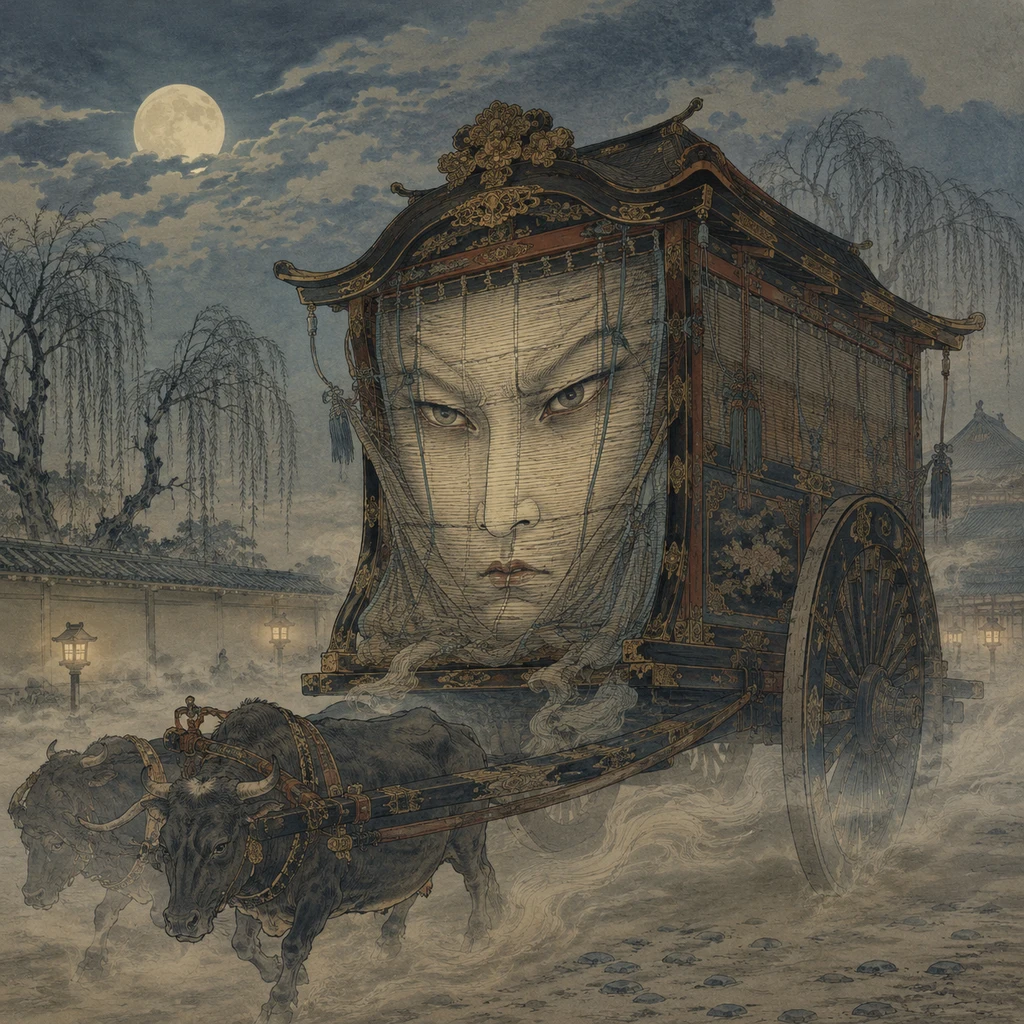
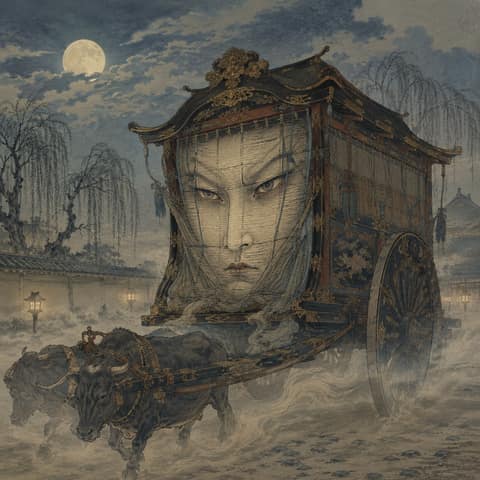
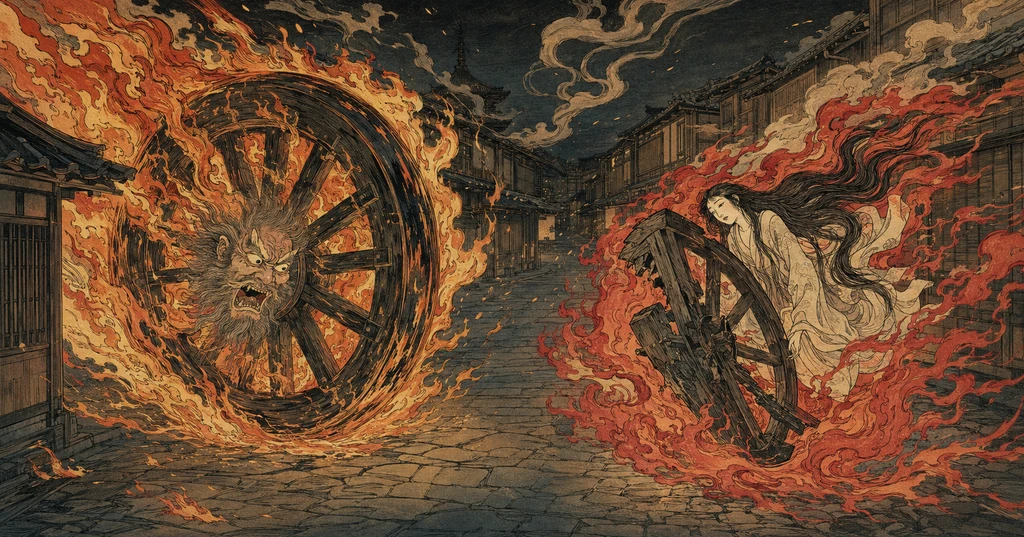
Oboroguruma is a haunted ox-drawn carriage depicted by the Edo-period artist Toriyama Sekien in Konjaku Hyakki Shūi. On hazy nights it arrives with creaking wheels, a gigantic face peering from where the carriage blinds would be. It is often read as the manifestation of grudges born from Heian-era “carriage disputes,” tied to court processions and the Kamo Festival. Scholars link it to the Night Parade of One Hundred Demons and classify it among haunted tools (tsukumogami).

Katawaguruma (One-Wheeled Carriage)

Katawaguruma (One-Wheeled Carriage)

Uncommon

kah-tah-wah-GOO-roo-mah

京東洞院の覗き戒め・片輪車

Household SpiritsKyotoShiga

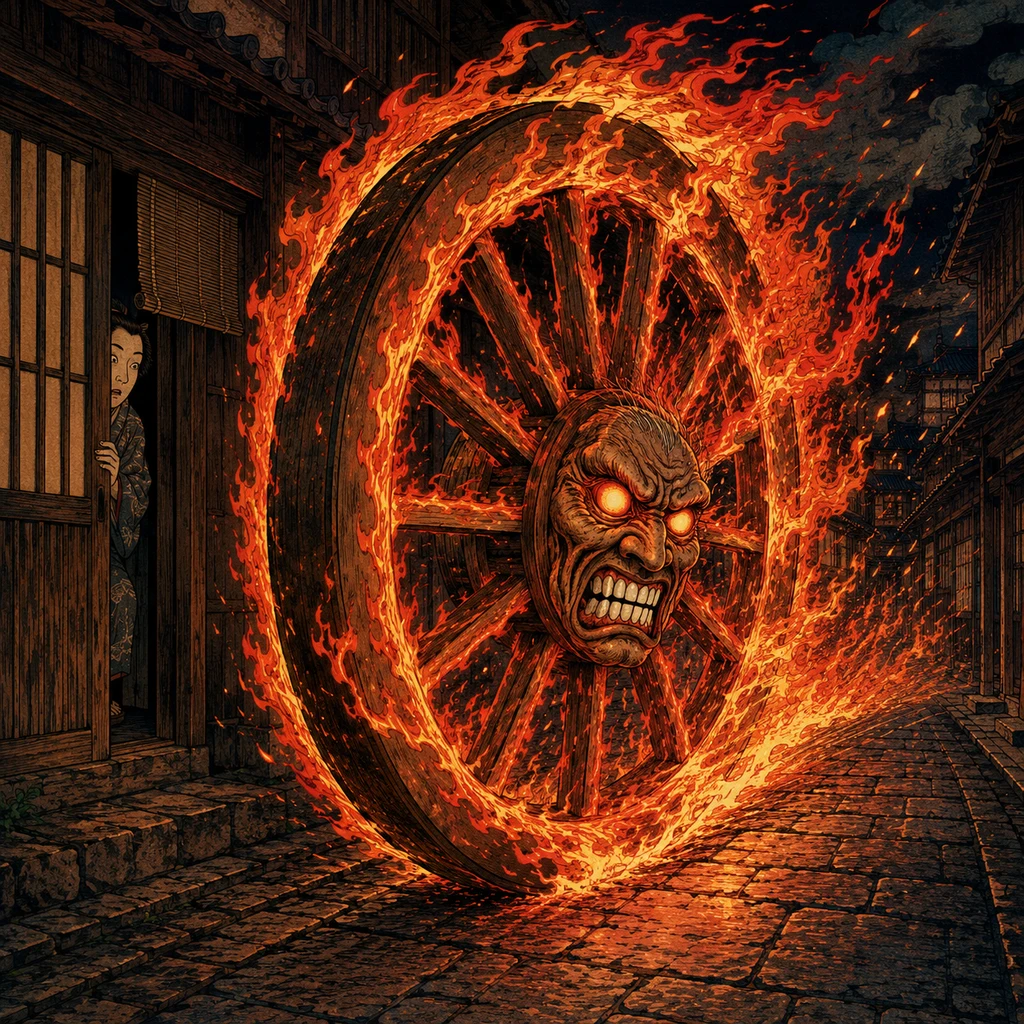
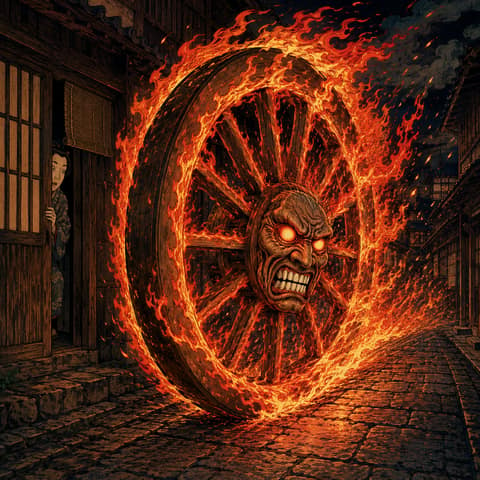
Katawaguruma is a night apparition of a single ox-cart wheel wreathed in flames, racing down dark roads with a human face glaring from its hub. Recorded in early Edo-period kaidan and essays, it was feared to bring misfortune to those who saw it—and even to those who merely gossiped about it. Accounts differ on whether the face is male or female. Sightings are tied to Kyoto and Omi, and the creature appears in contemporary paintings. Scholars often discuss its connection to the wheel-demon Wanyūdō.
Tengu

Tengu

Legendary

Tengu

高野山覚海坊・烏天狗

Mountain & Wilderness SpiritsKyotoShiga

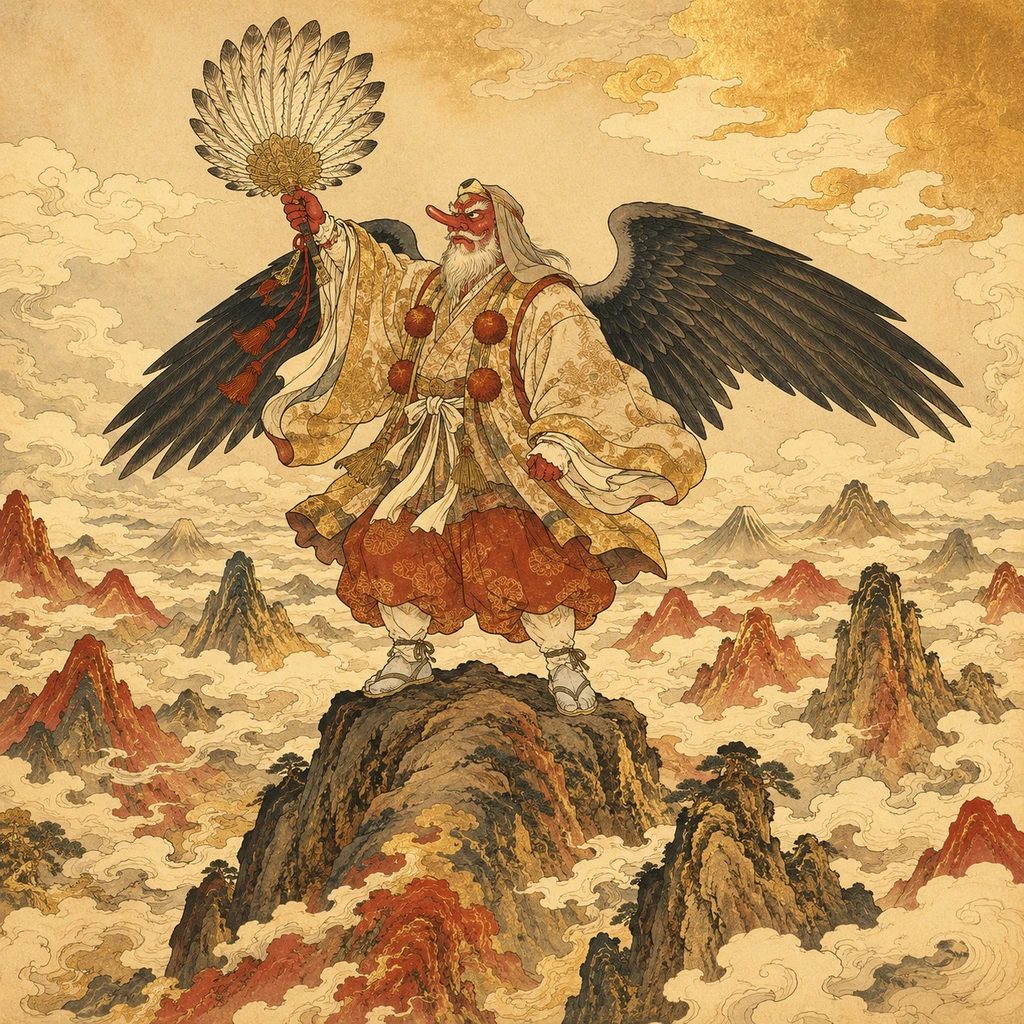
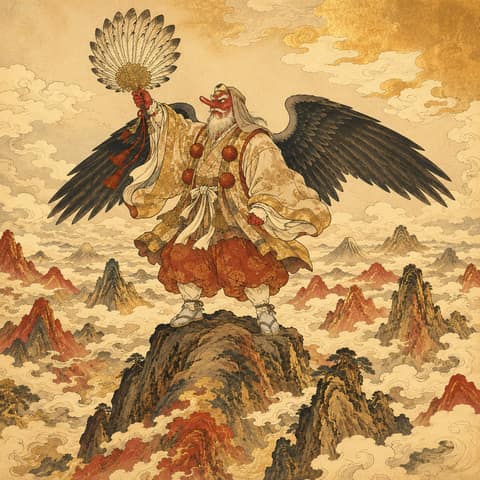
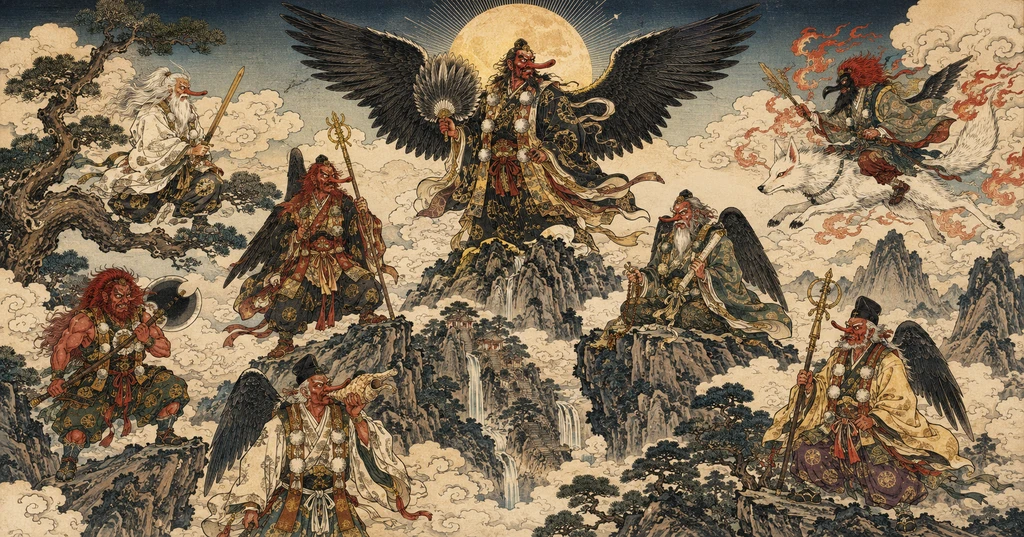
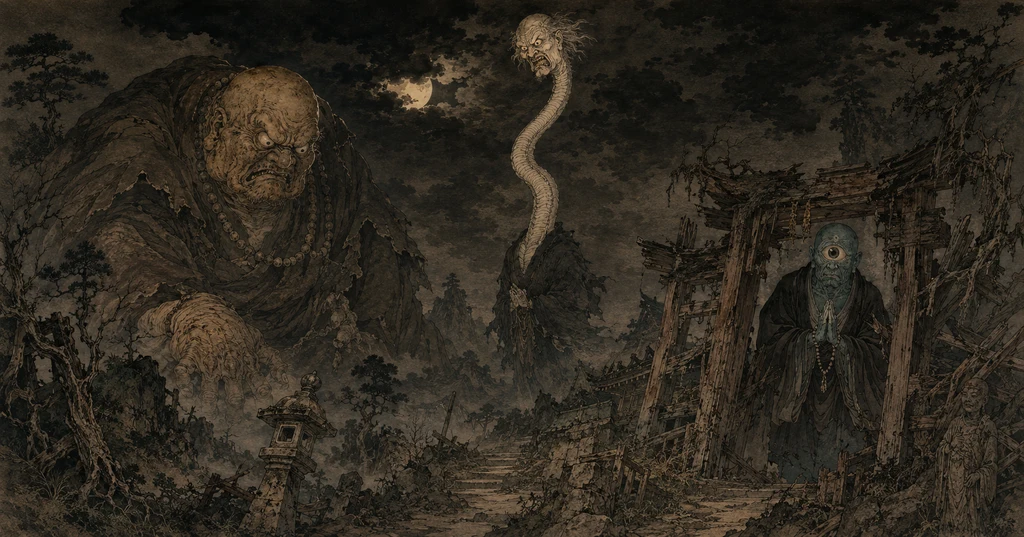
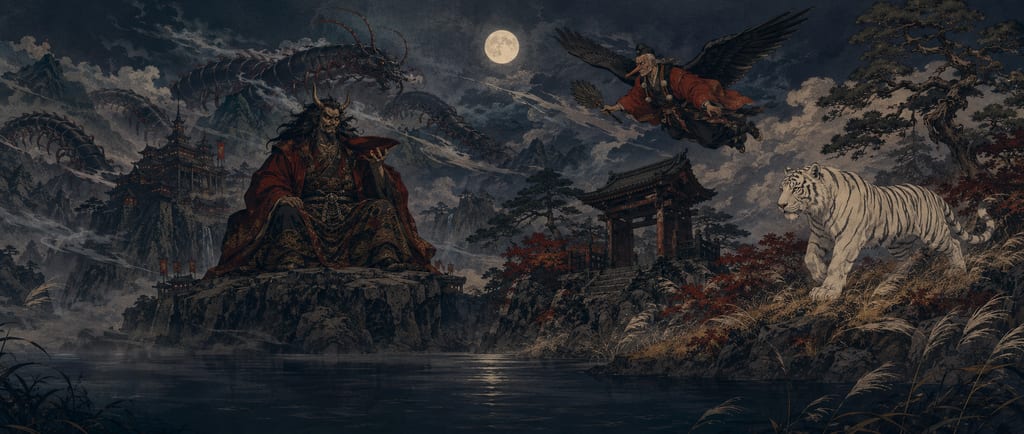
The tengu is a yokai and quasi-divine being said to dwell in the mountains of Japan, a lord of the heights inseparably bound to the yamabushi ascetics of Shugendō. Its forms fall broadly into two lineages. One is the long-nosed tengu, with a ruddy face and high nose, clad in the garb of a mountain ascetic, bearing a feather fan and one-toothed high clogs; the other is the crow tengu, with a crow's beak and wings, and beneath them follow lesser kin such as the leaf tengu and the wood-chip tengu. What was once conceived as a bird like a black kite hardened, over the medieval period, into the image of the long-nosed mountain ascetic. The tengu is at once a demon that obstructs the Buddhist Law and, once subdued, a guardian deity who protects it—this dual nature is the essence of the tengu. The notion that an arrogant high monk falls and becomes a tengu was bound to the Buddhist "way of the tengu," and was depicted as satire in late-Kamakura picture scrolls. Within mountain worship, on the other hand, the tengu was revered as guardian of the mountain and master of martial and magical arts, a being that tests or guides the practitioner. From Mount Kurama and Mount Atago in Kyoto onward, each of the sacred mountains of the realm was said to have its own great tengu, and the early-modern Tengu Sutra counts their number at forty-eight.

Umibōzu (Sea Monk)

Umibōzu (Sea Monk)

Legendary

oo-mee-BOH-zoo

九州四国の舳乞い・海坊主

Aquatic SpiritsNagasakiEhime

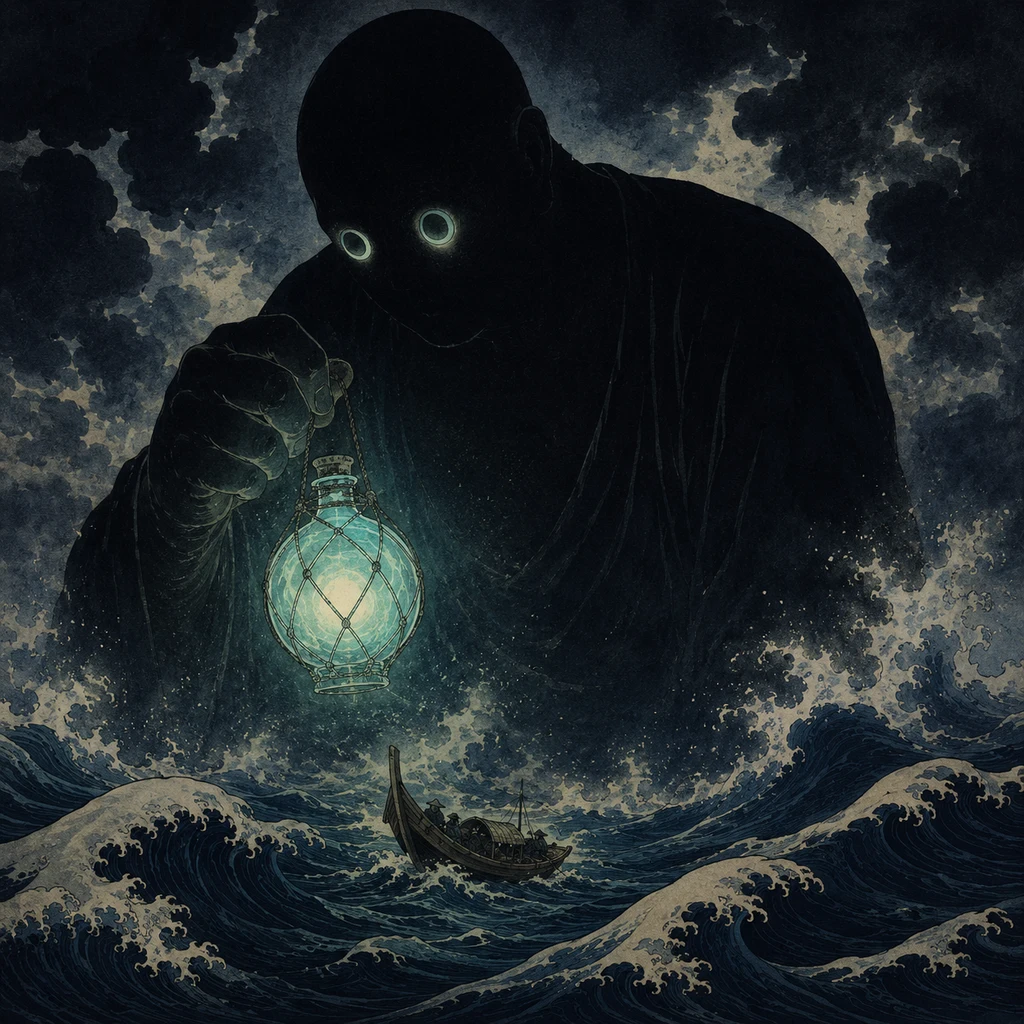
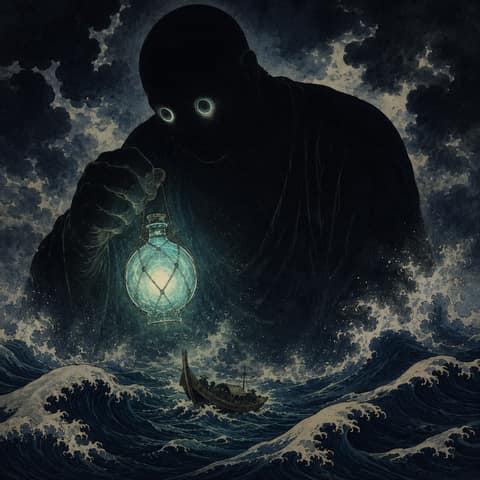
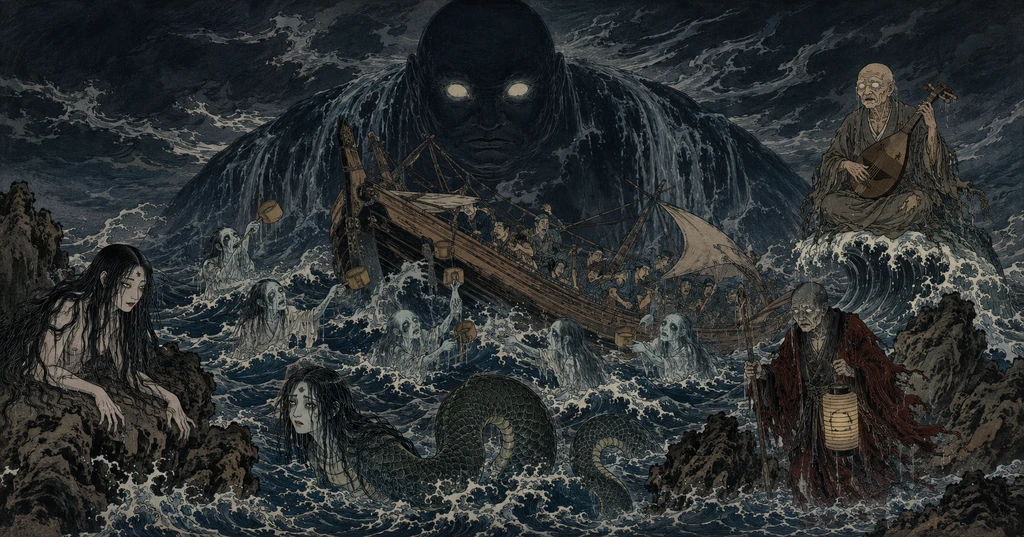
Umibōzu is a sea-dwelling yokai feared by coastal communities across Japan, especially among fishers. It appears as a vast black mass or a bald monk-like head rising from the waves, often seen as a harbinger of shipwrecks and maritime disaster. Its full body is rarely visible; most accounts describe only a head and shoulders jutting above the surface. Said to emerge at night or in storms, it overturns boats or drags sailors into the depths.

Ushioni

Ushioni

Legendary

OO-shee OH-nee

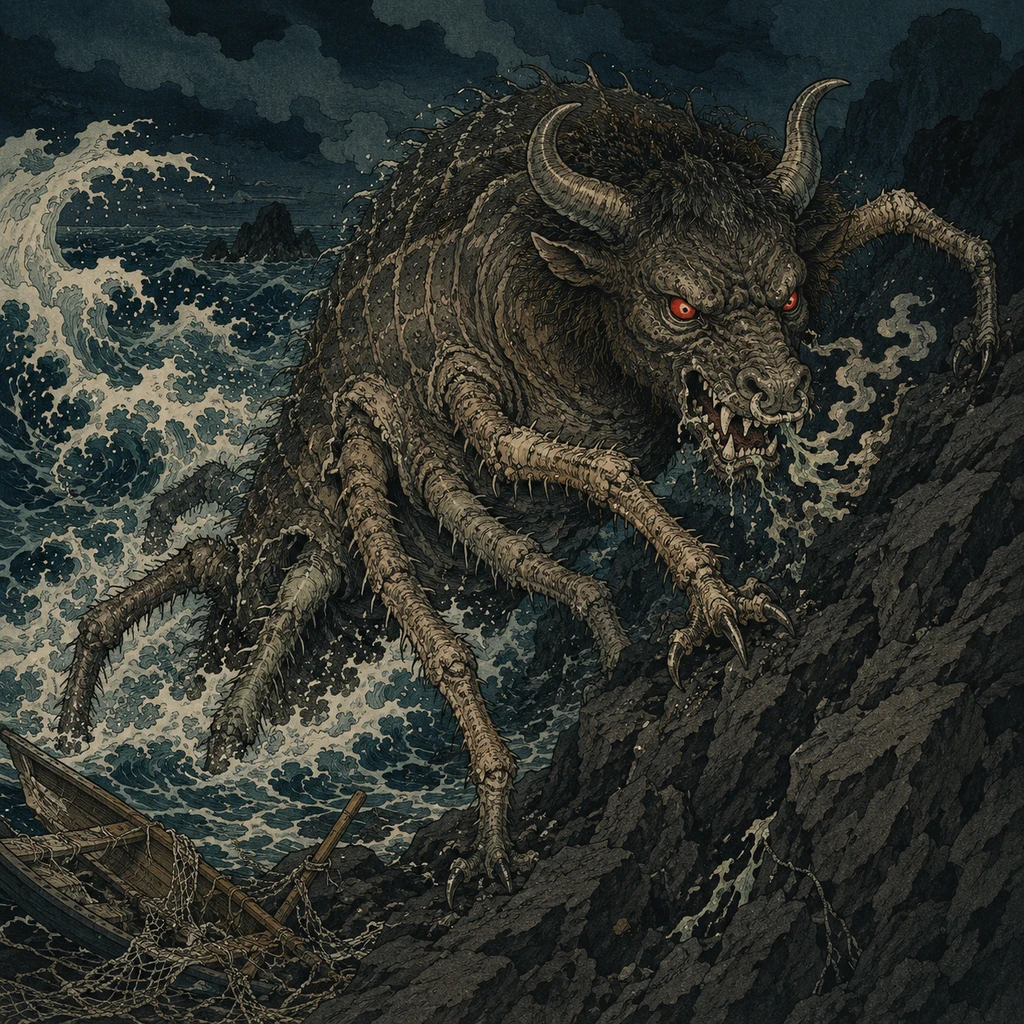
牛頭蜘蛛体の海鬼・牛鬼

Animal ShapeshifterEhimeKochi

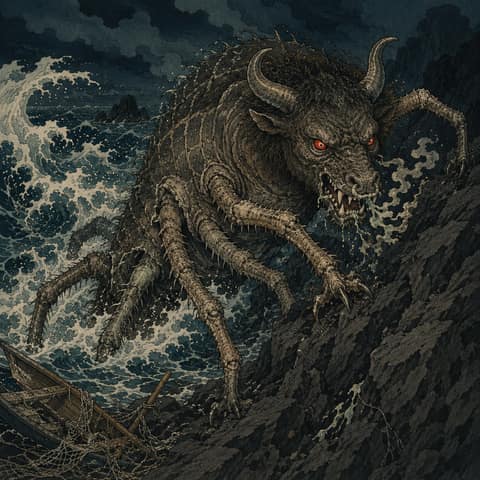
Ushioni (牛鬼) is a highly ferocious yokai with immense spiritual status, primarily said to appear on the coasts, in deep pools, and in the mountainous regions of western Japan. Its appearance is depicted in various grotesque forms, such as "a demon's body with a cow's head" or "a spider's body with a cow's head." Long ago, it was singled out as a "terrifying thing" in the Heian-period *The Pillow Book* (Makura no Sōshi), and has been deeply feared by people since ancient times. Its true nature lies in its extreme duality (the two-sidedness of good and evil): on one hand, it is a "cruel evil demon and god of plague" that indiscriminately devours humans and scatters poisonous miasma; on the other hand, it acts as a "powerful guardian deity" that leads portable shrines in festivals to exorcise evil spirits. It is an extremely important yokai in folklore studies, having evolved from a supernatural anomaly in literature to an object of regional folk belief and performing arts.

Ijū (Strange Beast)

Ijū (Strange Beast)

Uncommon

ee-JOO

越後魚沼の長髪獣・異獣

Animal ShapeshiftersNiigata

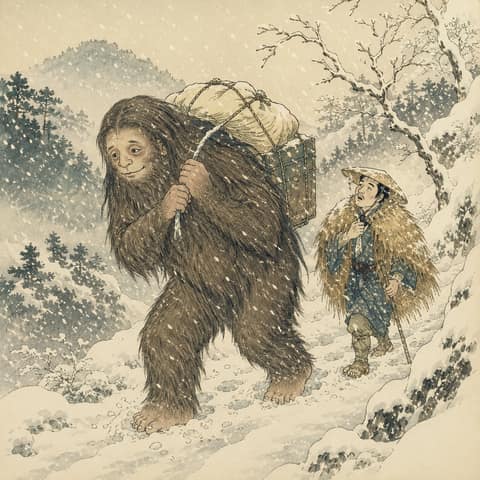
A mysterious beast recorded in the late Edo period as appearing in the mountains of Uonuma, Echigo. The Hokuetsu Seppu (Book 2, Scroll 4) says it was “like a monkey yet not a monkey,” with long hair hanging down its back and a height greater than a person. Rather than harm people, it begged for food and at times helped with human labor, such as carrying loads. Its true nature was unknown—seen as either a mountain spirit or a rare creature—and it lives on in the oral traditions of a weaving region.

Red-Head

Red-Head

Uncommon

AH-kah-gah-shee-rah

土佐勝賀瀬の輝赤髪・赤頭

Mountain & Wilderness SpiritsKochi

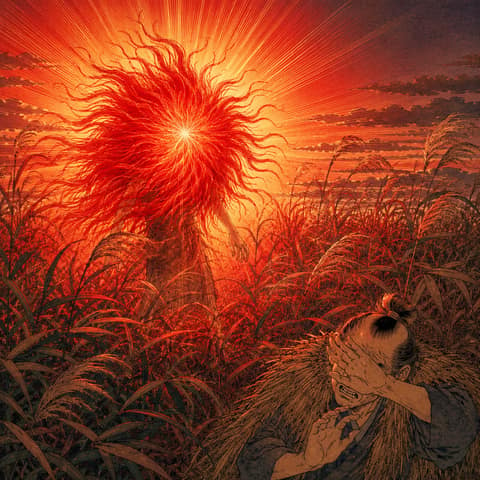
A mountain-and-field apparition from Kagase in today’s Ino, Kochi. Its hair blazes a sun-bright red, dazzling to the point that it is hard to look at. It walks on two legs, but its feet are hard to see as it slips through the grass. It is not known to attack people; those who meet it are often overwhelmed by its intense crimson radiance and lose sight of it. The name appears in late Edo to early Meiji yokai picture scrolls and local records.
Red Tongue

Red Tongue

Epic

AH-kah-shah

水門上の黒雲大舌・赤舌

General ClassificationsVarious regions of Japan (sources uncertain)

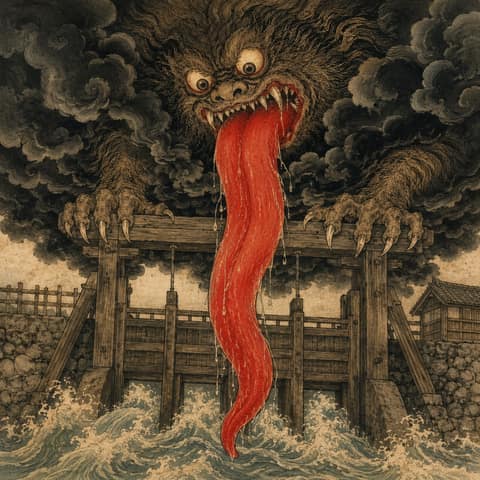
A yokai name found in Edo-period picture scrolls and board games. It is typically depicted as a hairy face emerging from dark clouds, with a huge tongue and clawed hands. Full-body depictions and clear traits are not recorded. In Toriyama Sekien’s Gazu Hyakki Yagyō it appears above a sluice gate, but without commentary. The name also occurs in contemporary picture-sugoroku like Jikkai Sugoroku and in Hyakki Yagyō emaki. A similar motif titled “Red Mouth” appears in various scrolls. Scholars have suggested links to Onmyodo deities Akashita or the calendrical Akashita day, but no proof exists.

Golden Crow

Golden Crow

Rare

KEEN-oo (Kin-ū)

太陽に棲む三足烏・金烏

Animal ShapeshiftersChinese origin; transmitted to Japan

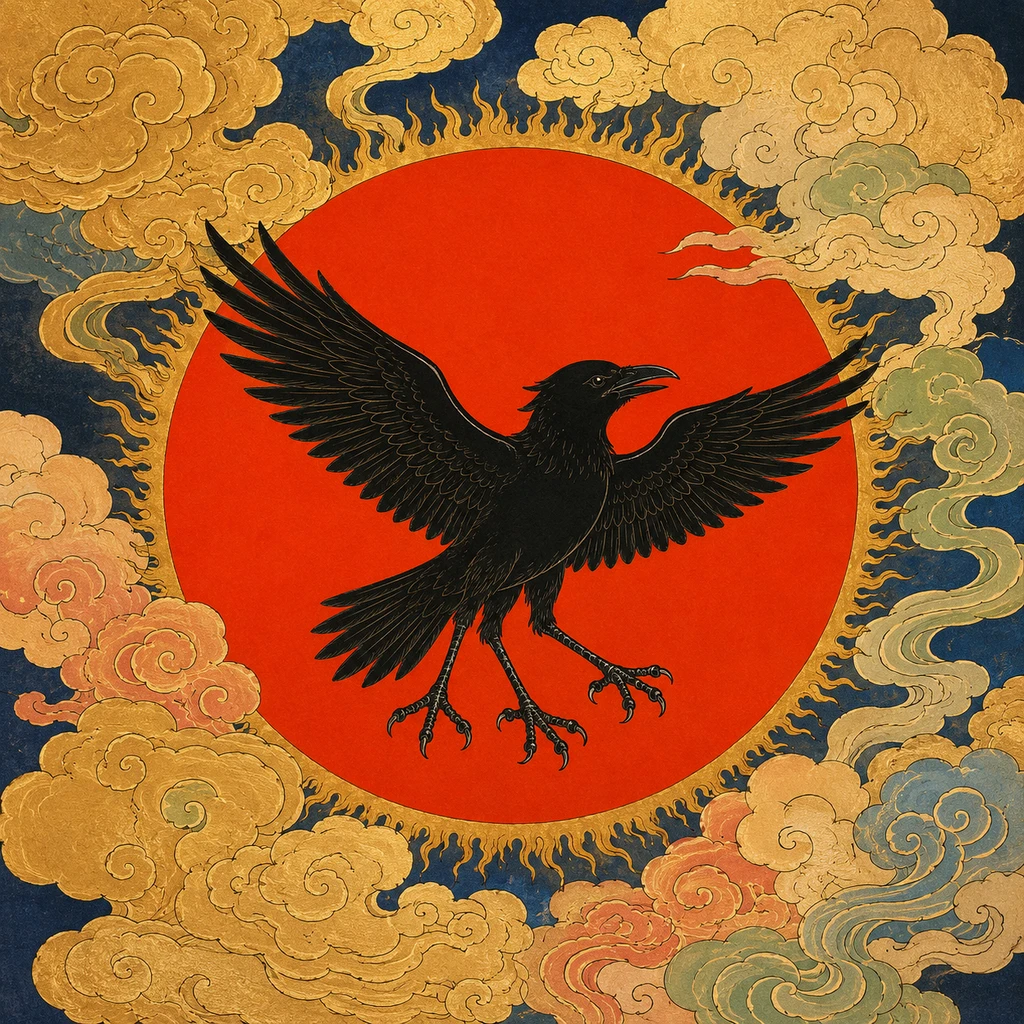
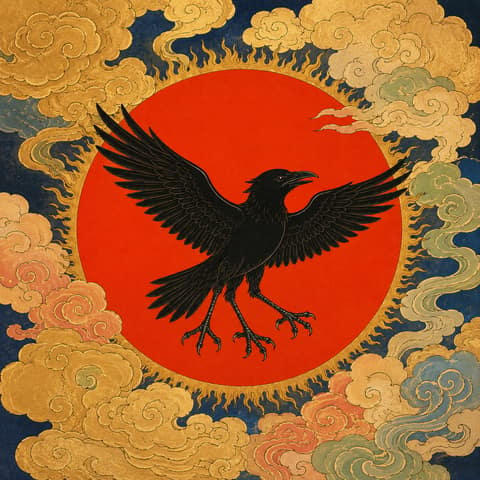
The Golden Crow is a mythical crow believed to dwell within the sun, often depicted with three legs. Chinese classics describe it as the “crow in the sun,” and it entered Japan through Onmyōdō and Buddhist art. The term can serve as a poetic name for the sun, paired conceptually with the Moon’s Jade Rabbit and toad. In images the crow is black, set against a gold-cinnabar solar disc.
Blue Heron Fire

Blue Heron Fire

Epic

ah-oh-SAH-gee-bee

夜光るゴイサギ・青鷺火

Animal ShapeshiftersNaraNiigata

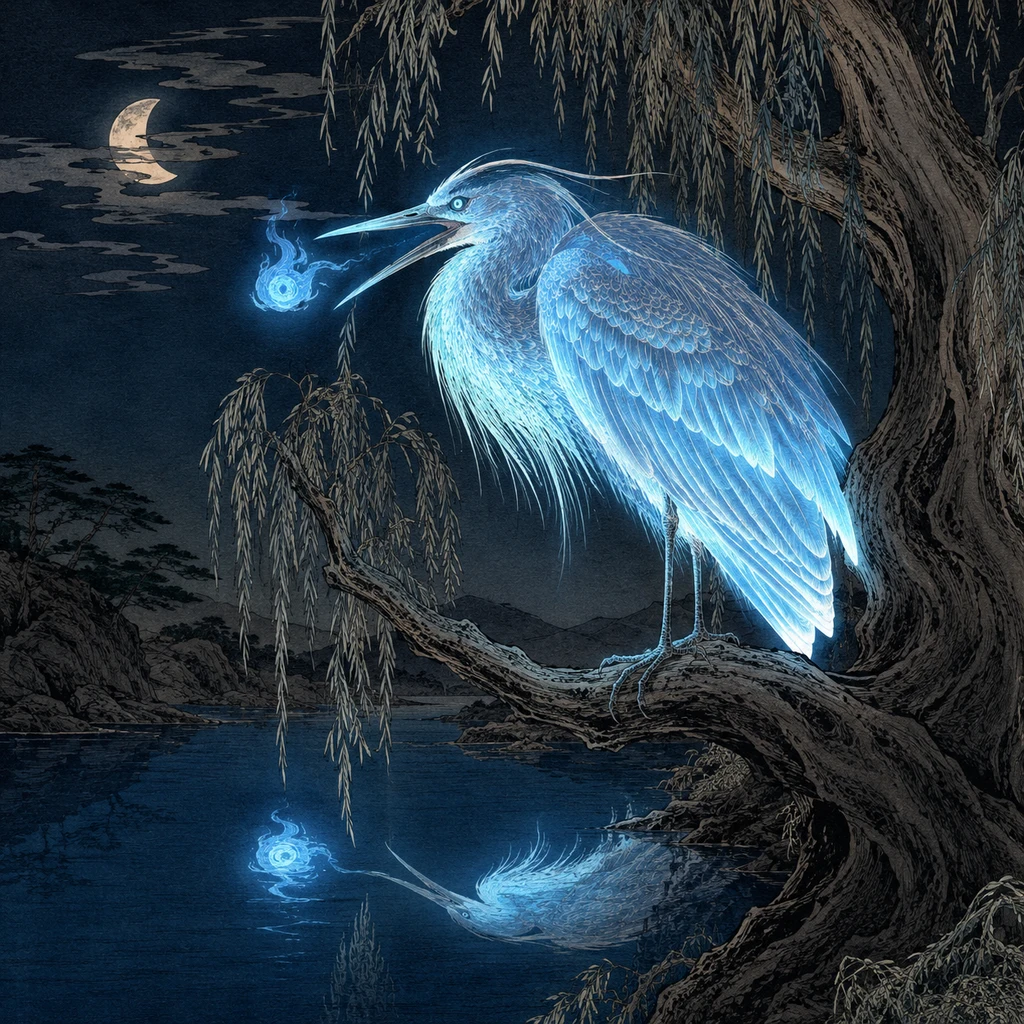
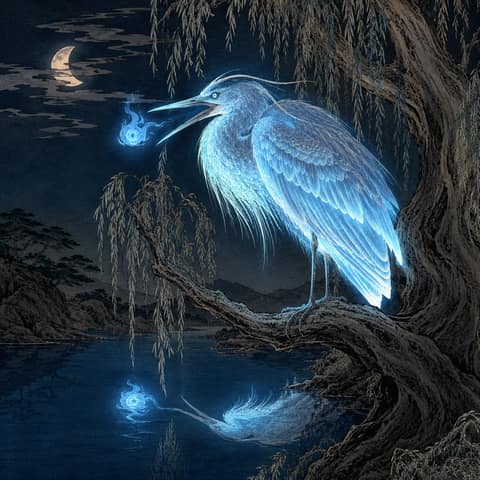
A nocturnal apparition in which a heron’s body appears to glow pale blue. Also called Goi no Hi and Goi no Hikari. Recorded in Edo-period picture books and essays, it was seen on moonlit and rainy nights. Often identified as the black-crowned night heron (goisagi); in flight it looked like blue flames, startling onlookers. Explanations include reflections from wet plumage or substances along the water’s edge, yet many locales remember it as a ghostly fire.

Gashadokuro

Gashadokuro

Legendary

gah-shah-doh-KOO-roh

怨霊集合の大髑髏・がしゃどくろ(完全供養版)

Spirit / GhostFictional Origin (Created in the mid-Showa period; a giant skeleton figure)

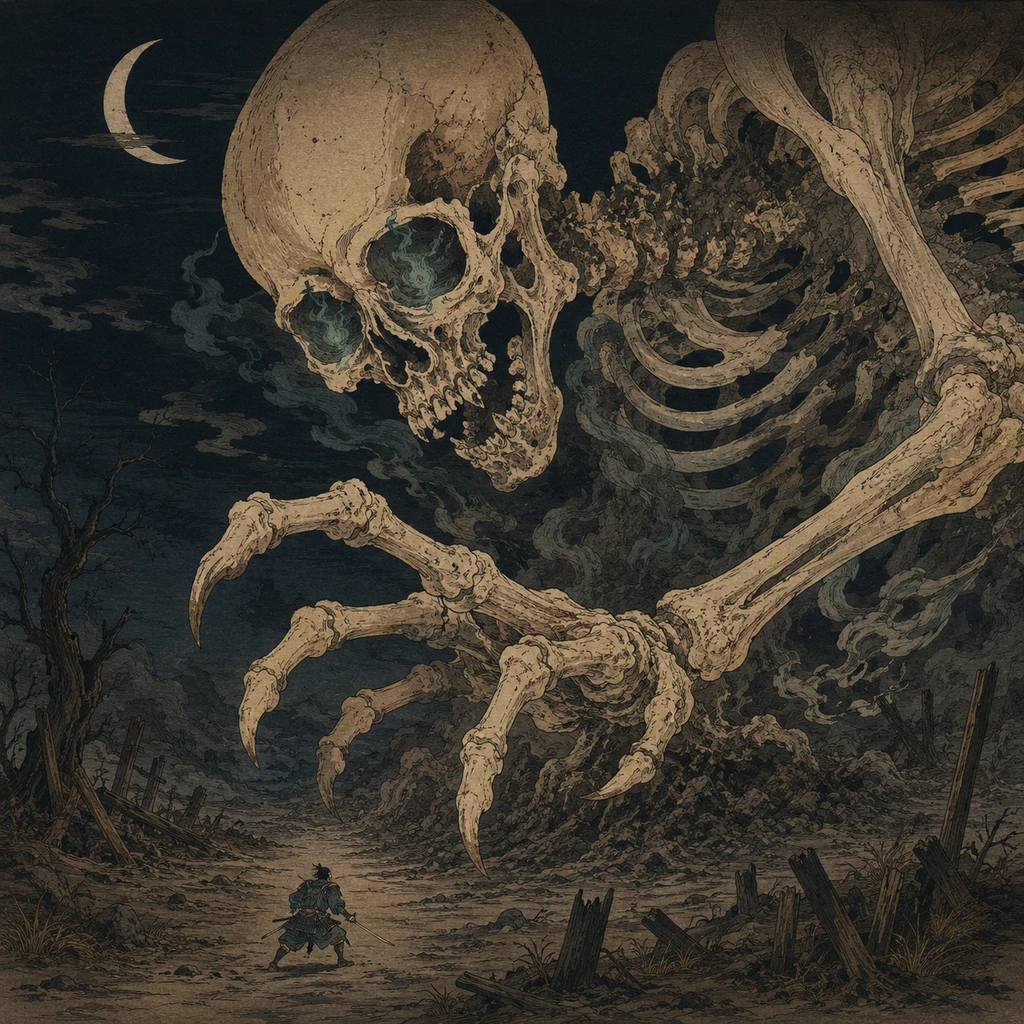
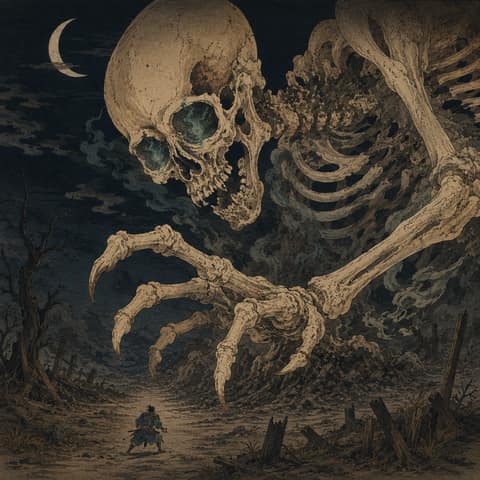
Gashadokuro is a yokai in the form of a giant skeleton, said to be formed from the assembled bones and grudges of countless dead who perished from war or starvation and were never properly buried, gathering together in the deep darkness of the night. It wanders through night fields and wastelands, and when it finds a living human, it catches them with its giant bony arms, crushes their head in its jaws, and drinks their blood. The name is said to come from the eerie "gasha gasha" rattling sound its giant bones make rubbing against each other as it walks. However, when examining this yokai from the perspectives of folklore and yokai studies, we arrive at a highly shocking fact. Gashadokuro "does not appear at all" in classic Japanese ghost stories or folklore prior to the Edo period. No matter which region's traditions in Japan one traces back, no record of this yokai can be found. In truth, the Gashadokuro is a "modern fictional yokai (invented tradition)" created entirely from scratch by writers of children's horror books during the "yokai boom" of the mid-Showa period (late 1960s). The history of its creation suggests that its first appearance was in 1966, when occult writer Morihiro Saito coined the name "Gashadokuro" and established its basic concept, drawing inspiration from Western ghost tales (such as headless phantom knights), and published it in a magazine for boys and girls. Then, to give this entirely new concept overwhelming visual persuasiveness, what was "borrowed" later was the illustration of a giant skeleton from the masterpiece ukiyo-e print "Takiyasha the Witch and the Skeleton Spectre" (Soma no Furudairi) (circa 1845) by the genius ukiyo-e artist of the late Edo period, Utagawa Kuniyoshi. Kuniyoshi's ukiyo-e was originally based on the yomihon "Zenthi Yasutaka Chugiden" by Santo Kyoden, depicting the scene where Princess Takiyasha, daughter of Taira no Masakado, uses sorcery to unleash a skeleton upon Oya Taro Mitsukuni. In the original book's description, "hundreds of life-sized skeletons appear," but Kuniyoshi employed his uniquely dynamic sense of composition to boldly arrange the countless skeletons into "a single giant skeleton." In other words, what Kuniyoshi drew was strictly "a giant bone monster summoned by Princess Takiyasha's sorcery," and absolutely not the yokai known as "Gashadokuro" born from gathered grudges. However, in the 1970s, in Arifumi Sato's "Illustrated Encyclopedia of Japanese Yokai" (1972) and Shigeru Mizuki's yokai illustrations, the name and concept invented by Saito were perfectly combined with the visual of Kuniyoshi's terrifying giant skeleton. As a result, the historical illusion (fake lore) of an "ancient, terrifying yokai depicted even in ukiyo-e" was brilliantly completed, and the Gashadokuro instantly took deep root in the minds of children and adults across Japan as a "traditional Japanese yokai."

Nine-Tailed Fox

Nine-Tailed Fox

Legendary

Kyubi no Kitsune

白面金毛の九尾狐

Animal shapeshifterKyotoTochigi

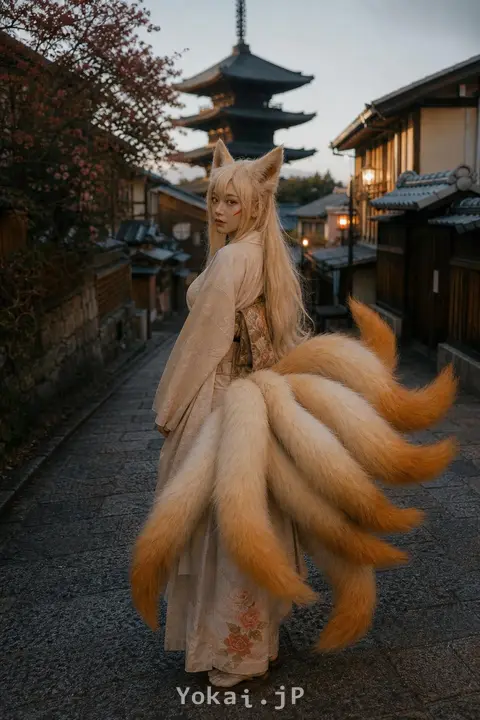
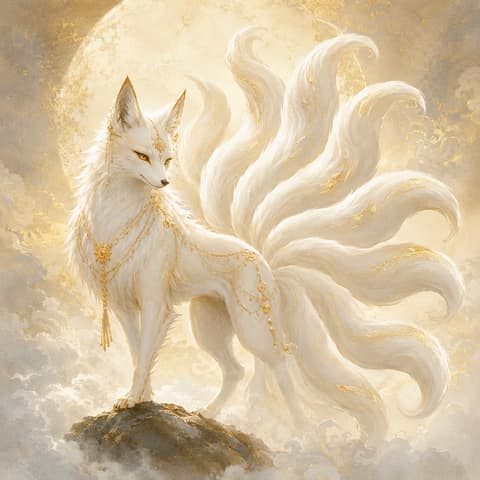
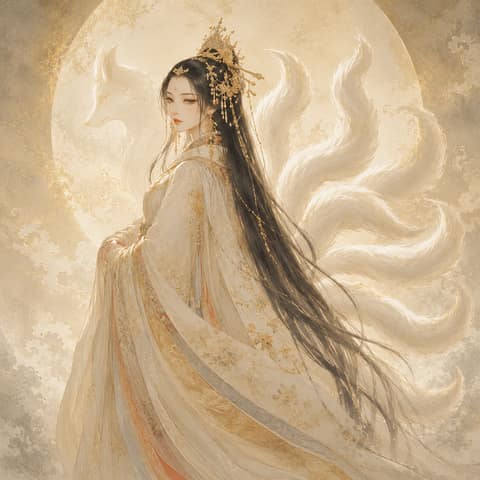
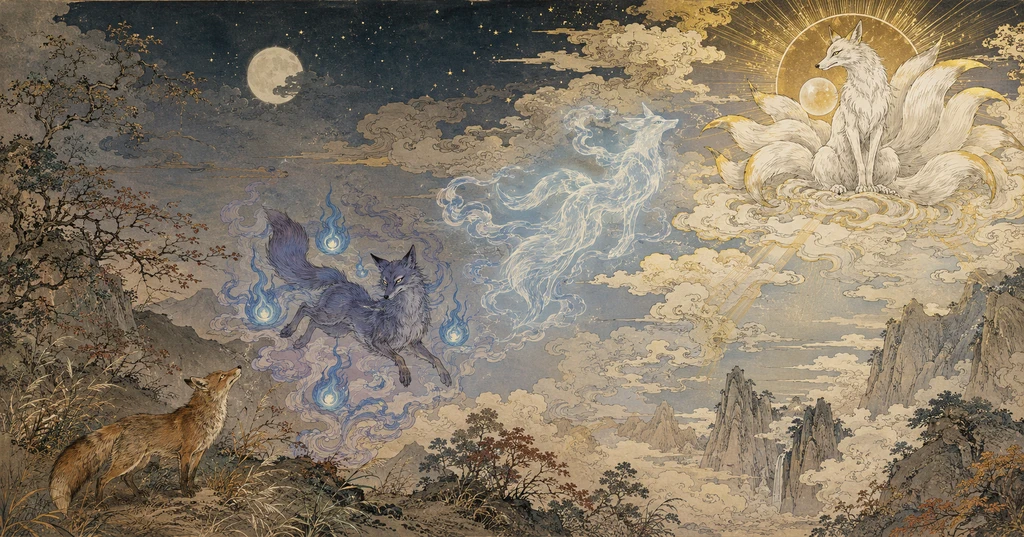
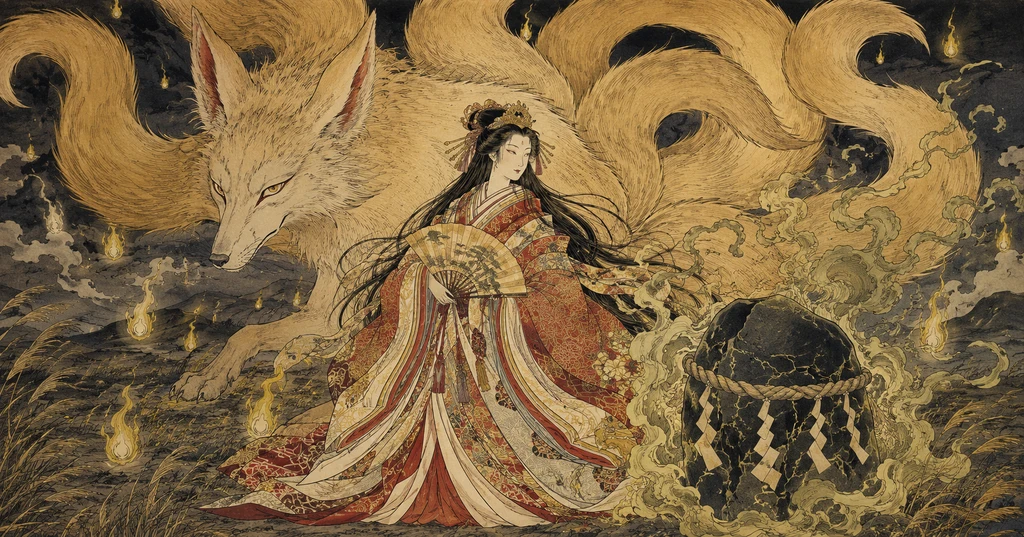
The Nine-Tailed Fox is a spirit-fox said to have lived so long and gathered so much power that its tail divided into nine. Yet the name does not simply mean a fox with many tails. In Japanese yokai imagery, the Nine-Tailed Fox is the largest and most complicated fox figure of all: it joins fox worship, Inari belief, fox possession, tales of beauties who unsettle royal power, and the narrative line that runs from Tamamo-no-Mae to the Sesshoseki killing stone. Its source lies in Chinese antiquity. In the Nanshan jing section of the Shan Hai Jing, Mount Qingqiu is home to a beast shaped like a fox, with nine tails, a cry like an infant, and a taste for human flesh. This fox is monstrous; yet in ancient China the nine-tailed fox could also be a propitious beast, an omen of peace. Later Chinese and Japanese texts layered the auspicious fox and the bewitching fox onto one another, turning the nine-tailed fox into both a sacred beast and a nation-ruining spirit. In Japan, fox lore spread in two directions. On one side stood the white fox, messenger of the Inari deity, guardian of fields, business, and household prosperity. According to Fushimi Inari Taisha, Inari descended on Mount Inari in 711, and the faith now extends to roughly thirty thousand shrines across Japan. On the other side stood the wild foxes and possessing spirits that deceive people, cling to households, or take hold of a region: yako, kuda-gitsune, osaki, izuna, and others. The Nine-Tailed Fox stands between these poles. It has the noble aura of a near-divine white fox, but also the danger of entering human society from within and shaking power itself. In Japan, the figure was fixed above all by the stories of Tamamo-no-Mae and the Sesshoseki. Tamamo-no-Mae is told as a peerless beauty loved by the retired Emperor Toba; exposed as a fox, she flees to Nasu, is slain, and becomes a poisonous stone. The three names are related, but they are not interchangeable. The Nine-Tailed Fox is the true form; Tamamo-no-Mae is the courtly incarnation; the Sesshoseki is what remains after death. Once those stages are joined, the fox is no longer just an animal that tricks humans. It becomes a great spirit-fox carrying beauty, intellect, politics, death, and pacification.

Tamamo-no-Mae

Tamamo-no-Mae

Legendary

Tamamo-no-Mae

鳥羽院寵愛の九尾狐・玉藻前

Animal ShapeshiftersKyotoTochigi

Tamamo-no-Mae is a beauty of unrivaled grace who, in the late Heian period, is said to have served the retired Emperor Toba. Her true form is held to be a nine-tailed fox, yet as a human, Tamamo-no-Mae has above all been remembered as a court lady of rare beauty and deep learning. Poetry and music were a given, but from Buddhist scripture to the old tales of India and China, she answered any question without hesitation, astonishing all at court. The name “Tamamo-no-Mae” carries a story of its own. One night, amid a banquet of poetry and music at the Seiryōden, a gust of wind snuffed out the lamps; in the darkness a dazzling light streamed from her body and lit the hall as bright as day. From this she came to be called “Tamamo-no-Mae,” meaning the lady of the jewel-like, glowing waterweed . Before that, it is said, she had been called Mikuzume. In time she drew all the emperor’s affection to herself, but when he fell ill from an unknown cause, her true nature began to be doubted.

Kodama Mouse

Kodama Mouse

Uncommon

koh-DAH-mah NEH-zoo-mee

秋田マタギの破裂兆・小玉鼠

Animal ShapeshiftersAkita

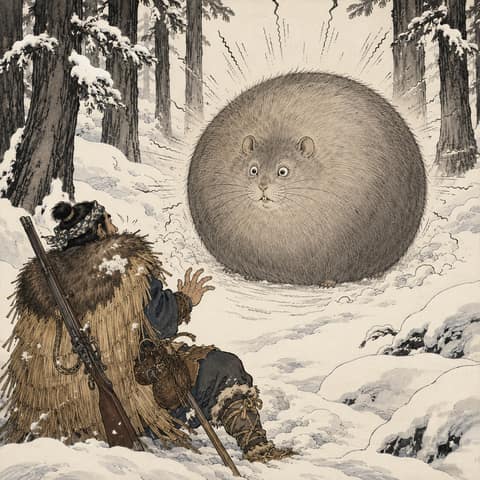
The Kodama Mouse is a mountain anomaly told among Matagi hunters of northern Akita. It looks like a tiny, round-bodied mouse—somewhere between a house mouse and a dormouse. When it meets a person, it stops, swells rapidly, and is said to burst with a gun-like boom, scattering flesh—though some accounts say it only makes a deafening blast without bursting. The encounter was read as a sign of the mountain god’s anger; hunters who saw it were to stop hunting and leave the mountain at once.

Keukegen

Keukegen

Epic

KAY-oo-kay-gen

希有希見の毛獣・毛羽毛現

General ClassificationsJapanese folklore

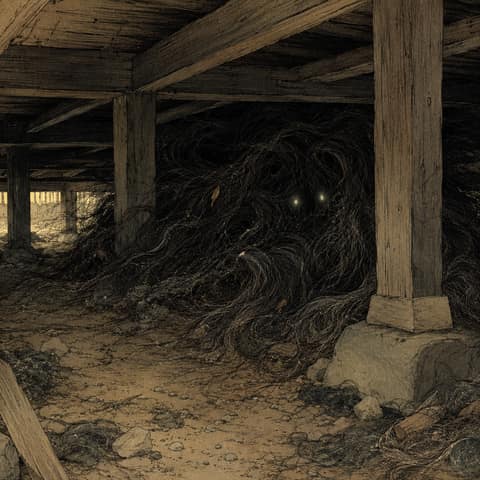
A shaggy, seldom-seen yokai sketched by Toriyama Sekien in Konjaku Hyakki Shūi. Sekien glosses its name as “Keu-kemi” (written 希有希見, “rarely seen”), underscoring its elusiveness. He likens its form to a hair-covered “hair-woman,” yet offers little on its nature or habits. Later writers proposed it lurks in damp corners of houses, but Edo-period sources do not confirm this.

Kodama (Japanese Tree Spirit)

Kodama (Japanese Tree Spirit)

Epic

kodama

青ヶ島のキダマサマ・木霊

Mountain and Forest SpiritsTokyoOkinawa

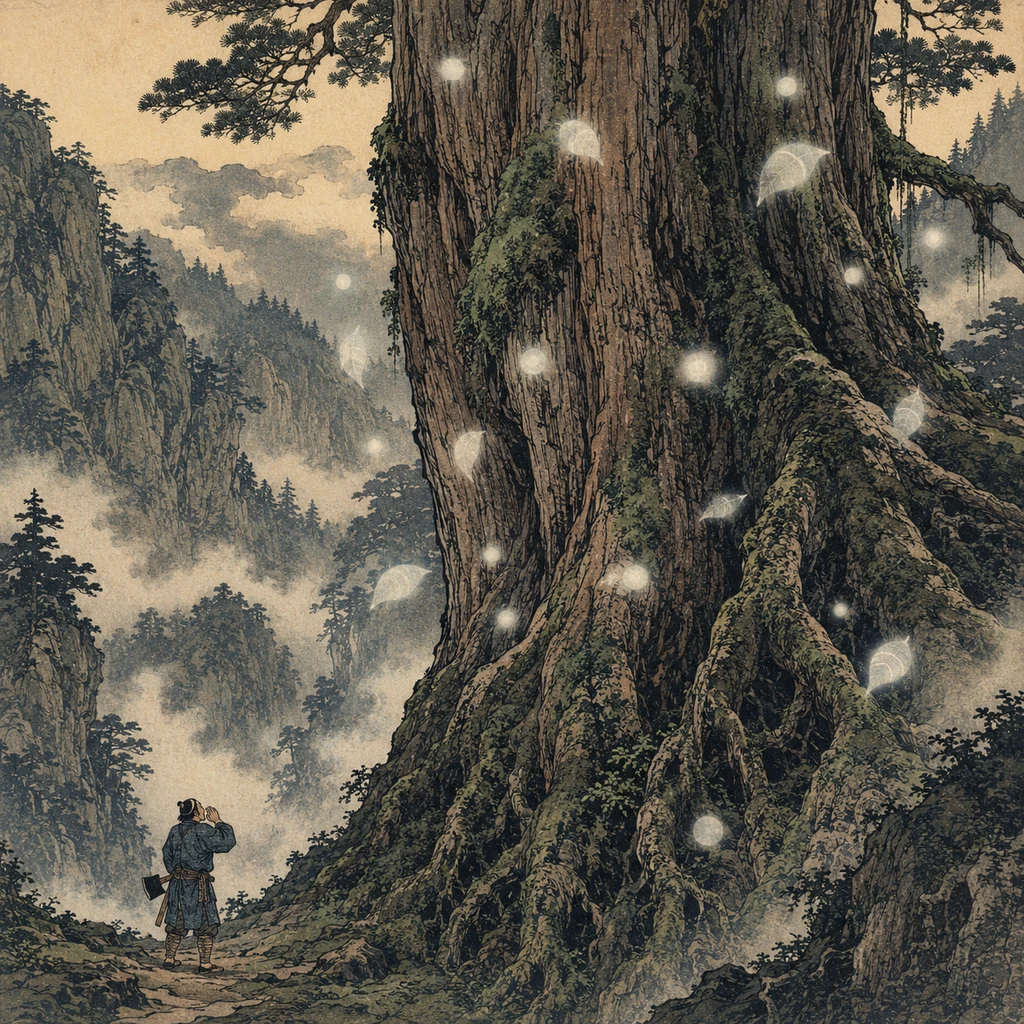
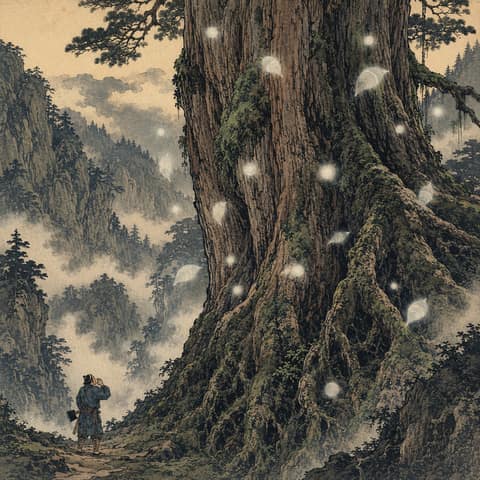
Kodama, often searched in English as “kodamas,” are Japanese tree spirits: presences believed to dwell in old trees, or sometimes in the trees themselves. In older belief, a tree that had lived for many generations could hold a sacred presence, and the delayed voice that returns from a mountain or valley, known as yamabiko, was also understood as a reply from the kodama. The idea reaches back toward Japanese tree divinity: some interpretations connect kodama with Kukunochi, the tree deity named in the Kojiki, while the Heian-period dictionary Wamyo Ruijusho records “Kotama” as a Japanese name for a tree god. Genji monogatari also places kodama among beings that are hard to separate cleanly from oni, kami, or fox spirits, showing that the word already carried an uncanny, yokai-like edge in the Heian imagination. A kodama usually does not look like a separate monster; it may be indistinguishable from an ordinary tree, yet the tree is feared as charged with spirit, and careless felling could bring misfortune. Toriyama Sekien’s Gazu Hyakki Yagyo illustrates this under the title Mokumi, explaining that a god appears in a tree more than a hundred years old and drawing aged human figures beside an ancient trunk. Written as 木霊, 木魂, 木魅, or 谺, kodama sits at the meeting point of tree soul and echo: the forest speaks back, and the tree is imagined as the one answering.

Kotofurunushi

Kotofurunushi

Rare

koh-toh-koh-roo-NOO-shee

忘れられし筑紫箏・琴古主

Tsukumogami / MukurogaiFukuoka Prefecture (Former Tsukushi Province / Spirit of a forgotten Koto)

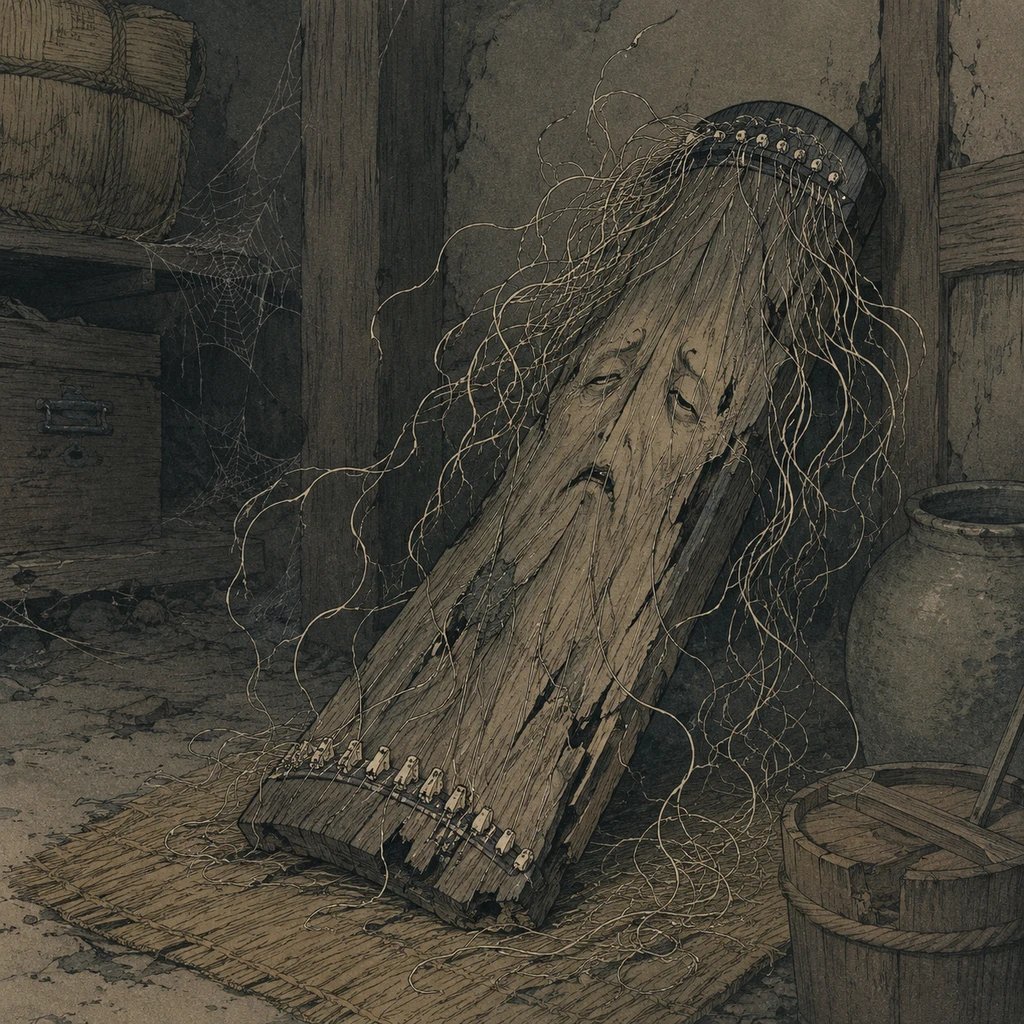
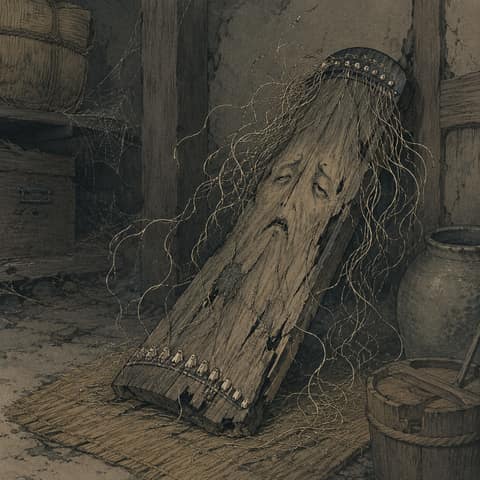
The Kotofurunushi is a tsukumogami (an artifact that has transformed into a yokai) born from an old koto, depicted in the Edo-period yokai bestiary *Hyakki Tsurezure Bukuro* by the artist Toriyama Sekien. Its visual design is highly striking: sorrowful eyes and a mouth emerge on the surface of an old, broken koto that has been abandoned for years, with countless snapped strings hanging down like the tangled hair of a deranged female demon. This is not merely an anthropomorphized object, but a visualization of the intense grudge of an instrument—a tool whose sole purpose is to produce sound—being forced into silence and left to rot. The deepest charm of this yokai lies in the cruel paradigm shift of Japanese music history hidden within Sekien's commentary accompanying the illustration. Sekien wrote: "Since the blind man Yatsuhashi reformed the melodies, the Tsukushi Koto exists in name only, and those who know its sound are exceedingly rare..." This refers to Yatsuhashi Kengyo, a genius blind musician of the early Edo period. Yatsuhashi Kengyo learned the traditional playing methods of the ancient "Tsukushi Koto," which had previously been played elegantly among aristocrats and monks primarily in northern Kyushu, and dramatically reformed it into a modern style (Sokyoku), gaining immense popularity. However, as the price for Yatsuhashi's new style sweeping the world, the good old "Tsukushi Koto" became completely obsolete, forgotten by history with no one left to play it. In other words, the Kotofurunushi is not just a monster of an old instrument; it is the incarnation of the sorrowful resentment of "loser's art" (the music of an old school)—eliminated by the advent of a genius (Yatsuhashi Kengyo) and left without an audience. It is an extremely cultural and musicological yokai.

Kinrei (and Kintama)

Kinrei (and Kintama)

Epic

kee-NREH

善行の家に来る・金霊

Ghosts & SpiritsAcross Japan (noted in Edo, the Kanto region, and Suruga)

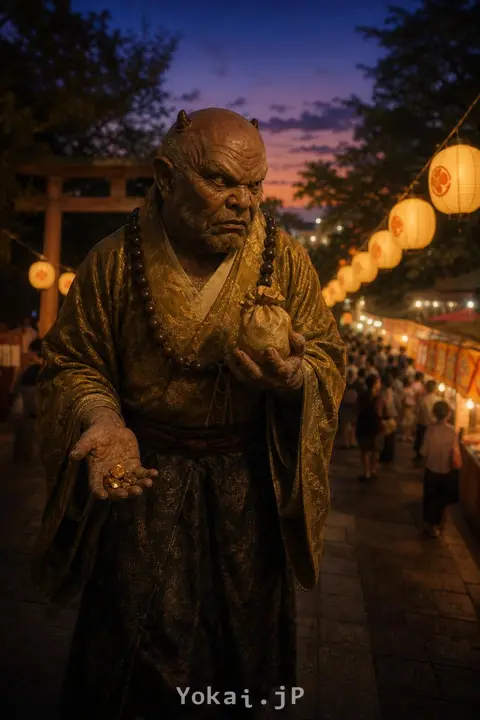
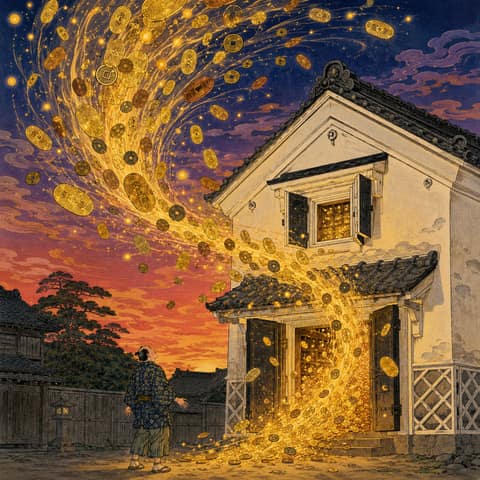
Kinrei is the embodiment of the essence of gold, or a spirit symbolizing fortune and virtue, believed to appear as a sign to households that practice good deeds. Edo-period picture scrolls depict it as storehouses brimming with gold and silver—more an allegory of auspicious news than a tangible monster. Kintama, by contrast, is said to arrive as a glowing sphere or strange fire; welcoming it brings prosperity, but harming it invites decline. The two are sometimes conflated, though their characterizations differ slightly.

Kama-itachi

Kama-itachi

Legendary

kah-mah-ee-TAH-chee

辻風に裂く鎌鼬

Animal ShapeshiftersNiigataNagano

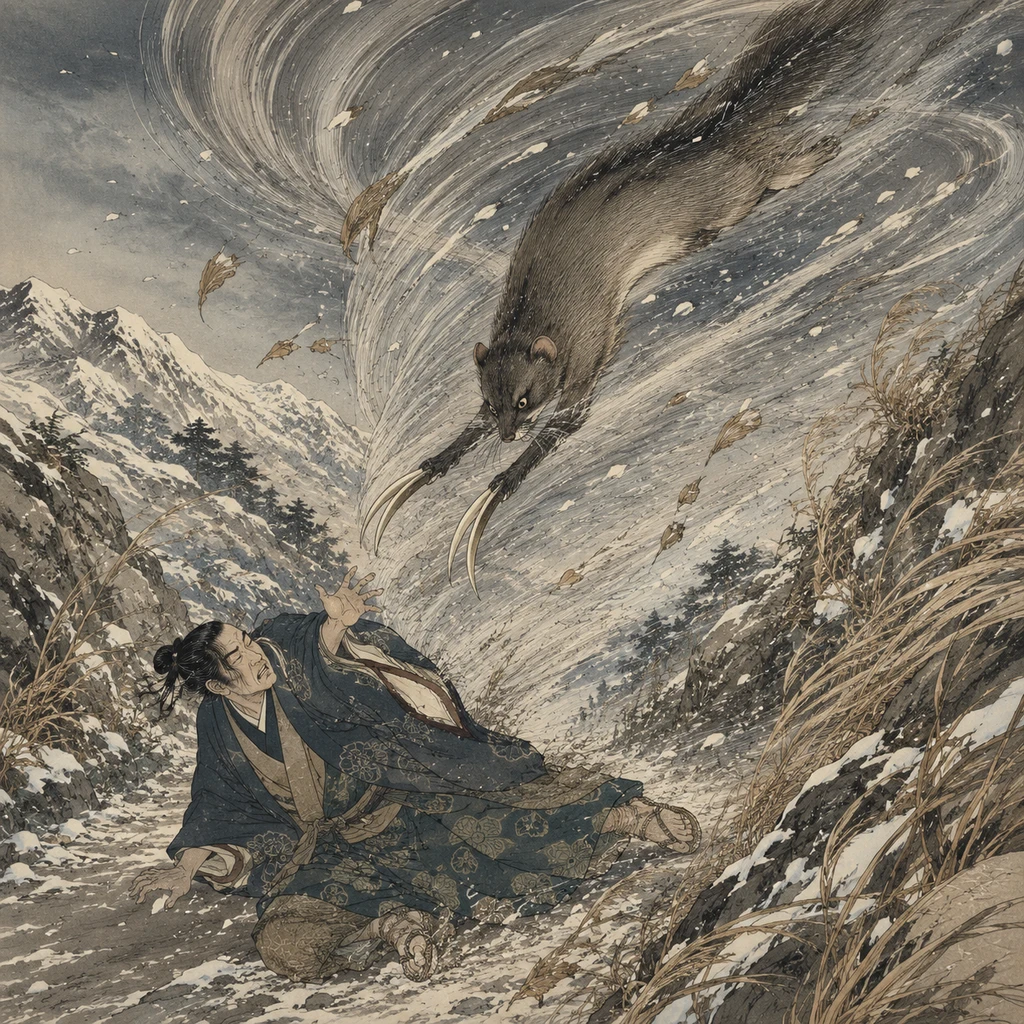
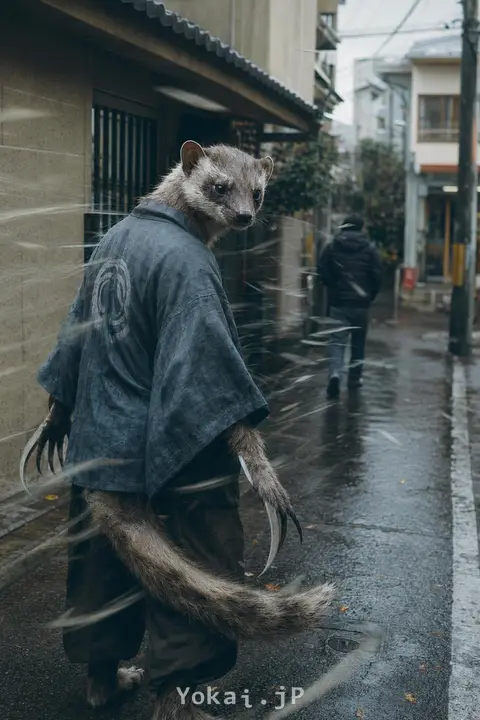
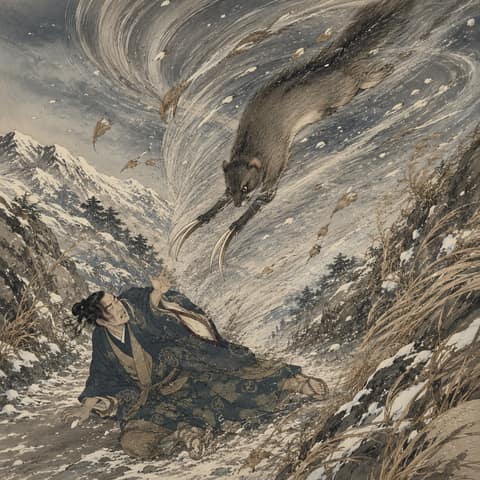
Kama-itachi are yokai said to ride dust devils or sudden whirlwinds, slicing human skin as if by a blade. Victims often feel little pain at first and may not bleed until later. From the Edo period on, they’re depicted as weasels with sickle-like claws, though explanations vary by region—some attribute the cuts to the phenomenon itself, to wind deities, or to minor spirits. The term is also a classical winter seasonal word.

Sandworm

Sandworm

Uncommon

SAHND-wohrm

砂中を進む大虫・サンドワーム

General TermFictional / Imported Giant Worm Advancing Through Sand (Sandworm)

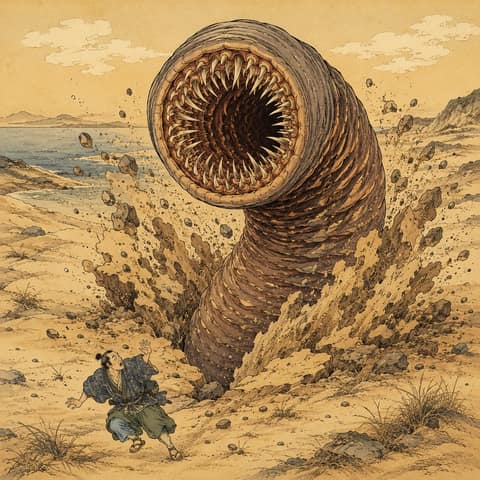
The Sandworm does not appear in any classical Japanese yokai picture scrolls or folktales; it is, so to speak, a "modern imported yokai." It is known as a giant worm monster that digs through the underground of deserts and sand dunes at breakneck speed, swallowing prey whole along with the sand using its massive, cylindrical mouth. Its direct origin is definitively traced to the Sandworms (Shai-Hulud) appearing in Frank Herbert's 1965 monumental sci-fi novel *Dune*. However, since the 1980s, its recognition exploded in Japan through fantasy RPGs like *Final Fantasy*. It has completely taken root among Japanese youth as a shared terrifying experience (a kind of modern folklore) as "the most terrifying monster that surely lurks in the harsh environment of a desert," making it an anomaly with an extremely unique history of reception.

Suzaku (Vermilion Bird)

Suzaku (Vermilion Bird)

Divine

Suzaku

南方を護る四神・朱雀

Animal TransformationsNaraKyoto

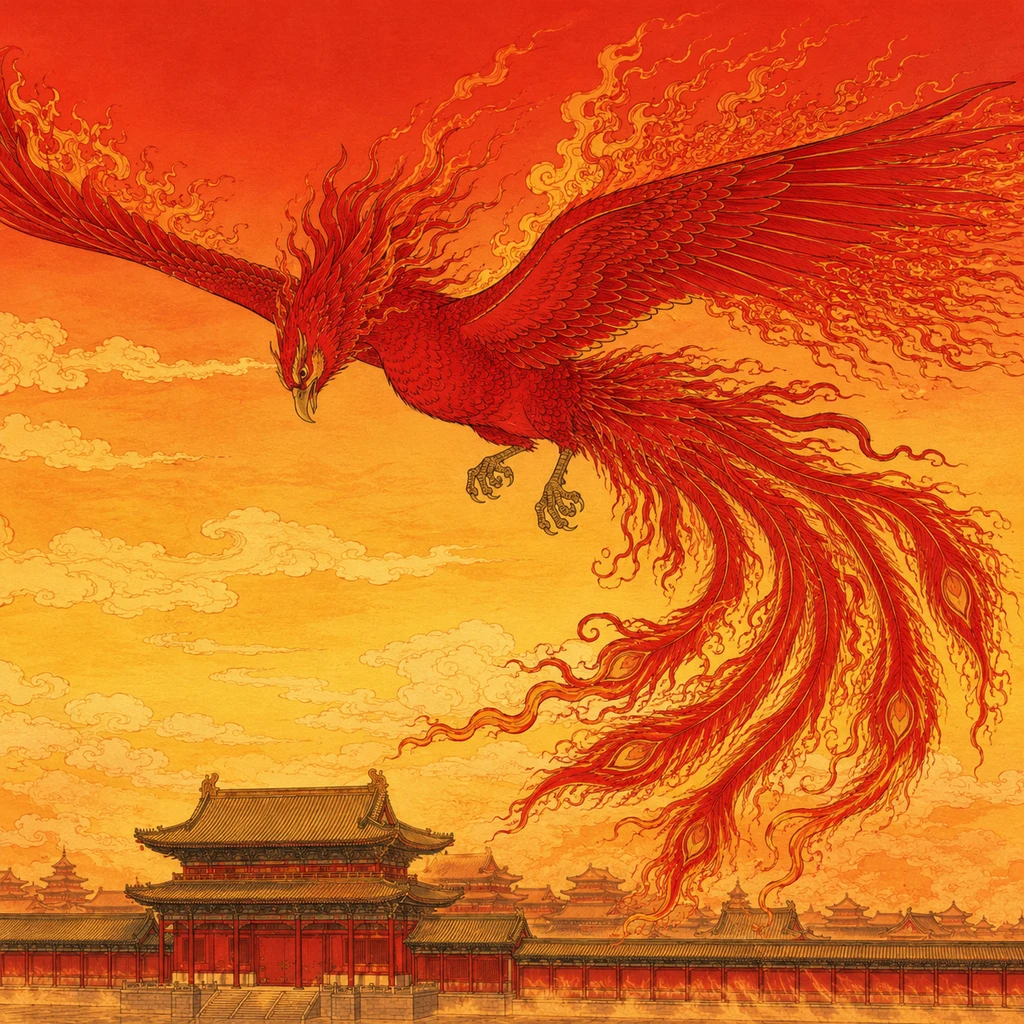
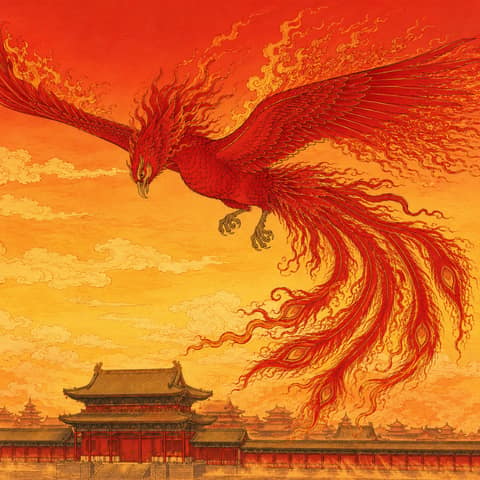
Suzaku, the Vermilion Bird, is one of the Four Symbols that guard the south, the numinous bird that shapes the seven southern lunar mansions of the heavens into the form of a bird. In the Five Phases it is assigned to Fire, in the five colors to vermilion (red), and in the seasons to summer. In the classics it is often written "Vermilion Sparrow," and the "Qu Li" chapter of the Book of Rites makes the Four Symbols markers of direction—"the Vermilion Bird in front, the Black Tortoise behind." Received into ancient Japan together with the Chinese thought of direction and the Five Phases, its name remains in the Suzaku Avenue and Suzaku Gate of Heian-kyō.

Seto General

Seto General

Rare

SEH-toh TIE-shoh

瀬戸物寄せの武者・瀬戸大将

Animated Objects & UndeadUncertain (Edo-period pictorial works)

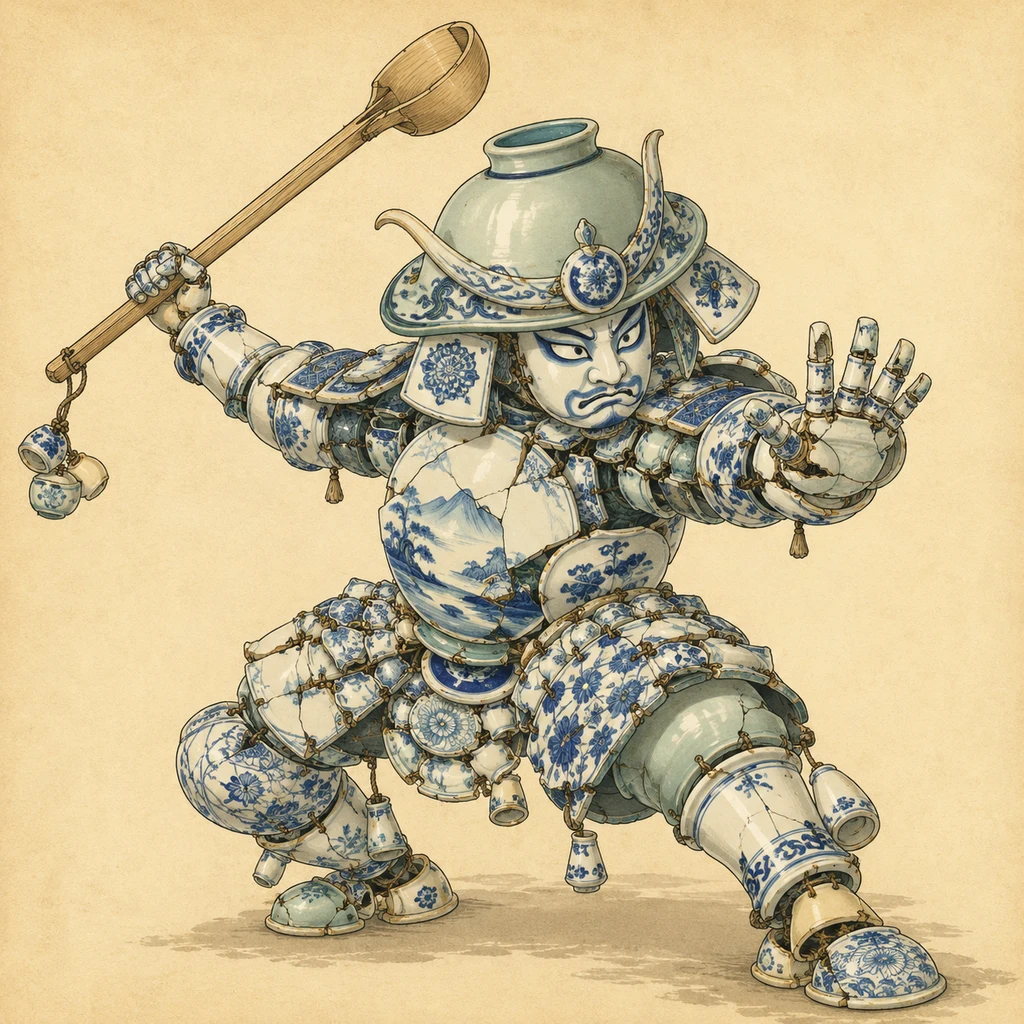
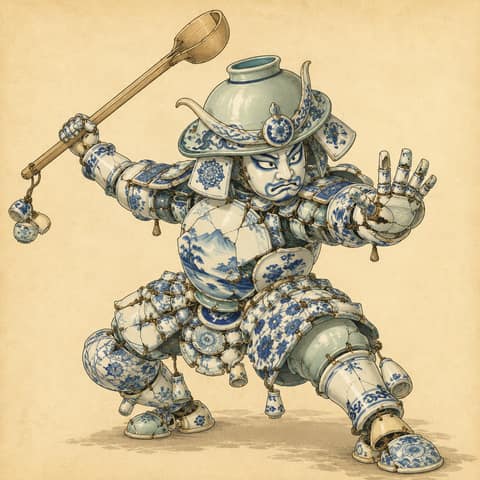
A tsukumogami-like figure from Toriyama Sekien’s Hyakki Tsurezure Bukuro: ceramic vessels and utensils gather to form an armored warrior. It plays on the aesthetic contrast between Karatsu ware and Seto ware, depicting utensils as rival factions. The motif is not based on oral lore or local tradition; Sekien’s image and accompanying verse are the principal sources.

Shirōneri

Shirōneri

Epic

shee-ROH-neh-ree

古布なびく怪・白溶裔

Animated Objects & UndeadJapanese folklore

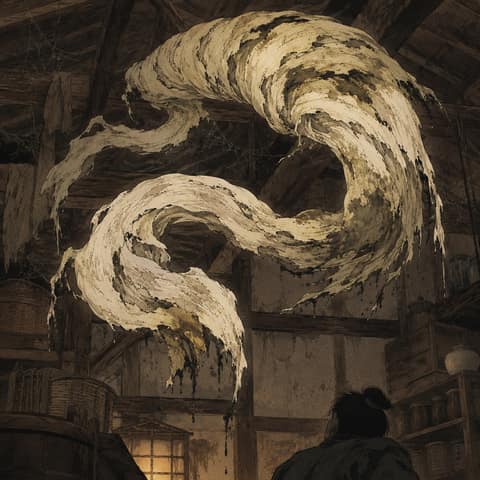
A yokai depicted by Toriyama Sekien in his Hyakki Tsurezurebukuro. It takes the form of a tattered cloth billowing like a dragon in the wind; Sekien glosses it as “an old wiping cloth that has transformed.” The name is thought to pun on “Shirōururi,” a figure from Essays in Idleness (Tsurezuregusa). It is generally understood as a tsukumogami created by Sekien’s design. The work does not detail specific harms or behavior, and later interpretations often add their own ideas.

Sazae-oni (Turban Shell Ogre)

Sazae-oni (Turban Shell Ogre)

Epic

sah-ZAH-eh OH-nee

貝より変ずる海の鬼・栄螺鬼

Animal ShapeshiftersJapanese folklore

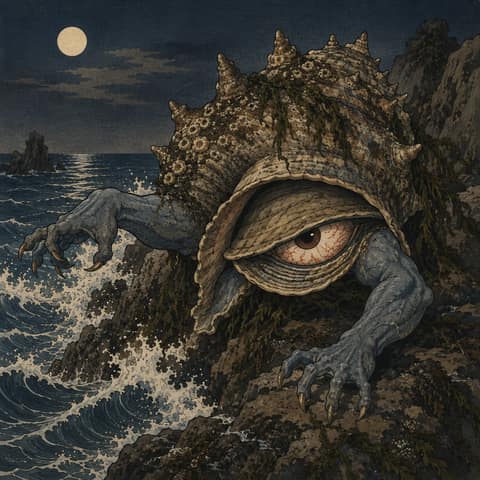
A yokai depicted by the Edo-period artist Toriyama Sekien in Hyakki Tsurezure-bukuro: a turban shell (sazae) transformed into an ogre. It is shown with humanlike arms and eyes sprouting from the meat and operculum, serving as an allegory of metamorphosis. Drawing on transformation tales from the Classic of Rites, the image explores nature’s uncanny shift into monstrous forms. Known more as an artistic and conceptual yokai than one tied to a specific local legend; similar figures appear in early modern picture scrolls.

Shuten-dōji

Shuten-dōji

Legendary

SHOO-ten DOH-jee

大江山の鬼総領・酒呑童子

Half-Human BeingsKyotoShiga

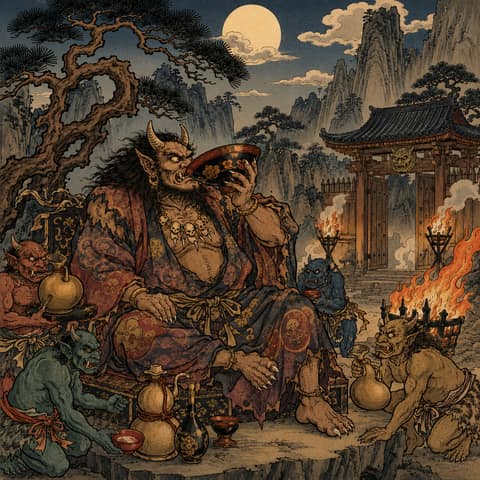
A notorious ogre chieftain who abducted people around the Heian capital. Fond of heavy drinking, he led a band of oni from a mountain stronghold to raid travelers. His name alludes to his love of sake, while dōji refers to a youth or monk-like appearance. Slain by Minamoto no Raikō and his Four Heavenly Kings, his severed head was said to bite even after decapitation. His lair is variously placed at Mt. Ōe, Mt. Ibuki, or Mt. Atago, supposedly located through onmyōji divination.

Zhong Kui (Shōki)

Zhong Kui (Shōki)

Divine

SHOH-kee

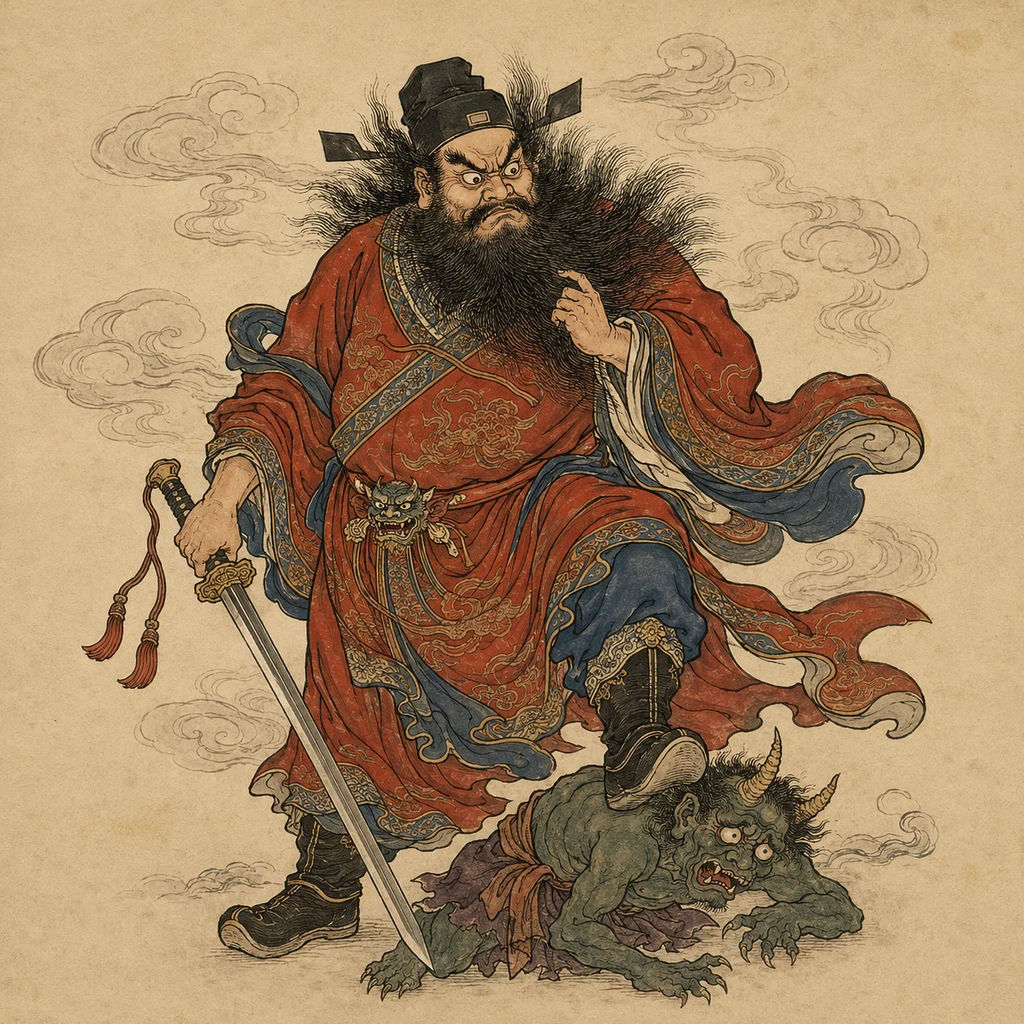
鬼を踏み伏す魔除け・鍾馗

Deities & Divine SpiritsKyoto

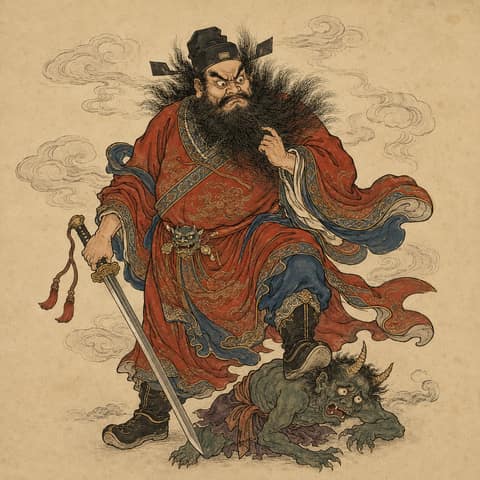
Shōki is a demon-banishing deity originating in Chinese folk religion. In Japan he is venerated as a protector against smallpox and epidemics, and as a patron of academic success. He is portrayed with a long beard, dressed in official court robes, wearing a sword, and glaring demons into flight. He appears as early as late Heian-period apotropaic paintings, and later became a common motif for Boys’ Day and year-end or New Year talismans in hanging scrolls, dolls, and roof ornaments.

Suzu-hiko-hime

Suzu-hiko-hime

Rare

SOO-zoo-HEE-koh-hee-meh

神楽鈴を戴く女・鈴彦姫

Household SpiritsJapanese folklore

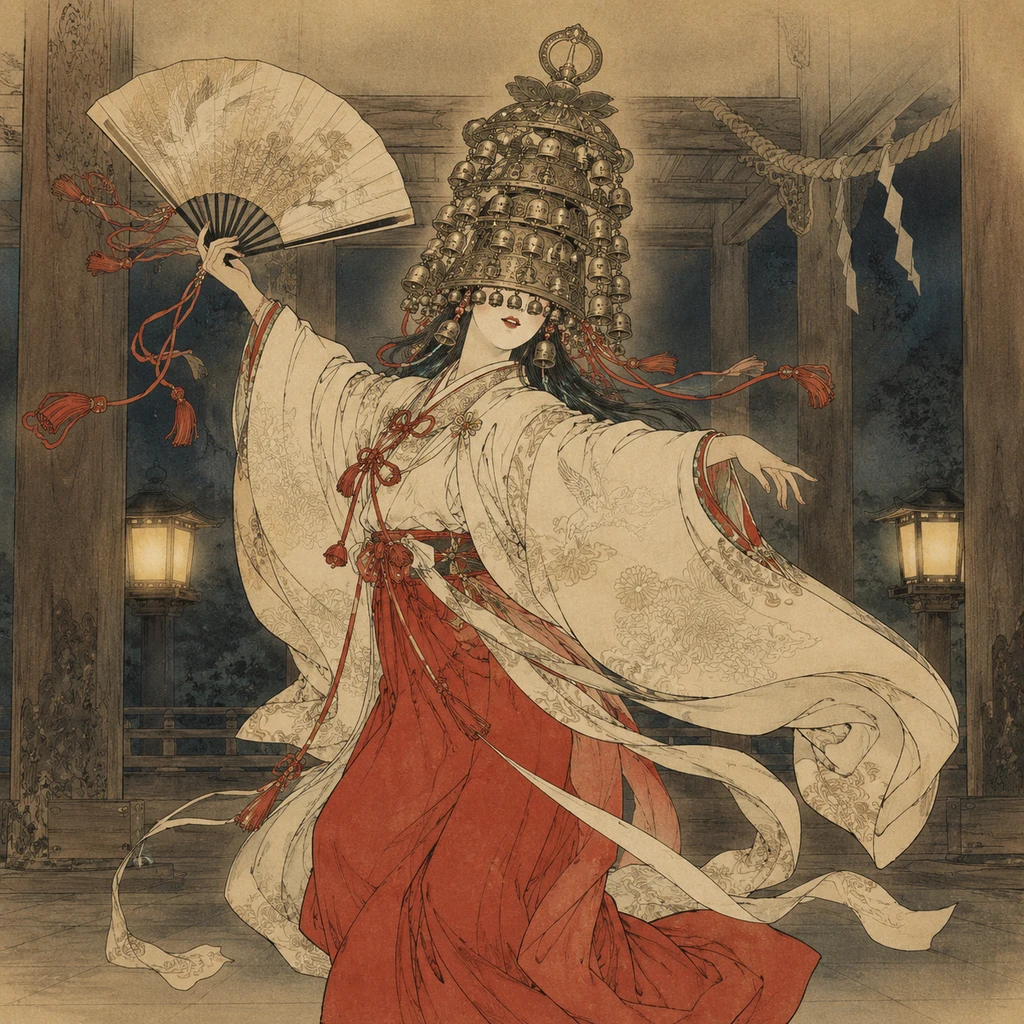
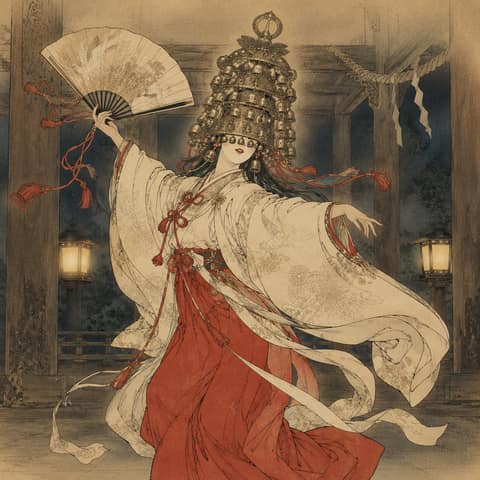
Suzu-hiko-hime is a yokai depicted by Toriyama Sekien in his Hyakki Tsurezure Bukuro. She appears as a woman balancing a kagura suzu (Shinto ritual bells) on her head, with features reminiscent of a bell. Sekien alludes to Ame-no-Uzume from the Amano-Iwato myth, hinting at ties to kagura, but leaves her origin and nature unstated. The image likely draws on medieval Night Parade scrolls that show monsters with kagura bells and on the idea of bells as instruments that “invite” or summon deities. No concrete sightings are recorded; she is an image-led, conceptual yokai.

Taira no Masakado

Taira no Masakado

Divine

Taira no Masakado

関東の御霊神・平将門

Divine Spirits & DeitiesTokyoChiba

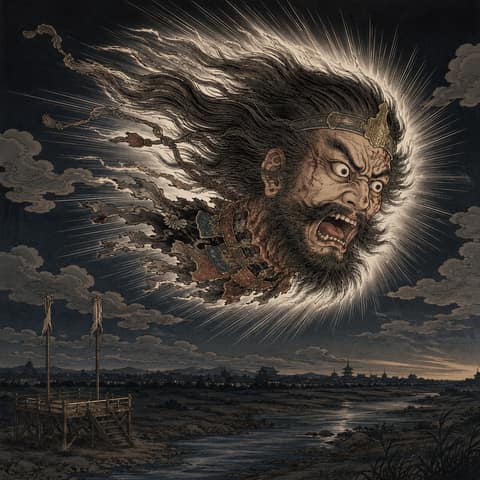
Taira no Masakado was a warrior of the Kanmu-Taira line who held sway over the Bandō region in the mid-Heian period, a man who raised the banner of revolt against the court, styled himself "New Emperor" (Shinnō), and was struck down. After his death, the uncanny tales surrounding his severed head made him one of the most dreaded vengeful spirits in Japan, and in time he was enshrined as a guardian deity of the Kantō and a goryō god at shrines such as Kanda Myōjin. In the Jōhei and Tengyō years, Masakado rose from private feuds within his own clan, and in the second year of Tengyō (939) he overran the provincial seats of Hitachi and other Kantō provinces to subjugate the eastern lands, proclaiming an oracle of Hachiman Daibosatsu and styling himself New Emperor . But the following year, the third of Tengyō (940), he was shot in the forehead and killed in battle by the punitive army of Taira no Sadamori and Fujiwara no Hidesato (Tawara Tōda). His life is recounted in detail in the contemporary war chronicle Shōmonki. What made Masakado a yokai and a vengeful spirit was less the historical revolt itself than the legend of the head, told in later ages. The story that his head, exposed in the capital, would not rot and cried out night after night before flying off to the east is bound up with the dread of the Masakado Grave-Mound (the "Head Mound") at Ōtemachi in Tokyo, and transmits to this day the belief that to move it brings a curse. At Kanda Myōjin, by contrast, he is fervently revered as the great tutelary of Edo and a god of martial fortune and thriving commerce—embodying the two faces of a goryō god: curse and protection.

Taimatsumaru

Taimatsumaru

Rare

tie-MAHT-soo-mah-roo

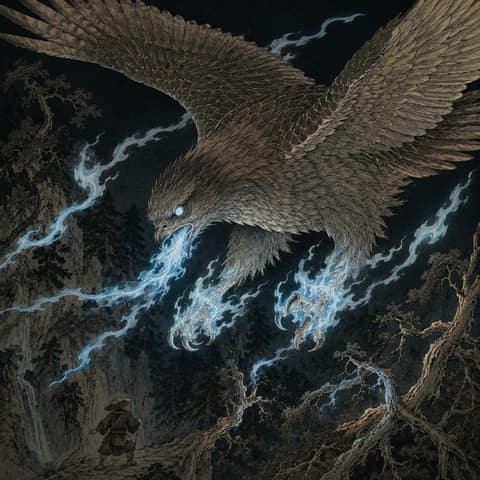
妖火を帯ぶる怪鳥・松明丸

Mountain & Wilderness SpiritsJapanese folklore

Taimatsumaru is a fire-bearing bird yokai depicted in Toriyama Sekien’s Hyakki Tsurezure Bukuro. Shown as a raptor wreathed in flames from beak and talons, it casts uncanny light across the deep mountain night. Sekien links it in his notes to the glow of the “tengu pebbles,” interpreting it as a force that hinders ascetics in training. Its fire is not a practical torch but a delusive flame that leads night travelers astray. No specific historical locations of appearance are recorded.

King of the Waterfall Spirit

King of the Waterfall Spirit

Epic

tah-kee RAY-oh

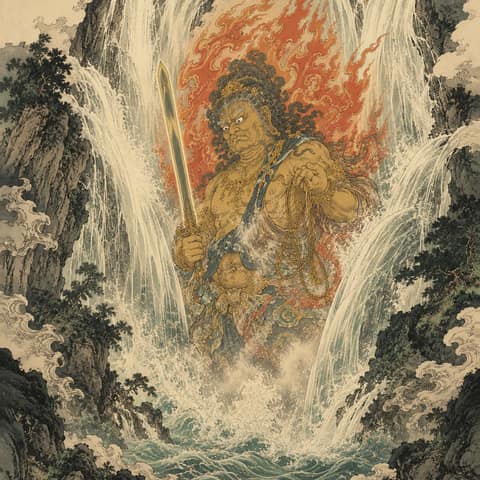
滝壺顕現の不動・滝霊王

Deities & Divine SpiritsShiga

A name found in the Edo-period artist Toriyama Sekien’s Konjaku Hyakki Shūi, depicting the aspect of Fudō Myōō manifesting within a waterfall. Sekien annotated it as “appearing from plunge pools across the provinces,” citing the Qinglong shu to state it “subdues all demons and obstacles.” Rather than a yokai proper, it is regarded as a visual emblem of Myōō worship manifesting at waterfalls; the title itself appears to be Sekien’s coinage. Detailed tradition is scarce, and regional aliases or concrete cases are unknown.

Chokuboron

Chokuboron

Rare

CHOH-koo-BOH-ron

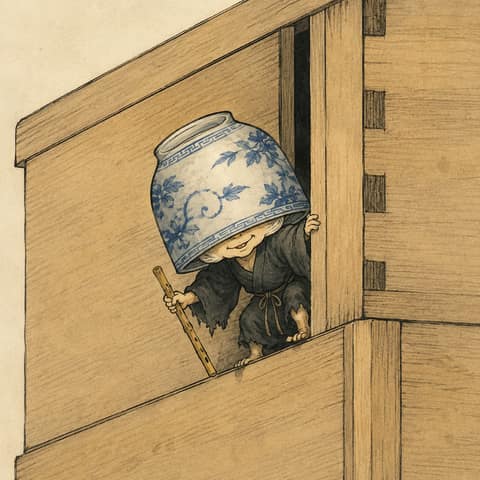
猪口被る虚無僧鬼・猪口暮露

Animal ShapeshiftersEdo period

A yokai depicted by Toriyama Sekien in Hyakki Tsurezure Bukuro. It shows a small goblin, monk-like in a komusō style, popping out of a box with a sake choko cup perched on its head. Sekien’s note alludes to the Tang-era tale of an ink spirit appearing before Emperor Xuanzong, hinting that this creature belongs to the same family of animated objects. The name combines bōzu imagery of mendicant Zen monks (kōro/boro/“kure-boro” wordplay), the komusō-like appearance, and the sake cup (choko), suggesting a half-monk, half-lay figure born of punning and visual play.

Horned Washbasin Hanzō

Horned Washbasin Hanzō

Rare

TSOO-noh-HAHN-zoh

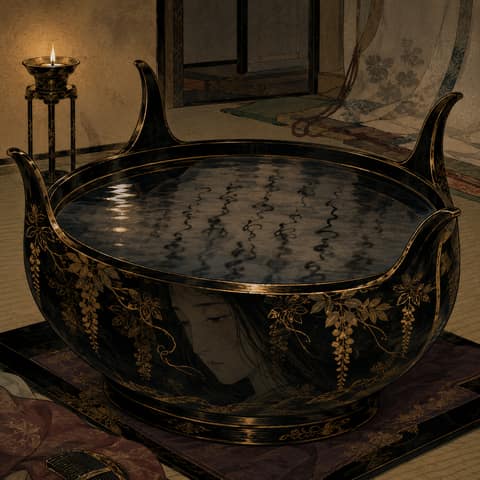
角立つ盥の付喪・角盥漱

Animated Objects & UndeadKyoto Prefecture (associated tradition)

Tsunohanzō is a tsukumogami—an animated household object—depicted by Toriyama Sekien in Hyakki Tsurezure Bukuro as a lacquered ceremonial washbasin (kakutsubo/tsuno-darai) turned uncanny. Once used in the Heian court for cosmetics and handwashing, the vessel is said to gain spirit through long use and human intent, filling with water at night to reveal and wash away written characters. Many portrayals reference the legend of Ono no Komachi washing papers to expose truth from falsehood.

Tsurube-bi (Bucket Fire)

Tsurube-bi (Bucket Fire)

Uncommon

TSOO-roo-beh-bee

樹上に下る怪火・釣瓶火

Natural Phenomena SpiritsKyoto

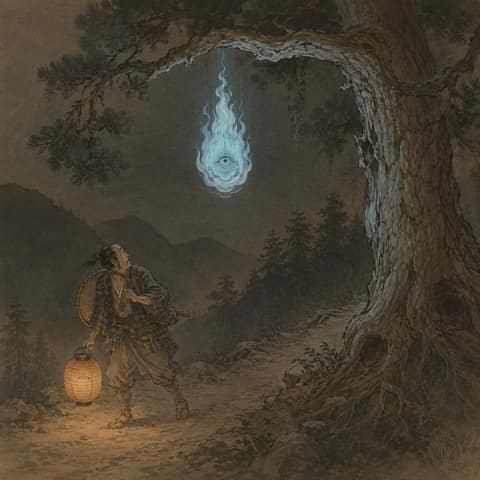
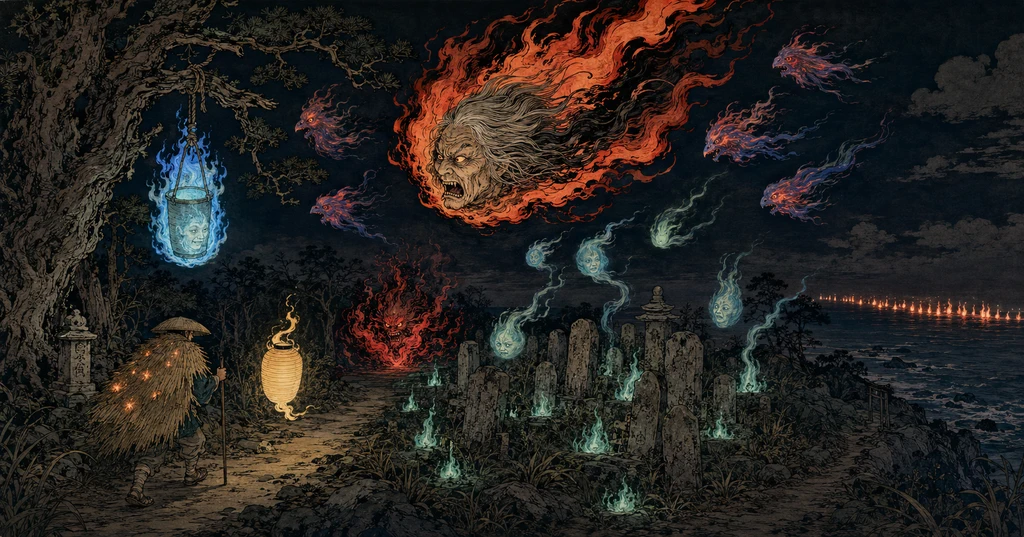
Tsurube-bi is a mysterious fire that moves up and down from treetops at night like a hanging bucket. It appears in Toriyama Sekien’s Gazu Hyakki Yagyō, interpreted as the fiery apparition from Kyoto’s Saiin noted in Edo-period ghost tales. In Shikoku and Kyushu, it’s said to be a wood spirit turning into a bluish-white fireball that dangles from branches. The flames do not burn things, and faces of people or animals sometimes appear within. Considered a type of will-o’-the-wisp, it’s often reported on quiet mountain paths.

Moon Rabbit

Moon Rabbit

Epic

TSOO-kee-noh oo-SAH-ghee

満月に餅搗く・月の兎

Animal ShapeshiftersAcross Japan (widespread after the arrival of Buddhism)

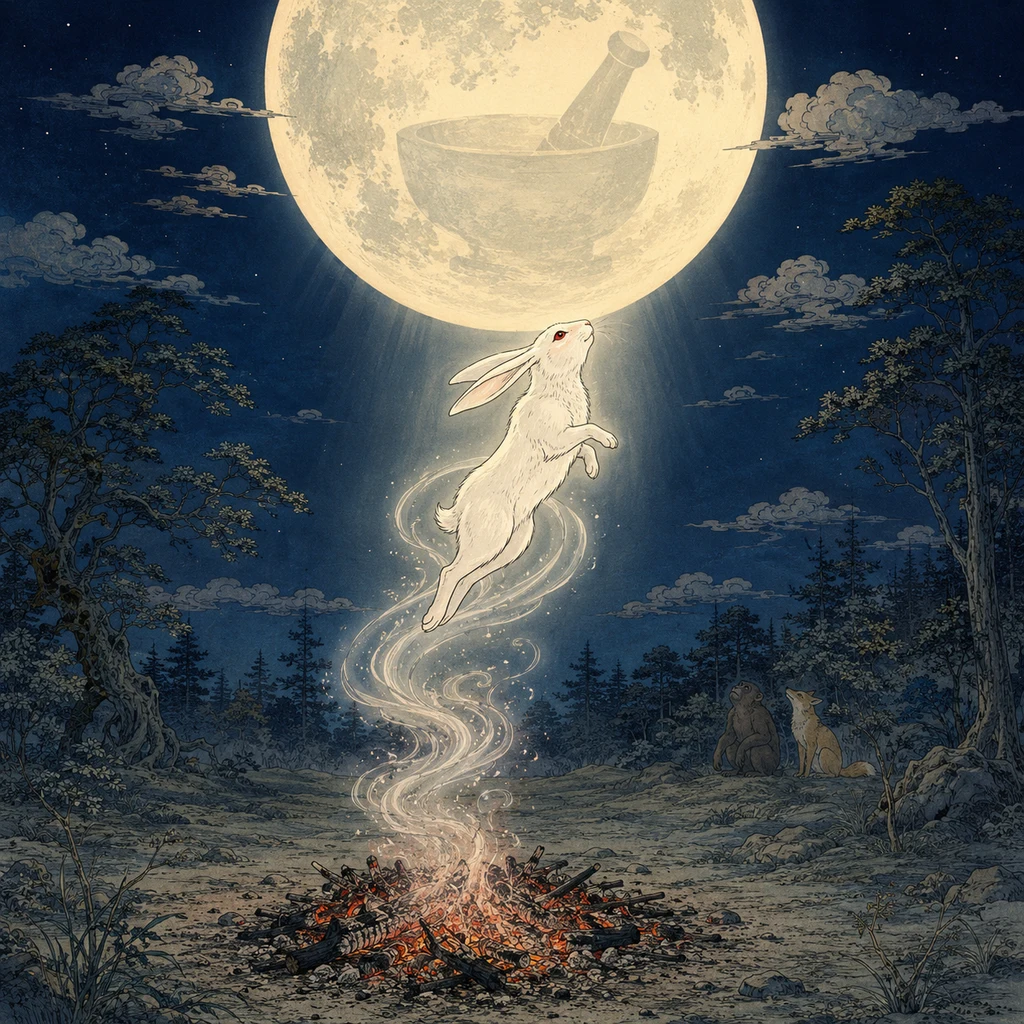
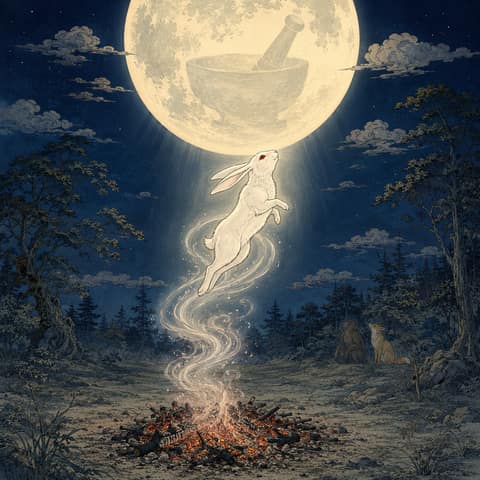
A legendary lunar beast seen in the dark markings on the full moon, interpreted as a rabbit. Spread through Buddhist paintings and tales, it became an emblem of the moon deity. In Chinese lore it pounds the elixir of immortality; in Japan it is said to pound rice cakes (mochi). Art historical records note its presence from the medieval period, with the mochi-pounding image becoming common by the mid-Edo era.

Human-Faced Tree

Human-Faced Tree

Rare

neen-MEN-joo

人面花の異木・人面樹

Natural Phenomena SpiritsUnknown; said in sources to grow in the distant land of Dashi ("Great Food" country) to the southwest

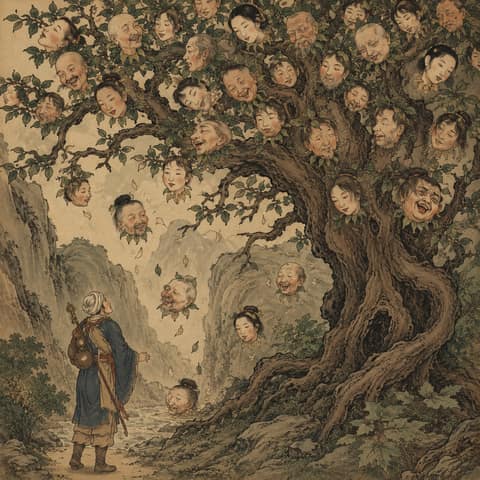
The Human-Faced Tree is a strange tree said to bear blossoms like human heads. It appears in Toriyama Sekien’s Konjaku Hyakki Shūi and in Wakan Sansai Zue, which cites the Chinese Sancai Tuhui. The flowers do not understand speech; when addressed, they only smile. If they keep laughing, the blossoms wither and fall. The creature is known more as a bibliographic, proto-natural-history marvel than as a native Japanese folk belief.

Nurikabe

Nurikabe

Epic

NOO-ree-KAH-beh

九州夜道の見えぬ壁・ぬりかべ

General ClassificationsFukuokaOita

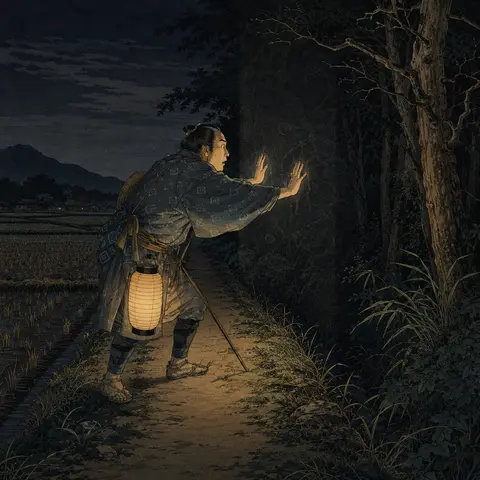
A yokai famed as an invisible wall that blocks travelers on night roads. People suddenly find they can’t move forward, their hands meeting a flat, unyielding surface. The spell is said to break if one waits, sidesteps, or taps the ground with a cane. Its form is unfixed—often described as unseen or like a featureless wall. It rarely harms beyond causing confusion, feared mainly as a nuisance that makes people lose their way.

Furaku-Furaku (The Dangling Lantern Spirit)

Furaku-Furaku (The Dangling Lantern Spirit)

Rare

boo-RAH-boo-RAH

竹提灯の不落不落

Animated Objects & UndeadJapanese folklore

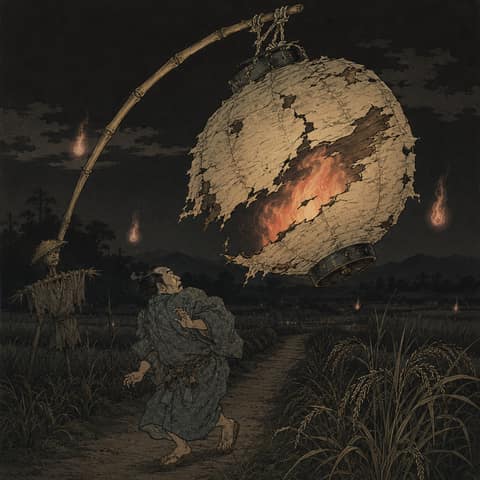
A lantern yokai depicted by Toriyama Sekien in Hyakki Tsurezure Bukuro. Tied to a bamboo pole, the torn lantern gapes like a mouth and droops over a path. The inscription hints it might be mistaken for a rice‑field lantern fire—or even foxfire—but Sekien groups it among animated tools, marking it as a tsukumogami, a lantern that has come to life. Sekien also notes the name as “不々落々,” though it is generally written “不落不落.”

Furu-Utsubo (Aged Quiver Spirit)

Furu-Utsubo (Aged Quiver Spirit)

Rare

FOO-roo OOT-soh-boh

那須野武功の古靫・古空穂

Animated Objects & UndeadJapanese folklore

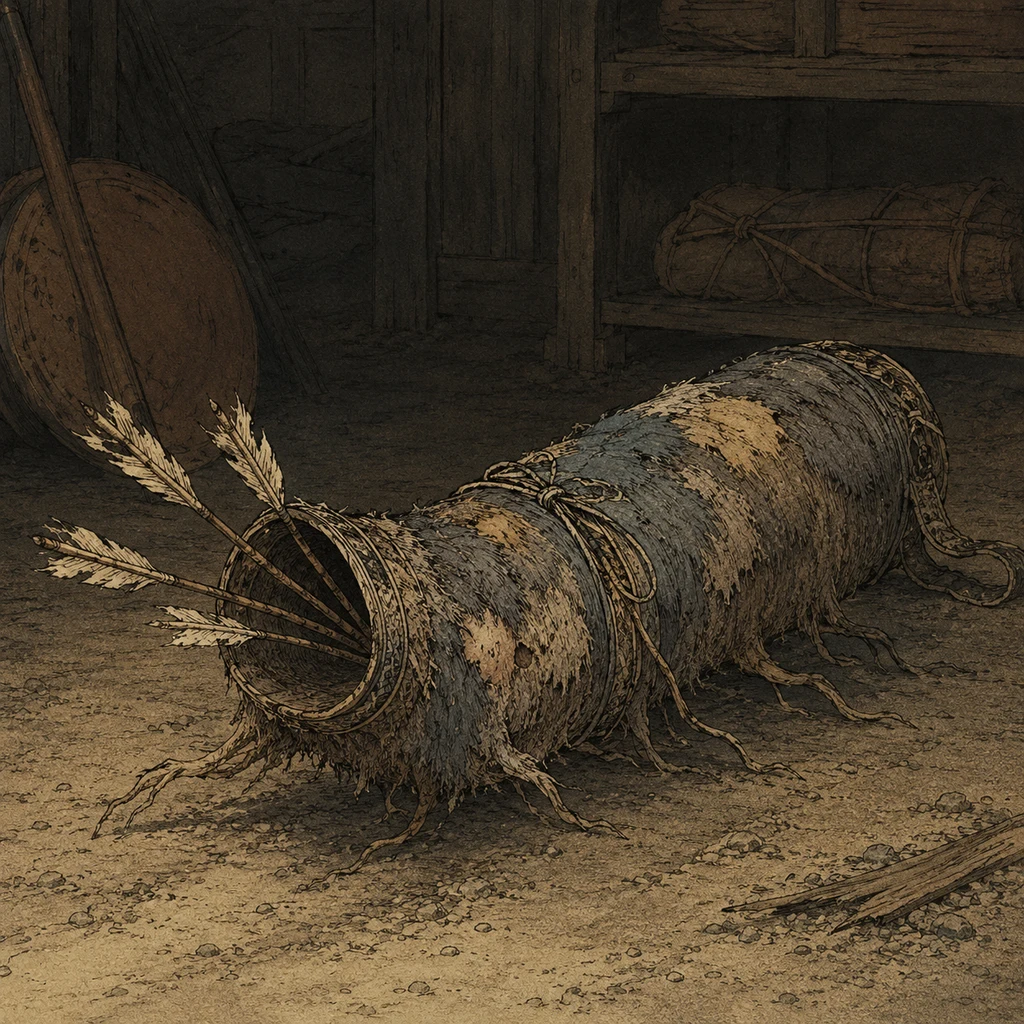
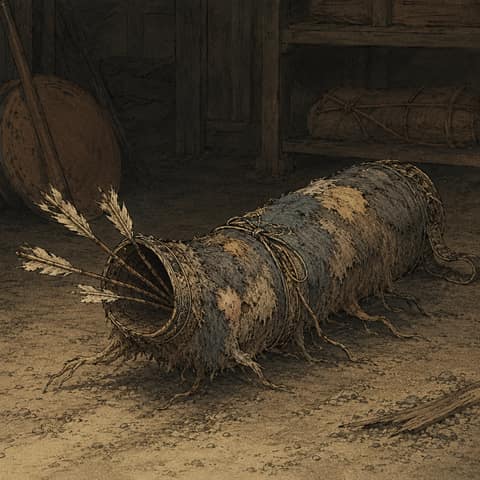
Furu-Utsubo is a tsukumogami—an animated household object—depicted by Toriyama Sekien in Hyakki Tsurezure Bukuro as a quiver (utsubo) that has aged into a wandering, anthropomorphic being. The quiver, a back-worn case for arrows, is shown moving under its own power after long years of use. In his caption, Sekien alludes to the warriors Miura-no-suke and Kazusa-no-suke who shot the “field fox” of Nasu Moor, hinting that an old quiver of theirs may have transformed. The image follows the lineage of weapon-bearing object-spirits seen in Muromachi-period Hyakki Yagyō picture scrolls.

Houki (Fengxi)

Houki (Fengxi)

Uncommon

FOO-kee

桑林の異国獣・封豨

Animal ShapeshifterA foreign beast originating from the Chinese "Classic of Mountains and Seas" (Shanhaijing). Mentioned only by name in Edo-period tales of foreign lands, without tying into Japanese geographical folklore.

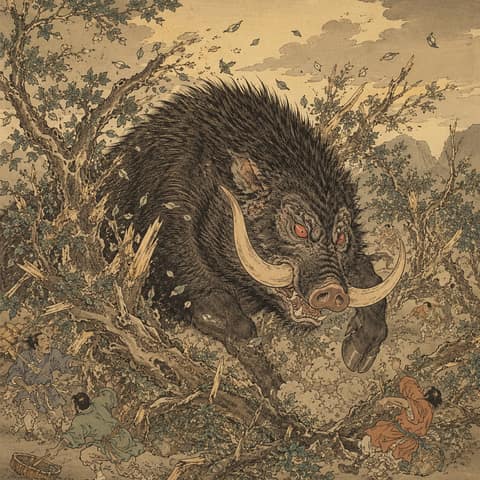
Houki is originally not a Japanese yokai, but a colossal and ferocious wild boar monster (or divine beast) recorded in ancient Chinese mythology and geographical texts such as the *Classic of Mountains and Seas* (Shanhaijing). Pronounced "Fengxi" in Chinese, it became established in Japan through its Sino-Japanese reading "Houki". According to legend, it is an impossibly massive boar completely covered in a hide as hard as armor. It was feared as a living disaster, using its overwhelming power to ravage farmlands and devour people. In Japan, it was introduced to the educated class via "tales of foreign lands" in Edo-period encyclopedias like the *Wakan Sansai Zue*, but it never developed into a folk belief (folk yokai) rooted in local regions. For a long time, it remained merely an "imported monster" confined to the pages of books. However, in modern times, its name has suddenly been thrust into the spotlight through pop culture media such as manga and anime.

Hossumori, the Fly-Whisk Guardian

Hossumori, the Fly-Whisk Guardian

Rare

HOSS-soo-MOH-ree

禅坐する払子の精・払子守

Animated Objects & UndeadEdo period; derived from picture scrolls

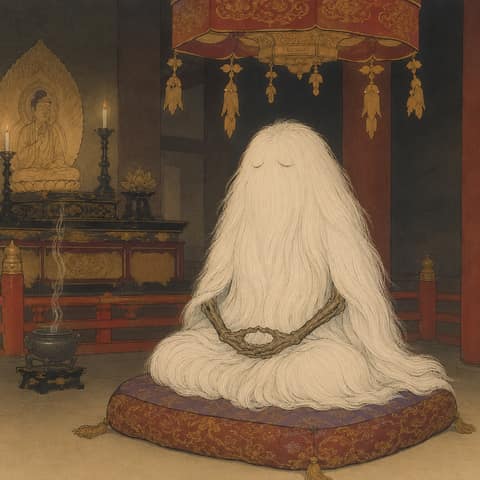
Hossumori is a tsukumogami—an artifact spirit—said to arise from a monk’s fly-whisk (hossu) used in Zen practice. In Toriyama Sekien’s Hyakki Tsurezure Bukuro, it is shown seated in full lotus beneath a canopy, absorbed in zazen. Sekien alludes to the Zen kōan of “a dog’s Buddha-nature,” suggesting that even a humble ritual tool can manifest Buddhahood. It embodies the idea of a long-used sacred implement gaining numinous presence and sitting in stillness to pursue enlightenment.

Bakotsu

Bakotsu

Uncommon

Bakotsu

土佐の歩く馬骨

Tsukumogami / Skeletal YokaiKochi

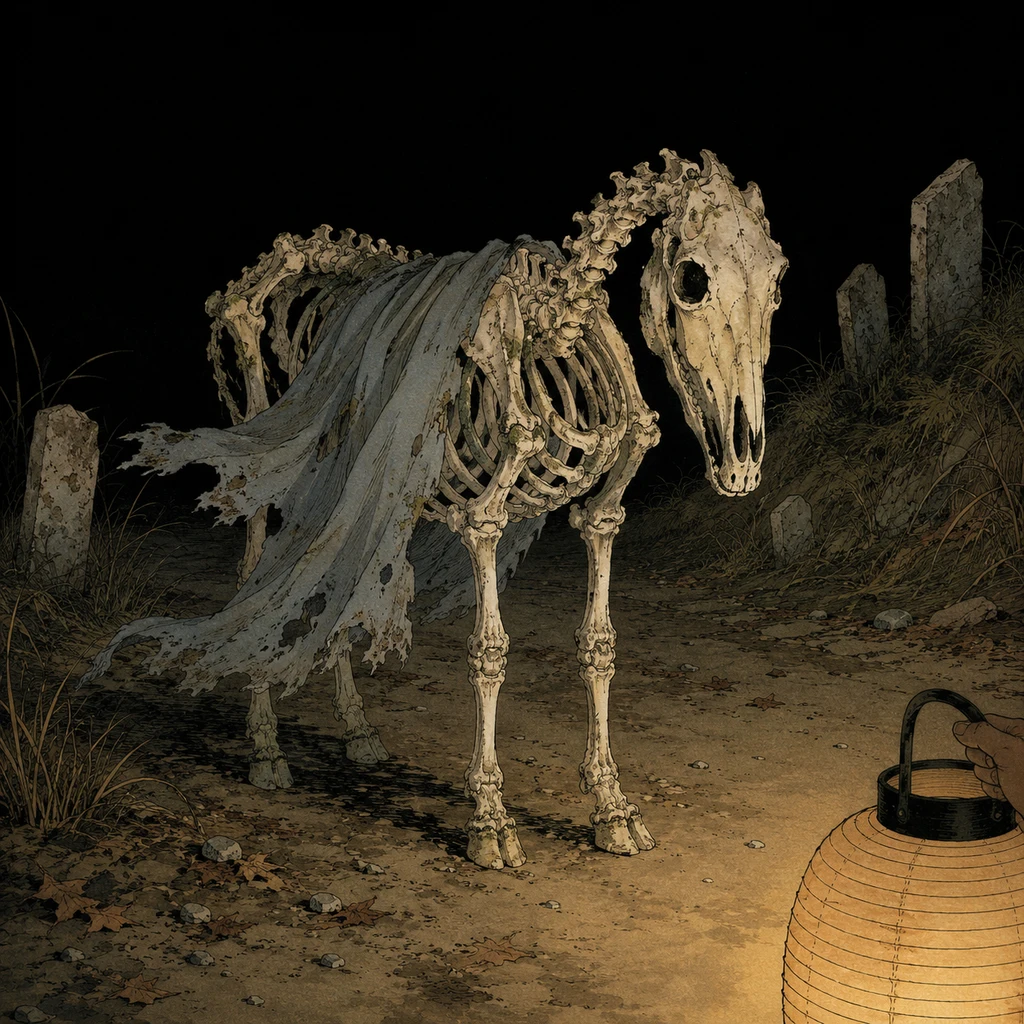
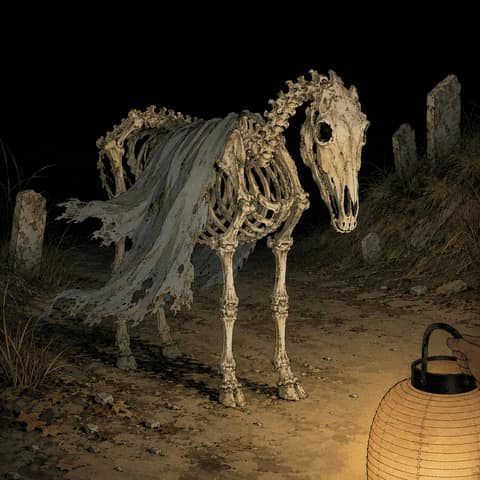
Bakotsu is a *mukuro* (corpse) yokai said to be the animated skeletal remains of a horse that burned to death in a fire, having absorbed eerie spiritual energy after being denied a proper burial. It is famously depicted in the *Tosa Obake Zoshi* (Tosa Yokai Scroll), produced in Tosa Province (modern-day Kochi Prefecture) during the mid-to-late Edo period. It possesses a bizarre and uncanny appearance: a gigantic, fully skeletonized horse standing upright on two legs, draped in tattered, threadbare rags around its waist. Among the many yokai traditions across Japan, it is extremely rare for a “horse skeleton” to move autonomously. Rather than being a malevolent, vengeful spirit that actively attacks or curses humans, Bakotsu embodies the regret of livestock meeting an untimely end and the sorrow of “beasts of burden” cast aside the moment they outlive their usefulness. Though an apparition that startles travelers on old night roads, it serves as a cautionary tale emphasizing the importance of *chikusho kuyo* (memorial services for animals) and the ethical duty to respect living creatures to the very end. Thus, it strongly reflects the localized folk beliefs and views on life and death of the Shikoku region.

Bone Woman

Bone Woman

Rare

HOH-neh-ON-nah

牡丹燈籠の白骨女・骨女

Half-Human BeingsEdo period (print tradition)

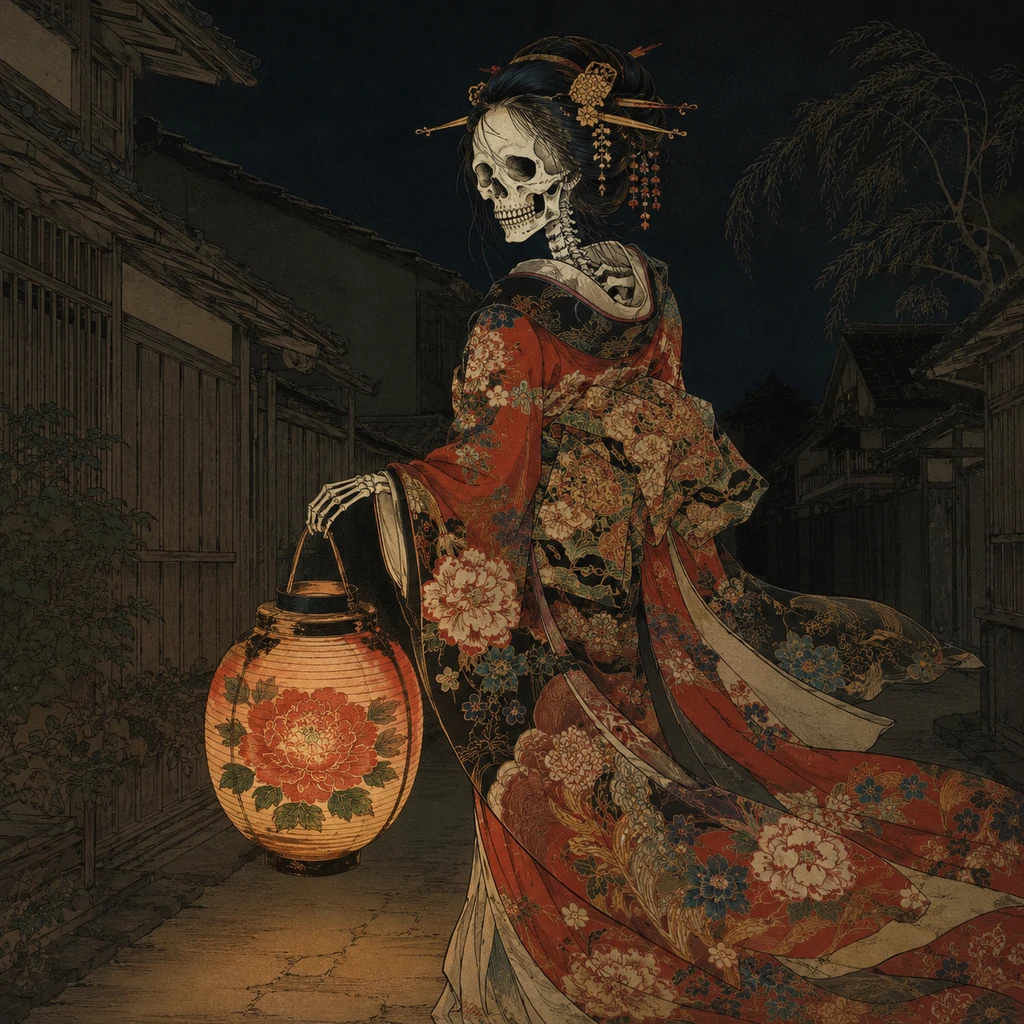
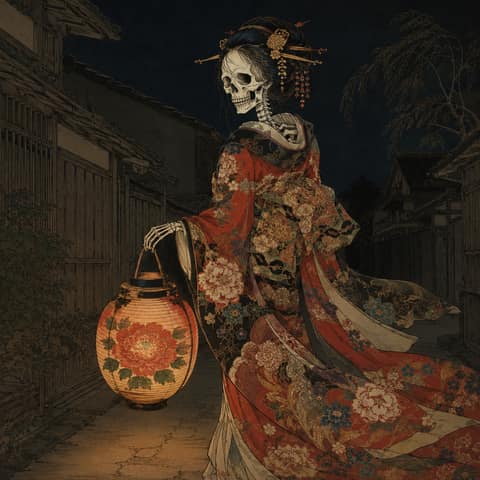
Bone Woman is a skeletal female yokai depicted by Toriyama Sekien in Konjaku Gazu Zoku Hyakki. In his notes, Sekien cites otogizōshi-style ghost tales in which a woman bearing a peony-patterned lantern visits her lover, drawing on the female specter from Asai Ryōi’s Otogibōko story “Botan Dōrō.” The image embodies a beauty who approaches a man but is in truth bare bones—a visualization of the uncanny where desire and death intersect.

Metsuhō Shell (Metsuhō-gai)

Metsuhō Shell (Metsuhō-gai)

Uncommon

MEH-tsu-hoh-gai

目尾ある跳ねる貝・滅法貝

Aquatic SpiritsJapanese folklore

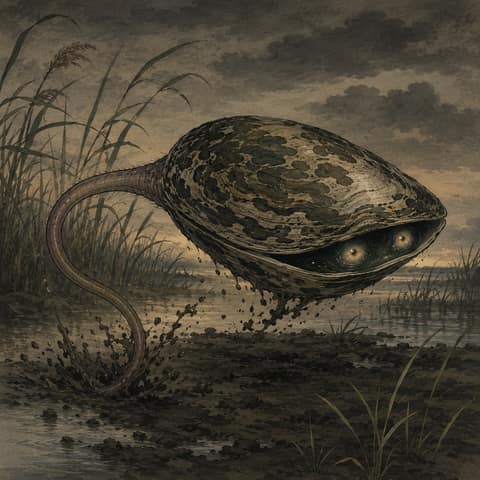
A water-dwelling yokai depicted in the late Edo-period picture scroll “Bakemono-zukushi Emaki.” It appears as a seashell with an eye and a tail-like protrusion, shown leaping about. No caption accompanies the image and the artist is unknown. Counted among eleven creatures unique to this scroll, it bears a written reading of its name, implying it was not widely known. No specific harm or blessing is recorded; it is portrayed simply as an uncanny presence near waterways.

Mokugyo Daruma

Mokugyo Daruma

Rare

MOH-koo-gyoh dah-ROO-mah

達磨顔の不眠木魚・木魚達磨

Animated Objects & UndeadJapanese folklore

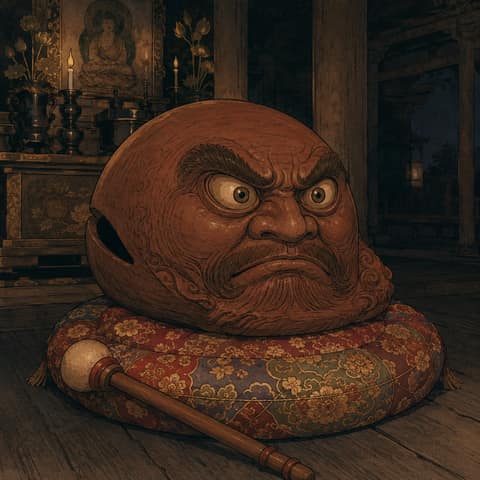
A yokai of Buddhist ritual implements depicted by Toriyama Sekien in Hyakki Tsurezurebukuro. It appears as a wooden fish (mokugyō) bearing a bearded face like Bodhidharma (Daruma), seated on a round cushion with eyes wide open. Sekien hints it is akin to the Buddhist-tool spirit Harisumori. Because fish were believed never to sleep or close their eyes, the mokugyō symbolizes sleepless diligence in monastic practice. Linked with the legend of Bodhidharma’s nine years without sleep, it is read as a visualization of the ideal of wakefulness.

Mokumokuren

Mokumokuren

Epic

MOH-koo-moh-koo-REN

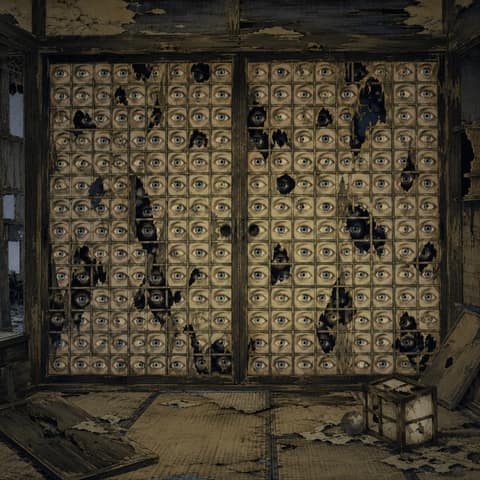
障子一面の眼群・目目連

Household SpiritsJapanese folklore

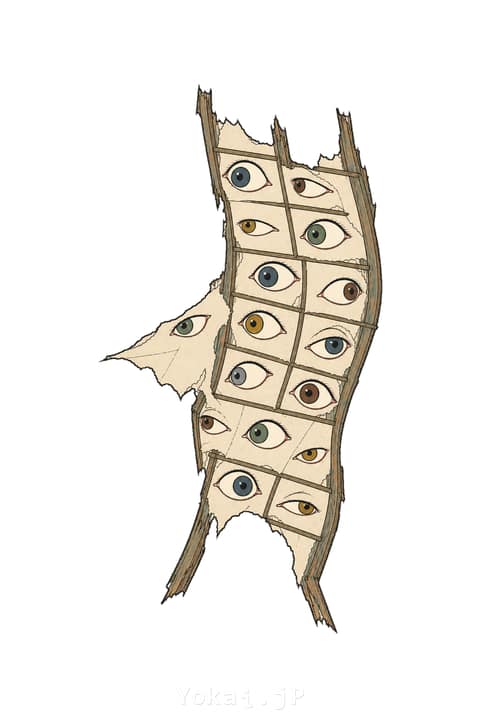
A yokai depicted by Toriyama Sekien in Konjaku Hyakki Shūi. Countless eyes appear across the paper screen doors of a dilapidated house, staring back at intruders. Sekien’s note suggests a go player’s obsession spread from the board to the entire house, framing it as a haunt residing in the shoji itself. Later encyclopedias call it a literary creation, yet it endures as an emblem of the eerie patterns and dim light cast through shoji screens.

Mugidono Daimyōjin

Mugidono Daimyōjin

Divine

MOO-gee-doh-noh dye-MYOH-jin

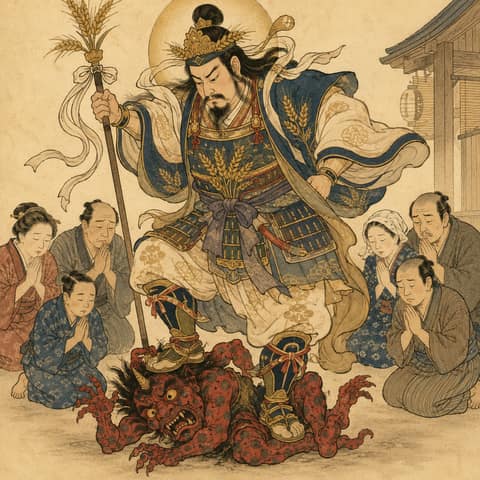
江戸麻疹退散の神・麦殿大明神

Deities & Divine SpiritsEdo period

Mugidono Daimyōjin is a deified guardian venerated in the Edo period as a protector who repels measles. He appears frequently in measles talismans and prints, typically shown trampling a demon that embodies the disease. Such images were posted in homes as protective charms. Prints circulated with prayers for warding off illness alongside convalescence advice and dietary taboos, offering reassurance against a feared epidemic. No specific shrine lineage is certain, and depictions vary by publisher.

Yamamoto Gorōzaemon

Yamamoto Gorōzaemon

Uncommon

yah-mah-MOH-toh goh-ROH-zah-eh-mon

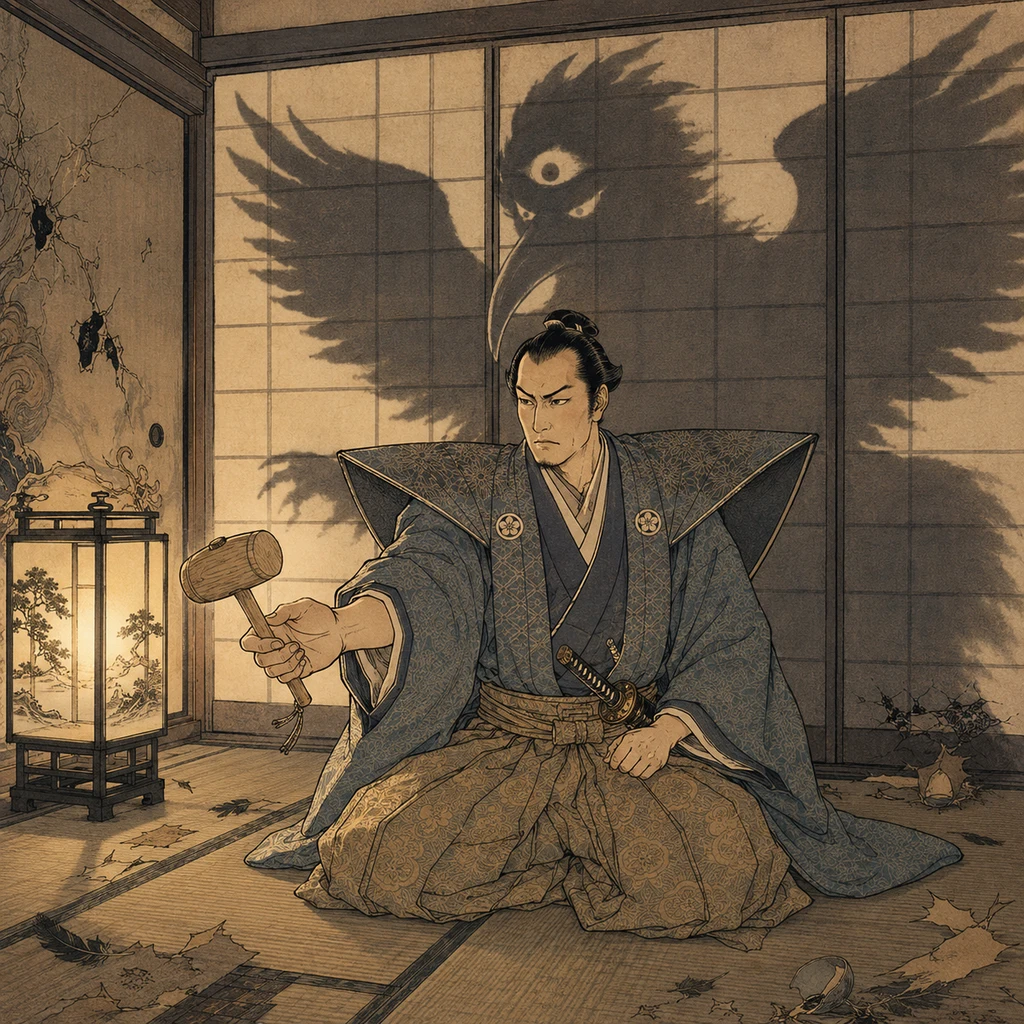
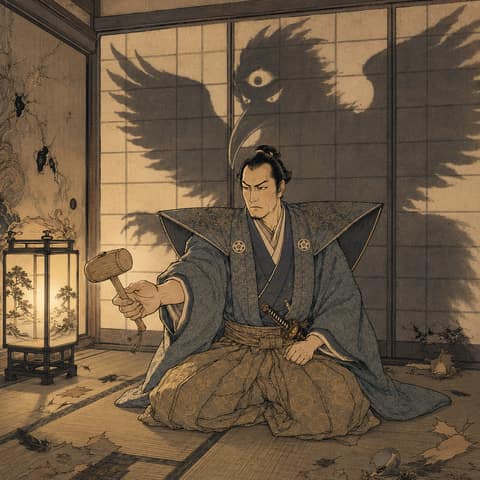
稲生物怪録の魔王・山ン本

Mountain & Wilderness SpiritsHiroshima

A chieftain who commands legions of yokai in the mid-Edo ghost chronicle Inō Mononoke-roku. In 1749, he harried the youth Inō Heitarō of Miyoshi for thirty nights, finally appearing as a samurai of about forty and giving his name. He insisted he was neither tengu nor fox, explaining that Heitarō’s ordeal was part of a contest for the mantle of demon king. His name varies across manuscripts, and paintings sometimes render him like a three-eyed crow-tengu, but his true nature remains unresolved.

Rokurokubi

Rokurokubi

Legendary

ROH-koh-ROH-koo-bee

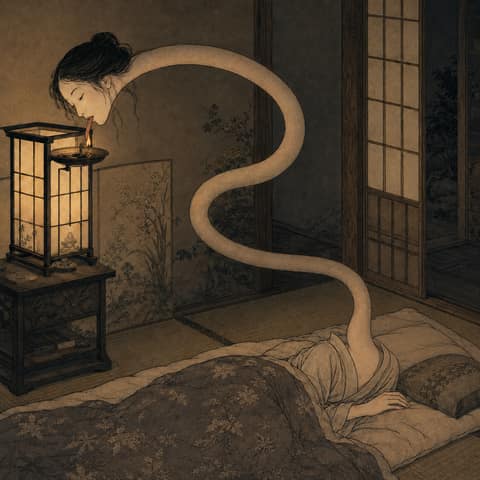
飛頭蛮・抜け首(小泉八雲解釈版)

Human-Yokai / Half-Human Half-YokaiAll over Japan -- A human village apparition without a specific location

The Rokurokubi is one of Japan's most famous representative yokai, characterized by a neck that stretches to abnormal lengths during sleep at night, or a head that detaches completely from the body to fly through the air. While the modern image firmly establishes 'Rokurokubi = neck-stretching yokai', from a folkloric perspective, the 'nukekubi' (detaching head), where the head separates from the body and flies, is considered its true original form. This prototype originated when a foreign monster known as the 'Hitouban' (Flying Head Barbarian), recorded in ancient Chinese strange tales like the 'Soushinki' (In Search of the Supernatural), was introduced to Japan. The greatest point of interest in yokai research is why it changed from 'flying' to 'stretching'. A prevalent theory suggests that when Edo-period picture scrolls depicted a 'thin spiritual thread' connecting the detached head and the body, the masses visually misinterpreted it as the 'elongated neck itself', which served as the decisive catalyst for the birth of the 'neck-stretching Rokurokubi'. In many legends, the Rokurokubi is not born a monster, but is told as a tragic apparition unconsciously caused by human women due to an 'illness of separating souls' or the depth of their karma.

Dragon Maiden

Dragon Maiden

Uncommon

RYOO-joh

水際の鱗ある女・龍女

Aquatic SpiritsJapanese folklore

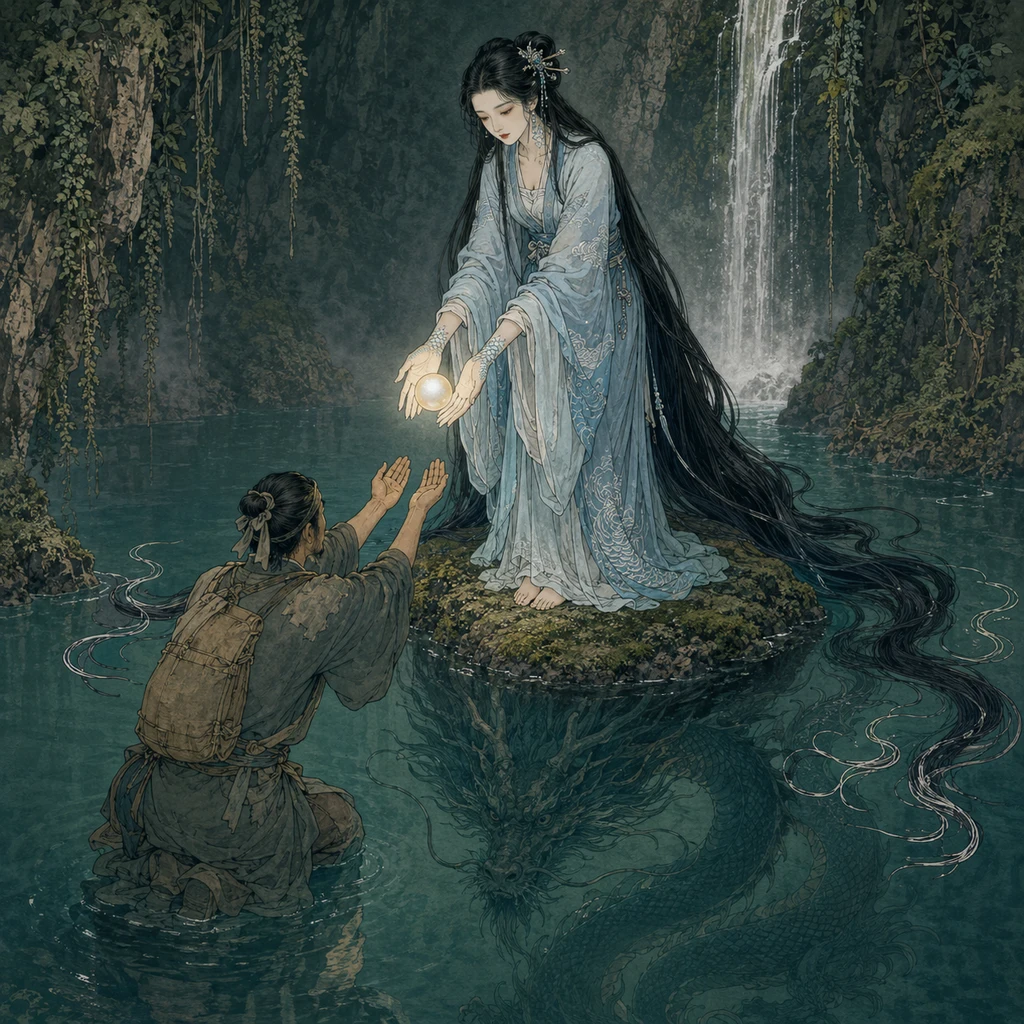
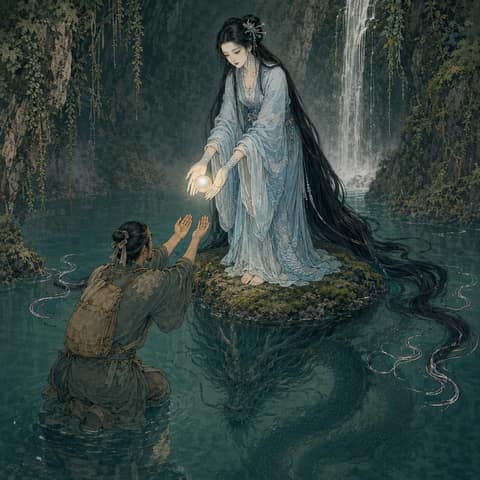
The Dragon Maiden is a dragon tied to waters who takes the form of a woman, appearing by rivers, lakes, seashores, or springs. She often shows herself as a beautiful woman, sometimes granting favors to people and at other times inspiring awe or fear. Associated with weather and water levels, she is sometimes invoked for rainmaking or to stop rain. She is said to shift between human and dragon form, with her true nature betrayed by details like scales, claws, or an unusual fragrance.

Paper Dance

Paper Dance

Uncommon

KAH-mee-mai

紙片自ら宙を舞う・紙舞

Household SpiritsJapanese folklore

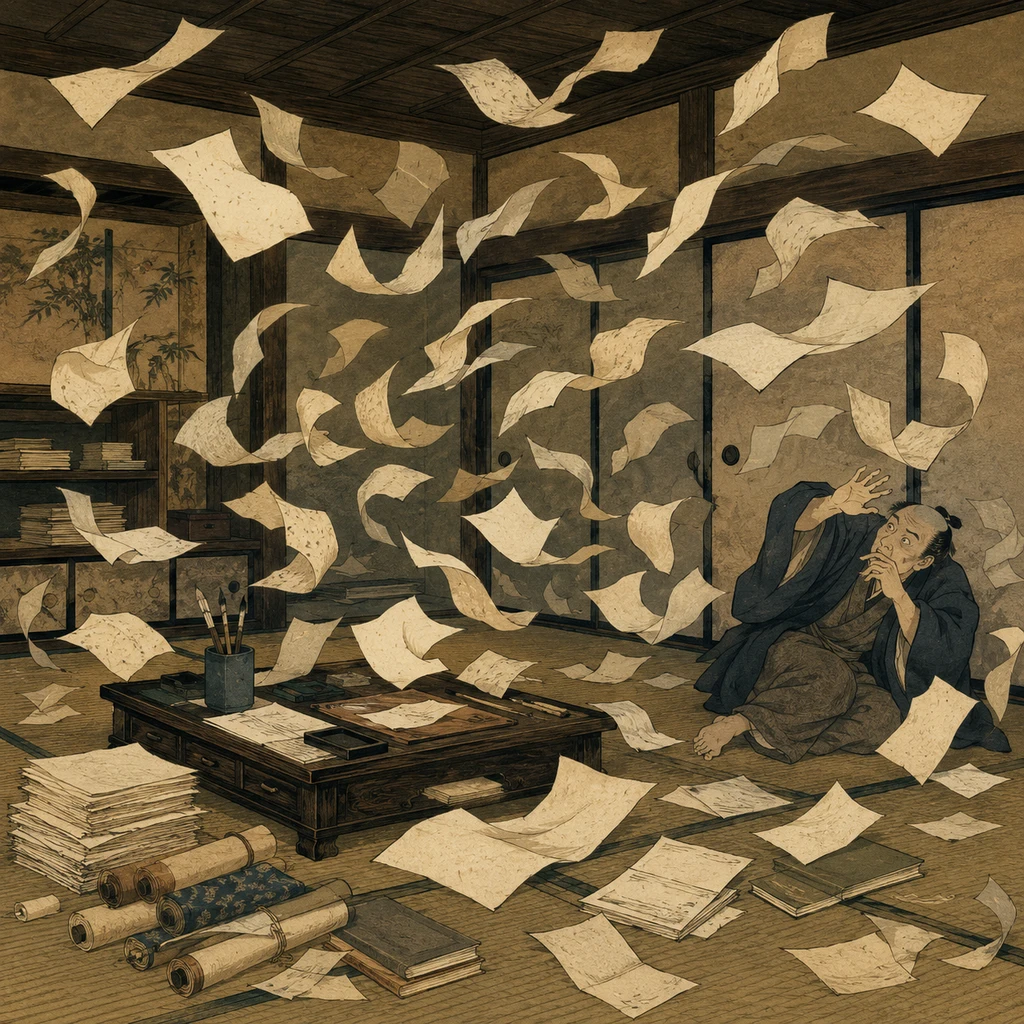
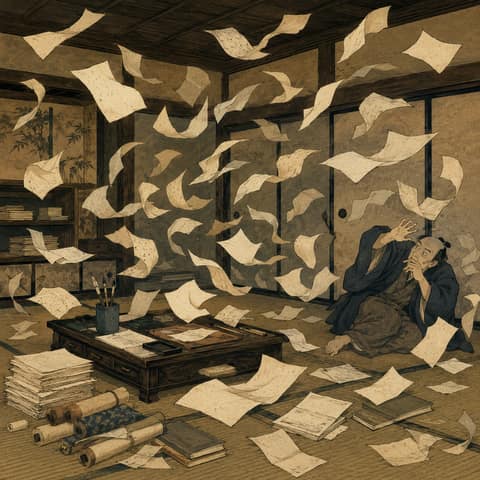
Paper Dance is a yokai name given to a phenomenon where scraps of paper lift and drift through the air on their own. In the early Showa era, Fujisawa Eihiko’s Illustrated Anthology of Yokai (Japan, Vol. 1) notes it appears in the tenth month (Kannazuki) and uses an illustration of the nose-paper apparition from Inō Mononoke Roku. Later handbooks treated it as a proper-named yokai, but folklorist Kenji Murakami frames it as a recurring incident within ghost tales rather than a distinct entity.

Shōrōkaze (Spirit-Wind)

Shōrōkaze (Spirit-Wind)

Uncommon

SHOH-roh-kah-zeh

盆十六日の死霊風・精霊風

Weather & Calamity SpiritsSaga

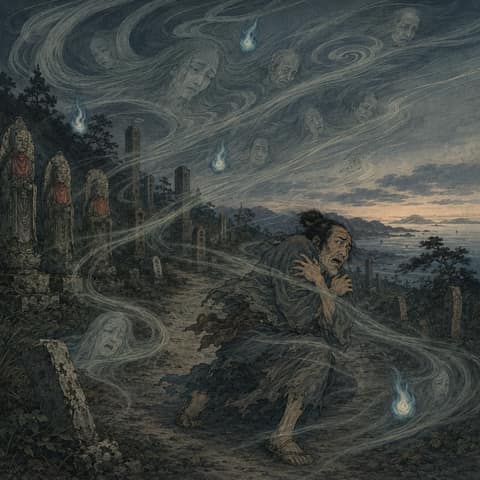
Shōrōkaze, the “spirit-wind,” is a baleful breeze said to blow on the morning of the sixteenth day of Obon. It has no visible form, yet those struck by it were feared to suffer sudden fever, chills, or dizziness. Here “shōrō” means the spirits of the dead in Buddhist usage, and the wind is understood as the current that carries the departing souls at Obon. In the Goto Islands, people traditionally avoid graves and grave paths on this day to ward off spiritual harm.

Suiko-sama (Water Tiger Deity)

Suiko-sama (Water Tiger Deity)

Epic

sui-ko-sa-ma

津軽の水虎大明神

Deities & Divine SpiritsAomori

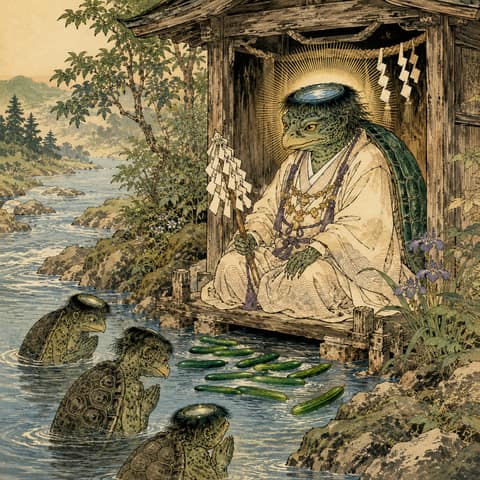
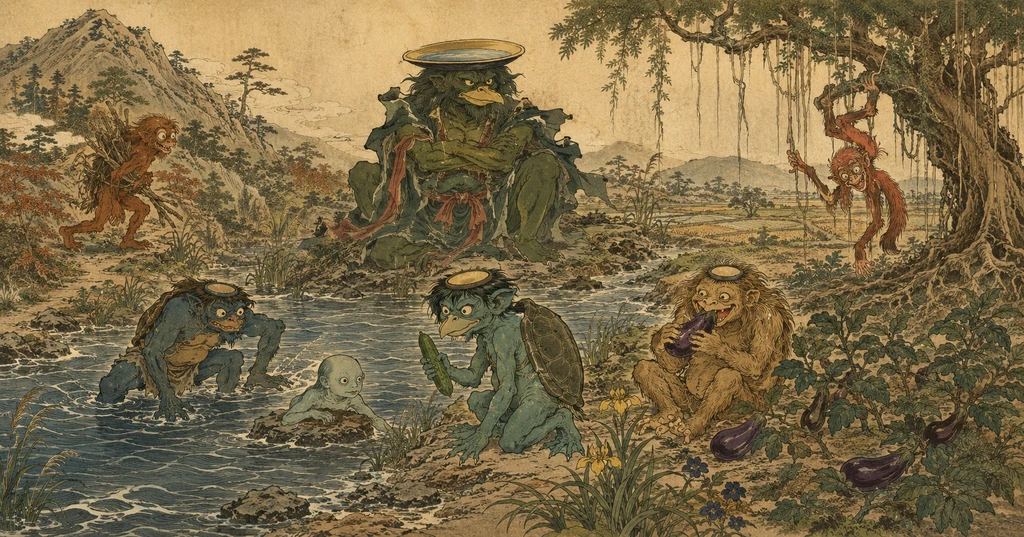
Suiko-sama is a water deity worshipped in the Tsugaru region of Aomori as a guardian against drowning; the formal name is "Suiko Daimyōjin". Counted among the retinue of the Dragon Palace (Ryūgū), it is described both as a higher being that commands the local kappa — here called *medochi* — and, in other tellings, as a kappa itself. Its sacred images are enshrined in small wayside shrines and halls, sometimes in the form of a kappa and sometimes borrowing the form of Benzaiten. In early summer by the old lunar calendar, people offered the first cucumbers of the year and set them adrift on the river, praying that their children would not lose their lives to the water. It shares only its written name with the Chinese "suiko" of the materia medica; in truth it is a water-deity faith that grew up on its own in Tsugaru.

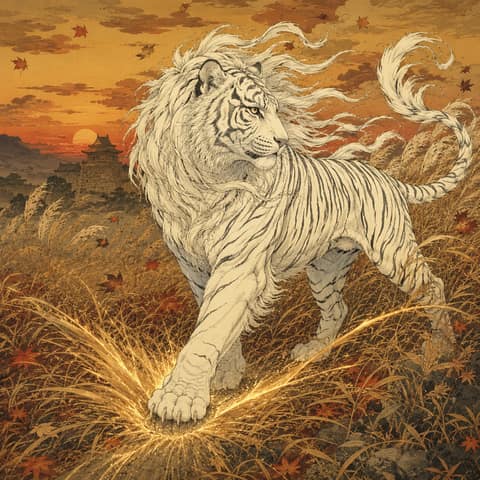
Byakko (White Tiger)

Byakko (White Tiger)

Divine

Byakko

西方を護る四神・白虎

Animal TransformationsNara

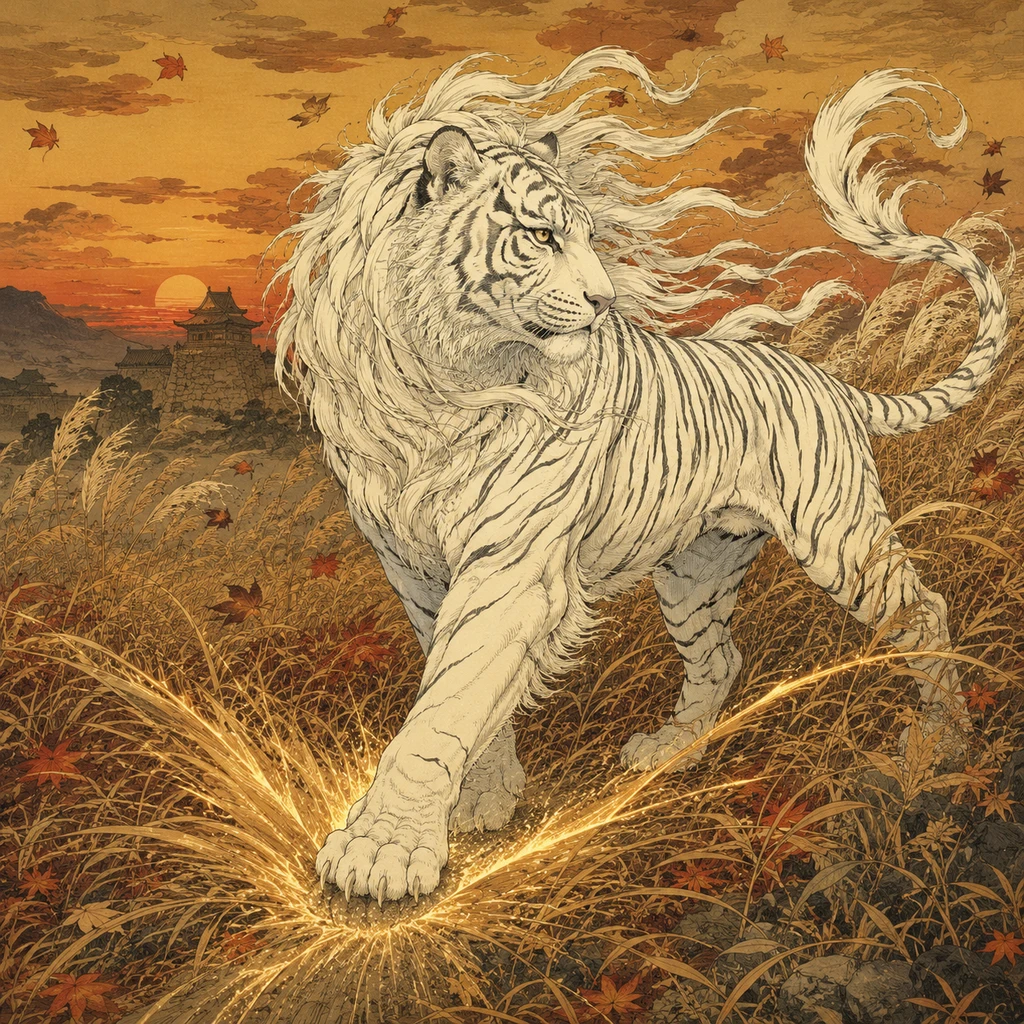
Byakko, the White Tiger, is one of the Four Symbols that guard the west, the divine beast that shapes the seven western lunar mansions of the heavens into the form of a tiger. In the Five Phases it is assigned to Metal, in the five colors to white, and in the seasons to autumn, and it is represented as a fierce white-furred tiger. Arising from Chinese astral and Five Phases thought, the Huainanzi's "Treatise on the Patterns of Heaven" makes the beast of the west the White Tiger. After it was received into ancient Japan, it formed a pair with the Azure Dragon and was depicted as a marker of directional protection and of wards.

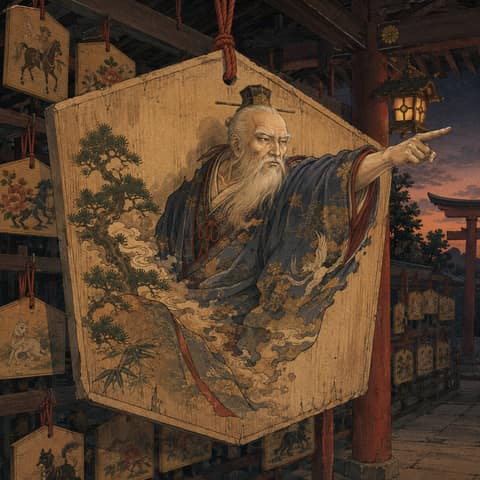
Spirit of the Ema Plaque

Spirit of the Ema Plaque

Uncommon

EH-mah no SAY

社寺絵馬堂の宿り霊・絵馬の精

Household SpiritsKyoto

A spirit said to dwell in ema—wooden votive plaques dedicated at shrines and temples. Imbued with the power of long-held prayers and collective intent, it appears as an old man or a beautiful woman. Its form and aura shift to match the subject painted on the plaque. It is known to visit people in dreams or drowsy moments, foretelling fortune or misfortune and admonishing the proper treatment of ema. Though a tool-spirit, its numinous nature is viewed as linked to the sacred authority of shrines and temples.

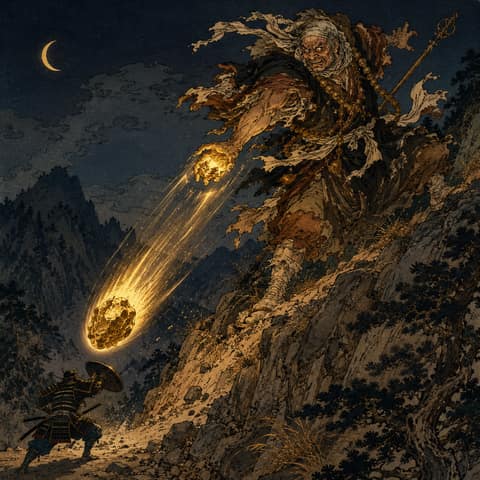
Kanatsubute

Kanatsubute

Uncommon

kah-nah-TSOO-boo-teh

奈良坂の金礫法師・かなつぶて

Demons & GiantsNaraKyoto

Kanatsubute is a shapeshifting menace of Narasaka recorded in the Treasure Tales (Hōbutsushū). It hurled small gold pebbles like shot to ambush travelers, behaving more like a bandit than a phantom. In the Otogi-zōshi tale of Tamura, it appears as a gigantic monk, wielding three gold stones—Tarō, Jirō, and Saburō—to smash people, horses, and pack trains. The warrior Inase Gorō Sakanoue Toshimune eventually subdued it; Kanatsubute surrendered and was executed. Its hallmark is the uncanny skill with golden gravel and its reign of terror on the Narasaka pass.

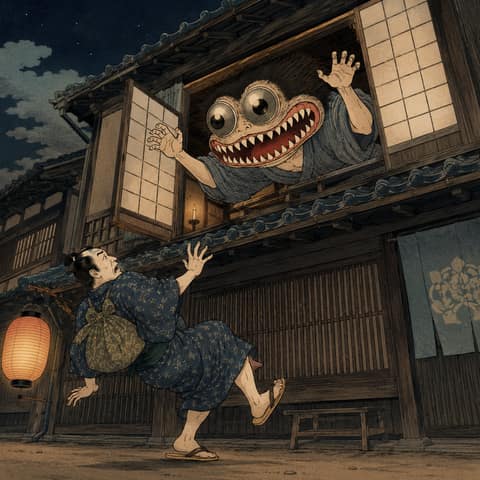
Momongaa

Momongaa

Rare

moh-mohn-GAH-ah

二階窓辺の脅かし・ももんがあ

General ClassificationsJapanese folklore

“Momongaa” is a specter name found in Edo-period picture books and printed collections. It is said to appear at night from an upstairs room or by a window to startle people. Illustrations show it with bulging eyes and a split, gaping mouth, or as a white lump of flesh with stubby limbs. No fixed origin or rites are recorded. The name echoes a startling cry, and its forms vary across herbals, essays, and picture scrolls.

The Great Kiseru

The Great Kiseru

Uncommon

oh-oh-gee-SEH-roo

阿波青石瀬の煙管狸・大煙管

Animal ShapeshiftersTokushima

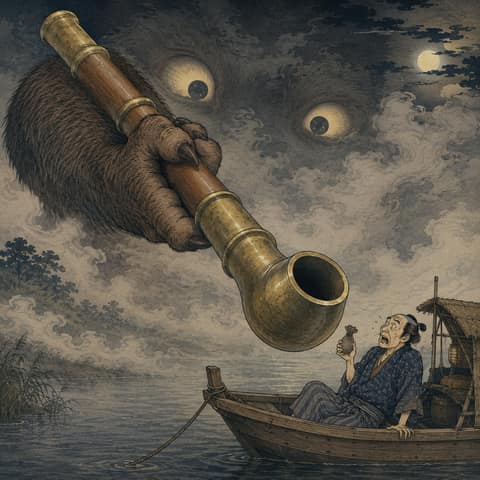
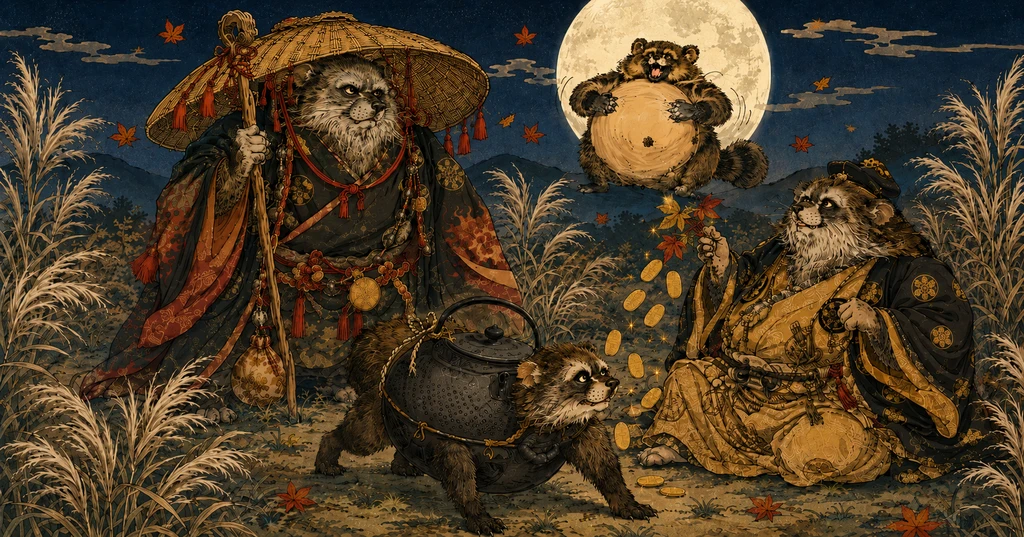
A shape-shifting tanuki specter from Keida in Mishō Village, Miyoshi District, Tokushima. It appears when boats anchor late at night at the Aoiseki (Blue-Stone Rapid) on the Yoshino River, extending an enormous kiseru pipe and demanding tobacco. If you can pack the pipe full, it causes no harm—but the amount required is absurdly large. If your supply runs out, it capsizes the boat or triggers strange disturbances. It is a waterside tanuki that frightens travelers and boatmen, told as a cautionary tale.

Ao-andon

Ao-andon

Epic

AH-oh AHN-dohn

百物語の鬼女・青行燈

Dwelling / ArtifactTokyo

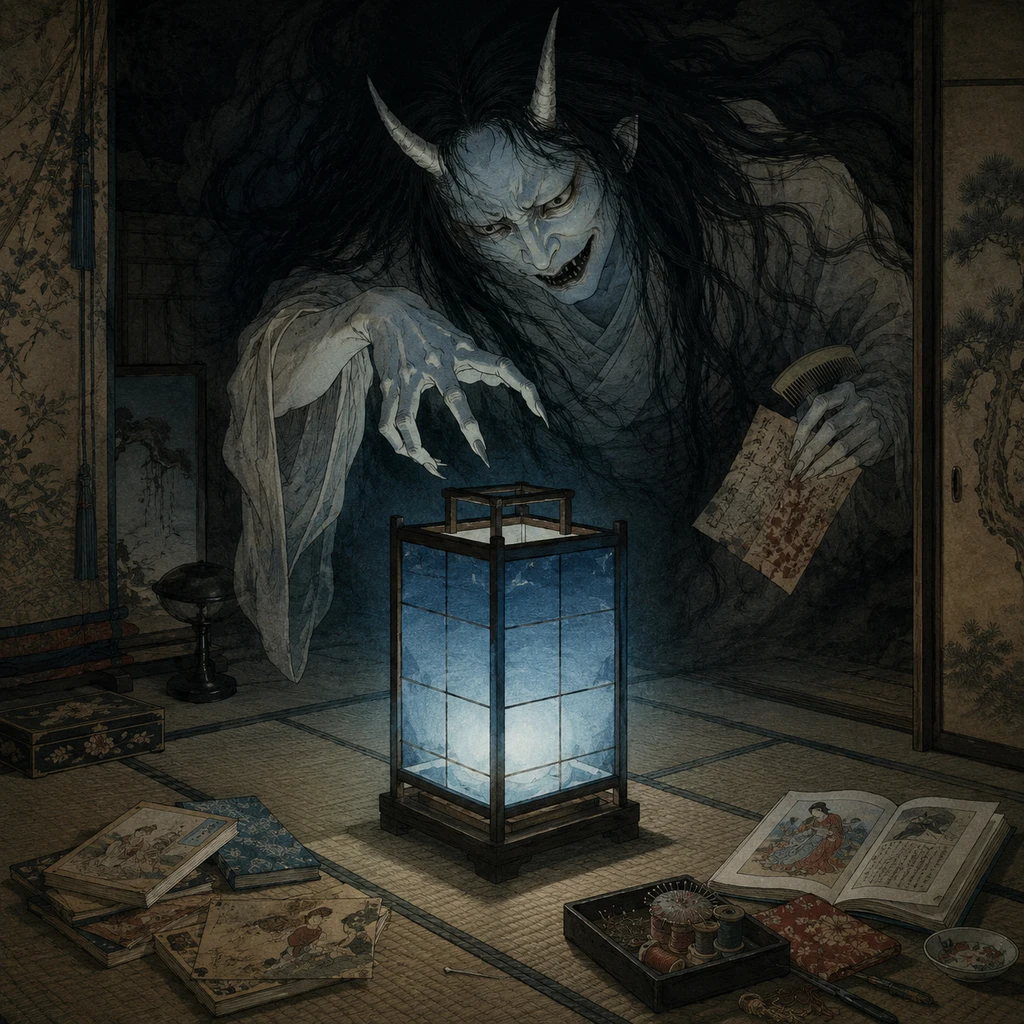
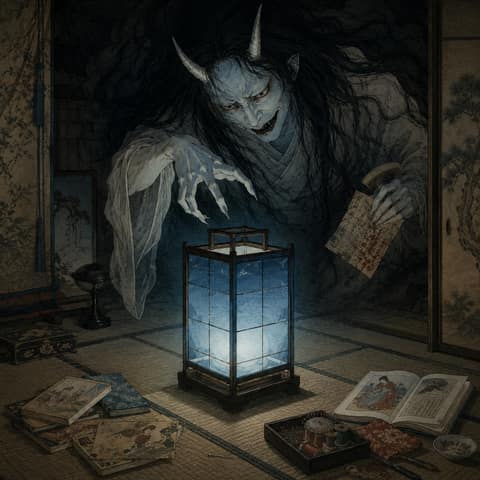
The Ao-andon (Blue Paper Lantern) is an extremely unique "ritualistic and psychological yokai" said to appear at the climax of the "Hyakumonogatari" (100 Ghost Stories), a ghost story gathering highly popular during the Edo period. A lantern covered in blue paper is lit with one hundred wicks (or candles), and one is extinguished after each ghost story is told. It refers to the general term for the bizarre phenomena, or the apparition itself, that emerges the moment the 100th and final light is extinguished, plunging the room into total darkness. Its visual image was solidified in Toriyama Sekien's yokai illustration collection *Konjaku Hyakki Shui*, where it was depicted as a ghastly demoness with black hair, horns, and blackened teeth. Unlike naturally occurring yokai living in specific mountains or rivers, it can be considered a pioneer of "urban legend-style meta-yokai," incarnated as the physical manifestation of kotodama (the spirit of words) created by the accumulation of human words (ghost stories) and fear.

Kera-kera Woman

Kera-kera Woman

Rare

keh-rah KEH-rah OHN-nah

塀越しの艶笑女霊・倩兮女

Ghosts & SpiritsJapanese folklore

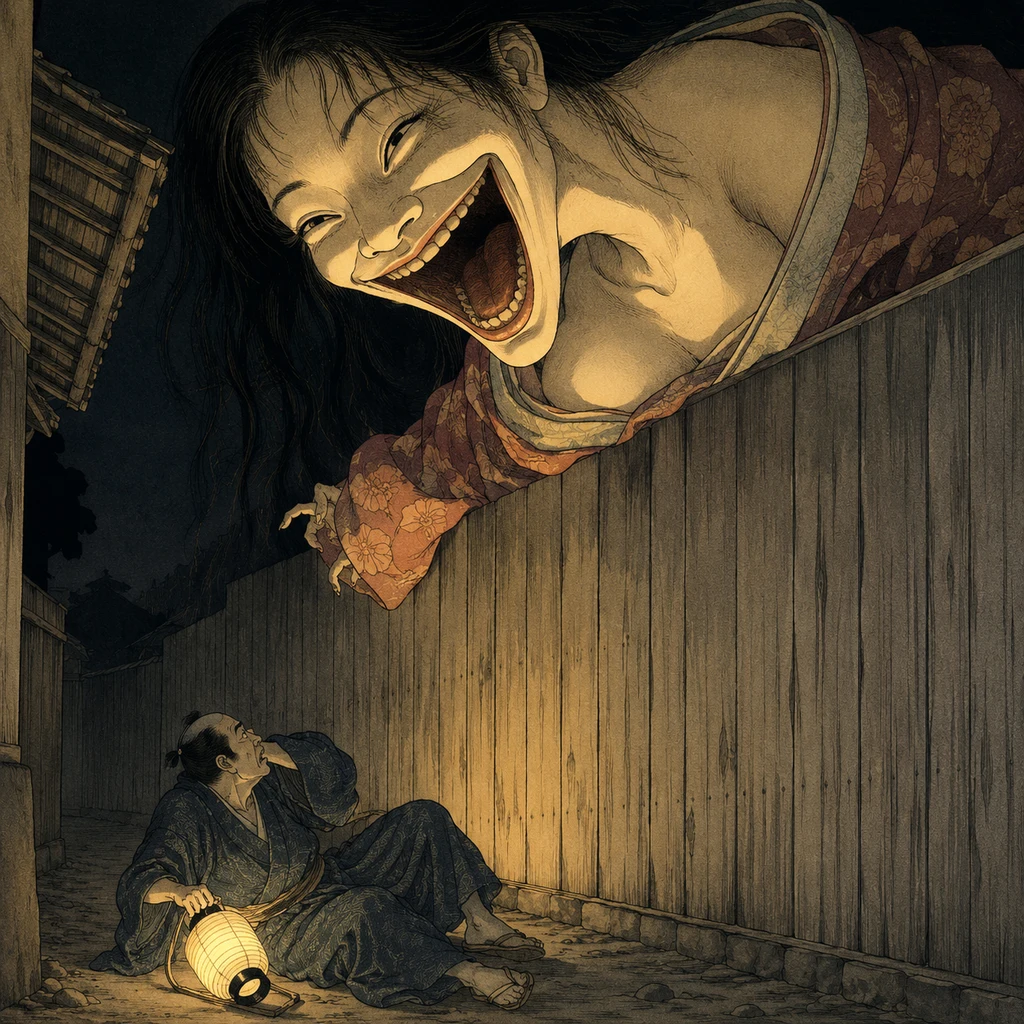
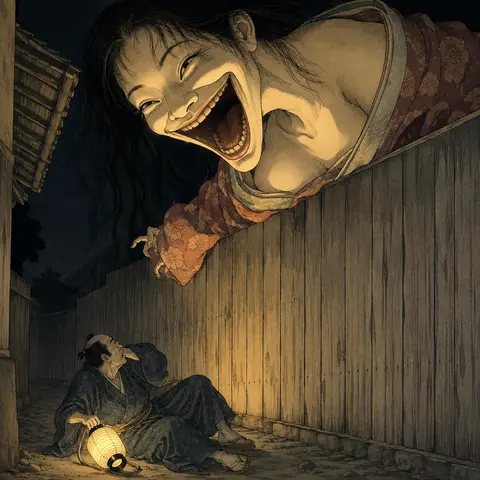
A female yokai depicted by the Edo-period artist Toriyama Sekien in Konjaku Hyakki Shūi. She peers over a wall with her mouth agape, cackling kera-kera to bewilder passersby. Sekien alludes to a Chinese anecdote by Song Yu, likening her to the spirit of a woman whose coquettish laughter unsettled hearts. No specific locale or backstory is given; later tradition remembers her as a eerie, laughing apparition.

Umashika (Horse-Deer Yokai)

Umashika (Horse-Deer Yokai)

Uncommon

oo-MAH-shee-kah

馬面に鹿蹄の絵巻怪・馬鹿

Animal ShapeshiftersUnknown; chiefly attested in Edo-period picture scrolls

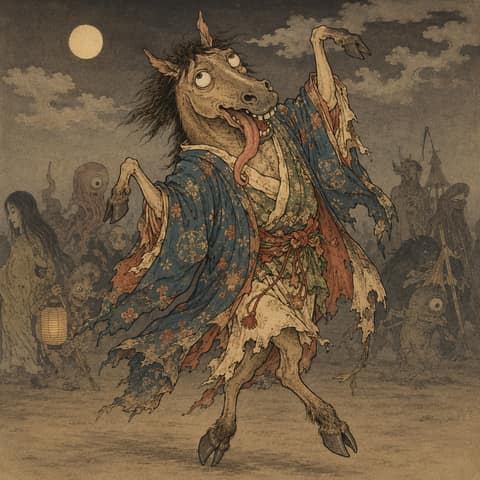
A spectral creature depicted in Edo-period yokai picture scrolls. It wears garments, spreads its forelegs wide, and has a horse’s face with bulging, upward-thrust eyes and cloven deer-like hooves. Identical images appear in late-18th-century works such as the Hyakumonogatari Kae Emaki, Oda Gyochō’s Night Parade of One Hundred Demons, and Bakemono-zukushi emaki. No period captions explain its behavior or origin. The imagery likely plays on the word baka (“fool”), but its function—harmful or helpful—remains unknown in the sources.