In Edo, Yōkai Evolved from Things Encountered to Things Chosen
Anomalies were spoken of long before the Edo period. However, as woodblock printing and an urban readership expanded, anomalies from distant lands and ancient texts could be compared side by side in a single book. A form sat next to a name, and turning the page revealed another yōkai. Yōkai were no longer just something you stumbled upon by chance on a dark road; they became objects to buy, rent, collect, and choose your favorite from.
"Edo" in this feature holds two meanings: the ghost stories tied to the city of Edo itself, such as in Honjo and Yotsuya, and the yōkai culture shaped by the publishing, art, and theater of the Edo period. By examining both separately and observing their intersections, we trace how urban living and media transformed the anomalous.
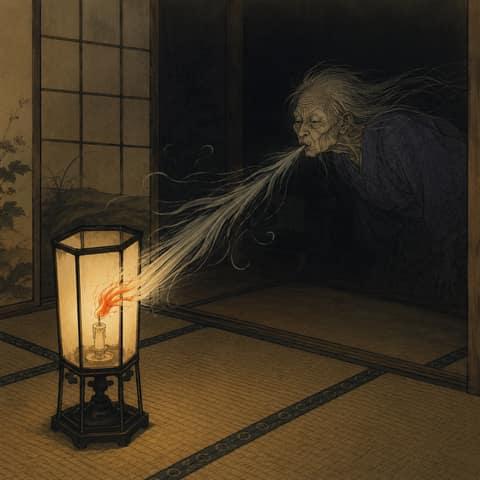
Extinguishing Lamps One by One—Hyakumonogatari and the Ao-andon
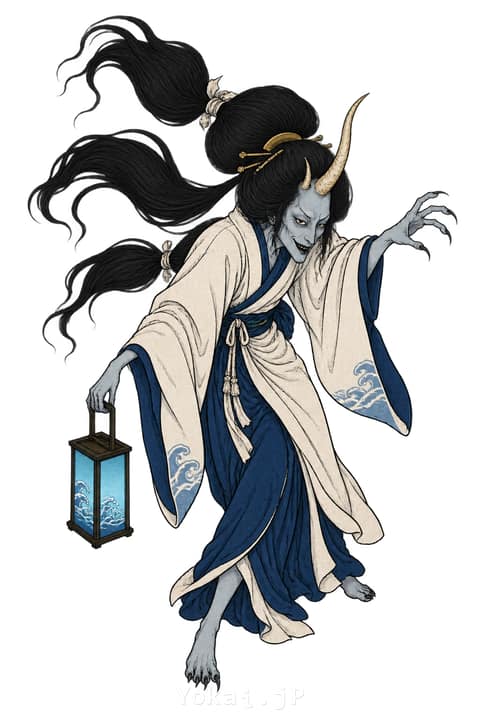
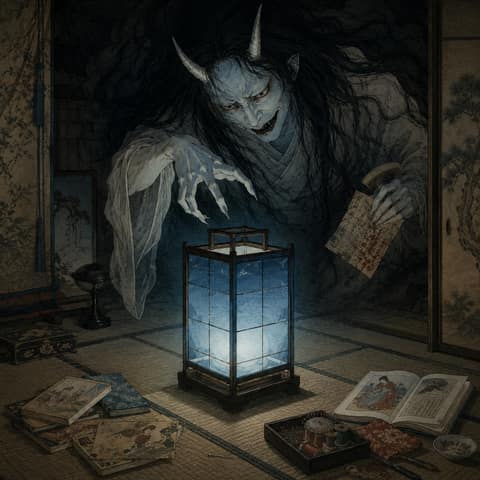
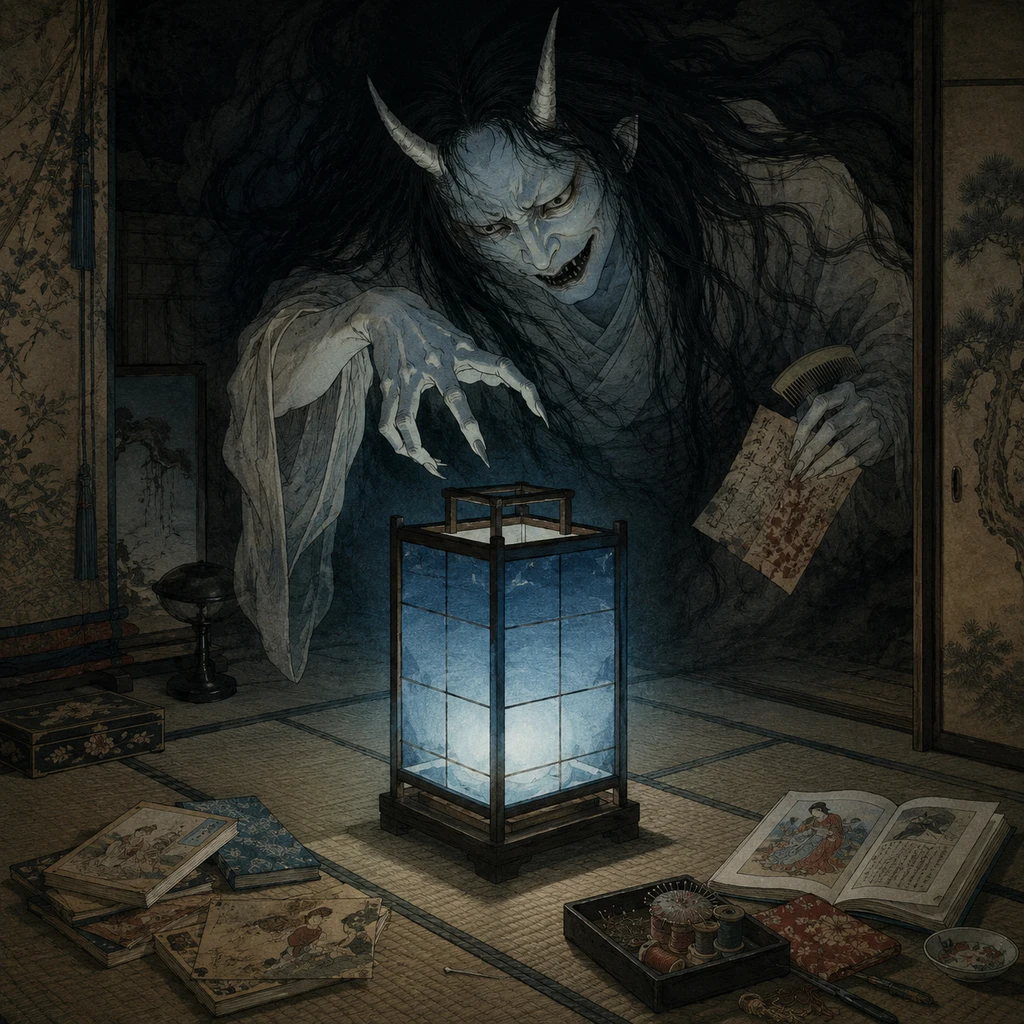
Hyakumonogatari is a parlor game of storytelling where a lamp is extinguished after each ghost story is told; it was feared that an anomaly would appear at the end. The Ao-andon is known as the entity that emerges at that conclusion, but the form of the demoness we commonly see today was firmly cemented by Toriyama Sekien's illustrations. The darkening room, the storyteller's voice, and the listeners' imaginations collectively construct the fear.
Edo's ghost stories were not a binary choice between true accounts or fiction. Old tales, transcriptions, local rumors, and the authors' embellishments layered together, gaining new forms every time they were read.
Toriyama Sekien's Yōkai Art Books—Placing Names and Forms Side by Side
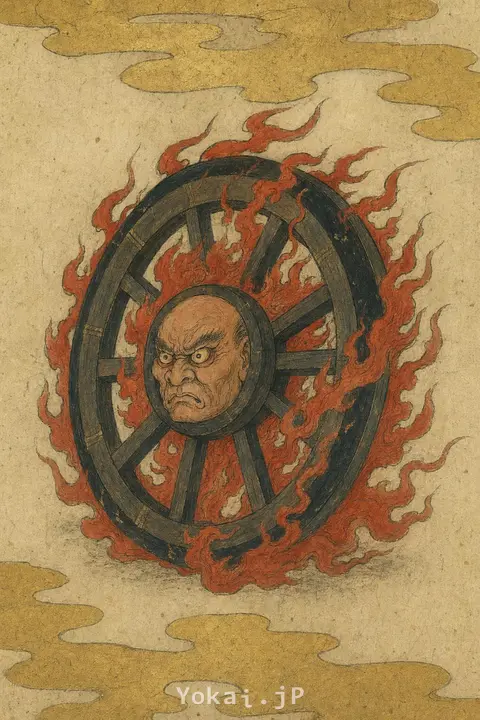
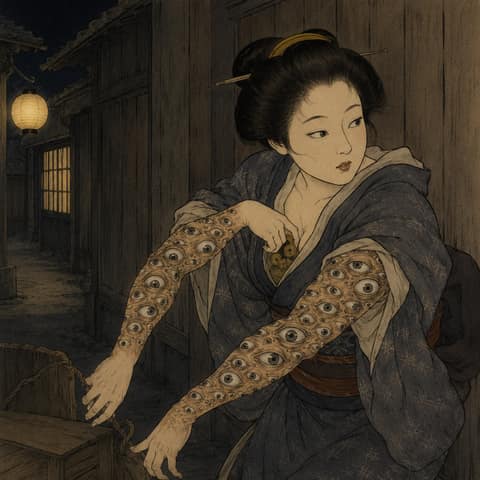
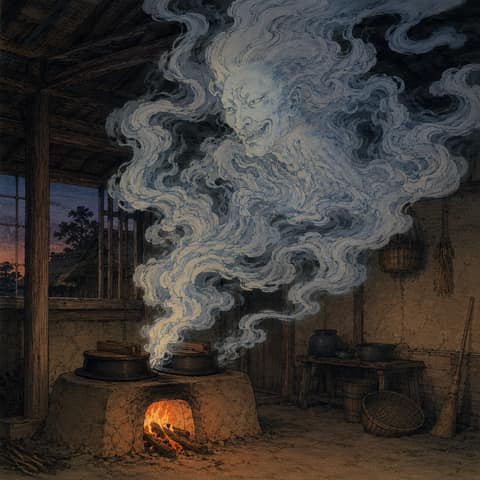
From the *Gazu Hyakki Yagyō*[1] to *Konjaku Gazu Zoku Hyakki*, *Konjaku Hyakki Shūi*, and *Gazu Hyakki Tsurezure Bukuro*, Toriyama Sekien drew numerous yōkai, traversing classics, picture scrolls, oral traditions, and wordplay. He had a massive influence on the standard images we recognize today for entities like the Nurarihyon, Wanyūdō, Mokumokuren, Enenra, and Dodomeki.
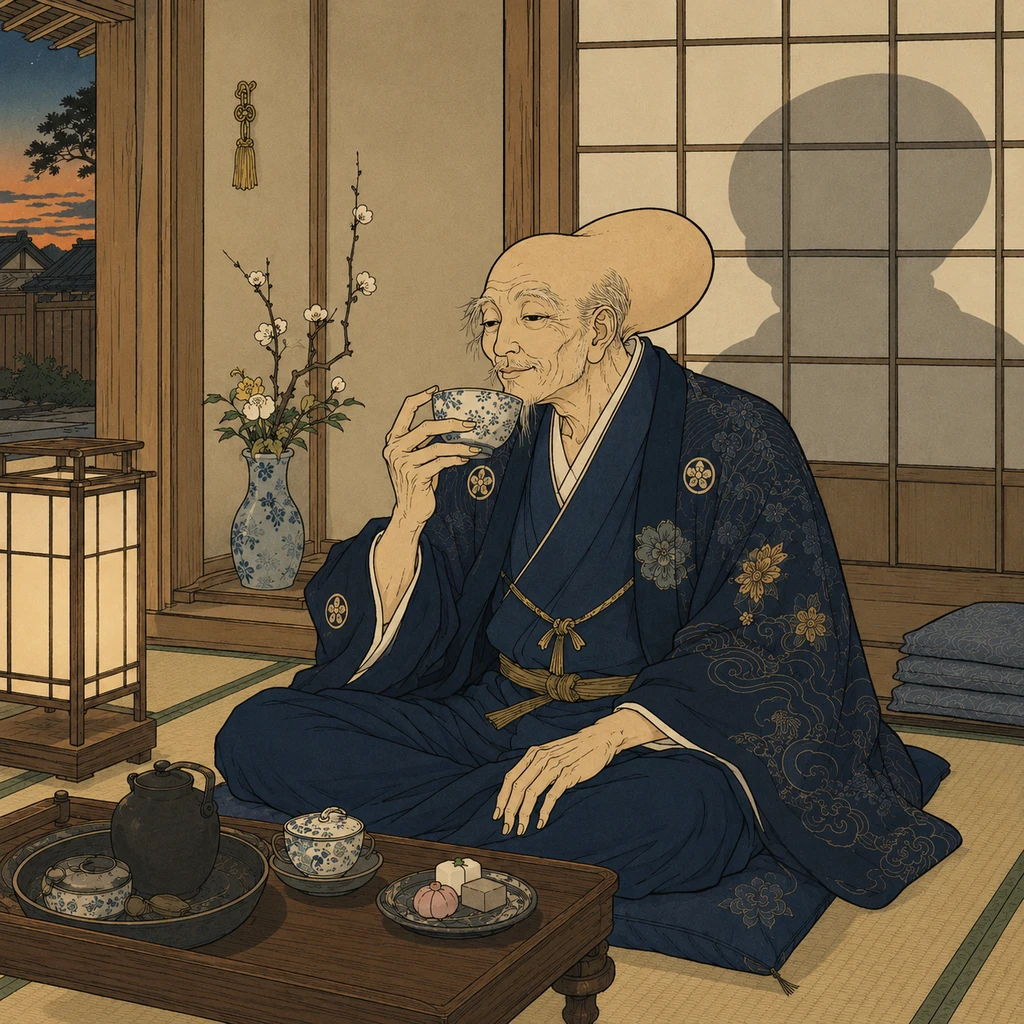 NurarihyonNurarihyon
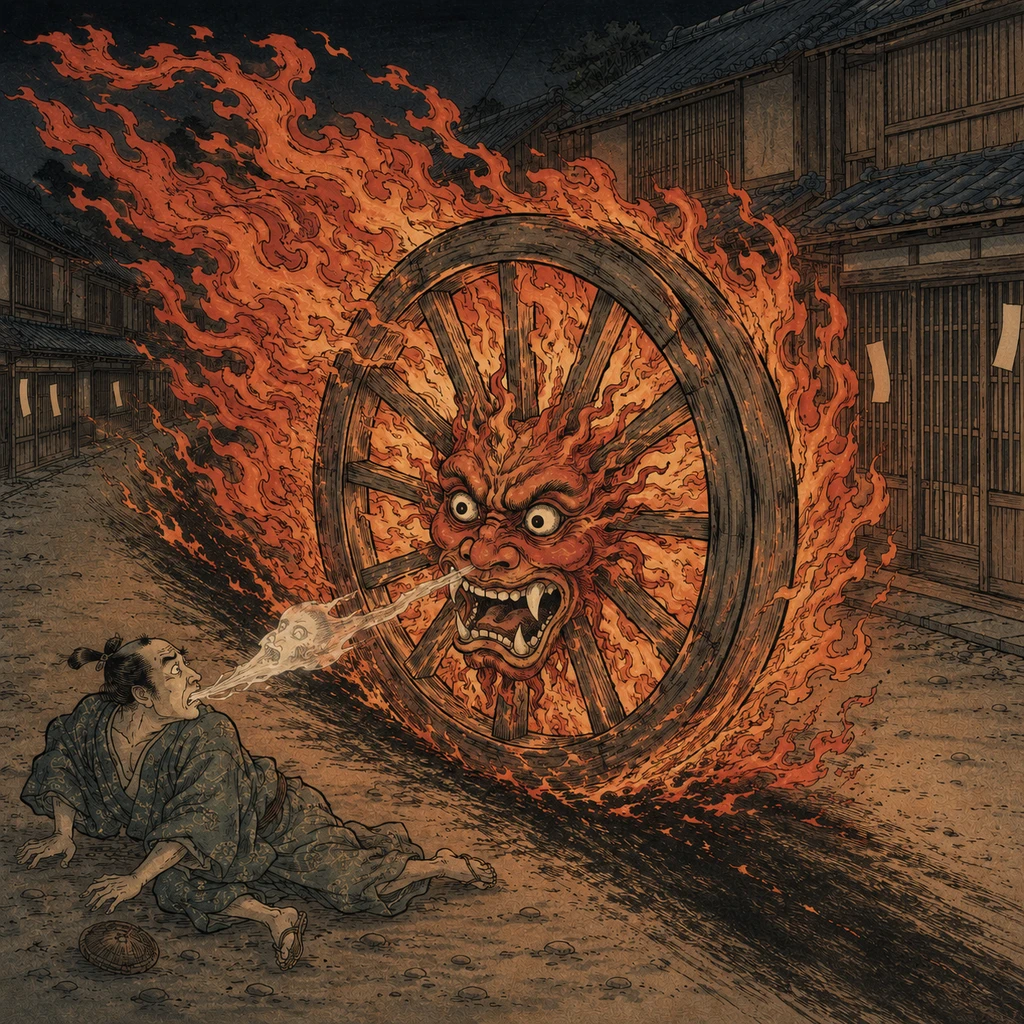 Wanyūdōwah-nyoo-DOH
 MokumokurenMOH-koo-moh-koo-REN
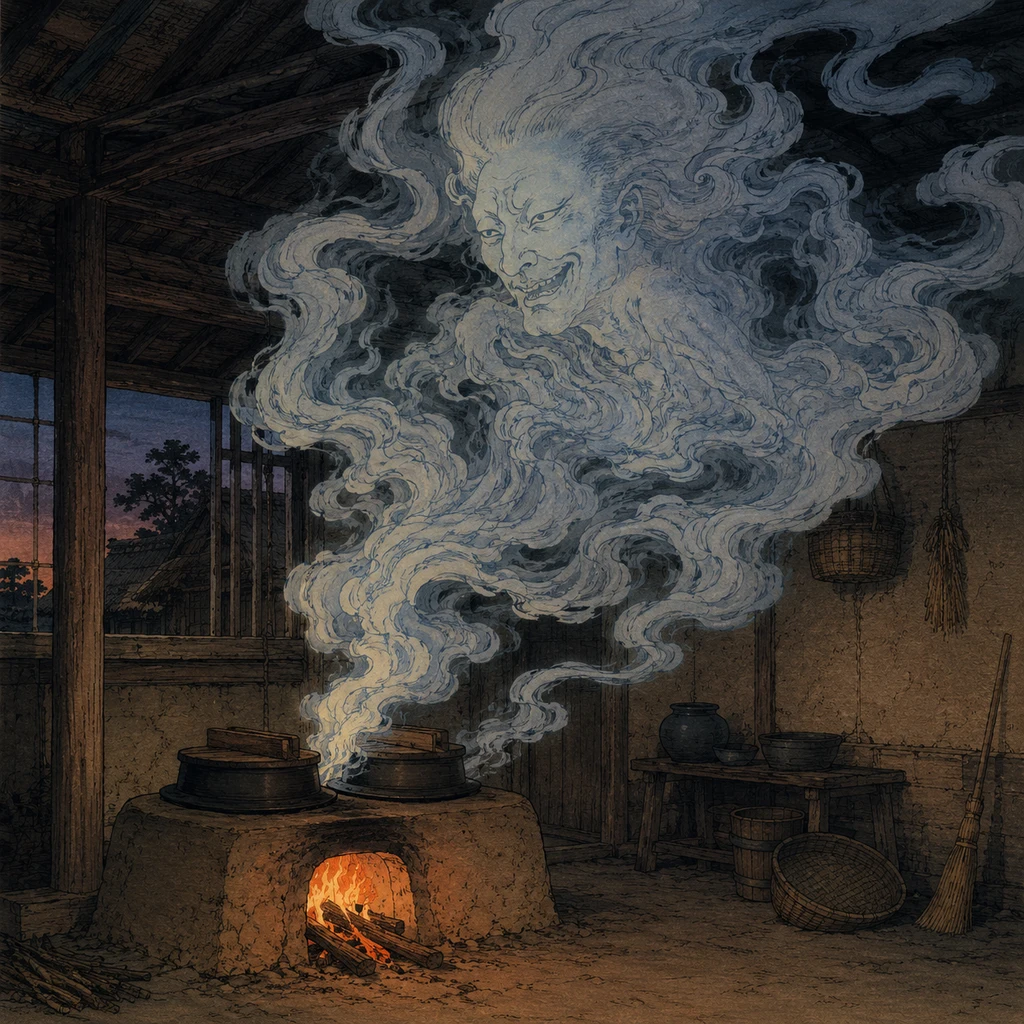 Enenraeh-NEHN-rah
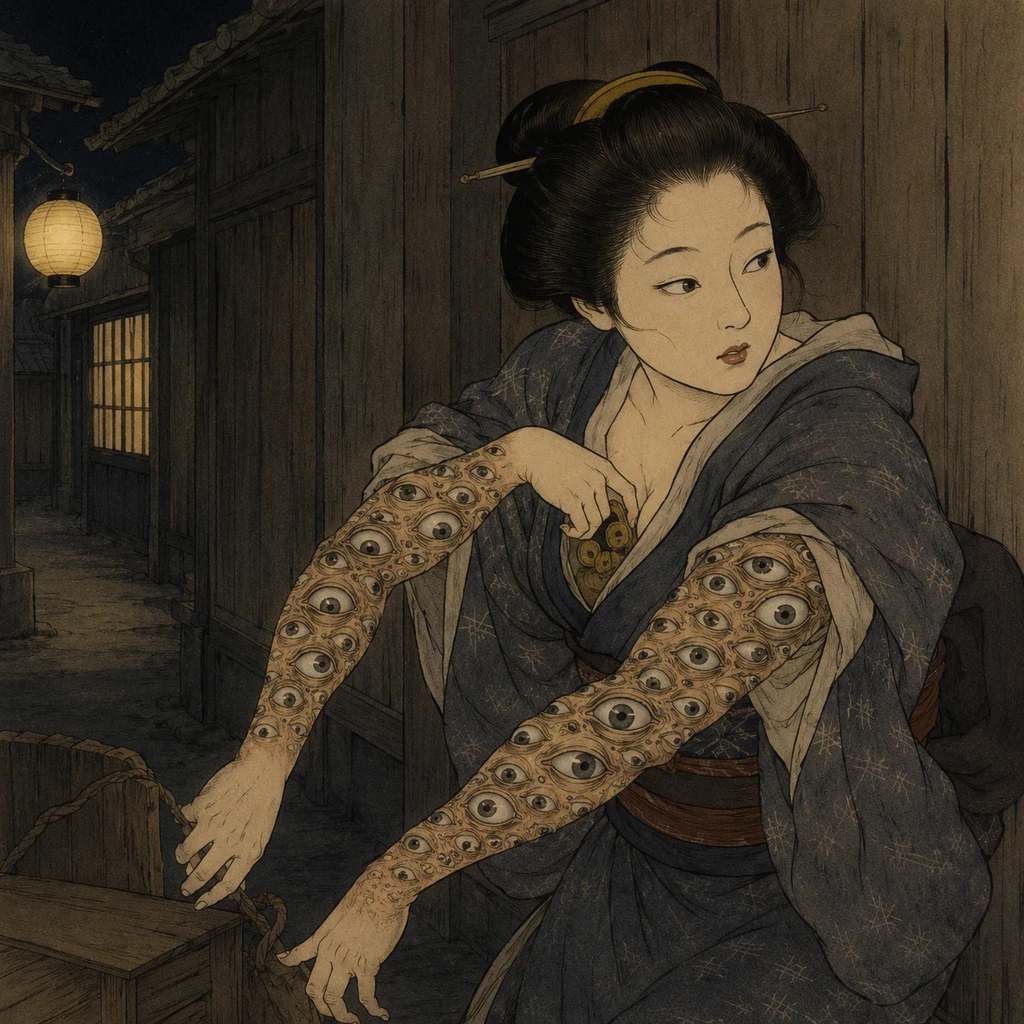 DodomekiDOH-doh-MEH-kee
To read Sekien's pictures as "records of the exact forms the people of Edo actually witnessed" is a mistake. His works are a mix of reinterpreted old names, namings of picture scroll illustrations, and creative yōkai based on Chinese classics and waka poetry. It is necessary to read these primary sources while taking the artist's knowledge and wit into account.
Inside the Mansion—Ceilings, Shōji, and Old Tools
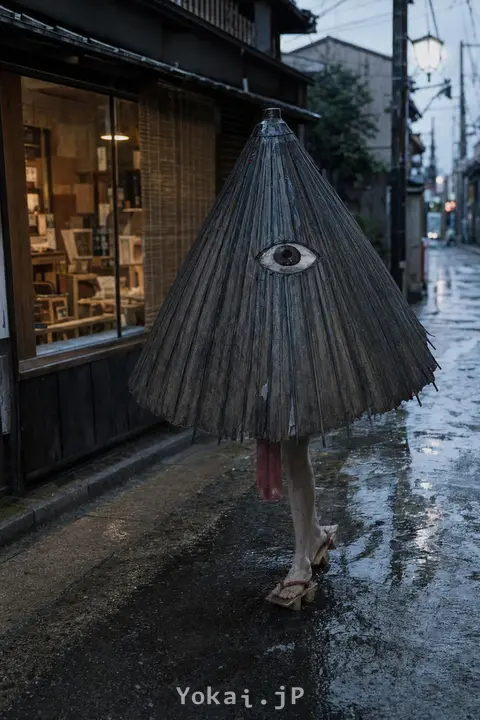
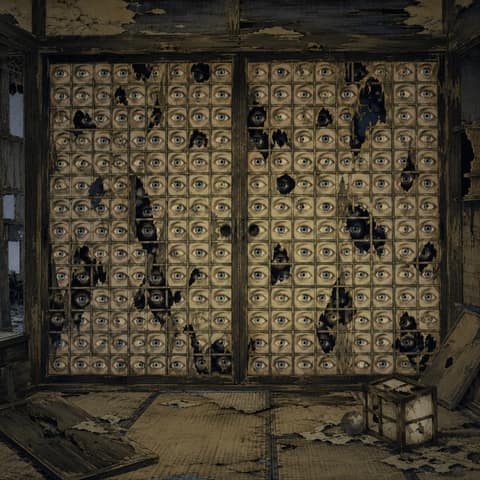
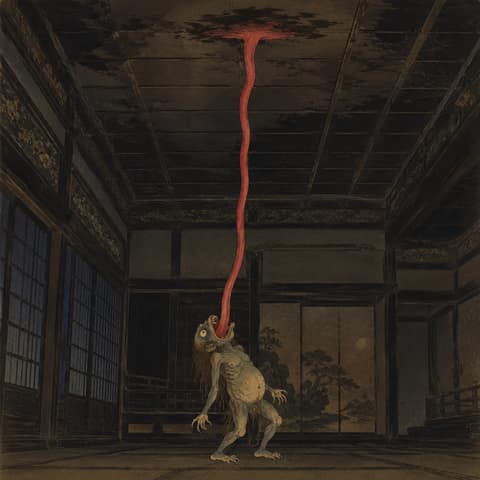
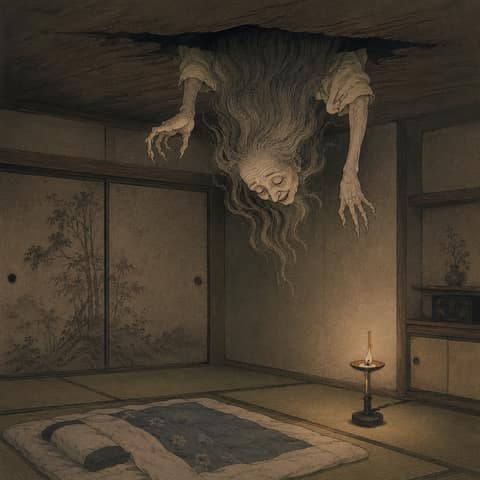
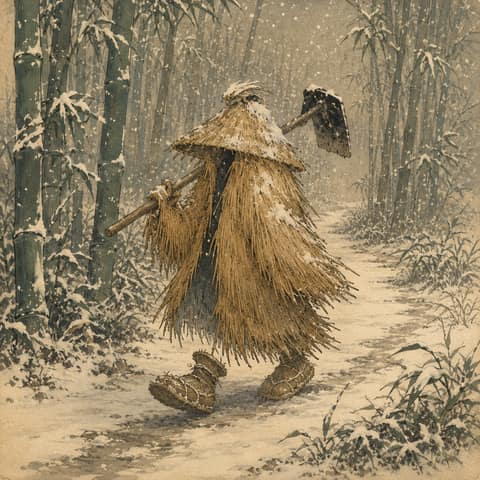
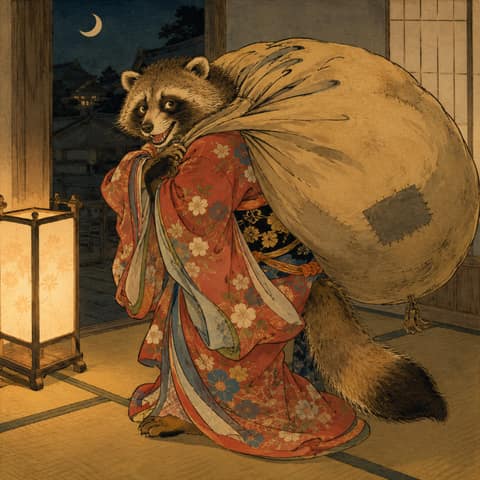
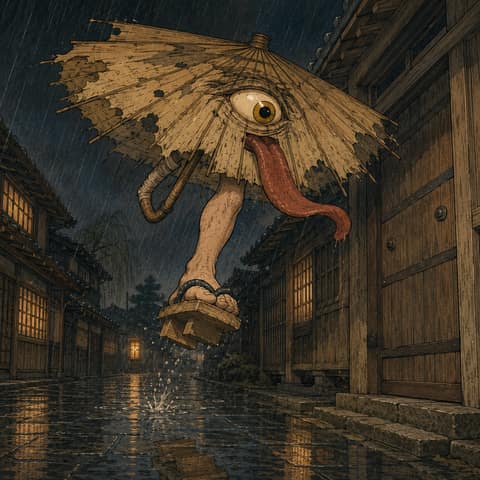
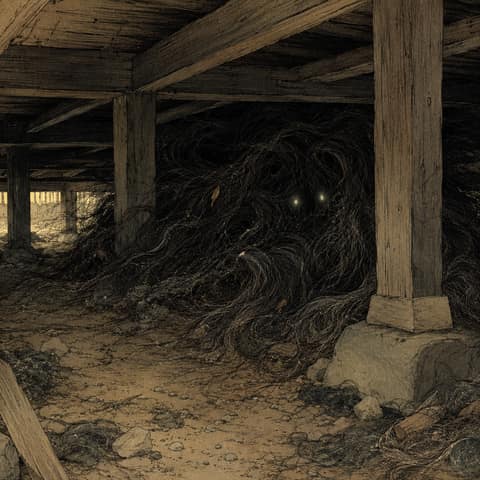
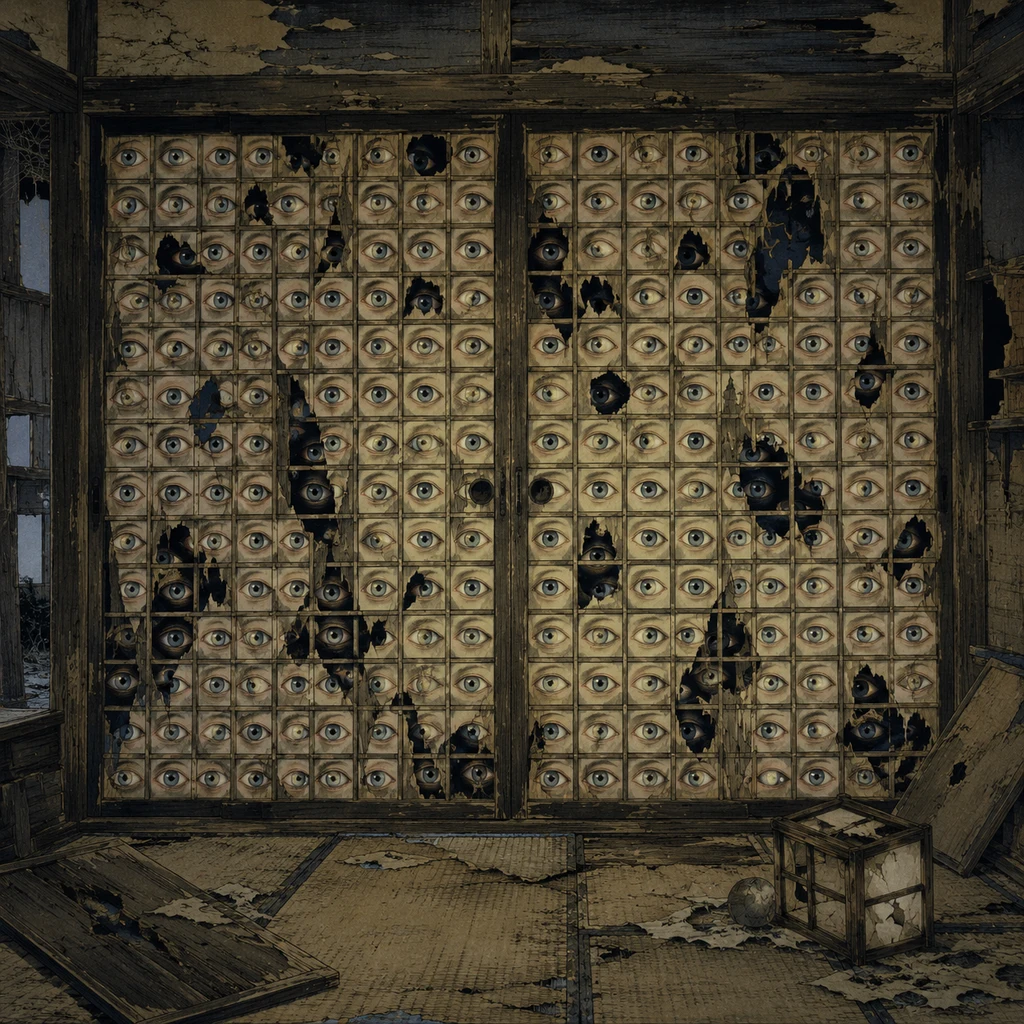
In urban houses, the amount of unseen spaces and worn-out objects increased. The Tenjō-name licks the ceiling, leaving stains; the Tenjō-kudari is a woman descending from above; the Mokumokuren turns the holes of torn shōji screens into countless eyes. Tsukumogami (tool spirits) like the Mino-waraji, Fukuro-mujina, and Karakasa-kozō begin to move while retaining the shapes of clothing and utensils.
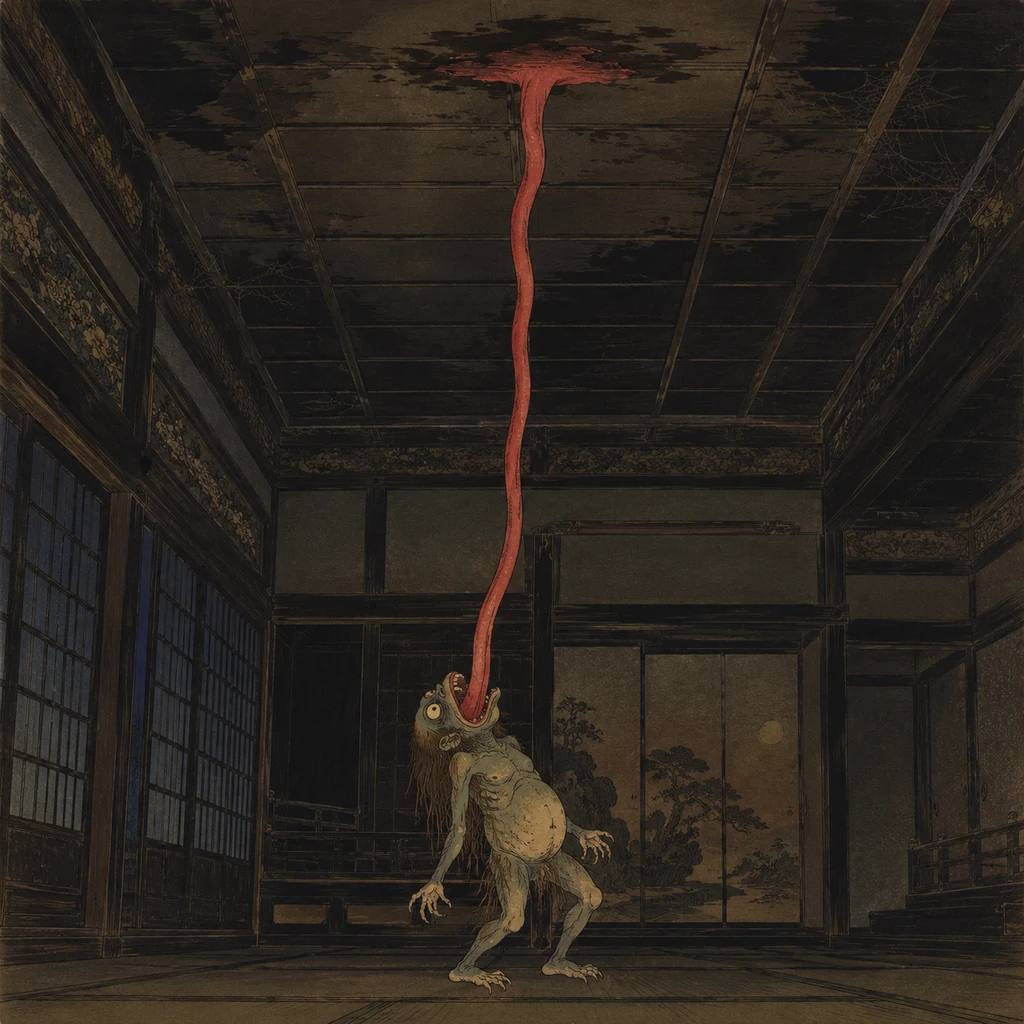 Ceiling LickerTEN-joh-NAH-meh
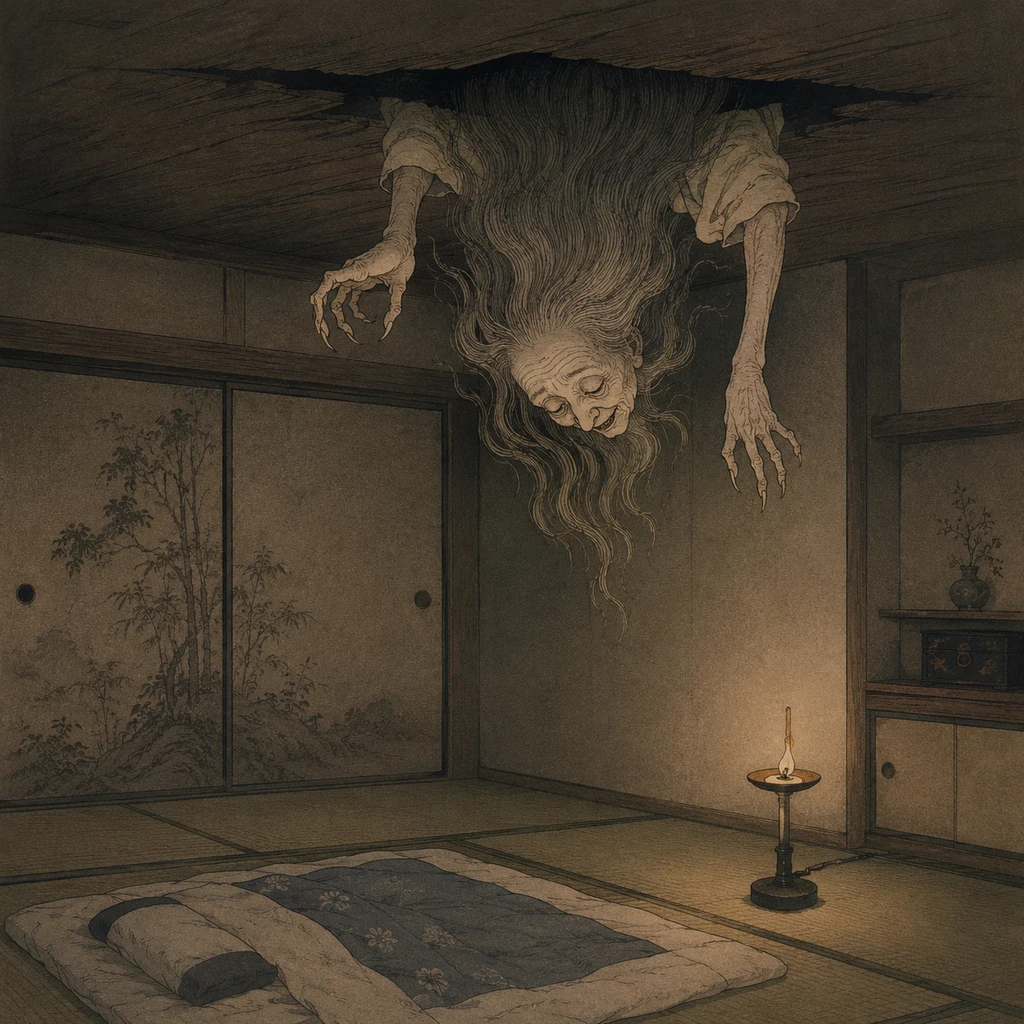 Ceiling-DropperTEN-joh-KOO-dah-ree
- MokumokurenMOH-koo-moh-koo-REN
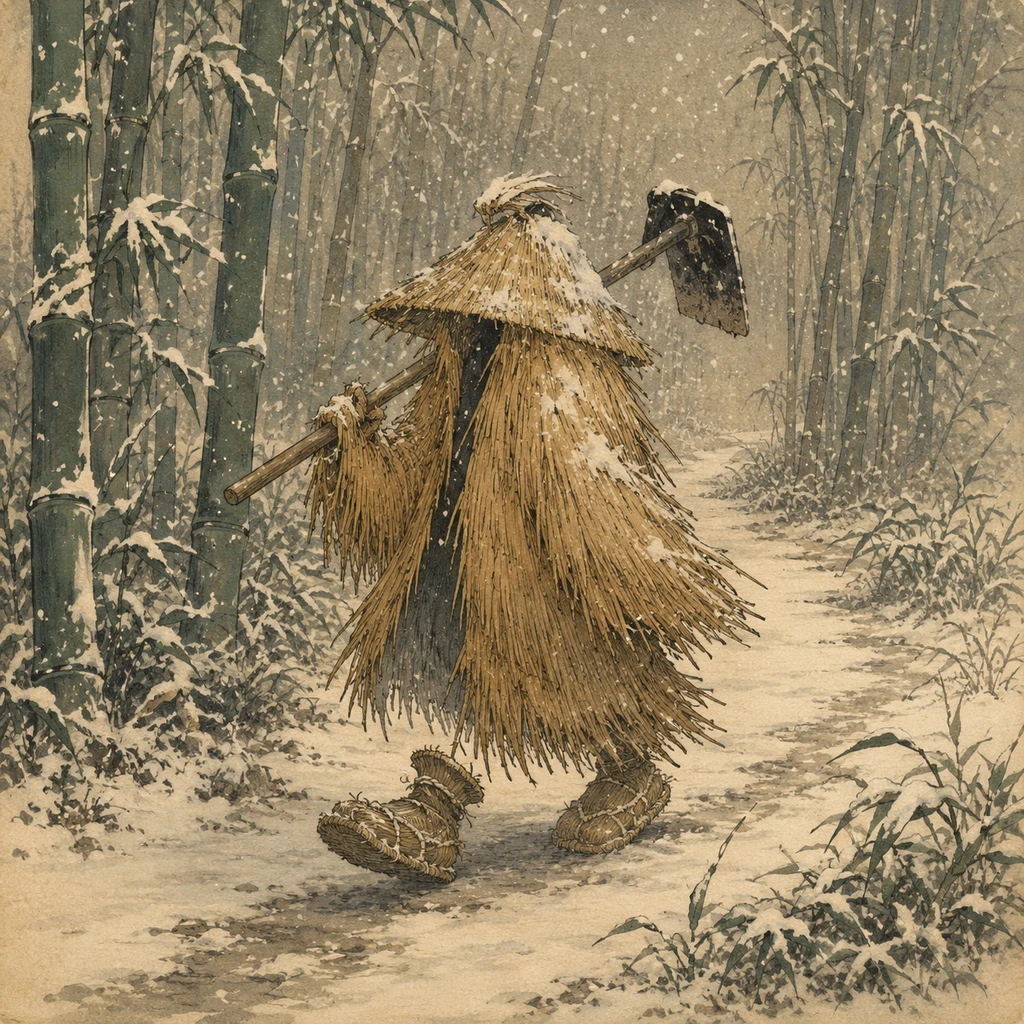 Straw-Raincoat SandalsMEE-noh WAH-rah-jee
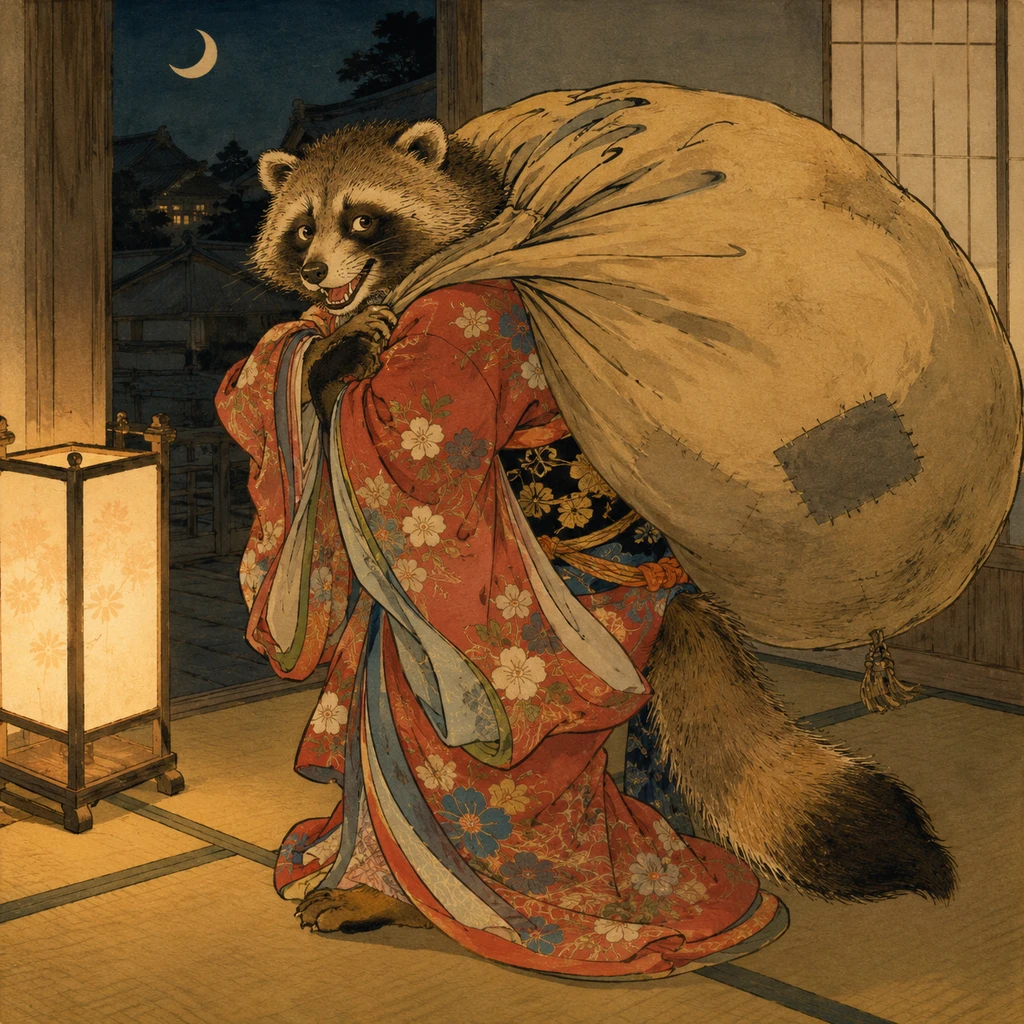 Fukuro Mujina (Bag Badger)FOO-koo-roh MOO-jee-nah
 Karakasa-kozouKAH-rah-KAH-sah koh-ZOH
In the *Gazu Hyakki Tsurezure Bukuro*[2], it's not just a simple explanation that souls reside in old tools; rather, the shapes of the utensils, Chinese classics, wordplay, and ancient poems are intricately combined. Tsukumogami cannot be summarized merely as "a literal drawing of Edo's recycling morals."
Charm Nurtured by Kibyōshi—Tōfu-kozō
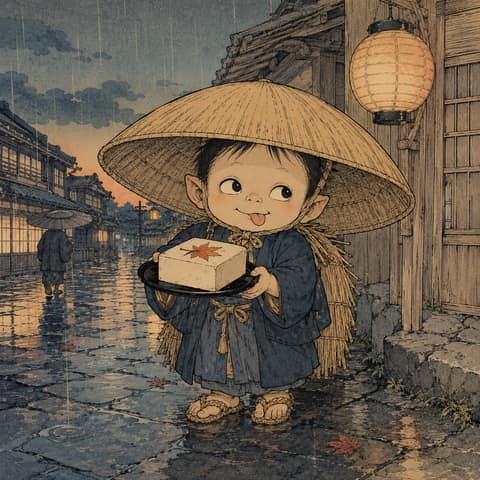
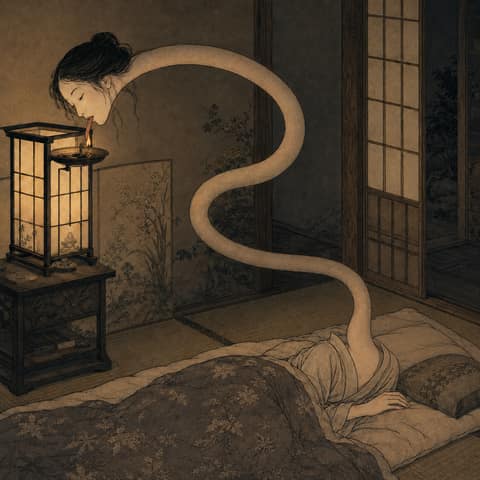
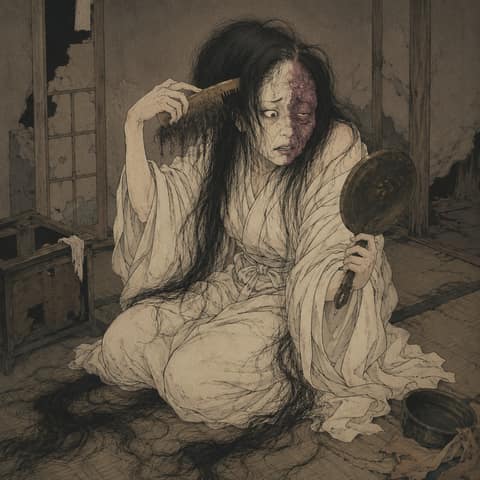
The Tōfu-kozō appears in kibyōshi and nishiki-e prints as a boy wearing a large sedge hat, carrying tofu on a tray. Rather than originating from a terrifying backstory, it is a yōkai that spread primarily as a convenient, comical character within publications. The Rokurokubi and Karakasa-kozō also possess clear outlines that convey their true nature in brief scenes, making them highly compatible with the entertainment value of illustrated books.
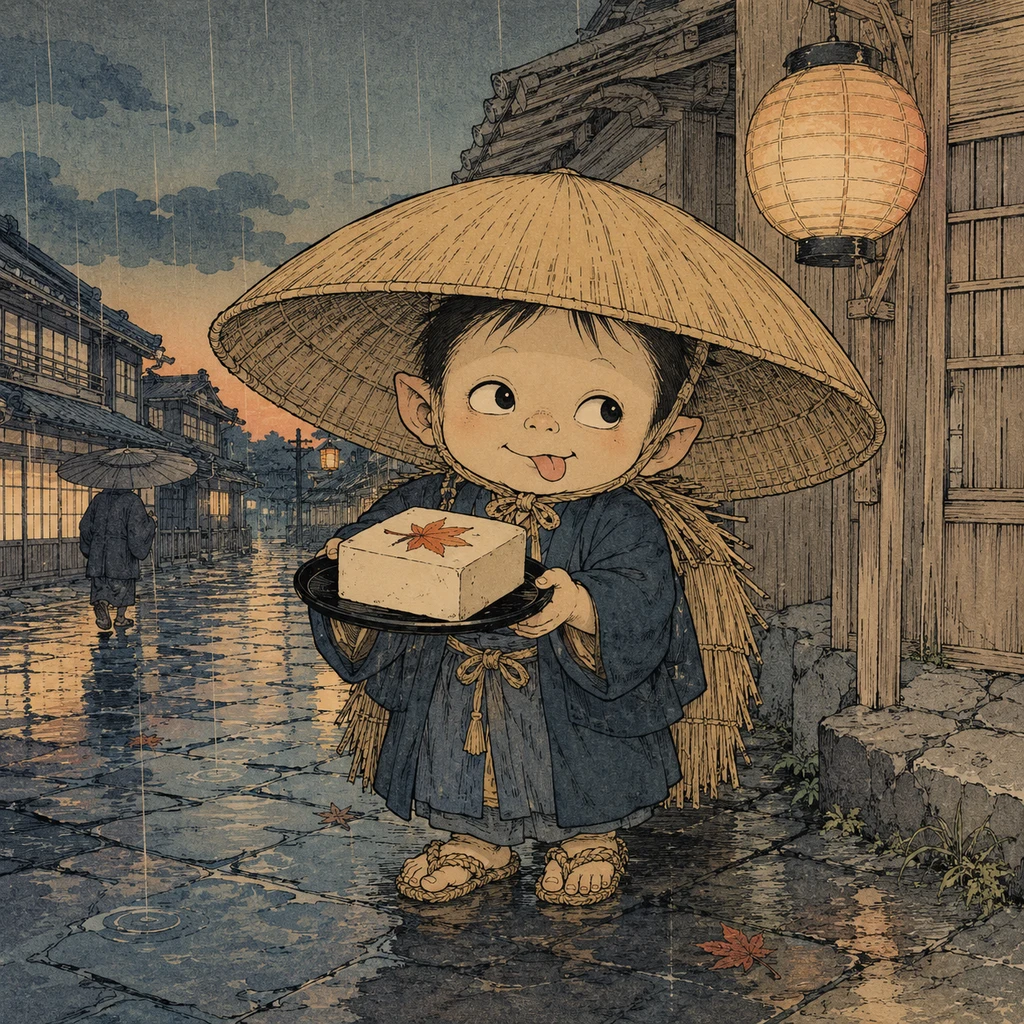
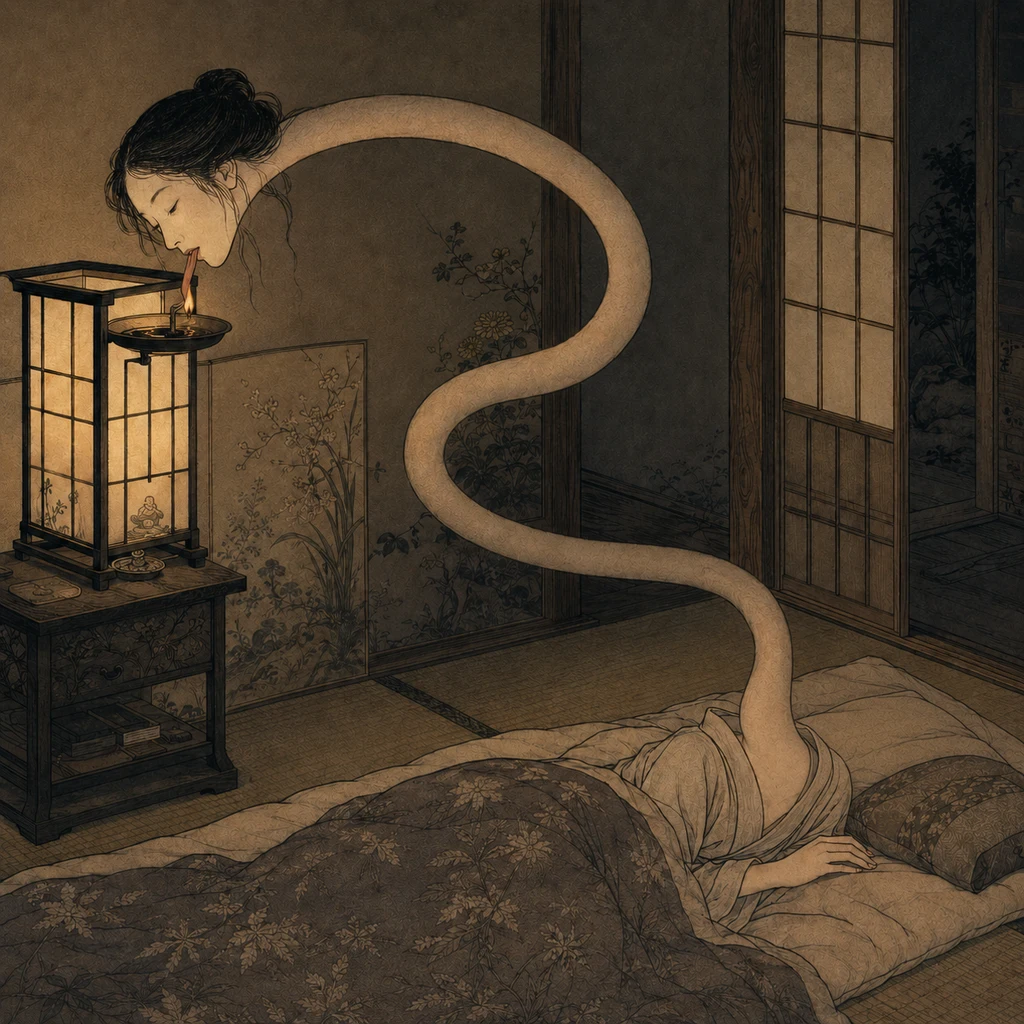
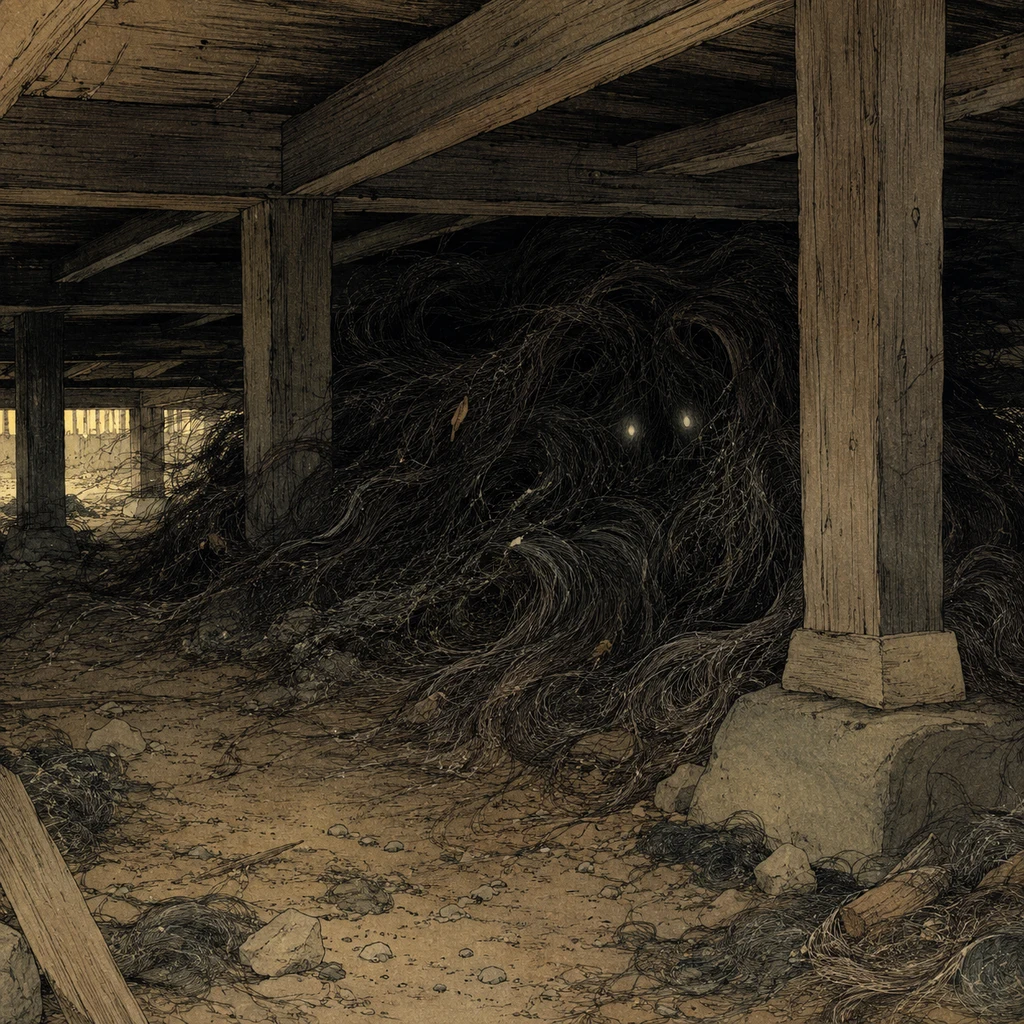
This is not a simple history where "all old yōkai were scary, and they became cute in modern times." Even during the Edo period, terror, laughter, visual metaphors, and commercial value coexisted on the very same page.
The Seven Wonders of Honjo—Ghost Stories Rooted in Urban Locations
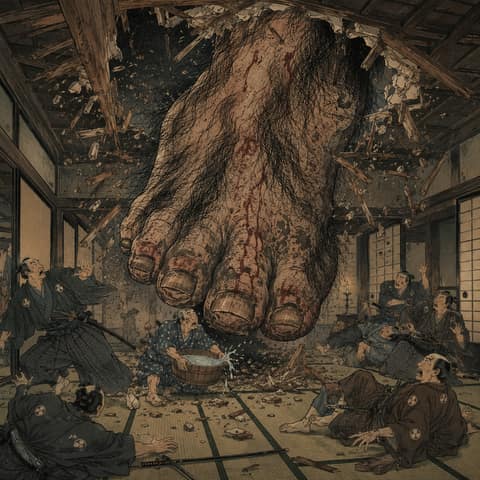
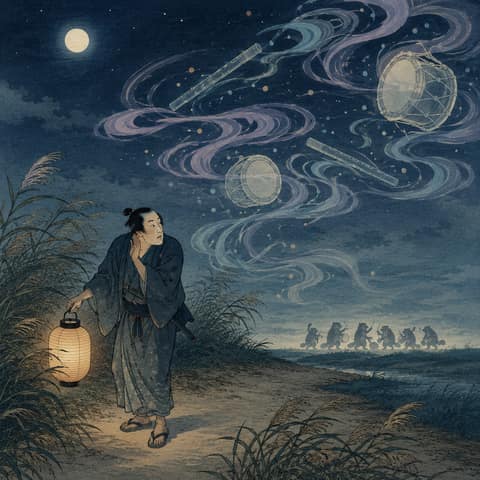
The Seven Wonders of Honjo is a cluster of ghost stories told around present-day Sumida Ward. Tales like the Oitekebori, Ashi-arai-yashiki, Kataha-no-ashi, and Tanuki-bayashi are well-known, but in reality, there were more than "seven" stories, and the combinations differ depending on the source. The official explanation by Sumida Ward[3] also notes that aside from the Oitekebori and Kataha-no-ashi, the line-up is inconsistent.
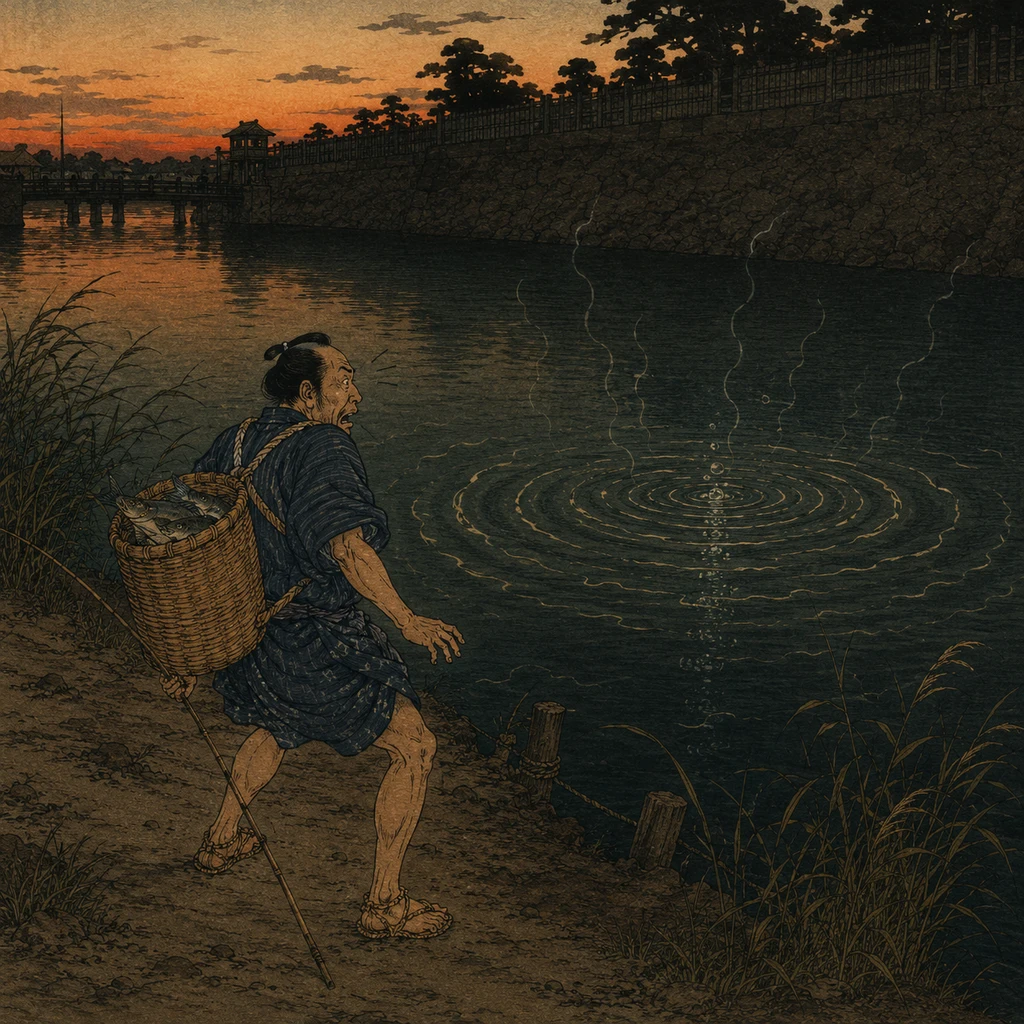 Oitekeborioh-EE-teh-keh-BOH-ree
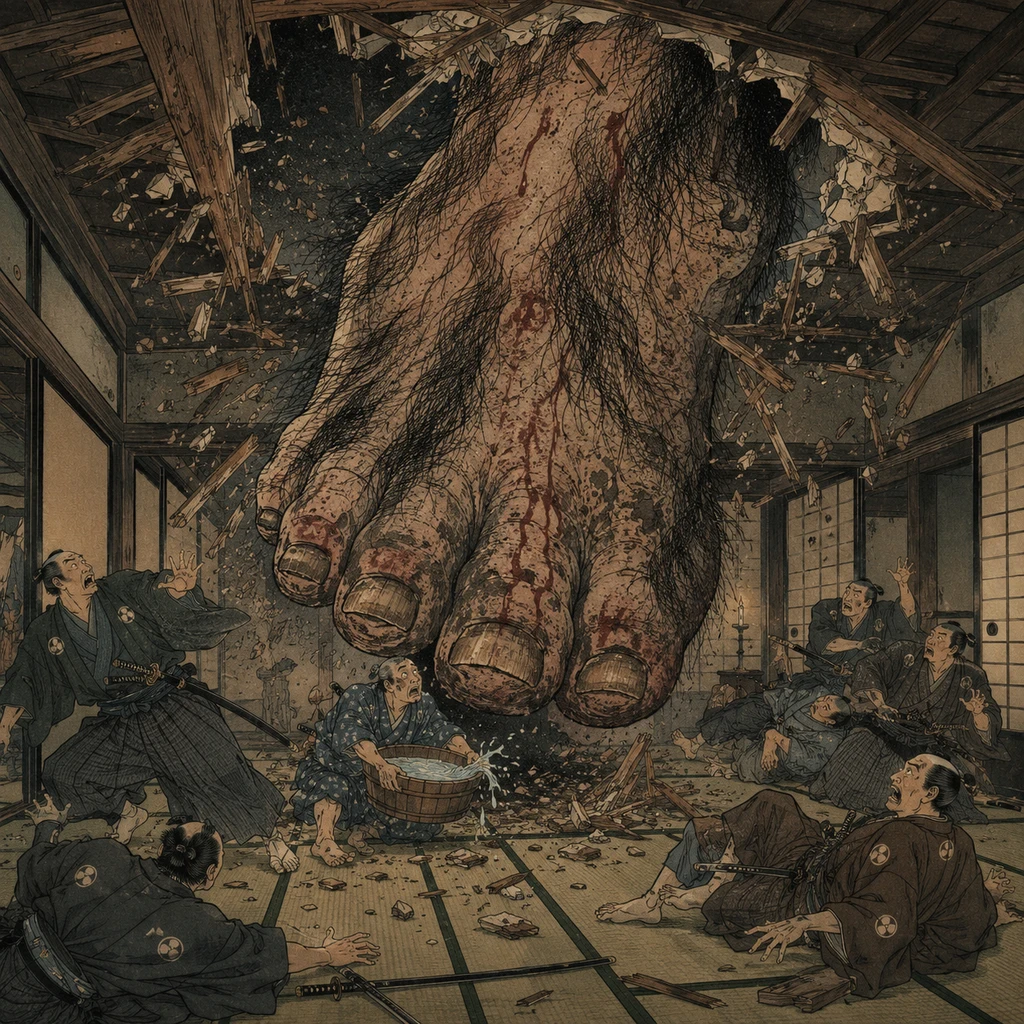 Foot-Washing Manorah-shee-AH-rah-ee yah-SHEE-kee
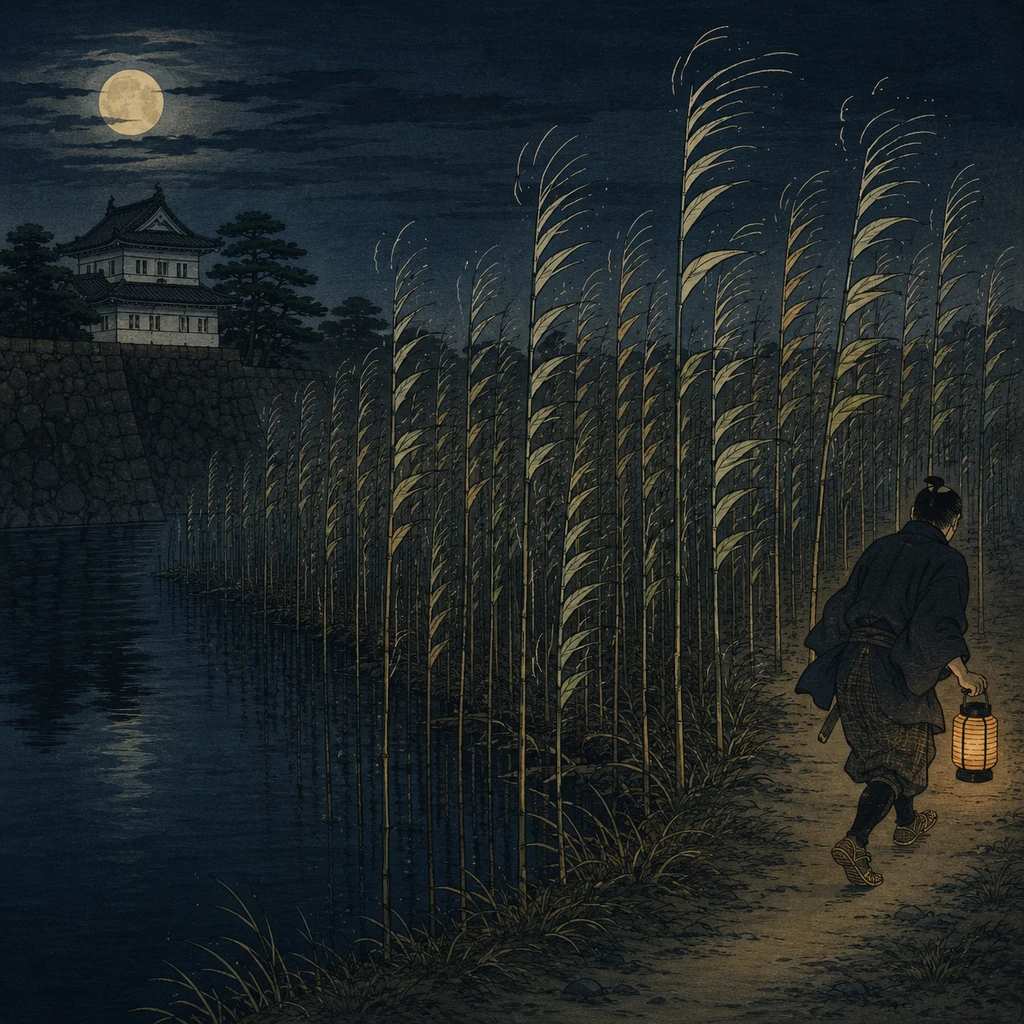 The One-Leaved Reedkah-tah-HAH no AH-shee
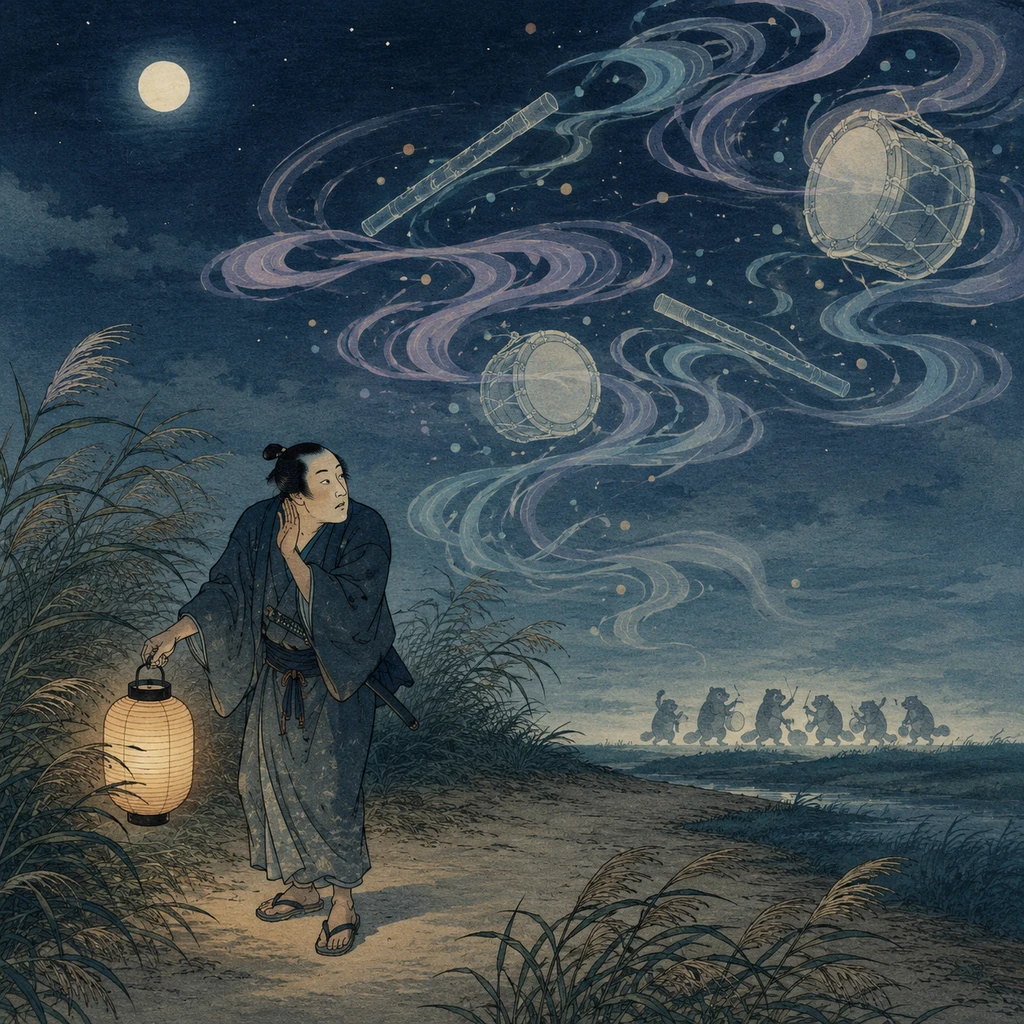 Tanuki Bayashi (Raccoon Dog Festival Drums)tah-NOO-kee bah-YAH-shee
Because they involve concrete urban spaces—moats, soba shops, samurai residences, temples and shrines, and the sound of bells—these ghost stories can be walked alongside a map. Even if the place names of Edo change, the tales hold the power to connect the memory of the area to the present.
Only the Sound Follows—Okuri-hyōshigi, Okuri-chōchin
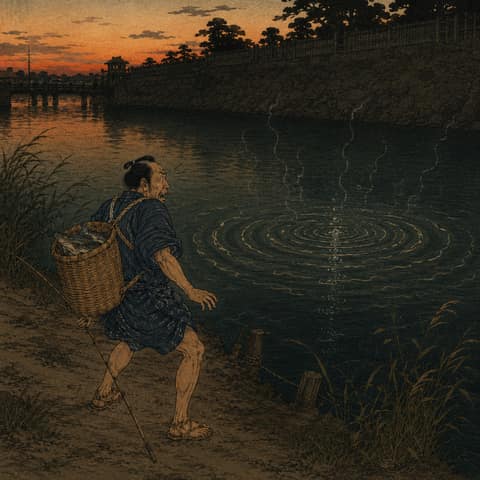
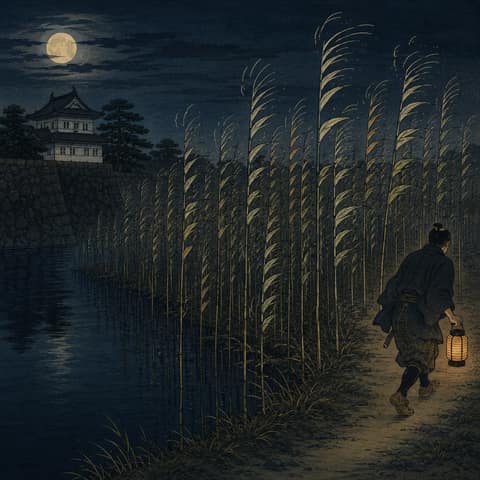
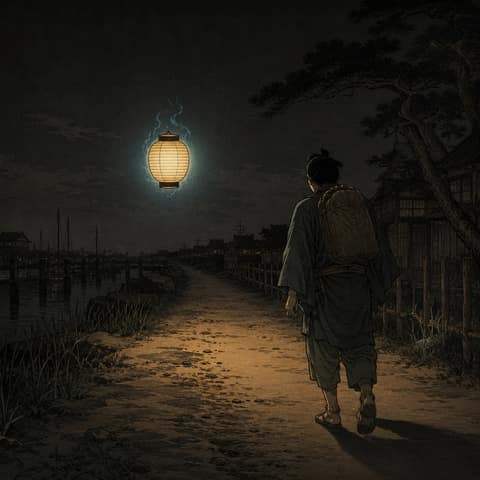
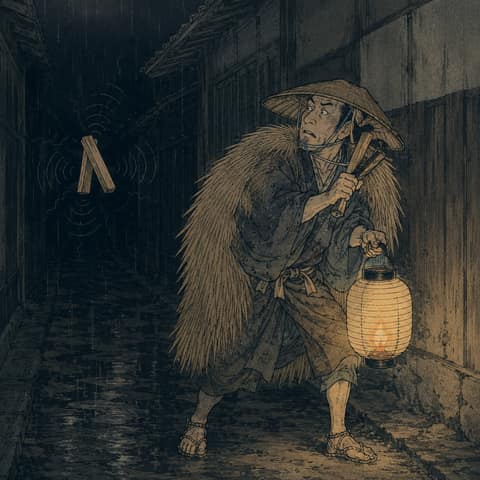
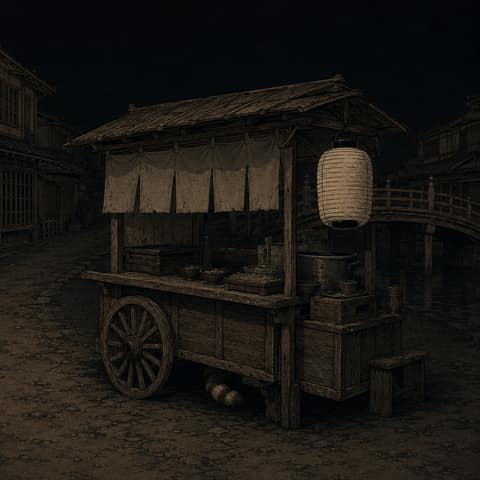
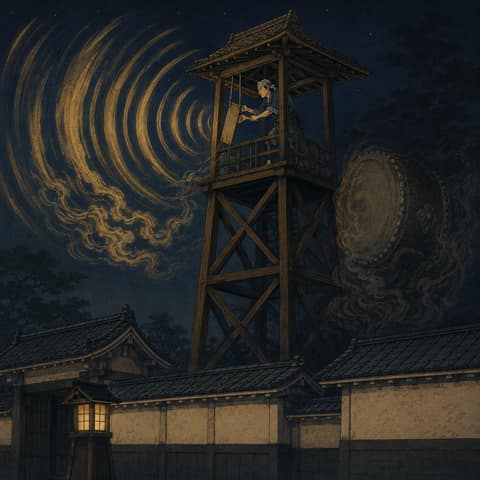
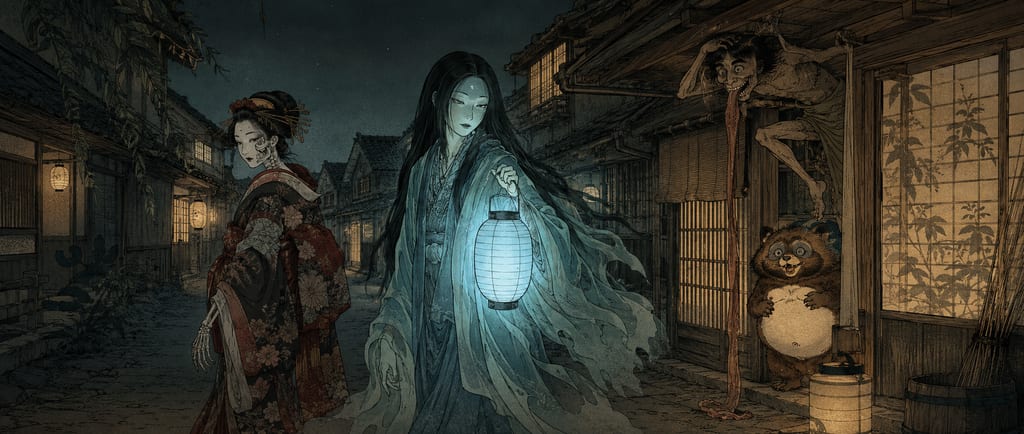
The Okuri-chōchin and Okuri-hyōshigi are anomalies where a light or a sound follows from behind someone walking down a dark path. The soba shop without lights, the chinquapin tree that drops no leaves, the drum of Tsugaru—the anomalies themselves seem minor. However, the moment the sounds and lights that are supposed to dictate daily commerce, the seasons, and the time of day break their rules, the order of the town becomes eerie.
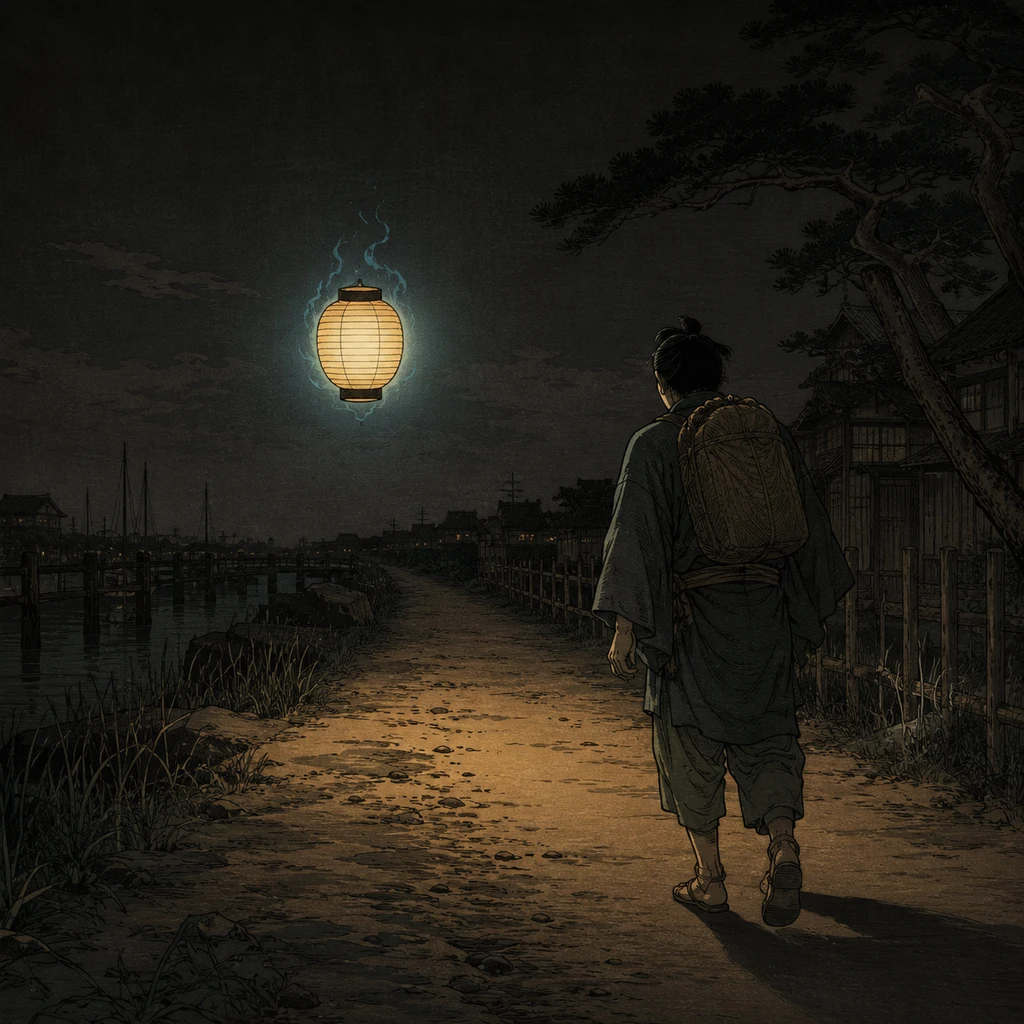 Guiding Lantern (Okuri-chōchin)oh-KOO-ree CHOH-cheen
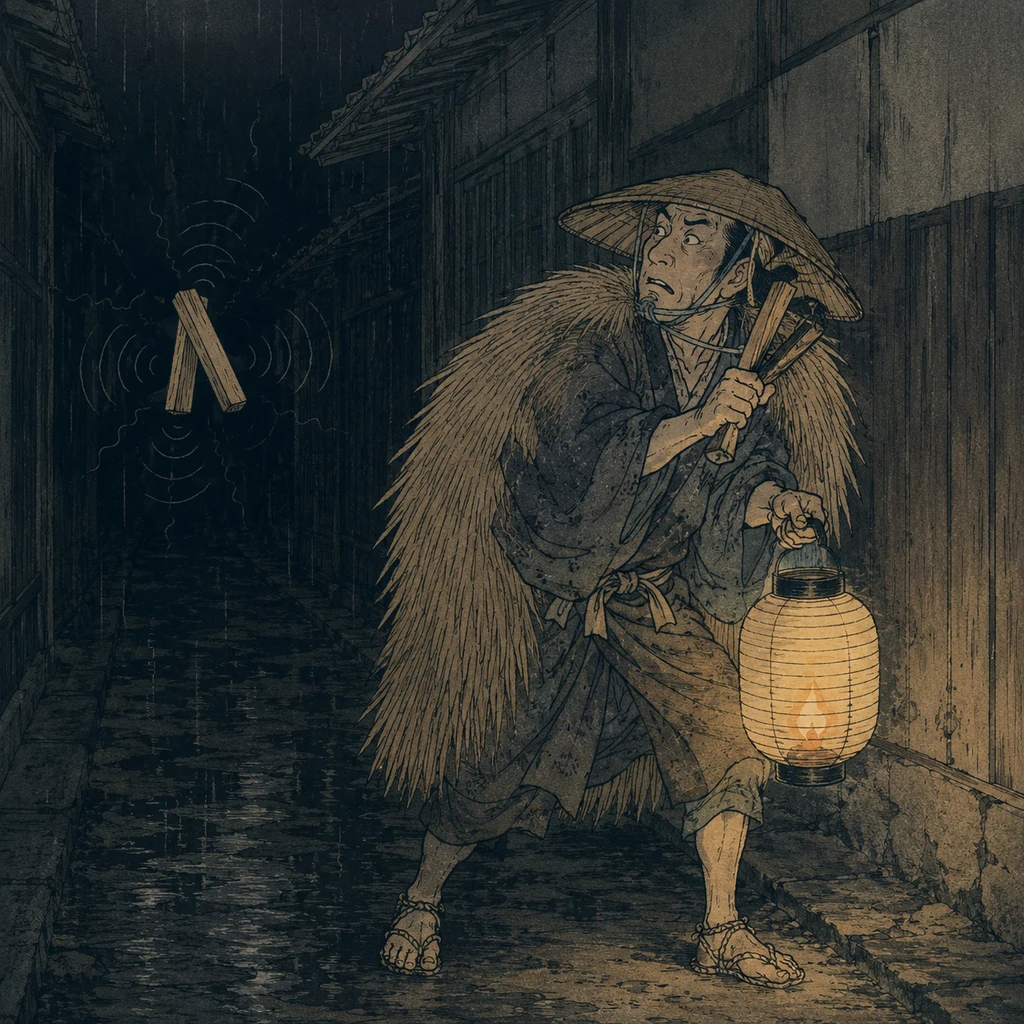 Accompanying Hyōshigioh-KOO-ree hyoh-SHEE-ghee
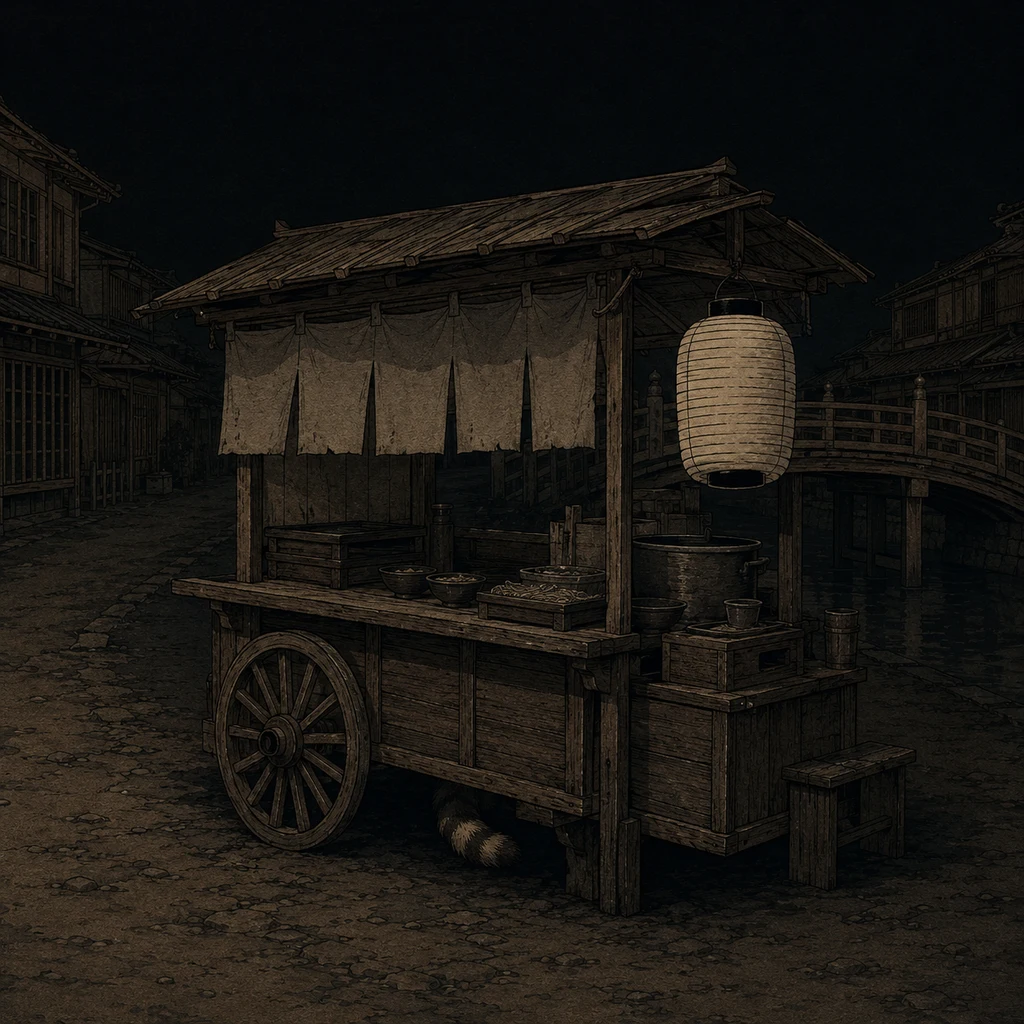 Lamp-less Soba Stallah-kah-ree NAH-shee SOH-bah
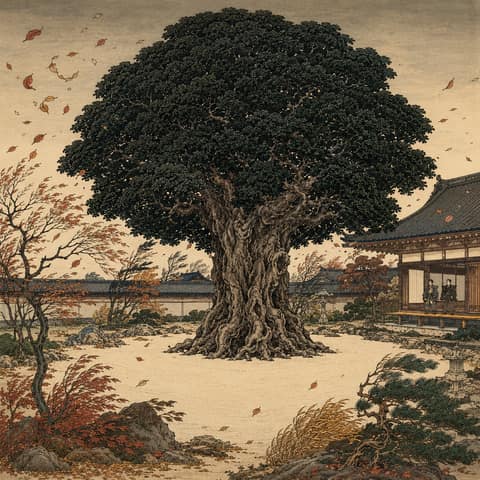
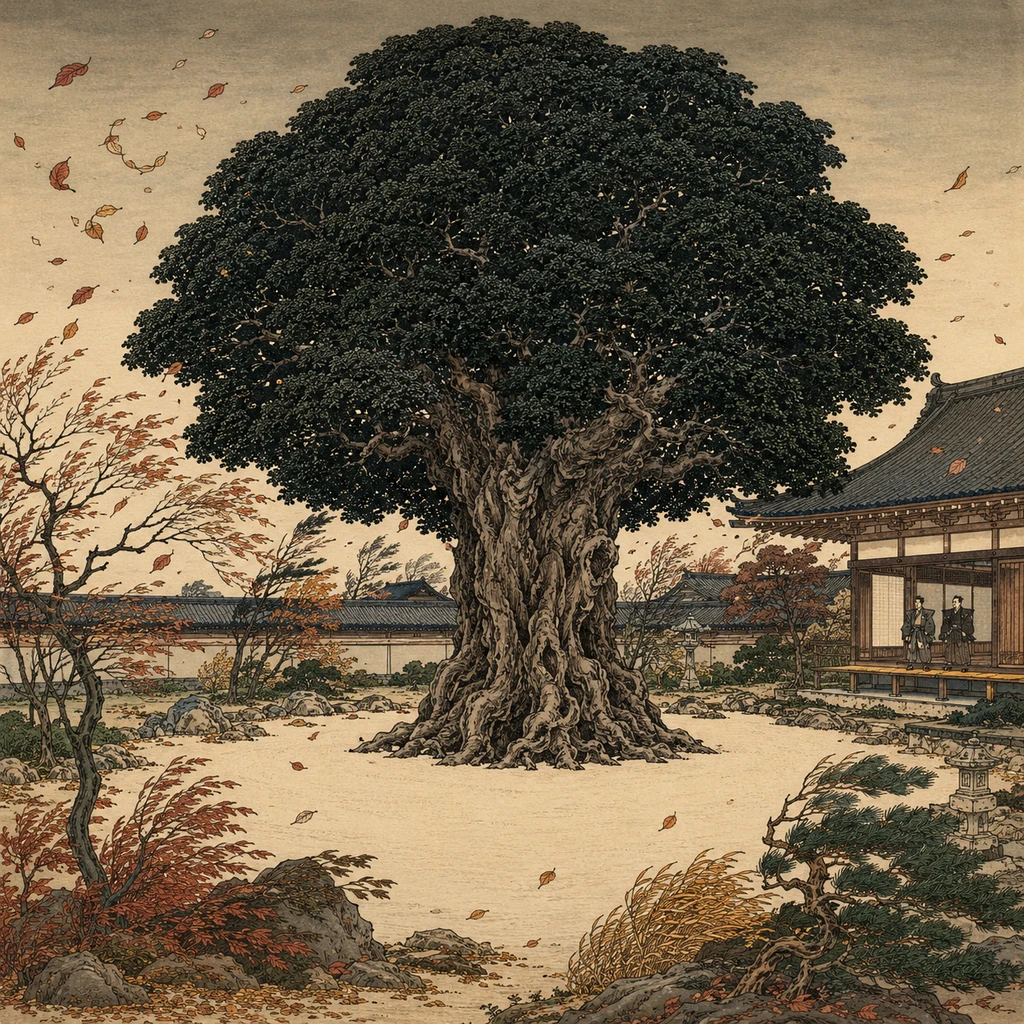 The Oak That Never Shed Its Leavesoh-chee-bah-NAH-kee SHEE-ee
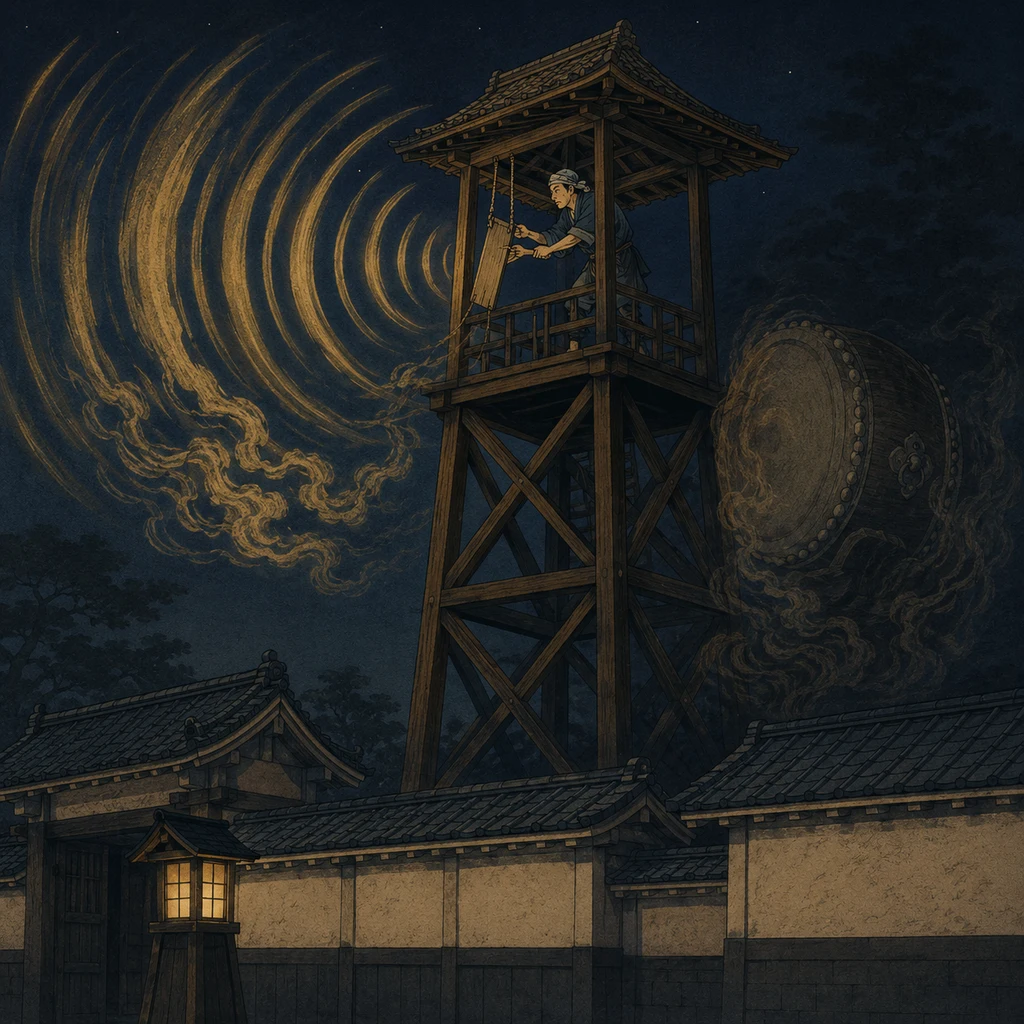 The Tsugaru Drum of Honjotsu-GAH-roo no TIE-koh
Kabuki Ghosts—Oiwa and Okiku
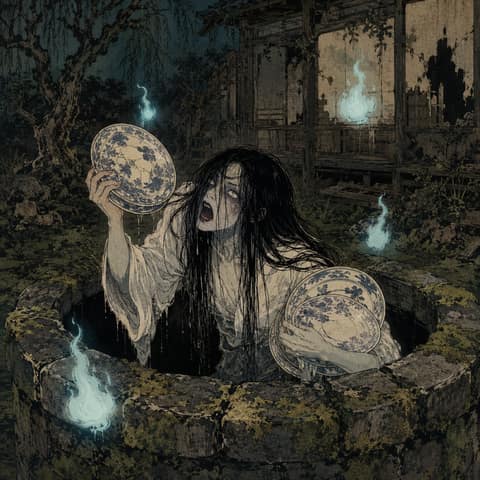
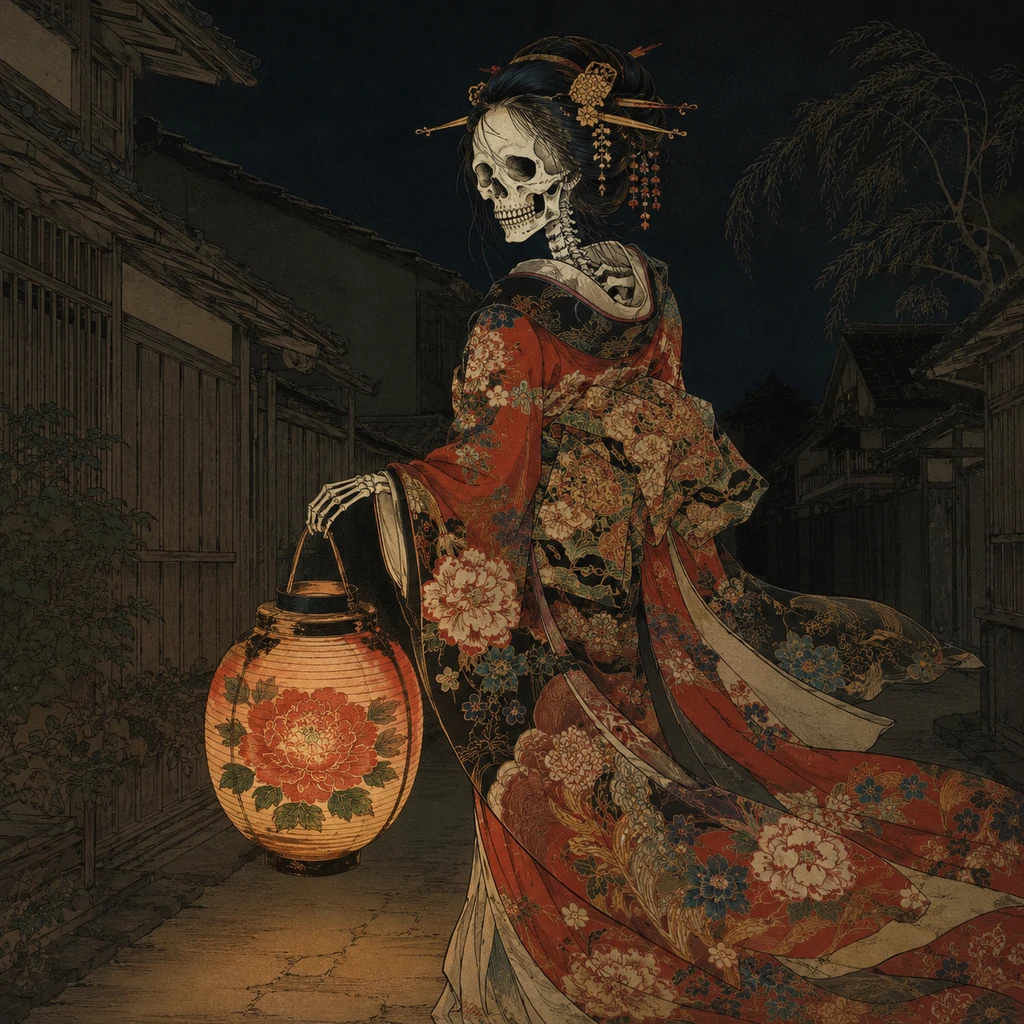
Oiwa gained a fiercely intense stage presence through Tsuruya Nanboku's *Tōkaidō Yotsuya Kaidan*. The tale of Okiku's Sarayashiki has multiple lineages, such as the Banshū Sarayashiki set in Himeji and the Banchō Sarayashiki set in Edo. For both, rather than asserting that "a yōkai with that exact form actually existed in Edo," they should be viewed as ghost images created by rumors of incidents, pre-existing folklore, the author's dramatization, and the actors' performances and stage mechanisms.
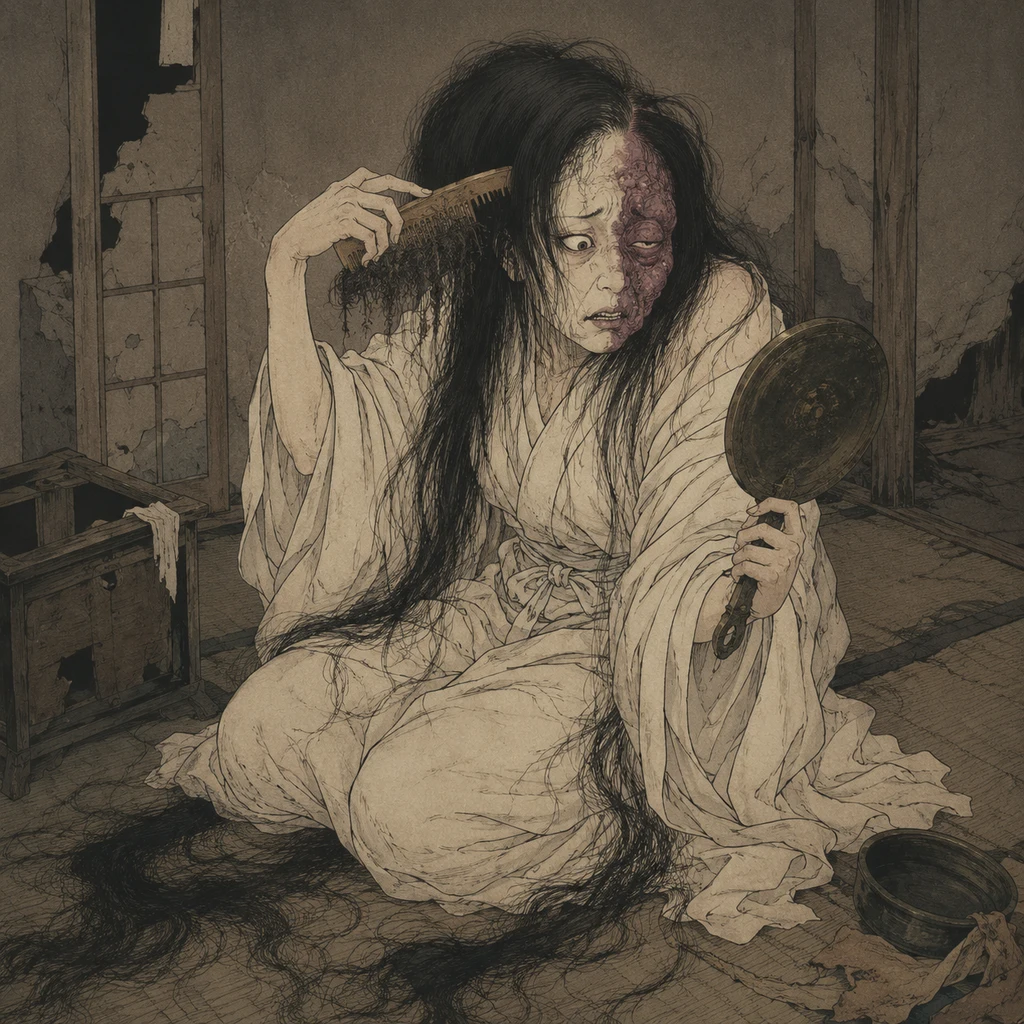
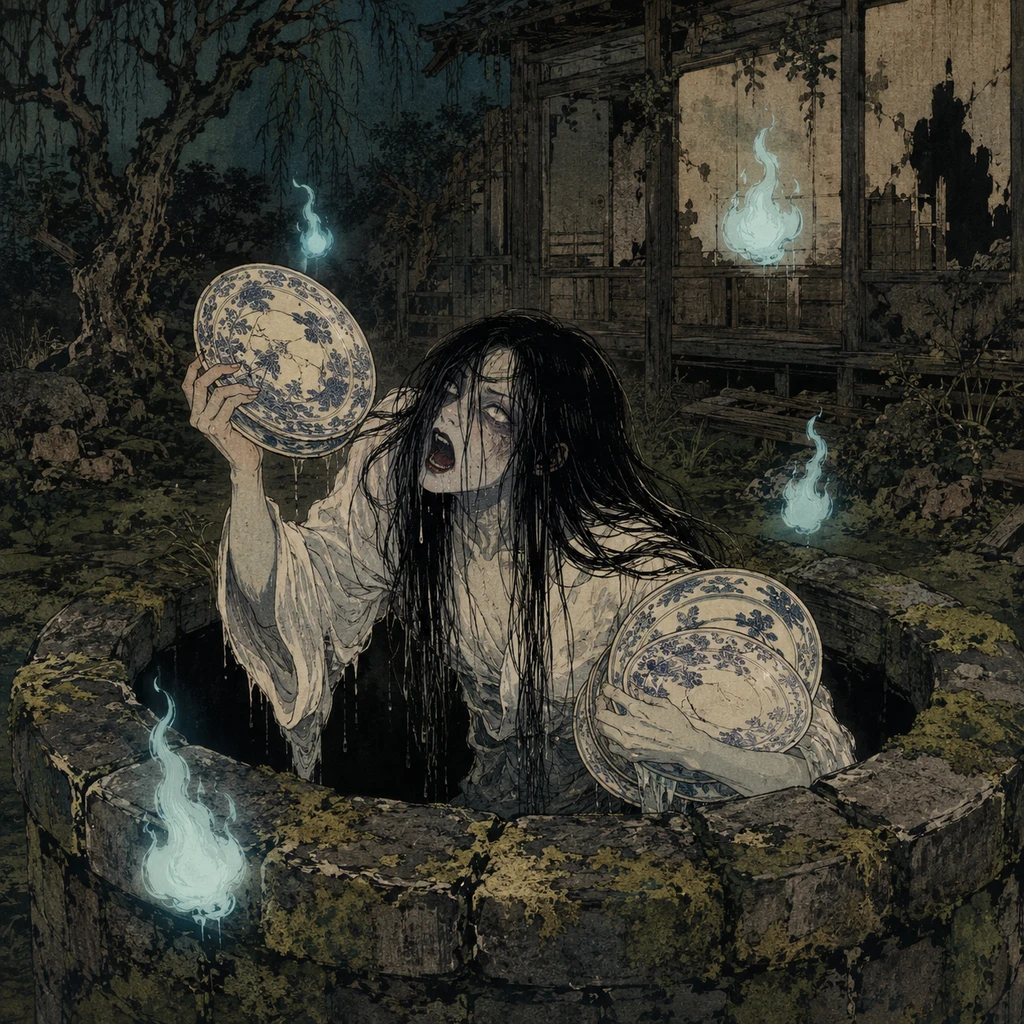
The theater carved the ghosts' faces, hair, costumes, and ways of appearing into the audience's memory. It demonstrates that ghost stories spread not only through the location but through the bodily performance and visual effects staged on the boards.
Satire and Wordplay—The Anomalous Reflects the Town
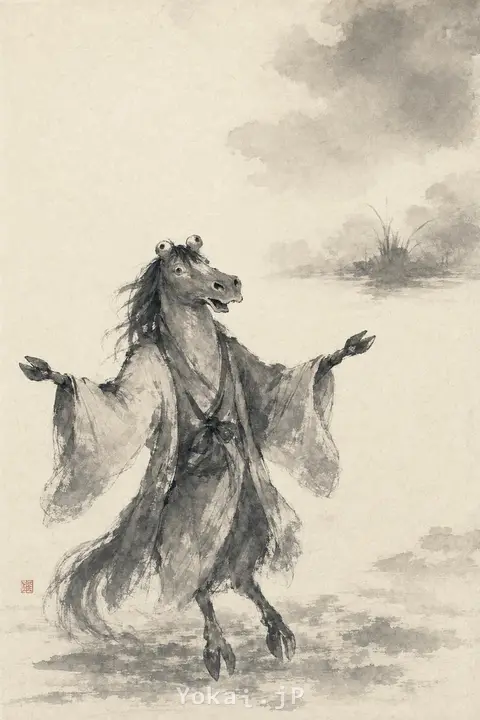
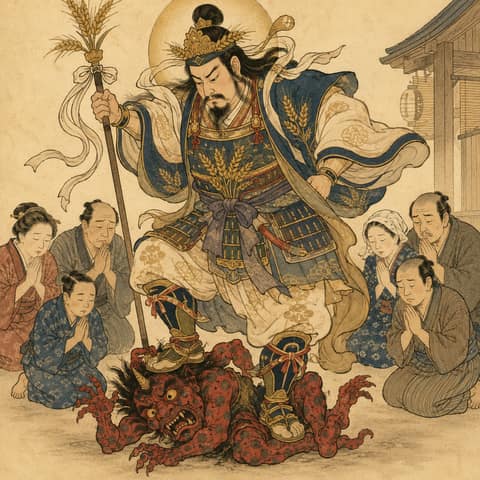
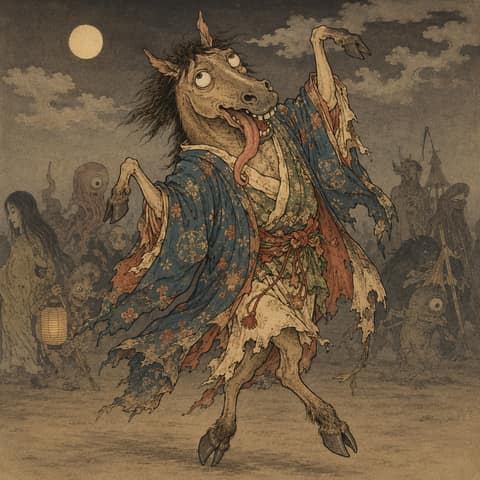
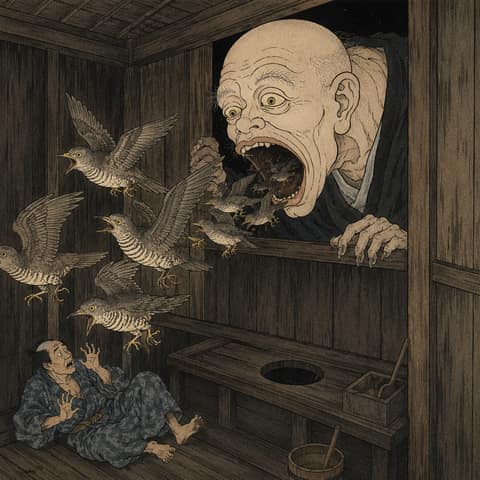
The Umashika is a yōkai that looks like a literal combination of a horse (uma) and a deer (shika), forming the word for "idiot." The Mugidono Daimyōjin reflects faith and rumor, while the Ganbari-nyūdō bears the taboos of the latrine. Edo's yōkai not only preserved ancient fears but also functioned as satirical devices reflecting the language, trends, professions, and quirks of the city.
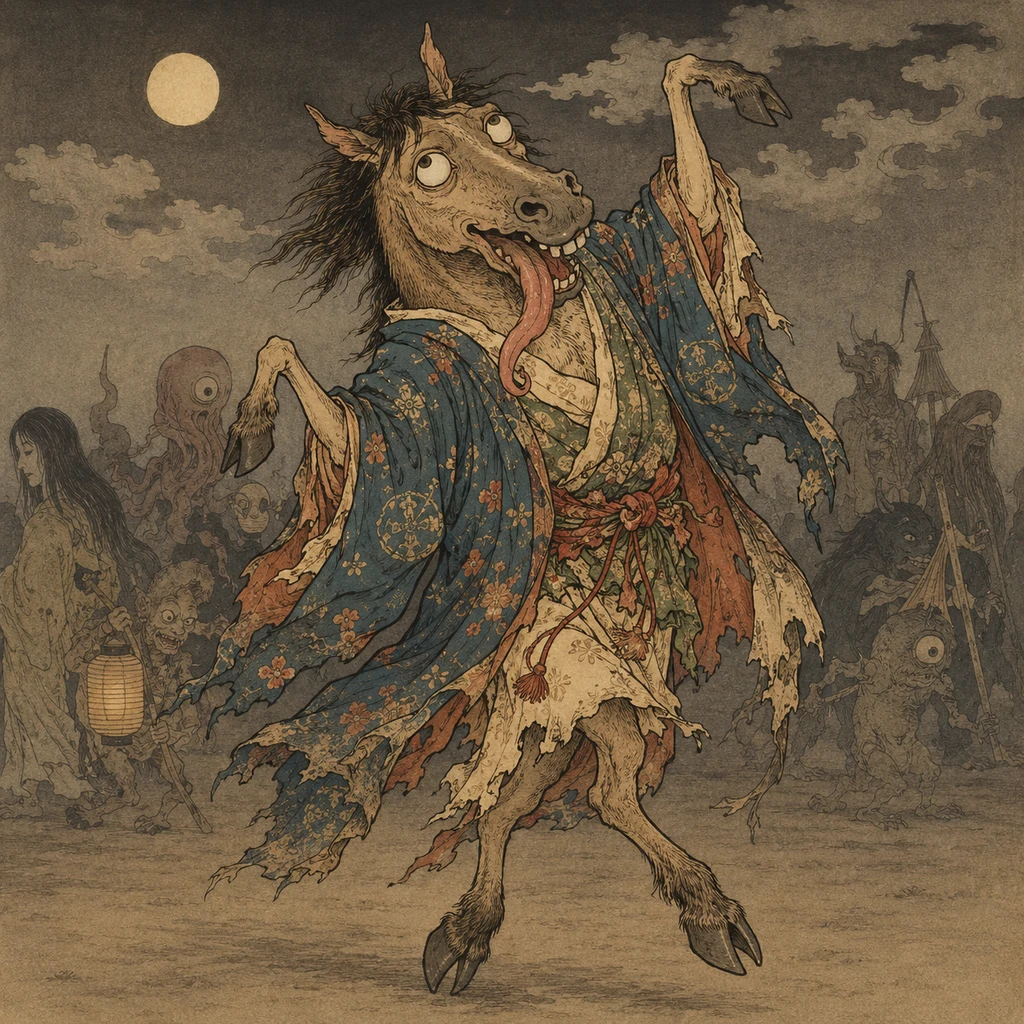 Umashika (Horse-Deer Yokai)oo-MAH-shee-kah
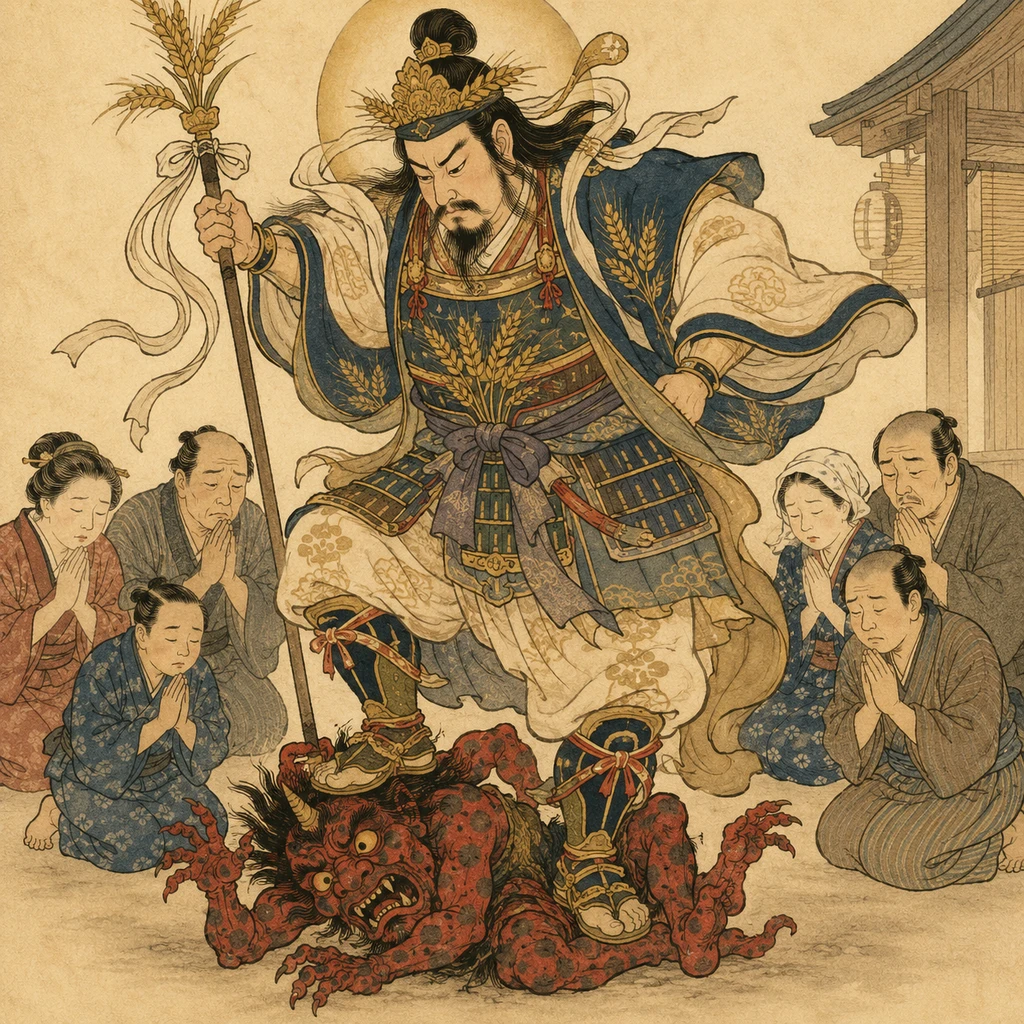 Mugidono DaimyōjinMOO-gee-doh-noh dye-MYOH-jin
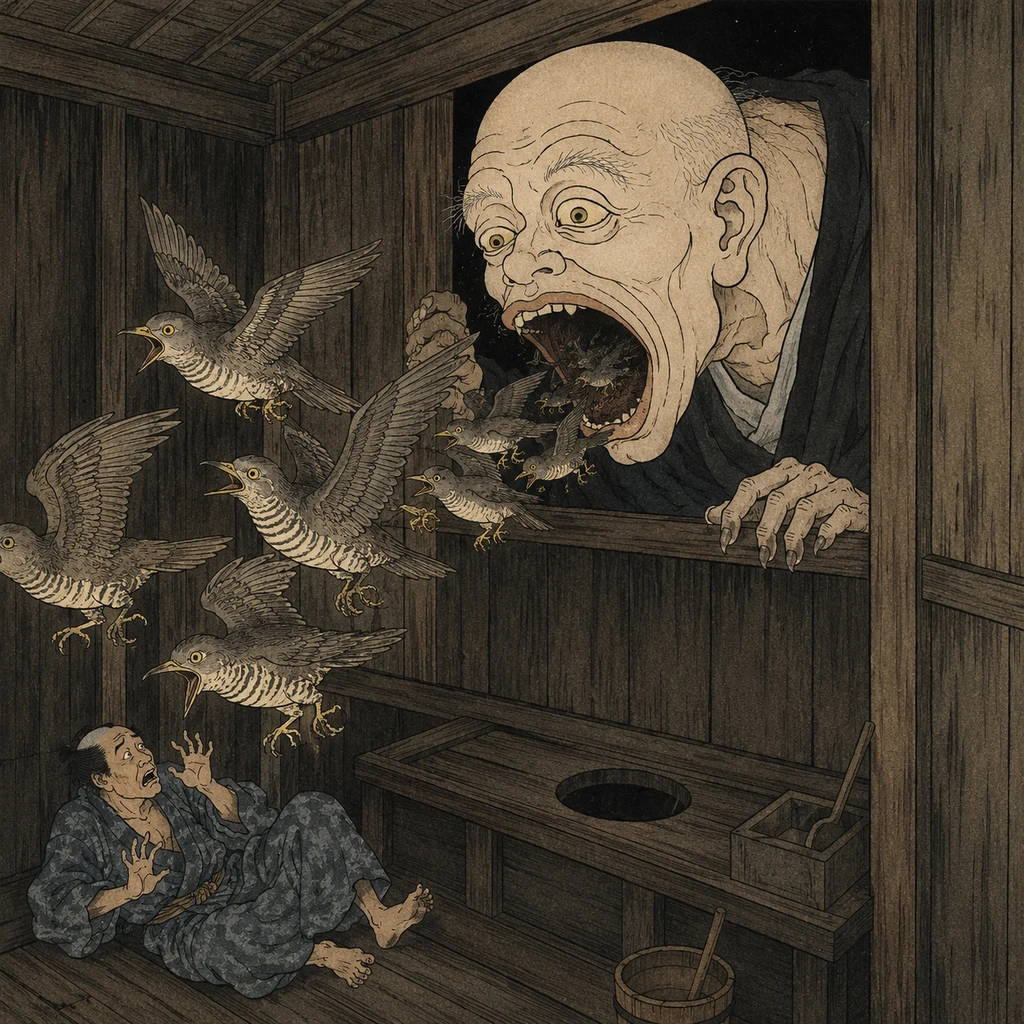 Gambari NyūdōGAHN-bah-ree nyoo-DOH
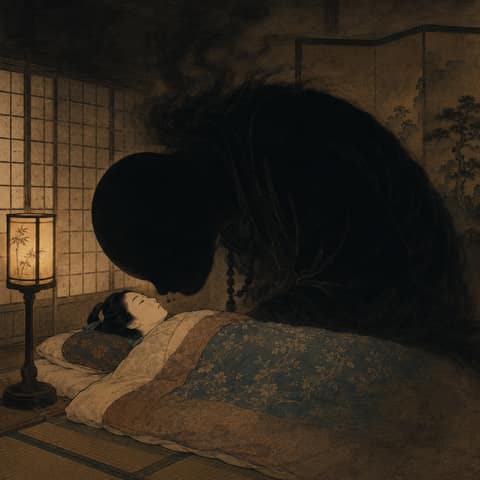
 Kuro-bōzu (Black Monk)KOO-roh BOH-zoo
In the "Included Yōkai" below, we have gathered both the ghost stories rooted in the towns of Edo and the yōkai shaped by the publishing and theater of the Edo period. While checking which work or land each image came from, please try walking through this urban culture where terror and laughter dwell side by side.