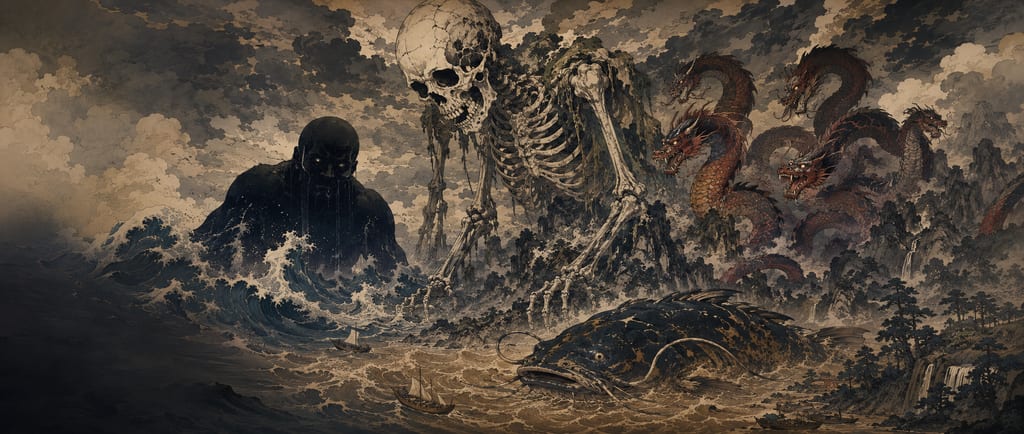
Gigantism as a Mark of the Beyond-Human Scale
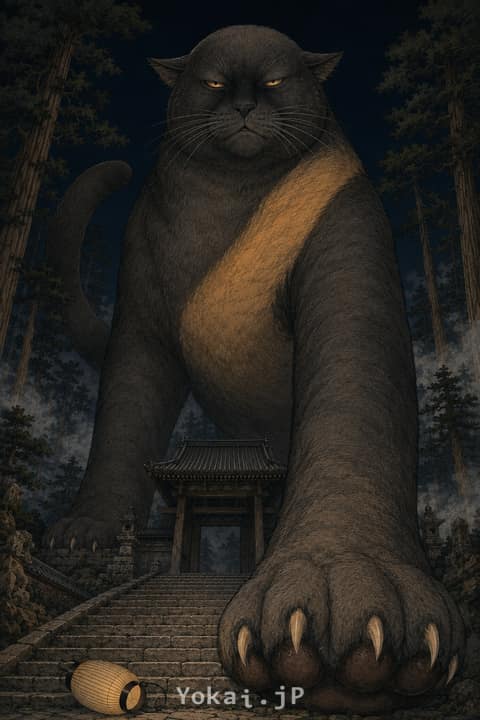
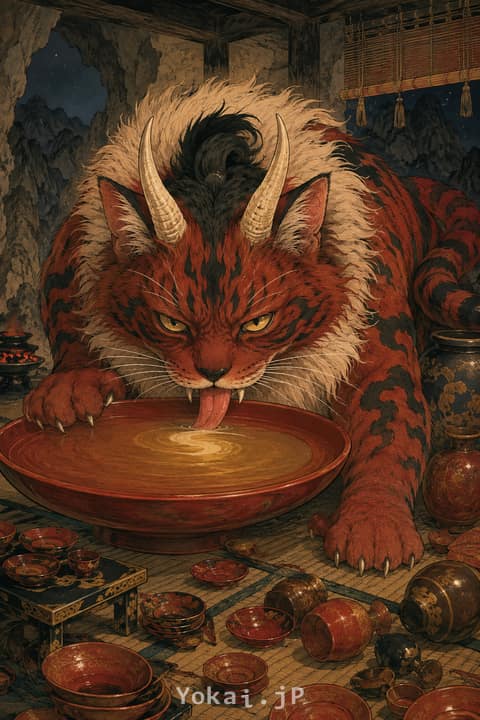
We cannot rank the sizes of yōkai using precise numbers. In folktales, they straddle mountains; in paintings, they fill the entire canvas; in encounter stories, they stretch upward until they break your neck trying to see them. Their size changes depending on the purpose of the narrative, and some anomalies never reveal their full form to the end.
Therefore, the purpose of this feature is not to determine "the biggest yōkai," but to compare how gigantism is constructed. Giants that birth topography, sea beasts mistaken for islands, monks that stretch to the sky, stacked-up dead, and giant monsters that solidified after the modern era. When they surpass the limits of human vision and imagination, yōkai draw closer to becoming the landscape itself.
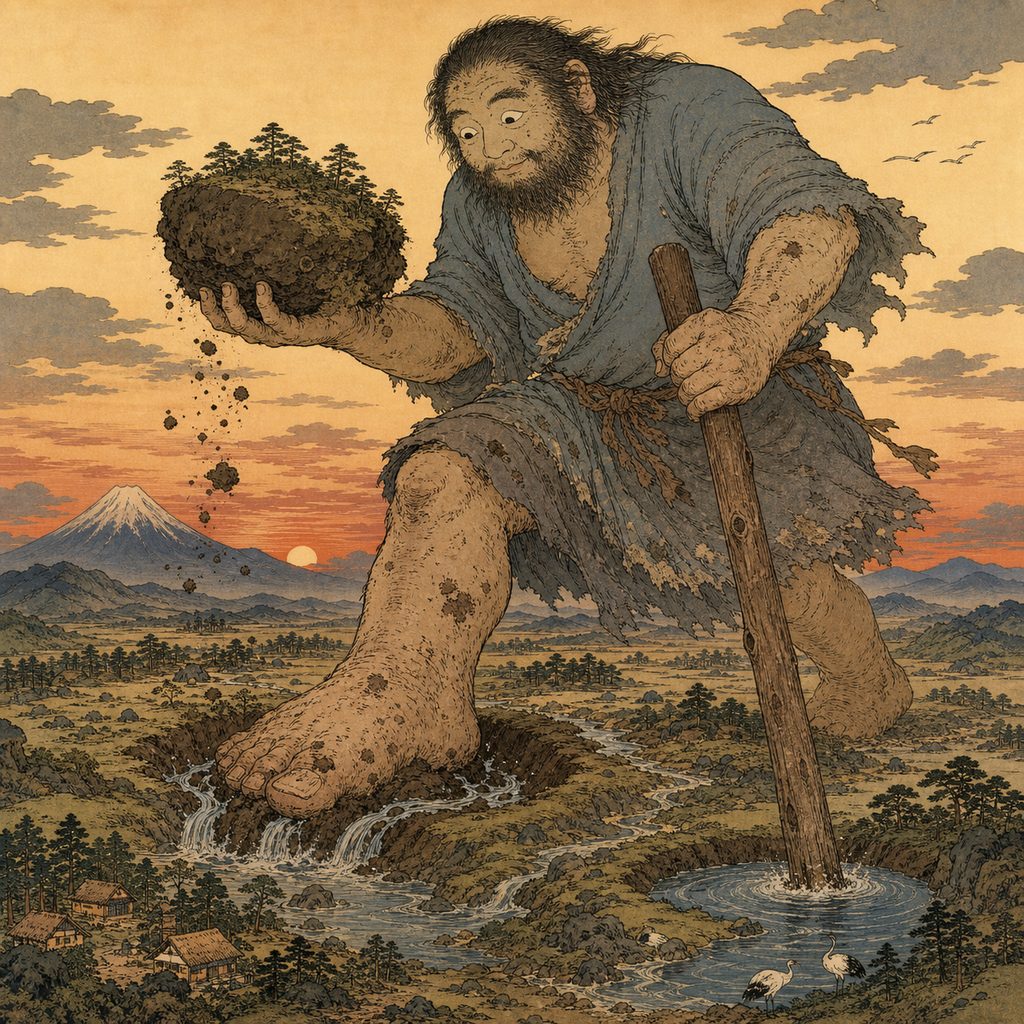
Giants that Make Mountains and Lakes—Daidarabotchi
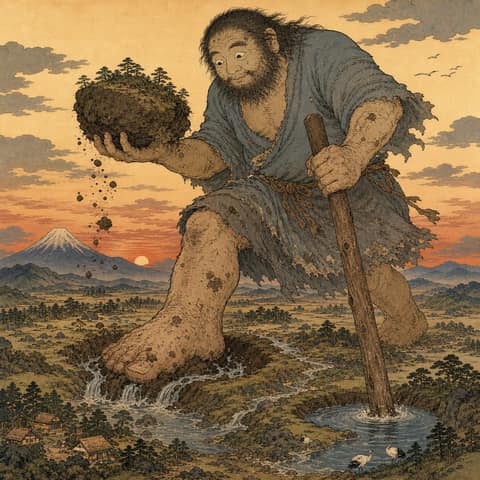
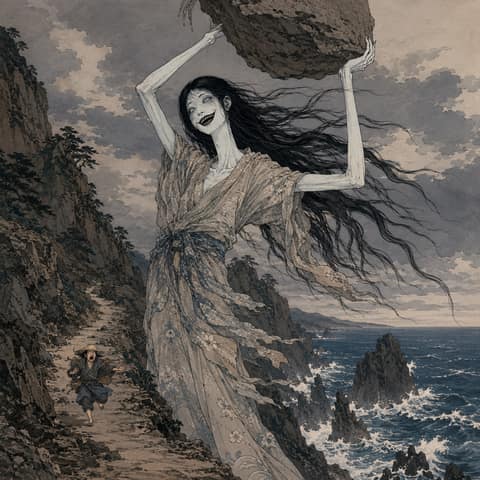
The Daidarabotchi is a giant said to have carried mountains, piled up earth, and left behind footprints that became ponds and lakes. The names and tales differ by region, and it is impossible to unify all the nation's topographical legends under a single specific giant. Even so, the concept of reading terrain that is difficult to explain by human hands as the traces of massive bodies has strongly linked landscapes and stories across the country.
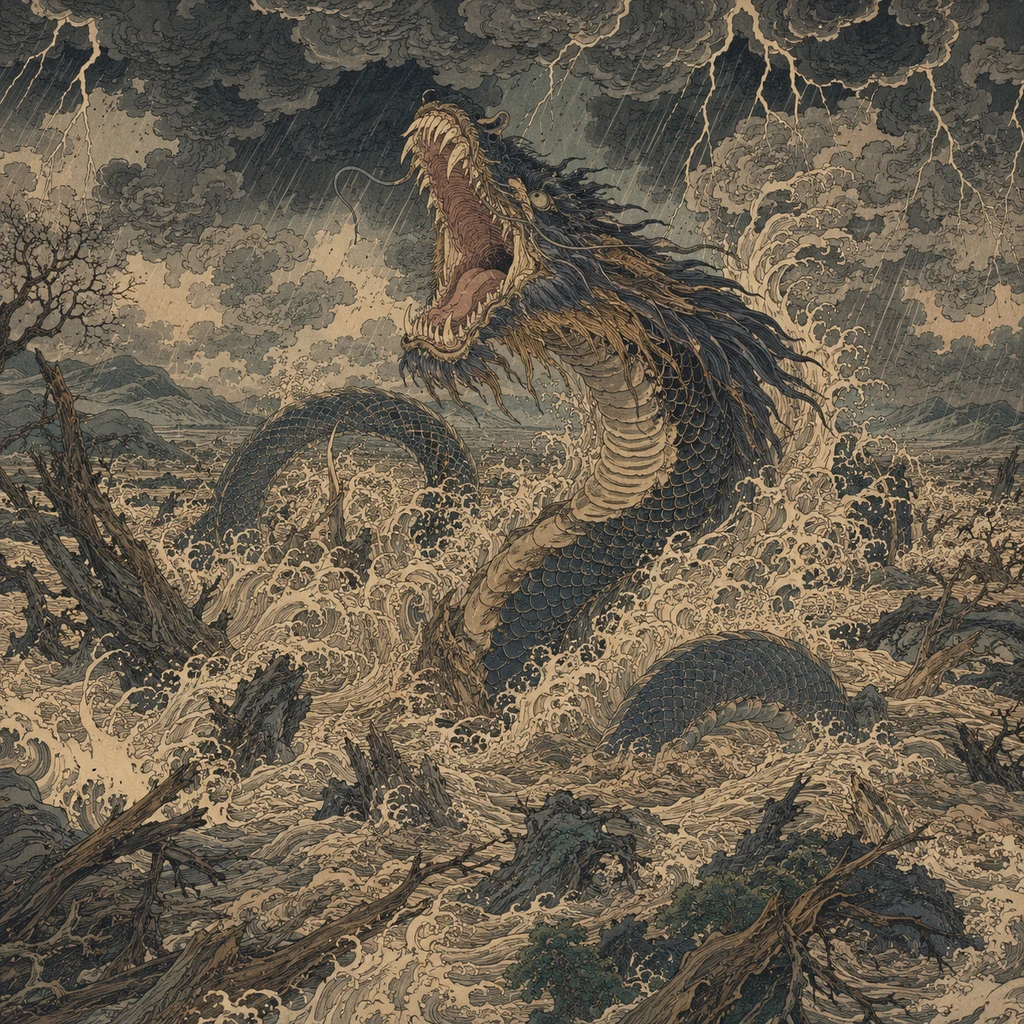
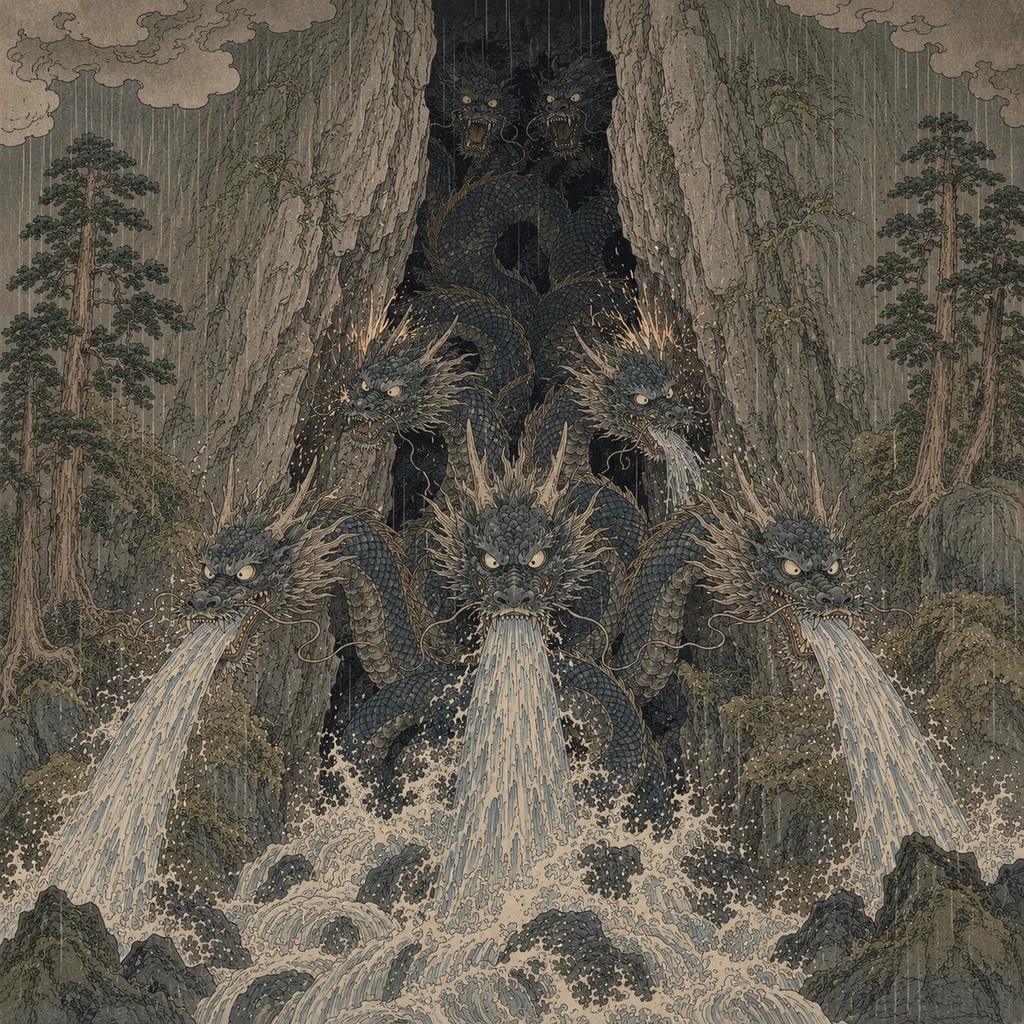
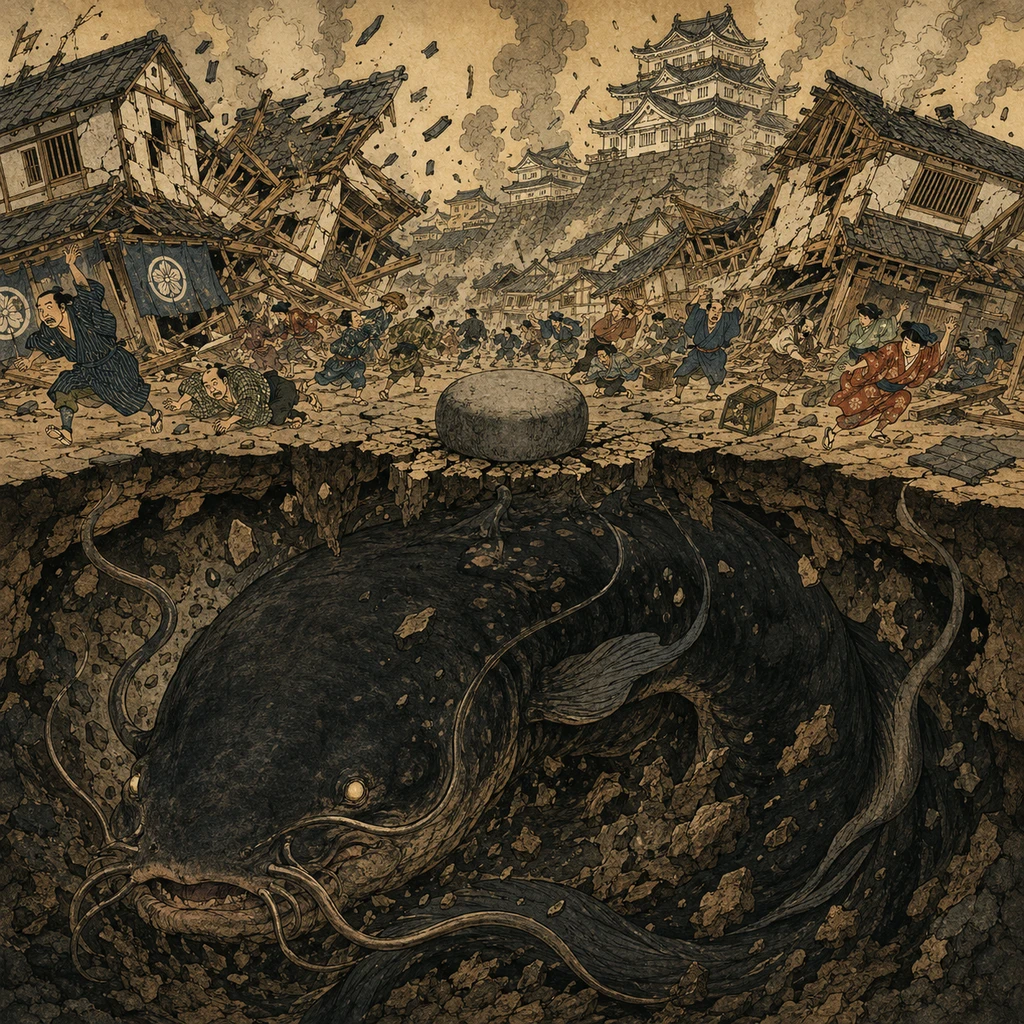
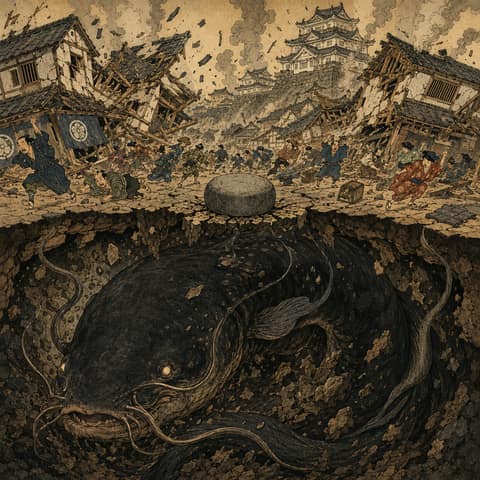
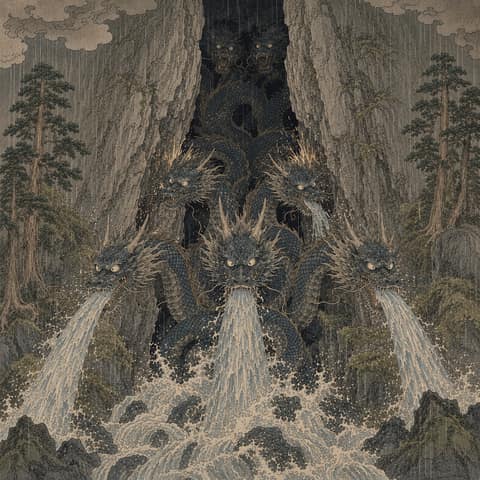
Hachirōtarō and Kuzuryū are tied to the origins of lakes and rivers, flood control, and dragon god worship, while the Ōnamazu (Giant Catfish) was imagined as the cause of earthquakes. A massive body is not merely an explanation of a "big creature," but a way of condensing the power to alter the land into a single form.
The Sea Surface Rises—Umibōzu, Akaei, Bake-kujira
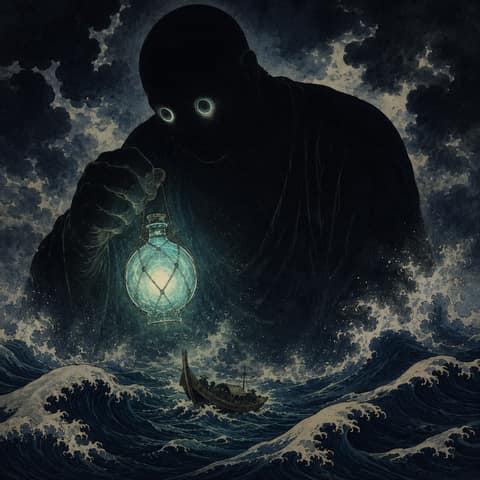
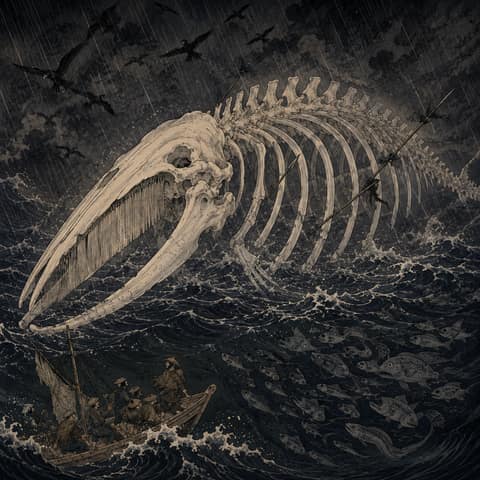
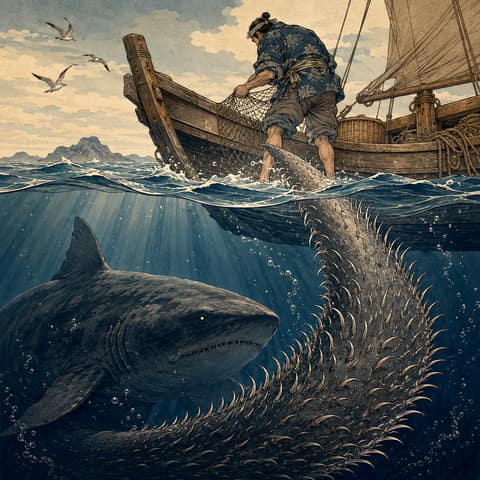
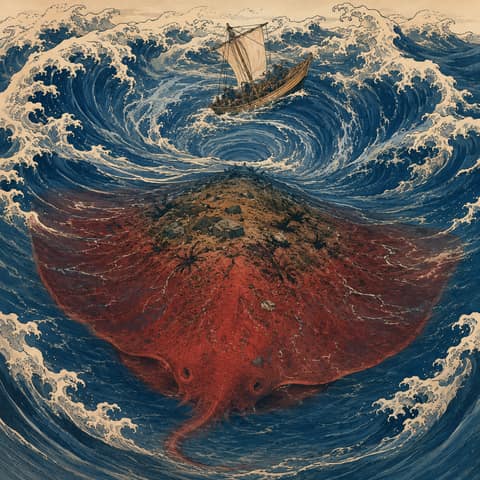
The Umibōzu, a black mass rising from the night sea, becomes terrifying simply because its full body cannot be measured from a boat. The Akaei is depicted as a fish so massive one might mistake it for an island and land on it; the Isonade is a sea beast that snatches people with an unseen tail; and the Bake-kujira is a legend where a whale made entirely of bones appears in the sea on a rainy night.
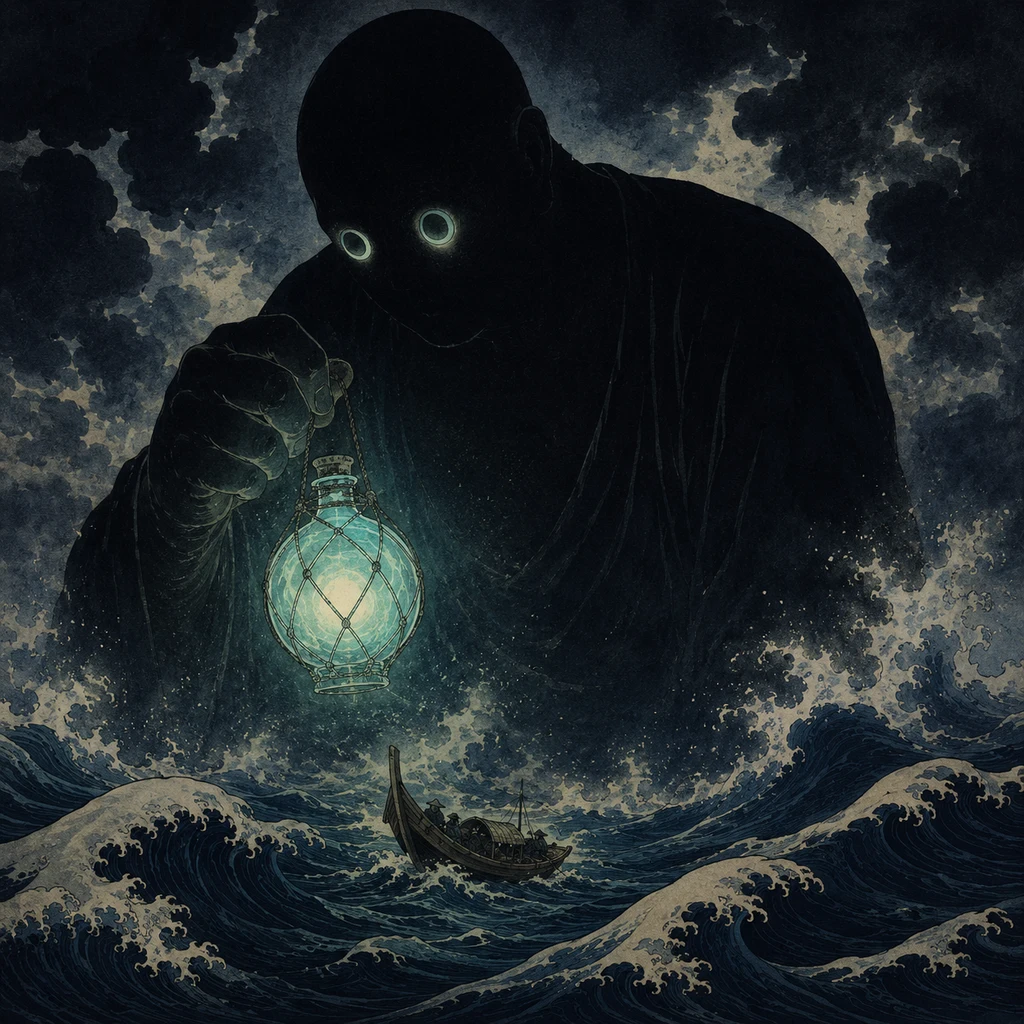
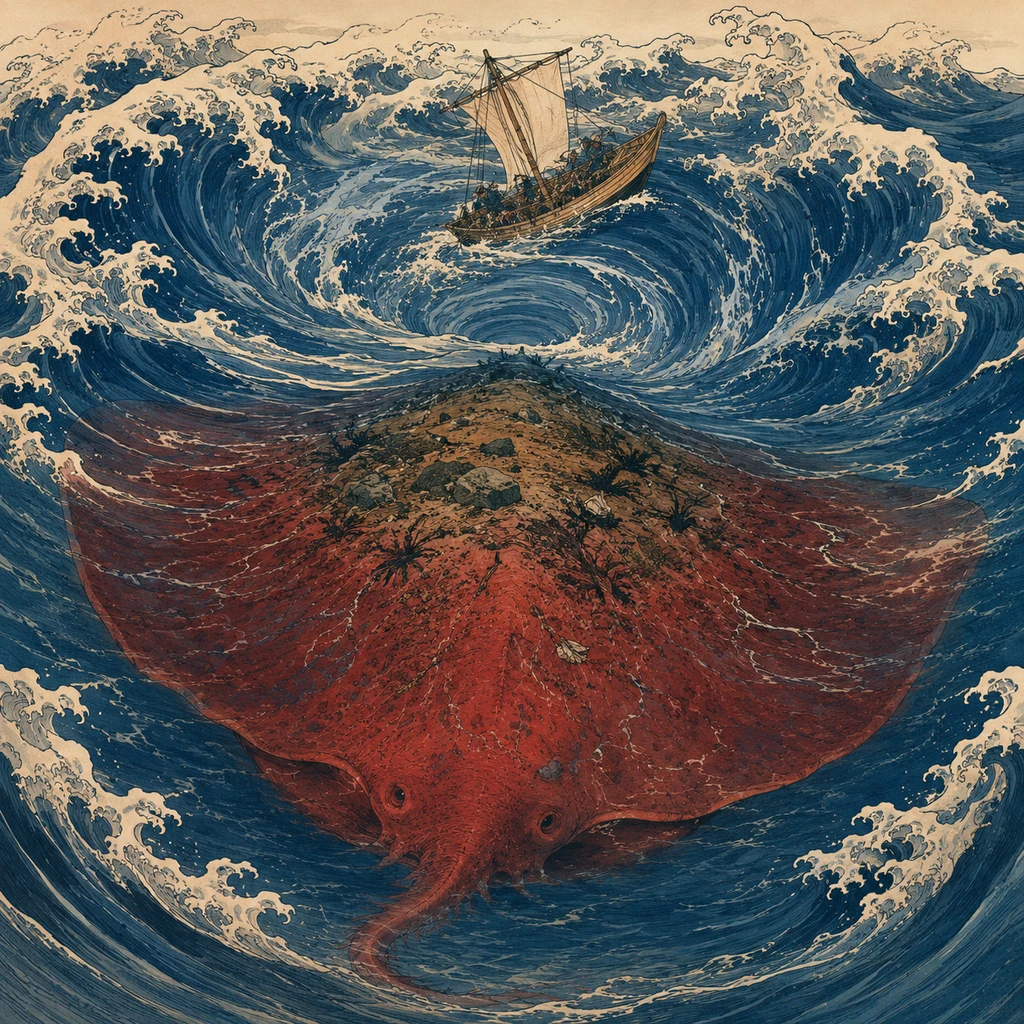
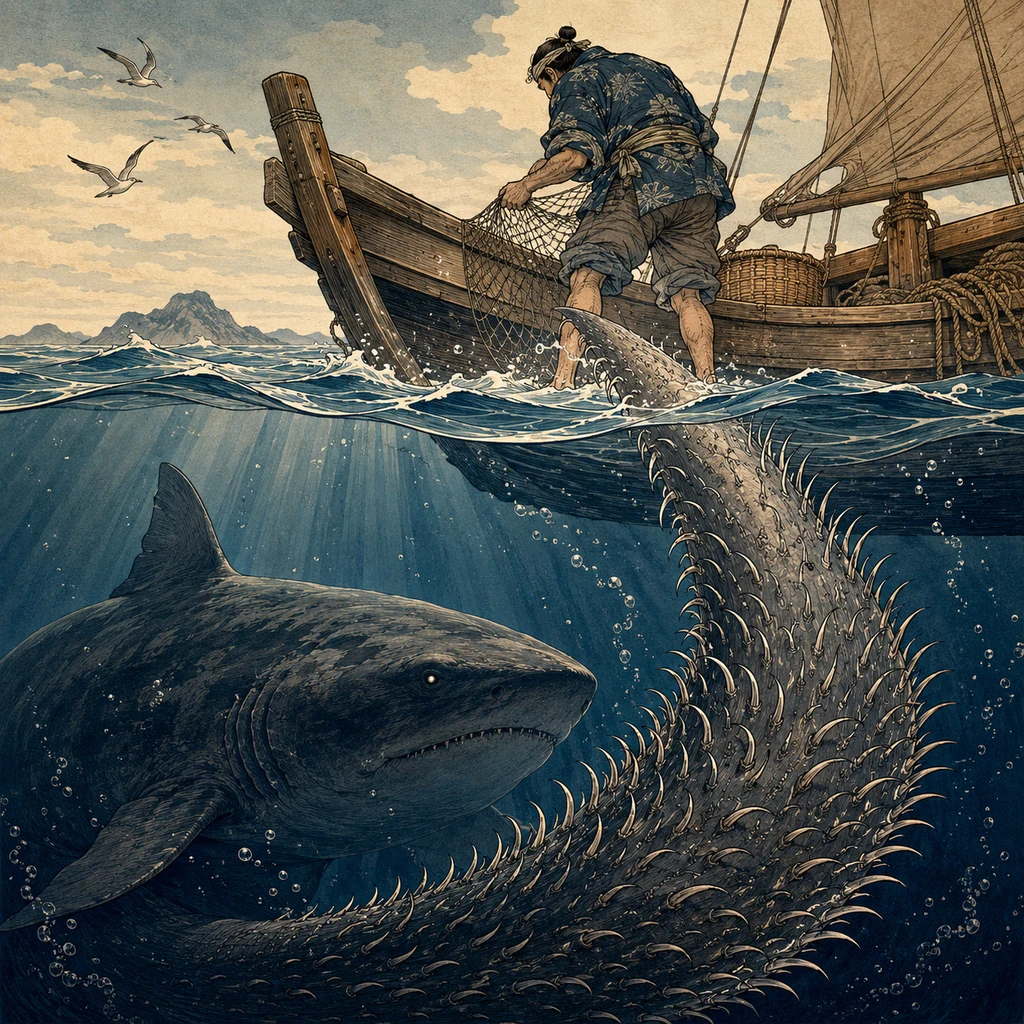
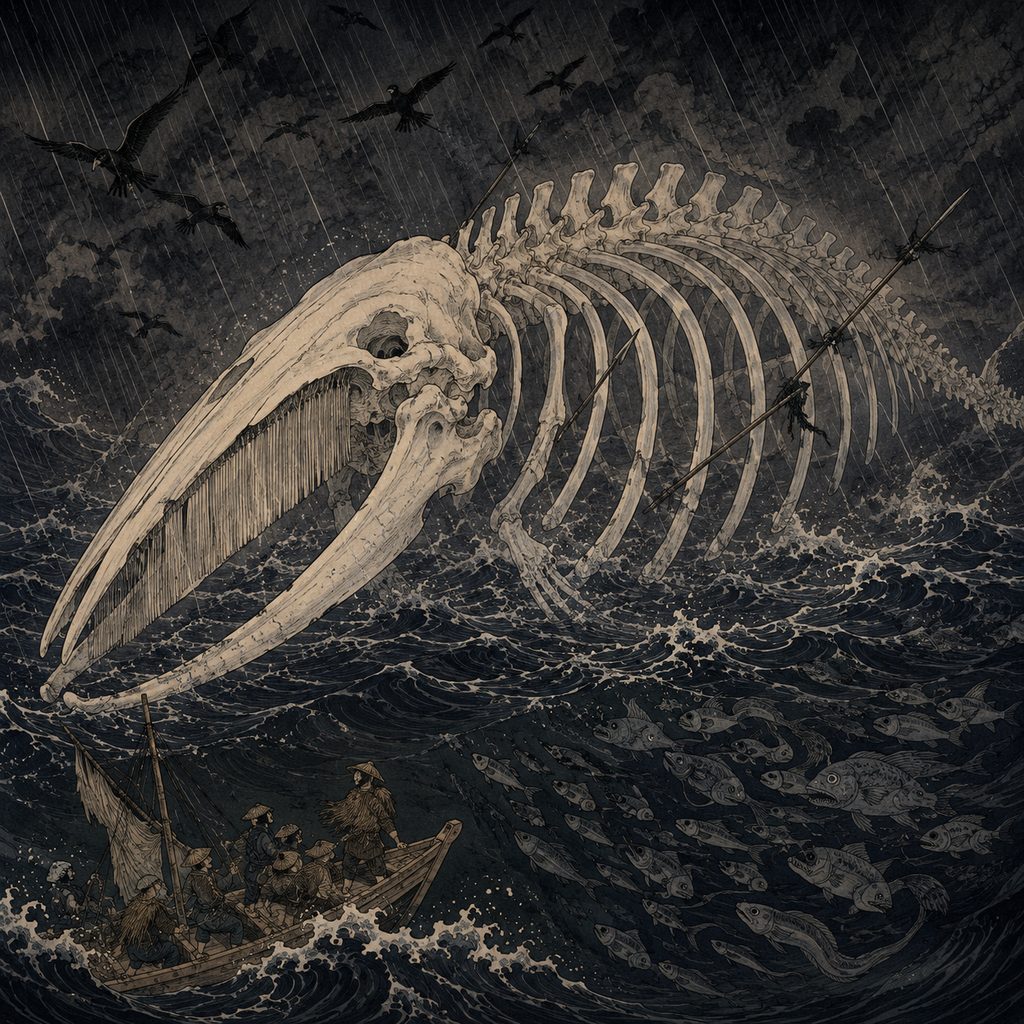
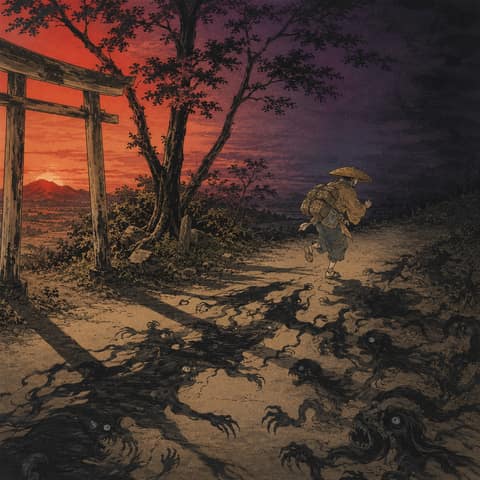
The giant yōkai of the sea create a composition where the ship looks smaller than the observer. The waves, darkness, fog, unfamiliar large fish, and driftwood—the conditions at sea where distance and size are difficult to judge—nurtured the outlines of these anomalies.
Coiling Around Mountains, Threatening the Nation—Ōmukade, Yamata-no-Orochi, Ushi-oni
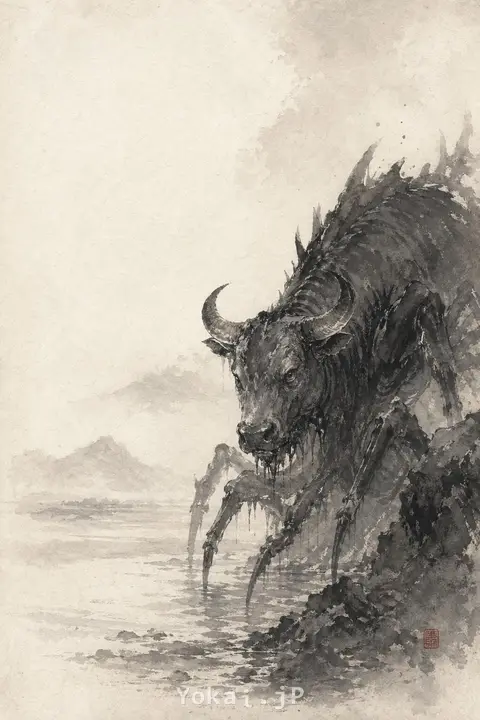
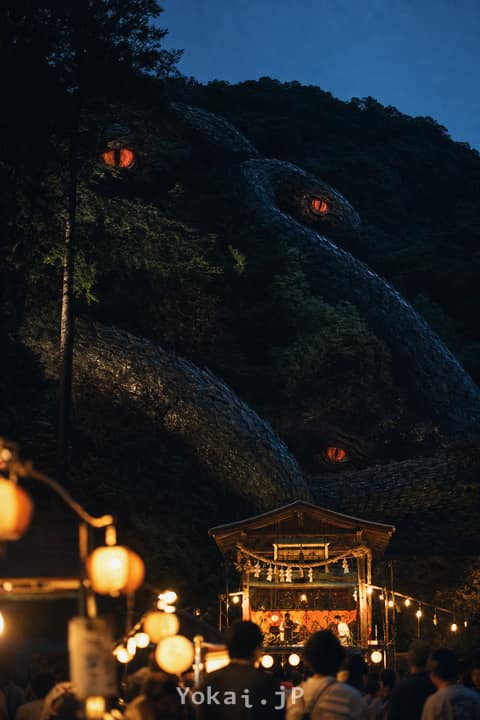
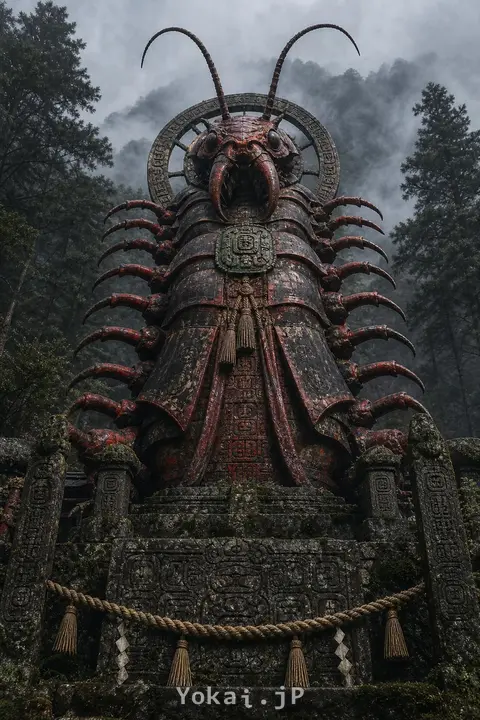
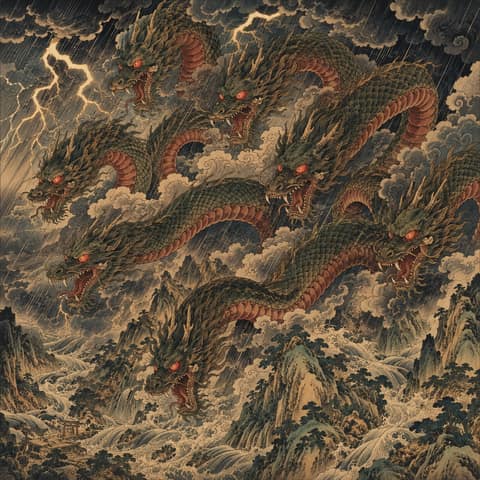
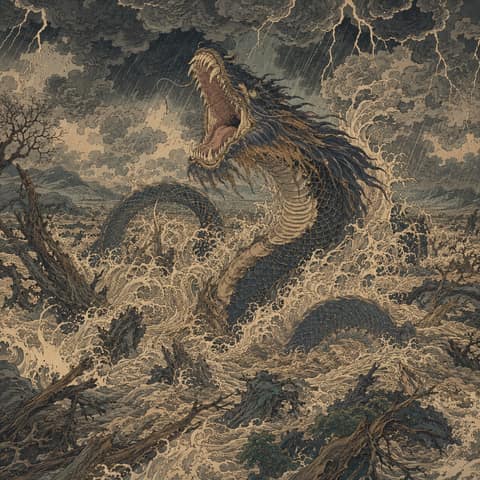
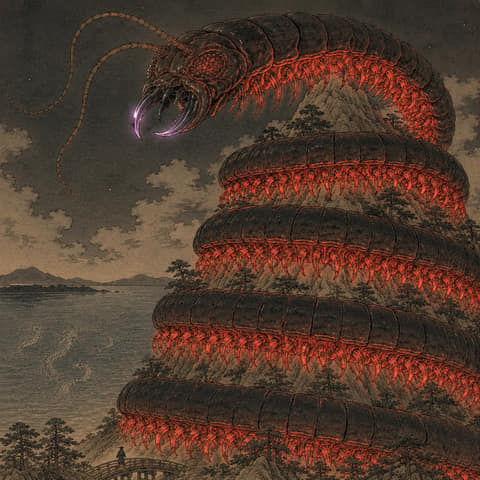
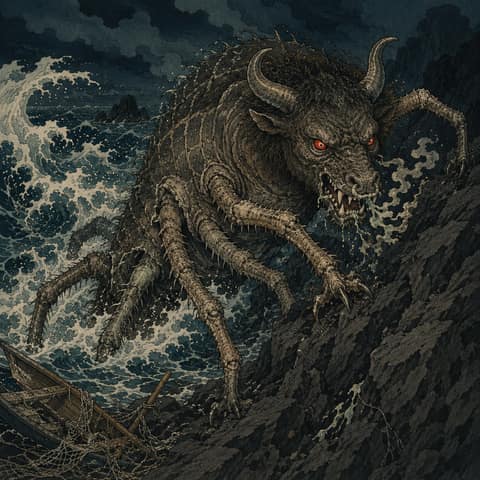
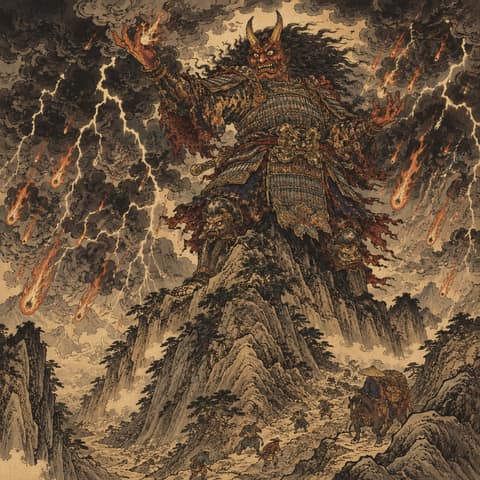
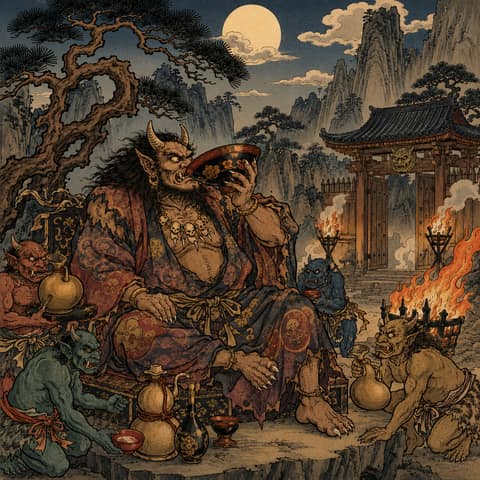
The Ōmukade appears in the heroic tales of Tawara Tōta as a monster that coils around a mountain multiple times; the Yamata-no-Orochi possesses eight heads and tails, with a mythic, massive body reminiscent of valleys and peaks. The Ushi-oni varies in appearance by region, but there are instances where it is feared as a giant beast lurking on coasts, in deep pools, or in mountains. Ōtakemaru and Shuten-dōji also appear massive not merely because of their height, but due to the scale of their stories, using mountains as strongholds to lead bands that threaten the capital.
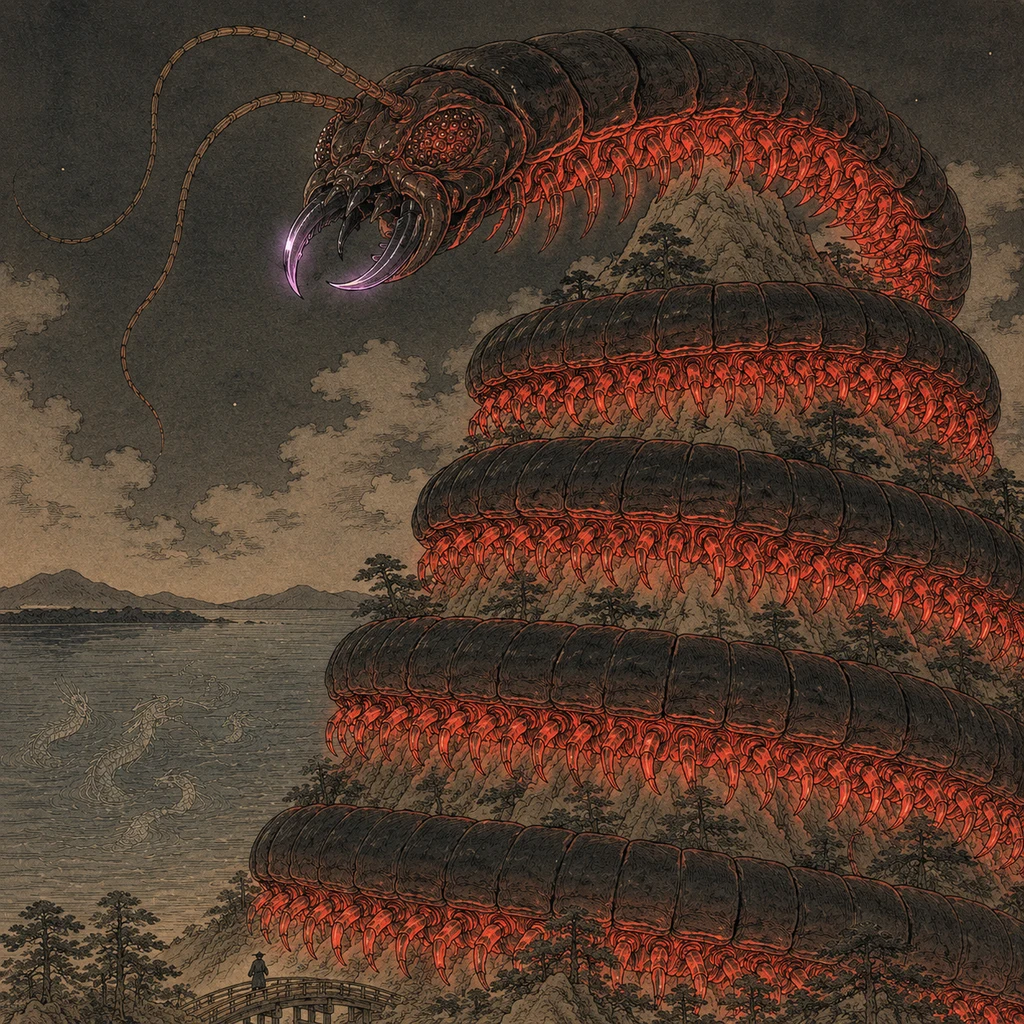 Giant CentipedeOH-oh-MOO-kah-deh
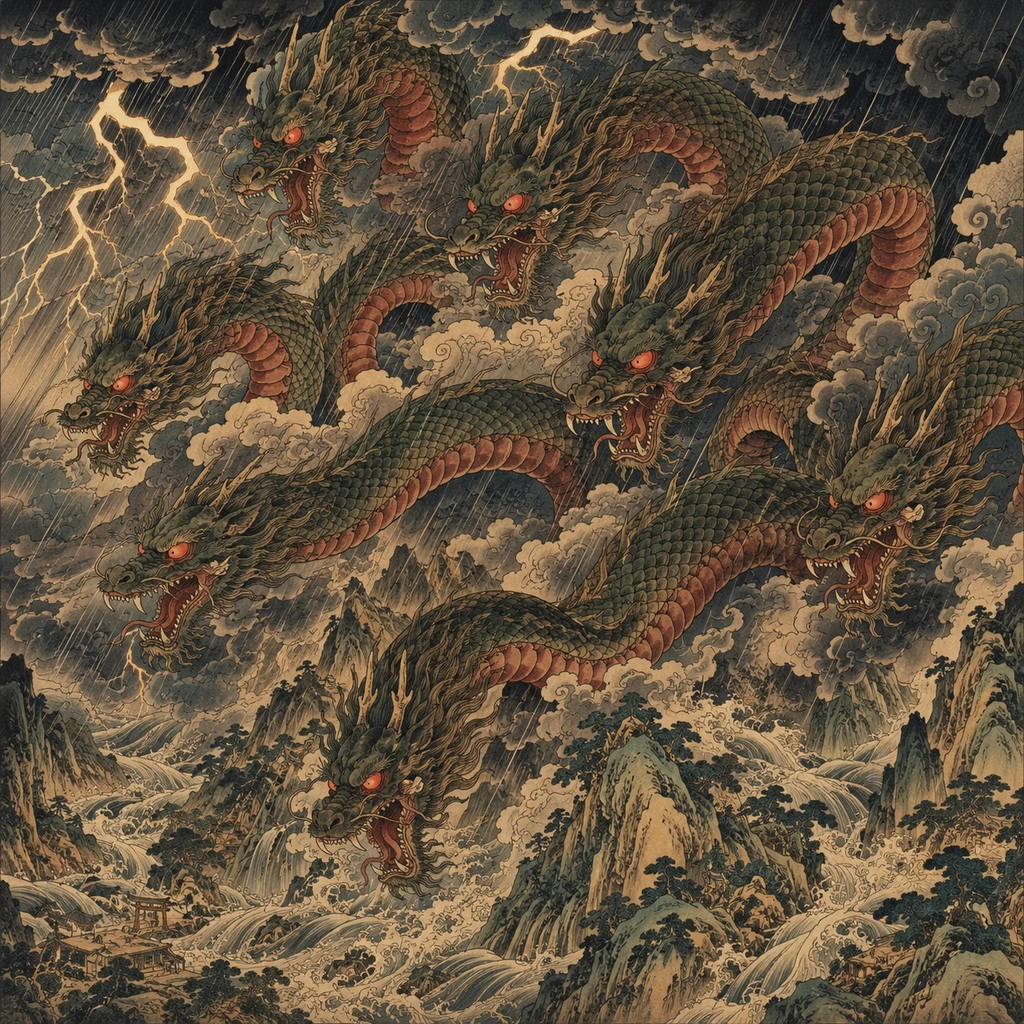 Yamata no OrochiYamata no Orochi
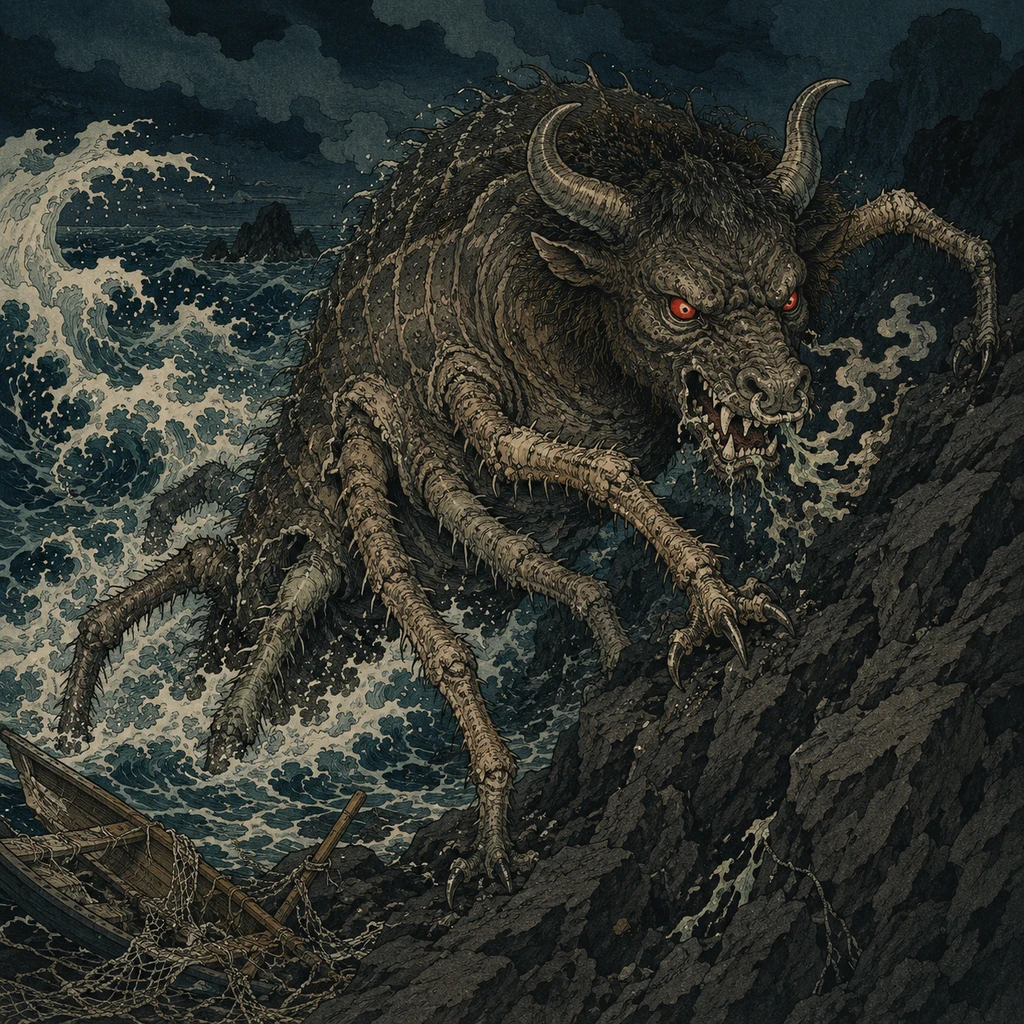 Ushi-oniushi-oni
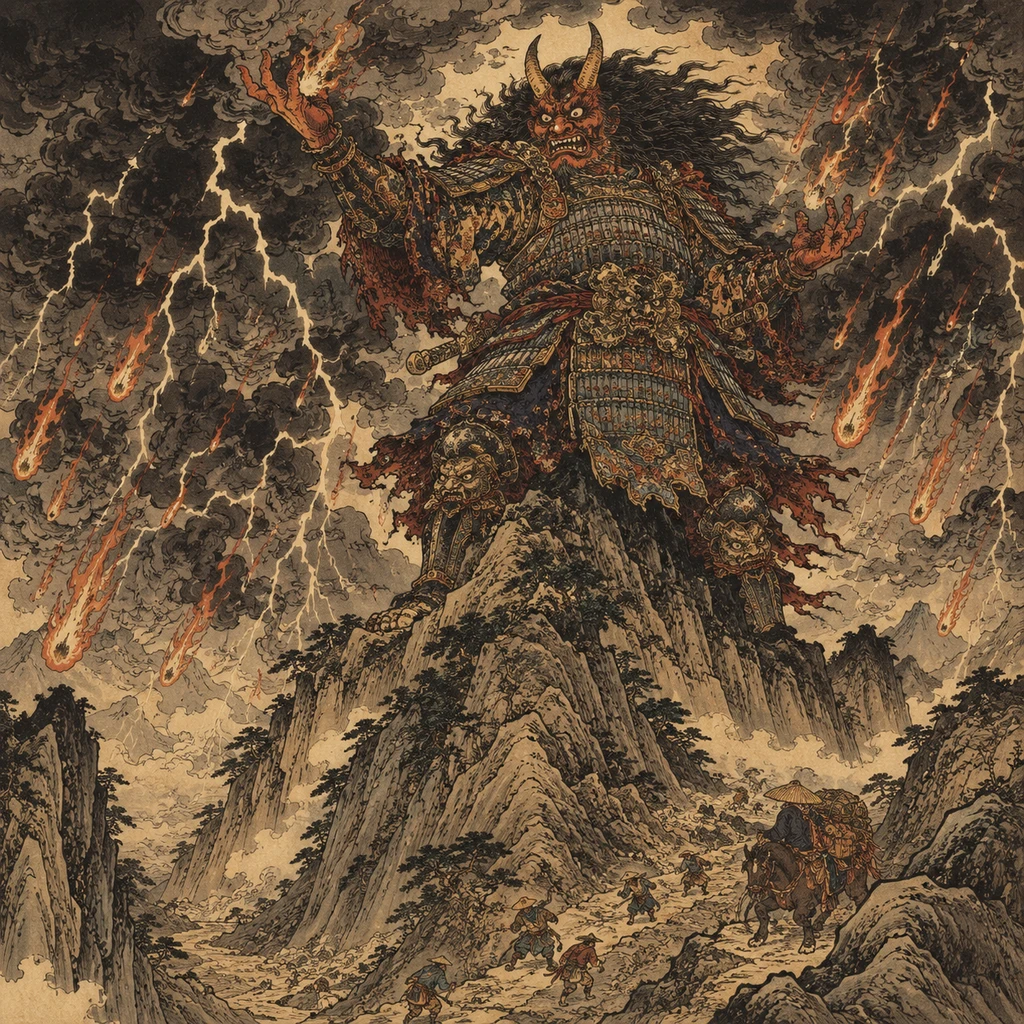 Ootakemaruおおたけまる
 Shuten-dōjiShuten-dōji
Checking the primary source compilations in yōkai dictionaries[1] confirms that the mythical snake, the hero's giant centipede, the local Ushi-oni, and the demon king of Otogizōshi all have different formations. Not reducing them to the same origin with the single term "giant monster" is the shortcut to enjoying their stories.
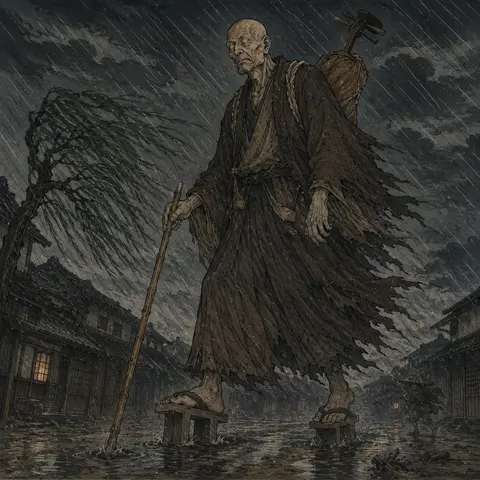
Stretching as You Look Up—Mikoshi-nyūdō, Shidai-daka, Taka-onna
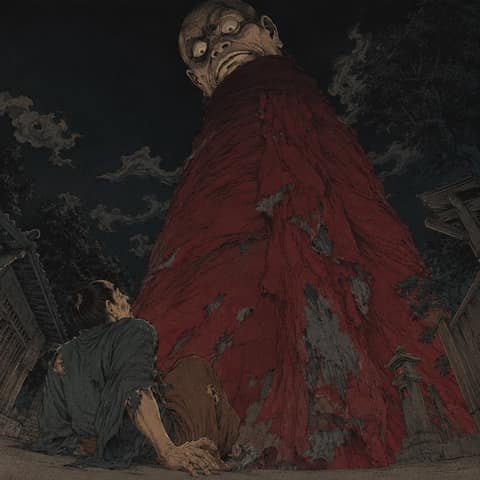
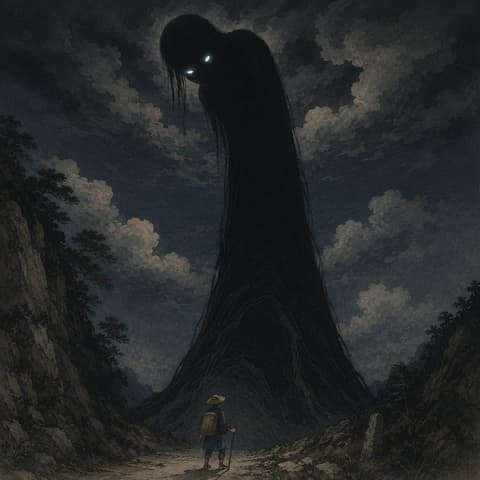
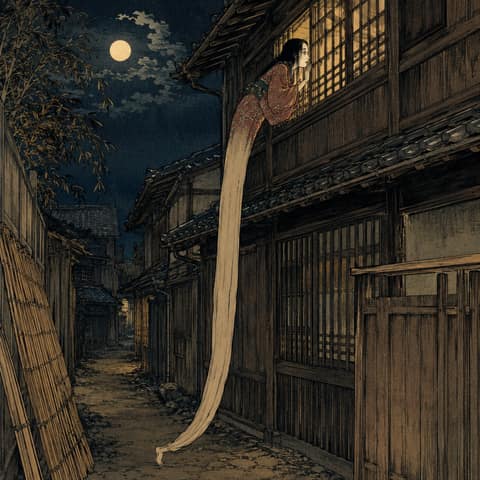
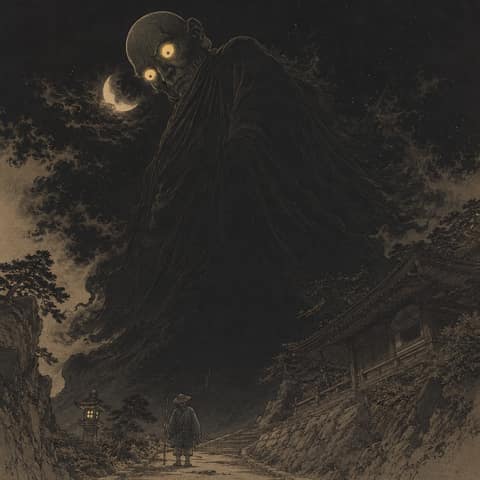
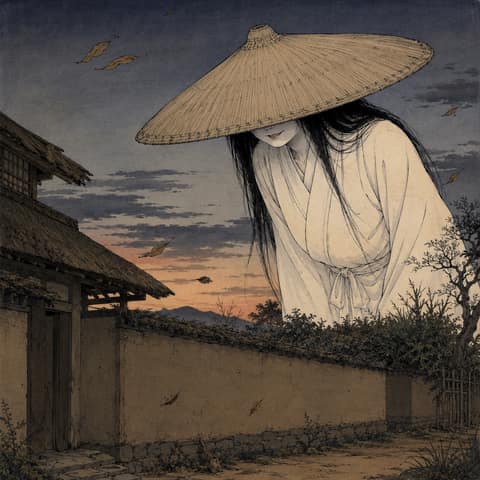
The Mikoshi-nyūdō is an anomaly of the road said to grow taller the more you look up at it. The Shidai-daka also grows as the observer looks up, and the Taka-onna is depicted stretching her body enough to peek into the second floor. The Nanahiro-nyōbō and Ō-nyūdō also produce gigantism not by being the size of a mountain from the start, but by constantly drawing the encountering person's gaze upward.
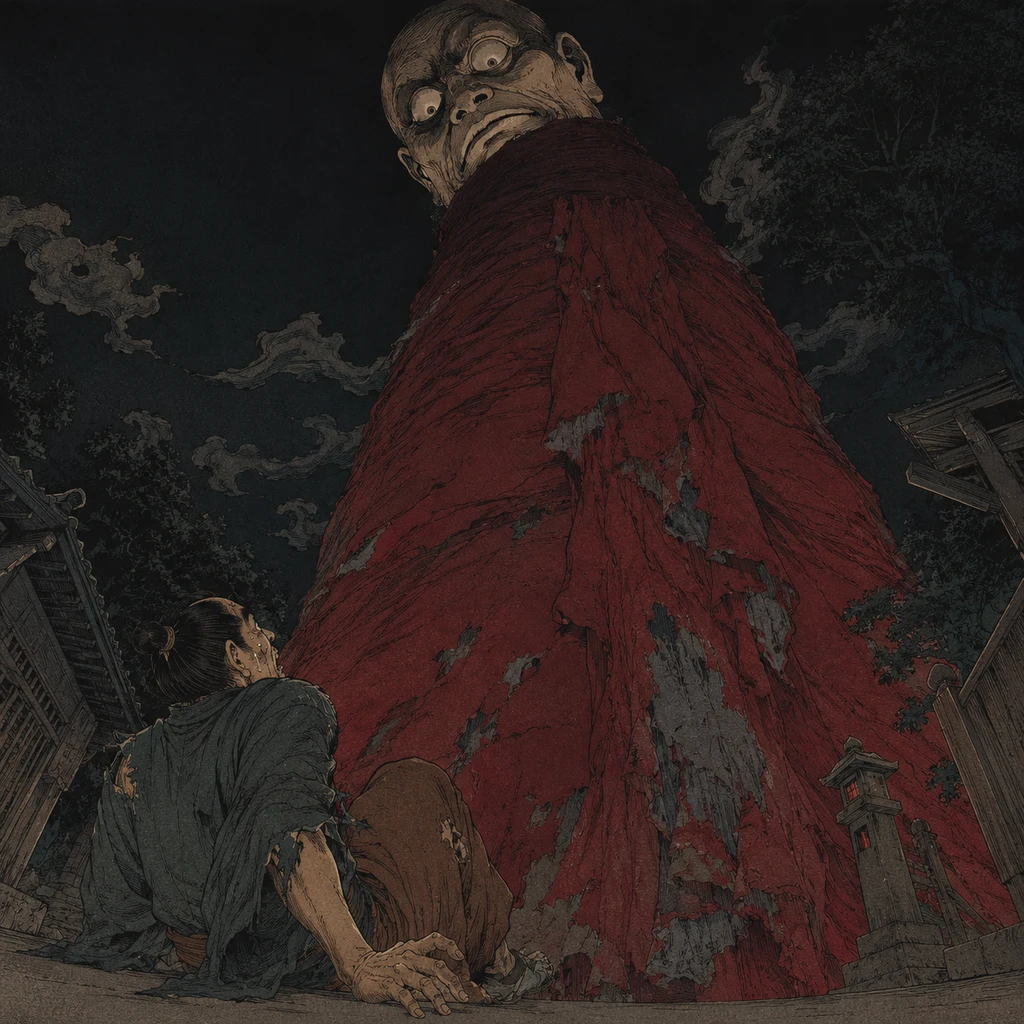 Mikoshi-nyūdō (Looming Priest)mee-KOH-shee nyoo-DOH
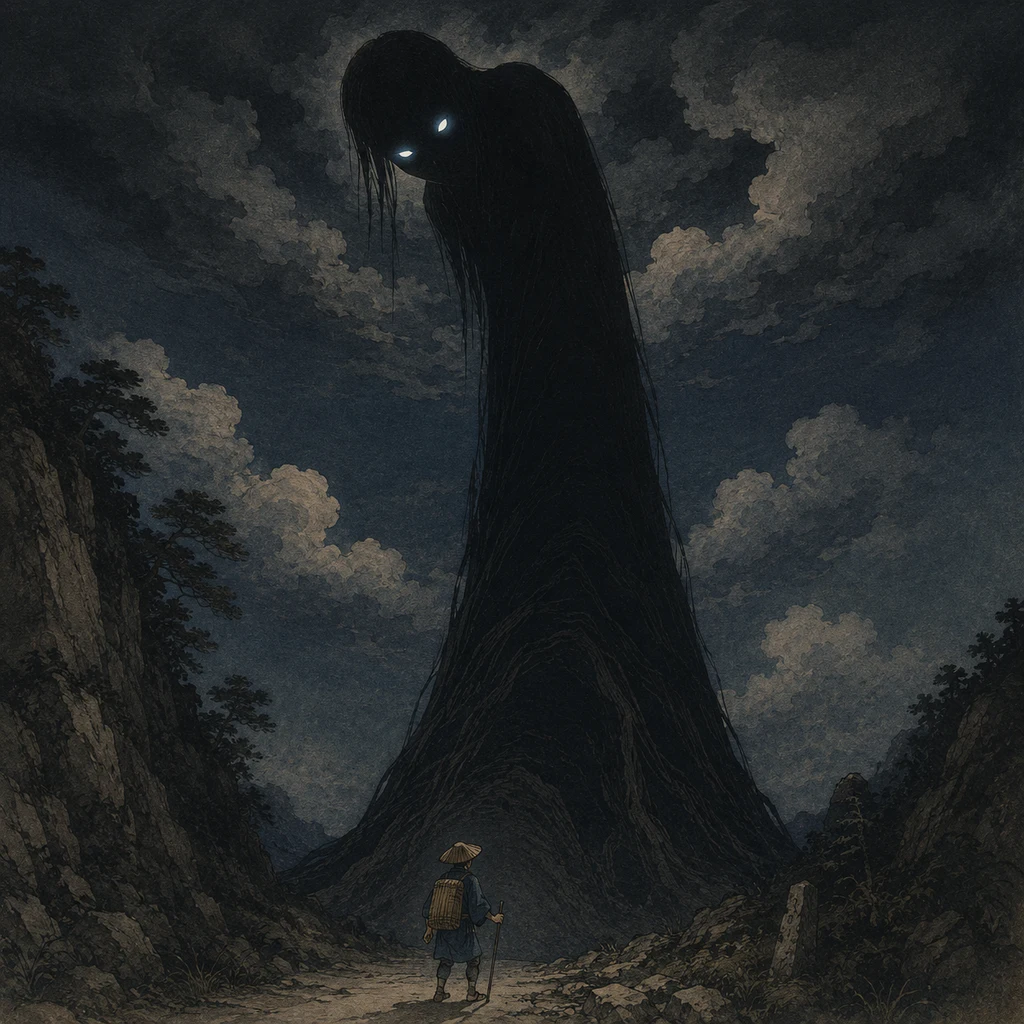 Shidai-daka (Ever-Rising Tall One)SHEE-dye-DAH-kah
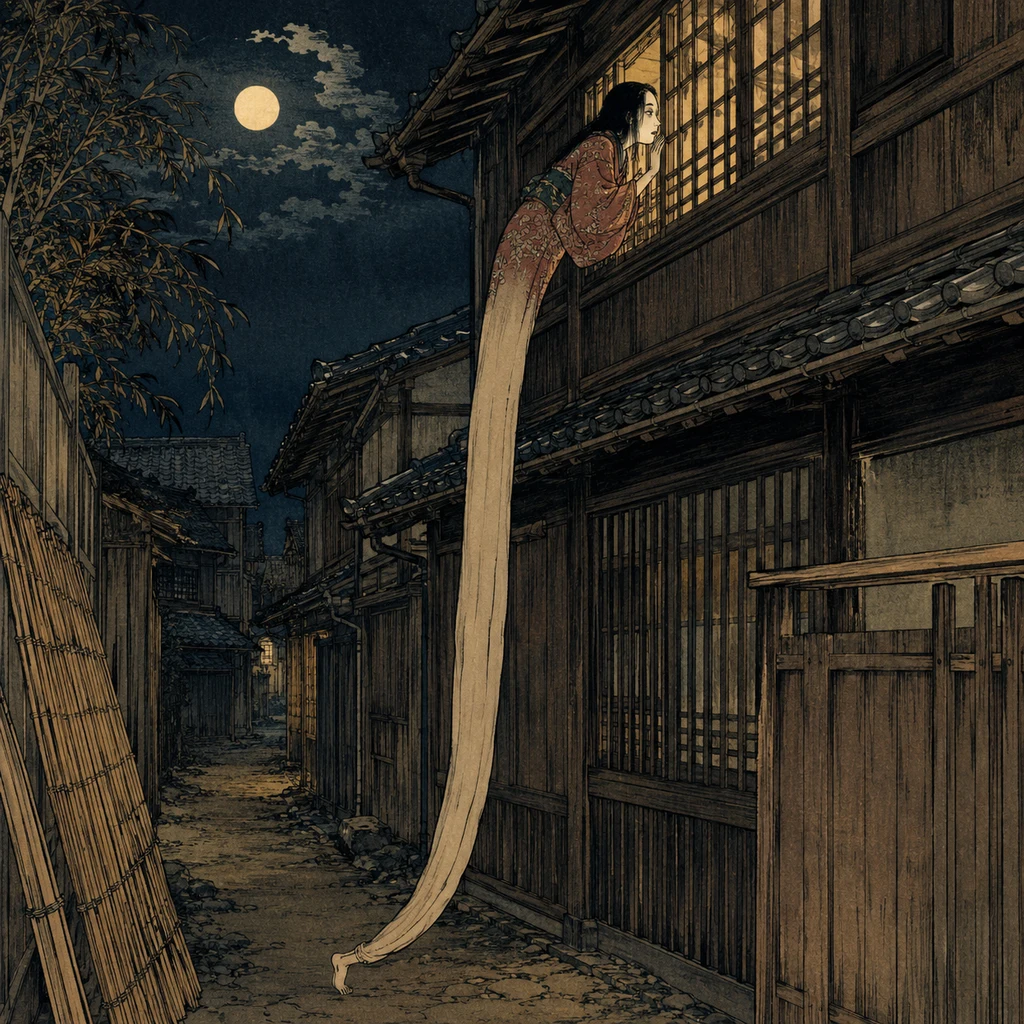 Tall Womantah-kah-OHN-nah
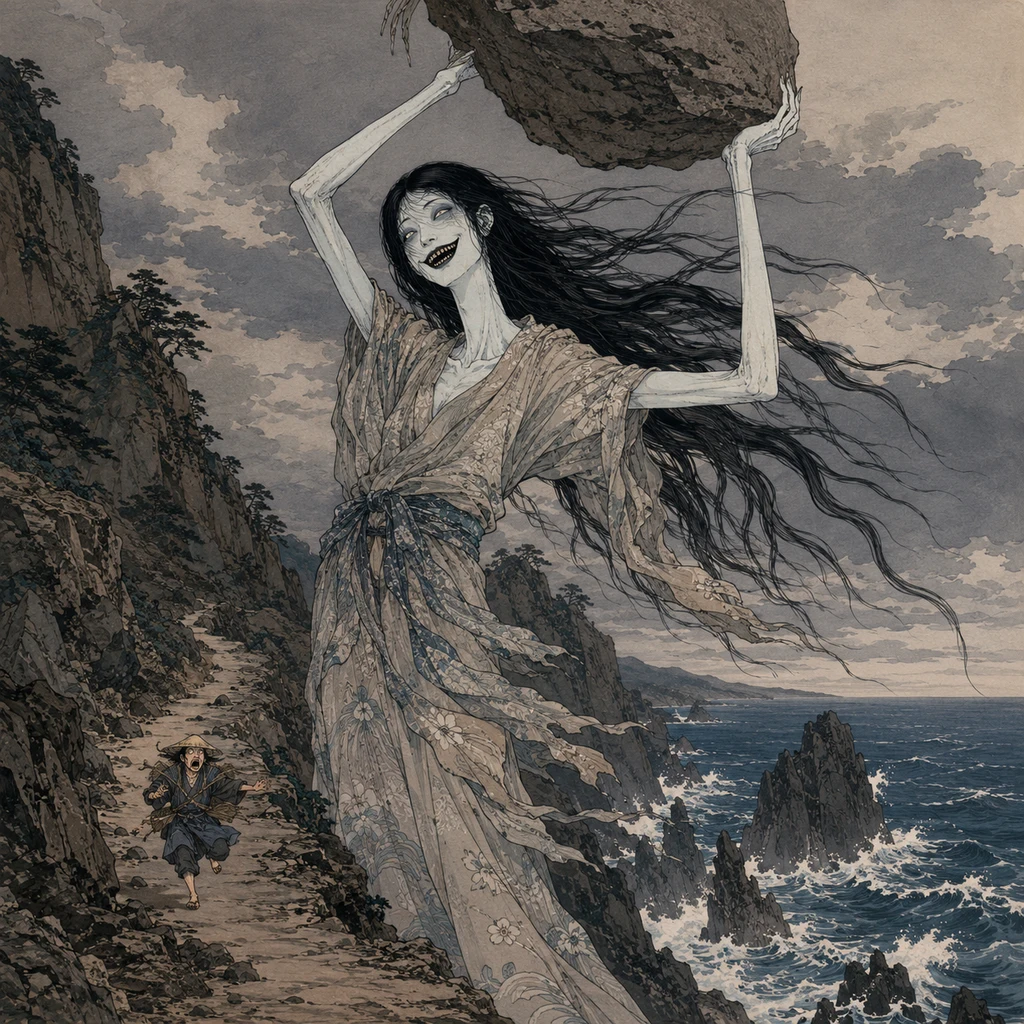 Seven-Fathom WifeNAH-nah-hee-roh NYOH-boh
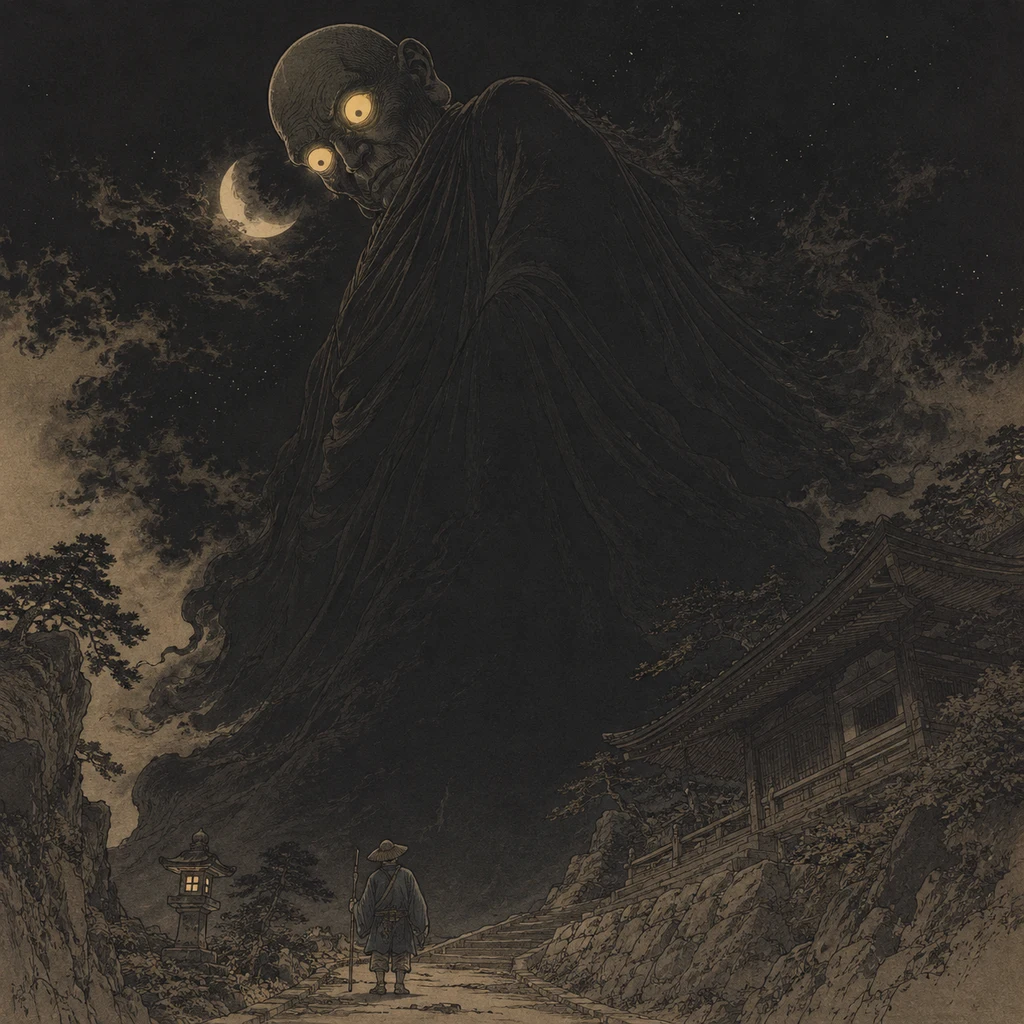 Great Nyūdō (Giant Priest Apparition)oh-oh-nyoo-DOH
In this type, the experience of "no matter how far you look up, it doesn't end" is more important than specific height numbers. The moment familiar heights—a night road, a wall, a second-story window—are breached, everyday space shifts into the otherworldly.
Only a Part Becomes Giant—Ōkubi, Ōzatō, Ōgiseru
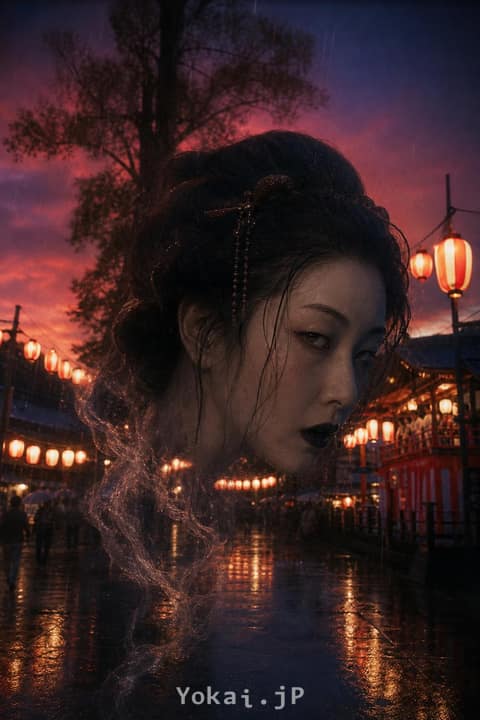
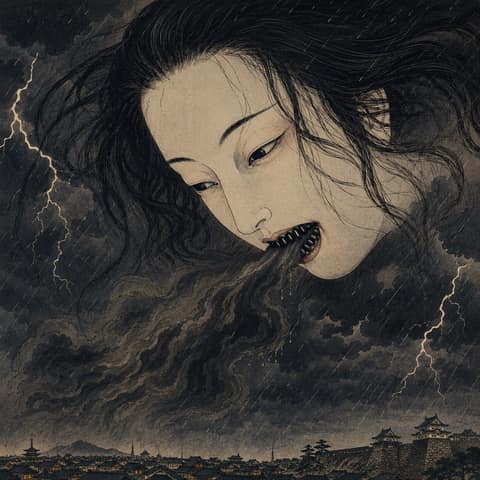
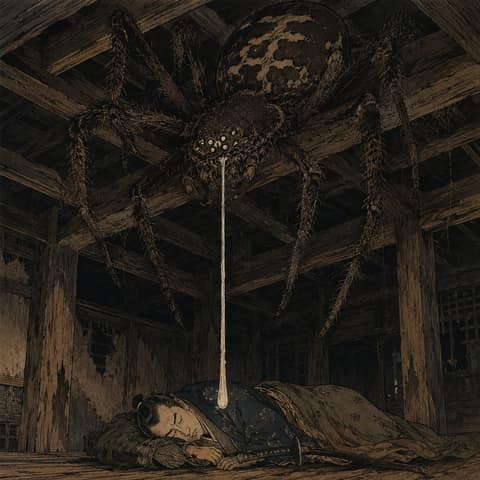
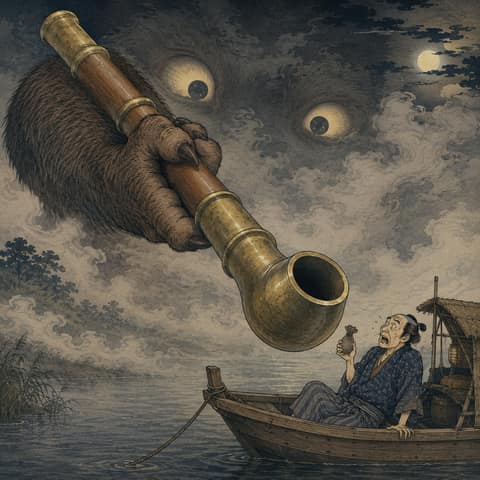
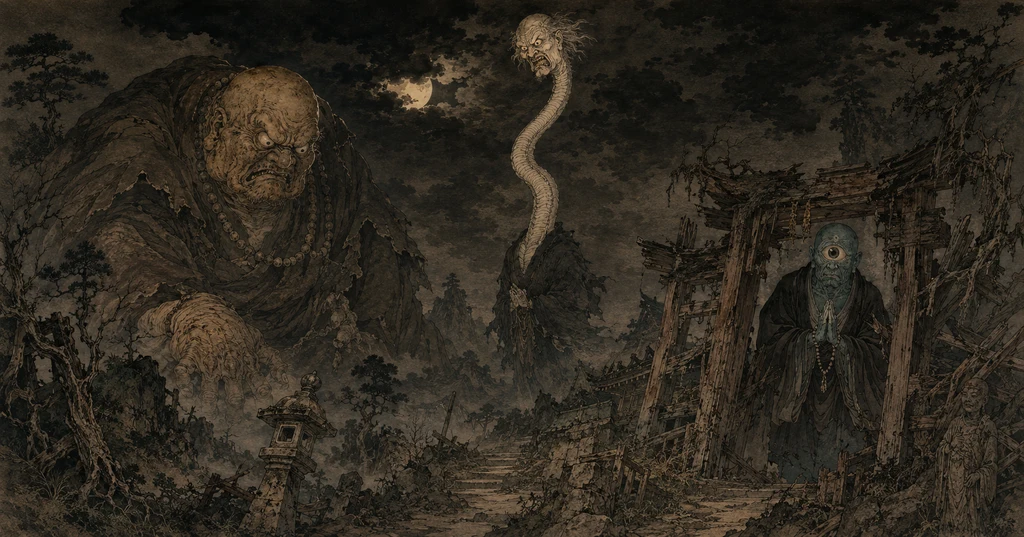
For the Ōkubi, only a head or face appears in midair; the Ōzatō is the figure of a giant blind priest; and the Ōgiseru is an anomaly where the pipe itself acquires a bizarre scale. The Ōgumo (Giant Spider) also heightens physiological anxiety by scaling a familiar small animal up to surpass human size. The technique of not drawing the entire body, but magnifying only the face, legs, or tools, forces the imagination to construct an even larger body outside the frame.
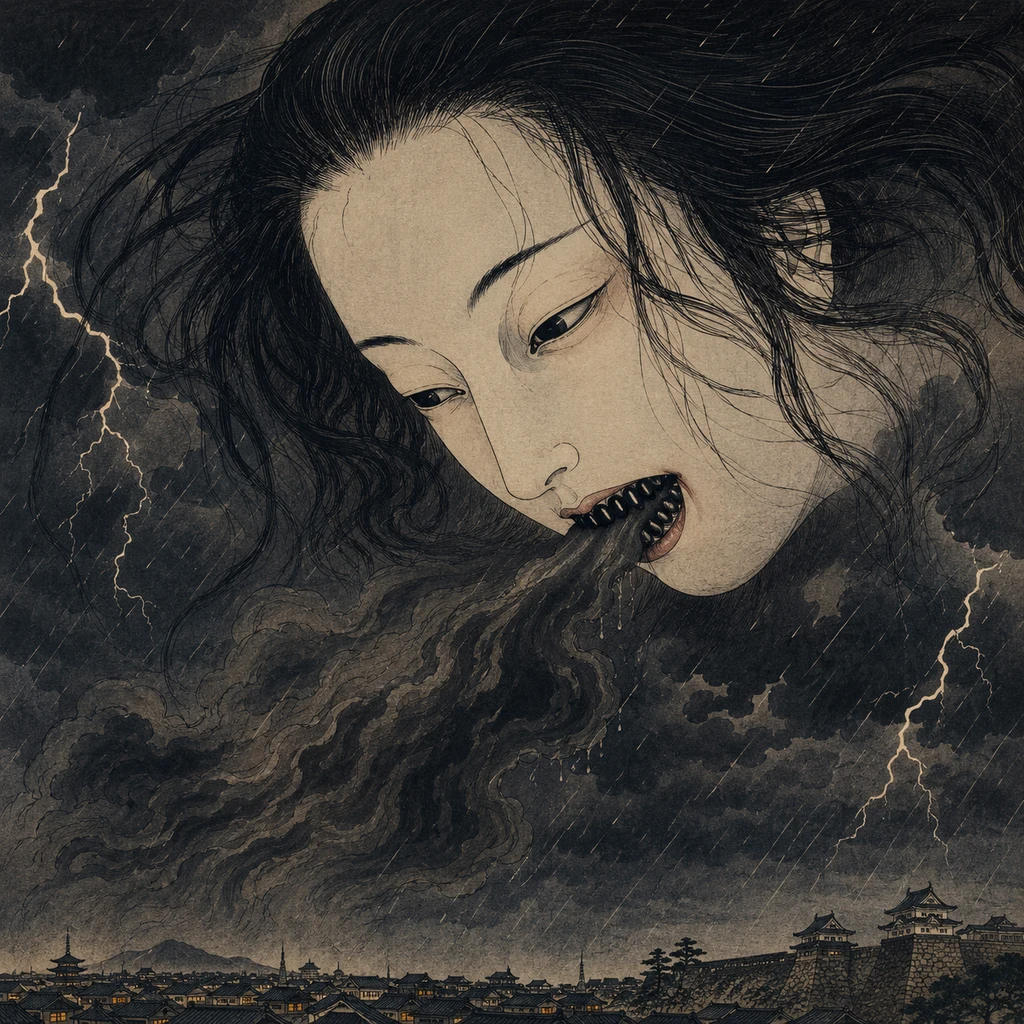 Great HeadOH-oh-KOO-bee
 Great Zato (The Blind Masseur Yokai)OH-zah-TOH
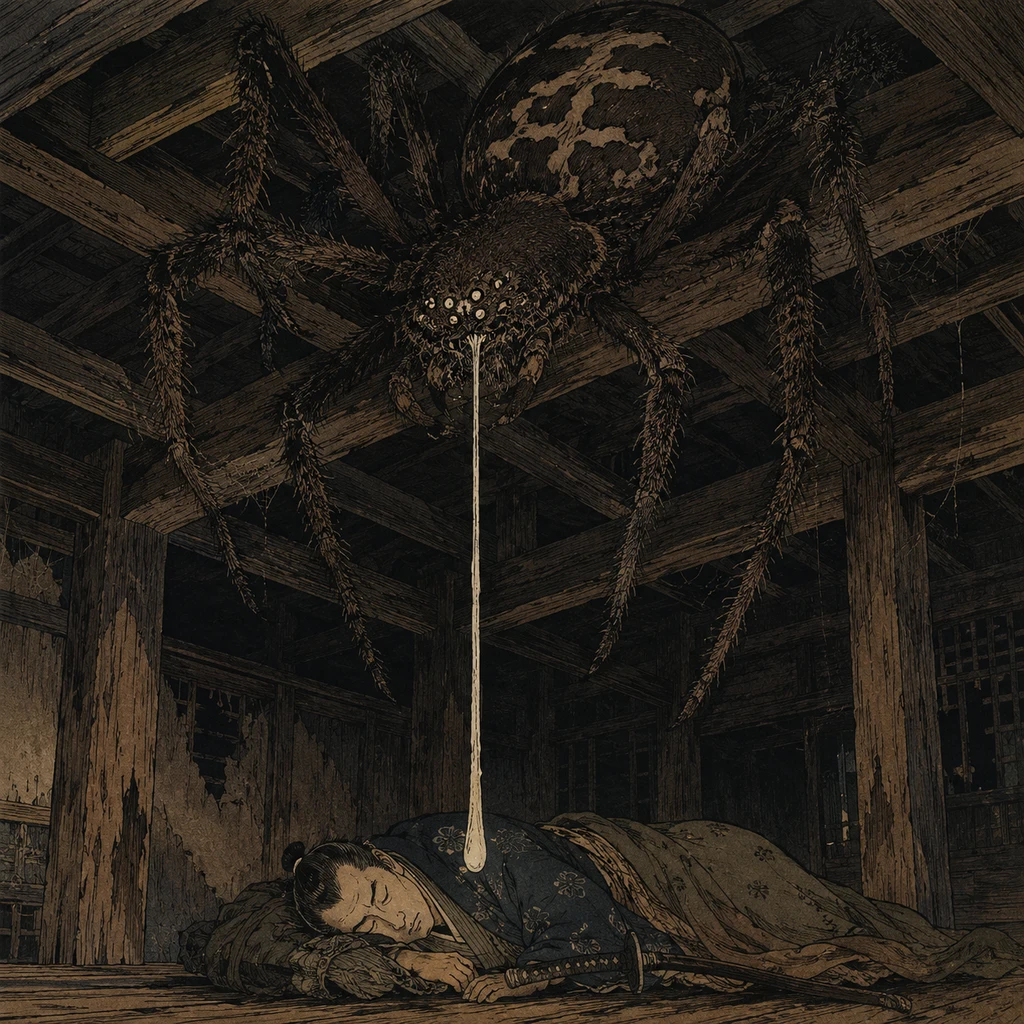 Great SpiderOHH-goo-moh
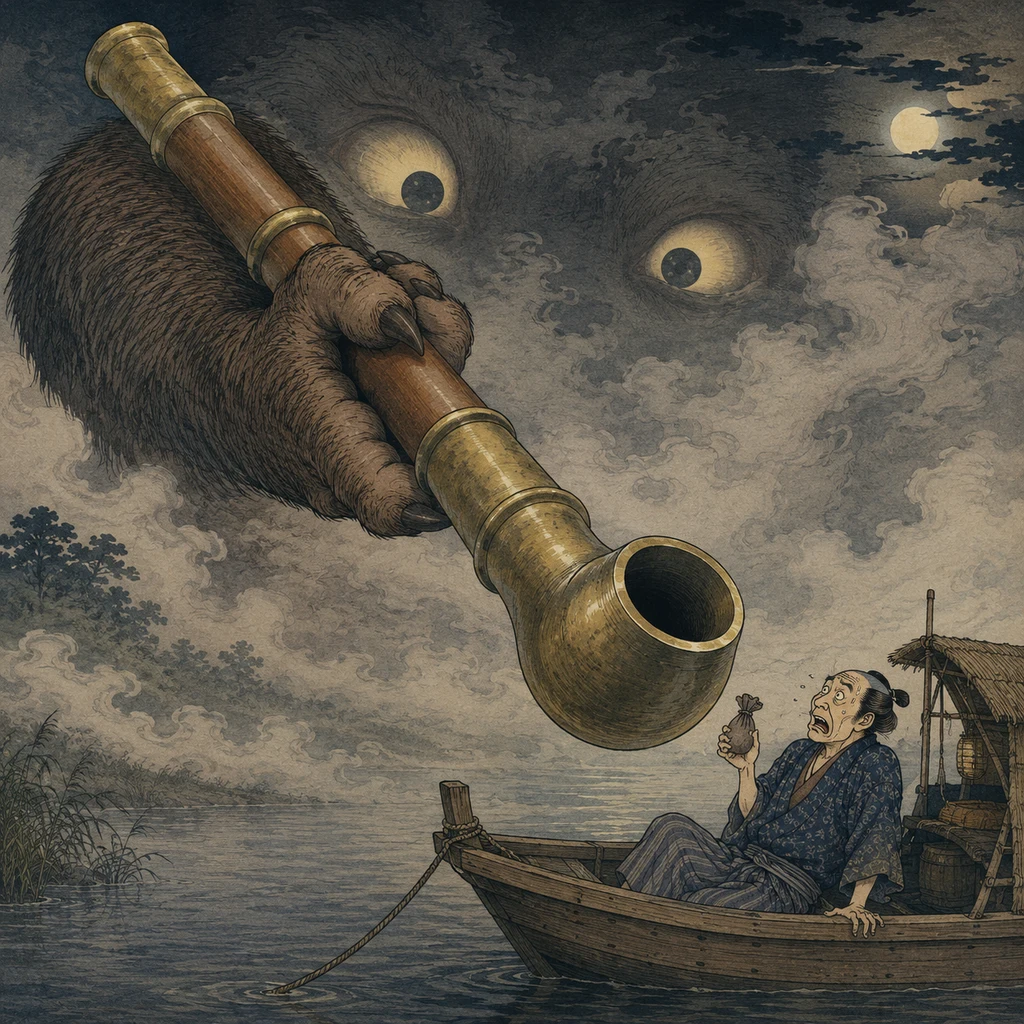 The Great Kiseruoh-oh-gee-SEH-roo
Giant of Bones and Modern Tall Tales
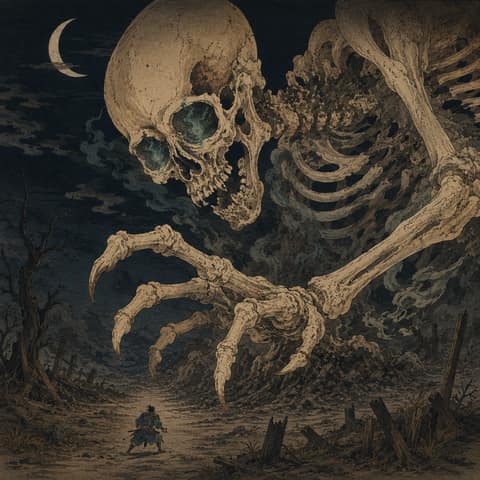
The Gashadokuro is not a yōkai that has been spoken of with the same name and form since ancient times. The giant skeleton image known today was organized during the bizarre publishing culture of the Shōwa era, and was later strongly linked to Utagawa Kuniyoshi's giant skeleton print. Hachishakusama is even newer—a tall woman who spread as an internet ghost story.
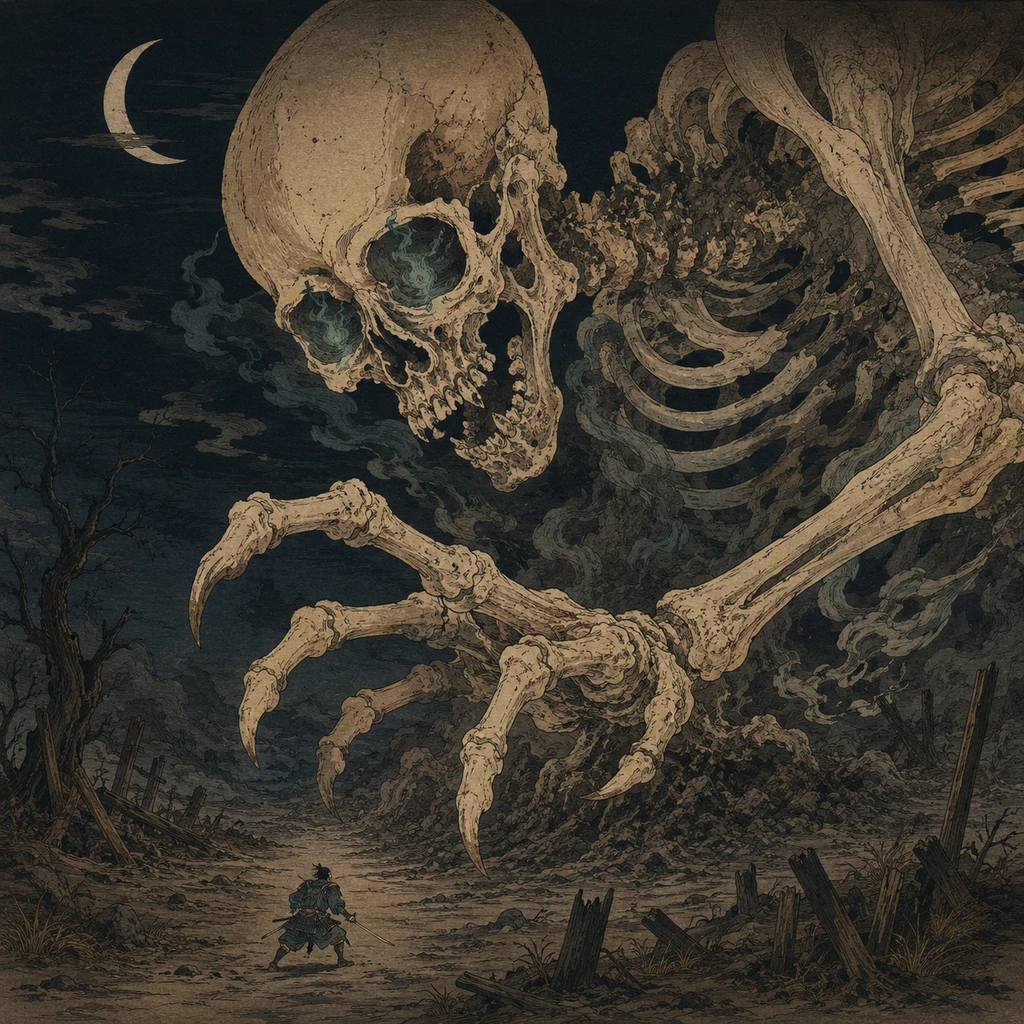
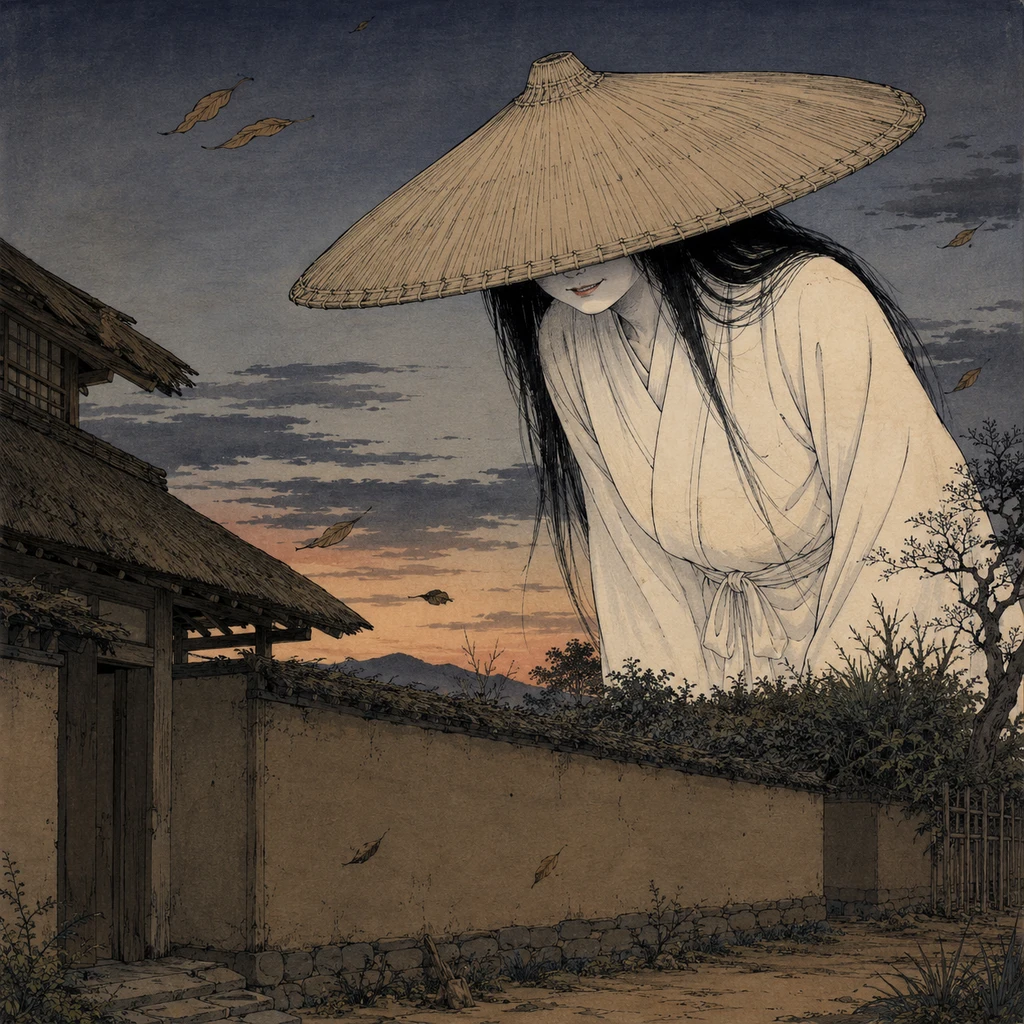
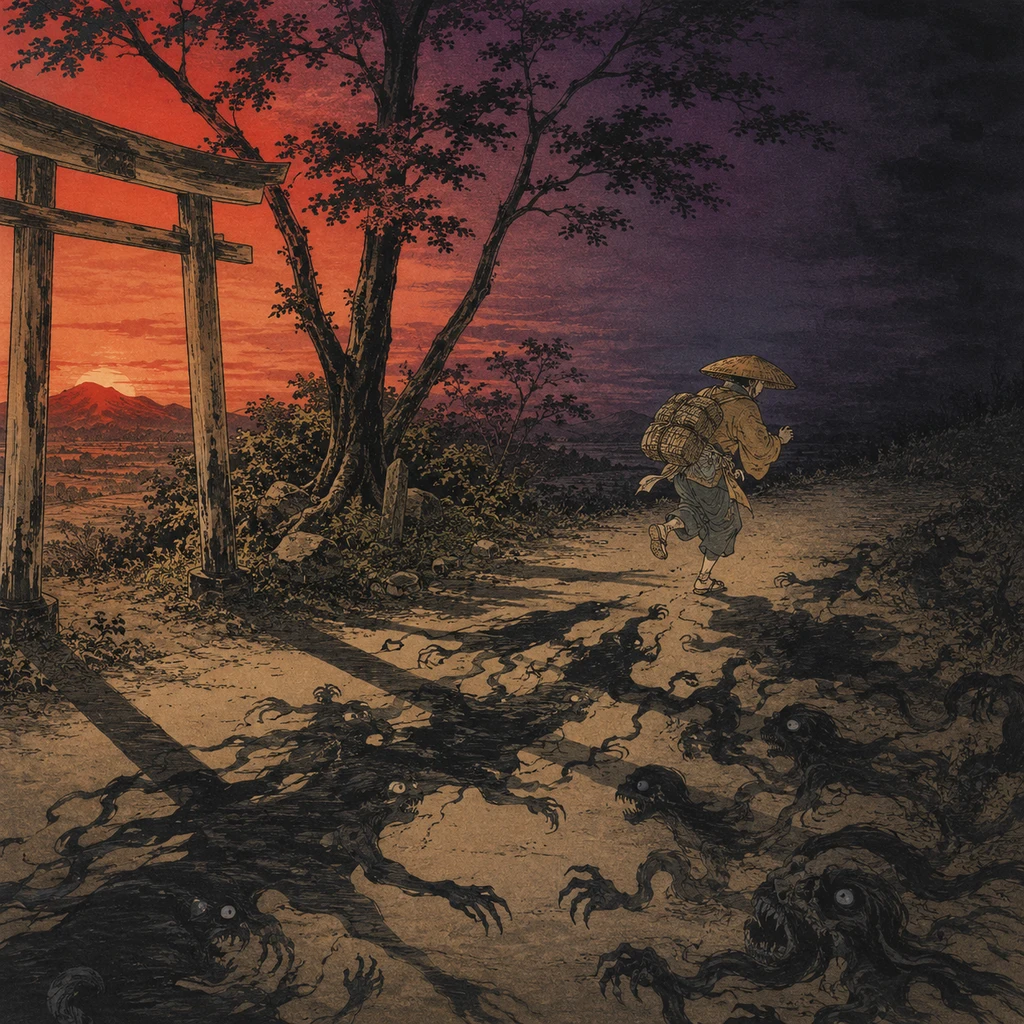
Being a recent formation does not mean it holds low value. Rather, it shows that even in post-war print media and modern internet spaces, "something vastly larger than a human" repeatedly generates fear. However, it is necessary to avoid confusing ancient legends with modern creations, and to clearly specify the era in which the current image solidified.
Three Clues for Observing Giant Yōkai
First, look at the object of comparison rather than the actual dimensions. It is important to see what it is placed next to—a mountain, a ship, a second floor, the moon—to show its size. Second, separate local legends, artists' modeling, and modern creations. Third, look at what the gigantism symbolizes. Topography, shipwrecks, earthquakes, the dead, and the anxiety of the night road each required a different giant image.
The "Included Yōkai" below cover everything from giants that make topography to sea beasts, stretching anomalies, demon kings, and modern ghost stories. Rather than just the impact of the pictures, please step forward into the places and eras where their massive sizes were born.