YOKAI.JP
Yokai of the Sea

Yokai of the Sea

31 yokai
Featured

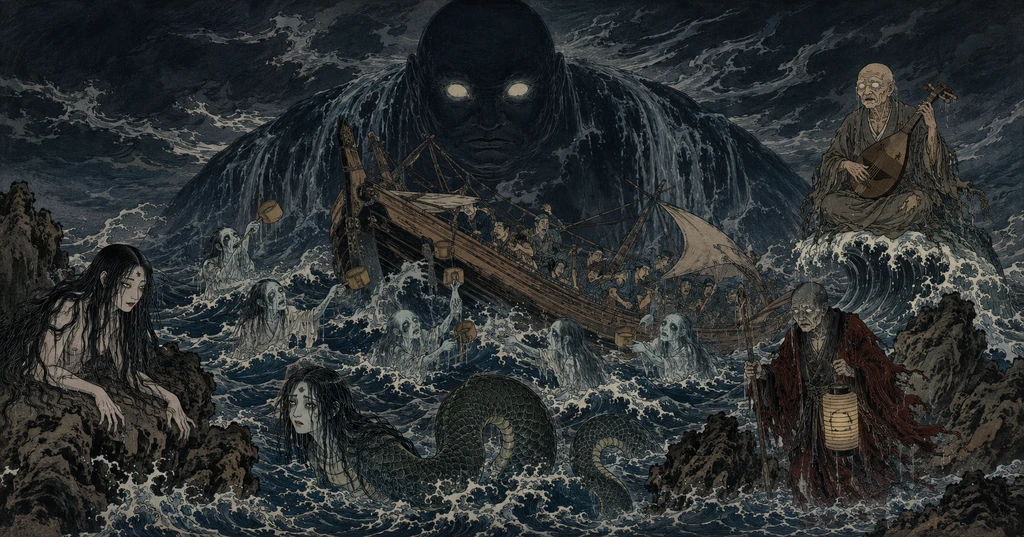
The sea blesses people with its bounty, yet it can also become a stage for terrifying wonders. From the umibōzu rising out of the abyss, to the dreaded funayūrei said to sink ships, the biwa-playing umizatō adrift on the waves, and the island tales of the kainan hōshi—these are all rightly called the “monsters of sea and boat.” This collection gathers sea-born apparitions shaped by the bond between people and the ocean: from regional lore like Jinjahime and Iso-onna to fantastical stories such as Nami-kozō and Kokū-daiko. Immerse yourself in maritime fear and faith, and savor these uncanny sea-yokai legends.

Updated: 3/23/2026
yokai collectionJapanese folkloresea yokaiumibozufunayureimaritime folkloreJapanese ghostsyokai encyclopediaocean spiritssupernatural creatures

Included Yokai

31 yokai are included

These yokai also have art cards

27 cards — ukiyo-e, modern Japan & more

Umibōzu (Sea Monk)

Umibōzu (Sea Monk)

Legendary

oo-mee-BOH-zoo

中国地方の篝火消し・海坊主

Aquatic SpiritsNagasakiEhime

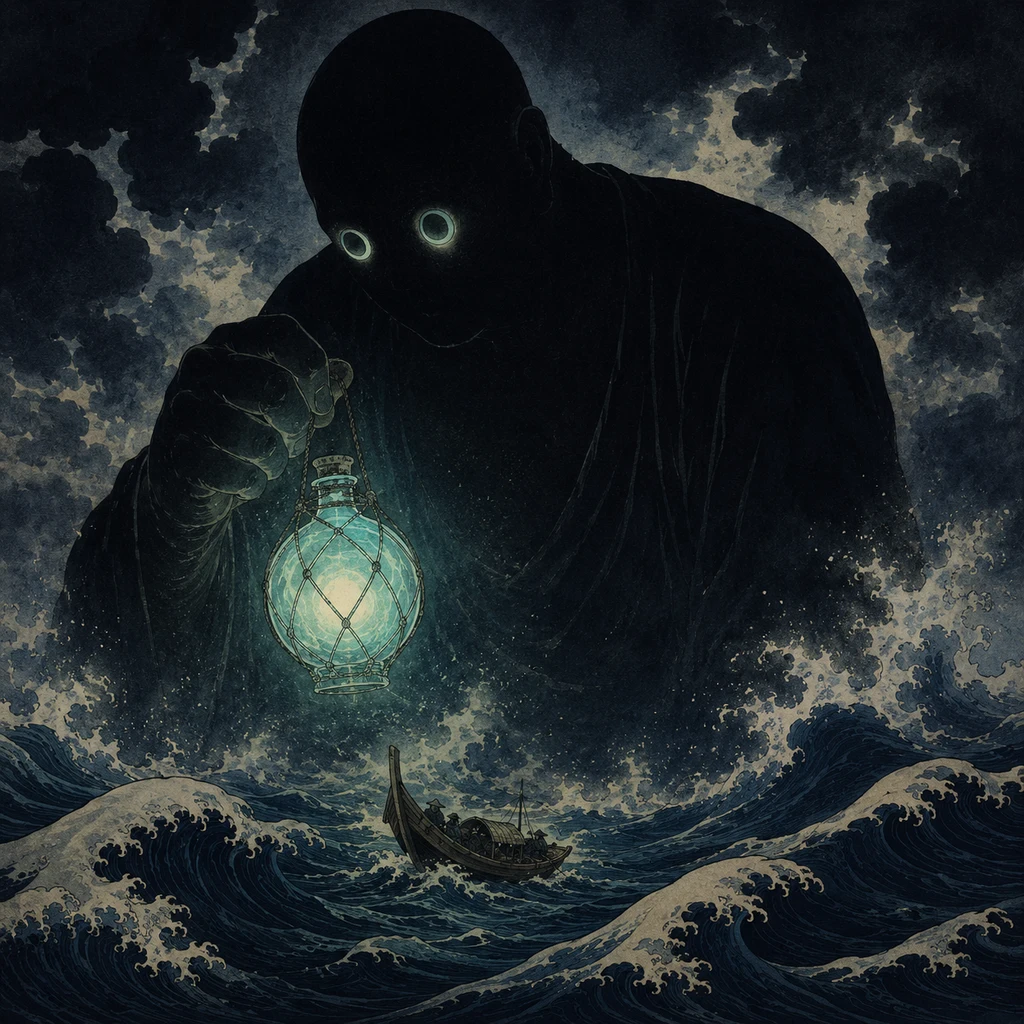
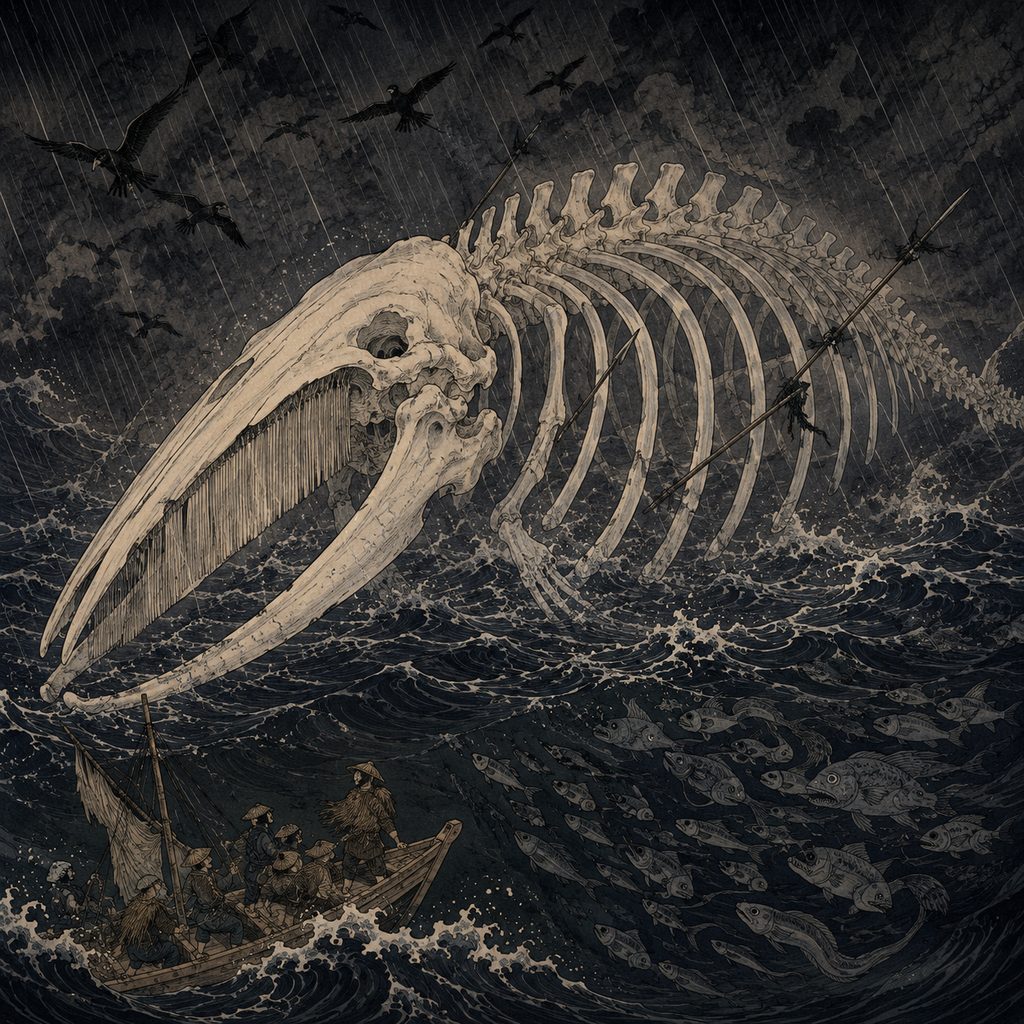
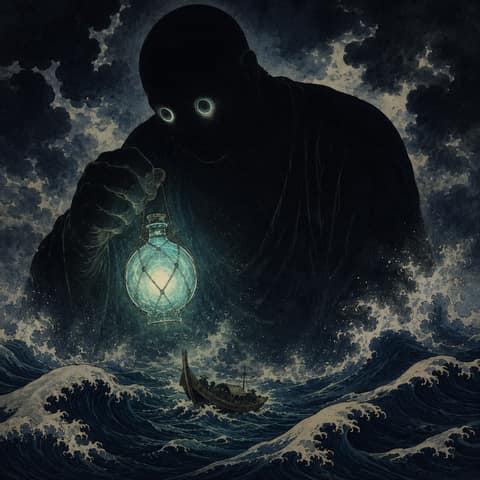
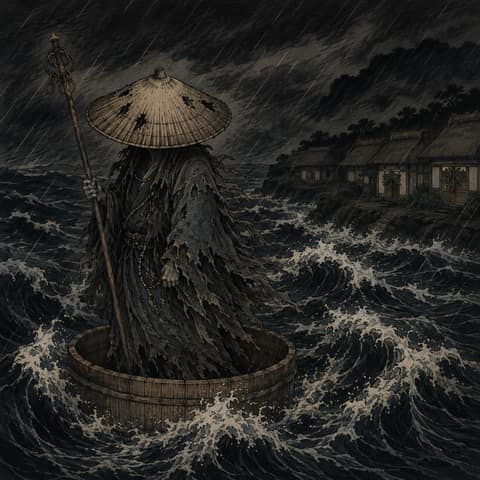
Umibōzu is a sea-dwelling yokai feared by coastal communities across Japan, especially among fishers. It appears as a vast black mass or a bald monk-like head rising from the waves, often seen as a harbinger of shipwrecks and maritime disaster. Its full body is rarely visible; most accounts describe only a head and shoulders jutting above the surface. Said to emerge at night or in storms, it overturns boats or drags sailors into the depths.

Sea Zato (Blind Lute Priest of the Sea)

Sea Zato (Blind Lute Priest of the Sea)

Rare

OO-mee-zah-TOH

波上に立つ琵琶座頭・海座頭

Aquatic SpiritsJapanese folklore

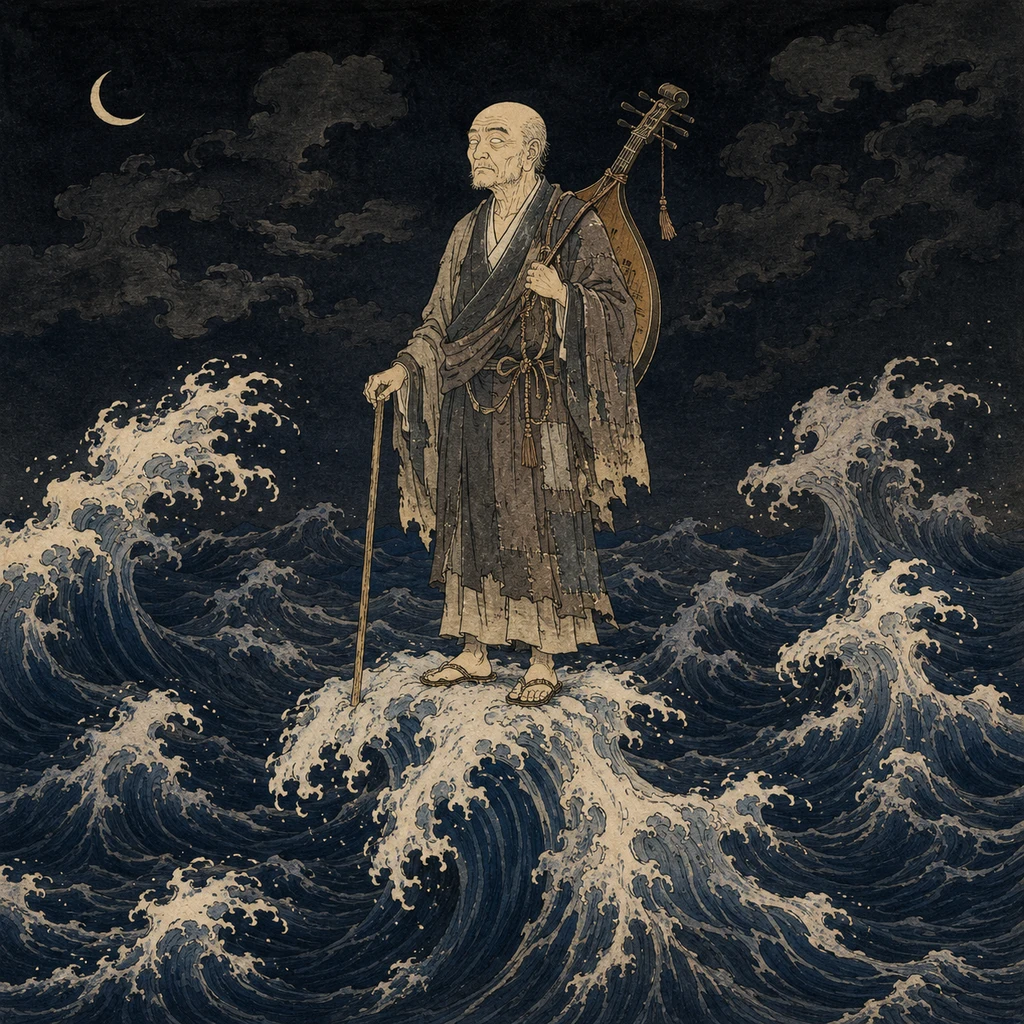
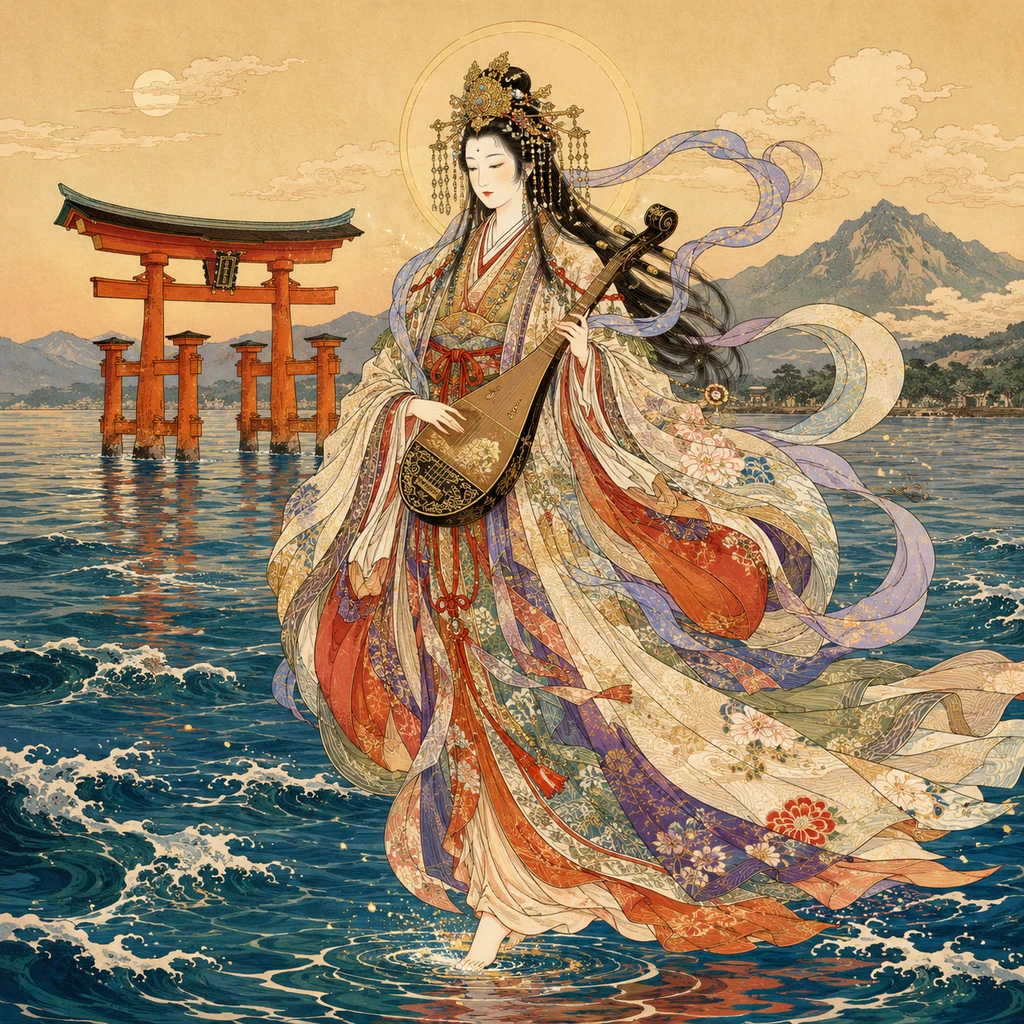
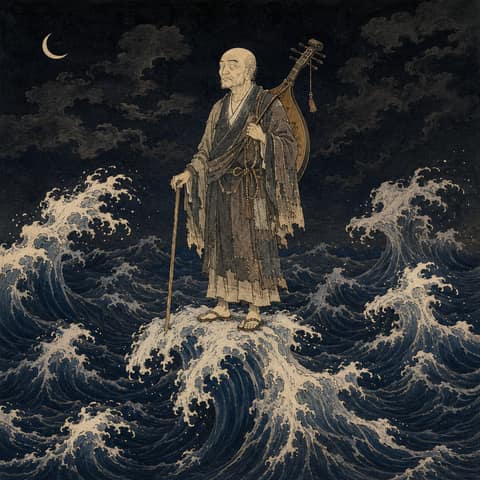
A yokai depicted in Edo-period art as a blind biwa-playing priest appearing at sea. Examples appear in Toriyama Sekien’s Gazu Hyakki Yagyō and the Hyakki Yagyō Emaki held in the Matsui Bunko (Kumamoto). None include explanatory text, so its nature and origins remain unclear. It bears a biwa and a staff and is shown standing upon the waves. Some interpret it as akin to the sea monk (umibōzu), but details are unknown.

Kainan-bōshi (Drowned Monks of the Sea)

Kainan-bōshi (Drowned Monks of the Sea)

Uncommon

KAI-nahn BOH-shee

一月廿四日来る・海難法師

Aquatic SpiritsTokyo

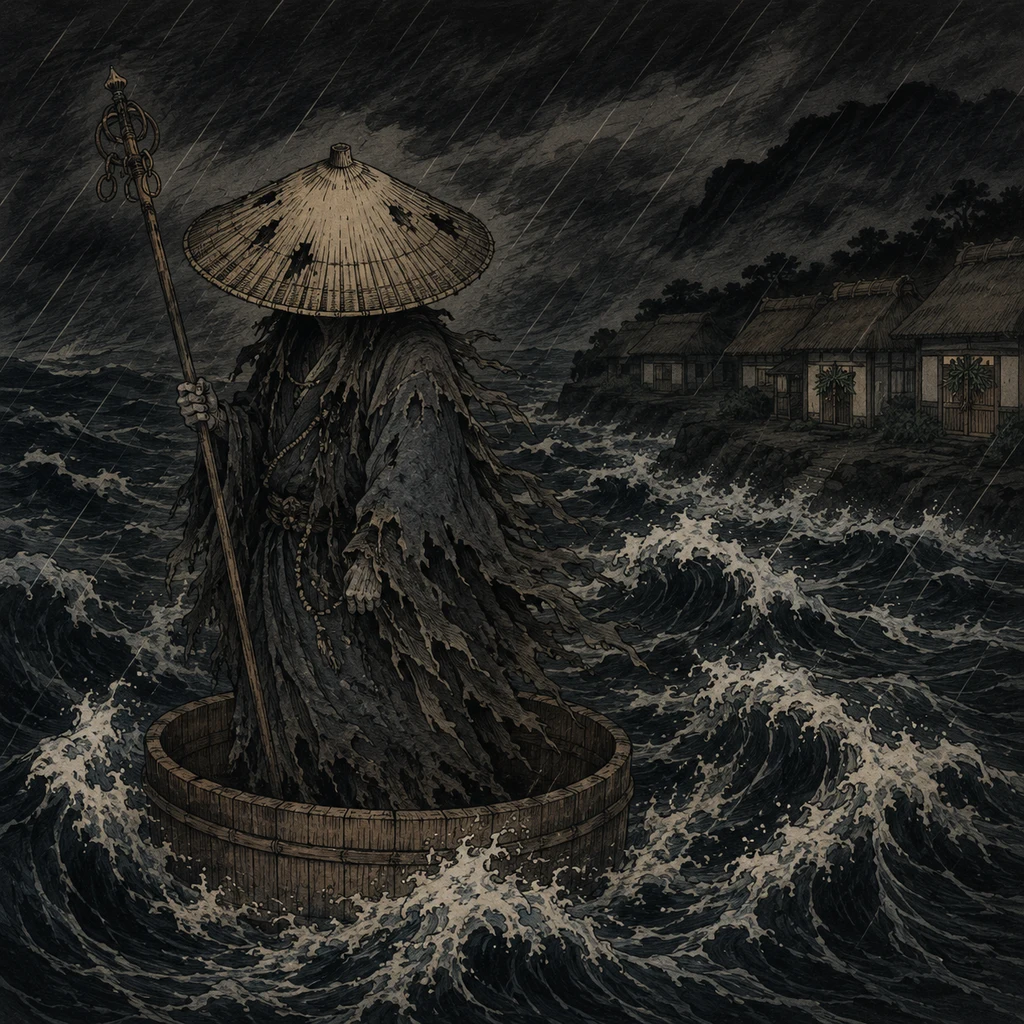
A vengeful spirit of those who drowned at sea, told across the Izu Islands and locally called “Kannambōshi.” On the 24th day of the first lunar month, they arrive from offshore riding washtubs or small boats. Seeing them was feared to doom the witness to the same fate. People observed taboos by covering doorways with baskets, setting holly or Tabernaemontana (tobera) sprigs, and refraining from going out. The tradition likely began in the Edo period as tales of resentful spirits tied to shipwrecks involving island officials and youth groups. In some areas they are also interpreted as visiting deities.

Iso-onna (Shore Woman)

Iso-onna (Shore Woman)

Epic

EE-soh-OHN-nah

凪戒めのヨロヅナセノ・磯女

Aquatic SpiritsKumamotoNagasaki

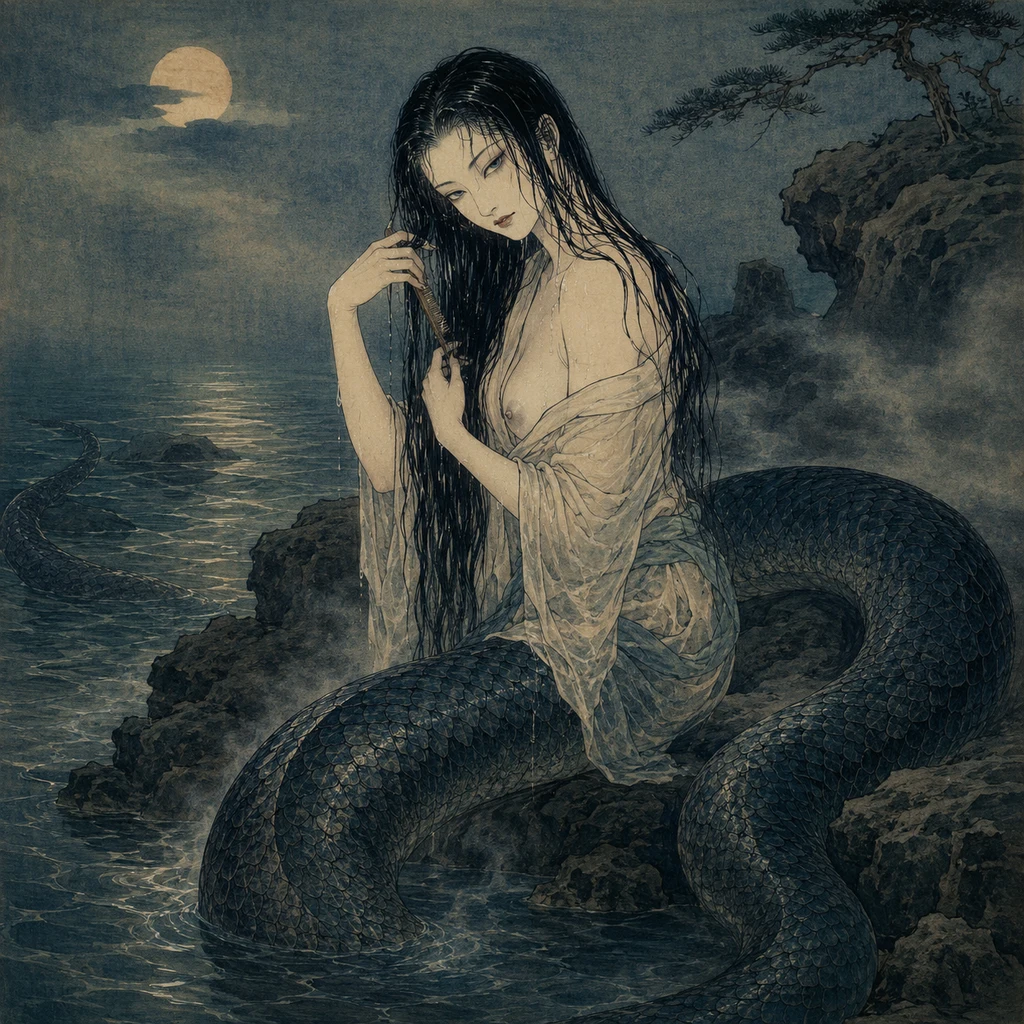
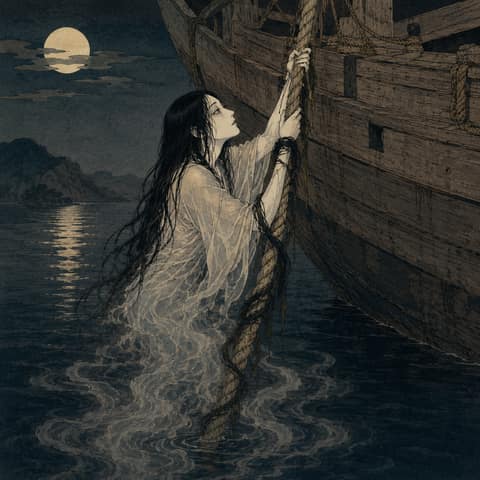
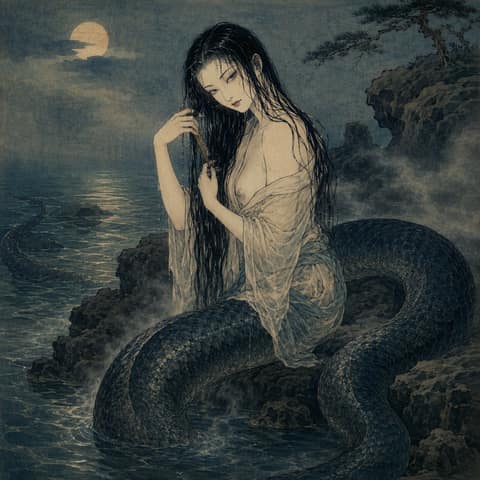
The Iso-onna is a female yokai said to haunt beaches and rocky shores around Kyushu. She approaches sands, tidepools, and moored boats, ensnaring people with her long hair to drink their blood. Her upper body resembles a beautiful woman, while her lower half is indistinct, sometimes serpent-like; from behind she may appear as a boulder. Names vary by region—Iso-onna, Nure-onna, Ama, Umi-hime—and she often appears during calm seas. In some areas she is linked to the vengeful spirits of the drowned.

Sea Person (Kaijin)

Sea Person (Kaijin)

Uncommon

KAI-jin

水かき垂皮の海客・海人

Aquatic SpiritsNagasaki

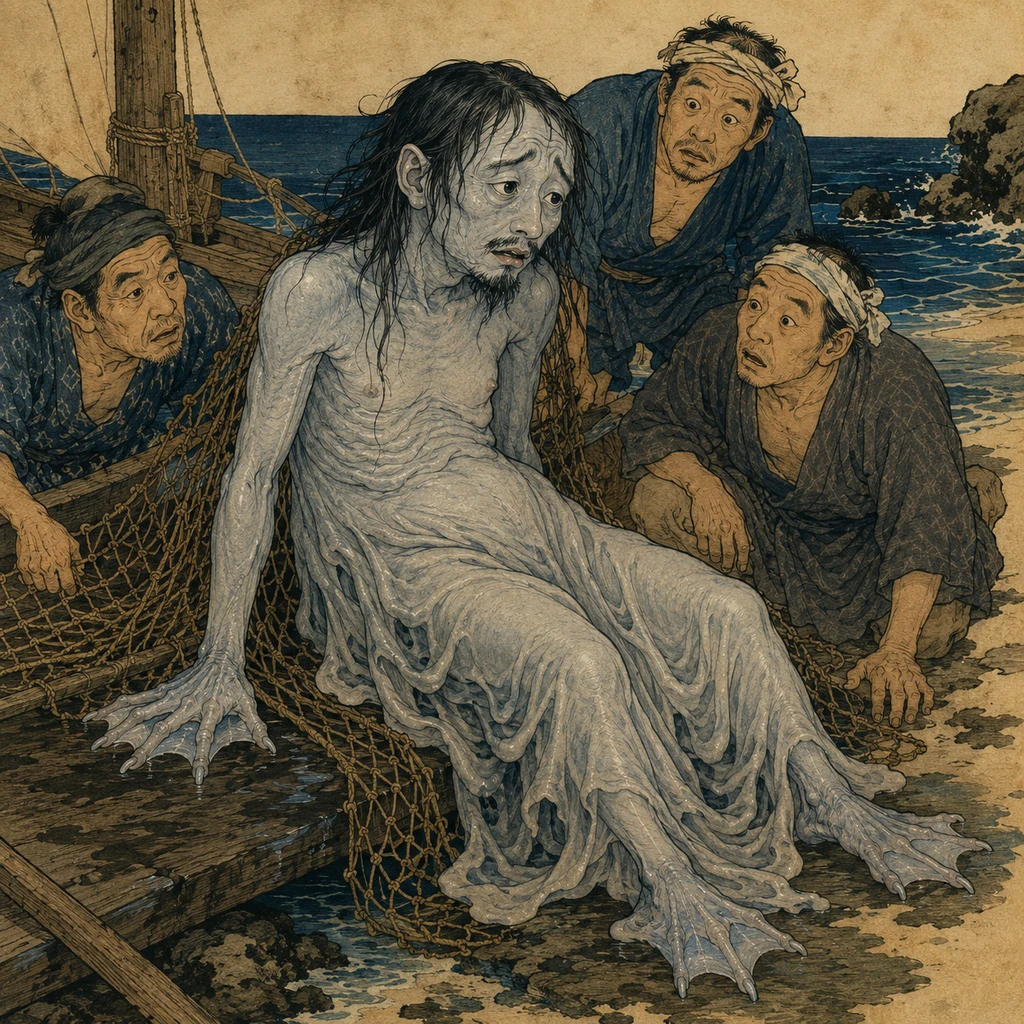
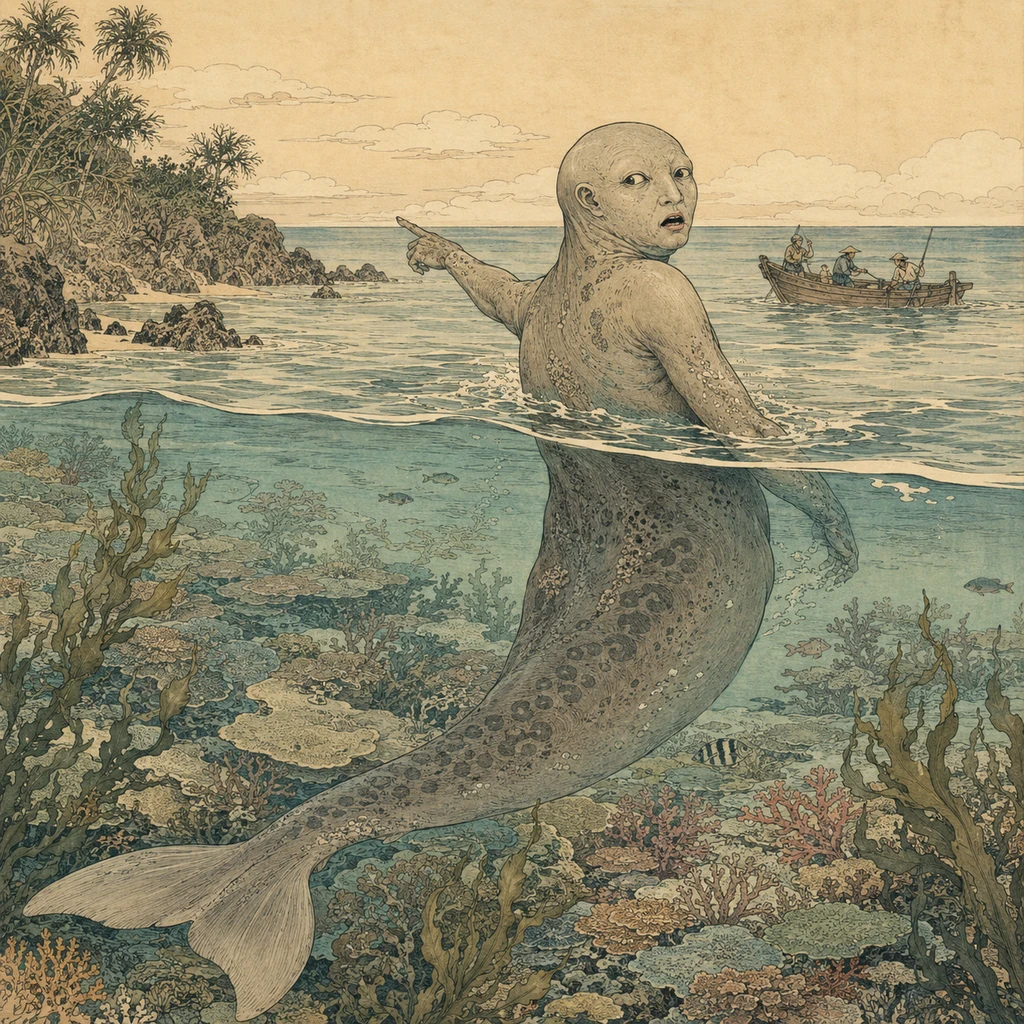
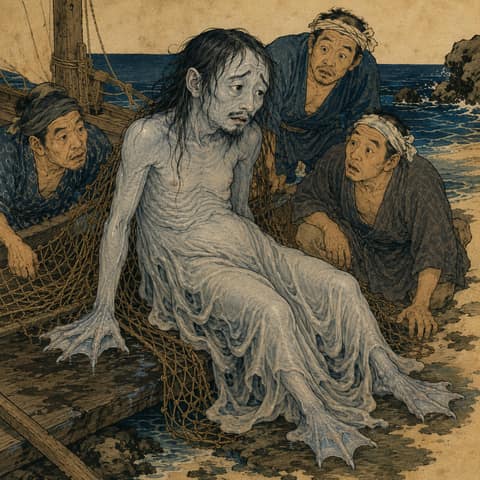
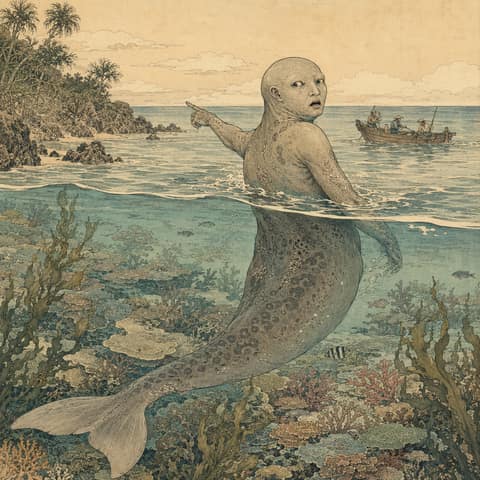
Kaijin are humanlike beings said to emerge from the sea, recorded in early modern natural histories and travelogues. They have webbing between their fingers and toes, and their loose skin hangs like a divided skirt at the waist. Some accounts describe hair, eyebrows, and a beard, yet they do not speak human language and refuse human food. Once taken from the sea, they cannot survive long, often dying within a few days.

Funayūrei (Boat Ghosts)

Funayūrei (Boat Ghosts)

Epic

foo-nah-YOO-ray

銚子の亡霊ヤッサ・船幽霊

Aquatic SpiritsYamaguchiFukushima

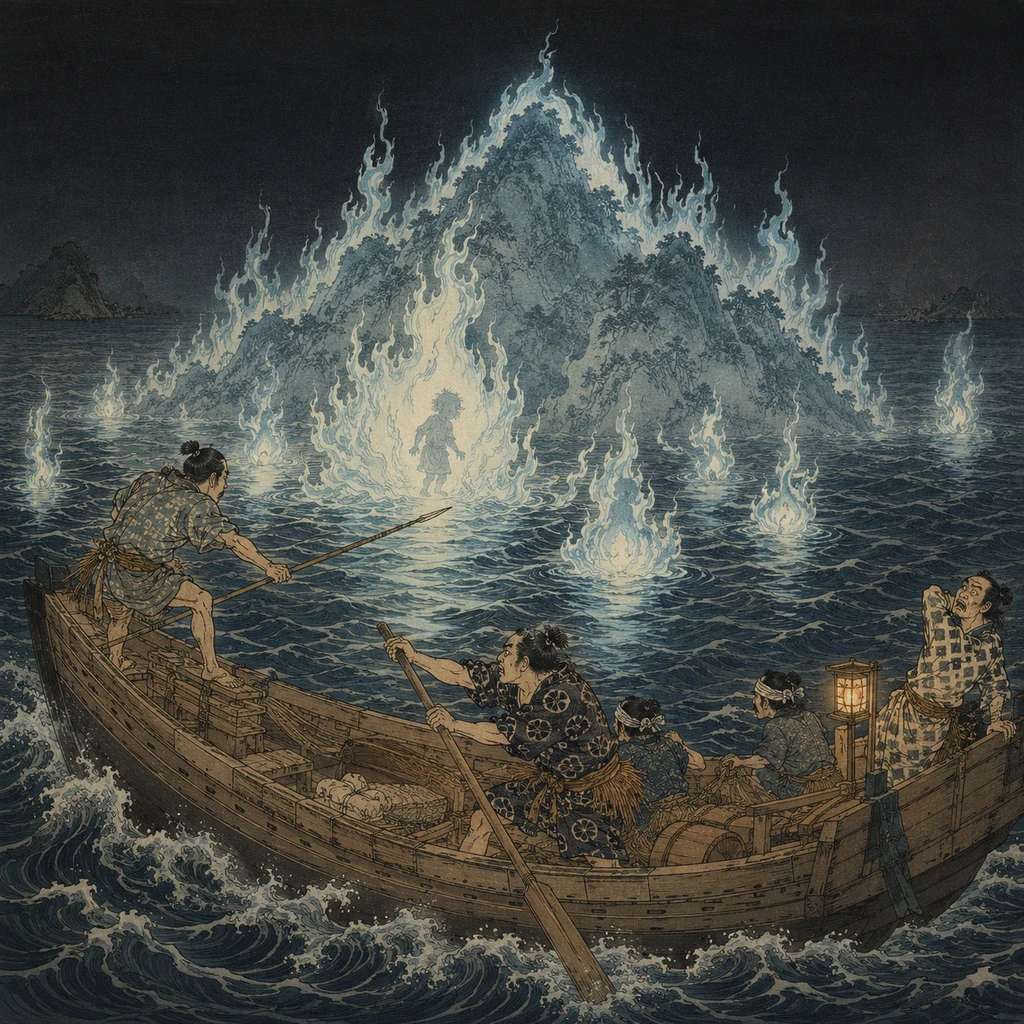
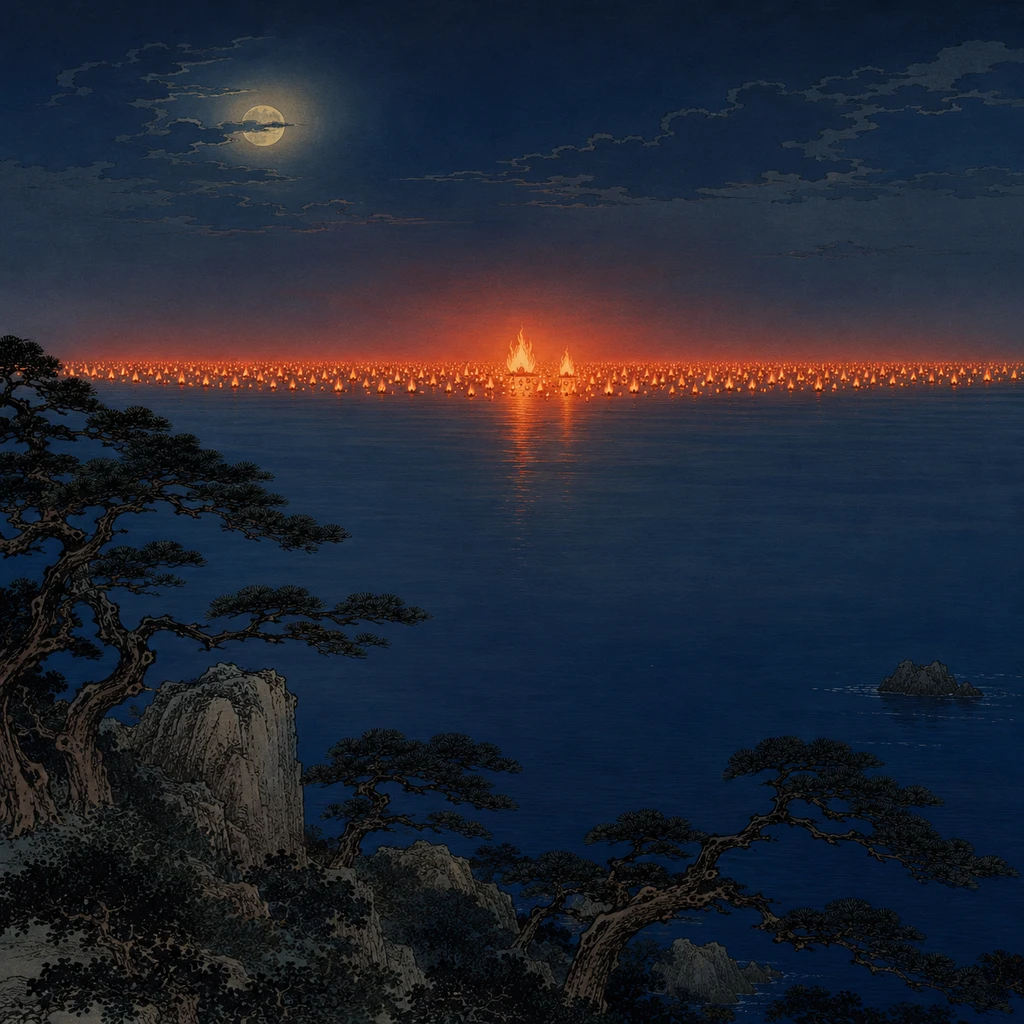
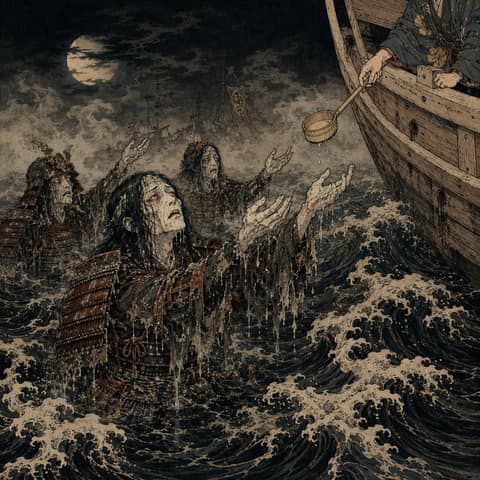
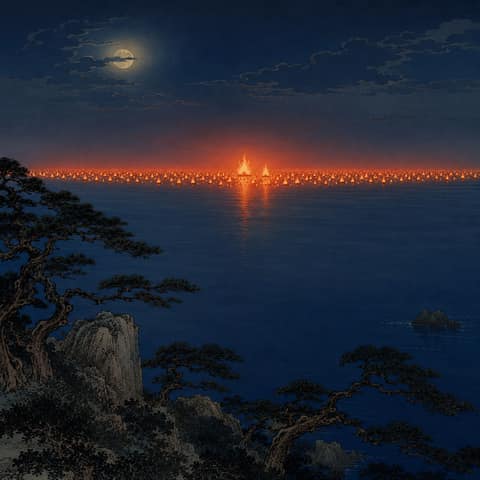
A maritime apparition said to be the spirits of those who died at sea. Accounts vary: they appear as ghostly boats, drowned phantoms, strange fires on the waves, or monk-like sea figures. They commonly emerge on stormy nights or in sea fog, trying to sink passing vessels by ladling seawater aboard, or by bewildering sailors into running aground. Regional countermeasures include handing over a bottomless ladle, throwing rice balls or ash, or fixing them with a stern glare. They are also called “ghost ships” or ayakashi in some traditions.

Wave Sprite (Nami-kozō)

Wave Sprite (Nami-kozō)

Uncommon

NAH-mee koh-ZOH

遠州灘の天候告げ・波小僧

Aquatic SpiritsShizuoka

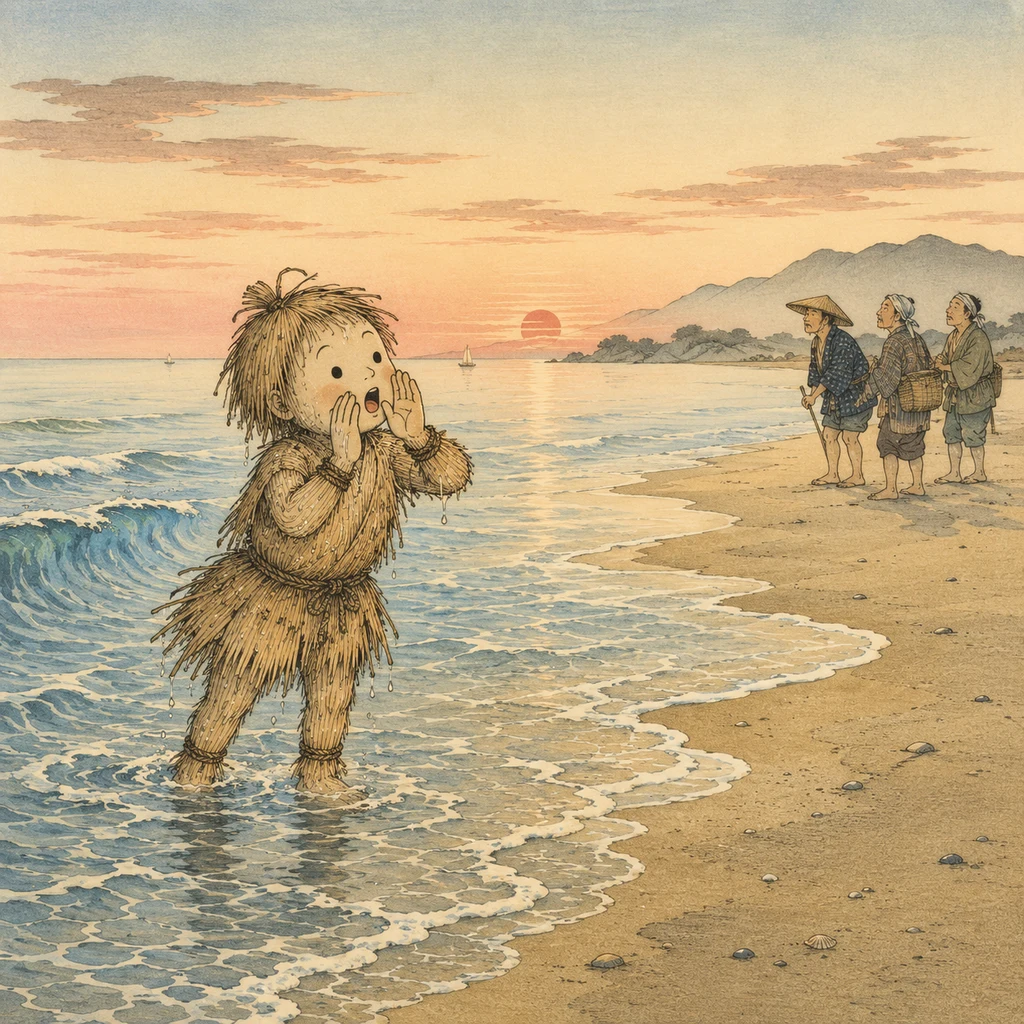
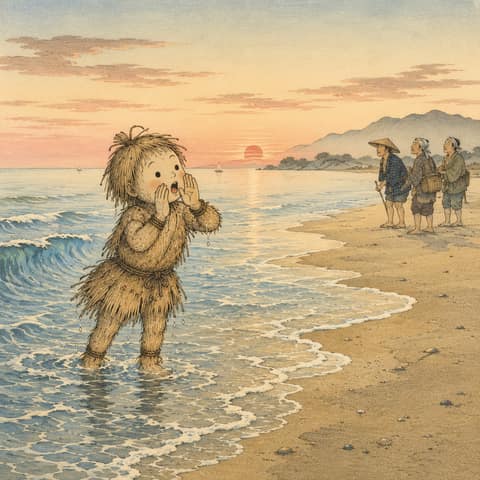
A water-dwelling yokai from across Tōtōmi, linked to the booming surf of the Enshū Sea. One popular tale traces it to a straw doll set afloat by the monk Gyōki, and the being came to be seen as a herald that foretells weather through the sound of waves. Locals said waves booming from the southeast meant rain, while those from the southwest meant clear skies—guidance for fishing and farming. It is sometimes conflated with kappa or umibōzu, and its exact appearance is not fixed.

Void Drum

Void Drum

Uncommon

koh-KOO DIE-koh

周防大島六月の海鳴り・虚空太鼓

Aquatic SpiritsYamaguchi

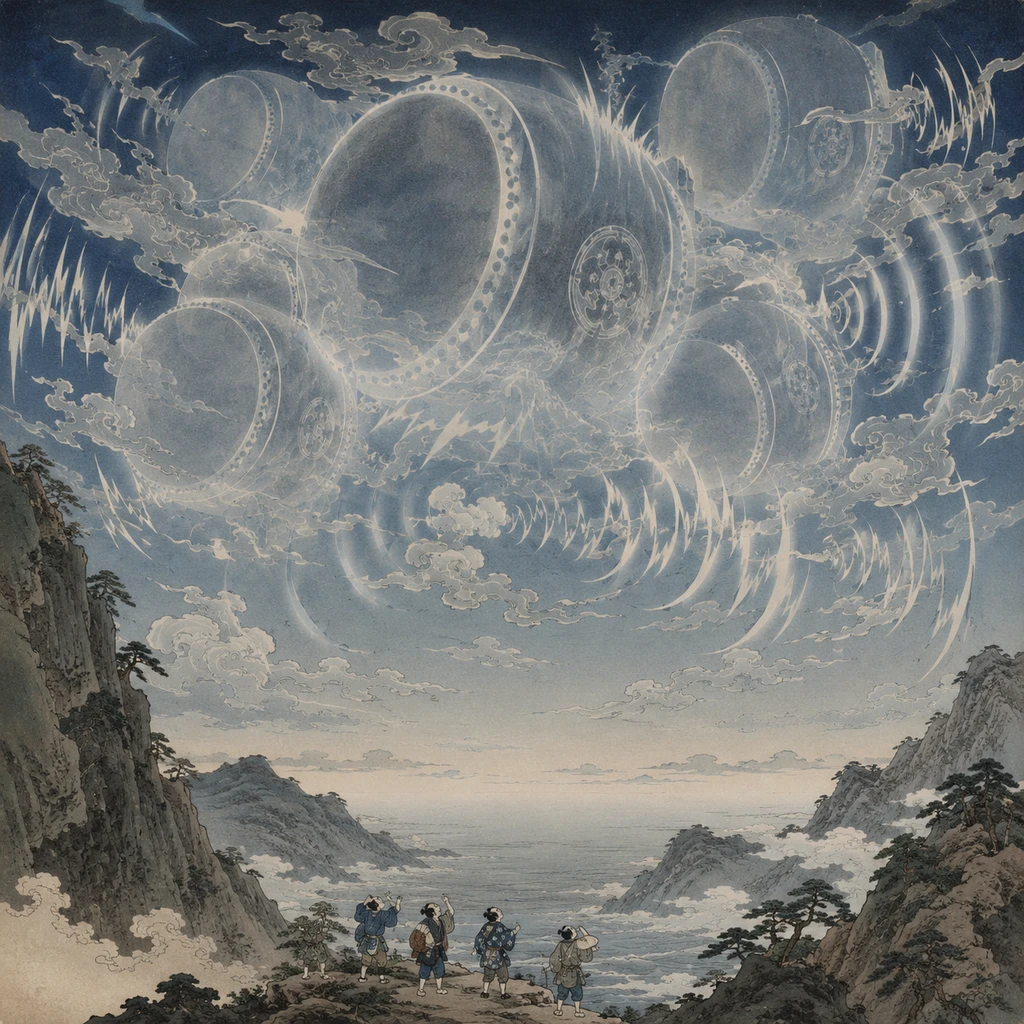
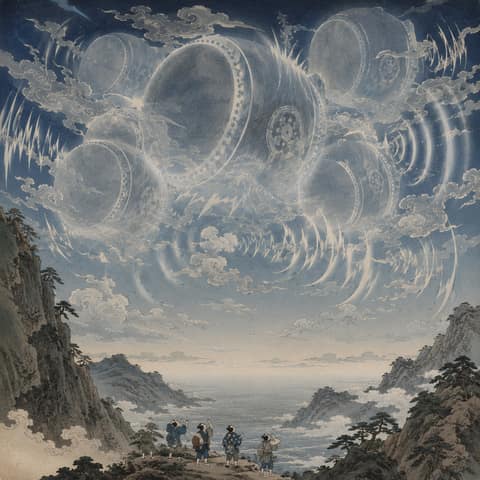
A maritime anomaly said to resound over the sea around Suō-Ōshima in early summer, regardless of weather: the rapid beating of a drum echoing from nowhere. No form is seen; the sound rebounds off beaches, capes, and inlets, startling listeners. One origin tale claims a troupe of performers perished in a storm, beating their drum for help as their boat sank; when the season returns, only the drum’s sound rises again. It is heard most often at night, though it can sound by day as well.

Mill-Bearing Hag

Mill-Bearing Hag

Uncommon

OO-soo-oh-ee BAH-bah

佐渡宿根木の海老女・臼負い婆

Aquatic SpiritsNiigata

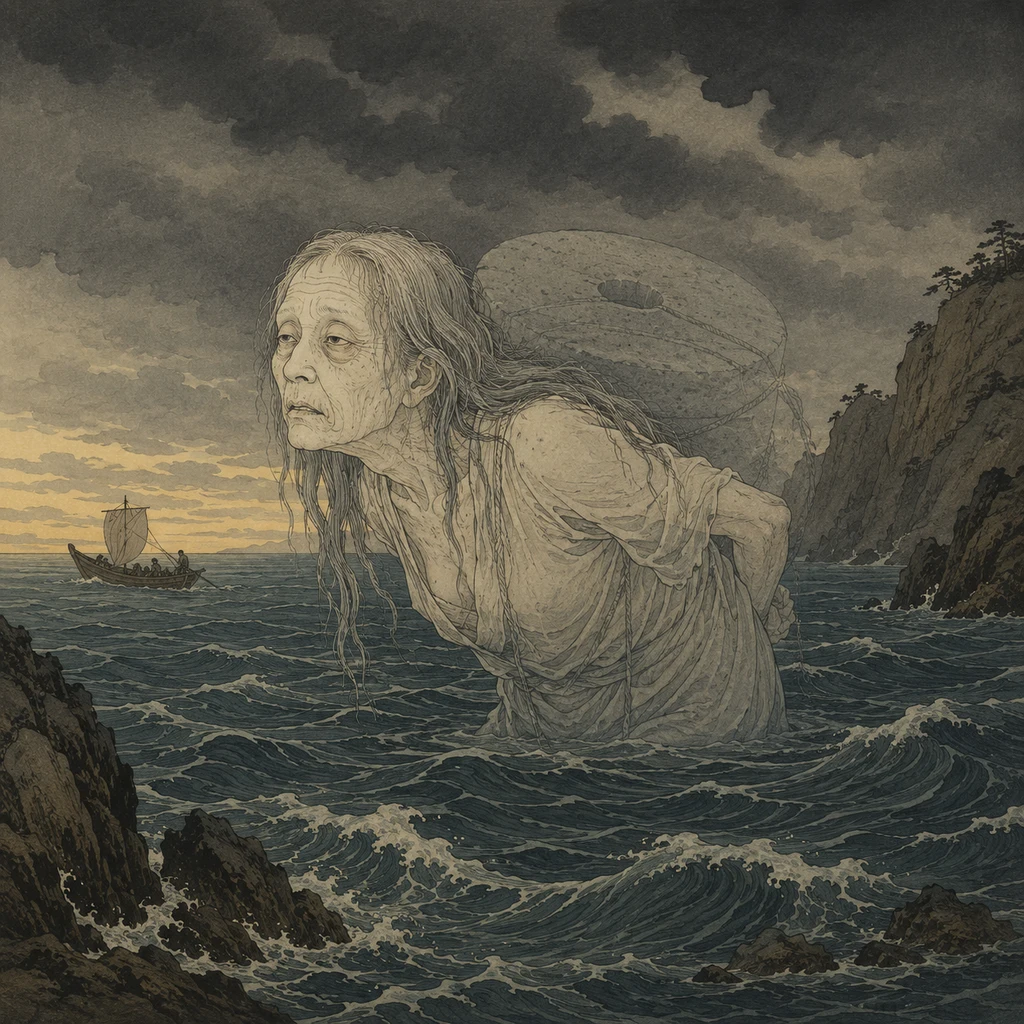
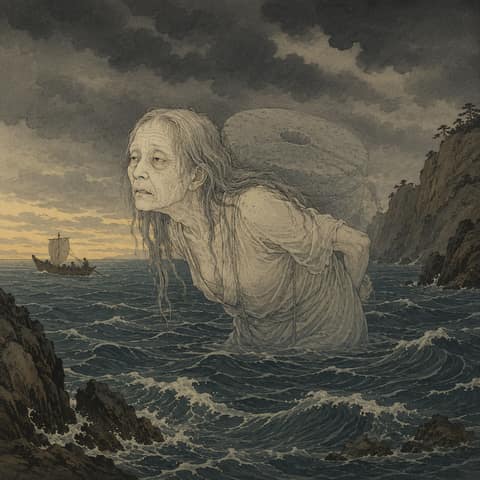
The Mill-Bearing Hag is a sea apparition said to appear along the coast at Shukunegi on Sado Island, Niigata. She looks like an elderly woman with pale white skin, floating at the water’s surface. With both hands tucked behind her back as if carrying something, she rises, shows herself, then slips beneath the waves again. Sightings are said to happen only once every few years. Though long told in the area, no harm to people is recorded. She is often grouped with sea-women yokai such as Iso-onna and Nure-onna.

Red Ray (Akaei)

Red Ray (Akaei)

Epic

AH-kah-eh-ee

安房沖の島偽り・赤えい

Aquatic SpiritsChiba

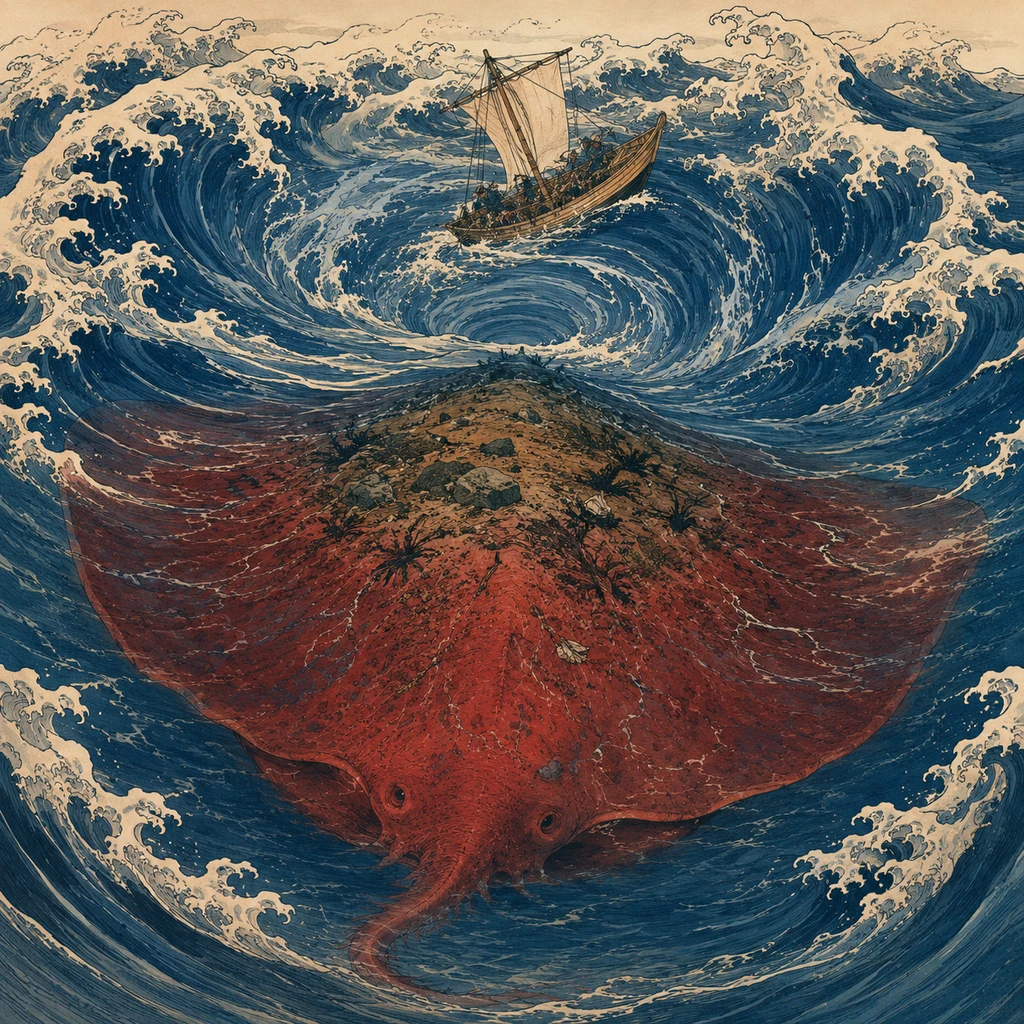
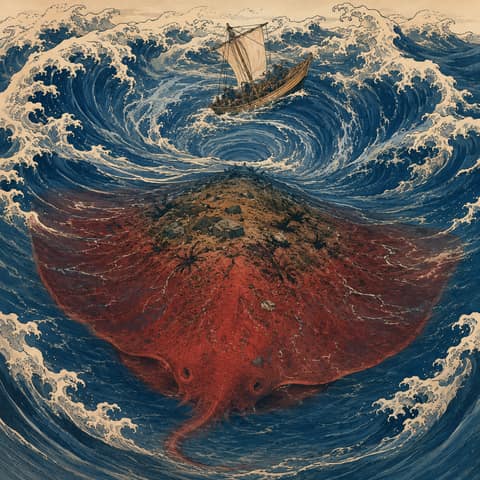
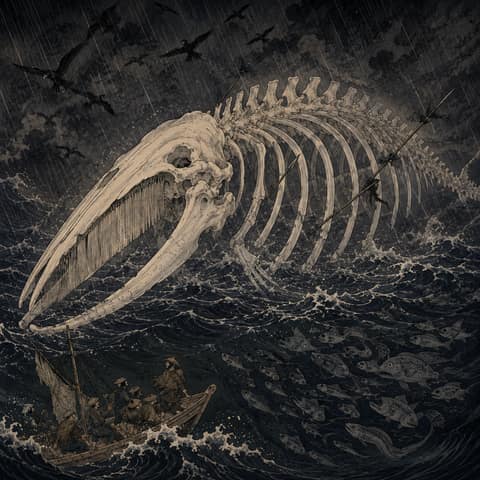
A colossal fish recorded as “the red ray” in the late Edo-period tale collection Ehon Hyaku Monogatari (1839). When sand piles up on its back it rises to the surface, growing so vast it’s mistaken for an island. Sailors who land or draw near find it suddenly submerges, whipping up rough seas that wreck ships and swallow people. The tale connects to sea mirages and castaway lore, treating it as a not-uncommon marvel of the open ocean.

Ayakashi

Ayakashi

Epic

ah-yah-KAH-shee

西海の海上怪火・アヤカシ

General ClassificationsCoastal regions across Japan, especially Western Japan

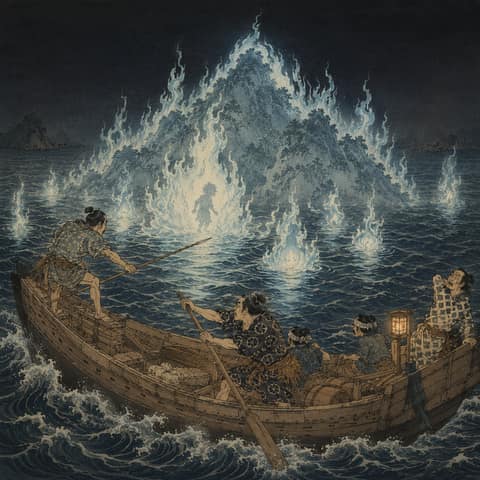
Ayakashi is a catch-all term for supernatural phenomena appearing at sea. What it refers to varies by region and may include ghostly fires, vengeful boat ghosts, and maritime mirages. In Nagasaki it can mean mysterious flames over the water; in Yamaguchi and Saga, spirits that harm boats. On Tsushima, a vast will-o’-the-wisp is said to appear on the beach and, offshore, take the shape of a mountain that blocks a ship’s course. In some areas the belief merges with folk ideas about the remora fish, and the ayakashi serves as an explanation for shipwrecks and maritime misfortune.

Dragon Maiden

Dragon Maiden

Uncommon

RYOO-joh

水際の鱗ある女・龍女

Aquatic SpiritsJapanese folklore

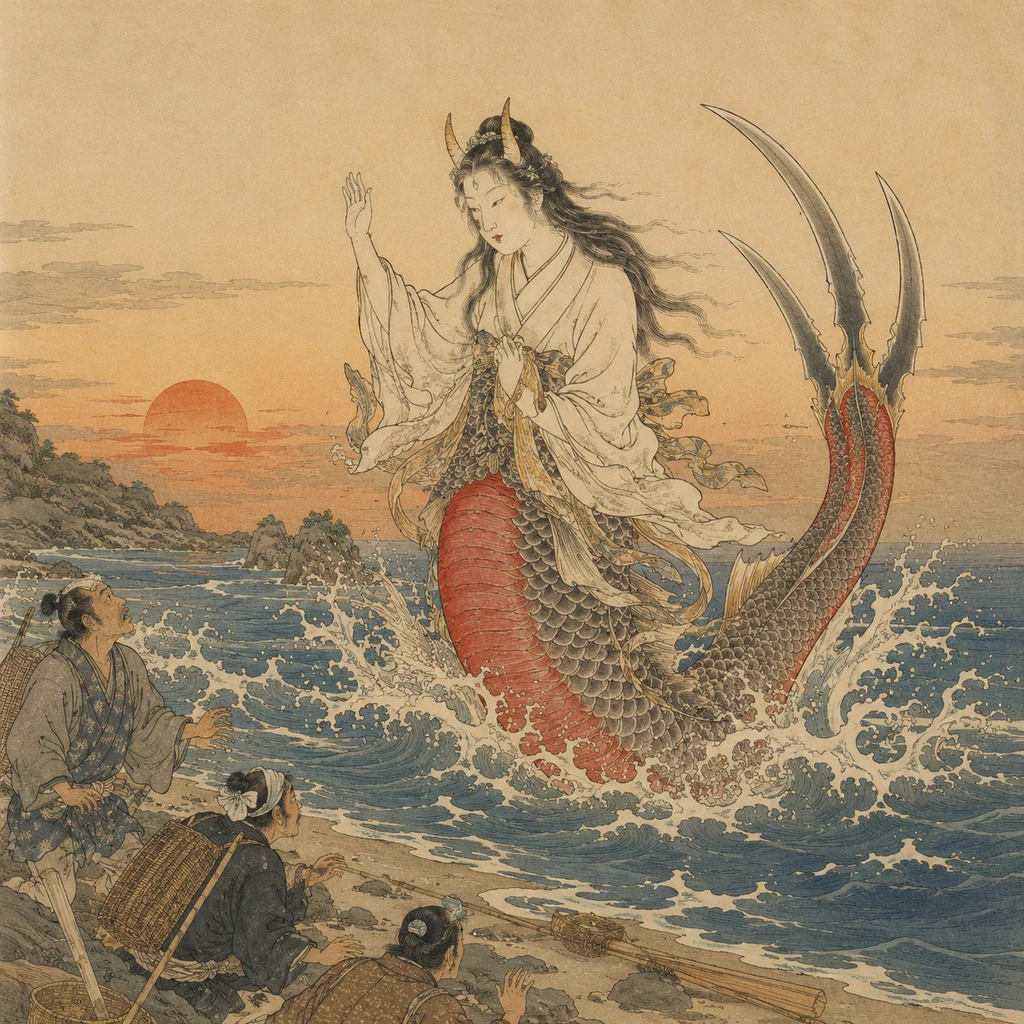
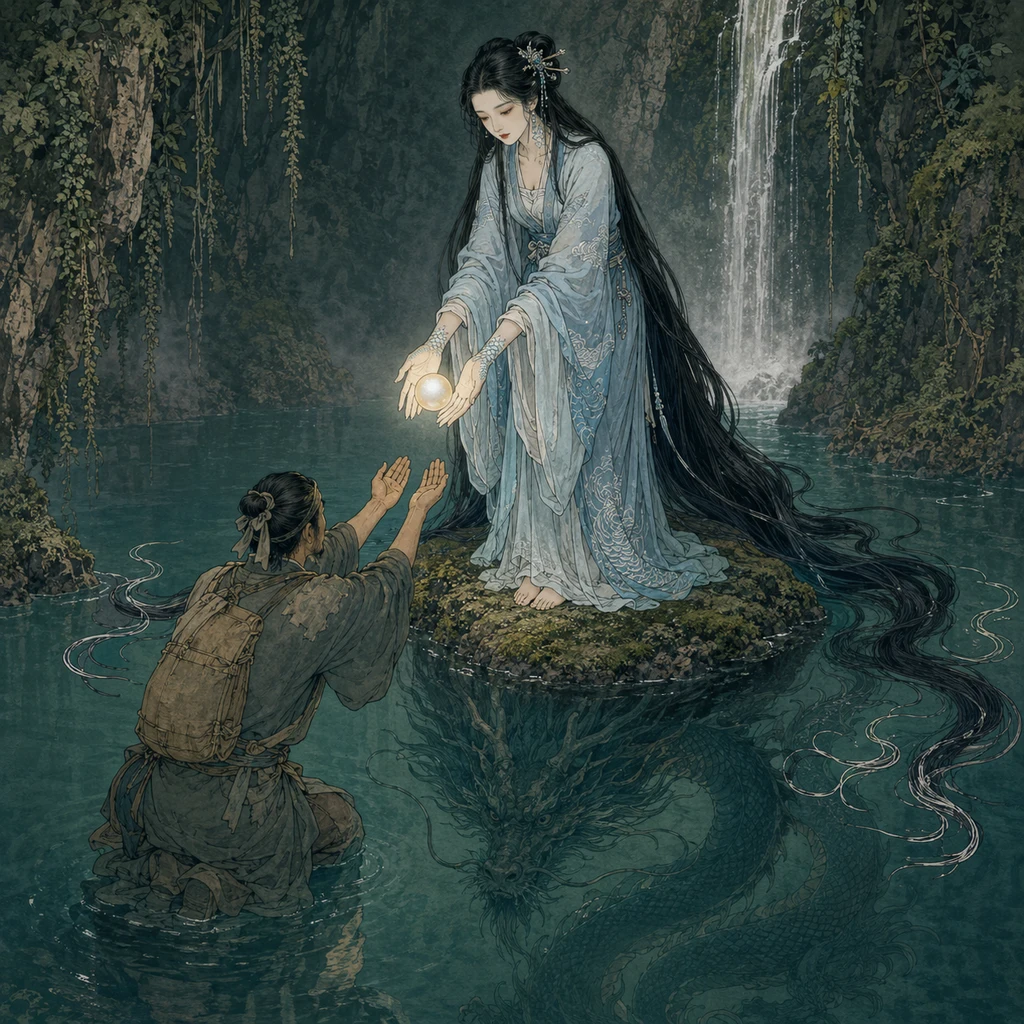
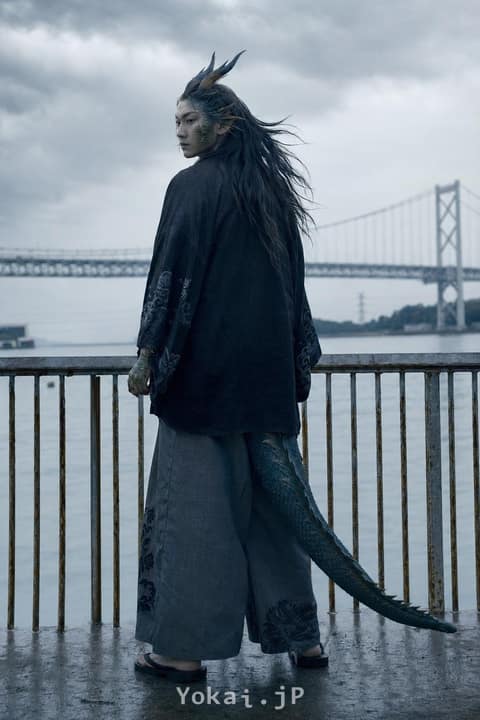
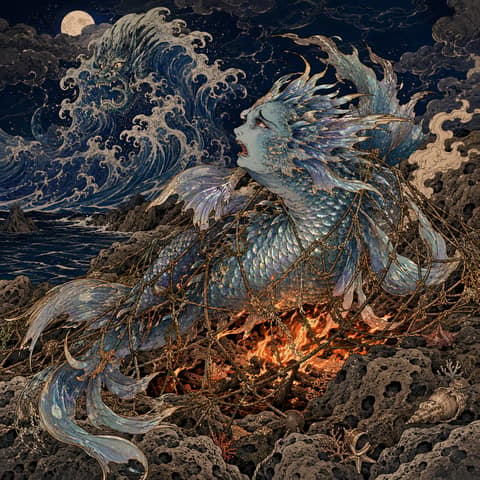
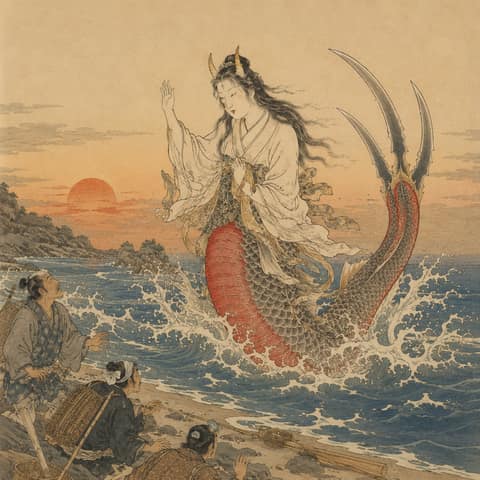
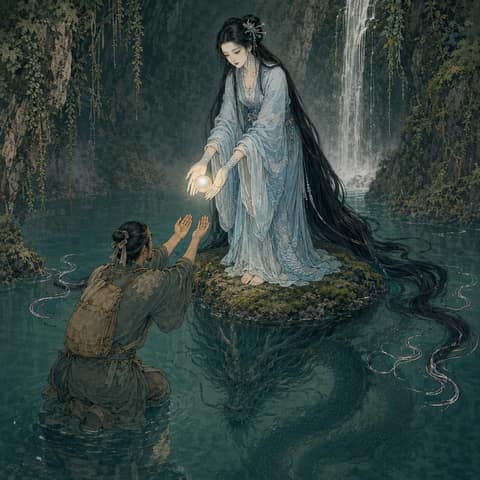
The Dragon Maiden is a dragon tied to waters who takes the form of a woman, appearing by rivers, lakes, seashores, or springs. She often shows herself as a beautiful woman, sometimes granting favors to people and at other times inspiring awe or fear. Associated with weather and water levels, she is sometimes invoked for rainmaking or to stop rain. She is said to shift between human and dragon form, with her true nature betrayed by details like scales, claws, or an unusual fragrance.

Kuzuryū (Nine-Headed Dragon)

Kuzuryū (Nine-Headed Dragon)

Divine

koo-zoo-RYOO

戸隠の九頭龍大神

Deities & Divine SpiritsNaganoFukui

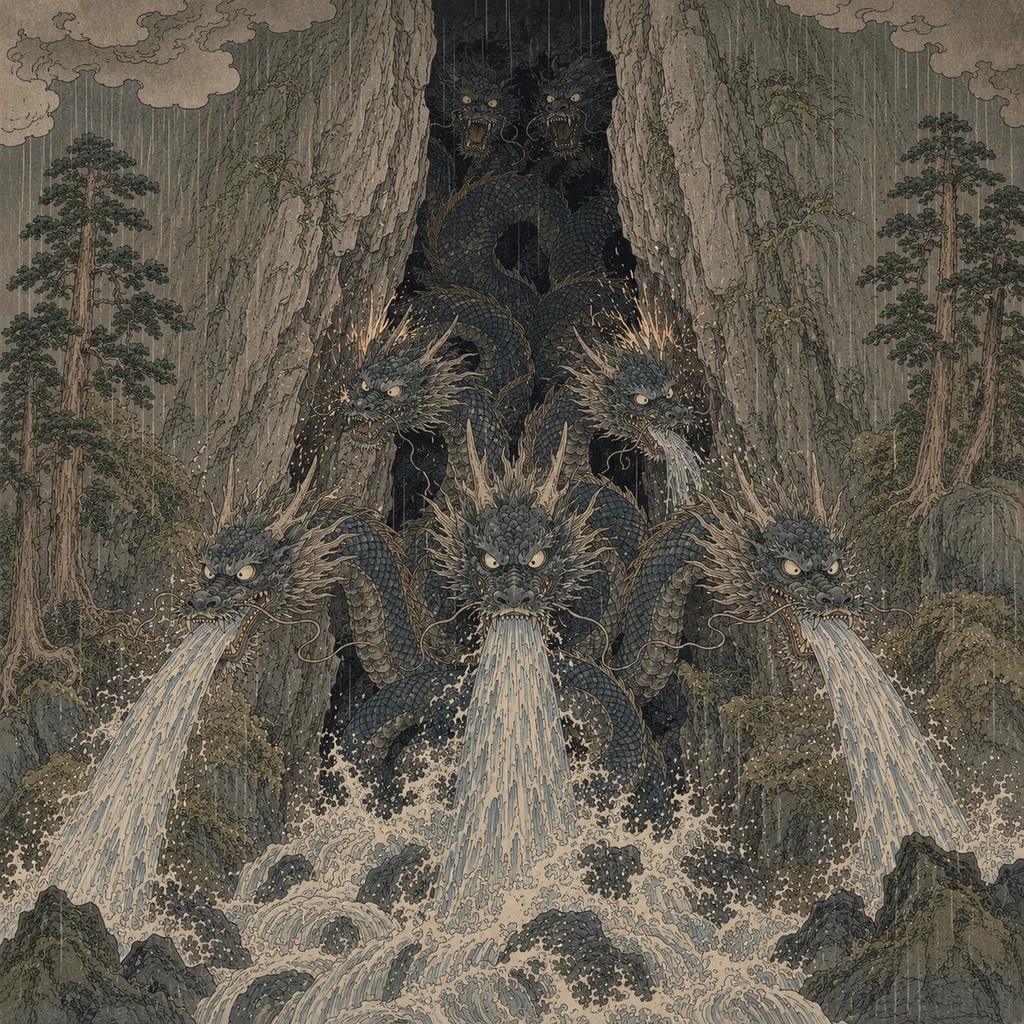
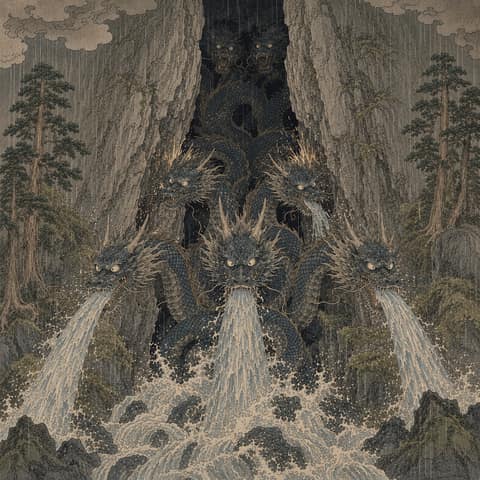
Kuzuryū is told as a dragon with nine heads, venerated across Japan as a water deity and a bringer of rain. In Togakushi, legend says it cast off its demonic nature through the power of ascetic rites and became a benevolent water god, enshrined as Kuzuryū Ōgami. In Echizen, it is linked with black- and white-dragon cults and the origin tales of the Kuzuryū River, serving as a guardian deity invoked for flood control and national well-being in connection with the cult of Hakusan Gongen.

Ryūjin

Ryūjin

Divine

Ryūjin (the Dragon God)

嵐を鎮める水神・龍神

Divine Spirits & DeitiesKanagawaKyoto

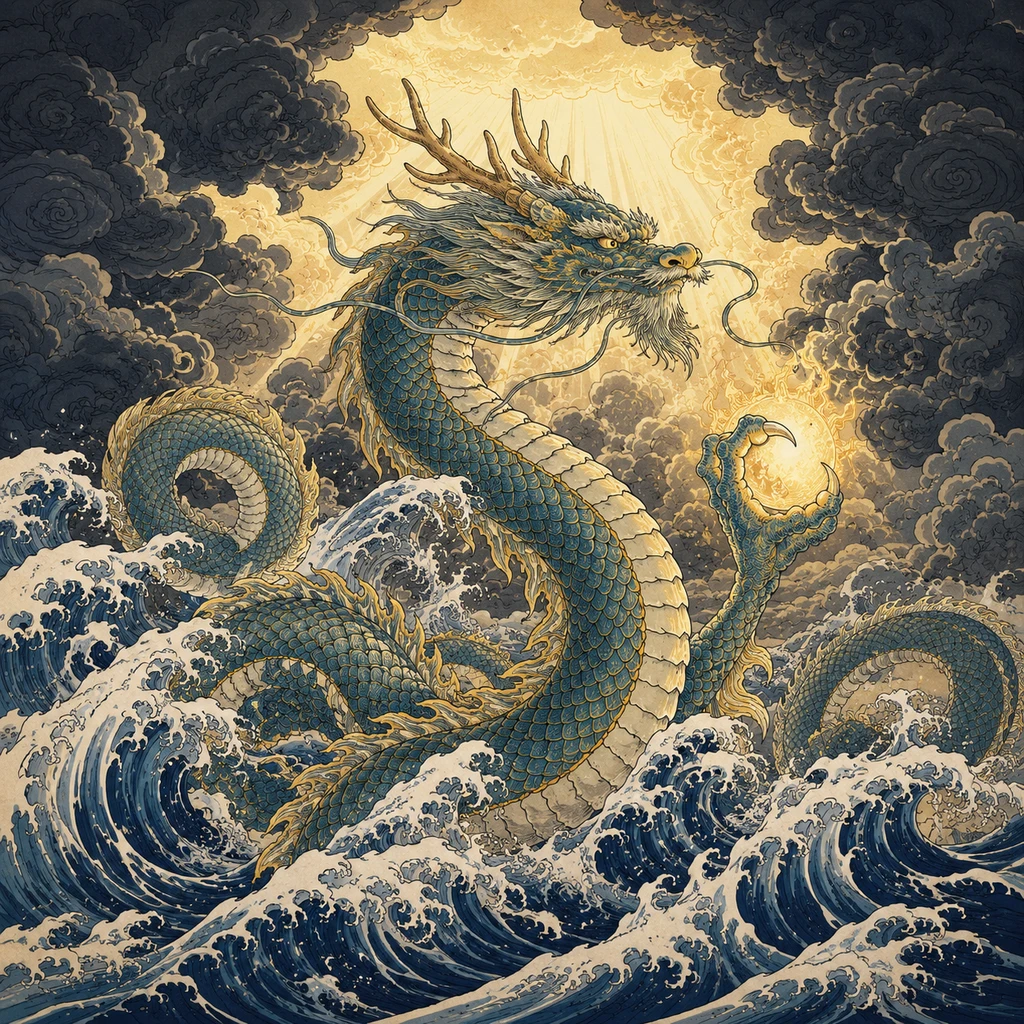
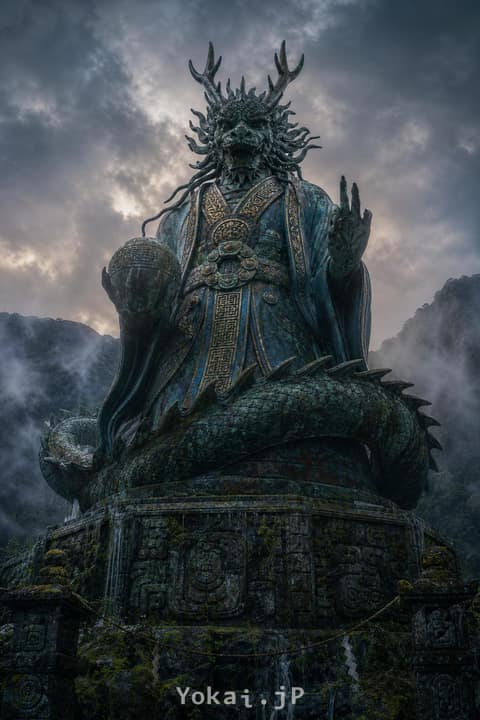
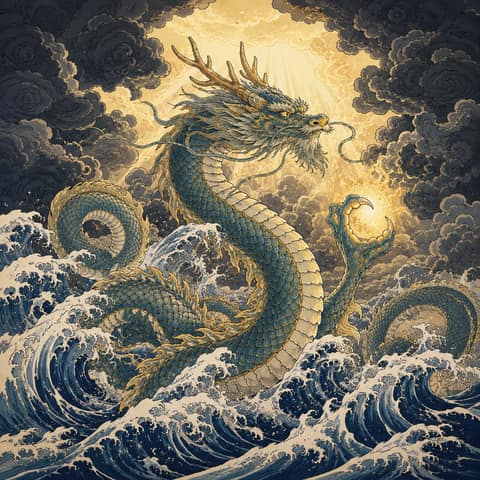
Ryūjin is the dragon-serpent deity who governs water, rain, and the sea. He is a composite divinity, formed as Japan's native belief in the serpent as a water-spirit was layered, again and again, with the Chinese dragon and the Buddhist nāga (the eight dragon kings). In the early chronicles he appears as Watatsumi, the god who rules the sea; in the Yamasachi-hiko myth of the Kojiki and the Nihon Shoki, the sea god's daughter Toyotama-hime reveals her true form — a wani (sea-monster) or a dragon — in the act of giving birth. Because he calls the rain and stills the waters, he is enshrined across the land as the god of rain in drought and of its ceasing in flood, and is depicted grasping the tide-ruling jewels (the shio-mitsu-tama and shio-hiru-tama) or a wish-granting gem. Claiming sea, lake, great river, and deep pool alike as his domain, he is the supreme deity of water.
Amabie

Amabie

Legendary

ah-mah-BEE-eh

肥後沖の予言光霊・アマビエ

Half-Human BeingsKumamoto

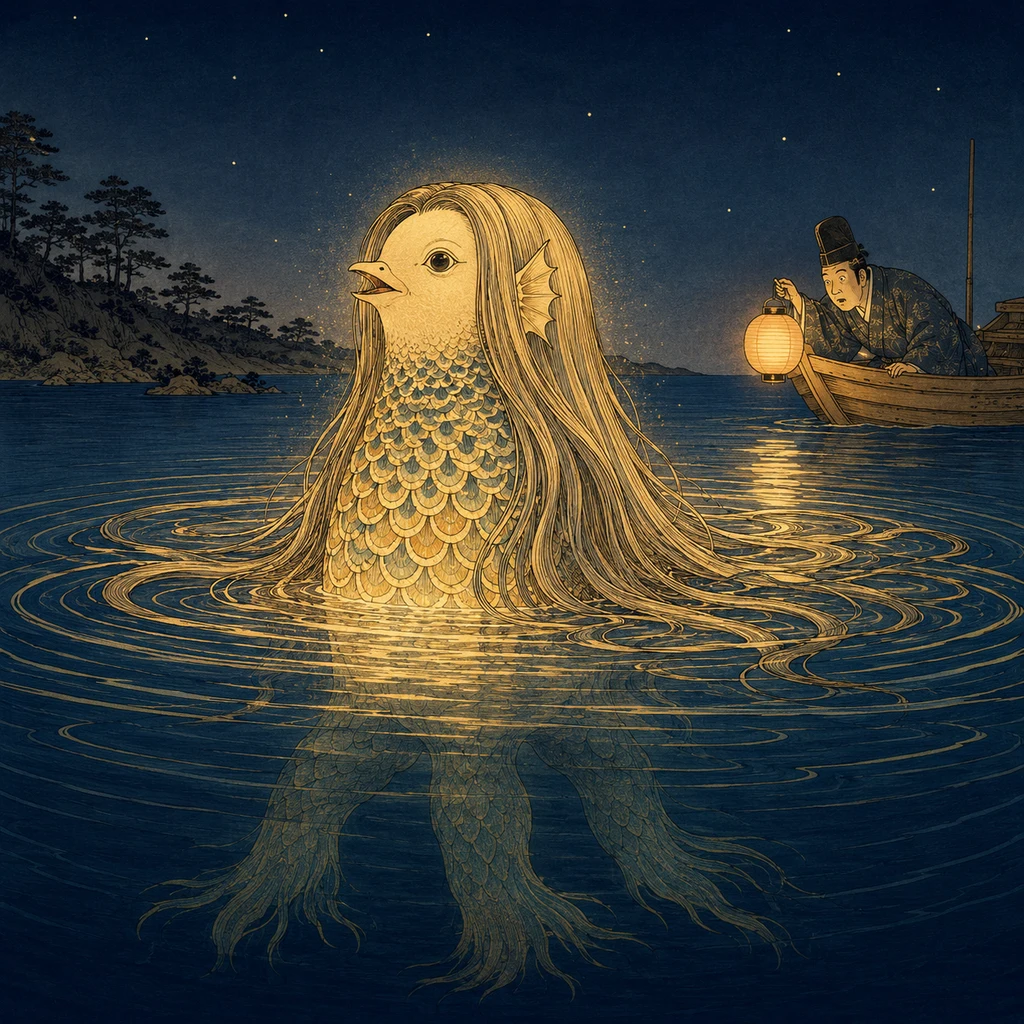
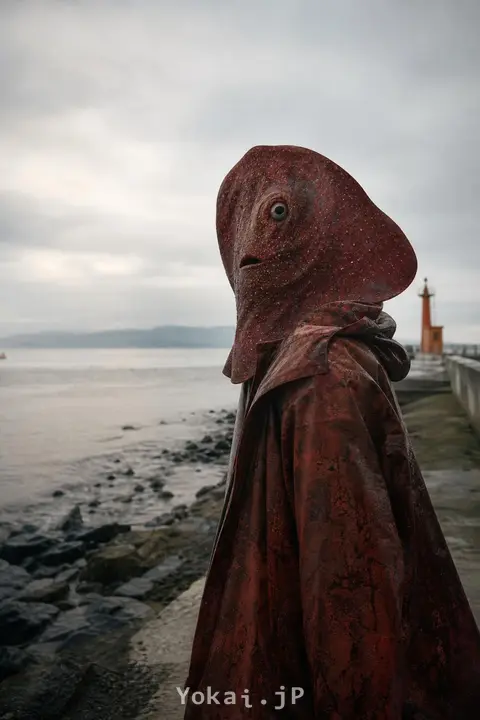
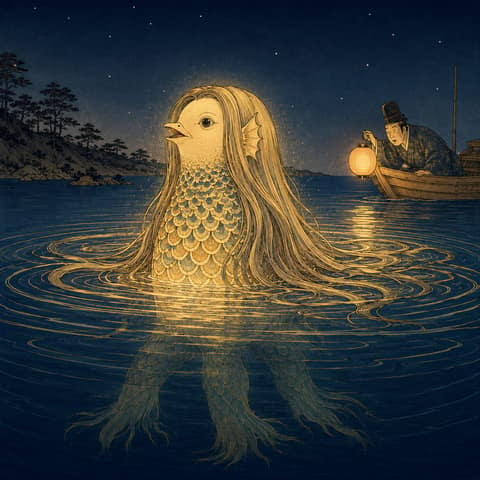
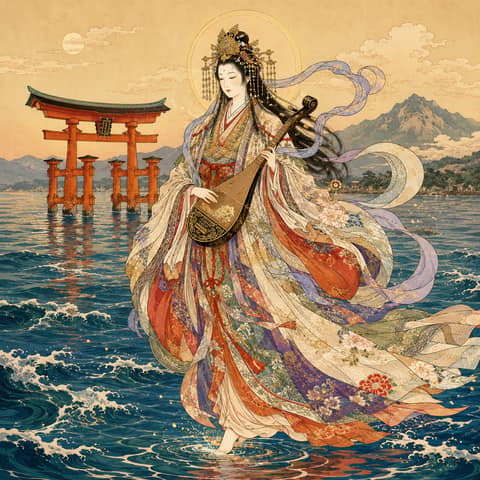
A prophetic yokai said to have appeared at sea in mid-April of Kōka 3 (1846) off Higo Province. It shone nightly from the water, revealed itself to a government official, and named itself Amabie. It foretold six years of abundant harvests alongside outbreaks of epidemic disease, instructing people to show its likeness to ward off the calamity before returning to the sea. Only a single kawaraban (woodblock news-sheet) record is known; details remain uncertain.

Kumitezuri

Kumitezuri

Epic

KOO-mee-teh-ZOO-ree

琉球海太陽の女神・君手摩

Deities & Divine SpiritsOkinawa

Kumitezuri is a sacred concept from the Ryukyu Islands. Commonly portrayed as a goddess who governs the sea and the sun and protects the kingdom, she is said to dwell in Nirai Kanai and to descend upon the high priestess, the Kikoe-Ōgimi, during royal enthronement rites. However, because the name also echoes the noro priestesses’ act of “rubbing the hands” in prayer, some scholars view it not as a deity’s name but as the name of a ritual. The term appears in sources like the Chūzan Seikan, and later periods shaped a more concrete object of worship around it.

Tomokazuki

Tomokazuki

Uncommon

toh-moh-kah-ZOO-kee

志摩同体の海女・トモカヅキ

Aquatic SpiritsMieShizuoka

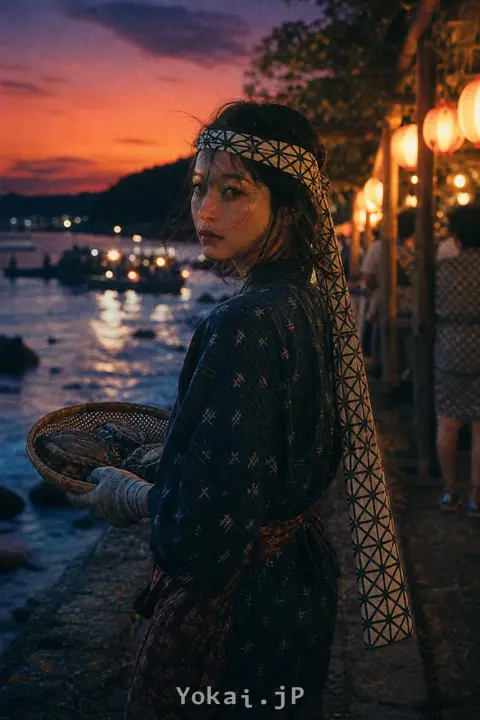
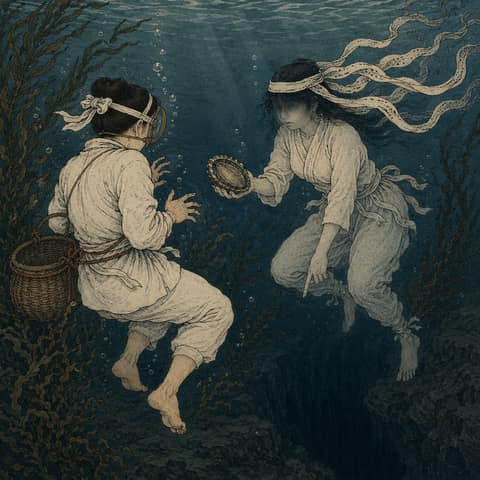
A sea apparition from the Shima coast said to appear as the exact double of a diver. Encounters are most common under overcast skies; it can be recognized by an unnaturally long tail on its headband. It may offer abalone or lure victims into darkness, and those who follow are feared to die. Ama (female divers) wore protective towels dyed with pentagrams and lattice patterns as talismans. Its true nature is unknown and sometimes explained as a hallucination born of harsh maritime labor.

Sazae-oni (Turban Shell Ogre)

Sazae-oni (Turban Shell Ogre)

Epic

sah-ZAH-eh OH-nee

貝より変ずる海の鬼・栄螺鬼

Animal ShapeshiftersJapanese folklore

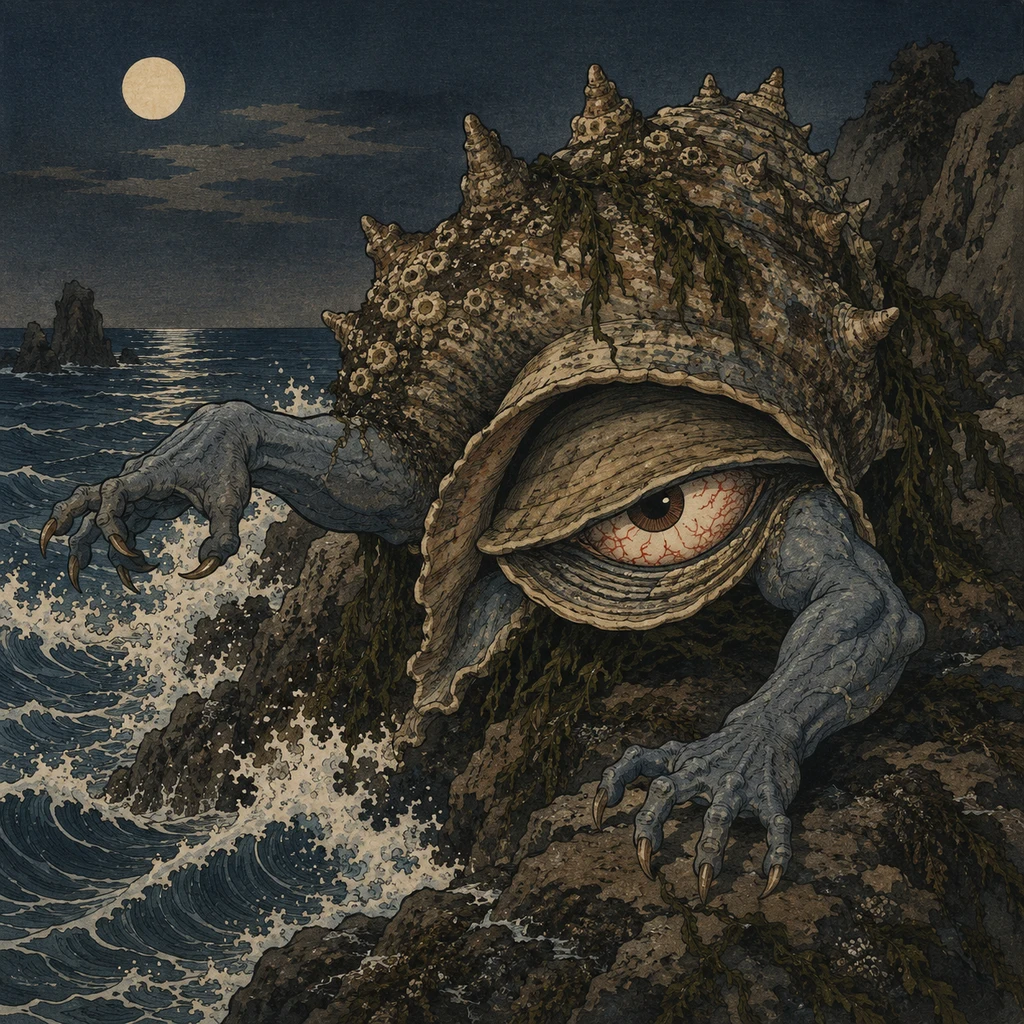
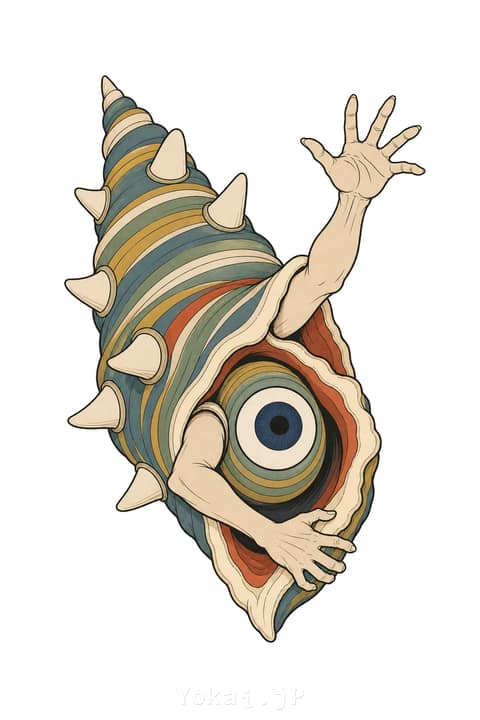
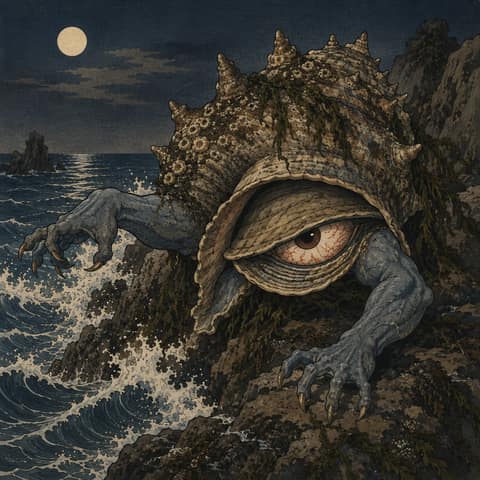
A yokai depicted by the Edo-period artist Toriyama Sekien in Hyakki Tsurezure-bukuro: a turban shell (sazae) transformed into an ogre. It is shown with humanlike arms and eyes sprouting from the meat and operculum, serving as an allegory of metamorphosis. Drawing on transformation tales from the Classic of Rites, the image explores nature’s uncanny shift into monstrous forms. Known more as an artistic and conceptual yokai than one tied to a specific local legend; similar figures appear in early modern picture scrolls.

Shokuin (Zhu Yin)

Shokuin (Zhu Yin)

Epic

SHOH-koo-een

山海経北方の蛇身神・燭陰

Deities & Divine SpiritsUncertain; derived from the Classic of Mountains and Seas (Shan Hai Jing), transmitted to Japan through texts

Shokuin is a northern divinity described in the Shan Hai Jing, depicted with a human face and a serpent’s body. When its eyes open, day begins; when they close, night falls. Its breath brings winter, and its call ushers in summer—thus governing the cycle of day and night and the turning of the seasons. The text reached Japan in antiquity, and early modern yokai picture scrolls introduced Shokuin as a foreign deity. Japanese sources offer little on its specific rites or behavior.

Isonade

Isonade

Epic

EE-soh-NAH-deh

北風の海に撫づる・磯撫で

Aquatic SpiritsSaga

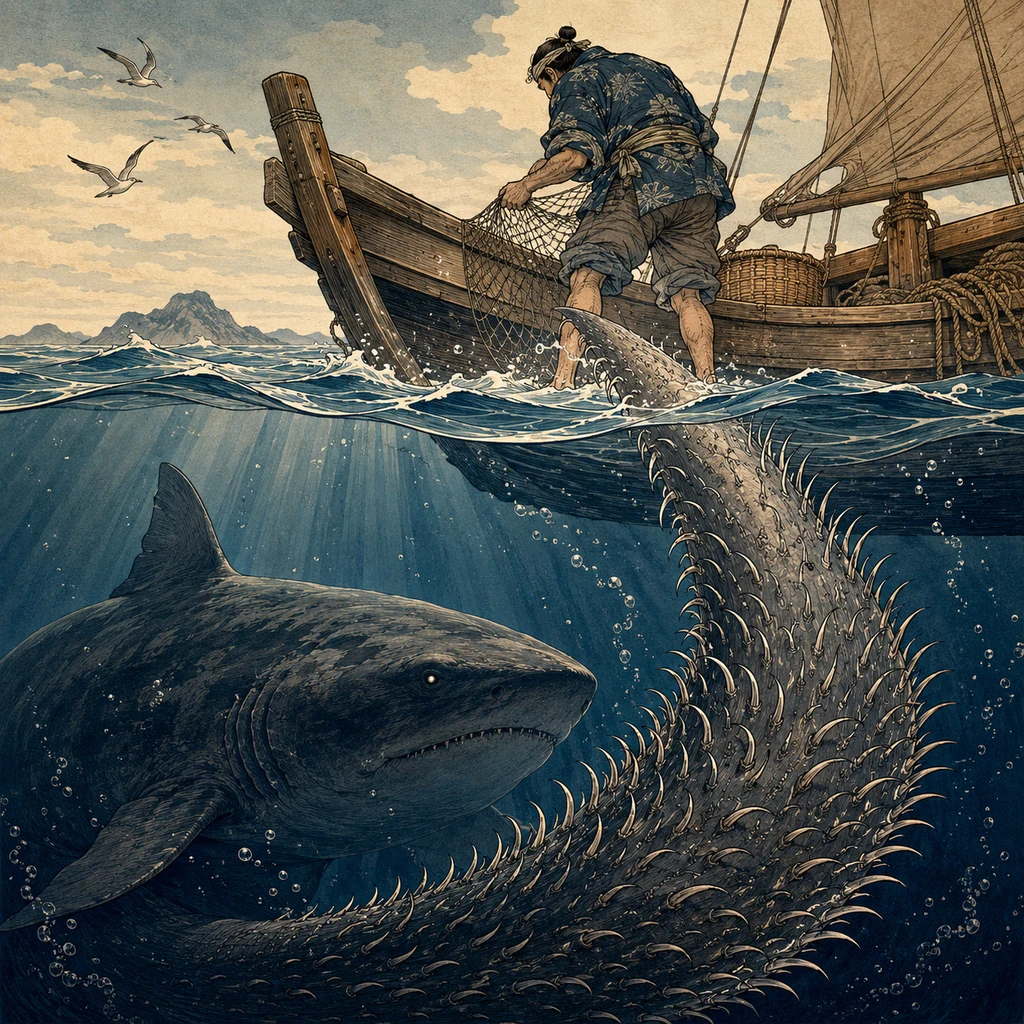
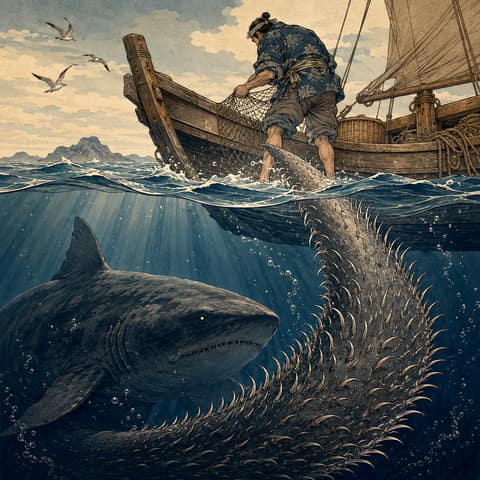
Isonade is a sea-dwelling yokai from the coasts of western Japan. Resembling a shark, it is said to bear countless fine barbs on its tail fin. It appears when a strong north wind blows, gliding over the surface as if stroking the sea. Unseen by most, it hooks sailors from their boats with its needled tail, drags them into the water, and swallows them. The creature is recorded in Edo-period curiosities such as Ehon Hyaku Monogatari and natural history texts. Its name is linked to the way it “strokes” the sea’s surface or the manner in which it attacks. For sailors, it represents a calamity that is nearly impossible to ward off.

Dancing Heads

Dancing Heads

Epic

MAI-koo-bee

真鶴海の三首咬み合い・舞首

Ghosts & SpiritsKanagawa

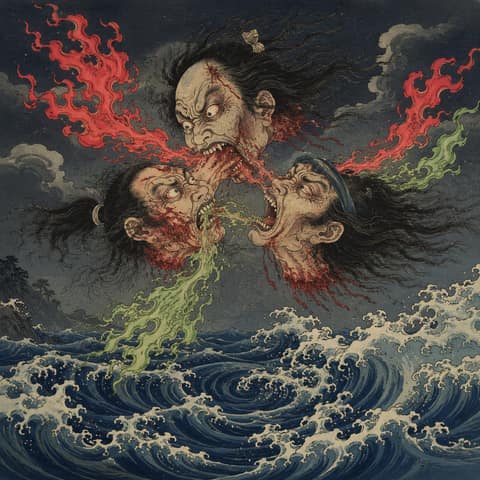
Dancing Heads is a vengeful spirit tale tied to the sea off Manazuru, recorded in the Edo-period collection Ehon Hyaku Monogatari (Tales of the Momo-yamajin). Three severed heads continue to bite and battle one another; by night they spit fire, and by day they whip the sea into tomoe-shaped swells. Born from grudges over samurai conflicts, exile, and executions, these drifting trophy heads are said to spawn whirlpools and ghostly flames, and explain the place-name Tomoega-fuchi (“Tomoe Pool”).

Ushioni

Ushioni

Legendary

OO-shee OH-nee

牛頭蜘蛛体の海鬼・牛鬼

Animal ShapeshifterEhimeKochi

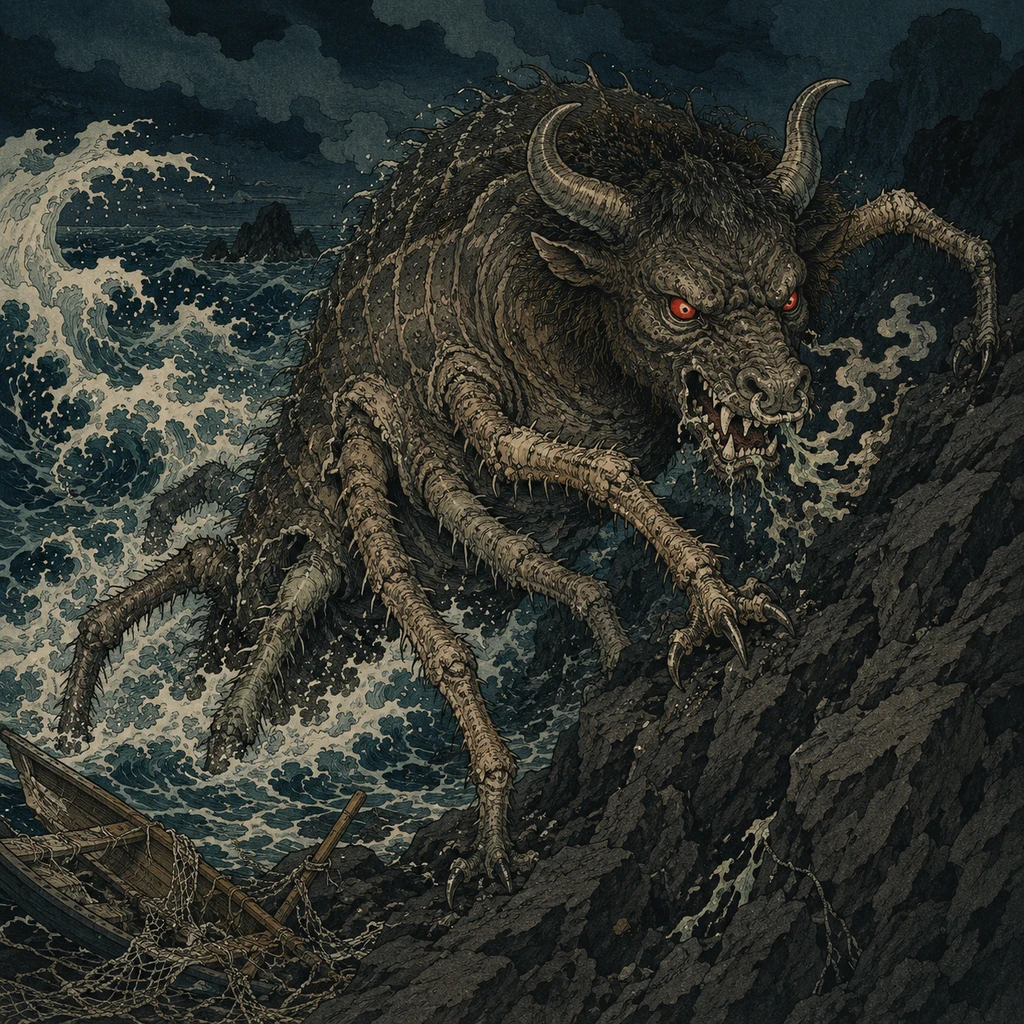
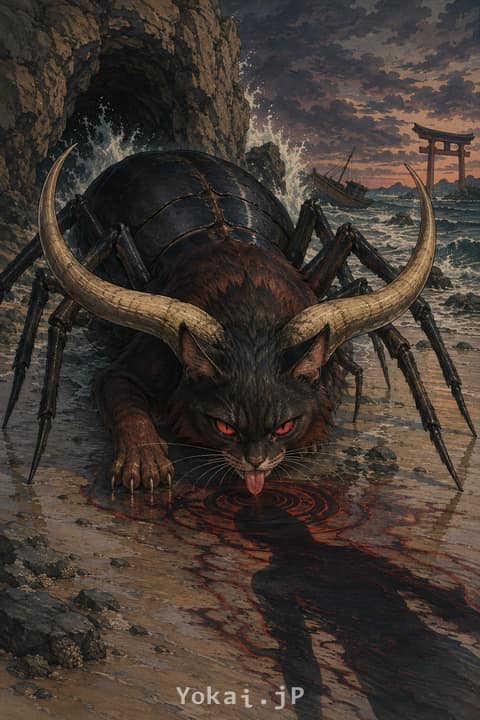
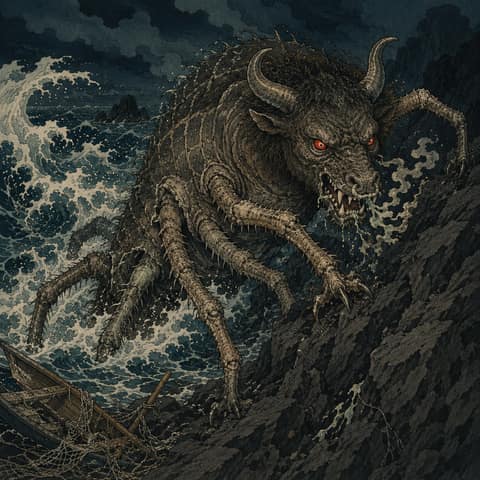
Ushioni (牛鬼) is a highly ferocious yokai with immense spiritual status, primarily said to appear on the coasts, in deep pools, and in the mountainous regions of western Japan. Its appearance is depicted in various grotesque forms, such as "a demon's body with a cow's head" or "a spider's body with a cow's head." Long ago, it was singled out as a "terrifying thing" in the Heian-period *The Pillow Book* (Makura no Sōshi), and has been deeply feared by people since ancient times. Its true nature lies in its extreme duality (the two-sidedness of good and evil): on one hand, it is a "cruel evil demon and god of plague" that indiscriminately devours humans and scatters poisonous miasma; on the other hand, it acts as a "powerful guardian deity" that leads portable shrines in festivals to exorcise evil spirits. It is an extremely important yokai in folklore studies, having evolved from a supernatural anomaly in literature to an object of regional folk belief and performing arts.

Ashinaga Tenaga (Long-Legs and Long-Arms)

Ashinaga Tenaga (Long-Legs and Long-Arms)

Rare

ah-shee-NAH-gah teh-NAH-gah

浅海協働の異人・足長手長

Half-Human BeingsUncertain (ancient foreign lands as reported in early geography)

A paired legend of extraordinary people: the Ashinaga, whose legs are preternaturally long, and the Tenaga, whose arms are extraordinarily long. Their earliest roots lie in accounts of long-legged and long-armed peoples found in ancient geographic treatises. They are recorded as “Long Legs” and “Long Arms” in the Chinese Sancai Tuhui and Japan’s Wakan Sansai Zue. At sea, the long-legged carrier bears the long-armed companion so the latter can gather catch in shallow waters—a scene often depicted in paintings. In Japan the motif entered tales and humorous illustrations.