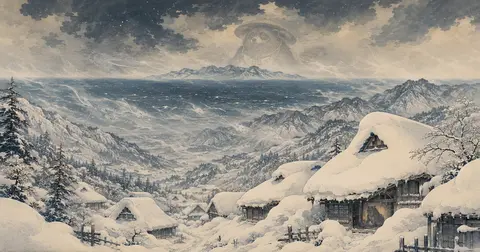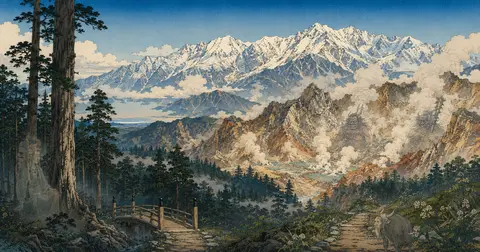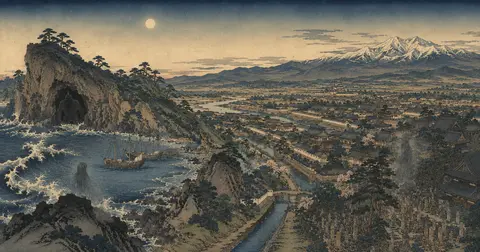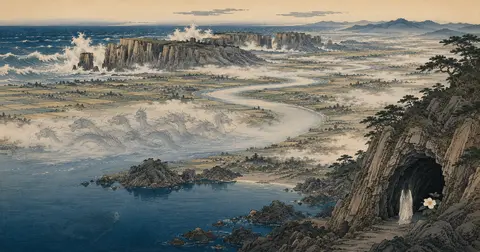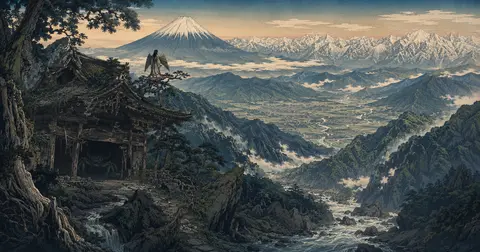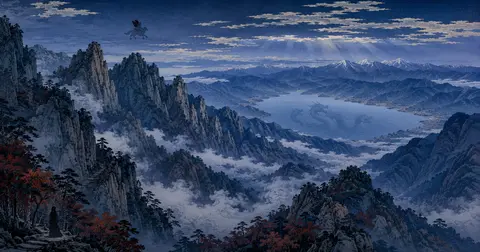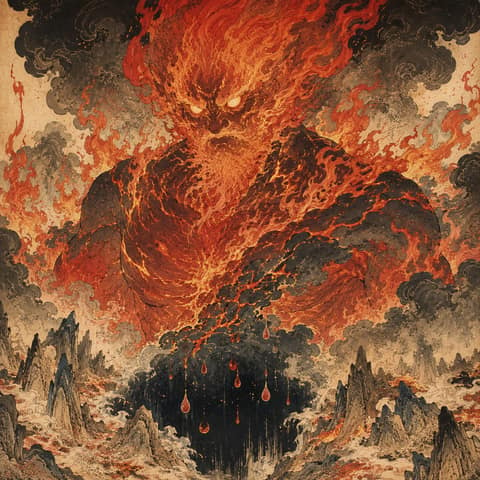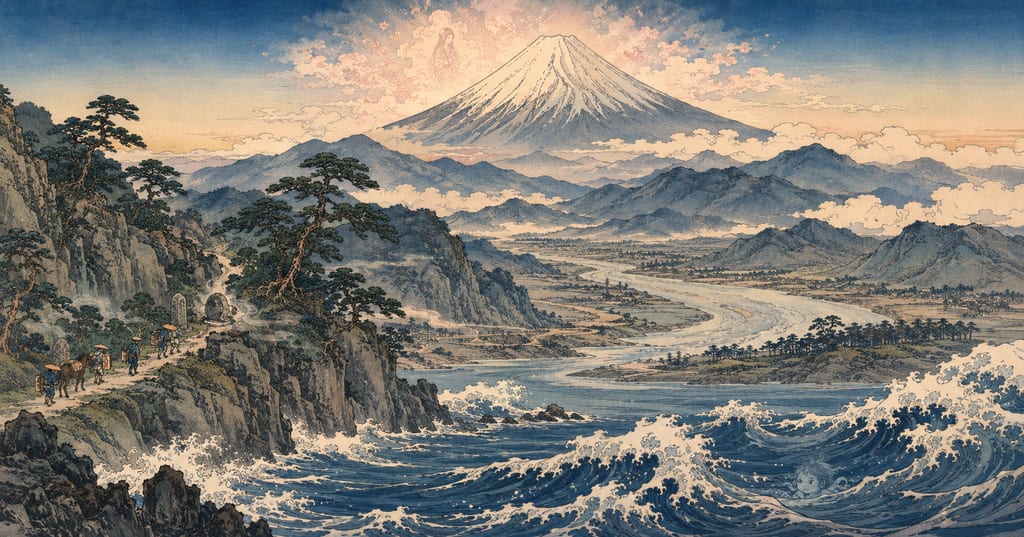
A prefecture embracing Mt. Fuji, the highest and most sacred mountain in Japan. The yokai culture of Shizuoka Prefecture must first be told from the shadow of this white cone. The three old provinces of Suruga, Totomi, and Izu stretch long from east to west, with Fuji and the ridge of the Southern Alps at their back to the north, while their southern shores are washed by the rough waves of Suruga Bay and the Enshu Coast. The mountains gave birth to gods, the highways to the mysteries of the passes, and the sea to the spirits of the drowned—the supernatural phenomena of this prefecture are beautifully layered along its altitude and topography, ranging from the highest divinity of Fuji's goddess to the crying stones on the Tokaido passes and the sea roar of the Enshu Coast.
The perspective that topography determines yokai is particularly true in Shizuoka. The fire and water of Fuji, the rapid currents of the Oigawa and Abe Rivers, the deep valleys of Amagi, and the outer ocean beaches where the Kuroshio Current directly strikes—what the people feared and prayed for there has directly become the faces of yokai. A goddess to appease the volcanic eruptions on Fuji, the spirits of those who lost their lives traveling on the passes, the shadows of the unreturning drowned in the sea—the people of Shizuoka have translated the perils of the land they live on into the forms of gods and yokai.
The backbone of this article consists of two axes. One is the sister goddesses residing on Mt. Fuji—the younger sister Konohana-Sakuyahime, beautiful as a cherry blossom, and the older sister Iwanaga-hime, sent back for her ugliness despite being as steadfast as a rock. The other is the strange phenomena of the passes carved by the Tokaido, the great artery connecting Edo and Kyoto, and the beaches lashed by the Kuroshio Current. The heights of myth, the feet of travelers, and the sides of fishermen's boats—Shizuoka's yokai inhabit this vertical drop.
The Sister Goddesses of Fuji:
Konohana-Sakuyahime and Iwanaga-hime
At the pinnacle of Shizuoka's yokai culture stands the literally highest peak in Japan, Mt. Fuji. Its main enshrined deity is Konohana-Sakuyahime. The Fujisan Hongu Sengen Taisha[1] in Fujinomiya City is the head shrine of over 1,300 Sengen shrines nationwide, and its origin is inseparable from the eruptions of Mt. Fuji. According to shrine traditions, because Fuji erupted and the people fled in fear, the Sengen deity was enshrined at the foot of the mountain in the third year of Emperor Suinin's reign to appease the mountain spirit, and later Sakanoue no Tamuramaro moved it to its current location[1]. Why was a goddess of flowers assigned to appease a mountain spewing fire? The key lies in the myth of her giving birth.
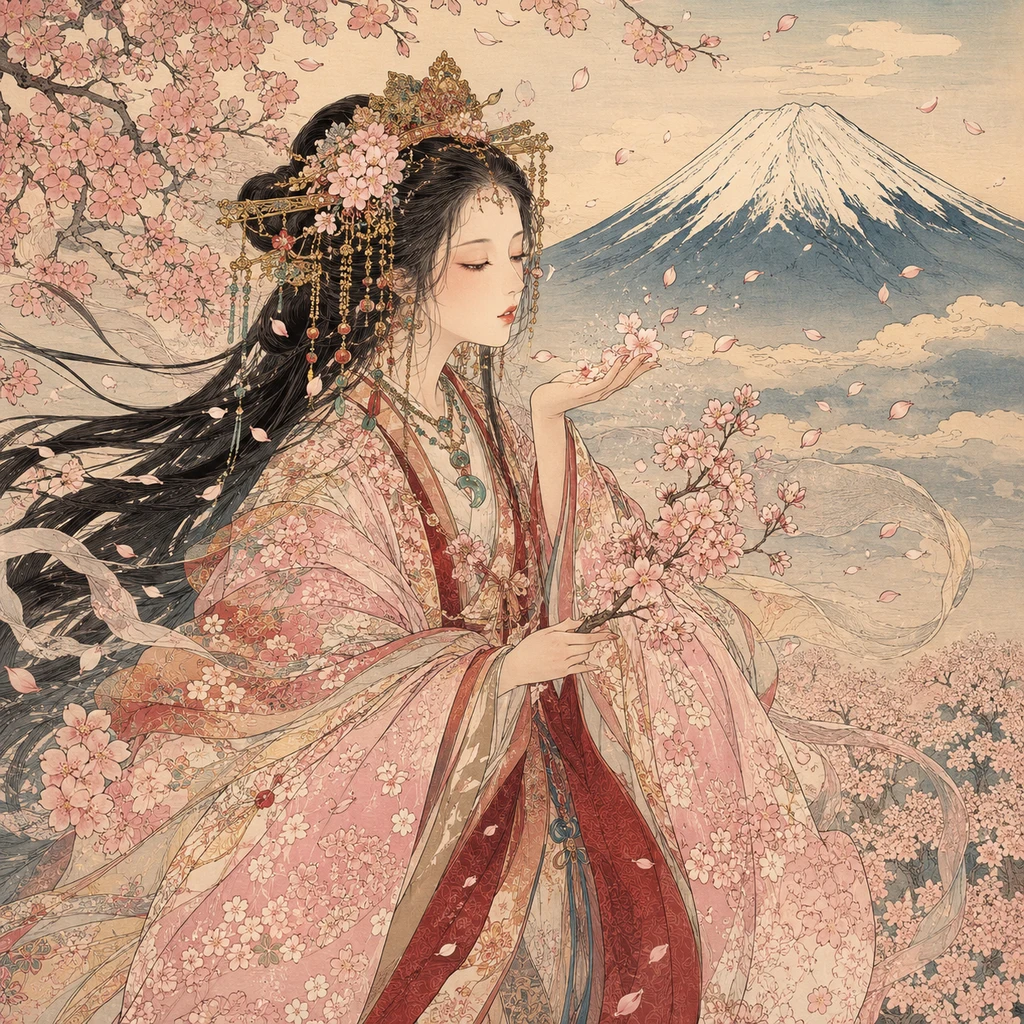
Konohanasakuyahime
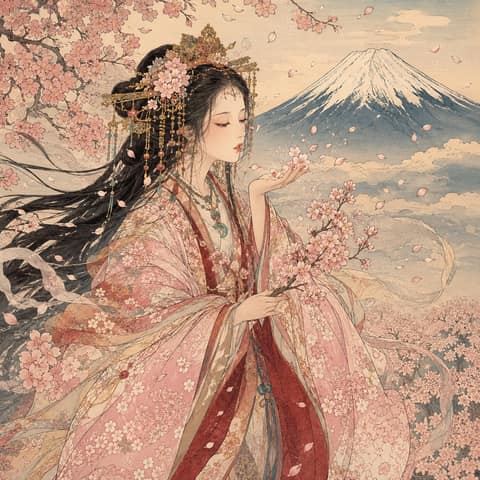
Konohanasakuyahime is a goddess in Japanese mythology and the principal deity (Asama Okami) of Mount Fuji, Japan's greatest sacred peak, enshrined in Asama Shrines nationwide. Her divine name means "a woman as beautiful as cherry blossoms in full bloom," and she boasts immense popularity as a goddess symbolizing the Japanese aesthetic sense and view of nature. In mythology, she is the daughter of Oyamatsumi-no-kami and became the wife of the Heavenly Grandson, Ninigi-no-mikoto. When her husband doubted her chastity after she became pregnant from a single night's encounter, she proved her purity through a fierce myth: she set fire to a windowless delivery hut and safely gave birth amidst the roaring flames. Because of this, she is worshipped as a deity of safe childbirth and child-rearing, while simultaneously embodying the aspects of a "fire goddess" who conquered the raging flames, and a "water goddess (Deity of Water Virtue)" who quells volcanic eruptions.
Read moreIn the myth passed down in the *Kojiki* and *Nihon Shoki*, Sakuyahime, who became pregnant after a single night's vow with the heavenly grandchild Ninigi-no-Mikoto, had her chastity doubted by her husband, who claimed she could not possibly conceive in just one night. So she built a delivery hut without doors, declared, "If this child is the offspring of an earthly deity, it will not survive, but if it is the heavenly deity's child, it will be safe even if burned by fire," and set the hut ablaze herself, giving birth to three children amidst the roaring flames to prove her innocence[2].
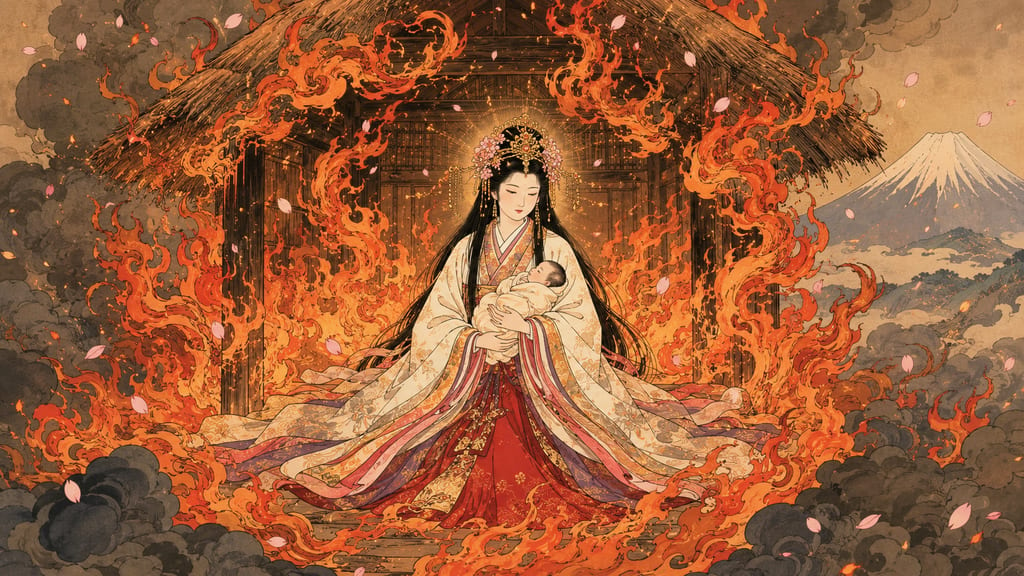
This myth of mother and children emerging unharmed from the midst of a raging fire invoked a divinity that controls fire, establishing the foundation for placing Sakuyahime as the deity to pacify the volcano Fuji. It should be noted that the first literary appearance of linking the mountain spirit of Fuji to Sakuyahime is considered to be the *Shuun Osho Iko* from the early Edo period, so it is not necessarily an ancient connection going back to antiquity. Nevertheless, the story of giving birth in fire made her a goddess of safe childbirth and child-rearing, and as her divine name "tree blossoms blooming" suggests, she was also made a symbol of beauty and transience—blooming proudly and falling like cherry blossoms. The graceful skirts of Fuji and the fury of its eruptions. It is this goddess who bears these two aspects in a single body.
However, it was not only the younger sister who was enshrined on Fuji. In the myth, there is another older sister.
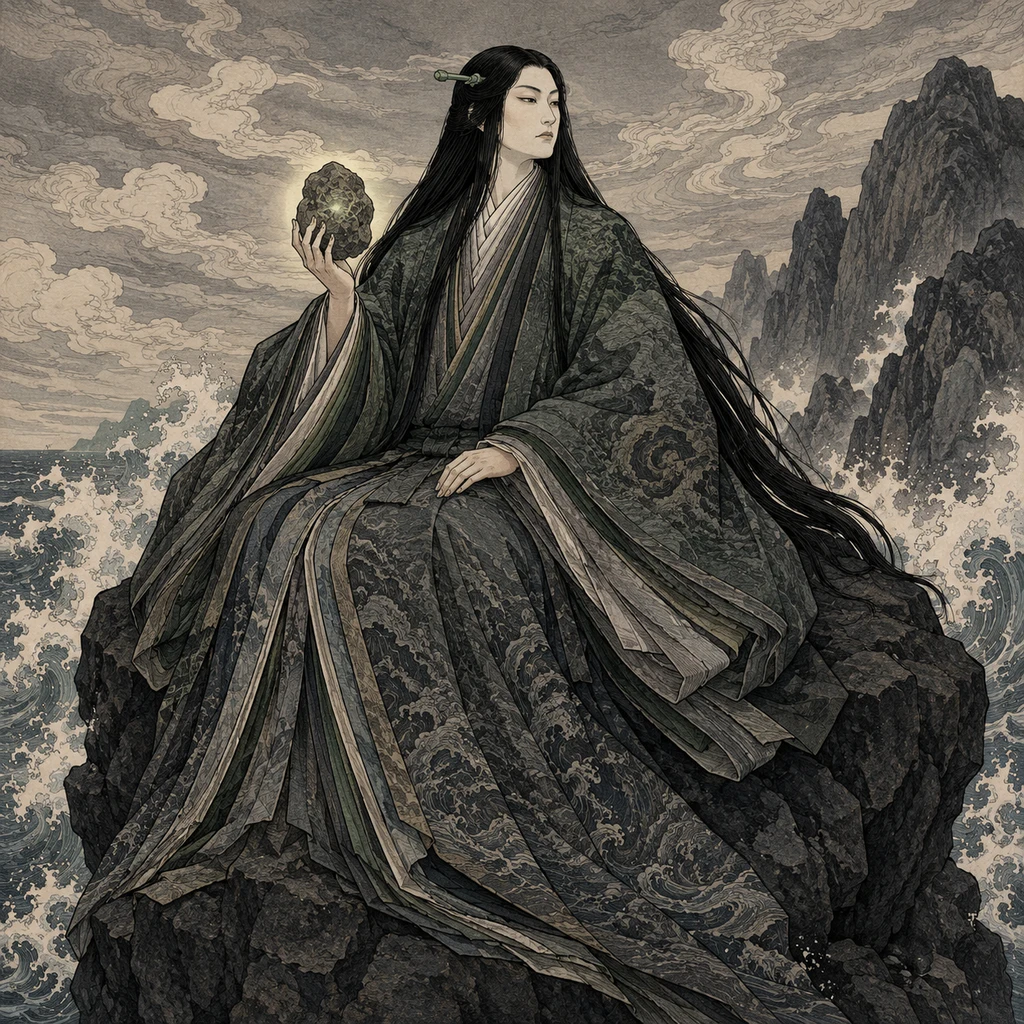
Iwanaga-hime
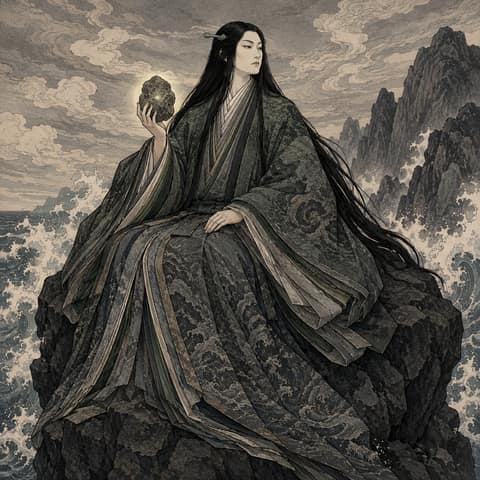
A daughter of Oyamatsumi who appears at the end of Volume 1 of the *Kojiki* and in the 9th stage of the Age of the Gods in the *Nihon Shoki*, and the older sister of Konohana-sakuya-hime. Her divine name "Iwanaga" means "a woman as eternal, steadfast, and enduring as a rock," serving as a symbol of immortality, longevity, and unshakable solidity. She is also written as Ishinaga-hime in the *Kojiki*, and has an alias, Kokemusuhime. Following the descent of Ninigi-no-Mikoto from the heavens, her father Oyamatsumi presented both sisters together, but Ninigi sent Iwanaga-hime back because of her ugly appearance, marrying only Konohana-sakuya-hime. Because of this, Oyamatsumi declared: "If you had kept Iwanaga-hime by your side, the life of the heavenly descendant would have been eternal like a rock; but since you kept only Sakuya-hime, your life will be fleeting like a blossom." This is the origin myth of the shortened lifespans of humans and the imperial line in Japanese mythology (classified by comparative mythologist Tarō Ōbayashi as a Japanese variant of the "banana-type myth" of mortality origins from Sulawesi, Indonesia). She is enshrined at Kumomi Sengen Shrine, Hoshoishi Shrine, Shiromi Shrine (where legend states the mirror she threw in grief over her ugliness became the origin of the village's name), and Kifune Shrine Yui-no-Yashiro (a matchmaking shrine where she paradoxically hid in shame over her rejection, resolving to "grant good matches to the people"), presiding over matchmaking, longevity, and steadfastness.
Read moreOyamatsumi-no-Kami presented both of his daughters to Ninigi-no-Mikoto when he descended from heaven. The younger sister Sakuyahime, and the older sister Iwanaga-hime. However, Ninigi-no-Mikoto sent Iwanaga-hime back, considering her ugly, and married only the beautiful Sakuyahime. The grieving Oyamatsumi-no-Kami declared: If he had kept Iwanaga-hime by his side, the lives of the heavenly grandchildren would have been eternal like rocks, but because he kept only Sakuyahime, their lives would be short like flowers[3]. This is the passage explaining the origin of the shortened lifespans of humanity and the imperial family in Japanese mythology. As the divine name "Iwanaga" indicates, the older sister symbolizes rock-solid eternity, while the younger sister is beautiful but fleeting like a flower. It is a quietly fierce tale that the price of discarding eternity and choosing beauty is mortality.
This conflict between the sisters survived in a remarkably vivid form in a corner of the Izu Peninsula. Enshrined at the summit of Mt. Eboshi, a mountain jutting into the sea at an altitude of 162 meters in Kumomi, Matsuzaki Town in western Izu, the Kumomi Sengen Shrine[4] is a rare shrine among the approximately 2,000 Sengen shrines nationwide, as it enshrines only Iwanaga-hime-no-Mikoto. And in this land, a tradition of forbidding the mention of Fuji's name has been preserved. It is recorded that because Fuji, enshrining the younger sister, and Kumomi, enshrining the older sister, were on bad terms and the enshrined deity would get angry, the locals avoided climbing Mt. Fuji, and saying the word "Fuji" was a taboo in Kumomi[4]. The mythical quarrel of the sisters lived on for a long time as a taboo of a single village—this is more in the realm of divinity than yokai, but it is rare to find an echo of a myth taking root in the land to this extent. Suruga overlooking Fuji, and Izu Kumomi refusing to speak of it. Within the same prefecture, the two sister goddesses are enshrined with their backs to each other.
The sisters' story is not merely a folktale of beauty and ugliness. In folklore studies, it has been pointed out that the contrast between the beautiful but mortal younger sister and the ugly but immortal older sister shares the same structure as the myths of the origin of death widely distributed in Southeast Asia—the "banana-type myths" explaining why humans came to bear fruit and wither like bananas instead of remaining eternal like stones. The humans who rejected eternity and chose beauty bear death as the price. There is a quiet paradox in the fact that this myth, preaching the transience of human life, has been passed down at the foot of the seemingly immortal sacred peak of Fuji. The beautiful younger sister enshrined on the mountain of fire, and the eternal older sister enshrined alone on a small hill by the sea—the sacred sites of Shizuoka hold the archetype of this country's view of life and death, divided into two shrines.
The Mysteries of the Tokaido Passes:
The Crying Stone,
Leaf Tengu,
and Amanojaku
If the myth of Fuji is the canopy of the prefecture, the Tokaido highway piercing the prefecture from east to west scattered supernatural phenomena at the feet of travelers. Among them, the Seven Wonders of Enshu[5] in Kakegawa, Totomi—a cluster of mysterious tales in the Enshu region said to have over a hundred variants—is a treasure trove of highway yokai culture. The foremost among them is the Night Crying Stone of the Sayo no Nakayama pass.
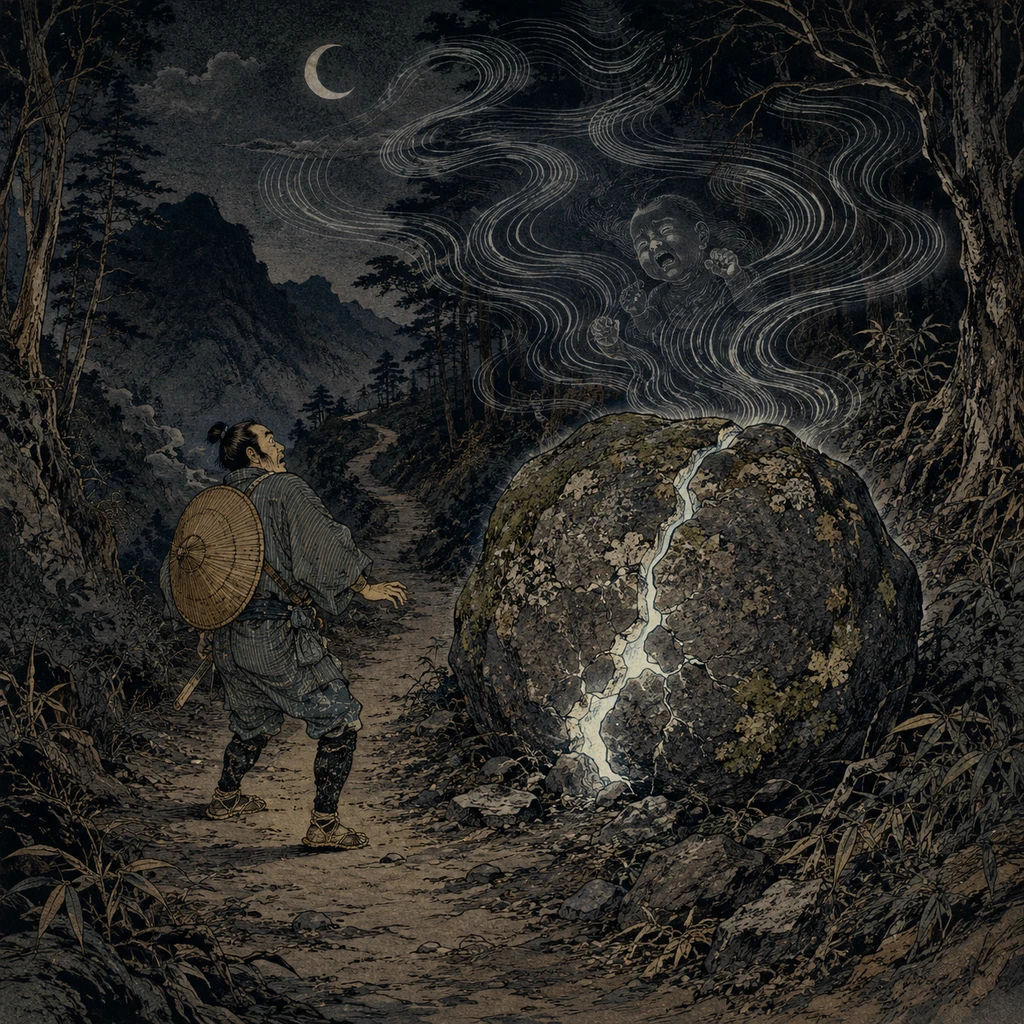
Weeping Stone
A catch-all term for stones said to cry or moan at night. In some tales the stone itself emits eerie sounds; in others, a restless spirit inhabits it and laments. The Weeping Stone of Sayo no Nakayama in Shizuoka is famous and often linked to tragic mother-and-child legends. Elsewhere, certain stones are enshrined as talismans to soothe a child’s night crying, blending beliefs in a stone’s numinous power, potential curse, and pacification.
Read more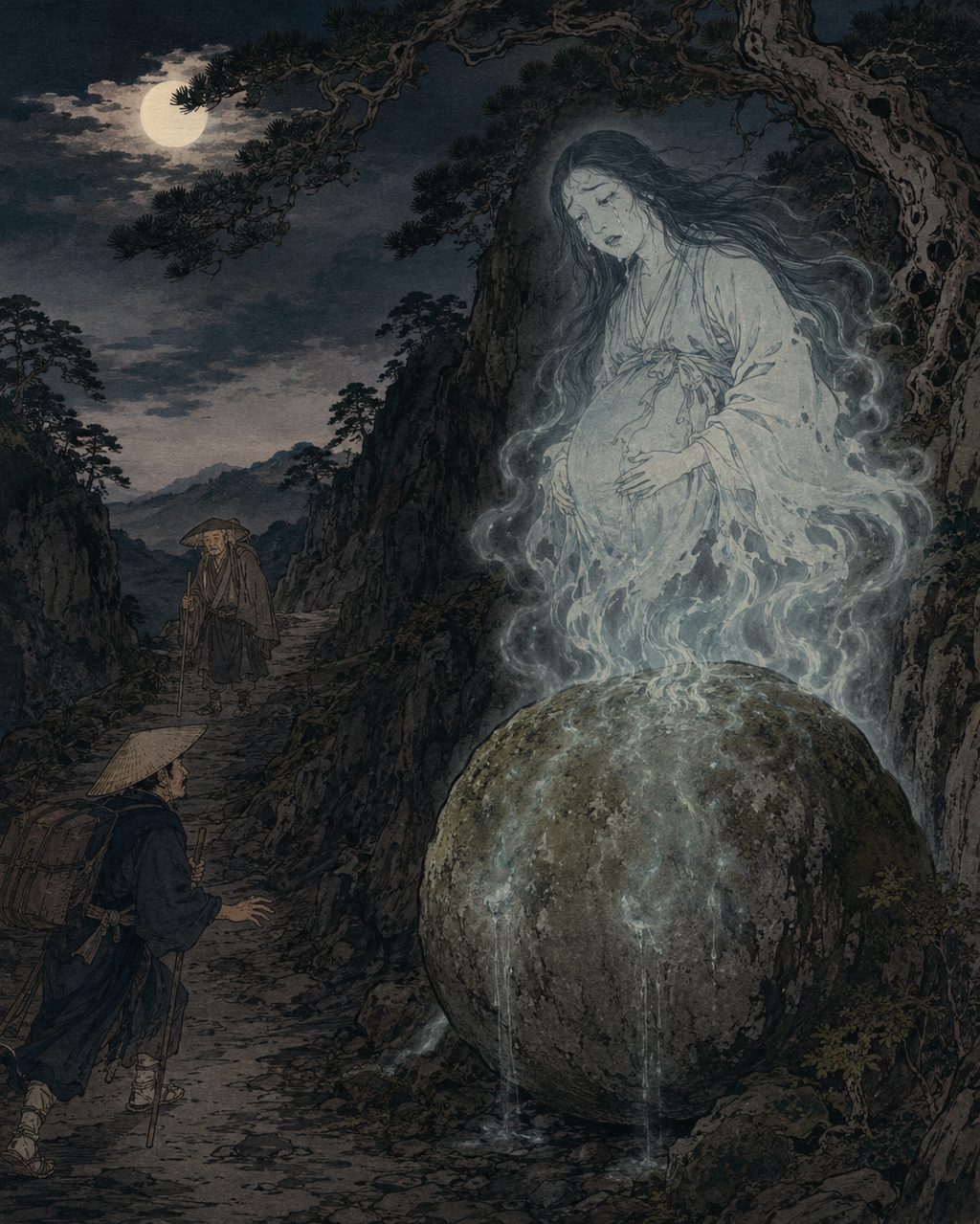
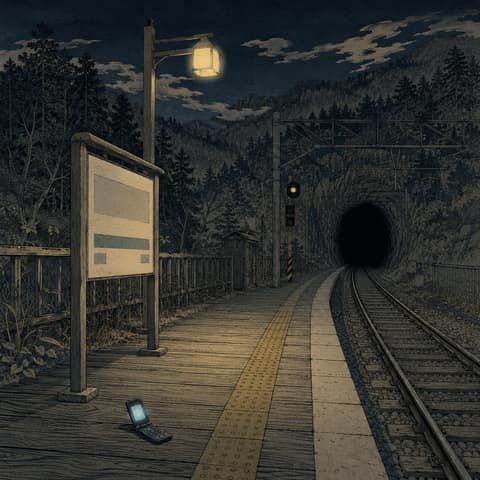
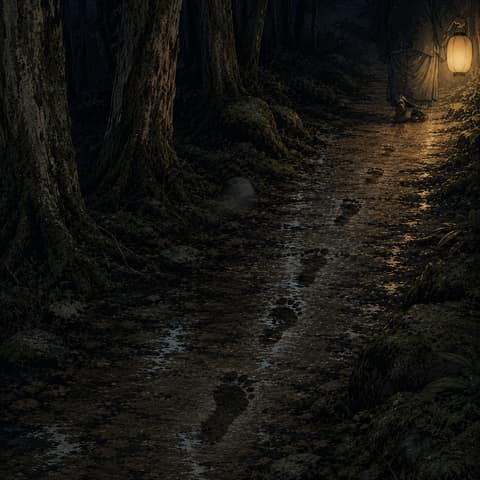
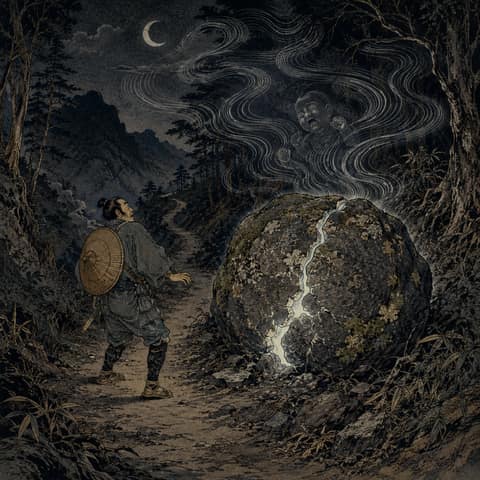
Sayo no Nakayama in Kakegawa was known as one of the most difficult passes on the Tokaido, famously compared to the uncrossable Oigawa River. The steep slopes continued, and it was not uncommon for travelers to lose their lives there. The tale of the crying stone handed down here goes like this: A pregnant woman on her way to Kuenji Temple to pray for a safe delivery was attacked by bandits on the pass and lost her life. To save the infant born from the mother's wound, the mother's soul inhabited a round stone nearby, weeping night after night in longing for her child[6]. A monk from Kuenji heard the crying, found the infant, and raised him by feeding him mizuame (starch syrup) instead of milk. The child grew up to be a fine sword-polishing craftsman, discovered his mother's enemy from the nick on the blade of the sword that slew her, and achieved his long-cherished revenge. From this legend was born the "Child-rearing Candy" made from glutinous rice and malt, which is still produced using traditional methods at Koizumiya near the Nakayama Tunnel and Ogiya in front of Kuenji[6]. The crying stone itself is currently placed beside the Nakayama Tunnel, and a similar stone is also enshrined at the related Kuenji. The stone cries, and the candy raises the child—it is a splendid crystallization of highway culture where a supernatural event and a local specialty are tied together in a single story. Among the tales of crying and groaning stones found across the country, the reason why the Sayo no Nakayama example tied to a mother-child tragedy is particularly famous is undoubtedly because this pass was truly a dividing line between life and death for travelers.
Beyond the pass, tengu flocked in the mountains.
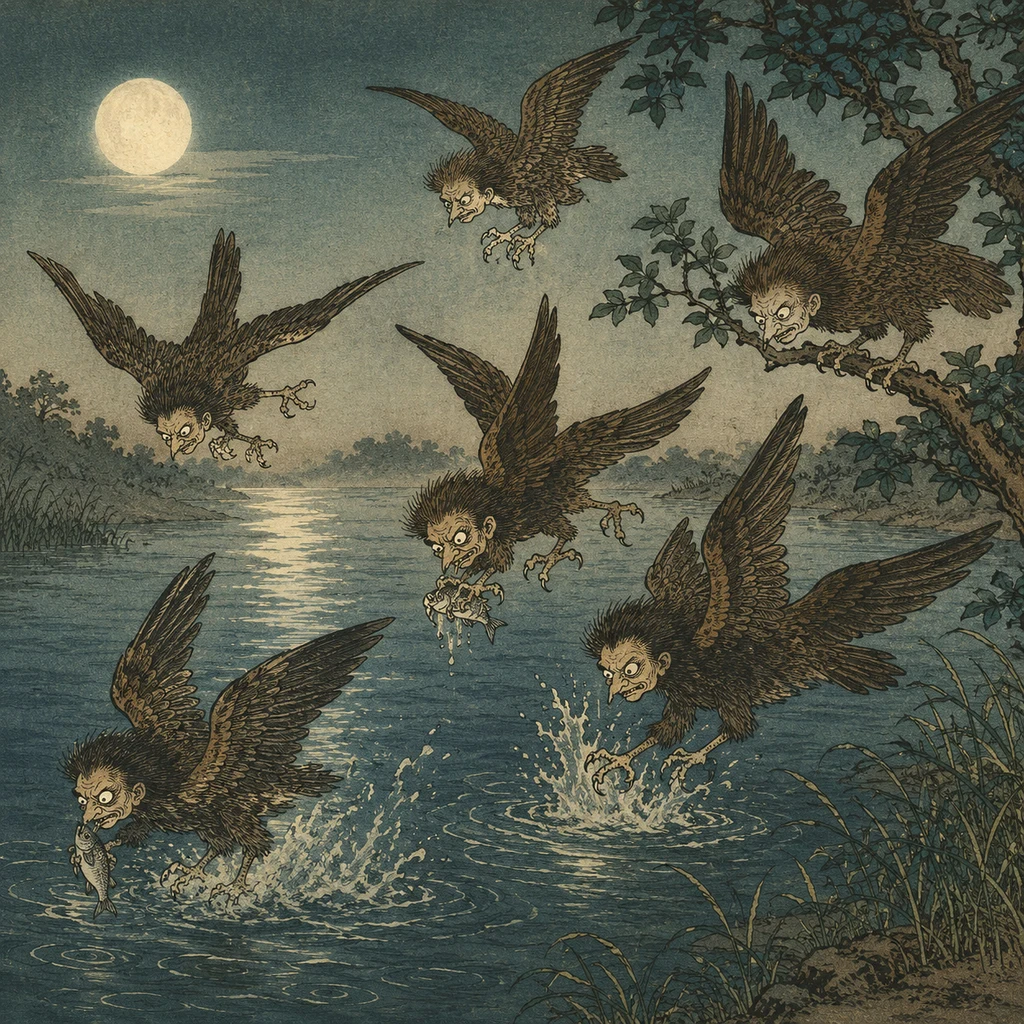
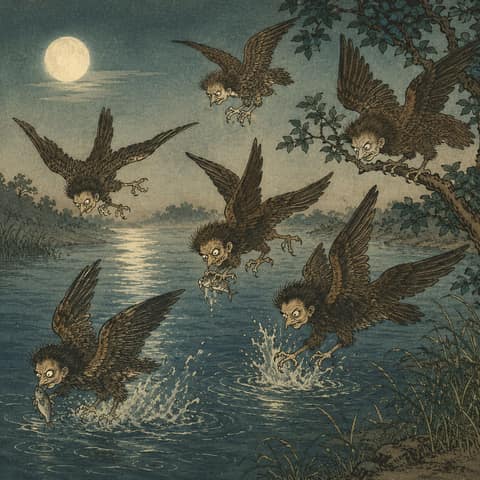
In the mountains of Suruga, there were Konoha Tengu. Unlike the great tengu known for their long noses and yamabushi attire, these are lesser tengu also called sakaidori (border birds). In the essay *Shokoku Rijindan*[7] by Kikuoka Senryo published in 1743, it is recorded that figures resembling giant birds flocking in great numbers to catch fish at night were witnessed at the Oigawa River in Suruga Province. Their wings resembled those of kites with a wingspan of about six shaku, and they were said to flee immediately upon sensing a human presence[7]. Furthermore, Matsura Seizan's *Kasshi Yawa*[8] notes that in the tengu realm, the leaf tengu are called white wolves, which are old wolves turned into tengu, and they are lowly beings among the tengu who sell firewood and carry loads to cover the expenses of other tengu[8]. Not the great tengu of the high peaks, but the fishing lesser tengu flocking nightly over the surface of the Oigawa River—here too is a vision of yokai of the nameless living behind the heights of Fuji.
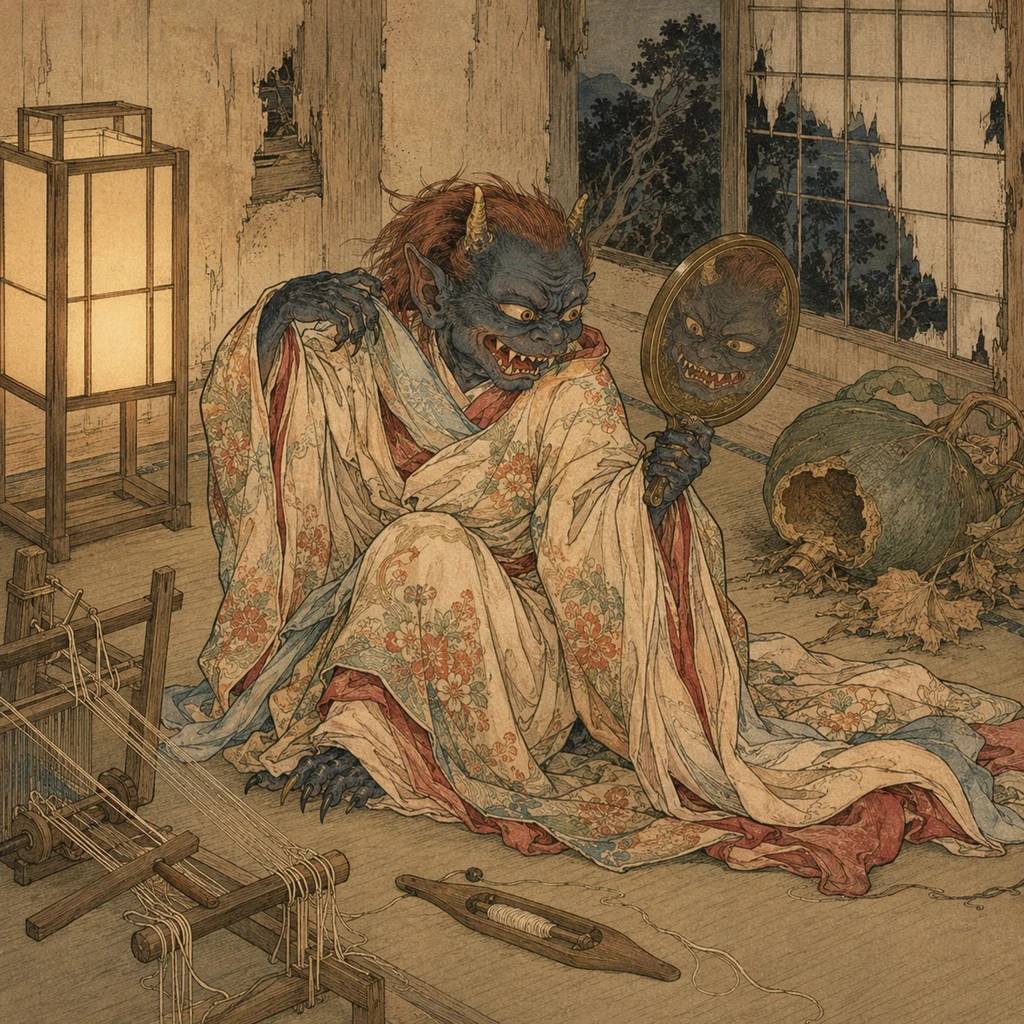
In a different lineage from the tengu, the little demon that rubs people the wrong way is the Amanojaku. The theory tracing its origin to the Amanosagume of the Kojiki and Nihon Shoki myths—a shamanic deity who probes heavenly voices and human hearts—is widely known, and it is thought that this "mind-reading" nature was later reduced and transformed into the image of a little demon who reads minds and playfully does exactly the opposite. In Buddhist iconography, they were carved as evil demons trampled beneath the feet of the Four Heavenly Kings and Nio (Kongo Rikishi), symbolizing human worldly desires and evil hearts. In the Edo period, the *Wakan Sansai Zue* included a theory connecting Amanosako as the ancestor of Amanojaku, and since the modern era, the term has spread into everyday language to refer to a "contrarian" or "perverse person." Across the country, there remain traditions identifying the Amanojaku as the true identity of the kodama or yamabiko that mimics and returns human voices, as well as stories of a giant type who tries to build a mountain or island overnight but is tricked by a rooster's crow and leaves it unfinished. Although a yokai distributed nationwide, in the deep mountains and many valleys of the Shizuoka region, it has been passed down particularly intimately as the owner of the echoing mountain voice.
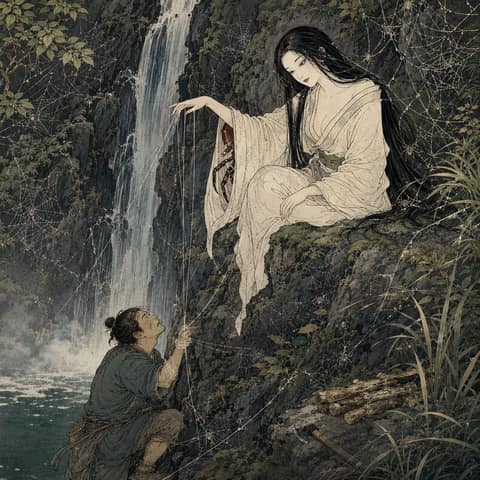
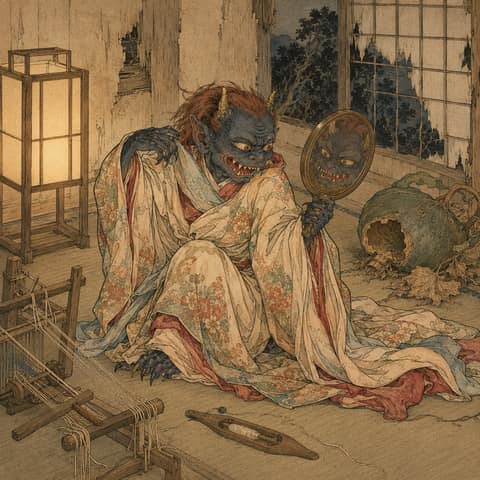
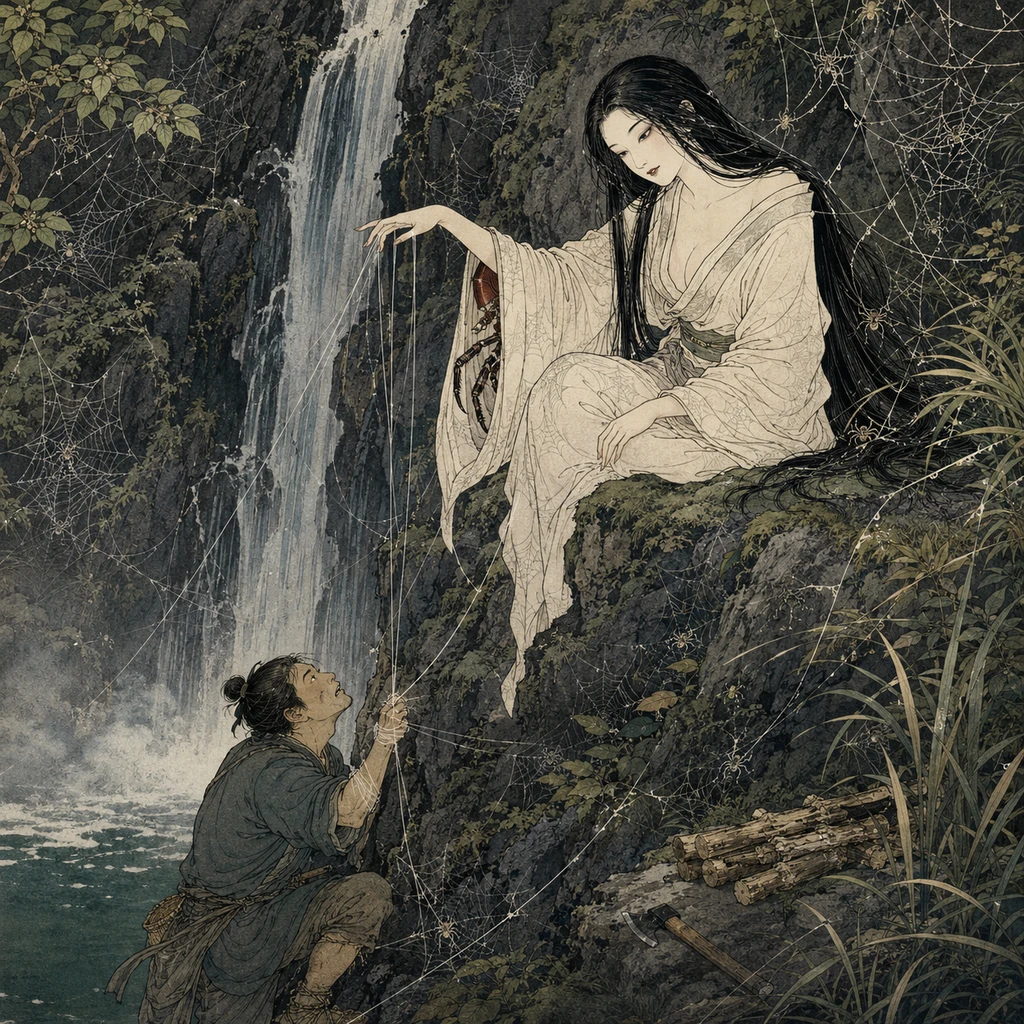
And, lurking by the watersides in the mountains is the Jorogumo. This yokai, a giant spider taking the form of a beautiful woman to lure men, was depicted by Toriyama Sekien in the *Gazu Hyakki Yagyo*[9] as a woman commanding fire-breathing baby spiders. "Jorogumo" is originally a jukujikun (meaning-based reading) applying the Chinese characters for "entangling new bride" to the golden orb-weaver spider, and it is said to inhabit watersides like waterfalls and deep pools, often spoken of as a messenger of the water god.
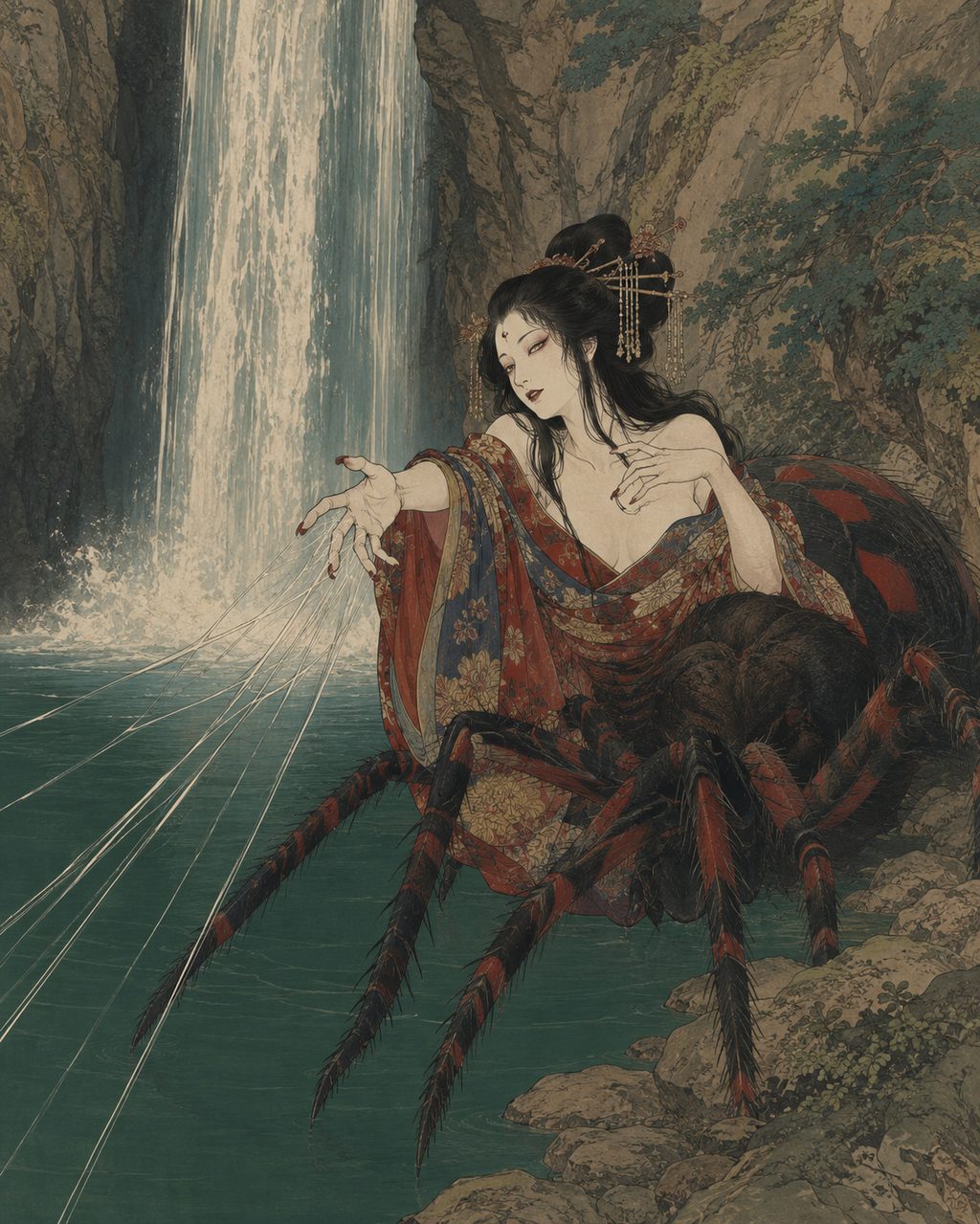
In Shizuoka, a Jorogumo legend is handed down at Joren Falls[10], a famous waterfall in Amagi, Izu. When a woodcutter dropped his hatchet into the waterfall basin, a bewitching beauty appeared from the bottom of the falls, returned the hatchet, and told him, "Tell no one that you met me here today." The woodcutter kept his promise, but one day he let it slip while drinking, and it is said he never woke up again[10]. In another version, the spider entangled its thread around a man's leg at the waterfall basin, and just as he was about to be pulled in, a tree stump he pulled as a substitute disappeared into the basin. A beautiful woman standing at the boundary of water and mountain at the waterfall basin, and the taboo of "absolute secrecy"—this is a quiet and beautiful mystery nurtured by the deep valleys of Izu. It should be added that the giant spider said to have been slain by Minamoto no Yorimitsu is the Tsuchigumo described in the *Tsuchigumo Soshi*, and is originally considered a different lineage of yokai from the Jorogumo.
The Seas of Suruga and Totomi:
Funayurei,
Tomokadzuki,
and Nami-kozou
Descending from Fuji past the passes, the rough seas of Suruga Bay and the Enshu Coast gave birth to yet another type of yokai. Those who die in the sea do not return. That absence is at the core of the sea's supernatural phenomena.

Funayūrei
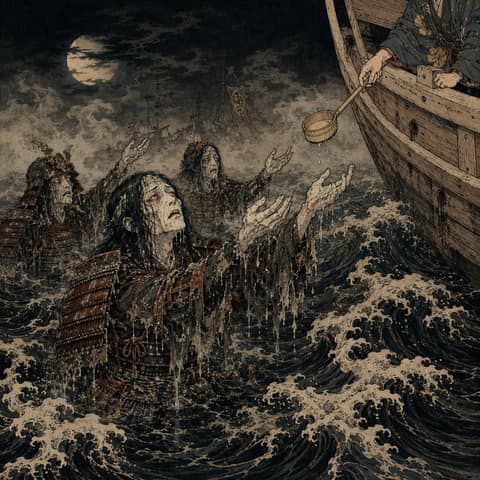
Funayūrei are maritime apparitions formed from the spirits of people who died by drowning or shipwreck. Depending on the region, they may appear as ghosts, phantom boats, eerie lights, or dark figures resembling Umibōzu. They most often emerge on stormy or fogbound nights, when they try to sink a vessel by ladling seawater aboard or confuse its course until it runs aground. Local defenses include offering a ladle with its bottom removed, throwing rice balls or ash, or meeting the ghosts with an unwavering stare. Mōjabune, Bōko, and Ayakashi are among the names applied to such spirits. Toriyama Sekien also depicted Funayūrei in Konjaku Gazu Zoku Hyakki.
Read moreThe Funayurei (Ship Ghost) is a supernatural phenomenon where the massed spirits of those who died in water accidents appear on the sea. On stormy nights or heavily foggy evenings, ghosts and mysterious fires rise around ships, demanding to borrow a ladle. If one hands over a ladle as requested, the spirits will use it to scoop seawater into the ship and sink it. Therefore, fishermen prepared bottomless ladles in advance, and if asked, handed them over to escape danger. No matter how much they scoop with a bottomless ladle, water will not accumulate—the tenacity of the dead is rendered futile by modest wisdom. Depending on the region, it is also said that they threw rice balls or ash into the sea, or drove the spirits away by glaring fiercely at them. The *Ehon Hyakumonogatari*[11] depicted the Funayurei appearing in the western seas as the vengeful spirits of the Heike clan, with armor-clad spirits demanding "give us a dipper" near Dan-no-ura[11]. Toriyama Sekien also drew Funayurei in *Konjaku Gazu Zoku Hyakki*, and by the Edo period, it had already become established as a nationwide sea yokai. The coasts of Shizuoka were no exception. Suruga Bay is known as the deepest bay in Japan, and the Enshu Coast is directly lashed by the unobstructed outer ocean. The seas of Izu also have many reefs, and all were sea areas where maritime accidents were incessant. The hearts that mourned and feared the drowned certainly allowed the universally shared image of the Funayurei to reside in the seas of this land as well.
The mysteries of the sea were not only for offshore fishermen. For the ama divers who lived by diving into the sea, there were closer, much more eerie mysteries.
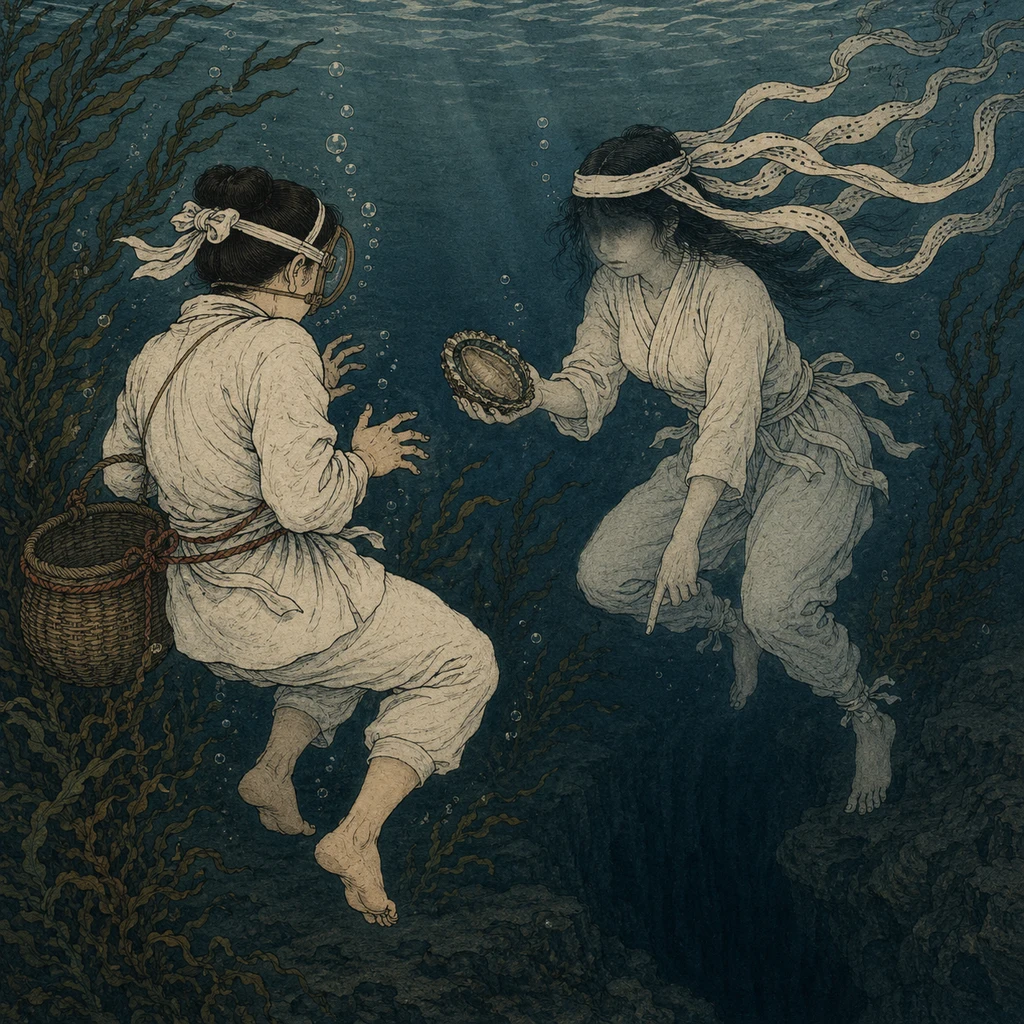
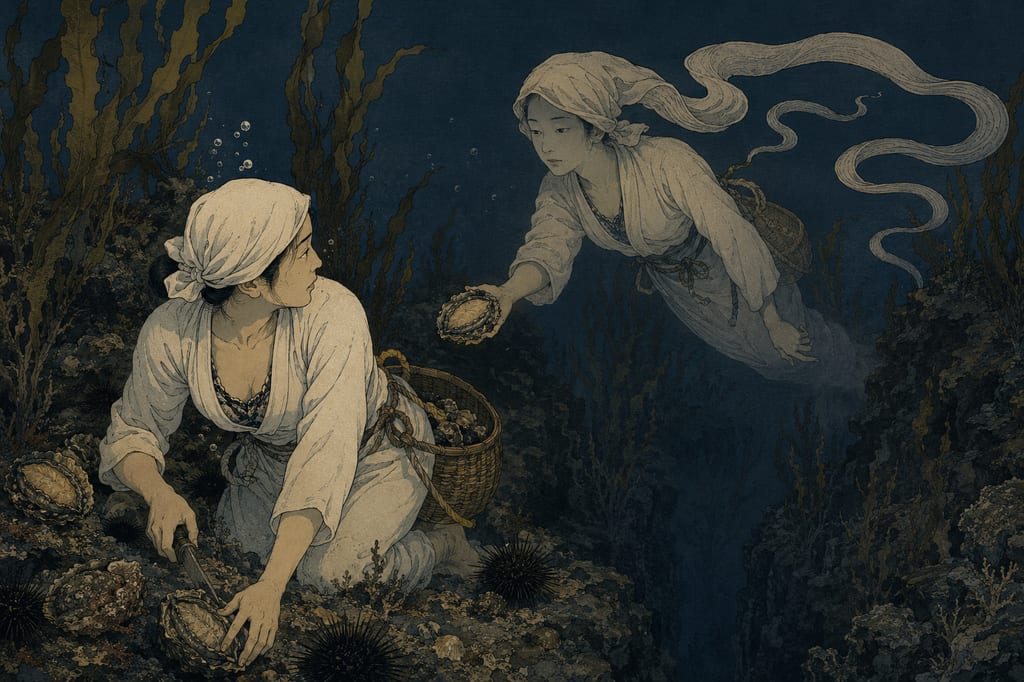
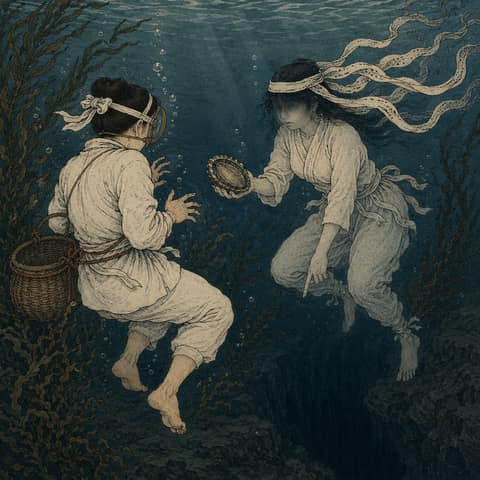
The Tomokadzuki is a doppelganger entity that appears before an ama diving into the sea, looking exactly like herself. "Kadzuku" is a dialect word meaning "to dive," and "one who dives together" is said to be the origin of the name. They are easily encountered on cloudy days, and an unnaturally long hanging tail of their headband is said to be the mark to identify them. This doppelganger offers abalone or the like, luring one into the darkness. If one carelessly accepts it, one's arm will be grabbed, dragged into the depths, and one will lose one's life. Originally a mystery heavily passed down among the ama of Shima, there are certainly similar stories in Shizuoka. In Minamizaki Village, Kamo District, Shizuoka (present-day Minami-izu Town)[12], it is said an ama came up to the surface and appealed to her husband on the boat about encountering a Tomokadzuki, but she was denied with "don't talk nonsense," forced to dive again, and died right there[12]. An illusion exactly like oneself, a terror that cannot be believed—this is an entity offering a glimpse into the abyss of the ama's heart born from the solitary labor of solo diving. The deeper and longer one dives, the more one's consciousness dims due to lack of oxygen and hypothermia, and one might misidentify one's own shadow or bubbles in the sea as another diver. The Tomokadzuki is also thought to be the crystallization of such extreme physical experiences into the form of a yokai. The Seiman (star shape) and Doman (lattice) marks that the ama of Shima wore as amulets were talismans to protect themselves from such sea mysteries. The fact that the same mystery was transmitted to the beaches of Izu in Shizuoka is proof that ama culture and sea faith widely traveled back and forth along the Kuroshio Current.
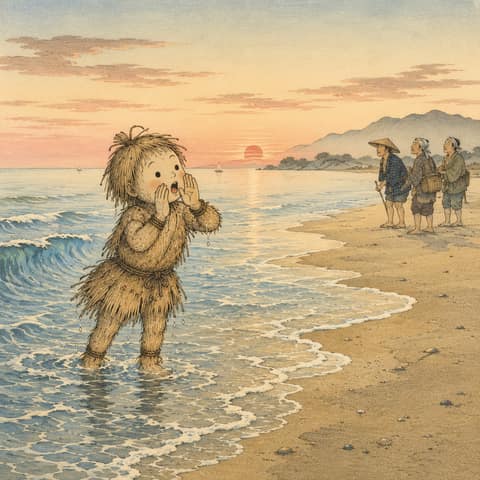
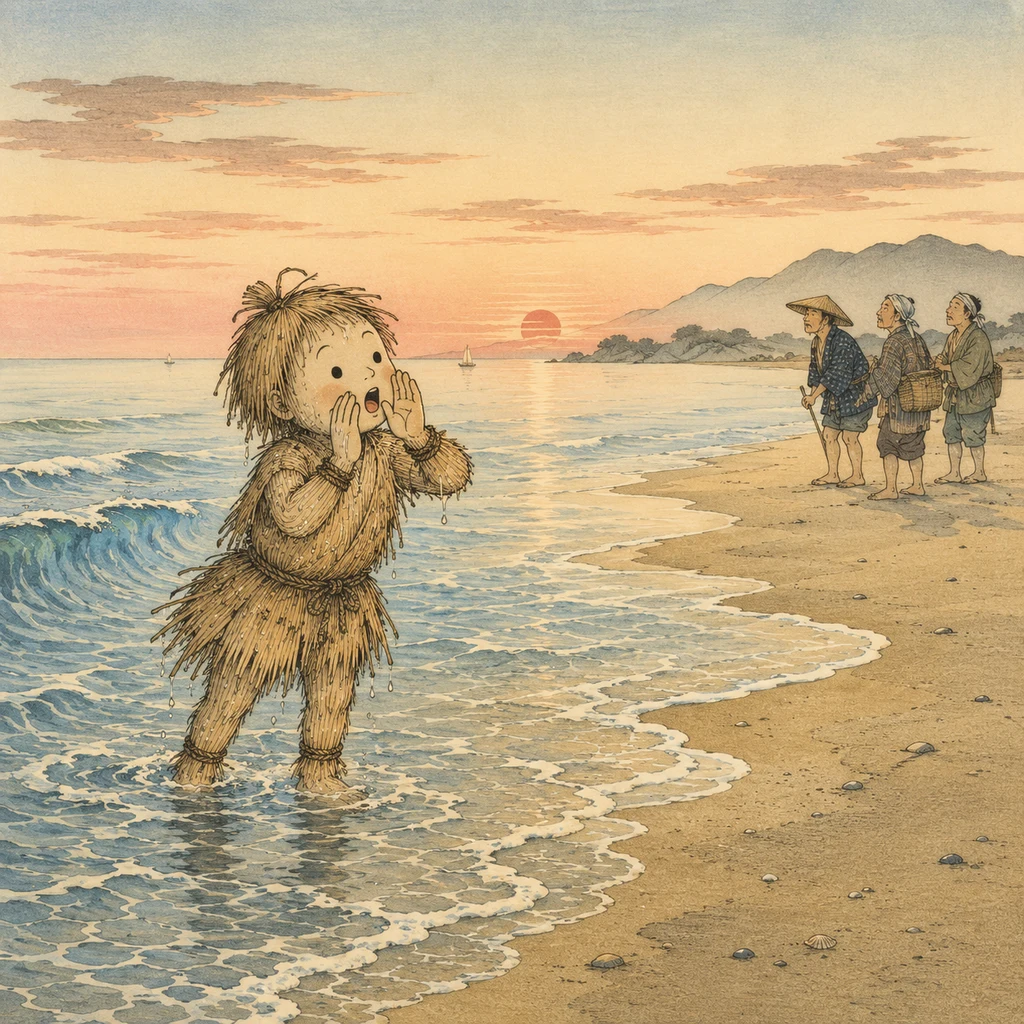
The sea of the Enshu Coast also gave birth to a mystery in the form of a child. The Nami-kozou (Wave Boy). This is also counted as one of the Seven Wonders of Enshu[5], and is linked to the peculiar "sea roar" of the Enshu Coast. According to tradition, Gyoki, a monk in the Nara period, made two straw dolls and had them plant rice to pray for the recovery of his sick mother. When their task was done, Gyoki let them hear sutras, instructed them to "notify people in advance of wind and rain disasters," and set them adrift in the Kurumegi River (present-day Miyakoda River); one of them drifted to the sea and got caught in a fisherman's net. When the fisherman released it, the Nami-kozou promised to signal changes in the weather with the sound of the waves as a token of gratitude[13]. Since then, the sea roar of the Enshu Coast has been called "Three ri of thunder, a thousand ri of waves," and the weather was divined by the direction the sound came from—rain if it echoed from the southeast, clear skies if from the southwest. It is an example of a supernatural phenomenon turning into practical wisdom supporting fishing and farming. In another version, it is told that during a continuous drought, a boy returned a thumb-sized Nami-kozou to the sea, and in gratitude, was told the signs of rain. Borrowing the name of the real high monk Gyoki, and starting from the simple vessel of a straw doll, this story gives an explanation to the natural phenomenon of the sea roar while conveying awe and gratitude towards nature as one—it is the most closely tied to daily life among the Seven Wonders of Enshu.
This very framework of the Seven Wonders of Enshu is the key to understanding the yokai culture of western Shizuoka. Besides the crying stone and the wave boy, over a hundred mysteries including variants have been handed down in this land, such as the "Giant Snake of Sakuragaike" where a monk who attained nirvana by turning into a dragon in Omaezaki's Sakuragaike becomes a giant snake, the "Child-born Stone" in Makinohara said to be born generation after generation from a rock on the beach, and the "Sandoguri" (Three-time Chestnuts) that bear fruit out of season[5]. The climate of Totomi, where highways, farming villages, and beaches intersect, nurtured such a rich cluster of mysteries.
From the Heights of Fuji to the Roar of the Sea
Surveying the yokai of Shizuoka, one can see that the topography of this prefecture itself is a distribution map of supernatural phenomena. On the highest peak of Fuji, the sister goddesses Konohana-Sakuyahime, beautiful as cherry blossoms, and Iwanaga-hime, steadfast as a rock, are enshrined holding myths about beauty and eternity. On the Tokaido passes descended from the mountains, there are the Night Crying Stone imbuing motherly love into a rock, the Konoha Tengu flocking in the night over the Oigawa River, the Amanojaku turning people's hearts inside out, and the Jorogumo lurking in waterfall basins. And on the beaches dwell the Funayurei sinking ships, the doppelganger Tomokadzuki luring female divers, and the Nami-kozou announcing the weather.
What should be noted is that many of these yokai do not end with a "curse" but reverse into a "blessing." Sakuyahime, who gave birth in fire, became a goddess of safe childbirth, the crying stone gave birth to child-rearing candy, and the Nami-kozou caught in the net became a guardian deity announcing the weather. The people of Shizuoka did not merely exorcise frightening things; they mourned them, entertained them, and turned them into allies in their daily lives. Just as the female divers continued to dive into the sea while protecting themselves with Seiman and Doman amulets—the wisdom of living alongside dangerous nature has rearranged yokai from "enemies" into "connections."
The heights of myth, the feet of travelers, and the sides of fishermen's boats. From the magnificent myth of Fuji's goddess to the sounds of daily life like the sea roar of the Enshu Coast, Shizuoka's supernatural phenomena are quietly lined up along the altitude. The high and sacred, and the low and visceral—all of that vertical drop is contained within this single prefecture. Looking up at Fuji, crossing the passes, and rowing out to sea—that journey itself is nothing other than the route to decode the yokai of Shizuoka.