An Onryō is Not Just a Scary Ghost
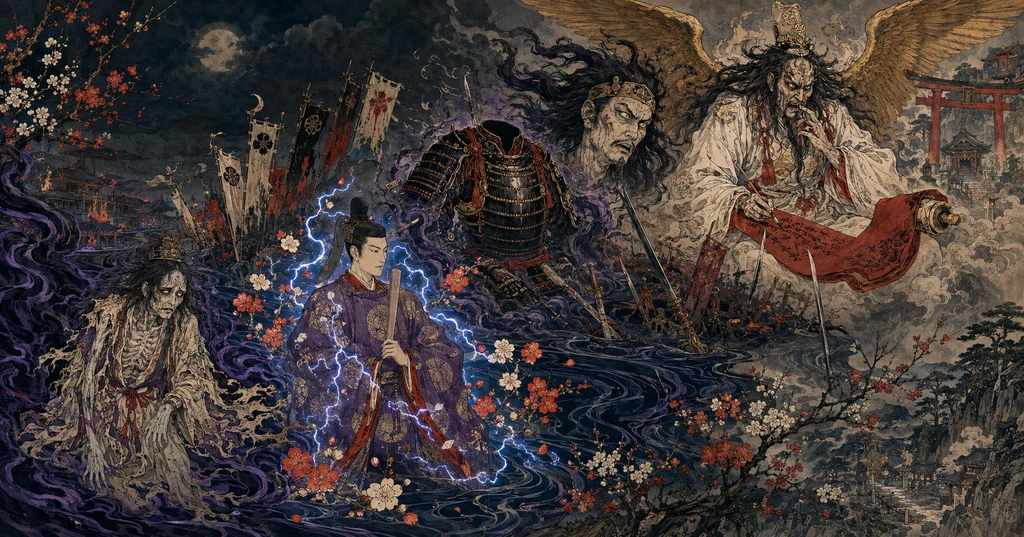
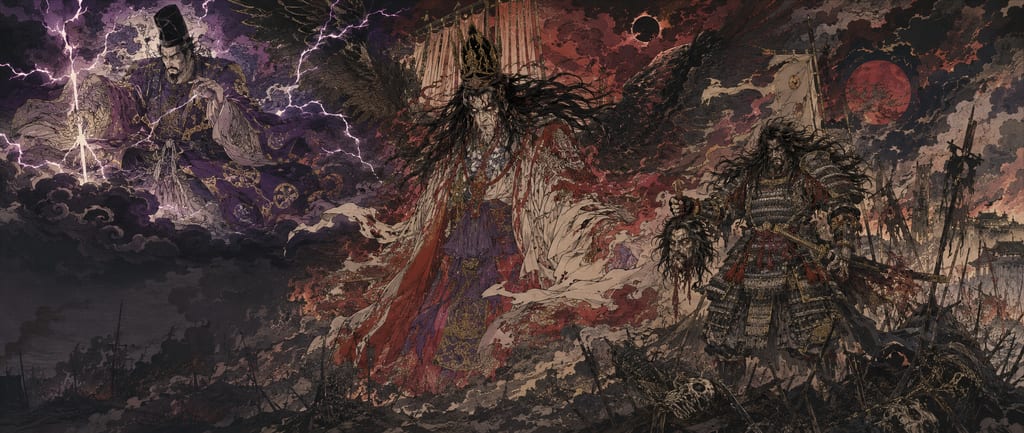
Explaining an onryō merely as the spirit of an individual who died holding a deep grudge is insufficient. It was also a political and religious mechanism to understand lightning strikes, epidemics, deaths, famines, and political upheavals occurring in the court and society as the wrath of the unjustly deceased, and to restore order by posthumously returning their official ranks, enshrining them in temples and shrines, and conducting festivals.
The grouping of the "Three Great Vengeful Spirits of Japan" is not an official title chosen by ancient law. Based on the historical background revealed by onryō research[1], we will look at the lives, the events following the deaths, the subsequent literature, and the current beliefs surrounding these three figures separately.
Sugawara no Michizane —From an Onryō of Thunder to the God of Scholarship
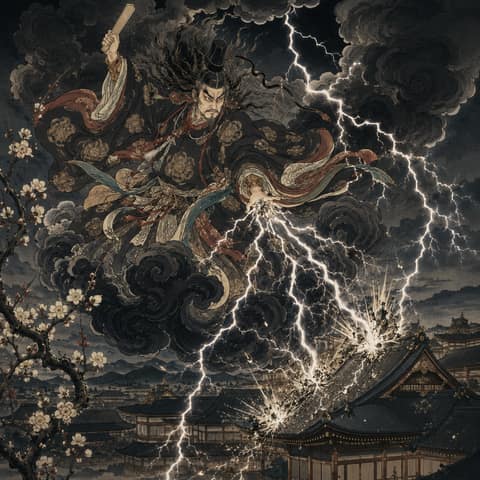
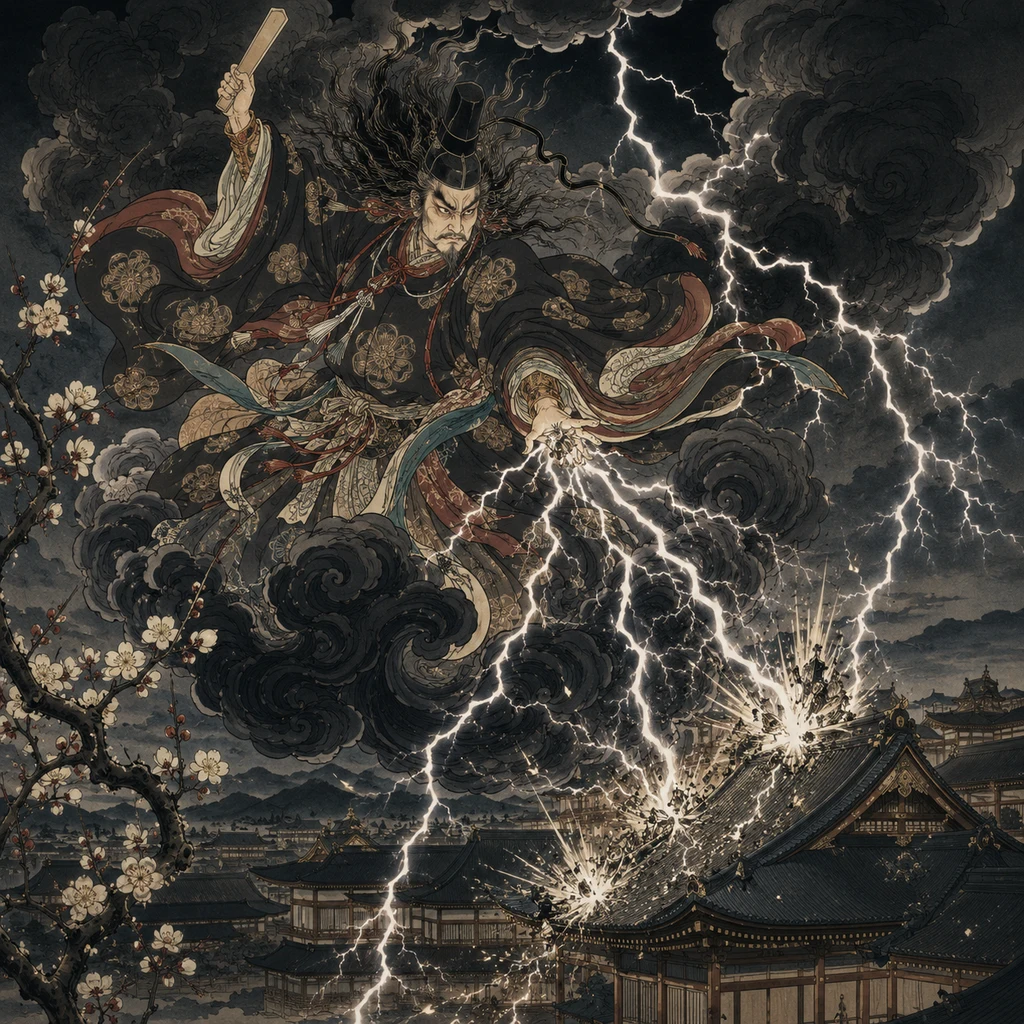
Sugawara no Michizane rose to prominence as a scholar and politician, but he was demoted to Dazaifu in the fourth year of Shōtai (901) and died in the third year of Engi (903). Following his death, a series of events in the capital—including the deaths of people close to his political rivals, epidemics, and lightning striking the Seiryōden palace—were feared to be the work of Michizane's onryō. The imperial court annulled his punishment, granted him posthumous ranks, and enshrined him at Kitano.
The *Kitano Tenjin Engi Emaki* (Illustrated Legends of the Kitano Tenjin Shrine)[2] visually constructs Michizane's life, his exile, his thunder-god-like power, and his enshrinement as Kitano Tenjin. What is crucial here is not simply that a terrifying spirit was rendered harmless; rather, the power capable of causing calamity was transformed into a divine authority (*shin'i*) that protects people when properly enshrined. The current image of him as the "God of Scholarship" also emerged from the memory of Michizane as an outstanding scholar and literatus, and the long evolution of the Tenjin faith.
Taira no Masakado —From a Rebel of the Eastern Provinces to the Guardian of Edo
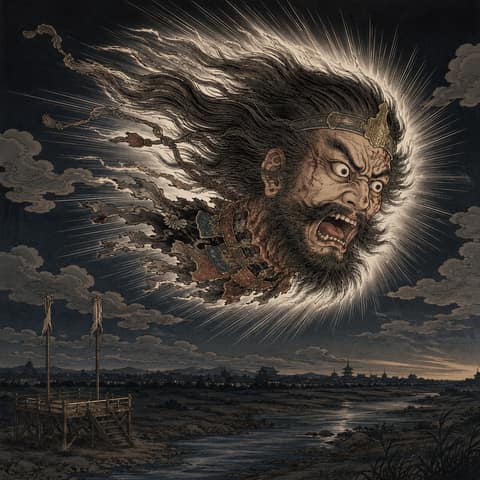
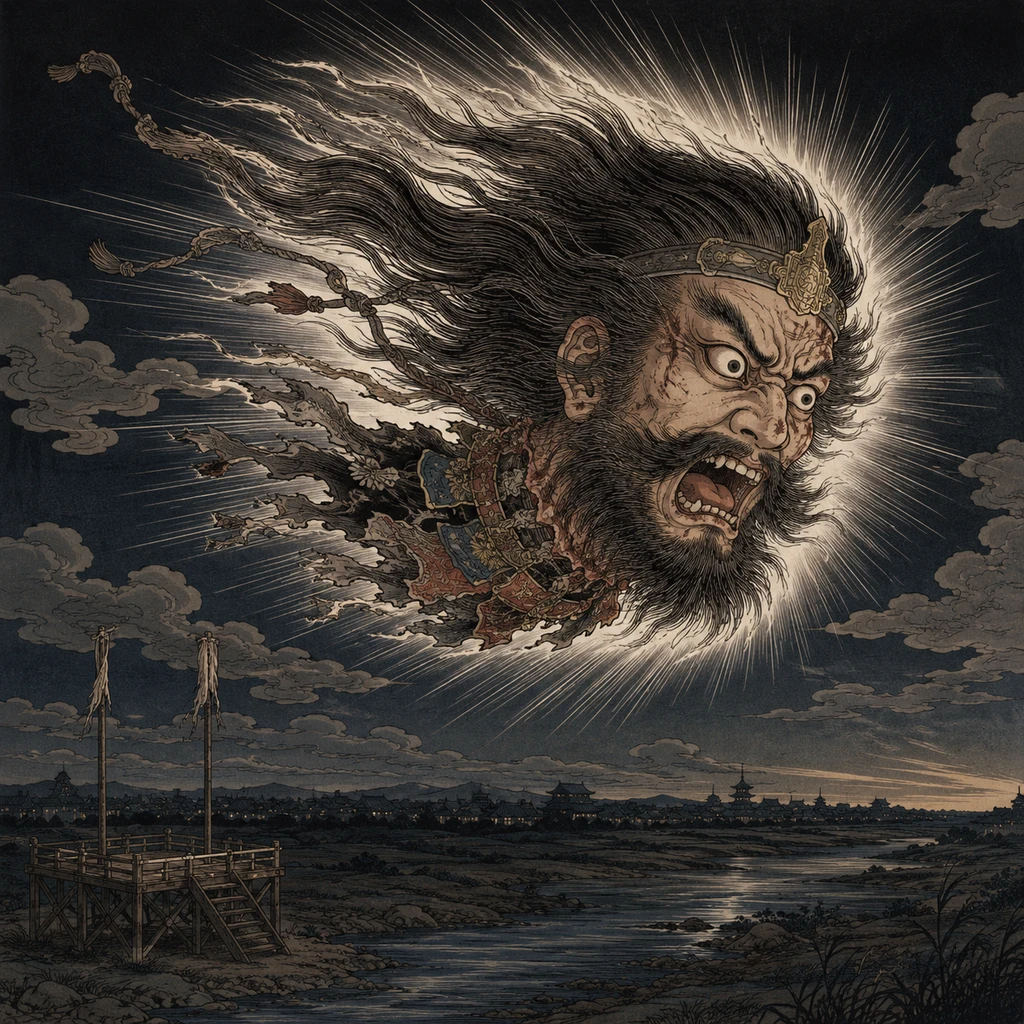
Taira no Masakado expanded his power through conflicts among warriors in the eastern provinces, captured the provincial capital in the second year of Tengyō (939), and purportedly declared himself the New Emperor, but was defeated and killed the following year. The *Shōmonki* (Record of Masakado)[3], which chronicles his actions, is an important historical document conveying the course of the rebellion and his death. On traditional other hand, famous legends such as his severed head flying from Kyoto back to the east, or disasters occurring at his grave (the Masakado Mound), are narratives that developed in later eras.
Masakado was perceived not only as a rebel but also as a hero of the eastern provinces and a guardian of the land. He is enshrined as a deity at Kanda Myōjin and venerated as the general guardian of Edo. It is necessary to avoid treating the history of Kanda Myōjin[4] and the urban legends surrounding the Masakado Mound on the same level as historical documents, separating historical fact, shrine beliefs, and modern rumors.
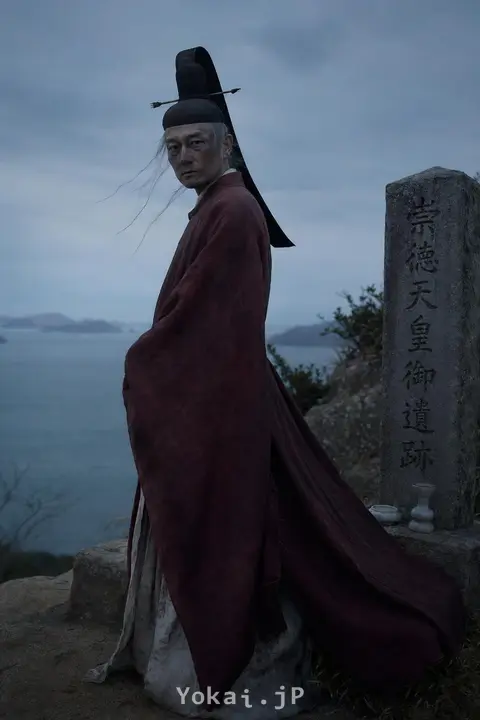
Emperor Sutoku —From an Exiled Retired Emperor to the Image of a Demon King
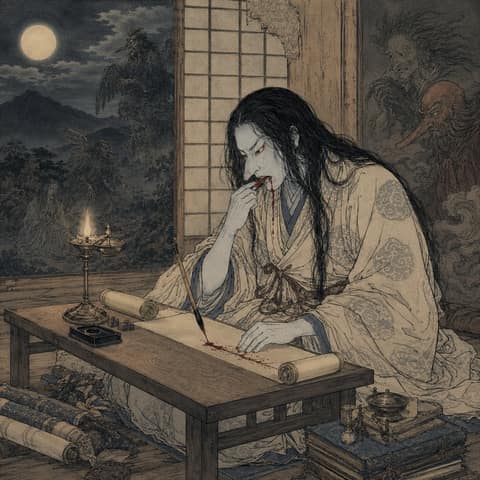
Emperor Sutoku was defeated in the Hōgen Rebellion in the first year of Hōgen (1156), exiled to Sanuki, and died in the second year of Chōkan (1164). In the later *Hōgen Monogatari* (Tale of Hōgen)[5], a dramatic scene is recounted where Sutoku-in, angered by the court's refusal to accept his hand-copied sutras, bites his tongue, writes an oath in his own blood, and vows to become the great demon king of Japan. This is an expression from a war tale (*gunki monogatari*) and not a contemporary historical document that recorded his actual words.
The imperial court later moved to restore Sutoku-in's honor and pacify his soul, and in the early Meiji period, Shiramine Shrine was established in Kyoto. Looking at the beliefs surrounding Shiramine Shrine[6] and the Shiramine Mausoleum in Sanuki, it becomes clear that using the modern sensational phrase "the most powerful onryō" causes the actual history of his exile, the pacification of his spirit, and the imperial lineage to be lost.
The Commonalities and Major Differences Among the Three
All three died after political defeat or downfall, were associated with post-mortem calamities, and became targets of enshrinement. However, Michizane was a court aristocrat, Masakado an eastern warrior, and Emperor Sutoku a retired emperor during the Insei period; the eras of their incidents and their social standings all differ. Their representative images—thunder, a severed head, and a demon king—also stem from different documents and periods.
 Sugawara no MichizaneSugawara no Michizane
 Taira no MasakadoTaira no Masakado
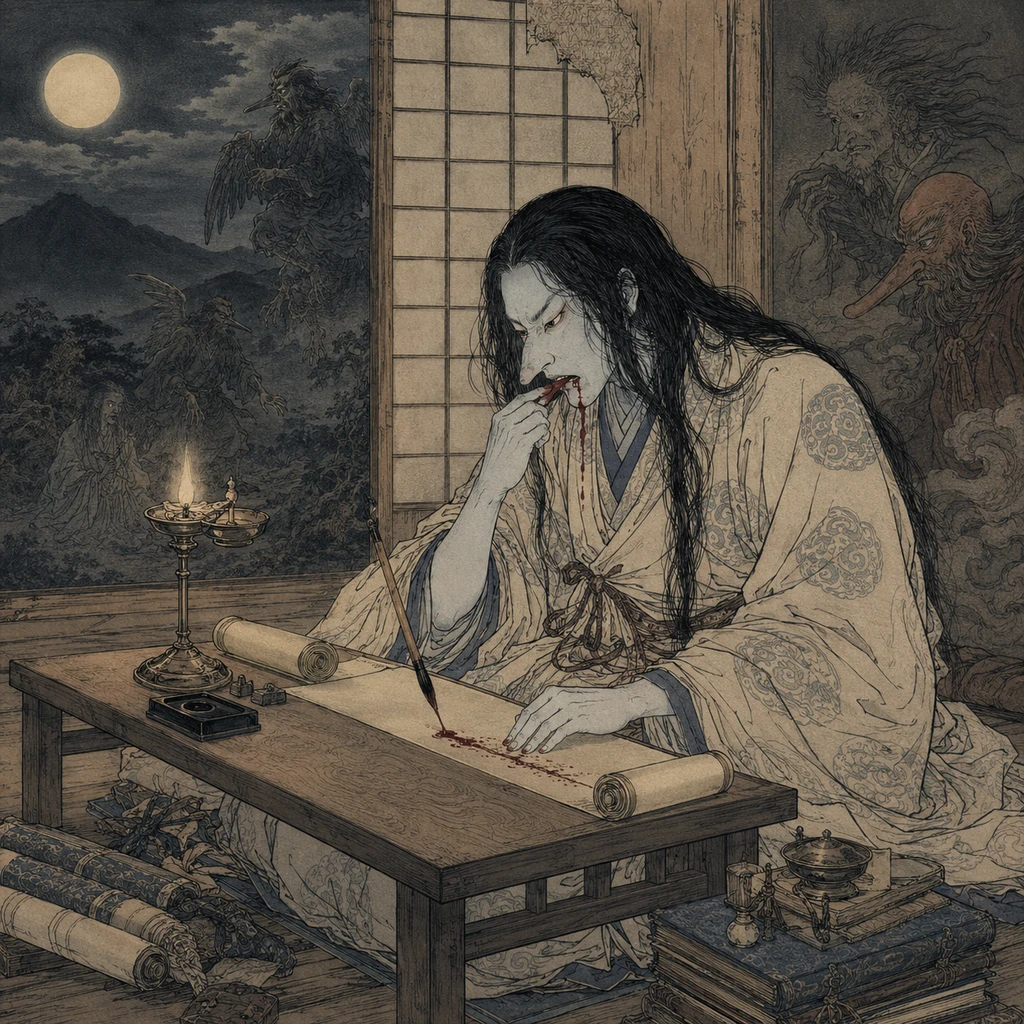 Emperor SutokuEmperor Sutoku
Rather than just emphasizing their commonalities to rank them by "who held the strongest grudge," the key to understanding onryō beliefs is to compare how each death was remembered by whom, which calamities they were linked to, and through which rituals they were pacified.
What It Means to Enshrine an Onryō
The rituals dedicated to onryō cannot be explained simply as superstition born from giving in to fear. It was also an act by society to acknowledge an unjust death, restore the person's honor, and reintegrate them into the community's memory. The power to curse and the power to protect are not seen as opposites, but as the same intense spiritual force directed in a different way.
Only these three are listed in the "Included Yokai" below. The number is not increased to avoid blurring the theme of the "Three Great Vengeful Spirits." Please check the layers of historical documents, legends, and rituals one by one on their respective detail pages.