A small light in the dark demands an explanation
Before electric lighting, a distant glow seen in a graveyard, marsh, mountain pass or out at sea was almost impossible to judge for size or distance. Fire should mean that someone is nearby, yet the light vanished when approached. At other times it drifted without a visible source, divided into many points or seemed to follow the watcher. That mismatch invited people to speak of the dead, shape-shifting animals and the anger of a particular place.
This collection does not group every flame-wreathed image into a single kind of yokai. It separates traditions surrounding observed lights, fires of the dead, tales in which wrongdoing returns as punishment, named apparitions shaped by Toriyama Sekien, and the mythic god of fire. Together they show how many different meanings a flame could carry.
When the dead become light—Hitodama, grave fire and battlefield flames
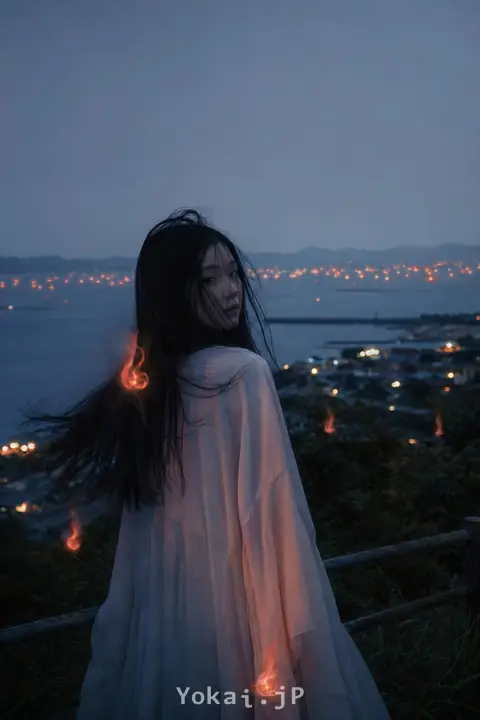
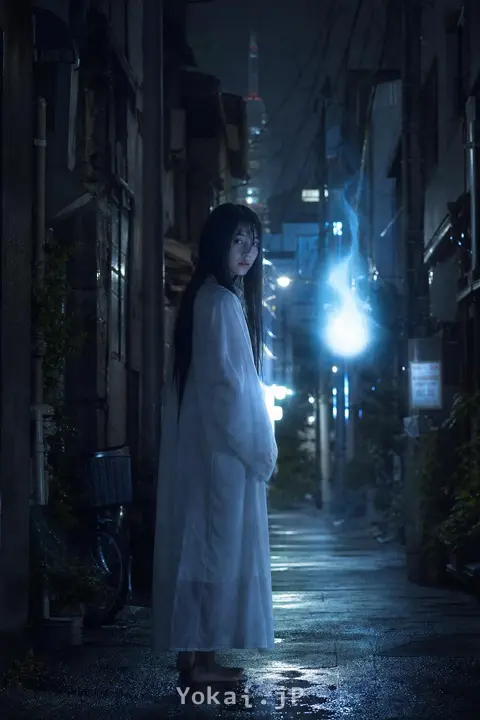
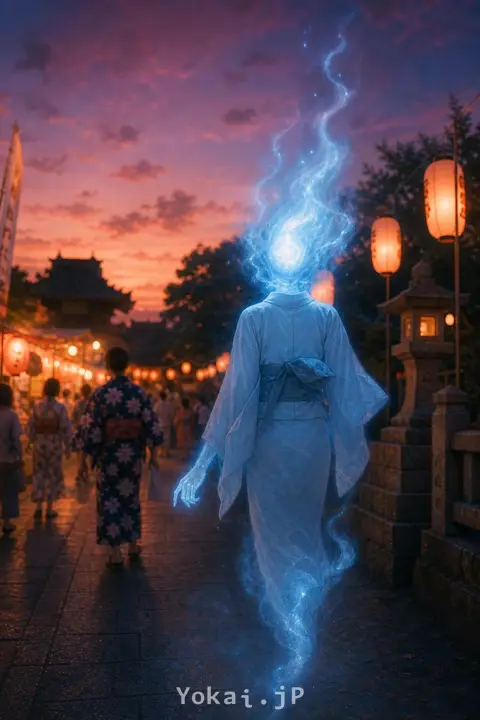
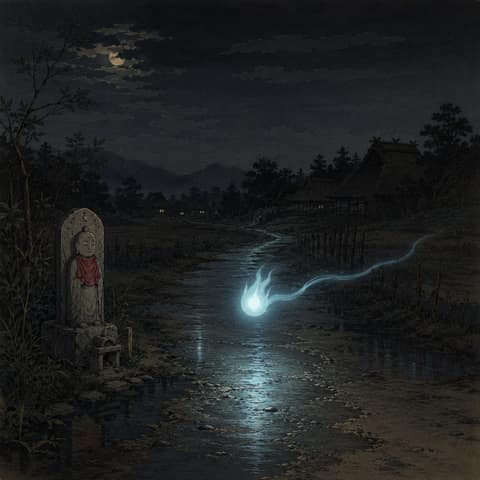
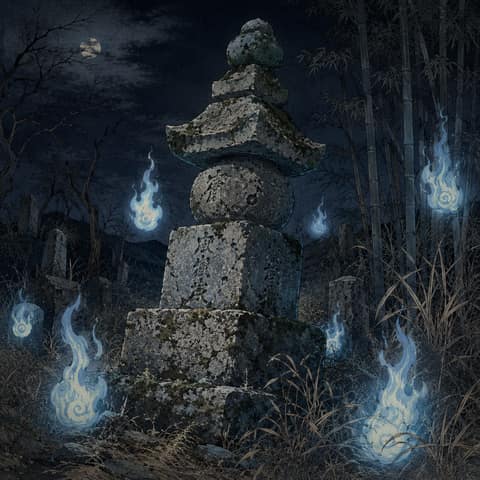
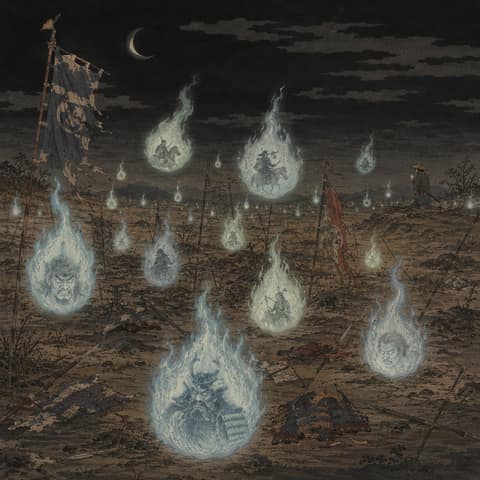
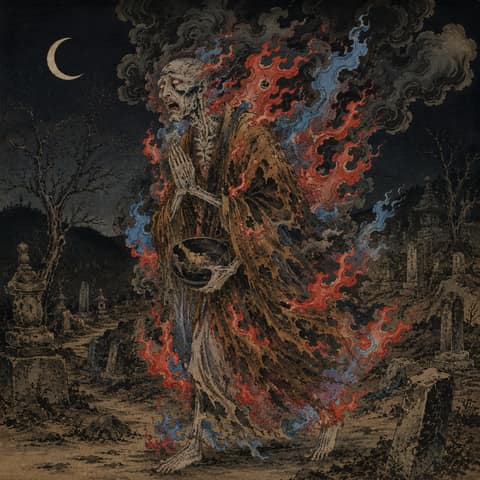
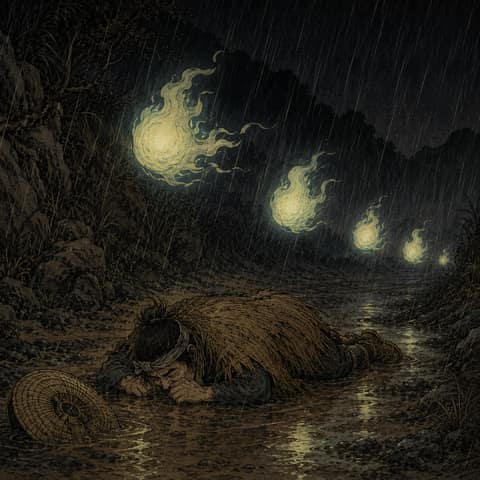
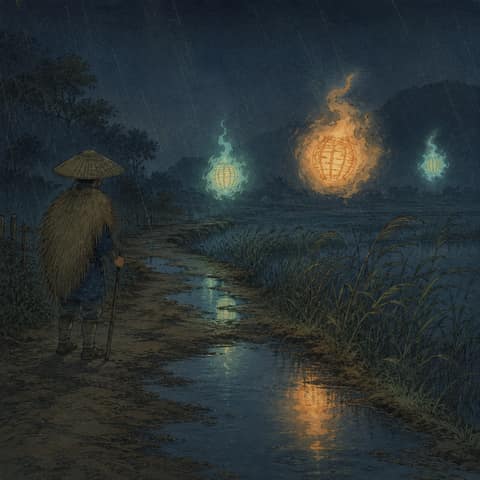
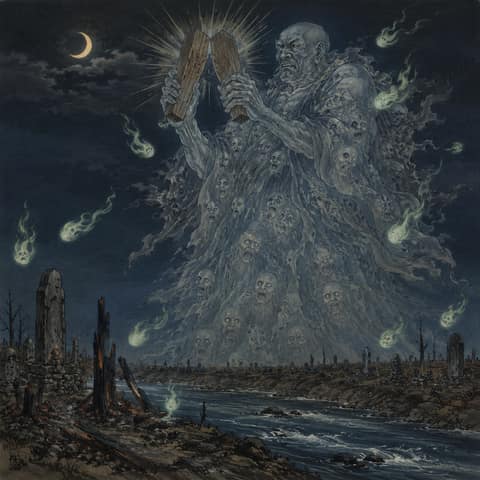
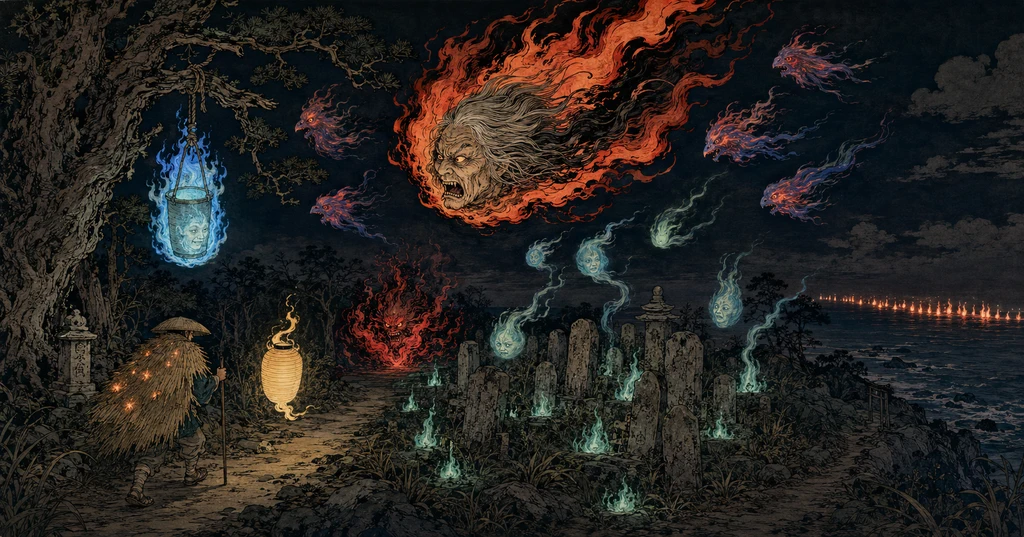
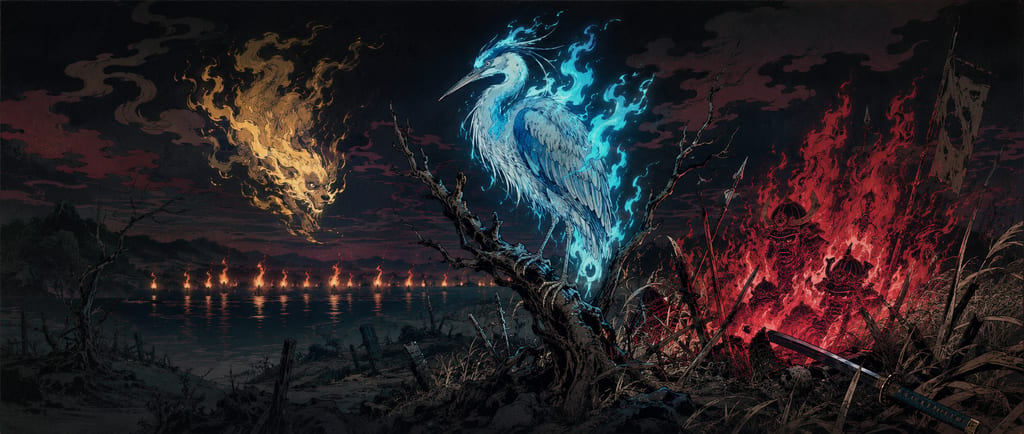
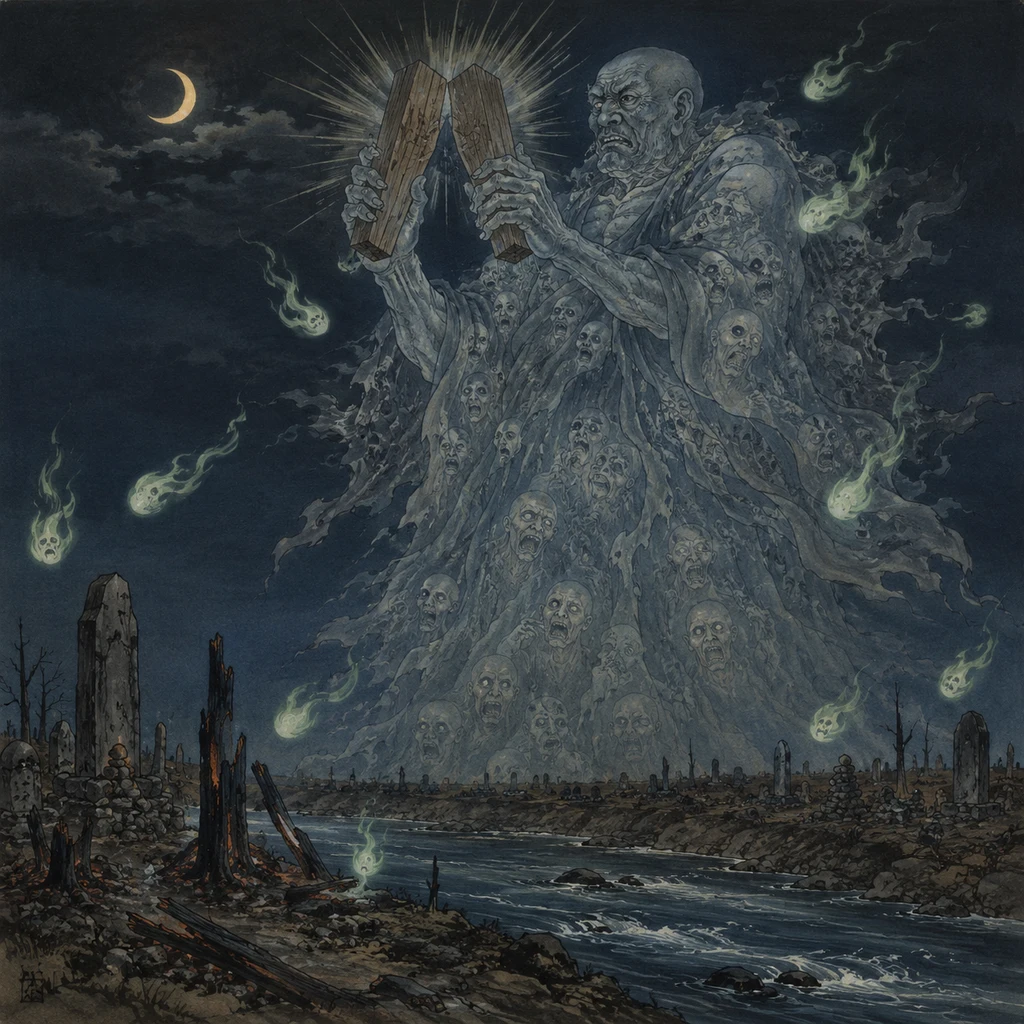
Hitodama expresses the widespread idea that a dead person’s soul can fly as a pale blue ball of fire. Haka-no-hi is a light seen in a cemetery; Kosenjōbi is said to kindle over fields where the unquiet memory of warriors killed in battle remains. Sometimes a flame bears an individual name, while elsewhere the same words serve as a general label for lights tied to a local death.
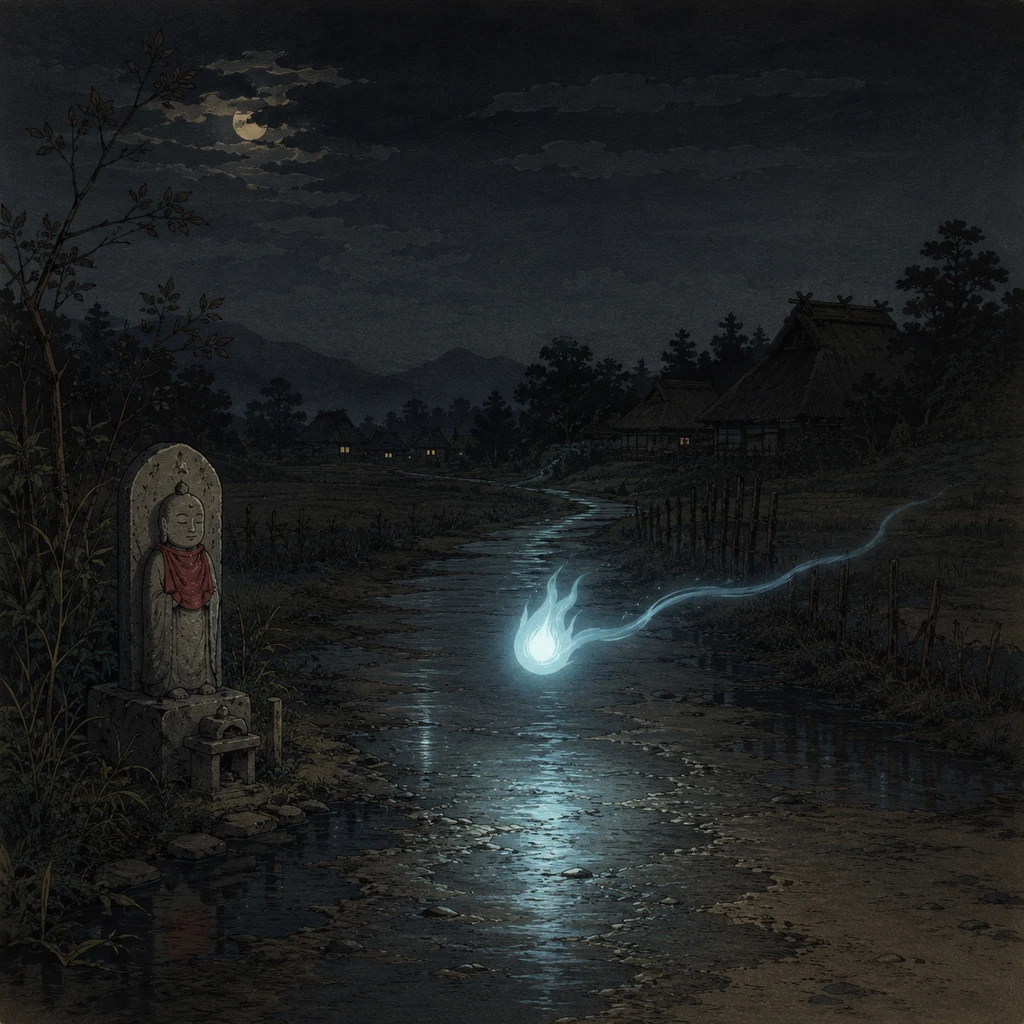 Hitodama (Human Soul Fire)hee-toh-DAH-mah
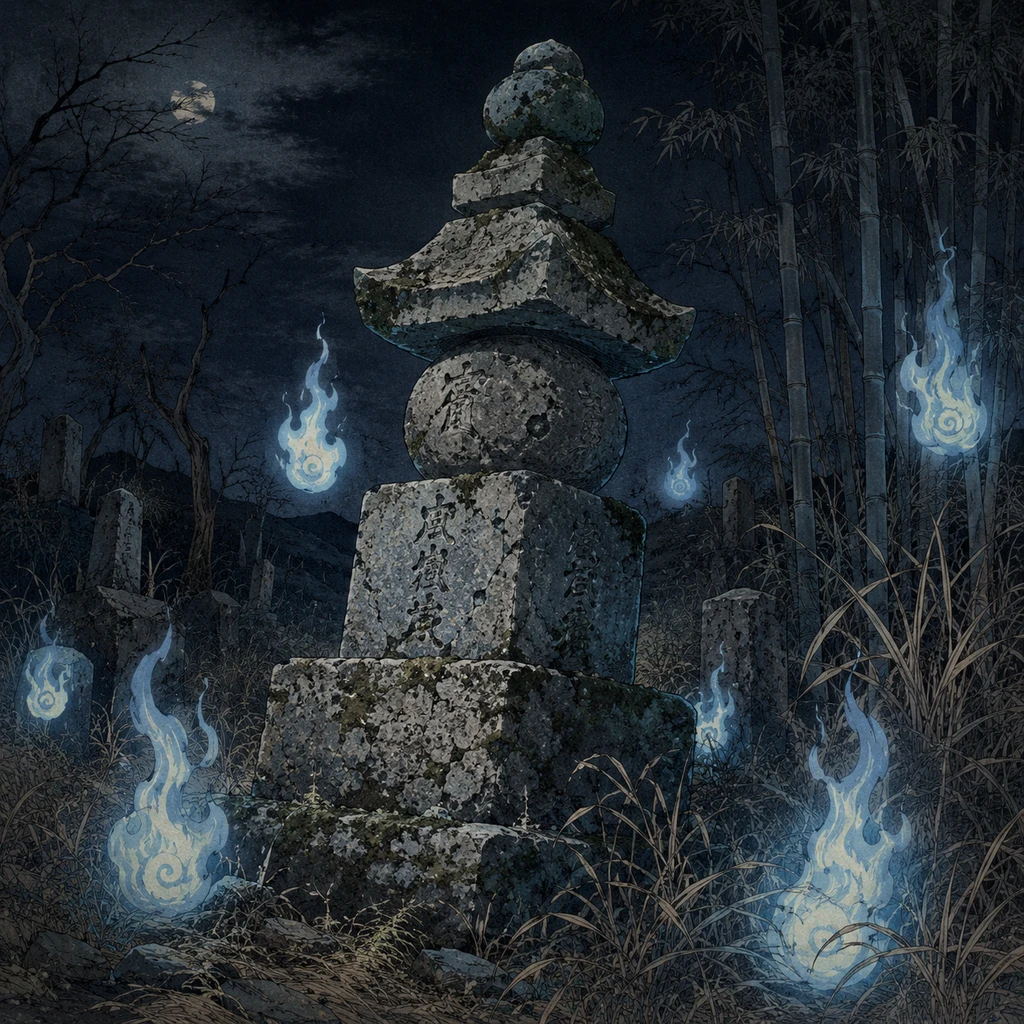 Grave FireHAH-kah-noh HEE
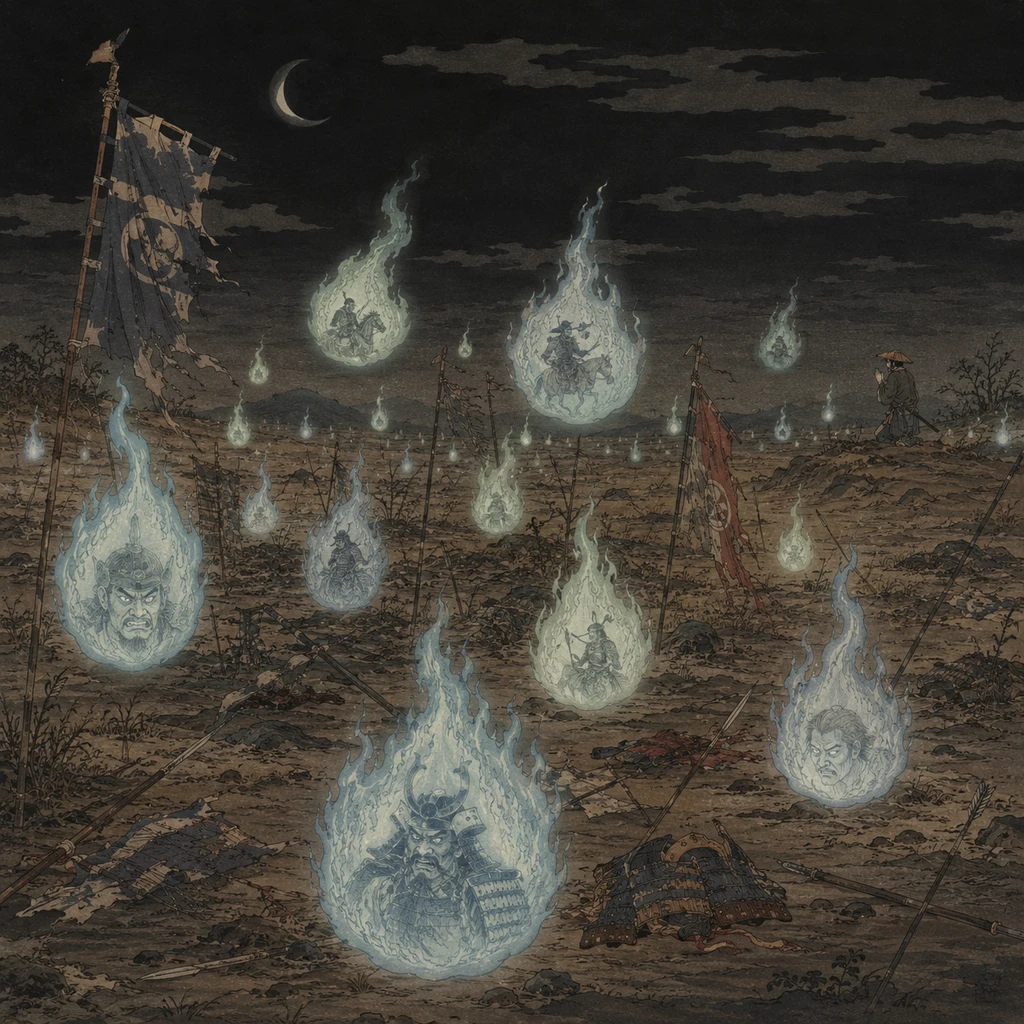 Battlefield Will-o'-Wispkoh-SEN-joh-bee
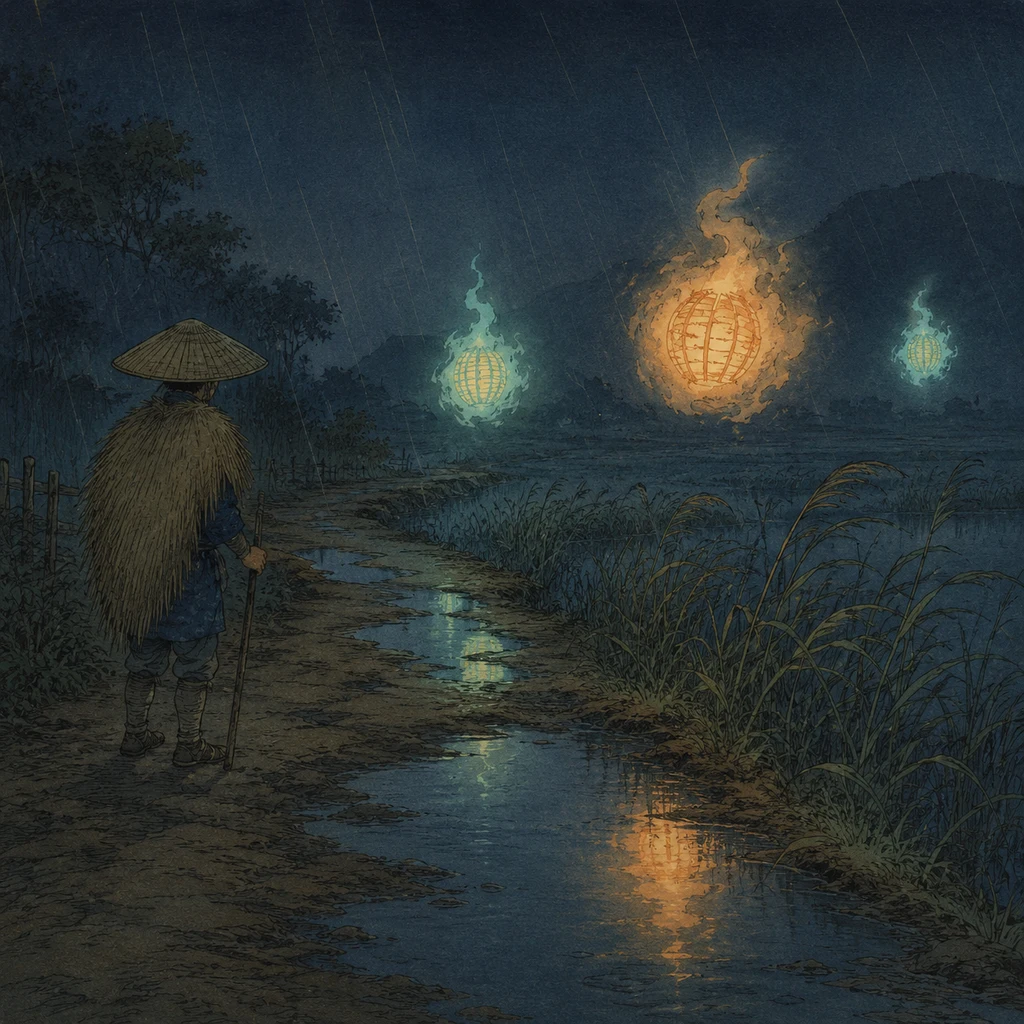 Chōchin-bi (Lantern Fire)CHOH-cheen-bee
Reducing every case to a luminous organism or a process of combustion would hide the role these stories played in mourning the dead and remembering dangerous ground. Yet they should not simply be declared proof of literal souls either. The important question is where each light was seen and whose death the story attached to it.
When trees and birds seem to burn—Tsurube-bi, Aosagibi and Ubagabi
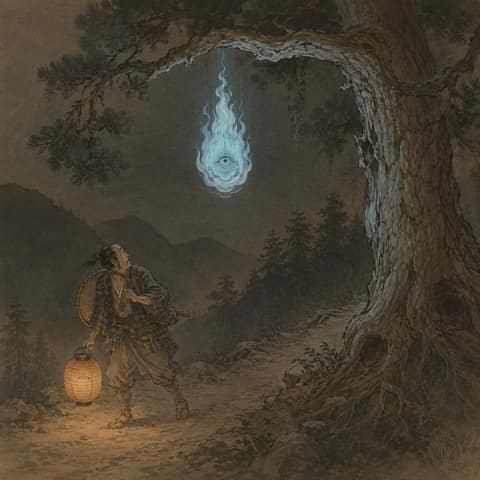
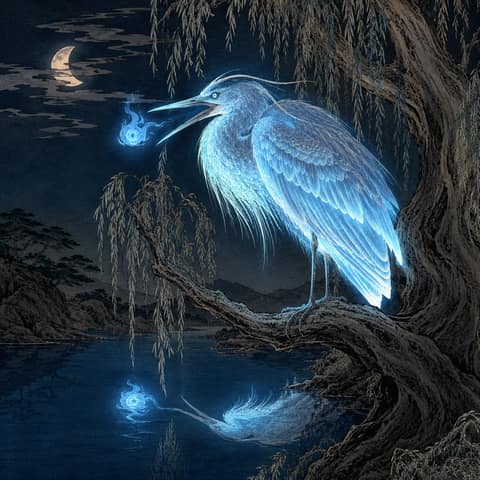
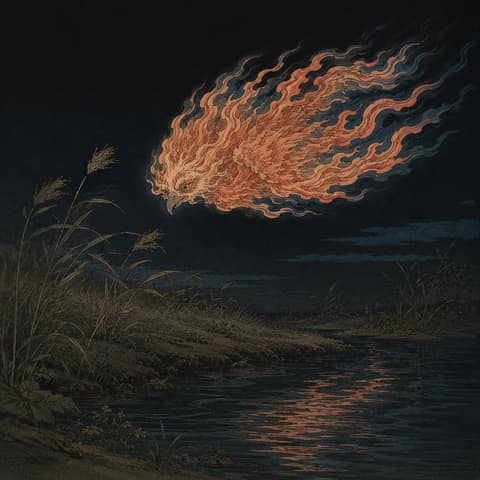
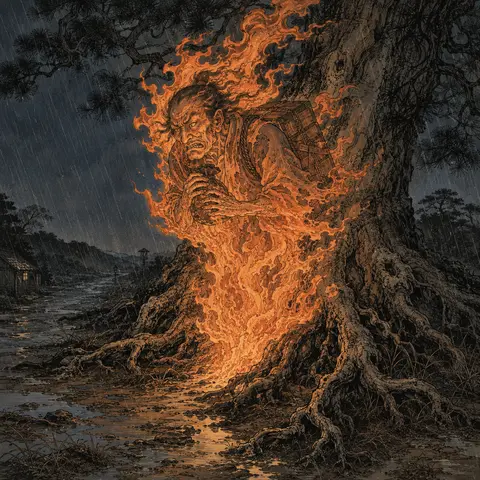
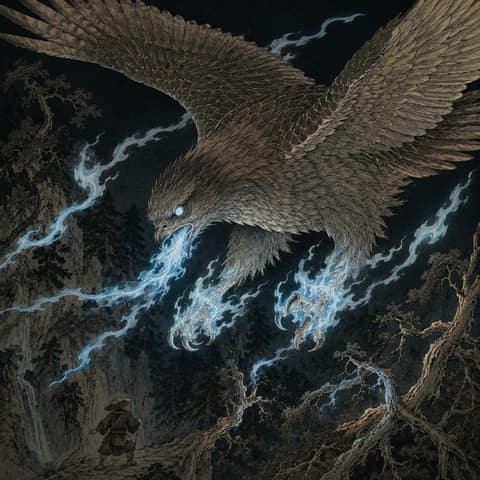
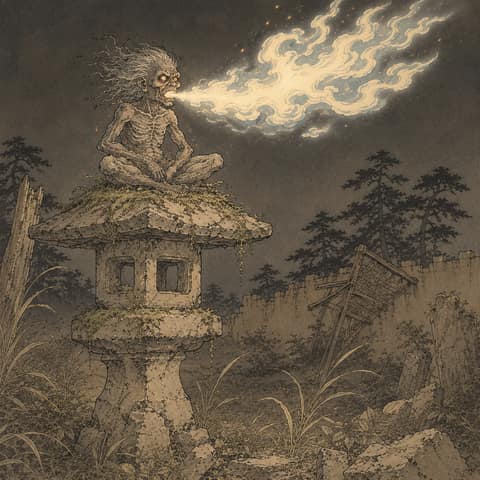
Tsurube-bi hangs like fire from the branch of a tree, while Aosagibi is the uncanny sight of a heron seeming to burn with a bluish light at night. Ubagabi and Furari-bi also receive the outline of a face or a bird, bringing a light in the air closer to a living creature. Toriyama Sekien’s *Gazu Hyakki Yagyō*[1] helped popularise a format in which viewers could compare ghost lights as distinct, named beings.
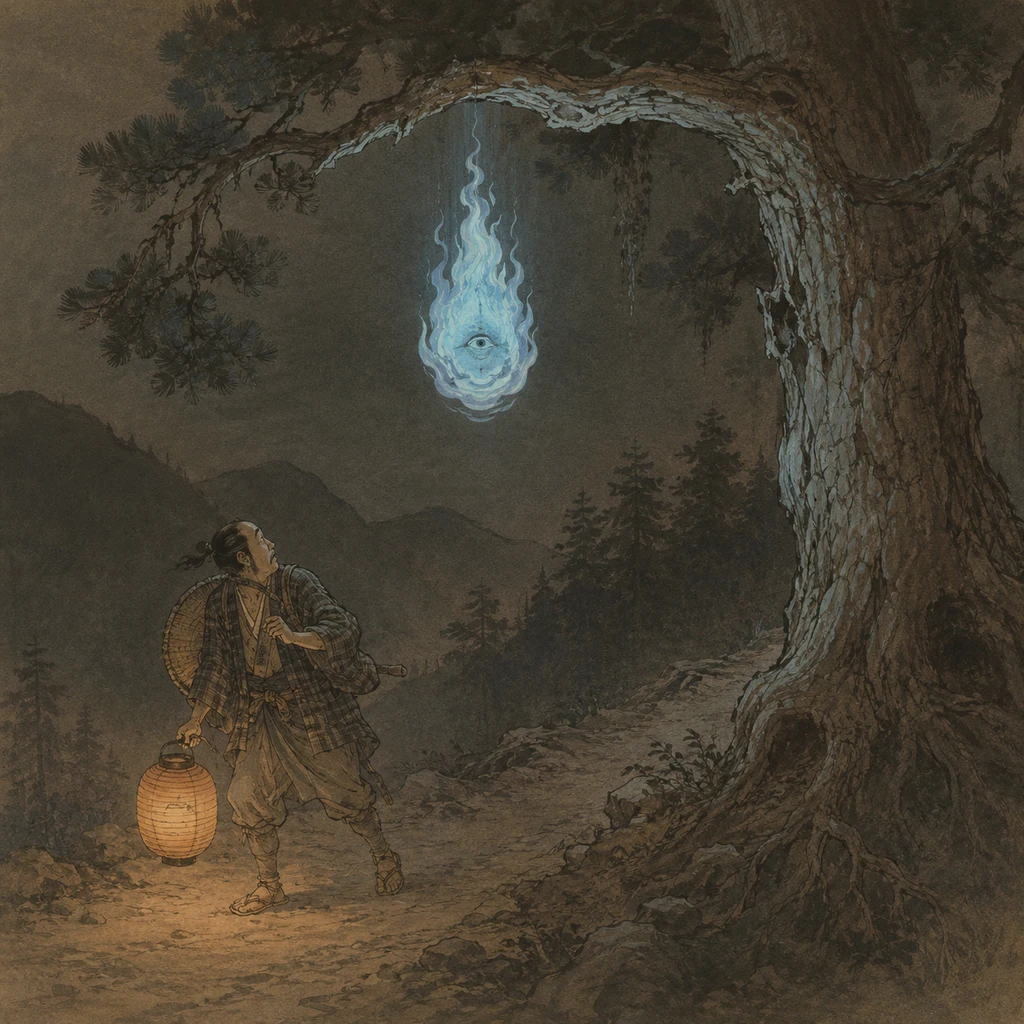 Tsurube-bi (Bucket Fire)TSOO-roo-beh-bee
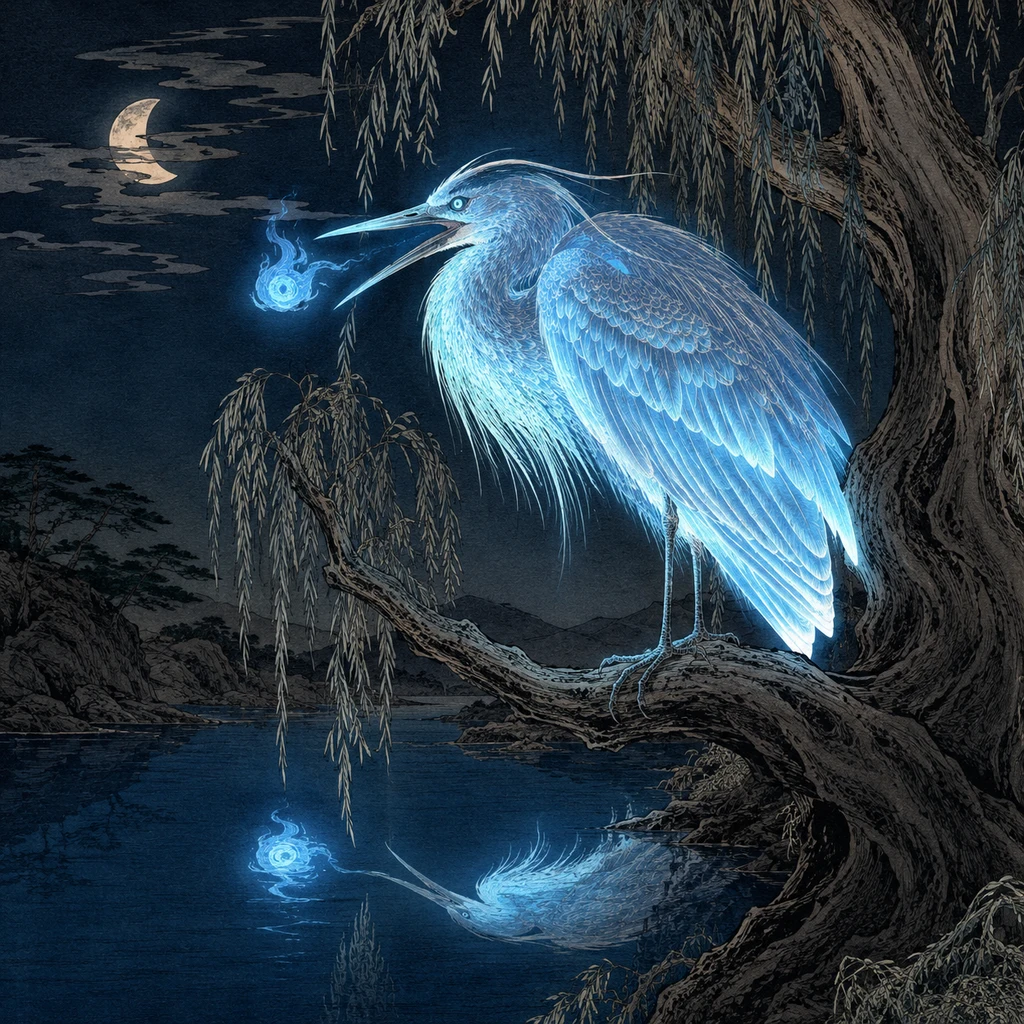 Blue Heron Fireah-oh-SAH-gee-bee
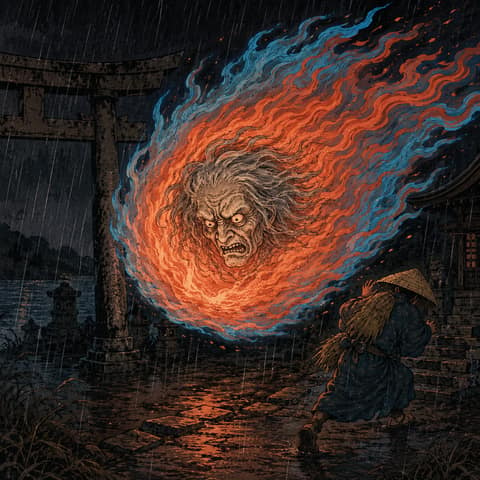
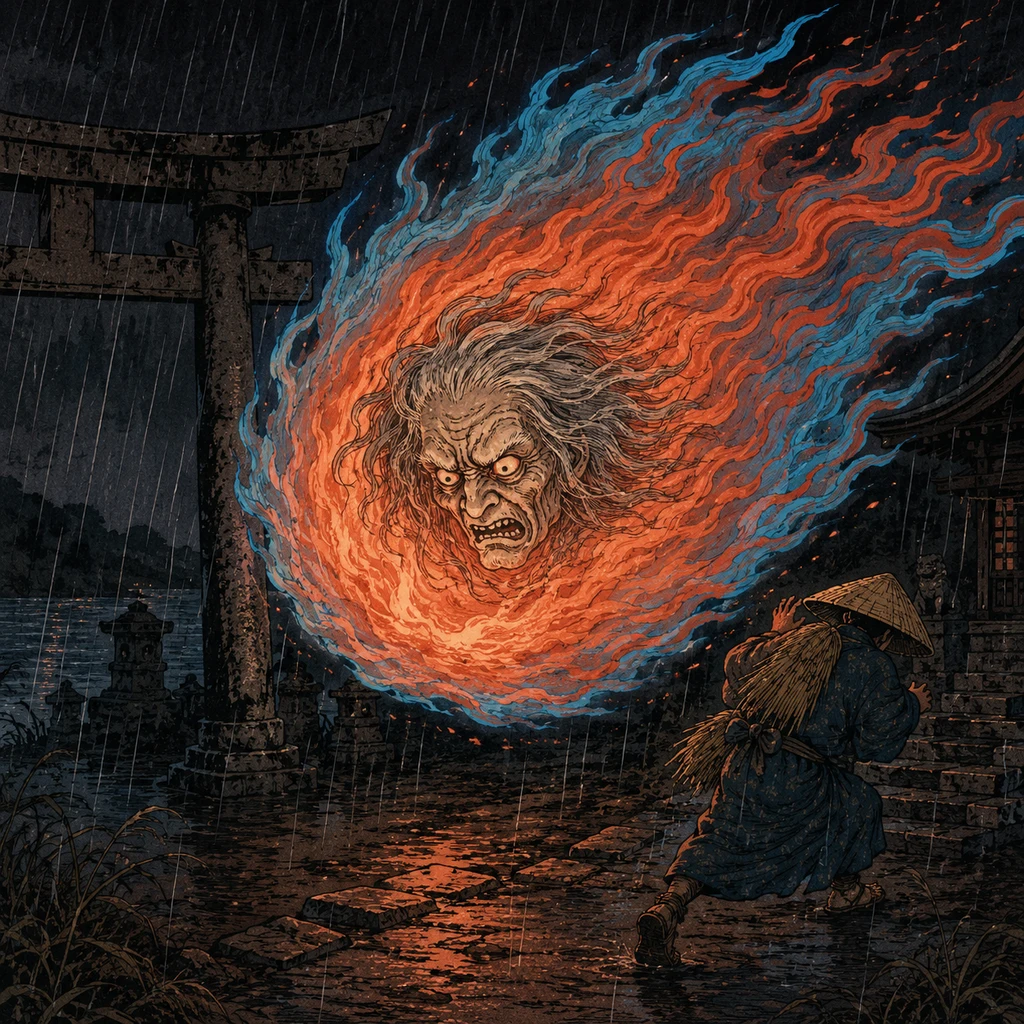 Ubagabi (Old Woman’s Fire)OO-bah-gah-bee
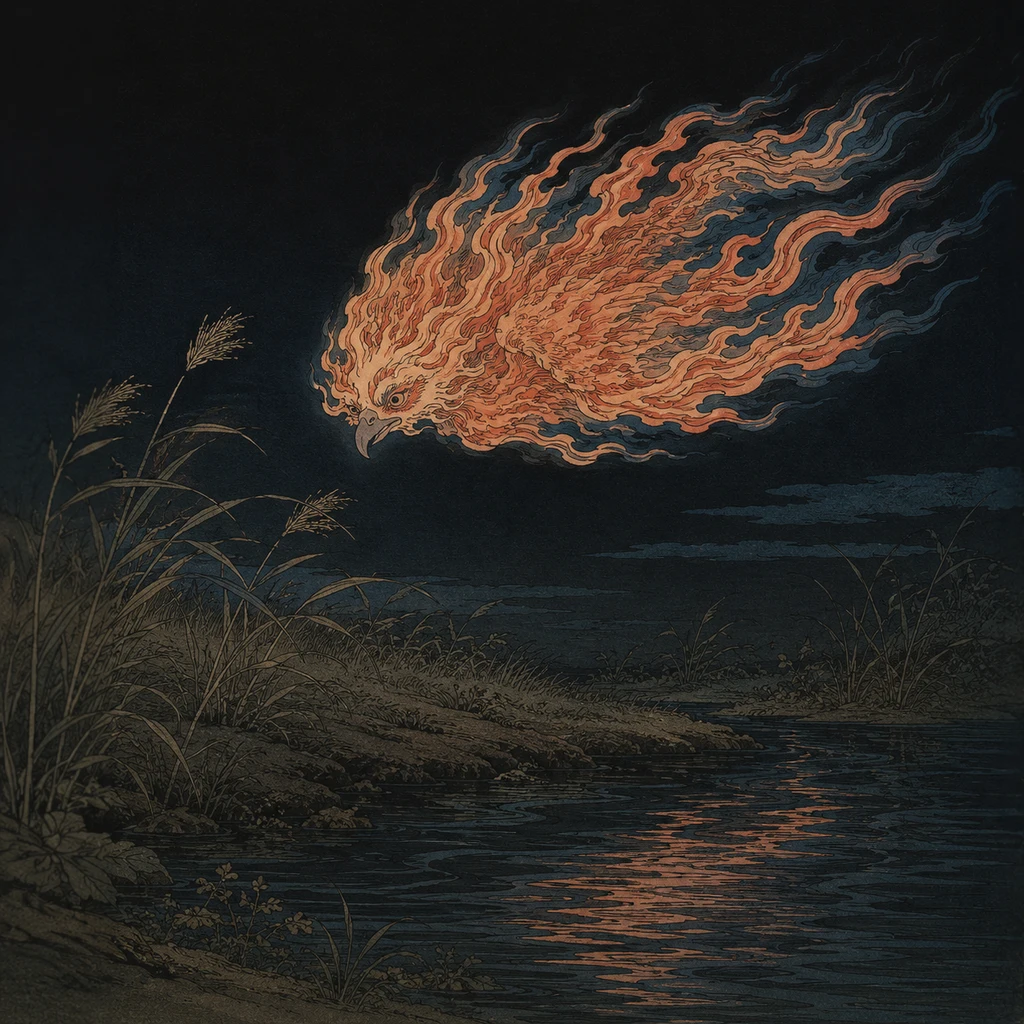 Furari-bi (Wandering Flame)foo-RAH-ree-bee
Feathers, the height of a branch and the swaying of a light in the wind all suggested possible identities. The shapes in old paintings are not direct transcripts of oral tradition from across Japan; they also contain an artist’s acts of selection, analogy and design.
Lines of fire at sea—Shiranui
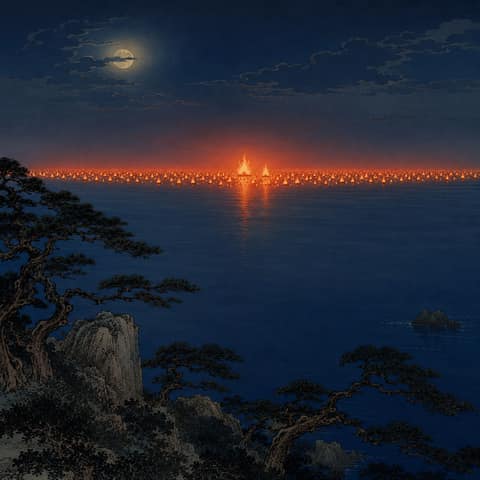
Shiranui is known as a multitude of lights seen offshore in the Ariake and Yatsushiro seas around the first day of the eighth lunar month. The relationship between the fire in the land of Hi recorded in the reign of Emperor Keikō in the *Nihon Shoki*[2] and the later name and explanations of Shiranui must be treated with care. The phenomenon is now commonly explained as a kind of mirage produced by atmospheric refraction, but its cultural meaning remains embedded in the landscape and rites of the region.
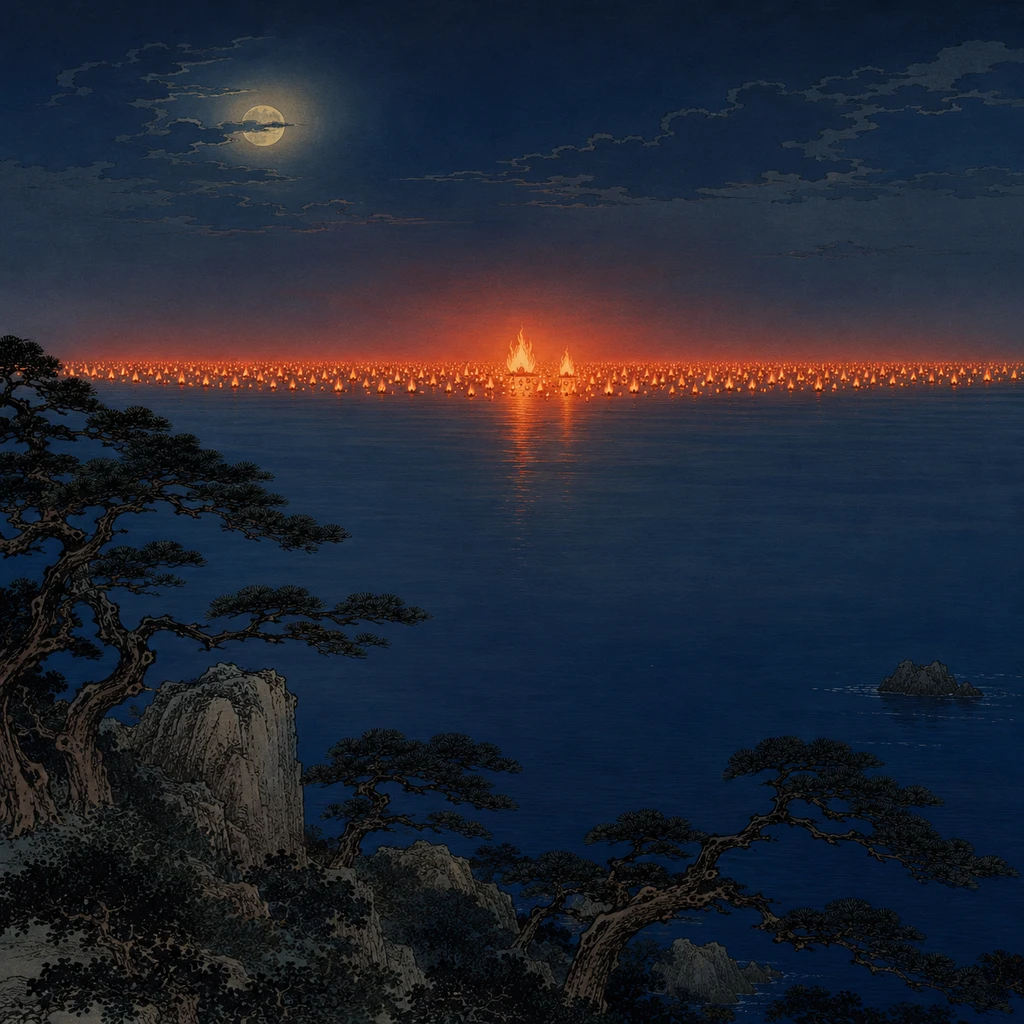
A scientific explanation does not make Shiranui irrelevant to the history of the uncanny. How people named the phenomenon, and when they expected it to appear, are themselves important records of cultural memory.
Guilt and obsession in flames—Sōgenbi, Jiosenbi and Kazenbō
Sōgenbi tells of a monk who stole oil from a temple and became fire. Jiosenbi ties a dead person’s resentment over a trade to a particular place. Kazenbō combines the figure of a monk with flame; the fire of Akurojin and Taimatsu-maru likewise appear as dangerous lights on roads or in the mountains.
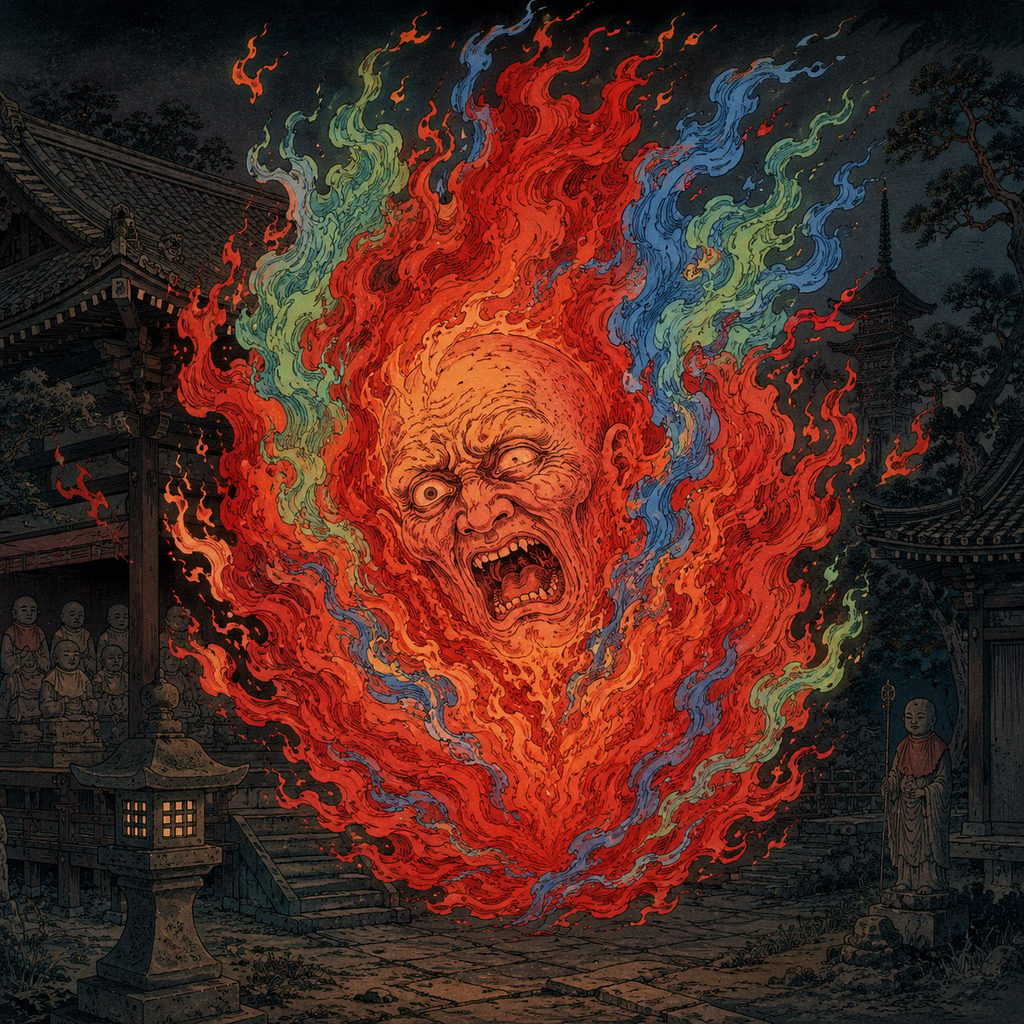 Sōgenbisōgenbi
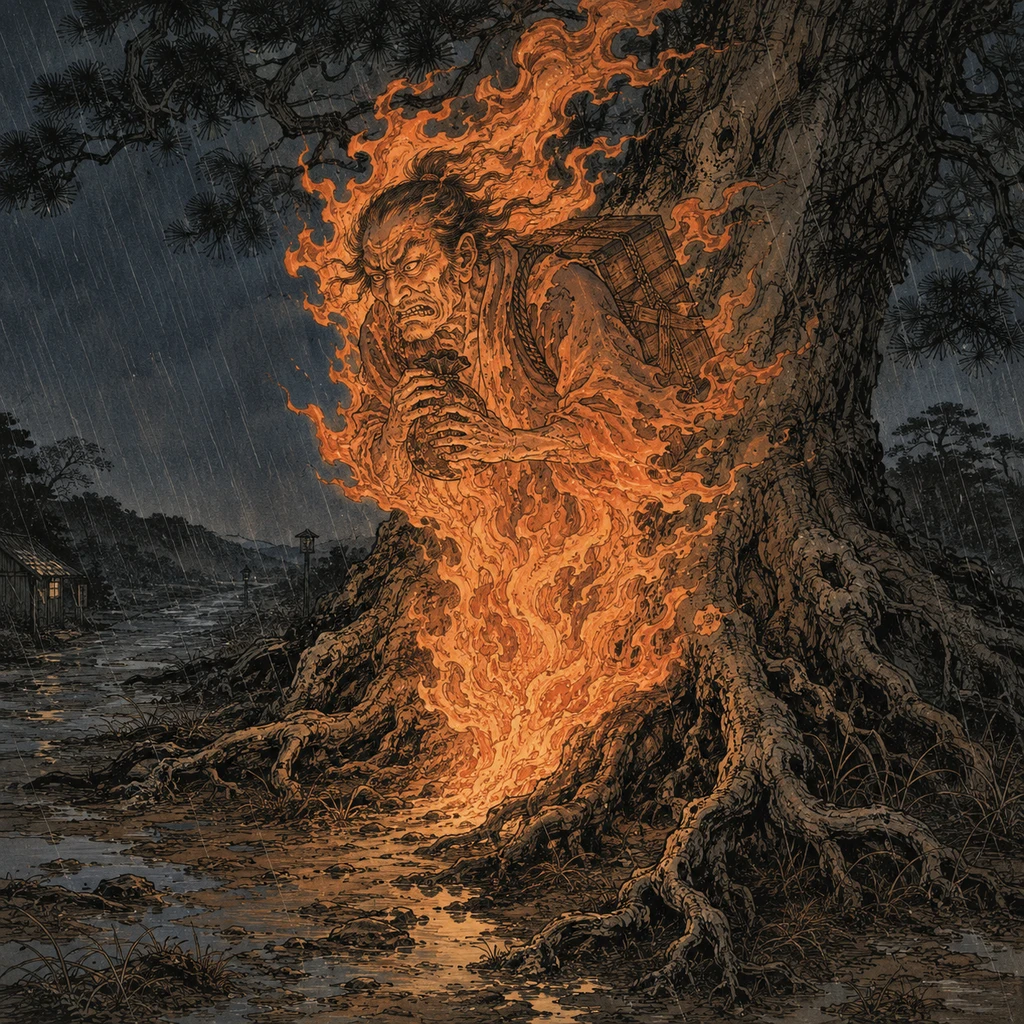 Jiosenbiじおうせんび
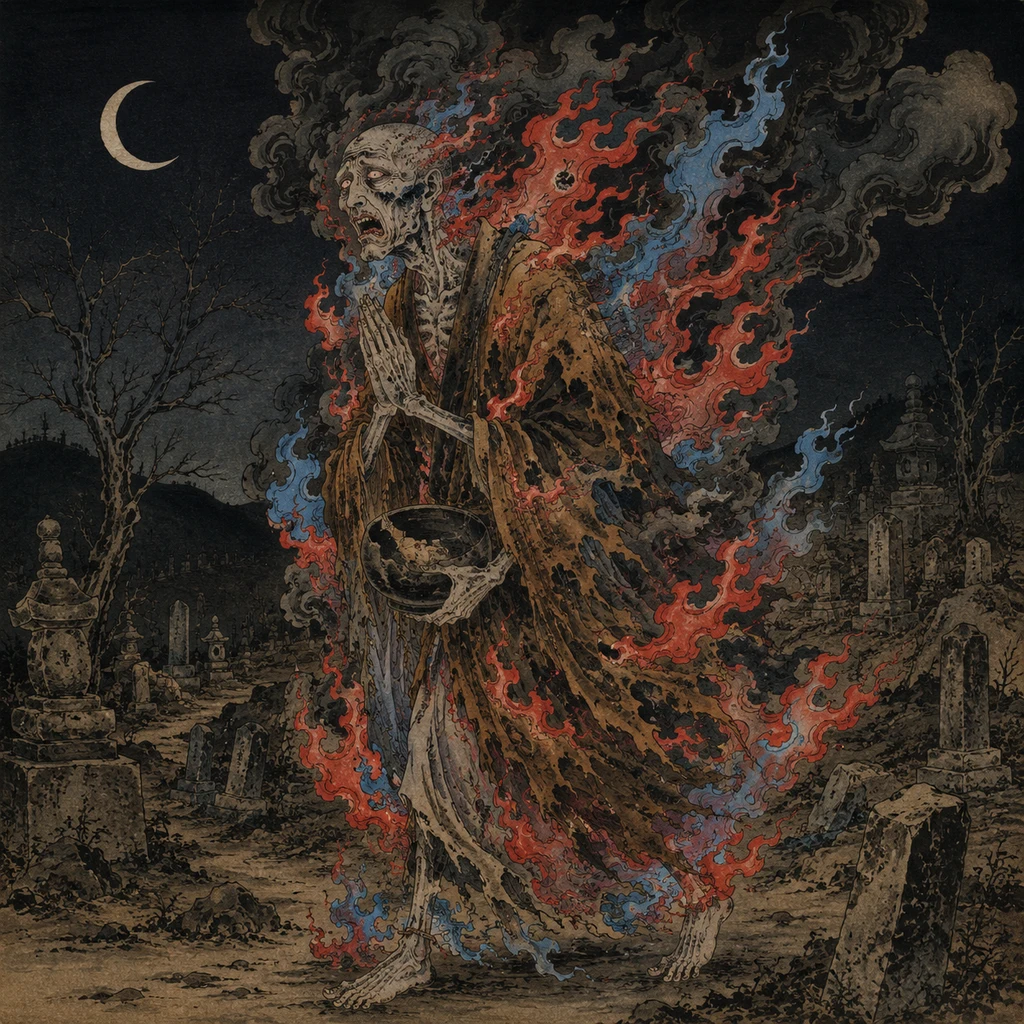 Kazembō (Fire-Monk of Toribe Hill)kah-ZEN-boh
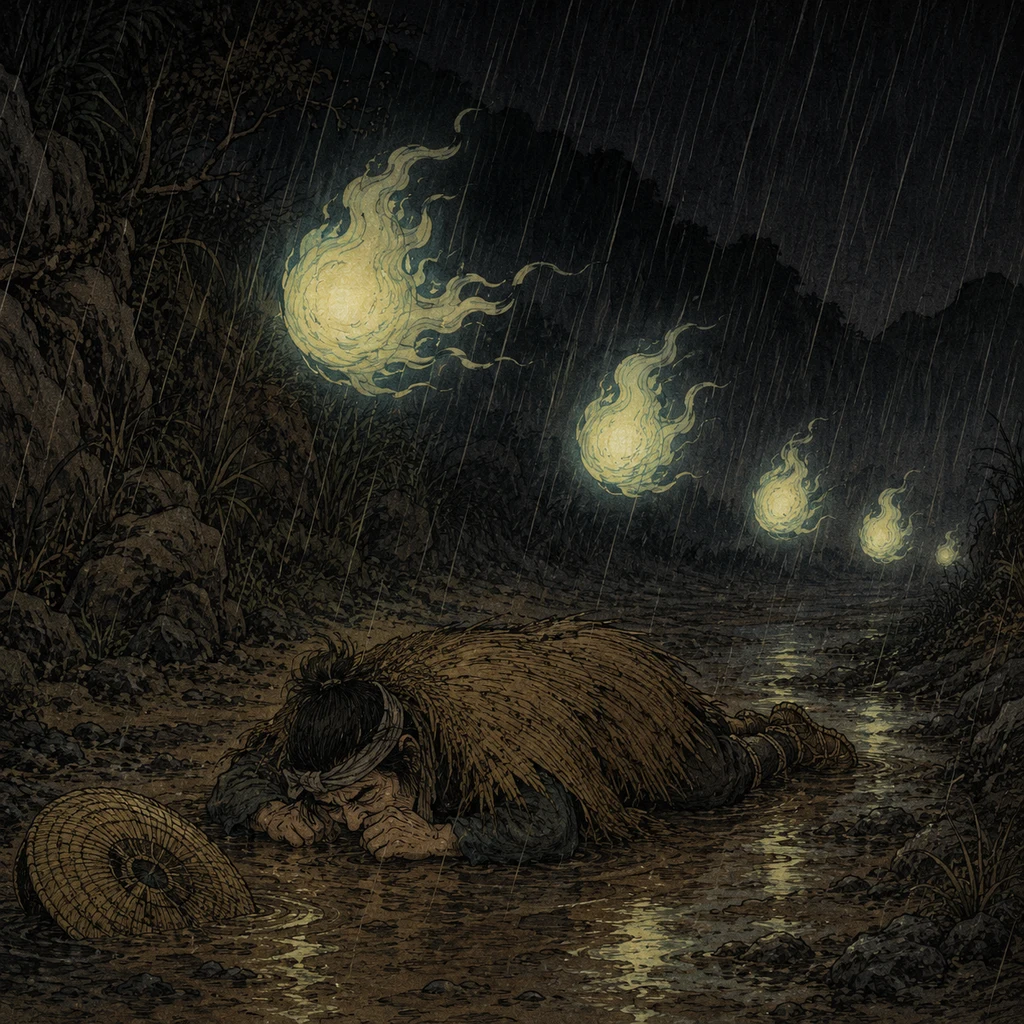 Fire of the Akuro-gamiAH-koo-roh-gah-mee no HEE
 Taimatsumarutie-MAHT-soo-mah-roo
These fires do more than describe physical phenomena. They make visible the logic of a tale in which theft, fixation or an unquiet death brings a reckoning. Asking whose wrongdoing the story condemns—and whether later moral lessons have been added—shows how ghost lights could reflect social rules.
Wheels of fire and carriages of the dead—Wanyūdō, Katawaguruma and Kasha
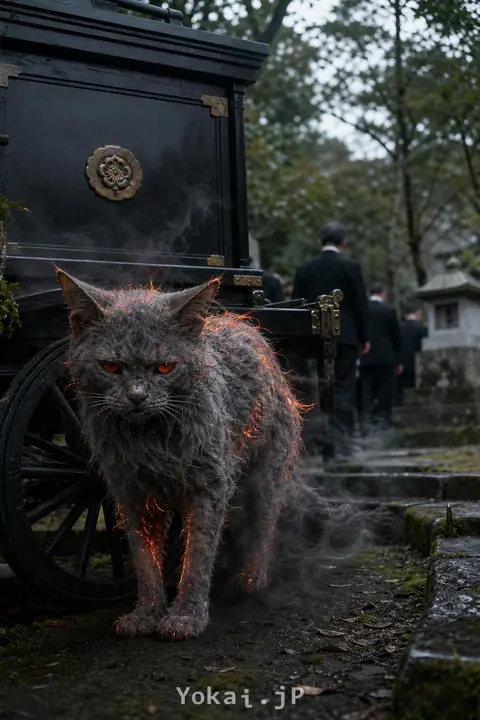
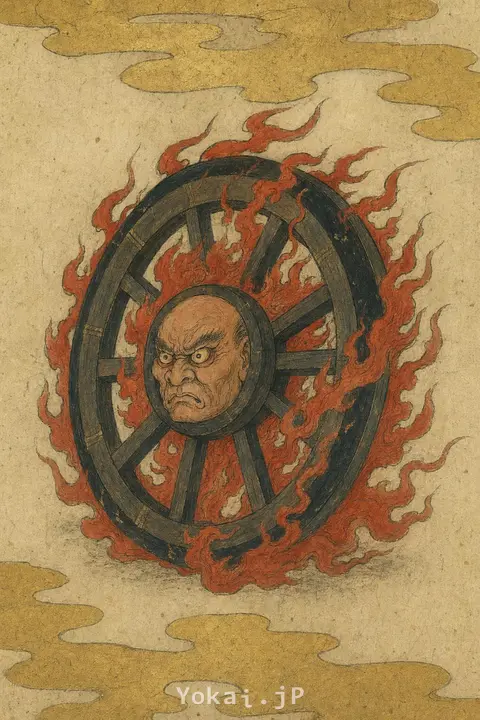
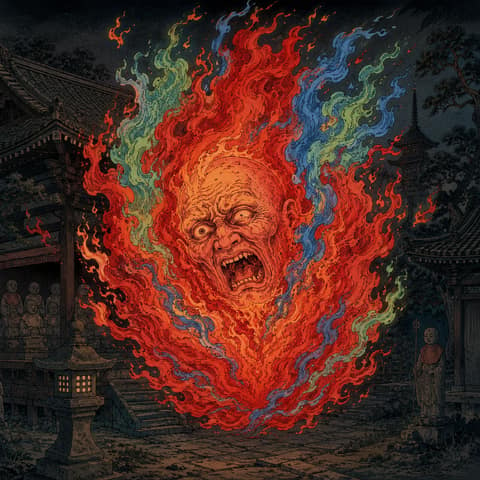
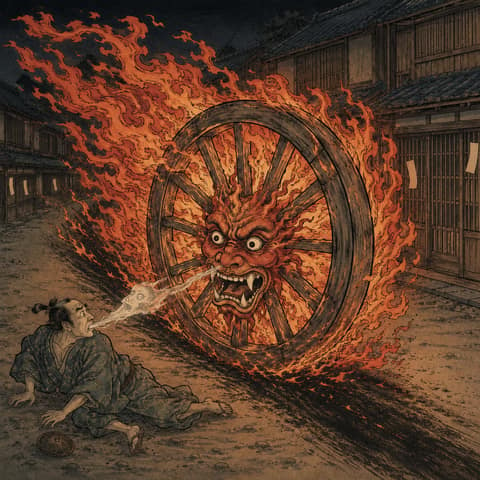
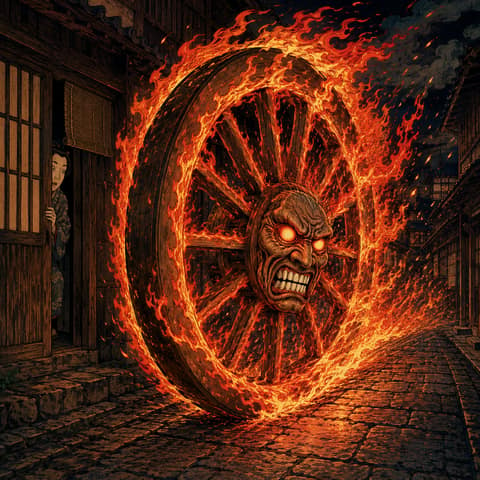
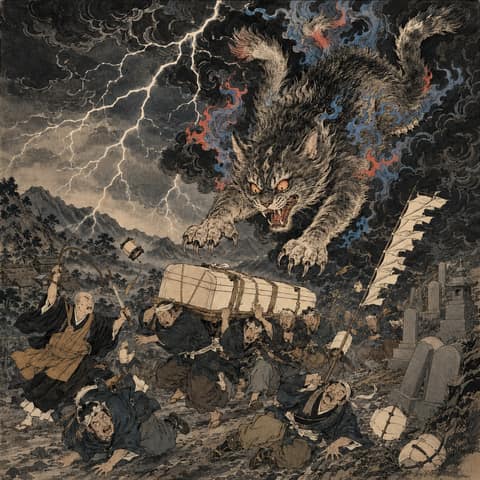
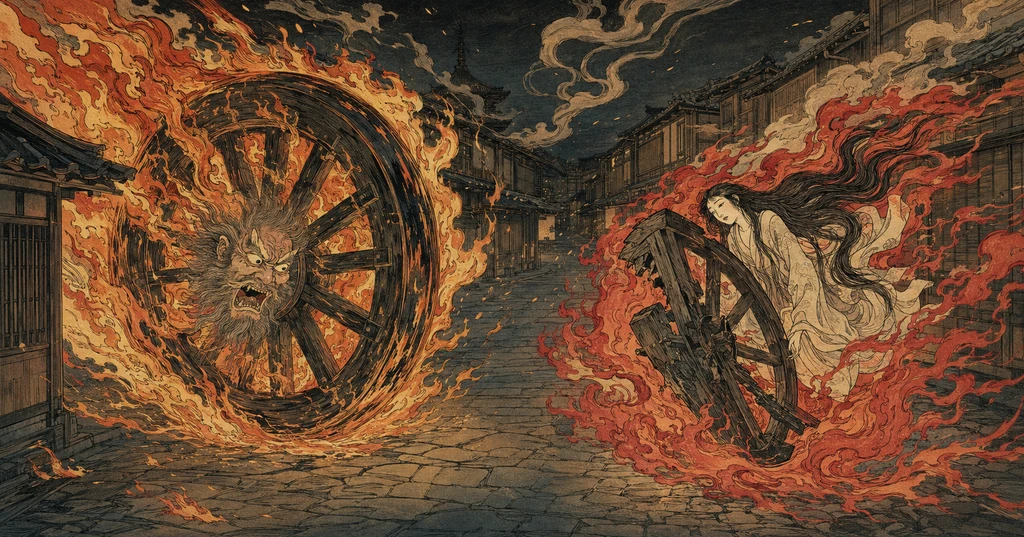
Wanyūdō is a giant face set inside the blazing wheel of an ox carriage, racing along a road at night. Katawaguruma also appears as a single burning wheel, while Kasha was said to seize the corpses of sinners from a funeral. The turning wheel, the funeral procession and the fires of hell combine into a force that cannot be stopped.
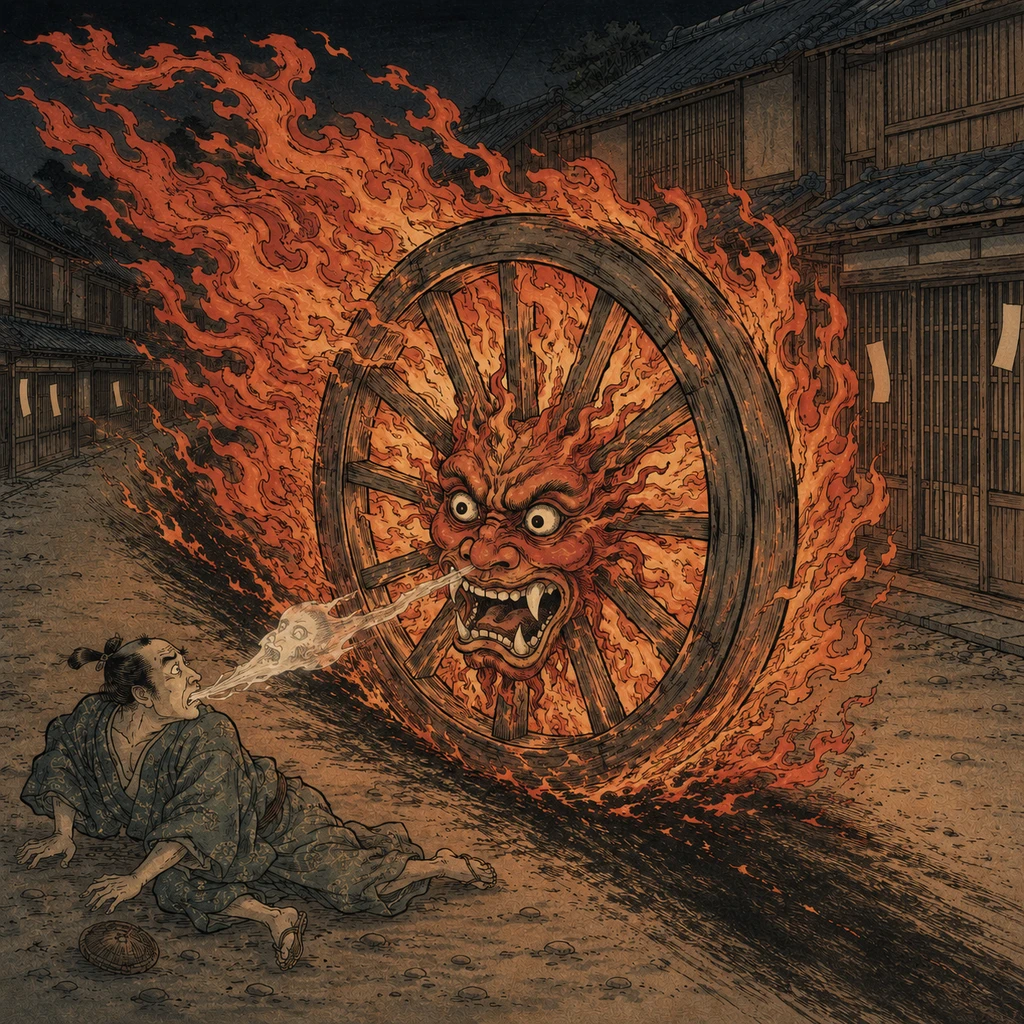 Wanyūdōwah-nyoo-DOH
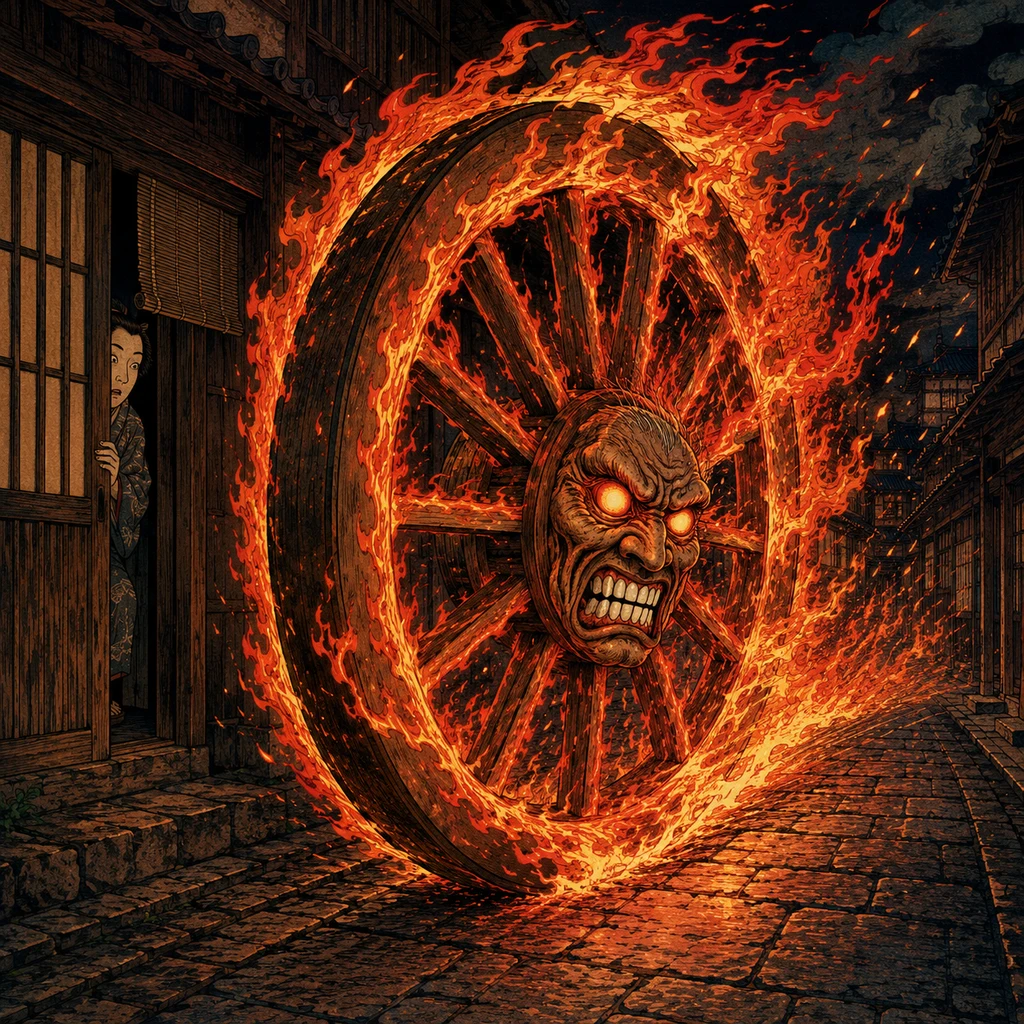 Katawaguruma (One-Wheeled Carriage)kah-tah-wah-GOO-roo-mah
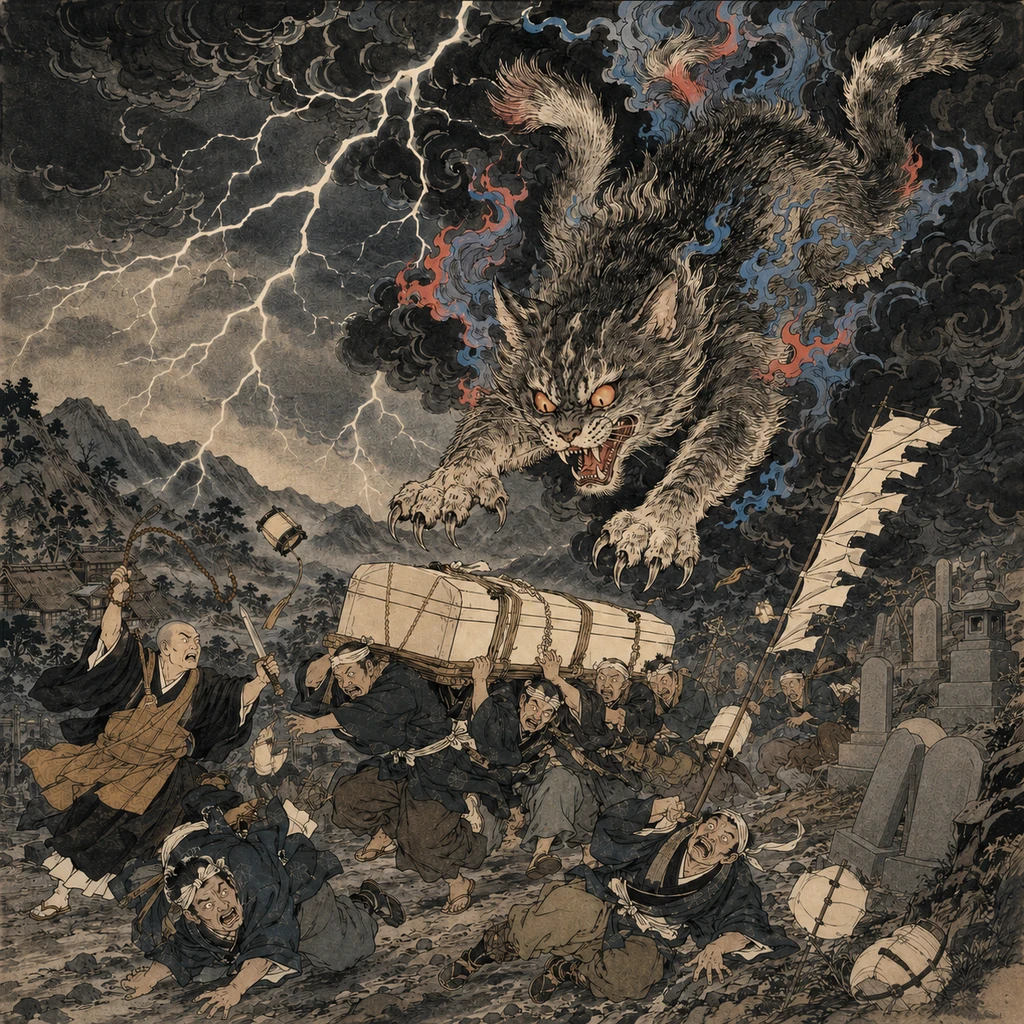 Kasha (Corpse-Dragging Fiend)KAH-shah
In the *Konjaku Gazu Zoku Hyakki*[3], flame is not a backdrop but part of the creature’s body. It is worth distinguishing images in which fire belongs to the earliest design from modern illustrations that add flames for dramatic effect.
Smoke, lamp oil and lanterns—everyday fire becomes uncanny
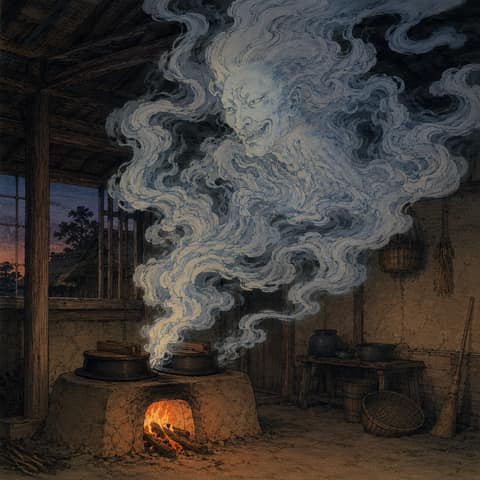
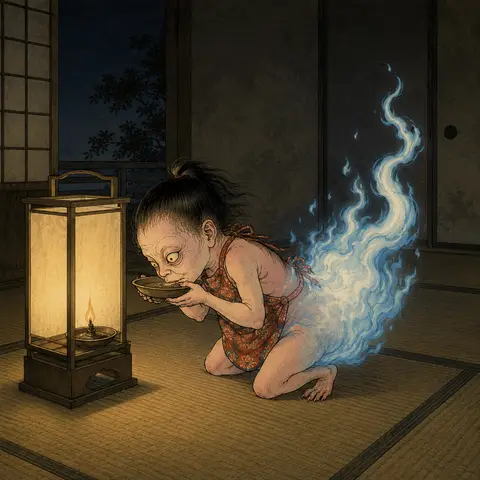
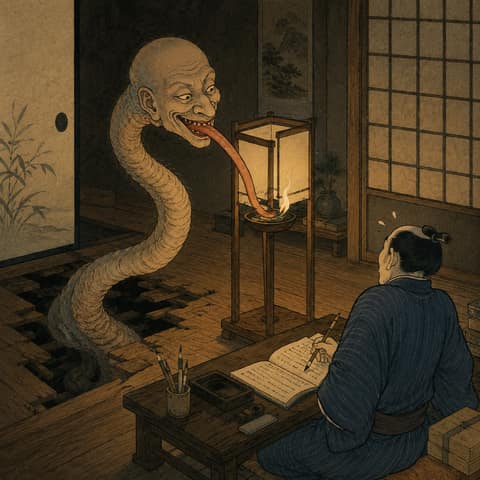
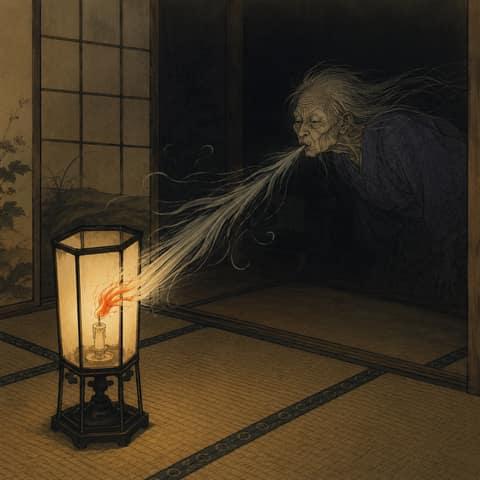
Enenra is Sekien’s vision of rising smoke as a human figure. Abura-akago takes the form of an infant licking lamp oil, while Korōka and Chōchin-bi join ghost light to the tools that carry flame. Himamushi-nyūdō seems to layer the insects drawn to lamps over human desire. Hikeshi-baba, an old woman who extinguishes fire, works in the opposite direction from beings that kindle it.
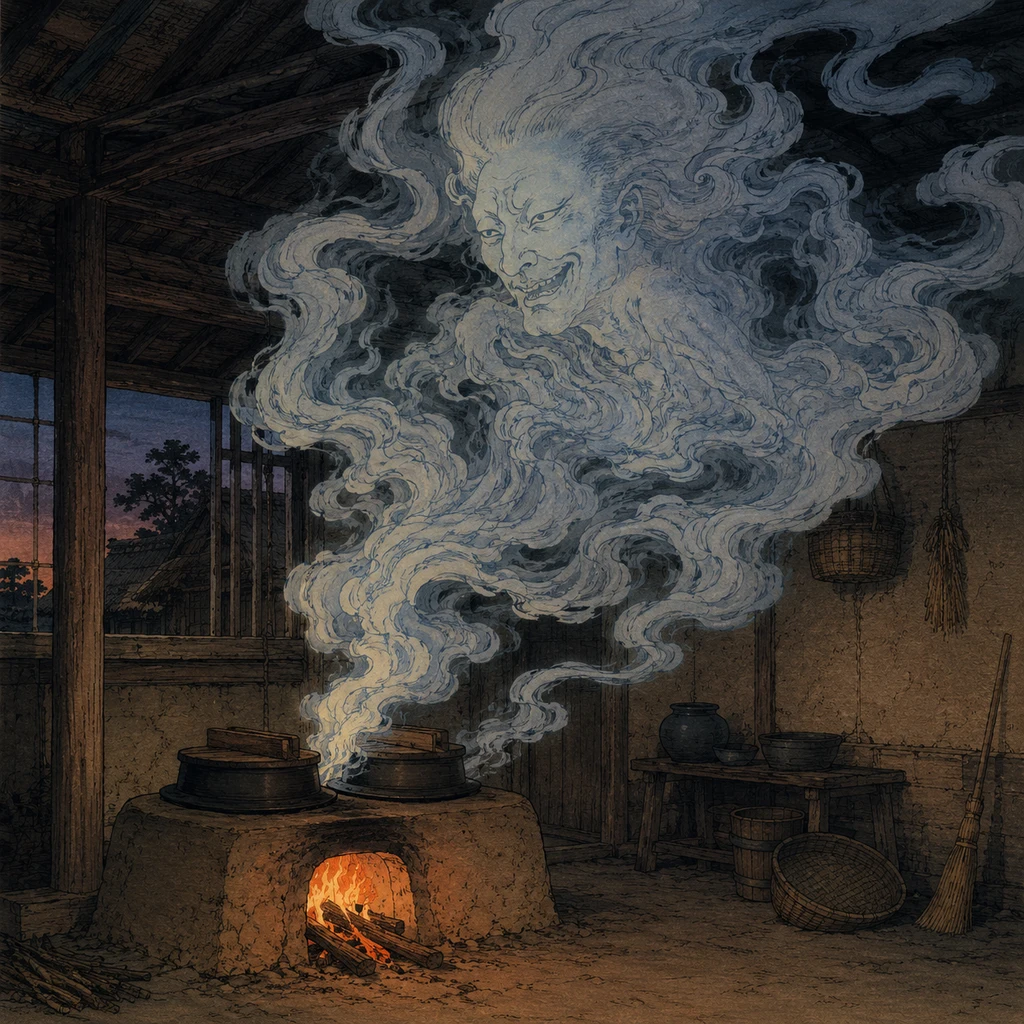 Enenraeh-NEHN-rah
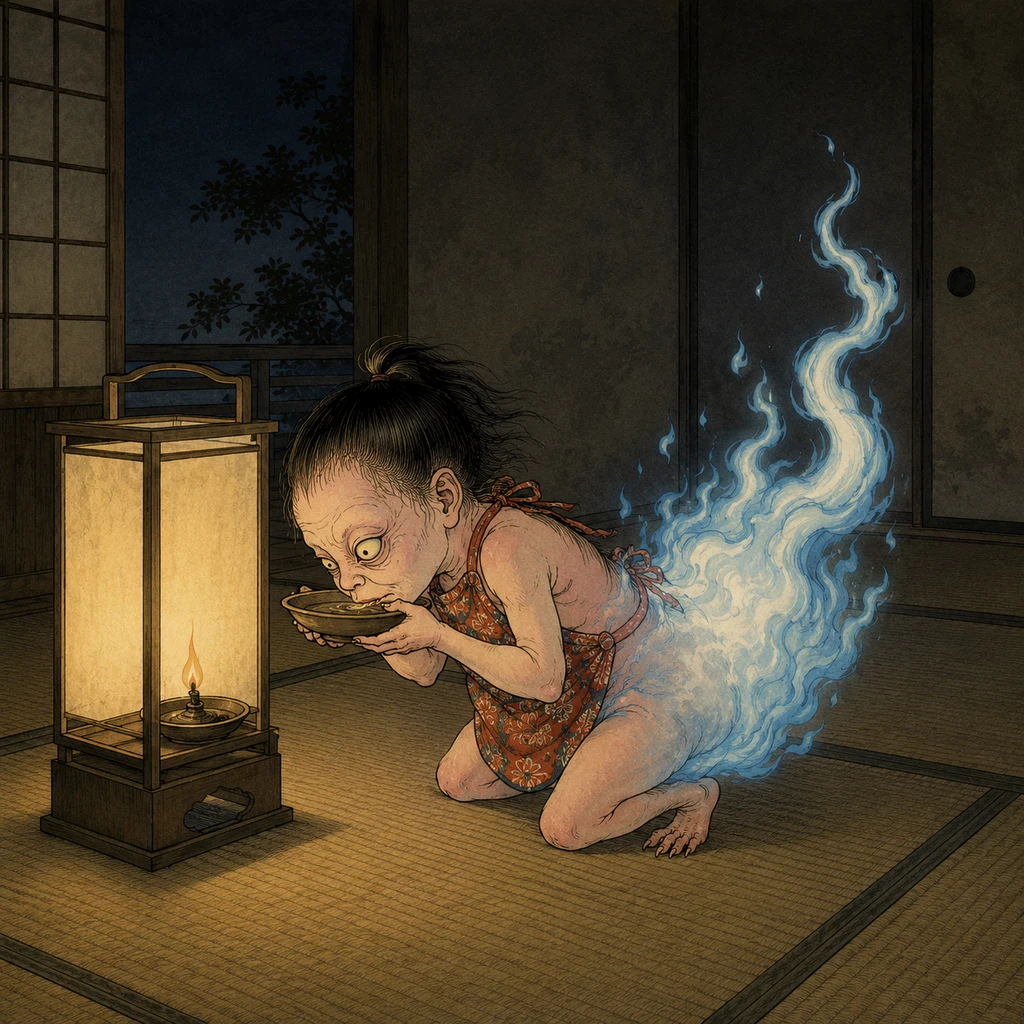 Oil BabyAH-boo-rah AH-kah-go
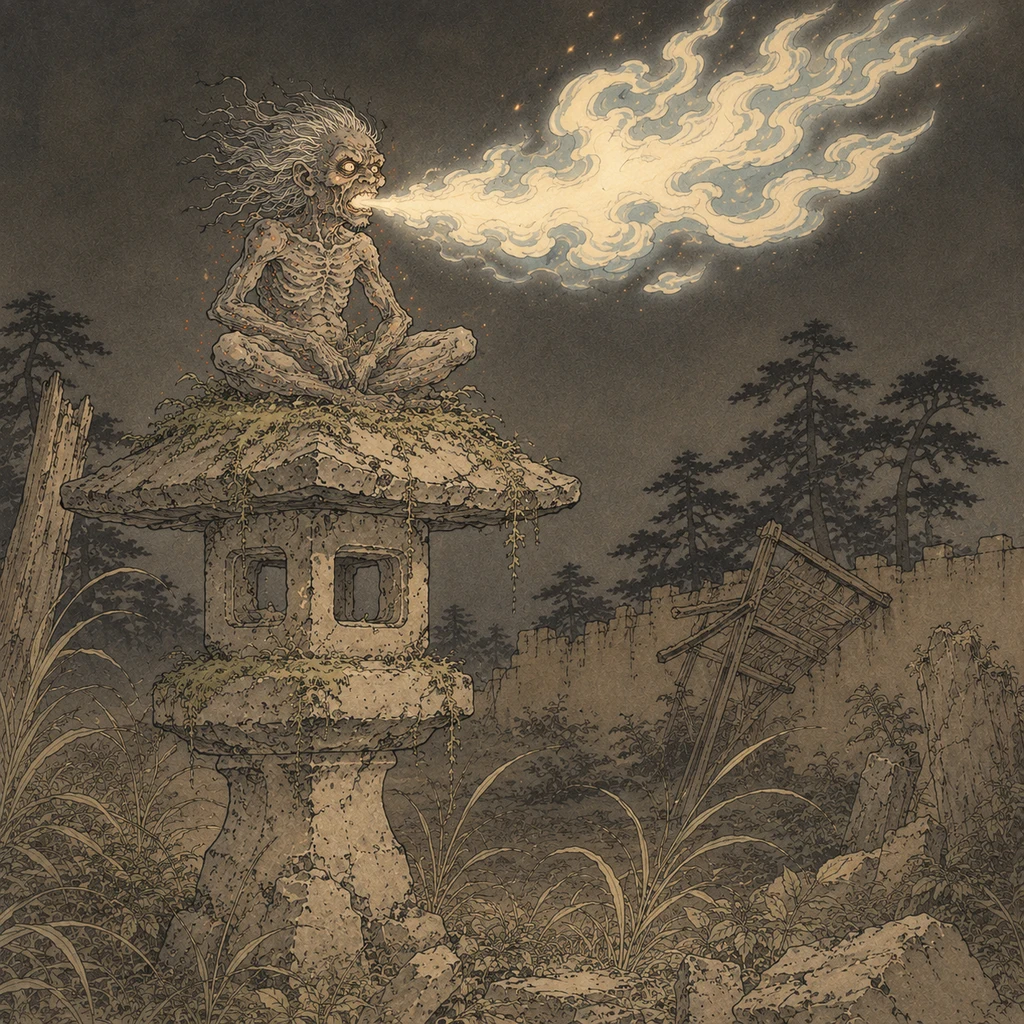 Korōka (Ancient Lantern Fire)koh-ROH-kah
- Chōchin-bi (Lantern Fire)CHOH-cheen-bee
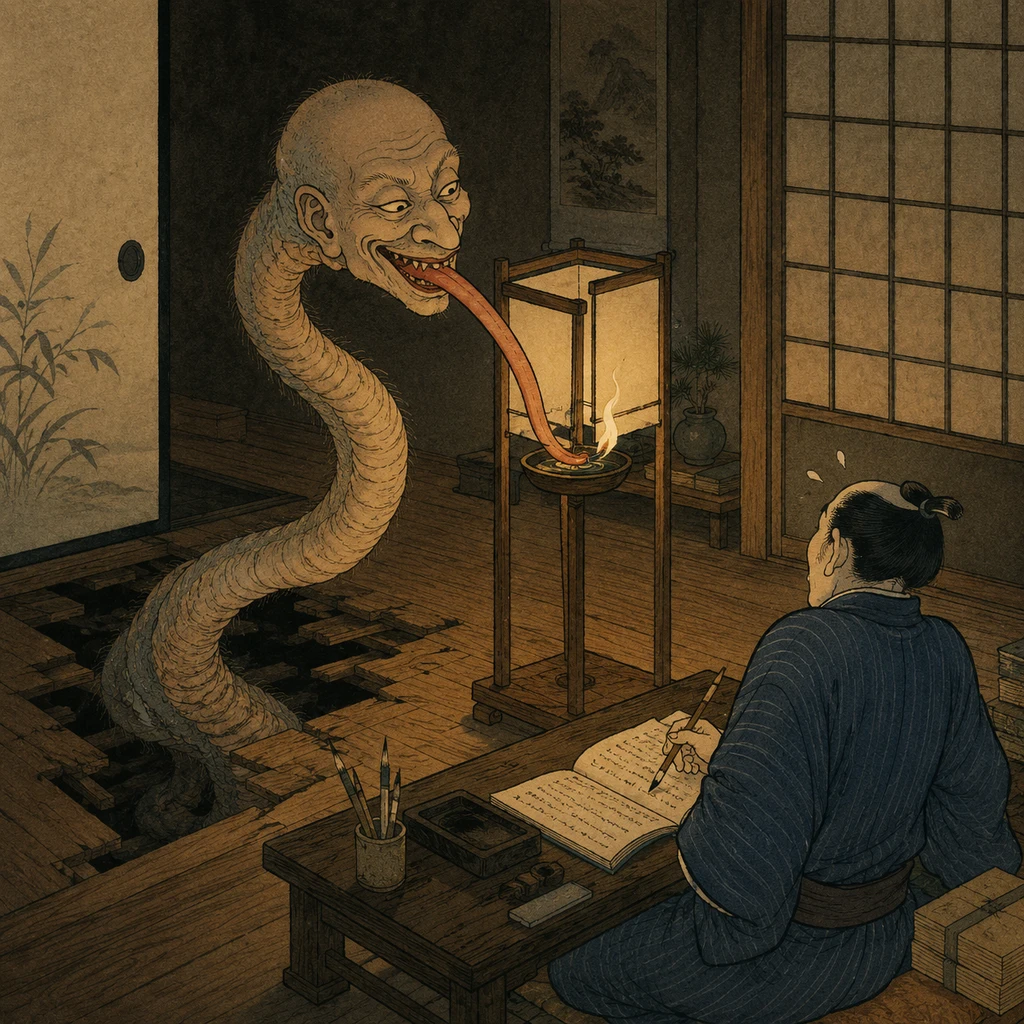 Himamushi NyūdōHEE-mah-moo-shee nyoo-DOH
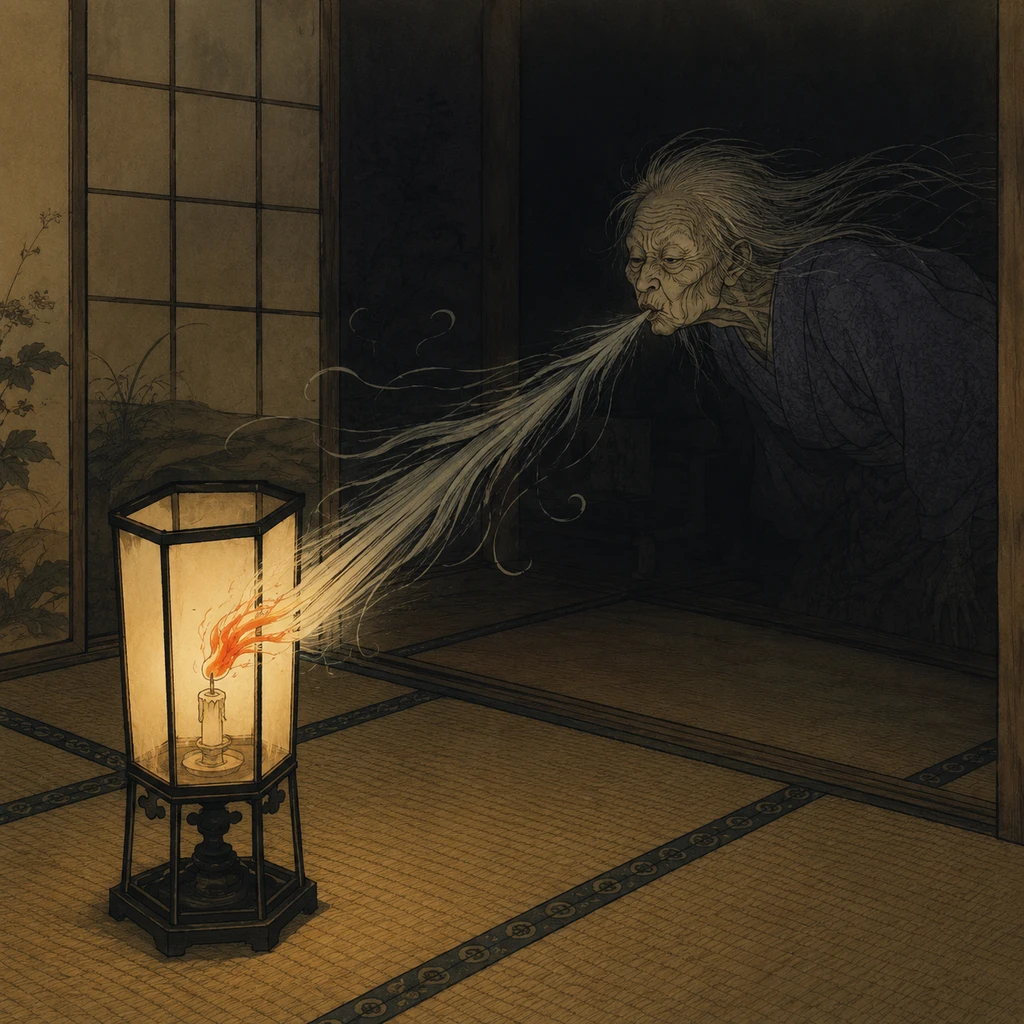 Fire-Quenching Cronehee-KEH-shee-bah-bah
When lamp oil and paper lanterns belonged to daily life, guarding, putting out or stealing fire could determine whether a household remained safe. The transformation of small domestic objects into yokai grew from a practical fear of flame.
Animals and mountain beings wreathed in flame
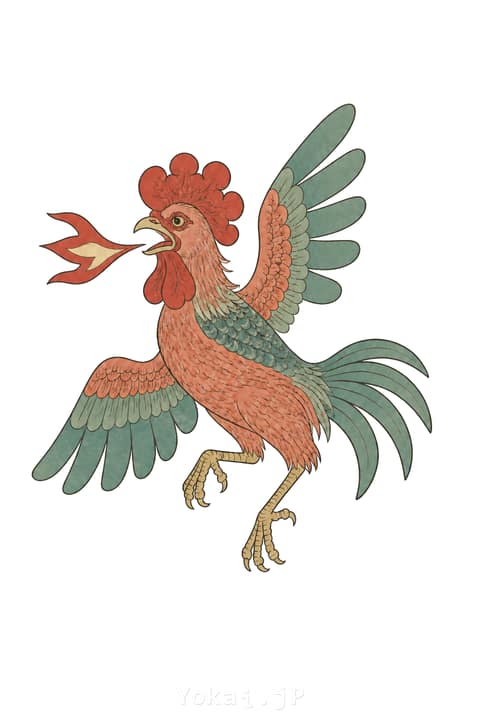
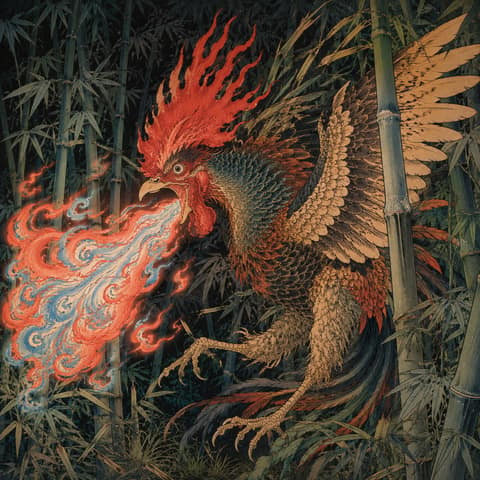
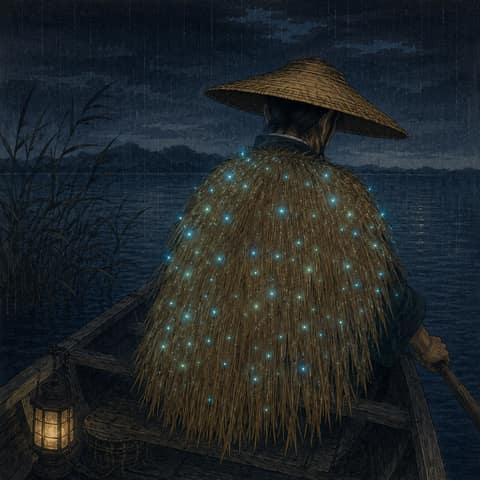
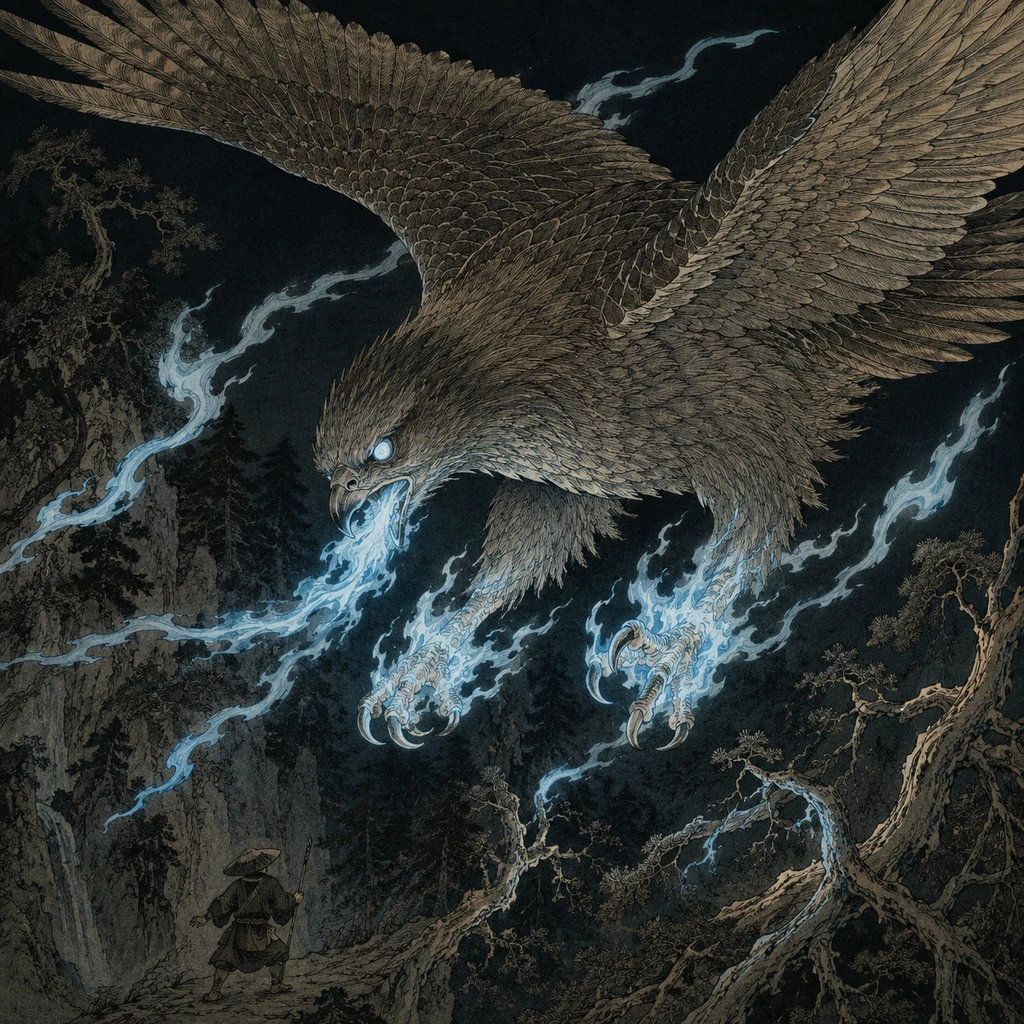
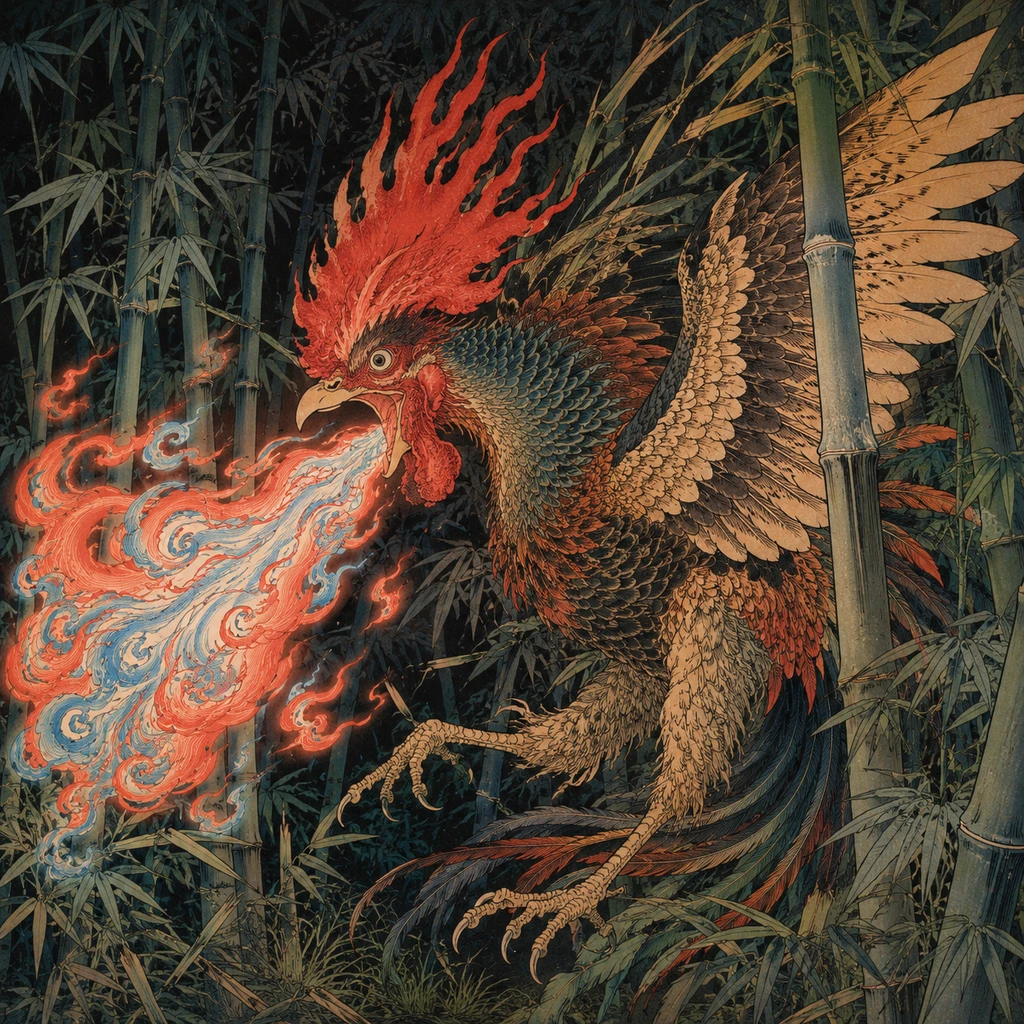
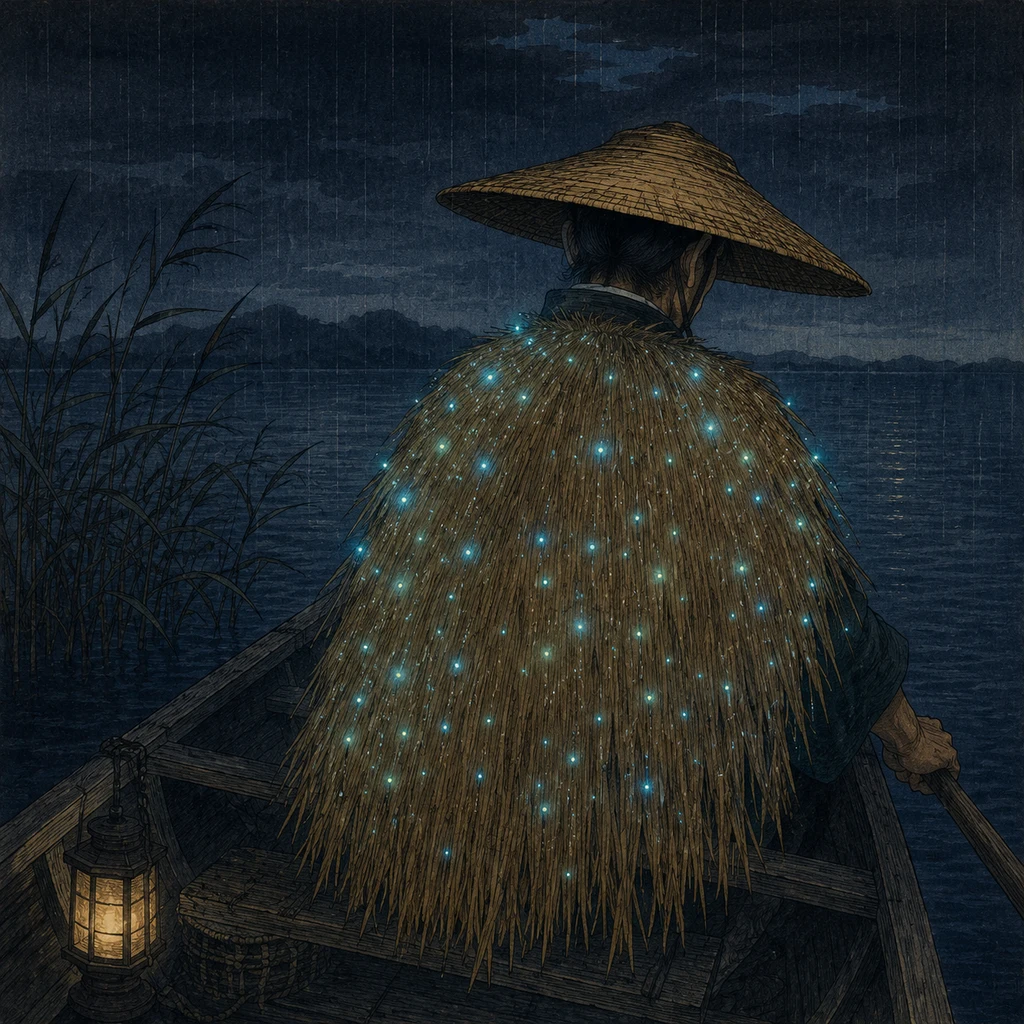
Beyond Aosagibi, Basan is depicted as a great bird that breathes fire, Minobi as flame clinging to a straw rain cape, and Sanmai Tarō as a figure carrying associations with funerals and cremation. Fire blurs their outlines even as it gives movement to bird, monk and clothing.
Kagutsuchi is a deity, not a yokai
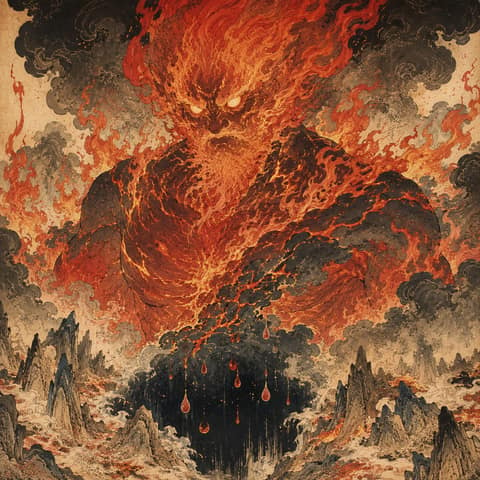
Kagutsuchi is the god of fire in the *Kojiki* and *Nihon Shoki*, not a yokai in the same sense as a ghost light or tsukumogami. His birth causes the death of his mother, Izanami, and more deities arise from his severed body and blood. The story presents fire as a power that sustains cooking and metalwork while also taking life.
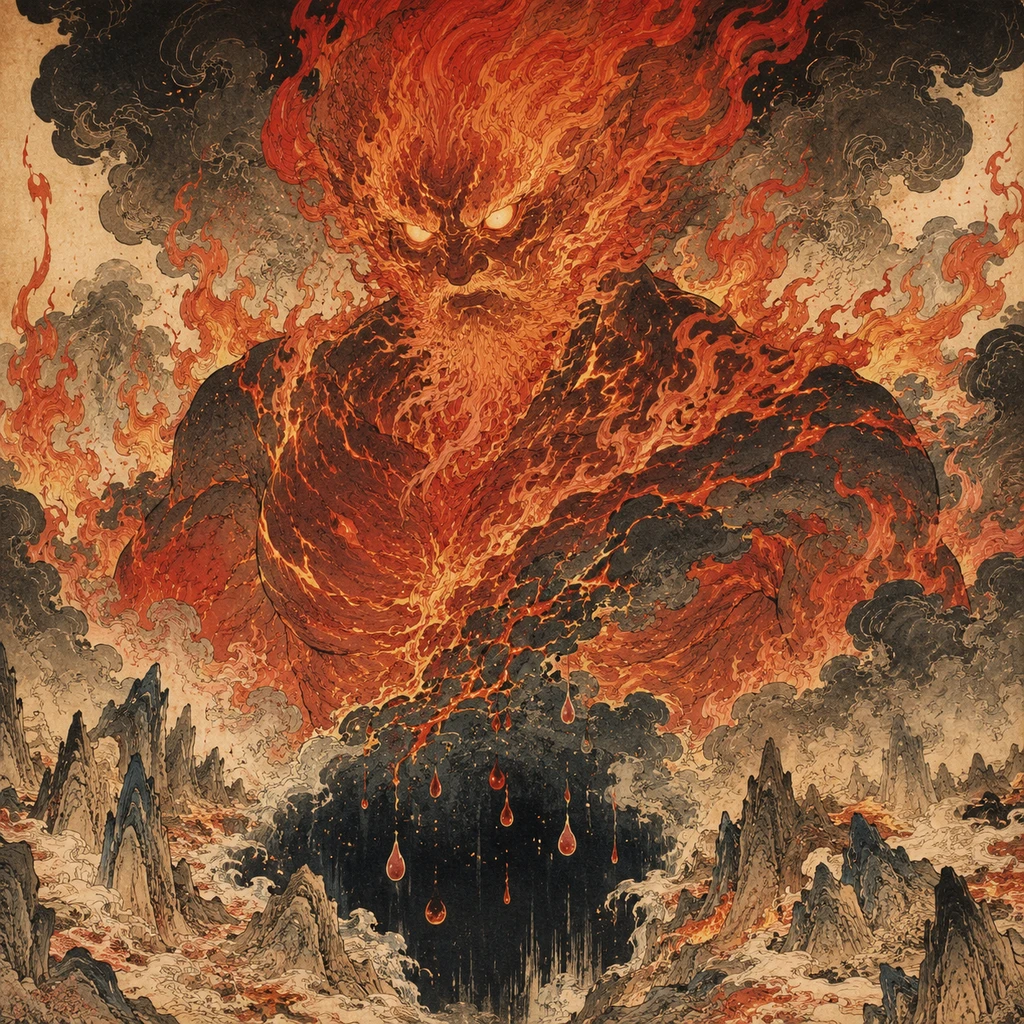
Placing deities, spirits, observed phenomena and artists’ inventions side by side—but keeping their origins distinct—reveals how many roles fire has played in Japanese culture. Begin with the collection below and ask first where the light appears, then whose memory its flame carries.