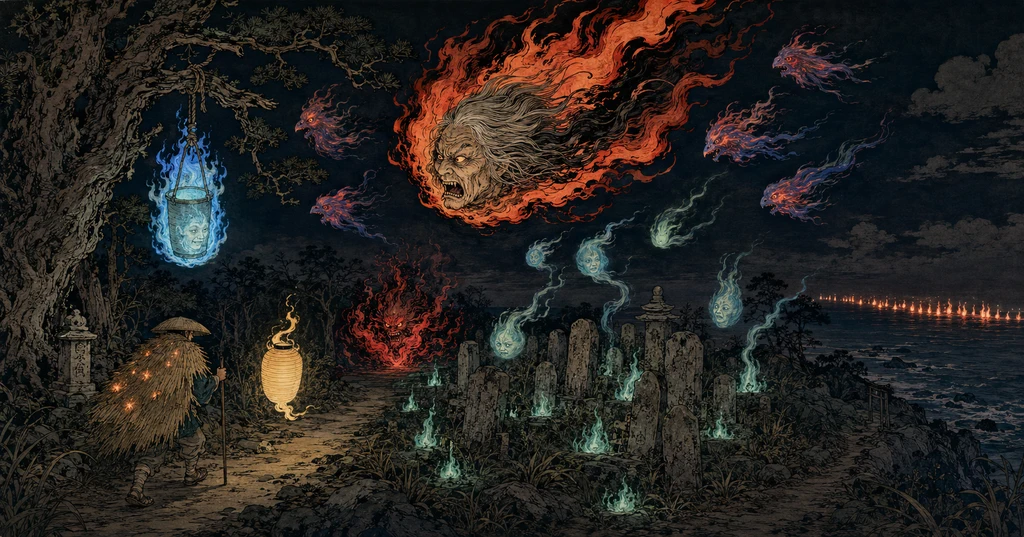
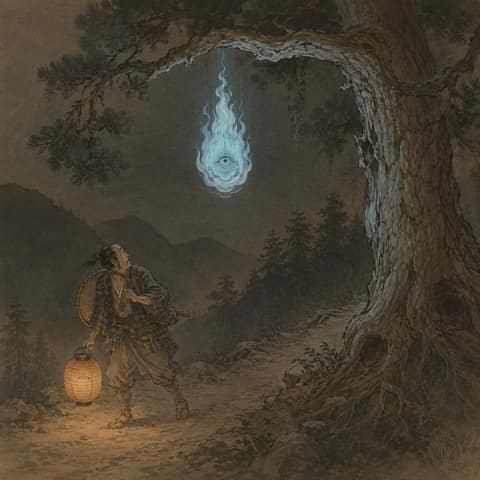
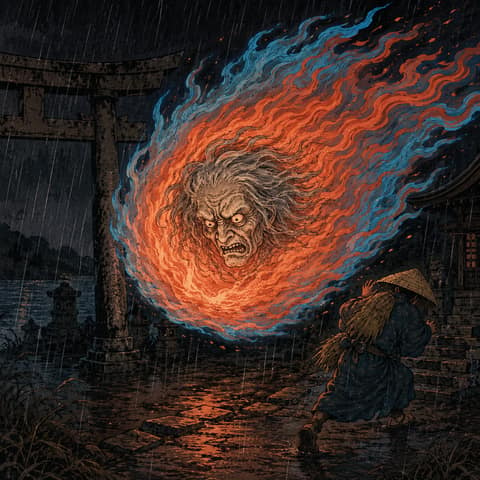
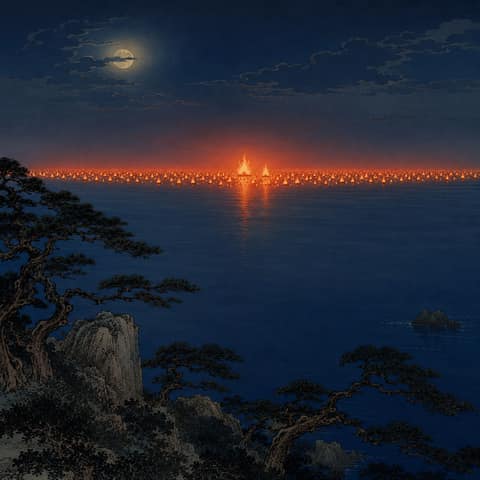
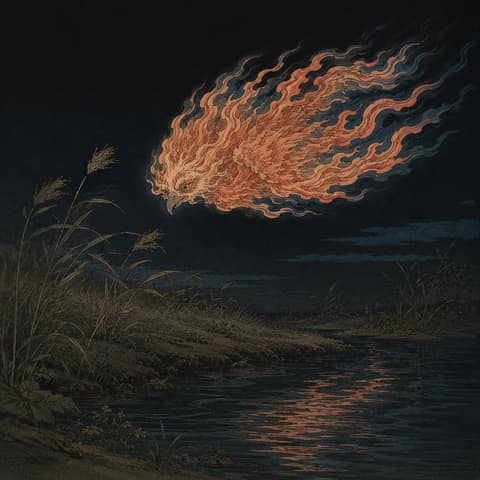
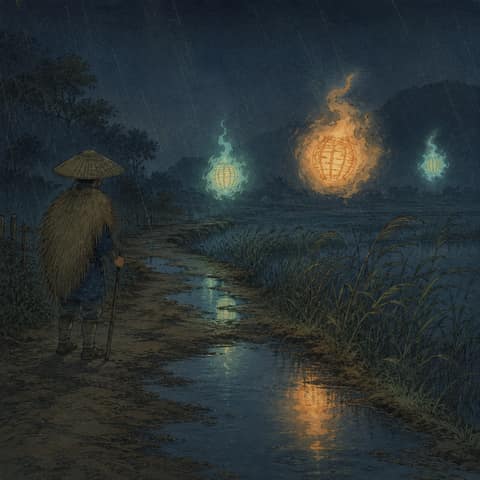
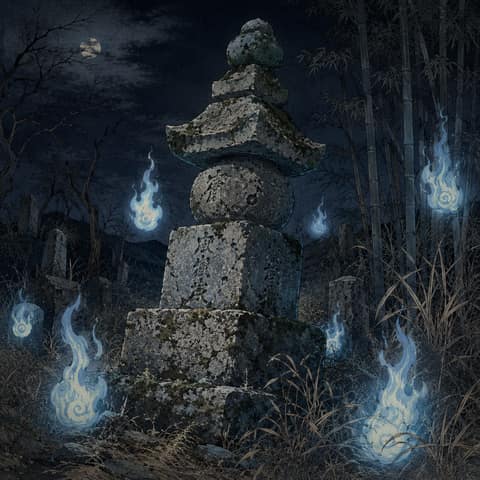
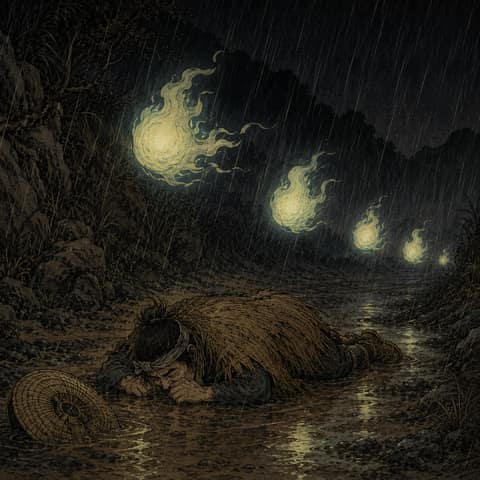
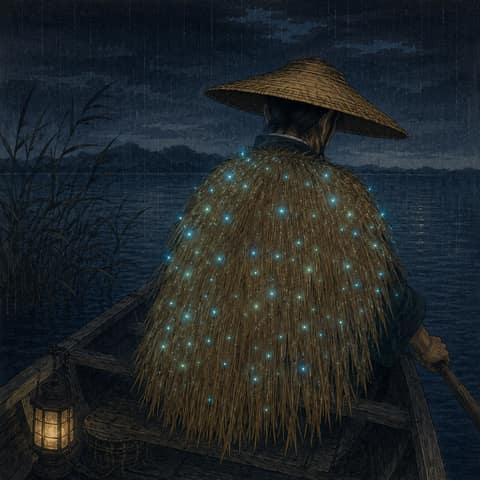
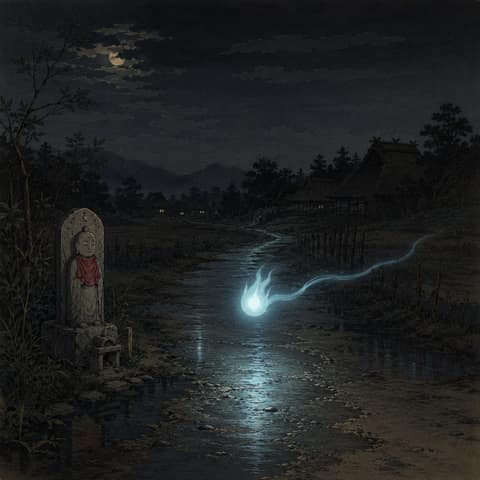
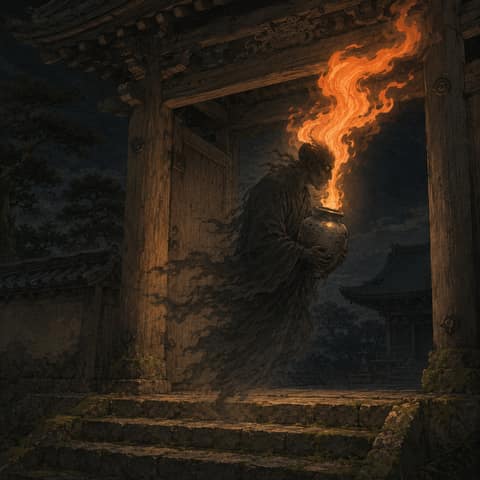
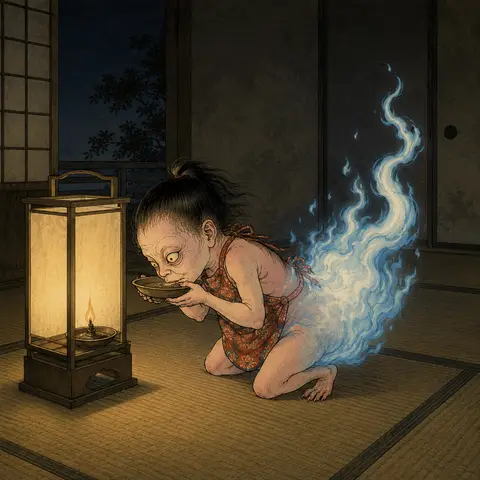
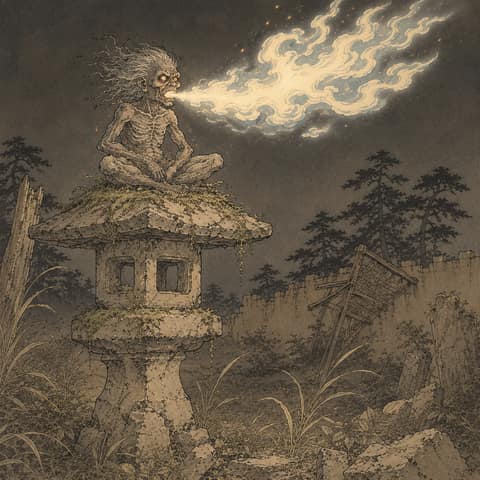
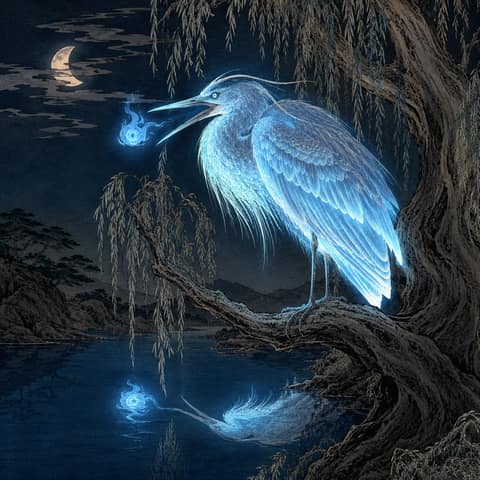
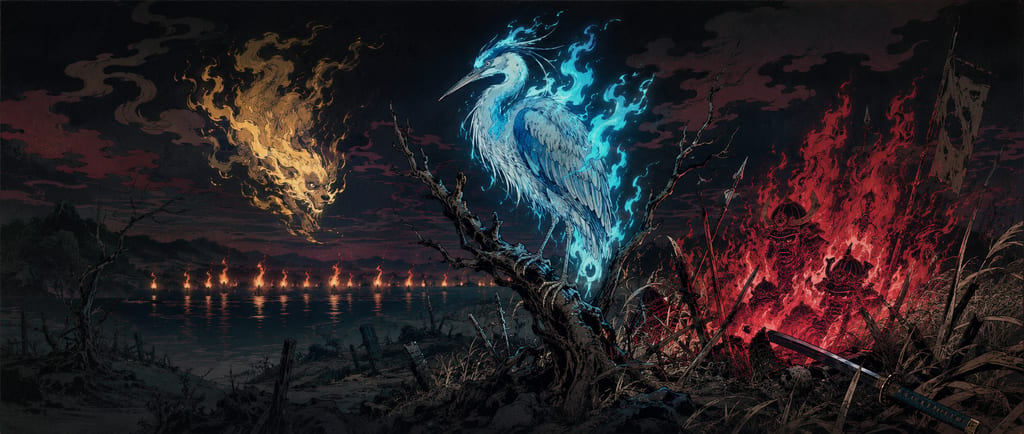
Aosagibi is told as the pale blue glow seen around night‑active herons such as the black‑crowned night heron, appearing above water or against the night sky. In the Edo period it was depicted by Sekien and recorded widely in essays. Willows and ancient plum trees, river mouths and inlets, and shrine and temple precincts—places where “ki gathers”—were feared as haunts where mysterious fires would linger, and cases are told where a shot “ghost light” proved to be a heron. Explanations noted since early modern times include moonlight and water reflections, the sheen of wet feathers, the glare from white breast plumage, or microorganisms at the waterside, showing how people moved between natural causes and yokai tales. Other strands say old night herons faintly glow by season, turn into fireballs, or breathe fire, letting tales of ghost lights, strange birds, and dragon lamps intersect. Though eerie, many stories end with the creature merely being a bird once brought down, emphasizing its nature as a misperceived apparition.
Character Profile
This section is our own creative profile for storytelling. It is not historical fact or scholarship.
Yokai Type - Traditional Yokai
Category - Animal Shapeshifters
Rarity - Epic
Personality - avoidant of people, prone to appear by watersides on moonlit nights
Compatibility - strongly tied to quiet watersides, closely associated with great willow trees
Abilities - appears at night as a pale blue lightshines more brightly by reflections from water or moonlightperches on old trees or shrine fronts and is mistaken for a ghost fire
Weaknesses - exposure at close range reveals its true form, heavy rain and wind make the glow hard to discern
Habitat - riverbanks and lakes, around old willow and plum trees, shrine and temple precincts, inlets and reed beds