Yamato Province 国家が生まれた地の怪異。大和国の妖怪事典

三輪山の大物主・大和猿楽の般若・崇道天皇の祟り。日本という名の発祥地、大和

国家が生まれた地の怪異。大和国の妖怪事典

Yamato Province · やまと

View on map

「やまと」という言葉は、もとは奈良盆地の東南、三輪山のふもとの一帯を指す地名であった。そこに王権が興り、その王権が列島を束ねるにつれて、「やまと」は国全体の名 ──「日本」そのものの呼び名へと広がっていった。つまり大和国とは、ただの令制国の一つではない。日本という国家が産声をあげ、その名前さえ生み出した、列島の心臓部なのである[1]

だから大和の怪異を読むことは、国家が生まれる瞬間を、その裏側から覗くことに等しい。三輪山の神は蛇の姿で女のもとへ通い、その神婚から箸墓の伝説が生まれた[2]。王権にまつろわぬ者は土蜘蛛と呼ばれ、人ならぬ姿に描かれた[3]。都を移そうとした帝の弟は、無実を訴えて餓死し、やがて天皇号を贈られる大怨霊となった[4]。そして興福寺と春日大社に仕えた猿楽の徒は、嫉妬に身を焼く女の顔を、般若という一枚の面に彫りあげた[5]

ここでは、現在の奈良県全体を束ねる宏観 ── 元興寺の鬼、大峰の修験、飛鳥の四神 ── は奈良県の妖怪事典に譲り、本稿はあくまで「国家が生まれた地・大和国の古代」という一本の軸から、その古層に根ざした怪異だけをたずねていきたい。

国家が生まれた地、大和 ── 三輪山と古層の神

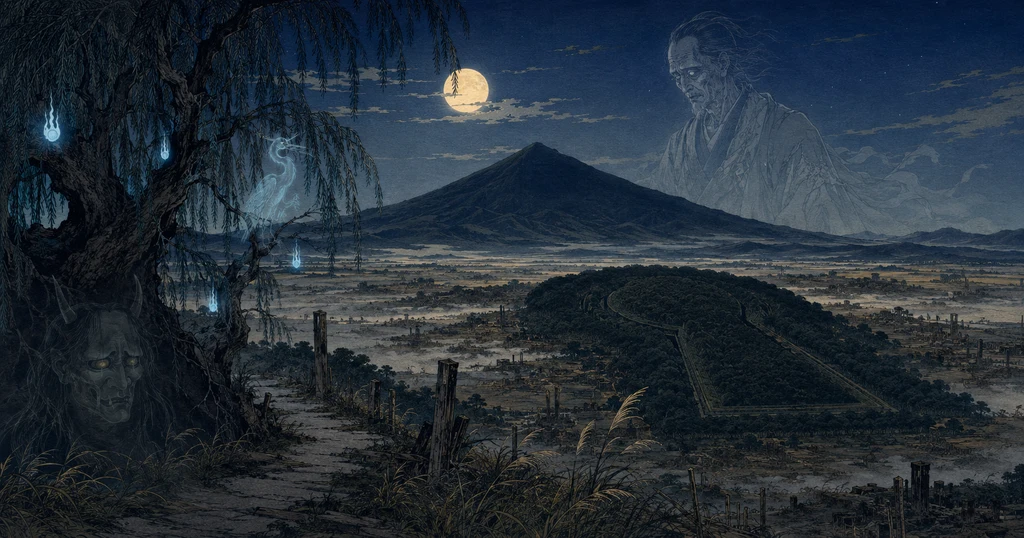
奈良盆地は四方を山に囲まれた、列島でもまれな大きな閉じた盆地である。その東南の隅にひときわ整った円錐形の山がそびえる。三輪山(みわやま)である。標高こそ四六七メートルにすぎないが、この山は本殿を持たぬ古社・大神神社(おおみわじんじゃ)の神体そのものであり、山に入ること自体が長く禁じられてきた。社殿の奥に三ツ鳥居があり、その向こうの山を直に拝む ── 神を社の中に閉じこめるより前の、もっとも古い祈りのかたちが、ここには残っている[2]

この三輪山に坐す神が、大物主神(おおものぬしのかみ)である。『古事記』『日本書紀』はこの神の物語を、いずれも蛇の姿で語る。崇神天皇の御代、国に疫病が流行して人民の半ばが死に絶えたとき、天皇の夢に大物主が現れ、わが子・大田田根子(おおたたねこ)に自分を祀らせれば疫病はやむと告げた。神の言うとおりにすると、疫病はおさまり、国は鎮まったという[2]。災いを起こすのも、それを鎮めるのも、同じ一柱の神である。祟る神を畏れ、丁重に祀ることで福へ転じる ── のちに早良親王の怨霊を天皇号で鎮める発想の、はるかな源流が、すでにここにある。

三輪山の神の正体が蛇であることを、もっとも鮮やかに語るのが三輪山型神話と呼ばれる説話だ。『古事記』では、活玉依毘売(いくたまよりひめ)のもとへ夜ごと麗しい男が通い、やがて娘は身ごもる。両親が正体を知ろうと、男の衣の裾に麻糸を刺しておくと、翌朝、糸は戸の鍵穴を抜けて三輪山の社へと続いており、手元には糸が三勾(みわ)だけ残っていた── これが「三輪」の名の由来だと記す。男は大物主の化身たる蛇であった。『日本書紀』はさらに苛烈で、神の妻となった倭迹迹日百襲姫(やまとととひももそひめ)が、夫の正体が櫛笥(くしげ)のなかの小蛇であるのを見て驚き叫ぶと、神は恥じて山へ帰ってしまう。後悔した姫は座りこんだ拍子に箸で陰部を突いて死に、その墓は「箸墓(はしはか)」と呼ばれたと伝える。

この箸墓こそ、三輪山西麓に広がる纒向(まきむく)遺跡のただなかに築かれた、最古級の巨大前方後円墳である。三世紀の大規模な集落と祭祀の跡が見つかる纒向は、いまや初期ヤマト王権の中枢、邪馬台国や卑弥呼の都の有力候補として議論される地だ[6]。神話のなかで神と人とのあいだに生まれた死が、現実の地図のうえで国家最初の大王墓と重なる ── 大和では、神話と国家の起源が、同じ一つの丘に折り重なっている。怪異の最古層とは、ここでは王権の発生そのものなのである。

王権が興れば、それにまつろわぬ者が現れる。大和各地に蟠踞(ばんきょ)した土豪を、記紀は人ならぬ姿で描いた。土蜘蛛である。『日本書紀』神武即位前紀は、身が短く手足の長い土蜘蛛が大和の各地にいたと記し、高尾張邑(たかおわりのむら)の土蜘蛛を葛(かずら)の網で捕えたことから、その地を葛城(かつらぎ)と改めたと伝える。中央に従わぬ者を人ならぬ蜘蛛として描くこの手つきは、勝者が敗者を怪物化する政治の作法にほかならない。大和の古層には、こうして「国家の側が誰を人ならざるものと呼んだか」の記憶が、地名そのものに刻まれている(葛城を本拠とした古代豪族や、布都御魂を奉じた物部氏ら大和の有力氏族の興亡については、奈良県の妖怪事典が葛城山の土蜘蛛と一言主の物語として詳しく語っている)。

能楽を生んだ大和猿楽と般若

大和は、日本の舞台芸能の母胎でもある。中世、興福寺と春日大社に芸能をもって奉仕した猿楽(さるがく)の集団が、大和には四つあった。結崎(ゆうざき)座・円満井(えんまんい)座・坂戸(さかど)座・外山(とび)座、あわせて大和猿楽四座である。これらはのちにそれぞれ観世(かんぜ)・金春(こんぱる)・金剛(こんごう)・宝生(ほうしょう)の流派へと連なり、能を大成した観阿弥・世阿弥の父子は、この結崎座から出て京へ進出した。いまも春日若宮おん祭の神事に四座が奉仕するように、能楽の故郷はまぎれもなく大和である。古都に育まれた信仰と芸能の土壌から、世界に類を見ない仮面劇が生まれた。

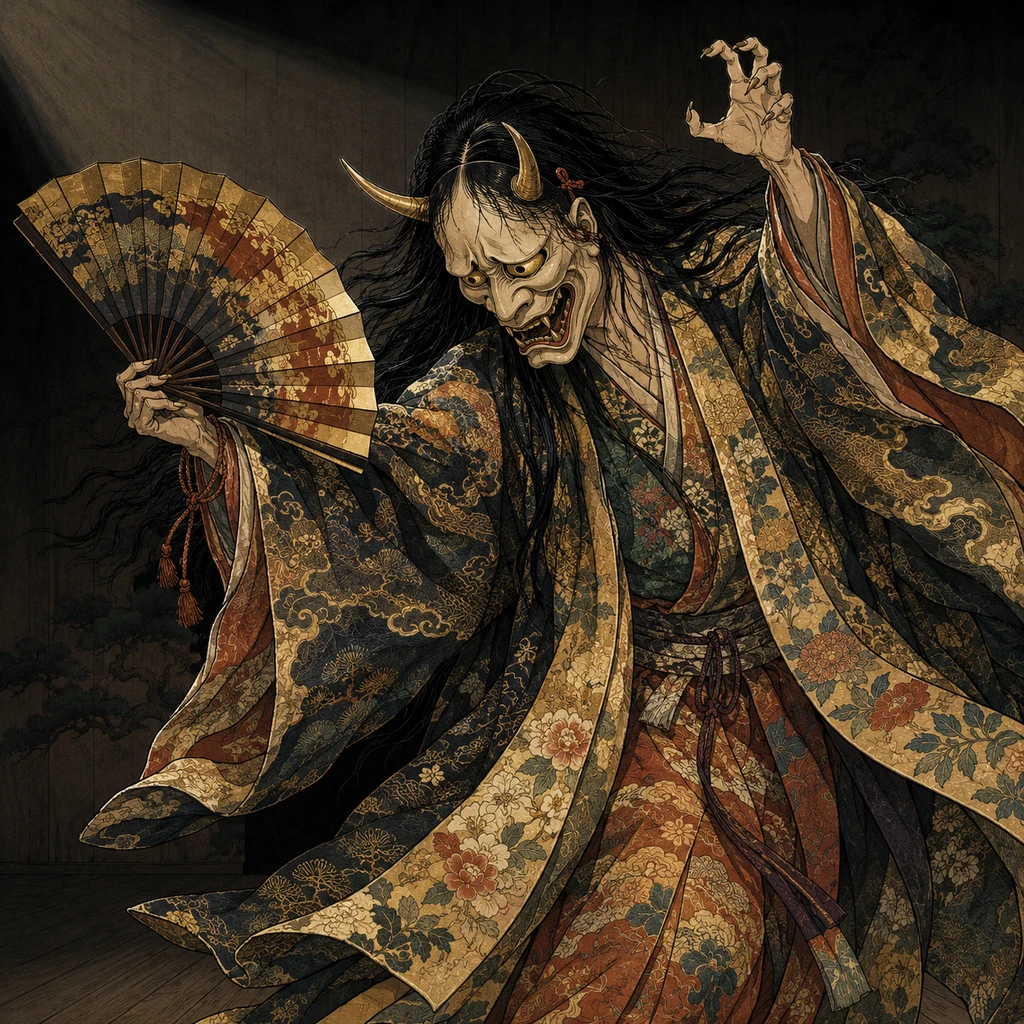
その能の鬼女面の代表が、般若である。これは単一の妖怪というより、中世の説話と謡曲、そして面打ちの工(たくみ)が作りあげた「情念の型」だ。二本の角、金色を帯びた眼と歯、強くしかめた眉。だがこの面の凄みは、ただ恐ろしいことにあるのではない。怒りの奥に、怒りから抜け出せない苦しみと悲しみが彫りこまれているところにある。能面のデータベースでも般若は怨霊の面に分類され、嫉妬・恨み・悲しみ・嘆きが融合した表情と説明される[7]。本来「般若」とは仏教で悟りへ向かう智慧を意味する語であり、奈良の般若坊なる面打ちがこの造形を芸術へ高めたという説も伝わる ── 智慧の名を持つ面が、煩悩に囚われた女を表す、というねじれが、この面を忘れがたいものにしている[7]

Hannya

HAHN-nyah

Hannya is not the name of a specific yokai species, but refers to the form of a woman who has transformed into a demon (kijo) out of extreme jealousy and resentment, as well as the 'Noh mask' used to represent her in the traditional Japanese performing art of 'Noh'. Her visual appearance—two golden horns protruding from the forehead, a mouth split to the ears, bared fangs, and disheveled hair—has become globally recognized as the definitive image of a 'female demon' in Japan. The greatest characteristic of this yokai (Noh mask) lies in the 'ultimate duality' hidden within its design. Observing the upper and lower halves of the Noh mask separately reveals its tremendous sculptural beauty. The lower half (the mouth and jaw) expresses pure 'anger and ferocity', intimidating with bared fangs. However, the upper half (especially the outer corners of the eyes and the brow) is etched with profound 'sorrow and despair' over being betrayed by a loved one and falling into the form of a hideous monster. On the Noh stage, the mask is meticulously calculated so that when the actor tilts it slightly upwards ('terasu' - to illuminate), it appears as a terrifying, raging demon, and when tilted slightly downwards ('kumorasu' - to cloud), it looks like a pitiful woman breaking down in tears. Even more fascinating is the strong irony inherent in the name 'Hannya (Prajñā)'. In Buddhism, 'Hannya' is a sacred word meaning the 'highest wisdom (enlightenment)' that severs worldly desires. Why would a female demon who has succumbed to the most secular emotions of 'jealousy' and 'lust' and fallen into evil be called by the name of 'wisdom', its exact opposite? There are various theories, such as that it was created by the genius mask maker 'Hannya-bo' of the Muromachi period, or that reciting the Heart Sutra (Hannya Shingyo) was absolutely necessary to vanquish (exorcise) this female demon. In any case, there is no other yokai that embodies the psychological terror of humans losing their reason and turning into beasts (demons) through such a highly refined artistic expression.

Read more

般若の本質をもっともよく示すのが、謡曲『葵上』だ。病に伏す葵上は役者として登場せず、舞台に置かれた一領の小袖でその存在が示される。巫女が梓弓で物の怪を呼び出すと、現れるのは光源氏の愛人・六条御息所の生霊である。高貴な女でありながら、源氏の足が遠のいた寂しさと、賀茂祭の車争いで葵上方に押しのけられた屈辱に苦しみ、その行き場のない思いが嫉妬の鬼となって葵上を責めさいなむ[8]。ここで肝心なのは、般若が外から来た怪物ではなく、貴婦人の内側にあった感情が舞台上で可視化された姿だという点である。鬼は、人の心の底から立ちのぼる。

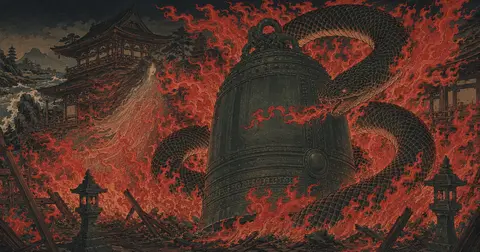
もう一つの大きな系譜が『道成寺』だ。紀伊国道成寺の鐘供養の日、女人禁制を破った白拍子が舞いながら鐘へ近づき、その中へ身を隠す。住僧の語る昔語りでは、男に裏切られたと思いこんだ娘が毒蛇と化して日高川を渡り、鐘の中へ逃げた男を炎で焼き殺したという[9]。般若が嫉妬によって人の顔のまま鬼へ寄った段階だとすれば、清姫の物語はそこからさらに蛇・真蛇へと落ちていく最終段階を描く。人の顔を保って怒り泣く般若と、人を捨てて蛇となる清姫は、同じ情念の坂を別々の高さで示している。三輪山の神が蛇であったこの大和の地で、女の情念もまた蛇へと変じてゆく ── 古層の神話と中世の能とが、蛇という一筋の糸で結ばれているのは、偶然ではないのかもしれない。

都を移した怨霊 ── 早良親王

国家が生まれた地は、国家の最初の遷都にともなう悲劇の地でもあった。その中心にいるのが、御霊信仰の起点に立つ早良親王である。光仁天皇の皇子で、桓武天皇の同母弟にあたる親王は、幼くして東大寺で出家し、親王禅師と称された。法華堂(羂索院)に住んだこの僧形の皇族が、天応元年(七八一年)に還俗して皇太弟に立てられる ── 大和の大寺で育った祈りの人が、にわかに政治の渦中へ引き出されたのである[10]

Prince Sawara

SAH-wah-rah shin-NOH

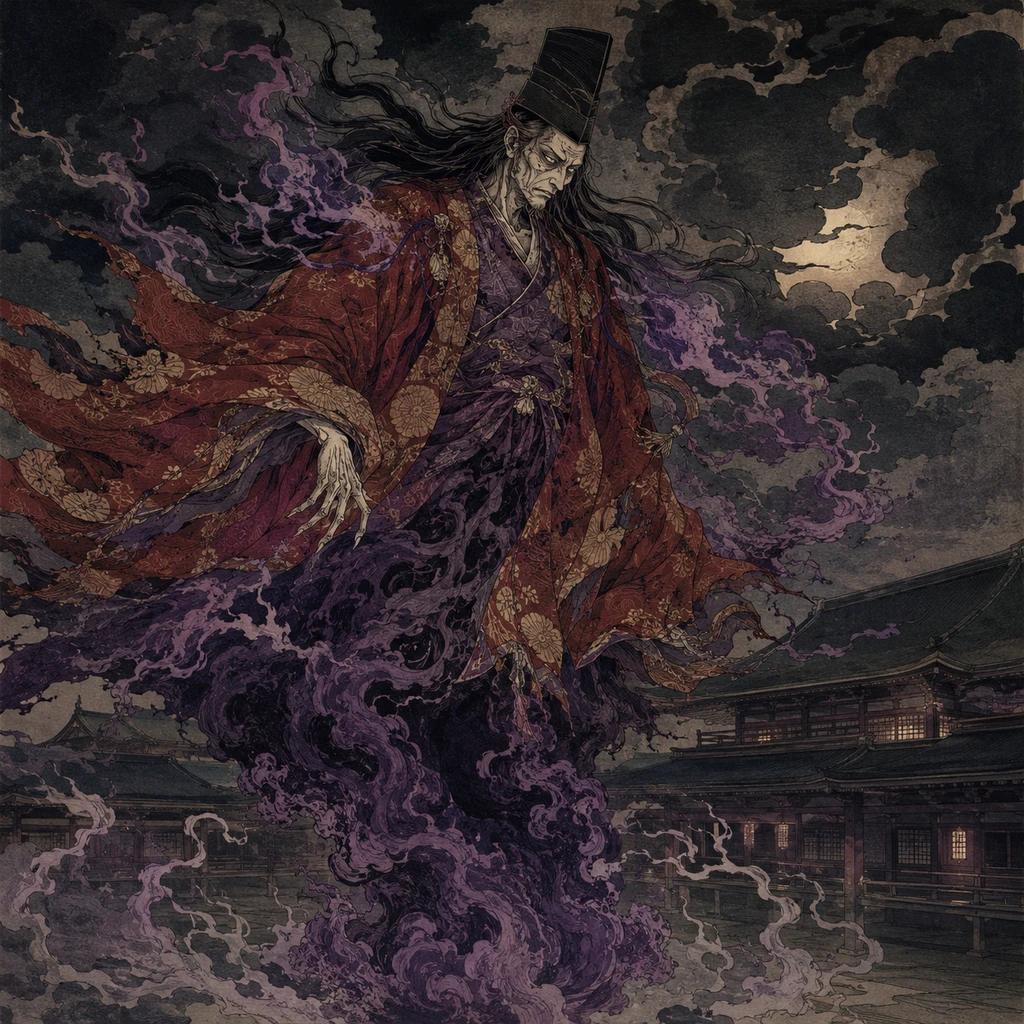
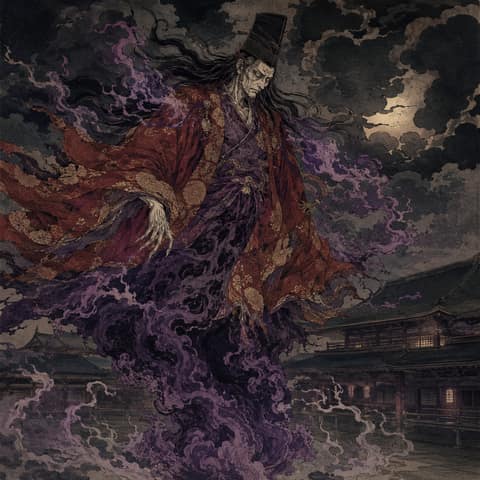
A royal prince from the late Nara to early Heian periods, son of Emperor Kōnin and full younger brother of Emperor Kanmu. Named crown prince, he was deposed as an alleged accomplice in the assassination of Fujiwara no Tanetsugu and exiled to Awaji. He died en route by self-imposed fasting. When epidemics, famine, and sudden deaths struck the court afterward, they were attributed to his vengeful spirit. To appease him, he was posthumously honored with the title Sudo Tennō, and he came to be revered and feared as a foremost figure in goryō (vengeful spirit) belief.

Read more

桓武天皇は延暦三年(七八四年)、平城京を捨てて長岡京への遷都を企て、信任厚い藤原種継を造営の責任者に任じた。ところが遷都まもない延暦四年(七八五年)、種継が夜の工事現場で何者かに射殺される。桓武は大伴・佐伯ら遷都反対勢力の仕業とみて峻厳な詮議を進め、その嫌疑はついに皇太弟・早良親王にまで及んだ。親王は廃太子されて乙訓寺に幽閉され、淡路への配流の途上、無実を訴えて飲食を断ち、絶食のすえに憤死したと伝わる[4]。遺骸は淡路に葬られた。都を移すという国家の大事業が、帝の弟一人の餓死という暗い影を曳いたのである。

その後、宮廷を次々と不幸が襲う。皇太子に立った安殿親王が発病し、桓武の皇后藤原乙牟漏や、早良親王の生母でもある高野新笠が相次いで世を去り、都には疫病と天変が続いた。神祇官の卜占はこれを早良親王の祟りと告げ、朝廷は淡路の墓に守冢を充て、僧を遣わして謝罪し[10]、延暦十九年(八〇〇年)にはついに「崇道天皇」の尊号を追贈して、その墓を山陵に改めた[4]。実際には即位していない人物に天皇号を贈るという異例の措置は、怨霊への怖れがいかに深刻だったかを物語る。さらに貞観五年(八六三年)、都に疫病が広がると神泉苑で御霊会が修され、崇道天皇をはじめ非業に倒れた六所の御霊が鎮められた[11]。早良親王はこうして、菅原道真や平将門に先立つ御霊信仰の代表的存在として、後世まで畏れ敬われていく。

早良親王の事件は長岡京・平安京という都の側の出来事と語られがちだが、その魂は故郷である大和に深く根を張っている。出家して暮らしたのは東大寺であり、奈良市西紀寺町の崇道天皇社をはじめ、大和には親王を祀る社が点在する。新たな都を造るために、古い都・平城京の記憶を背負った皇族が犠牲となり、その怨霊を鎮めるために天皇号という最高の格が与えられた ── 早良親王の物語は、「国家が生まれた地」が同時に「国家のために葬られた者を祀る地」でもあったことを、静かに告げている。

闇に光る怪 ── 青鷺火と白粉婆

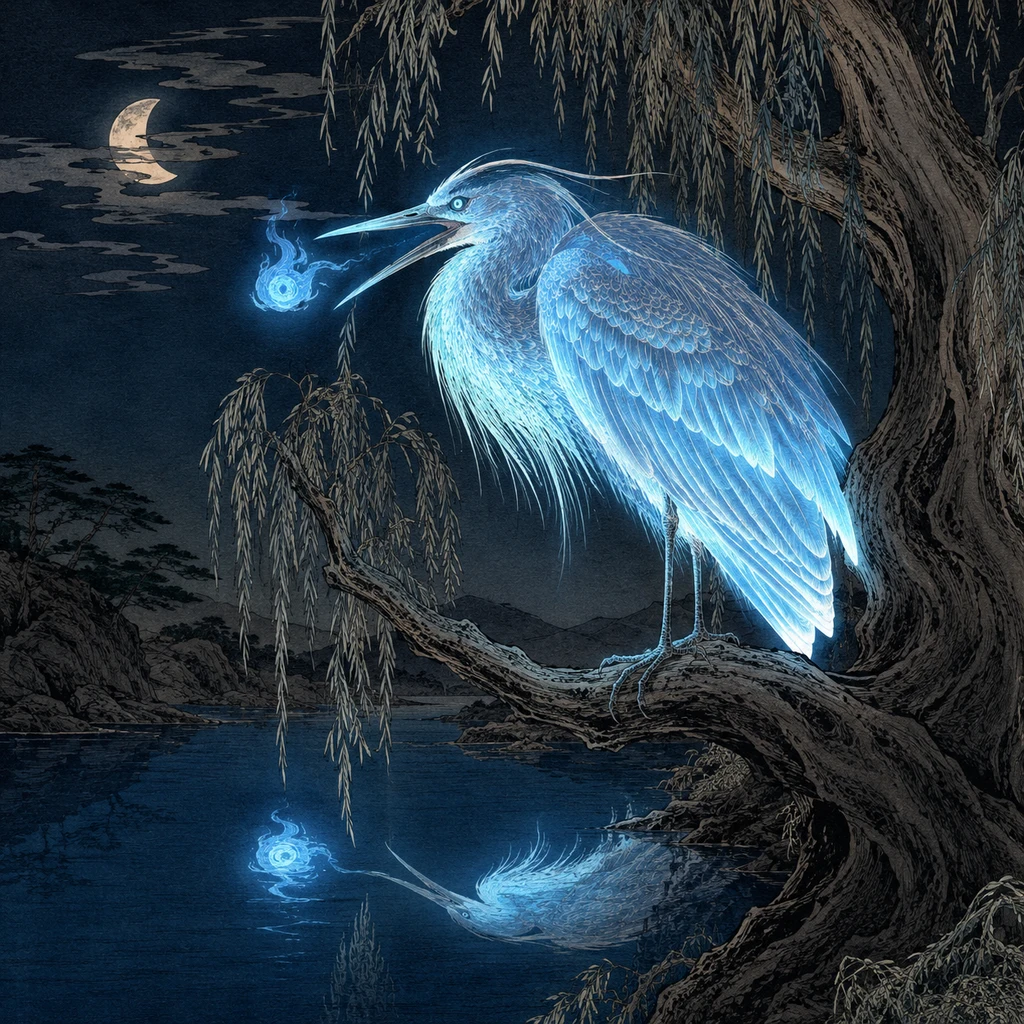
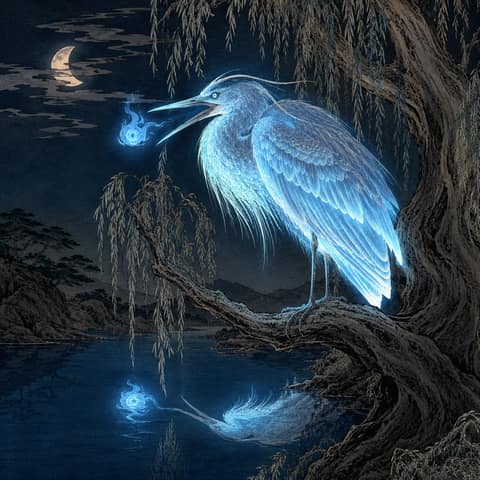
古代史の重い物語の一方で、大和の地には、もっと暮らしに近い、夜と闇の怪も棲んでいた。その一つが青鷺火である。夜、サギの体が青白く光って見える怪火で、別名を五位の火・五位の光ともいう。正体はゴイサギとされることが多く、飛ぶときに青い火のように尾を引いて、人々を驚かせた。江戸後期にはこの怪が広く知られ、絵師・鳥山石燕も『今昔画図続百鬼』にその姿を描きとめている

Blue Heron Fire

ah-oh-SAH-gee-bee

A nocturnal apparition in which a heron’s body appears to glow pale blue. Also called Goi no Hi and Goi no Hikari. Recorded in Edo-period picture books and essays, it was seen on moonlit and rainy nights. Often identified as the black-crowned night heron (goisagi); in flight it looked like blue flames, startling onlookers. Explanations include reflections from wet plumage or substances along the water’s edge, yet many locales remember it as a ghostly fire.

Read more

大和国に伝わる青鷺火の話は、ことに印象的だ。柳の大木に青い火が現れ、近づくとその木全体が青く光ったという。古い木に宿る光、闇のなかで青く燃える鳥 ── これは荒唐無稽な作り話ではなく、夜の水辺や林で実際に目撃された不思議な発光を、人々が「怪火」という器で受けとめた記録である。発光の正体は羽毛への付着物や反射などと説明されることもあるが、大事なのは、大和の人々が夜の闇に立ちあがる青い光を、ただの自然現象ではなく語るべき怪として後世に伝えたことだ。古代の星図や神獣を地下に残した飛鳥の地(これらは奈良県の妖怪事典とキトラ古墳の記事に詳しい)と同じ土地に、闇に光るものへの古い感受性が、こんなかたちでも息づいている。

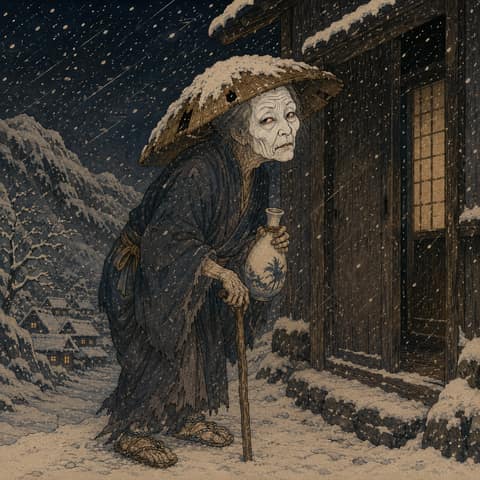
もう一つ、大和の闇に現れるのが白粉婆だ。顔に白粉を厚く塗り、破れ笠をかぶった老女の妖怪で、雪道にも徳利を提げ、杖を頼りに現れて、道行く者に酒を所望する。鳥山石燕は『今昔画図続百鬼』に、破れ傘をかぶり杖と酒徳利を手にした老婆としてこれを描いている。この怪はとりわけ、大和国の南部 ── 吉野郡十津川流域の在地伝承に結びついて語られてきた[14]。十津川村は面積の大半を山林が占める日本有数の大きな村で、その深い谷あいに、白粉婆の話は息づいている。
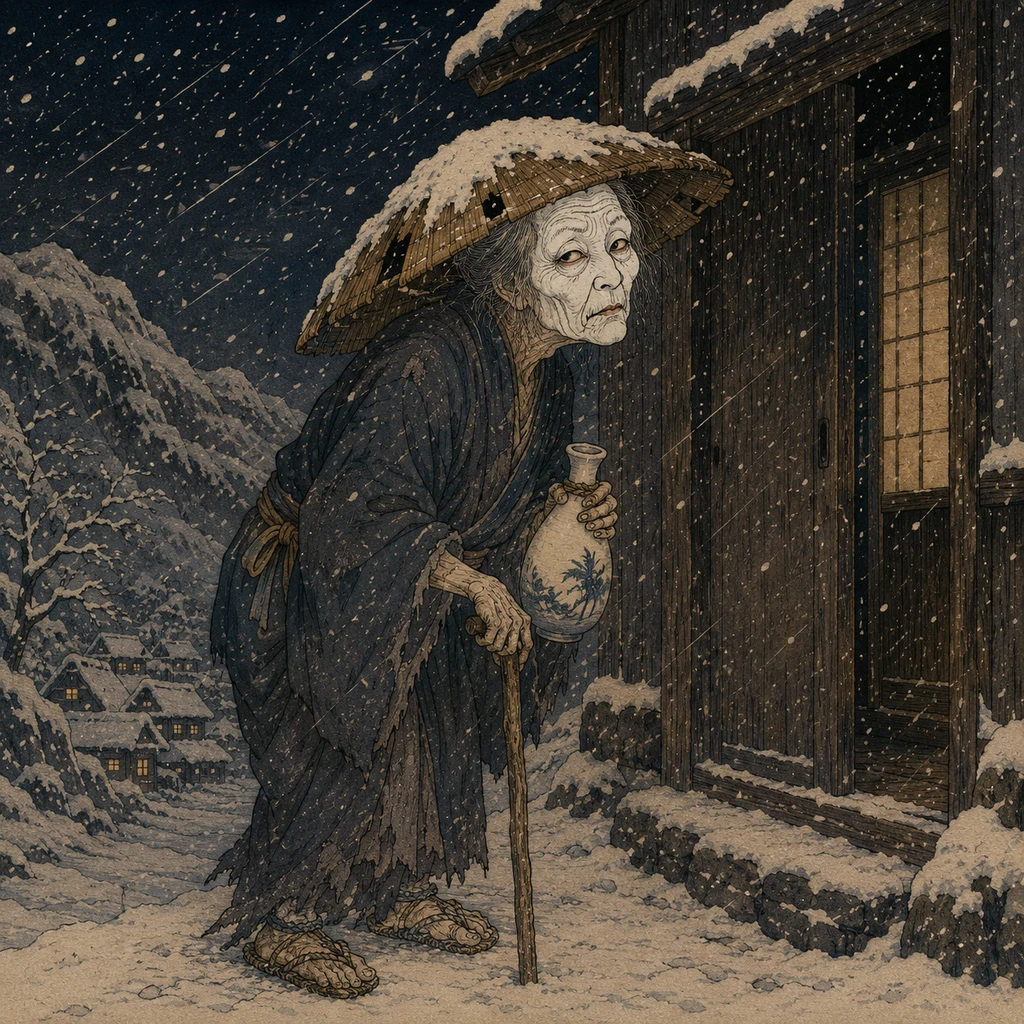
白粉婆の物語が肝心とするのは、姿かたちよりも「どう応じるか」である。冬の夜、白粉で顔を白く塗った婆が徳利を提げて戸口に立ち、「一杯くれ」と頼む。少量でも振る舞えば婆は静かに去るが、追い返すと、戸口で杖を鳴らし続けて家人を夜更けまで怯えさせたという[15]。酒造りの時季や搗(つ)き仕事の匂いに誘われて現れるとも伝わるこの怪は、来訪する者を無下に追い返してはならぬ、分かち合いを惜しんではならぬという、雪深い山里の暮らしの掟を映している。姿を見せて脅すのではなく、応対の作法を試す ── 白粉婆は、妖怪が共同体の倫理を担う、その典型なのである。なお、十津川をはじめとする大和南部の山々には、伯母ヶ峰の一本だたらや砂かけ婆など、雪と峠と夜道に根ざした怪が濃く伝わるが、その南部山村の妖怪世界については奈良県の妖怪事典が深く語っている。

大和国の妖怪を歩くための見取り図

大和国の怪異を訪ねることは、日本という国家が生まれた現場を、その裏側からたどり直すことでもある。最後に、この旧国の妖怪を、古代という一本の時間軸で整理しておきたい。

  • 三輪山と纒向(王権の発生)では、大物主の蛇身、活玉依毘売の麻糸、倭迹迹日百襲姫と箸墓のように、神話と国家の起源とが同じ丘で重なりあう。まつろわぬ者は土蜘蛛と呼ばれ、地名に怪物化の記憶を残した。
  • 興福寺・春日大社圏(芸能の母胎)では、大和猿楽四座が能を生み、般若という面に、女の嫉妬が鬼へ変わる瞬間を彫りこんだ。
  • 東大寺・崇道天皇社(遷都の悲劇)では、早良親王(崇道天皇)が、長岡京遷都と藤原種継暗殺の渦中に餓死し、天皇号で鎮められる大怨霊となった。
  • 吉野・十津川と各地の闇(暮らしの怪)では、青鷺火が古木に青く燃え、白粉婆が雪夜の戸口で応対の作法を試した。

この時間軸を貫いて見えてくるのは、大和の怪異がつねに「国家」と背中合わせだということだ。祟る神を祀って疫病を鎮め、まつろわぬ者を怪物と呼び、遷都の犠牲者を天皇として祀る ── ここでは、怪異を畏れ鎮めることが、そのまま国を治める作法であった。三輪山の蛇から般若の角、崇道天皇の祟りから雪夜の白粉婆まで、大和の妖怪は「日本という国がどう始まったか」を、神話と芸能と怨霊と山里の闇の四つの層で、いまも静かに語り続けている。現在の奈良県全体に広がる怪異の宏観 ── 元興寺の鬼、大峰の修験、飛鳥の四神 ── をあわせて知りたい読者は、奈良県の妖怪事典へと足をのばしてほしい。
All yokai of Yamato Province6

Complete list of yokai linked to Yamato Province, including those not featured in the article above.

  • Yatagarasu

    Yatagarasu

    Divine

    yatagarasu

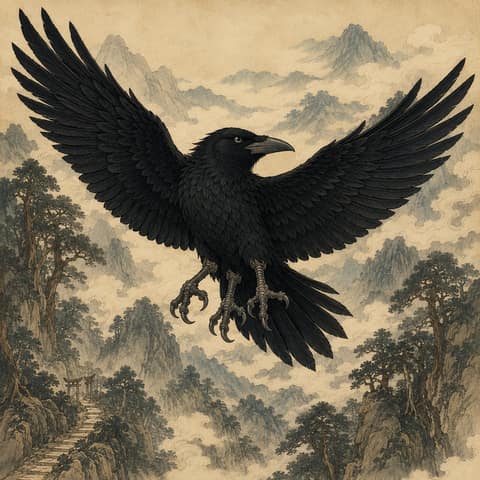
    The Sacred Bird Leading from Kumano to Yamato: Yatagarasu

    Divine Spirit / DeityKumano Hongu Taisha, Kumano Sanzan (Present-day Wakayama Prefecture) / Uda, Yamato Province (Present-day Nara Prefecture)

    In this version, we read the Yatagarasu as the "divine messenger who opens the way." The Yatagarasu is not a war god who strikes down enemies, but a presence that indicates where one should go. In the tale of the Eastern Expedition, when the party is lost on the mountain paths of Kumano, the heavenly gods do not increase their army, but send a single crow. Herein lies the essence of this sacred bird. Bestowing direction, rather than power, is the divine virtue of the Yatagarasu. The Yatagarasu in the *Kiki* binds geography and legitimacy simultaneously. The road entering Yamato from Kumano is not a mere mountain path, but a boundary that must be crossed for a new royal authority to be established. The scene in the *Kojiki* where the crow leads the way not only shows the route through the mountains but narrates that Jimmu's progression is approved by the gods. The direction the bird flies directly becomes the political course. The iconography of the three legs vastly expanded later understandings of the Yatagarasu. The three-legged crow overlaps with the East Asian concept of the sun bird, granting Japan's Yatagarasu the meanings of the sun, direction, and heavenly order. However, the strongest aspect in the original text of the *Kiki* is not "three legs" but "guidance." Therefore, this version does not lean too heavily on the splendor of its iconography, but centers on the primal sensation of a black bird flying ahead on a dark mountain road. Within the Kumano faith, the Yatagarasu gained a concrete place of worship as a divine messenger. The crow characters of the Kumano Goou Houin are not mere decorations; they are signs carrying the power of vows and talismans. While crows are often viewed as ominous scavengers of carrion, they also become birds that carry the words of the gods. This duality prevents the Yatagarasu from being reduced to a simple, cheerful mark of victory. The depth of the Kumano mountains and its mythology lies in the fact that a black bird becomes a holy guide. The modern image of the Yatagarasu is also read as a symbol of sports victories and indicating a team's course. Yet, at its root is the experience of a signpost appearing ahead when a lost person can no longer proceed alone. The Yatagarasu of this version does not explain the answer at length. It simply flies ahead. Whether to follow or not is left entirely to the humans. In this version, we also want to draw attention to the Yatagarasu's blackness. Crows are frequently viewed as inauspicious birds, but in the context of Kumano, they become messengers of the gods. Where the ominous and the sacred invert, there lies the profound depth of mountain asceticism. Proceeding without losing sight of the black bird on a dark mountain path is akin to reading divine will in the dark. Furthermore, the Yatagarasu is a guide who speaks few words. It does not stand before them as a god like Sarutahiko, but flies ahead as a bird. Humans must interpret the direction of its flight and advance on their own two feet. Guidance is not forced; it demands reading. Therein lies the quiet severity of the Yatagarasu. Even today, when the three-legged image and the soccer emblem are widely known, the root of this sacred bird remains on that mythological mountain path cutting from Kumano to Yamato. Stripping away the glamorous symbolic layers, what remains at the end is a single, giant crow flying ahead of a lost party. That simple scene is the strongest image of the Yatagarasu. Because of this, the Yatagarasu symbolizes not the destination itself, but the trust required to head toward the destination. When the road is unseen, a person must first believe in the direction they are advancing. The leading flight of the black bird is the mythological gesture that gives form to that trust.

  • Betobeto-san

    Betobeto-san

    Epic

    betobeto-san

    The Footsteps Echoing on the Night Road

    Mountain/Field YokaiUda District, Yamato Province (Present-day Uda City area, Nara Prefecture) / Shizuoka Prefecture

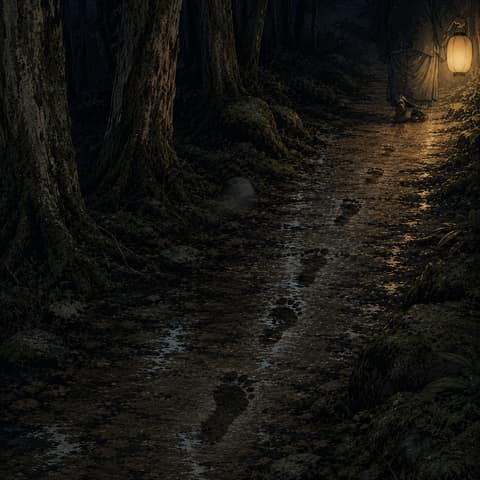
    In this version, we interpret Betobeto-san as an "invisible companion of footsteps." While there are many unseen yokai, it is rare to find one like Betobeto-san that is established solely by the sense of distance in sound. The footsteps seem to be right behind you, yet they never catch up. Turn around, and they vanish; start walking, and they begin again. Through this repetition, the walker is forced to harbor the unshakable sensation that "I am not alone," a feeling they can neither prove nor deny. It is crucial that the stage for this yokai is the "road." A mysterious sound inside a house would be a phantom of the parlor or ceiling, but Betobeto-san clings to the body in transit. On a night road, a person has no choice but to move forward; they cannot continuously check behind them. When footsteps occur in this context, fear is locked just outside the field of vision. Because the sound from behind approaches from the place the human body finds hardest to verify, it generates a far more sustained anxiety than a yokai with a physical form. The phrase "Please go ahead" (Osaki e okoshi) is the central etiquette of this version. Betobeto-san is not exterminated, but rather given a turn to pass. This concept reflects a folkloric attitude of treating the yokai not as an enemy, but as a fellow traveler encountered on the road. By calling out, the invisible footsteps transform from a threat behind into a companion walking ahead. Changing the position of the fear is the best way to handle this anomaly. Shigeru Mizuki's iconography converted a formless sound into an approachable yokai. The figure resembling a small shadow wearing a hat was easy even for children to remember, popularizing Betobeto-san as a character. However, in this version, the focus is placed heavily on sound rather than imagery. If seeing a round figure puts one at ease, then half of Betobeto-san's original power is lost. Precisely because it is unseen, it expands and contracts within the imagination of the listener. Despite being a yokai of little harm, Betobeto-san alters the very nature of solitary walking. On a path that should be empty, another rhythm that mimics one's own stride overlaps. Ignore the sound, and it stays behind; acknowledge it and yield, and it moves ahead. In other words, this anomaly teaches the minimum folkloric manners required to walk a road alongside the unseen. In this version, the footsteps are read not only as the "presence of an other," but also as the "echo of one's own anxiety." Betobeto-san's sound appears to come from the outside, yet it syncs perfectly with one's own walking. If it were completely an other, the distance should fluctuate, but because it continues at exactly the same interval, the listener cannot separate the external anomaly from their internal unease. Therefore, the phrase "Please go ahead" is simultaneously a greeting directed at an external yokai and a physical gesture of sending one's own anxiety forward. By shifting what is stuck to one's back to the front, a person is finally able to keep walking. Betobeto-san is not a monster to be slain, but a yokai that realigns the physical and mental rhythm of the walker. What remains at the end of this version is the small ethic of yielding the road. Rather than forcefully pushing forward while ignoring the unseen, one offers a brief word to the presence that might be there. Betobeto-san seems like a weak anomaly, but it serves as a reminder that humans do not monopolize the dark roads.

  • Blue Heron Fire

    Blue Heron Fire

    Epic

    ah-oh-SAH-gee-bee

    Canonical Folklore Version

    Animal ShapeshiftersVarious regions of Japan (notably Edo, Yamato, and Sado)

    Aosagibi is told as the pale blue glow seen around night‑active herons such as the black‑crowned night heron, appearing above water or against the night sky. In the Edo period it was depicted by Sekien and recorded widely in essays. Willows and ancient plum trees, river mouths and inlets, and shrine and temple precincts—places where “ki gathers”—were feared as haunts where mysterious fires would linger, and cases are told where a shot “ghost light” proved to be a heron. Explanations noted since early modern times include moonlight and water reflections, the sheen of wet feathers, the glare from white breast plumage, or microorganisms at the waterside, showing how people moved between natural causes and yokai tales. Other strands say old night herons faintly glow by season, turn into fireballs, or breathe fire, letting tales of ghost lights, strange birds, and dragon lamps intersect. Though eerie, many stories end with the creature merely being a bird once brought down, emphasizing its nature as a misperceived apparition.

  • Prince Sawara

    Prince Sawara

    Epic

    SAH-wah-rah shin-NOH

    Emperor Sudō as Vengeful Spirit – Traditional Goryō Version

    Ghosts & SpiritsYamato Province

    An image grounded in local and court memories that Prince Sawara’s resentment manifested as a goryō. Amid suspicion over his alleged crimes he died by fasting, and later plagues, famine, and illnesses afflicting the imperial line were seen as his curse. The court sought reconciliation through land donations, sutra recitations and esoteric rites, reburial, and posthumous honorific titles, carefully enshrining him as a goryō. Revered as a power that judges right and wrong, he received offerings at shrines and temples, seasonal services, and apologies at his mausoleum. In later years, rites centered on the Sudō Tennō Shrine took form, spreading protective faith between the capital and Yamato. His grudge was understood not as private spite but as a warning against political disorder and calumny, prompting rulers to vow purity and justice with sacrifices, written oaths, and sutra offerings. The spirit bears a wild aspect, yet when appeased turns to guardianship.

  • Powdered-Hag

    Powdered-Hag

    Epic

    oh-shee-ROH-ee bah-BAH

    Powder-Faced Hag of the Snowy Night

    Half-Human BeingsSnowbound northern regions of Japan (exact distribution uncertain)

    On snowy nights she appears at the door, face pale as if dusted with powder, wearing a torn straw hat and carrying a sake flask. She asks for sake or sweet sake, thanks the giver even for a small portion, and leaves. If refused, she troubles the household with knocking and calls. She blends the idea of a winter visiting deity with eerie folktales, remembered as a figure embodying customs of sharing and proper hospitality.

  • Hannya

    Hannya

    Epic

    HAHN-nyah

    Noble Living Ghost - White Hannya (Lady Rokujo)

    Oni / Giant SpecterNoh theater and origin legends of Yamato Province (present-day Nara, birthplace of Noh) and Yamashiro Province (present-day Kyoto, folktales) - the mask of a jealous female demon.

    Among the numerous variations of Hannya, this is an interpretation of the 'White Hannya (Shiro-hannya)', which embodies the highest dignity and the deepest psychological terror. The prototype for this version is the spiritual form of Lady Rokujo, a royal consort appearing in *The Tale of Genji* and the Noh play *Aoi no Ue*. She was a noble lady possessing peerless beauty, exceptionally high culture well-versed in waka and Chinese poetry, and immense pride. However, loneliness from the waning visits of her beloved Hikaru Genji, combined with a decisive, public humiliation suffered at the hands of the attendants of Genji's lawful wife, Aoi no Ue, during a 'carriage dispute' (a fight for viewing space for oxcarts) at a festival, birthed jealousy and resentment within her heart that exceeded her limits. Terrifyingly, even though Lady Rokujo herself tried to maintain her reason and not hate Genji, the massive passions suppressed in her subconscious slipped out of her body night after night as a 'living ghost (ikiryo)', standing by Aoi no Ue's bedside to curse her to death. This White Hannya is fundamentally different from the savage demons living deep in the mountains. The paleness of her face represents the nobility unique to aristocratic women, while simultaneously expressing the pale agony of having her blood drained and life force whittled away by the flames of jealousy. She does not use violent physical attacks, but slowly erodes the target's mind and body in the form of illness and nightmares. On the Noh stage, the figure of the White Hannya appearing in a broken carriage is a symbol of her shattered pride and deep sorrow. Swords and military might are entirely useless to defeat this noble living ghost. She can only be countered when high-ranking monks like Yokawa no Kohijiri sound the strings of an azusa-yumi (catalpa bow) to ward off evil and fiercely recite the Lotus Sutra or the Heart Sutra. And ultimately, the White Hannya retreats not because she was exorcised (overpowered by force) through prayer, but because the voice of the sutra chanting makes her realize her own hideous demonic form (the sin of attachment), allowing her to attain religious ecstasy (Buddhist salvation) and calm her heart. She perfectly dramatizes the spirituality of Japanese Buddhism: the fragility where humanity's highest intellect can so easily fall into becoming a monster, and the eventual salvation through enlightenment.

Read on ── other regions