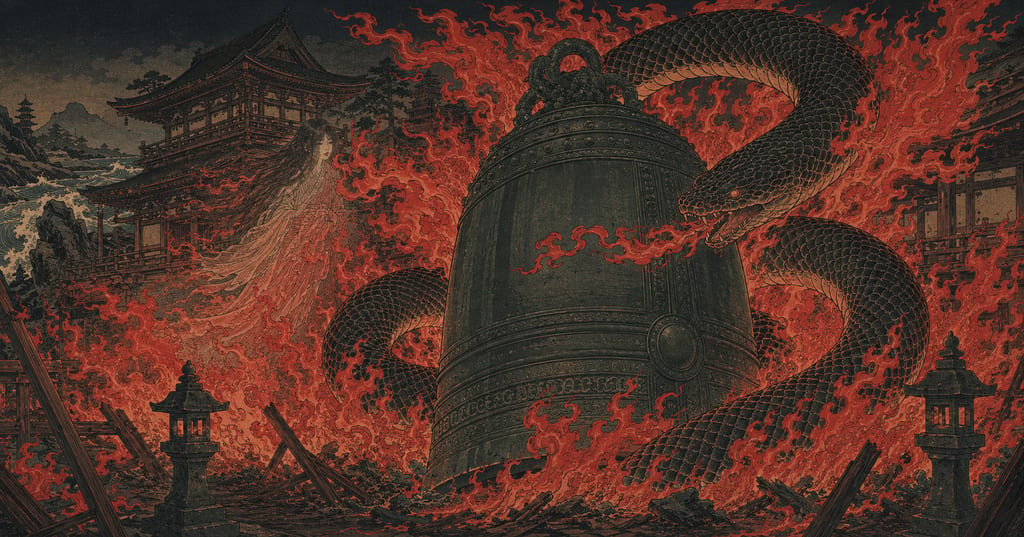
和歌山県日高川町に建つ道成寺は、大宝元年(七〇一)創建と伝わる、紀伊国でもっとも古い寺である。だがこの寺の名を全国に知らしめたのは、その古さではない。日本でもっとも名高い「女が蛇になる」物語 ── 安珍清姫伝説の舞台だからである。
裏切られた女の情念が大蛇と化し、鐘に隠れた男を炎で焼き殺す。なぜ、女は蛇になったのか。道成寺の鐘が語りつぐ、情念と変身の物語をたどる。
紀伊国最古の寺
道成寺は、大宝元年(七〇一)の創建と伝わる和歌山県最古の寺である[1]。一九七八年以降の発掘調査でも、八世紀初頭にはすでに寺院が存在したことが裏づけられている。
創建には、もう一つの女性の物語がまつわる。髪長姫(かみながひめ)の伝説である。髪のない娘が海中で黄金の観音像を見つけて美しい髪を得、その髪の一筋を雀が藤原氏の邸へ運んだことが縁で、宮子として文武天皇に嫁いだ[1]という。道成寺は、この宮子が父母の願いで建てたとも伝わる。寺のはじまりに髪長姫の物語があり、寺の名を高めたのが清姫の物語であった ── 道成寺は、二人の女の物語に挟まれた寺なのである。
安珍清姫の悲恋
安珍清姫伝説は、こう語られる。奥州の修行僧·安珍が、熊野詣の途中で一夜の宿を借りる。その家の娘·清姫は安珍に激しく懸想するが、安珍は「帰りに必ず立ち寄る」と偽って、そのまま逃げ去ってしまう[2]。
Kiyohime
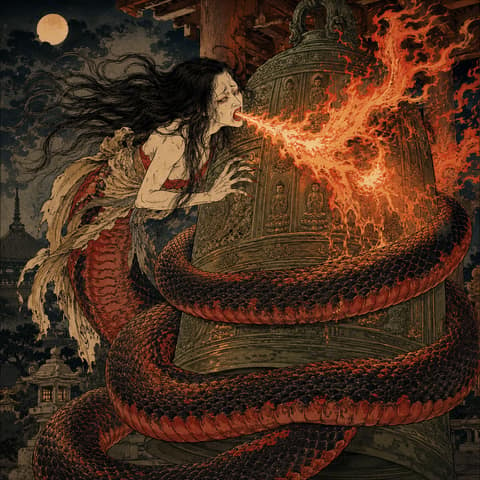
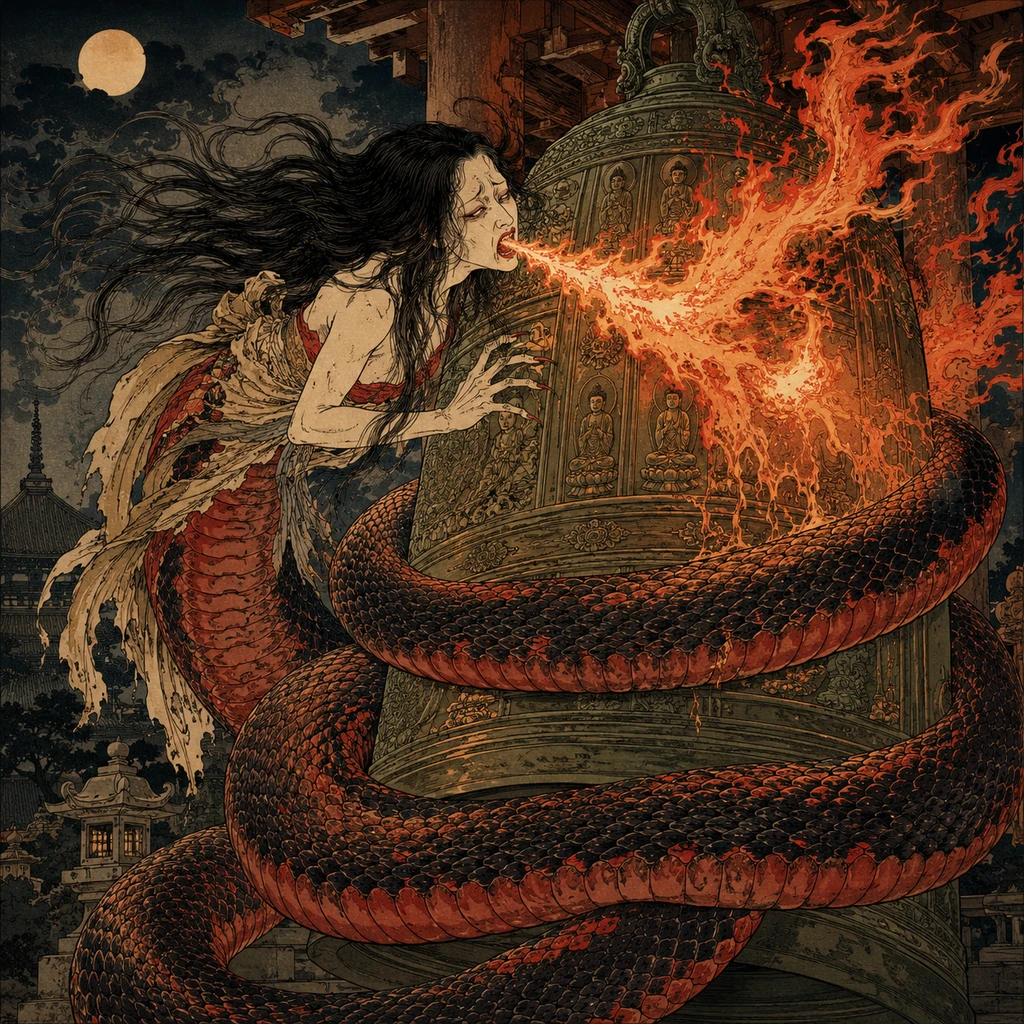
Kiyohime is the serpent woman from the legend of Anchin and Kiyohime, passed down at Dojoji Temple in Kii Province. She fell in love with Anchin, a monk on a pilgrimage to Kumano. Believing he broke his promise, she chased him across the Hidaka River, transformed into a giant serpent, and burned Anchin to death as he hid inside the temple bell at Dojoji. Dojoji Temple claims this story took place in the year 928 (Encho 6) and it was recorded in the 11th-century *Hokke Genki*, later expanding into the "Dojojimono" plays of Noh, Ningyo Joruri, and Kabuki . In older tales, the woman's name was not fixed; she became established as "Kiyohime" through later temple legends, picture storytelling (etoki), and performing arts. As a yokai, Kiyohime is not a serpent deity in her own right, but a liminal being whose human love was burned by jealousy and obsession into a serpentine form. Much like Hannya and Hashihime, she is a representative demoness (kijo) whose grudge gained a face, a body, and fire.
Read more安珍は、二度と清姫のもとへは戻らなかった。熊野での参詣を終えた帰路、約束を反故にして道を急ぐ安珍を、裏切りに気づいた清姫は半狂乱で追う。一説に、日高川の渡し守は安珍を対岸へ渡したのち、追ってきた清姫を渡すことを拒んだという。川を前にして、行き場を失った清姫の身は、変わりはじめる ── 髪は逆立ち、目は炎を宿し、白い肌は鱗に覆われていった。
裏切りを知った清姫の情念は、すさまじい形をとる。逃げる安珍を追ううちに、清姫はついに大蛇と化し、日高川を泳ぎ渡って安珍に迫った[2]。恋しさが、そのまま人を蛇に変えてしまう ── 愛と憎しみが裏返るこの一瞬こそ、この物語の核心である。
鐘に巻きつく蛇
追いつめられた安珍は、道成寺へ逃げこむ。僧たちは安珍を釣り鐘の中に隠した。だが蛇と化した清姫は鐘に巻きつき、口から吐く炎で、鐘もろとも安珍を焼き殺してしまう[2]。
道成寺の鐘は、こうして悲劇の舞台装置となった。逃げこんだ先が、そのまま焼かれる棺となる ── 鐘という、本来は仏法を告げる清らかな器が、嫉妬の炎に焼かれる凄惨な現場に転じる逆説が、この物語に忘れがたい印象を刻む。焼け落ちた鐘ののち、再び鋳られた二代目の鐘もまた災いをもたらしたため、長く山中に捨て置かれたとも伝えられ、道成寺の鐘そのものが、清姫の怨念を帯びた存在として語りつがれてきた。実際、道成寺には今、鐘がない。焼け落ちた初代ののち再び鋳られた二代目の鐘も、撞くたびに災いを呼ぶとして恐れられ、ついに山中へ捨て置かれたと伝わる。その鐘はやがて人の手を渡り、今は京都の妙満寺に納められているという。鐘の寺でありながら鐘を持たない ── その事実そのものが、清姫の情念の深さを、無言のうちに物語っている。
伝説の成り立ち
この物語は、一度に完成したわけではない。原型は十一世紀の『大日本国法華験記』や『今昔物語集』にさかのぼるが、そこではまだ登場人物に名はなく、紀伊の道を行く僧と、彼に懸想した寡婦の物語として語られていた[2]。
名が与えられるのは、ずっと後のことである。「安珍」の名は元亨二年(一三二二)の『元亨釈書』に、「清姫」の名にいたっては寛保二年(一七四二)の浄瑠璃にようやく現れる[2]。無名の僧と寡婦の説話が、数百年をかけて安珍·清姫という固有の悲恋へと結晶していったのである。室町期の『道成寺縁起』絵巻は、この物語を絵で詳細に描き、寺では今も「絵解き説法」として語り伝えられている[1]。
鐘と舞 ── 能《道成寺》
安珍清姫の物語は、芸能の世界で頂点をきわめた。能《道成寺》をはじめ、歌舞伎『京鹿子娘道成寺』、文楽など、数えきれぬ作品がこの伝説から生まれた[2]。
なかでも能《道成寺》は、シテ方にとって最大級の難曲として知られる。再興された鐘の供養の日、一人の白拍子が現れて舞ううち、「乱拍子」と呼ばれる息詰まる緊張の足拍子をへて、白拍子はやにわに鐘の中へ飛びこむ ── 「鐘入り」である。再び姿を現したとき、彼女は蛇体の鬼女と化している。実際に巨大な鐘の作り物を吊り、その中へ跳び入るこの演出は、能のなかでも際立って劇的で、危険をともなう。清姫の情念は、舞台の上でくりかえし蘇りつづけてきた。
歌舞伎では『京鹿子娘道成寺』として、きらびやかな女方の舞踊へと昇華された。鐘供養の場に現れた美しい白拍子·花子が、次々と衣裳を変えながら恋の手習いを舞い、最後に蛇の本性をあらわす ── 能の凄絶を、絢爛たる色彩美へと転じたこの一幕は、歌舞伎舞踊の最高峰の一つに数えられる。能·歌舞伎·文楽にまたがる「道成寺物」と呼ばれる一群の作品は、いまも繰りかえし舞台にかけられている。
蛇になった女
安珍清姫の物語が千年語りつがれてきたのは、それが人の心の最も激しい部分に触れるからである。
愛されたいという願いが、裏切りによって憎しみへと反転し、ついには人の姿すら捨てさせる。清姫の蛇身化は、嫉妬や情念によって女が鬼·蛇へと変わる「女性変身譚」の、もっとも鮮烈な一例である。宇治の橋姫、能《鉄輪》の女、安達ヶ原の鬼婆 ── 日本の説話には、情念のはてに異形と化す女たちが、数多く語られてきた。清姫はその系譜の頂点に立つ。節分に鬼を追い払う行事や、各地に伝わる鬼女の物語と同じく、清姫の蛇身もまた、人の心にひそむ制御しがたい力を、目に見える異形のかたちで描き出したものといえる。
恵みであるはずの恋が、人を異形に変える。道成寺の鐘は、その恐ろしくも哀しい真実を、今も静かに語りつづけている。和歌山県全体の妖怪文化については、和歌山県の妖怪事典も併せて読まれたい。