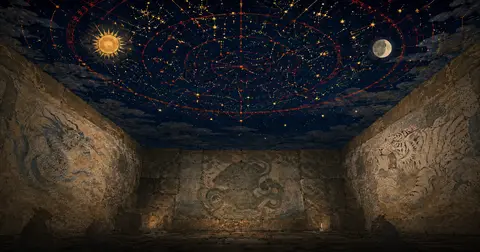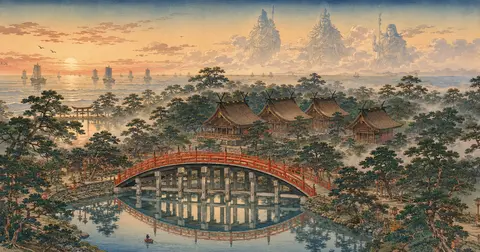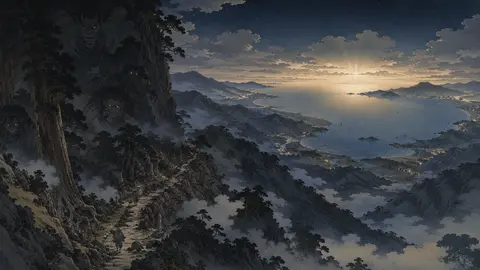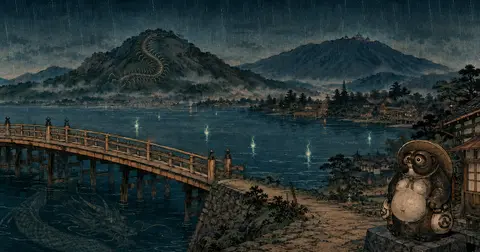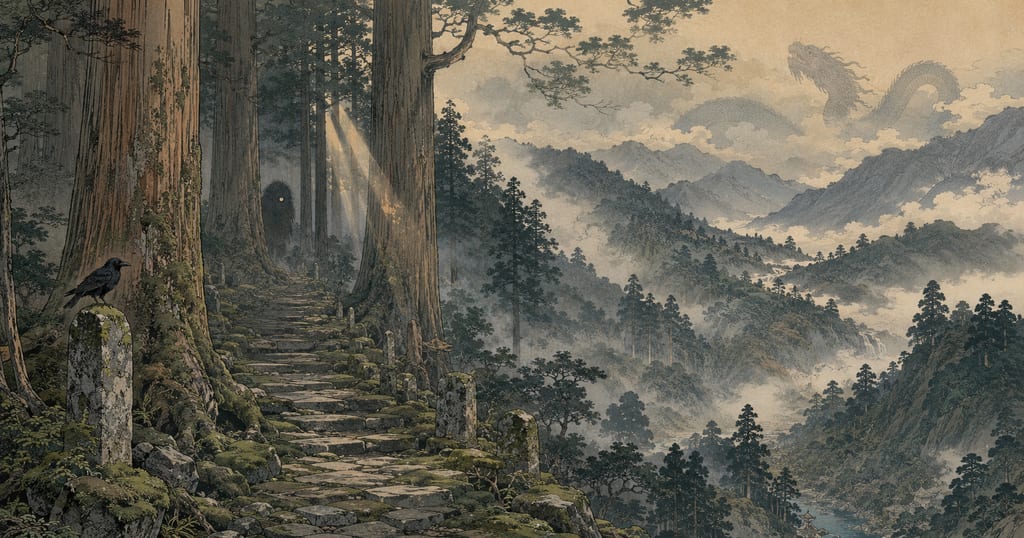
At the southern tip of the Kii Peninsula, among reefs washed by the Kuroshio Current and the folds of the Kii Mountains—said to be the deepest in Honshu—lies Wakayama Prefecture, formerly known as Kii Province. When speaking of the yokai of this land, one must first recognize the fact that it holds two of Japan's greatest sacred sites. One is the Kumano Sanzan (the Three Grand Shrines of Kumano), and the other is Mount Koya. Kumano is both an otherworld where the dead go and a pure land of resurrection, while Mount Koya was established by Kukai as the fundamental training ground for Shingon Esoteric Buddhism. In a land where the sacred is concentrated to its utmost limits, the grotesque and the supernatural are born just as densely as its flip side.
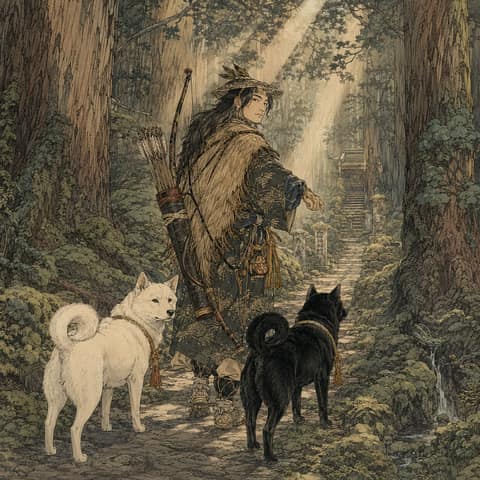
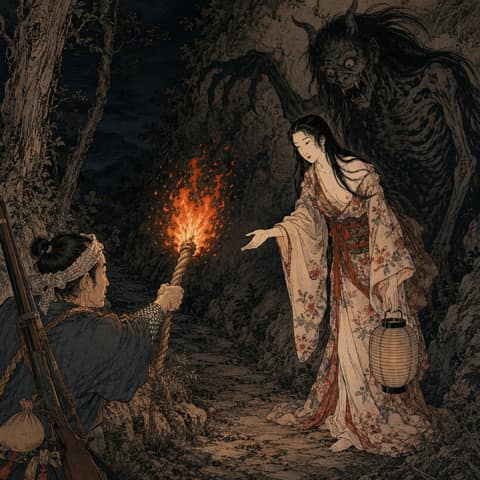
Two threads run through the mysteries of Kii. The first is the "road leading to the sacred sites." On the Kumano Kodo, trodden by processions of pilgrims so numerous they were called the "ant-like Kumano pilgrimage," an *okuri-suzume* chirps on the night roads, an *ippon-datara* leaves single-footed tracks in the mountains of Hatenashi, and a woman deep in the mountains approaches a lantern asking, "Lend me some fire." The second thread is "the passion that transforms into a serpent's body." The tale of Dojoji Temple, where a betrayed woman turns into a giant serpent and burns a man to death along with a bell, vividly depicts the moment human emotion turns into a monster right in the midst of a religious path. The land of the gods and the karma of those who travel there—these two elements cultivated the yokai of Kii.
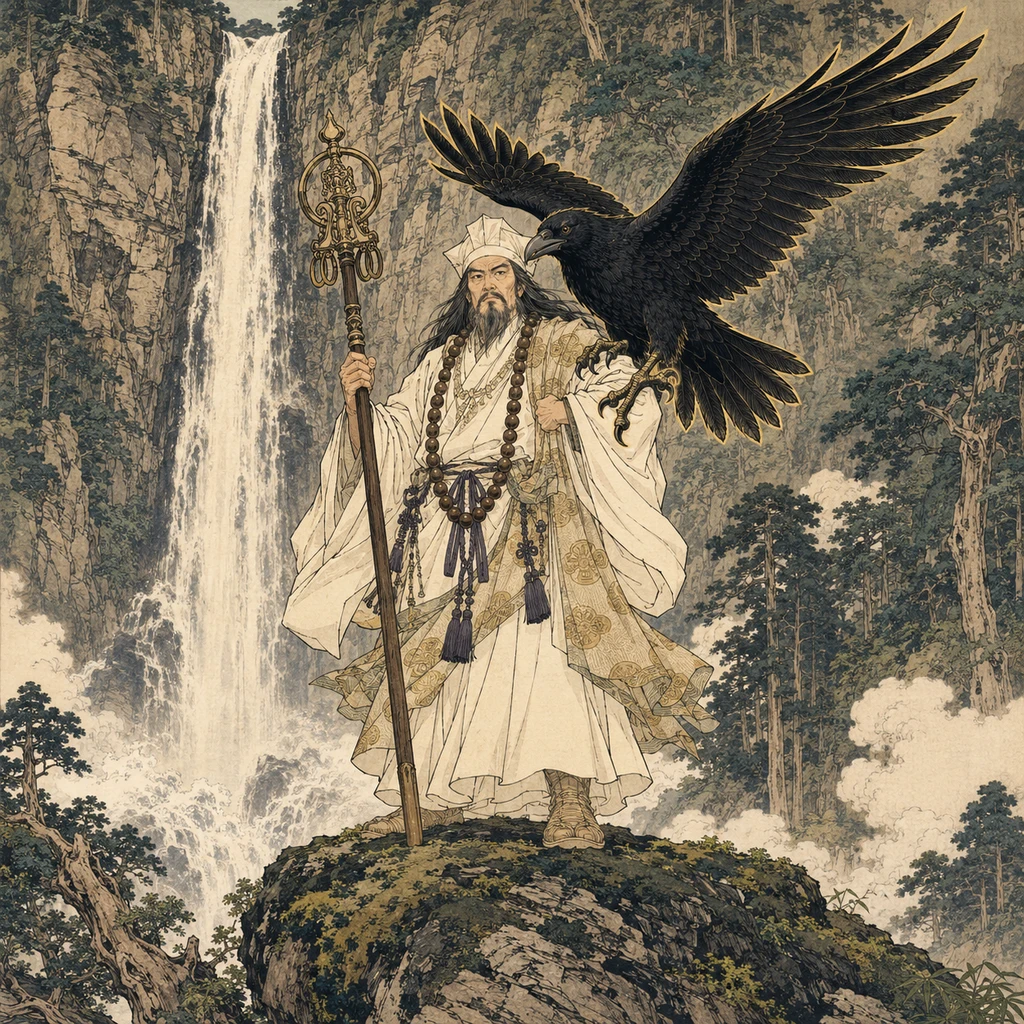
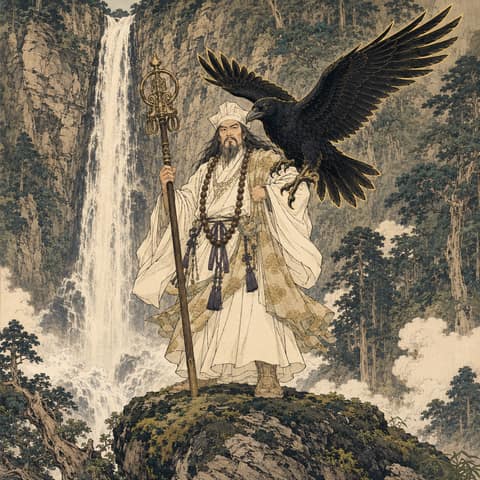
Kumano Gongen
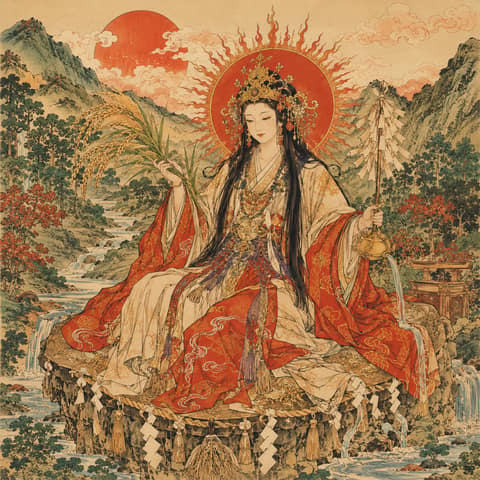
Kumano Gongen is the collective name for the deities enshrined at the Kumano Sanzan (the Three Grand Shrines of Kumano: Kumano Hongu Taisha, Kumano Hayatama Taisha, and Kumano Nachi Taisha). It stands as a symbolic entity of Shinbutsu Shugo, the high-level syncretism of Japan's ancient nature worship (Shinto) and Buddhism. The term "Gongen" means that a Buddha or Bodhisattva has "temporarily" (Gon) "manifested" (Gen) in the form of a Japanese Kami (god) in order to save the sentient beings of Japan. Kumano has long been a sacred land surrounded by steep mountains, deep forests, and the sea, where primal mountain worship—rooted in awe of giant stones, waterfalls, and great rivers—thrived. When Buddhist Pure Land doctrines and the ascetic systems of Shugendo merged with this foundation, Kumano Gongen developed into a powerful object of faith that promised both "salvation in this world" and "rebirth in the Pure Land in the next." From the late Heian period through the Kamakura period, retired emperors frequently made imperial pilgrimages (Kumano Miyuki) there. Eventually, it became Japan's greatest sacred site, attracting people of all classes, genders, and states of purity, creating such endless lines of pilgrims that the phenomenon was dubbed the "Ants' Pilgrimage to Kumano."
Read moreKumano:
Land of the Gods and Yatagarasu
The roots of Wakayama's yokai culture lie in the Kumano Sanzan. The Kumano faith, centered around these three shrines—Kumano Hongu Taisha, Kumano Hayatama Taisha, and Kumano Nachi Taisha—was born from a primordial awe of Kii's steep mountains, deep forests, waterfalls, and giant boulders, upon which the pure land ideology of Buddhism and the ascetic practices of Shugendo were layered multiple times[1]. Kumano Gongen is the collective name for the deities enshrined in these three locations, and the name "Gongen" (meaning "temporary manifestation") perfectly illustrates the *honji suijaku* ideology, which posits that Buddhas and Bodhisattvas temporarily assumed the forms of Japanese gods to save the masses.
What makes Kumano unique is its overwhelming inclusivity. In an era when many temples and shrines enforced strict prohibitions against women and avoided impurities, Kumano Gongen accepted everyone without discrimination—from nobles to commoners, men and women alike, and even the sick. This attitude of salvation, "abandoning no one," gave rise to the Imperial pilgrimages to Kumano (*Kumano Goko*) from the late Heian to the Kamakura period. Starting with Retired Emperor Uda, successive retired and cloistered emperors such as Shirakawa, Toba, and Go-Shirakawa made the journey from the capital to Kumano more than a hundred times over roughly 370 years[2]. Eventually, this pilgrimage fever transcended social class, and the sight of people lining up to walk the rugged paths became a frenzy famously dubbed the "ant-like Kumano pilgrimage."
Walking the treacherous mountain paths was in itself a grand ritual of rebirth: experiencing a simulated death, undergoing expiation and purification in a sacred land, and resurrecting to gain a new life. Kumano is simultaneously a pure land and the otherworld of Yomi where the spirits of the dead go—this dual nature as a boundary between life and death forms the very foundation of the Kumano Gongen faith[1].
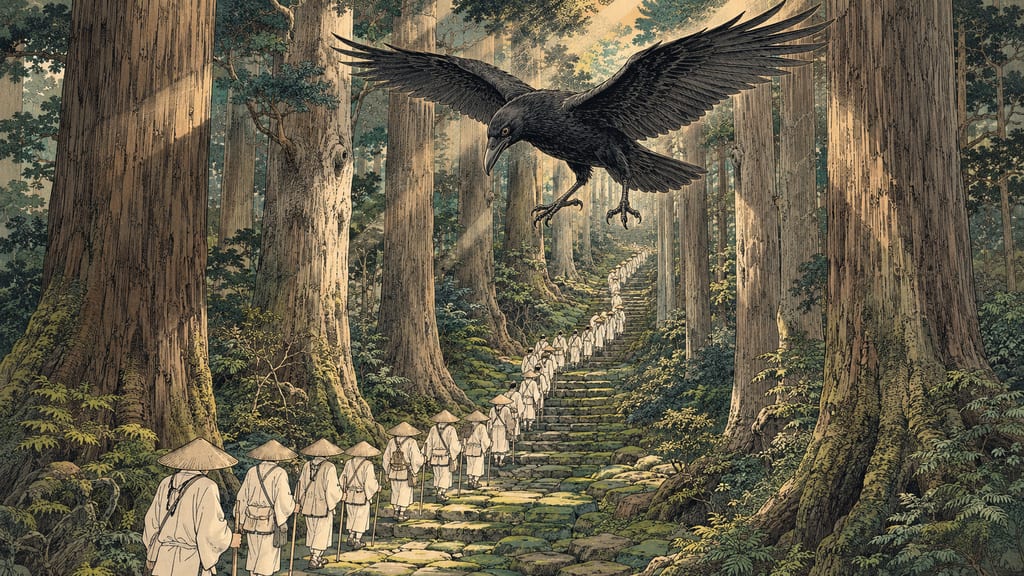
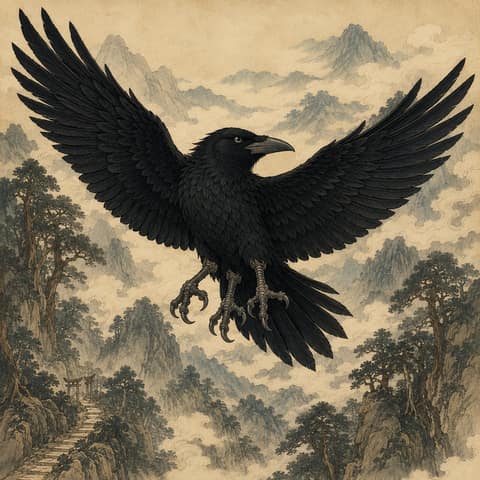
The three-legged sacred bird, Yatagarasu, said to have guided Emperor Jimmu to Kashihara in Yamato, is revered as Kumano's familiar precisely because this land was intrinsically a nexus point with the otherworld.
The Kumano faith was spread nationwide by *shugenja* (mountain ascetics) who guided people as pioneers (*sendatsu*), and female religious practitioners known as *Kumano bikuni*. Carrying the Kumano Kanshin Jikkai Mandala depicting hells and paradises, they traveled the country, planting Kumano's views of life and death into illiterate commoners through picture-telling (*etoki*). More than the sacred site itself, it was the "road" leading there and the mental imagery of those walking it—this is the first key to deciphering the yokai of Kii.
The first sacred site pilgrims from the capital reached during the Kumano Goko was Kumano Hongu Taisha[2]. Its main pavilions were originally situated at Oyunohara, a sandbank where the Kumano, Otonashi, and Iwata rivers merge, but after a massive flood in 1889 (Meiji 22) washed away many of the structures, it was relocated to its present site. This original location, sandwiched between water and mountains, was the very topography of a boundary separating the world of the living from the otherworld. The Yatagarasu being depicted with three legs is said to represent heaven, earth, and humanity, or perhaps because it is a sacred bird carrying the sun as Kumano Gongen's messenger; today, it is widely recognized as the symbol of Kumano.
The paradigm that the yokai of Kii are born from the anxieties of "those who walk the road" is inevitably derived from the geography of this Kumano faith. On the pilgrimage routes walked by everyone, the fears of travelers crystallized at every mountain pass, waterfall, and abyss. It is no coincidence that most of the monsters we will examine in the following sections appear on the mountain paths, riverbanks, and passes leading to the sacred sites.
The Woman Who Became a Serpent:
Dojoji and the Burned Bell
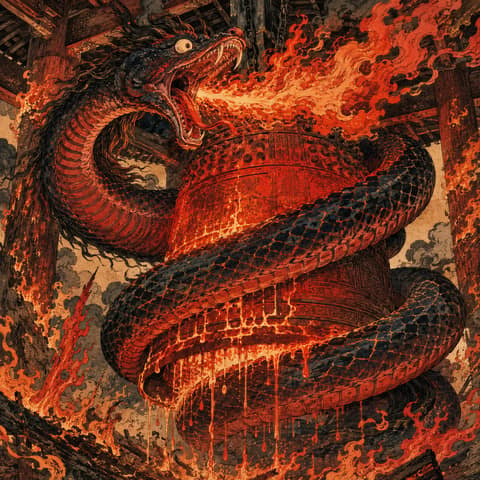
Right in the middle of that "road," the most famous story of human passion transforming into a monster is the Anchin-Kiyohime legend passed down at Dojoji, an ancient temple on the banks of the Hidaka River. Dojoji dates this event to the year 928 (Encho 6), organizing the records found in the 11th-century *Dainihonkoku Hokkegenki* and later adopted into the *Konjaku Monogatarishu*[3].
Anchin, a young monk aiming for Kumano Hongu from Shirakawa in Oshu, rents a room for a night in Kii's Manago (present-day Tanabe City). The innkeeper's daughter, a woman later known as Kiyohime, falls in love with Anchin at first sight. Feigning that he will stop by again on his return journey, Anchin leaves the woman behind, breaks his promise, and flees. Discovering the betrayal, the woman's pursuit shifts from a human sprint into a supernatural metamorphosis. When a ferryman at the Hidaka River refuses to launch a boat for her, she throws herself into the river in a rage and crosses the water transformed into the body of a serpent[3].
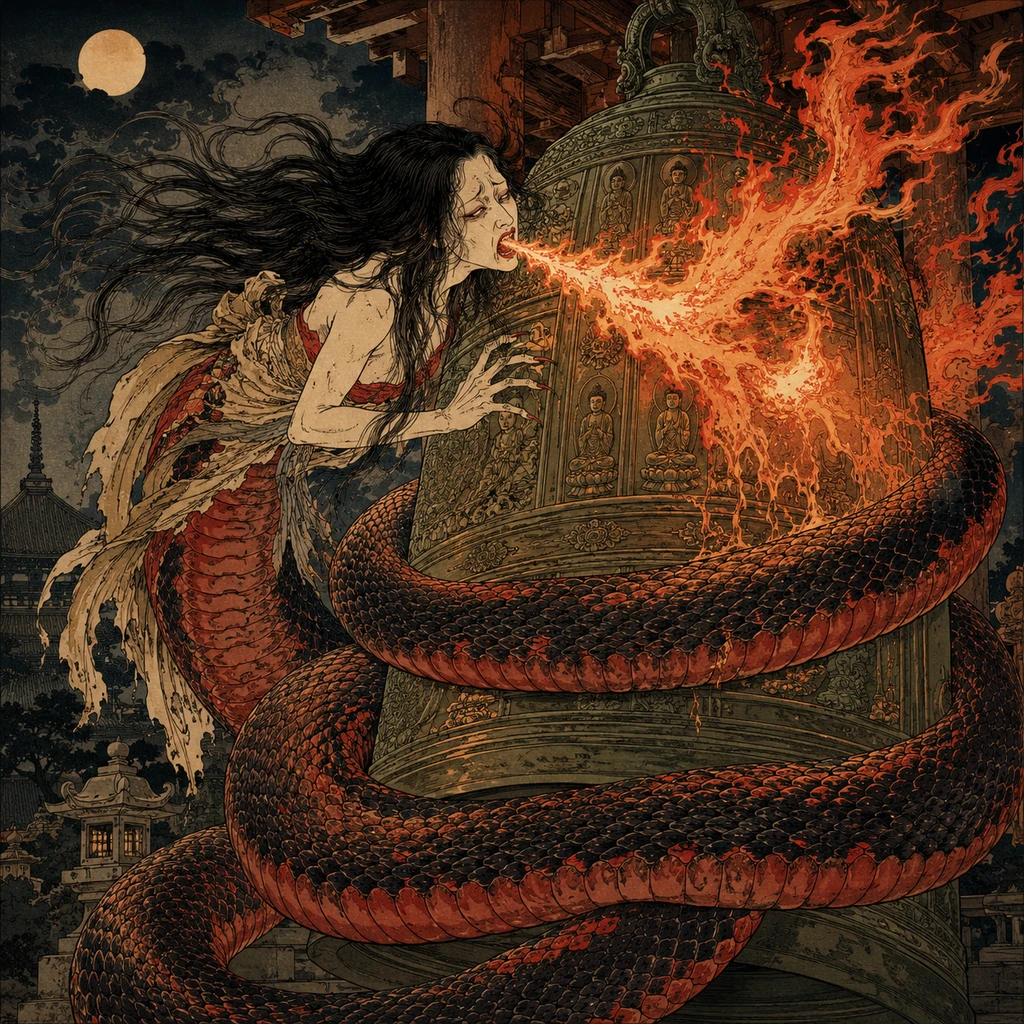
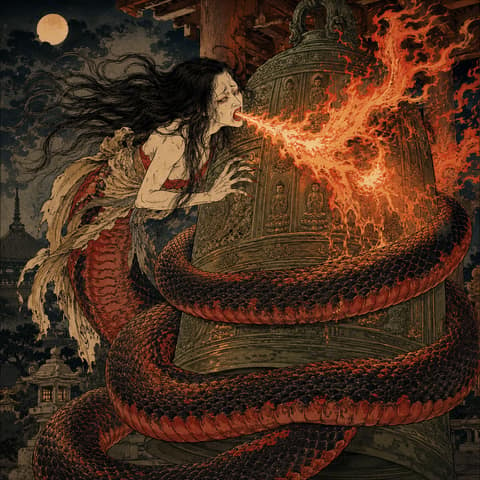
Kiyohime
Kiyohime is the serpent woman from the legend of Anchin and Kiyohime, passed down at Dojoji Temple in Kii Province. She fell in love with Anchin, a monk on a pilgrimage to Kumano. Believing he broke his promise, she chased him across the Hidaka River, transformed into a giant serpent, and burned Anchin to death as he hid inside the temple bell at Dojoji. Dojoji Temple claims this story took place in the year 928 (Encho 6) and it was recorded in the 11th-century *Hokke Genki*, later expanding into the "Dojojimono" plays of Noh, Ningyo Joruri, and Kabuki . In older tales, the woman's name was not fixed; she became established as "Kiyohime" through later temple legends, picture storytelling (etoki), and performing arts. As a yokai, Kiyohime is not a serpent deity in her own right, but a liminal being whose human love was burned by jealousy and obsession into a serpentine form. Much like Hannya and Hashihime, she is a representative demoness (kijo) whose grudge gained a face, a body, and fire.
Read more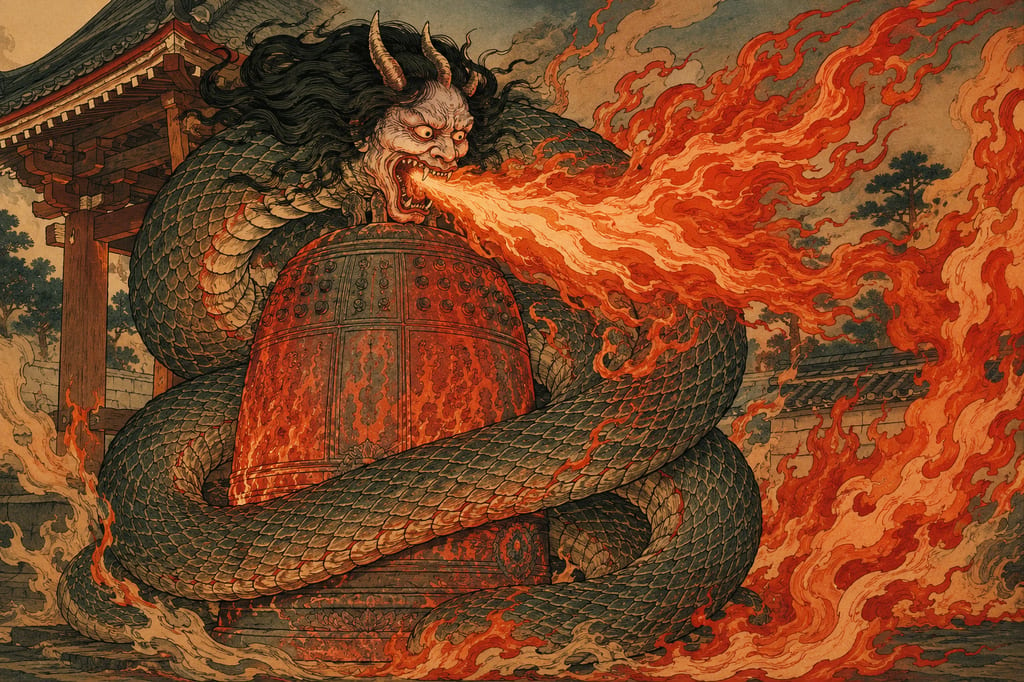
Anchin, having fled into Dojoji, is hidden inside a temple bell by the monks. However, the serpent-turned-Kiyohime coils tightly around the bell multiple times, and with the blazing heat of her body, she burns Anchin to ash along with the bell. What is crucial here is that Kiyohime was not a monster from the start. A broken promise, infatuation, shame, jealousy, and a deep distrust of a religious man all layered together at once, causing a single human woman to turn into a serpent. Unlike primordial giant serpent monsters like Yamata no Orochi, Kiyohime exists much closer to the "coexistence of anger and sorrow" represented by a Hannya mask[4].
And the other protagonist of this story is the burned bell itself.
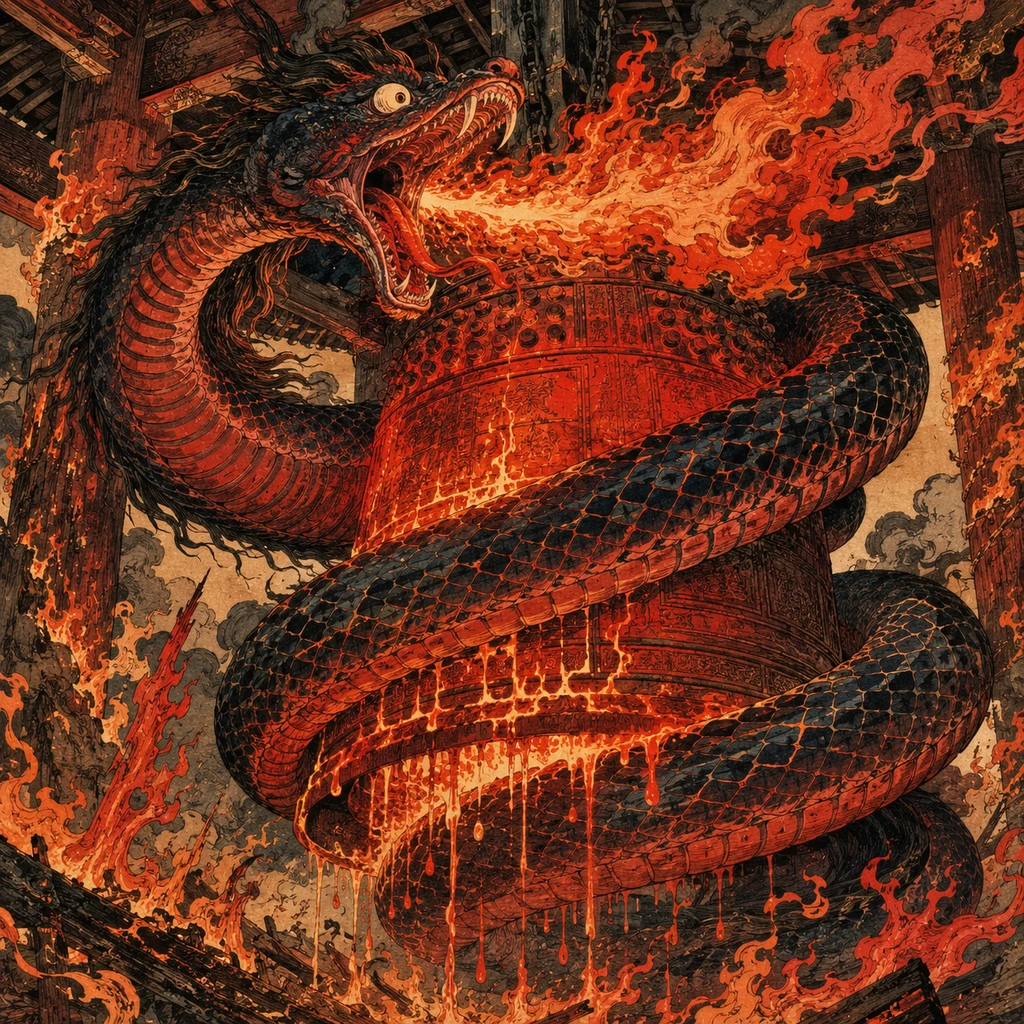
The Dōjōji Bell
The great temple bell famed in the Dōjōji legend. When the monk Anchin hid inside the bell, a woman whose love had turned to vengeful fury transformed into a serpent, coiled around it, and scorched it with searing heat. Traditions diverge: some describe a Noh-style image of the bell turning to boiling water that swallows the monk, while other engi accounts say the fire was quenched and the bell survived. Toriyama Sekien illustrated this variant as “Dōjōji Bell” in Konjaku Hyakki Shūi.
Read moreThe traditions regarding the Dojoji Bell fluctuate greatly among various texts. In the *Dojoji Engi* (Legends of Dojoji), the woman becomes a serpent, wraps around the bell, spews fire, and after burning for a long time, the fire is extinguished with water and the bell is removed. Conversely, the Noh play *Dojoji* narrates that "the bell instantly became molten metal" and swallowed the ascetic, heavily emphasizing the depiction of the bell melting away from the heat[4]. Toriyama Sekien illustrated the "Dojoji Bell" in his *Konjaku Hyakki Shui*, noting that "the bell melts and becomes molten metal," while simultaneously documenting the fact that the bell had been relocated to another temple at the time. No object better illustrates how supernatural anomalies are varied and modified through the transmission process than this bell.
What makes this story unique to Kii Province is its placement upon the concrete religious path of the Kumano pilgrimage. Anchin was a pilgrim monk heading to Kumano Hongu from Shirakawa, and Kiyohime's inn was located in Manago along the Kumano Kodo. In other words, the Anchin-Kiyohime legend is established using the pilgrimage route of the "ant-like Kumano pilgrimage" we saw in the previous section as its stage setting. It is exactly because it is a pure road leading to a sacred site that a broken promise and betrayed passion transform into an even deeper sin and anomaly—the story of Dojoji could not have been born without the geography of the Kumano faith. In Hidakagawa Town, the remnants of the ferry crossing where Anchin is said to have crossed, and mounds said to be Kiyohime's grave, are scattered to this day, indicating how deeply the story has taken root in the land.
The story of Dojoji was re-enacted countless times not only as temple origin legends but through picture-telling and performing arts. At Dojoji today, monks still continue the "picture-telling sermons" (*etoki seppo*), narrating the story while unrolling picture scrolls, allowing visitors to hear the tragic love of Anchin and Kiyohime in a living voice. In the Noh play *Dojoji*, a female dancer (*shirabyoshi*) appears at the site of a bell dedication ceremony—where women are forbidden—dances her way toward the bell, and finally leaps inside it. Soon after, a serpent-bodied demoness emerges from within the bell and is pacified by the monks' prayers. The tragic romance of the past is thus rebooted as a "current supernatural anomaly" on stage. The "bell entry" (*kane-iri*), where the actor disappears into the bell, is known as one of the most difficult pieces in the Noh repertoire[4]. In the early modern period, this expanded into Ningyo Joruri (puppet theater), Kabuki, and traditional dance, creating a massive lineage of Dojoji-related works centered around "Musume Dojoji" (The Maiden at Dojoji)[5]. Kiyohime is no longer merely a cautionary tale of a "jealous woman" but has become a robust nexus connecting temple origins, Kumano pilgrimage routes, bell dedications, stage performing arts, and snake worship.
Koya and the Deep Mountains of Kii:
Tengu,
Ippon-datara,
and Okuri-suzume
If Kumano is a sacred site opening up to the southern sea, Mount Koya is the one towering over the northern mountains. In 816 (Konin 7), Kukai (Kobo Daishi) obtained permission from the Imperial Court to establish a basin surrounded by peaks of about a thousand meters in elevation as the fundamental training ground of Shingon Esoteric Buddhism[6]. The nature of this land, where practitioners seclude themselves in the deep mountains to hone their spiritual powers, naturally overlapped with the territory of the Tengu, the lords of the mountains.
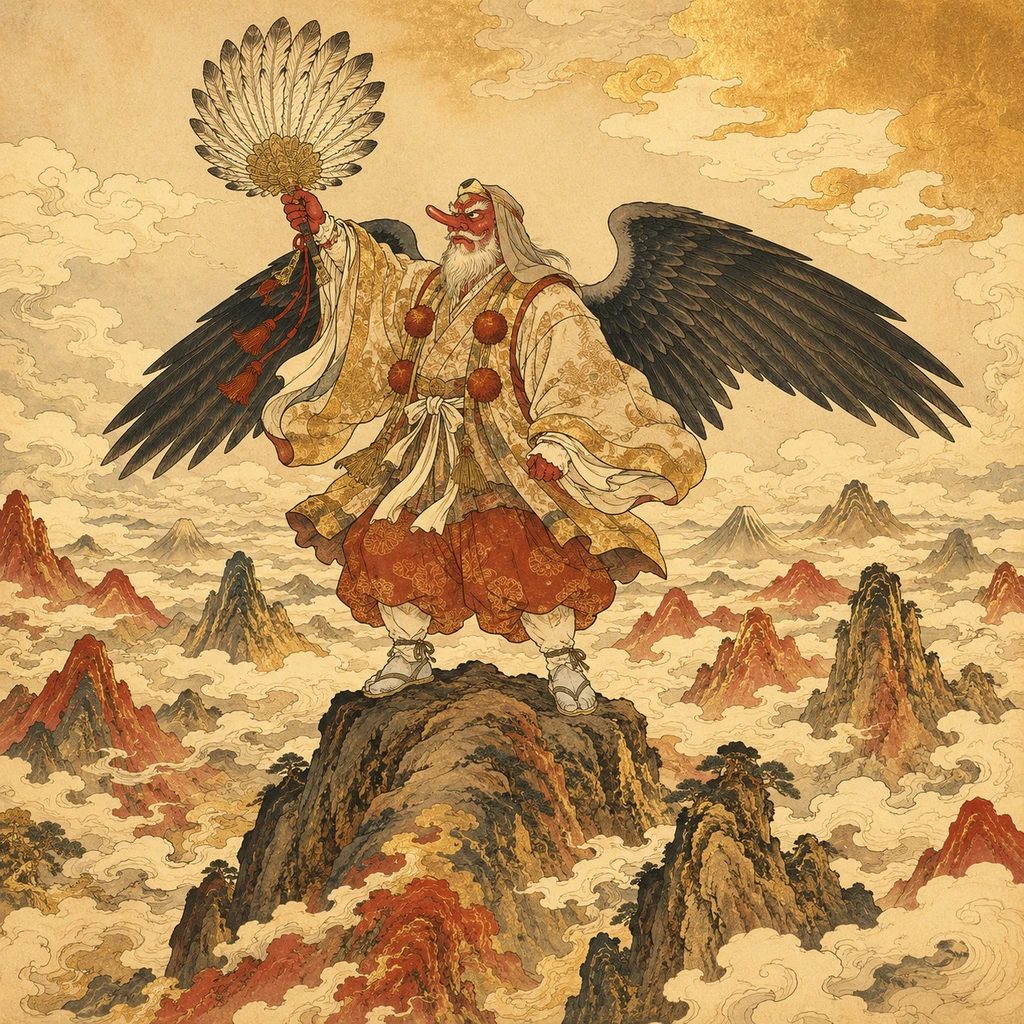
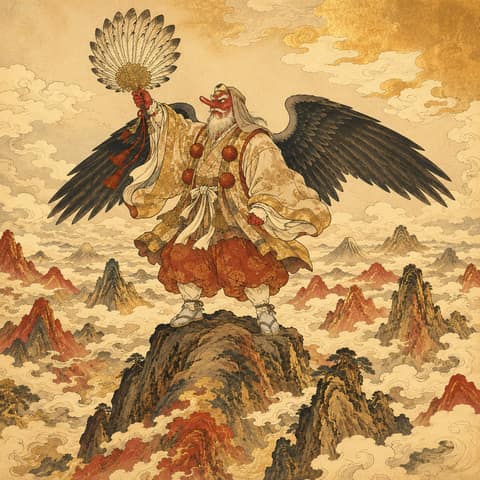
Tengu
The tengu is a yokai and quasi-divine being said to dwell in the mountains of Japan, a lord of the heights inseparably bound to the yamabushi ascetics of Shugendō. Its forms fall broadly into two lineages. One is the long-nosed tengu, with a ruddy face and high nose, clad in the garb of a mountain ascetic, bearing a feather fan and one-toothed high clogs; the other is the crow tengu, with a crow's beak and wings, and beneath them follow lesser kin such as the leaf tengu and the wood-chip tengu. What was once conceived as a bird like a black kite hardened, over the medieval period, into the image of the long-nosed mountain ascetic. The tengu is at once a demon that obstructs the Buddhist Law and, once subdued, a guardian deity who protects it—this dual nature is the essence of the tengu. The notion that an arrogant high monk falls and becomes a tengu was bound to the Buddhist "way of the tengu," and was depicted as satire in late-Kamakura picture scrolls. Within mountain worship, on the other hand, the tengu was revered as guardian of the mountain and master of martial and magical arts, a being that tests or guides the practitioner. From Mount Kurama and Mount Atago in Kyoto onward, each of the sacred mountains of the realm was said to have its own great tengu, and the early-modern Tengu Sutra counts their number at forty-eight.
Read moreTengu are lords of the mountain inextricably linked to mountain ascetics; their essence lies in their ambivalence—they are demons who obstruct the Buddhist law, yet once subjugated, they transform into guardian deities protecting it. The concept that arrogant high monks fall and become Tengu was tied to the "Tengu Realm" taught in Buddhism. The *Tengu Zoshi* from around 1296 (Einin 4) satirized the arrogant monks of famous temples in the southern capital (Nara) and northern peaks (Hiei) by comparing them to Tengu, well illustrating how they were conceptualized as "symbols of arrogance in the Buddhist path" during the Middle Ages. It was believed that a Great Tengu resided in each of the sacred mountains across the provinces, and the early modern *Tengu Kyo* counted their total number at forty-eight. Koya, a sacred site of Shugendo, was also feared as a mountain inhabited by such Tengu. People suddenly vanishing without a trace (Tengu abduction or spirited away), the echoing sound of giant trees being felled yet finding nothing the next morning (*Tengu-daoshi*), Tengu laughter reverberating through the mountains—the mysteries of the mountain were entirely attributed to the deeds of the Tengu.
There is a reason why Mount Koya overlaps with the territory of Tengu. Kukai learned esoteric Buddhism from Huiguo at Qinglong Temple in Chang'an, Tang China, and upon returning home, sought an isolated mountain deep in the wilderness as a fundamental dojo to save the masses. This secluded land surrounded by thousand-meter-class peaks is precisely a training ground separated from the secular world, and simultaneously a space where the spiritual aura of the mountains coalesces most densely[6]. Ascetics honing their spiritual powers, and Tengu testing or obstructing those powers, are paired entities born from the very same logic of the deep mountains. The inexplicable phenomena experienced by ascetics in the mountains of Koya—losing one's way, hearing voices, items vanishing—were trials of their training and, at the same time, proof that they had stepped into the domain of the Tengu.
Tengu are not the only monsters in the deep mountains. The Hatenashi mountain range, forming the border between Wakayama and Nara, was said to be inhabited by a mountain spirit with a single dish-like eye and one leg.
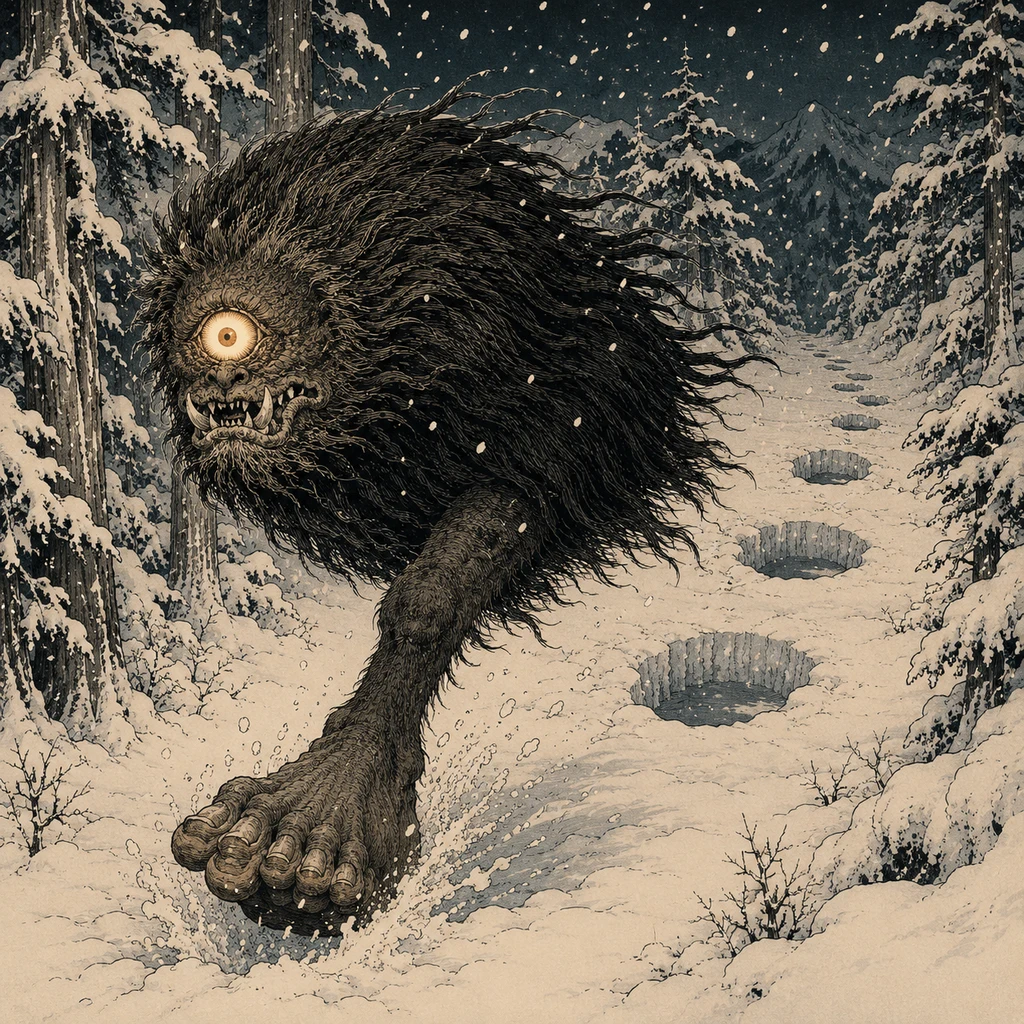
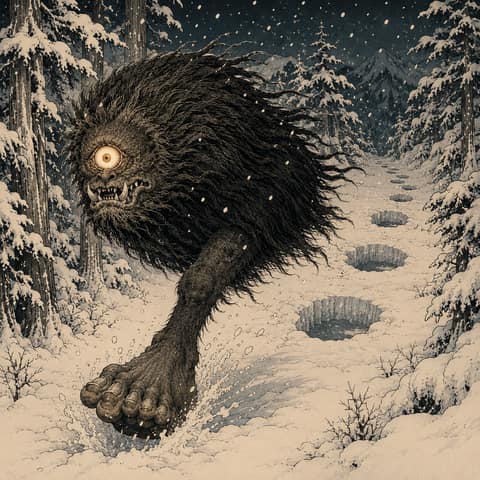
Ippon-Datara
Ippon-Datara is a mountain yokai said to appear as a one-eyed, one-legged being, best known from tales in Kumano (Kii) and Mt. Obagatake in Nara. It is famed for leaving a single, broad footprint in the snow, with few claiming to have seen its body. A well-known tradition says it appears only on December 20, the “Last Twentieth Day,” when entering the mountains is taboo. Folklore often links it to blacksmithing and the tatara furnace, sometimes interpreted as a fallen, one-eyed smithing deity.
Read more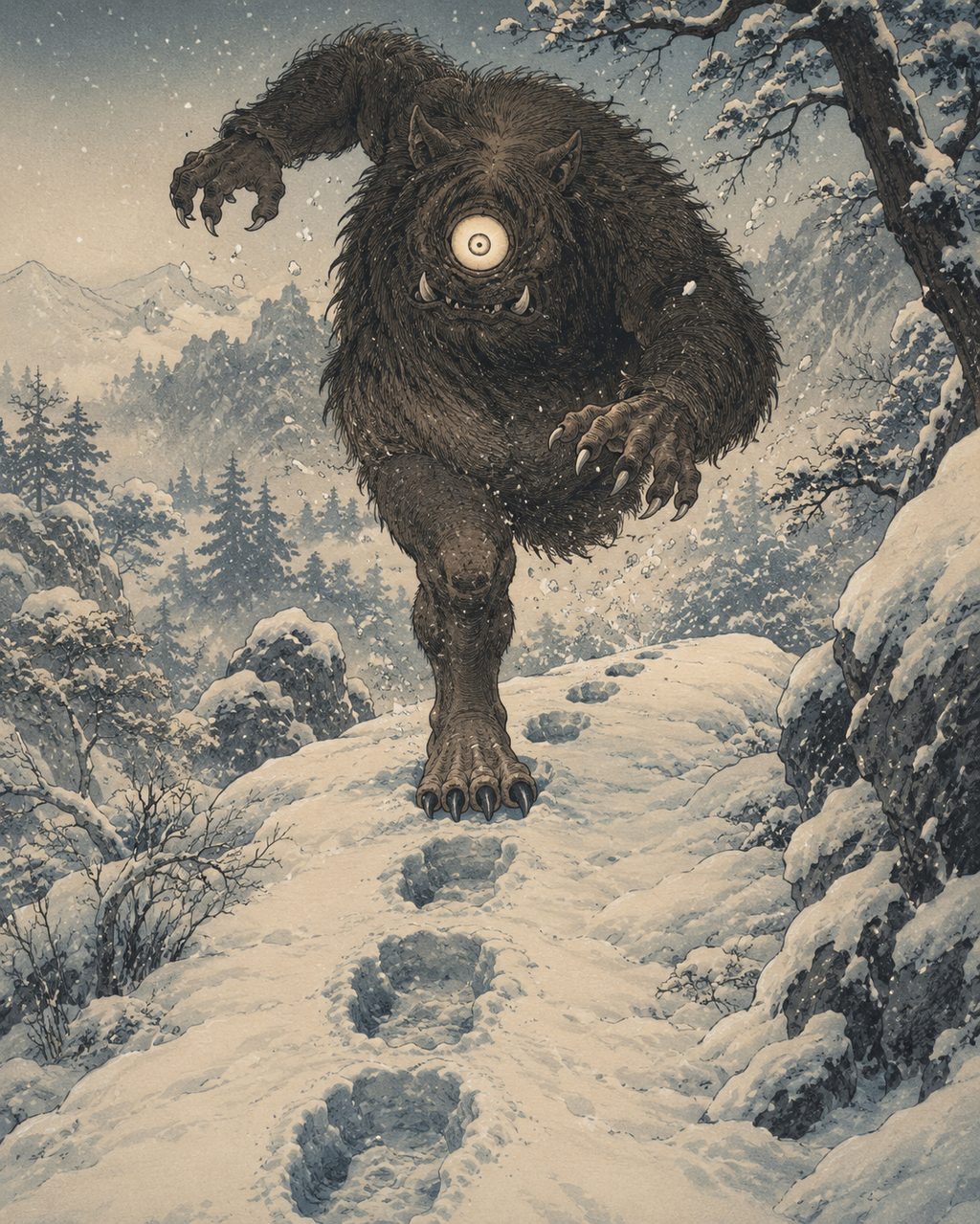
It is said that the Ippon-datara appears only on the "Hate no Hatsuka" (the Twentieth of the End, i.e., December 20th); no one has seen its form, and it supposedly leaves only a single track about a foot wide on the snow. It is said to run swiftly on one leg as if flying, and when it shouts, its voice causes the leaves of trees to scatter violently. Encountering it would result in sickness, so entering the mountains on this day was strictly forbidden. There is even a theory that the name "Hatenashi" (Endless) stems from the fact that human traffic completely ceases during this period[7]. At its core is the story of the Inosasa-o of Mount Obagamine in Nara. A giant boar with kumazasa bamboo growing on its back was shot down by a hunter, and its vengeful spirit turned into a one-legged demon (*oni*) that attacked travelers crossing the peak. The high priest Tansei sealed it away, permitting its release only on this one day each year, which is why "Hate no Hatsuka" became the perilous day of the peak[8]. Another tale states that a one-legged creature disguised as a beautiful woman appeared, and though a hunter from Amano shot at her, she caught the bullets barehanded and threw them back. Instructed by the deity of Niutsuhime Shrine, two of his shots struck true, and the woman begged, "Please let me take the lives only of those who pass by on Hate no Hatsuka"[8]. There is a modern interpretation connecting the name "datara" to iron-working *tatarashi*, viewing it as the fallen form of an artisan who pumped the bellows with one leg and constantly stared into the furnace fire with one eye, but this remains merely one theory[9].
What is fascinating is that the Ippon-datara is a living tradition still told today. In Nishimuro District, Wakayama Prefecture, there are cases where a Kashanbo—a type of *kappa* called "Gorai" that moved into the mountains and transformed—is referred to as an Ippon-datara[8]. Furthermore, in the spring of 2004, a single-legged footprint was found in Tonda, Shirahama Town, making the news as the "Gashanbo of Tonda"[8]. The heavy resonance of the place name Hatenashi and the taboo of a yearly perilous day weave this mountain spirit deeply into the mountain asceticism of Kii.
And on the night roads leading to the sacred sites, there is another unforgettable anomaly.
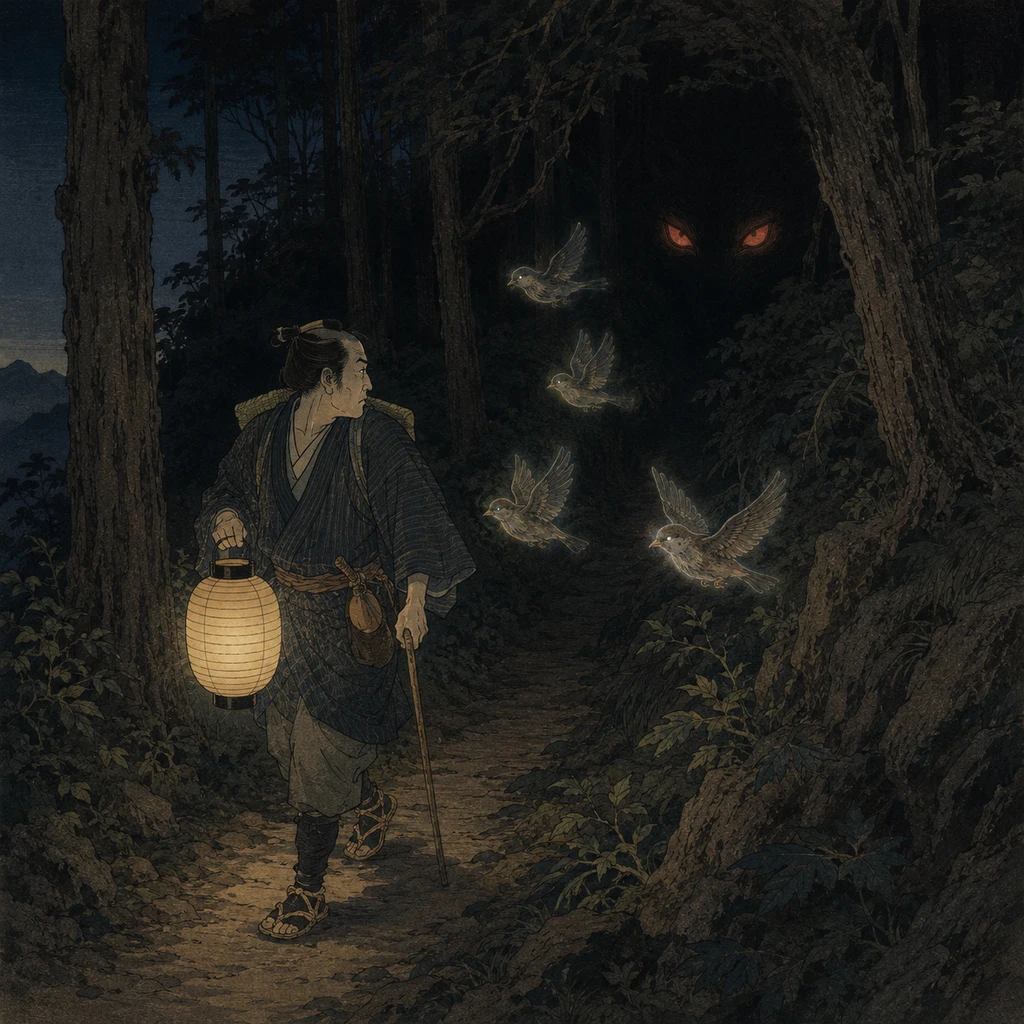 Escorting Sparrowoh-KOO-ree soo-ZOO-meh
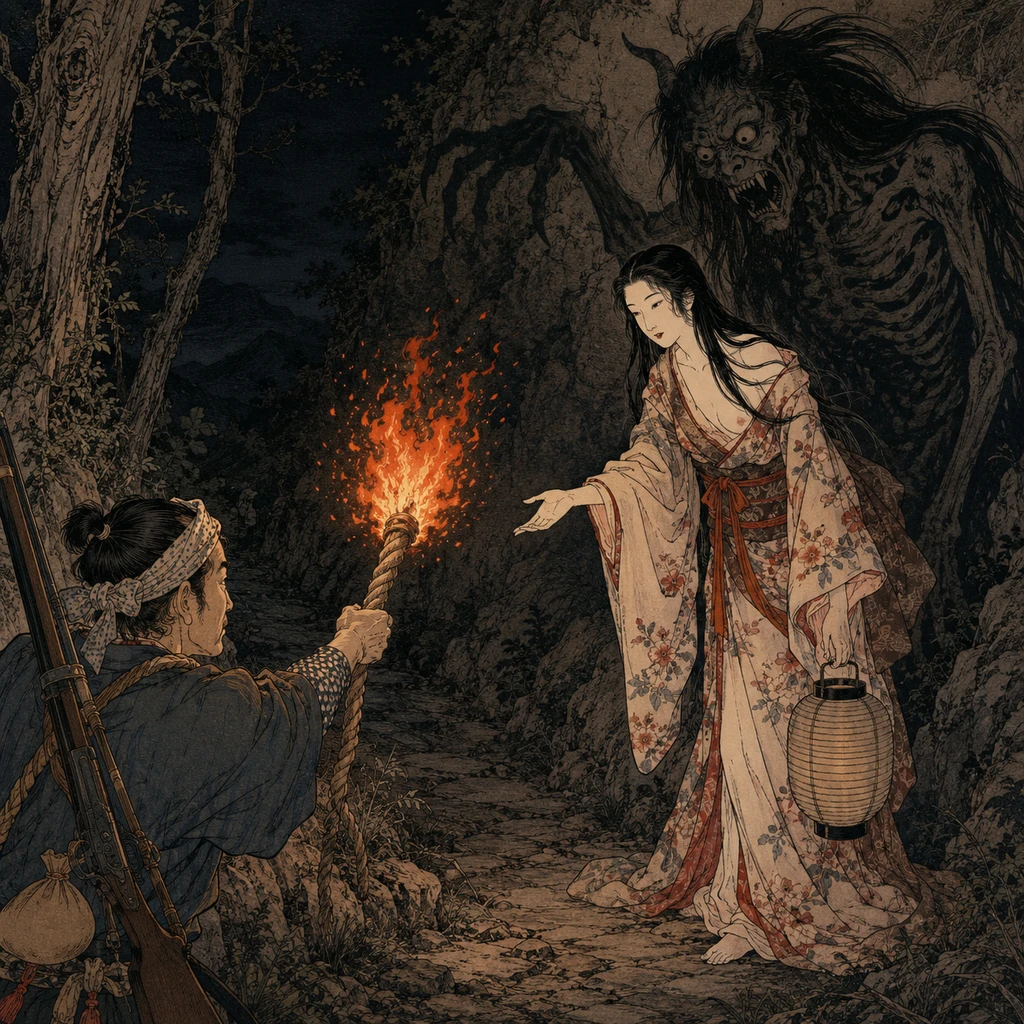 Meat-SuckerNEE-koo-soo-ee
 Tamehachi Foxtah-meh-HAH-chee GEE-tsue-neh
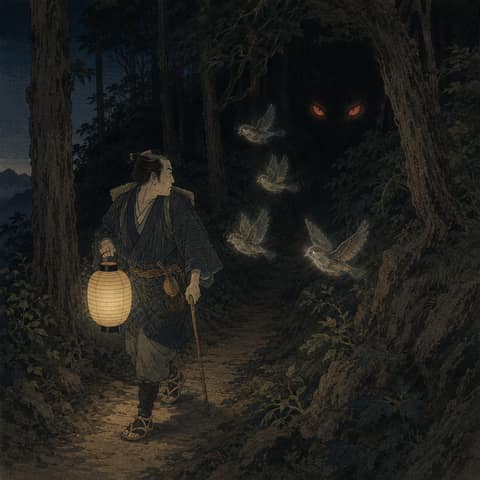
The Okuri-suzume (Sending Sparrow), spoken of around Myoho-zan Amida-ji on Mount Myoho—one of the three peaks of Nachi standing at an elevation of 749 meters—is a monstrous bird that follows people along night mountain paths, chirping "chi-chi-chi-chi." Since ancient times, Mount Myoho has been venerated as the final mountain climbed by the spirits of the dead, carrying a tradition of ringing the bell of the deceased, making it one of Kumano's most prominent sacred sites adjacent to the otherworld. This chirping was considered an omen that wolves, or the Okuri-okami (Sending Wolf), would appear next, and those who heard the voice would walk with great care, paying attention to their footing so as not to fall. It was feared that if one tripped on the path, they would immediately be attacked by the beasts. The chirping is sometimes likened to the actual black-faced bunting bird, earning it the alternative name "Aoji," but since it flies at night, theories doubting its equivalence to the black-faced bunting also coexist, and in Nara, it is sometimes equated with the Yosuzume (Night Sparrow)[10]. It was precisely at the foot of a sacred mountain climbed by the dead, on the night roads of pilgrimage, that such "sending" monsters were nurtured.
Appearing on the same night roads, and aiming much more directly for one's life, is the Niku-sui (Flesh Sucker). It approaches those traveling mountain paths with lanterns by taking the form of a beautiful eighteen- or nineteen-year-old woman, asking "Lend me some fire." Then, it snatches the lantern, disappears into the darkness, and bites into the person. This is a monster told in Wakayama's Hatenashi mountain range and the mountains of Kumano in Mie. Minakata Kumagusu, a titan of folklore studies based in Kii Tanabe, left records of the Niku-sui in his *Kishu Zokuden*. These include a story of a postal carrier encountering one on a night road in 1893 (Meiji 26) and driving it away by striking it with a lit matchlock fuse, and another where the hunter Genzo, called out to with "Genzo, lend me some fire" in the Hatenashi mountains, was alerted to the danger by a single wolf pulling his sleeve[11]. Near Totsukawa, it is said that a hunter, suspicious of the creature disguised as a young woman, shot it with a bullet engraved with a Buddha's name, reducing it to a skeletal monster. In the Edo-period *kibyoshi* (yellow-backed book) *Hyakki Yagyo Bakemonogatari*, it is also depicted indoors sucking the vitality out of a man, demonstrating the coexistence of two phases: mountain anomalies and the sensual expressions of the early modern metropolis. The admonition to carry fire-starters or lit fuses was a wisdom for survival, crystallized exactly out of the deep mountainous nature of Kii.
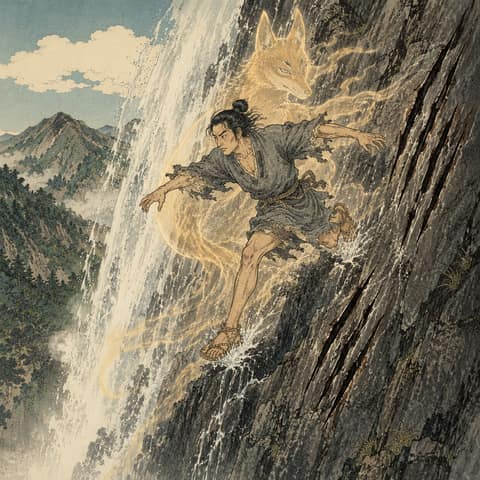
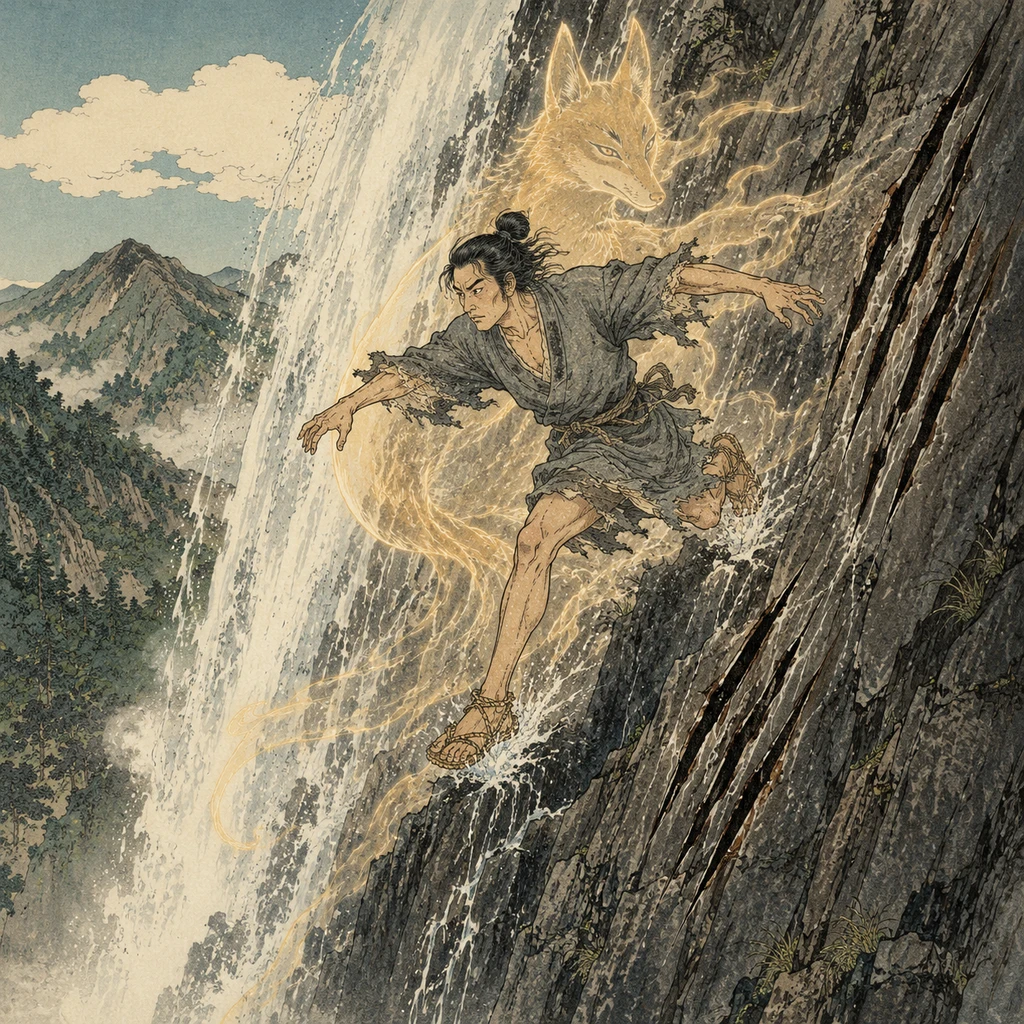
In Kitayama Village in Higashimuro District—known as Wakayama Prefecture's only exclave deep in Kii—there is a fox legend etched into the topography itself. The Tamehachi-gitsune is a fox said to have possessed a man named "Tamehachi," demonstrating its demonic power by crossing a precipice over a waterfall, with the striation marks remaining on the cliff serving as its proof. However, in Kitayama Village, another tradition claims that it was a serpent and a *shugenja* (Ikazuchi Bozu) who competed to cross the precipice, and because the *shugenja* fell while the serpent successfully crossed, the marks were left behind. The subject swaps among a fox, a serpent, or a *shugenja* depending on the storyteller or family lineage[12]. The real-life figures and dates are unknown, and it is best read as an anecdote where topographical legends and beliefs in possession spirits have intertwined. The essence of oral tradition is perfectly expressed in how the exact same cliff striation can be narrated interchangeably as "the demonic power of a fox," "the obsession of a serpent," or "the challenge and failure of an ascetic." This very imagination of the land—finding multiple distinct narratives even in a single line on a deep mountain cliff—is the thickness of storytelling unique to Kii, fostered by the people who ventured into the mountains of Shugendo.
Mysteries of the Sea and Villages:
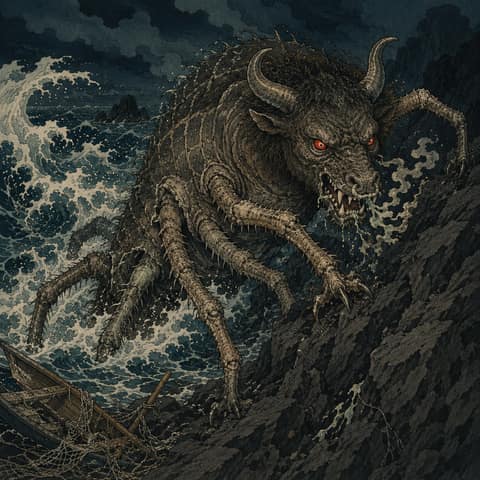
Ushi-oni
In contrast to the mountain roads leading to sacred sites, Kii has another face—that of the sea, washed by the Kuroshio Current. Appearing on these coastlines and in deep river pools is the Ushi-oni (Ox Demon).
Ushi-oni
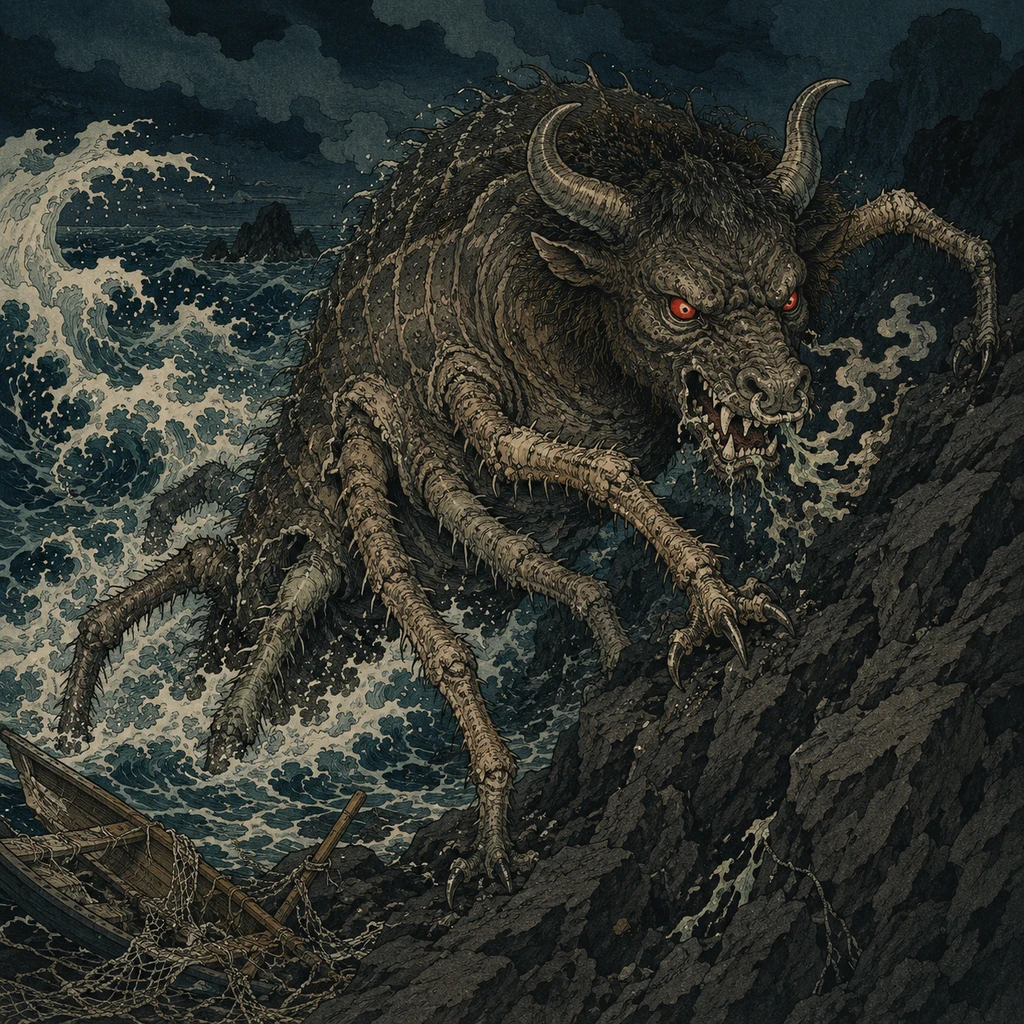
Ushi-oni appears chiefly on the coasts, in deep pools, and in the mountains of western Japan. It is among the fiercest and most numinous beings in the yokai tradition. Its body has no single form: some artists give it a bull's head on an oni's body, while others set the same head on the body of a spider. The Heian-period Pillow Book already names Ushi-oni among the things that inspire terror. Its most striking quality is a radical dual nature. In one guise, Ushi-oni is a cruel man-eater and bringer of disease that spreads poisonous breath without discrimination. In another, it leads a mikoshi procession and uses its tremendous force to drive away other evil spirits. Over time, a frightening presence in literature became part of regional worship and festival performance. Few yokai show so clearly how a destructive power could also be received as a guardian.
Read moreThe Ushi-oni is one of the most ferocious monsters appearing on the coasts and deep pools of western Japan, depicted in a variety of grotesque forms, such as an ox's head on an *oni*'s body, or an ox's neck on a spider's body. It is an entity feared since ancient times, so much so that it was singled out by name as a "terrifying thing" in the Heian-period *Makura no Soshi* (The Pillow Book).
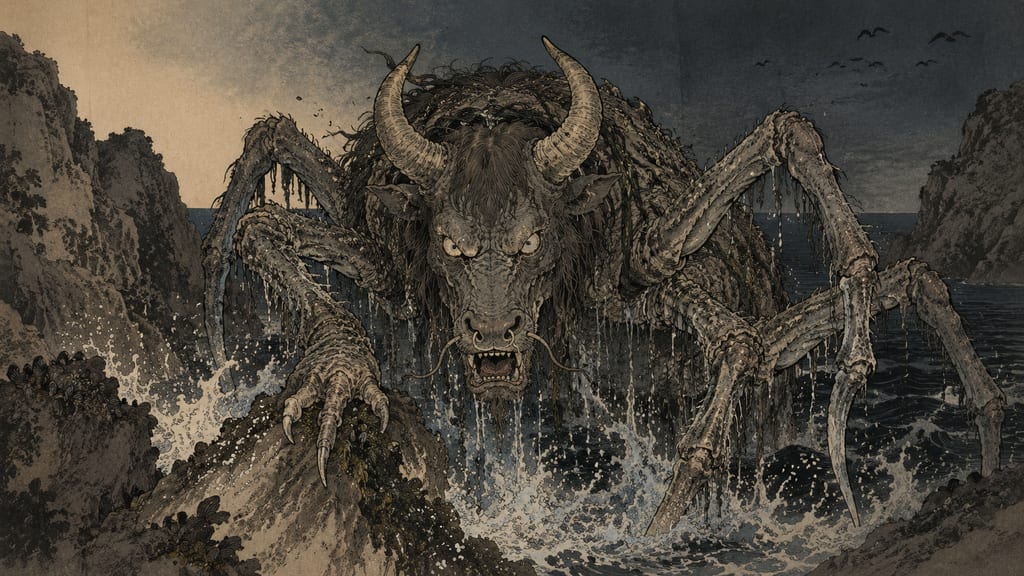
In Wakayama, Ushi-oni are spoken of at deep pools and waterfalls in various places, and their nature differs slightly from region to region. The Ushi-oni-buchi (Ushi-oni Pool) in Nishimuro District is said to have a bottom connecting to the sea; when its water turns murky, it is feared that "an Ushi-oni is present." It appears at dusk, and merely looking at it is said to cause people to fall ill or go mad. The Ushi-oni of Koto Falls in Susami Town licks people's shadows, and it is said that those whose shadows are licked will die shortly after. The Ushi-oni of Sasanohira in Kushimoto Town is adept at shapeshifting, deceiving people by transforming into a beautiful bird, but those who see it are said to become bedridden and never rise again. It is also described as having a cat-like body with a tail about one *jo* (roughly three meters) long, and a body as soft as a *temari* (traditional handball), so its footsteps make no sound when it walks[13]. Appearing at the boundaries of water—pools, waterfalls, and the sea—and taking lives through shadows or line of sight, this monster was the exact crystallization of the fears of water accidents and endemic diseases held by the coastal people of Kii, molded into a grotesque form.
What is fascinating about the Ushi-oni of Kii is that spells to counter them remain. It is said that if one encounters it and chants entirely inverted phrases—"Stones flow, leaves sink, oxen neigh, horses bellow"—their life will be spared. This was a desperate defensive wisdom of the coastal folk, attempting to disrupt the logic of the Ushi-oni's existence with words of reversal[13]. Despite being a malicious monster that devours humans indiscriminately, once it is enshrined, it transforms into a guardian deity that leads portable shrines (*mikoshi*) in festivals and exorcises evil spirits. This duality of the Ushi-oni perfectly embodies the mechanism of Japan's *Goryo* (vengeful spirit) faith, where the most terrifying and violent entities become the most powerful guardian deities.
The Rebellion of the Four Oni:
The Oni of the Taiheiki and the Power of Waka
Finally, I would like to touch upon a story concerning rebellion against the state, which is quite unique among the *oni* tales of Kii. These are the four *oni* (demons) who served Fujiwara no Chikata, whose names appear in Volume 16 of the *Taiheiki* under the section "On Enemies of the Japanese Court."
Fujiwara no Chikata’s Four Oni
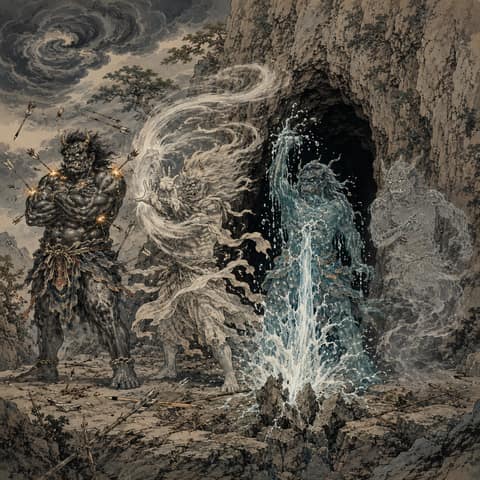
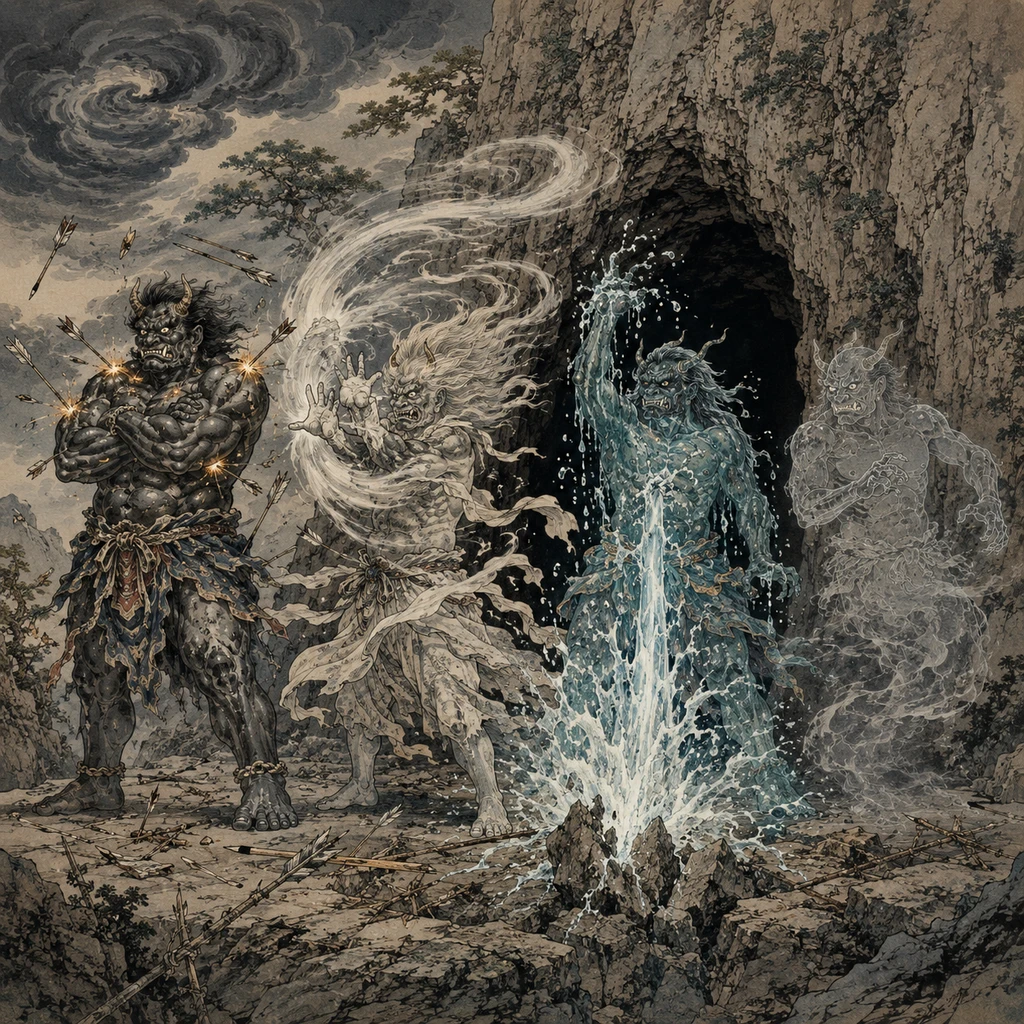
Four oni who served Fujiwara no Chikata, named in Book 16 of the Taiheiki. The Gold Oni had an invulnerable body that repelled weapons; the Wind Oni raised fierce gales; the Water Oni unleashed floods; and the Invisible Oni concealed its form and presence to strike by surprise. Chikata defied the imperial court with these four, but the warrior-poet Ki no Asao recited a waka that drove them off, leading to Chikata’s defeat. Some local traditions add Fire and Earth oni as variants.
Read moreEach of Fujiwara no Chikata's Four Oni possessed supernatural powers. The Kin-ki (Gold Demon) had a hard body that repelled any weapon, the Fu-ki (Wind Demon) generated gale-force winds to blow enemies away, the Sui-ki (Water Demon) could cause floods anywhere to drown foes, and the Ongyo-ki (Invisible Demon) erased its presence to launch surprise attacks. Leading these four *oni*, Chikata rebelled against the Imperial Court. It is said that within the reach of his power in Ise and Iga, there was no one who obeyed the court[14].
Thereupon, the court issued an imperial command to Ki no Haseo. When Haseo composed a single *waka* poem—"Since even the grasses and trees belong to my Great Lord's realm, where could there possibly be a dwelling for demons?"—and tossed it among the demons, the four *oni* scattered in all directions, fearing divine punishment. Having lost the four *oni*, Chikata gradually lost his momentum and is said to have eventually been struck down by Haseo[14]. This conclusion, where a single *waka* poem dispels demons rather than military force, strongly exudes the belief in *kotodama*—the spiritual power of words.
The legendary sites of the four *oni* are centered around Ise and Iga, but their connection to Kii is not shallow. The legend of the "Cave of the Four Oni" has been passed down in Oroshi, Mihama Town, Minamimuro District, Mie Prefecture[14], which is quite close to the Kumano mountain region. Later connecting with the legend of Sakanoue no Tamuramaro's demon subjugation, the shadow of these demons was cast over the entire Kumano area. While gold, wind, water, and invisibility are the standard, divergent theories counting a Fire Demon (*Ka-ki*) or Earth Demon (*Do-ki*) have also emerged depending on the region.
Ki no Haseo's *waka*—"Since even the grasses and trees belong to my Great Lord's realm, where could there possibly be a dwelling for demons?"—sings that there is no land in this country beyond the emperor's majesty, and therefore, there can be no dwelling for demons either. The conclusion that what repelled the demons was not a sword but a single song ties into the lineage of *kotodama* faith, which holds that spiritual power resides within words themselves. The concept that *waka* is the power to restore order is also a fitting paradox to be told in the land of Wakayama, a place that bears the name "Waka." This story quietly tells us that while Kii Province held the utmost extremes of holiness in Kumano and Koya, it also harbored the shadows of demons resisting the state on its frontiers.
The ant-like lines heading to Kumano, the sparrow chirping on those night roads, the single footprint left in the snow of Hatenashi, the serpent-bodied woman crossing the Hidaka River, the Ushi-oni lurking in the pools of the sea, and the demons scattering at a single *waka* poem—the yokai of Wakayama are woven from two threads: the "road" leading to the two great sacred sites, and the "transformation" of human passion into the supernatural upon that road. It is exactly in lands where the sacred reaches its pinnacle that grotesque anomalies are born most densely.