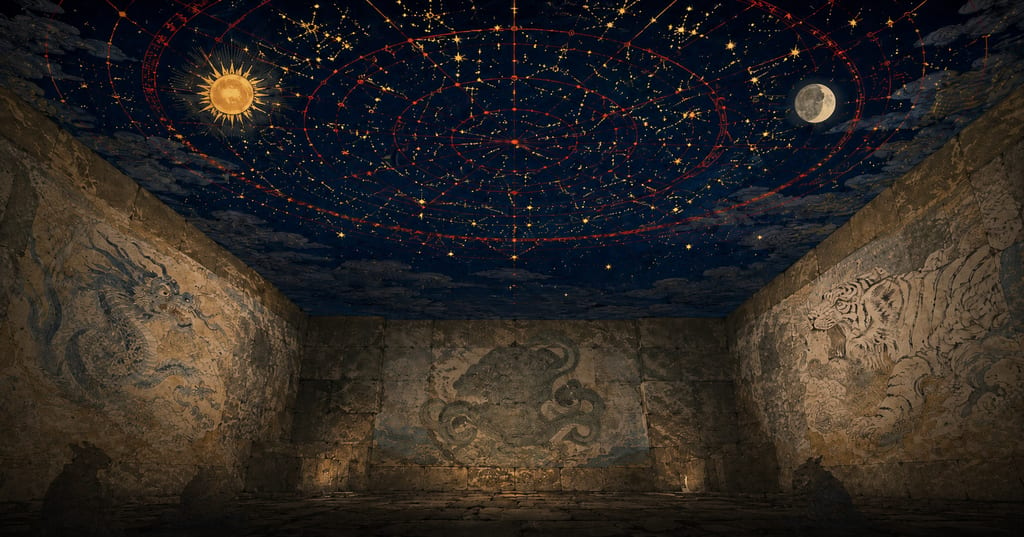
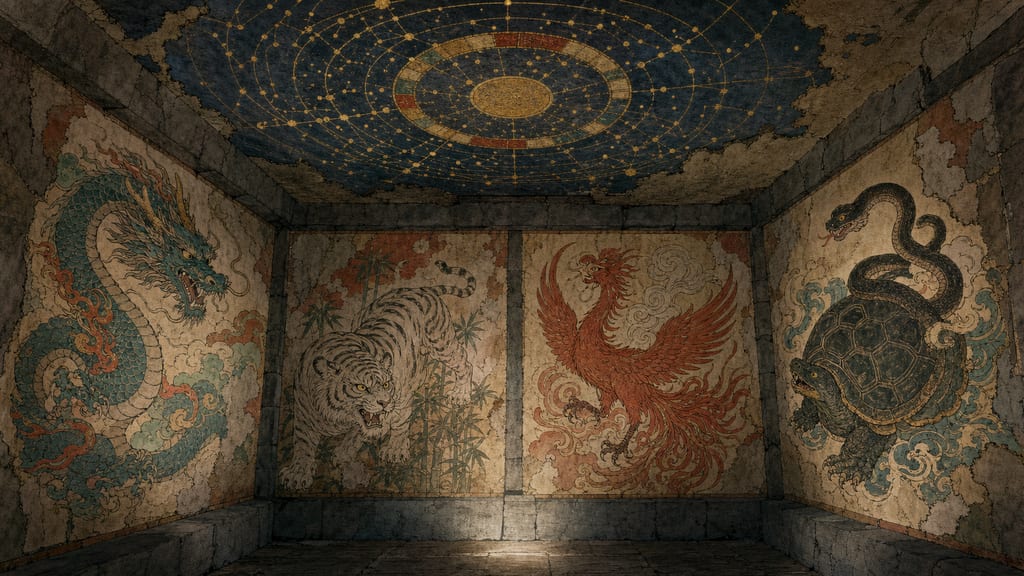
明日香村の南、檜隈(ひのくま)の丘のひとつをわずかに掘ると、人ひとりがやっと横たわれるほどの石の小部屋が現れる。直径十数メートルの小さな円墳、キトラ古墳である。だが、この狭い闇のなかには、古代東アジアが思い描いた宇宙そのものが封じられていた。東の壁に青竜、西の壁に白虎、南の壁に朱雀、北の壁に玄武。四方の壁の下段には獣の頭に人の体をもつ十二支がめぐり、天井には星々を朱線でつないだ本格的な天文図が広がる。死者は、四神に四方を守られ、星宿の天蓋の下に横たえられていた[1]。
これは奈良県全体の妖怪文化を語る記事ではない ── そちらは奈良県の妖怪事典に譲る。ここで見つめたいのは、キトラ古墳というひとつの石室に凝縮された、目に見えぬものを獣のかたちで掴もうとした古代の想像力である。方角に獣を、星に座を、死後の世界に守り手を ── 鬼や天狗を生んだ心性と地続きの、もうひとつの「妖しきもの」の系譜が、この地下の闇に眠っている。
地下に眠る宇宙 ── 終末期古墳という小宇宙
キトラ古墳が築かれたのは、七世紀末から八世紀初頭 ── 巨大前方後円墳の時代がとうに終わり、古墳そのものが姿を消してゆく「終末期」にあたる[1]。仁徳陵に代表される五世紀の大王墓が外へ向かって権力を誇示したのに対し、終末期の古墳は小さく、その関心は外形よりも石室の内部 ── 死者を取り巻く小宇宙の設(しつら)えへと深く沈み込んでいった。キトラはその到達点のひとつである。
墳丘は二段に築かれた円墳で、その中心に凝灰岩(ぎょうかいがん)の切石を十八個組み上げた石室[2]がある。内法はおよそ長さ二・四メートル、幅一メートル余り、高さ一・三メートルほどの、まさに棺ひとつ分の空間にすぎない。だがその全六面 ── 四方の壁と天井、そして床までもが漆喰で塗り込められ、壁画の画面とされた。狭さは貧しさではない。むしろこの極小の箱を、天と地と四方をそなえた完結した宇宙に仕立てるための、緻密な作為だったのである。
壁画は、まず一段目に四神、その下段に十二支、天井に天文図と日月という三層構造をなす。地上の方位を獣が守り、時の循環を十二の獣が刻み、頭上には実際の星空を写した図が広がる ── 死者は、空間と時間の双方を獣神に守られて永遠の眠りについた。これほど整然と体系化された他界の宇宙図は、日本の古墳のなかでキトラと、すぐ近くの高松塚をおいてほかにない。
四方を守る四神 ── 日本でただ一つ揃った守護獣
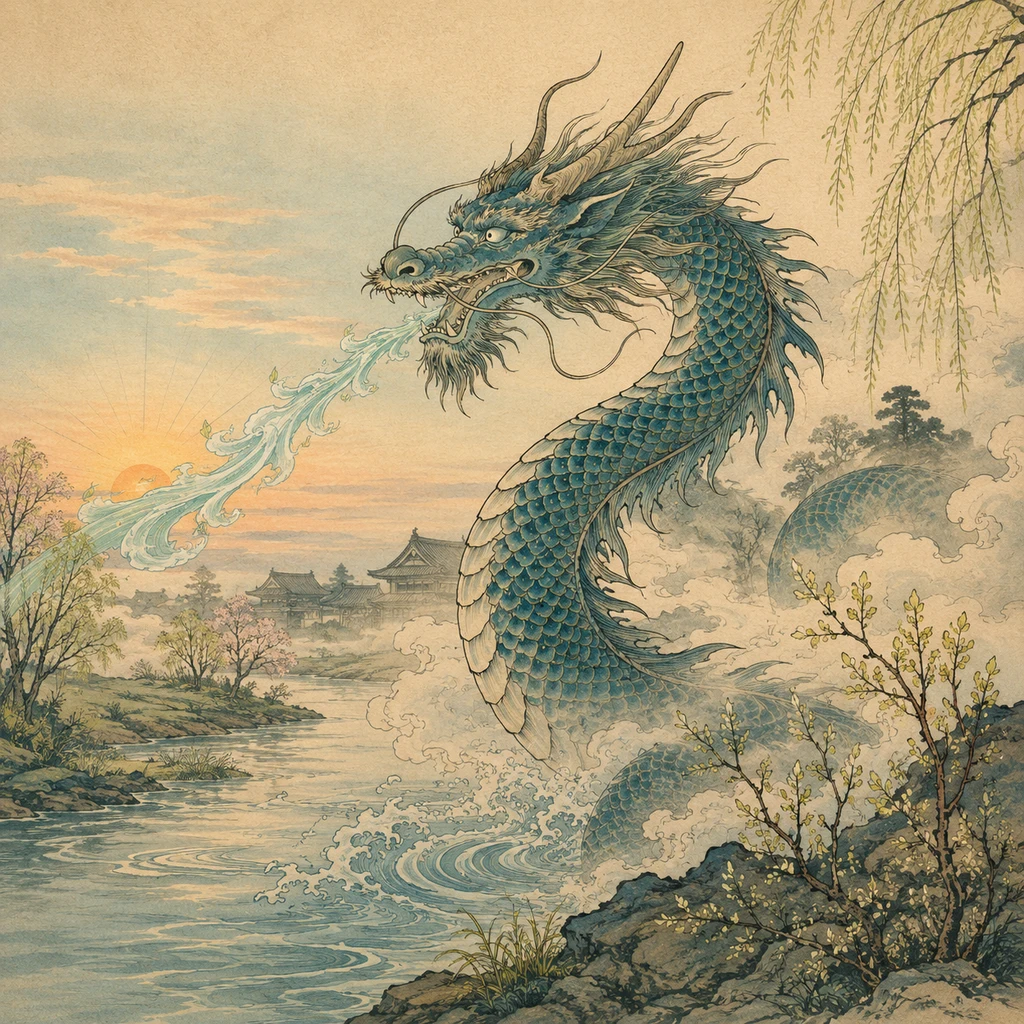
四神(しじん)とは、天の四方を司り、東西南北それぞれの方位を守護する四体の霊獣である。その体系は中国の天文と五行思想のなかで形づくられた。天の星々を四つの宮に分け、東方七宿の連なりを竜、西方を虎、南方を鳥、北方を亀蛇に見立てる ── 前漢の『淮南子』天文訓[3]は早くも東方の獣を蒼竜とし、五方・五行・五色・四季と完全に対応づけている。青竜は東・木・春、白虎は西・金・秋、朱雀は南・火・夏、玄武は北・水・冬。方角という、本来は目に見えぬ抽象を、人びとは獣の姿で掴もうとした。
 Seiryū (Azure Dragon)Seiryū
 Suzaku (Vermilion Bird)Suzaku
 Byakko (White Tiger)Byakko
 Genbu (Black Tortoise)Genbu
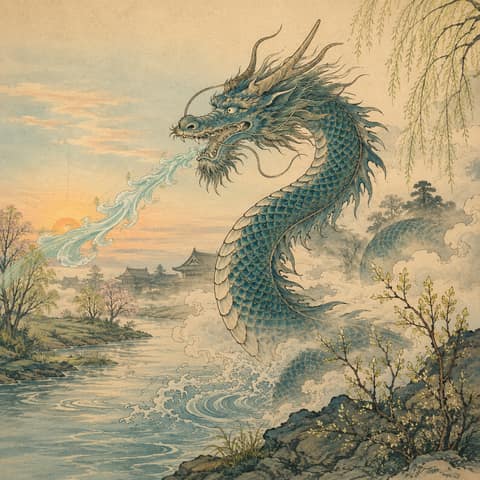
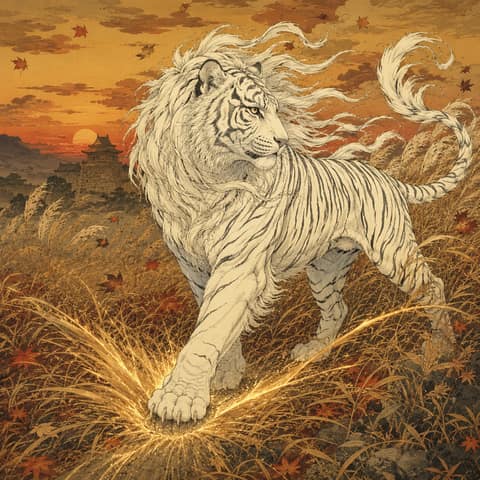
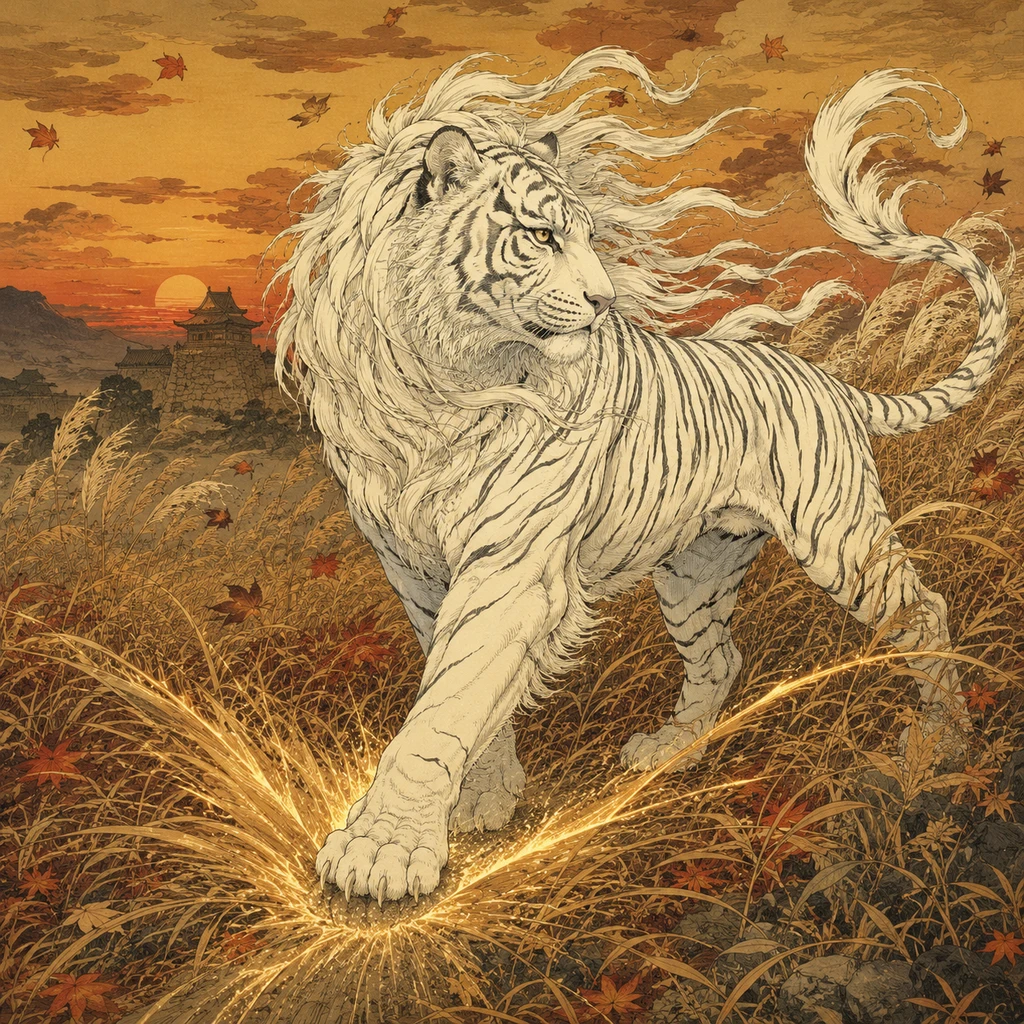
東壁に描かれた青竜は、二十八宿のうち東方七宿を竜の形に象った霊獣で、五行では木、季節では春に配される。キトラの青竜は、口を開き身をくねらせて天へ昇る姿で、東方の生気そのものを体現している。対する西壁の白虎は、金と秋を司る西方の守り手。注目すべきは、キトラの白虎が頭を北へ向けて描かれている点だ。本来、四神は中央の死者を取り囲むように顔を向けあうのが定型だが、キトラの白虎の向きは高松塚のそれとも異なり、図像規範がまだ一様に固まりきっていなかった時代の、生きた揺らぎをとどめている。
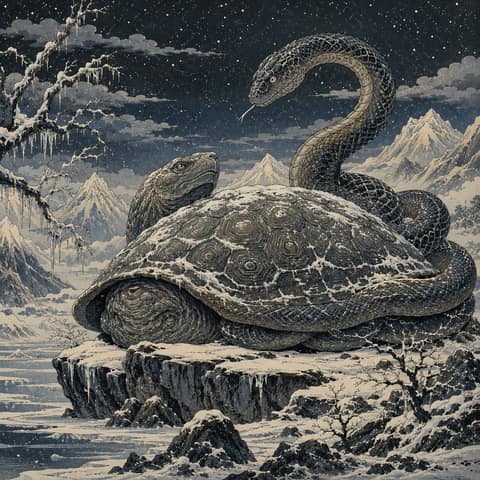
Genbu (Black Tortoise)
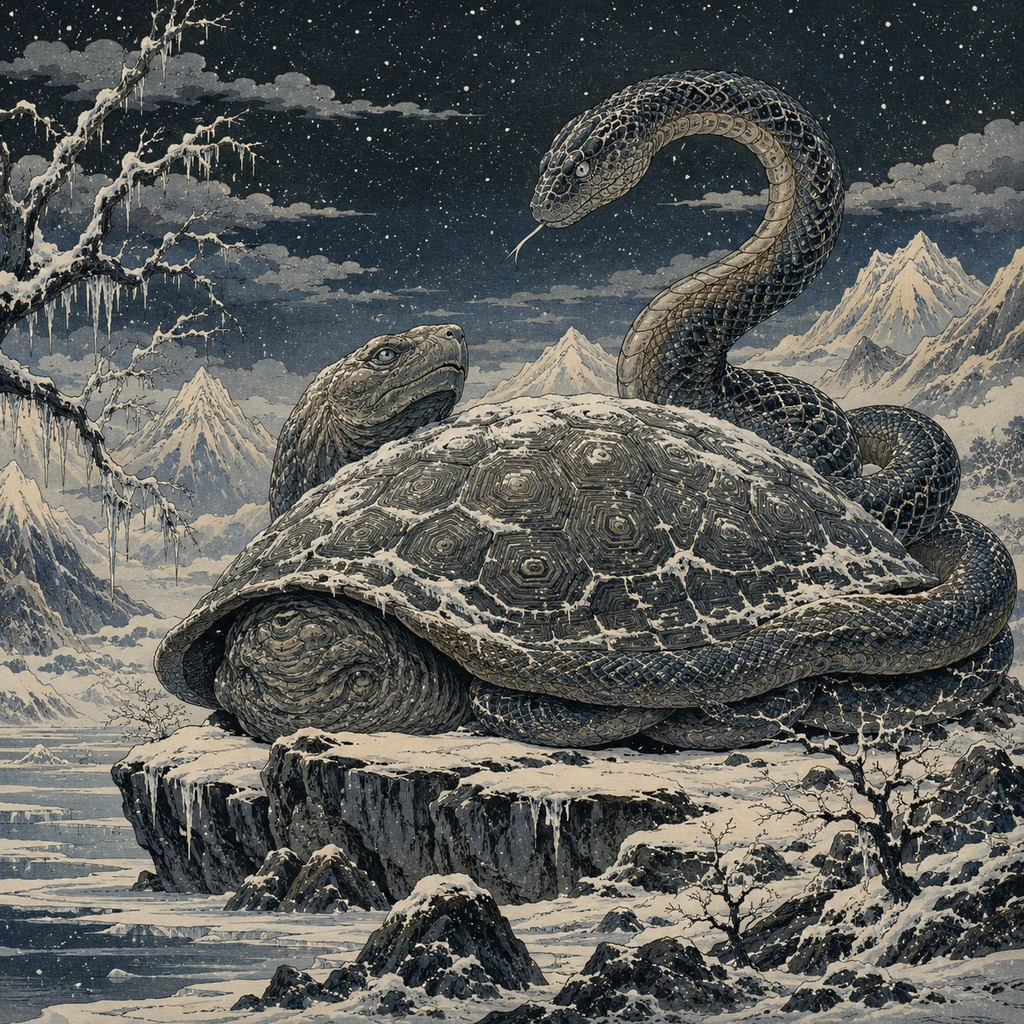
Genbu, the Black Tortoise, is one of the Four Symbols that guard the north, the numinous beast that figures the seven northern lunar mansions of the heavens. It is often represented as a tortoise entwined with a snake (tortoise-and-snake intertwined), and is assigned to Water in the Five Phases, to dark (black) in the five colors, and to winter in the seasons. Arising from Chinese astral belief, the Huainanzi's "Treatise on the Patterns of Heaven" makes the beast of the north the Black Tortoise. After it was received into ancient Japan, it was spoken of together with the notion of "land matching the Four Symbols," which holds that terrain backed by a mountain to the rear—the "Genbu" position—is auspicious.
Read more北壁の玄武は、亀に蛇が巻きつく異形の獣で、水と冬と北方を司る。亀の堅牢と蛇の生命力をあわせもつこの獣は、四神のなかでもとりわけ陰の極み ── 死と再生の方位である北を守るにふさわしい。そして、このキトラ古墳の発見史そのものが、玄武から始まった。昭和五十八年(一九八三年)、南壁にうがたれた盗掘穴からファイバースコープを差し込んだ調査で、闇のなかに北壁の玄武が浮かびあがったのである[4]。高松塚に次ぐ二例目の本格的な大陸風壁画古墳の発見は、日本中を沸かせた。
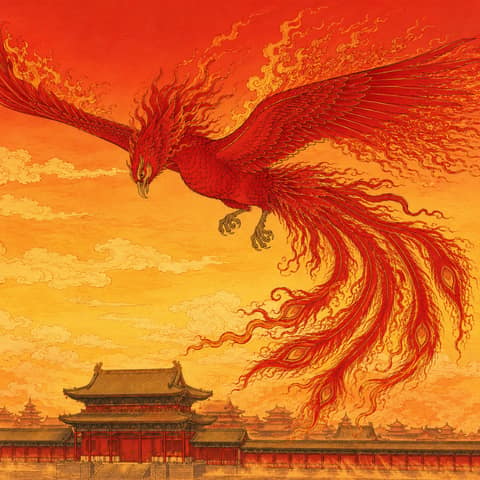
Suzaku (Vermilion Bird)
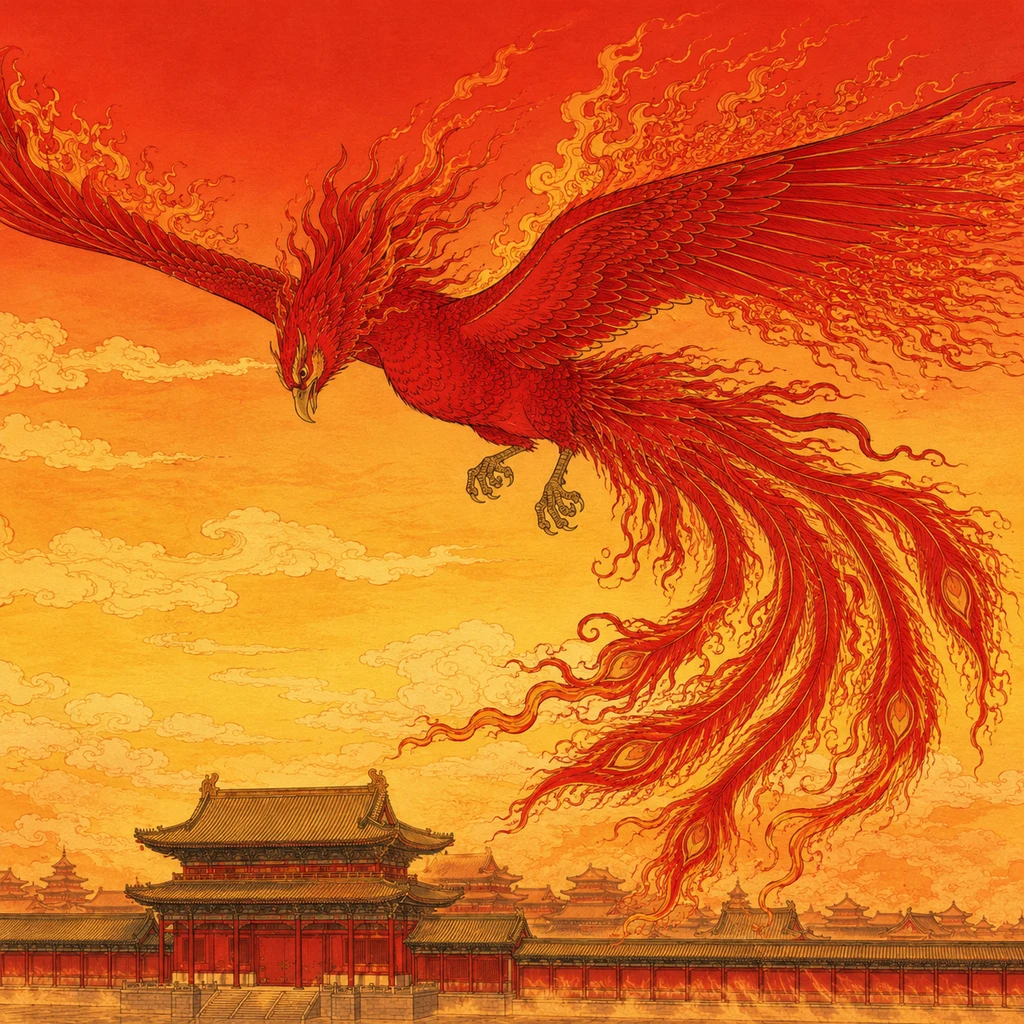
Suzaku, the Vermilion Bird, is one of the Four Symbols that guard the south, the numinous bird that shapes the seven southern lunar mansions of the heavens into the form of a bird. In the Five Phases it is assigned to Fire, in the five colors to vermilion (red), and in the seasons to summer. In the classics it is often written "Vermilion Sparrow," and the "Qu Li" chapter of the Book of Rites makes the Four Symbols markers of direction—"the Vermilion Bird in front, the Black Tortoise behind." Received into ancient Japan together with the Chinese thought of direction and the Five Phases, its name remains in the Suzaku Avenue and Suzaku Gate of Heian-kyō.
Read more残る南壁の朱雀は、火と夏と南方を司る瑞鳥である。翼を広げ羽を逆立てて舞うその姿が確認されたのは、調査がさらに進んだ平成十三年(二〇〇一年)のことだった。そして、この朱雀の残存こそが、キトラ古墳を比類なきものにしている ── 四神がすべて揃って残る古墳壁画は、日本でこのキトラ古墳ただ一つ[1]なのである。すぐ近くの高松塚古墳は、まさにこの南壁の朱雀を盗掘によって失っている。四方の守護獣が一体も欠けることなく、千三百年の闇を越えて死者を守りつづけていた ── その奇跡的な完全さが、令和元年(二〇一九年)、五面の壁画を国宝へと押し上げた。
十二支のけものたち ── 獣頭人身の時の番人
四神の下段、壁面の腰の高さには、もうひとつの獣の列がめぐる。獣の頭に人の体をまとった十二支像である。子(ね)の鼠から亥(い)の猪まで、一壁に三体ずつ、計十二体が方位に応じて配されていたとみられ、これらが確認されたのも朱雀と同じ平成十三年(二〇〇一年)であった[4]。現状では、子・丑(うし)・寅(とら)・午(うま)・戌(いぬ)など数体が残るのみだが、いずれも袍(ほう)をまとい笏(しゃく)のような持物を手にした、官人のような端正な姿で描かれる。
獣頭人身という形式は、十二の方位と十二の時刻、そして十二年の暦の循環を、それぞれの動物の姿に託したものだ。四神が空間の四方を守るとすれば、十二支は時の流れそのものを守る番人である。空間を四つに、時間を十二に分かち、双方を獣に託して死者を囲む ── キトラの石室は、方角だけでなく時の循環までも、けものの姿で封じ込めた宇宙だった。獣の頭をもつ人という形象は、人と獣の境を自在に行き来する想像力の産物であり、のちの世が鬼や天狗に与えた半人半獣の造形とも、どこかで通じあっている。
天井の星図 ── 現存最古級の本格的天文図

四神と十二支に守られた死者の頭上、石室の天井には、この古墳の白眉ともいうべき天文図が広がっている。中央に北斗七星を含む星々を置き、それらを朱線で結んで星座をかたちづくる ── その星の数はおよそ三百六十余、確認できる星座(星宿)は約七十四座にのぼる[5]。星のひとつひとつは金箔(きんぱく)で表され、闇の天井にちりばめられた金の粒が、地下の小宇宙を文字どおり星空に変えていた。
この天文図を単なる装飾と一線を画す本格的な星図たらしめているのは、朱線で描かれた四つの大円である。内側から、天の北極を中心に一年中沈まない星の範囲を示す内規(ないき)、天の赤道、そして地平に没する南の限界を示す外規(がいき)── この三つの同心円に、太陽の通り道である黄道(こうどう)の円が斜めに交わる。観測という行為に裏打ちされた、座標をもつ天球図なのである。本格的な中国式星図としては現存最古級[1]とされ、中国に残る同種の星図よりも数百年さかのぼる。
興味深いのは、この天文図がいつ、どこの空を観測したものかをめぐる議論だ。内規・赤道・外規の半径の比は、本来なら観測地の緯度によって厳密に定まるはずだが、キトラの図はその比が理論値と一致しない。それでも円の大きさから観測地の緯度を推し量る試みがなされ、北緯三十四度付近とする説、より北の朝鮮半島の緯度に近いとする説などが提出されてきた。観測された年代についても、星座の位置から西暦四百年頃の空を写したとみる見解があり、定説には至っていない[5]。確かなのは、キトラに葬られた人びとが、はるか大陸の天文知識を受け継ぎ、その正確な星空を死者の天蓋として写しとろうとした、という事実だけである。
天文図の東には金箔の日輪(太陽)が、西には銀箔の月輪(月)が描かれた[1]。金の日と銀の月。四神が四方を、十二支が時を、星宿が天を守るこの石室で、日月は昼と夜の循環そのものを死者のかたわらに据えた。地下数メートルの暗闇に、太陽と月と数百の星々を擁する完結した天 ── それがキトラ古墳の天井だった。
高松塚との対比 ── 飛鳥に眠る二つの宇宙
キトラ古墳を語るとき、どうしても並べて見ずにはいられないのが、北へ一キロほどの距離に眠る高松塚古墳である。両者はよく似ている。ともに七世紀末から八世紀初頭の終末期円墳で、凝灰岩の切石を組んだ漆喰塗りの石室をもち、壁面に四神を配する。昭和四十七年(一九七二年)、高松塚の極彩色壁画 ── とりわけ華やかな衣をまとった男女の群像が発見されたとき、それは戦後考古学最大級の事件として日本中を熱狂させた[6]。その十一年後、キトラの玄武が見つかったのである。
だが、似て見える二つの石室は、その宇宙の設え方において対照的だ。高松塚の壁には四神とともに、貴族の男女がしずしずと行列する群像が描かれている。そこにあるのは、地上の宮廷生活をそのまま他界へ持ち込もうとする、現世志向の華やぎである。一方、キトラには人物群像がない。代わりに獣頭人身の十二支がめぐり、天井には本格的な天文図が広がる。こちらが向きあっているのは、人の世ではなく、天と方位と時の循環という、より抽象的で宇宙的な秩序である[4]。
人物群像か、十二支と星図か ── この差は、二つの古墳に葬られた者たちが、死後にどんな世界を望んだかの違いを映しているのかもしれない。さらに高松塚は南壁の朱雀を盗掘で失い、キトラは四神を完全に残した。飛鳥の小さな丘の下に、性格を異にする二つの宇宙が眠っている。明日香村を歩くとき、この二つを対(つい)として思い浮かべると、終末期古墳の壁画がどれほど豊かな精神の振幅をもっていたかが見えてくる。
古代の他界観 ── 方位を獣で守るということ
キトラ古墳の壁画が示すのは、ひとつの徹底した発想である ── 目に見えぬものを、すべて獣のかたちで掴もうとする発想だ。東西南北という方角は、それ自体としては触れることも見ることもできない。星々の運行も、時の循環も、死後の世界も同じである。古代の人びとは、それらの抽象を青竜・白虎・朱雀・玄武という具体的な獣に、十二支という動物の列に、星宿という座のかたちに翻訳した。抽象を獣身に宿らせるこの想像力は、四神相応(しじんそうおう)の思想として都城の地相観にも及び[7]、平安京の選地などにも生きている ── 東に流水(青竜)、西に大道(白虎)、南に汙池(朱雀)、北に丘陵(玄武)を求めるという、土地を四神で読む発想である。
この、方位や死後の世界を獣の姿で理解しようとする心性は、怪談に出る妖怪を生んだ想像力と、決して無縁ではない。鬼が境(さかい)に現れ、天狗が山の異力を担い、河童が水辺の危うさを宿すように、四神もまた、人の手に負えぬ大きな秩序 ── 天と方位と死 ── を、獣のすがたを借りて可視化したものだ。化け物としての妖怪と、守護獣としての四神は、出自も性格もまるで異なる。だが、見えぬものを獣身に託すという一点において、両者は古代日本人の同じ想像力の根から枝分かれしている。
Byakko (White Tiger)
Byakko, the White Tiger, is one of the Four Symbols that guard the west, the divine beast that shapes the seven western lunar mansions of the heavens into the form of a tiger. In the Five Phases it is assigned to Metal, in the five colors to white, and in the seasons to autumn, and it is represented as a fierce white-furred tiger. Arising from Chinese astral and Five Phases thought, the Huainanzi's "Treatise on the Patterns of Heaven" makes the beast of the west the White Tiger. After it was received into ancient Japan, it formed a pair with the Azure Dragon and was depicted as a marker of directional protection and of wards.
Read more昭和五十八年(一九八三年)の玄武発見にはじまった調査は、平成十六年(二〇〇四年)からのカビ被害への対応として、ついに壁画そのものを石室から剥ぎ取って保存する道を選んだ[4]。千三百年ものあいだ闇のなかで死者を守りつづけた獣たちは、いま、墳丘のかたわらに建つ「四神の館」(キトラ古墳壁画体験館)で、温湿度を厳重に管理された環境のもと、限られた公開期間に人びとの前へ姿を現す[2]。地下に封じられていた青竜・白虎・朱雀・玄武は、二度目の生を地上で生きはじめた。
奈良県全体の妖怪文化 ── 元興寺の鬼、葛城の土蜘蛛、大峰の天狗、伯母ヶ峰の一本だたら ── を見渡したい読者は、奈良県の妖怪事典へ進んでほしい。だがこのキトラ古墳の地下に立つとき、思い起こすべきは町の鬼でも山の天狗でもなく、四方を守りつづける四体の獣と、頭上にちりばめられた金の星々である。明日香村の小さな丘の下には、古代の人びとが想い描いた宇宙が、いまもまるごと眠っているのだ。