Separate Official Names from Speculations on Their 'Origins'
The official page for ONE PIECE Episode 1144 on ONE PIECE.com[1] explicitly names the monstrous forms of the Five Elders as Ushi-oni, Itsumade, Hōki, Bakotsu, and Sandworm. Therefore, these names are not merely fan nicknames.
However, the names alone do not confirm which specific details from ancient paintings were referenced, nor whether the exact meanings of their folklore were directly transferred into the series' lore. This page compares their classical appearances and visual commonalities based on the officially confirmed transformation names. This is a yokai guide designed to help readers avoid equating "looks similar" with "exactly as the original texts state."
The Five Elders and Their Transformation Names
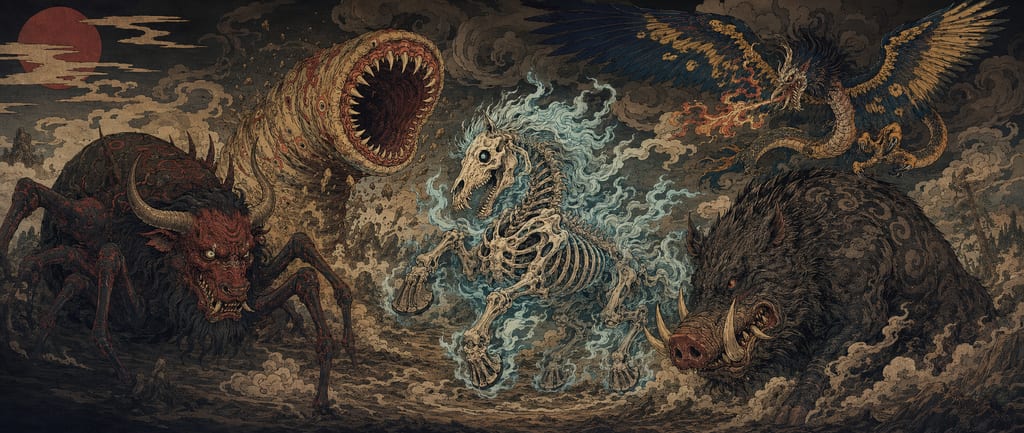
Saint Jaygarcia Saturn is shown as an Ushi-oni, Saint Marcus Mars as an Itsumade, Saint Topman Warcury as a Hōki, Saint Ethanbaron V. Nusjuro as a Bakotsu, and Saint Shepherd Ju Peter as a Sandworm. Let's line up all five and trace them back to their source material one by one.
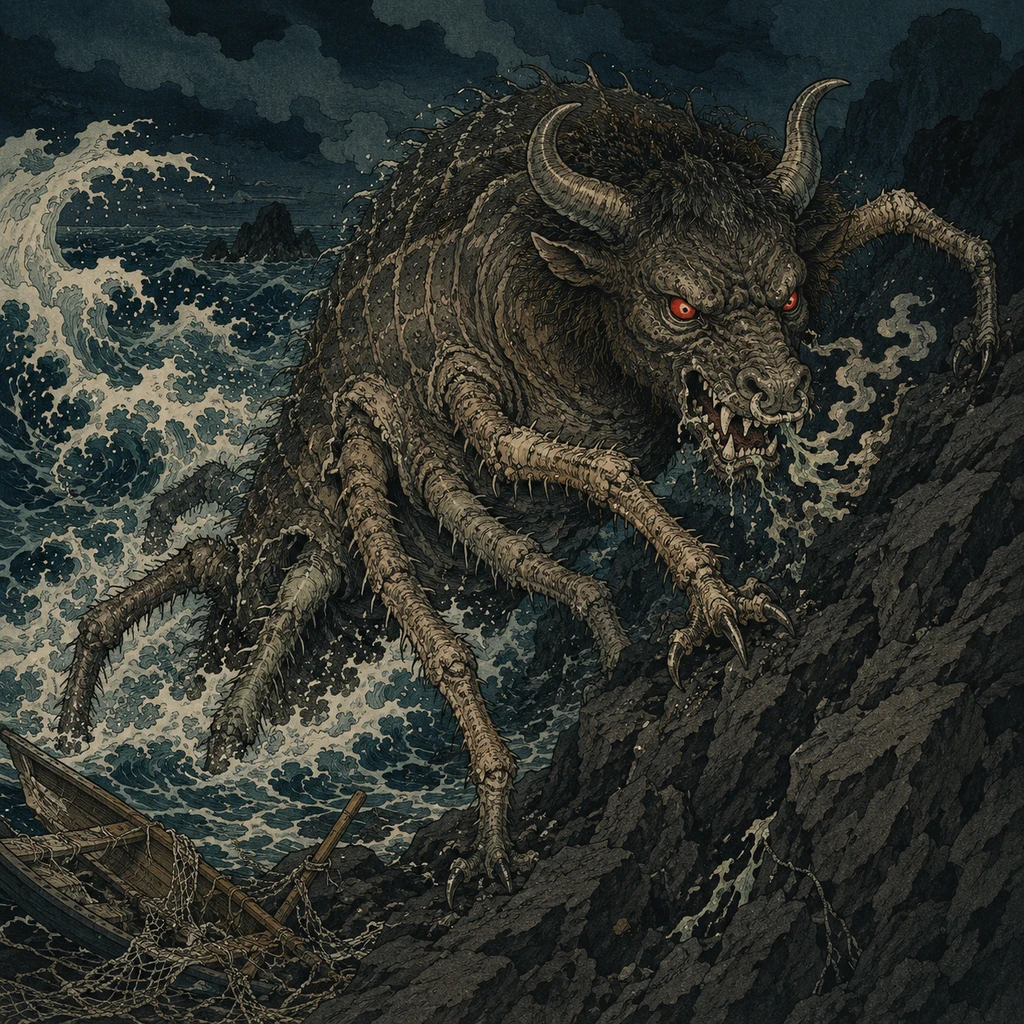
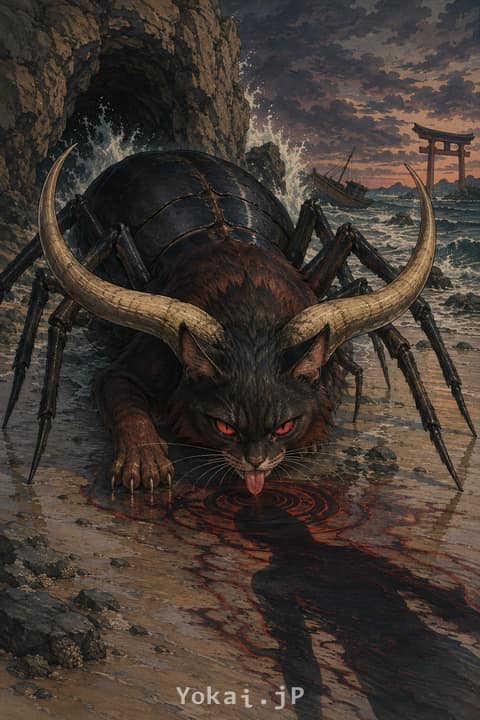
What is an Ushi-oni? —A Giant with a Bull's Head and Many Legs
The Ushi-oni (Bull Demon) is a supernatural anomaly spoken of primarily in Western Japan across diverse locations such as beaches, deep pools, mountains, temples, and festivals. Its appearance and role vary by region—from a demon with a bull's head, to a beast emerging from the sea, to a massive float used in festivals to ward off evil.
The Ushi-oni in Toriyama Sekien's *Gazu Hyakki Yagyō*[2] combines a bull's head with a multi-legged, spider-like body. While this is the iconography most frequently referenced when comparing Saint Saturn's transformation, it is important to note that not all Japanese Ushi-oni legends featured this spider-like form. The common threads are its bovine strength and an unsettling body that defies human scale.
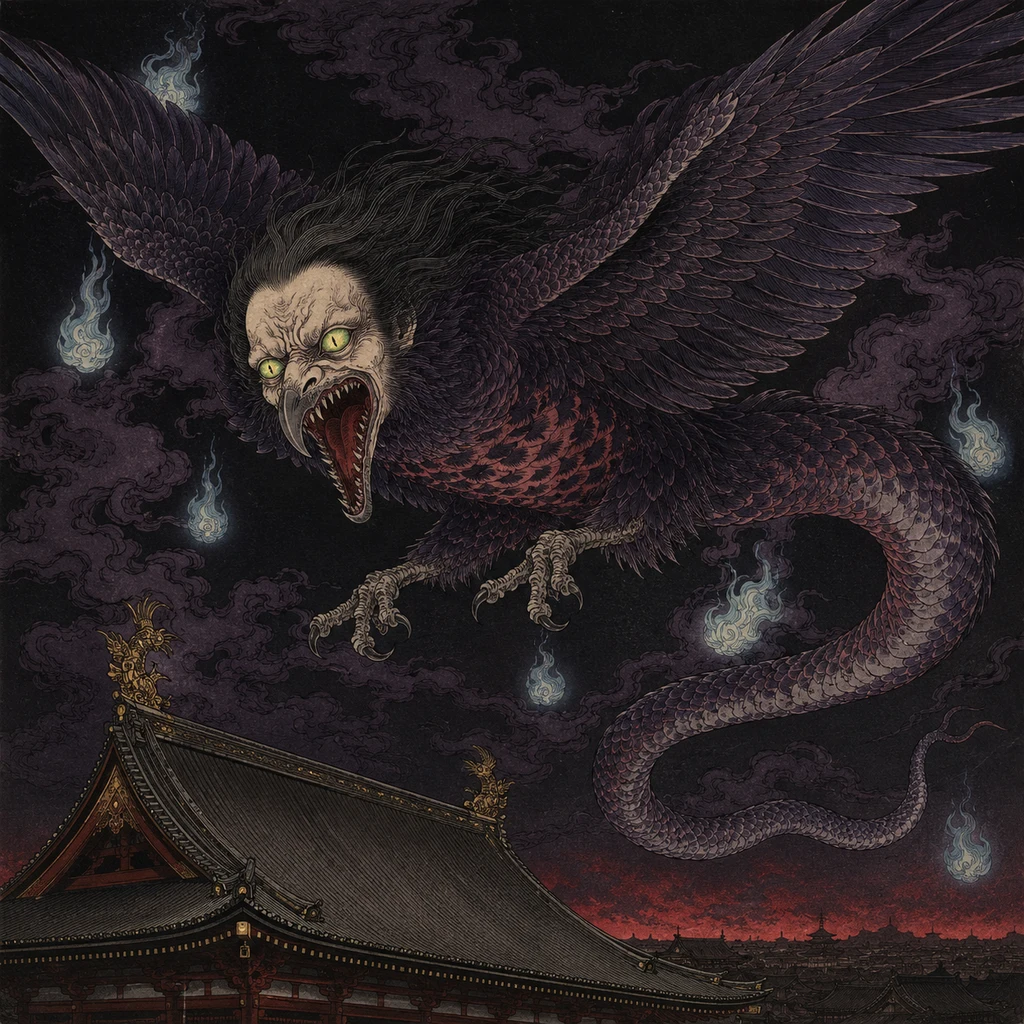
What is an Itsumade? —Sekien Names the Monstrous Bird of the *Taiheiki*
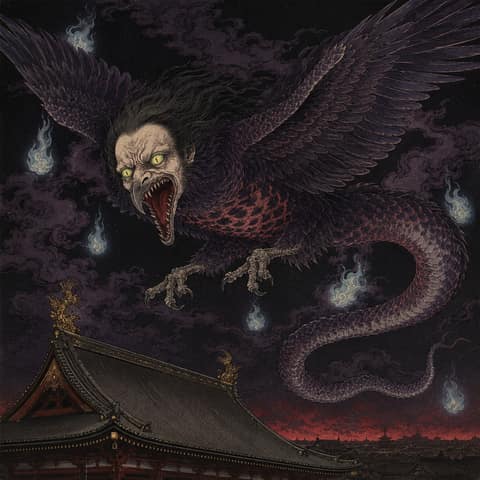
In the *Taiheiki*[3], there is a tale of a monstrous bird that appears in the sky above the Shishinden palace in the capital during an epidemic, crying out "Itsumade?" (Until when?) before being shot down by a master archer. In this text, it has no specific proper name and is simply described as a monstrous bird.
In 1779, Toriyama Sekien applied the characters for "Itsumade" to its cry in *Konjaku Gazu Zoku Hyakki*[4], depicting it as a demon bird with a human face, a beak, wings, and a snake-like body. For comparisons with Saint Mars, its massive avian silhouette and non-human face are key. The explanation that it cries out to the dead, asking "How long will you leave these corpses here?", is an interpretation that spread in later eras and is not a line found in the original *Taiheiki* text itself.
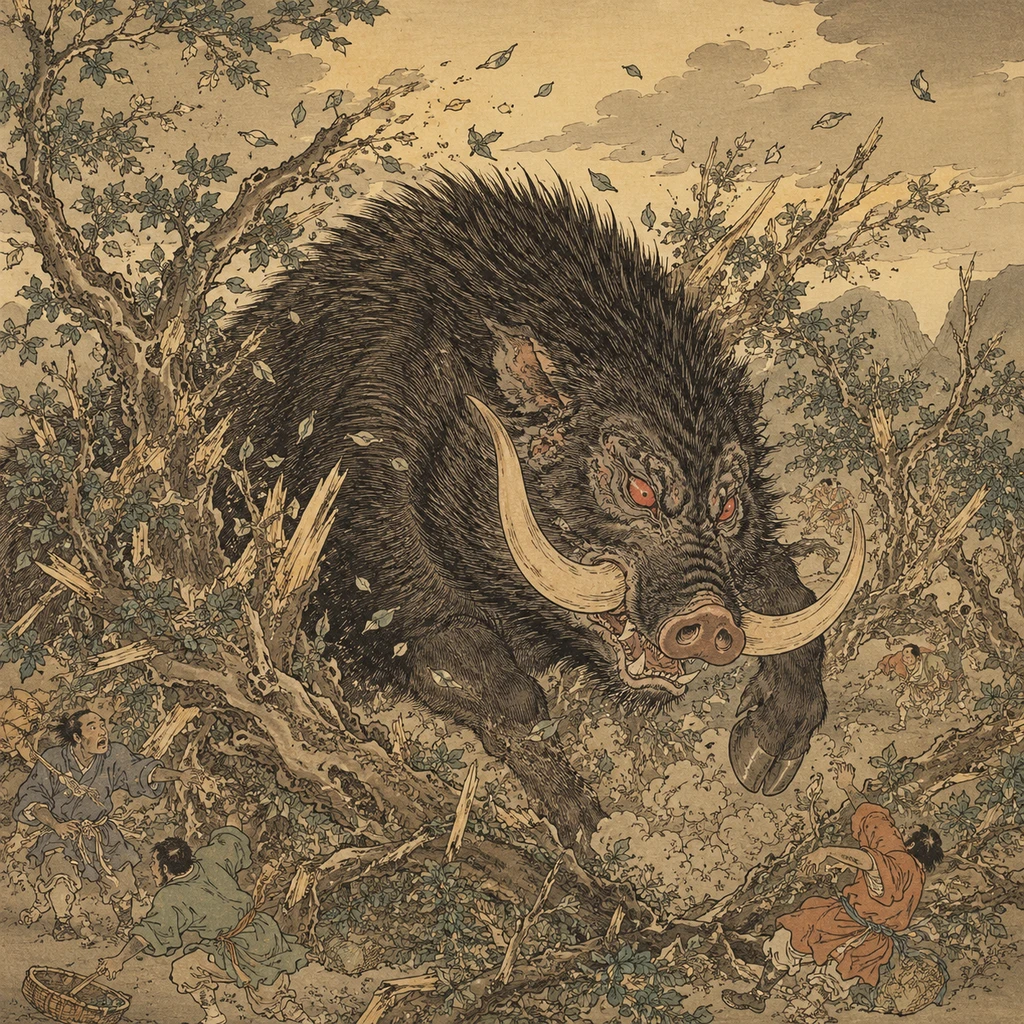
What is a Hōki? —The Giant Beast of China Captured by Yi in the Mulberry Forest
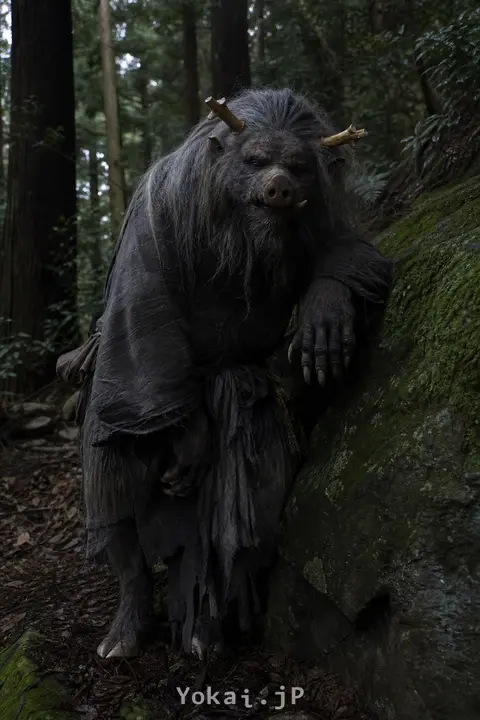
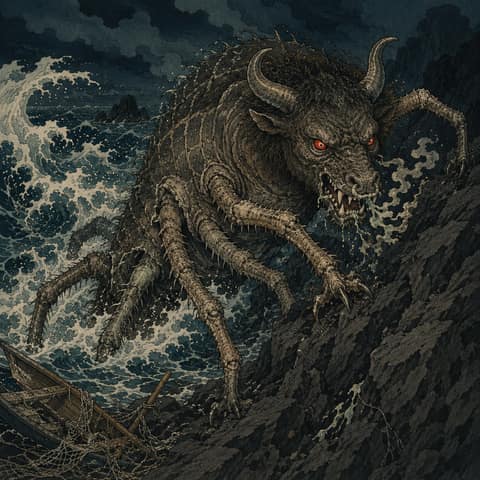
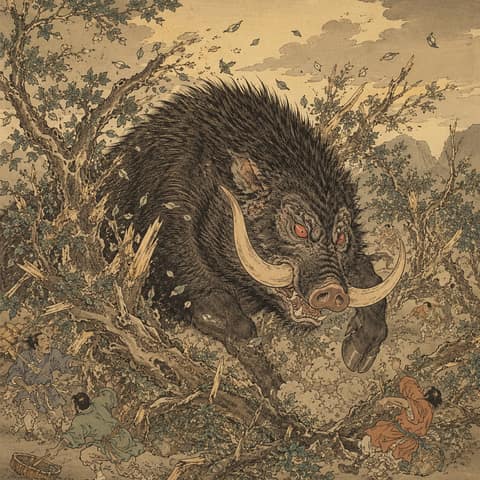
The Hōki (Fengxi in Chinese) is not a classical Japanese yokai, but a monster from Chinese mythology. The *Huainanzi* (Book of Master Huainan)[5] records that during the era of Emperor Yao, beasts such as Yayu, Zaochi, Jiuying, Dafeng, Fengxi (Hōki), and Xiusha harmed the people, and the hero Yi captured Fengxi in the Mulberry Forest. In later commentaries, it is associated with a giant boar.
While we can officially confirm that Saint Warcury's transformation name is "Hōki," the classical text is not a modern monster encyclopedia detailing its specific attributes. The core of the comparison lies not in it being a solitary beast from a herd, but in its status as a disaster-level giant monster requiring a hero's subjugation, and its silhouette reminiscent of a charging boar. Note that while its Japanese reading "hōki" makes it easy to confuse with the Hōkigami (Broom Spirit), the characters and lineage are completely different.
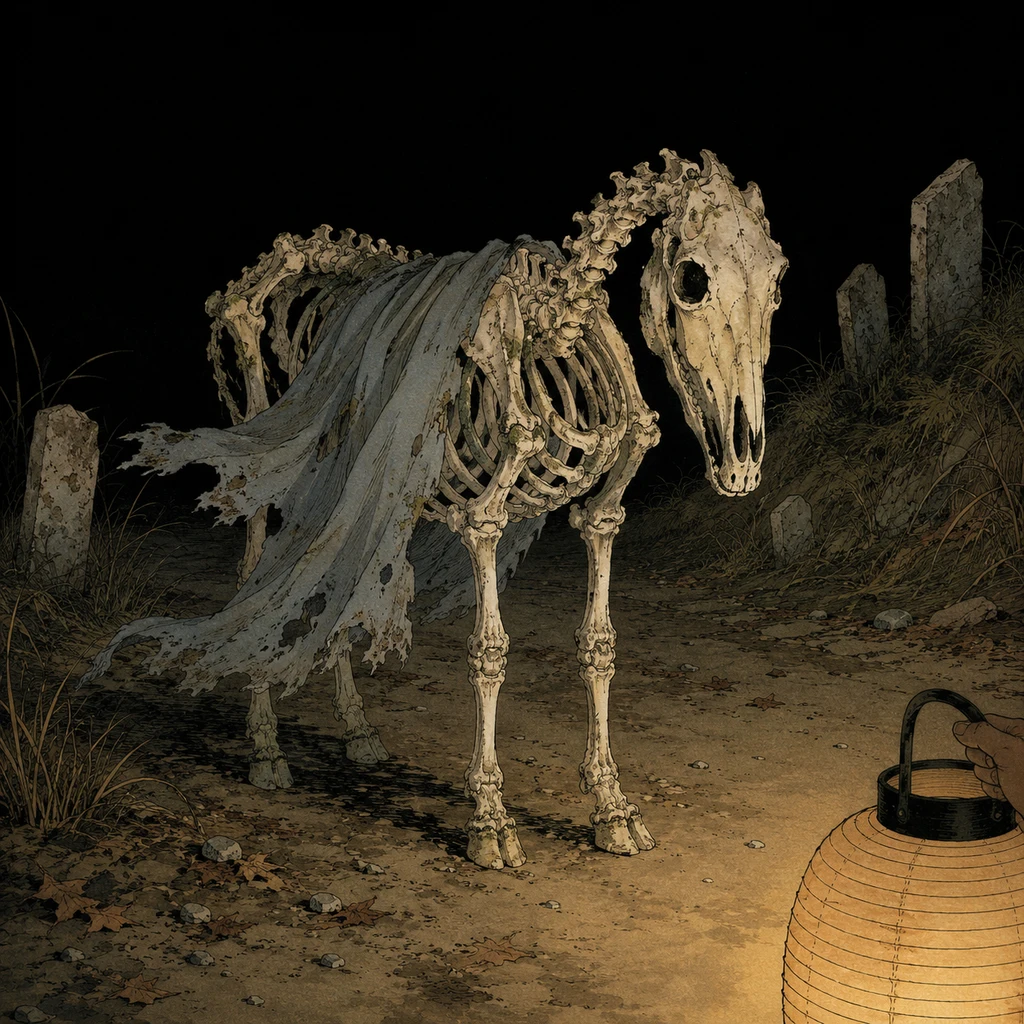
What is a Bakotsu? —Not Sekien, but a Yokai Scroll from Tosa
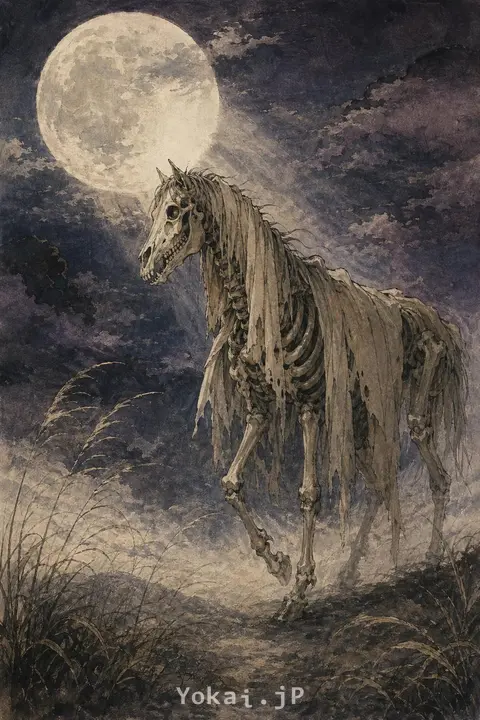
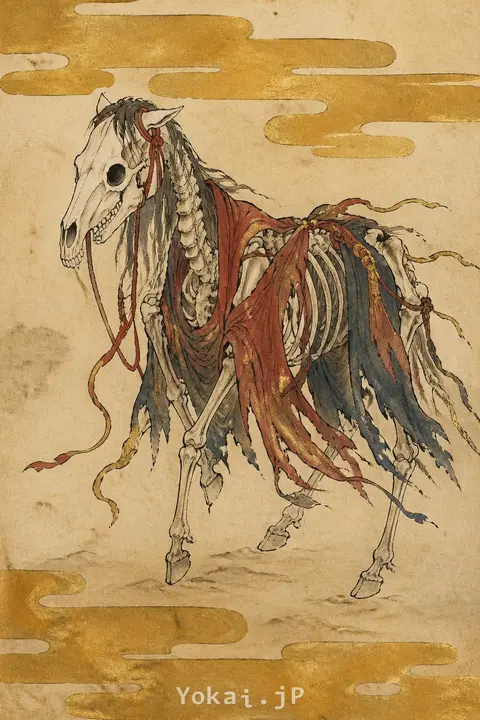
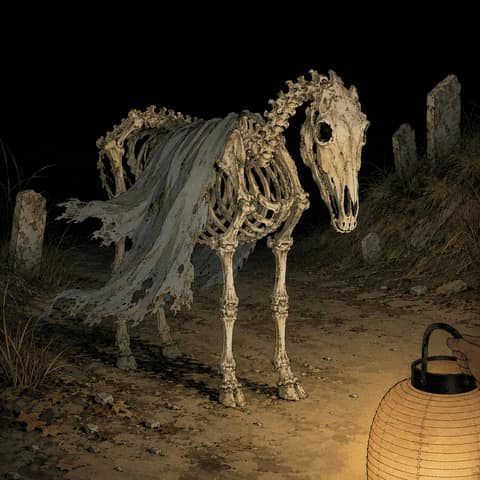
The Bakotsu (Horse Bone) is an anomaly where the corpse of a horse stands on two legs. Crucially, it is not one of the tsukumogami from Toriyama Sekien's *Hyakki Tsurezure Bukuro*. It is depicted in the *Tosa Obake Zōshi* (Tosa Ghost Scroll)[6] as the transformed state of horse bones that burned to death.
Saint Nusjuro's Bakotsu shares the strong visual motif of a skeletal white horse. However, one cannot assume that the fires and livestock deaths spoken of in the Tosa scroll correspond directly to the character's lore within the series. It is safer to confirm the name and the skeletal motif, and to treat any further connections as speculation.
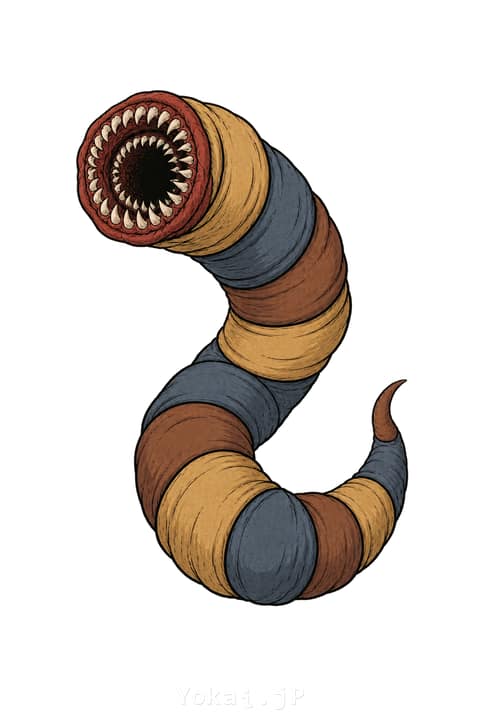
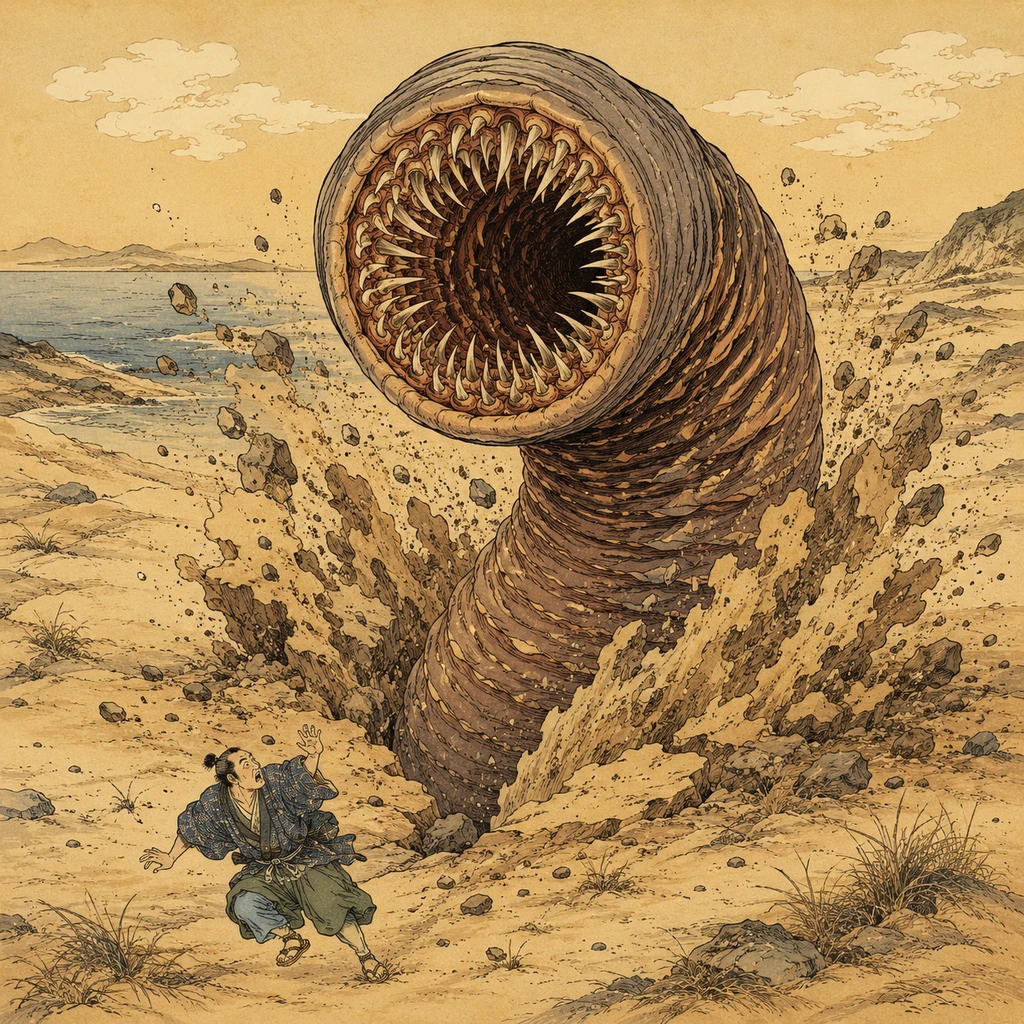
Is a Sandworm a Yokai?
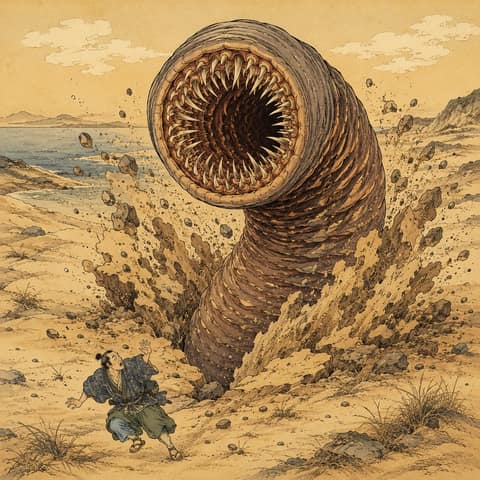
The Sandworm—a giant annelid tunneling through sand—is a modern fantasy monster archetype and does not originate from Japanese yokai scrolls. The fact that Saint Peter alone deviates from classical East Asian names reveals that these five are not a "Selection of Five Japanese Yokai," but rather a monster lineup that crosses Japanese, Chinese, and modern fantasy boundaries.
That difference is exactly what makes this Five Elders collection so fascinating. By using their official names to read the original source materials, we can do more than just guess their inspirations; we can compare how the forms of ancient anomalies are repositioned within a modern narrative.