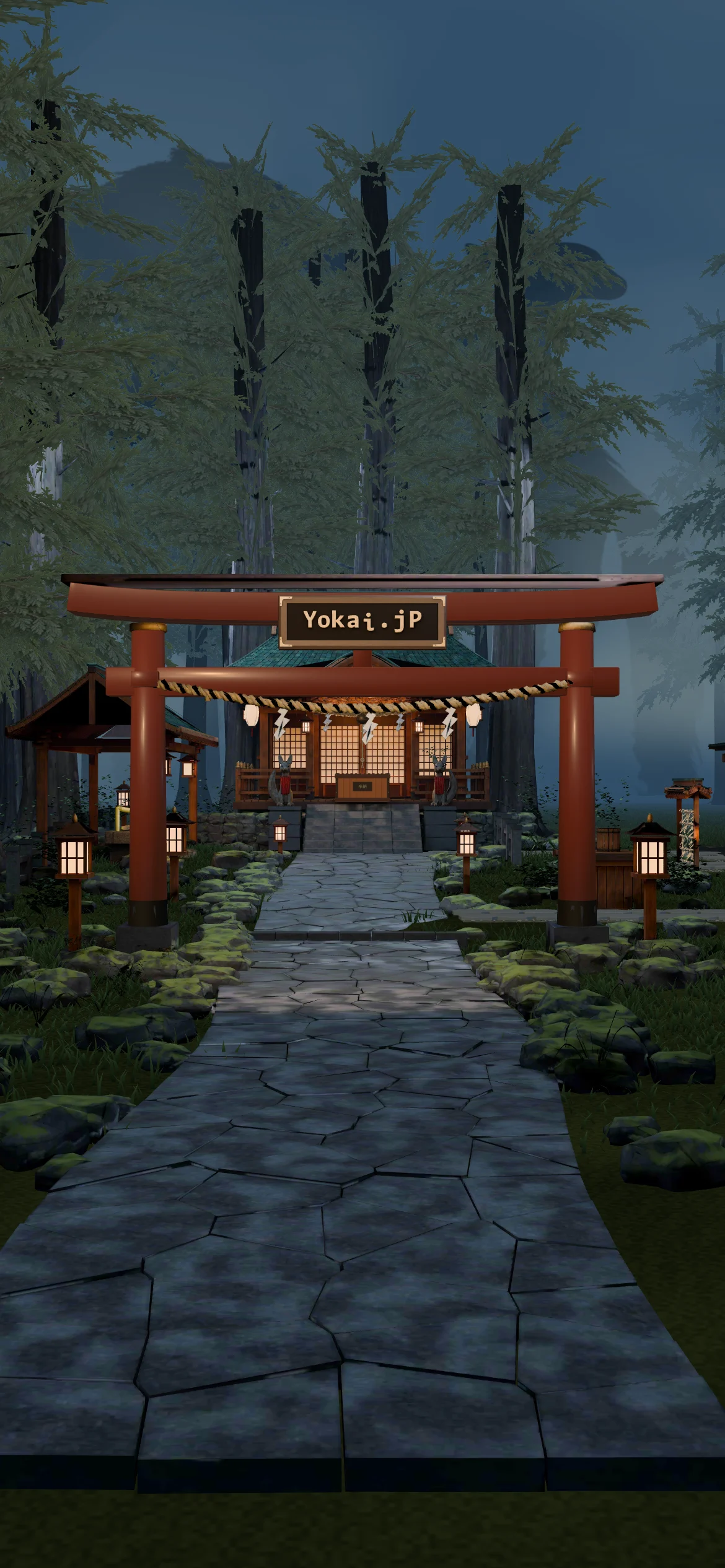
Omikuji are fortune slips that carry a message from the kami and buddhas. Read more than the luck at the top: the poem and the lines for each part of life are clues for the days ahead.
Drawing omikuji at Yokai Shrine
The omikuji pavilion with its hundred drawers is watched over by Hakutaku, a divine beast said to know all things. After praying at the hall, shake the cylinder until a numbered stick comes out, then take today's slip from the drawer with that number. You can draw once a day, signed in.
The order of luck
Yokai Shrine's omikuji have seven levels, from best to worst: excellent luck (daikichi), moderate luck (chūkichi), a little luck (shōkichi), good luck (kichi), luck to come (suekichi), bad luck (kyō) and great misfortune (daikyō). The order differs between shrines; some place kichi above chūkichi.
How to read the slip
- The waka poem and its meaning: the heart of the slip. Read this first.
- Wishes, someone you await, lost items, travel, business, learning, disputes, love, moving home, illness and marriage prospects: read the lines that matter to you against your own life.
- A message from your yokai and advice for daily life: a word for today that only Yokai Shrine gives.
The text of the slip is in the original Japanese; the headings are translated.
After drawing
You can tie your omikuji at the shrine's tying rack to bind your connection with the kami, or keep it and read it again. At Yokai Shrine, too, you can tie your slip at the rack. One saying holds that a bad fortune should be tied with your non-dominant hand, as a small trial to overcome.
Questions
- How many times a day can I draw?
- Once a day at Yokai Shrine. Reading one result carefully is considered better than asking the same question again and again.
- What should I do with bad luck?
- Some take kyō to mean things can only get better from here. Keep the advice in mind, and tie the slip at the rack before you leave.
- Where do omikuji come from?
- The numbered slips used today are said to trace back to the Ganzan Daishi omikuji, attributed to Ryōgen (Ganzan Daishi), a Tendai monk of the Heian period.
- Who is Hakutaku?
- A divine beast from Chinese legend, said to know all things and to have taught people how to ward off illness and disaster. In Japan it has long been drawn as a charm against evil.