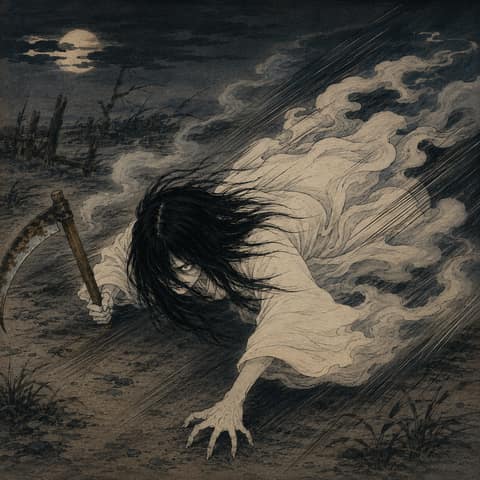
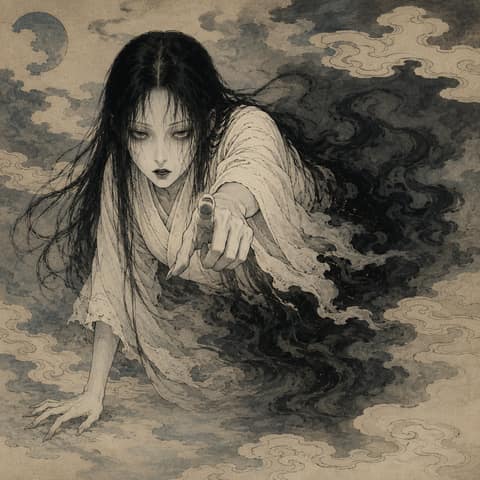
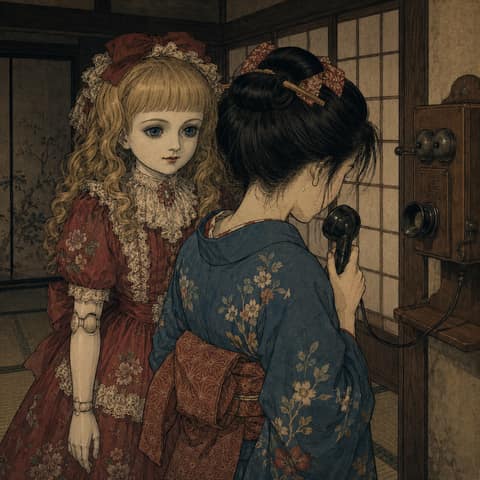
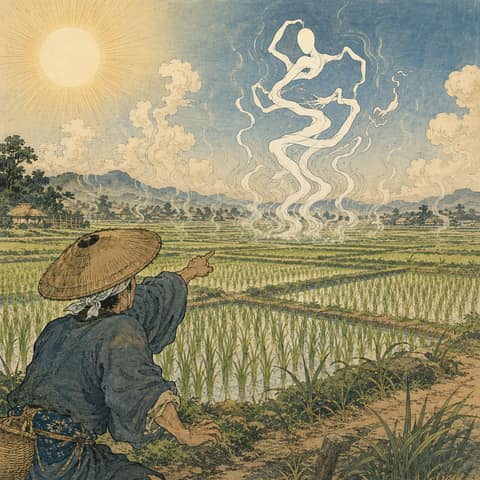
Reading Japanese yokai and kami through lineages, pantheons, and classic sets
Mythology & Deities
(5)
The Kojiki–Nihon Shoki Mythos
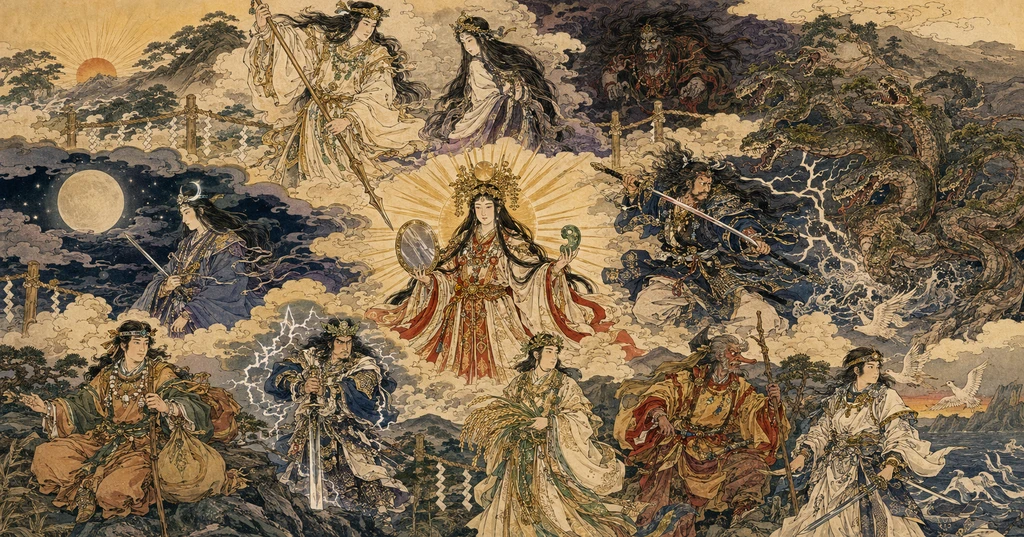
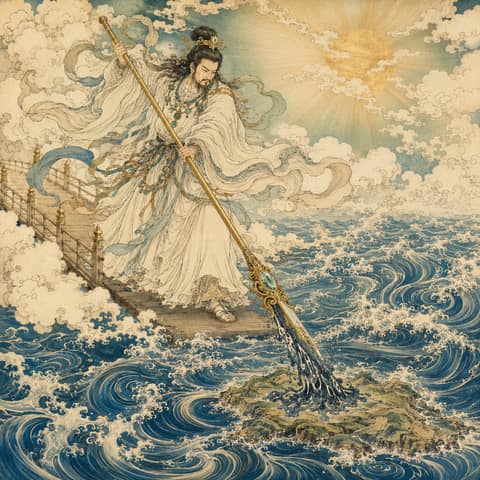
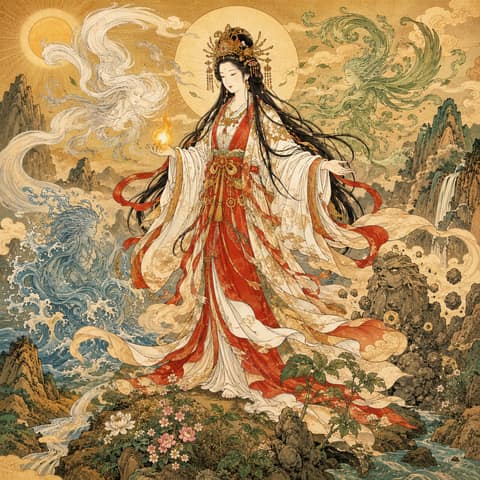
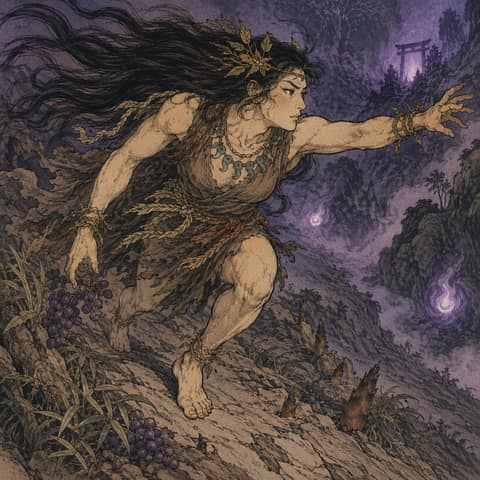
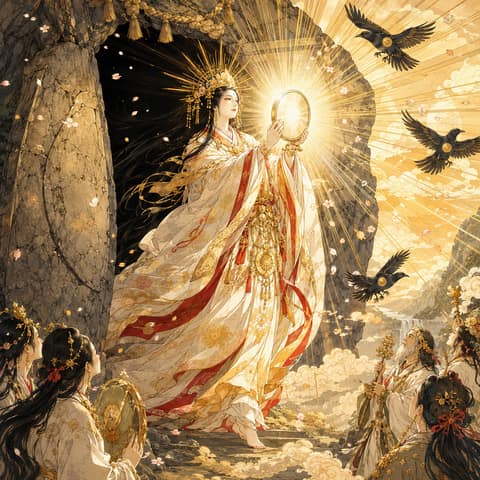
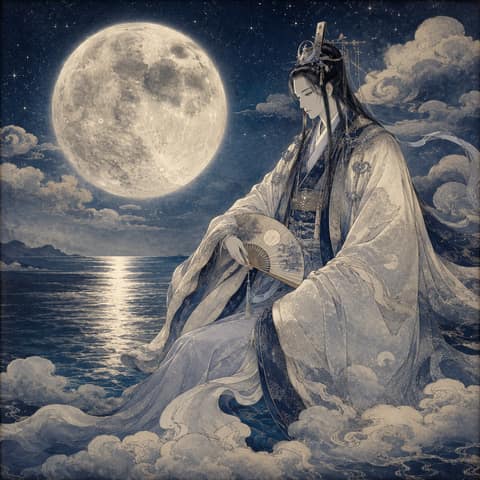
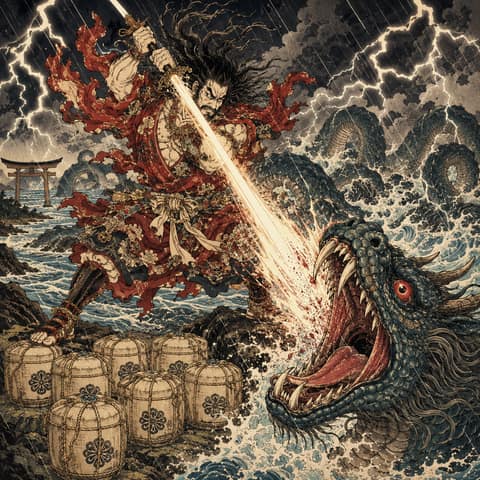
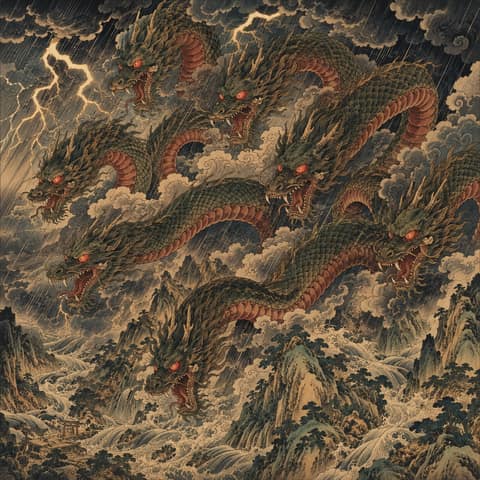
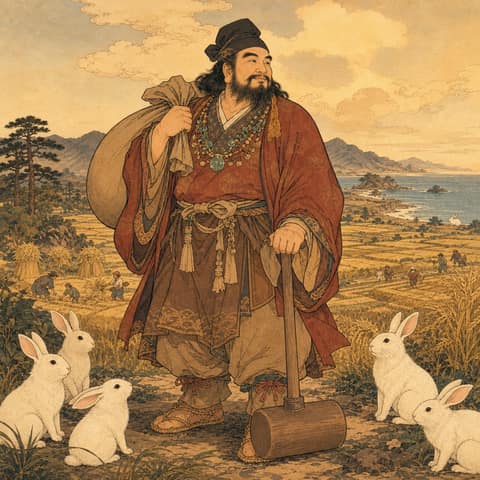
The twelve core figures drawn from the Kojiki (compiled 712 CE) and Nihon Shoki (compiled 720 CE), the two oldest mytho-historical chronicles of Japan. From the primordial creation through the birth of the islands and ten thousand spirits, the Yomi tragedy (Yomotsu-shikome), the three noble children (Amaterasu, Tsukuyomi, Susanoo), the slaying of the eight-headed serpent, Ōkuninushi's rule of Izumo, the surrender of the land at the hands of Takemikazuchi, the heavenly descent of Ninigi guided by Sarutahiko, and the tragic hero Yamato-takeru. Arranged in narrative order, the twelve cover the foundations of the Japanese cosmos, religion, polity, and culture, with successive readings from Motoori Norinaga, Orikuchi Shinobu, Matsumae Takeshi, Segawa Takurō and others sustaining their interpretation across two millennia of continuous reception.
Kiki Sidestream Saga · From Heavenly Descent to Jimmu's Ancestors
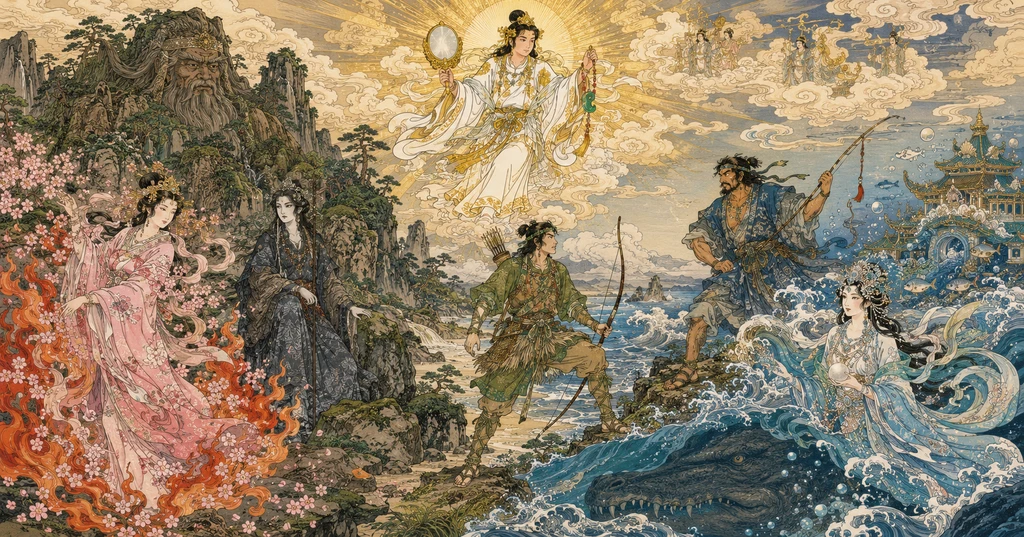
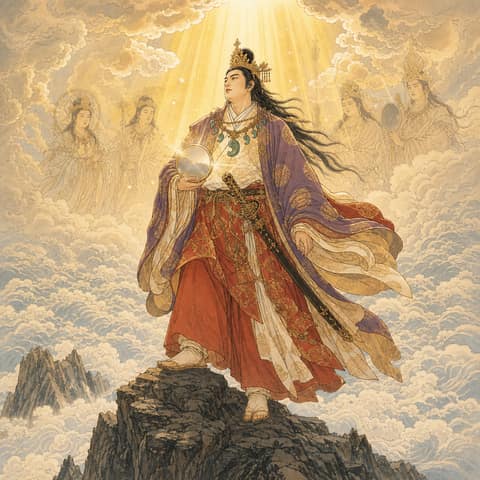
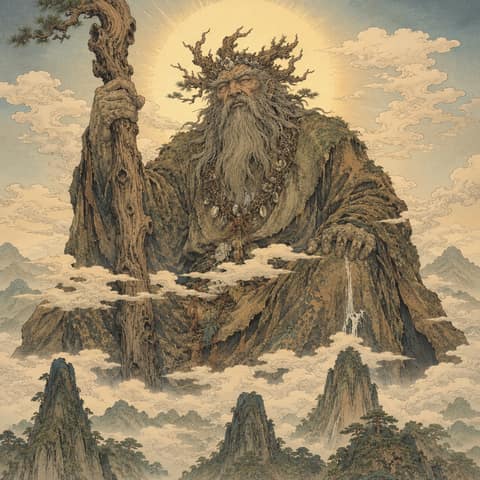
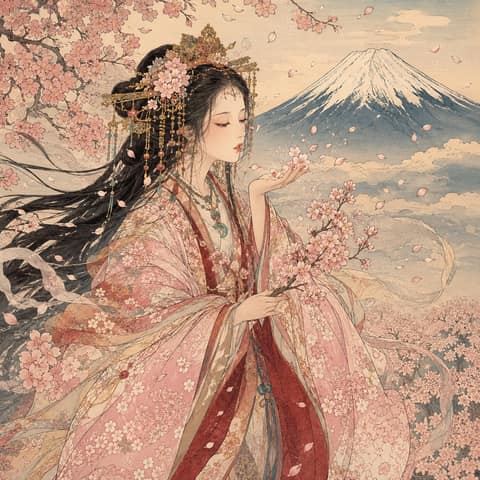
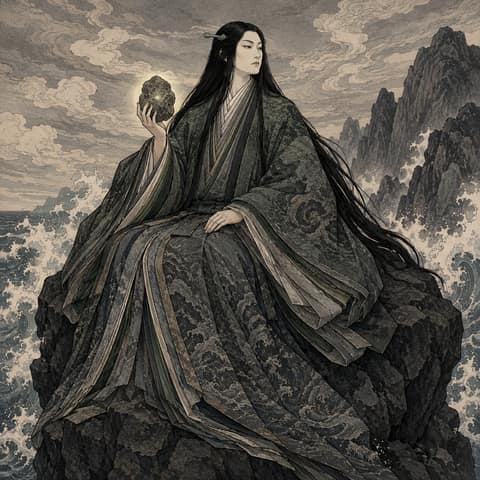
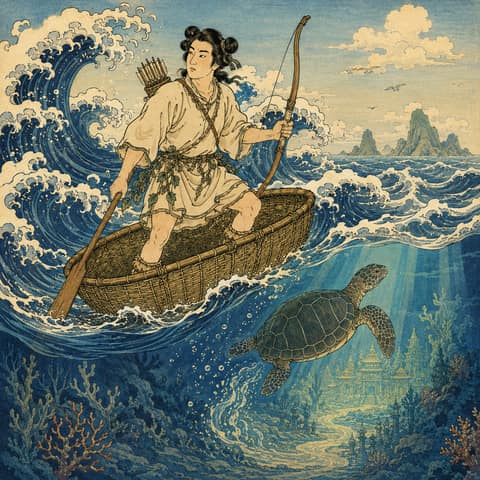
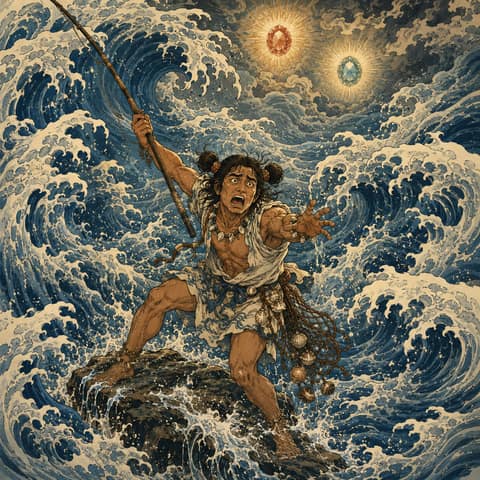
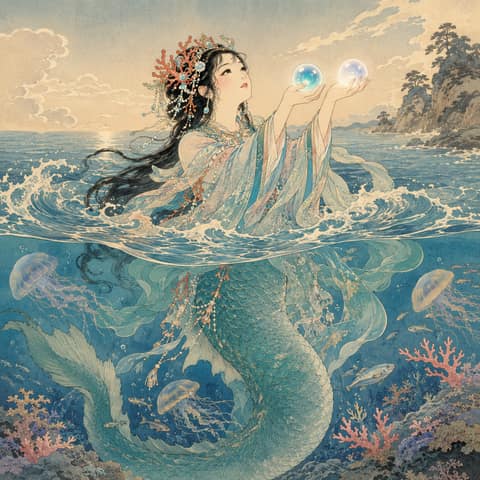
After the heavenly grandson Ninigi descended to Hyuga Takachiho, his marriage with the two daughters of Ōyamatsumi (the god of mountains)—Konohana-sakuyahime and Iwanaga-hime, tied to the myth of human mortality's origin—led to the birth of Yamasachihiko (Hoori) and Umisachihiko (Hoderi) through fire-trial childbirth, the brotherly conflict between them, and Yamasachihiko's underwater marriage with Toyotama-hime, daughter of the sea god, culminating in the broken 'do-not-look' taboo. This cluster bundles the seven deities forming the grandparents and great-grandparents of the first Emperor Jimmu, structuring the 'imperial-lineage genesis layer' that bridges the first half of Kiki mythology (creation, land-yielding) and the second half (Jimmu's eastern expedition).
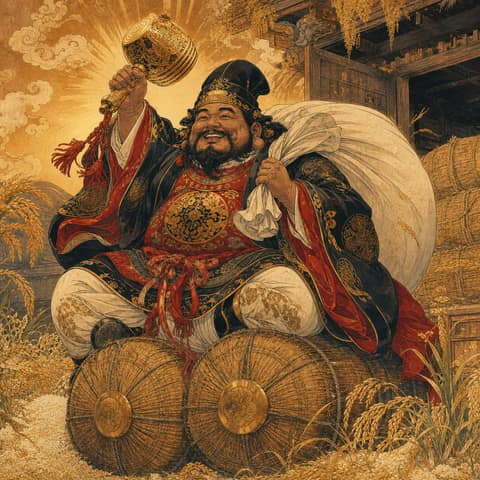
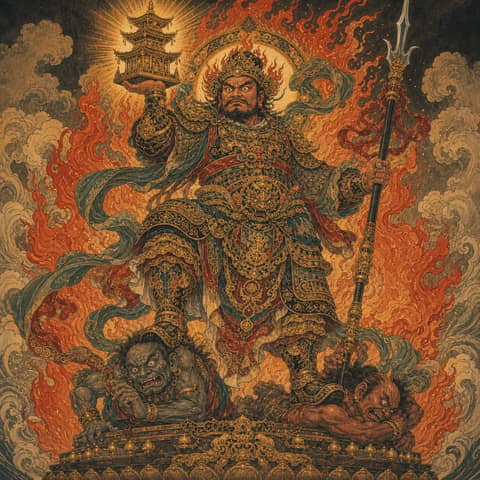
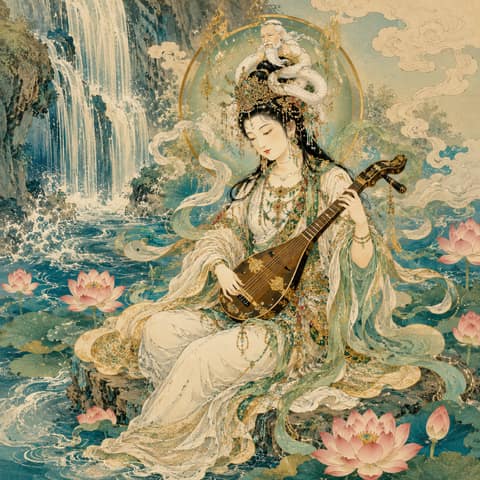
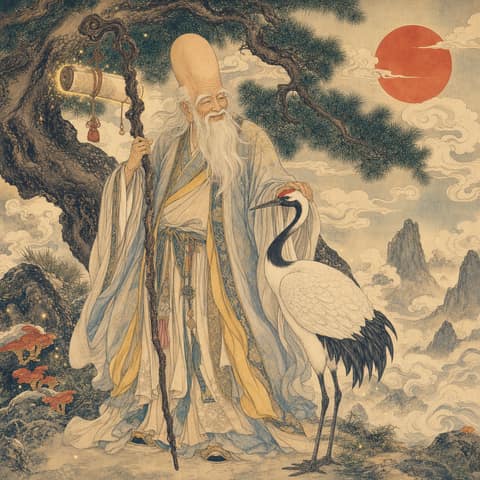
Seven Lucky Gods (Shichi-Fukujin)
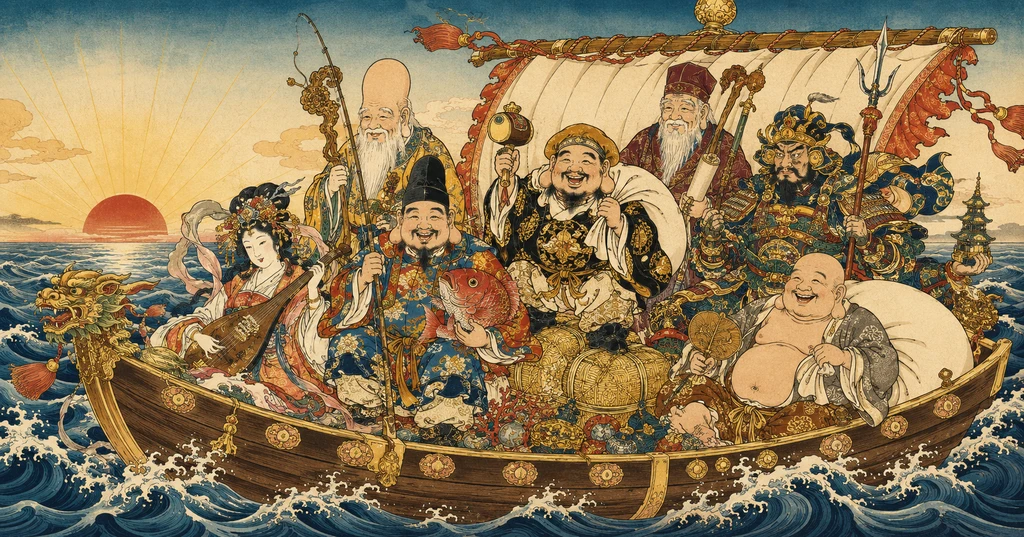
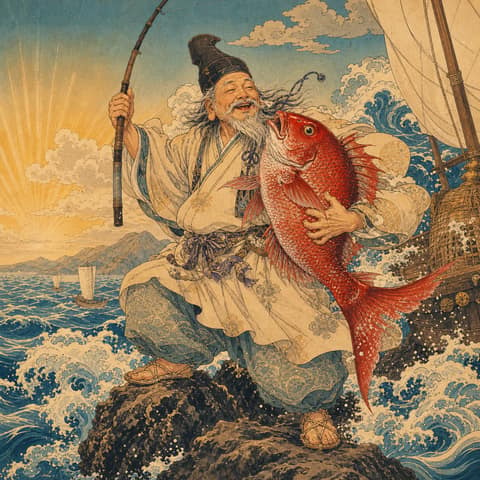
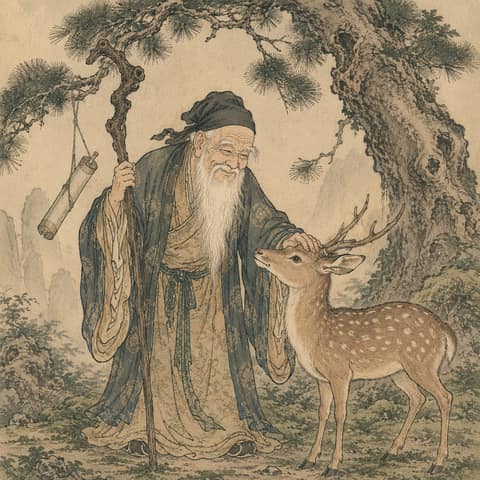
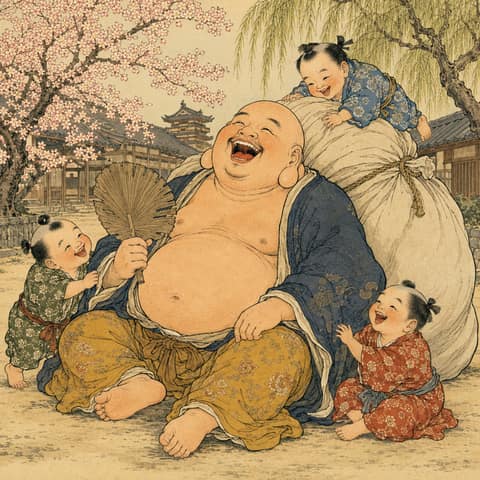
Formed in the late Muromachi period, when the Zen monks and painter-monks of the Higashiyama cultural circle bundled together seven deities of fortune: the locally enshrined Ebisu, the Indian-derived Daikoku, Bishamonten, and Benzaiten, and the continental newcomers Fukurokuju, Jurojin, and Hotei. The set's distinctive feature is that it gathers under one frame deities of utterly different origins ── a local fishing-and-commerce god, three deities transmitted via Buddhism from India, two Daoist astral personifications, and a Chan/Zen-monk turned bodhisattva-incarnation. Through Edo-period treasure-ship prints, first-dream prints, and the Seven Lucky Gods pilgrimages, this group became one of the most pervasive folk religious practices in Japan, and is still widely observed across the Kanto and Kansai regions during the New Year season.
The Four Symbols (Shijin)
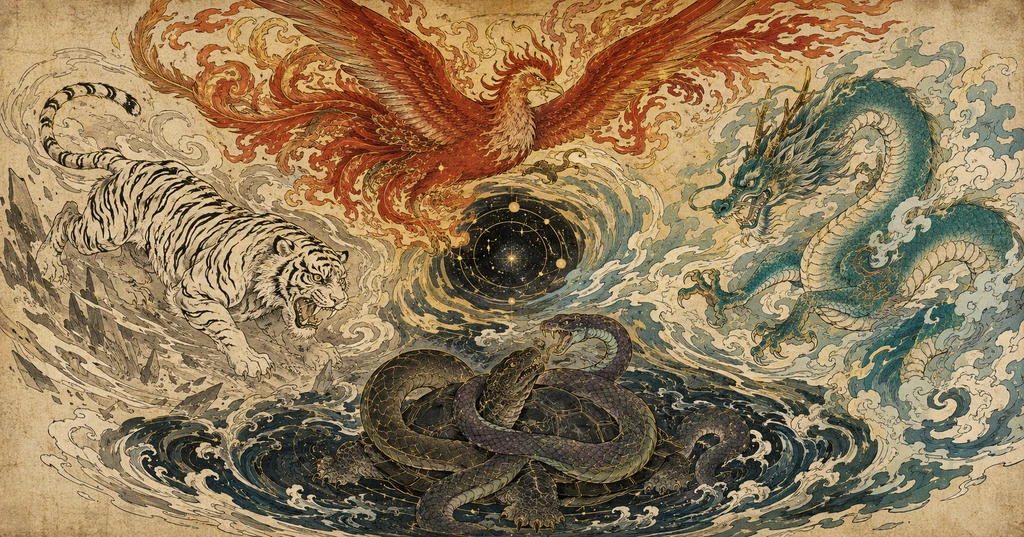
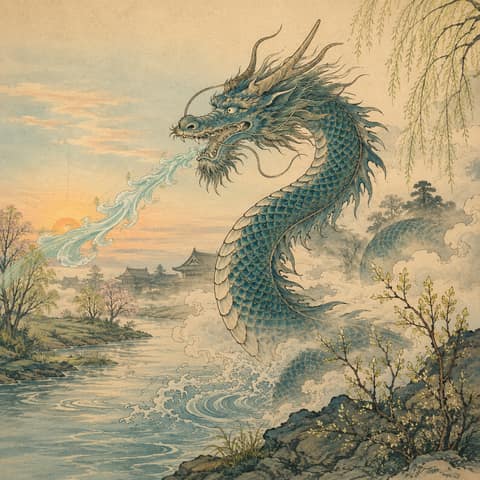
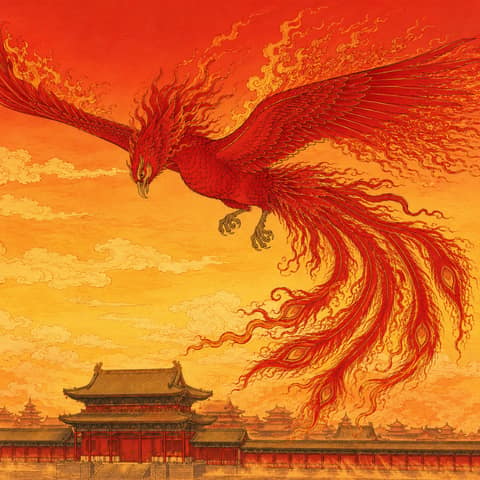
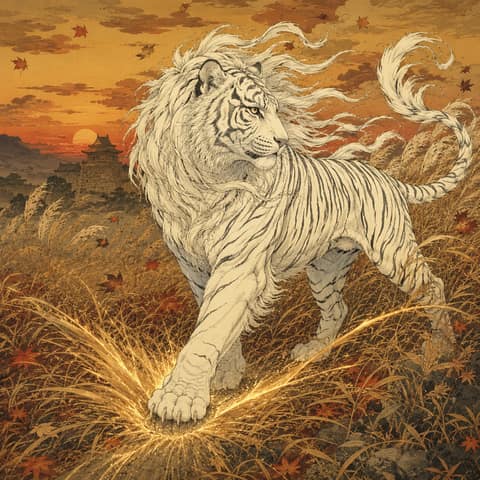
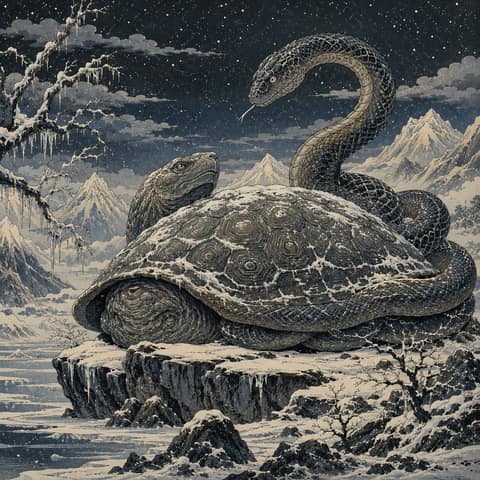
The four sacred beasts that govern the twenty-eight lunar mansions and protect the cardinal directions. Comprising the Azure Dragon (East/Wood), Vermilion Bird (South/Fire), White Tiger (West/Metal), and Black Tortoise (North/Water), they originated from Chinese constellations and the Five Elements philosophy before being adopted in ancient Japan. All four are depicted in their entirety on the murals of the Asuka-period Kitora Tomb.
Lineage of Goryo and Onryo
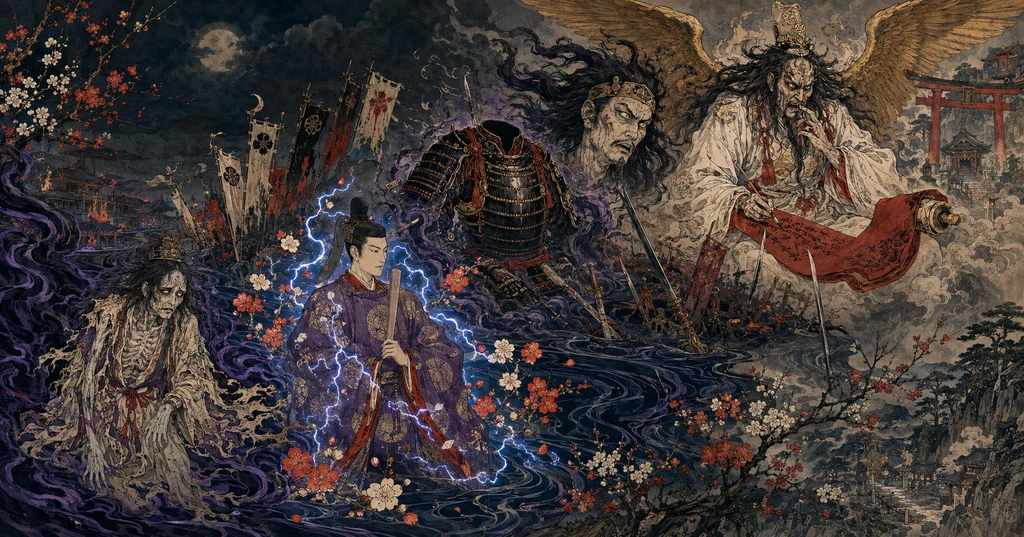
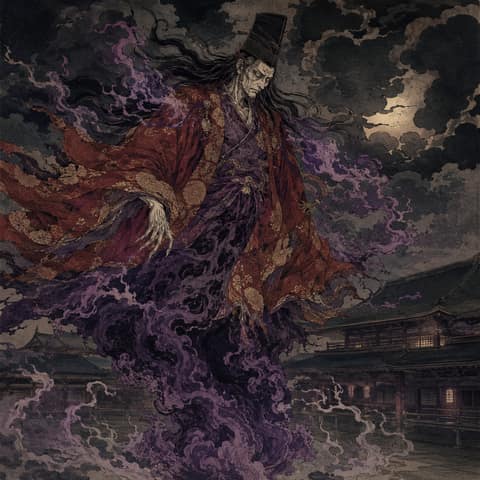
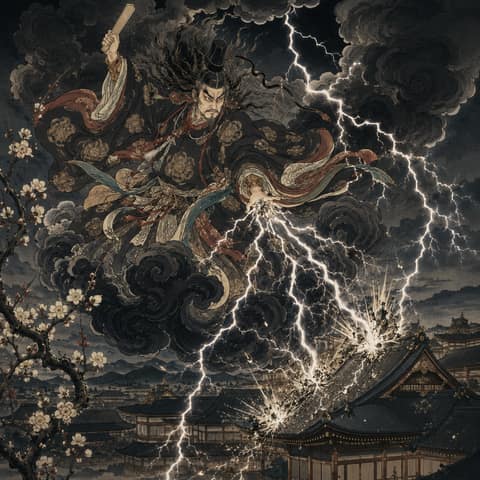
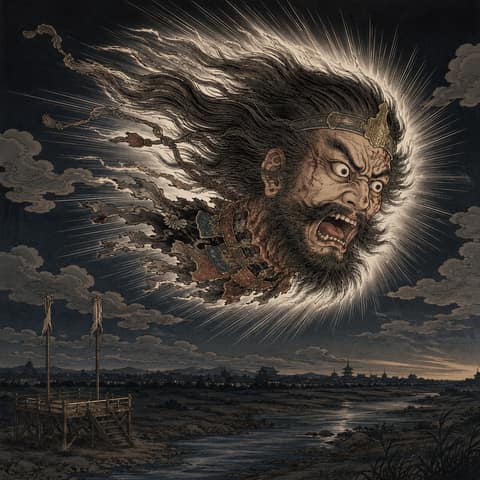
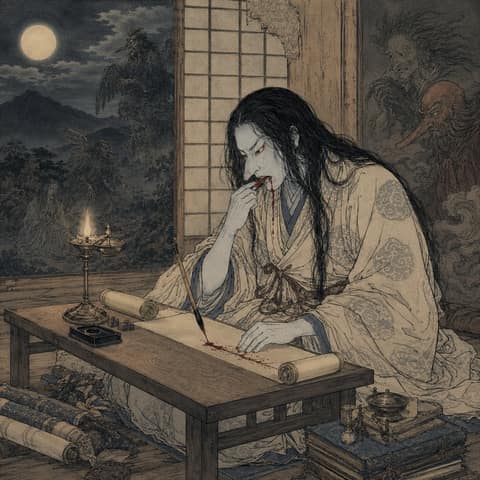
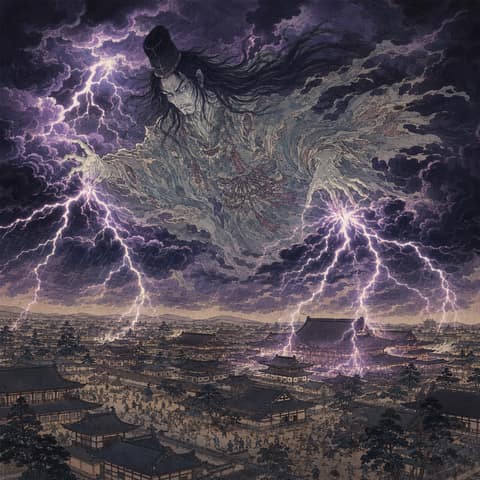
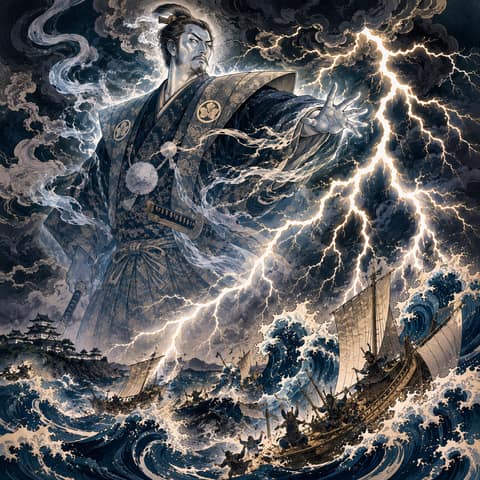
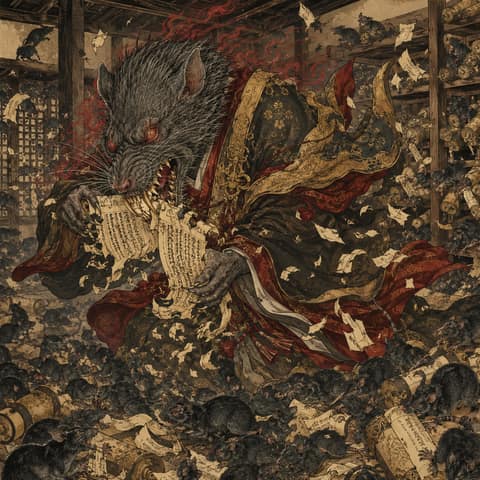
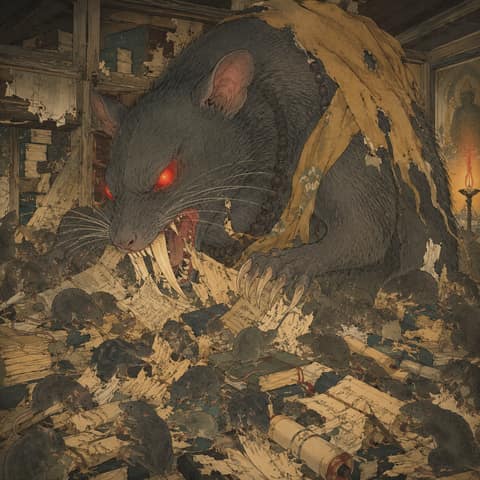
A lineage in which souls who died unjustly are feared as vengeful spirits, then appeased through ritual and enshrined as goryo or deities. It follows the great line from Prince Sawara, Sugawara no Michizane, Taira no Masakado, and Emperor Sutoku, while also opening onto local goryo worship and the vengeful transformation of Raigo into Tesso.
Famous Trios & Classics
(6)
The Three Great Evil Yokai of Japan
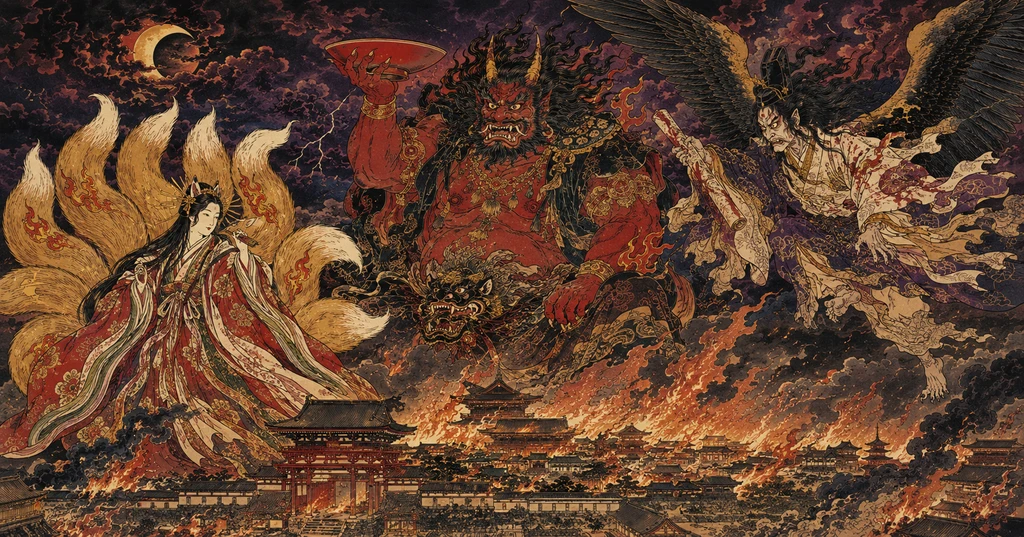
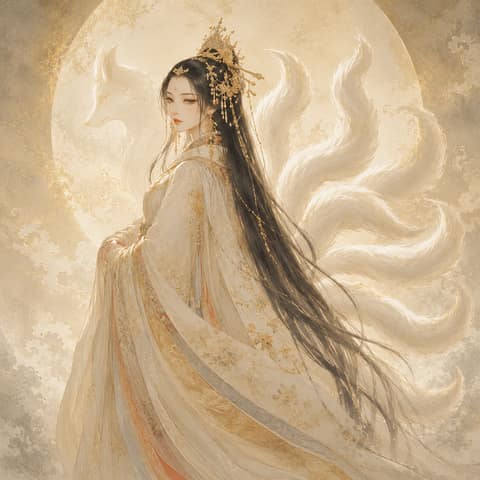
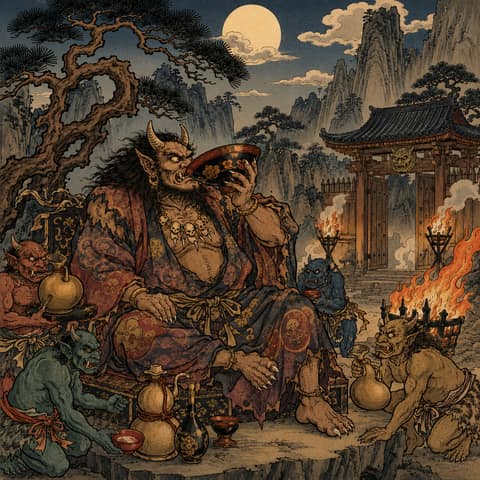
Tamamo-no-Mae, Shuten-dōji, and Emperor Sutoku. The three most renowned great yokai of Japan, who threatened the throne and the capital and were dreaded for ages after. They stand together not by rank but by the awe each struck into a whole realm.
The Three Great Vengeful Spirits of Japan
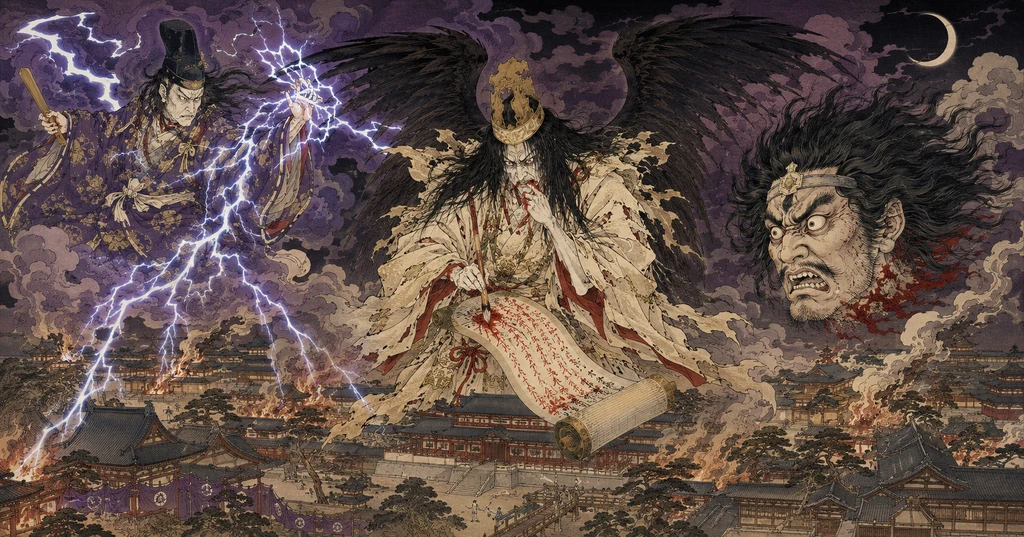
Sugawara no Michizane, Taira no Masakado, and Emperor Sutoku. The three most dreaded vengeful spirits of Japan, who turned to wrath through false accusation or violent death and shook the throne and the capital. They stand together not by rank, but by the scale of the curse with which each rocked an age.
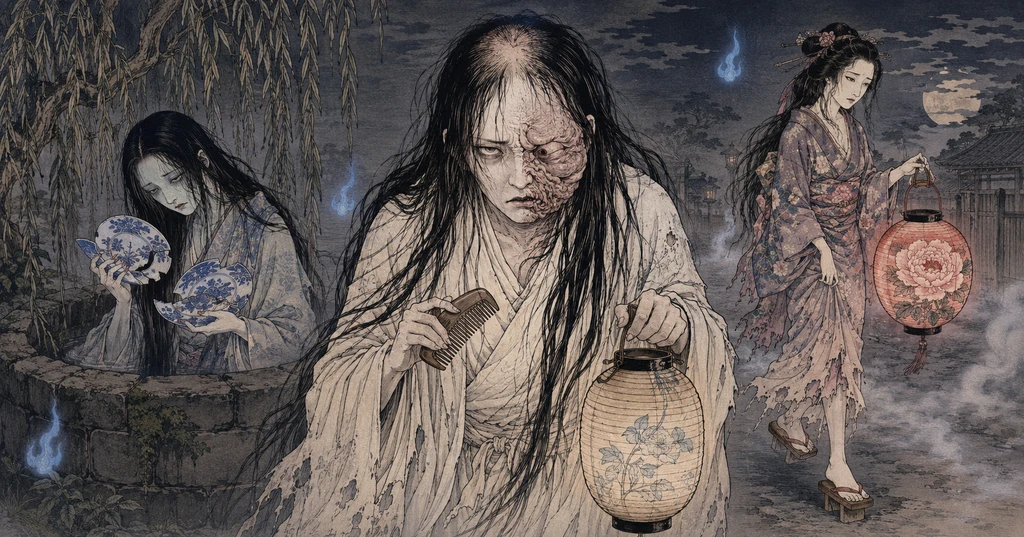
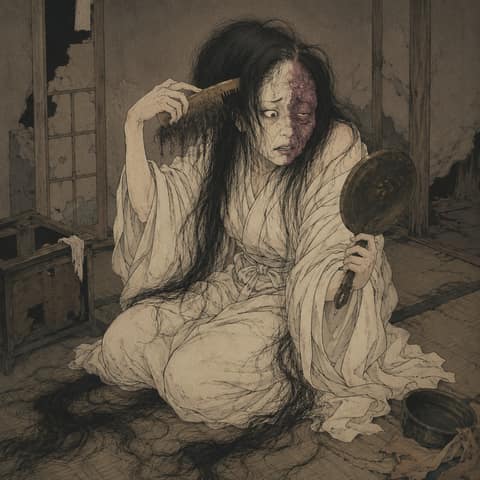
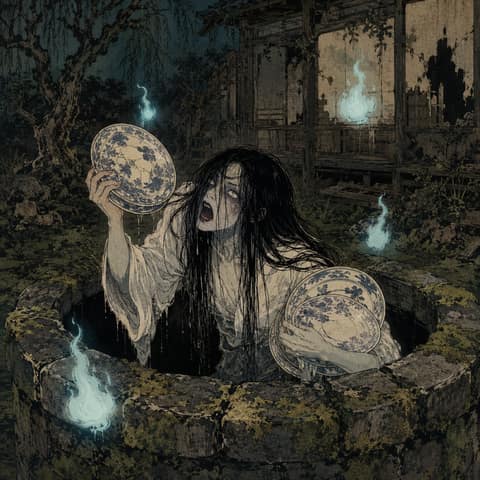
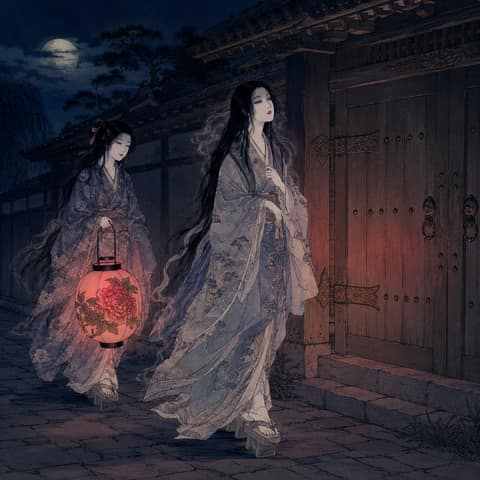
Three Great Ghosts of Japan
The three most famous ghosts born from early modern kaidan (ghost stories). Oiwa of Yotsuya Kaidan, whose disfigured face cursed her husband; Okiku of the Dish Mansion, who counts plates in a well; and Otsuyu of the Peony Lantern, who traverses the night carrying a lantern out of yearning for her love. Repeatedly recounted in kabuki, rakugo, and kodan storytelling, they form the archetype of the traditional Japanese ghost.
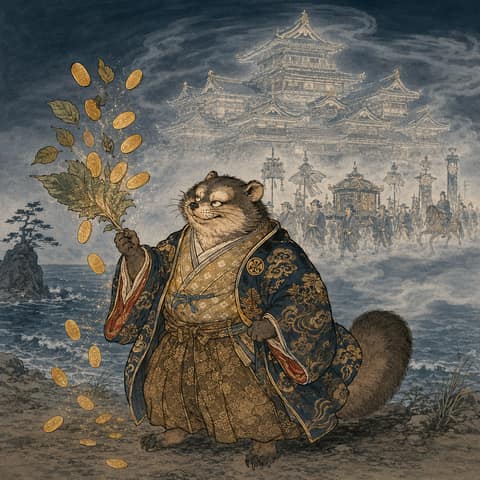
Three Great Monster Tanuki of Japan
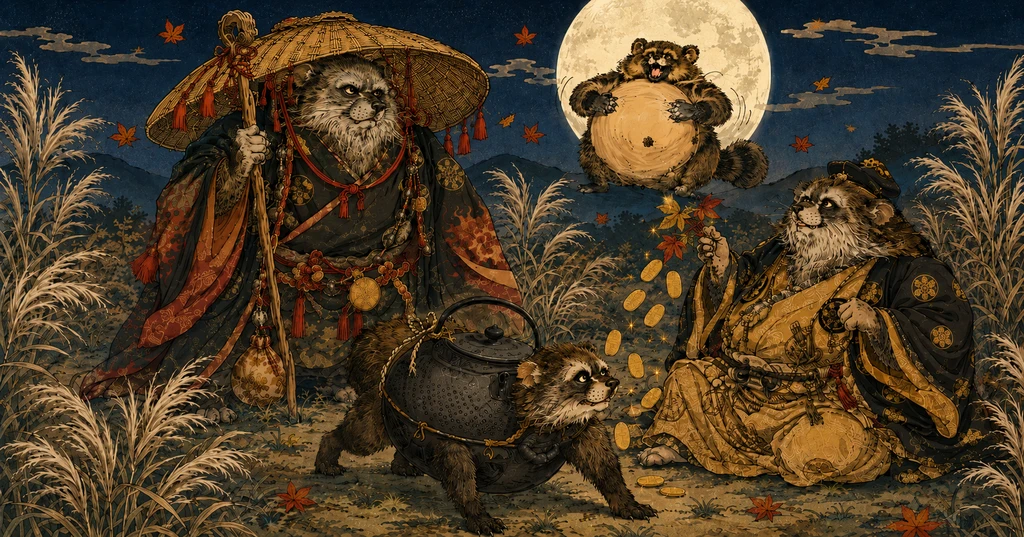
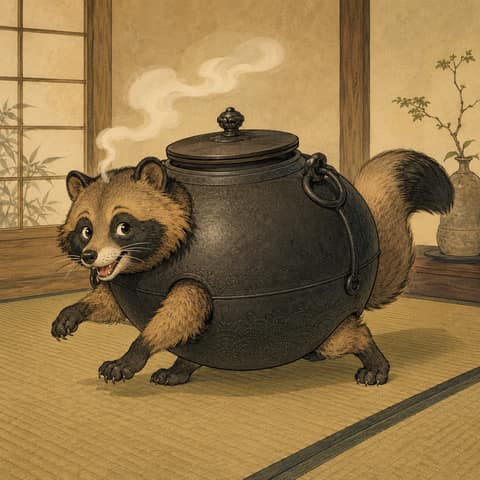
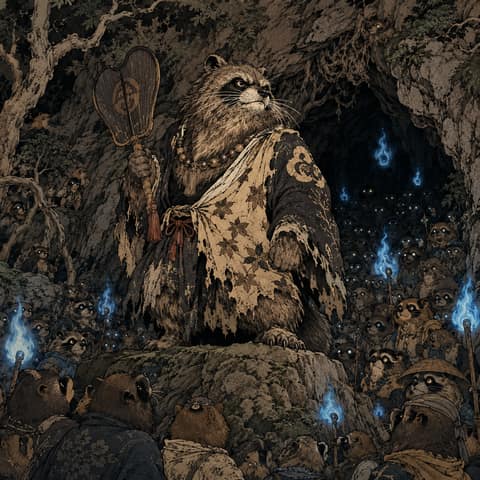
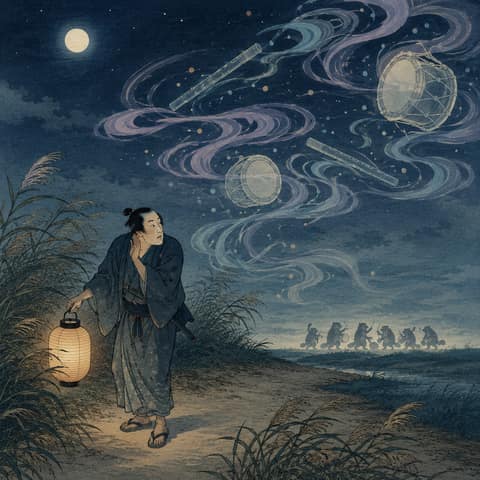
The widely celebrated Three Great Tanuki Legends of Japan: the Bunbuku Chagama of Morin-ji in Tatebayashi, the Eight Hundred and Eight Tanuki (Inugami Gyobu) of Matsuyama, and the Tanuki-bayashi of Shojo-ji in Kisarazu. Often joined by Danzaburo-danuki of Sado Island, this saga gathers the great tanuki who bewildered people with illusions and belly-drumming, while simultaneously serving as protectors of their lands.
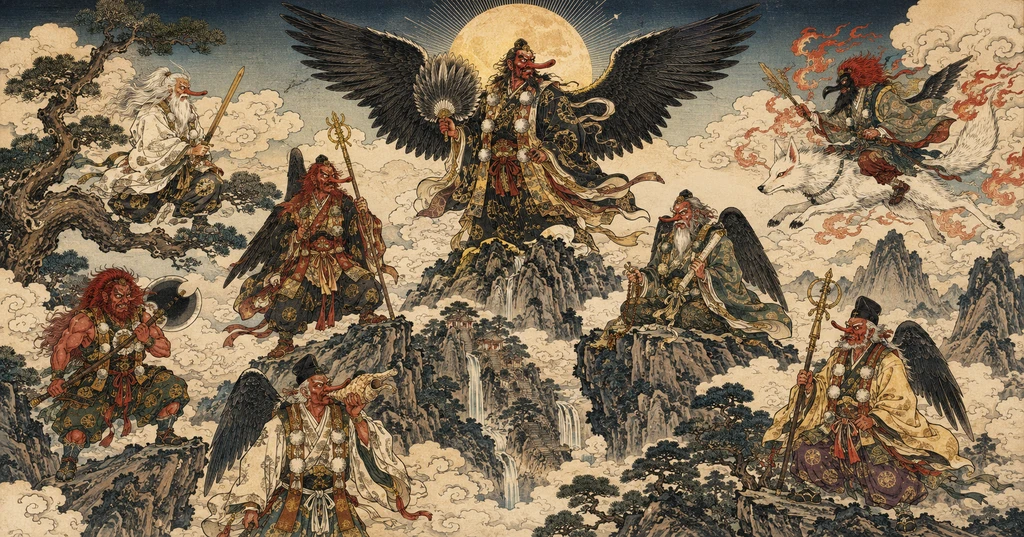
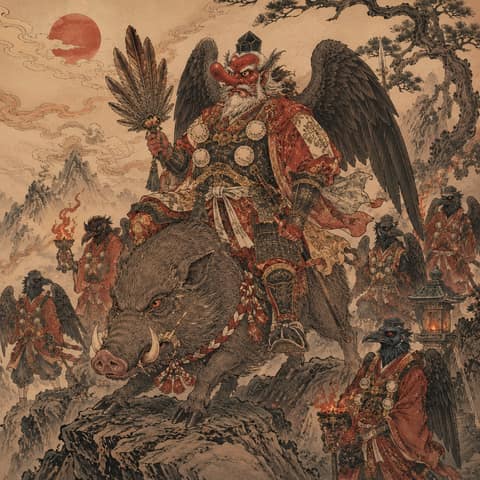
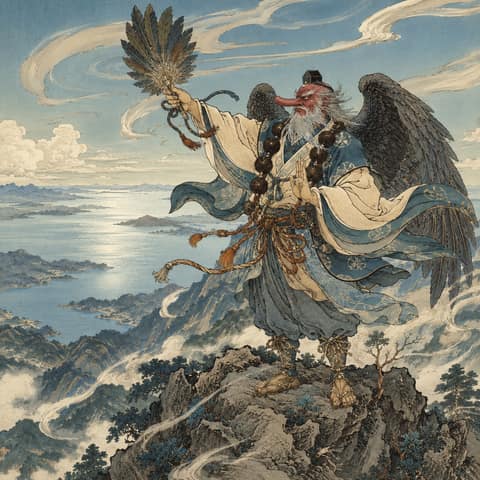
The Eight Great Tengu
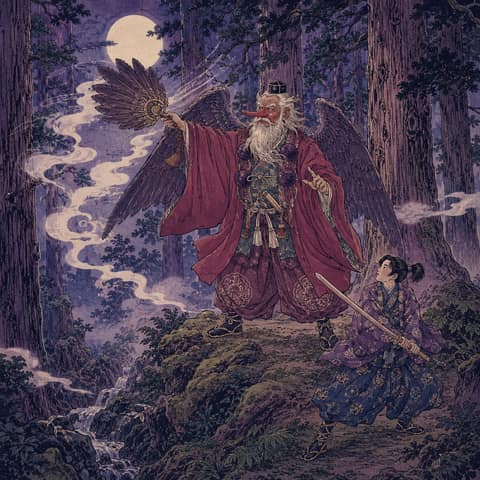
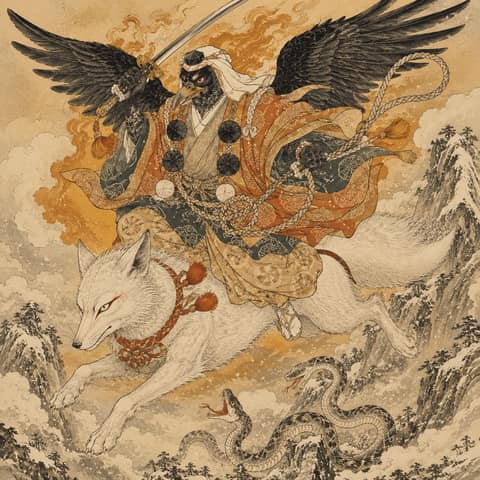
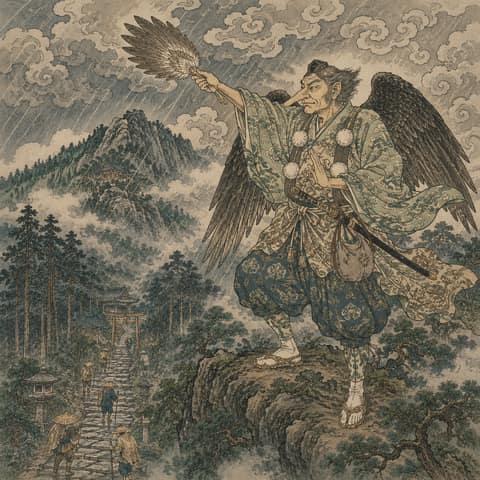
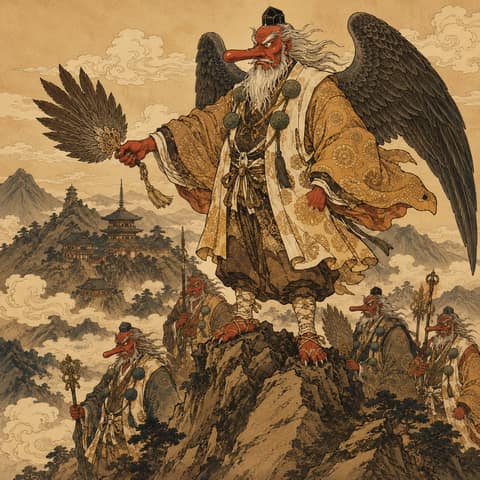
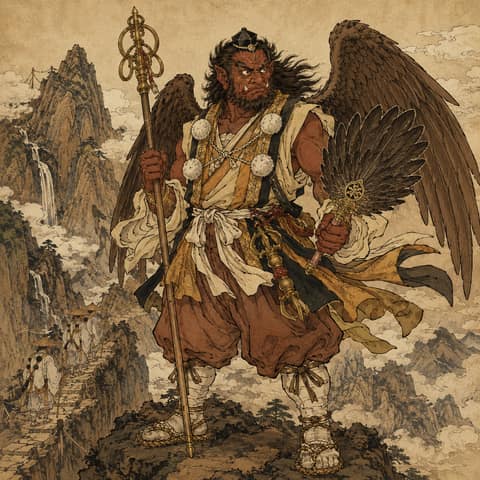
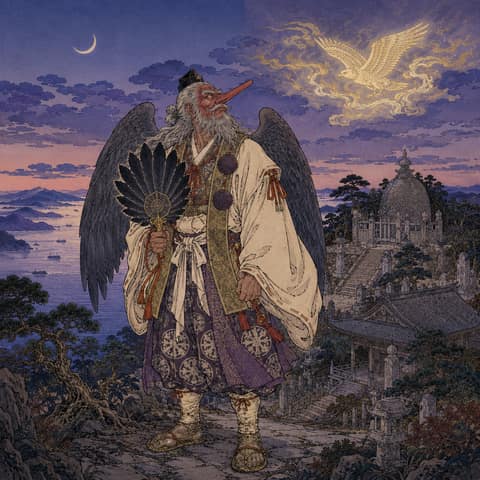
The eight supreme Daitengu who preside over the sacred mountains across the provinces. Their names were already listed in the Muromachi-period Noh play "Kurama Tengu," and they stand at the pinnacle of the forty-eight tengu in the Edo-period "Tengu Sutra." Led by the supreme commander Atago Tarobo, their domain extends as far west as Mount Shiramine in Sanuki.
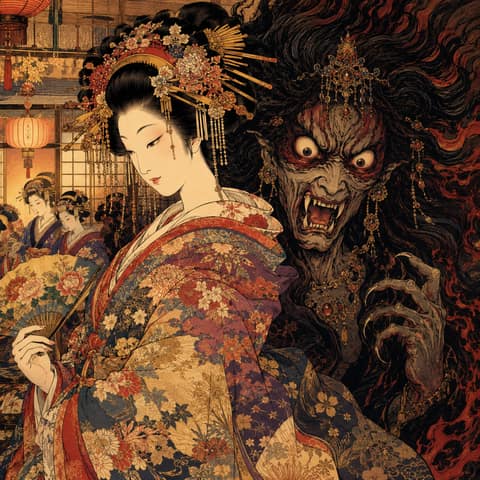
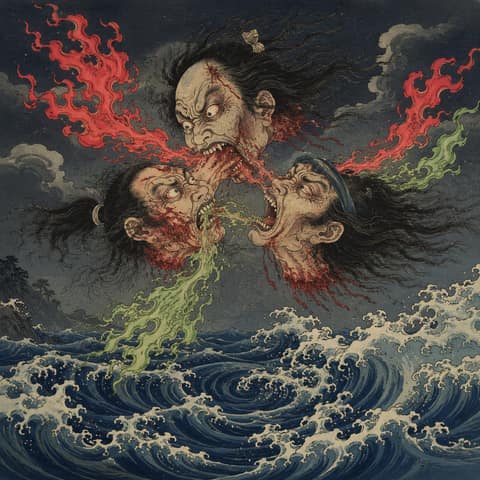
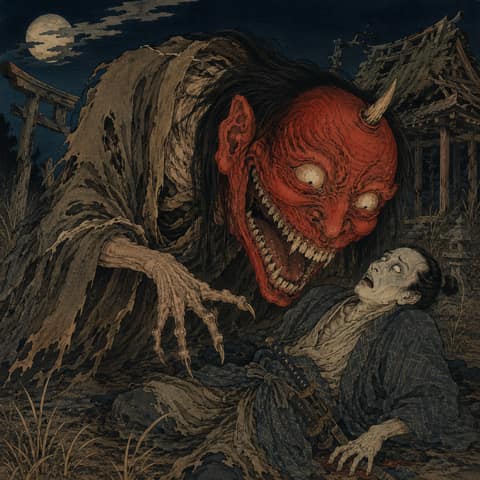
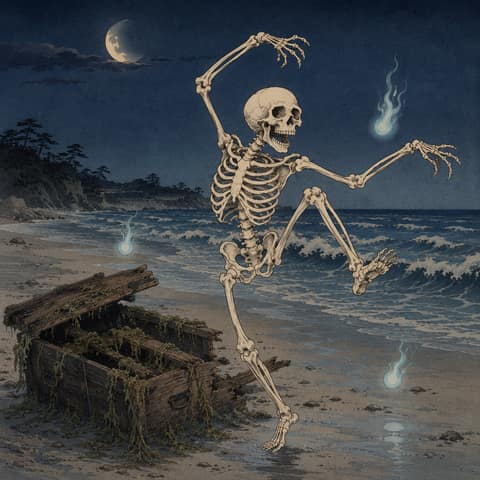
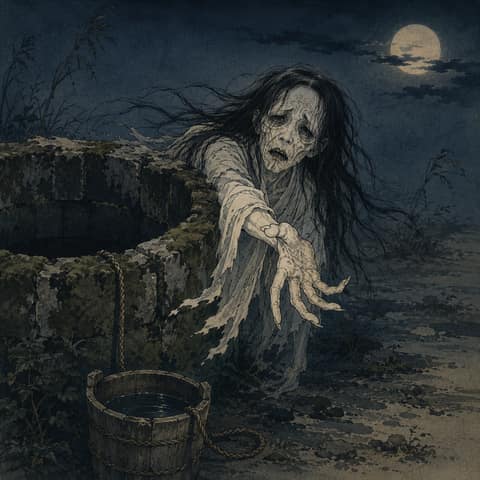
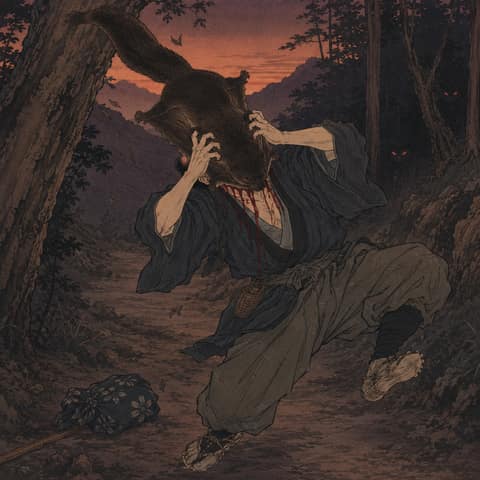
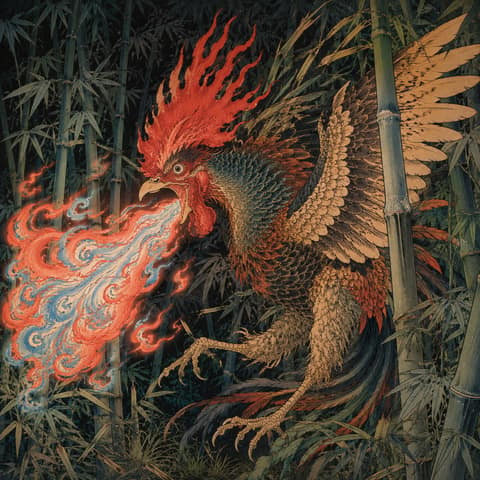
Ehon Hyaku Monogatari
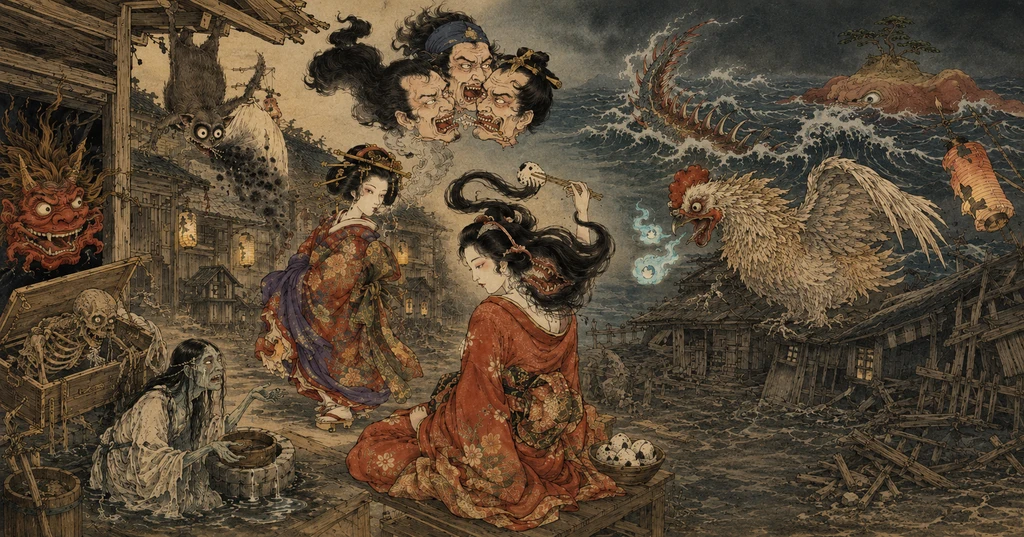
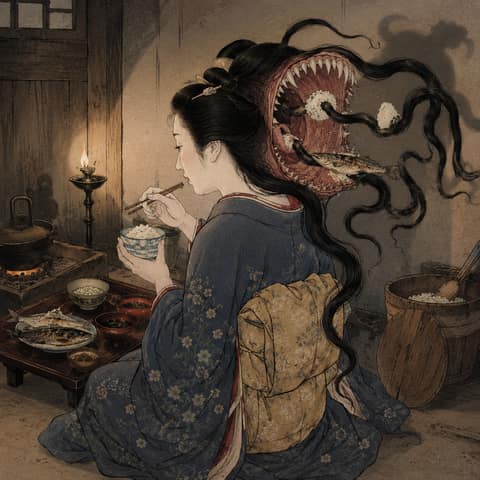
Published in the 12th year of Tenpo (1841), the strange tale collection "Ehon Hyaku Monogatari" (Picture Book of a Hundred Stories) — also known as "Tosan Jin Yawa" (Night Tales of Tosan Jin) — is a representative yokai book of the late Edo period. With text by Tosan Jin and color woodblock illustrations by Takehara Shunsen, it introduced strange phenomena selected from nationwide lore and gossip alongside emotionally rich pictures and short narratives. This single volume cemented the image of yokai passed down to later generations, such as the Futakuchi-onna, Hinoenma, and Maikubi. From monstrous sea fish to ghosts of those burdened by karma ── gathered here are the yokai born from a book of strange tales, given vivid form by Shunsen's brush.
Animal Transformations & Lineages
(4)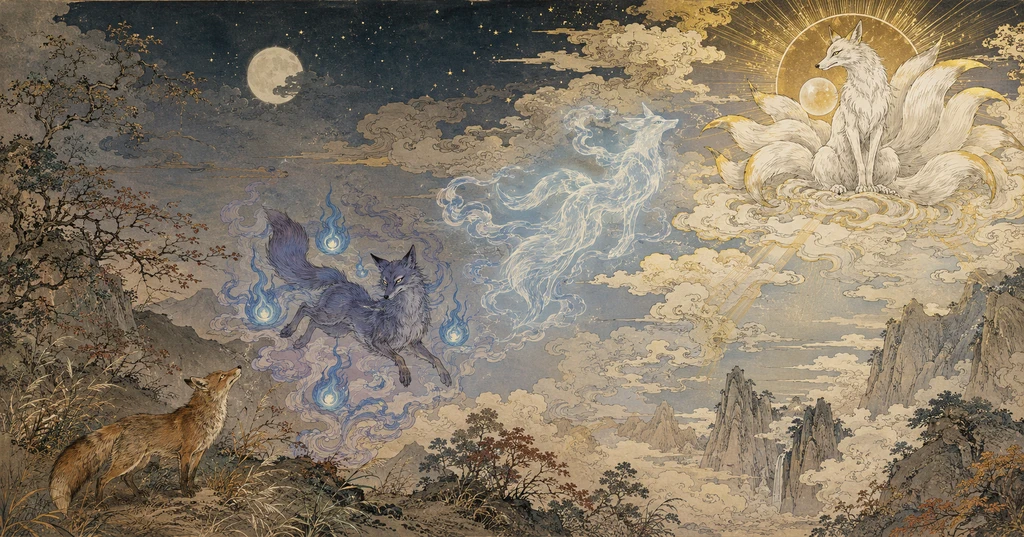
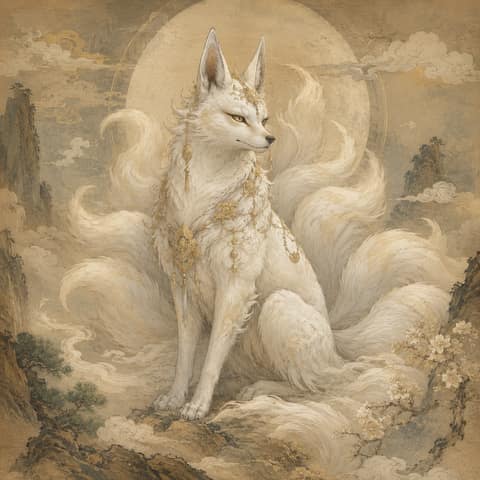
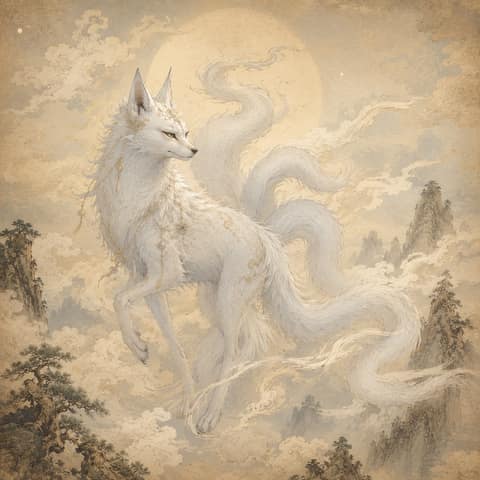
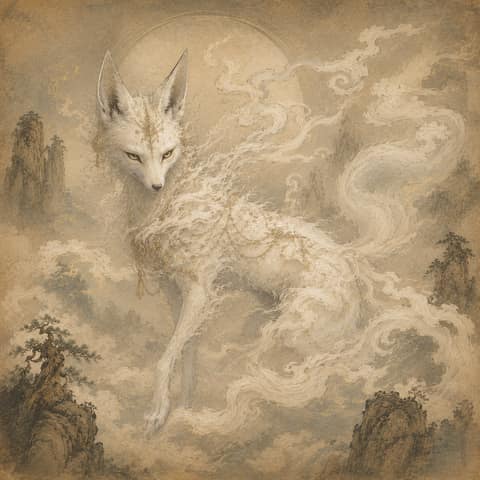
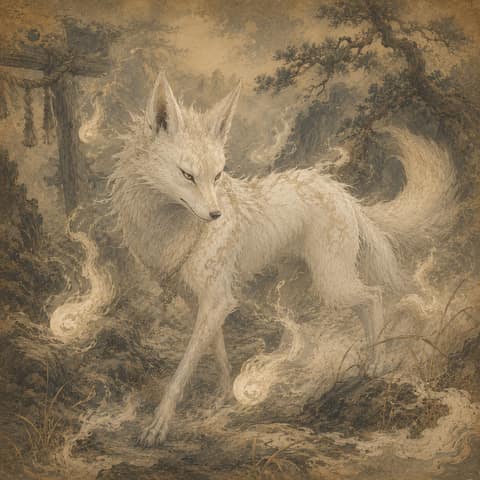
The Four Ranks of Foxes
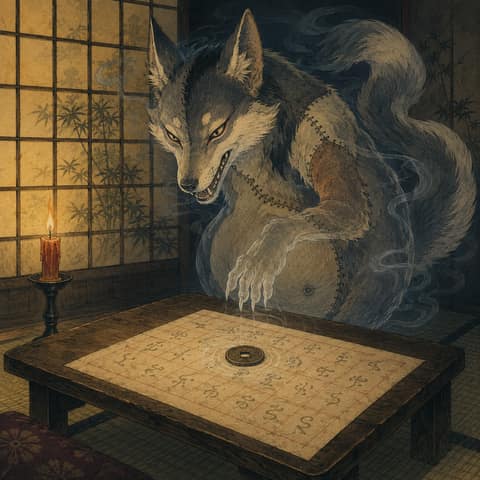
The four grades of fox spirits set down in Edo-period essays — the higher the rank, the further from humankind and the nearer the divine.
Hierarchy of Feline Yokai
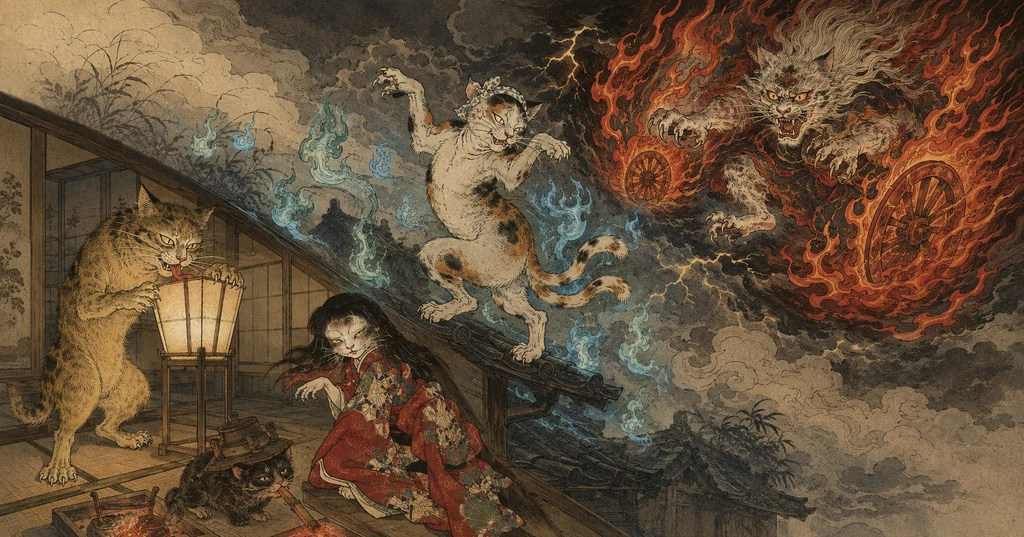
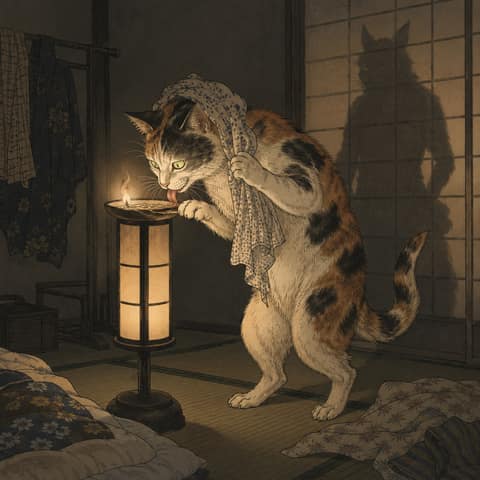
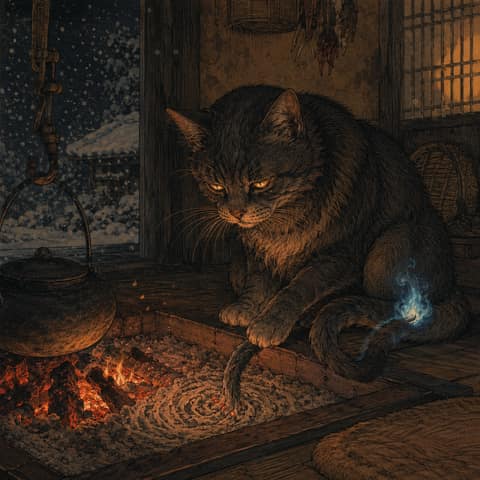
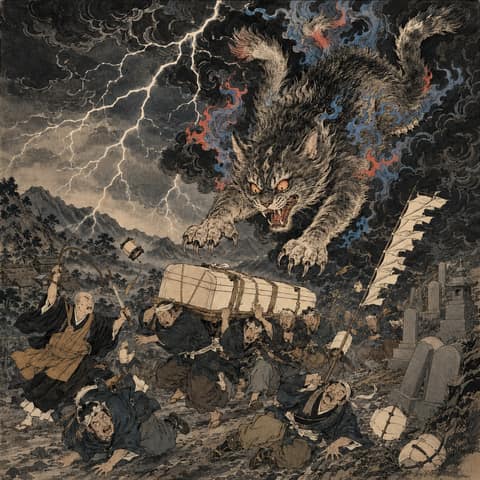
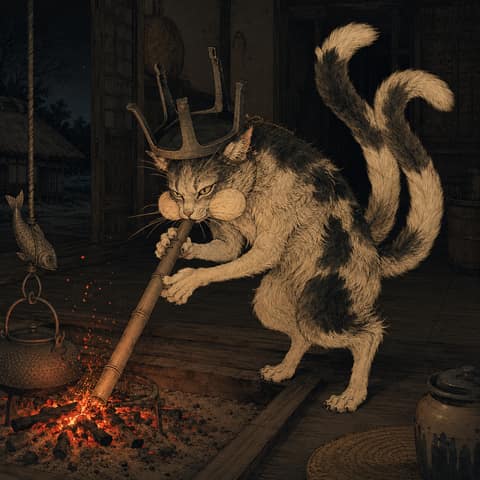
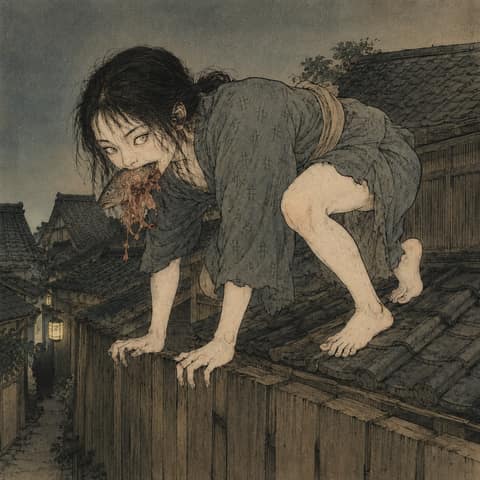
The hierarchical evolution of aged cats as they gain demonic power, altering their forms and status. From the newly transformed bakeneko, to the twin-tailed nekomata, and ultimately the kasha, which snatches corpses from funeral processions. The Gotoku-neko and Neko-musume are kindred spirits connected to this lineage. The placement of the kasha at the apex is one prominent theory.
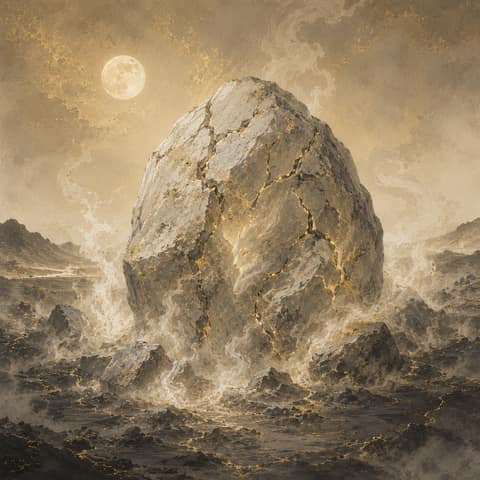
The Incarnations of Tamamo-no-Mae
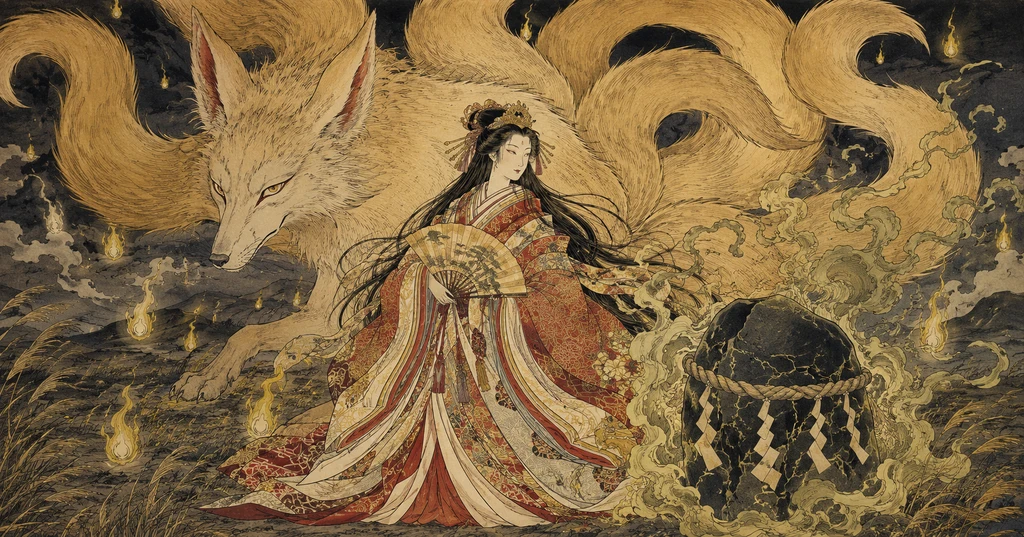
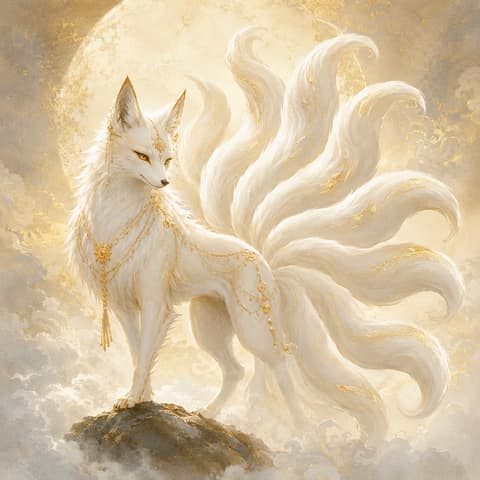
A fox that split its tail into nine became a peerless beauty, and at last a stone that takes the lives of all who draw near. A single lineage traced by a fox-spirit from China through its incarnations and rebirths.
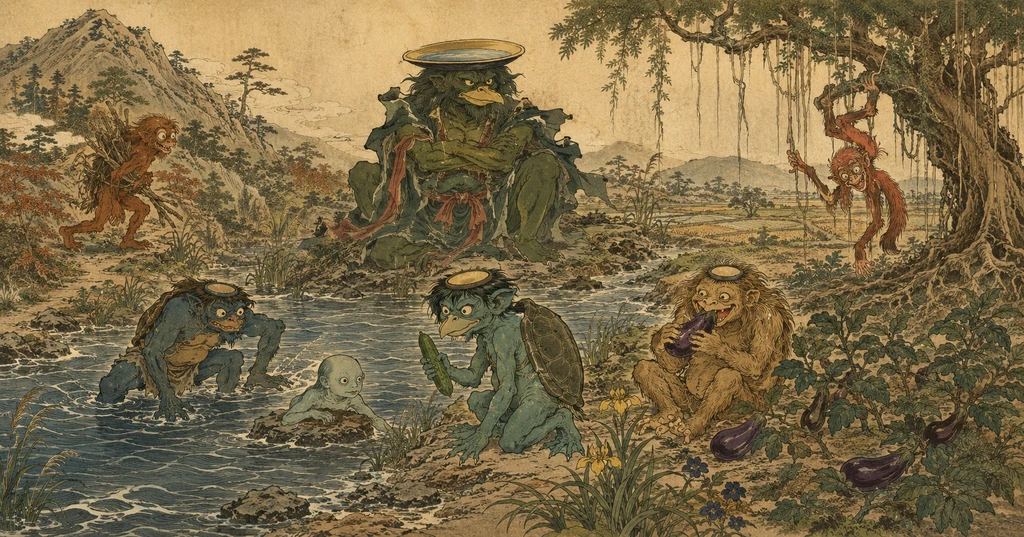
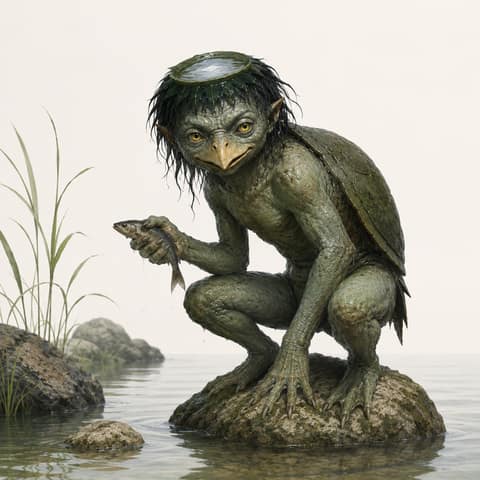
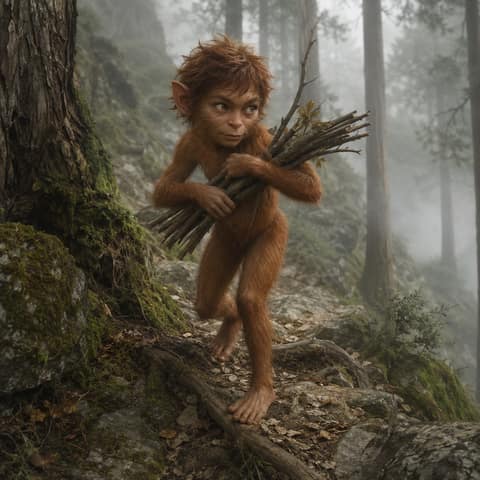
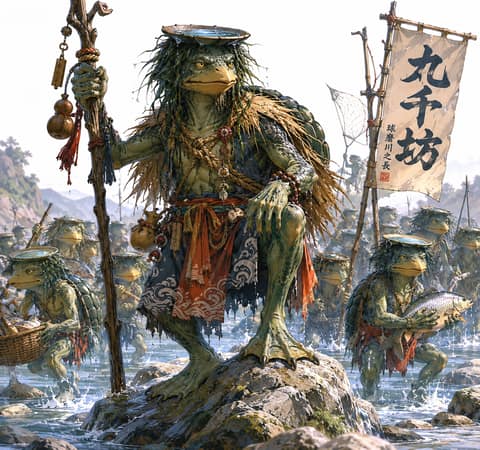
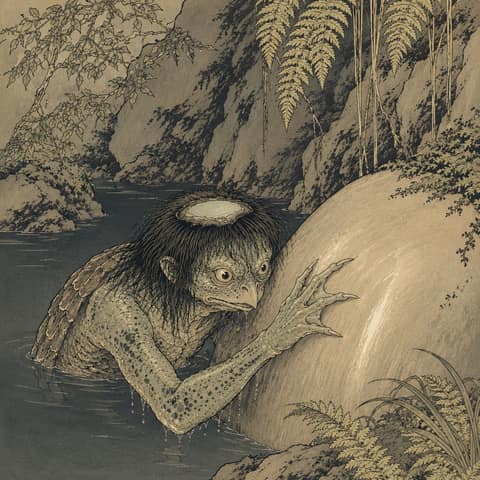
The Kappa Kindred
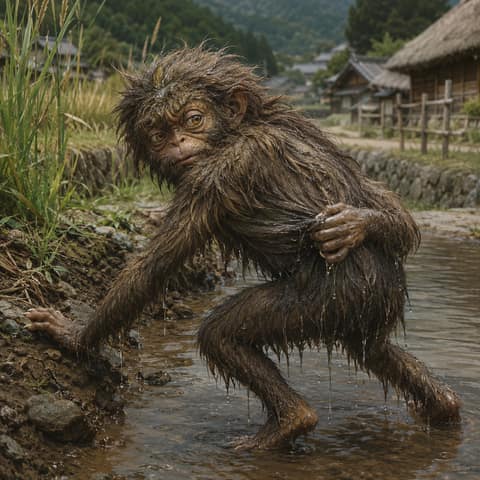
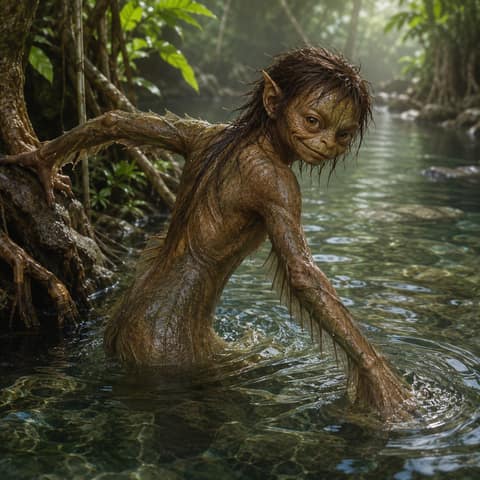
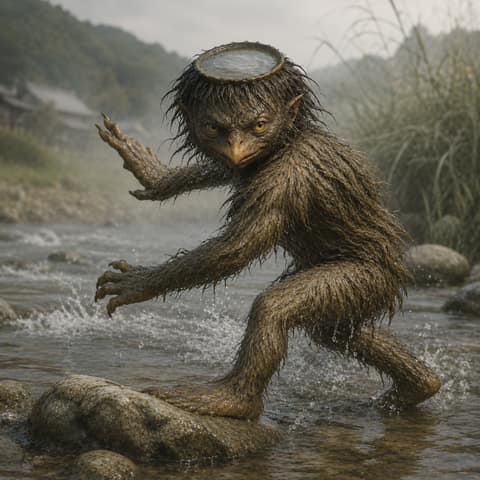
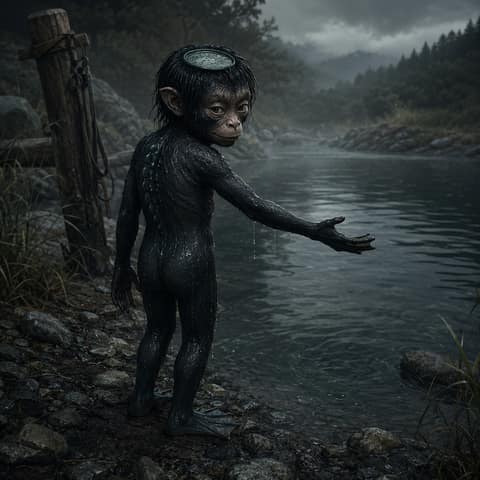
The kappa of watersides across Japan and its kin. They are bound not by rank but by local names and by the seasonal passage between river and mountain.
Strange Fires & Forms
(6)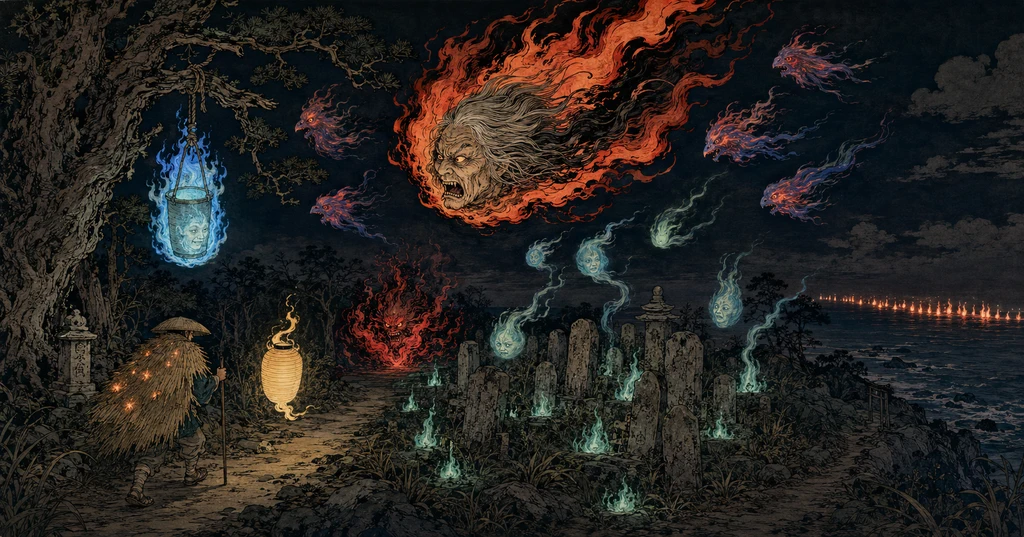
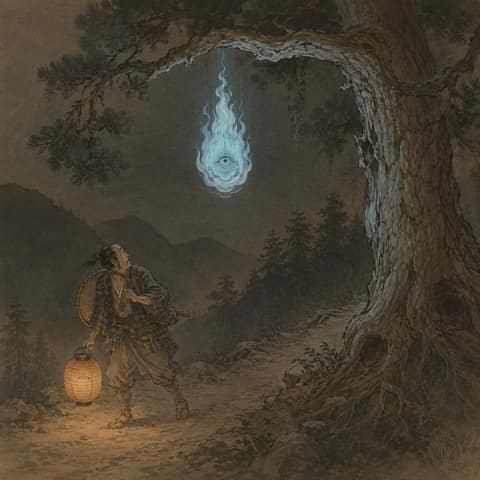
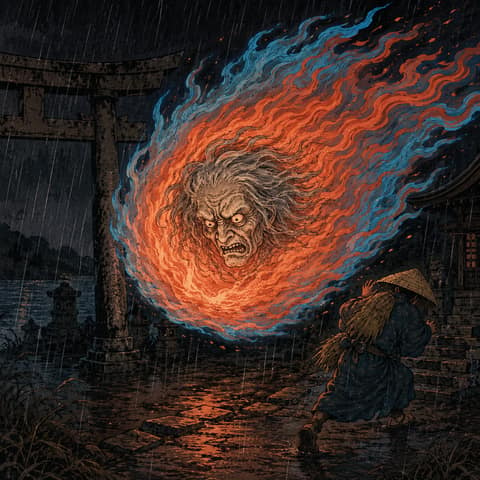
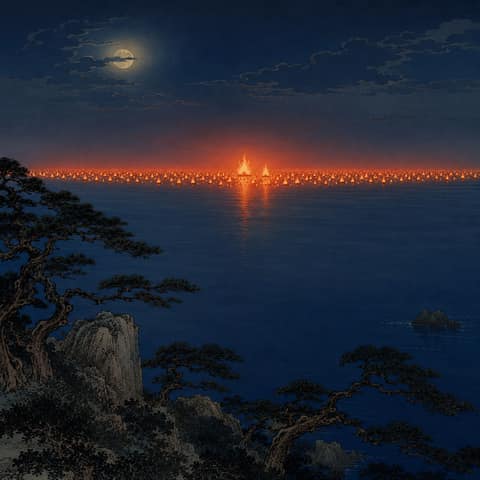
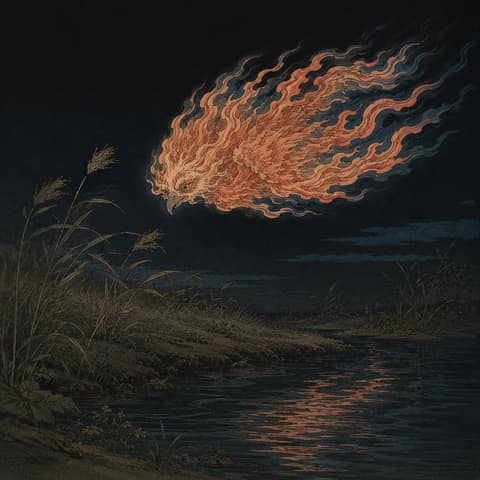
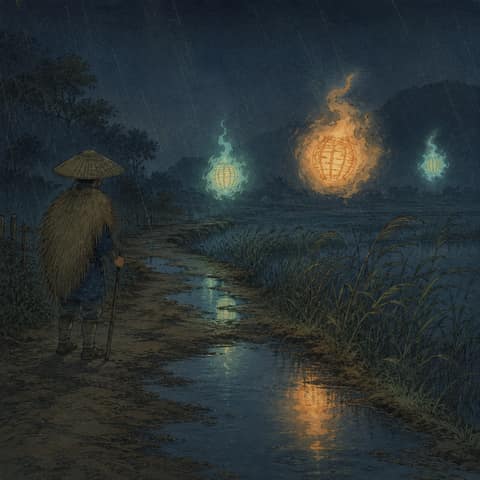
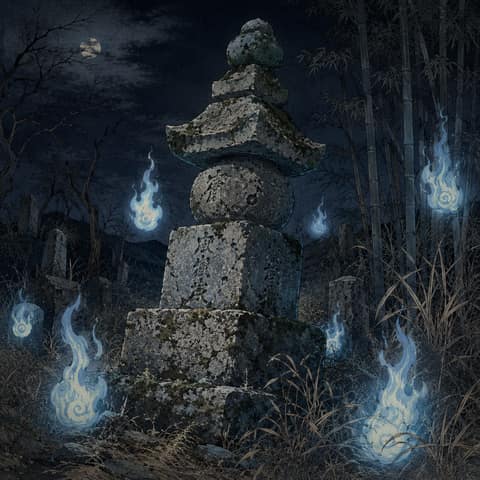
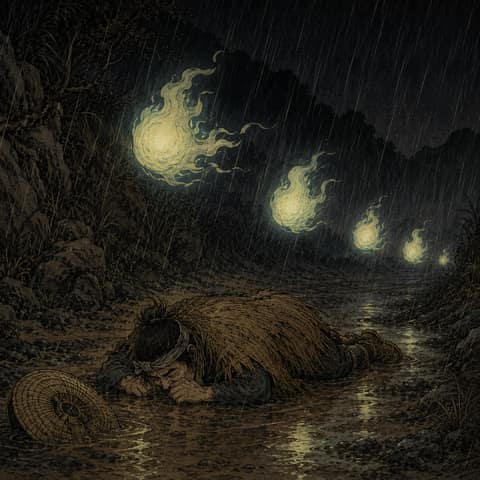
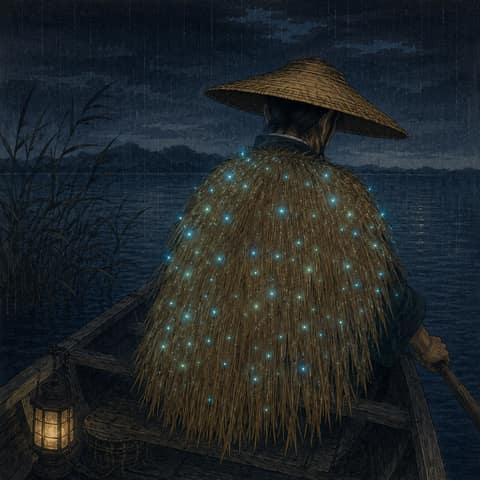
Phantom Fires and Flame Yokai
A multitude of phantom fires with various origins that illuminate nocturnal fields, shores, graveyards, and eaves. From the Uba-ga-bi of an old woman who stole oil, the flames igniting on straw raincoats on rainy nights, and the Shiranui lining the sea, to hitodama representing the souls of the dead—an illustrated catalog of fire-related fears compiled by artists like Toriyama Sekien.
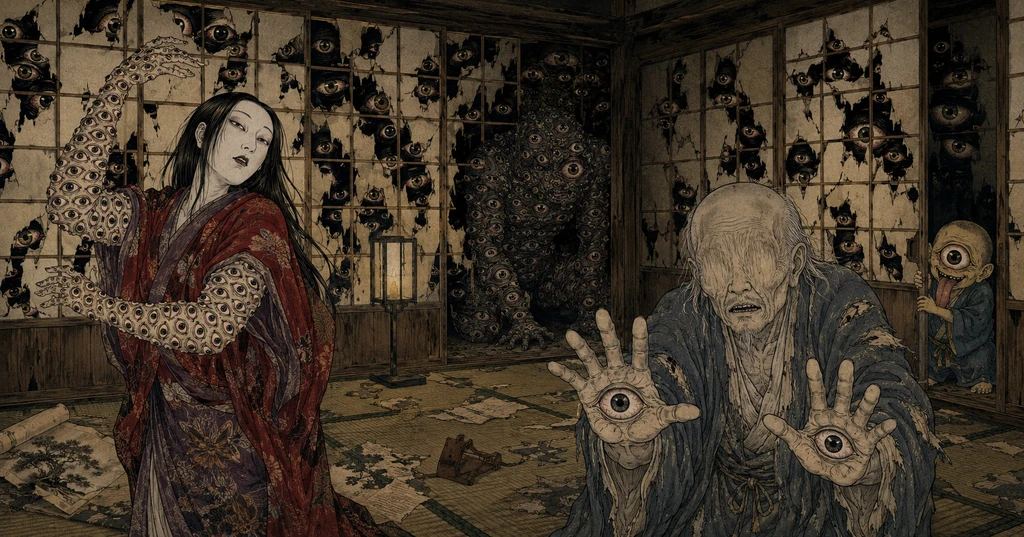
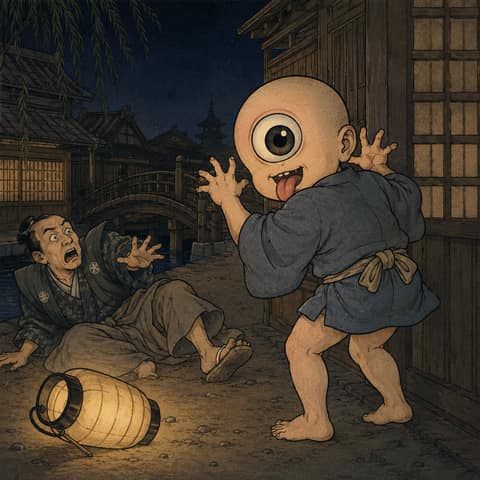
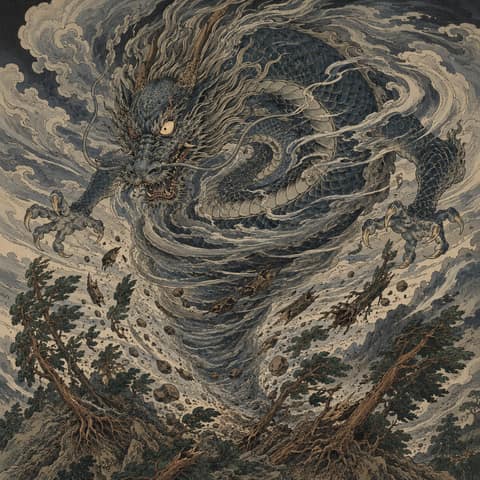
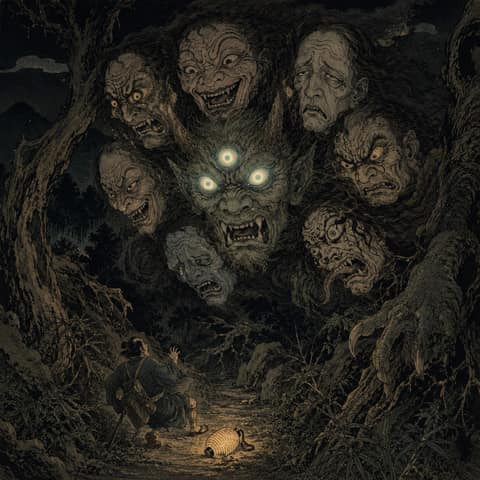
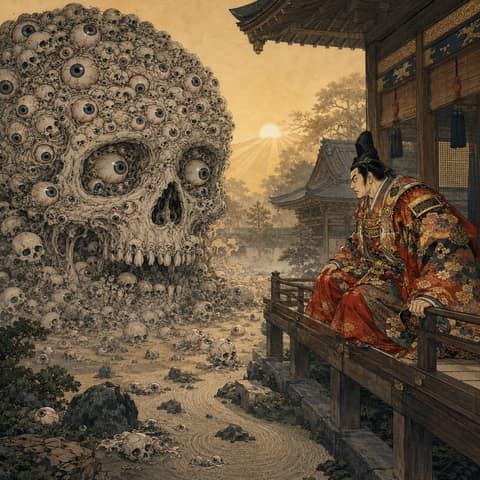
Yokai of Eyes
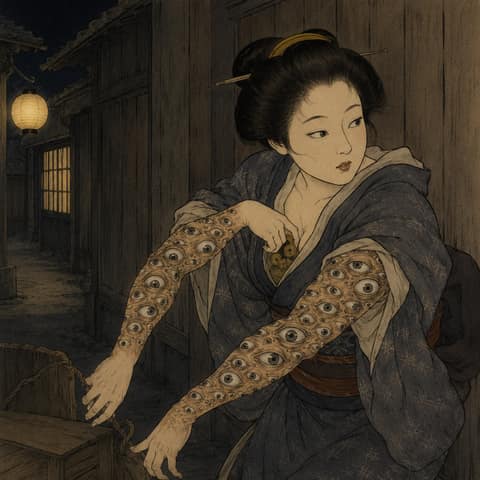
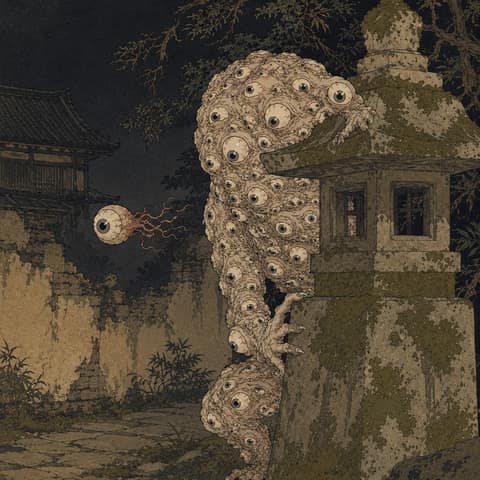
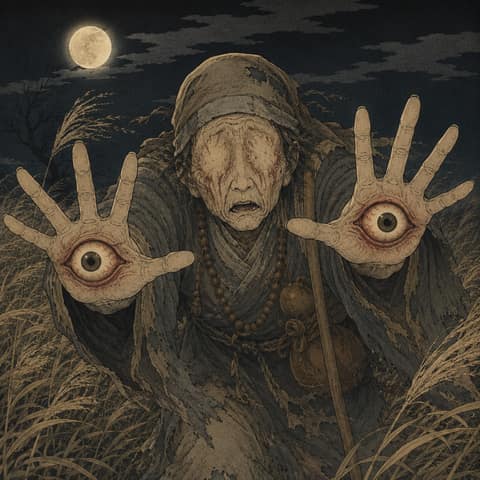
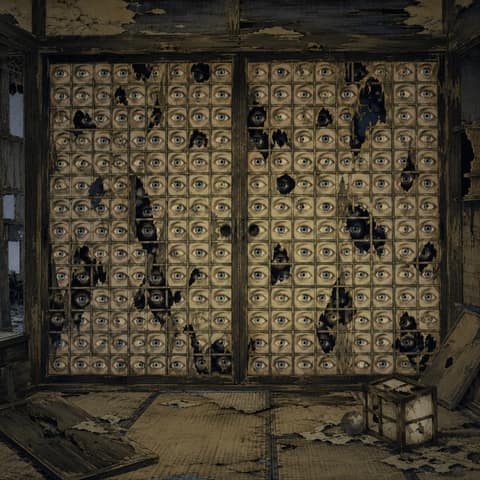
Yokai characterized by countless or grotesque eyes. The Dodomeki with a hundred bird-like eyes sprouting on her arms, the Tenome with eyes opening on its palms, the Mokumokuren swarming on old sliding doors, and the one-eyed Hitotsume-kozo—a grotesque lineage born from the primal fear of being watched.
Yokai of Wheels
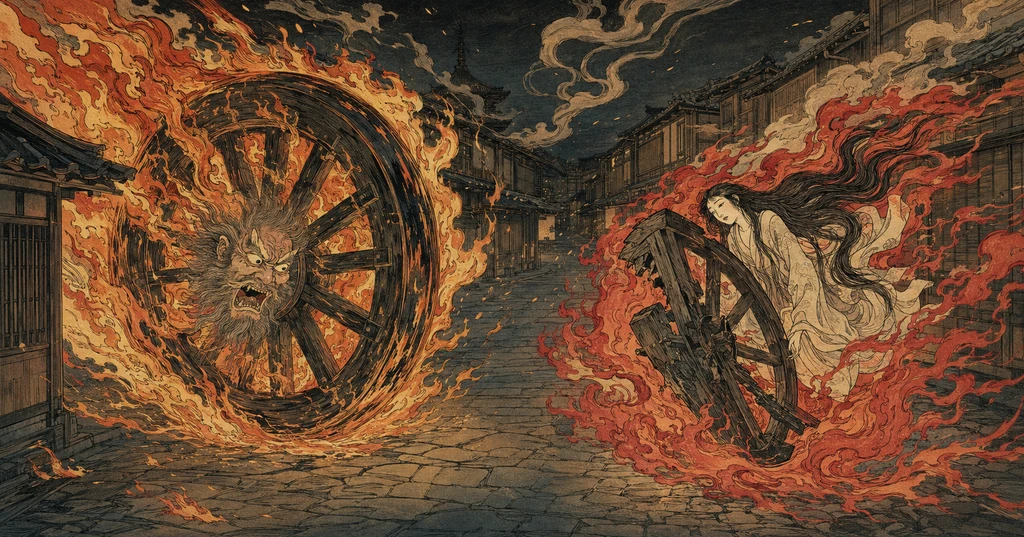
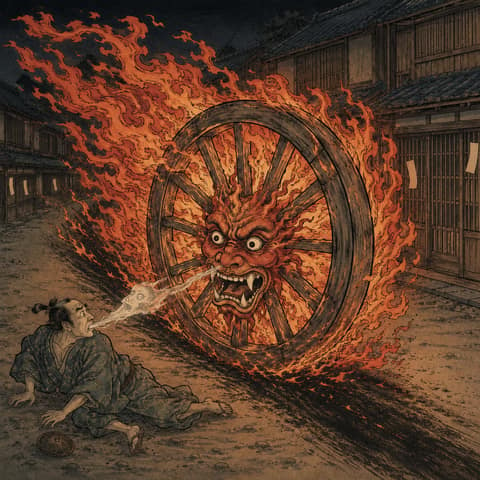
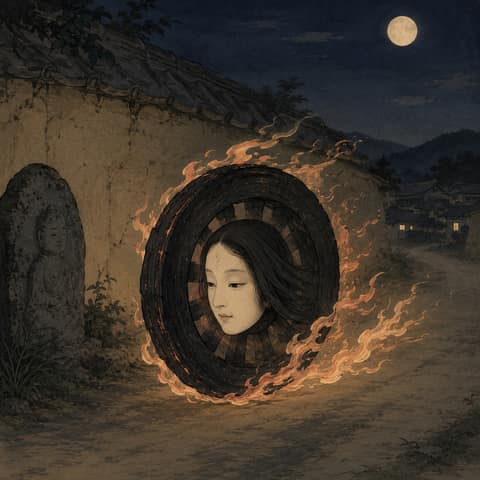
Wheel-shaped yokai that rumble through the crossroads at night. The Wanyuudo, bearing a furious man's face, and the Katawa-guruma, a one-wheeled oxcart carrying a woman. Born in the capital during the age of oxcarts, these apparitions were said to curse anyone who dared to look upon or peek at them.
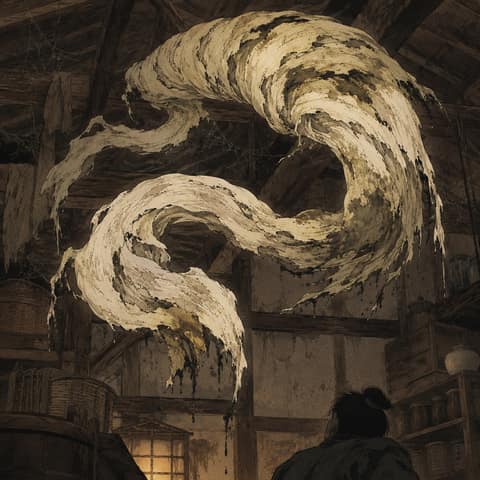
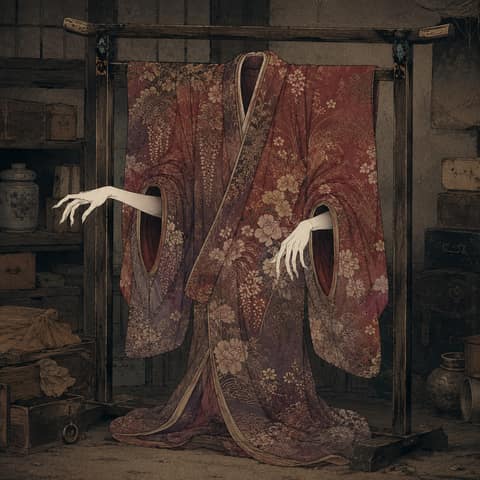
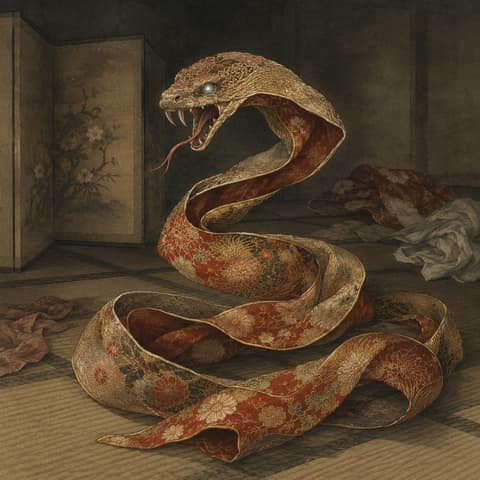
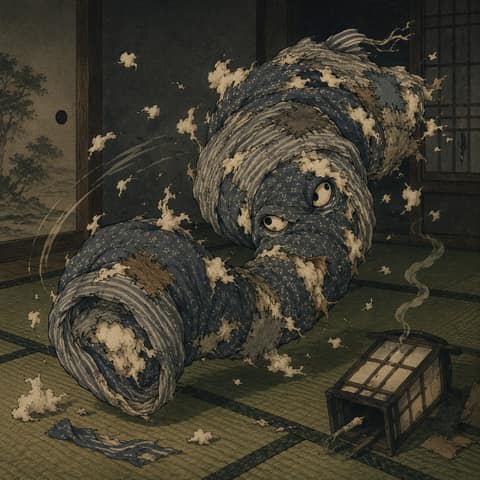
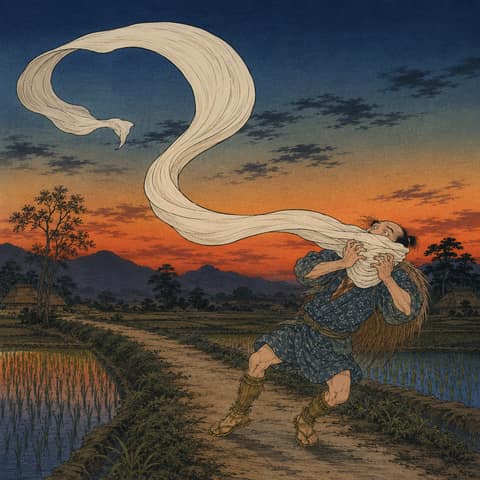
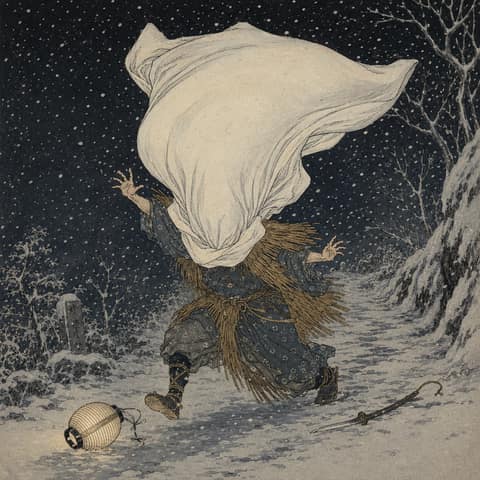
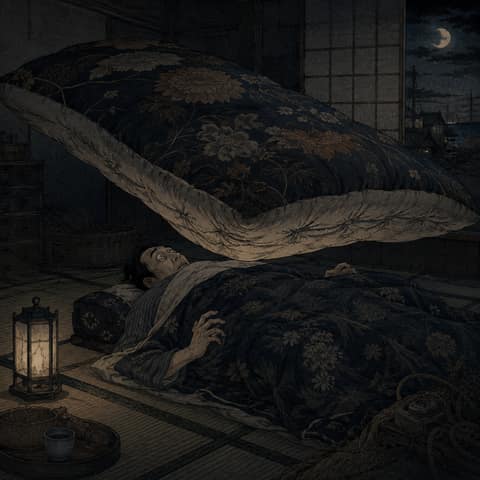
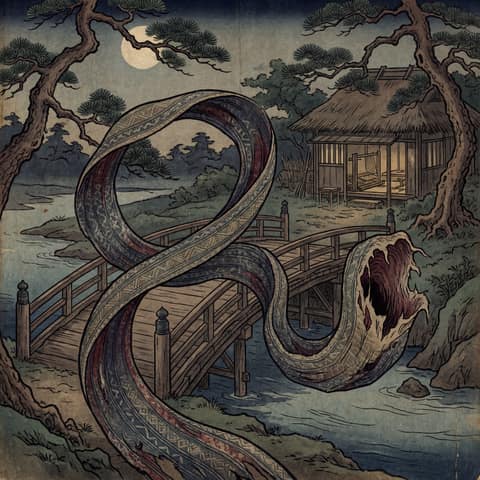
The Cloth Yokai
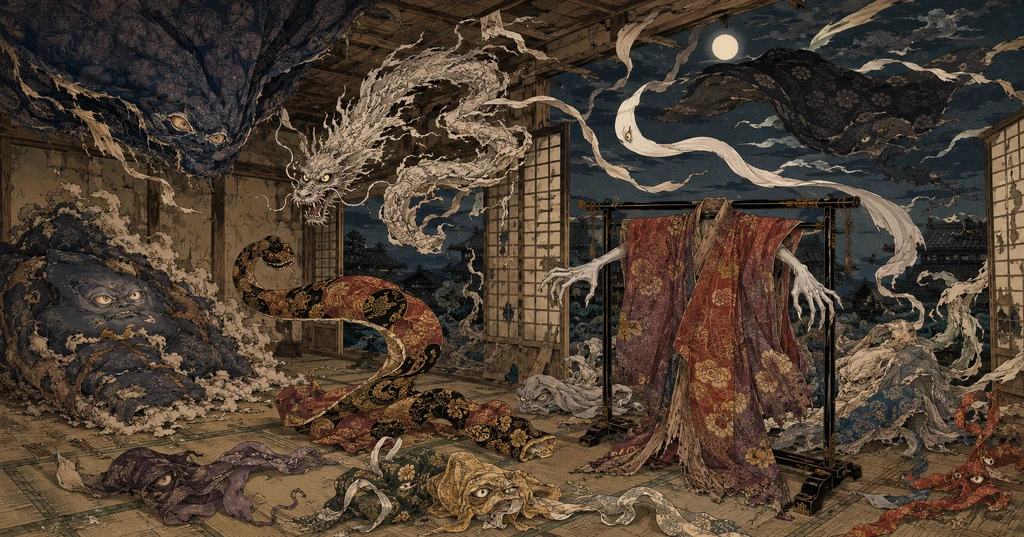
Cloth yokai that smother people in the dark. They split into two strands — tsukumogami born from aged rags, garments and bedding that gained a soul (Shirouneri, Kosode-no-te, Jatai, Boroboroton) and uncanny cloths of unknown provenance that drift down at night (Ittan-momen, Fusuma, Futon-kabuse) — joined by the single act of covering a face.
Phantoms of Monks and Priests
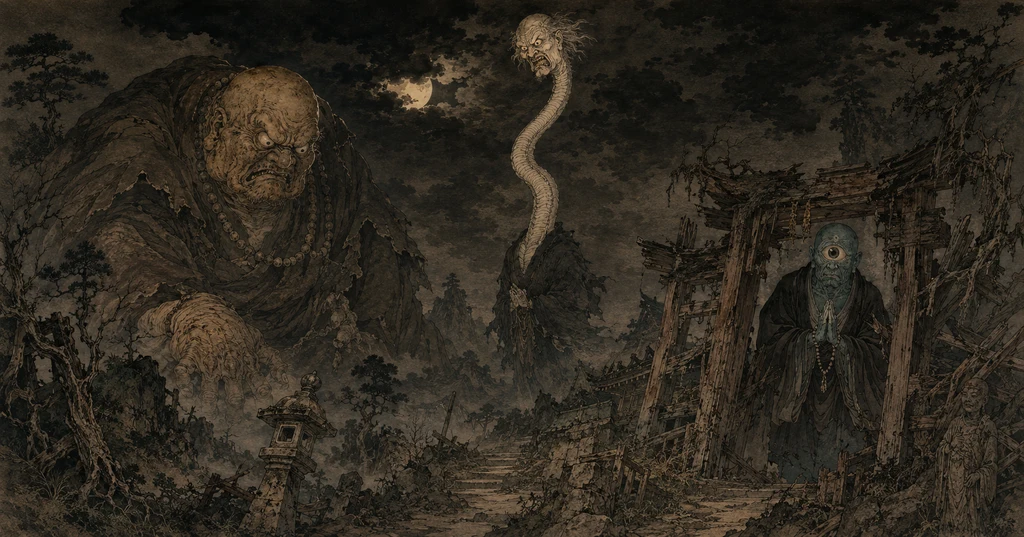
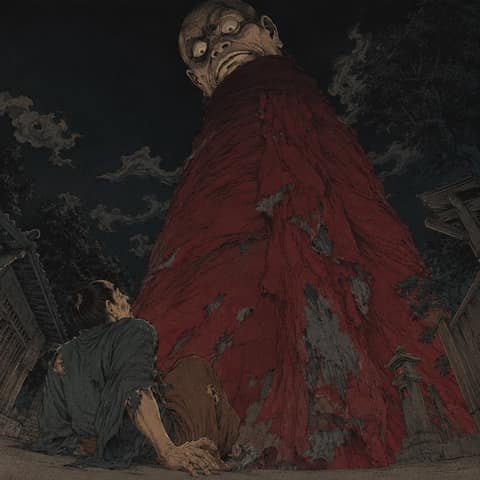
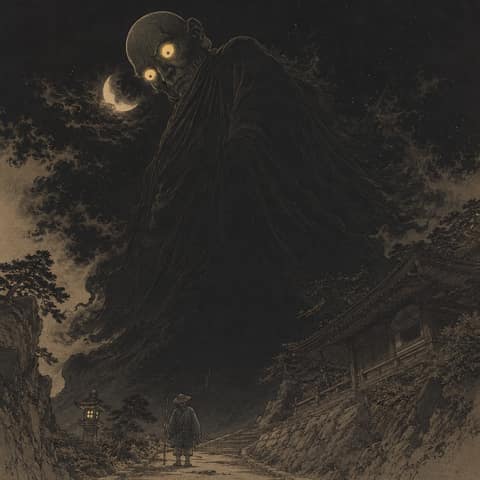
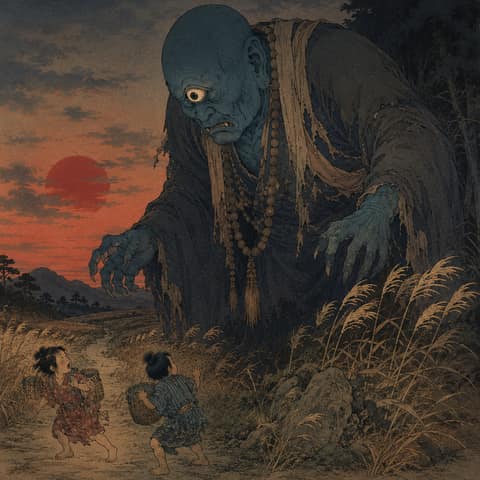
Monk-like apparitions that appear on night roads, mountain passes, and deserted temples. The Mikoshi-nyudo, whose height grows as one looks up; the giant O-nyudo; and the blue, one-eyed Ao-bozu. They form a host born from the dread of clerical figures and the looming shadows that swell in the darkness.
Tsukumogami
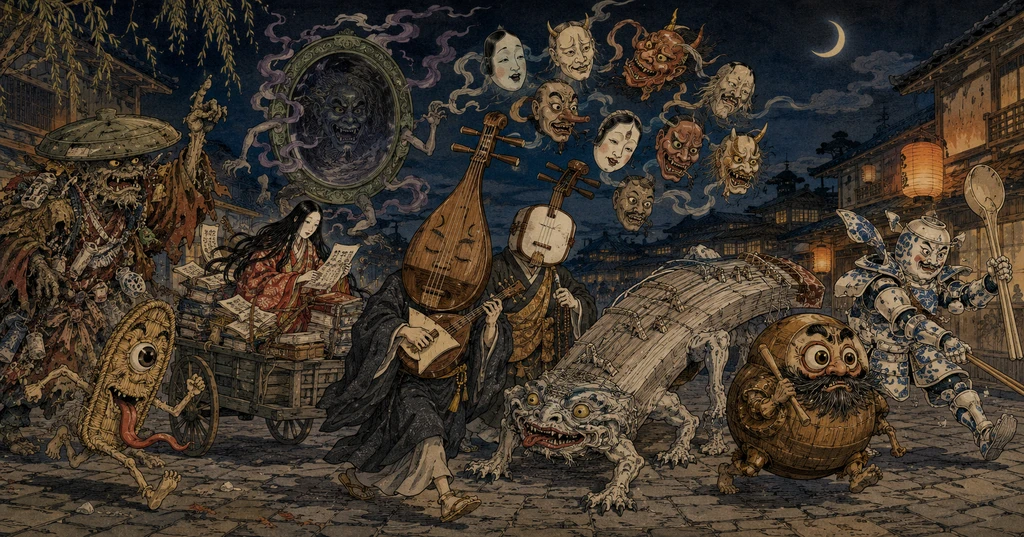
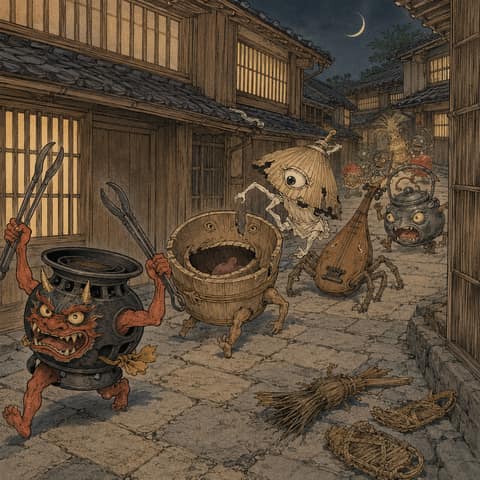
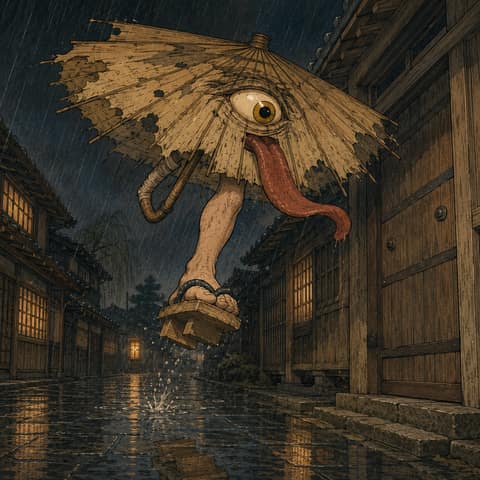
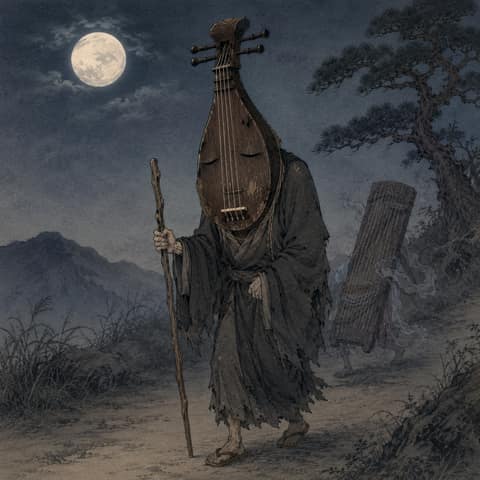
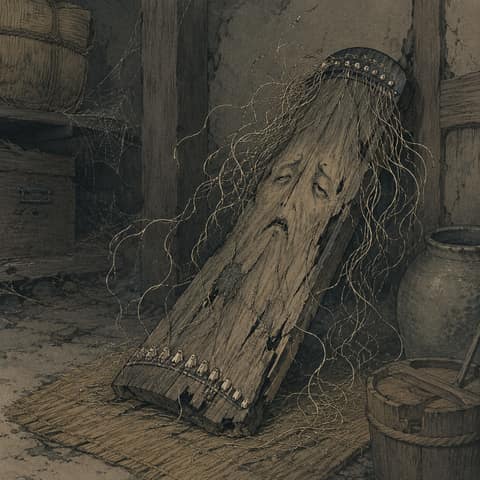
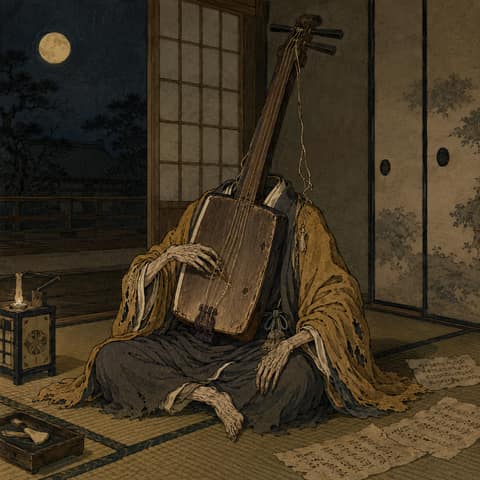
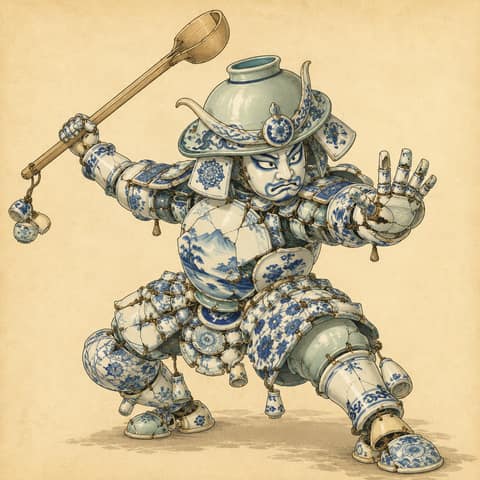
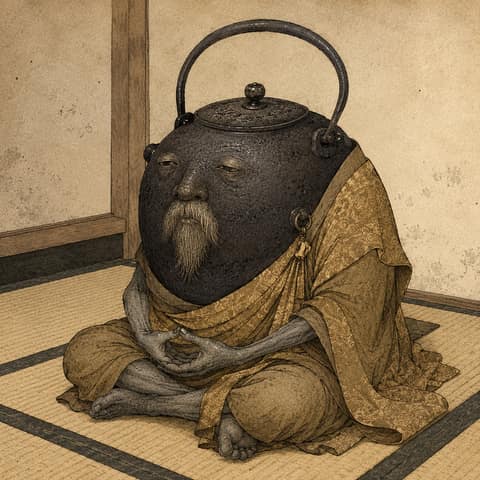
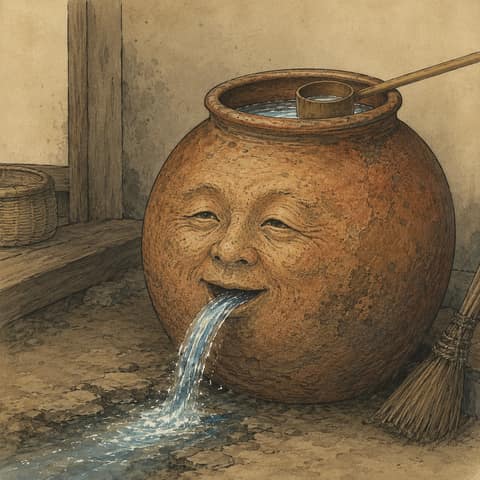
Tools and vessels used over long years are said to acquire spiritual life and transform when discarded and neglected, becoming beings known as tsukumogami. In the Muromachi-period "Tsukumogami Emaki", it was preached that tools transformed after a hundred years; the scroll depicted old implements, thrown away during house-cleaning, marching in a procession on the night of Setsubun holding grudges against humans. In the Edo period, Toriyama Sekien synthesized this worldview in his "Hyakki Tsurezure Bukuro" (The Illustrated Bag of One Hundred Random Demons), bestowing charming yokai forms upon individual objects such as biwa lutes, shamisen, koto, tea kettles, sutra scrolls, masks, and book carts, woven together with wordplay and historical anecdotes. Gathered here are the souls inhabiting tools, reflecting human sentiments—used, forgotten, yet impossible to fully discard.
Sacred Beasts & Imported Lore
(2)
Prophetic Beasts
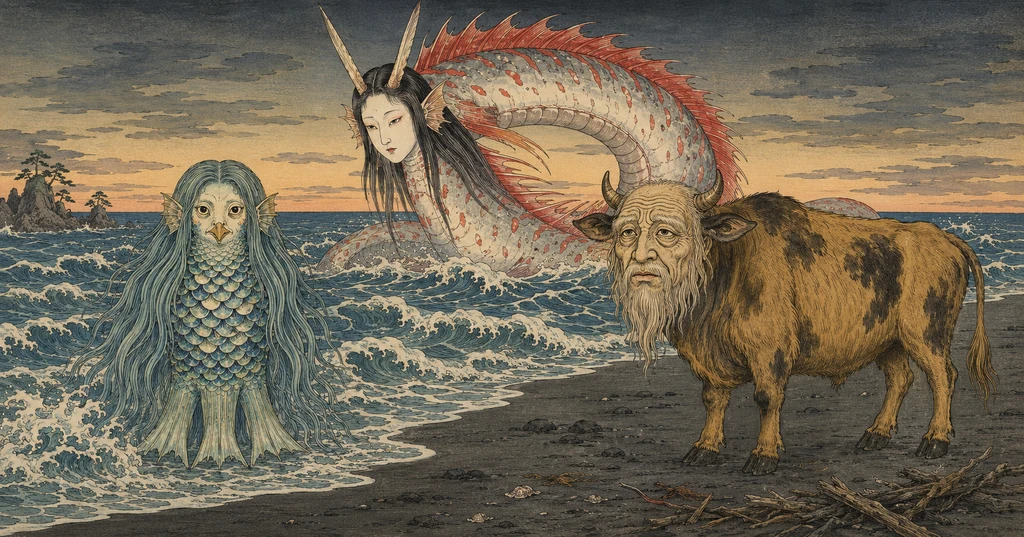
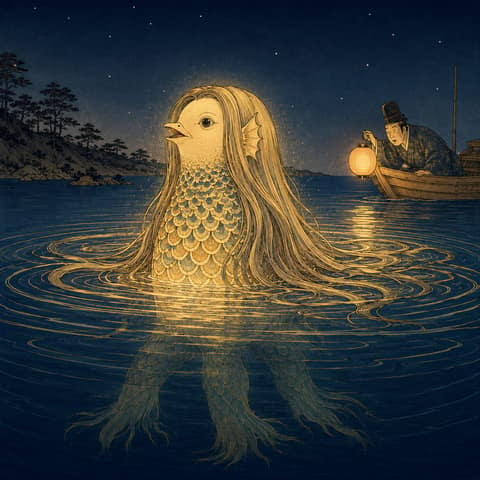
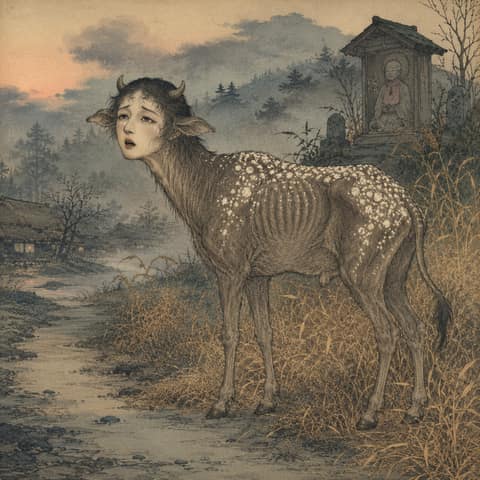
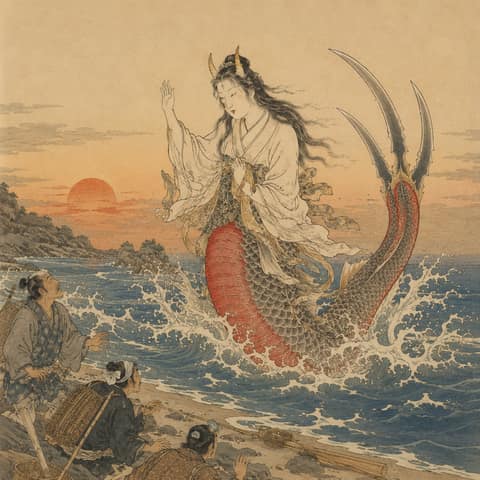
During the late Edo period, mysterious creatures would suddenly appear on beaches or in the water, foretelling impending bountiful harvests or epidemics before vanishing. They invariably left behind a warning: 'An epidemic will spread in the coming years. Draw my likeness and show it to the people, and they shall escape disaster.' Their images were subsequently distributed nationwide via kawaraban (broadsheets) and woodblock prints. Such creatures are known as yogenju (prophetic beasts). From Amabie, who was thrust back into the spotlight during the modern pandemic, to the human-faced bovine Kudan that prophesies world affairs, and Jinjahime, who claims to be an envoy from the Dragon Palace—gathered here are the bizarre prophetic yokai who carried omens of disaster and wished for their own likenesses to serve as protective talismans.
Sacred Warding Beasts
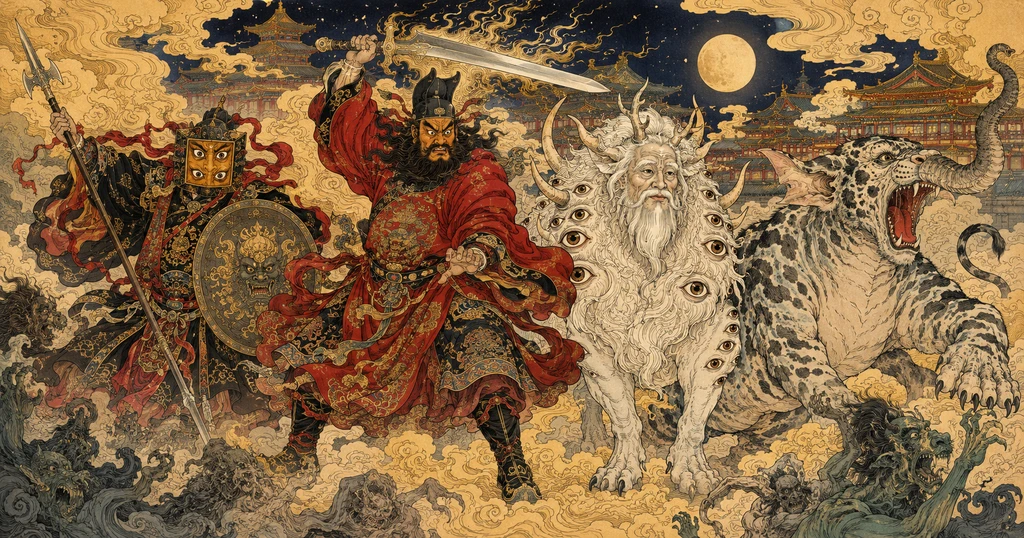
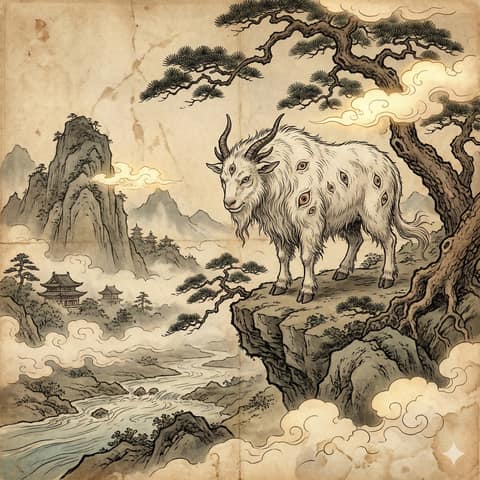
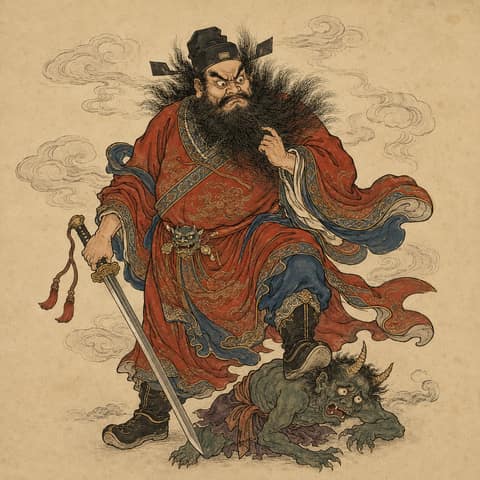
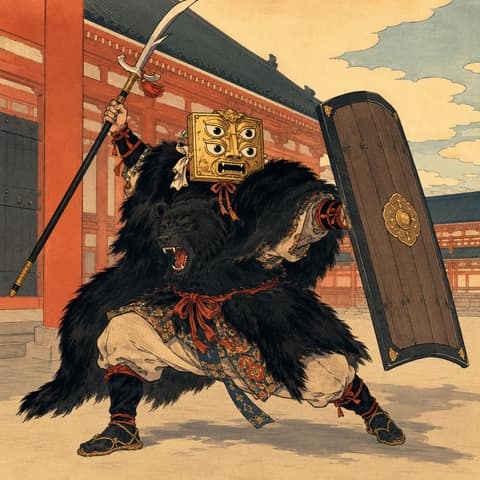
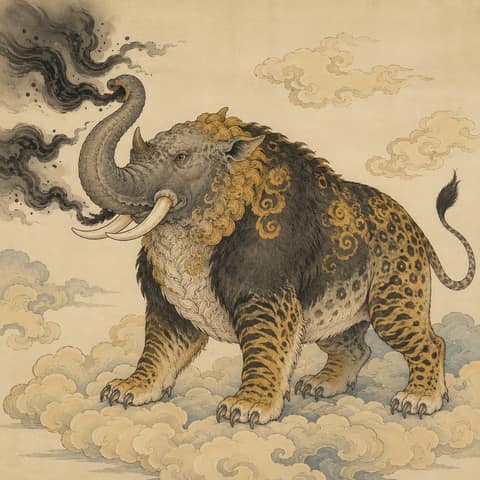
Since ancient times in mainland China, people have believed in spiritual beasts and deities possessing the power to repel strange phenomena, plague demons, and misfortune. Their iconography and associated beliefs crossed over to Japan alongside Buddhism and Onmyodo. Hakutaku, the auspicious beast who knows every yokai in the world; Shoki, the demon-quelling deity who catches and devours oni; Hososhi, who purges plague demons during the imperial court's Tsuina rituals; and the Baku, which devours nightmares—because of their protective power to keep evil at bay, they were all incorporated into daily life as talismans, roof tiles, votive tablets, and bedside motifs. Gathered here are the sacred warding beasts, drawn and enshrined not as objects of fear, but as protectors of humanity against disaster.
Regional & Local Groups
(4)
Gods and Spirits of Ryukyu and the Southern Islands
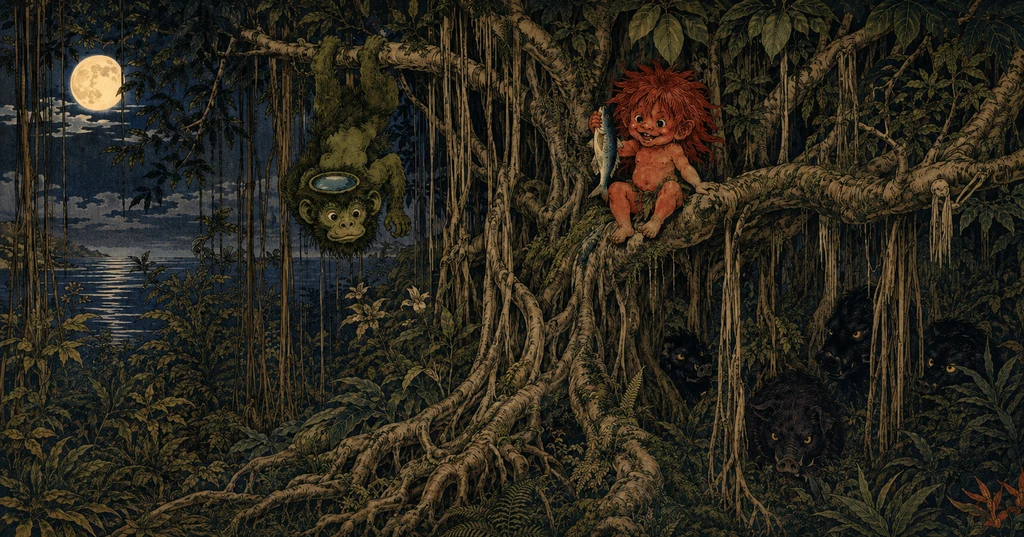
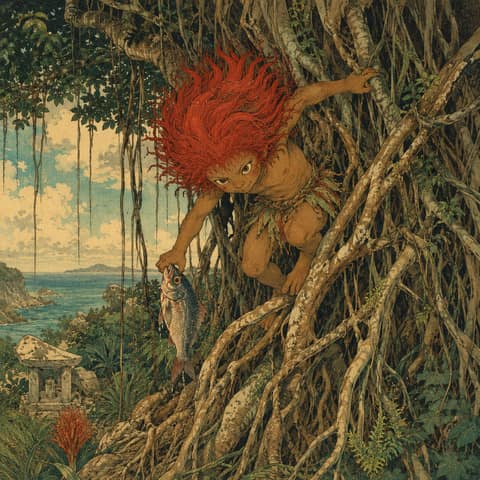
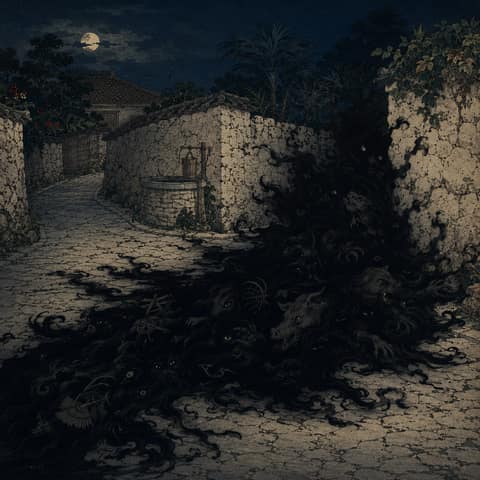
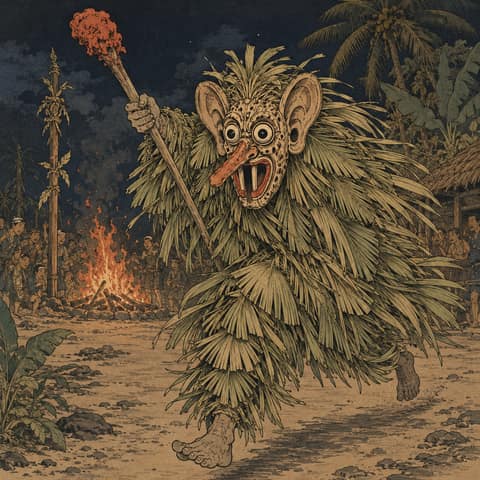
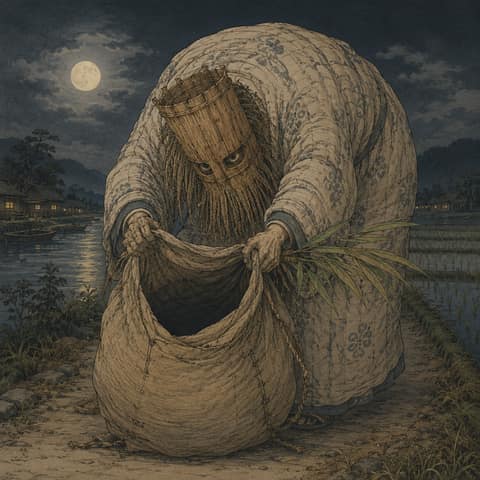
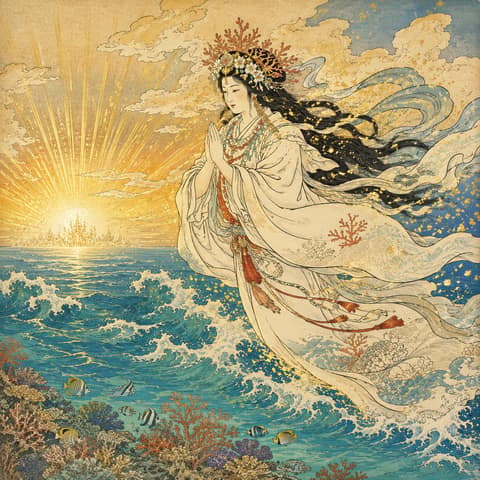
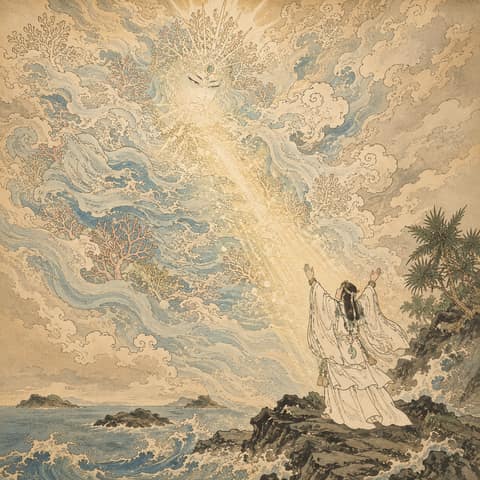
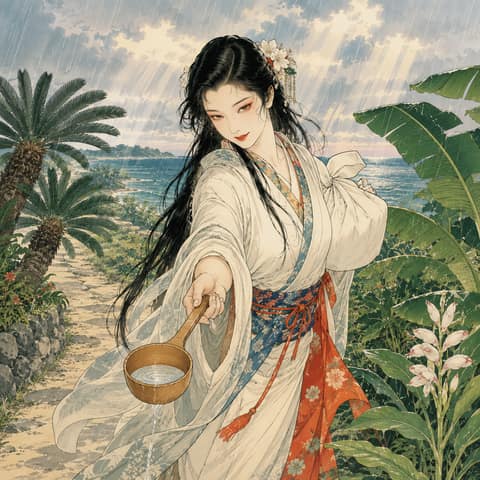
The Nansei Islands (Amami, Okinawa, and Sakishima)—with their climate, flora, and religious culture distinct from mainland Japan—fostered a system of gods and supernatural entities entirely separate from the mainland's concept of yokai. These include the Kenmun and Kijimuna, tree spirits residing in ancient banyan trees; Majimun, a general term for the demons permeating the islands; Ichijama, vengeful living wraiths; visiting deities like the Boze and Yokkabui, who arrive from the utopian realm of Nirai Kanai across the sea to dispel misfortune during festivals; and Kinmamon, a high-ranking deity possessing the high priestess, Kikoe-ōgimi. Each is inextricably linked to the uniquely Ryukyuan worldview of *seji* (spiritual power) and the sacred traditions of Yuta (shamans), Noro (priestesses), and Utaki (holy groves). Conveying the indigenous, pre-Buddhist faiths of the southern islands to the present day, these island deities and apparitions have captivated scholars of Okinawan studies since the prewar work of Fuyu Iha and Shinobu Orikuchi.
Phantoms of the Snow
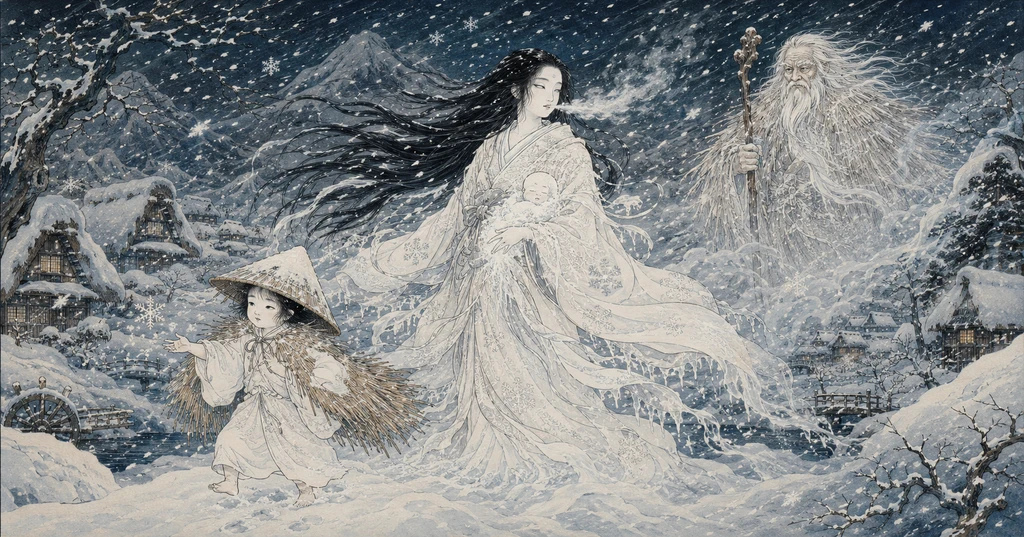
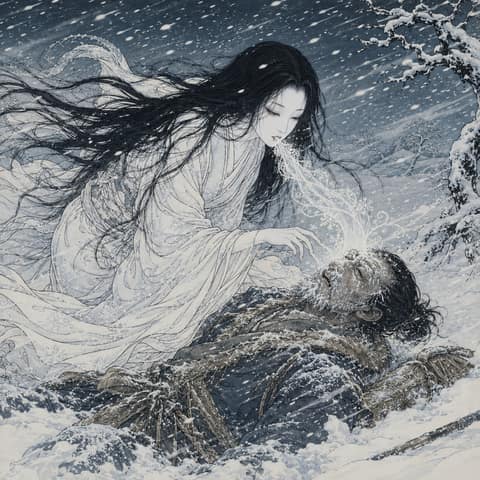
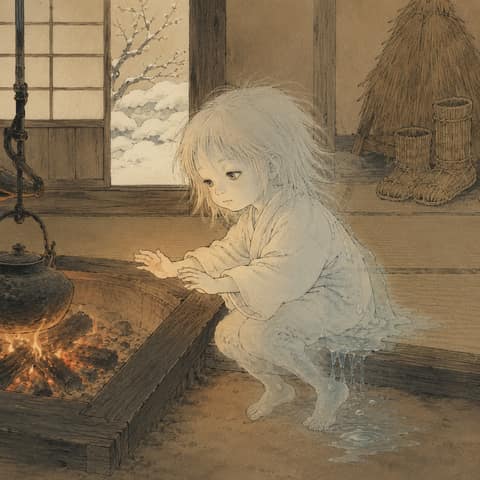
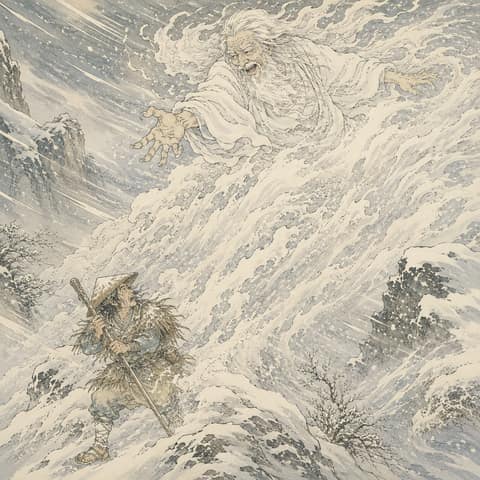
Spirits born from the snow itself, visiting mountain villages on blizzard-swept nights. Centered around the white-clad Yuki-onna, they are joined by the snow child Yuki-warashi and the elderly sage of the snowy peaks, Yuki-jiji. They arrive to snatch away lives, yet sometimes entrust humans with their children—a lineage shaped by both the harsh dread and the tender grace of the snow country.
Monsters of the Sea and Ships
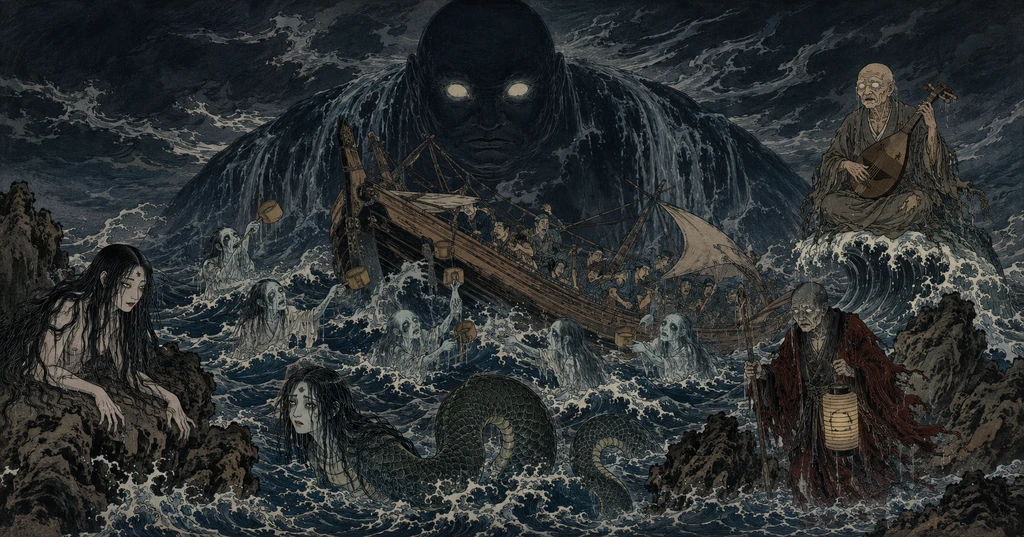
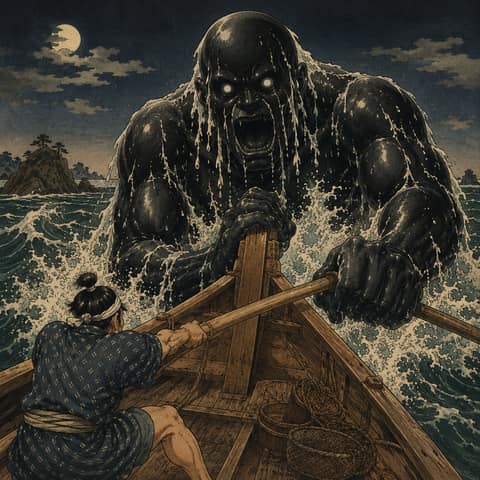
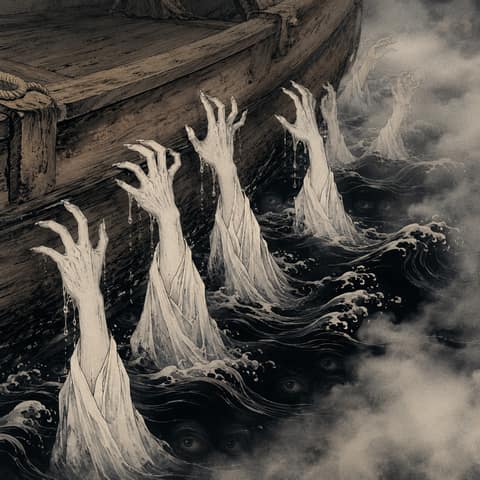
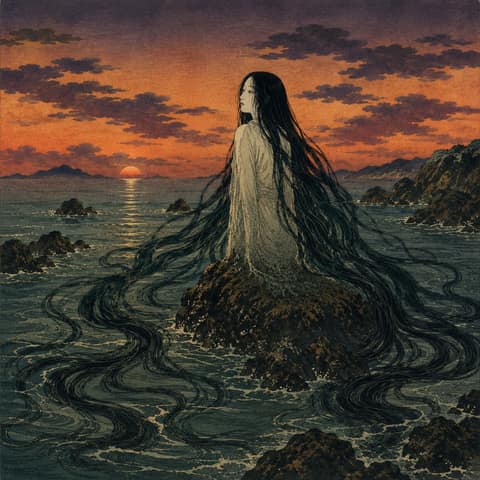
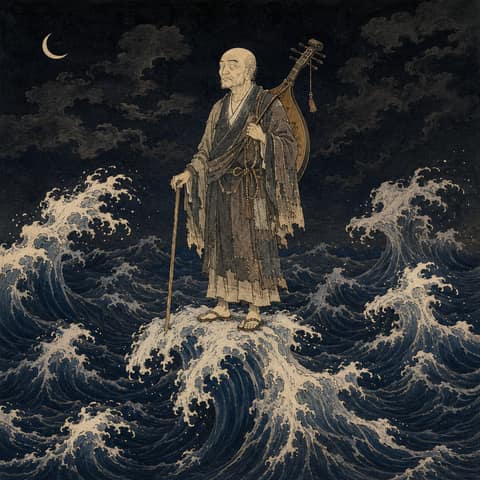
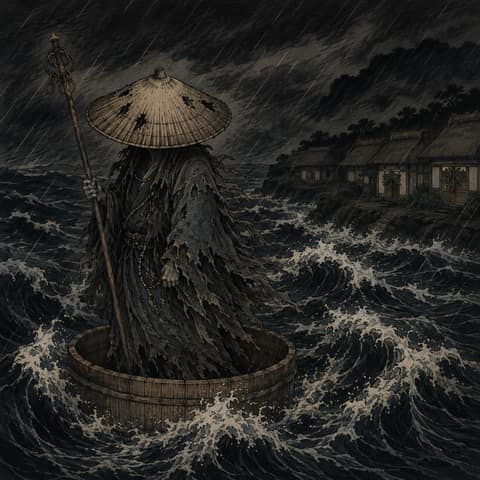
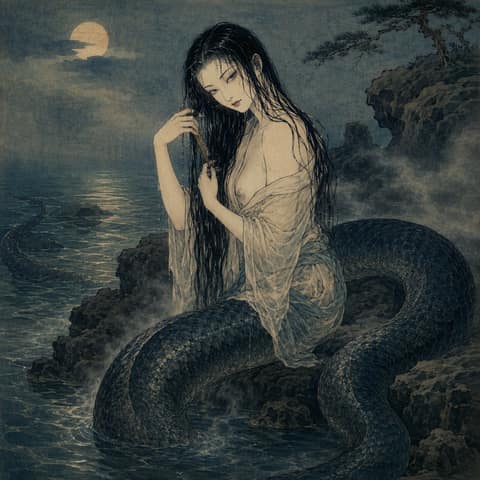
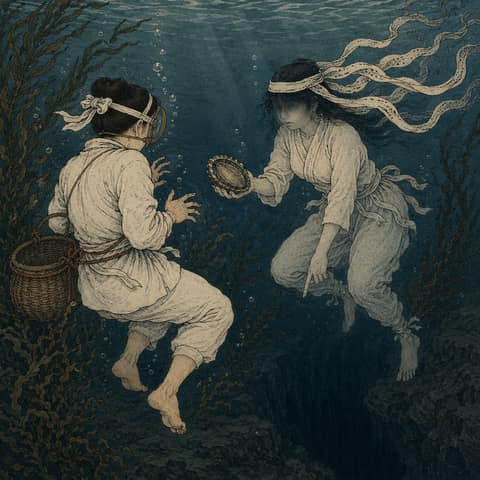
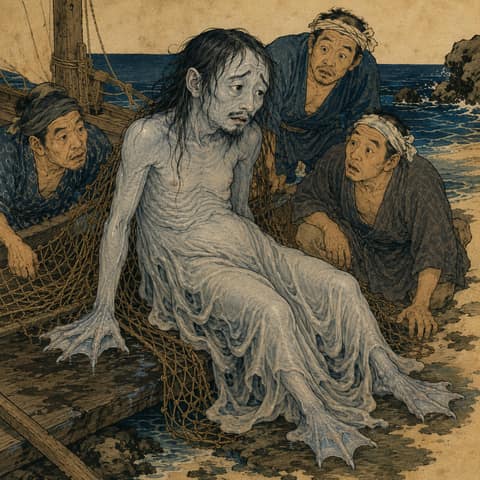
Maritime apparitions that assault passing ships and stand upon the rocky shores. The Funayurei demanding ladles, the towering silhouette of the Umi-bozu, the long-haired Iso-onna, the biwa-playing Umi-zato, and the Kainan-boshi who crosses the sea on nights of ritual avoidance. They form a myriad of horrors born from the lingering malice of those who died at sea and the primal dread of the ocean itself.
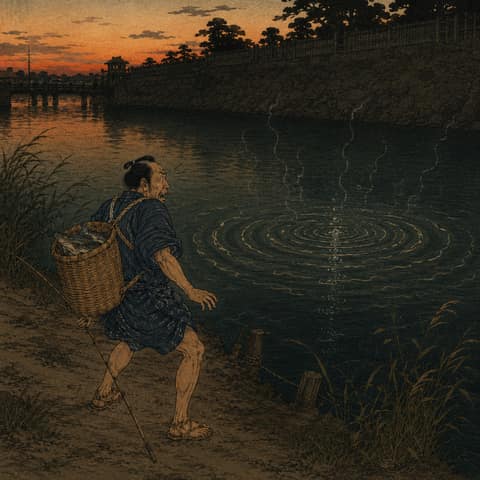
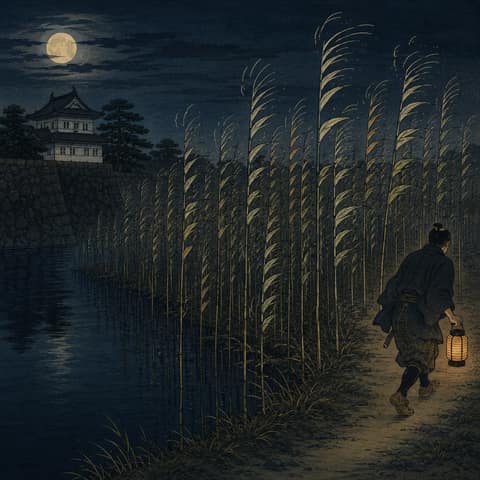
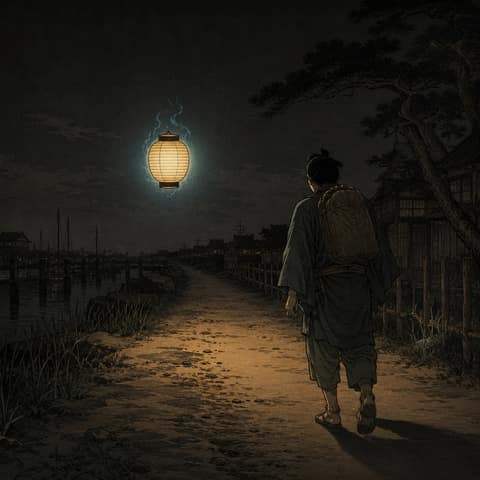
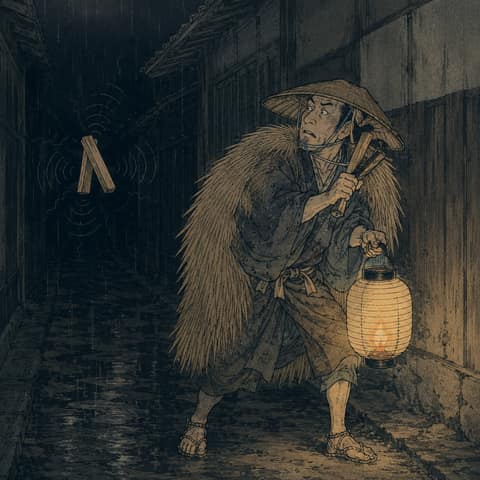
The Seven Wonders of Honjō
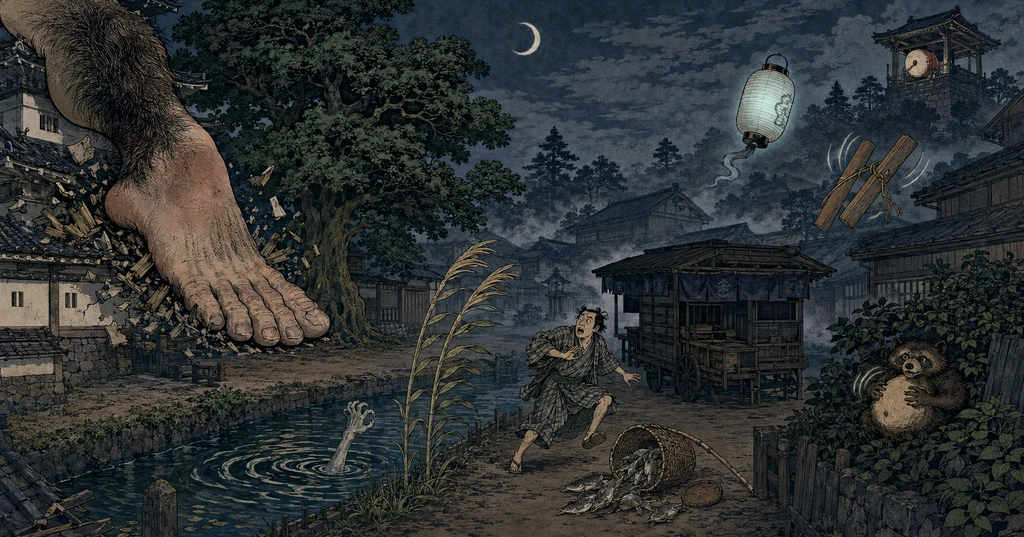
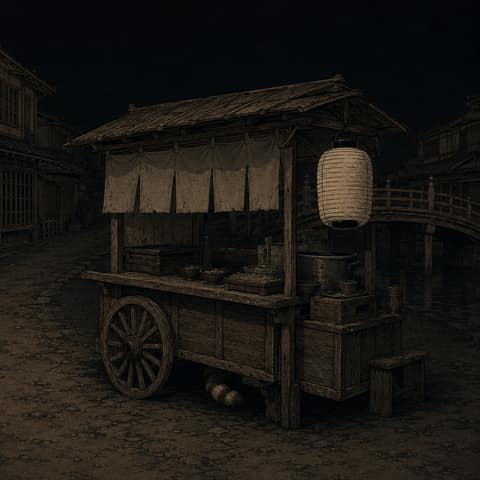
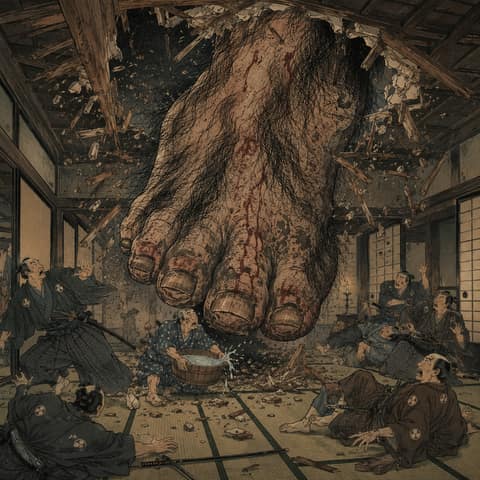
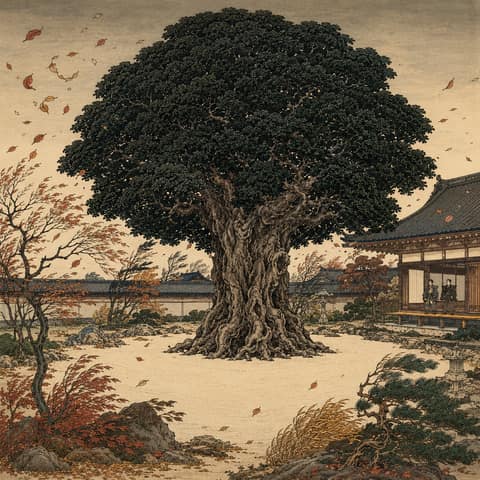
A cluster of legendary mysteries told from the Edo period onward in Honjō, the southern part of present-day Sumida Ward, Tokyo. Although nominally seven, the oral tradition records at least nine episodes, with the actual roster shifting from era to era, narrator to narrator, and one printed sōshi to the next. Only Oitekebori (the put-it-down moat) and Kataha-no-ashi (the one-sided reed) are universally counted; the remaining five are drawn from Okuri-chōchin, Okuri-hyōshigi, Akarinashi-soba, Ashi-arai-yashiki, Ochiba-naki-shii, Tanuki-bayashi, and Tsugaru-no-taiko. Set in the low-lying east bank of the Sumida — a patchwork of warrior estates, merchant streets, and townsmen's quarters at the periphery of Edo proper — these tales became staples of late-Edo urban kaidan, recurring in rakugo, woodblock prints, kabuki, and the works that followed Toriyama Sekien's Gazu Hyakki Yagyō, and still inspire modern manga, anime, and games.
Historical & Heroic Tales
(2)
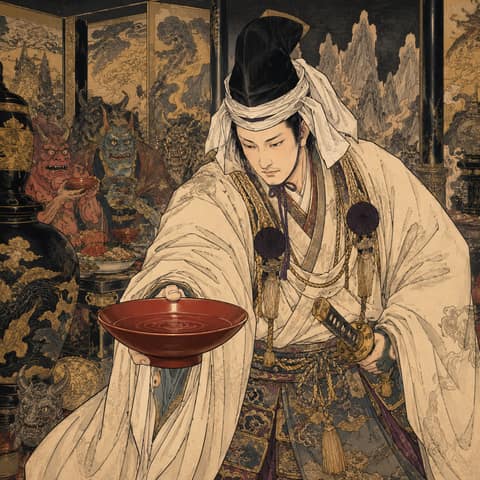
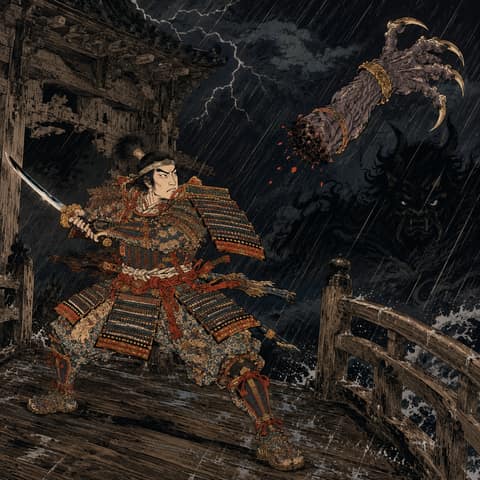
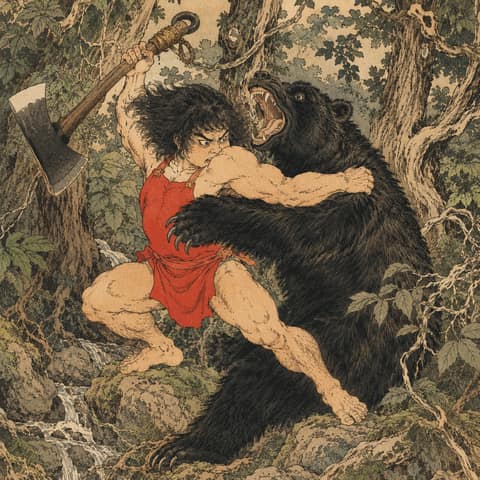
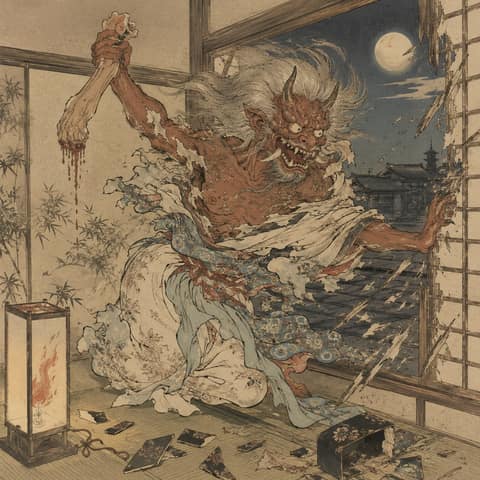
Minamoto no Yorimitsu's Demon Slaying
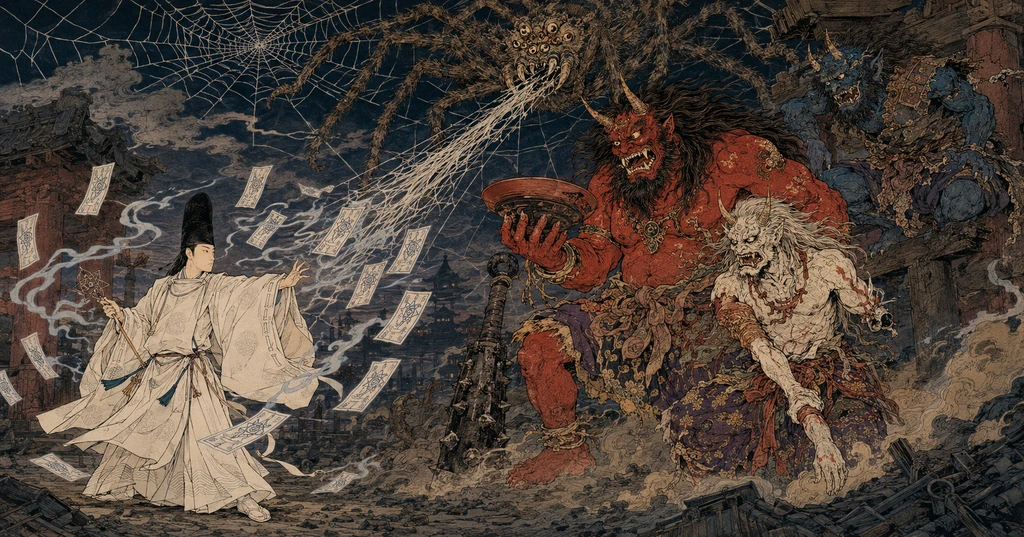
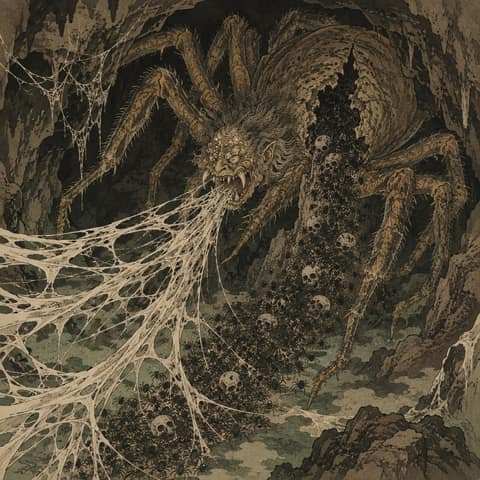
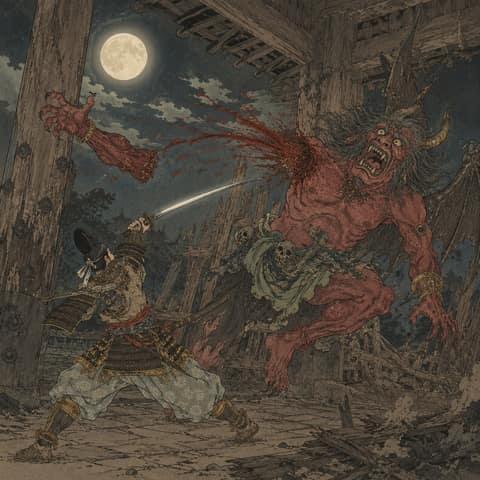
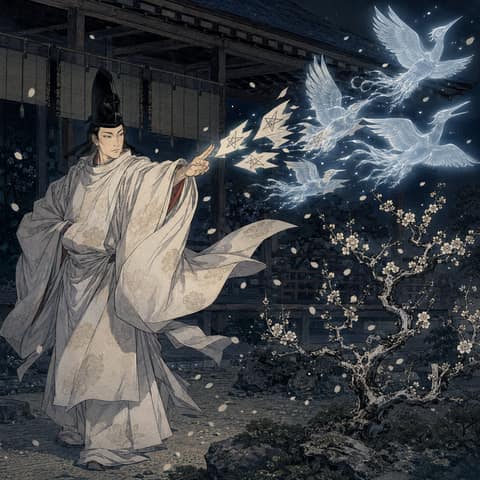
The oni and yokai vanquished on the outskirts of the capital during the mid-Heian period by Minamoto no Yorimitsu, his Four Guardian Kings (including Watanabe no Tsuna), and the onmyoji Abe no Seimei. From the demon king of Mount Oe to the demon of the Rashomon gate, this saga gathers the legendary adversaries immortalized in the heroic tales of the warrior class.
The Demon Quelling of Sakanoue no Tamuramaro
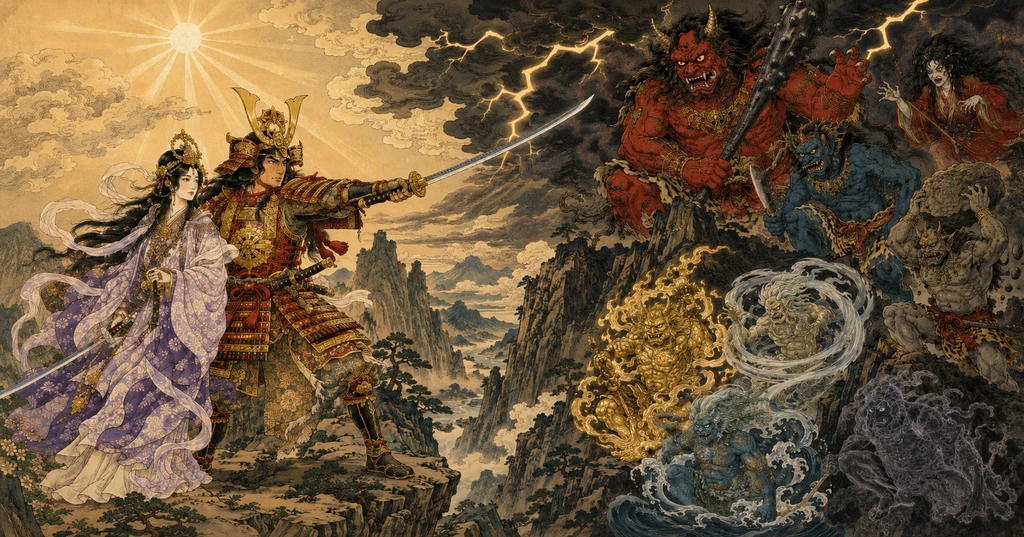
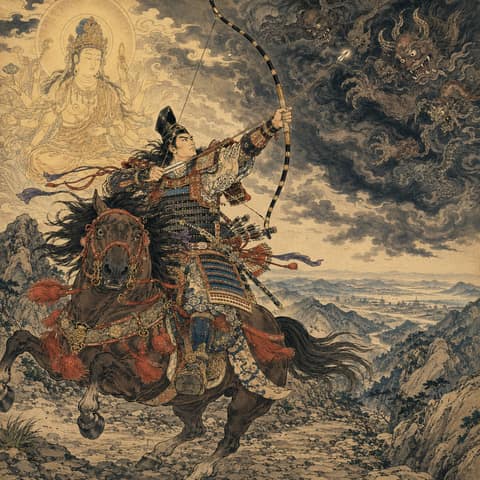
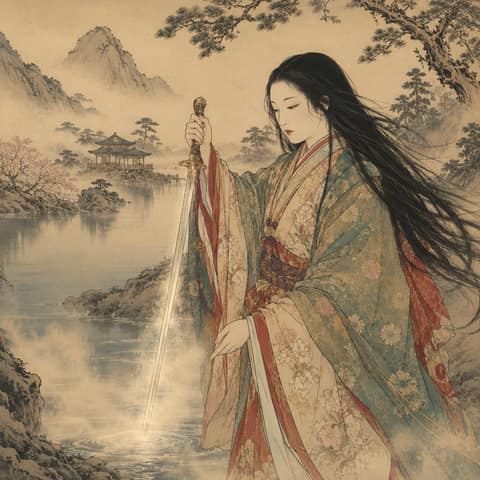
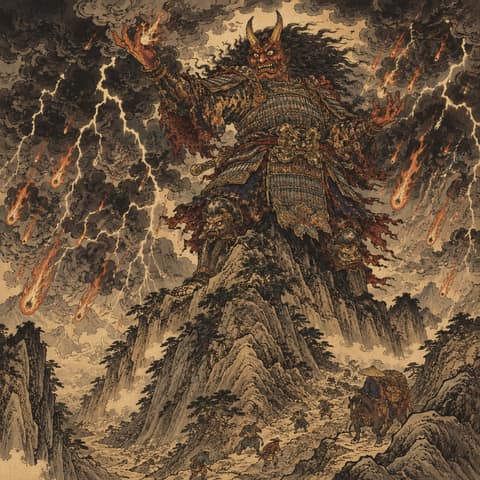
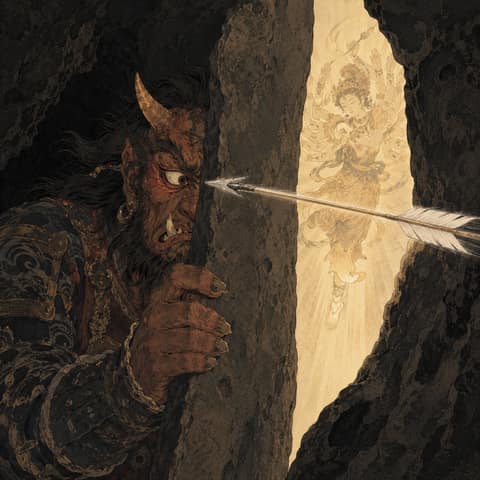
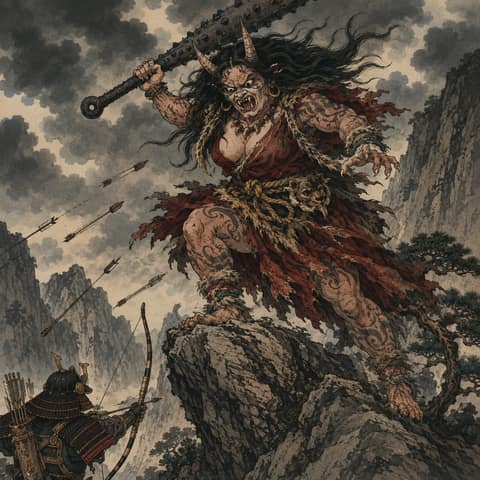
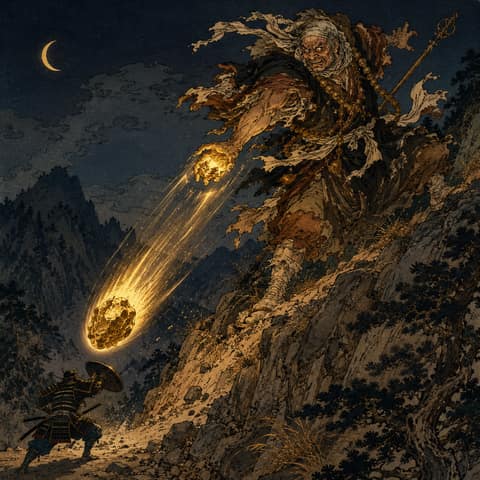
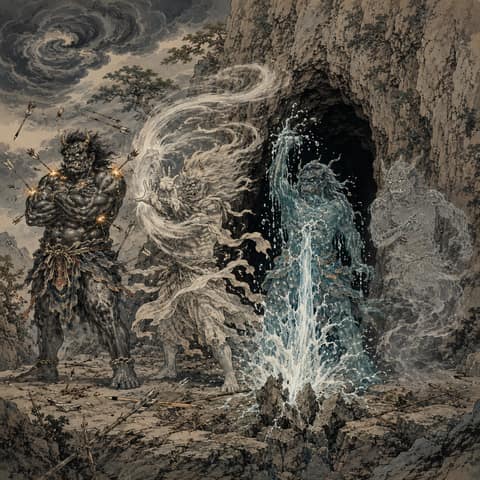
While Sakanoue no Tamuramaro was a historical military commander of the early Heian period famous for subjugating the Emishi, later companion tales (Otogizoshi) and oral traditions transformed him into a legendary hero who vanquished fierce demons across the land. Most famously, at Mount Suzuka on the border of Ise and Omi provinces, he is said to have formed a bond with Suzuka Gozen—variously described as a goddess or a demoness—and with her aid, defeated the mountain's fearsome demon, Otakemaru. Konpiraka, who fortified the demon castle of Kumano; the demoness of Mount Maki; Kanatsubute, who terrorized Narazaka; and the Four Demons who served Fujiwara no Chikata—gathered here are the heroes and fierce deities of General Tamura's martial exploits, a legacy of demon-quelling rivaled only by that of Minamoto no Yorimitsu.
Life, Death & the Netherworld
(2)
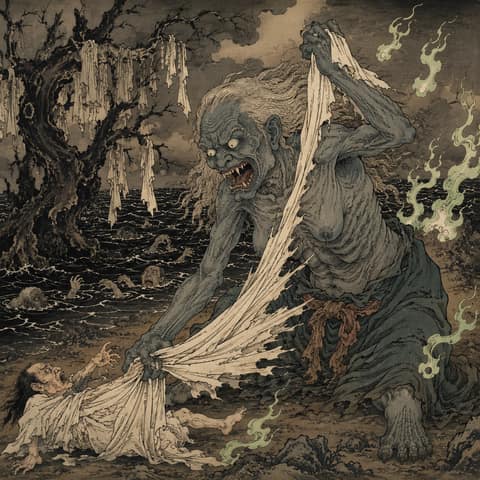
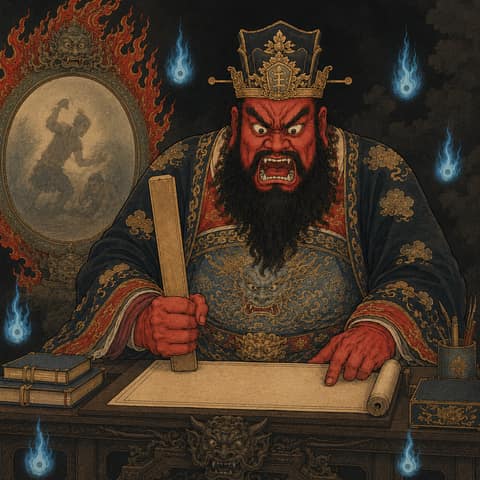
The Netherworld: Ten Kings and the River of Three Crossings
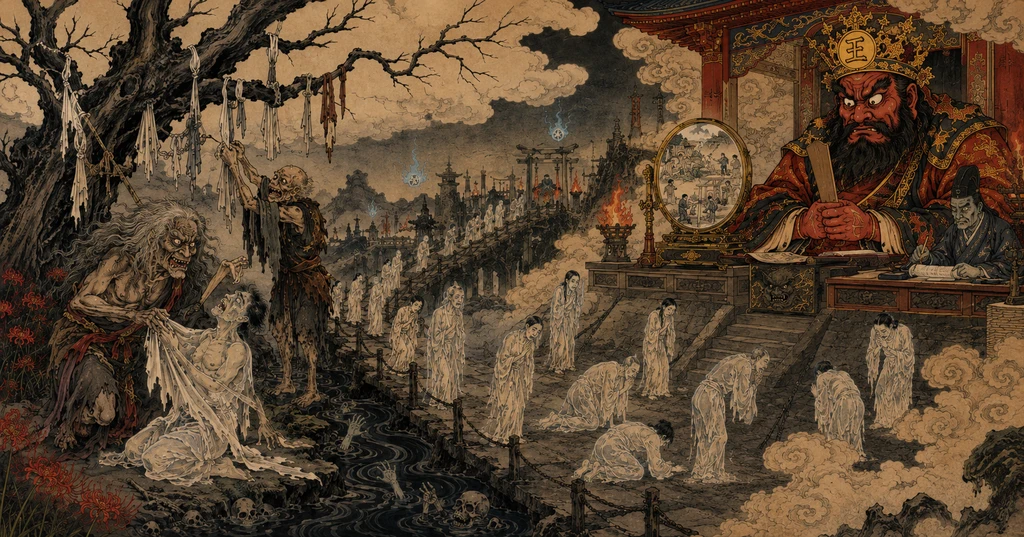
The major figures composing the medieval Japanese netherworld view—a syncretic blend of Buddhism, Daoism, and Shinto. The deceased undergoes judgments by ten kings at ten temporal nodes (the forty-nine-day period plus the 100th-day, first-anniversary, and third-anniversary memorials). At the River of Three Crossings, administered by the second king Shokō, Datsue-ba strips the deceased of clothing and Keneō hangs them on the Eryōju tree, weighing sin by the bough's sag—this is the preliminary judgment. The fifth king, Enma, presides over the central trial on the thirty-fifth day. He uses the Jōharikyō mirror to project the deceased's life as imagery, while Gushōjin, Shimyō, and Shiroku finalize the verdict with their records. This concept of posthumous ethics, karmic retribution, and the life-projecting mirror constitutes the deepest layer of Japanese views on life and death.
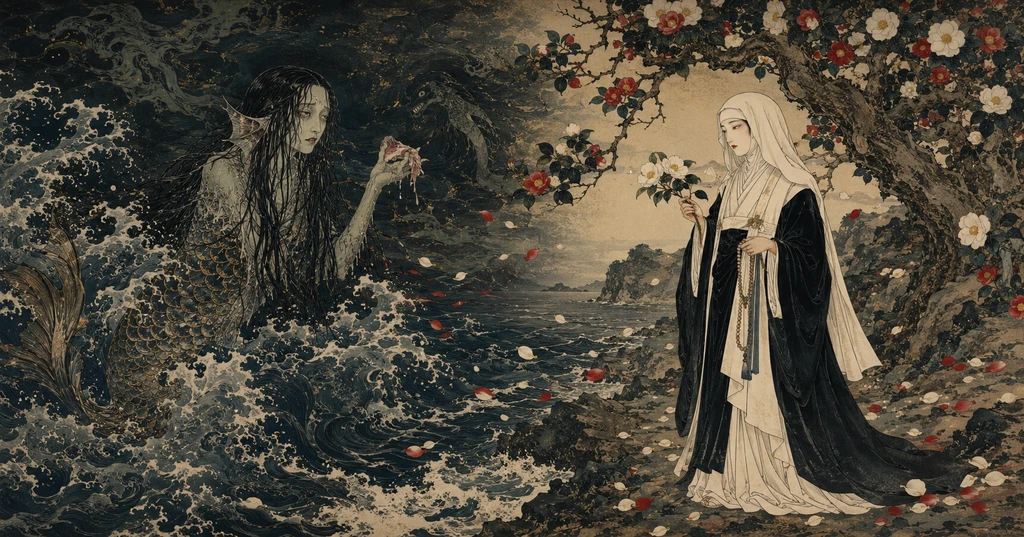
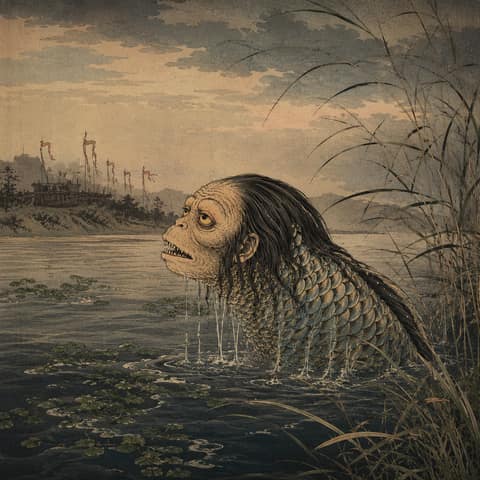
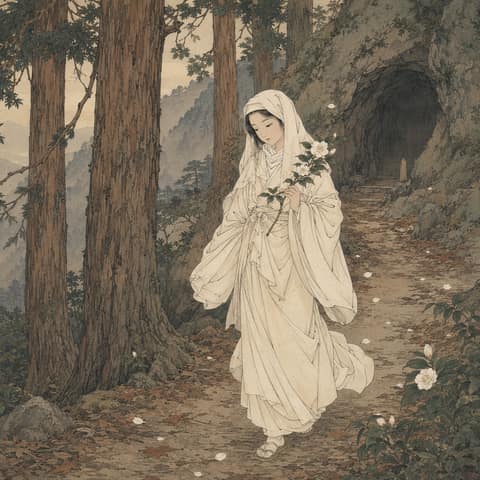
Ningyo and the Tales of Immortality
This cluster bundles the ningyo, which evolved through many layers from the earliest records in the Nihon Shoki (Suiko 27, 619 CE) in Ōmi and Settsu to the late-Edo Amabie lineage, with Yao-bikuni, who ate ningyo flesh and lived to 800. At its core stands the passive-immortality tale: 'A father brings home flesh from the otherworld; his daughter unwittingly eats it.' The cluster combines the ningyo's evolving form—from ill omen (ancient and medieval) to mummy fakes and Western-style beauty (Edo) to oracular prophet-beasts and the Amabie lineage (late Edo)—with the Wakasa Kūinji entombment cave and the 166 nationwide Yao-bikuni traditions. It is a rare narrative system in which Japanese folk culture independently developed the universal question: 'Is immortality a blessing or a curse?'