YOKAI.JP
Lineage of Goryo and Onryo
Vengeful souls turned divine

Lineage of Goryo and Onryo

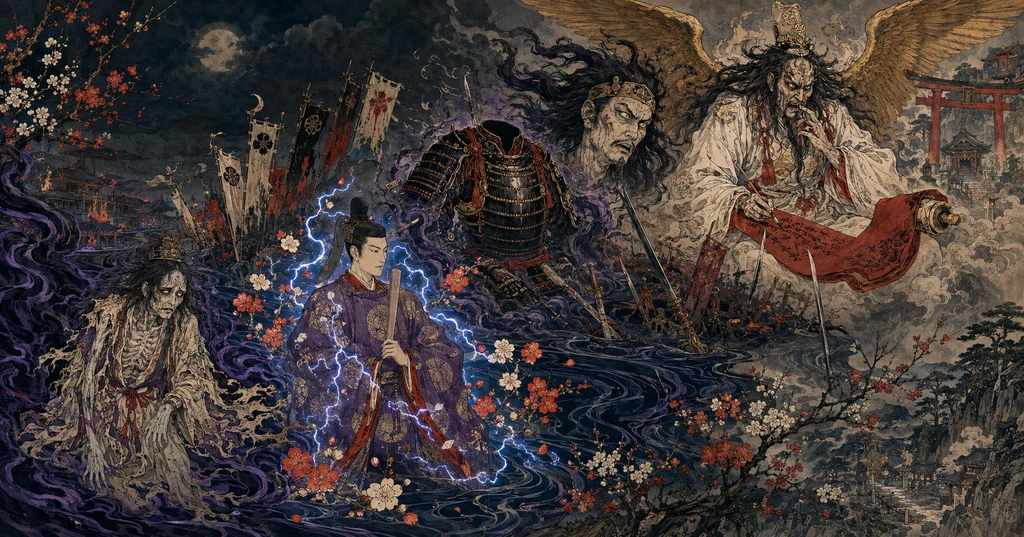
A lineage in which souls who died unjustly are feared as vengeful spirits, then appeased through ritual and enshrined as goryo or deities. It follows the great line from Prince Sawara, Sugawara no Michizane, Taira no Masakado, and Emperor Sutoku, while also opening onto local goryo worship and the vengeful transformation of Raigo into Tesso.
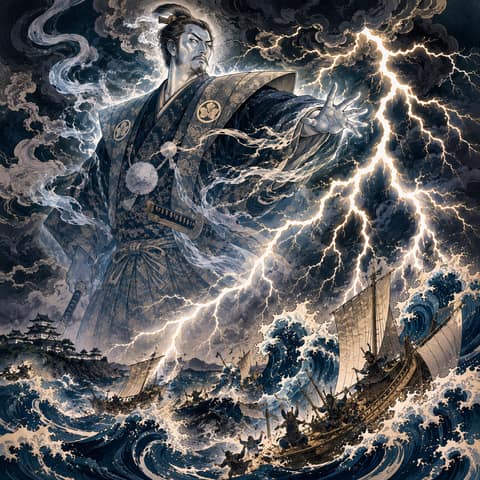
  1. Prince Sawara
    Prince Sawara
    起点・崇道天皇
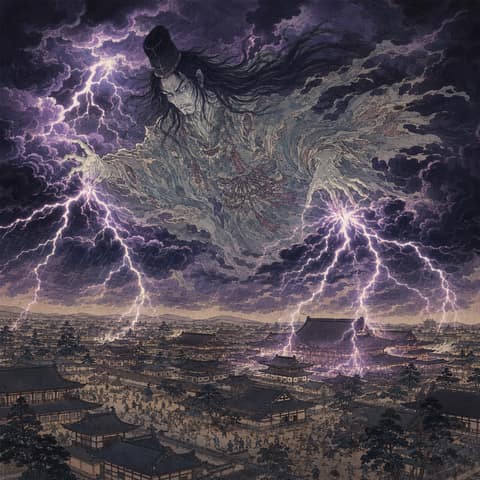
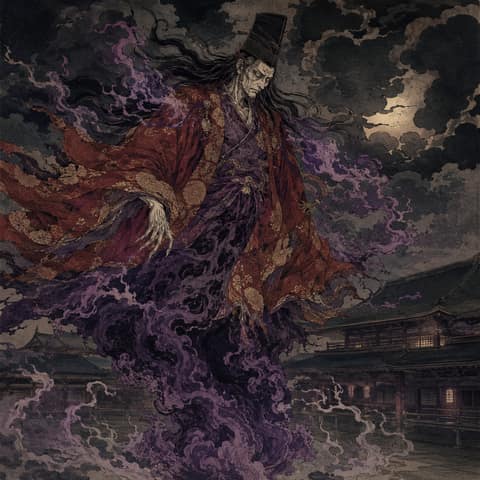
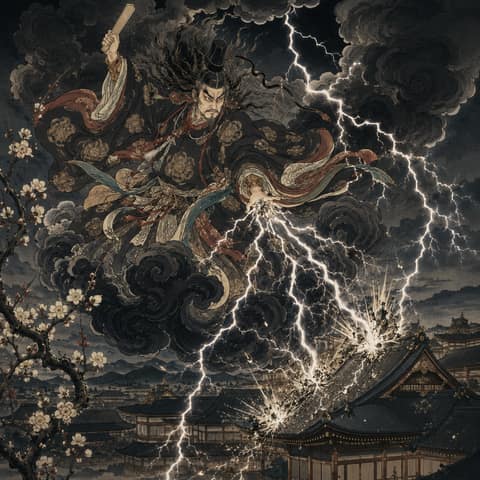
  2. Sugawara no Michizane
    Sugawara no Michizane
    天神
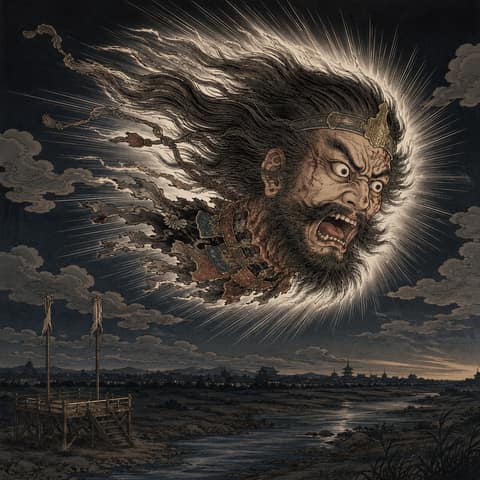
  3. Taira no Masakado
    Taira no Masakado
    新皇
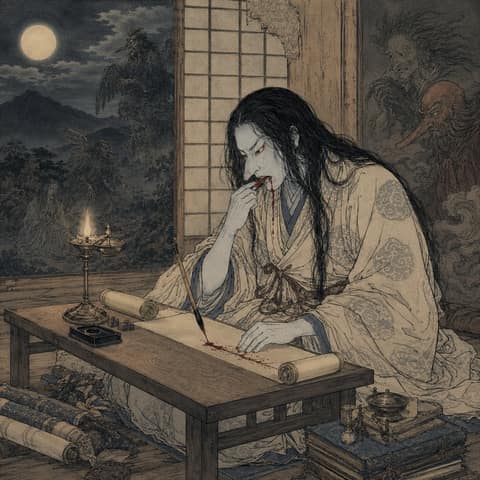
  4. Emperor Sutoku
    Emperor Sutoku
    日本一の大天狗
  5. Onryō (Vengeful Spirit)
    Onryō (Vengeful Spirit)
    概念・怨霊
  6. Warei
    Warei
    地方御霊
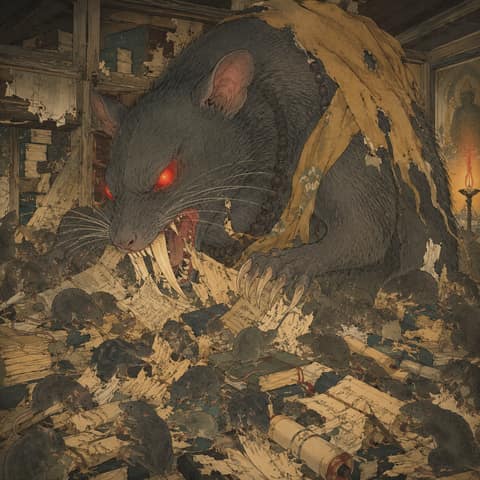
  7. Raigō
    Raigō
    怨霊化生
  8. Tesso
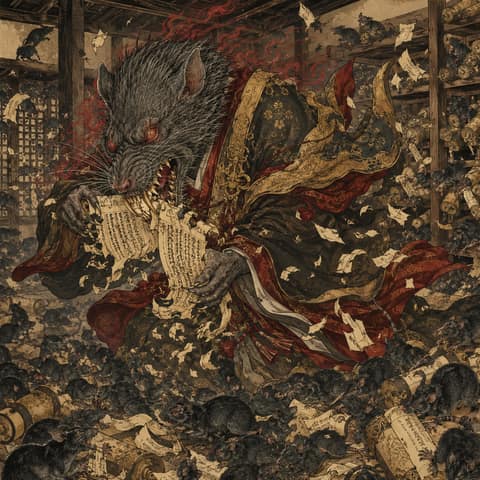
    Tesso
    頼豪の化身

Collections that resonate with this saga

Explore the yokai of "Lineage of Goryo and Onryo" through curated collections.

What is Onmyōdō?|Abe no Seimei, shikigami, the Four Symbols and protection from evil

Explore the history of Onmyōdō through Abe no Seimei, shikigami, the Four Symbols, Hōsōshi, the Goho-doji, Hakutaku and Shōki. This collection separates the astronomy, calendar-making, divination and rites practised at the imperial Bureau of Onmyō from the supernatural onmyōji of later tales, and traces how Chinese cosmology, Buddhist protectors and popular customs for warding off evil converged in Japan.

View collection

Japan’s Three Great Vengeful Spirits

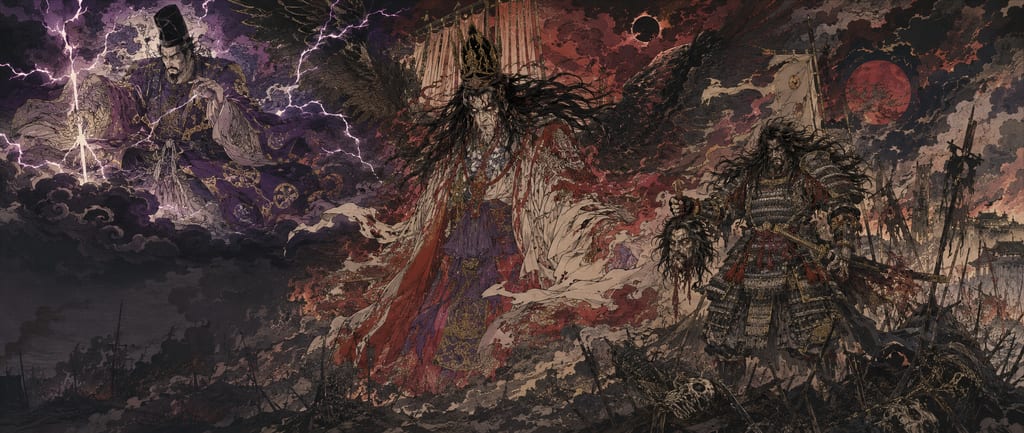
The word onryō—vengeful spirit—can send a chill down the spine. In Japan’s history, people long believed that souls who died with rage or deep regret could bring calamity to the living. Among them, three figures became legendary as the “Three Great Vengeful Spirits”: Sugawara no Michizane, Taira no Masakado, and Emperor Sutoku (Sutoku-in). All three met tragic ends amid political strife and were feared as onryō—yet over time they were enshrined as deities and came to be deeply revered. In the Edo period, their tales spread widely through popular culture like yomihon fiction and kabuki. Beyond frightening ghost stories, the idea of appeasing angry souls through worship took root and continues today. Michizane, once dreaded as a wrathful spirit of thunder and disaster, is now Tenjin, patron of scholarship beloved by students. Masakado is honored as a guardian of Edo at the Masakado Mound in central Tokyo. Emperor Sutoku is even called “the most fearsome spirit in Japanese history.” Feared yet venerated, these figures embody the paradoxical allure of Japan’s Three Great Vengeful Spirits.

View collection