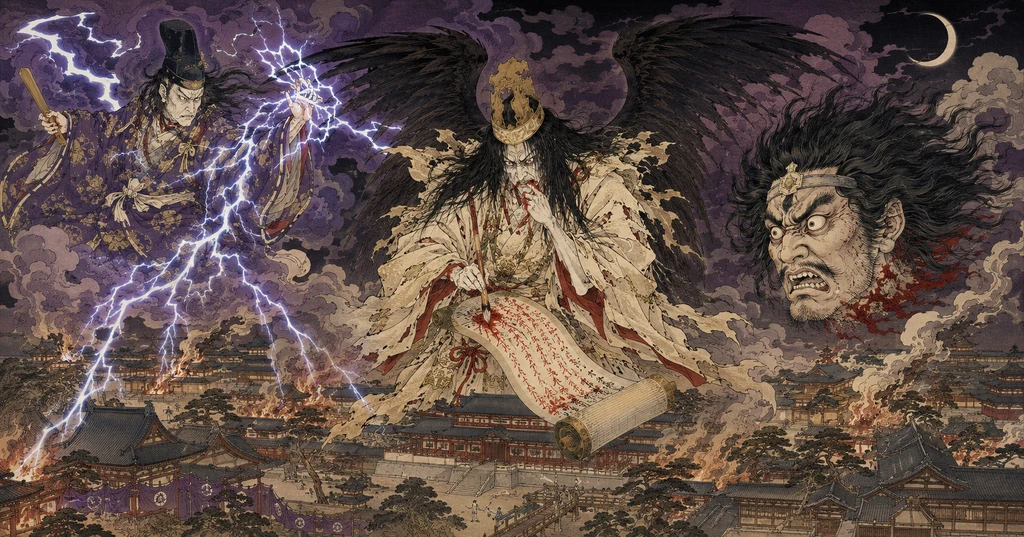
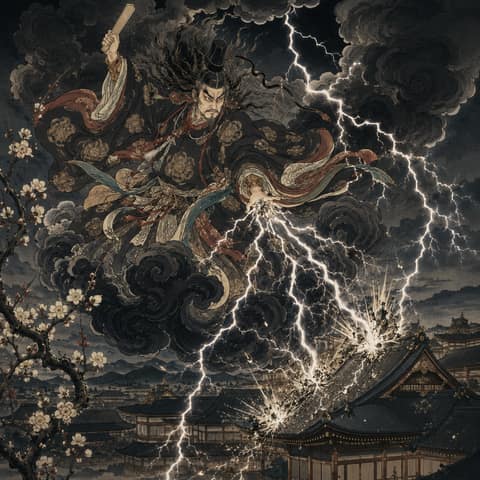
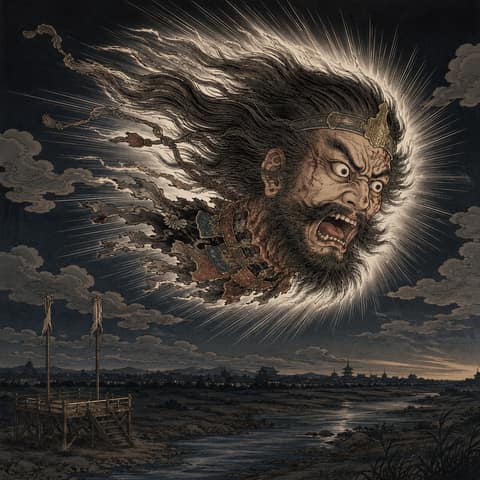
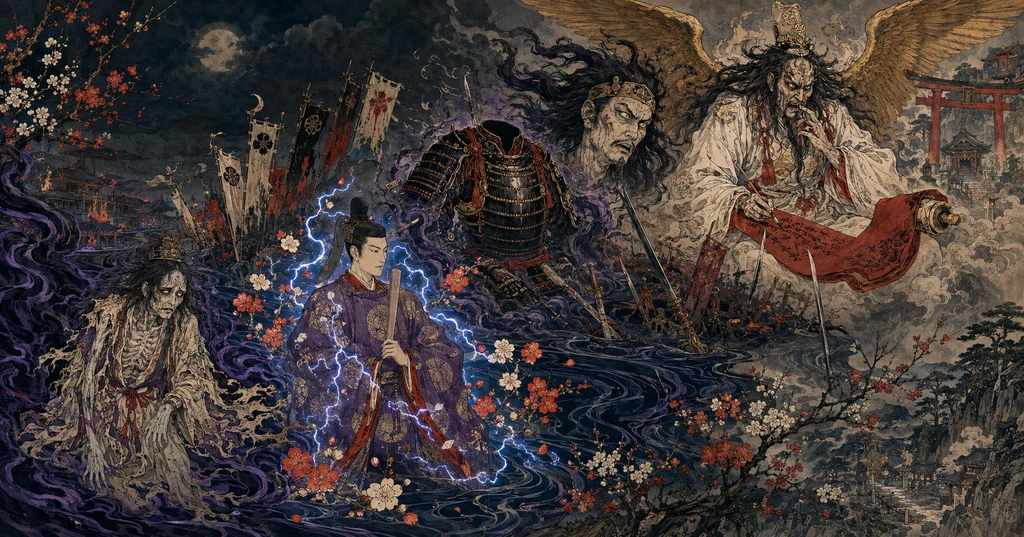
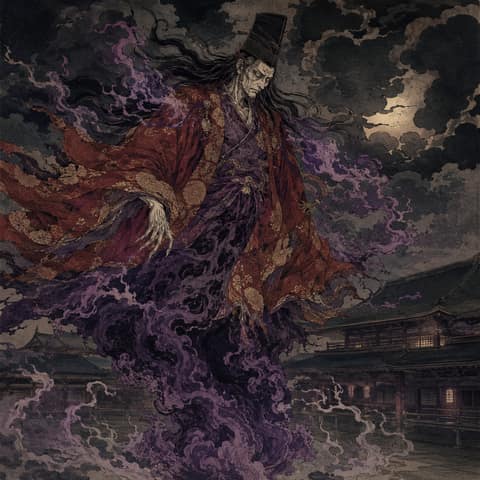
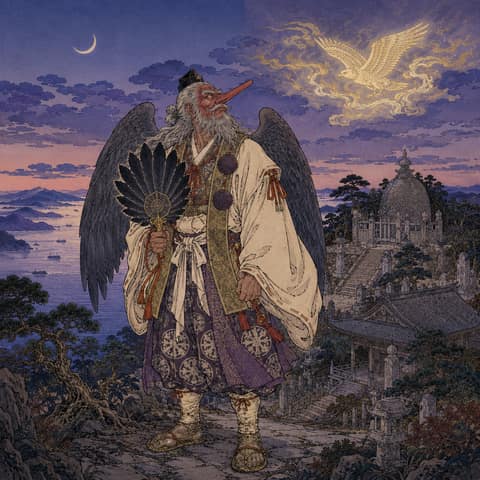
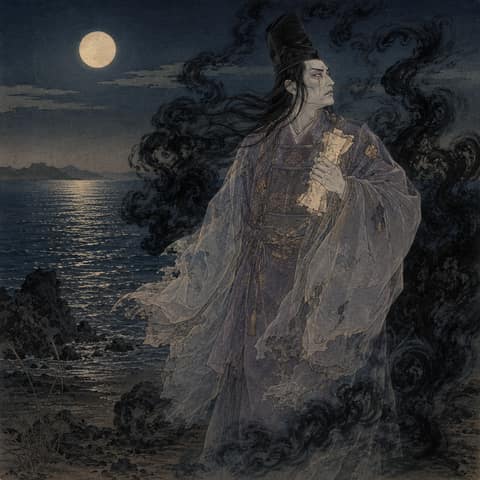
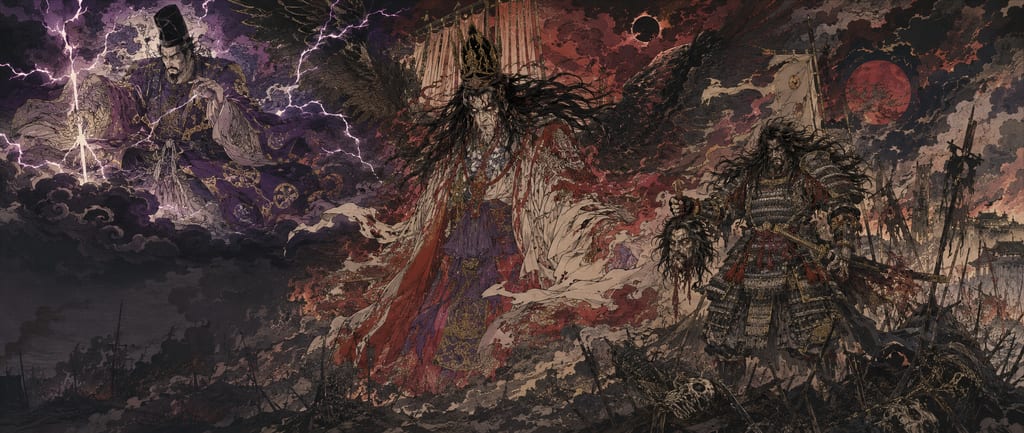
Emperor Sutoku was the seventy-fifth emperor of the late Heian period; defeated in the Hōgen Rebellion and exiled to Sanuki, he died in bitterness, and was thereafter dreaded as the most powerful vengeful spirit and Great Tengu of Japan. Among the "Three Great Vengeful Spirits of Japan," ranked beside Sugawara no Michizane and Taira no Masakado, he is often spoken of as the mightiest.
Born as the son of Emperor Toba, he was dogged by the rumor that he was in truth the son of his grandfather, the cloistered emperor Shirakawa—the "uncle-child" (ojigo)—and was shunned by Toba. Though enthroned at the age of three, he was forced to abdicate at twenty-three without ever grasping the power of cloistered rule, and in the first year of Hōgen (1156) his conflict with his younger brother Emperor Go-Shirakawa came to armed clash as the Hōgen Rebellion[1]. Sutoku's side, which mustered Minamoto no Tameyoshi and Taira no Tadamasa, was defeated in a night attack by Go-Shirakawa's side, which mustered Taira no Kiyomori and Minamoto no Yoshitomo; Sutoku was exiled to Sanuki and, never permitted to return to the capital, ended his life in the second year of Chōkan (1164).
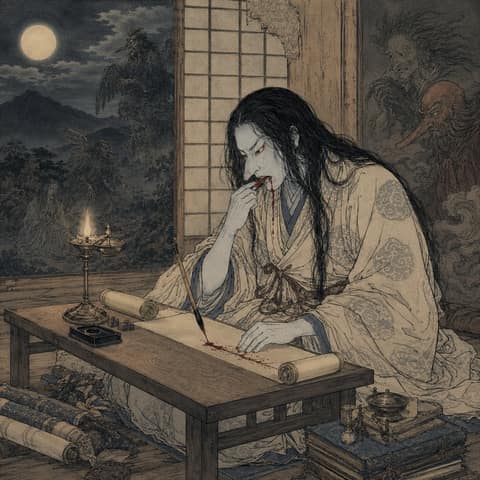
The legend that, enraged when his sutra-copies made in exile were rejected by the court, he bit off his tongue and wrote a curse in blood, and—cutting neither nails nor hair—turned into a tengu, is what made Sutoku a yokai and a vengeful spirit. After his death, whenever the realm fell into disorder it was feared as his curse, and the court labored to pacify him through renaming and the building of shrines. His vengeful spirit is depicted even in the famous tale of the uncanny in Ueda Akinari's Ugetsu Monogatari.
Folklore & Legends
The core story that made Sutoku a vengeful spirit is the blood-written curse transmitted by the Kamakura-period war chronicle Hōgen Monogatari[1]. Exiled to Sanuki, Sutoku copied the Five Great Mahāyāna Sutras with his own hand, praying for the extinction of his sins and ease in the life to come, and sent them with a request that they be deposited at a temple in the capital. But the cloistered emperor Go-Shirakawa, suspecting that a curse was embedded in them, sent the sutras back. Enraged, Sutoku bit off his tongue and, with the flowing blood, wrote: "I shall become the Great Demon-Bond (daimaen) of Japan, make the sovereign a commoner and the commoner a sovereign," and "I dedicate this sutra to the path of demons"; thereafter, cutting neither nails nor hair, he took on a yaksha-like aspect and, while still living, is said to have turned into a tengu. "Great Demon-Bond" is a Buddhist term for a class of demons that deludes the human heart.
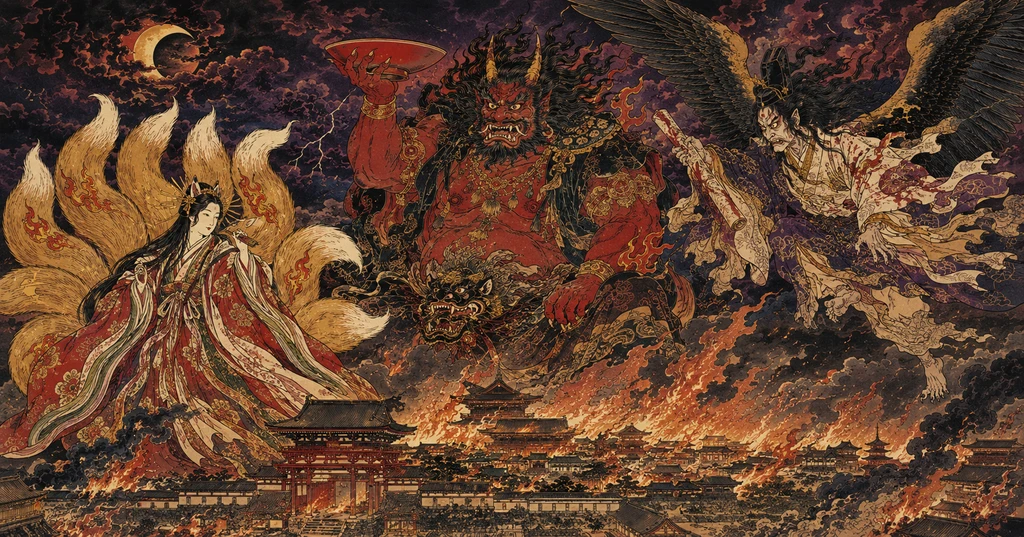
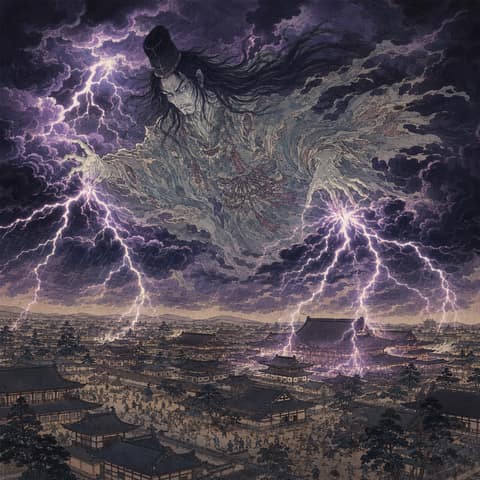
After Sutoku's death, whenever calamity continued in the world it was attributed to the curse of Retired Emperor Sutoku. In the third year of Angen (1177), a great fire that burned the capital and forceful appeals by Enryaku-ji followed one upon another, and the upheaval that eventually led to the Jishō-Juei War—the fall of the Taira, the rise of the Minamoto, and the decline of the regent house—was ascribed to Sutoku's wrath. The court hastened to pacify him: in the third year of Angen it changed the title "Sanuki-in," named after his place of exile, to "Sutoku-in," and posthumously granted office and rank even to Fujiwara no Yorinaga, who had died in the Hōgen Rebellion. In the first year of Genryaku (1184) a shrine (the later Awata-no-miya) was built on the old battlefield of the rebellion.
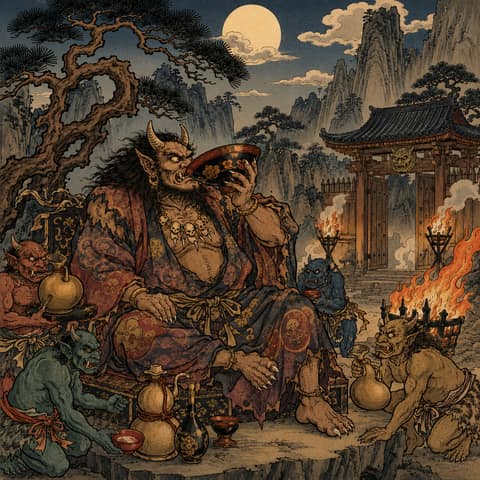
Sutoku's vengeful spirit was depicted most vividly within literature. "Shiramine," at the head of Ueda Akinari's Ugetsu Monogatari[2], is the tale of the poet-monk Saigyō visiting the Shiramine mausoleum in Sanuki to mourn Sutoku's spirit, whereupon the wrathful Retired Emperor Sutoku appears and converses with him. To Saigyō's admonition to cast off his attachment, Sutoku expounds the principle of dynastic revolution to justify his own rebellion, and reveals that he has already become a tengu and demon-king and is manipulating the world's disorder. Here Sutoku is described not as a long-nosed tengu but as a golden kite (tobi). Within the lineage of the Taiheiki and the Hōgen Monogatari, Sutoku came in time to be regarded as the foremost Great Tengu of Japan, ruling over the realms of tengu and demons.
The pacification of Sutoku continued even into the modern era. Vowed in the Keiō years and realized in the first year of Meiji (1868), the Shiramine Jingū[3] is where his divine spirit, resting in Sanuki, was welcomed to the capital and enshrined. That on the very eve of the Meiji Restoration, when a new age was beginning, the curse of Sutoku was still feared and laid to rest, tells how long his vengeful spirit was dreaded. The framework of binding Sutoku together with Sugawara no Michizane and Taira no Masakado as the "Three Great Vengeful Spirits of Japan" is, as Yamada Yūji[4] of vengeful-spirit studies rates him the greatest vengeful spirit in Japanese history, an early-modern arrangement that spread through the popular fiction and kabuki of the Edo period. A refined poet who left in the Hyakunin Isshu the verse "Swift is the current, and though the rock divides the rushing rapids…" is told of as a great demon-king who curses the throne—the two faces of Retired Emperor Sutoku are what may be called the very extremity of goryō belief.
This edition follows in close detail—discerning the boundary between history and the legend that runs from the Hōgen Monogatari onward—how a single deposed emperor turned into the Great Tengu and Great Demon-Bond called the greatest in Japanese history.
First, the history must be grasped. Sutoku's misfortune lay in the political exclusion of being shunned by the cloistered emperor Toba as an "uncle-child" and being made to abdicate without ever holding the power of cloistered rule. After the early death of Emperor Konoe, that his younger brother Go-Shirakawa, rather than his own son Prince Shigehito, was set up became the trigger for the Hōgen Rebellion[1] (1156). On the defeated Sutoku's side, Minamoto no Tameyoshi and Taira no Tadamasa were put to public execution for the first time in roughly four hundred years, and Sutoku himself was exiled to Sanuki. Up to here it is history grounded in records.
The uncanny is born beyond that, in the stratum of legend. Both the curse said to have been written in blood—"I shall become the Great Demon-Bond"—after biting off his tongue, and the figure of him turning into a tengu with nails and hair grown long, are stories transmitted not by contemporary records but by the Kamakura-period Hōgen Monogatari[1]. Yet this legend spread with great persuasive force, and the great fires, forceful appeals, and upheavals that struck the capital from the Angen years onward—indeed, the Jishō-Juei War leading to the fall of the Taira—came to be read as Sutoku's curse. The events themselves are history; the interpretation that ascribes them to Sutoku's rancor is goryō belief—the two must be seen as sharply distinct.
What fixed Sutoku's tengu image was literature. "Unkei Miraiki," book twenty-seven of the Taiheiki, depicts Sutoku as a demon-king ruling the throngs of tengu and demon-bonds, and in the early-modern era "Shiramine" in Ueda Akinari's Ugetsu Monogatari[2] gave vivid form to Sutoku's vengeful spirit confronting Saigyō—not as a long-nosed tengu but as a golden kite. The image of Sutoku told of as "the foremost Great Tengu of Japan" and "the greatest vengeful spirit in Japanese history" stands upon this accumulation of literature.
What deserves attention is that his pacification reached even into the modern era. In the first year of Meiji (1868), the Meiji government welcomed Sutoku's divine spirit, resting in Sanuki, to the capital and enshrined it at Shiramine Jingū[3]. That at the outset of a new reign they still feared the curse of a deposed emperor seven hundred years past tells how deep-rooted the dread of Sutoku's vengeful spirit was. A poet who left a famous verse in the Hyakunin Isshu, and a great demon-king who curses the throne—this very gulf is what pushed Retired Emperor Sutoku to the apex of goryō belief.
Character Profile
This section is our own creative profile for storytelling. It is not historical fact or scholarship.
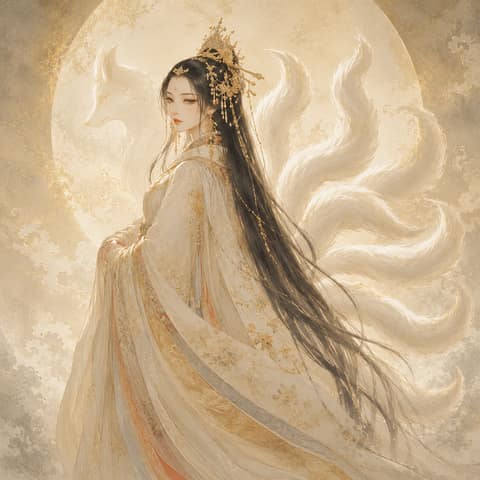
A refined poet and yet fierce. His chagrin and rancor run deep, but he is quiet rather than outwardly raging—and all the more persistent for it.
Compatibility
Those unjustly degraded, those who keep their tenacity within, those who love waka and the classics
Abilities
The demonic might of the Great Tengu who rules the realms of tengu and demonsThe curse upon the throne through a blood-written imprecationManifestation as a golden kiteSaid to manipulate the world's upheavals from behind the scenesThe spiritual power of a deposed emperor versed in waka
Weaknesses
The curse softens through reverent pacification such as renaming and posthumous bestowal
he was laid to rest by the transfer of his spirit to Shiramine Jingū
the vengeful-spirit aspect and his true form as a poet are distinct things
Habitat
The Shiramine mausoleum in Sanuki Province (present-day Sakaide, Kagawa), Shiramine Jingū (Kyoto), Awata-no-miya, and the tengu realm of the mountain forests
The diagram below is a diagnostic evaluation chart for Emperor Sutoku, the Vengeful Spirit Exiled to Sanuki. The higher the value of each item, the stronger that characteristic is expressed.