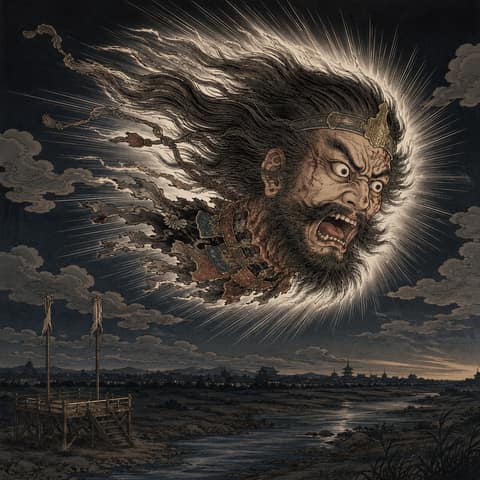
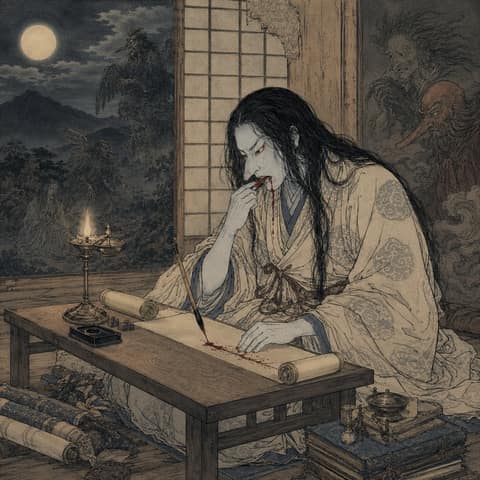
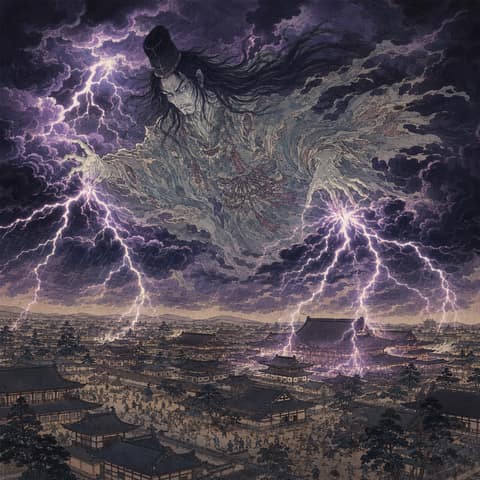
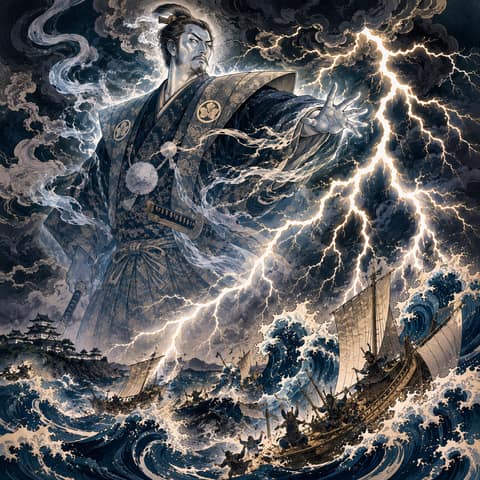
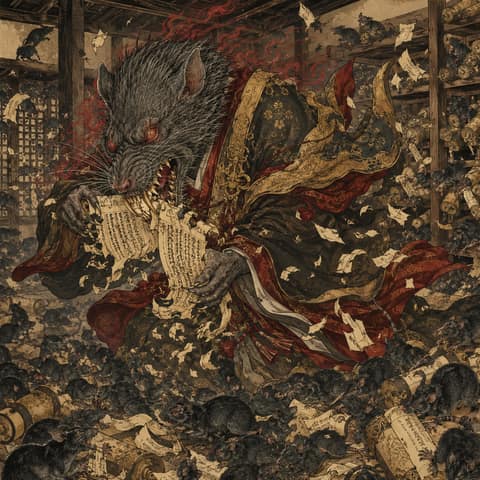
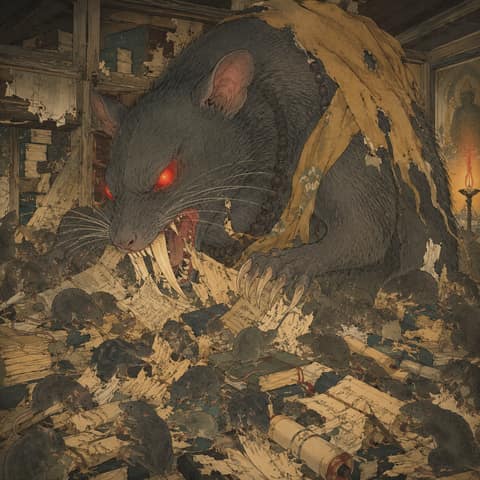
Based on Toriyama Sekien’s “Tesso” motif, it appears as a giant rat draped in robe-like shadows, with red eyes and teeth said to be iron-hard. Its origin lies in the vengeful spirit tale of Raigō tied to disputes over the ordination platform at Onjōji, where rivalry between Enryakuji’s Sannō faction and the Miidera side was cast into story and overlapped with real rat damage to temple sutras and treasures. Names vary by period and source, with “Raigō Nezumi” and “Miidera Nezumi” coexisting. Medieval war tales exaggerate its numbers into a calamity of swarming rats, while from early modern times it links to shrine legends of pacification and blessings. Chronologies in records do not always align and the tale is highly narrative, yet shrine and temple names, linked verse, and oral lore support a core tradition. In some regions, extermination stories feature a great cat of Mount Hiei or guardian deities, reflecting the boundary-conscious rivalry between two religious centers.
Character Profile
This section is our own creative profile for storytelling. It is not historical fact or scholarship.
Yokai Type - Traditional Yokai
Category - Ghosts & Spirits
Rarity - Uncommon
Personality - tenacious and taciturn, drawn by grudges yet calmed by reason
Compatibility - conflicts with Buddhist esoteric rites and apotropaic prayers, harmonizes with folk faith for warding off rat damage
Abilities - relentlessly gnawing through sutras and wooden imagesleading and commanding rat swarmsmanifesting as a vengeful spirit with hauntings and anomaliesretreats when subdued by ritual power and prayers
Weaknesses - repose-of-souls rites and enshrinement, wards of guardian deities and Jizō, sutra chanting and ritual prayers for sealing
Habitat - around Mount Hiei, Sakamoto in Ōmi Province, temple storehouses and sutra repositories