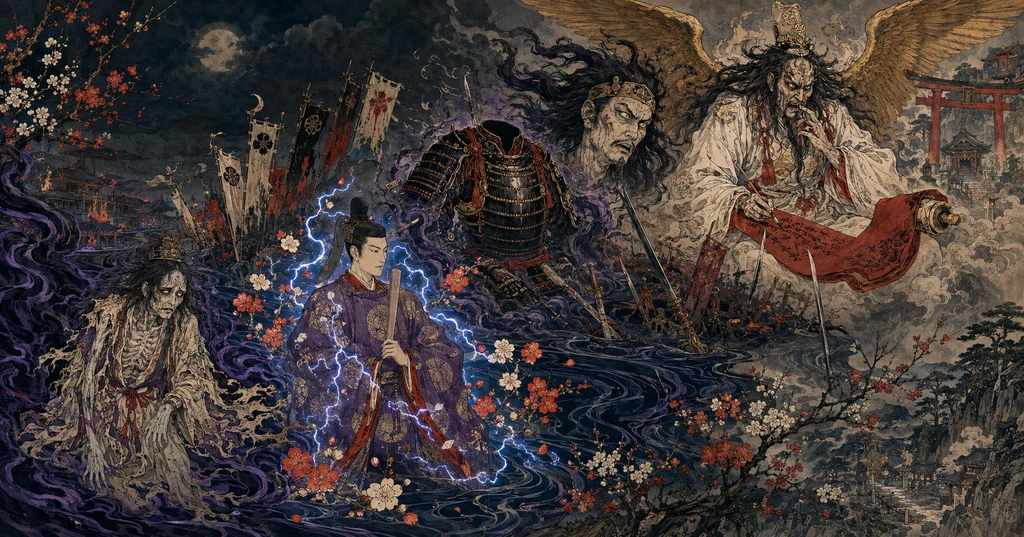
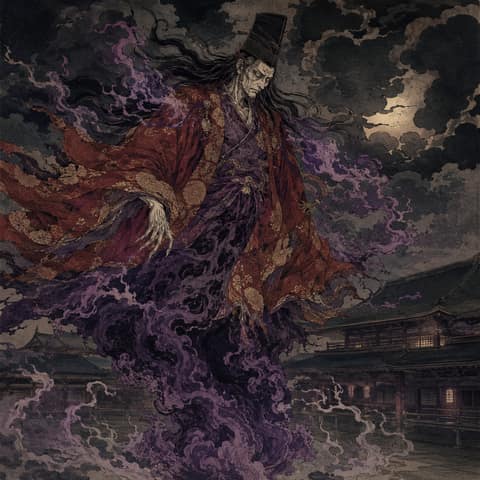
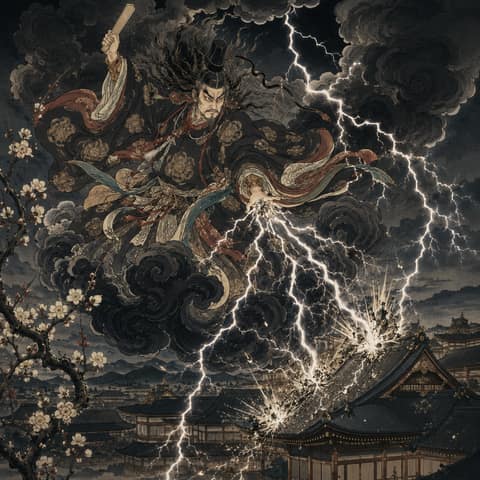
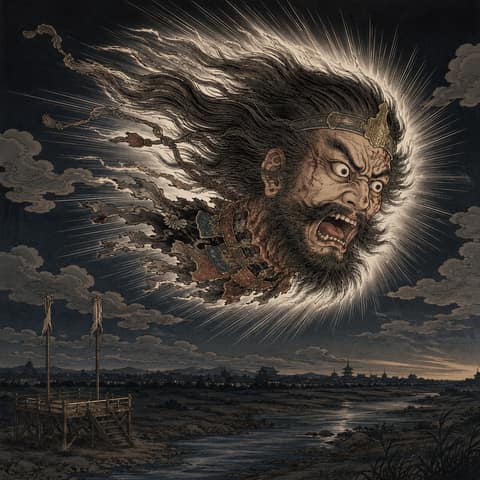
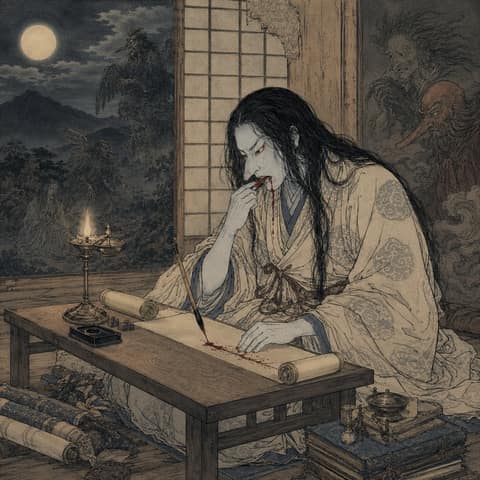
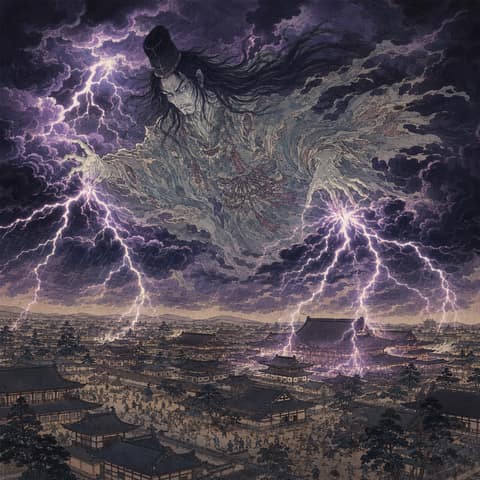
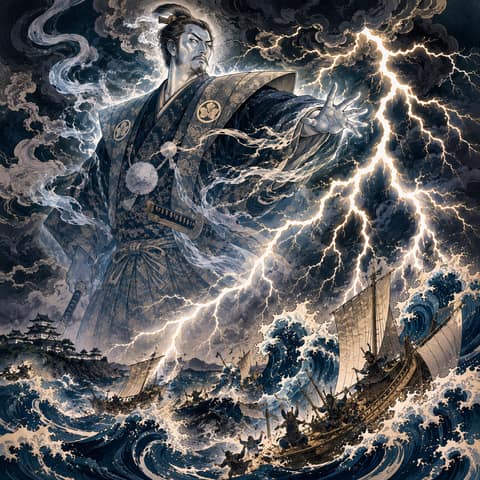
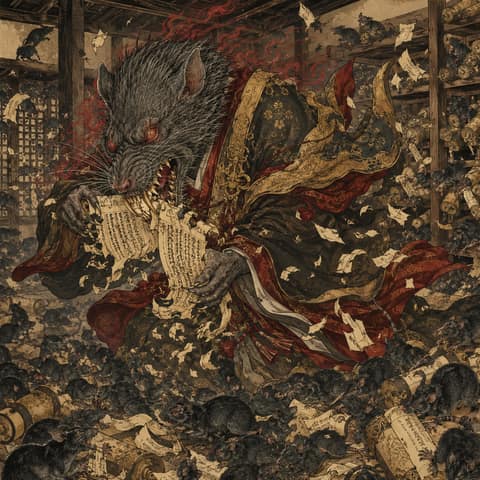
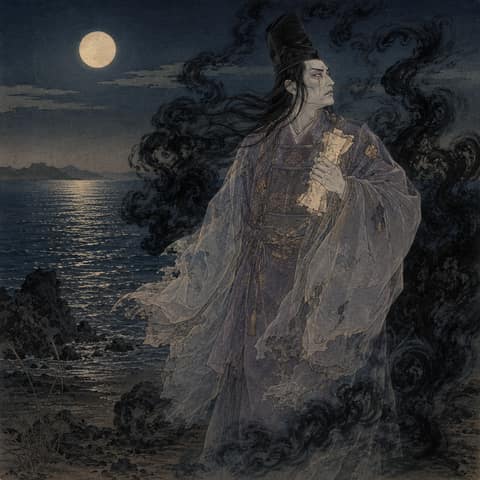
A royal prince from the late Nara to early Heian periods, son of Emperor Kōnin and full younger brother of Emperor Kanmu. Named crown prince, he was deposed as an alleged accomplice in the assassination of Fujiwara no Tanetsugu and exiled to Awaji. He died en route by self-imposed fasting. When epidemics, famine, and sudden deaths struck the court afterward, they were attributed to his vengeful spirit. To appease him, he was posthumously honored with the title Sudo Tennō, and he came to be revered and feared as a foremost figure in goryō (vengeful spirit) belief.
Folklore & Legends
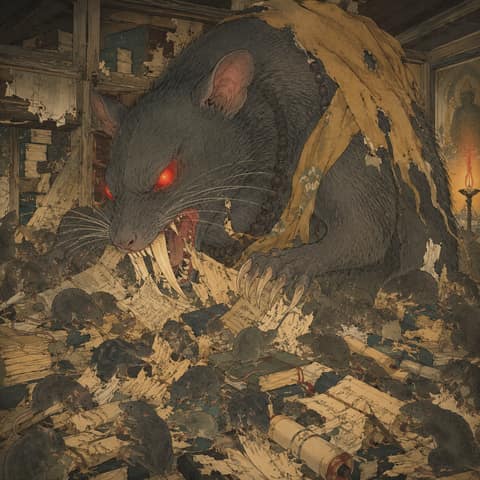
During the Enryaku era, a series of calamities in the court and capital were divined as the work of Prince Sawara’s angry spirit. The court granted protective households, held Buddhist services and sutra recitations, and offered rites at state shrines, even dispatching monks to his spirit’s altar on Awaji to express contrition. He was later enshrined at his mausoleum, and small shrines were established across the provinces with regular offerings. Tales tell of a Kōfuku-ji monk whose rituals cured illness, and of his being devoutly venerated at a temple in Yashima.
An image grounded in local and court memories that Prince Sawara’s resentment manifested as a goryō. Amid suspicion over his alleged crimes he died by fasting, and later plagues, famine, and illnesses afflicting the imperial line were seen as his curse. The court sought reconciliation through land donations, sutra recitations and esoteric rites, reburial, and posthumous honorific titles, carefully enshrining him as a goryō. Revered as a power that judges right and wrong, he received offerings at shrines and temples, seasonal services, and apologies at his mausoleum. In later years, rites centered on the Sudō Tennō Shrine took form, spreading protective faith between the capital and Yamato. His grudge was understood not as private spite but as a warning against political disorder and calumny, prompting rulers to vow purity and justice with sacrifices, written oaths, and sutra offerings. The spirit bears a wild aspect, yet when appeased turns to guardianship.
Character Profile
This section is our own creative profile for storytelling. It is not historical fact or scholarship.
The diagram below is a diagnostic evaluation chart for Emperor Sudō as Vengeful Spirit – Traditional Goryō Version. The higher the value of each item, the stronger that characteristic is expressed.