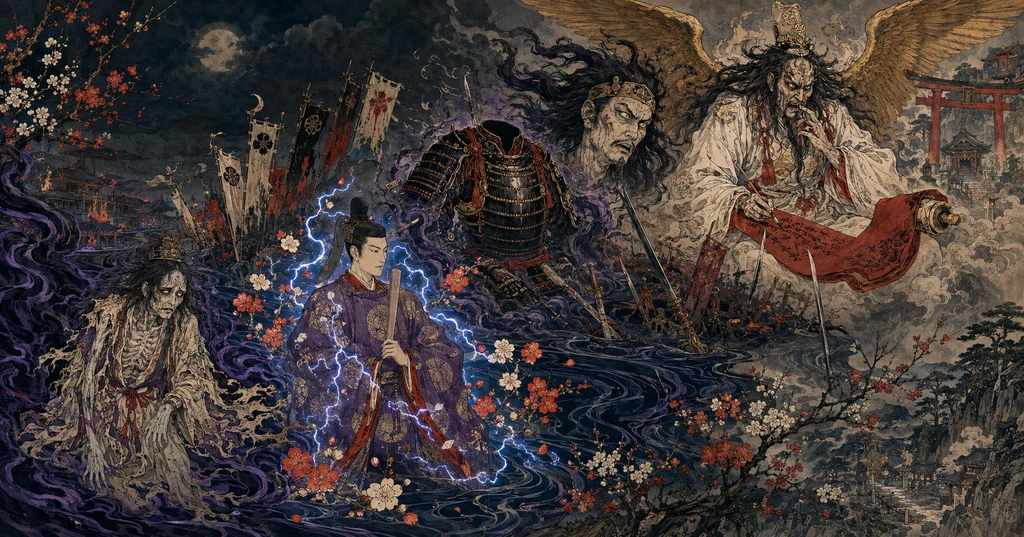
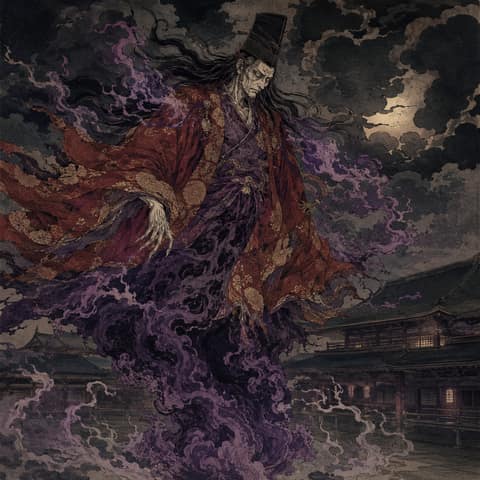
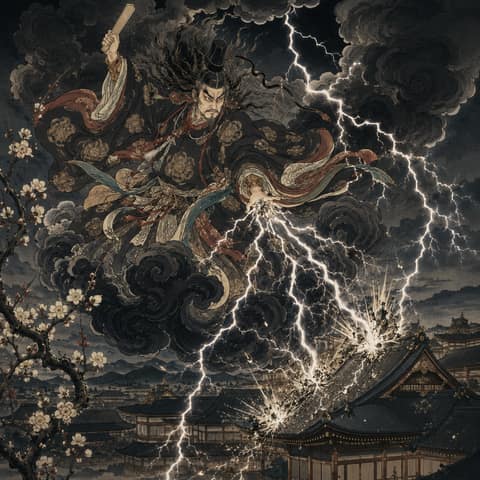
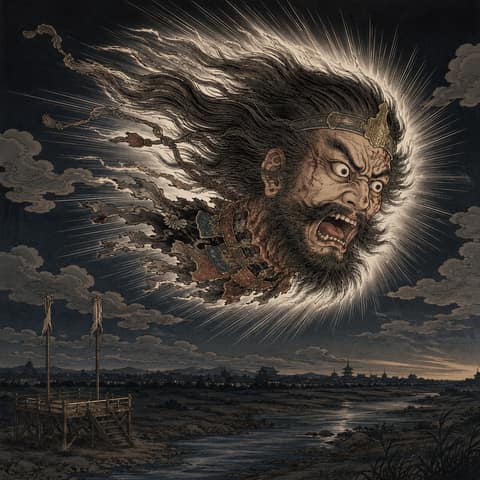
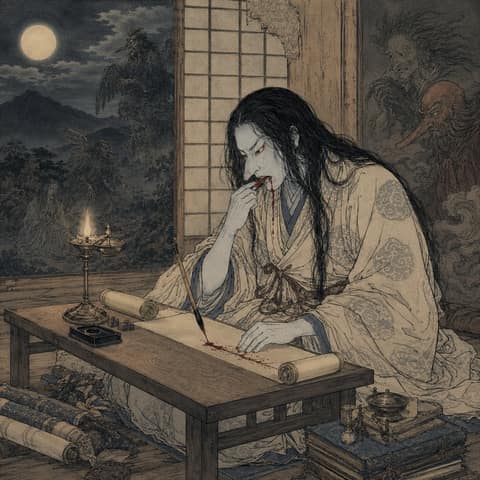
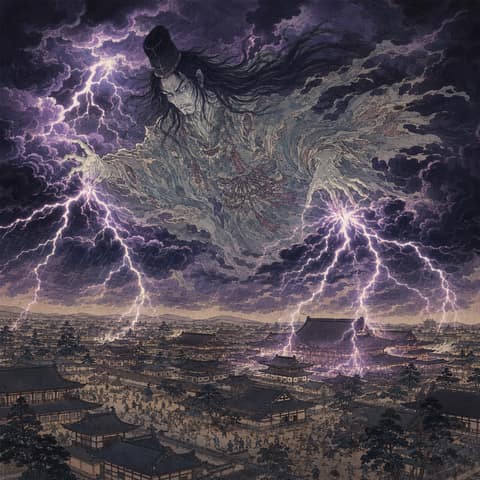
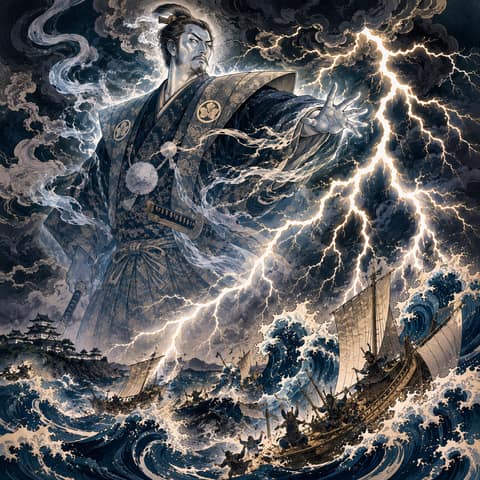
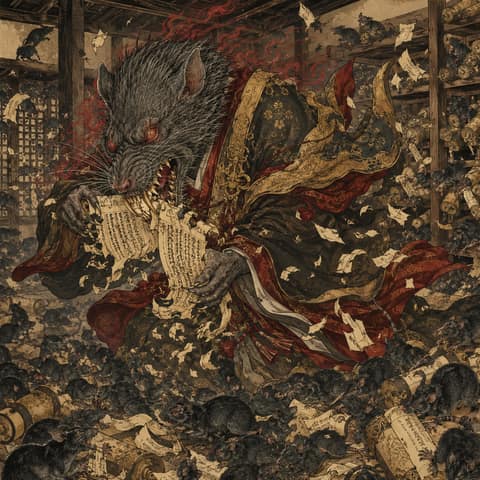
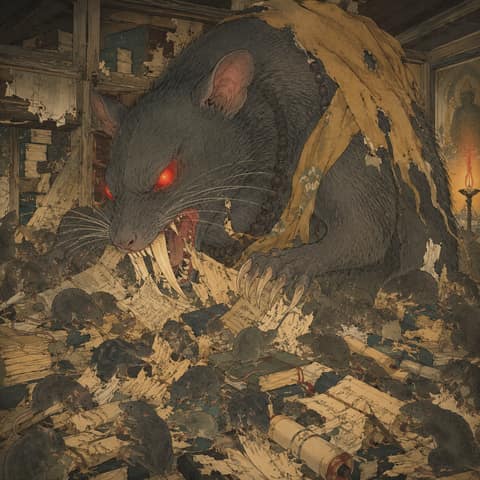
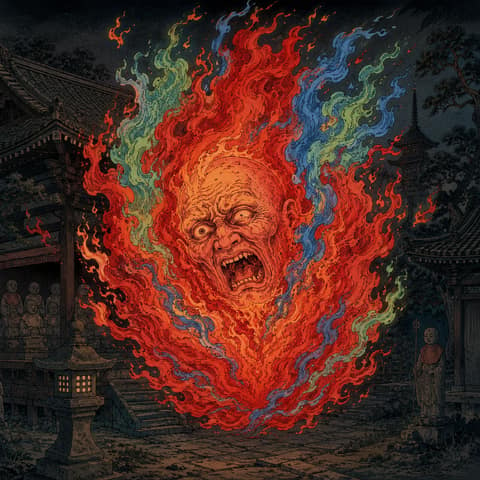
A framework that enshrines vengeful spirits as goryo to pacify their curses and turn them into sources of blessing. Epidemics and natural disasters were seen as manifestations of resentment, and reconciliation was sought through founding shrines, conferring divinity, and institutionalizing festivals. Curse deities bear a dual aspect of fear and veneration, and their wild power was believed to transform into communal guardianship through proper requiem rites. Practices ranged from state rituals to village memorials, including era name changes, imperial envoys, Goryo-e, and Hojō-e. For individuals, memorial offerings, sutra copying, nenbutsu, and esoteric prayers were performed, while restoring honor and granting divine ranks were means to ease a spirit’s grievances. Narratives and origin legends explained why resentment arose, giving social memory to causes such as false accusation, untimely death, and broken lineages. A vengeful spirit’s power was not indiscriminate but signaled its intent according to causes, believed to speak through dreams, oracles, thunder and fire, and plague. Pacification was not a one-time act but continued through annual festivals and shrine upkeep, with warnings that neglect would invite resurgence.
Character Profile
This section is our own creative profile for storytelling. It is not historical fact or scholarship.
Yokai Type - Traditional Yokai
Category - Ghosts & Spirits
Rarity - Legendary
Personality - relentless, just rather than capricious, retributive according to karmic cause and effect
Compatibility - softened by reverence and memorial rites, fiercely hostile to mockery and sacrilege
Abilities - bringing calamities such as epidemics and weather anomaliesexpressing intent through dream revelations and oraclesmanifesting omens like thunderfire strange sounds and uncanny lightsambivalent workings of both curse and protection upon individuals and communities
Weaknesses - restoration of honor and posthumous memorial offerings, orthodox rites such as Goryo-e and Hojō-e, consecratory prayers and sutra recitation, sustained pacification practices without lapse or forgetfulness
Habitat - imperial capitals and precincts of old shrines and temples, burial mounds tumuli and battlefield remains, places tied to the causes of their resentment