Yokai Encyclopedia

Encyclopedia of Japanese Yokai

91 Yokai|14 Category|Page 1 of 4
Localization in Progress - More content available in Japanese version
View Japanese
Sort by: NameAscending
Legendary
  • Abe no Seimei

    Abe no Seimei

    Legendary

    AH-beh noh SAY-may

    Onmyoji Seimei

    Ghosts & SpiritsKyoto

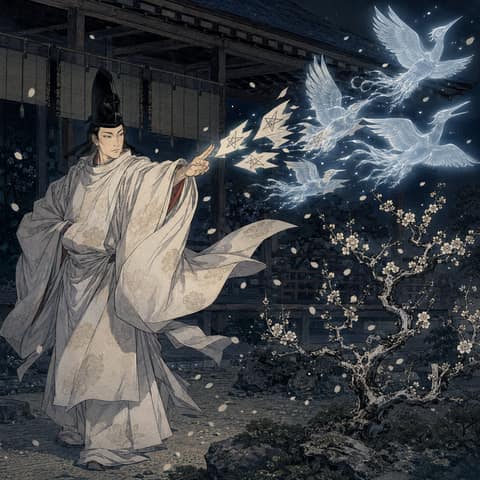
    A portrait of Abe no Seimei shaped around the historical court onmyoji, later embellished by folklore. He is chiefly depicted as a practitioner of astronomy, calendrics, divination, and purification, presiding over rites such as ritual stamping, ablution, and directional avoidance. Shikigami were originally discussed as doctrinal techniques of Onmyodo or auxiliary spirits, symbolized as secret transmissions within the family line. Prayers for rain and healing from epidemics functioned to stabilize society through knowledge of seasons, stars, and directions combined with public ritual. From early modern times onward, Seimei was elevated as the progenitor of the Tsuchimikado house, and miracle tales multiplied in temple-shrine origin stories and storytelling. Records of a real government official merged with the image of a thaumaturge in yokai tales, fixing his name as representative of Onmyodo.

  • Akamata Kuromata

    Akamata Kuromata

    Legendary

    Akamata Kuromata

    Akamata Kuromata, the Secret Deities of the Subterranean Otherworld

    Deity / Divine SpiritOkinawa

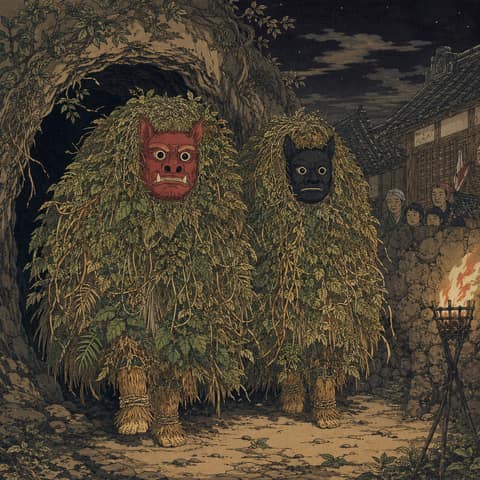
    This is a visiting deity clad in a stout, dumpling-like body wrapped in layers of vines, wearing a red or black mask. It is said that only once a year does it reveal itself from a bottomless subterranean cavern known as Niroo—an otherworld beyond the sea—to bestow bountiful harvests and fruitful yields upon the village. No one but the permitted local residents of the district may lay eyes on its form or hear its voice, and no photographs or spoken words of the ritual may ever leak to the outside world. It is an entirely different entity from the snake yokai Akamata, who shapeshifts into a handsome man to visit maidens. It is precisely by remaining unseen that its divine majesty is preserved, standing as the master of this silent, secretive festival.

  • Amabie

    Amabie

    Legendary

    ah-mah-BEE-eh

    Kawara

    Half-Human BeingsKumamoto

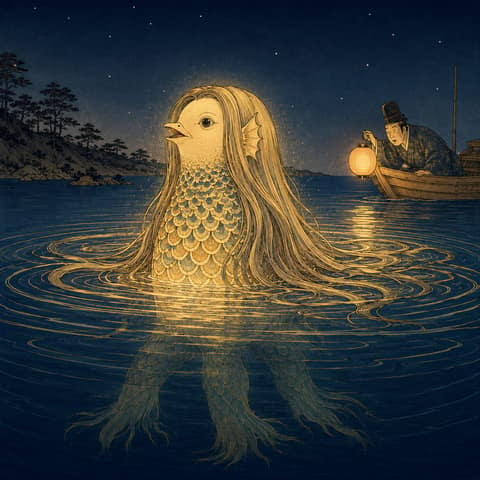
    Based on a broadsheet believed published in Koka 3 (1846), this version reconstructs a figure that appeared at sea, shone with light, and delivered prophecies to officials. Because the text states “as in the illustration,” appearance relies on the image; thus we avoid later Amabiko traits and confusions, noting only the referenced depiction such as a scaled body, long hair, a beaklike mouth, and three leglike appendages. The emphasis is on prophecy and dissemination of its image, with no explicit claim of directly suppressing epidemics. It foretells six years of abundant harvest alongside epidemic outbreaks, and presenting its portrait was accepted as a popular apotropaic act. Though said to originate in Higo Province, related tales appear nationwide with differing names and details.

  • Amaterasu-Omikami

    Amaterasu-Omikami

    Legendary

    あまてらすおおみかみ

    Supreme Deity of Takamagahara

    Divine Spirit / DeityMie

    The Peculiarity of Japanese Mythology: Sun God = Female. While the base description touched on the primary myths of Amaterasu-Omikami, this detailed explanation delves into the comparative religious peculiarity of Japanese mythology in making the sun god female. Sun deities in ancient world mythologies—such as Greece's Apollo, Egypt's Ra, India's Surya, Inca's Inti, and Babylonia's Shamash—are predominantly male. On the other hand, female sun deities like Japan's Amaterasu, Norse's Sól, Baltic's Saulė, and some in Eastern Europe are relatively rare. In post-war Japanese mythological studies, scholars like Takeshi Matsumae proposed the male deity theory, stating that "the archetype of Amaterasu was various male sun gods (Amateru deities) who were later feminized," which became a central controversy. If we adopt this theory, the feminization of the sun god can be read as a unique deification process that advanced within the kingship, religion, and agricultural rituals of ancient Japan. The "Hiding in the Rock Cave" Tale ── Comparative Religion of Sun Disappearance Myths. The "Hiding in the Rock Cave" tale, where Amaterasu-Omikami hides in a cave and plunges the world into darkness, is a prime example of "sun disappearance and rebirth" in world mythology. Myths recounting the disappearance and rebirth of the sun—such as the Aten faith of ancient Egypt, Surtr in Norse myth, the Hittite sun god disappearance myth, and the Baltic sun god rebirth myths—are widely distributed as religious responses to the winter solstice, solar eclipses, and agricultural cycles in ancient farming societies. Amaterasu's seclusion is interpreted as the origin myth of Shinto kagura and ritual ceremonies, where "ritual tools like Ame-no-Uzume's kagura dance, the Yata mirror, jewels, evergreen trees, and the eternal bird (announcing the eternal dawn)" summon the sun god from the cave. As the root myth of religious rituals like the ancient Japanese winter solstice festival, Niiname-no-Matsuri, and Kanname-no-Matsuri, it holds cosmological significance far beyond a simple heroic tale. The Three Sacred Treasures ── The Unity of Kingship and Religion. The Three Sacred Treasures (the Yata mirror, Yasakani jewel, and Kusanagi sword) that Amaterasu-Omikami bestowed upon Ninigi during the heavenly descent symbolize the unity of kingship, religion, and mythology in ancient Japan. The Yata mirror embodies sunlight and Amaterasu's spirit; the jewel is a symbol of spiritual power and prayer in ancient Japanese religion; and the Kusanagi sword is a symbol of martial power and rule obtained through Susanoo's slaying of the Eight-Headed Serpent. The Three Sacred Treasures became the core of ancient imperial enthronement rituals and continue to function as the central apparatus of imperial succession ceremonies to this day. They are devices embodying the unique continuity of myth and politics in ancient Japan, where mythological narratives exert a sustained influence on modern political systems and state rituals. Ise Jingu and the Shikinen Sengu ── Two Thousand Years of Succession. The Inner Shrine of Ise Jingu (Kotaijingu) is the sacred site enshrining Amaterasu-Omikami from ancient times to the present. Through the "Shikinen Sengu" (the ritual of completely rebuilding the shrine buildings every 20 years), which began in the 4th year of Empress Jito (690 CE), ancient architectural techniques, rituals, and Shinto culture have been passed down for over 1,300 years. This is a unique philosophy of succession that "embodies eternity through newness"—realizing an "eternity as constant rebirth" through periodic wooden reconstruction, in contrast to the "unchanging eternity" of ancient stone temples. The Shikinen Sengu continues in the 21st century, with the 62nd iteration conducted in 2013. It is a rare phenomenon in world religious history that embodies the essential views of time, eternity, and renewal in ancient Shinto. The Imperial Lineage and the Basis of Ancient State Legitimacy. As the ancestral deity of the ancient imperial lineage, Amaterasu-Omikami has been at the core of the basis of legitimacy for the Japanese state from ancient times to the present. The genealogy from Emperor Jimmu to successive emperors to the modern emperor was established through five generations from Amaterasu, functioning as an apparatus to guarantee the continuity between ancient myth and the ancient state. This is a prime example of establishing legitimacy through a founding myth of an ancient state, alongside China's Mandate of Heaven, Korea's Dangun myth, Rome's Aeneas myth, and Britain's Brutus myth. She has a complex religious and political history, having been emphasized and politically utilized as the core of State Shinto in pre-war Japan, and undergoing a history of re-evaluation and depoliticization under the post-war system of separation of church and state and popular sovereignty. Ise Shinto, Ryobu Shinto, and Yoshida Shinto ── History of Medieval Shinto Thought. In medieval Japan, faith in Amaterasu-Omikami gave rise to multiple ideological systems such as Ise Shinto, Ryobu Shinto, Yoshida Shinto, and Suika Shinto. Ise Shinto (Kamakura-Muromachi periods) was formed by Ise priesthood lineages like the Watarai and Arakida families, producing Shinto scriptures like the "Shinto Gobusho." Ryobu Shinto (Kamakura period) was a syncretism with Shingon Esoteric Buddhism, centered on the "Honji Suijaku" theory that identified Amaterasu with Mahavairocana (Dainichi Nyorai). Yoshida Shinto (Muromachi period) was a unique system formed by Kanetomo Yoshida (1435-1511), advocating "Yuiitsu Shinto," which positioned Shinto above Buddhism and Confucianism. Suika Shinto (Edo period) was a system integrating Confucianism, Neo-Confucianism, and Shinto by Ansai Yamazaki (1618-1682), emphasizing Shinto ethics centered on Amaterasu. These medieval and early modern Shinto thoughts evolved around Amaterasu-Omikami as their central axis, playing a decisive role in the formation of Japan's indigenous religious philosophy. Amaterasu-Omikami in the 21st Century ── From National Tutelary Deity to Individual Spirituality. Under the post-war constitutional system of separation of religion and state and popular sovereignty, Amaterasu-Omikami has been redefined from a political status as the "core of pre-war State Shinto" to a religious status as the "tutelary deity of the entire nation and the spiritual pillar of individuals." With over 8 million annual visitors to Ise Jingu, the nationwide distribution of Jingu Taima (amulets) centered on Ise Jingu, and the organizational structure of Shinto groups and the Association of Shinto Shrines, faith in Amaterasu remains at the foundation of Japanese daily religious life in the 21st century. At the same time, she has become a modern icon repeatedly reimagined in subcultures, games, and manga, making this a rare case where ancient myth and the spiritual culture of modern Japanese people maintain continuity across two millennia. Beyond merely a deity appearing in myths, she is a presence that holds sustained meaning as a core symbol running through the entirety of Japanese culture.

  • Atago-san Tarōbō

    Atago-san Tarōbō

    Legendary

    Atago-san Tarōbō

    Supreme Commander of the Tengu — Atago-san Tarōbō

    Mountain & Wilderness SpiritsKyoto

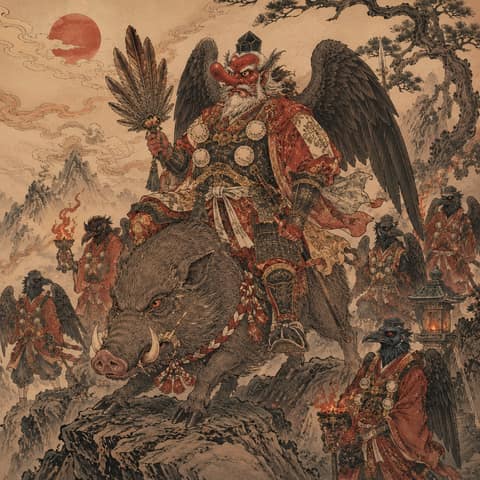
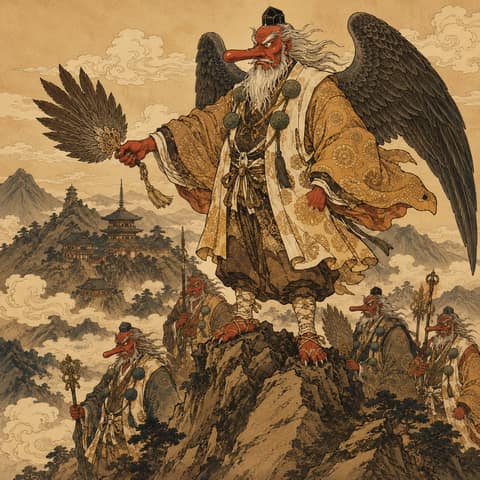
    What made Atago-san Tarōbō "the supreme commander of the tengu"? The question lies in the overlap between the history of the Atago cult and the figure of this single tengu. As a sacred mountain of fire-warding, Mt. Atago was the center of the Atago Gongen cult, syncretized with its original Buddhist form, Shōgun Jizō. The Hakuun-ji engi, which transmits its founding, tells of the ascent of En no Ozunu and Taichō, the shrine on Asahi Peak, and the syncretism with Shōgun Jizō. Shōgun Jizō is an armored Jizō mounted on horseback, joining victory in war with protection from fire. Bearing the numinous power of this Atago Gongen, Tarōbō took on the character of a thaumaturge and guardian deity surpassing any mere mountain apparition. The star-anise flower against fire, the talismans above each hearth, the Atago confraternities (kō) across the land—this density of folk practice was the foundation that raised Tarōbō to the summit of the tengu of every province. The oldest-class textual witness to his proper name is found in the Engyō-bon Tale of the Heike (transcribed 1309–10), where he appears as "the foremost great tengu of Japan" and "Tarōbō of Mt. Atago." As to his identity, the theory in the Genpei Jōsuiki of the fallen Shinzei (Kakimoto no Ki Sōjō) is renowned; but Shinzei was a man of the early Heian period, and since the dates do not match the era the Jōsuiki sets, this is an undeterminable "tradition." It should be read as a tale that lays over Tarōbō the Buddhist notion that arrogance casts a high monk down into a tengu, and his origin cannot be fixed to a single source. His standing as supreme commander is attested by both the performing arts and the scriptures. The Noh play Kurama Tengu of the Muromachi period chants the great tengu of the provinces in geographical order, and the early-modern Tengu-kyō arrays the forty-eight tengu and places Tarōbō at their head. The image of him leading a retinue of crow-tengu and commanding the lords from Hira-san Jirōbō downward rests upon this accumulation of medieval tengu tales. An iconography of him armed and astride a boar is also transmitted, yet his essence lies in being a Gongen-like presence enthroned on the peak, guarding the sacred precincts across Yamashiro. Chigiri Kōsai of tengu scholarship likewise set Tarōbō at the apex of the great tengu of all the mountains.

  • Bakeneko

    Bakeneko

    Legendary

    bah-keh-NEH-koh

    Bakeneko

    Animal ShapeshiftersSagaTokushima

    A consolidated image of the bakeneko based on Edo-period woodblock prints, printed books, and oral tradition. An aged house cat, or one abused by humans, becomes a yokai imbued with vengeful spirit. Portents include licking lamp oil, standing on two legs, and taking human form to slip into a home. Its curses typically target owners or abusers, manifesting as illness, strange deaths, or household decline. Interfering with funerary rites and desecrating corpses are recurring motifs, and tales often end with pacification by monks or ritual prayers. Early modern folk beliefs feared long-tailed cats as gaining occult power, leading to taboos about tail length. Boundaries with the nekomata are blurry, and when the forked tail is not emphasized, the creature is commonly called bakeneko. Urban entertainment refined the monster-cat image, even linking it with courtesan motifs, yet at its core lies awe of a familiar animal and a worldview of gratitude and retribution.

  • Benzaiten

    Benzaiten

    Legendary

    べんざいてん

    Default

    Deities & Divine SpiritsKanagawaShiga

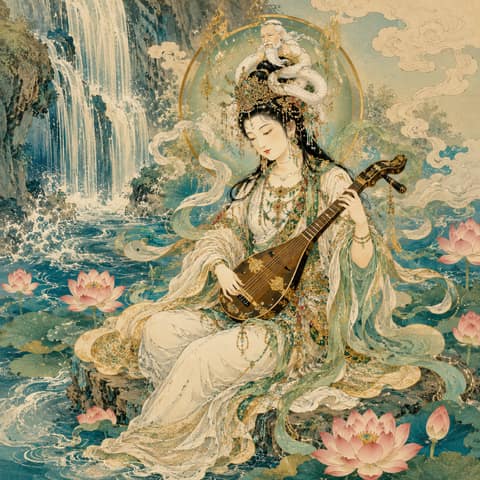
    From Sarasvatī to Benzaiten — Two Thousand Years of Cultural Transformation. While the basic description touches on Benzaiten's major sanctuaries and folk beliefs, this in-depth analysis explores her cultural evolution spanning over two millennia from ancient India's Sarasvatī to modern Japan's Benzaiten. Sarasvatī is one of the oldest deities in the Rigveda (c. 1500–1200 BCE), governing river flows, music, arts, language, and poetry. After being adopted into Buddhism, she was transformed into a tutelary deity in the Golden Light Sutra and Lotus Sutra, spreading to China, Korea, and Japan. In Japan, she evolved through several stages: (1) as a scriptural protector during the ancient Ritsuryo Buddhist period (7th–9th centuries); (2) merging with Ugajin to form Uga-Benzaiten in the medieval Kamakura period; (3) becoming a deity of wealth and a member of the Seven Lucky Gods in the early modern Edo period; (4) having her enshrined identity frequently altered to Ichikishimahime during the Meiji era's separation of Shinto and Buddhism; and (5) transitioning into a subject of modern superstitions, tourism, and subculture. She stands as a prime example of an ancient deity's cultural evolution, continuously transmitting her legacy while altering her appearance, attributes, and name over two millennia. Ugajin — The Mysterious Human-Headed Snake Deity. Ugajin, who merged with Benzaiten from the Kamakura period onward, is a bizarre figure depicted with a human head and a coiled snake body, and remains a mystery in academic studies. While the etymology of "Uga" points to the grain deity Ukanomitama from the Kojiki and Nihon Shoki, the origins of the serpent imagery are debated, with theories citing influences from the Chinese creator deities Fuxi and Nuwa, the Indian Naga (serpent gods), and indigenous Japanese snake worship from sites like Mount Miwa and Suwa. The amalgamation of a "uniquely Japanese snake deity of unknown origin" with a "Buddhist goddess of Indian origin" to form Uga-Benzaiten is a symbolic testament to the syncretism, creativity, and mysticism of medieval Japanese religious culture. Two-Armed vs. Eight-Armed Statues — Dual Iconographic Lineages. There are two main lineages of Benzaiten statues. (1) Two-Armed Statues: Depicting an elegant heavenly maiden playing a biwa (lute). This lineage inherits the original musical goddess nature of Sarasvatī and has been the traditional form in Japan since the Heian period. (2) Eight-Armed Statues: Depicting a heavily armed warrior goddess holding eight weapons and ritual implements such as a sword, jewel, bow, arrow, axe, halberd, dharma wheel, and vajra. This form, described in the 5th–6th century Chinese translation of the Golden Light Sutra, emphasizes her role as a protector of the state. The eight-armed figure embodies a fierce martial nature quite distinct from the "elegant goddess of arts" image. Combined with the medieval serpentine form of Ugajin, Benzaiten evolved into an immensely complex deity integrating "elegance, martial prowess, magic, and wealth." The Folklore of Serpentine Transformation — A Layering of Water, Wealth, and Fertility Gods. The transformation of Benzaiten (Uga-Benzaiten) into a snake deity is a folkloric phenomenon deeply intertwined with ancient Japanese snake worship (Mount Miwa, Suwa, Usa, Kumano, etc.). In ancient Japan, the snake was revered as a deity uniting four attributes: water (shrines by rivers, ponds, and the sea), wealth (shedding skin, infinite multiplication), fertility (grain and land), and healing (medicine and taboos). As a result of Benzaiten's fusion with Ugajin and acquisition of snake deity traits, all layers of ancient snake worship—waterside shrines, snakes in wallets, shed skin amulets, and prayers for healing—have been inherited as part of "Benzaiten faith." Even today, modern superstitions like "money-washing water, wallet snakes, and relationship-severing" vividly demonstrate the living heritage of a folk culture where ancient snake gods, medieval Benzaiten, early modern wealth deities, and modern tourism intersect. The Couples' Taboo — Modern Superstition of a Jealous Goddess. At major Benzaiten sanctuaries (especially Enoshima and Itsukushima), a modern superstition prevails that "couples who visit together will incur the beautiful goddess's jealousy and break up." This is a modern variation of an ancient Indian fierce goddess nature (Sarasvatī is sometimes depicted as the wife of Brahma, possessing jealousy and passion), medieval Japanese snake attributes (snakes were symbols of jealousy and attachment), and ascetic taboos such as the historic ban on women on sacred mountains. Going beyond mere superstition, it stands as a fascinating phenomenon condensing the complex religious, folkloric, and psychological history from antiquity to the present, making it a subject of study in 21st-century folklore, psychology, and tourism studies. At the same time, connections with "relationship-severing shrines" (like Yasui Konpiragu in Kyoto) have been noted, showing how Benzaiten's taboo nature integrates with modern cultural practices of seeking separation. The Seven Lucky Gods Faith and Edo Commoner Culture. As the only female member of the Seven Lucky Gods (Ebisu, Daikoku, Bishamonten, Benzaiten, Fukurokuju, Jurojin, and Hotei) established in the Edo period, Benzaiten became a central figure in commoner culture. Practices such as the New Year's Seven Lucky Gods pilgrimage, placing a treasure ship picture under one's pillow, hatsumode (first shrine visit of the year), and praying for business prosperity deeply permeated Edo daily life. This represents a significant cultural shift from the medieval Uga-Benzaiten faith (esoteric Buddhism, mysticism, aristocratic culture) to the early modern Seven Lucky Gods faith (commoners, commerce, urban culture). Benzaiten's early modern worship marks a crucial milestone in an epic cultural transformation spanning over two millennia: from an ancient Indian goddess of arts, to a medieval Japanese esoteric deity, to an early modern Japanese deity of wealth, and finally into a subject of modern tourism and subculture. Benzaiten in the 21st Century — Tourism, Subculture, and Severing Ties. In the 21st century, Benzaiten's legacy continues as a tourism resource through the Three Great Benten Shrines, nationwide Benten shrines, and Seven Lucky Gods pilgrimages. Simultaneously, she is repeatedly reimagined in subculture works, such as the video games *Okami* and *Megami Tensei*, and the manga *Nura: Rise of the Yokai Clan*. She has become a multifaceted icon where ancient Indian goddess traits, medieval Japanese snake attributes, early modern wealth associations, and modern relationship-severing taboos intersect. As a rare example of a single deity embodying over two thousand years of cultural evolution—from Sarasvatī in ancient India to Benzaiten in modern Japan—she remains a vital subject of study in yokai studies, folklore, religious history, and comparative mythology.

  • Bishamonten

    Bishamonten

    Legendary

    びしゃもんてん

    The Armed God of Fortune and Bearer of Six Stages of Multifaceted Faith: Bishamonten

    Divine Spirit / DeityNara

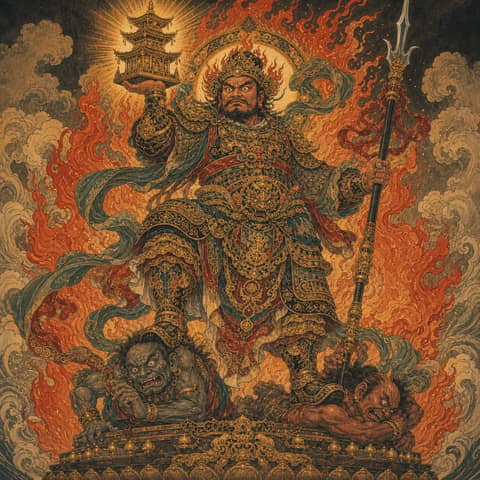
    From Kubera to Vaiśravaṇa: Over a Millennium of Cultural Evolution. While the basic description touches upon Bishamonten's primary attributes, this comprehensive exposition delves into the thousand-year cultural evolution from the ancient Indian Kubera to the modern Japanese Bishamonten. Kubera was an important deity in ancient Indian mythology, serving as the Hindu god of wealth, guardian of the north, and lord of the Yakshas. After being adopted into Buddhism, he became the Dharma protector Vaiśravaṇa and spread to Central Asia, China, and Japan. In each cultural sphere, he underwent unique semantic transformations. In Japan, this produced a multifaceted lineage of faith: the Shigisan Engi involving Prince Shotoku, national protection during the Heian period, victory prayers of Sengoku warlords, and his inclusion among the Seven Lucky Gods in the Edo period. He is a quintessential example of a single deity evolving across centuries and multiple cultural spheres. The Privileged Position of Tamonten in the Four Heavenly Kings System. In Buddhist cosmology, the Four Heavenly Kings—Jikokuten (East), Zochoten (South), Komokuten (West), and Tamonten (North)—guard the four directions on the slopes of Mount Sumeru. Bishamonten, equivalent to Tamonten, is the only one among them to be worshipped independently as the most highly revered figure. This is the result of Kubera's original high status (as god of wealth and northern guardian) in ancient India being preserved even after his adoption into Buddhism. While Shitenno-ji (established by Prince Shotoku in 593) served as the fundamental training ground for Buddhist state religion enshrining all four kings, Bishamonten (Tamonten) independently developed his own following, leading to the formation of temple networks centered around Shigisan, Kurama, and Todai-ji. This dual nature of being both "one of the Four Heavenly Kings" and an "independent deity" is the defining characteristic of Bishamonten worship. The Shigisan Engi and Prince Shotoku: The Origin Myth of Japanese Buddhist State Religion. The founding legend of Shigisan Chogosonshi-ji—where Prince Shotoku received a secret treasure of victory from Bishamonten on the year, day, and hour of the Tiger during his campaign against Mononobe no Moriya—is a representative example of the origin myth of Japan's Buddhist state religion. The Battle of Shigisan in 587 was Japan's first religious war over the acceptance of Buddhism, pitting Soga no Umako and Prince Shotoku (pro-Buddhism) against Mononobe no Moriya (Shinto/anti-Buddhism). The victory of the Soga faction solidified the acceptance of Buddhism in Japan. The legend of Bishamonten appearing as the guardian of victory at this historical juncture acts as a religious narrative device that grounds the origin of Japan's Buddhist state religion in Bishamonten worship. The association between the tiger and Bishamonten developed uniquely in Japan stemming from this very legend. Kurama-dera and the Legend of Minamoto no Yoshitsune: The Evolution of Heian Faith. Kurama-dera in Sakyo Ward, Kyoto, is an ancient temple founded in the early Heian period (traditionally in 770 by Gantei) with Bishamonten as its principal deity, tasked with protecting the north of Heian-kyo and defending the nation. The National Treasure standing statue of Bishamonten (early Heian period) is one of the pinnacle works of Japanese Bishamonten sculpture and a vital cultural asset in ancient sculptural history. Kurama-dera later became the stage for hero legends, such as Minamoto no Yoshitsune (Ushiwakamaru) learning swordsmanship on Mount Kurama from Tengu (considered familiars of Bishamonten), establishing it as a crucial sacred site for samurai faith and heroic lore from the late Heian to early Kamakura periods. This is a prime example of Bishamonten worship expanding from ancient state religion to medieval samurai culture. Uesugi Kenshin: The "Bi" Banner and the God of War. The apex of Bishamonten worship in Sengoku Japan was Uesugi Kenshin (1530-1578), the powerful daimyo of Echigo. Born in the Year of the Tiger and named "Torachiyo," Kenshin believed he was the reincarnation of Bishamonten, riding into battle under a banner bearing the single character "Bi" (毘). The Bishamon Hall at Kasugayama Castle (present-day Joetsu City, Niigata) formed Kenshin's religious core, where he held prayers during crucial moments before deployments, after victories, and during peace treaties. This stands as a representative example of the trinity of religion, military might, and politics in the Sengoku period, showcasing the typical religious individuality of warlords, comparable to Takeda Shingen's devotion to Fudo Myoo or Oda Nobunaga's reverence for a syncretic Namban deity. Incorporation into the Seven Lucky Gods and Edo Popular Faith. In the late Muromachi period, the worship of the Seven Lucky Gods was established, and Bishamonten was included as the armed deity of fortune presiding over "martial luck, victory, and wealth." While the other members of the Seven Lucky Gods are depicted with gentle appearances, Bishamonten is the only one who retains his fully armed guise (armor, pagoda, baton, trampling a demon), giving him a unique presence within this belief system. In the Edo period, Bishamonten played an important role in Takarabune (treasure ship) paintings, New Year's Seven Lucky Gods pilgrimages, and prayers for business prosperity and academic success. He became the core of popular religious culture that aggregated multiple layers of heritage: the ancient Indian wealth god Kubera, the protector of the Heian state, the victory deity of Sengoku warlords, and the popular lucky god of the Edo period. Bishamonten in the 21st Century: Modern Continuity of Multifaceted Faith. Today in the 21st century, Bishamonten is a rare deity that bears a six-stage multifaceted heritage: (1) wealth and northern guardian from ancient India, (2) Tamonten of the Buddhist Four Heavenly Kings, (3) victory guardian of Prince Shotoku and the Shigisan Engi, (4) the faith of Sengoku warlords like Uesugi Kenshin, (5) the armed lucky god of the Edo Seven Lucky Gods, and (6) the modern deity answering prayers for business, exams, and sports victories. He is devoutly worshipped at Shigisan Chogosonshi-ji, Kurama-dera, Todai-ji, and Bishamonten temples and shrines nationwide. Furthermore, he is continuously reimagined in subculture works (such as the games "Nobunaga's Ambition," "Sengoku BASARA," "Megami Tensei," and the manga "Demon Slayer: Kimetsu no Yaiba"). He remains a symbolic figure of Japanese Buddhism, religion, and samurai culture, embodying the unbroken continuity of cultural heritage from antiquity to the present day.

  • Daikokuten

    Daikokuten

    Legendary

    Daikokuten

    Daikokuten, Fortune God of Two Thousand Years of Transformation

    Deity / divine spiritAncient India, as Mahakala / Hieizan Enryakuji in Otsu, Shiga / Izumo Taisha as a center of syncretism with Okuninushi

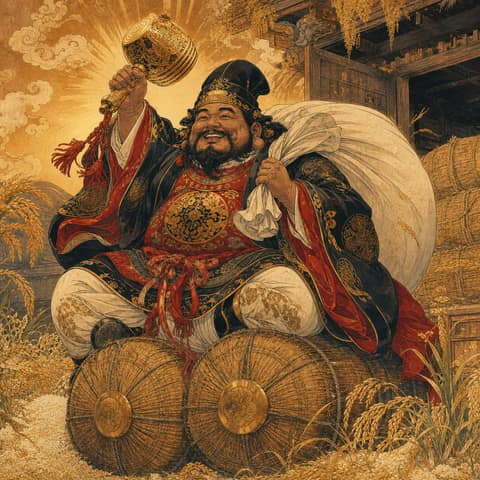
    From Mahakala to Daikokuten: two thousand years of cultural transformation. The basic profile introduced Daikokuten's main attributes; the deeper story is the long transformation from ancient Indian Mahakala to modern Japanese Daikokuten. Mahakala is the wrathful, nocturnal, destructive aspect of Shiva, and in ancient Indian society he was associated with war, cemeteries, blackness, and fear. Once received into Buddhism, he became a Dharma guardian and moved through Central Asia, China, Korea, and Japan, taking on new meanings in each cultural sphere. In Japan especially, syncretism with Okuninushi, inclusion among the Seven Lucky Gods, and transformation into a wealth deity created a form so new that it almost amounts to rebirth. Daikokuten is a model case of how a foreign deity can be remade inside Japanese religion. Sanmen Daikokuten: Hieizan and Saicho's religious design. The Sanmen Daikokuten enshrined by Saicho at Hieizan Enryakuji, combining Daikokuten, Bishamonten, and Benzaiten into one three-faced deity, is one of the distinctive creations of Japanese Buddhist history. All three deities come from Indian Buddhist guardian traditions, but Saicho's placement of the combined figure as guardian of the temple kitchen and economy connected Buddhist ideals of compassion and protection with the practical realities of food, training, and institutional survival. Sanmen Daikokuten later spread through Hieizan, Tendai, Shingon, Zen, and related lineages, becoming an important symbol of Japanese Buddhism's ability to integrate practice and material support. The logic of syncretism through the sound daikoku. The merging of Daikokuten, the Indian-derived Buddhist deity, and Okuninushi, the Japanese Shinto deity, through their shared reading daikoku is a classic example of medieval Japanese religious syncretism through sound. The written forms, doctrines, and origins were unrelated, but the identical reading of "great black" and "great land" was enough to make them overlap. The new deity was not a simple addition of two figures; it gained new life in popular practice. The case reveals a flexible logic in Japanese religion, where sound, image, folk association, and practical benefit can matter more than strict doctrinal consistency. The civilizational meaning of the Seven Lucky Gods. The Seven Lucky Gods cult, shaped from the Muromachi and Azuchi-Momoyama periods into the Edo period, gathers Daikokuten, Ebisu, Bishamonten, Benzaiten, Fukurokuju, Jurojin, and Hotei around the shared wish for fortune, wealth, and prosperity. Its origins are deliberately mixed: Ebisu is native Japanese, Daikokuten, Bishamonten, and Benzaiten come from Indian religious worlds, and Fukurokuju, Jurojin, and Hotei come from Chinese Daoist, Buddhist, and popular traditions. Edo commoners did not demand a neat theory. They wanted luck, and that pragmatic wish created one of Japan's most inclusive religious combinations. Rice bales, mallet, and sack: medieval Japanese symbolism of fortune. Daikokuten's three main attributes, rice bales, the uchide no kozuchi mallet, and the great sack, compress medieval Japanese ideas of wealth. Rice bales symbolize harvest, food, land, and tax revenue in an agrarian society, entering Daikokuten through Okuninushi's agricultural layer. The mallet appears in classical tales such as the Konjaku Monogatari Shu and Uji Shui Monogatari as a magical tool that produces what one desires, a symbol of inexhaustible resources. The sack combines elements of Mahakala's treasure bag, Hotei's cloth sack, and Japan's seven-treasures imagery, holding gold, silver, lapis lazuli, tridacna shell, agate, pearl, and coral. These objects hold Indian, Chinese, and Japanese symbolism in a single image. Edo treasure-ship prints and collective wishes for prosperity. Treasure-ship prints became popular in the Edo period, showing the Seven Lucky Gods riding a ship of riches. Placing such a picture under the pillow on the second night of the New Year was believed to bring a lucky first dream. These images circulated widely as New Year charms for townspeople and merchants, and Daikokuten was often drawn near the center because he best embodied wealth, harvest, and thriving business. Through treasure-ship prints, Edo publishing, ukiyo-e, popular religion, and commercial culture converged. Even today, the motif survives in New Year decorations, greeting cards, and shop talismans. Daikokuten in the twenty-first century: a fortune god in a global age. Daikokuten remains a familiar god of wealth, business, and harvests. His image is used in New Year Seven Lucky Gods pilgrimages, first shrine visits, prayers for business success, and new-shop celebrations; merchants, restaurants, companies, and private homes still place him on altars. Even in an age of globalization, economic anxiety, and individualization, the desire for fortune, wealth, and prosperity remains universal. Daikokuten gathers that desire into one deity through a two-thousand-year chain linking ancient Indian Mahakala, medieval Sanmen Daikokuten, Edo Seven Lucky Gods worship, and the modern Japanese fortune god. He is one of the clearest symbols of cultural transformation in Japanese religion.
  • Datsue-ba

    Datsue-ba

    Legendary

    Datsueba

    The Hag of the Sanzu River

    霊・亡霊偽経発祥の三途の川の老婆、日本成立だが在地発祥地なし

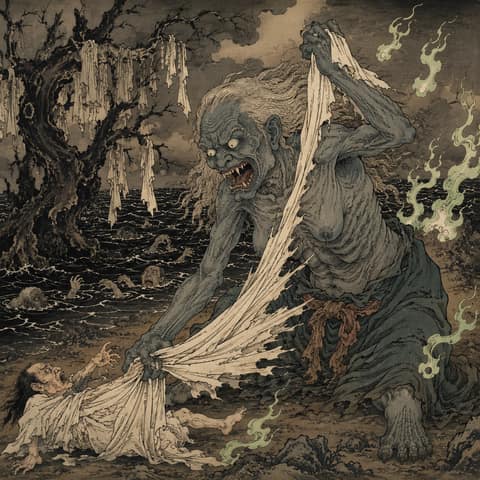
    Her Place in Religious History as an Apocryphal Figure. The base description mentioned that the *Sutra of Jizo and the Ten Kings* marks Datsue-ba's first appearance; here, we delve into her status as an "apocryphal" figure. Though apocryphal sutras (gikyo) were not officially canonized in the Buddhist Tripitaka, they were mass-produced at the crossroads of folk religion, esoteric Buddhism, and Pure Land ideology. While the *Sutra of Jizo and the Ten Kings* was based on a Chinese Tang Dynasty text, it underwent meticulous Japanese localization by introducing Datsue-ba, Kenne-o, and the Eryoju tree. Apocryphal texts should not be dismissed merely as "fake sutras"; today, they are re-evaluated as vital religious resources that absorbed the masses' thirst for a comprehensible afterlife and salvation, significantly propelling the development of medieval Japanese Buddhism. The Technology of Visualizing Underworld Judgment. The entire apparatus—Datsue-ba, Kenne-o, the Eryoju tree, the six-mon toll, the Sanzu River—is a brilliant epistemological design by ancient Buddhism to materialize and translate the abstract concept of "karma." The three-stage translation—stripping the clothes → hanging them on a tree → weighing the sin by how much the branch bends—converted "invisible karma" into "the visible bending of a tree branch." This became an indispensable visual asset for medieval Buddhist monks when conducting *etoki* (picture explaining) with narrative scrolls. Preachers from the Pure Land, Ji, and Zen sects would point to these scrolls, explaining the mechanics of judgment to the common people. This historical practice forms the very core of Japan's collective view of life and death. A Comparison of East Asian River-Crossing Underworld Views. The structure of the Sanzu River and Datsue-ba is positioned as a variant of the East Asian "river-crossing" underworld motif. Stories of the dead crossing a river exist in China and Korea, but the Japanese trinity of Datsue-ba, Kenne-o, and the Eryoju tree exhibits extraordinary originality. It is fascinating to compare this with the River Styx and the ferryman Charon in Greek mythology, serving as material to explore the anthropological universality of river-crossing underworlds. The imagination that "the dead must cross a river" shares a common matrix in human societies built around large river basins, yet each culture carved out its own unique, localized judgment machinery. The Hayarigami Phenomenon at Shoju-in: A Social History of Urban Buddhism. The massive popularity of the Datsue-ba statue at Shoju-in (Naito Shinjuku) from 1849 through the Meiji era is a crucial case study for understanding the social history of urban Buddhism in the Edo period. Edo was a world-class metropolis with over a million residents; infectious diseases like tuberculosis and cholera were rampant, meaning the urban poor lived side-by-side with the fear of sudden death. The rumor that Datsue-ba possessed the miraculous power to "stop coughs" exploded as a folk remedy for respiratory illnesses, drawing endless lines of worshippers to her wooden statue. At the end of the Edo period, Datsue-ba was not the only figure to become a *hayarigami* (fad deity); O-Take Dainichi Nyorai and Mimeguri Shrine also experienced similar booms, serving as key phenomena for deciphering the collective psychology of the masses during times of political and social turmoil. The "Cotton Hag" and the Symbolism of Cloth. The Datsue-ba statue at Shoju-in was dubbed the "Cotton Hag" because worshippers draped cotton over her head and shoulders. This presents a fascinating inversion of the symbolism of cloth for a hag whose very name means "clothes-stripper." Datsue-ba is fundamentally a monster that *takes* clothes, yet the masses reversed this by *offering* her cotton (new cloth) in exchange for curing their coughs and ensuring good health. The binary opposition of "stripping clothes" versus "offering clothes" was masterfully reconciled in folk religion. If illness is something that "strips away health," then the folk logic dictates: "I offer you clothes, so please take my illness away." The statue brilliantly completed a flexible religious metamorphosis from a strict underworld judge in Buddhist scripture to a benevolent scapegoat deity in local folklore. Late Edo Woodblock Prints and Publishing Culture. Throughout the Kaei, Ansei, Man'en, and Bunkyu eras of the late Edo period, the Datsue-ba of Shoju-in was heavily depicted in nishiki-e (color woodblock prints). Edo's publishing culture swiftly commercialized the fad deity, building an industrial structure that tightly linked plebeian faith with consumer culture. The Datsue-ba prints functioned simultaneously as religious souvenirs, proof of pilgrimage, and media for spreading information, driving the gears of Edo's urban economy. At the intersection of Buddhist philosophy, folk religion, urban consumerism, and the publishing industry, Datsue-ba transcended the realm of a mere "underworld hag" to become a master key for decoding the collective mindset of Edo society. Datsue-ba's Rebirth in Modernity. In post-war yokai literature, horror, anime, and games, Datsue-ba has been repeatedly reshaped. The apocalyptic panics, pandemic fears, and confusion regarding life and death in the 21st century share a structural resonance with the anxieties of medieval and early modern people. The visceral imagery of Datsue-ba "stripping clothes to measure sins" retains a formidable evocative power. Resurrected in the modern weird fiction of authors like Natsuhiko Kyogoku, Baku Yumemakura, and Fuyumi Ono, as well as in subcultures like the game *Okami* and the *Touhou Project*, Datsue-ba continues to serve as a vital nexus connecting the religious imagination of the past with the pop culture of modern Japan.

  • Ebisu

    Ebisu

    Legendary

    えびす

    Ebisu

    Divine Spirit / DeityHyogoHiroshima

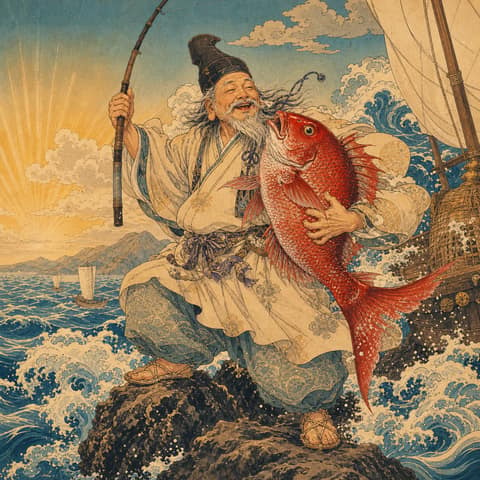
    "Ebisu" as an Ancient Japanese Belief in the Sea and the Otherworld. While the basic description touches upon the two major origin theories of Ebisu, a thorough analysis reveals the deep layers of "Ebisu" as an indigenous ancient Japanese belief in the sea and the otherworld. The fact that "ebisu" and "emishi" share the same etymology indicates that ancient Japanese collectively referred to beings arriving from "beyond, the otherworld, or boundaries" as "ebisu," finding abundance, fortune, and auspiciousness in them. As a representative example of the "visiting deity (Marebito)" belief systematized by Shinobu Orikuchi, it forms the core of widespread otherworldly and abundance beliefs in ancient Japan. The Hiruko Myth ── The Narrative Archetype of Deformity, Exile, and Rebirth. The Hiruko myth passed down in the *Kojiki* and *Nihon Shoki* (a deformed child set adrift in a reed boat who is reborn as a deity of abundance in a foreign land) is a representative example of the narrative archetype of "deformity, boundaries, and rebirth" in ancient Japan. The process by which Hiruko washed ashore in Nishinomiya and gained the reverence of fishermen to become Ebisu is the result of this universal religious motif uniquely developing in connection with Japan's indigenous marine and fishing culture. The Kotoshironushi Myth ── The Origin of Ebisu in the Land Transfer Myth. Kotoshironushi, the eldest son of Okuninushi, is a crucial deity who negotiated with Takemikazuchi on his father's behalf in the land transfer myth. The process of Kotoshironushi, who was fishing at Mihogasaki, hearing of the messenger's arrival and advising his father to accept the transfer is a religious expression of the political integration of the center (Amatsukami) and the regions (Kunitsukami) in ancient Japan. The concrete image of a fishing deity flowed directly into the later iconography of Ebisu holding a sea bream and a fishing rod. Coexistence of Two Major Origin Theories ── Hiruko and Kotoshironushi Lineages. The fact that the two major origin theories—Hiruko (Nishinomiya Shrine lineage) and Kotoshironushi (Miho Shrine lineage)—coexist and have been passed down without being completely unified demonstrates the flexibility and plurality of Japanese religious culture. The Edo period Seven Lucky Gods faith integrated both lineages under the common name "Ebisu-sama," and the common people affectionately embraced him as the "god who brings business prosperity and fortune" without strictly distinguishing between the two. Sea Bream, Fishing Rod, Smile ── Medieval and Early Modern Iconography. The modern image of Ebisu (sea bream, fishing rod, smile, ori-eboshi, kariginu) is a culmination of unique designs established in medieval and early modern Japan. (1) The sea bream is a symbol of ancient Japanese fishing, commerce, auspiciousness, and the color red. (2) The fishing rod is a symbol of ancient fishing, rituals, and the Kotoshironushi myth. (3) The smile (Ebisu face) is an expression of gentleness common to gods of fortune since the Middle Ages. (4) The ori-eboshi and kariginu visually emphasize Ebisu's uniqueness as a "fortune god unique to Japan." Toka Ebisu ── The Festival Culture of Edo Period Commoner Faith. The Toka Ebisu in Kansai (January 9-11) is a representative Ebisu festival established in the Edo period, held on a large scale at places like Imamiya Ebisu, Nishinomiya Shrine, and Kyoto Ebisu Shrine. The accompanying chant "Bring a bamboo branch for business prosperity" and the conferment of lucky charms like the fuku-zasa support the collective prosperity prayers of merchants, restaurants, and individual worshipers. Ebisu in the 21st Century ── Urban Culture and Modern Prosperity Prayers. Today, Ebisu is widely embraced as the principal deity for Japanese commerce, dining, fishing, navigation, and new business prayers. The place name "Ebisu" around Ebisu Station in Shibuya, Tokyo, originated from the YEBISU Beer factory in the Meiji era and enjoys nationwide fame as a symbolic name for modern urban culture and commercial districts. Repeatedly reshaped in subculture works, he represents a prime example of ancient marine and otherworldly beliefs transforming into a modern Japanese pop icon.

  • Fujin

    Fujin

    Legendary

    ふうじん

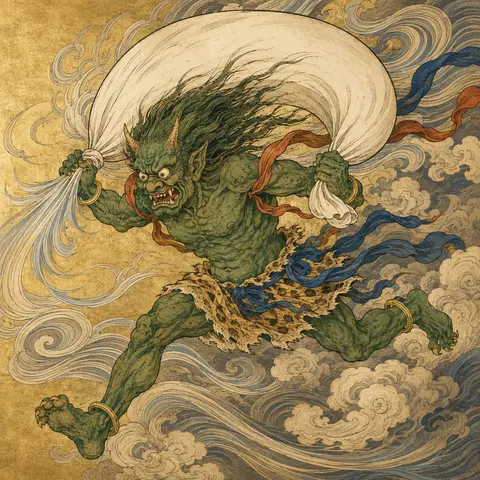
    Green Demon with a Wind Bag - Fujin

    Divine Spirits / DeitiesTatsuta Taisha (currently Sango-cho, Ikoma-gun, Nara Prefecture, the main shrine of the ancient Fujin Festival) / Kazemiya (currently Ise City, Mie Prefecture, a Betsugu of the Inner Shrine of Ise Jingu) / Kennin-ji (currently Higashiyama-ku, Kyoto City, Kyoto Prefecture, houses Tawaraya Sotatsu's "Fujin and Raijin Folding Screens")

    The true identity of Fujin is Shinatsuhiko-no-Kami (Shinatsuhiko, Shinatsuhiko-no-Mikoto), as recorded in the *Kojiki* and the *Nihon Shoki*. The first volume of the *Kojiki* (712) explicitly states in the god-birth section, "Next, they gave birth to the wind god named Shinatsuhiko-no-Kami," while in the *Nihon Shoki* (720), Volume 1, Section 5, the deity appears under multiple names such as Shinatobe-no-Mikoto and Shinatsuhiko-no-Mikoto. The divine name "Shina" (long breath) is an ancient Japanese word representing "breath/wind," and "tsu" (of) + "hiko" (male god) translates to "the male god of long breath," essentially the personification of breath and wind itself. The core of Fujin worship in the ancient state was Tatsuta Taisha (formerly Tatsuta Fujin-sha). Located in Heguri District, Yamato Province (now Tatsunominami, Sango-cho, Ikoma-gun, Nara Prefecture), it stands at a location directly hit by the strong downdraft winds (oroshi) blowing from the Ikoma Mountains into the Yamato Basin. The *Nihon Shoki* already mentions worshiping the "Fujin of Tatsuta" in the year 675 AD (Emperor Tenmu's 4th year). During the Ritsuryo period, the "Tatsuta Fujin Festival" was held by imperial decree every April (praying for favorable winds before the Niiname harvest festival) and July (before the typhoon season) as one of the Jingikan's Four Seasons Festivals. It was officially registered in the *Engishiki* (927) deity register as the Tatsuta Shrine Four Pillars (with Amenomihashira-no-Mikoto and Kuninomihashira-no-Mikoto as primary deities) and was highly regarded in state rituals as the wind god of bountiful harvests. From the Middle Ages, Fujin worship was succeeded by Kazemiya (Kazahinomi-no-miya) at Ise Jingu, Suwa Taisha (which enshrines Takeminakata but also holds Fujin aspects), Echizen Tsurugi Shrine, and Sada Shrine in Izumo. Iconographically, Tawaraya Sotatsu's "Fujin and Raijin Folding Screens" (circa 1620s, formerly at Kennin-ji in Kyoto, designated a National Treasure in 1952, currently deposited at the Kyoto National Museum) is the definitive work. On the two-panel, double-screen golden background, the Wind God on the right (a green demon wearing only a tiger-skin loincloth, carrying a wide-open wind bag on his shoulders) and the Thunder God on the left (a white demon carrying a circle of drums) face off, creating tension in the empty space between them. This composition is considered the pinnacle of the early Edo Rimpa school. Later, painters like Ogata Korin (1700s) and Sakai Hoitsu (1800s) left behind faithful copies of Sotatsu's original "Fujin and Raijin Folding Screens" (Korin's at the Tokyo National Museum, Hoitsu's at the Idemitsu Museum of Arts), which irreversibly cemented the standard imagery for Fujin in Japan. The wind bag held by Fujin traces its origins to the iconography of the Hellenistic Boreas (god of the North Wind). In ancient Greece, Boreas was depicted holding a wind bag open over his shoulders. Following Alexander the Great's eastern campaigns, this image was adopted into the Buddhist art of Gandhara in Central Asia, and it traveled along the Silk Road through China (as seen in the Fujin statues at the Mogao Caves in Dunhuang) and Korea, finally reaching Japan. Vāyu (Fujin) in Sanskrit belongs to the same lineage and is deified as "Futen" within the Twelve Devas of Esoteric Buddhism. Sotatsu's rendering of the wind bag represents the unique Japanese culmination crystallized at the very end of this long transmission. In folk religion, Fujin clearly displays ambivalent divine traits. The aspect of a calamitous deity (Akufujin) who summons typhoons, autumn gales, and storms coexists with the aspect of a benevolent deity (Zenfujin) who presides over the favorable winds sweeping across the fields during the wheat and rice harvests. Rituals embodied a dual structure of both pacifying and praying to these two sides. During the Edo period, the "sending away the god of colds" (when a cold circulated, a straw doll fashioned as Fujin, holding a straw hat and a lantern, was driven out to the village edge or a riverbank to the sound of gongs and drums) was widely practiced across the Tohoku, northern Kanto, and Hokushin'etsu regions, revealing his aspect as a god of pestilence personifying influenza. This is also important as the prehistory of modern public health awareness. In modern literature, Kenji Miyazawa's *Matasaburo of the Wind* (1934) adapted the legend of the "Wind Saburo" (wind-god boy tales passed down near Morioka and the Sanriku coast) in the Tohoku region, making the lineage of wind-child worship known nationwide. Post-war, the contrasting pairing of "Fujin and Raijin" became entrenched in games, anime, and manga (e.g., the Wind Fiend in Square's *Final Fantasy* series, themes in Studio Ghibli's *The Wind Rises*, various wind god summons), carrying the iconographic lineage that began with the National Treasure "Fujin and Raijin Folding Screens" into contemporary subculture.

  • Fukurokuju

    Fukurokuju

    Legendary

    ふくろくじゅ

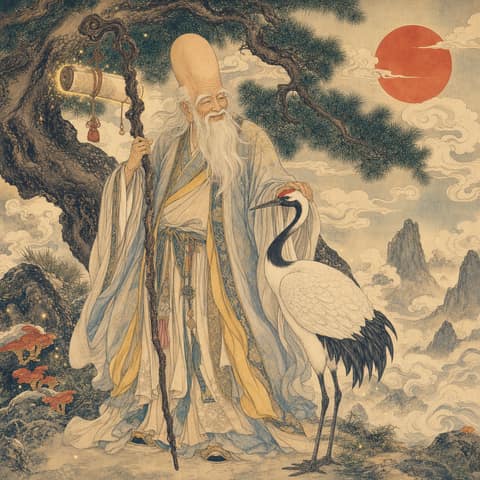
    Three-Stars-in-One Long-Headed Deity, Fukurokuju

    Divine Spirit / DeityChina (Daoist Three Star Belief) / Introduced in the Muromachi Period / Shichifukujin Pilgrimage Sites in Kanto & Kinki (Zen & Obaku Sect Temples)

    Fukurokuju is the anthropomorphic deity that integrates the three Daoist stars of China (the Gods of Fortune, Wealth, and Longevity) into a single body. Among the three, the Star of Longevity (the Old Man of the South Pole = Canopus) is an ancient astronomical deity recorded in the astronomical chapters of the "Records of the Grand Historian" and the "Book of Jin," and a year in which it could be seen was said to augur world peace. The Star of Fortune was associated with Jupiter, and the Star of Wealth with the Wenchang star of the Big Dipper. Although each initially had its own independent following, the "Sanxingtu" (Three Stars Image), depicting them together, was established in the Song dynasty and popularized as New Year decorations for the masses throughout the Ming and Qing dynasties. The singular deity Fukurokuju is the anthropomorphized amalgamation of these three stars. Multiple origin tales coexist, including the theory that he is the incarnation of the Song Daoist Tiannanxing, and the theory that he is the incarnation of the Old Man of the South Pole himself. His iconography depicts him as short in stature with an unusually elongated head, bearing a long white beard, attaching a scroll to the head of his staff, and accompanied by a crane or turtle. This is the epitome of Daoist iconography: the "short body and long head" are physical auspices of long life, the scroll signifies the mastery of the Dao, and the crane and turtle represent auspicious beasts of longevity. Introduced to Japan in the late Muromachi period (15th century) likely through Zen monks' travels to China and imported Daoist-Buddhist paintings, the Zen and painter-monk circles of the Higashiyama culture period reorganized him into the "Seven Gods of Fortune and Virtue." By combining the already indigenized Ebisu, Daikokuten, Bishamonten, and Benzaiten with the fellow imported deities Hotei and Jurojin, they grouped them as the seven fortune deities styled after the Seven Sages of the Bamboo Grove—the prototype of the current Seven Lucky Gods. Fukurokuju's inherent dilemma lies in the problem of being the same entity under a different name as Jurojin; since both are incarnations of the Old Man of the South Pole, theories considering them the same deity have existed since ancient times. Although early modern popular encyclopedias like Kaibara Ekken's "Yamato Koto Hajime" list them as distinct entities, irregular Seven Lucky Gods variations replacing Jurojin with Kisshoten, Fukusuke, or Inari also circulated in Edo period Takarabune paintings. Because Fukurokuju simultaneously presides over three virtues (descendants, wealth, and longevity), he was favored for family celebrations by merchants and samurai. For longevity prayers by the clergy, however, Jurojin was often chosen. Their division of roles loosely converged in the late early-modern period as "the comprehensive fortune deity of the secular world (Fukurokuju)" and "the ascetic deity of longevity (Jurojin)."

  • Gashadokuro

    Gashadokuro

    Legendary

    gah-shah-doh-KOO-roh

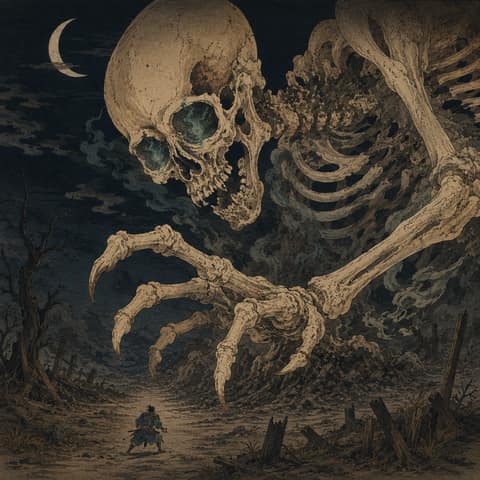
    Great Skeleton of Assembled Vengeful Spirits: Gashadokuro (Complete Memorial Version)

    Spirit / GhostFictional Origin (Created in the mid-Showa period; a giant skeleton figure)

    This is an interpretation of the "most terrifying nocturnal great anomaly," born from the countless remains of those dead by war or starvation, their intense lingering attachments to this world, and the despair of being left unappeased, which have solidified in the depths of darkness. The Gashadokuro in this version transcends the bounds of a mere giant bone monster; it is depicted as a moving disaster itself—a physical manifestation of the "weight of death" and the "sorrow of the unmourned dead" that human society has concealed. Its appearance is so immense that when it stands, it blocks even the moonlight, entirely covering deep night fields and deserted graveyards in a giant black shadow. Despite lacking muscles or skin, countless grudges act as a magical force that binds the bones together, producing astonishing physical strength. The omen of its approach is an ear-splitting friction sound of giant bones going "gasha, gasha," echoing alongside a chilling aura of death that freezes the surrounding air. When this sound is heard, escaping is said to be almost impossible. The Gashadokuro uses no magic or sorcery whatsoever. Instead, it attacks with extremely primitive and pure violence, nonchalantly snatching living humans with its giant, tree-trunk-like bony arms, lifting them directly to its massive jaws, and crushing their heads alive to slurp their fresh blood. However, behind that terrifying cruelty lies a fundamental "hunger and thirst (the agony of a hungry ghost)" that can never be satisfied. Every single bone that makes up the Gashadokuro belongs to a helpless human who perished in loneliness, begging for water and food. Their pursuit of living blood is the flip side of their thirst for life; yet, no matter how much blood they drink, it simply spills through the gaps in their bones, so their hunger is eternally unhealed. Therefore, using "physical attacks" with swords, bows, or modern weaponry against this great anomaly is almost entirely meaningless. This is because the opponent is merely an aggregation of already-dead bones. Even if one arm is chopped off, bones carrying other grudges will quickly gather to seamlessly repair it. If there is a single means to "vanquish" this tragic monster, it is not violence but "compassion (kuyo/memorial service)." Only through earnest sutra chanting by a high priest and the Buddhist requiem ritual of respectfully returning the remains to the earth can their raging grudges be pacified, returning the bones to ordinary skeletons. It could be said that this questions the responsibilities the surviving must fulfill toward the dead.

  • Hachirotaro

    Hachirotaro

    Legendary

    Hachirotaro

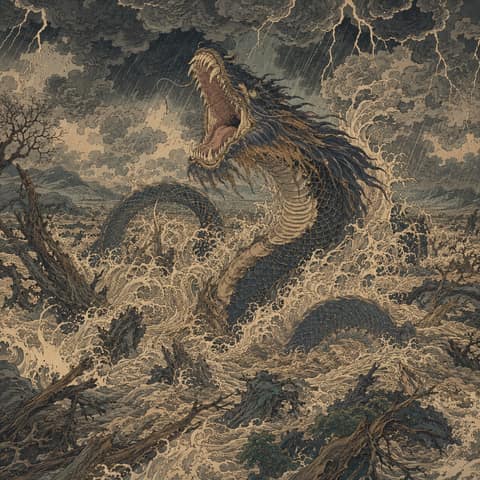
    Hachirotaro, Dragon God of the Three Lakes

    Water YokaiAkita

    The core of Hachirotaro's story lies in 'transformation brought about by breaking a rule' and 'resurgence after defeat.' The minor taboo of hoarding three char invited an uncontrollable thirst, turning a human into a dragon. This karmic retribution has been passed down in the hunting and fishing culture of the Tōhoku region as a warning against monopolizing nature's bounty. Although Hachirotaro claimed Lake Towada as a dragon, he lost it in a struggle against Nansobō. Yet, he went on to carve out a new body of water, Hachirōgata, to rule. This narrative arc—where the vanquished becomes the sovereign of a new realm—binds the vast geography spanning the three lakes into a single epic. His union with Princess Tatsuko and his seasonal migrations offer a mythic explanation for the real natural phenomenon of Hachirōgata freezing while Lake Tazawa remains unfrozen. It reveals how the people interpreted the physical behavior of the lakes through the lens of a dragon god's romance.

  • Hachishakusama

    Hachishakusama

    Legendary

    Hasshakusama

    2.4-Meter White Woman - Hachishakusama

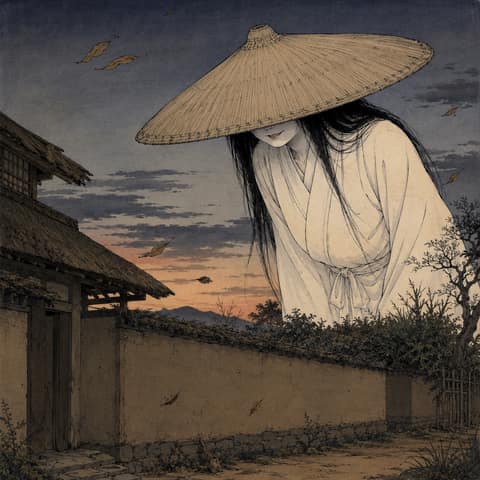
    Spirit / GhostInternet urban legend originating from 2ch in 2008

    Sharekowa Thread Culture and "Forum-Born Horror". While the basic overview traces her origins, a deeper dive reveals why Hachishakusama could only be born on 2ch in 2008. In the late 2000s, the 2ch Occult board hosted a long-running thread series titled "Let's gather stories so scary you'll die," fostering a unique culture where users anonymously posted original or secondhand ghost stories. In this space, dubbed "Sharekowa," stories were judged not just on scariness, but on narrative pacing, folkloric foreshadowing, and overall structural completion. Hachishakusama was posted as a "series," split across multiple posts, captivating readers with its concise yet meticulously crafted narrative. This became the quintessential "literary horror of the internet age," setting it apart from traditional oral ghost stories. Intentional Appropriation of Folklore. The Hachishakusama legend incorporates four distinct folkloric elements: (1) Jizo as a boundary guardian, (2) warding via salt piles in the four corners of a room, (3) barricading until 7:00 AM (the passing of the demonic hour between the Ox and Tiger hours), and (4) protective amulets and Buddhist prayers. These are classic motifs found in folk magic texts (purification, pacification, warding) since the Edo period. The author didn't just write a scary story; they intentionally synthesized folklore to manufacture authenticity. Whereas traditional legends inherit folklore unconsciously, Hachishakusama treats folklore as an intellectual "resource," marking a turning point in how internet-era legends are generated. The Phonetics of the "Po... Po..." Laugh. While her height is her primary visual marker, her auditory signature is the bizarre onomatopoeic laugh, "Po... po... po... po...". This sound consists of bilabial plosives (the 'p' sound) repeated four times. Unlike the fricative sounds of normal human laughter ("ha ha", "fu fu"), it sounds mechanical or toy-like. Though the author never explained this choice, dehumanizing her laugh creates an uncanny "looks human but isn't" effect. In fan culture, this rhythm is frequently parodied in sound MADs and song covers, turning it into a unique cultural icon that straddles the line between terror and comedy. The Structure of the "Targeting" Curse. Hachishakusama does not attack immediately upon encounter; instead, she uses a delayed curse mechanic: "being targeted" leads to "death within days." This parallels the ancient Japanese Goryo (vengeful spirit) beliefs and the medieval Mononoke tradition of stealing souls or essence over time. Her terror stems from prolonged psychological pressure rather than immediate physical violence. The original narrative's focus on a "seven-day barricade" effectively dramatizes this delayed curse structure. Global Spread and "J-Horror Folklore". Since the late 2010s, Hachishakusama has been translated and shared on Reddit's r/nosleep, English horror blogs, and SCP Foundation spin-offs, becoming shared knowledge in the English horror community. She is frequently listed alongside Sadako (*Ring*, 1991) and Kayako (*Ju-On*, 2002) as Japan's premier "tall female horror icon," proving that the terrifying frontiers opened by post-war Japanese cinema are now being inherited by internet urban legends. Visual Adaptations and Modern Legacy. Early visual adaptations appeared in the 2010s as web dramas and short films. This escalated to full theatrical and streaming releases with Jiro Nagae's 2023 film *Resort Baito* (adapting another 2009 Sharekowa legend with Hachishakusama elements) and Ryujin Onizuka's 2024 *Sealed Video 16: The Curse of Hachishakusama*. Nagae's specialization in adapting 2000s 2ch legends (e.g., *Kisaragi Station* in 2022, *The True Samejima Incident* in 2020) cements Hachishakusama's firm position within the contemporary genre of "internet legend cinema."

  • Hanako-san of the Toilet

    Hanako-san of the Toilet

    Legendary

    といれのはなこさん

    The Girl in the Third Stall of the Third-Floor Girls' Bathroom, Hanako-san

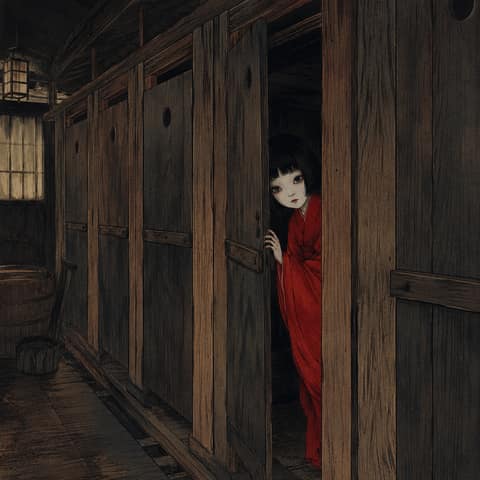
    Spirit / Ghost1980s school ghost stories, popularized nationwide by Toru Tsunemitsu's "School Ghost Stories" in 1990

    Post-war School Architecture and the "Closed Water Space". While the basic description traced literary first appearances and nationwide distribution, this deep dive explores why the combination of "school, bathroom, and young girl" became the core of modern ghost stories. Post-war Japanese elementary school architecture standardized around three-story reinforced concrete buildings starting in the 1950s. The fixed layout placed the staff room on the first floor, upper-grade classrooms on the third floor, and bathrooms at the ends of each floor. The third-floor bathroom is furthest from the teachers' watchful eyes, easily becoming an empty space outside of recess. Here, the boundary between the ordinary and the extraordinary runs deep. For children (especially girls), the bathroom is a place where physical vulnerability is exposed, and simultaneously a place to be alone within a communal space. Toru Tsunemitsu positioned this "periphery of school space" as the geographical foundation of the Hanako-san ghost story. The Code of the Number "Three". The triple "three"—the third floor, the third door, and three knocks—is not a coincidence. It can be read as a carryover into modern ghost stories of the "threshold number three" common in Japanese folkloric summoning rituals (e.g., seven days of the ox-hour visit, three calls, walking around a grave three times). Children unconsciously reenact this traditional summoning structure within the school. This is why playing Hanako-san functions not just as "mere play" but as a pseudo-summoning ritual. It has also been pointed out that the ritualistic format of the Kokkuri-san (ouija board) game, popular in elementary schools in the 1970s, was continuously inherited by the Hanako-san game in the 1980s. The Color Red and the Lineage of "Red Mantle". Hanako-san is often depicted wearing a red skirt or red overalls. In post-war Japanese depictions of young girls, the color red has three layers of meaning: (1) physical realities like blood or menarche; (2) a sense of foreignness that deviates from standard school uniform colors; and (3) a blending with the pre-war ghost story "Red Mantle" (a voice asking whether you want blue or red paper). The Red Mantle ghost story, said to have originated in Kobe in 1939—a voice in the bathroom asking if you want red or blue paper—has a sisterly relationship with Hanako-san, showing the continuity of ghost story lineages from pre-war to post-war eras. The fact that the Red Mantle elements are strongly mixed into Hanako-san variations in Hokkaido and Tohoku is also evidence that the echoes of pre-war ghost stories transitioned into post-war school buildings. The Anonymity of the Name "Hanako". Hanako-san bears one of the most common Japanese female names from the Showa era, but her specific life history is never told—this allows her to function as a collective pronoun for "countless nameless schoolgirls." Theories of her death by war, earthquake, or murder all lack a specific individual identity, and can even be read as a personification of "the very history of the school space swallowing up young girls." Folklorist Noboru Miyata argued in "Folklore of Yokai" (Iwanami Shoten, 1985) that post-war school ghost stories serve the function of "the community re-enshrining the nameless dead after the fact." Details of Media Expansion in 1994-95. In the 1994 Kansai TV omnibus "School Ghost Stories," "Hanako-san" was produced as a single episode, and it was also included in the August Pony Canyon VHS "School Ghost Stories: Truly Happened!!". Shochiku's "Hanako-san of the Toilet" (directed by Joji Matsuoka, starring Etsushi Toyokawa), released on July 1, 1995, was a mystery-horror film combining a serial murder case with the Hanako-san legend. In contrast, Toho's "School Ghost Stories" (directed by Hideyuki Hirayama), released on July 8, was a juvenile adventure horror film. The styles of these two films, running side-by-side that summer, stood in sharp contrast. Toho's version went on to produce sequels in 1996, 1997, and 1999, grossing over 3 billion yen in total box office revenue across the 4-part series. Modern Toilet-Bound Youth and the Layering of Secondary Works. AidaIro's "Toilet-Bound Hanako-kun" (serialized from 2014) has surpassed 20 million copies, receiving a TV anime adaptation in 2020 and a stage play in 2022. The "Hanako-kun" here is a cheerful, caring, blonde earthbound spirit, completely detached from the original image of the girl ghost. For Generation Z, "Hanako" is primarily recognized as a cute male character rather than a scary ghost girl—an excellent example of the modern phenomenon where a ghost story's secondary creation overwrites the primary legend itself.

  • Hiko-san Buzenbō

    Hiko-san Buzenbō

    Legendary

    Hiko-san Buzenbō

    Chief of the Tengu of Kyūshū — Hiko-san Buzenbō

    Mountain & Wilderness SpiritsFukuoka

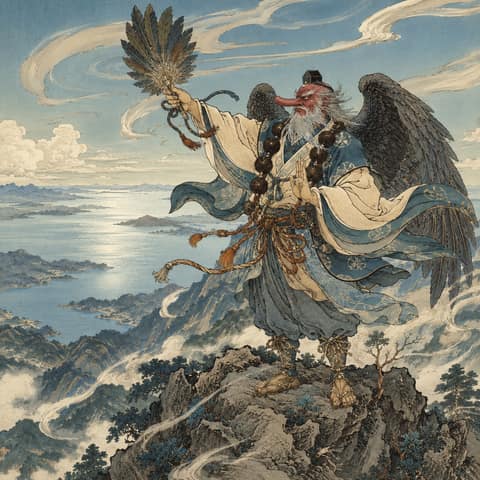
    The key to reading Hiko-san Buzenbō lies in Hikosan—the vast sacred site that is one of the three great centers of Shugendō in Japan—and in the tengu's character of two faces, reward and punishment. The history of Hikosan Shugendō issues from the Nara-period monk Hōren. Taking as founder this monk, whom the Shoku Nihongi records as having been granted forty chō of field in Buzen Province in the third year of Taihō (703), Hikosan grew into a great center of Shugendō ranking with the Dewa Sanzan and Ōmine. The name of Buzenbō appears with certainty in the Kamakura-period engi the Hikosan Ruki (1213). This work likens the forty-nine grottoes bored into the peaks of Hikosan to Miroku's Tosotsu Heaven and made the eighteenth the "Buzen-kutsu," the seat of Buzenbō. This very system of grottoes is the matrix of the faith in Buzenbō as chief of the tengu of Kyūshū. The Edo-period scale of the "Three Thousand Eight Hundred Bō of Hikosan" tells of this sacred site's prosperity. What characterizes the tengu Buzenbō is the sternness of his reward and punishment. As the history of Takasumi Shrine transmits, upon those of greedy and evil heart he carries off children and sets fire to houses in chastisement. Conversely, the wishes of the upright and deeply devout he hears and grants, and them he guards. These two faces of reward and punishment symbolize, as a tengu's judgment, the strict precepts that a Shugendō mountain imposes and the grace shown to those who keep them. The dread of a child-snatching tengu and the faith of parents praying for their children's safety were the front and back of one and the same Buzenbō. The separation of Shintō and Buddhism in the first year of Meiji and the prohibition of Shugendō in Meiji 5 (1872) scattered the yamabushi of Hikosan and dismantled the world of the three thousand eight hundred bō. The institution of Shugendō was lost, but the tengu faith of Buzenbō lives on at Takasumi Shrine; chanted in the Muromachi Noh play Kurama Tengu and standing among the forty-eight tengu of the Tengu-kyō as the great tengu of Kyūshū, he is still feared as one who sits upon the peak of Hikosan. Chigiri Kōsai of tengu scholarship, too, placed him within the system of the great tengu of the many mountains.

  • Hira-san Jirōbō

    Hira-san Jirōbō

    Legendary

    Hira-san Jirōbō

    The Second-Seat Great Tengu — Hira-san Jirōbō

    Mountain & Wilderness SpiritsShiga

    The key to reading Hira-san Jirōbō lies in the meaning of the rank "second seat, next after Tarōbō," and in the medieval sources particular to Mt. Hira. In the tengu hierarchy, Jirōbō is held to be the second after Atago-san Tarōbō. This ordering appears almost in common both in the forty-eight tengu of the Tengu-kyō and in the Eight Great Tengu framework, and the very names Tarōbō and Jirōbō derive from the ordinals "one" and "two." Rather than being told of alone, Jirōbō appears more often paired with Tarōbō as the twin pillars of the tengu world. The firm ancient layer of Hira's tengu lies in the Hirasan Kojin Reitaku (by Keisei, 1239). This dialogue, in which the aged tengu of Mt. Hira answers Keisei's questions and speaks of the tengu world and the afterlife, is a primary source particular to Mt. Hira, showing that Hira held a firm place as a tengu sacred mountain in the medieval age. Here one common confusion should be set right. Jirōbō is often bound to the tale of the Chinese tengu Chira Eiju (= Zegaibō), but the original story in the Konjaku Monogatarishū, Book 20 runs on the plot of a tengu of Shintan defeated by a monk of Mt. Hiei, and does not name Mt. Hira as the seat of the Japanese tengu. Making Chira Eiju the tengu of Hira is a later arrangement; the tradition proper to Mt. Hira itself should rather be sought in the aforementioned Kojin Reitaku. The tale of relocation from Mt. Hiei is likewise understood not as historical fact but as a later narrative telling the changeover of a sacred mountain's leadership. Based at Mt. Hira, the sacred peak of Ōmi, fearing Buddhist law while testing human conceit—this coexistence of modesty and fortitude is the image of Jirōbō. Chigiri Kōsai of tengu scholarship, too, set Jirōbō in the place next after Tarōbō.

  • Hotei

    Hotei

    Legendary

    ほてい

    Incarnation of Maitreya, the Laughing Monk, Hotei

    Divine Spirit / DeityYuelin Temple, Fenghua County, Mingzhou (now Fenghua District, Ningbo, Zhejiang, China) / Introduced via Zen Buddhism in the Kamakura period / Shrines and temples of the Seven Lucky Gods pilgrimage in Kanto and Kinki

    The origin of Hotei is the historical Zen monk Qici (died 917) of the late Tang and Five Dynasties period. Fascicle 27 of the *Jingde Record of the Transmission of the Lamp* (1004) compiled by Daoyuan of the Northern Song provides an independent biography of him, which serves as the fundamental source of the Hotei lore. He is also recorded in fascicle 21 (Section on Miracles) of the *Song Biographies of Eminent Monks* (988) compiled by Zanning, which notes his origin as Fenghua County, Mingzhou (now Fenghua District, Ningbo City, Zhejiang Province), but reports his secular surname and birth year as unknown. His physical appearance was described as short and stout with a bulging belly and deep wrinkles on his forehead. He always roamed the streets carrying a cloth sack (a monk's alms bag or large knapsack), remained warm even when lying in the snow, stored whatever food he begged for in his sack, and was skilled in divination and prophecy. It is said that in the third month of the second year of Zhenming of the Later Liang dynasty (916), he sat on a rock at Yuelin Temple in Fenghua and passed away after reciting the verse: "Maitreya, the true Maitreya, present in billions of forms, continually manifesting to the people of the time, yet the people of the time do not recognize him." Based on this deathbed verse, he became revered as an incarnation of Bodhisattva Maitreya. In subsequent Chinese Buddhism (especially Zen), the image of Hotei as Maitreya became firmly established, giving rise to the custom of enshrining a large-bellied seated Maitreya statue (Maitreya in the form of Hotei) at the main gates and Heavenly King Halls of temples. From the Song dynasty onwards, he was overwhelmingly favored as a subject of ink painting in China, heavily depicted by monk-painters of the Yuan dynasty (such as Yintuoluo and Meng Yujian) and Zen artists. His introduction to Japan accompanied the arrival of Zen Buddhism during the Kamakura period. Monks who traveled to Song and Yuan China brought back Zen paintings (by artists like Muqi and Yintuoluo), and Japanese monk-painters of the late Kamakura and Nanboku-cho periods (such as Mokuan, Ryozen, and Mokudo Shoei) emulated these to establish a lineage of Hotei imagery unique to Japan. By the late Muromachi period, when the Zen monks and artists of the Higashiyama culture (such as Noami, Soami, and Sesshu) formalized the Seven Lucky Gods motif, they incorporated Hotei alongside the previously imported Fukurokuju and Jurojin, combining them with the already localized Ebisu, Daikokuten, Bishamonten, and Benzaiten to form the "Seven Deities of Fortune and Virtue." Entering the Edo period, he became deeply entrenched among the common people as a member of the Seven Lucky Gods Treasure Ship prints and New Year's first-dream pictures, frequently appearing in the woodblock prints of Katsushika Hokusai, Utagawa Kuniyoshi, and Tsukioka Yoshitoshi. His iconographic features—the bulging belly, large sack, and hearty laugh—symbolize in Chinese tradition that "obesity = broad tolerance and a well-rounded personality" and "large sack = the virtue of endlessly giving what is needed despite owning nothing." He represents a unique archetype of "Zen non-attachment as a blessing," distinct from the Daoist deities of longevity (Fukurokuju, Jurojin), martial deities (Bishamonten), and indigenous gods (Ebisu, Daikokuten). In the various Seven Lucky Gods pilgrimages of Edo/Tokyo (such as Yanaka, Asakusa, Nihonbashi, and the Sumida River), the pilgrimage sites are often Zen, Obaku, and Soto sect temples, which have drawn profound devotion from commoners praying for fertility, business prosperity, marital harmony, and good fortune through laughter. Furthermore, Yuelin Temple still exists today in the Fenghua District, and is honored as the "Ancestral Court of Maitreya," being the site of Hotei's birth and passing.

  • Ibaraki-dōji

    Ibaraki-dōji

    Legendary

    ee-bah-RAH-kee DOH-jee

    Ibaraki-dōji

    Half-Human BeingsOsakaNiigata

    An interpretation shaped by medieval war tales, otogizōshi storybooks, and early modern theater. As Shuten-dōji’s foremost lieutenant, Ibaraki-dōji held Mount Ōe and was routed by Raikō’s ruse. Later tales tell of Watanabe no Tsuna cutting off and reclaiming an arm at Ichijō Modoribashi or at Rashōmon. Accounts vary on birthplace and even gender, with traces in Settsu and Echigo traditions. This version follows the most widely circulated storyline in the sources and avoids embellishment.

  • Iizuna Saburō

    Iizuna Saburō

    Legendary

    Iizuna Saburō

    The War-God Who Rides a White Fox — Iizuna Saburō

    Mountain & Wilderness SpiritsNagano

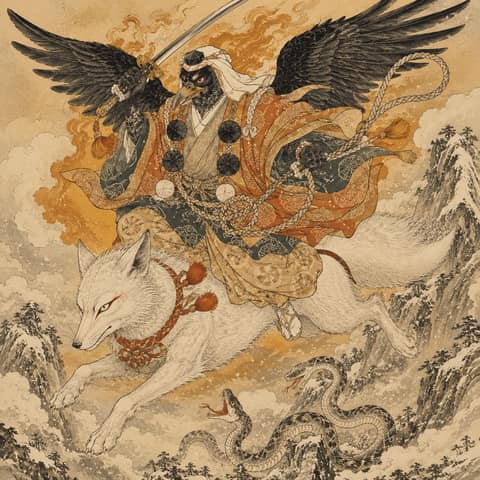
    To read Iizuna Saburō, one must overlay three strata: the syncretic honzon-image of "Izuna Gongen," the heterodox art of the "Izuna method," and the devotion of the Warring-States commanders. The antiquity of this faith is backed by the texts. The Asabashō of the first year of Kenji (1275) carries the name of Mt. Iizuna and its founding ascetic; the Togakushi-san Kenkō-ji Ruki (1458) records "Izuna Saburō" and "the third tengu of Japan"; the Iizuna-san Meguri Saimon (1546) gives the origin as the Chira Tengu come from Tenjiku; and the Iizuna-san Ryaku Engi transmits the honji-butsu and the lineage of the Sennichi-dayū. From Kamakura to Edo, it is a faith handed down in layers. The iconography of the honzon is profoundly distinctive. A crow-tengu holding a sword and a rope rides upon a white fox, with a snake often coiling about the fox. Its honji-butsu is expounded now as Fudō Myōō, now as Dakini-ten, varying by source. It is precisely this composite character—"tengu, fox, Fudō and Dakini" joined in a single body—that is the reason Izuna Gongen, surpassing a mere mountain tengu, became a point of concentration of esoteric ritual power. At Takaosan Yakuō-in, the Iizuna Shrine of Shinshū, Jinya-ji on Mt. Kano in Chiba and elsewhere, the faith is especially deep in Kantō and to the north. The "Izuna method" is the practical face of this ritual power. This sorcery, which employs tengu and kuda-gitsune to heal illness and, by possession, to deliver oracles, was counted a heterodox art alongside the Atago Shōgun-hō and the Dakini-ten-hō, and those who wielded it were called Izuna-tsukai. The folk belief that one kept and employed kuda-gitsune within a bamboo tube made the very name "Izuna" a byword for witchcraft. And it was the devotion of the warrior houses that raised Iizuna Saburō to a war-god. It is famous that the crest of Uesugi Kenshin's helmet was an image of Izuna Gongen; there is also the case of Takeda Katsuyori granting the name Nishina to the adopted son of the Sennichi-dayū, and commanders such as Hosokawa Masamoto who practiced the Izuna method itself. As a god who governs victory in war, Iizuna Saburō is, even among the forty-eight tengu of the Tengu-kyō, the seat most bound to this-worldly benefit. Chigiri Kōsai of tengu scholarship placed this many-sided Iizuna Saburō within the system of the great tengu of the many mountains.

  • Ikiryō (Living Spirit)

    Ikiryō (Living Spirit)

    Legendary

    ee-kee-RYOH

    Ikiryō

    Ghosts & SpiritsAcross Japan

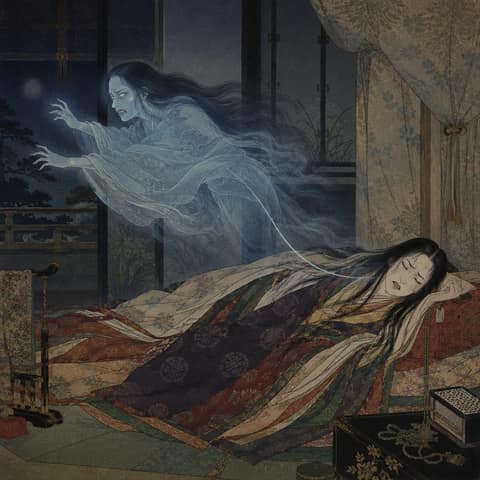
    The image of the ikiryō holds two faces: a curse born of resentment, and gentler visitations tied to parting before death or to acts of gratitude. In Heian beliefs, overpowering thought left the body as a “shadow,” appearing at bedchambers, ox-drawn carriages, or gates. In the medieval and early modern eras, scenes witnessed in dreams, will-o’-the-wisps, and flying heads were taken as proof of the soul’s separation. In medical views it was classed as a disorder of the departing soul or of the shadow, with reports of people seeing their own double. The cursing rite of the Hour of the Ox is often linked as a willed sending of intent by the living, though not identical. Regional lore varies in name and form, with some places recording it as a footfall-making human shadow. Overall, it is understood as the coagulation of thought taking shape, a spiritual action of the living set against the dead.

  • Inari

    Inari

    Legendary

    いなりのかみ

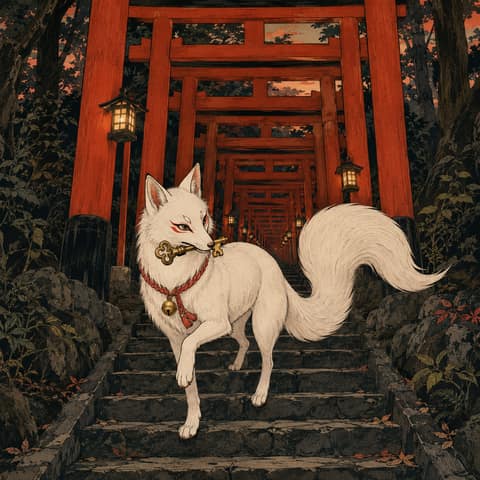
    Inari, King of Faiths for Bountiful Harvests and Prosperous Business

    Deity / Divine SpiritKyoto

    The principal deity of Inari, Ukanomitama-no-Kami (also known as Ukanomitama-no-Mikoto), is a goddess of grain and food appearing in the first volume of the "Kojiki" (712). The name combines "Uka" (ancient word for food) and "Mitama" (spirit), preserving its simple folk origin as the "personification of spiritual power dwelling in grains." The head shrine, Fushimi Inari Taisha (Mount Inari, Kii County, Yamashiro Province; present-day Fushimi Ward, Kyoto), originated on the first Day of the Horse in February 711. It was founded when Hata-no-Irogu, head of the Hata clan (an immigrant clan who pioneered the Kyoto basin and Fushimi area), shot an arrow at a target made of mochi (rice cake). In a miraculous event, the mochi transformed into a white swan, flew away, and sprouted rice plants where it landed on the mountain peak, prompting the enshrinement of three deities (according to a lost text of the "Yamashiro no Kuni Fudoki"). The three deities were Ukanomitama-no-Okami (the main deity), Satahikoo-no-Okami, and Omiyanome-no-Okami; later, Tanaka-no-Okami and Shi-no-Okami were added to collectively form the five Inari Okami. For its rapid expansion in faith after the Heian period, its connection with To-ji Temple, the head temple of Shingon Esoteric Buddhism, played a decisive role. Starting with the legend of Kukai seeking Inari's cooperation when constructing To-ji, Shingon Buddhism and the Inari faith became deeply intertwined, leading to a syncretism with the Indian esoteric female demon Dakini-ten (Ḍākinī). Originally a "man-eating female yaksha," Dakini-ten softened as she passed through Tibet and China to Japan, becoming depicted as a "celestial maiden riding a white fox," and was eventually identified with Inari. This established a unique lineage of Buddhist Inari (Toyokawa Inari/Myogon-ji founded in Aichi in 1441, Saijo Inari/Myokyo-ji founded in Okayama in the 1300s, etc.), coexisting with the Shinto Inari (Fushimi lineage). During the Edo period, a massive boom occurred where people of all classes—samurai, townspeople, and farmers—enshrined Inari in small shrines on their properties as household deities. It became so widespread that a famous senryu poem listed "Iseya, Inari, and dog poop" as the most commonly seen things in Edo. Modern Inari shrines are estimated at about 32,000 (2,900 head shrines + branch shrines + household shrines), making it Japan's largest belief system by number of shrines. The relationship with foxes requires careful attention. While Fushimi Inari Taisha officially clarifies that "the fox is a divine messenger (familiar) of the Inari deity, not the deity itself," in folklore, many regions treat the fox itself as the Inari deity. This "fox deity faith" from the Edo period onward remains the mainstream of folk belief today. The messenger foxes are called "Byakko" (white foxes) and are traditionally depicted holding one of four items in their mouths: a jewel, a key, a rice sheaf, or a scroll. The jewel represents divine virtue, the key opens the spiritual granary, the rice sheaf represents grain, and the scroll signifies Buddhist scriptures. The main prayers are for bountiful harvests, prosperous business, family safety, fire prevention, and warding off epidemics. Especially since the Edo period, as it became a merchant household deity, prosperous business and financial fortune have become the primary focus. Today, this practice has spread to corporate and storefront altars (even small shrines on commercial building rooftops) and roadside shrines, embedding itself deeply in Japanese society across the four tiers of shrines, temples, residences, and corporations. The annual Hatsu-uma Matsuri (Festival of the First Day of the Horse) in February marks the descent of the Inari deity and is celebrated grandly at Inari shrines nationwide.

Showing 1 - 24 of 91 yokai