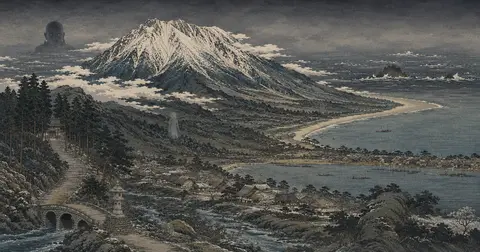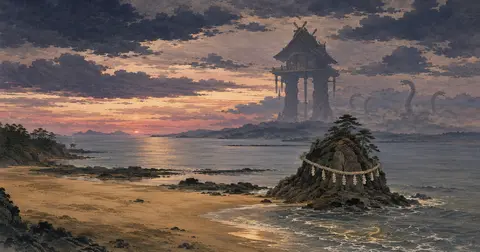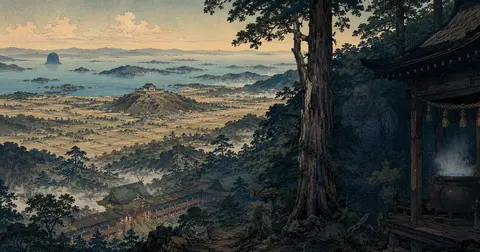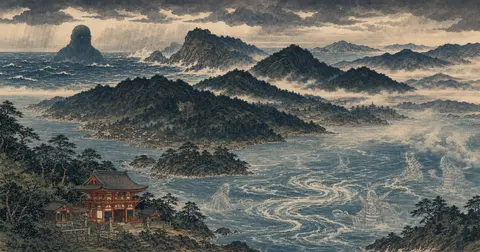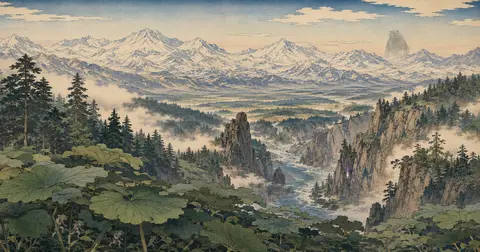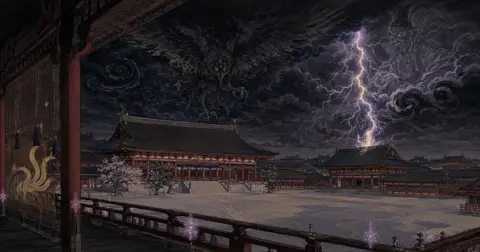
Hiroshima Prefecture embraces both the tranquil waters of the Seto Inland Sea and the deep valleys of the Chugoku Mountains within its borders. Under the ancient Ritsuryo system, its territory was divided into Aki Province in the west and Bingo Province in the east, and this geographical duality has survived to the present day as a duality in its yokai culture. On the coastal side floats Itsukushima Shrine, whose current magnificent pavilions were initiated by Taira no Kiyomori. Here, the worship of the water goddess is deeply rooted, synchronizing Ichikishima-hime with Benzaiten. On the mountainous side lies the misty Miyoshi Basin, which gave birth to one of the most remarkable records in the history of Japanese ghost stories, the *Ino Mononoke Roku*[1], detailing how a young boy withstood thirty consecutive days of mononoke attacks in the summer of 1749 (Kan'en 2).
Meanwhile, Bingo is a land where the fundamental myth of warding off plagues was established. The legend of Somin Shorai, preserved in a lost fragment of the *Bingo-koku Fudoki* lost fragment[2] cited in the late Kamakura period *Shaku Nihongi*, is set exactly in this region of Bingo. In this tale, Muto-no-Kami (later identified as Susanoo) rewards the favor of a single night's lodging by saving those who wore a woven cogongrass ring (*chinowa*) from an epidemic. The practice of passing through a *chinowa*, still observed today during the Nagoshi no Harae summer purification rituals nationwide, originated right here. The Benzaiten of the sea, the mononoke mansion of the mountains, and the origin myth of the plague god. The yokai of Hiroshima stand upon these three intersecting knots. In this article, we will trace a map of the otherworld unique to this land, traversing the borders of the two former provinces of Aki and Bingo.
The Mononoke Mansion of Miyoshi ── *Ino Mononoke Roku* and Yamamoto Gorozaemon
When discussing the yokai of Hiroshima Prefecture, one must first return to Miyoshi. Nestled in the Chugoku Mountains, the Miyoshi Basin is a misty village where the Gono, Basen, and Saijo rivers converge, and its name is now inextricably linked with a single ghost story. The morning mist unique to the basin is called the "sea of mist," and on chilly autumn mornings, the entire town sinks into a milky white haze. The fact that a tale of the otherworld flourished in a land where the outlines of objects dissolve feels somewhat inevitable.
In 1749 (Kan'en 2), Ino Masanori (later known as Ino Budayu, childhood name Heitaro), who actually existed in Bingo-Miyoshi, had a bizarre experience at the age of sixteen. Triggered by a test of courage on Mount Higuma, from the first day of July to the final day of the month, Heitaro's mansion was attacked night after night by various mononoke[1]. A giant woman's face filling the ceiling, countless hands flipping tatami mats from underneath, incomprehensible sounds and shapes ── they continued to threaten the boy for thirty days. Yet Heitaro never once fled the mansion, no matter how terrifying the apparitions he encountered. The core reason this story has been loved for so long lies not merely in the boy enduring the fear, but in his stoic courage as he gradually grew accustomed to the nightly anomalies.
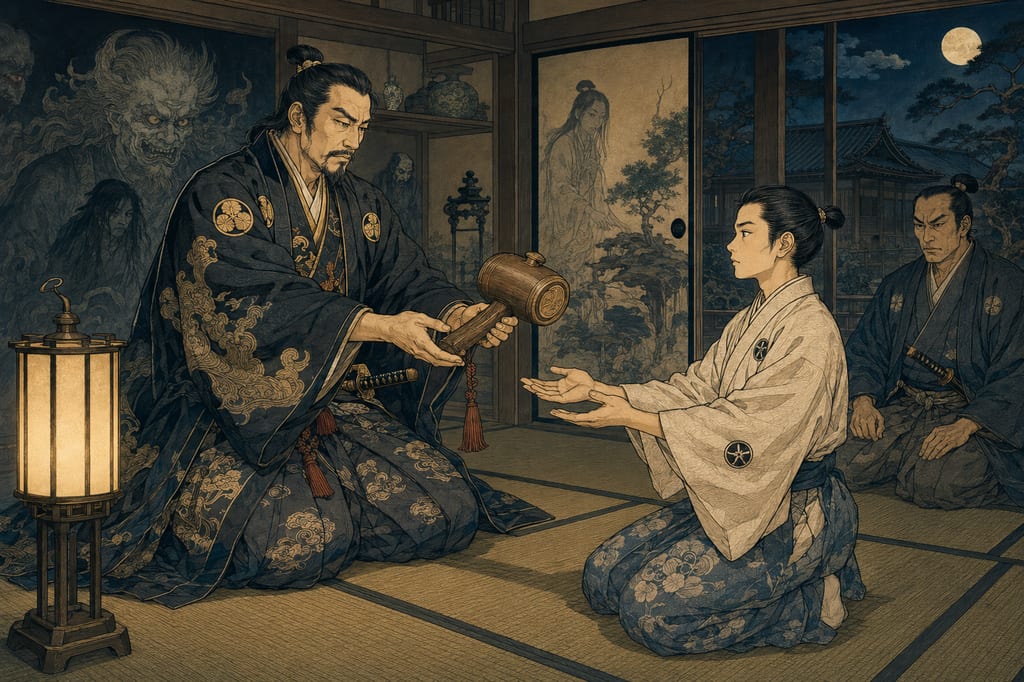
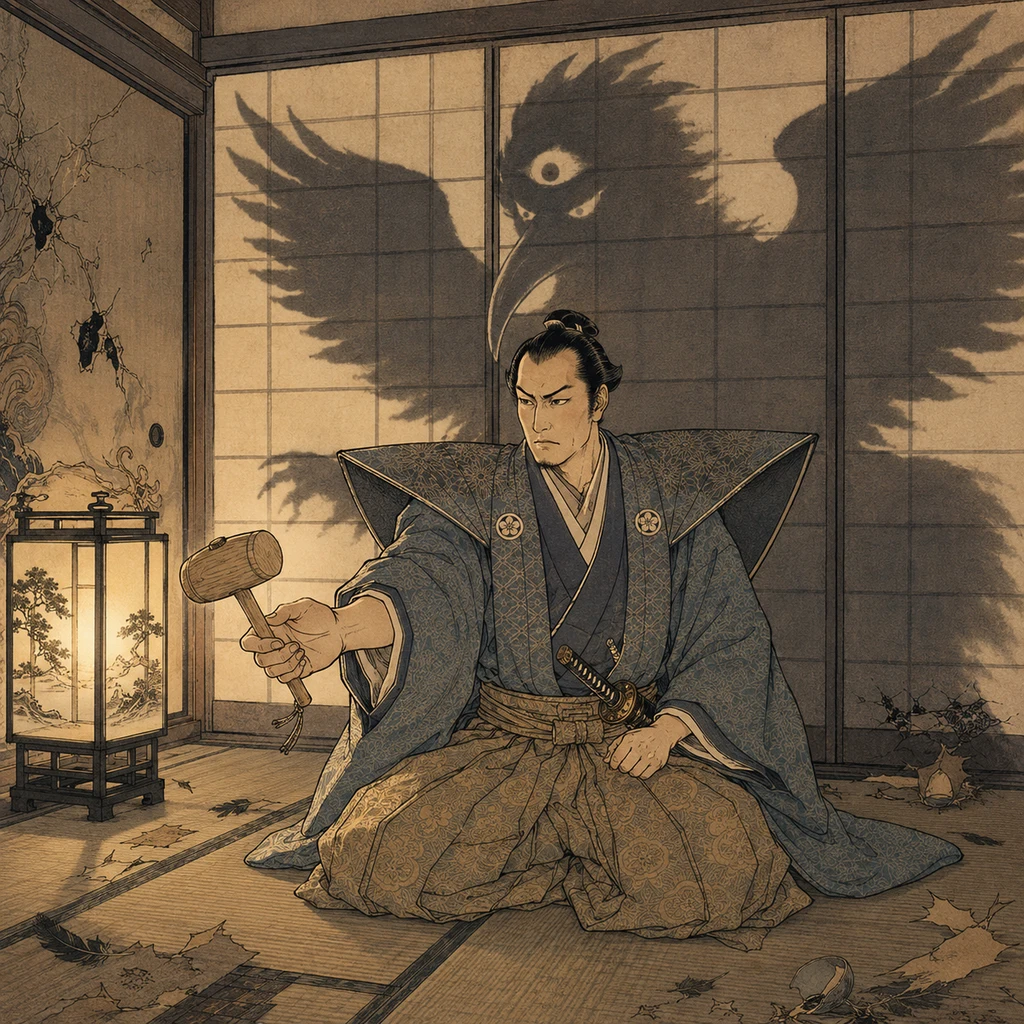
Yamamoto Gorōzaemon
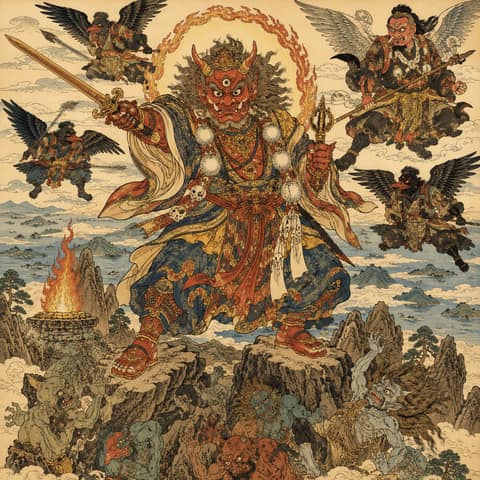
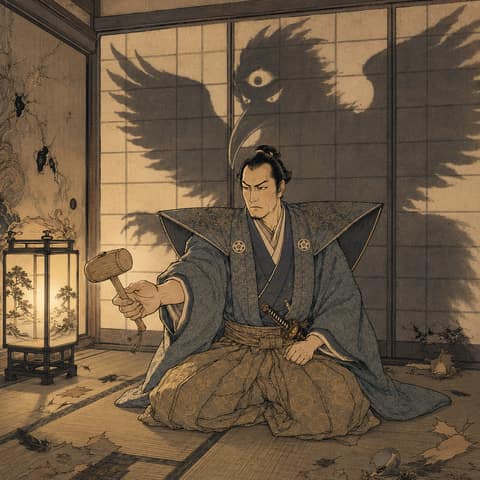
A chieftain who commands legions of yokai in the mid-Edo ghost chronicle Inō Mononoke-roku. In 1749, he harried the youth Inō Heitarō of Miyoshi for thirty nights, finally appearing as a samurai of about forty and giving his name. He insisted he was neither tengu nor fox, explaining that Heitarō’s ordeal was part of a contest for the mantle of demon king. His name varies across manuscripts, and paintings sometimes render him like a three-eyed crow-tengu, but his true nature remains unresolved.
Read moreOn the final night, a figure resembling a forty-year-old samurai appeared, introducing himself as Yamamoto Gorozaemon. He revealed that he was not a mere tengu or shape-shifting animal, but was competing against Jinno Akugoro for the seat of the demon lord. Amidst a wager to see who could threaten and subjugate more of a hundred courageous youths to claim the title, he had tested Heitaro but ultimately failed to faze him, thus losing the bet ── so he spoke, praising the boy's bravery before departing. Depending on the manuscript, his name's notation varies slightly, and his true identity remains undetermined to the end. The characterization of this demon lord, who despite leading a horde of yokai graciously admits defeat and leaves, possesses a kind of bushido-like nobility even as an adversary, which is why he continues to captivate later creators.
Here, the layers of historical fact and folklore must be carefully separated when reading. The core elements ── Miyoshi, the second year of Kan'en, and the sixteen-year-old youth ── were indeed present in early records[1]. On the other hand, the famous episode where the demon lord hands Heitaro a wooden mallet (the yokai mallet) upon leaving, instructing him to "strike the mallet if attacked by Akugoro, and I will come to help," is considered to belong to a layer added as the story was passed down. In other words, the existence of Heitaro and the year of the incident are highly probable facts, while the details of the wager and the bestowal of the wooden mallet are narratives that expanded in later generations. When reading ghost stories, it is crucial not to confuse these two layers.
Throughout the early modern period, this tale spread explosively as manuscripts and picture scrolls, transmitting to various regions while altering its details depending on the version. In the picture scrolls, the anomalies attacking the mansion night after night are vividly depicted scene by scene, drawing the viewer into the thirty days of the story. The national scholar Hirata Atsutane also reprinted and investigated this in the Bunka era, earnestly conveying this record of the supernatural to the world from a standpoint that valued rationality[3]. For Atsutane, who argued for the actual existence of divine spirits, Heitaro's experience was not a mere strange tale but a certain testimony of the unseen world. The fact that scholars and literati alike engaged with it elevated a local strange tale into a nationwide classic. From the Meiji era onward, many writers like Izumi Kyoka and Inagaki Taruho were fascinated by this story, and in recent years, the name Yamamoto Gorozaemon has once again become widely known as a subject for manga, anime, and games. The thirty days experienced by an Edo-period boy continue to gain new storytellers even after more than 270 years.
Then, in April 2019, the Yumoto Koichi Memorial Japan Yokai Museum (Miyoshi Mononoke Museum)[4] opened in Miyoshi. It is Japan's first public museum themed around yokai, centered on a collection of about 5,000 items that yokai researcher Koichi Yumoto amassed over many years using his own funds. A vast collection of materials, including picture scrolls of the *Ino Mononoke Roku*, kawaraban (broadsheets), toys, and paintings, was concentrated right at the very stage of the ghost story. A yokai museum built on the land where the story was born ── Miyoshi has become a rare place nationwide where the narrative, the place name, and the exhibits overlap so deeply. This attempt to hand down the memory of the supernatural to the future as a tourism resource can be said to be one of the ideal forms of yokai culture in the modern era.
The Benzaiten of Itsukushima and the Great Serpent of Aki
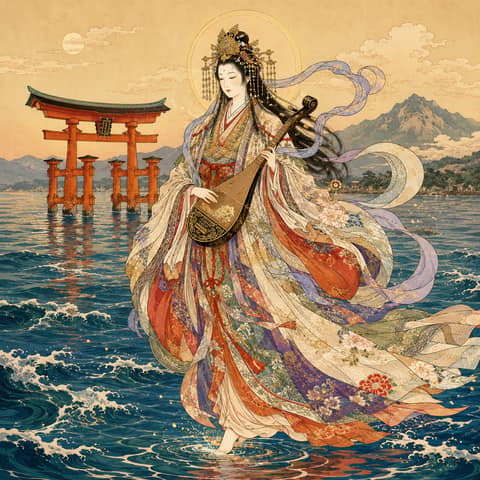
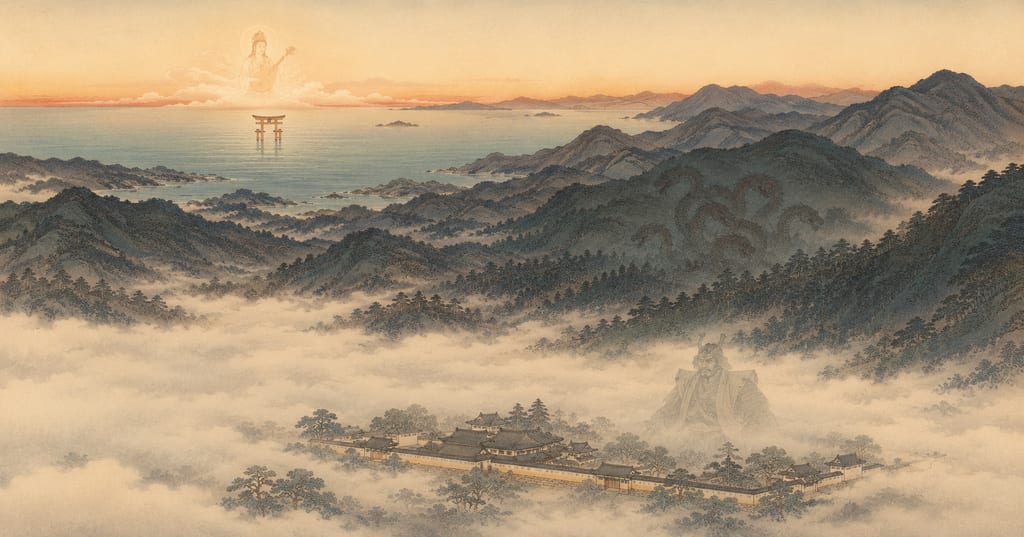
Turning our eyes to the sea, the symbol of Aki Province is undoubtedly Itsukushima (Miyajima). Against the backdrop of an ancient belief that regarded the island itself as a divine body, it traces its foundation to the reign of Empress Suiko, and at the end of the Heian period, Taira no Kiyomori constructed the magnificent marine pavilions that connect to the present day. The great torii gate that towers over the sandy beach at low tide and floats on the sea at high tide ── the deity enshrined at this sanctuary standing on the boundary between sea and land is Ichikishima-hime-no-mikoto, one of the three Munakata goddesses. This water goddess protecting maritime traffic gradually became synchronized with Benzaiten, the Buddhist goddess presiding over water, wealth, and performing arts, amidst the syncretism of Shinto and Buddhism.
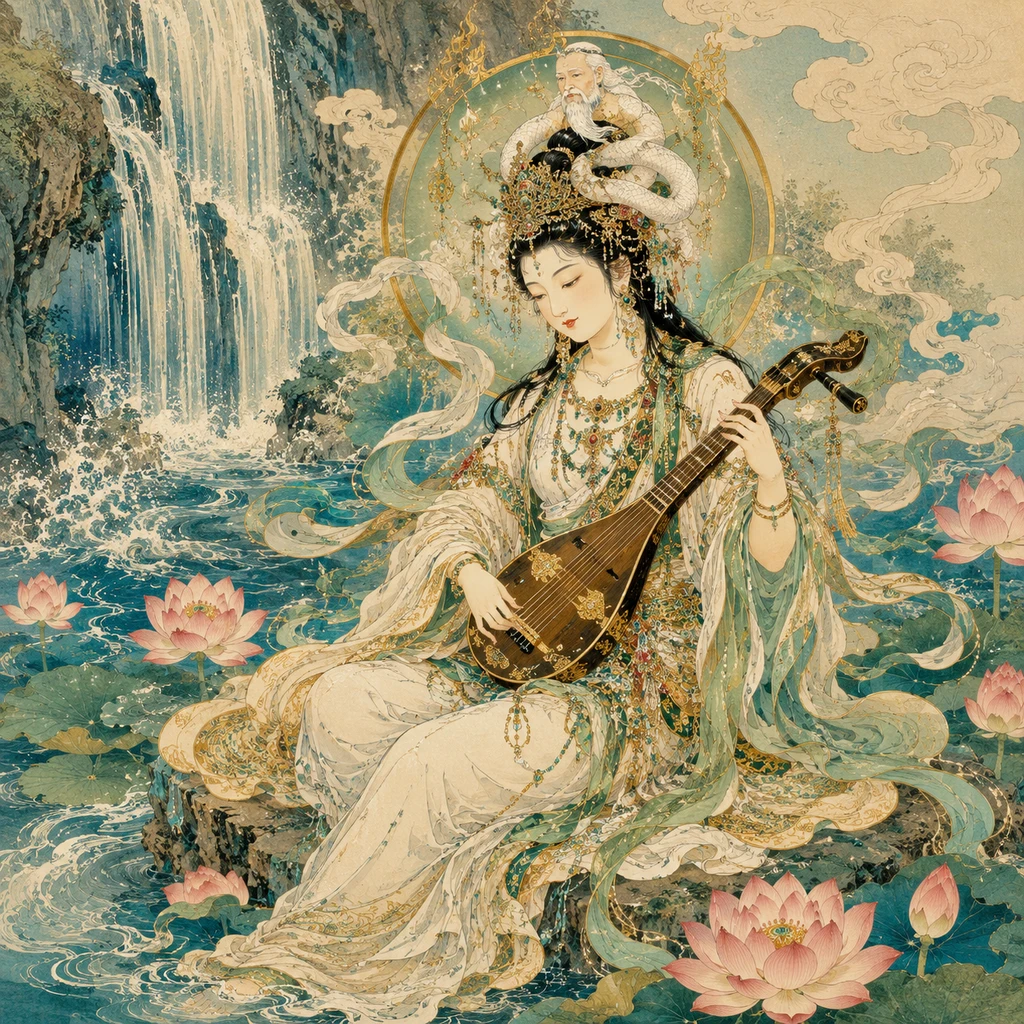
Benzaiten
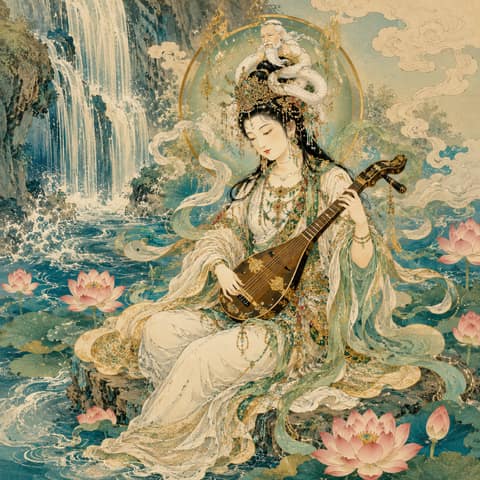
Benzaiten (also spelled Benten) is a Buddhist tutelary deity originating from the ancient Indian Hindu goddess Sarasvatī, who underwent a unique evolution in Japan from the Middle Ages onwards. The Sanskrit name "Sarasvatī" was translated into Chinese scriptures as "Benzaiten" (goddess of eloquence). The original Sarasvatī was the goddess of music, arts, language, and rivers; after being adopted by Buddhism, she was venerated as a protector deity in texts like the Lotus Sutra and the Golden Light Sutra. In Japan from the Kamakura period onwards, she merged with Ugajin, an indigenous human-headed snake deity, to form the unique divine figure of Uga-Benzaiten. This marked the decisive turning point for her transformation into a deity of wealth and fortune, reflected in the change of the kanji used for her name from "Benzaiten" (goddess of eloquence) to "Benzaiten" (goddess of wealth). She has major sanctuaries centered around the Three Great Benten Shrines of Japan (Enoshima Shrine in Kanagawa, Hogon-ji on Chikubu Island in Shiga, and Itsukushima Shrine in Hiroshima), as well as Zeniarai Benzaiten Ugafuku Shrine in Kamakura and Tenkawa Daibenzaiten-sha in Nara. In the Edo period, she was widely revered as the sole goddess among the Seven Lucky Gods. Today, she remains a vital subject in folklore and yokai studies, surrounded by popular beliefs involving her serpent nature, wealth-bringing attributes, and taboos against couples visiting her shrines.
Read moreBenzaiten is a deity that originally traces back to Saraswati, the Indian goddess of rivers. From the idea that the sound of flowing water is a symbol of music and eloquence, she became a goddess granting wisdom, performing arts, and wealth, crossing over to Japan along with Buddhism. When she was united with Ichikishima-hime, Miyajima came to be counted as one of Japan's Three Great Benzaiten, alongside Enoshima (Sagami) and Chikubushima (Omi)[5]. It is no coincidence that all of them are islands surrounded by water. Benzaiten is a goddess enshrined specifically by the waterside, and the marine palace of Itsukushima was a sacred site standing at the pinnacle of that faith.
Taira no Kiyomori's deep reverence for Itsukushima dramatically elevated the status of this shrine. Kiyomori dedicated the Heike Nokyo, considered the pinnacle of decorated sutras, praying to Ichikishima-hime (Benzaiten) for the prosperity of his clan. This historical fact of a samurai family entrusting its clan's fate to a goddess of the sea shows that Benzaiten was revered and feared not merely as a god of arts and learning, but as a mighty deity who swayed power and wealth.
The separation of Shinto and Buddhism in the Meiji era brought a major turning point to this syncretic faith. The statue of Benzaiten was separated from Itsukushima Shrine and moved to Daiganji Temple, which had long been responsible for the repair and construction of the shrine pavilions. Today, this hidden Buddha is revealed to the public on only one day a year, during the Itsukushima Benzaiten Grand Festival on June 17th[5]. Erecting a torii gate in the sea, enshrining the water goddess Ichikishima-hime, and superimposing behind her the wealth deity Benzaiten, who is also considered to have a serpentine body ── Itsukushima is a rare sacred site where beliefs surrounding water are folded over many times, and the memories of the goddess born in the space between Shinto gods and Buddhas still breathe everywhere on the island today.
This divine nature of water also resonates deeply with the mythology of the mountains. In the Geihoku region, centered around Akitakata and Kitahiroshima in the northern mountains of Aki Province, Kagura (Shinto theatrical dance) remains alive in people's daily lives. On the nights of autumn festivals, Kagura is performed through the night at local shrines and dance pavilions, passed down across generations. Among them, the most exceptionally popular program is "Yamata no Orochi"[6].
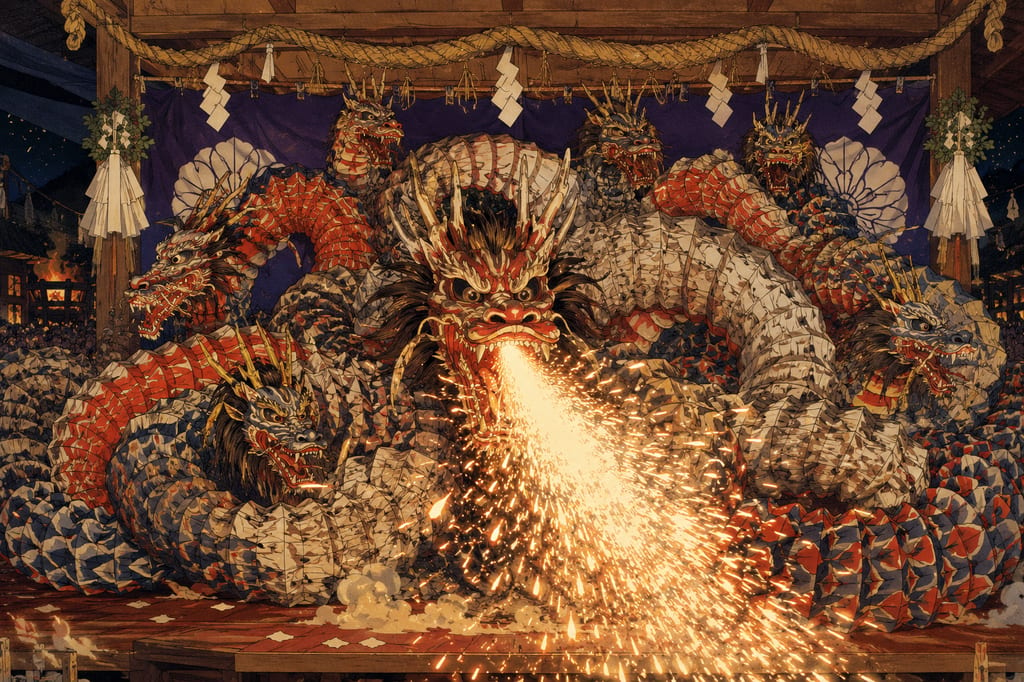
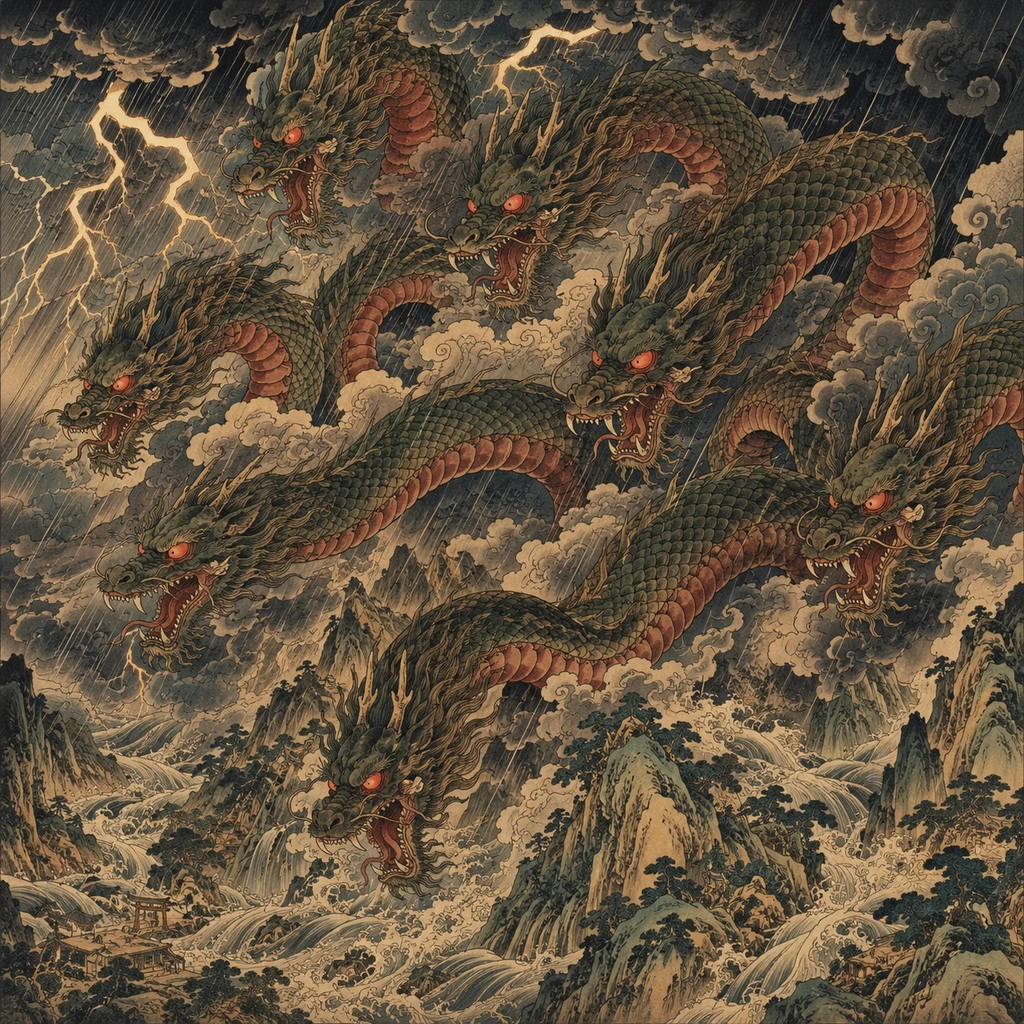
Yamata no Orochi
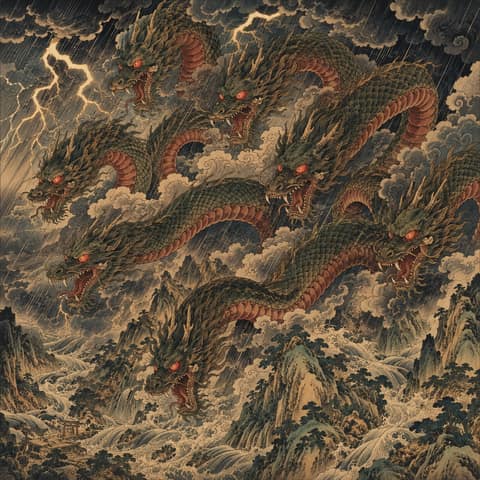
Yamata no Orochi is the enormous serpent deity of Izumo mythology, recorded in the Kojiki, upper volume, completed in 712 and the Nihon Shoki, book one, section eight, completed in 720. It is said to have lived in the upper reaches of the Hii River, anciently called the Hi River, and to have been slain by Susanoo. Yet Orochi is not simply a monster to be defeated. It can be read as the spirit of Izumo's mountains and rivers, the memory of a flooding river, a mythic image of sand iron and tatara ironmaking, and a sign of local Izumo cults being drawn into the mythology of Yamato rule. The Kojiki describes eyes red like winter cherries, one body with eight heads and eight tails, moss, cypress, and cedar growing on its back, a body stretching across eight valleys and eight ridges, and a belly always bloody and raw. Susanoo prepares eight vats of strong yashiori sake and an eightfold fence, lets the eight heads drink themselves senseless, cuts the serpent down with his totsuka sword, and finds the great sword Tsumugari in the middle tail: the later Kusanagi, or Ame-no-Murakumo. This sword becomes the martial treasure among the Three Sacred Treasures. After the victory, Susanoo marries Kushinada-hime, builds a palace at Suga in Izumo, and composes the celebrated "Yakumo tatsu" poem, often treated as Japan's earliest waka. Today Unnan records roughly fifty sites tied to the Orochi legend, while the Iwami Kagura drama Orochi keeps the serpent on stage in the present.
Read moreThe myth of the Yamata no Orochi itself is rooted in the Hii River of Izumo. A giant serpent god with eight heads and eight tails, spanning eight valleys and eight peaks, has swallowed one daughter every year ── Susanoo-no-mikoto, banished from Takamagahara, hears the circumstances from the elderly couple Ashinazuchi and Tenazuchi, intoxicates the great serpent with Yashiori's poisonous sake, slays it, obtains the Ama-no-Murakumo-no-Tsurugi (Kusanagi-no-Tsurugi) from its tail, and saves and marries the last daughter, Kushinada-hime. The Kagura culture of the adjacent Chugoku Mountains crystallized this Izumo myth into an exceptionally magnificent dance. In Geihoku Kagura, six to eight great serpents undulate their bodies to fill the stage, scattering sparks, and perform intensely enough to eventually engulf even the audience seating[6].
Why was this program so beloved in the Chugoku Mountains? In the background lies the fact that this region has been a major hub for *tatara* iron manufacturing since ancient times. Tatara, which involves carving mountains and letting iron sand flow into rivers for collection, often muddied the rivers and caused floods. It is not at all strange if the iron-making people superimposed their own livelihoods and their struggle against nature onto the story of slaying a raging river, likened to a ravaging serpent god, with a sword of iron. The very structure of the myth where an iron sword is born from the tail of the great serpent reflects the memory of tatara obtaining iron from iron sand. Even if the myth belongs to Izumo, the passion poured into its performance undoubtedly belongs to the mountain villages of Hiroshima.
The Prophesying Kudan and the Plague God of Bingo ── The Origin of Somin Shorai
Moving eastward to Bingo, the aspect of yokai changes completely. This is a land of "illness" and "prophecy." The Fukuyama Plain opening to the Seto Inland Sea, and the inland basins surrounding it. In this land where the traffic of people and goods is active, how to foresee and ward off disasters coming from outside ── epidemics and calamities ── has remained a pressing concern for the people.
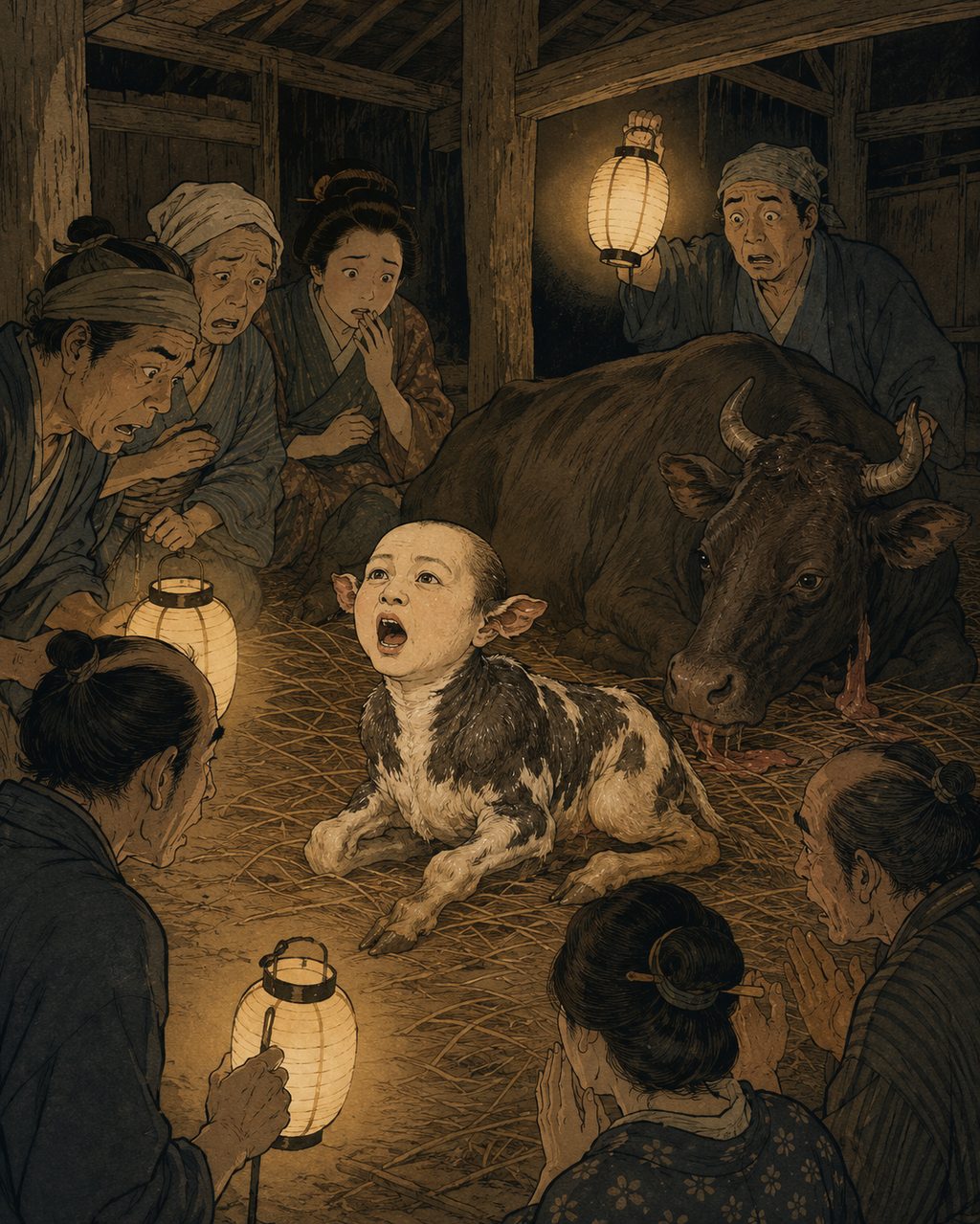
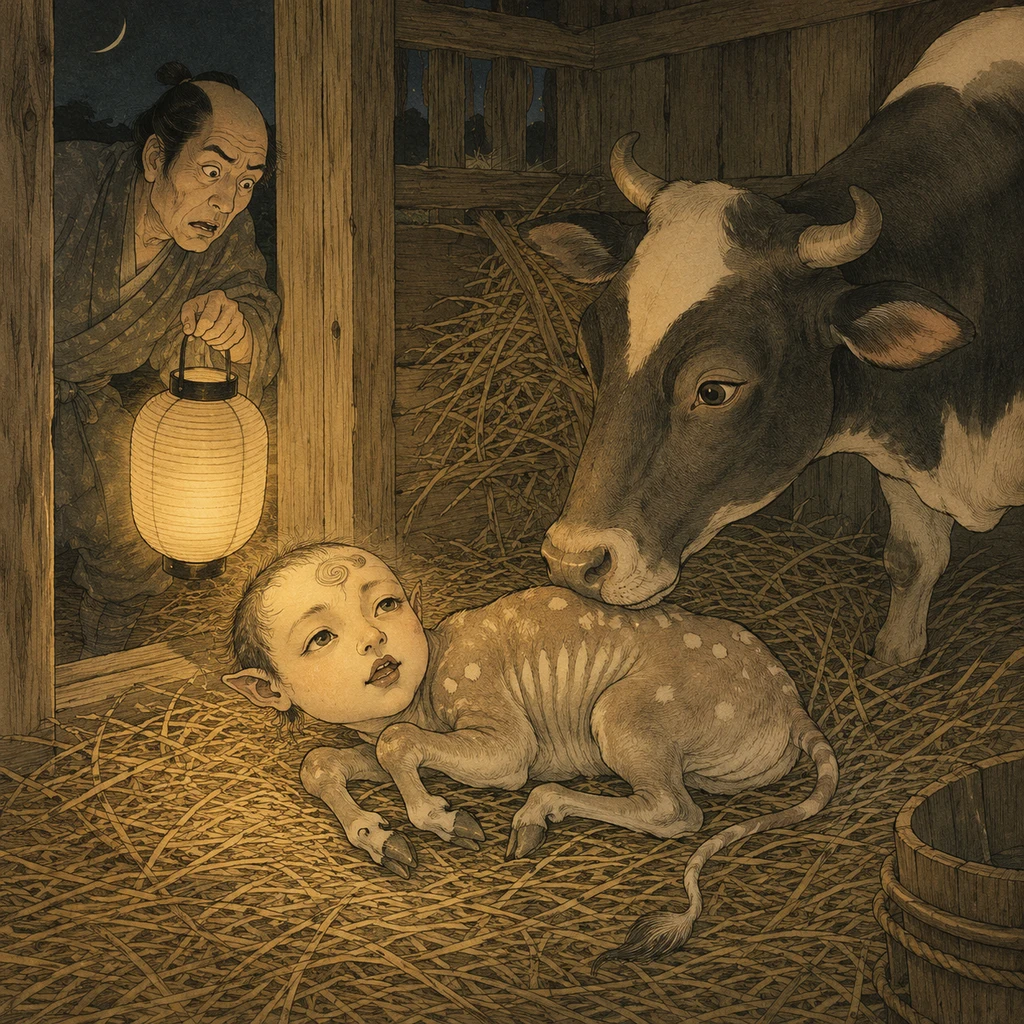
Kudan (Prophetic Human-Cow Yokai)
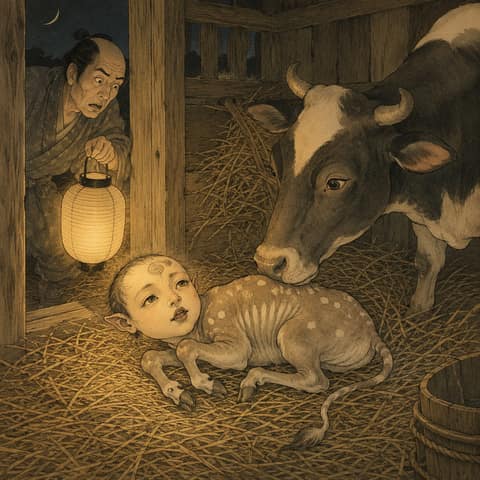
Kudan is a half-human, half-cow prophetic creature that spread widely in the late Edo period. It has a human face on a bovine body and is said to appear, deliver prophecies about public affairs or harvests, and soon die. Broadsheets and printed books from the Tenpō era record varying locations and appearances. Some notices claimed that displaying its image brought protection from calamity and prosperity at home, though accounts differ by region and source. The supposed link to the legal phrase ‘ken no gotoshi’ (“as stated above”) is considered a folk etymology.
Read moreThe Kudan is a prophetic beast with a human face on a cow's body, which immediately after birth prophesies good or bad harvests, epidemics, and wars, and dies within a few days. Its name and appearance circulated widely through kawaraban and printed books during the Tenpo era in the late Edo period. There are various theories about the places of its appearance and its looks, but the view seeking the origin of the Kudan in the Chugoku region is deep-rooted. In *The Genealogy of the "Kudan"*[7], researcher Masaki Sasakata systematically discussed its birth, propagation, and disappearance, tracing how the concept of the Kudan was born and spread. In a locale where the birth of a calf was an everyday familiarity for farming households, the groundwork for cultivating the idea of a deformed child born from a cow to announce the future was certainly present in this land.
The Kudan always appears in times when social conditions are unsettled[8]. The appearance records from the Tenpo era coincide exactly with the period when the Great Tenpo Famine reached its maximum scale. Whenever the shadows of famine, epidemics, and war damage fell, people retold the tales of the Kudan's appearance and displayed its pictures as talismans. Even in the modern era, rumors of the Kudan revived in changed forms during cholera epidemics and wartime, and around the time of World War II, even the rumor that "the Kudan prophesied the end of the war" circulated in various places. Notices claiming that pasting a picture of the Kudan would ward off evil and bring prosperity to the household also circulated. While a direct connection with the cliché phrase of deeds "as per the Kudan" (as stated above) is considered a popular myth, the mentality itself of hoping for a beast that foretells the future in times of anxiety has repeatedly revived across eras. The prophetic beast Kudan can be said to have been a mirror reflecting the anxieties of the common people from the early modern to the modern era.
If the prophetic beast announces the "coming disaster," the art to "ward off" that disaster has also taken root in Bingo in its oldest form. That is the story of the plague god and Somin Shorai.
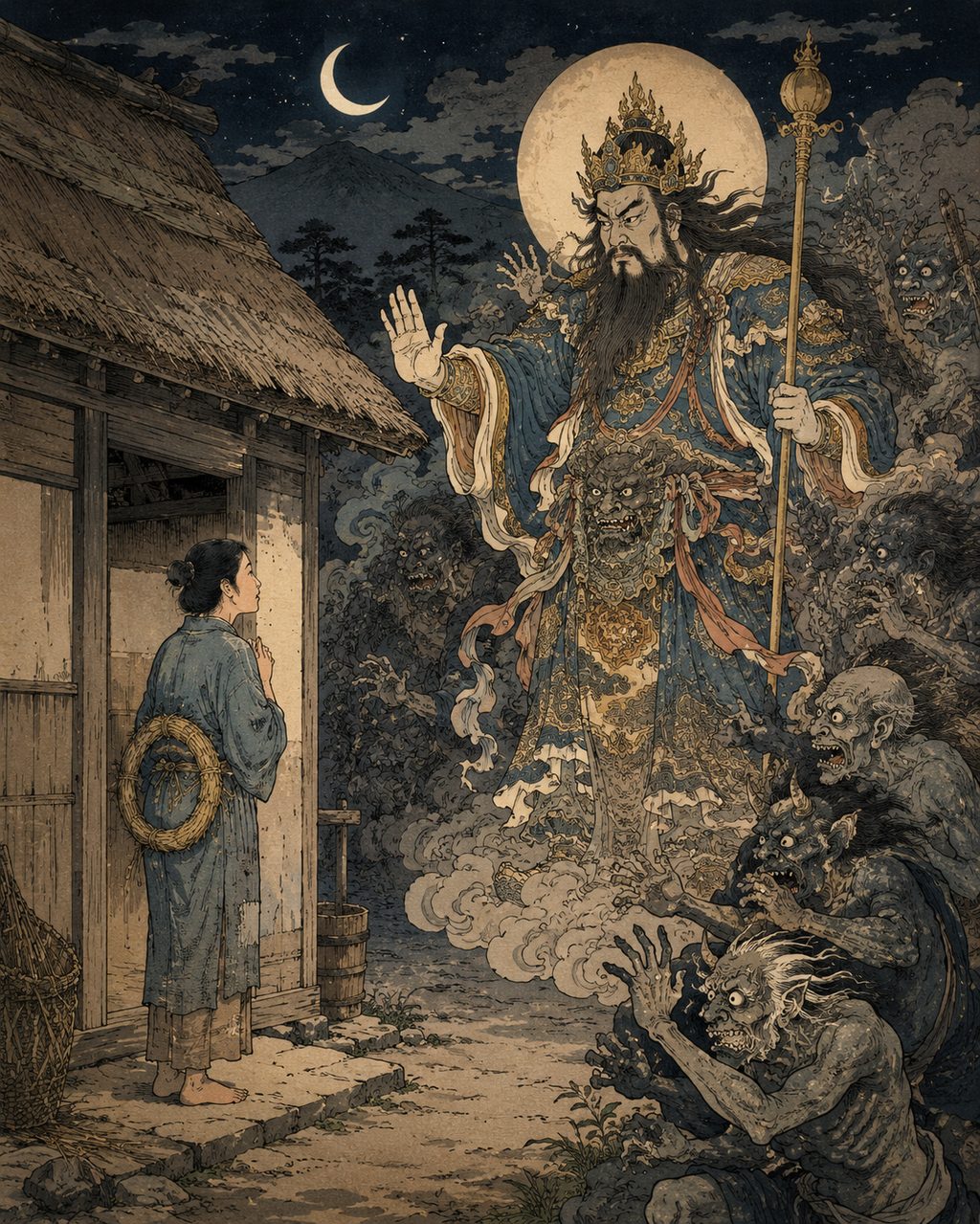
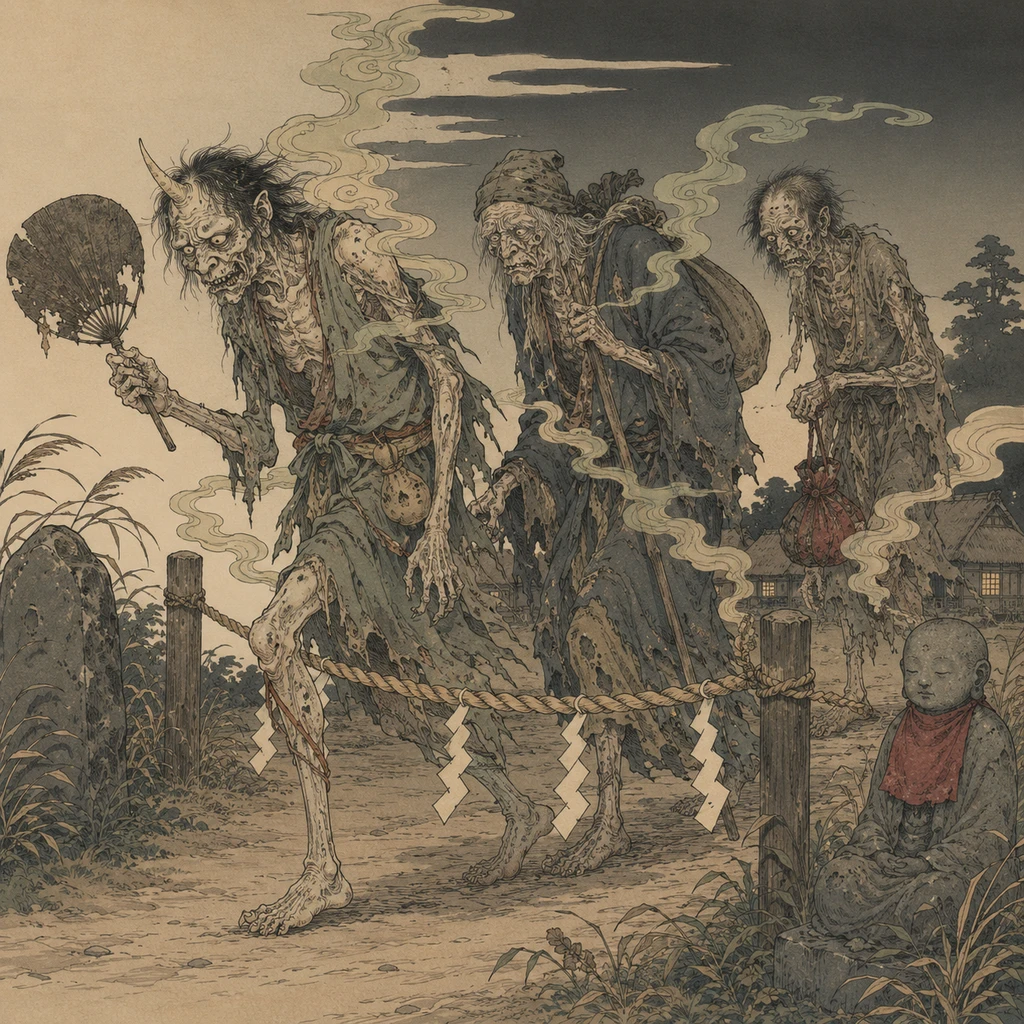
Epidemic God
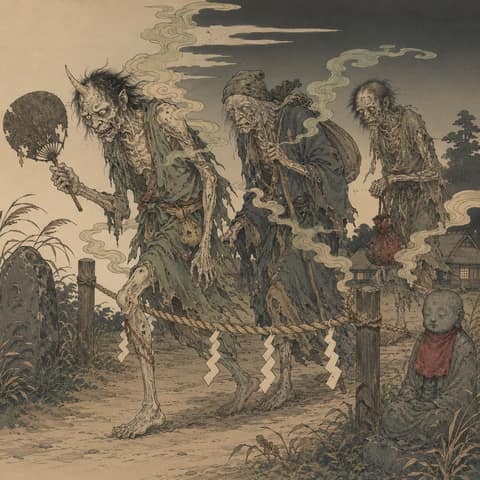
The Epidemic God is a feared malign deity believed to bring outbreaks and calamities. From the Heian period onward, notions of pestilential demons merged with aristocratic beliefs about vengeful spirits and popular views of disease-bringing beings. Usually invisible, it appears in dreams, paintings, or visitor tales as a demon-like figure or an old man. Communities across Japan held rites, used talismans, guarded boundary spaces, and performed summer purifications to bar and drive it away.
Read moreA lost fragment of the *Bingo-koku Fudoki*[2] quoted in the late Kamakura period *Shaku Nihongi* conveys the following. While Muto-no-Kami of the northern sea was on his way to propose to the daughter of the god of the southern sea, the sun set, and he begged the Shorai brothers for lodging. The wealthy younger brother, Kotan Shorai, refused this, but the poor older brother, Somin Shorai, warmly entertained him by cooking millet rice. Years later, Muto-no-Kami returned leading his eight children, had Somin's daughter attach a woven cogongrass ring (*chinowa*) to her waist, and entirely destroyed everyone else. He then proclaimed, "I am Haya-Susanoo-no-Kami. In later generations, if there is an epidemic, declare yourself a descendant of Somin Shorai and attach a cogongrass ring to your waist, and you shall be spared"[9].
This very piece is the origin tale of the *chinowa-kuguri* performed at shrines nationwide during the Nagoshi no Harae on the last day of June. The folklore of intercepting the plague god at crossroads and protecting the household gates with a chinowa and a "Descendant of Somin Shorai" talisman originated here in Bingo and spread throughout Japan. What is noteworthy is the very structure of this story. The plague god is not an unquestioning evil; he distinguishes between those who know the courtesy of hospitality and those who do not, saving the former and punishing the latter. Etched here is the ancient ethical view that while an epidemic is an indiscriminate calamity, it can be avoided through human virtue.
By the Middle Ages, Muto-no-Kami syncretized with Gozu Tenno, and further unified with Susanoo, coming to bear the core of the Gion faith[10]. The faith in Gozu Tenno and Susanoo for warding off epidemics, which spread nationwide starting from the Gion Shrine (Yasaka Shrine) in Kyoto, has one of its sources in this tale from Bingo. The fact that Susanoo shrines line up in Fukuyama and various parts of Bingo, and chinowa are erected during summer festivals, is nothing other than proof that the memory of this ancient layer is still alive today. The Kudan prophesies disaster, and the chinowa of Somin Shorai wards off disaster ── Bingo is a land that has harbored both poles of fear and hope surrounding epidemics, both in forms among the oldest in Japan.
Anomalies of the Mountains and Pools ── Ushi-oni,
Ippon-datara,
and Azuki-arai
In the shadows of high-ranking deities and prophetic beasts, more indigenous anomalies that live right next to people's daily lives inhabit the mountains and rivers of Hiroshima. Because they do not carry grand narratives, they are instead closely tied to people's everyday fears ── dark pools, the sound of rivers late at night, and deserted mountain paths.
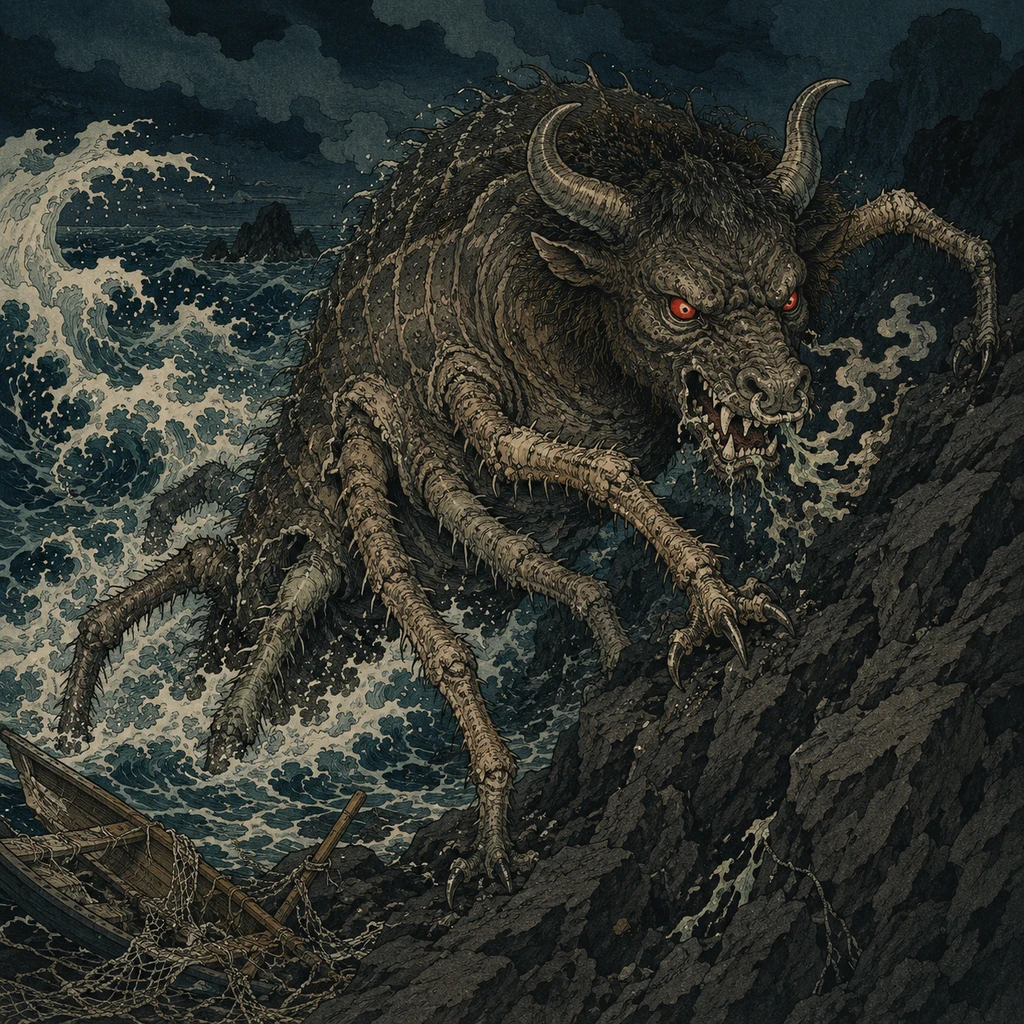
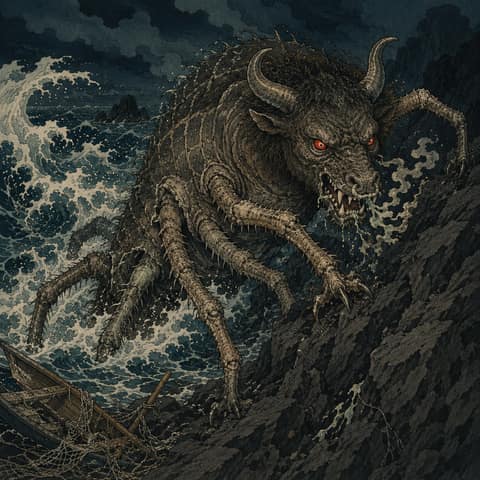
The Ushi-oni (Cow Demon) is one of the most ferocious anomalies in western Japan, said to have the head of a cow and the body of an oni, or the body of a spider and the neck of a cow. In ancient times, the Heian period's *Makura no Soshi* (The Pillow Book)[11] cited its name as an example of "frightening things," and the awe toward it exceeds a thousand years. While the Ushi-oni appears on the coast spewing poisonous miasma to attack people, it is also often said to inhabit deep pools in the mountains, making it a being that straddles both the sea and mountain realms. Records collecting folktales from various parts of the prefecture convey stories of Ushi-oni bewitching people or lurking in waterfall pools to devour people's shadows[12]. Despite being a coastal prefecture, the fact that its Ushi-oni also appears in deep mountain pools clearly imprints the character of the land of Hiroshima, which embraces both sea and mountain within itself.
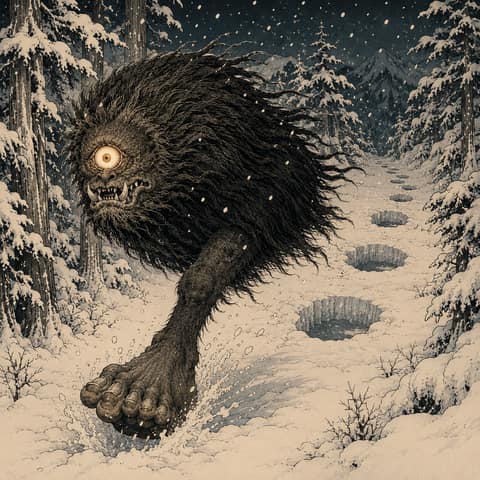
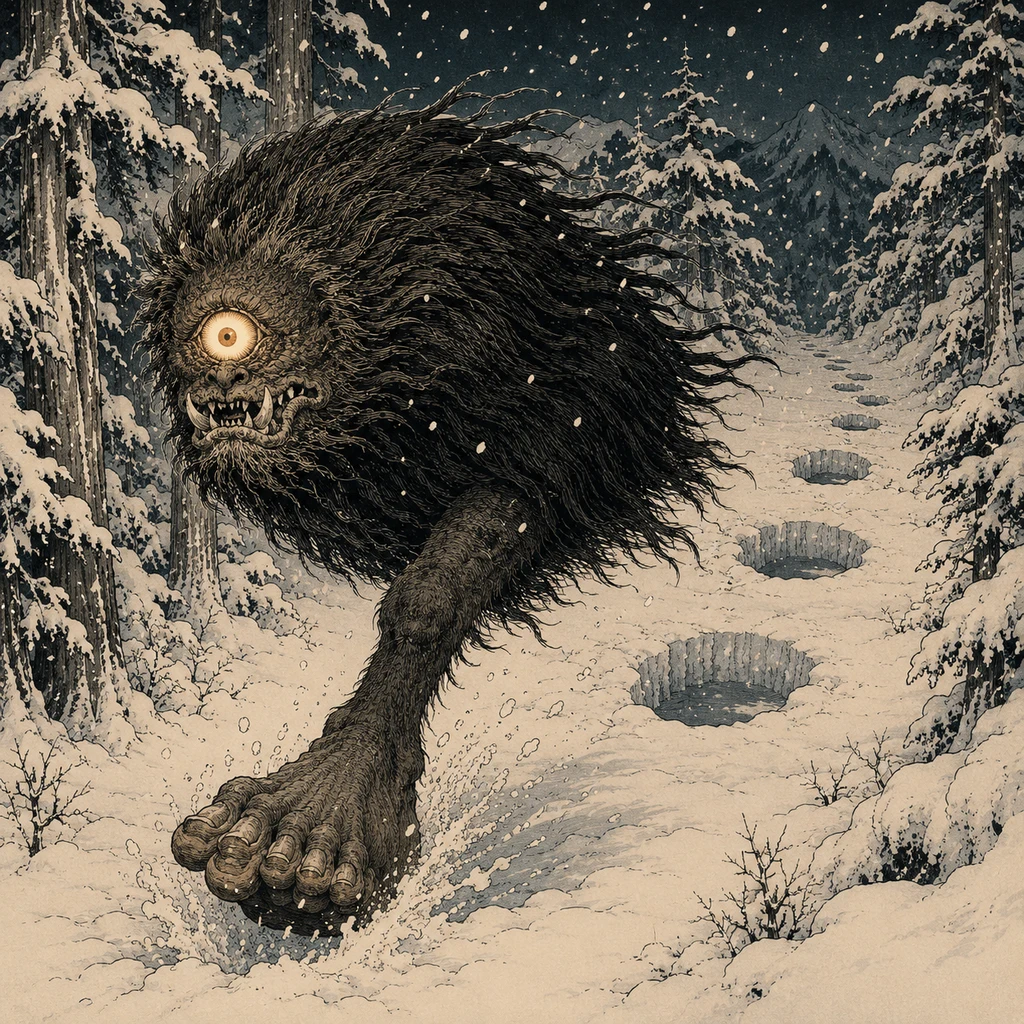
The Ippon-datara is a mountain anomaly that takes the form of a single plate-like eye and one leg. The place most often associated with its name is the Hatenashi Mountain Range in Kumano, Kii Province, where it is said to appear only on December 20th, the "Hate-no-Hatsuka" (the 20th of the end), leaving only a single footprint about one shaku wide on the snow, with no one having ever seen its figure[13]. It is a being connected to the old belief that mountain gods and dosojin (traveler guardian deities) take a one-legged form. Regarding its name "datara," there are theories that read into it the vestiges of professional artisans engaged in tatara iron manufacturing, who were said to have diseased one eye from continuously watching the flames and one leg from continuously treading the bellows[14]. To be honest, the Ippon-datara is originally an anomaly of Kishu, and it is hard to say that it is a tradition unique to Hiroshima. However, it would not be at all strange if the belief in a one-legged mountain spirit extended its distribution to the Chugoku Mountains, a major hub for iron sand and tatara ── adding this reservation, I wish to count it here in the narratives of this land as a yokai sharing the memories of the iron-making mountains.
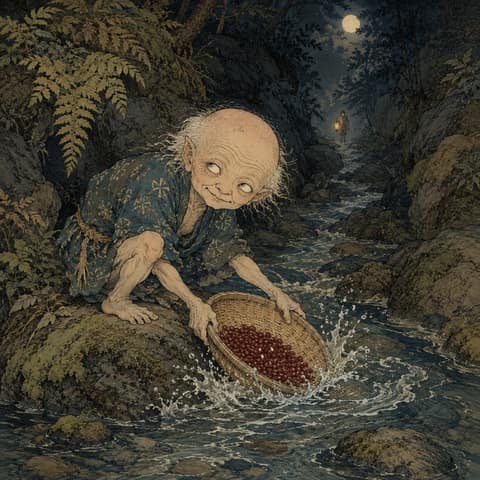
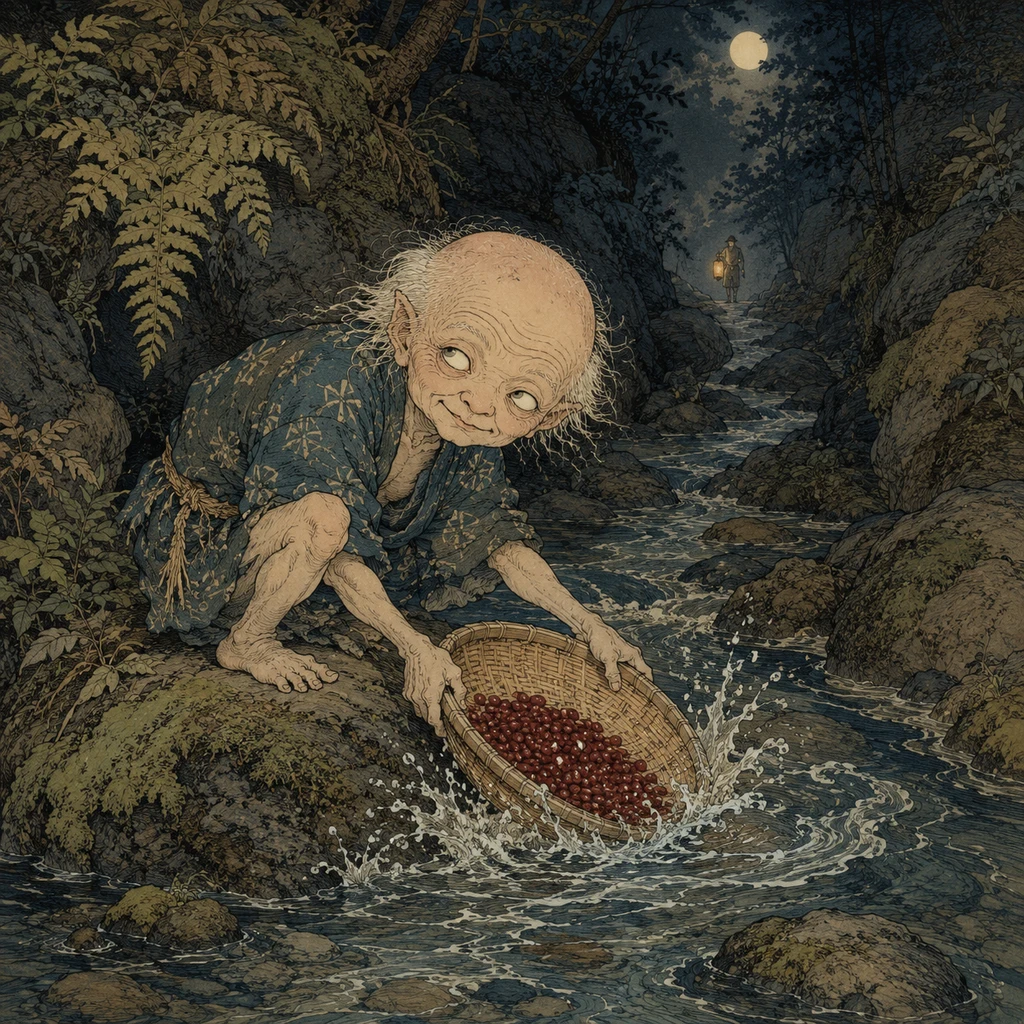
The Azuki-arai (Adzuki Bean Washer) is an anomaly that makes the sound of roughly washing adzuki beans while muttering "Shall I wash the adzuki beans, or shall I catch and eat a person?" in a valley river late at night. It rarely shows its figure, and rather than directly attacking people, the eerie sound of water itself heard from the darkness is closer to its true identity. This yokai is widely distributed nationwide, but its name changes variously depending on the region, and in Sera District of Hiroshima Prefecture, it has been called "Azuki-togi"[15]. The same anomaly is spoken of with names copying the sound in each land, such as "Azuki-age" in Iwate and "Azuki-goshagosha" in Nagano. The differences in names themselves are proof that people in various places have each listened intently to the same night river sounds. People who lived along deep mountain valleys caught a non-human presence in the murmuring of the river in the darkness of the night ── the Azuki-arai, though a formless anomaly of sound alone, is a modest, and therefore unforgettable, yokai born from the darkness of the valleys and the sounds of the water in the Chugoku Mountains. The reason this harmless anomaly continues to be passed down even today is likely because it speaks most eloquently of what people have feared amidst darkness and silence.
At the Knot of Sea and Mountain
What runs through the yokai of Hiroshima is the tension of two geographies, the sea and the mountain, coexisting within a single prefecture. In the Seto Inland Sea, the water faith of Benzaiten and Ichikishima-hime crystallizes, while in the valleys of the Chugoku Mountains, indigenous anomalies of mountains and water such as the Ushi-oni, Azuki-arai, and Ippon-datara breathe. And in the Miyoshi Basin where both intersect, the record of the thirty-day mononoke mansion stands, while in eastern Bingo, the Kudan's prophecy and the chinowa of Somin Shorai ── two devices surrounding calamity since ancient times ── are set in place.
Even compared to adjacent lands, the uniqueness of Hiroshima's yokai culture stands out. Shimane to the west harbors tales of gods as the stronghold of Izumo mythology, and Okayama to the east is known for the demon-slaying tale of Momotaro. Situated between them, Hiroshima distinguishes itself by placing at its core not myths or heroic tales, but two extremely concrete "documents": the experiential record of an actual boy (*Ino Mononoke Roku*) and the foundational myth of warding off epidemics (Somin Shorai). Records and myths, personal experiences and communal prayers ── the fact that two classics of differing character stand side by side in a single prefecture is by no means an ordinary thing.
A prophesying beast, and a cogongrass ring that wards off disaster. A goddess of the sea, and mononoke of the mountains. Fear and prayer. The yokai encyclopedia of Hiroshima Prefecture is a profound map of the otherworld nurtured by this land amidst its geographical duality. From the great torii gate of Aki to the Susanoo Shrine of Bingo, from the misty valleys of the Chugoku Mountains to the inlets of the Seto Inland Sea, as one traces these knots one by one, the yokai still live, quietly continuing to tell the memories this land has accumulated.