YOKAI.JP
女妖怪|女性の妖怪・鬼女・女幽霊一覧

雪女・産女から鬼女、口裂け女まで

女妖怪|女性の妖怪・鬼女・女幽霊一覧

40 yokai

In brief

女妖怪とは、女性の姿をとる怪異、女性が変じた鬼や動物、母・妻・老女などの役割を帯びた妖怪、女性の幽霊を横断して探すための便宜的な呼び方です。民俗学上の単一分類ではありません。本ページでは神そのものを原則除き、伝承・怪談・妖怪画・都市伝説で「女性であること」が造形や物語の核になる存在を集めています。

女妖怪は一つの種族ではない

「女妖怪」は、雪女のように自然現象と結びつく存在、絡新婦や清姫のような変身譚、産女やお岩のような死者、口裂け女のような都市伝説を、女性の姿という共通点から見渡すための検索語です。『日本妖怪大事典』のような総合事典も妖怪を個別の原典と伝承から整理しており、「女妖怪」という単一の民俗分類を置いているわけではありません。

そこで本コレクションは、①女性の姿や名が怪異の核にある、②女性が鬼・蛇・狐などへ変じる、③母・妻・老女・遊女・女房などの役割が物語を動かす、④女幽霊や現代の都市伝説として定着した、という四つの観点で選びました。地域採録には同名異伝や姿の違いが多いため、国際日本文化研究センター「怪異・妖怪伝承データベース」も参照し、見た目だけで同一視しない方針を採っています。

まず知りたい代表的な女妖怪

入口として押さえたいのは、雪国の境界に立つ雪女、出産と死をめぐる産女、狐が宮廷女性に化けた玉藻前、蜘蛛が女性に化ける絡新婦です。同じ女性像でも、自然霊・死者・動物変化では成立の仕方が異なります。

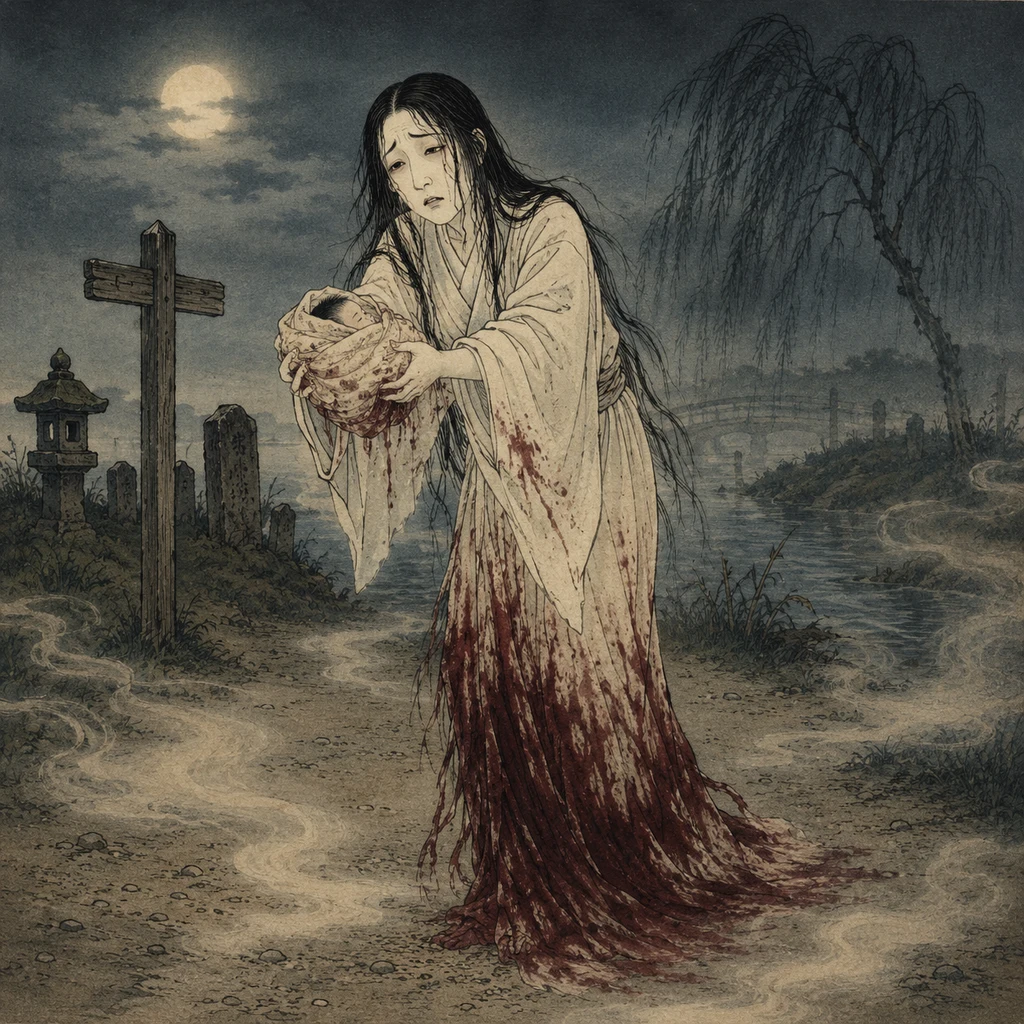
産女は、亡くなった妊産婦の霊、子を抱かせる怪異、子を守る霊神など、時代と地域によって像が変化しました。月岡芳年が1865年に描いた『和漢百物語』の産女も、その視覚化の一例です。立命館大学アート・リサーチセンター「産女(姑獲鳥)」

身体の変化と、
鬼・蛇への変身

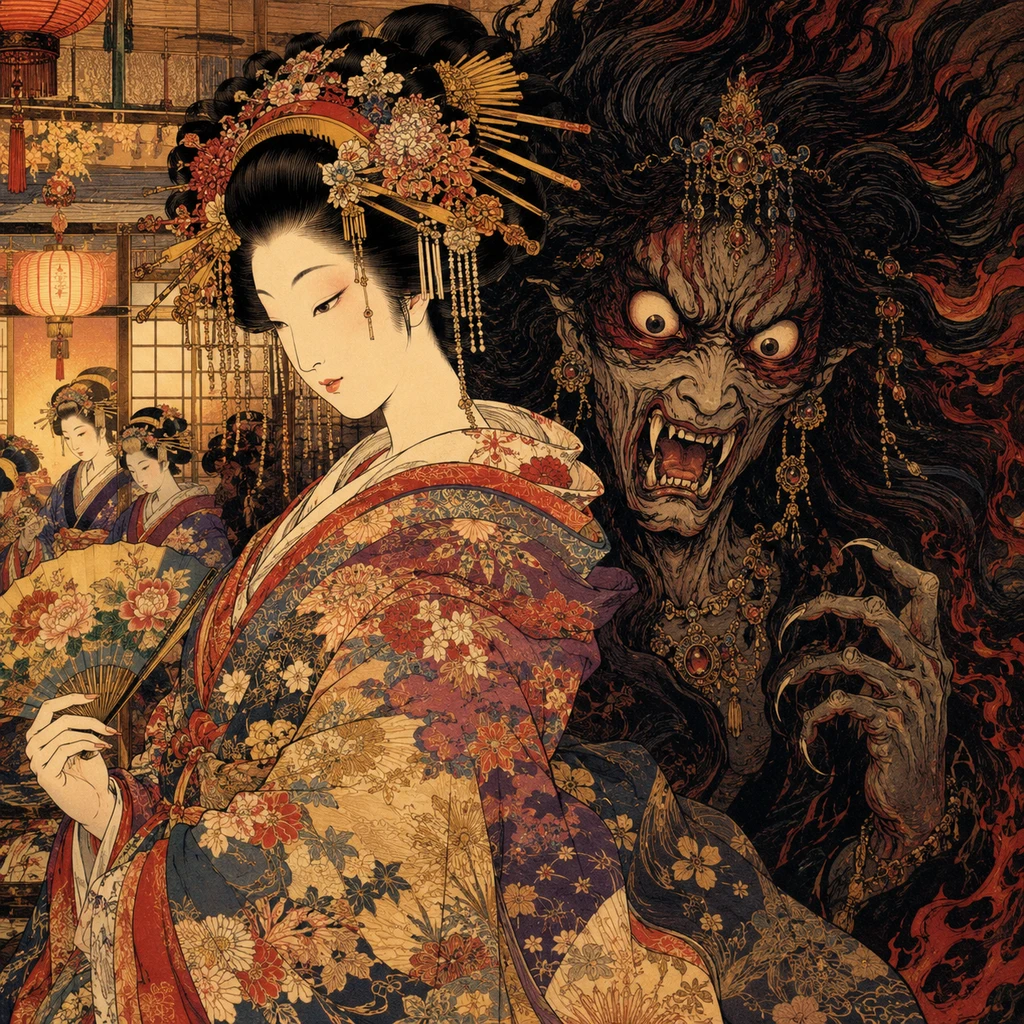
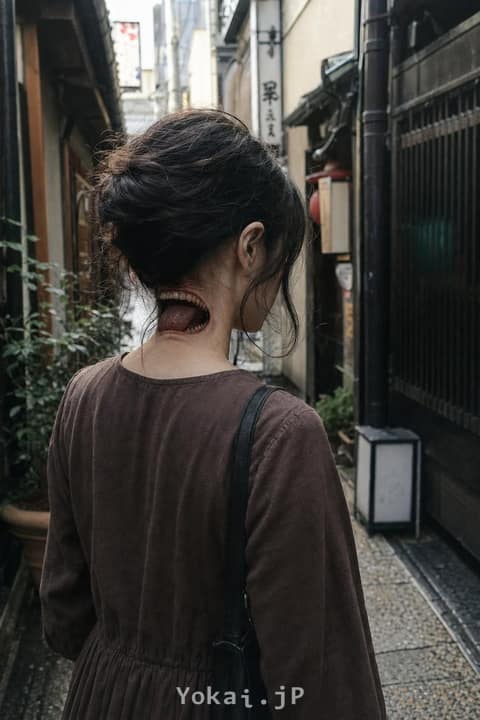
ろくろ首や二口女は、日常の身体に別の口や伸びる首が現れる怪異です。鬼女、清姫、橋姫、黒塚では、怒りや執着、宗教的な因果、土地の物語が女性を鬼や蛇へ変える筋をつくります。ただし、これらを単純に「嫉妬深い女性の怪物」とまとめると、作品ごとの成立事情や、後世の脚色を見失います。

山・海・雨に現れる女性像

山姥は人を脅かす老女である一方、山の力や養育者として語られることもあります。磯女と濡女は海辺や水際に現れ、雨女は天候と女性像を結びつけます。ここでは「女」という名だけでなく、どの場所で、どのような行為をするかを見比べてください。

妖怪画が定着させた女の姿

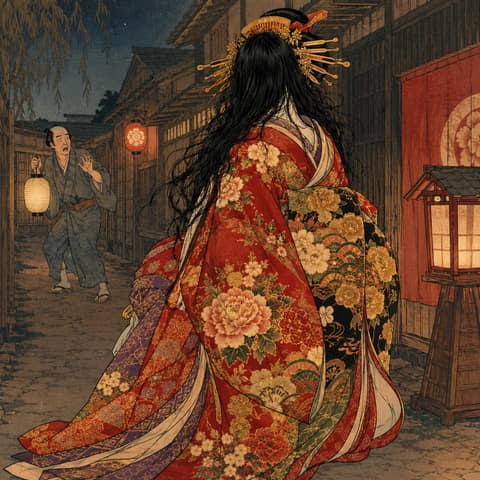
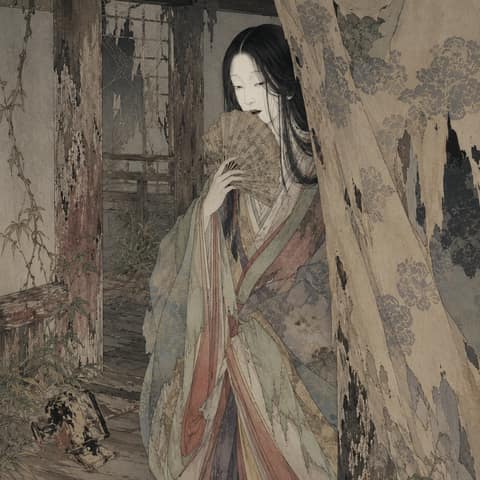
江戸期の妖怪画集は、口承や文章で語られた怪異に、読者が識別できる名前と姿を与えました。鳥山石燕『画図百鬼夜行』はその代表例です。高女、骨女、影女、倩兮女、飛縁魔、毛倡妓、青女房、お歯黒べったりなどを並べると、巨大な身体、骨、影、髪、化粧、宮廷装束といった視覚的な仕掛けが見えてきます。

女幽霊と女妖怪の境界

お岩、お菊、お露は、厳密には特定の怪談や演劇に結びつく女幽霊です。本コレクションに含めるのは、一般の検索や現代の妖怪図鑑で女妖怪と一緒に探されるためですが、雪女や絡新婦と同じ成立類型ではありません。カード先の各ページで、作品由来と地域伝承を区別して確認できます。

現代の女妖怪・都市伝説

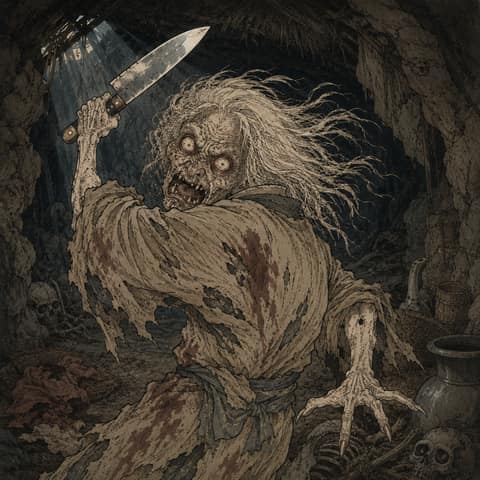
口裂け女とテケテケは、学校、道路、駅、口コミやメディアを通じて拡散した近現代の都市伝説です。古典妖怪の末尾に混ぜるだけでなく、伝わる媒体と時代が違う存在として見ることで、日本の怪異が現在も生まれ続けていることが分かります。

この一覧の見方

並び順は知名度、検索需要、類型の代表性を考慮した編集順です。カード下の選定理由では、その妖怪が女性像とどう関わるかを一行で示しました。美しさ、強さ、怖さだけのランキングではなく、自然、身体、家族役割、土地、怪談、都市伝説という違いから読み比べるための一覧です。

Updated: 7/15/2026
女妖怪女性妖怪鬼女女幽霊妖怪一覧日本の伝承

Included Yokai

40 yokai are included

These yokai also have art cards

43 cards — ukiyo-e, modern Japan & more

Yuki-onna

Yuki-onna

Legendary

Yuki-onna (the Snow Woman)

The White Apparition of the Snow-Country Night

Natural Phenomena & Nature SpiritsIwate

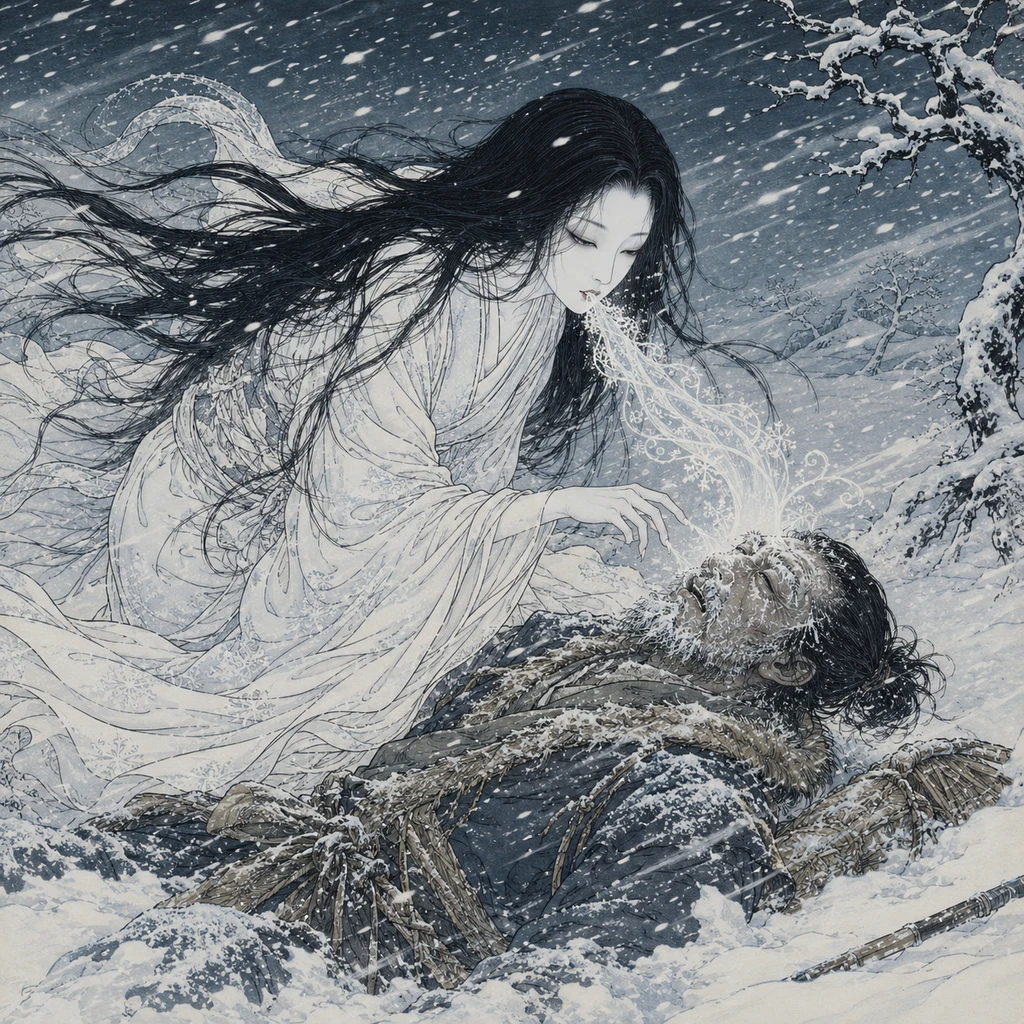
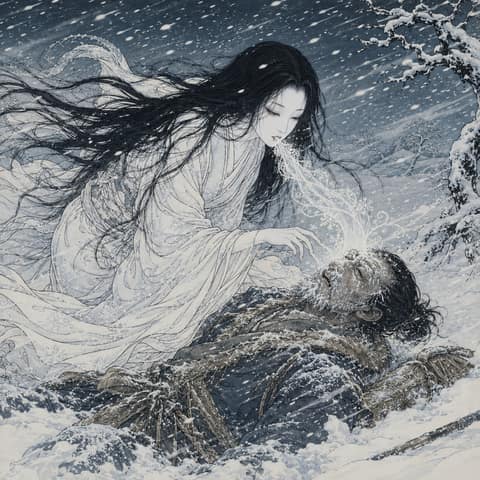
The Yuki-onna is the spirit of a tall, pale woman in white who appears with the blizzard on deep snowy nights. Trailing the white hem of her robe across the snow, she is said to breathe upon travelers to freeze them solid, or to drain away their life-force. She is described variously as the very snow given spirit-form, or as the ghost of someone who perished of cold in the mountains, and she is known across most of Honshū, above all in the heavy-snow country. From region to region her names shift — yuki-jorō, yuki-nyōbō, tsurara-onna, shigama-nyōbō — and she is called Yukion in Toyama and Yukinba in Yoshida, Ehime. Born of the dread and the beauty of the snow country, she is the most renowned of all snow apparitions.

Ubume

Ubume

Epic

ubume

Ubume (Traditional Form)

Ghosts & SpiritsVarious regions nationwide. A famous early example is found in the medieval Konjaku Monogatari Shu.

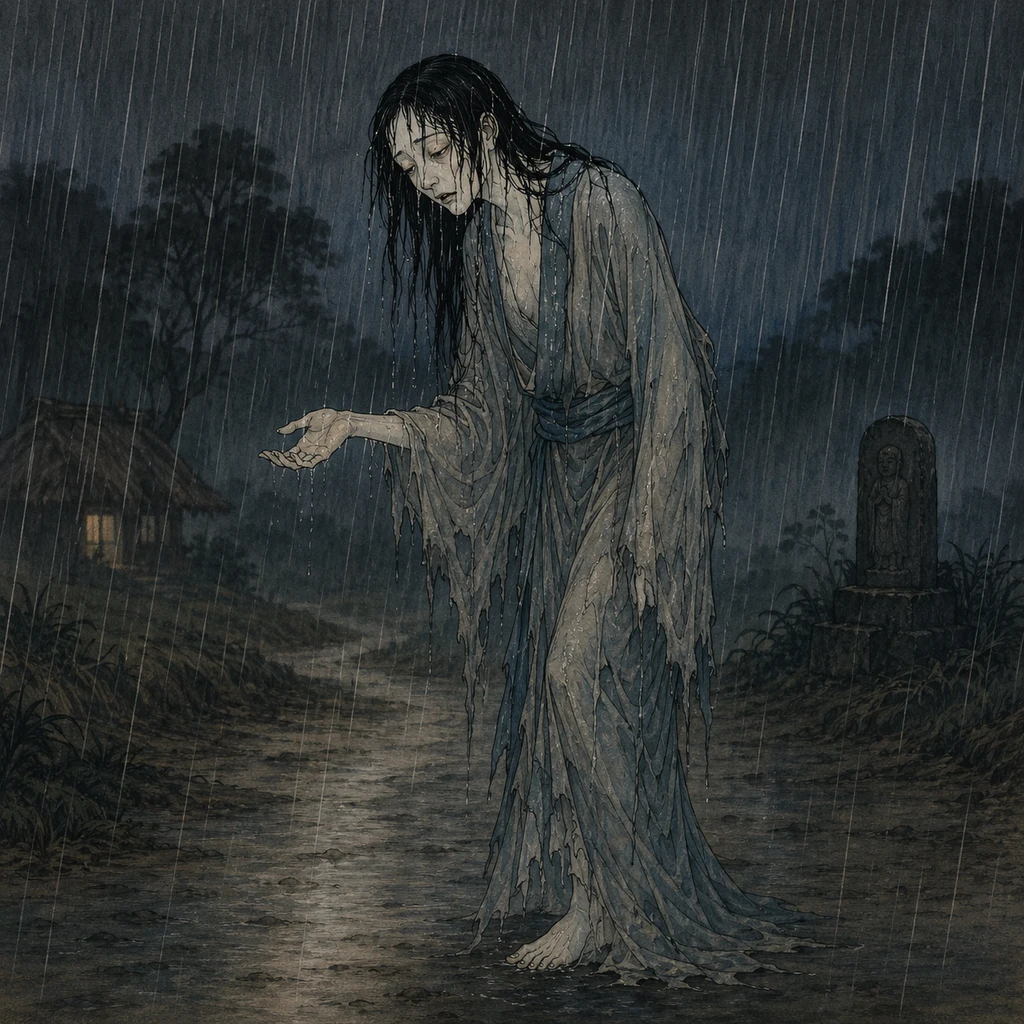
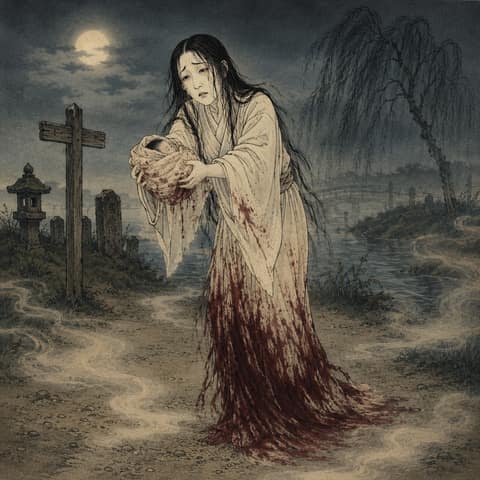
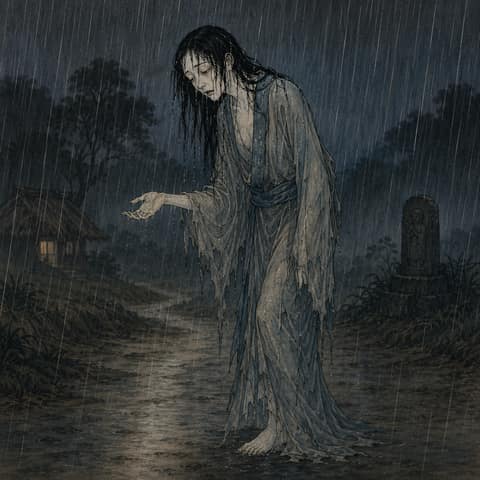
Ubume is a Japanese supernatural phenomenon (yokai) widely believed to be the spirit of a woman who died during childbirth or shortly after, appearing in the form of a woman cradling an infant. In many tales, she stops passersby at night at river crossings, bridges, and crossroads, pleading with them, "Please hold this child." The outcome varies depending on the region and the source: the baby received might suddenly become heavy, turn into leaves or a stone, or the person who manages to hold onto it until the end might be granted superhuman strength or wealth. Therefore, the Ubume is not merely an evil spirit that attacks people. She is an entity that gathers the severed bond between mother and child, the fear of the dead, and the courage and compassion of those who accept her plea into a single tale of an encounter. A famous surviving early example is found in the first half of the 12th century in *Konjaku Monogatari Shu* (Tales of Times Now Past), Scroll 27, Tale 43, "How Minamoto no Yorimitsu's Retainer, Taira no Suetake, Met an Ubume." When Minamoto no Yorimitsu was the Governor of Mino, his retainer Taira no Suetake went to a dark river crossing at night as a test of courage, where he was entrusted with a baby by a woman in the river. Upon returning to the mansion and opening his sleeve, he found only a few tree leaves. At the end of the tale, the narrator juxtaposes the theory that the Ubume is a shape-shifting fox with the theory that she is the spirit of a woman who died in childbirth, without deciding on her true identity. At this stage, the blood-stained waistcloth and bird feathers that became famous in later eras had not yet been depicted. On the other hand, care must be taken with the notation that writes "Kōkakuchō" (Guhō bird) but pronounces it "Ubume." The "nocturnal roaming woman" described in Scroll 16 of the Tang dynasty text *Youyang Zazu* (Miscellaneous Morsels from Youyang) is a Chinese monster bird that becomes a bird when wearing feathers and a woman when taking them off, and has a habit of snatching people's children. Because it involved babies and women who died in childbirth, it was conflated with the Japanese Ubume, but they originally belonged to different lineages. According to the research of Manami Yasui, Hayashi Razan, who assigned the Japanese name to the Chinese Kōkakuchō, first specified in the 1631 *Shinkan Tashikihen* that "Kōkakuchō" is the "Ubume-dori" (Ubume bird) or Nue. While the Japanese Ubume has as its core "a mother's spirit entrusting her own baby to someone else," the Chinese Kōkakuchō has as its core "a bird monster that snatches other people's children." Understanding this difference reveals how the yokai known as Ubume changed its form by layering medieval tales, memorials for those who died in childbirth, knowledge of monster birds from China, and early modern yokai illustrations.
Tamamo-no-Mae

Tamamo-no-Mae

Legendary

Tamamo-no-Mae

Tamamo-no-Mae, the Nine-Tailed Fox Beloved of Emperor Toba

Animal ShapeshiftersKyotoTochigi

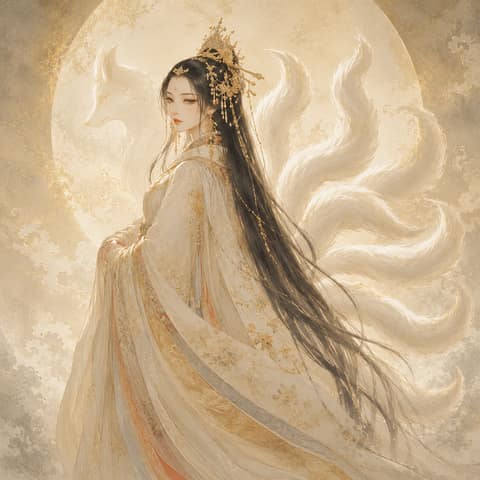
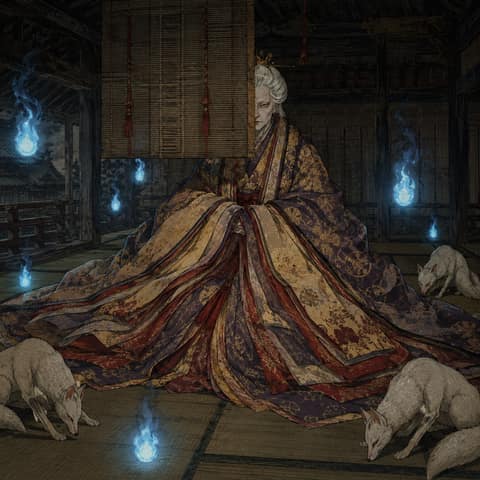
Tamamo-no-Mae is a beauty of unrivaled grace who, in the late Heian period, is said to have served the retired Emperor Toba. Her true form is held to be a nine-tailed fox, yet as a human, Tamamo-no-Mae has above all been remembered as a court lady of rare beauty and deep learning. Poetry and music were a given, but from Buddhist scripture to the old tales of India and China, she answered any question without hesitation, astonishing all at court. The name “Tamamo-no-Mae” carries a story of its own. One night, amid a banquet of poetry and music at the Seiryōden, a gust of wind snuffed out the lamps; in the darkness a dazzling light streamed from her body and lit the hall as bright as day. From this she came to be called “Tamamo-no-Mae,” meaning the lady of the jewel-like, glowing waterweed . Before that, it is said, she had been called Mikuzume. In time she drew all the emperor’s affection to herself, but when he fell ill from an unknown cause, her true nature began to be doubted.

Jorōgumo (Enchanting Spider)

Jorōgumo (Enchanting Spider)

Legendary

jo-ROH-goo-moh

Tradition-Faithful Jorōgumo Archetype

Animal ShapeshiftersShizuokaNagano

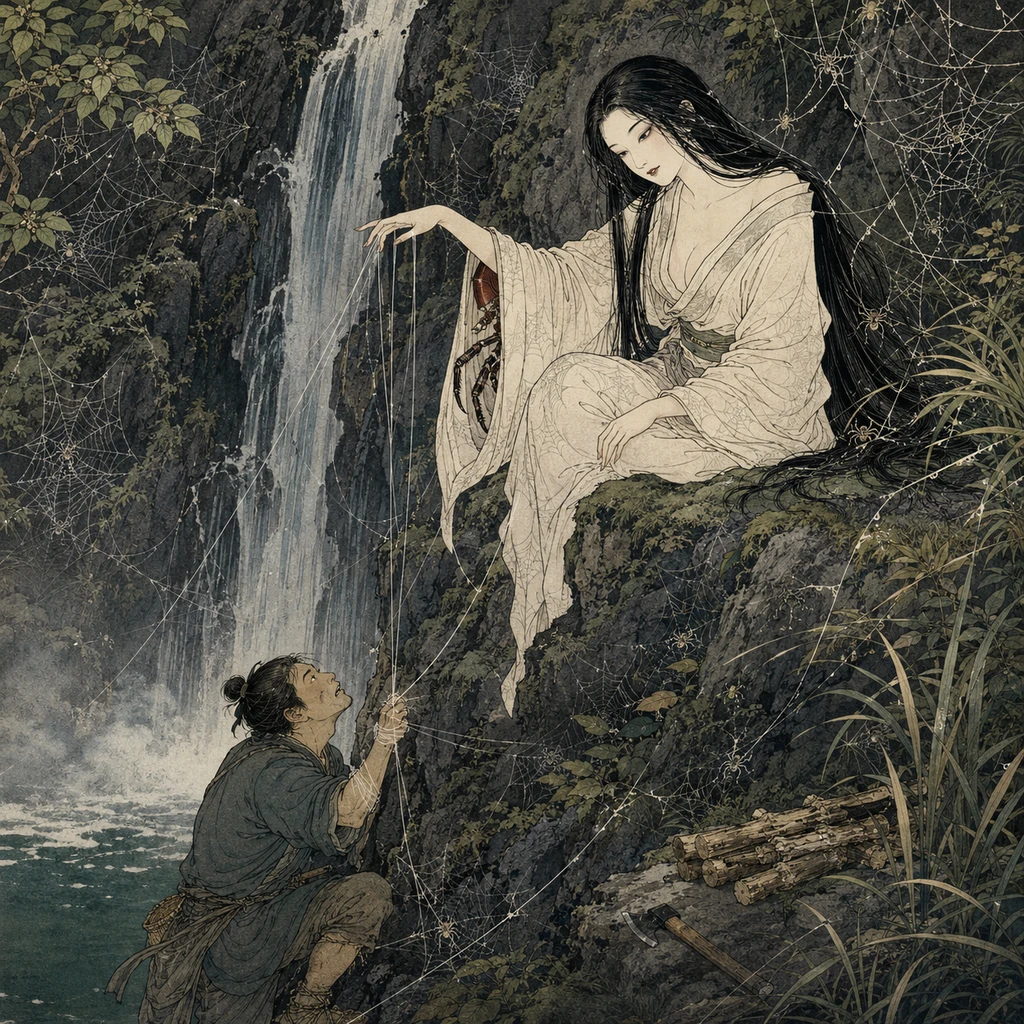
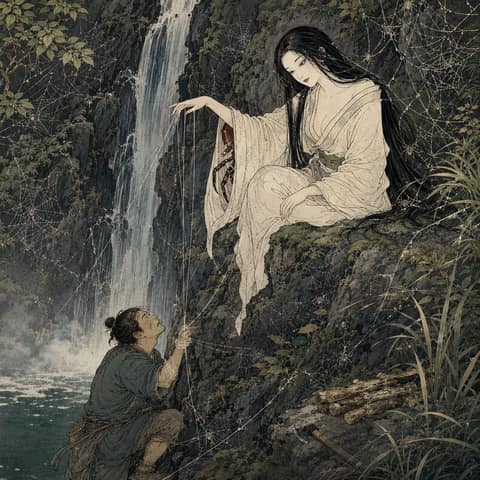
Jorōgumo is a giant spider yokai that takes the form of a beautiful woman to lure victims. The name appears in Edo-period curiosities and picture scrolls; Toriyama Sekien depicts her as a woman attended by spiderlings. She entices people back to her lair, ensnares them with silk, weakens them, and devours them. Many tales unfold at liminal places—waterfalls, pools, and abandoned houses on the edge of villages—and when unmasked, she flees into rafters or crevices in the rocks.

Rokurokubi

Rokurokubi

Legendary

ROH-koh-ROH-koo-bee

Hitouban/Nukekubi (Lafcadio Hearn Interpretation)

Human-Yokai / Half-Human Half-YokaiAll over Japan -- A human village apparition without a specific location

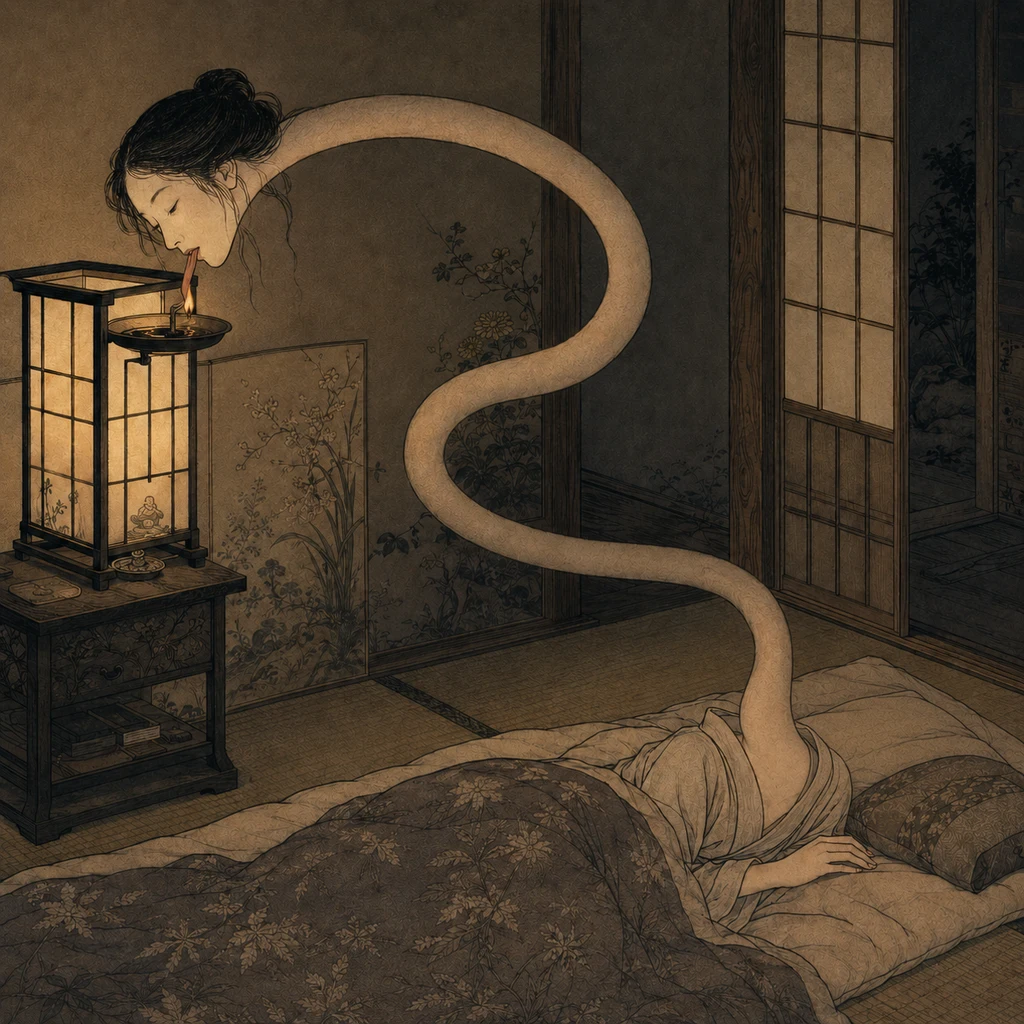
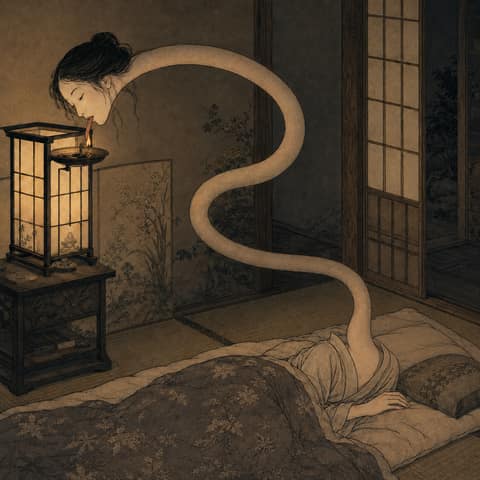
The Rokurokubi is one of Japan's most famous representative yokai, characterized by a neck that stretches to abnormal lengths during sleep at night, or a head that detaches completely from the body to fly through the air. While the modern image firmly establishes 'Rokurokubi = neck-stretching yokai', from a folkloric perspective, the 'nukekubi' (detaching head), where the head separates from the body and flies, is considered its true original form. This prototype originated when a foreign monster known as the 'Hitouban' (Flying Head Barbarian), recorded in ancient Chinese strange tales like the 'Soushinki' (In Search of the Supernatural), was introduced to Japan. The greatest point of interest in yokai research is why it changed from 'flying' to 'stretching'. A prevalent theory suggests that when Edo-period picture scrolls depicted a 'thin spiritual thread' connecting the detached head and the body, the masses visually misinterpreted it as the 'elongated neck itself', which served as the decisive catalyst for the birth of the 'neck-stretching Rokurokubi'. In many legends, the Rokurokubi is not born a monster, but is told as a tragic apparition unconsciously caused by human women due to an 'illness of separating souls' or the depth of their karma.

Futakuchi-onna (Two-Mouthed Woman)

Futakuchi-onna (Two-Mouthed Woman)

Epic

foo-tah-KOO-chee OHN-nah

Futakuchi-onna

Half-Human BeingsChibaTokyo

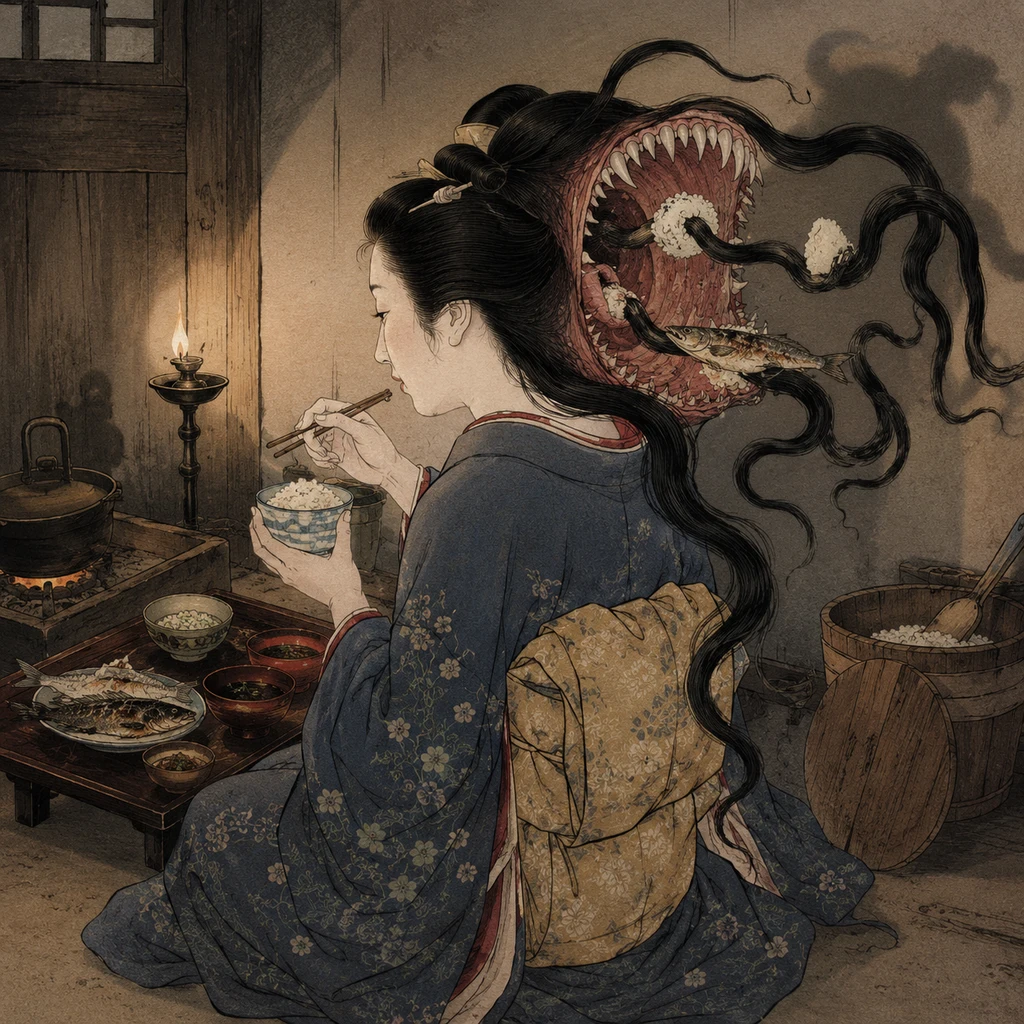
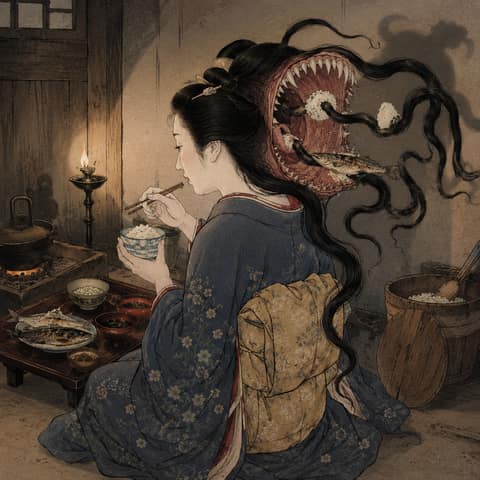
Futakuchi-onna is a yokai woman said to have a second mouth on the back of her head. She hides it under her hair, but when hunger strikes, her hair writhes like snakes and the rear mouth clamors for food on its own. Featured in strange-tale collections such as Ehon Hyaku Monogatari (1831), the legend often serves as a caution against extreme frugality and secretiveness. Outwardly she appears human, but at the nape a sharp-toothed mouth with a tongue is said to lurk.

Yamauba

Yamauba

Legendary

yah-mah-OO-bah

Yamanba (Traditional Folkloric Form)

Mountain & Wilderness SpiritsKanagawa

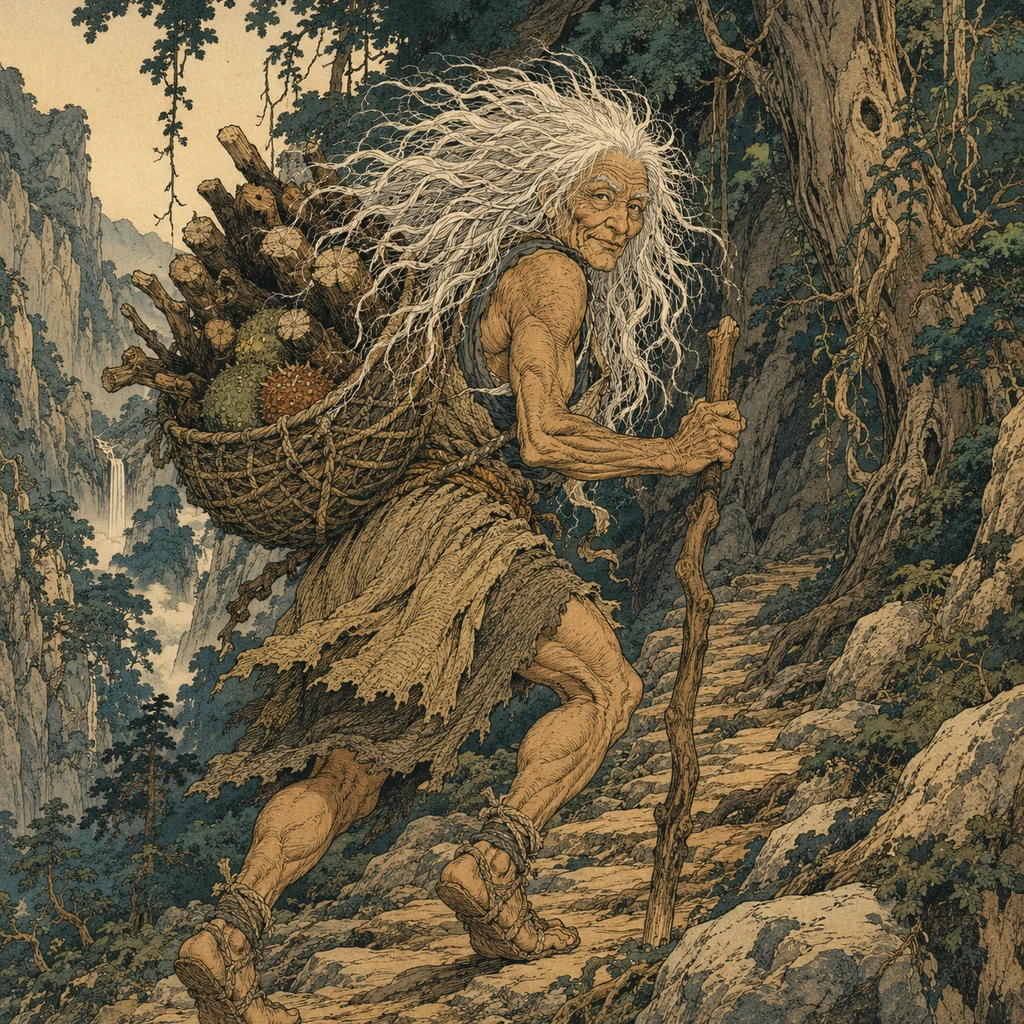
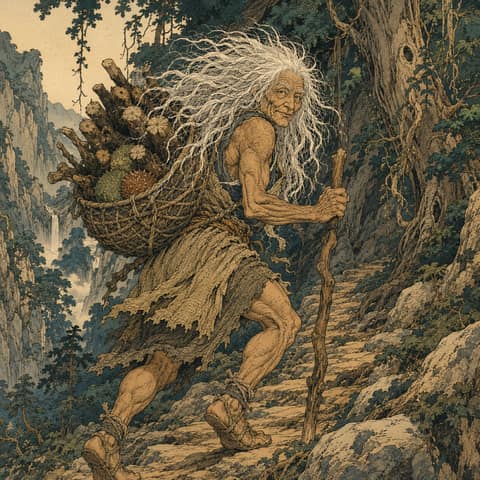
An old witch-like yokai who dwells deep in the mountains. She is also known as the foster mother of the folk hero Kintaro.

Kijo (Demon Woman)

Kijo (Demon Woman)

Uncommon

KEE-joh

Canonical Folkloric Type: Kijo (Ogress)

Demons & GiantsVarious regions (notably Tōhoku, Shinano, Ōmi, and around Ise)

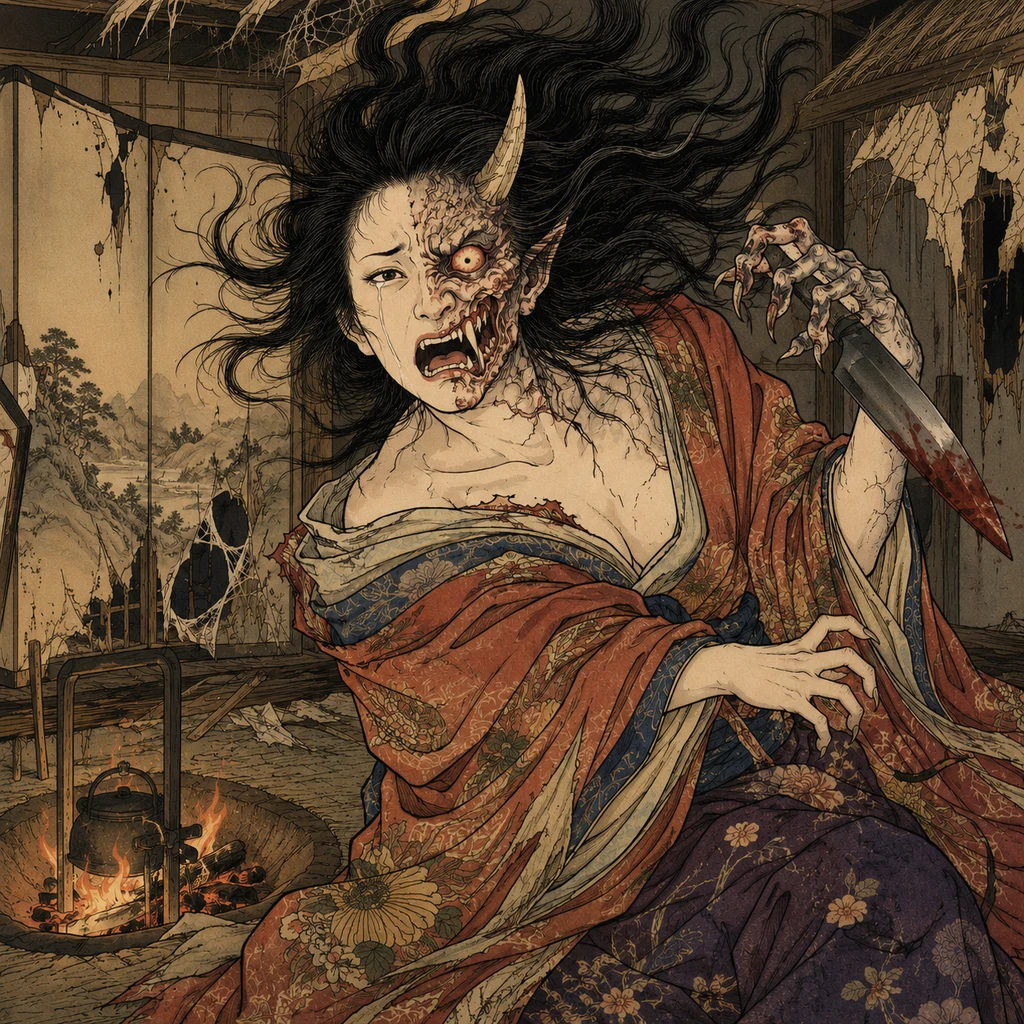
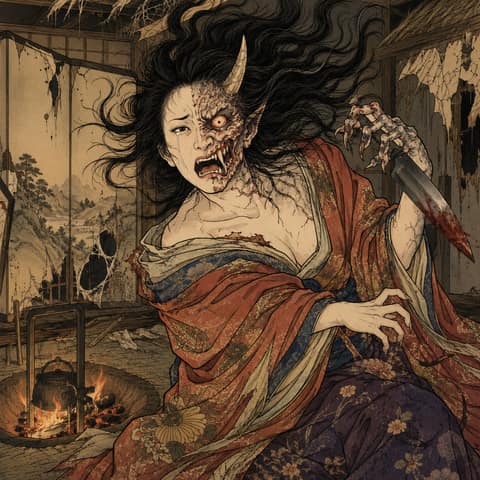
Kijo is a collective term for women transformed into oni through rancor, karma, or jealousy. The youthful form is called kijo; in old age, onibaba. They appear widely in classics, legends, and performing arts—famous figures include Kureha (Momiji) of Togakushi/Kijinashi, Suzuka Gozen of Mount Suzuka, and the demon crone of Adachigahara (Kurozuka). Tales tell of them beguiling people, haunting the night to waylay travelers, and preying on infants or pregnant women, often framed by beliefs in curses and karmic retribution.

Kiyohime

Kiyohime

Legendary

きよひめ

Kiyohime, the Serpent Woman Who Burned Dojoji

Human-Yokai / Half-Human Half-YokaiWakayama

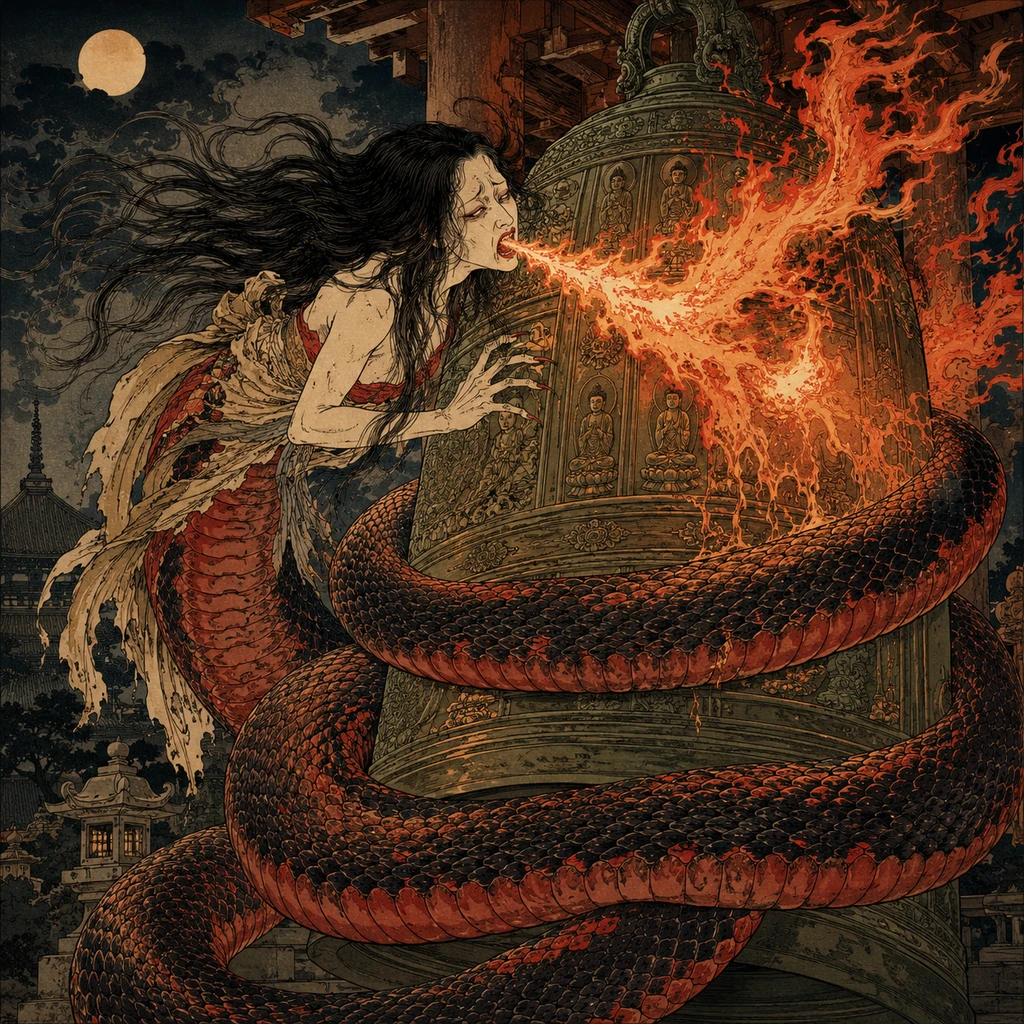
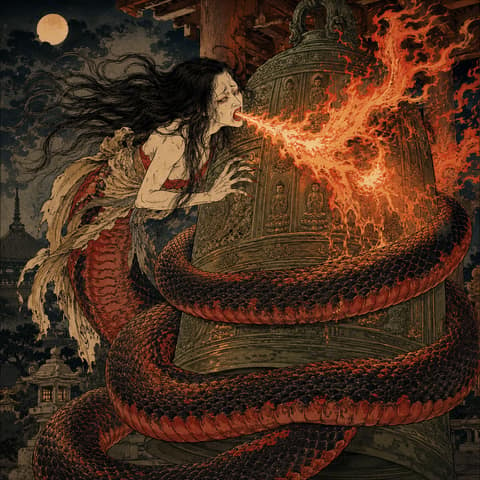
Kiyohime is the serpent woman from the legend of Anchin and Kiyohime, passed down at Dojoji Temple in Kii Province. She fell in love with Anchin, a monk on a pilgrimage to Kumano. Believing he broke his promise, she chased him across the Hidaka River, transformed into a giant serpent, and burned Anchin to death as he hid inside the temple bell at Dojoji. Dojoji Temple claims this story took place in the year 928 (Encho 6) and it was recorded in the 11th-century *Hokke Genki*, later expanding into the "Dojojimono" plays of Noh, Ningyo Joruri, and Kabuki . In older tales, the woman's name was not fixed; she became established as "Kiyohime" through later temple legends, picture storytelling (etoki), and performing arts. As a yokai, Kiyohime is not a serpent deity in her own right, but a liminal being whose human love was burned by jealousy and obsession into a serpentine form. Much like Hannya and Hashihime, she is a representative demoness (kijo) whose grudge gained a face, a body, and fire.

Hashihime (Bridge Princess)

Hashihime (Bridge Princess)

Epic

HAH-shee-HEE-meh

Hashihime of Uji (Traditional Form)

Half-Human BeingsKyoto

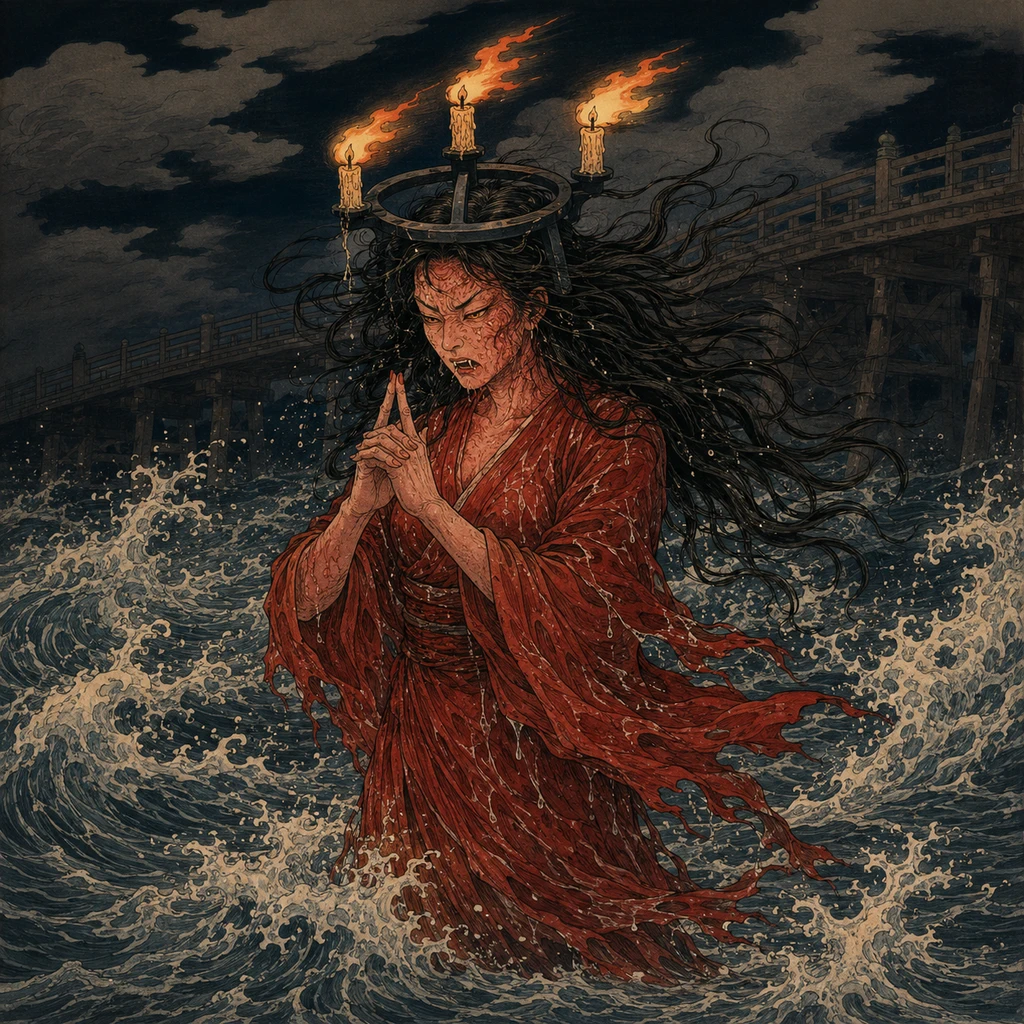
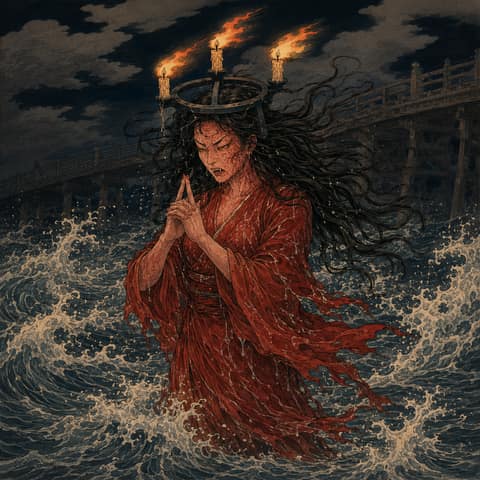
Hashihime is a figure born from ancient water and land deities fused with beliefs in bridge guardians. Revered at old great bridges, she is known as a goddess or ogress. A shrine to her stands at Uji Bridge on the Uji River, with traditions also tied to Nagara Bridge and Karahashi at Seta. Taboos warn against praising other bridges while standing on a bridge, or singing songs of jealousy there. She appears in the Kokin Wakashū, and later lore recasts her as a woman transformed into a demon by jealousy.

Bone Woman

Bone Woman

Rare

HOH-neh-ON-nah

Bone Woman (after Sekien Toriyama)

Half-Human BeingsEdo period (print tradition)

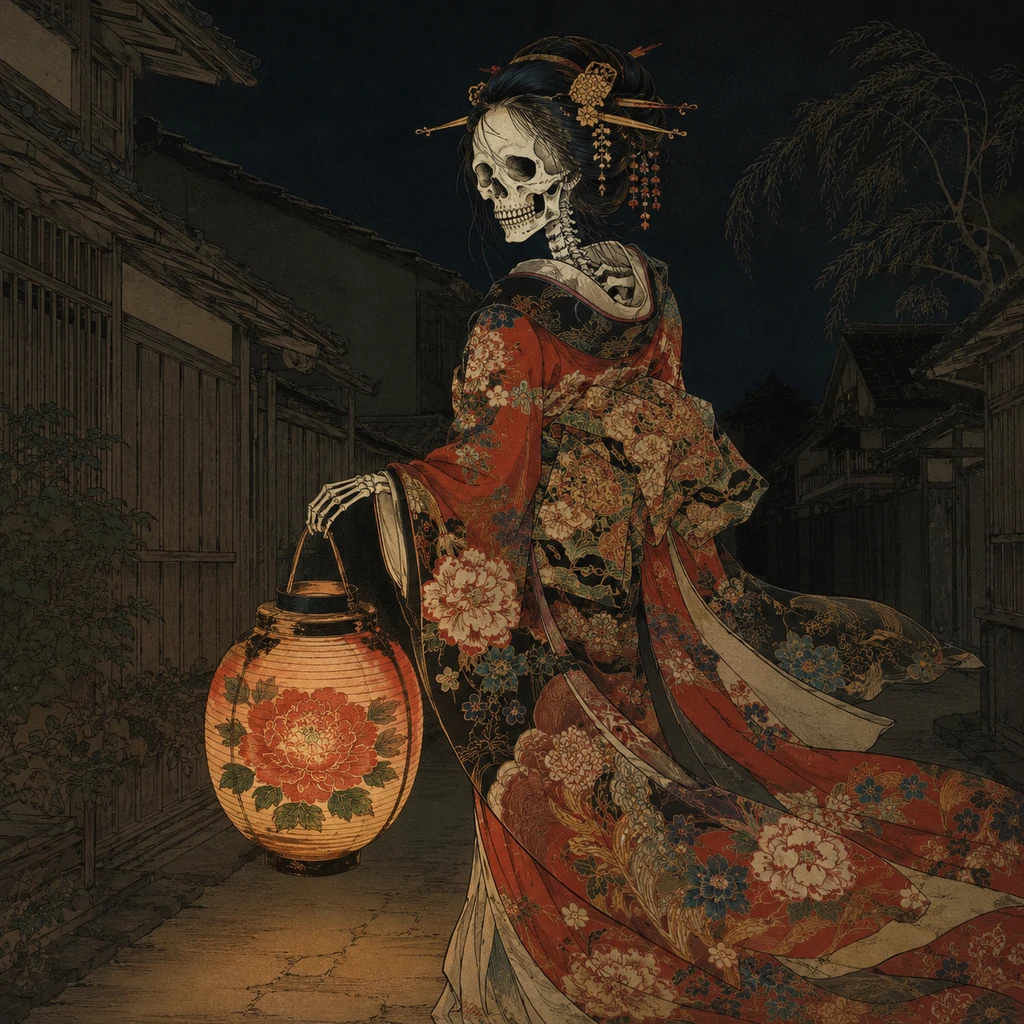
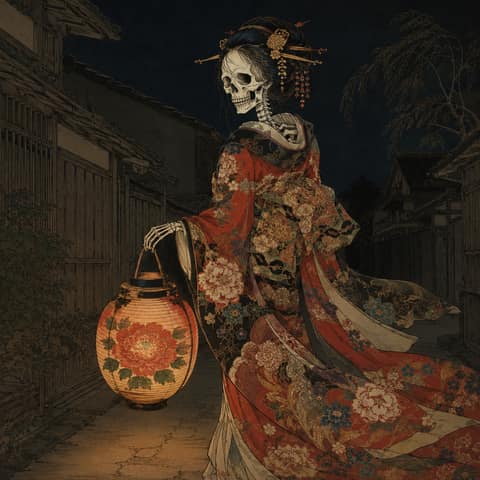
Bone Woman is a skeletal female yokai depicted by Toriyama Sekien in Konjaku Gazu Zoku Hyakki. In his notes, Sekien cites otogizōshi-style ghost tales in which a woman bearing a peony-patterned lantern visits her lover, drawing on the female specter from Asai Ryōi’s Otogibōko story “Botan Dōrō.” The image embodies a beauty who approaches a man but is in truth bare bones—a visualization of the uncanny where desire and death intersect.

Iso-onna (Shore Woman)

Iso-onna (Shore Woman)

Epic

EE-soh-OHN-nah

Toma-Shunning Nure-Onna

Aquatic SpiritsKumamotoNagasaki

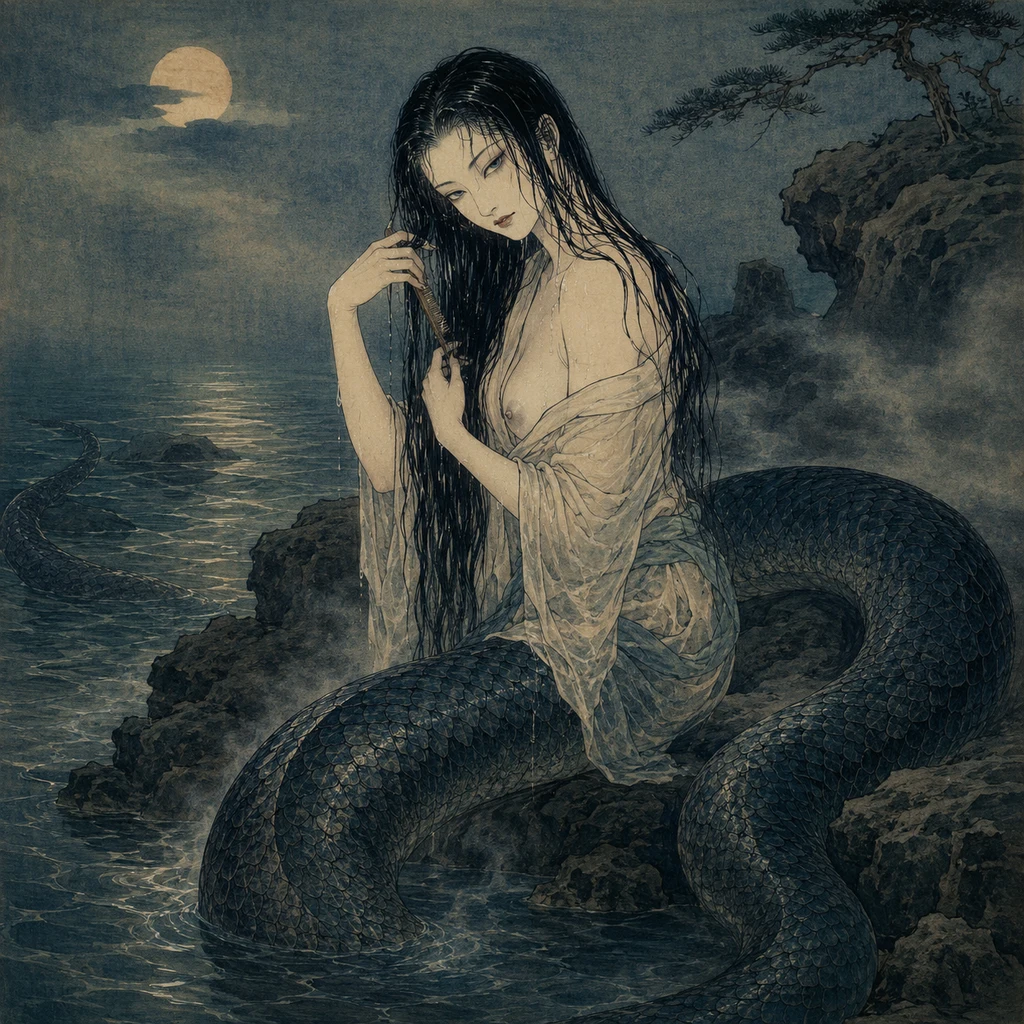
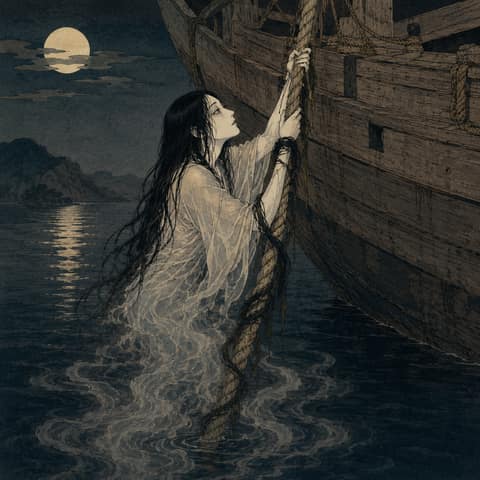
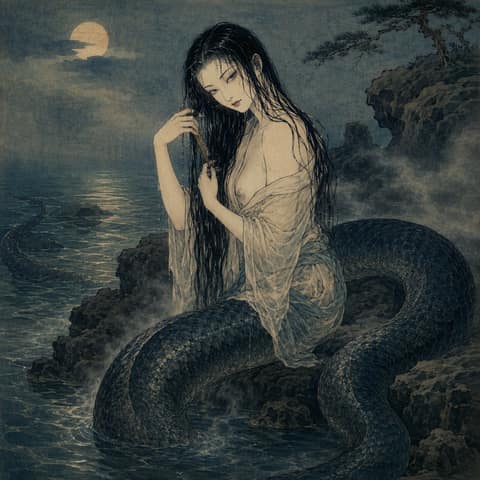
The Iso-onna is a female yokai said to haunt beaches and rocky shores around Kyushu. She approaches sands, tidepools, and moored boats, ensnaring people with her long hair to drink their blood. Her upper body resembles a beautiful woman, while her lower half is indistinct, sometimes serpent-like; from behind she may appear as a boulder. Names vary by region—Iso-onna, Nure-onna, Ama, Umi-hime—and she often appears during calm seas. In some areas she is linked to the vengeful spirits of the drowned.

Nure-onna

Nure-onna

Epic

NOO-reh-OHN-nah

Nure-onna (Tradition-Faithful Version)

A female yokai that appears by the water, named for her perpetually wet hair and body. Edo-period picture scrolls often depict her as a woman with a serpent’s body, luring people at sea or along rivers. She is closely associated with the Iso-onna and is sometimes said to be a sea-snake incarnation, though firsthand descriptions in classical sources are scarce. Traits vary by region, from tales where she forces a baby into a passerby’s arms to accounts of a vast-tailed water monster.

Tall Woman

Tall Woman

Epic

tah-kah-OHN-nah

Iconography-True (Sekien-Based)

Household SpiritsJapanese folklore

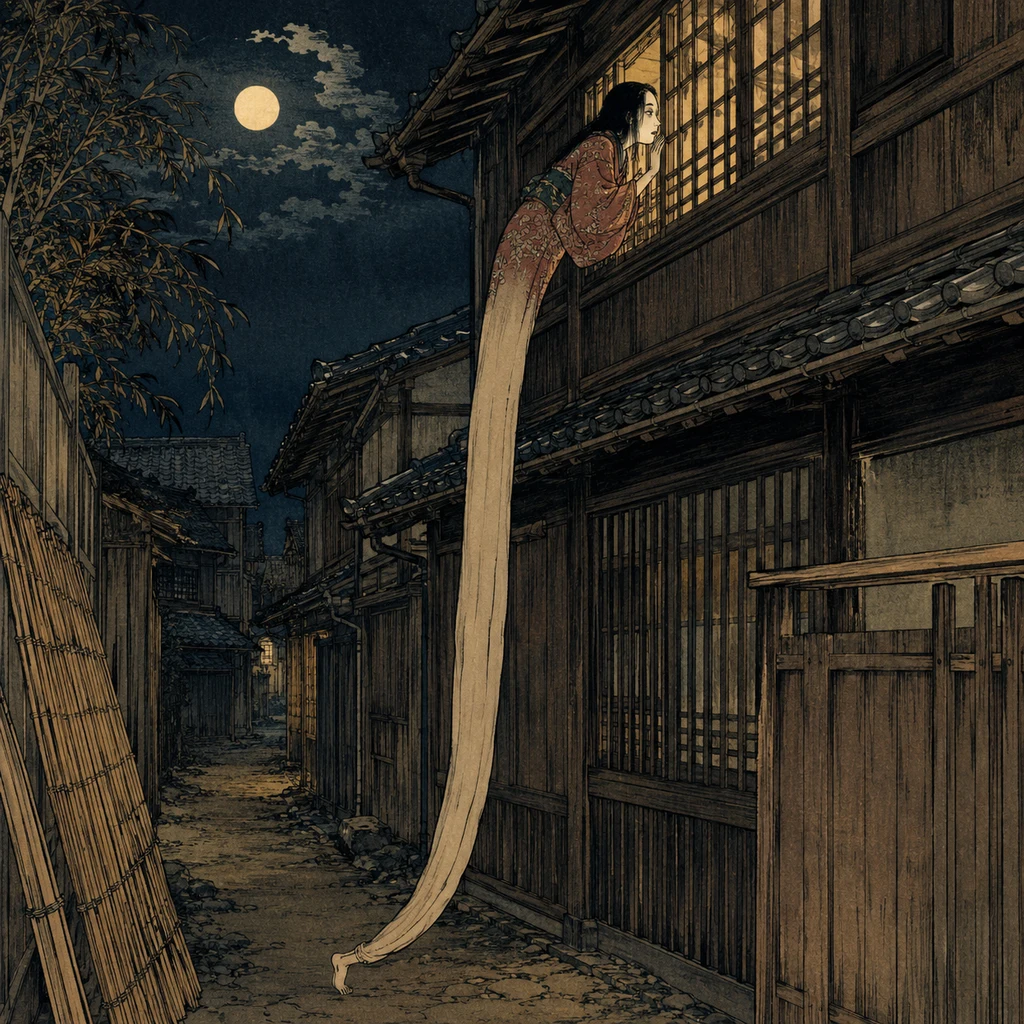
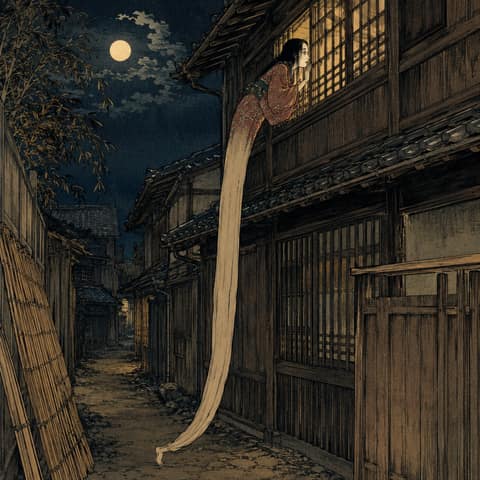
A female yokai depicted by Toriyama Sekien in Gazu Hyakki Yagyo. She is known for stretching her lower body up to the height of a building’s second floor to peer through windows. Sekien’s original print includes no notes, so her nature and identity remain uncertain. Later writers imagined her startling patrons on the upper floors of brothels, but historical sources mostly present her as a visual motif without fixed tales or a settled etymology—an emblem of a strange figure that peers from high places.

Rain Woman

Rain Woman

Epic

AH-meh-ON-nah

Rain-Summoning Female Spirit

Weather & Calamity SpiritsNagano

A feminine yokai or spirit associated with calling rain. Toriyama Sekien includes the subject “Ame-onna” in Konjaku Hyakki Shūi, but his treatment leans on the Chu poet Song Yu’s tale of “morning cloud, evening rain,” using it satirically rather than defining a concrete monster. In folk belief she is feared as a figure who appears on rainy days to snatch children, yet also revered as a rain-bringing spirit who ends drought.

Shadow Woman

Shadow Woman

Uncommon

KAH-geh-OHN-nah

Kage-onna (Traditional Depiction)

Half-Human BeingsUncertain (pictorial sources point to Edo–Kyoto area)

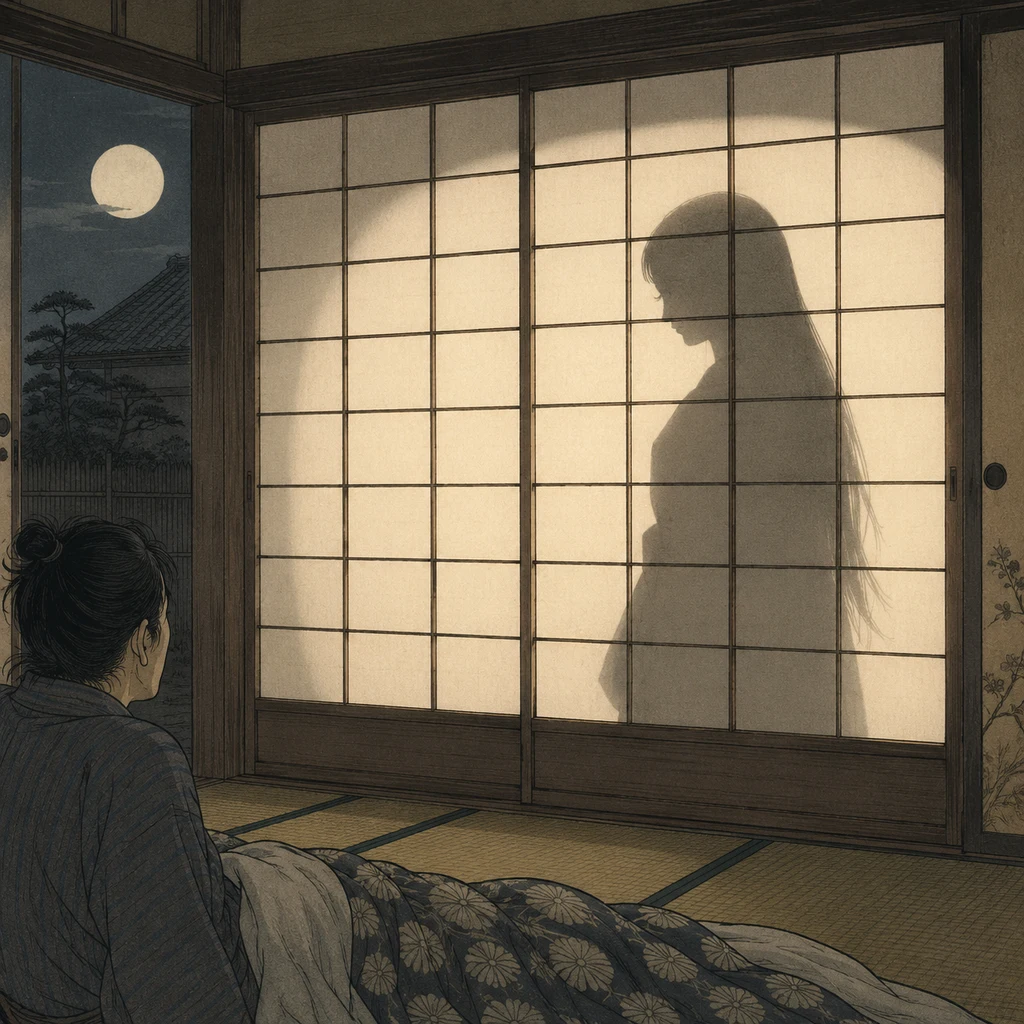
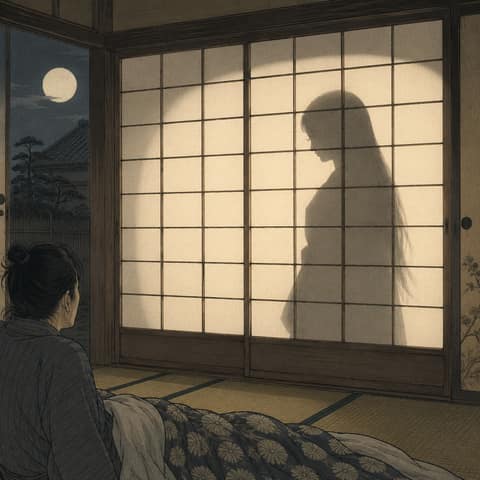
The Shadow Woman is a feminine apparition drawn by Toriyama Sekien in Konjaku Hyakki Shūi. In houses haunted by spirits, only the silhouette of a woman appears on the shoji under moonlight. She manifests as a shadow, with no clear physical body. Sightings occur at night—especially in strong moonlight—and are described less as attacks and more as an ominous sign. Explanations vary: a restless ghost, a house-bound entity, or a spirit of moonlight; her true nature remains unknown.

Kera-kera Woman

Kera-kera Woman

Rare

keh-rah KEH-rah OHN-nah

Sekien Illustrative Edition

Ghosts & SpiritsJapanese folklore

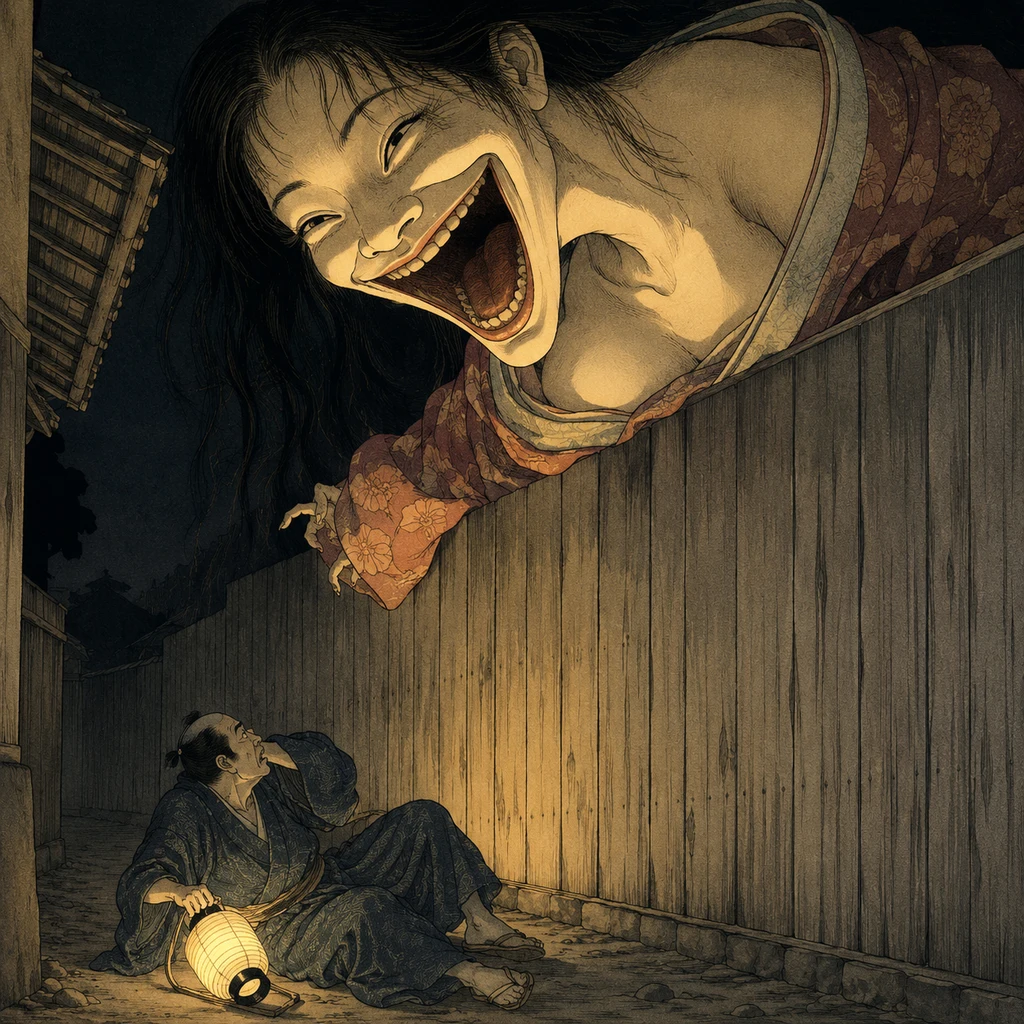
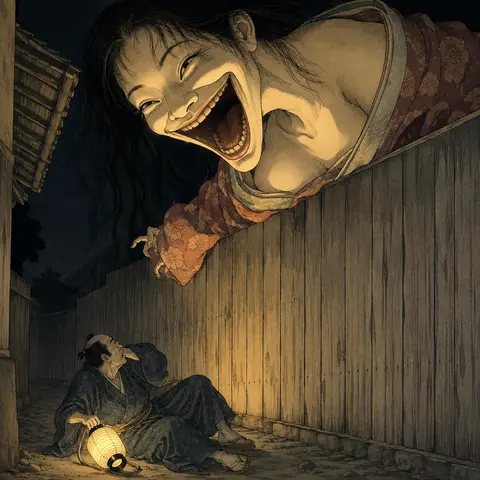
A female yokai depicted by the Edo-period artist Toriyama Sekien in Konjaku Hyakki Shūi. She peers over a wall with her mouth agape, cackling kera-kera to bewilder passersby. Sekien alludes to a Chinese anecdote by Song Yu, likening her to the spirit of a woman whose coquettish laughter unsettled hearts. No specific locale or backstory is given; later tradition remembers her as a eerie, laughing apparition.

Hienma

Hienma

Rare

hee-EN-mah

Didactic Tale, Classical Iconography Adherent

Half-Human BeingsEdo period

A yokai named in the Edo-period collection Ehon Hyaku Monogatari. Framed as a Buddhist admonition, it serves as a metaphor for the folly of being ensnared by a woman’s allure. Her outward beauty is likened to a bodhisattva, while her inner nature is as fearsome as a yaksha. Men whose hearts are unsettled by her are warned to lose their homes and ruin themselves. The name can be read as “calamity flying in on karmic ties,” and it has been linked to folk beliefs about women born in the year of Hinoe-uma (the fiery Horse).

針女

針女

Rare

はりおなご

宇和島夜道の鉤髪女・針女

人妖・半人半妖Ehime

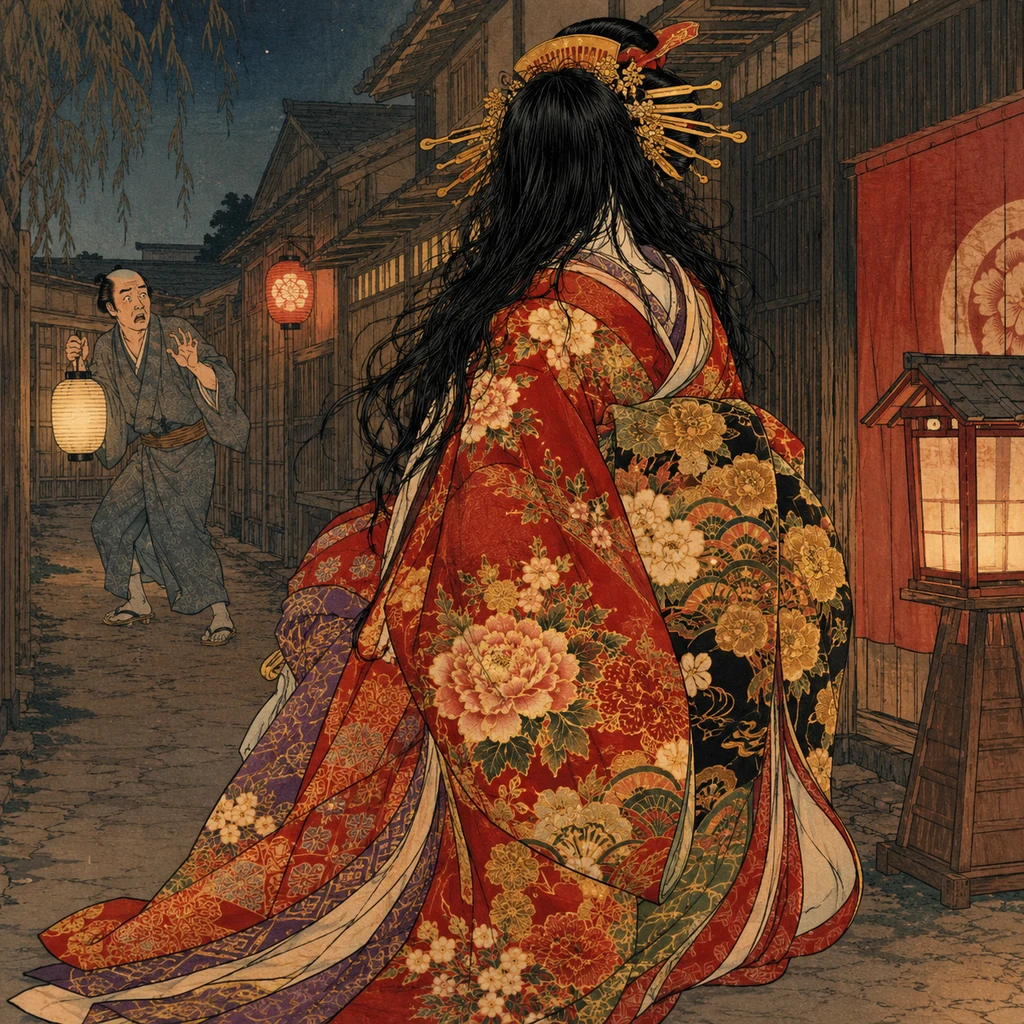
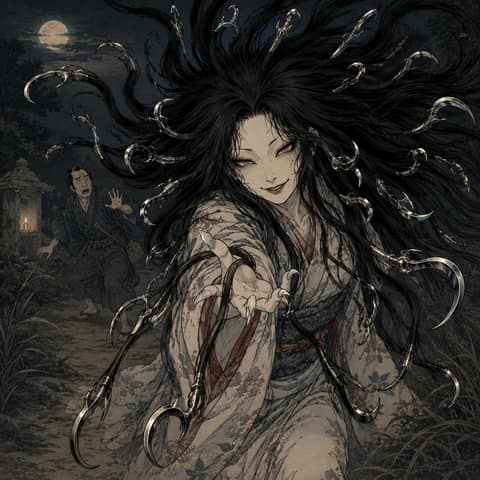
The Hari-onna is a yokai said to be passed down in the Uwajima region in the southern part of Ehime Prefecture, a female spirit whose hair ends are equipped with hooks resembling barbed fishhooks. The explanation on Mizuki Shigeru Road at the Mizuki Shigeru Museum registers her reading as "hari-onago" and her location of appearance as "Uwajima region, Ehime Prefecture," introducing her as having the appearance of a beautiful woman but snagging men with the hooks on the ends of her disheveled hair and dragging them away. Because she appears on night roads looking almost indistinguishable from a human, and her anomaly unfolds in the sequence of smiling, approaching, and wildly shaking her hair, her terror lies not in a grotesque form itself, but in how an ordinary encounter transforms into a trap in an instant.

お歯黒べったり

お歯黒べったり

Rare

おはぐろべったり

黒歯の花嫁面・お歯黒べったり

人妖・半人半妖Tokyo

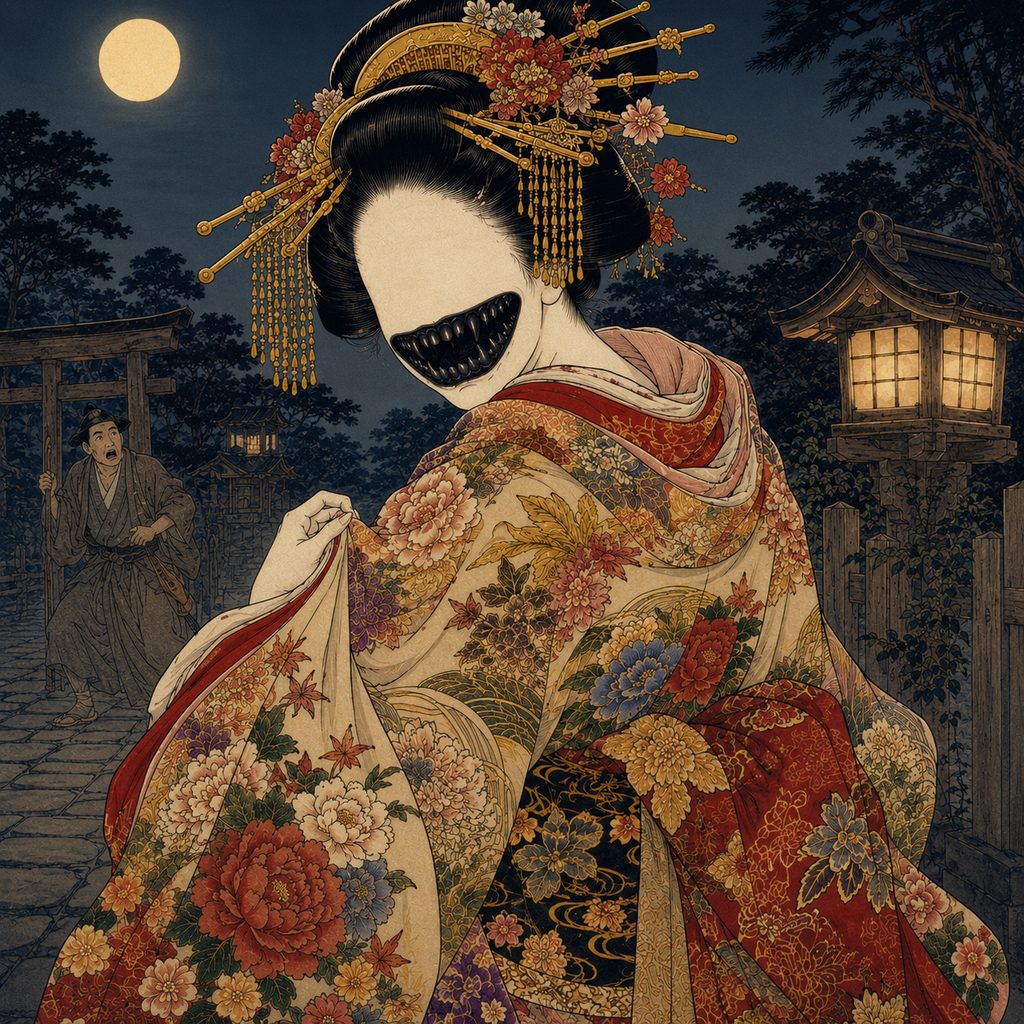
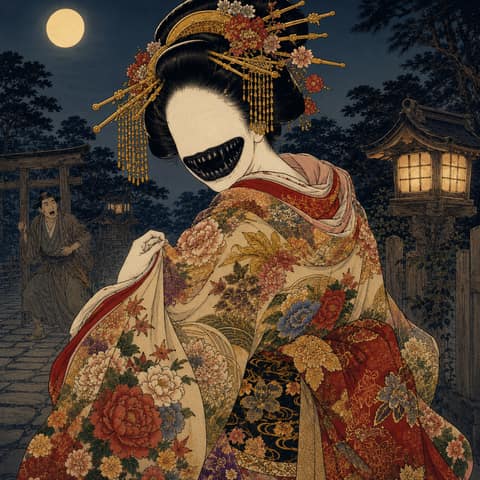
The Ohaguro-bettari is a yokai that appears in the guise of a bride or a young woman, hiding her face. When someone approaches her, she reveals a stark white face with no eyes or nose, dominated solely by a large mouth filled with blackened teeth. In her name, "ohaguro" refers to the historical custom of dyeing one's teeth black with an iron-based solution, while "bettari" conveys an emphasized nuance, as if the blackness is thickly pasted or smeared across her mouth. Seen in the "Ehon Hyakumonogatari" (Picture Book of a Hundred Stories), this monster is best understood as a visual yokai where the beauty of a bridal gown and the terrifying absence of facial features undergo an instantaneous reversal. Ohaguro itself was not merely a mark of the supernatural, but a historical cosmetic culture intertwined with marriage, coming-of-age, social status, and female adornment. Books such as Hara Mitsumasa's "Study of Ohaguro," which treats tooth-blackening as a subject of folklore and body modification, remind us that when reading this yokai, black teeth were not just eerie, but were once symbols of beauty and social maturity. The terror of the Ohaguro-bettari lies in how this symbol becomes so excessive that it erases all other parts of the face. If the Noppera-bo pushes the terror of "having no face" to the forefront, the Ohaguro-bettari emphasizes the terror of "having only a mouth." One calls out to a woman hiding her face, or approaches thinking she is a beautiful bride. At the exact moment that expectation unravels, there are no eyes to return the gaze; only a black mouth smiles as if to swallow the viewer whole. Social symbols like beauty, marriage, formal dress, and shyness invert into a monster of facelessness and black teeth. That precipitous drop is the core of this yokai. Furthermore, rather than confining this yokai to a simplistic explanation like "the grudge of an unmarried woman," it is read much deeper by observing how late Edo-period ghost story picture books subverted the etiquette of cosmetics, weddings, and face-viewing shared by readers of the time. Black teeth were originally part of a makeup style designed to accentuate a white face. By erasing the eyes and nose from that canvas and leaving only the black-toothed mouth, the Ohaguro-bettari flips the symbol of beauty directly into a symbol of terror.
Kejōrō (Hair Courtesan)

Kejōrō (Hair Courtesan)

Epic

keh-JOH-roh

Printed Edition – Sekien School Variant

Household SpiritsEdo period

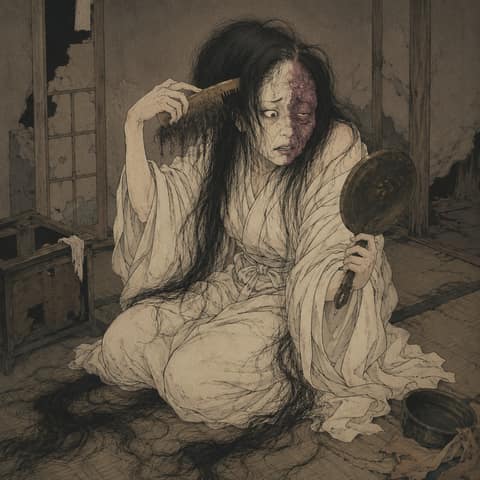
A strongly imaginative yokai depicted in Toriyama Sekien’s Konjaku Gazu Zoku Hyakki and Edo-period kibyōshi. As the name suggests, it appears as a courtesan whose entire body is shrouded in long hair; her face is hidden by hair, or in some readings, absent altogether. Considered a satirical presence in the pleasure quarters, the wordplay links the painted “makeup” of a courtesan with “apparition.” It lacks stable local folklore and is known mainly from printed sources.

Blue Lady-in-Waiting

Blue Lady-in-Waiting

Rare

AH-oh NYOH-boh

Emaki and Sekien Lineage Iconography

Half-Human BeingsJapanese folklore

A lady-in-waiting–type yokai seen in Edo-period monster paintings. In Toriyama Sekien’s Konjaku Gazu Zoku Hyakki, she appears as a youthful court woman with ohaguro (toothed blackening), said to haunt a ruined old palace. The term originally referred to low-ranking young attendants serving at court or in aristocratic households, and was not a fixed monster name. Similar court-attendant figures appear across various Hyakki Yagyo picture scrolls; Sekien likely labeled that iconography as “Ao-nyōbō.” Her nature and origins are unknown.

Kurozuka

Kurozuka

Legendary

kurozuka

The Tragedy of Adachigahara: The Hag of Kurozuka

鬼・巨怪Fukushima

Established in prominence during the Heian period by Taira no Kanemori's poem in the *Shui Wakashu* (1006)—"Is it true what I hear, that a demon hides in the Black Mound (Kurozuka) of Adachigahara in Michinoku?"—this is the legend of the hag (Onibaba) of Adachigahara in Mutsu Province (modern-day Nihonmatsu City, Fukushima Prefecture). She is the ultimate embodiment of the yokai archetype of the "mountain crone who shelters travelers, only to attack them at midnight and devour their livers." Dramatized as the Noh play *Kurozuka* (Adachihara) by Kanze Kojiro in the medieval Muromachi period, and further perfected as the Joruri and Kabuki play *Oshu Adachigahara* (premiered 1762) by Chikamatsu Hanji and others during the Edo period, it remains the most representative Japanese hag legend, still performed today. The primary site of the legend is Kanze-ji Temple (founded 727, Nihonmatsu City), where the "Kurozuka" within the precincts is said to be her burial mound. The tragic narrative of her true identity, "Iwate"—who, in her desperate search for a liver to cure her mistress, unknowingly murders her own daughter—was added in later eras, deepening the tale from a simple monster story into a profound human tragedy.

葛の葉

葛の葉

Legendary

くずのは

信太森に帰る狐母・葛の葉

動物変化Osaka

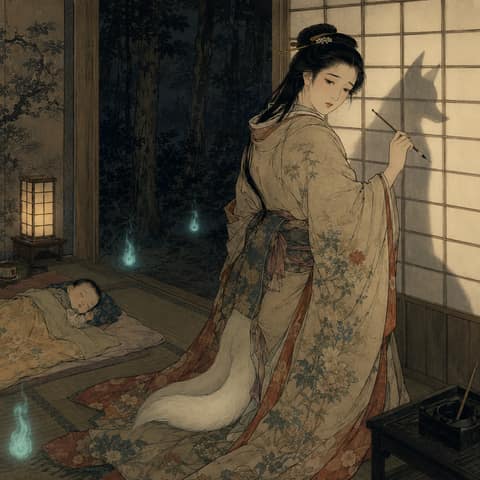
Kuzunoha is a shape-shifting fox living in the Shinoda Forest who becomes a human wife and is later spoken of as the mother of the onmyoji Abe no Seimei. While the core of the story is a tale of a fox's transformation, it places gratitude, the bond between husband and wife, and the parting of mother and child at the forefront, rather than the terror of shapeshifting to deceive humans. The plot—a fox saved in the Shinoda Forest transforms into a woman named Kuzunoha, marries Abe no Yasuna, and gives birth to Dojimaru—was largely solidified as "The Kuzunoha Fox" in early modern joruri and kabuki theater. In the bibliography of the National Diet Library, one can find the Ashiya Doman Ouchi Kagami lineage, which includes the title Shinoda-zuma Urami Kuzunoha (The Wife of Shinoda: The Sorrowful Kuzunoha). Kuzunoha has become more than just a fox wife; she is an entity that illuminates the Seimei legends from the perspective of a mother's story. A characteristic of Kuzunoha is that her fox spiritual power is manifested inside the home. While the Nine-Tailed Fox or Tamamo-no-Mae often wear outward-facing demonic power that shakes royal authority, Kuzunoha's power dwells in domestic scenes: sliding doors (shoji), the delivery room, the child's name, and the waka poem left at her departure. When her true identity is revealed, the fox has no choice but to leave her child and return to the forest. The poem she leaves behind—"If you long for me, come seeking me in the forest of Shinoda in Izumi, the sorrowful Kuzunoha"—causes Kuzunoha to be remembered not as a terrifying monster, but as a mother who crossed boundaries. The Ashiya Doman Ouchi Kagami: Abe Yasuna, Kuzunoha, and Yokanpei in the Izumi City Digital Archive also conveys the scene of parting with her child, showing that the image of Kuzunoha was cultivated both on stage and in iconography. Therefore, among fox yokai, Kuzunoha is an entity who makes us question "what she tried to protect even by shapeshifting" rather than her "ability to shapeshift." The land of Shinoda Forest, the name Abe no Seimei, the folktale of the fox wife, and the programs of kabuki and bunraku overlap, and she stands as a legendary figure who, despite being a yokai, bears the sorrow of motherhood and an inter-species marriage.

Osakabe-hime

Osakabe-hime

Epic

oh-sah-KAH-beh-hee-meh

Osakabe-hime (Traditional Tale Version)

Half-Human BeingsHyogo

A female yokai and castle deity said to dwell in the main keep of Himeji Castle. Early Edo怪談 depict it as a gender-shifting castle specter; later tradition fixed the image as a “princess.” Revered and feared as both guardian and avenger of the castle, bringing fortune or calamity according to the lord’s conduct. Its true nature varies by tale—an ancient fox, a castle god, a sacrificed woman, or the spirit of a long-departed noble lady. Also called Osakabe.

Takiyasha-hime

Takiyasha-hime

Epic

takiyasha-hime

The Sorceress Princess of Soma's Ruined Palace: Takiyasha-hime

Spirit / GhostIbarakiChiba

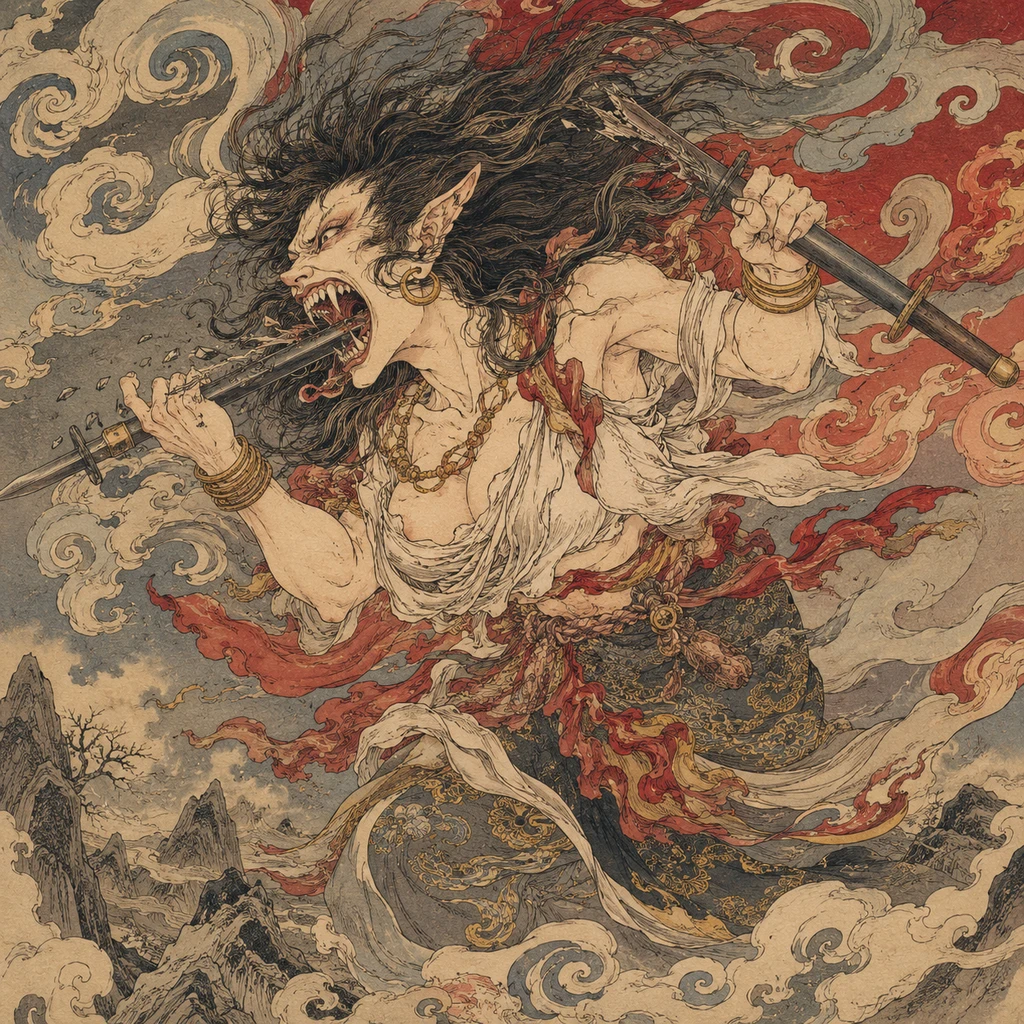
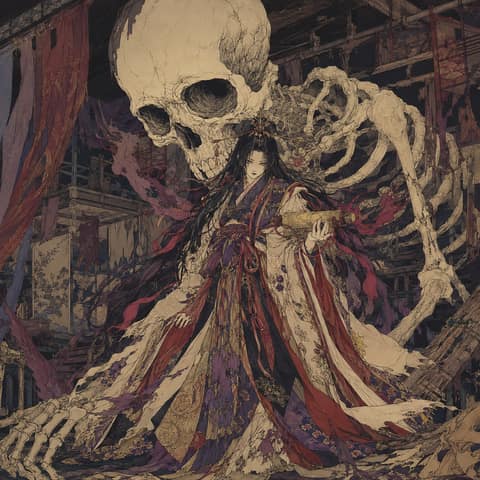
Takiyasha-hime is considered the daughter of Taira no Masakado, and was shaped in later literature as a rebellious princess wielding sorcery at the ruined palace of Soma (Soma no Furudairi). Rather than being the historical daughter of Masakado herself, she is a sorceress born from the layering of Masakado legends, yomihon (reading books), kabuki, and ukiyo-e, gaining a clear outline in narrative worlds such as Santo Kyoden's "Zenchi Yasukata Chugiden". She is depicted as a woman bearing the ruined dreams of the Bando (Kanto) region, plotting a resurgence from the ruins. What decisively spread the image of Takiyasha-hime was Utagawa Kuniyoshi's "Soma no Furudairi." The composition of a giant skeleton appearing behind the princess and Oya Taro Mitsukuni linked her to sorcery, grudges, ruins, and the hallucination of bones. The Masakado faith and vengeful spirit legends, represented by the Masakado-zuka (Masakado's mound), also thicken this background. Rather than being a yokai herself, Takiyasha-hime is a figure who reenacts the memory of the defeated through sorcery—a bizarre heroine born from the imagination of the late Edo period flowing into the blanks of historical fact. The strength of this princess lies not in historical proof, but in the density of elements gathered upon her by the imagination of later generations. The overlapping symbols of Masakado, Soma, ruins, sorcery, a giant skeleton, and female rebellion turned Takiyasha-hime from a mere legendary daughter into the very stage that performs the memory of the defeated eastern provinces.

Suzuka Gozen

Suzuka Gozen

Legendary

すずかごぜん

Suzuka Gozen, the Heavenly Maiden Guarding the Suzuka Pass

Human-Yokai / Half-Human Half-YokaiMieKyoto

Suzuka Gozen is a boundary female spirit dwelling on Mount Suzuka and the Suzuka Pass, the border between Ise and Omi Provinces. She is variously depicted as a goddess, a heavenly maiden (tennyo), a female bandit, or an oni woman (kijo). Also known as Suzuka Hime, Suzuka Daimyojin, Suzuka Gongen, and Suzuka Shinjo, she was later conflated with Tate-eboshi of Mount Suzuka. In the Tamura narratives from the Muromachi period onwards, she becomes the partner of Tamuramaru (modeled on Sakanoue no Tamuramaro) and aids him in slaying demon gods like Otakemaru. However, she is no mere damsel in distress waiting for a hero. Embodying the guardian deity of the pass, the memory of bandits who threatened travelers, and the divine authority of a goddess descending from heaven, she provides Tamuramaru with the strategies necessary to defeat the mountain's demon gods. Suzuka Gozen is the very personification of the Suzuka Pass, standing at the crossroads between the capital and the eastern provinces, gods and demons, and protection and rebellion.

Female Tengu

Female Tengu

Uncommon

OHN-nah TEN-goo

Annotated Tradition Edition: Female Tengu

Mountain & Wilderness SpiritsTokyoYamanashi

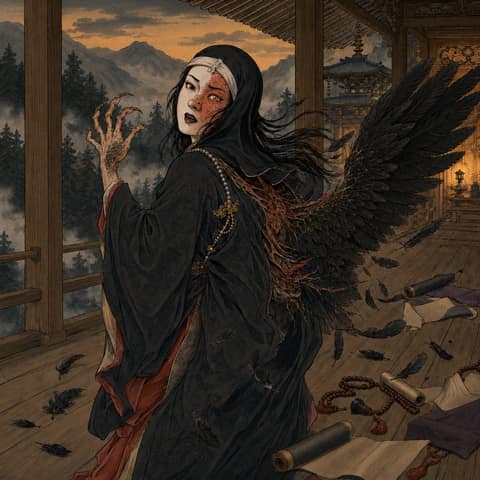
Female Tengu are the female-identified beings among the tengu. They are depicted with long hair, eyebrows darkened with ink, rouge and white powder on the face, teeth blackened with ohaguro, and dressed in scarlet hakama and gauzy robes, sometimes with wings on their back. Classical sources mention nuns who fall and become “nun tengu,” though records differ on whether women exist in the tengu world at all. Some regions describe river tengu with feminine traits, but details remain unclear.

Hannya

Hannya

Epic

HAHN-nyah

Noble Living Ghost - White Hannya (Lady Rokujo)

Oni / Giant SpecterNaraKyoto

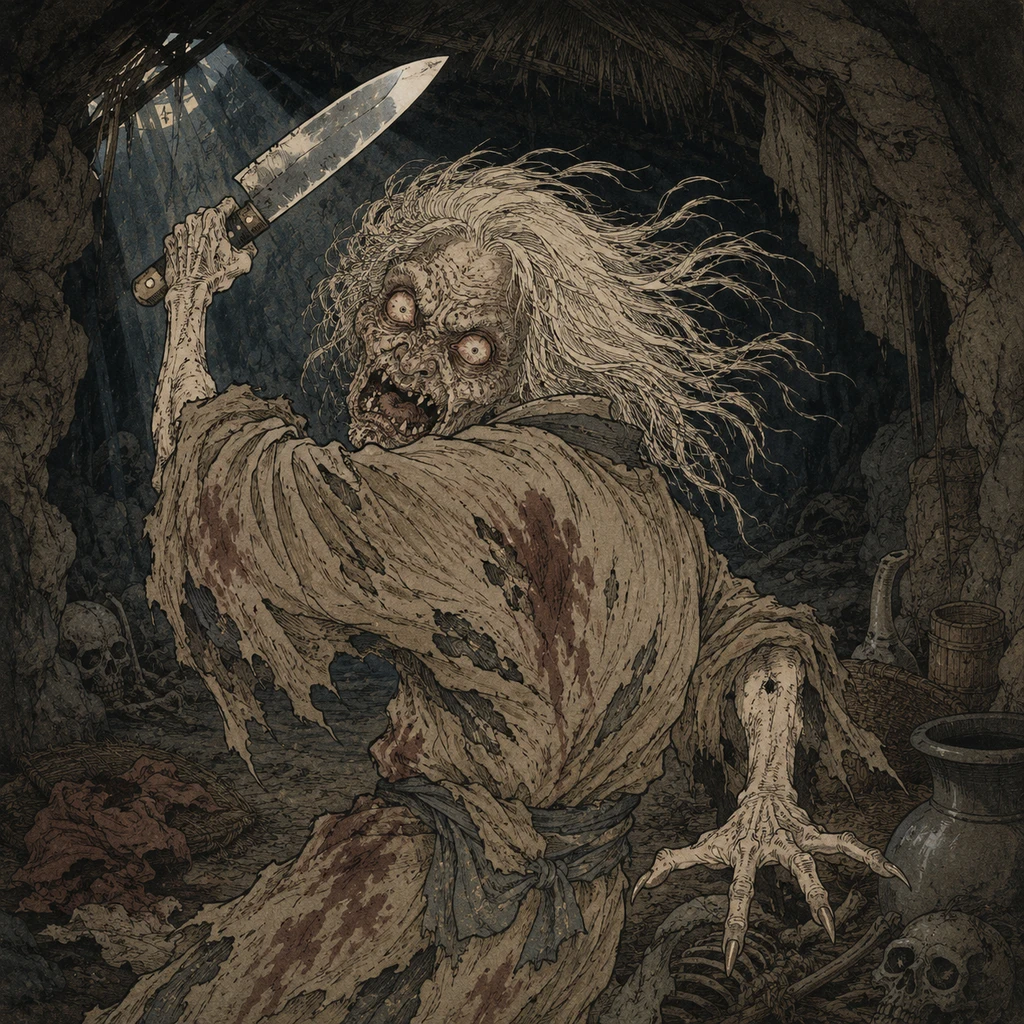
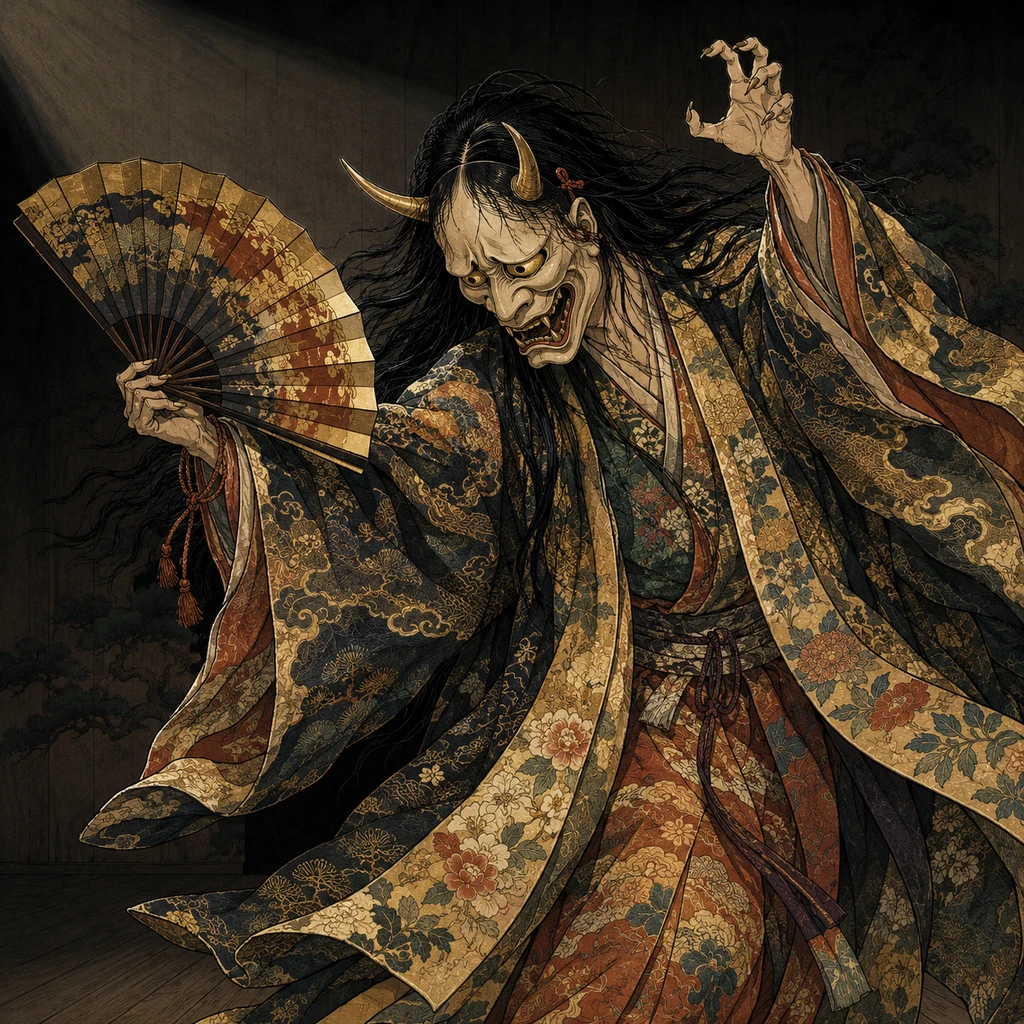
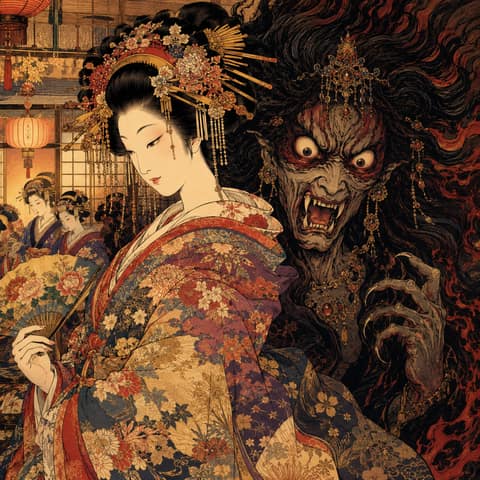
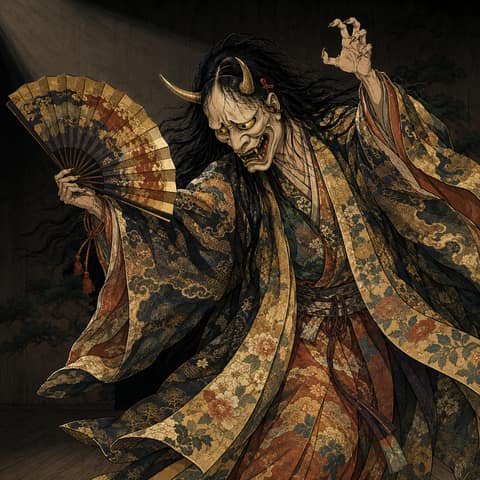
Hannya is not the name of a specific yokai species, but refers to the form of a woman who has transformed into a demon (kijo) out of extreme jealousy and resentment, as well as the 'Noh mask' used to represent her in the traditional Japanese performing art of 'Noh'. Her visual appearance—two golden horns protruding from the forehead, a mouth split to the ears, bared fangs, and disheveled hair—has become globally recognized as the definitive image of a 'female demon' in Japan. The greatest characteristic of this yokai (Noh mask) lies in the 'ultimate duality' hidden within its design. Observing the upper and lower halves of the Noh mask separately reveals its tremendous sculptural beauty. The lower half (the mouth and jaw) expresses pure 'anger and ferocity', intimidating with bared fangs. However, the upper half (especially the outer corners of the eyes and the brow) is etched with profound 'sorrow and despair' over being betrayed by a loved one and falling into the form of a hideous monster. On the Noh stage, the mask is meticulously calculated so that when the actor tilts it slightly upwards ('terasu' - to illuminate), it appears as a terrifying, raging demon, and when tilted slightly downwards ('kumorasu' - to cloud), it looks like a pitiful woman breaking down in tears. Even more fascinating is the strong irony inherent in the name 'Hannya (Prajñā)'. In Buddhism, 'Hannya' is a sacred word meaning the 'highest wisdom (enlightenment)' that severs worldly desires. Why would a female demon who has succumbed to the most secular emotions of 'jealousy' and 'lust' and fallen into evil be called by the name of 'wisdom', its exact opposite? There are various theories, such as that it was created by the genius mask maker 'Hannya-bo' of the Muromachi period, or that reciting the Heart Sutra (Hannya Shingyo) was absolutely necessary to vanquish (exorcise) this female demon. In any case, there is no other yokai that embodies the psychological terror of humans losing their reason and turning into beasts (demons) through such a highly refined artistic expression.

Datsue-ba

Datsue-ba

Legendary

Datsueba

The Hag of the Sanzu River

霊・亡霊偽経発祥の三途の川の老婆、日本成立だが在地発祥地なし

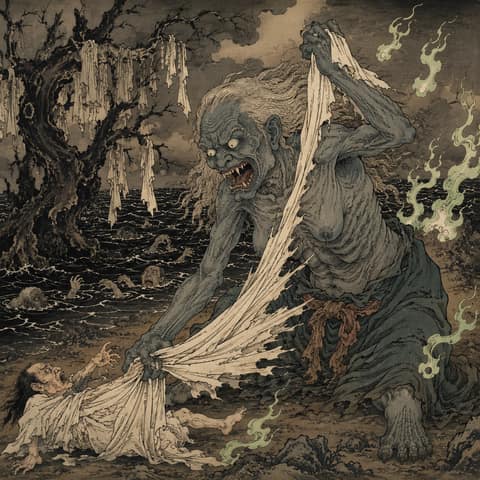
Datsue-ba is a hag from Japanese Buddhism and folk religion who resides at the Sanzu River, the boundary of the underworld. She sits on the riverbank and plays the role of stripping the clothes from the dead who arrive without the six-mon toll fee. Her counterpart, an old man named Kenne-o, then takes these stripped clothes and hangs them on the branches of a large tree called the Eryoju (Clothing-Receiving Tree). The degree to which the branches bend under the weight of the wet clothes determines the gravity of the sins the person committed in life—making this an extremely visual and quantitative mechanism of underworld judgment. Her first appearance in scripture is in the *Sutra on the Cause and Effect of Jizo Bodhisattva and the Ten Kings*, a Japanese apocryphal sutra from the late 12th century, an adaptation of a Chinese text. From the Kamakura period onward, she became a staple figure in preaching and picture-scroll storytelling. In the Edo period, she evolved into a popular deity for curing coughs (known as the 'Cotton Hag' at temples like Shoju-in in Shinjuku) and became deeply rooted in mass culture, frequently appearing in nishiki-e (woodblock prints) from 1849 through the Meiji era.

Yao-bikuni

Yao-bikuni

Rare

yao-bikuni

Camellias, the Cave of Nyujo, and the Eternal Maiden: Yao-bikuni

霊・亡霊Fukui

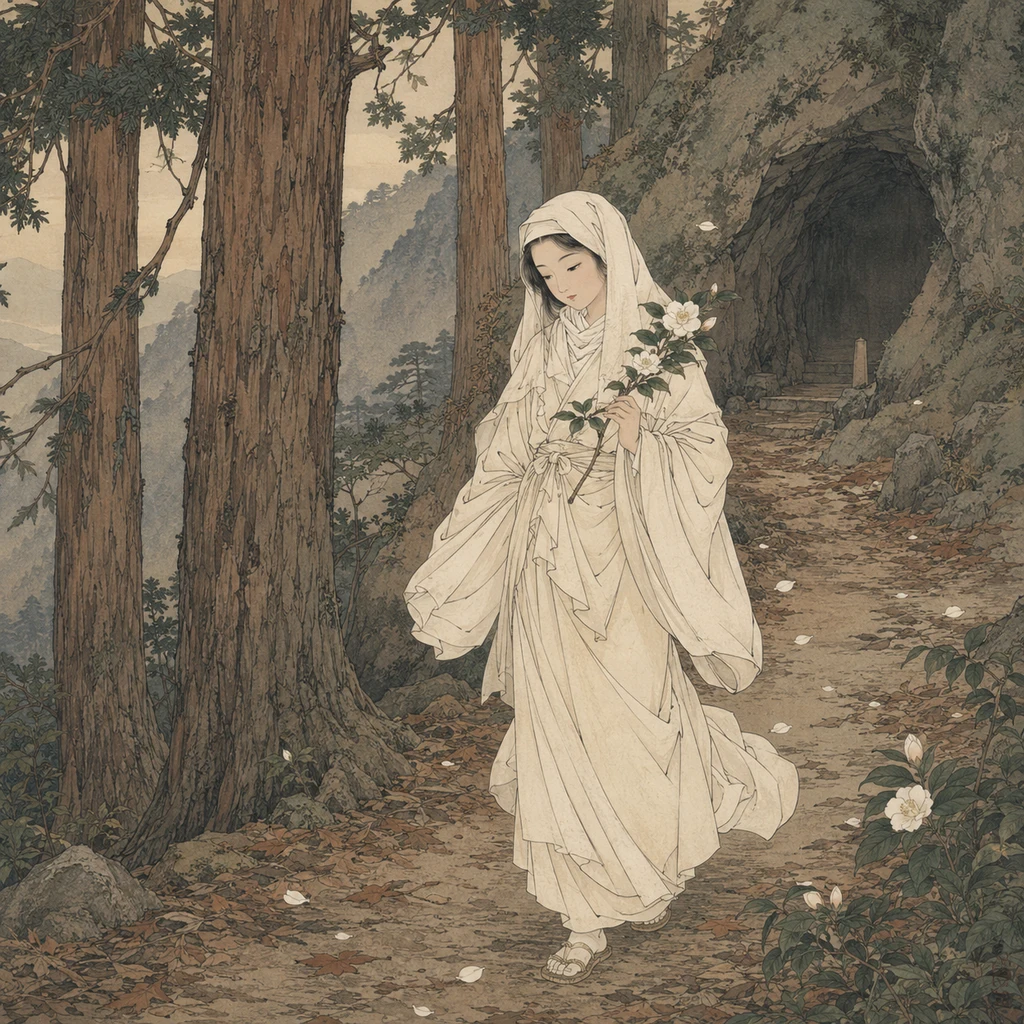
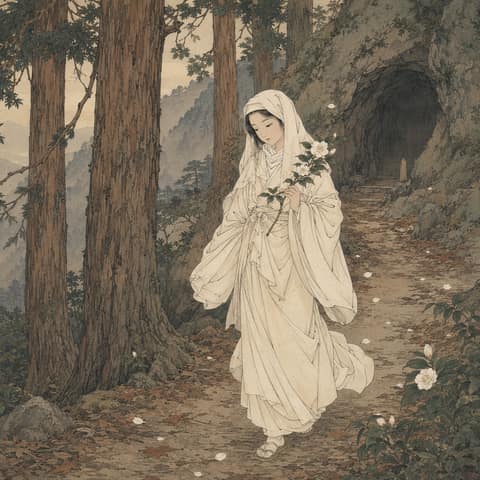
Yao-bikuni is a legendary Japanese Buddhist nun who is said to have gained immortality and lived for eight hundred years after eating Ningyo (mermaid) meat. Her legend is the most famous and culturally significant tale within Japan's mermaid folklore, distributed across approximately 27 prefectures nationwide (excluding Hokkaido and parts of Kyushu). The story typically begins when a man brings back "Ningyo meat" from the Other World (such as the Dragon Palace), and his daughter (or wife) unknowingly consumes it. Granted an ageless body, she retains her youthful beauty forever, but is forced to witness the aging and passing of her husbands, children, and loved ones time and time again, plunging her into endless sorrow and isolation. Realizing the impermanence of the world, she became a nun (bikuni) and devoted her seemingly infinite time to pilgrimages across the country. She performed virtuous deeds, such as planting trees (especially white camellias) and constructing bridges. Finally, she returned to Wakasa Province (modern-day Obama City, Fukui Prefecture) and entered a cave at Kuin-ji Temple, where she ceased eating and achieved "Nyujo" (entering a state of eternal meditation).

Oiwa

Oiwa

Legendary

Oiwa

Oiwa of Yotsuya Kaidan

Spirit / GhostTokyo

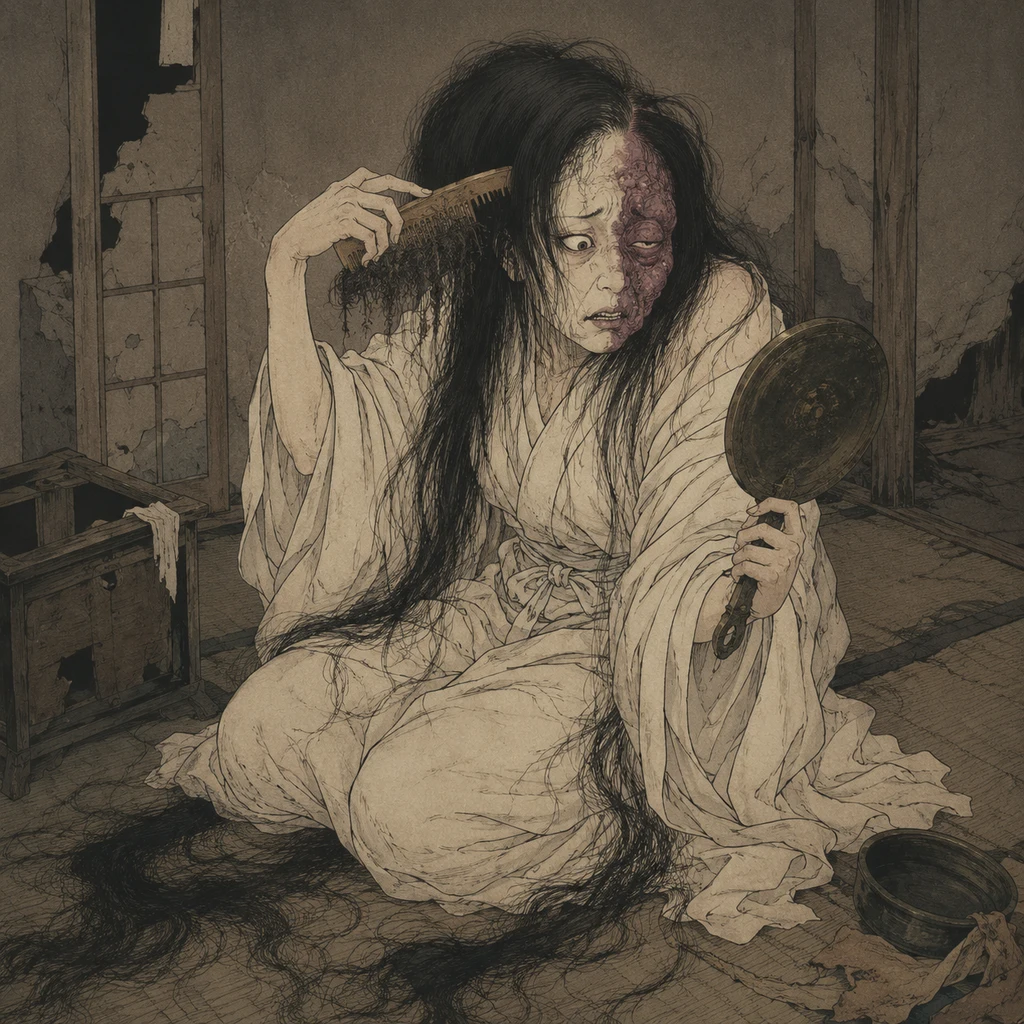
Oiwa is the protagonist of Japan's most widely known ghost story, renowned as a female ghost who was betrayed and poisoned by her husband, dying with a disfigured face and returning as a terrifying, vengeful spirit. However, this image is almost entirely a theatrical fabrication. In the kabuki play "Tokaido Yotsuya Kaidan" (written by Tsuruya Nanboku IV and premiered at the Edo Nakamura-za in 1825), the role of Oiwa was played by Onoe Kikugoro III. The iconic scenes—where she dies while combing her hair with half her face terribly swollen and decaying, washes ashore nailed to a wooden door, and later emerges from a burning lantern to torment her husband—established the archetype of the vengeful ghost Oiwa. Importantly, the real woman behind the legend was said to be the exact opposite. Oiwa (Tamiya Iwa), the wife of the Tamiya samurai family living in Samoncho, Yotsuya, was known as a devoted and faithful wife with a deeply loving marriage. She devoutly worshipped the family's Inari shrine and successfully restored her family's declining fortunes, making her an auspicious figure. The Oiwa Inari (Tamiya Inari) shrine dedicated to her was originally visited as a "god of luck that brings family prosperity." The name Oiwa stands upon the immense contrast between the historical virtuous wife and the vengeful spirit crafted by Nanboku two centuries later.

Okiku

Okiku

Legendary

okiku

Okiku of Sarayashiki

Spirit / Vengeful GhostHyogoTokyo

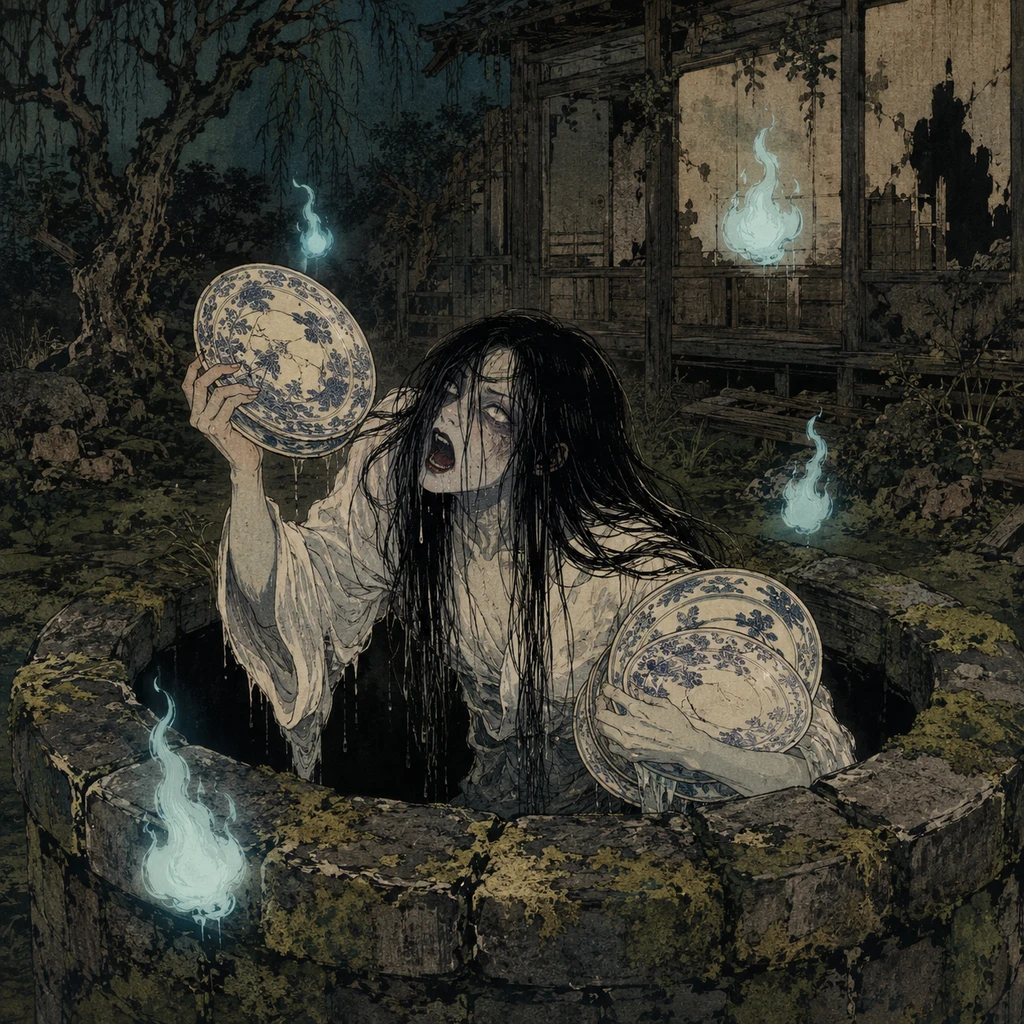
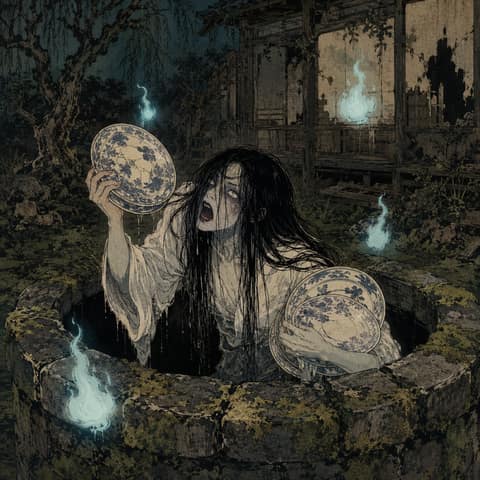
Okiku is the vengeful ghost of a woman who was drowned in a well over the suspected loss of a single heirloom plate, returning every night to the bottom of the well to count plates: "One... Two..." She features in two major lineages of legends: the *Banshu Sarayashiki* tradition set in Harima (Himeji), and the *Bancho Sarayashiki* tradition set in Bancho, Edo. Alongside Kasane and Oiwa, she is considered one of the most representative female vengeful spirits of early modern Japanese ghost stories. In the Banshu lineage, amid Aoyama Tetsuzan's conspiracy to usurp the Kodera (Hosokawa) clan during the Muromachi period, his retainer Machitsubo Danshiro hides one of ten heirloom Chinese plates, pins the blame on the maid Okiku, tortures her to death, and throws her into a well. In the Bancho lineage, Okiku is a maid in the mansion of the hatamoto Aoyama Shuzen who breaks a plate—or refuses her master's unwanted advances—and is slain and cast into a well. Both versions share the core motif of a cyclical haunting where she counts the incomplete set of plates, climaxing in an agonizing shriek when she reaches the missing piece. The Okiku Well still exists beneath the main keep of Himeji Castle, and the legend has taken deep root even in local place names, shrines, and the names of insects.

Otsuyu

Otsuyu

Legendary

おつゆ

Otsuyu of the Peony Lantern

Spirit / GhostOriginally from 'The Tale of the Peony Lantern' in the Chinese text 'Jiandeng Xinhua'; later adapted by Asai Ryoi and San'yutei Encho

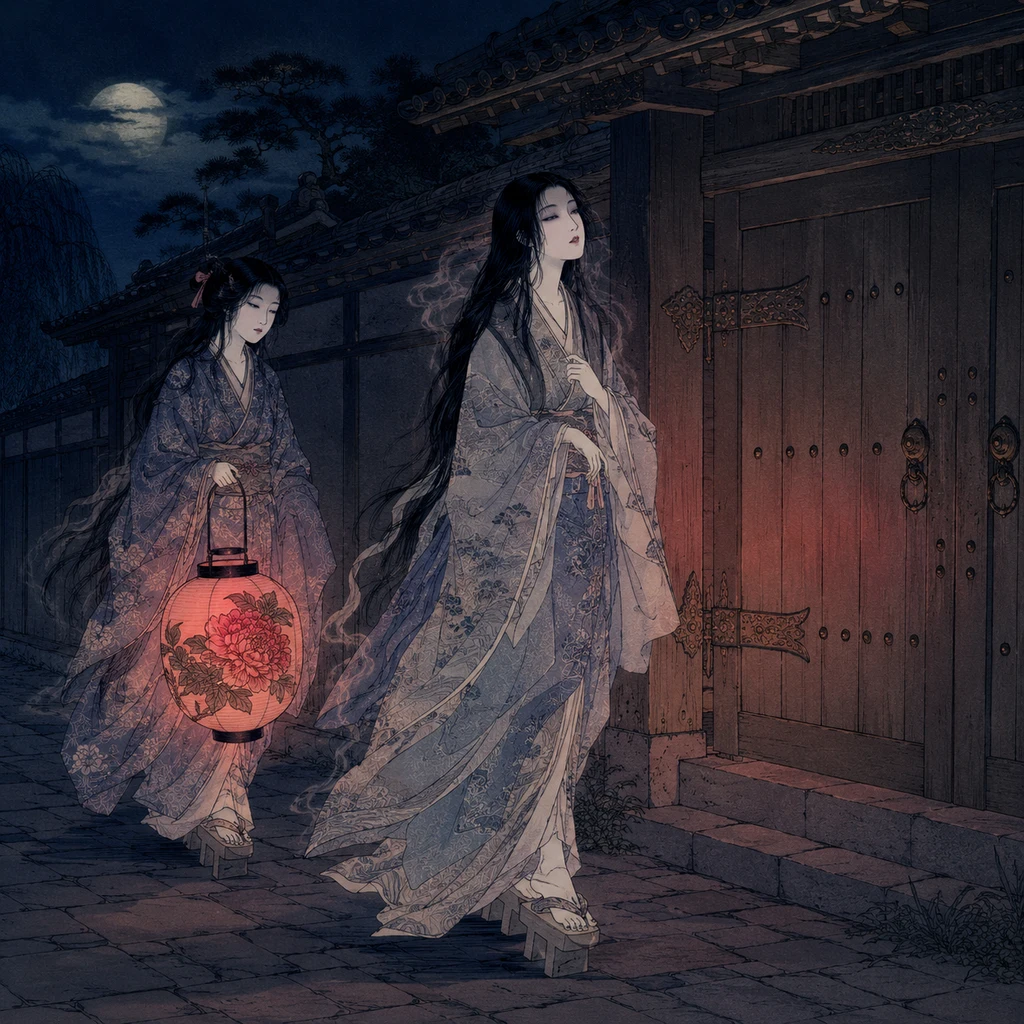
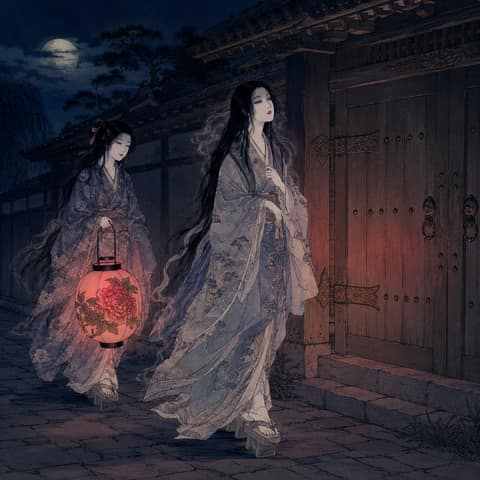
Otsuyu is the legendary female ghost protagonist of the ghost story *Botan Doro* (The Peony Lantern). Said to be the daughter of the hatamoto Iijima Heizaemon, she falls in love at first sight with the ronin Hagiwara Shinzaburo, whom she met through the introduction of the physician Yamamoto Shijo. However, unable to meet him again, she is said to have passed away from lovesickness. Unable to let go of her feelings even in death, she visits Shinzaburo every night accompanied by her maid Oyone, carrying a peony lantern, her wooden clogs echoing with a 'clippity-clop' (karan-koron) sound. After discovering her true identity as a spirit, Shinzaburo wards his house with the talismans of Kaion Nyorai and a solid gold Buddha statue. However, his neighbors, the married couple Tomozo and Omine, are bribed by the ghosts to peel off the talismans. Shinzaburo is ultimately cursed to death; he is found reduced to a skeleton, embraced by a skull. Because the story strongly evokes empathy for the dead rather than the living, Otsuyu is remembered not merely as a 'vengeful ghost,' but as a 'ghost who died for love and continues to love.' Alongside Oiwa of *Yotsuya Kaidan* and Okiku of *Sarayashiki*, she is counted among the most iconic female ghosts of early modern Japanese ghost stories.

Kuchisake-onna

Kuchisake-onna

Legendary

くちさけおんな

Woman in the Red Mask / The 1979 Kuchisake-onna

Human Yokai / Half-Human Half-YokaiModern urban legend originating in Gifu in 1978, no specific sacred site

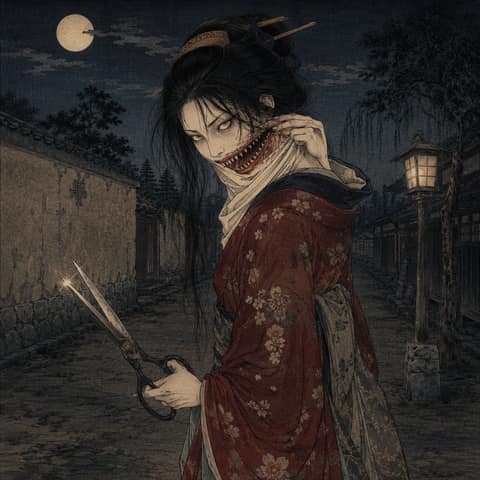
Kuchisake-onna (Slit-Mouthed Woman) is a representative modern urban legend of post-war Japan that originated in Gifu Prefecture between 1978 and 1979 and spread nationwide. The typical pattern involves a beautiful woman covering her mouth with a mask who stops children on the street at night and asks, "Am I pretty?" Depending on the answer, she removes her mask to reveal a mouth slit from ear to ear, asking again, "Even like this?"—if denied, she attacks with scissors or a carving knife. It is said to have first appeared in the "Editor's Notes" column of the Gifu Nichinichi Shimbun on January 26, 1979, and from March 1979, national magazines such as Shukan Asahi, Shukan Shincho, Shukan Josei, and Josei Jishin featured it one after another. It reached its peak in June of the same year when the June 29 issue of Shukan Asahi published a large feature by Etsuro Hiraizumi titled "The Bizarre Rumor of the 'Slit-Mouthed Woman' Terrifying Elementary and Junior High School Students Nationwide". In Himeji City, Hyogo Prefecture, a copycat dressed as Kuchisake-onna was arrested for violating the Swords and Firearms Control Law; in Koriyama City, Fukushima Prefecture, and Hiratsuka City, Kanagawa Prefecture, police cars were dispatched; and in Kushiro City, Hokkaido, and Niiza City, Saitama Prefecture, students were made to go home in groups. The rumor triggered real-world social responses. This is a rare case that embodies the yokai genesis of the mass media age, conquering the country in half a year through the linkage of cram schools and national magazines, rather than being picked up from simple beliefs or local lore of the Edo period. Since Toru Joko's "School Ghost Stories" academically organized it in 1990, it has been continuously read as a representative case study of modern yokai and urban legends.

Teke Teke

Teke Teke

Epic

てけてけ

Teke Teke, the Crawling Half-Woman

Spirit / GhostModern urban legend of the 1990s-2000s, based on train accident motifs

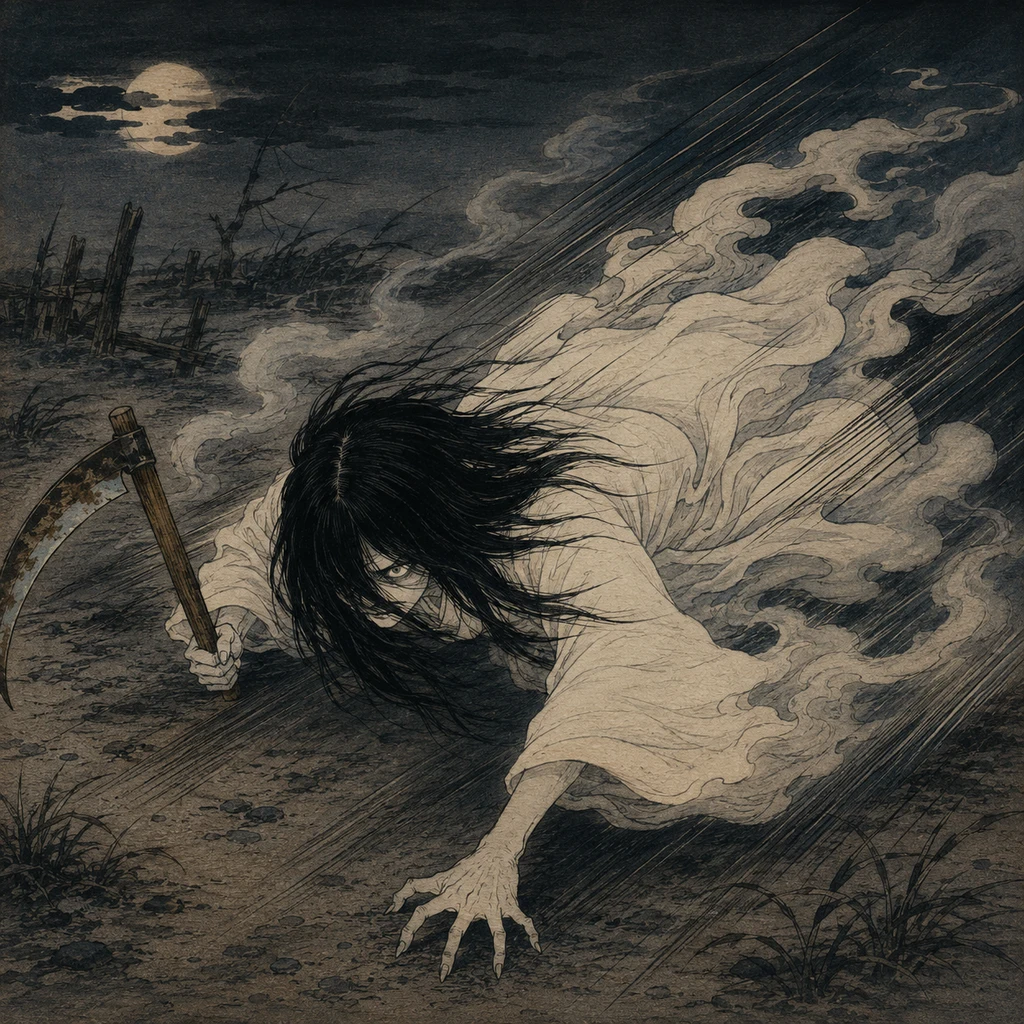
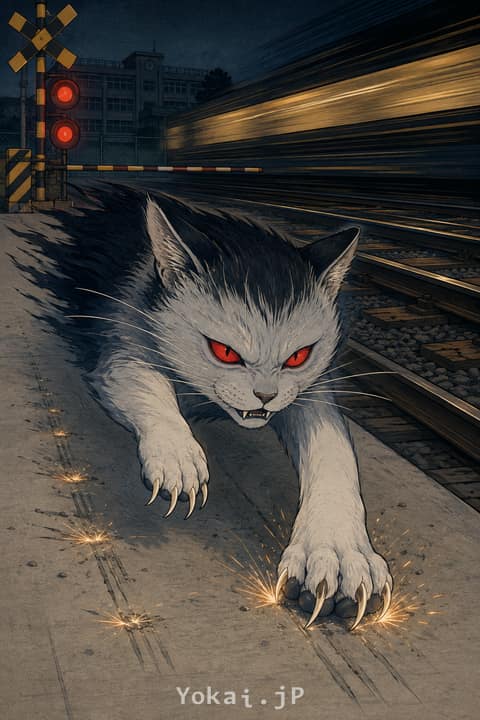
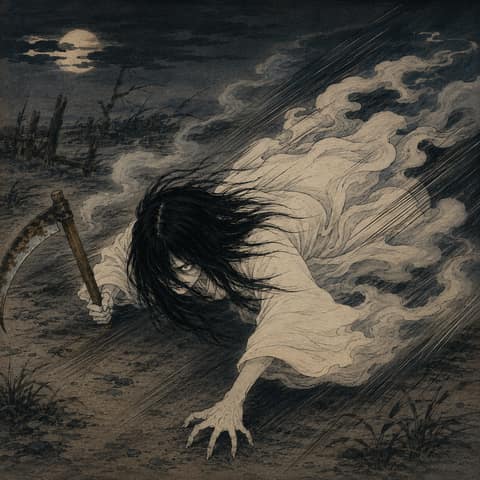
Teke Teke is a female ghost missing her lower half, appearing in urban legends that spread nationwide among children in the 1980s and 90s. The onomatopoeia "teke-teke-teke," which mimics the sound she makes while crawling on the ground with her arms, became her very name. She is said to appear at railroad crossings, inside train stations, or near schools, chasing down anyone she encounters and severing their lower half with a sickle or saw to make them just like her. There is no definitive origin for this legend; multiple theories coexist, placing its birthplace in Hokkaido (Asahikawa, Muroran, Sapporo), Kakogawa in Hyogo Prefecture, or Okinawa. The legend was explicitly documented during the school ghost story boom of the 1980s onwards, with similar tales included in Toru Tsunemitsu's "School Ghost Stories" (Kodansha KK Bunko, 1990) and contemporary children's magazine horror specials. It was adapted into a film by director Koji Shiraishi with "Teke Teke" and "Teke Teke 2" (released simultaneously in 2009), cementing its status as a representative work of modern Japanese horror that bridges post-war train accidents with urban legend.

Seven-Fathom Wife

Seven-Fathom Wife

Uncommon

NAH-nah-hee-roh NYOH-boh

Composite Folklore Edition

Half-Human BeingsShimaneTottori

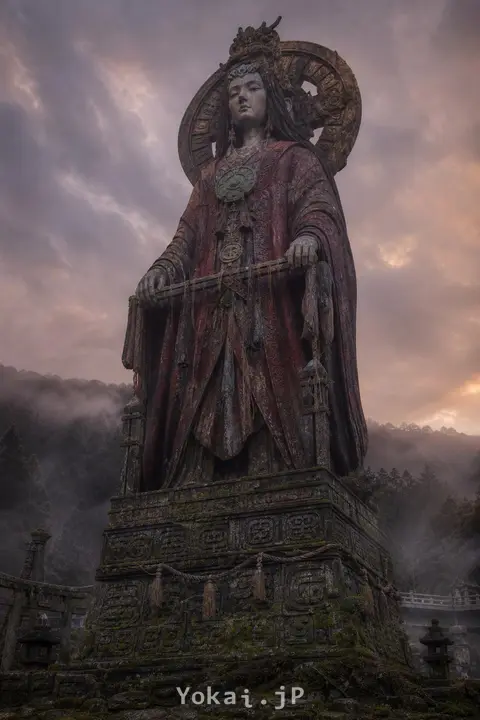
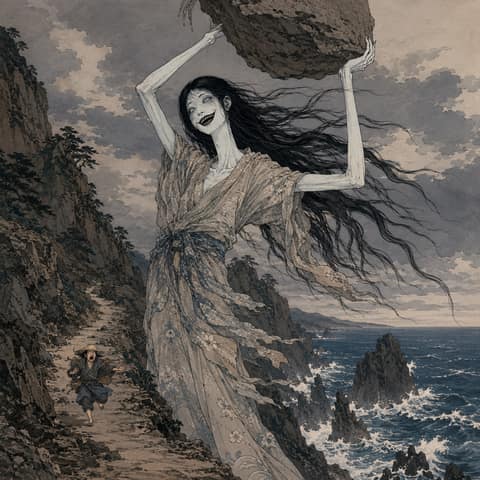
The Seven-Fathom Wife is a giant female yokai from eastern Shimane (Izumo), the Oki Islands, and Hōki in Tottori. The term “fathom” (hiro) is a unit of length, and her height—or in some tales her neck—reaches seven hiro. She appears on mountain paths or along the shore, smiling at travelers, throwing stones, or miming laundry to bewilder people. Her look and behavior vary by locale, ranging from a beggar of striking beauty to a fearsome woman with blackened teeth and disheveled hair.

Amano-zako (Heaven-Contrary Deity)

Amano-zako (Heaven-Contrary Deity)

Epic

ah-mah-noh-ZAH-koh

Zukai-Conformant Demon-Deity Form

Deities & Divine SpiritsUncertain (descriptions chiefly in Edo-period encyclopedias)

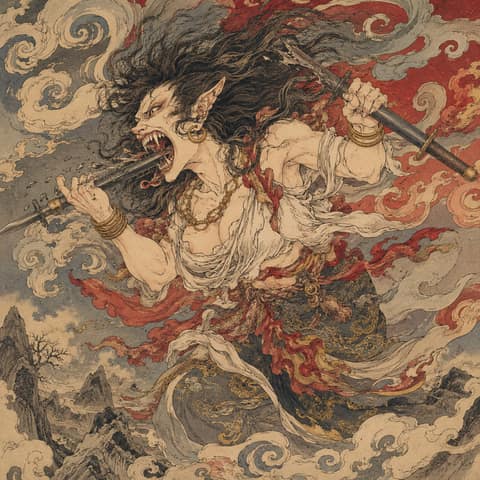
Amano-zako is a monstrous deity cited in an unspecified source quoted by the Edo natural history compendium Wakan Sansai Zue. Said to have taken shape from the fierce breath that Susanoo expelled from his body. Humanoid with beast-like traits, it has a high nose, long ears, and fangs. Its temper is violent; when defied, it rages and can hurl even mighty gods far away. It habitually contradicts things, linking it to the amanojaku, the contrary imp of Japanese lore.

Fuguruma Yōhi (Letter-Carriage Enchantress)

Fuguruma Yōhi (Letter-Carriage Enchantress)

Rare

FOO-goo-ROO-mah YOH-hee

Iconographic Edition, Sekien Toriyama Source

Animated Objects & UndeadEdo period

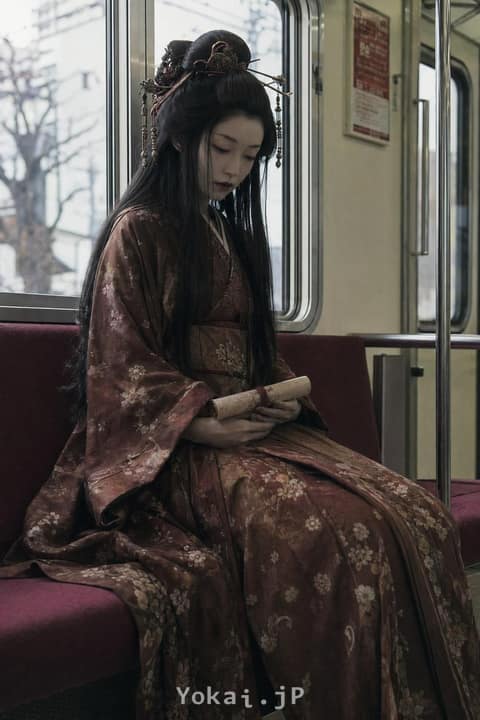
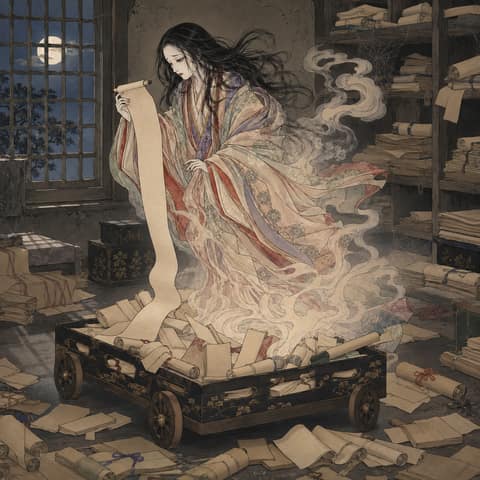
A yokai depicted in Toriyama Sekien’s Hyakki Tsurezure Bukuro. Named after the document cart (fuguruma) used to carry letters, it is understood as the embodiment of attachment and passions accumulated in old love letters. Shown as a woman holding a scroll, it is a creative yokai inspired by Tsurezuregusa section 72 (“The Letters on the Cart”), widely interpreted as a tsukumogami in which the spirit of love letters fuses with that of an object.

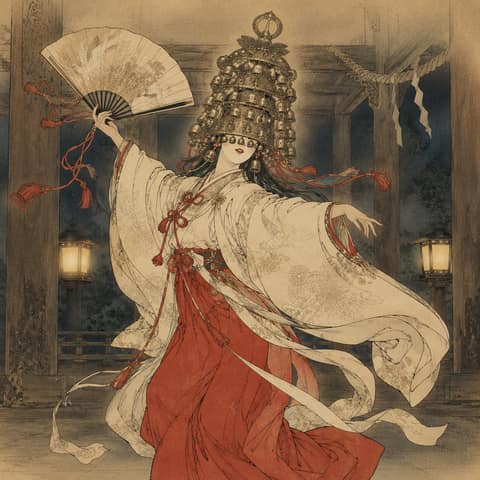
Suzu-hiko-hime

Suzu-hiko-hime

Rare

SOO-zoo-HEE-koh-hee-meh

Based on Sekien Toriyama Plates

Household SpiritsJapanese folklore

Suzu-hiko-hime is a yokai depicted by Toriyama Sekien in his Hyakki Tsurezure Bukuro. She appears as a woman balancing a kagura suzu (Shinto ritual bells) on her head, with features reminiscent of a bell. Sekien alludes to Ame-no-Uzume from the Amano-Iwato myth, hinting at ties to kagura, but leaves her origin and nature unstated. The image likely draws on medieval Night Parade scrolls that show monsters with kagura bells and on the idea of bells as instruments that “invite” or summon deities. No concrete sightings are recorded; she is an image-led, conceptual yokai.