YOKAI.JP

Iso-onna (Shore Woman)

EE-soh-OHN-nah

Iso-onna (Shore Woman)

Iso-onna (Shore Woman)

This form can walk with you as your companion. Pick a portrait and make it your icon.

Basic Description

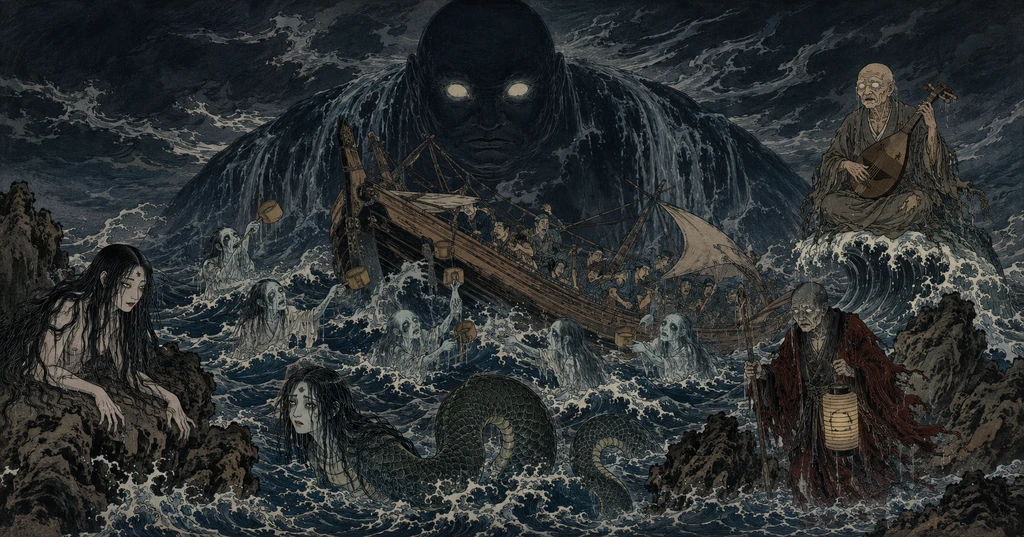
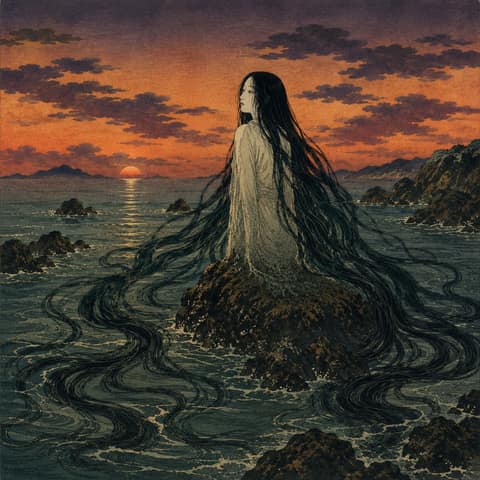
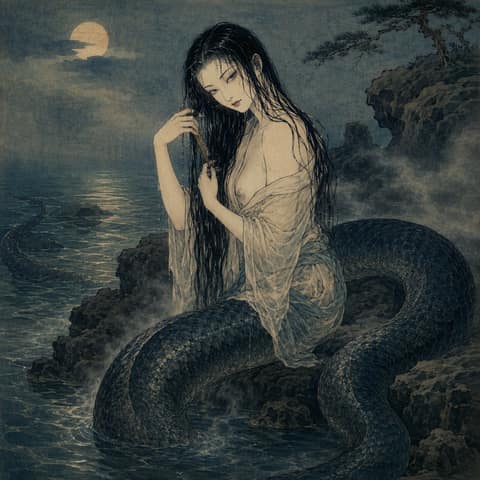
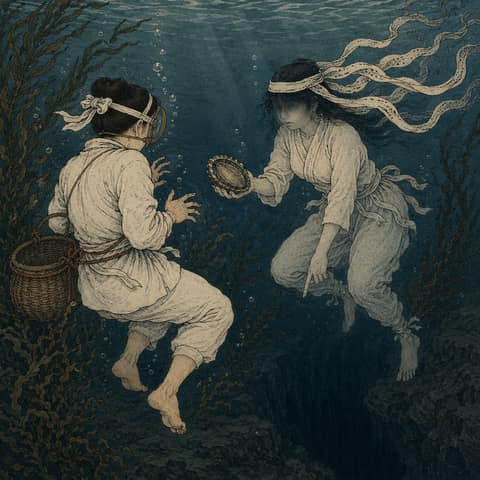
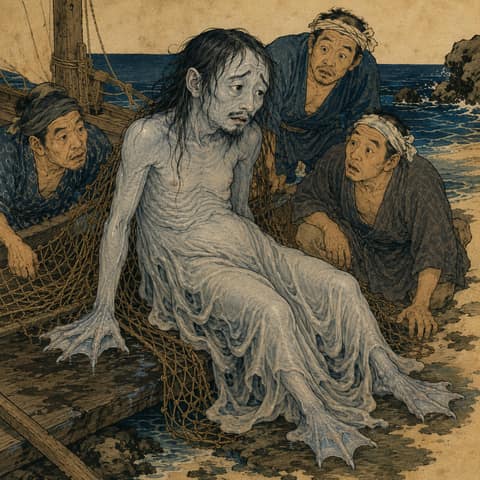
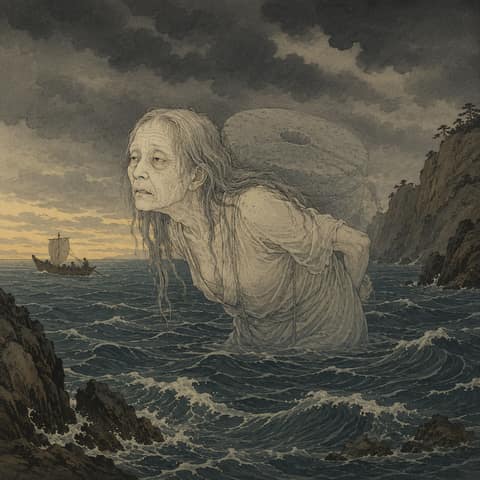
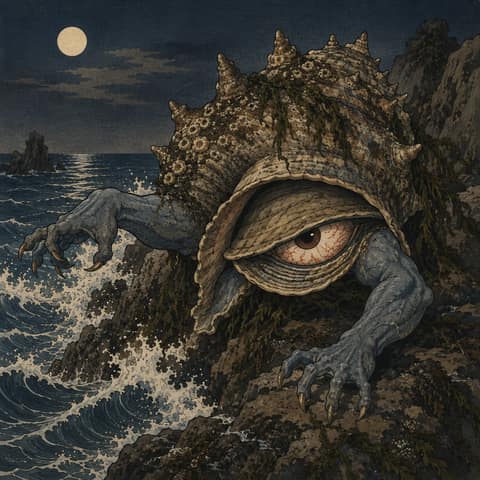
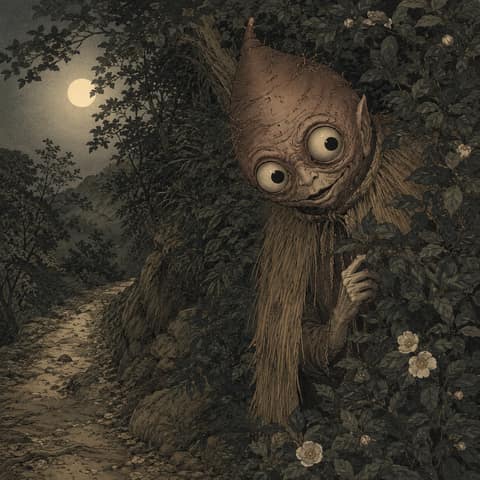
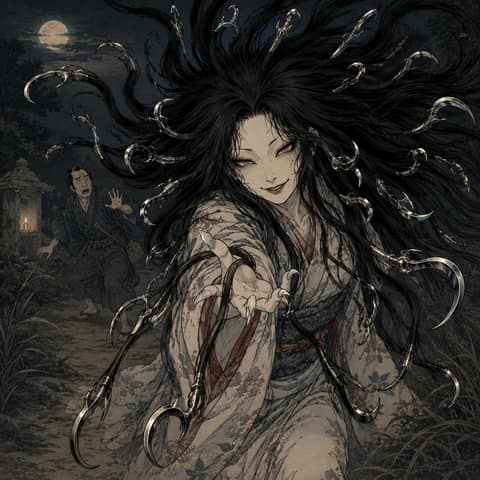
The Iso-onna is a female yokai said to haunt beaches and rocky shores around Kyushu. She approaches sands, tidepools, and moored boats, ensnaring people with her long hair to drink their blood. Her upper body resembles a beautiful woman, while her lower half is indistinct, sometimes serpent-like; from behind she may appear as a boulder. Names vary by region—Iso-onna, Nure-onna, Ama, Umi-hime—and she often appears during calm seas. In some areas she is linked to the vengeful spirits of the drowned.

Folklore & Legends

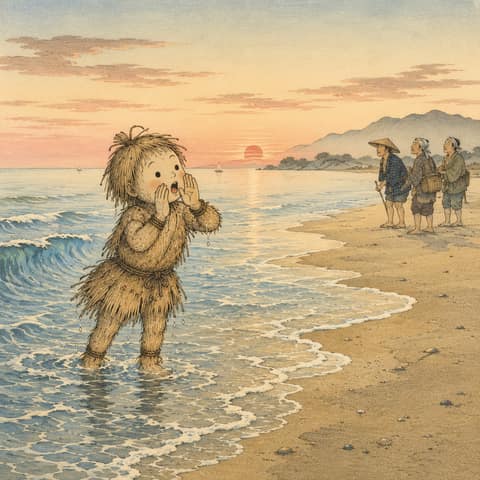
In southern Nagasaki (Minamishimabara), the Iso-onna stares seaward and shrieks at anyone who speaks to her, then entangles them with her hair to suck their blood. In Amakusa, she slips aboard at night along the stern line; sailors in unfamiliar ports avoid tying the stern and drop only anchor to keep her off. On the Shimabara Peninsula, sleeping with three thatching reeds laid on one’s kimono was said to ward her away. In northern Kyushu she is sometimes a transformed crab; along the Fukuoka coast she is said to walk upon the water. On Ojika Island, she is regarded as the spirit of a drowned person.

Yokai Cards1

Iso-onna (Shore Woman) across multiple art-style decks

Card gallery

Related Yokai

Yokai deeply tied to this one in legend.

Kindred1
Related1

Detailed Analysis

2 different forms of Iso-onna (Shore Woman) have been confirmed. Each has unique characteristics and personality, with various ways of interacting with people. Details of each form are introduced below.

Toma-Shunning Nure-Onna

To explain Toma-Shunning Nure-Onna in detail:

Among the coastal Nure-onna of northwestern Kyushu, a variant that particularly despises the handling of reed mats and thatch is called the Toma-Shunning Nure-Onna. On windless nights she appears on the beach without leaving footprints, a young woman from the waist up with black hair slicked by brine, shell-pale skin holding the moon, and eyes that reflect the distant whitecaps offshore. Below the waist she is indistinct like sea-mist, and if trod upon there is only sand with no true form. From behind she bears a jagged, craglike shadow like a collapsed rock face, and if one’s gaze falters she seems nothing more than a shore rock. Drawn by the hush of a calm, she stares seaward; if her name is called or a careless voice is thrown at her back, she answers with a shrill cry. The scream overlaps the roar of the tide and cuts the ears, her loosened hair stretching like wet seaweed to entangle the caller. Each briny strand bites the skin like the barb of a fishhook and is said to draw up warm blood along the hair. Yet if three old thatch stems from a reed mat are placed over the chest not as a cross but in the shape of the character for river, her hair recoils from the thatch, and she cannot step on the edge of the mat, only drip seawater in frustration from the gunwale. She favors boarding boats by their stern line; if a stranger’s harbor leaves the stern line set, at midnight she will crawl up it, slip in over the rail, and drape her hair over sleepers’ faces to steal their breath. Thus old fishermen followed the rule of taking in the stern line when calling at a port, dropping only the anchor and keeping watch at the bow while reading the wind. She is susceptible to the human-made ideas of knots and naming in ropes; if the rope is cinched hard while whispering the owner’s name three times, she cannot unravel that name and cannot travel along the line. Though drawn by the grudges of the drowned, she does not harm indiscriminately. When she sees discarded reed mats or thatch, or cut ropes drifting in the tide, she scents the neglect of the hands that wove them and approaches their owner’s boat. Conversely, those who dry nets and mats without letting the ends trail into the sea or blocking the tide’s path may find her invisible presence come near and, by the creak of moorings, warn of a calm about to break, old skippers say. In parts of the Fukuoka coast, it is said she walks the water not for lack of feet, but because she avoids reed mats, stepping only on the thinnest skin of the waves. Northern Kyushu has a crab-incarnation theory, but this Nure-Onna does not hate crabs; rather, when shore crabs scuttle, she draws in her hair and returns to rock. Her name varies by place—Iso-Onna, Nure-Onna, Sea Princess—but her ties to the etiquette of thatch and rope are constant. To avoid her: do not call to a woman’s back on a night beach, do not leave a stern line fast in unfamiliar ports, and place three thatch stems in a river shape where you sleep. Keep these and she will only turn her white offshore eyes toward you, then blend into rock-shadow and unravel into the tide mist, leaving only her presence to be told as footprints that were never there by morning.

Character Profile

This section is our own creative profile for storytelling. It is not historical fact or scholarship.

Rarity
Epic
Personality
quiet and relentless, honors promises and proper manners, highly sensitive to human voices, easily roused when called to
Compatibility
those who keep seafaring etiquette, those who refrain from idle chatter, those who keep lights low at night harbors, those who maintain their tackle, those who do not mistreat reed mats or thatch
Abilities
Draping Wet Hair: extends long hair to entangle and siphon warmth and vital blood through each strand, Rock-Back Mimicry: when she shows her back she appears only as a shore rock, Stern-Line Climber: crawls up a set stern line to infiltrate a boat, Tide-Voice Scream: a cry that splits the calm and robs listeners of balance, Walking the Wave-Skin: chooses thin films of water to tread and leaves no footprints
Weaknesses
cannot approach when three thatch stems from a reed mat are placed in a river shape, cannot cross a stern line whose knot is tightly set while the owner’s name is bound to it, when her name is correctly spoken three times her movements slow for the span of a breath
Habitat
sandy beaches and rocky shores of Minamishimabara, Nagasaki Prefecture, inlets of the Amakusa Islands, Kumamoto Prefecture, quiet anchorages along the Fukuoka coast

🔮Yokai Compatibility Test

For more detailed information and diagnosis results about Toma-Shunning Nure-Onna, please click here.

Isonna of the Aft-Rope Crossing

To explain Isonna of the Aft-Rope Crossing in detail:

A feared variant along Amakusa and the Shimabara Peninsula, named for slipping aboard by following the aft mooring rope. She appears as the upper body of a young woman scented with the sea, while her lower half is hazy and shifting like wave-shadows. Her long wet black hair constantly streams from her chest to the floor, branching into fine threads that cling to human skin. When a hush falls over the harbor at midnight, she stands in the lee of the shore or at a stern’s tip staring seaward, and will either echo the name of anyone who calls to her or answer with a piercing scream. At that cry she reaches a white hand to the aft rope, crosses soundlessly onto the boat, shrouds a sleeper’s face with her hair, and twists up blood strand by strand. By morning only a tide stain and a thin ring of hair remain at the pillow. Said to be the shape taken by the regrets of the drowned or a love unfulfilled by one who waited at the harbor, she is known as an isonna and also as nure-onna. The practice of avoiding the aft rope comes from this variant’s habit of treating ropes as roads. So long as she touches a line she can climb anywhere, but she does not swim about recklessly and prefers calm surfaces. On thin-moon nights some have seen her walk the water from shore, but only when the harbor tide lies asleep. She is weakened by light and prayer, so fishermen in unfamiliar ports avoid taking the aft rope, drop only the anchor, and keep the gunwale light burning. In Shimabara it is said that placing three dry thatch reeds from a roof upon one’s kimono while sleeping prevents tangling and wards her off. Those who touch her hair are seized by chill and lethargy, and the roar of the sea lingers in their ears for days. She is merciless toward mockery and rudeness, targeting first those who call her name without honorifics or taunt her with whistles. Conversely, she is said to avoid boats whose crews offer prayers for the lost at sea. Some tales claim that if you move behind her she resembles a rock shadow, and under moonlight her back becomes the outline of a wet reefs tone to let waves pass. The Isonna of the Aft-Rope Crossing is a grudge born at the liminal space of the harbor, hard to approach for those who keep the code and unforgiving toward arrogance, dropping her hair without mercy.

Character Profile

This section is our own creative profile for storytelling. It is not historical fact or scholarship.

Rarity
Epic
Personality
quiet and relentless, approaches without a word, answers provocation with a shrill cutting scream, bound by grudge and lingering regret, emotions sway like hair in the night wind
Compatibility
those who keep the laws of the sea and act with caution, sailors who maintain lights and prayers, those who refrain from needless calling out, extremely bad with people who mock carelessly, extremely bad with braggarts who shout for show
Abilities
aft-rope traversal—moves along ropes and lines as along a road, slipping aboard without a sound, hair-draining—splits her hair into threadlike strands to draw off body heat and blood on contact, name-echo—returns a called name in a clear voice to seize attention and awareness, rock-shadow guise—alters her back to resemble wet reef stone to be indistinguishable in darkness
Weaknesses
lamps and prayer—ship’s lights, sutra chanting, and memorial talismans repel her, dry thatch—placing three dry roof reeds on the body prevents tangling and weakens her power
Habitat
harbor fronts along Amakusa City, Kumamoto, inlets and boat havens of the Shimabara Peninsula, small harbors and river mouths at the stern during nights of calm

🔮Yokai Compatibility Test

For more detailed information and diagnosis results about Isonna of the Aft-Rope Crossing, please click here.

Interested in this type of yokai?

Discover the yokai most similar to your personality with our yokai diagnosis

Start Yokai Diagnosis

Meet your guardian yokai at the shrine

Draw an omikuji fortune and discover the yokai watching over you today.