funayūrei
Namōrei, Black Little-Craft of Kosode
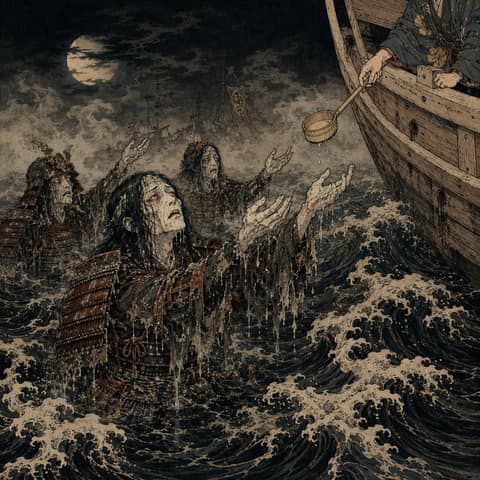
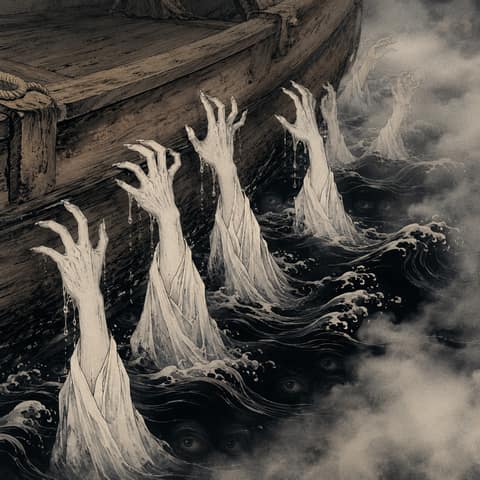
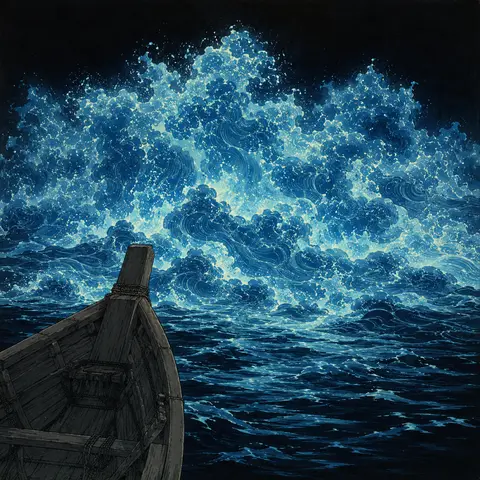
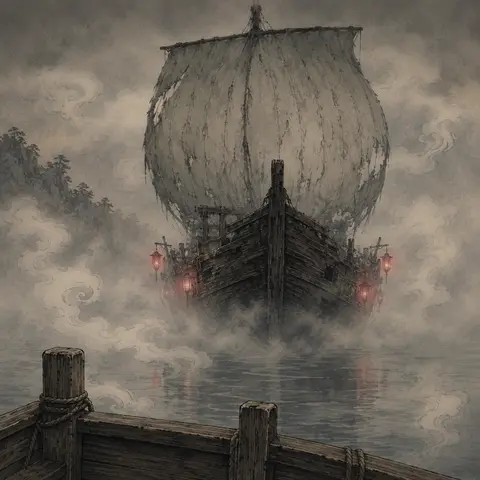
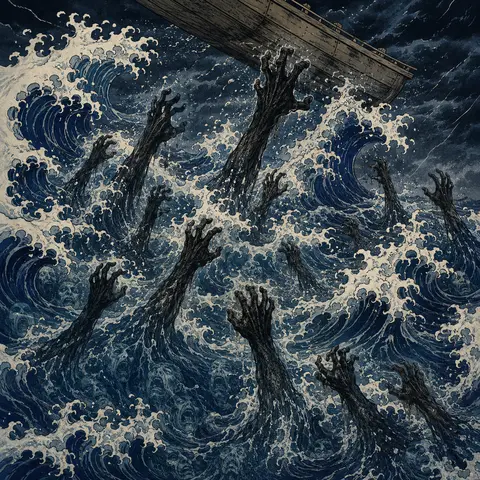
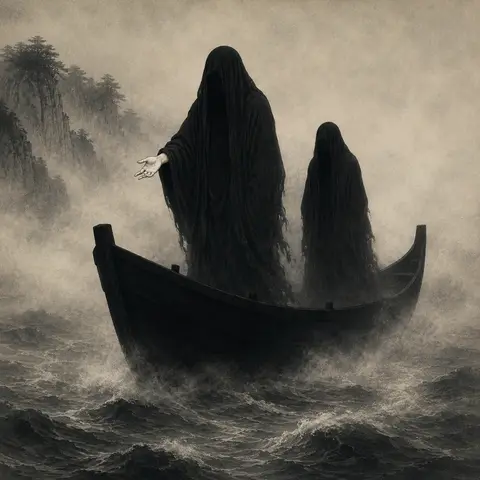
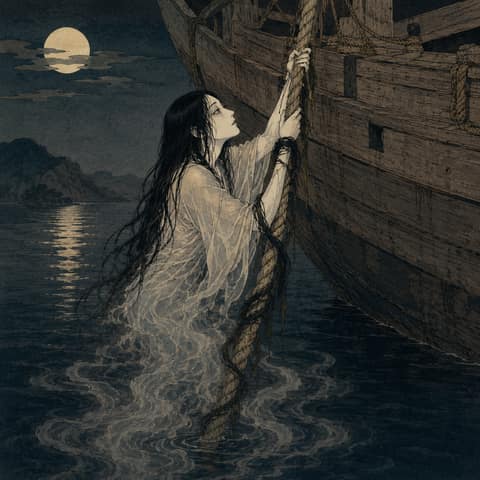
A variant of the funayurei from Kosode in Ube Village, Kunohe District, Iwate (now Kosode, Kuji City), whispered locally as the Namōrei. During night squalls or heavy sea fog, a small black-painted boat with a high stern and low prow appears soundlessly, as if running back along a tide line offshore. Its silhouette parts no waves, only blurs the surface like ink, and though no oar or sail is seen, it glides forward. One or several shadowy figures in glossy black garments stand along the gunwale, and only their voices slice through the wind. In a low, lingering tone they demand, “Hand over an oar,” or “Answer,” and if one replies, they at once sheer alongside and seize the other boat’s heading and helm. The Namōrei are the remnants of those who perished at sea and could not return home, craving oars and sculls—the “power to bring one back.” Elders warn that answering opens the mouth of one’s soul, and lending an oar is akin to yielding a boat’s lifeline. Thus in Kosode, when called from the sea at night, one must never respond, but either stand at the rail and glare steadily, or keep one’s hat brim pulled low in silence. The Namōrei are weak to the eye; met with a powerful gaze, they and their black boat melt into the tide fog. If they ask for an oar and are given a bottomless ladle, a split oar, or a holed bamboo scoop—“useless things”—their fixation breaks as seawater spills out at once. This is the widespread funayurei art of “passing the empty,” and along the Tohoku coast, refusing to answer and never handing over anything of substance were especially prized. The black boat appears when the stars hang low, on the sixteenth night of Obon, or when the offshore singing sands cry. White handprints multiplying on the rail and the gunwale growing heavy and low foretell their clinging approach. In contrast, scattering a pinch of rice or ash from one’s palm and sweeping it thrice to sea is said to dissolve the prints into the tide. In Kosode’s rocky coves, sailors shun picking up driftwood oars and loading them, and before setting out they tie a single thread to the oar’s handle to mark a “way home.” The Namōrei are keen to advantage, following slips of speech and bonds of lending to insinuate themselves, so banter and calling across boats are taboo. At a break in the morning fog the black craft vanishes at once, leaving only a chill tang of brine and dark water-spots on the rail. Those who see it refrain from offshore nets that year and offer incense, flowers, and dumplings to the beach deity, as old custom dictates.