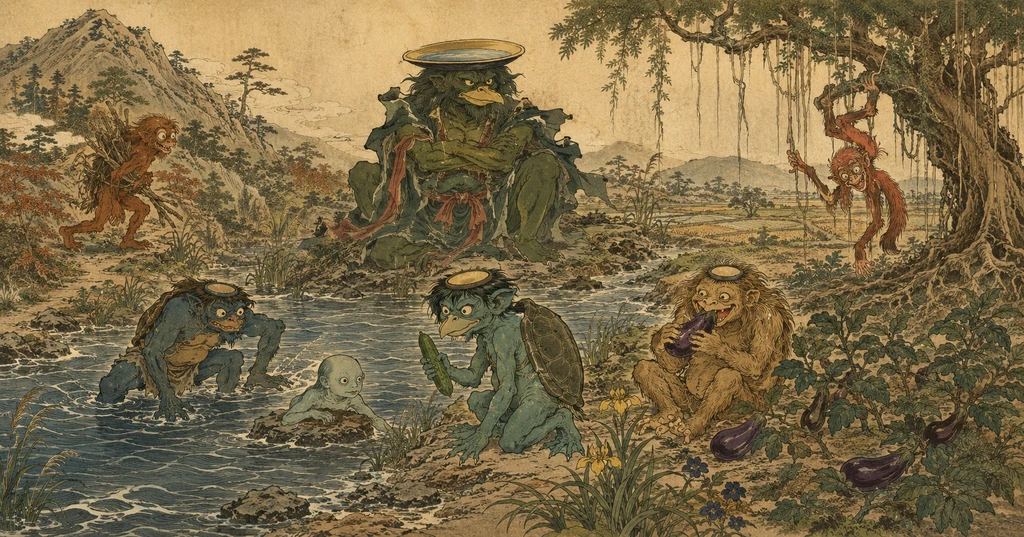
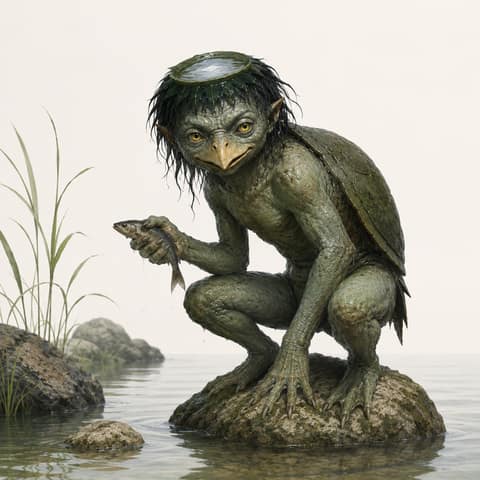
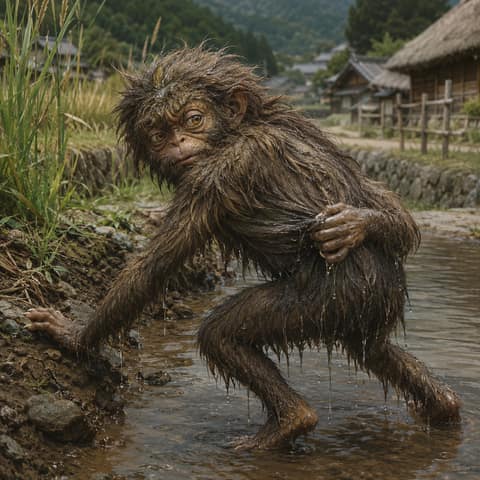
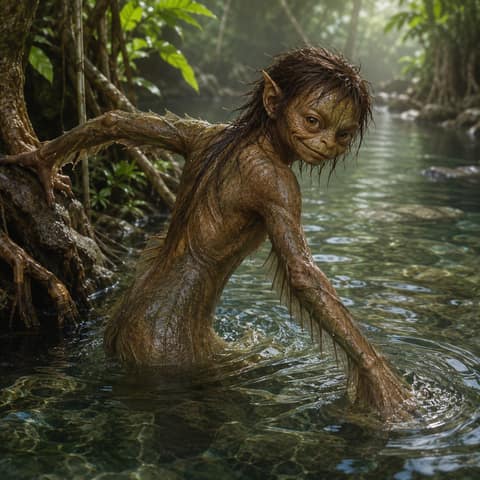
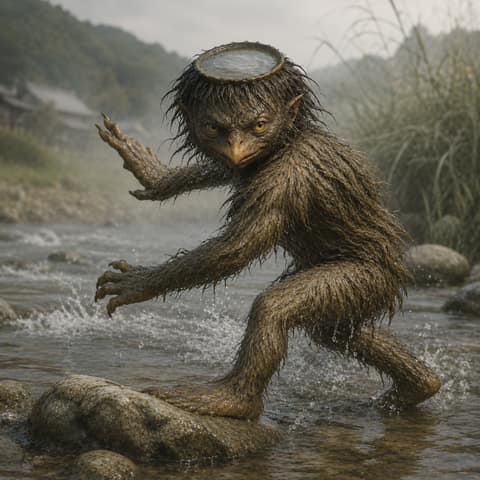
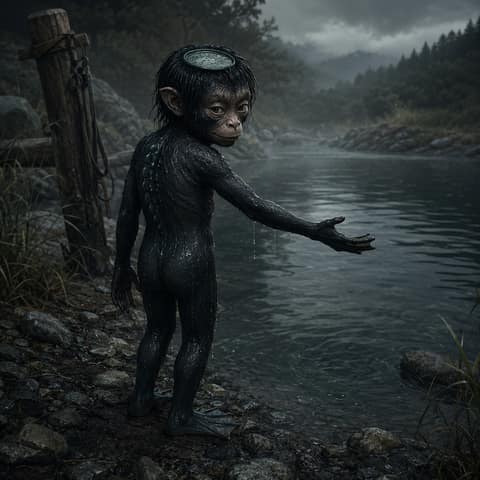
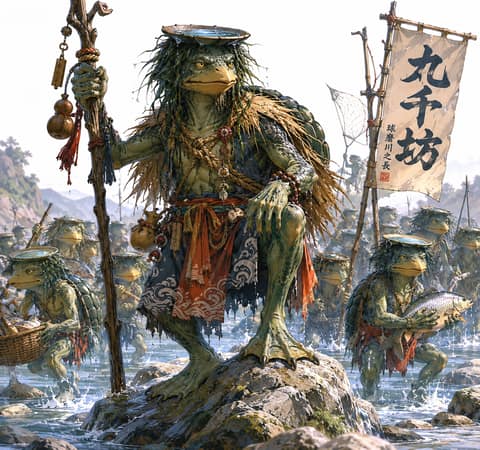
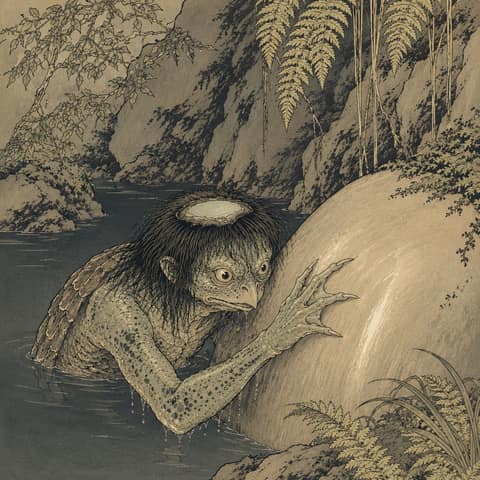
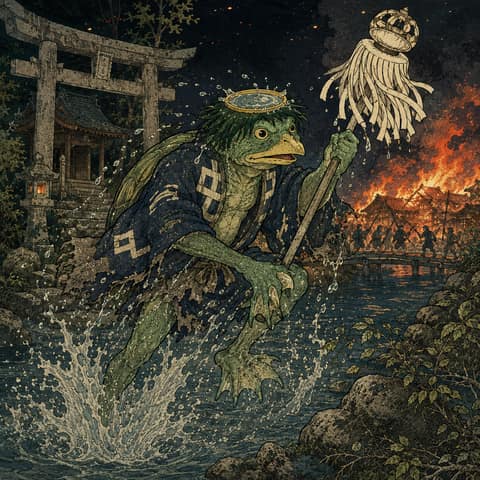
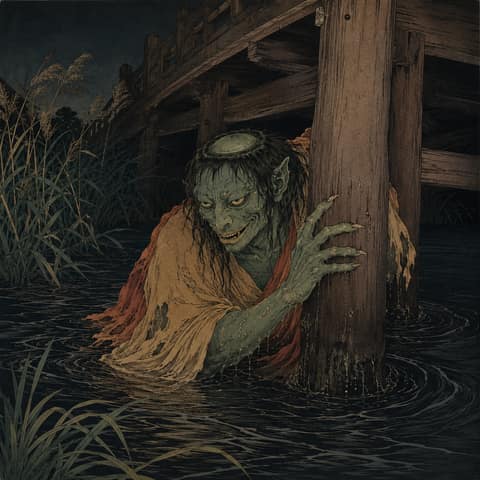
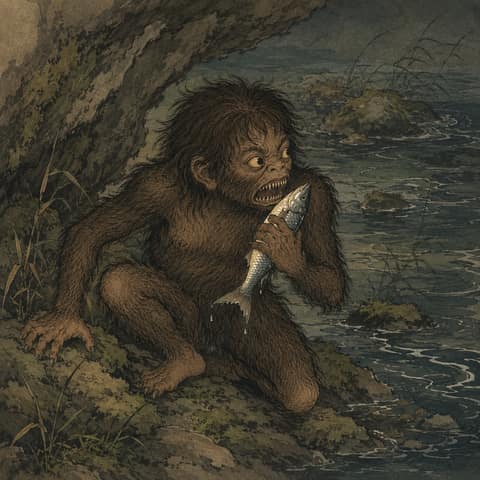
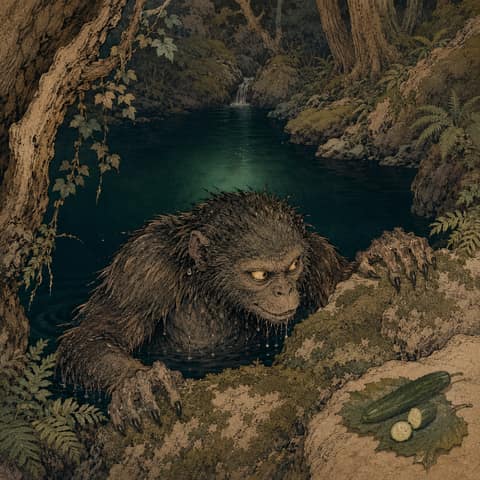
Hyousunbo is a type of kappa transmitted primarily in the Hyuga region of Miyazaki Prefecture and across southern Kyushu[1]. Its name is said to derive from the "hyoi, hyoi" sound it makes while swimming in the water, and it corresponds to the "hyosube" dialectal family used to refer to kappa throughout Kyushu. It lived near the water and was feared as a malicious trickster that dragged children swimming in the river to their deaths. Legend says it lived in the Shiiya River flowing through the Warabi district of Togo-cho in Hyuga City, and is famous for making a promise with the villagers: "I will not take the lives of the river's children until a certain rock rots away completely." The hyousunbo touched the rock so many times to check its decay that the rock became smooth and polished as if rubbed, earning it the name "Hyosubo Rock" (later buried during river improvement works). This folklore is accompanied by the belief in seasonal migration—living in the river from spring to autumn and moving to the mountains in winter—and it is said that sumo matches dedicated to the water god were held every year at the Suijin-buchi (Water God's Abyss) of the Tsuboya River. Among the southern Kyushu lineage that calls kappa "garappa" or "kawantaro," the hyousunbo is a water apparition unique to Hyuga, possessing specific legends of a promise and a rock.
Folklore & Legends
The Water Apparition That Cries 'Hyoi, Hyoi'. The name "Hyousunbo" is said to come from the "hyoi, hyoi" vocalizations it makes while swimming[1]. Throughout Kyushu, kappa are called by various names such as "hyosube," "garappa," "kawantaro," and "kawappa," with hyousunbo being the specific Hyuga dialect form. In Kagoshima, kappa are called garappa, and in Hitoyoshi (Kumamoto), mountain spirits are distinguished as yaman-taro and river kappa as kawan-taro. Thus, the kappa of southern Kyushu are conceptualized as spirits that travel back and forth between the mountains and the water.
The Promise of the Hyosubo Rock ── A Legend from Togo-cho, Hyuga City. The Shiiya River in the Warabi district of Togo-cho was feared as the habitat of the hyousunbo, which drowned children playing in the river[1]. The troubled villagers made a pact with the hyousunbo: "You will not take the lives of the children until a certain rock by the river completely rots away." The hyousunbo touched the rock countless times with its hands to check if it had rotted, and over many years, the rock became polished and smooth from being rubbed. The villagers called this the "Hyosubo Rock." It is said that the rock was buried during river improvement works in later years. It is a tale of negotiation with a water god, strongly rooted in the local area, featuring a "promise" exchanged between a kappa and humans, and a rock as proof of that promise.
Seasonal Migration Between Mountain and River, and Water God Sumo. The hyousunbo was believed to travel along waterways, living in the river from spring to autumn and moving to the mountains in winter[1]. This connects to the folk belief in southern Kyushu that sees kappa as entities whose forms change seasonally between water gods and mountain gods. At the "Suijin-buchi" (Water God's Abyss) of the nearby Tsuboya River, it is said that sumo matches dedicated to the water god were held every year. This is an example where the nationwide concept of kappa loving sumo overlaps with local rituals to pacify the water god through sumo, indicating that the hyousunbo faith was not merely a ghost story, but one intertwined with water god worship.
Among the many kappa legends nationwide, the hyousunbo stands out as a water apparition of Hyuga renowned as "the kappa that keeps promises." Although a dangerous being that drags children playing in the river to their deaths, it made a pact with the villagers—"I will not take their lives until a certain rock rots away"—and faithfully touched the rock countless times to check on it, thereby polishing it smooth. The detail of this "Hyosubo Rock" transcends a simple ghost story, conveying the memory of a negotiation between humans and a water god. The belief in its seasonal migration—living in the river during spring and autumn and the mountains in winter—reflects the southern Kyushu folk view of kappa as avatars of water and mountain gods. The dedicatory sumo matches held annually at the Suijin-buchi of the Tsuboya River are remnants of local rituals to pacify a raging water god through wrestling. Connected to the garappa and kawantaro of southern Kyushu's kappa culture, the hyousunbo remains a unique entity with a name and legend native to Hyuga, telling the story of the boundary between water and humans.
Character Profile
This section is our own creative profile for storytelling. It is not historical fact or scholarship.
Mischievous and dangerous, capable of dragging children into the water. However, once it makes a promise, it faithfully keeps it until a rock rots away. It loves sumo and calms its raging nature when pacified as a water god.
Swimming freely underwater to drag in people and childrenMigrating seasonally between mountains and rivers via waterwaysDisplaying its power as a water god through its love of sumoThe strict diligence to keep a promise until a rock rots away
Weaknesses
It can be pacified and restrained through sumo, promises, and rituals. Its actions are bound by the rock (Hyosubo Rock) that acts as proof of the promise, and it calms its rage when enshrined as a water god.
Habitat
Rivers in the Hyuga region, such as the Shiiya River and Tsuboya River in Togo-cho, Hyuga City, and the nearby mountains where it migrates in winter. It bases itself at the Suijin-buchi (Water God's Abyss).
The diagram below is a diagnostic evaluation chart for The River Kappa of Hyuga: Hyousunbo. The higher the value of each item, the stronger that characteristic is expressed.