Yōkai Beauty Signifies Boundaries, Not Comfort
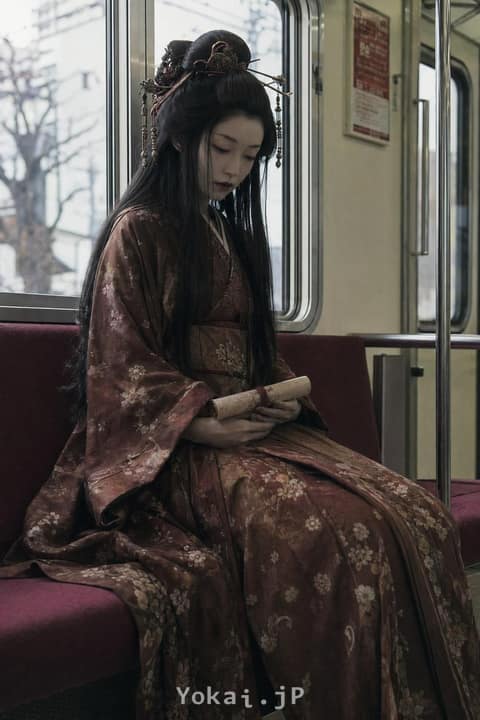
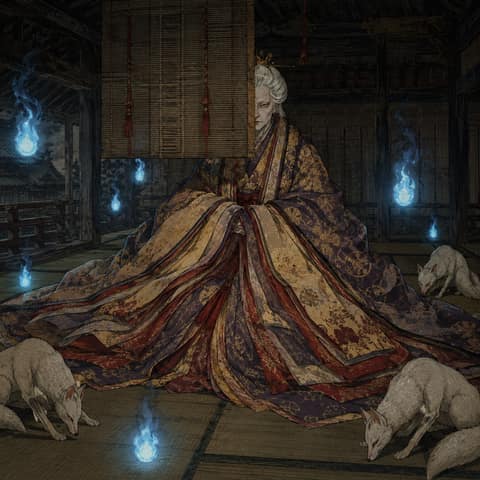
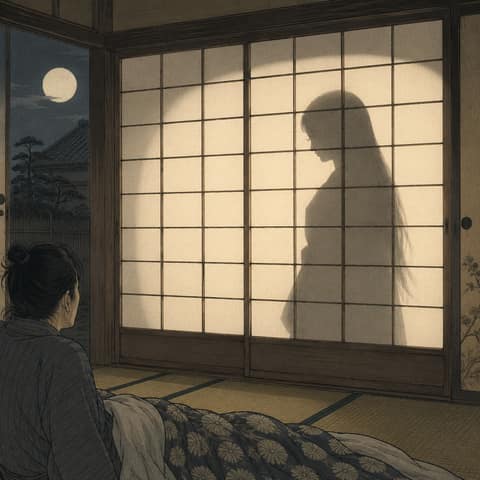
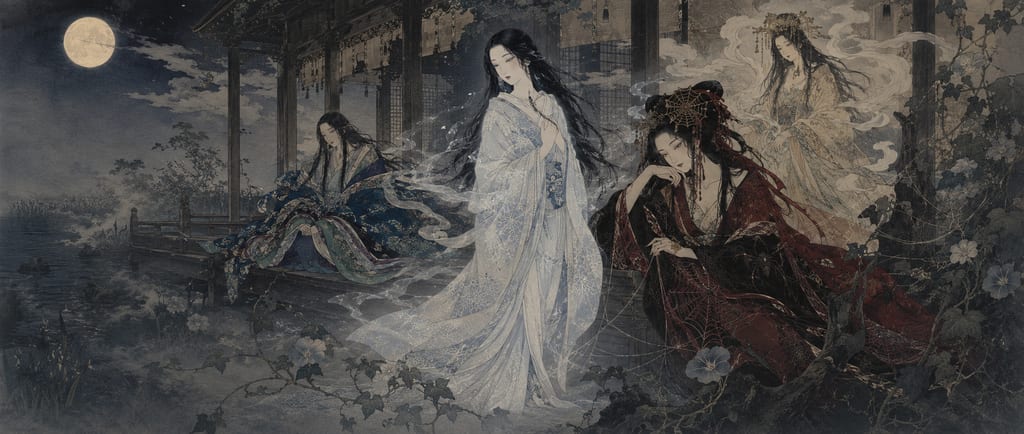
In ancient yōkai paintings and folklore, there was never a specific category for 'beautiful yōkai'. What humans perceive as beautiful stems from varying origins: pale figures melting into snow and moonlight, long hair cascading over elegant robes, the brief moment animals or plants shift into enchanting women, or the dead retaining the visages of their past lives.
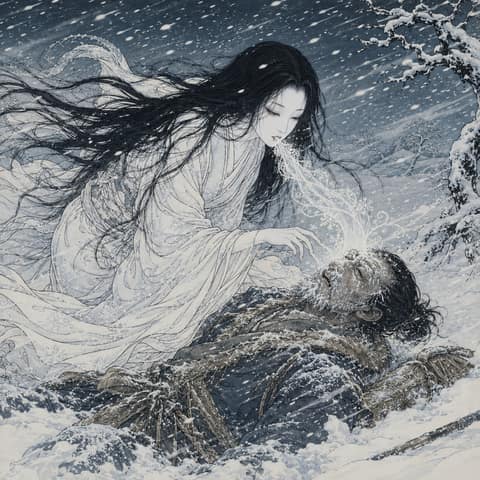
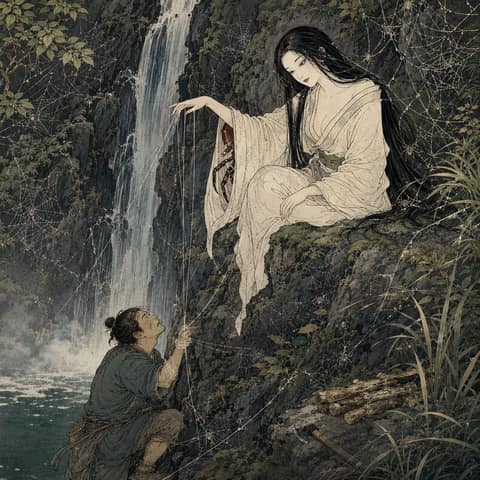
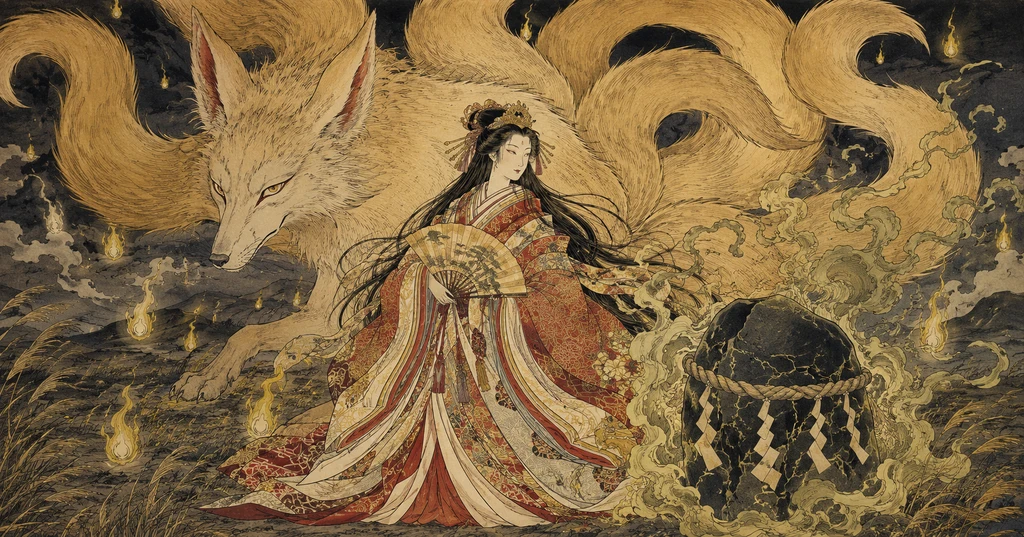
Moreover, this beauty is often inseparable from danger. The Yuki-onna beckons travelers into blizzards, Tamamo-no-Mae conceals her true form to infiltrate the imperial court, and the Jorōgumo seduces victims near waterfall basins and deep mountains. The very desire to draw close compels one to cross the boundary between the mundane and the otherworldly. In this feature, we do not rank them by physical allure; rather, we examine what their beautiful forms conceal and convey within their respective tales.
Snow, the Moon, and Water—Beauty Emerging from Landscapes
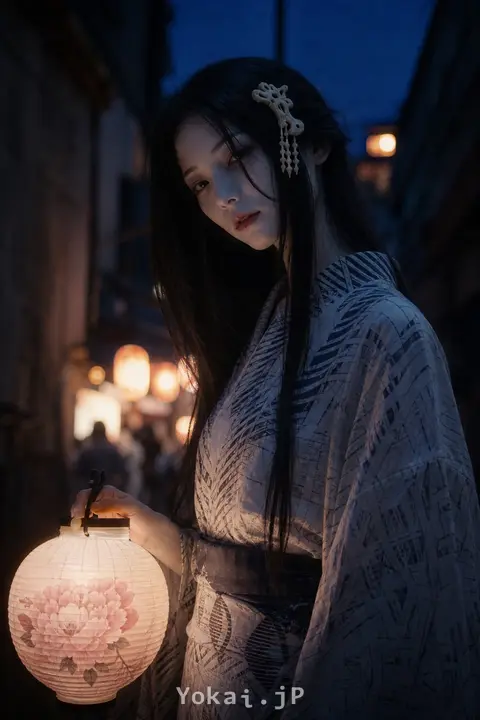
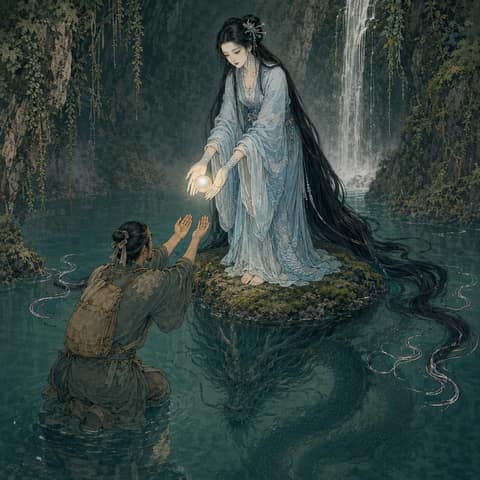
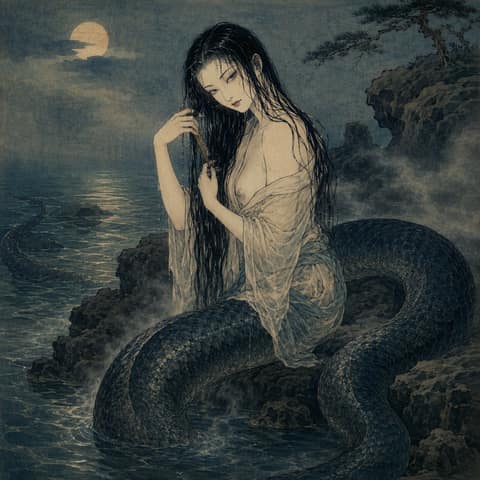
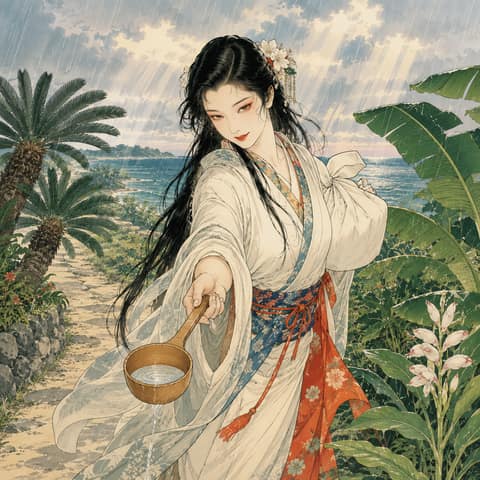
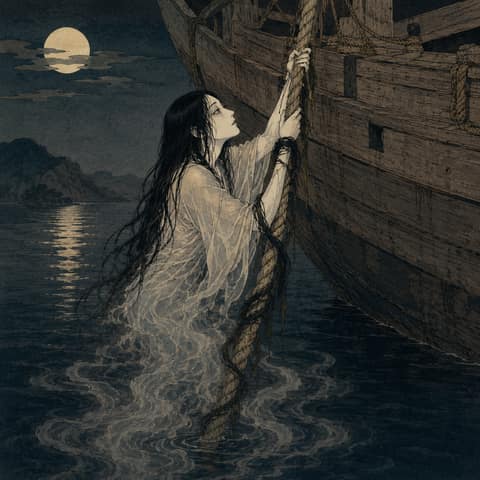
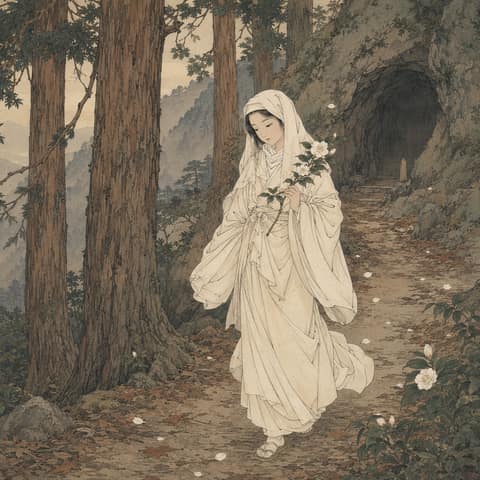
The Yuki-onna fuses the blizzard, pale skin, and the silent snowy night into a single entity. Depending on the region, she is recounted either as a terrifying apparition that freezes people to death or as a woman in an interspecies marriage tale. Her beauty reflects both the tranquility and the peril inherent in the snow-country nature. The Ryūjo and Nure-onna possess the silhouettes of women standing at the water's edge, while the Amorou-nagu is passed down as an otherworldly woman appearing in the skies and on the beaches of Amami.
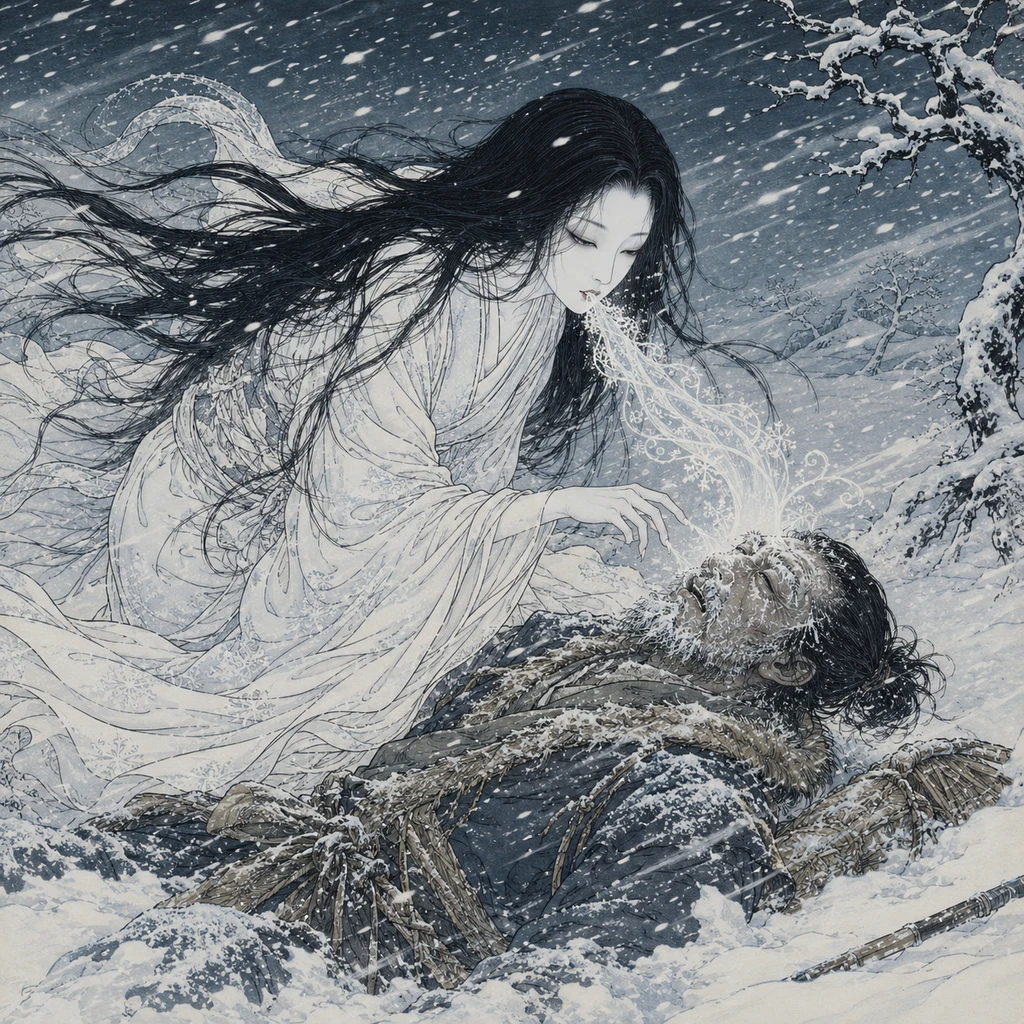
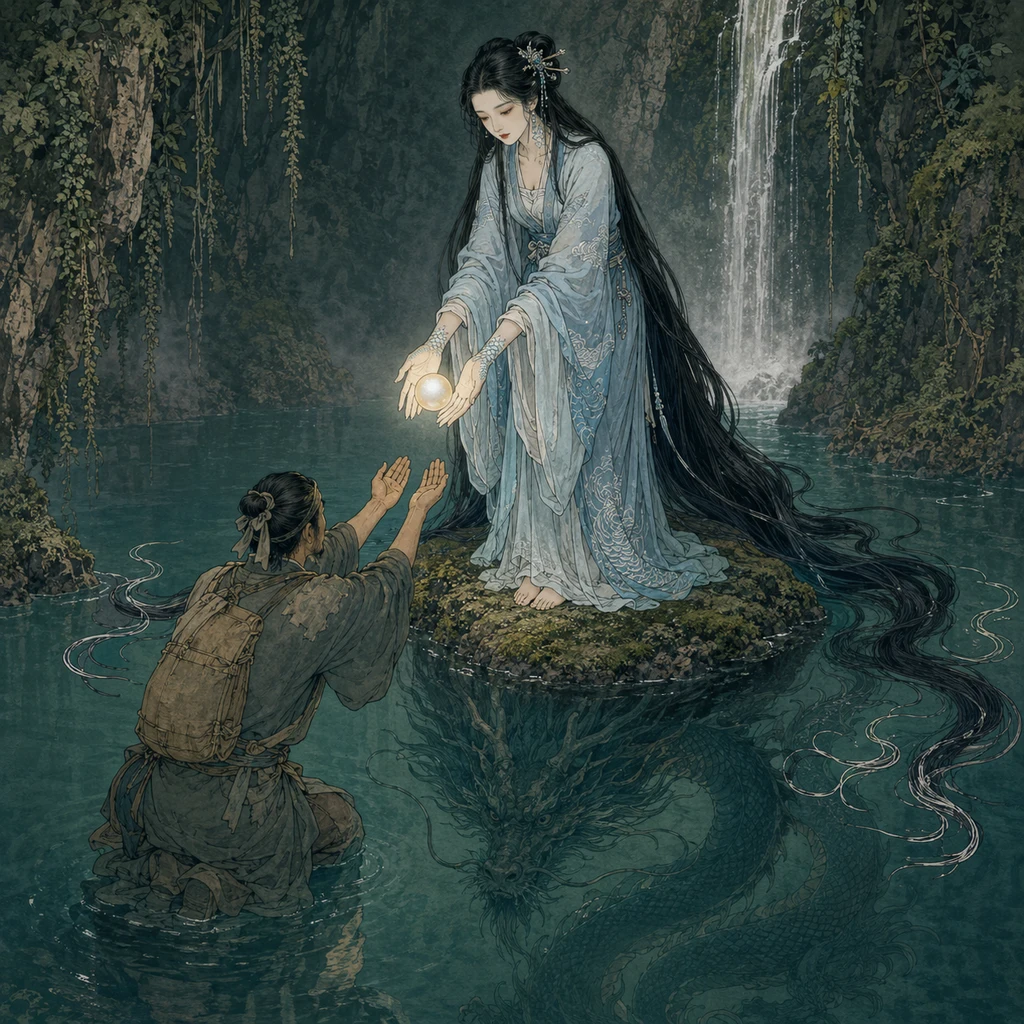
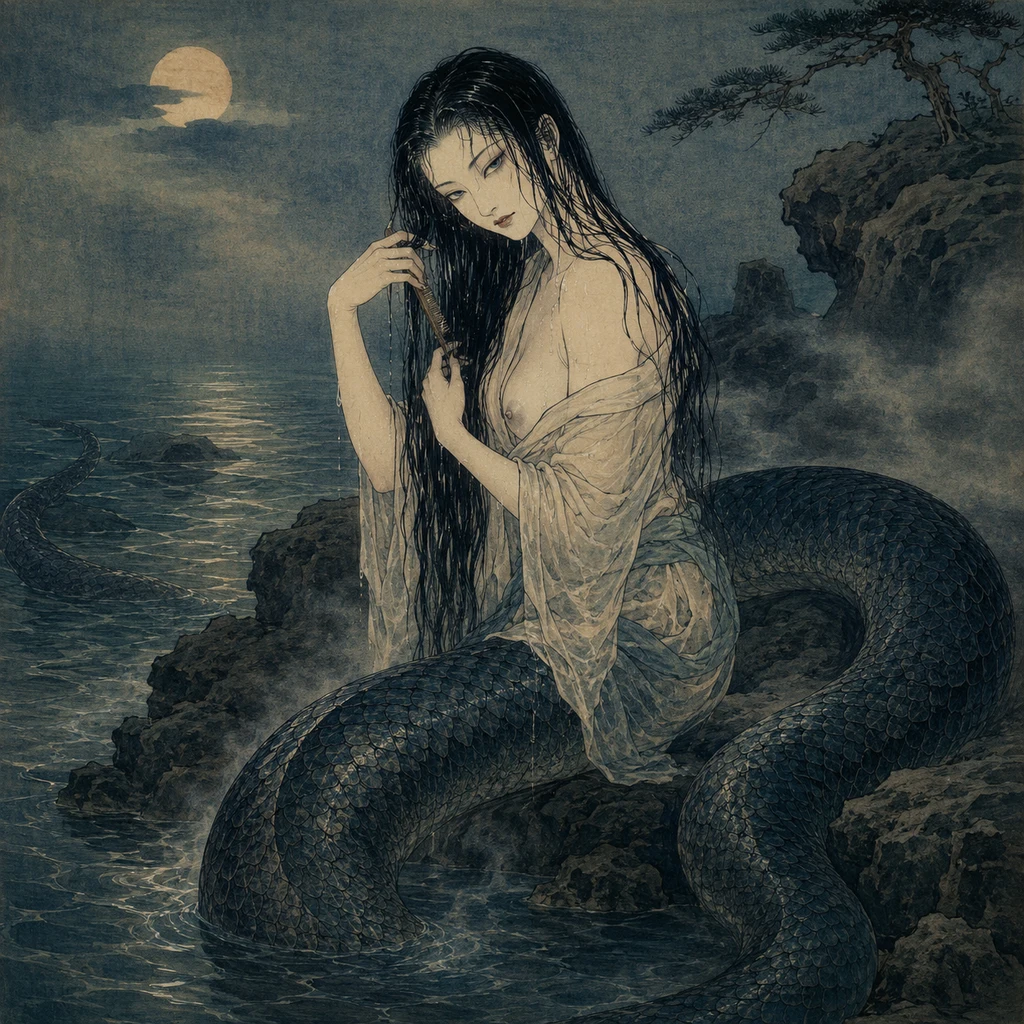
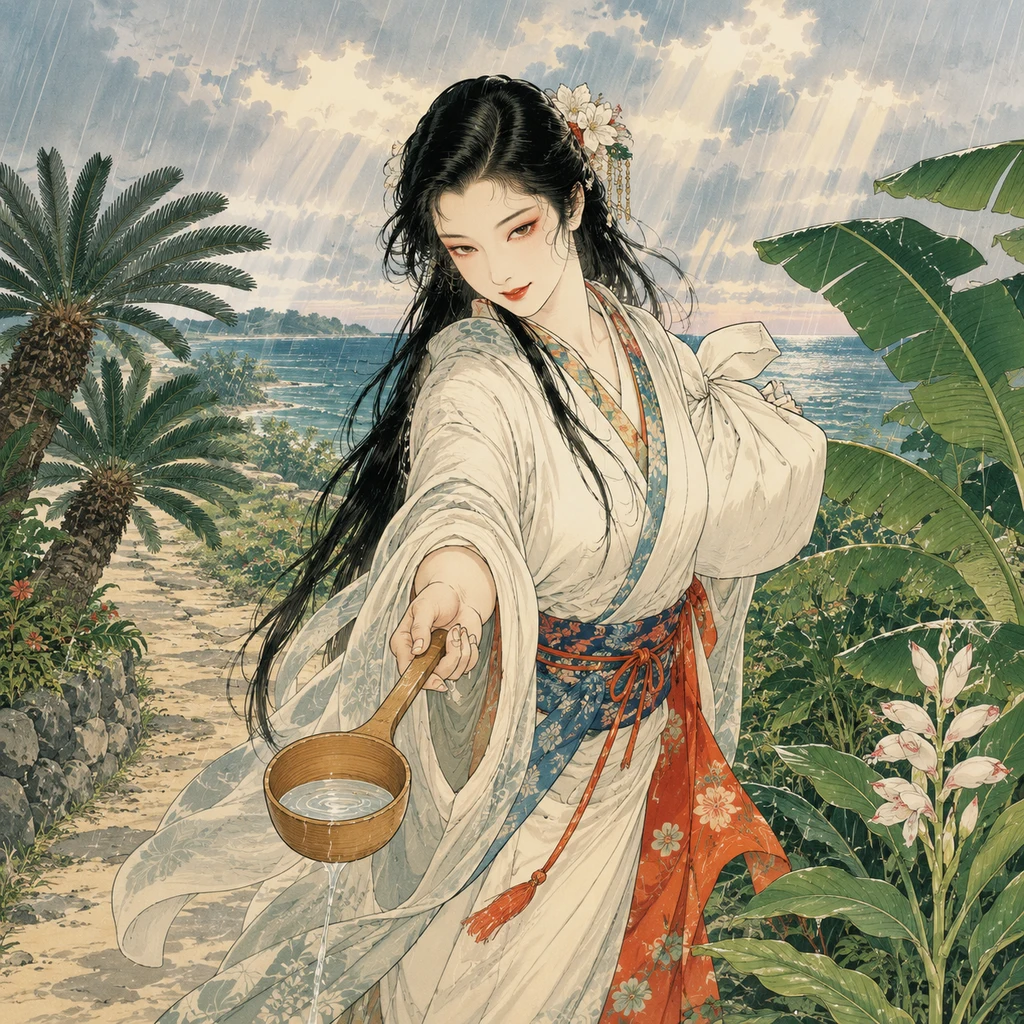
What is crucial here is that nature does not dress itself beautifully for humanity's sake. The white snow, damp hair, and the shimmering water's surface may captivate the eye, but beyond them lie blizzards, deep abysses, and the vast ocean boundary. Beautiful yōkai manifest both an admiration for, and a wariness of, the natural landscape.
Beasts and Insects Turning into Beauties—Tamamo-no-Mae, Kuzunoha, and Jorōgumo
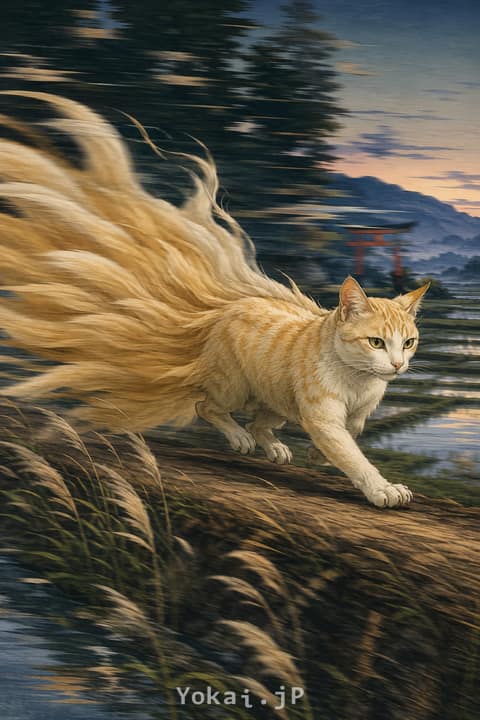
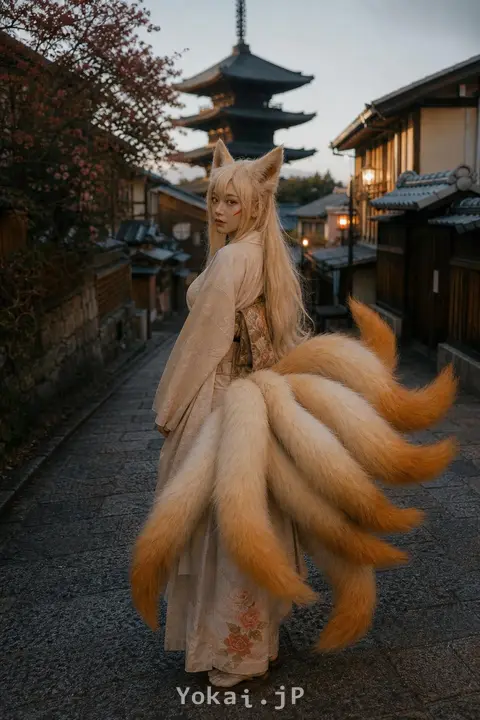
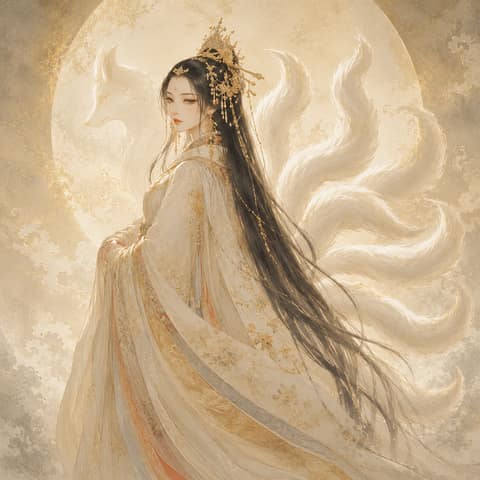
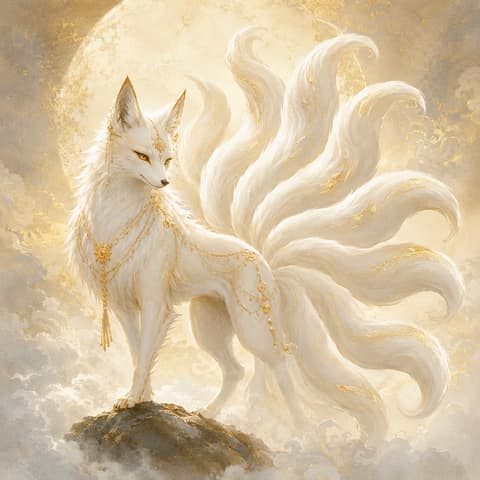
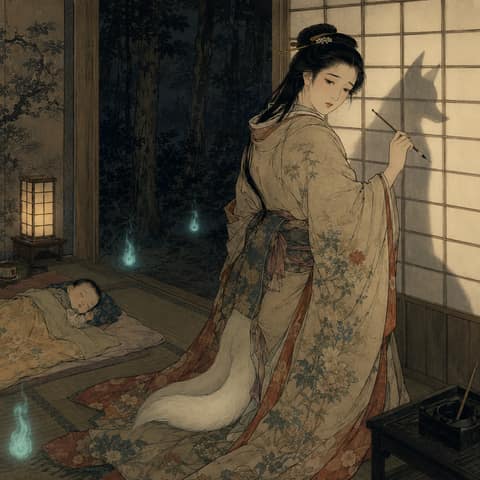
In tales where foxes or spiders transform into women, beauty serves as the power to conceal their true identities. Tamamo-no-Mae's story spread as a link between a favored court lady and the Nine-Tailed Fox, while Kuzunoha represents the quintessential interspecies marriage tale, narrating the parting of a fox wife from her human husband and child. The Jorōgumo appears in stories where a spider from a waterfall or deep pool becomes a beauty to lure humans, and the Niku-sui is said to borrow the guise of a young woman in the mountains of Kumano to approach travelers.
 Tamamo-no-MaeTamamo-no-Mae
 Nine-Tailed FoxKyubi no Kitsune
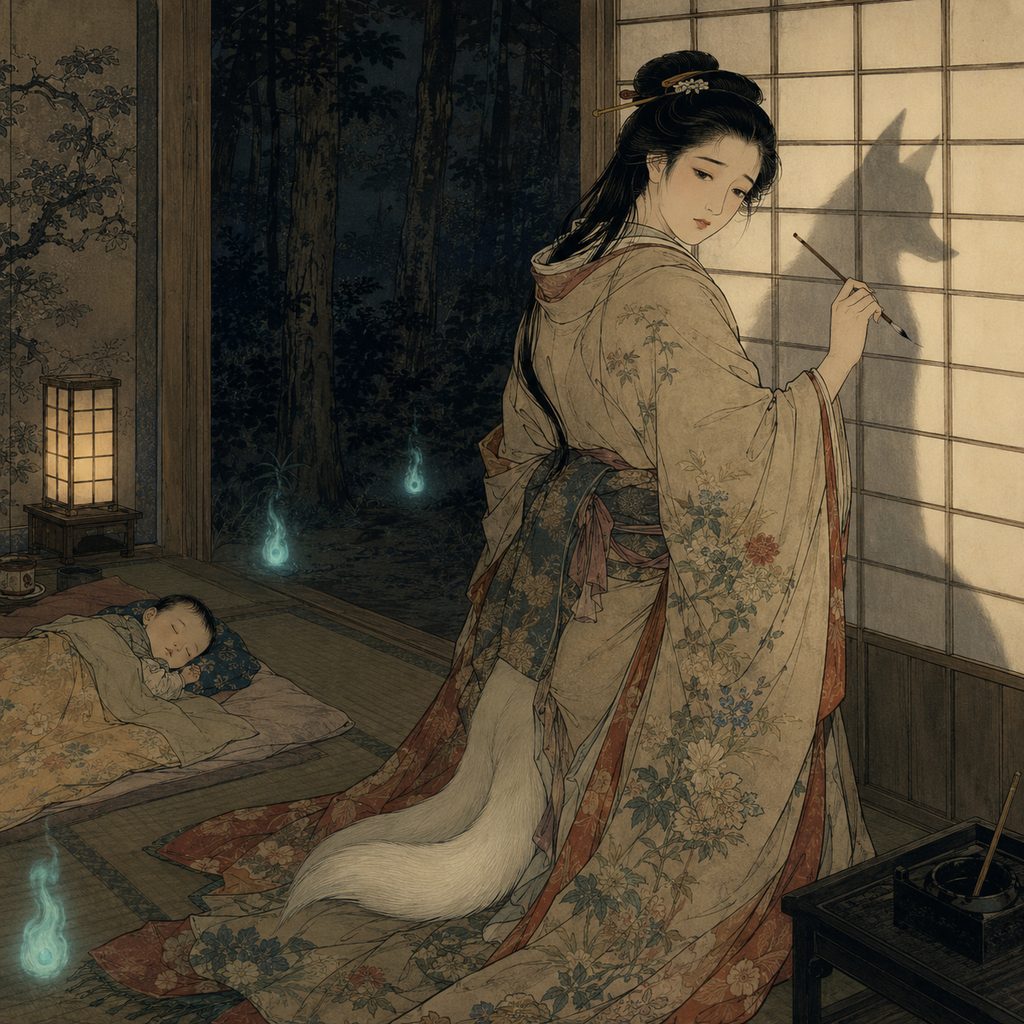 Kuzunohaくずのは
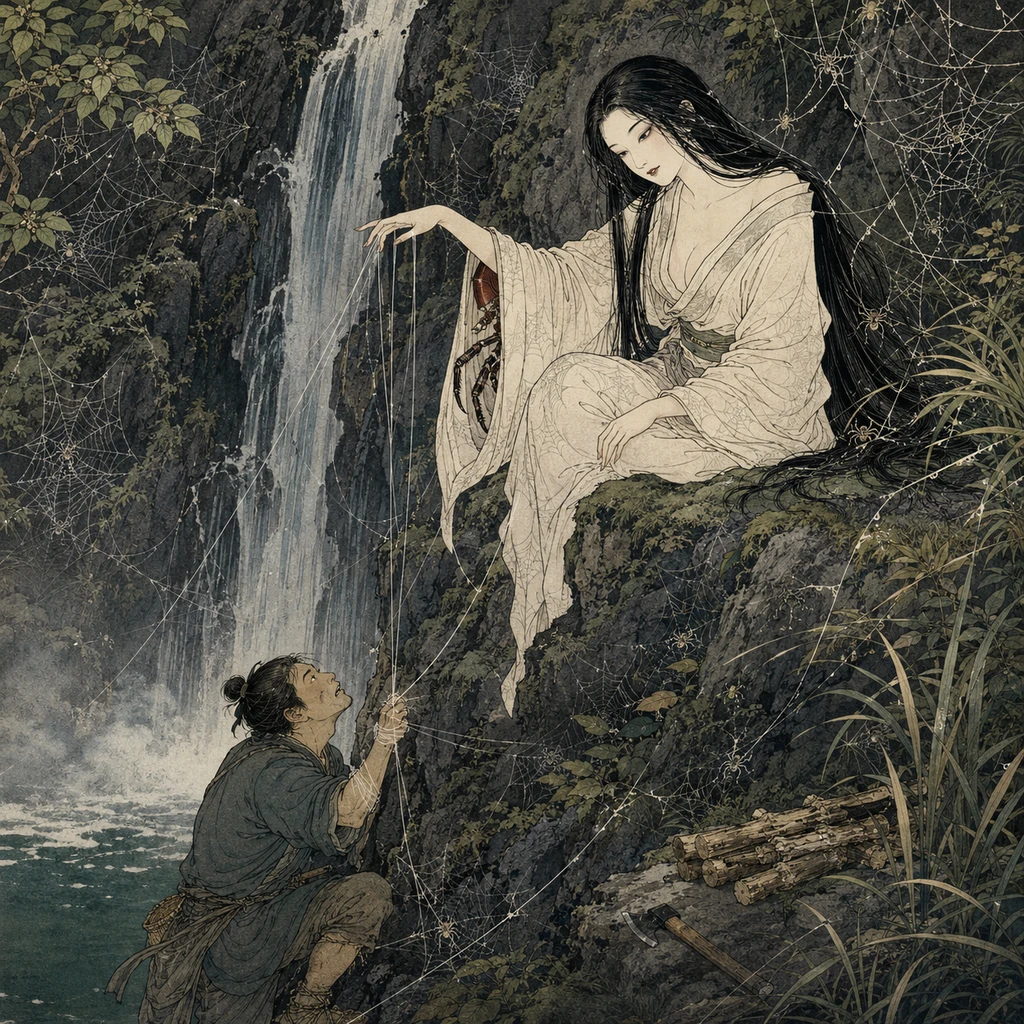 JorōgumoJorōgumo
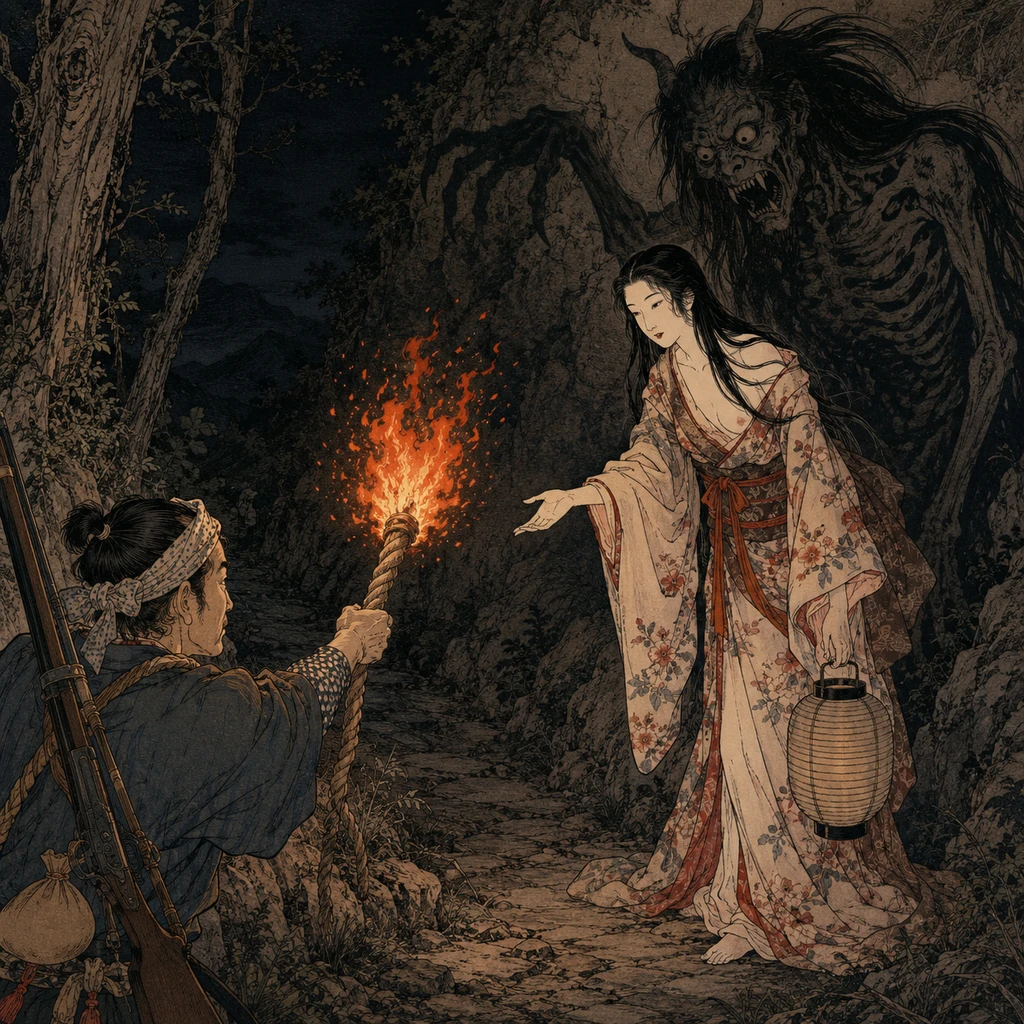 Meat-SuckerNEE-koo-soo-ee
Despite sharing the act of transformation, their roles vastly differ: Tamamo-no-Mae is a demonic fox shaking the foundations of a nation, Kuzunoha is a mother leaving her family behind, and the Jorōgumo is an aquatic predator. By not simply grouping them as "yōkai that turn into beautiful women," and instead reading into who they meet and what transpires after their true forms are revealed, the distinct narrative of each tale comes to light.
Passion Forged into Serpents—Kiyohime, Hashihime, and Suzuka Gozen
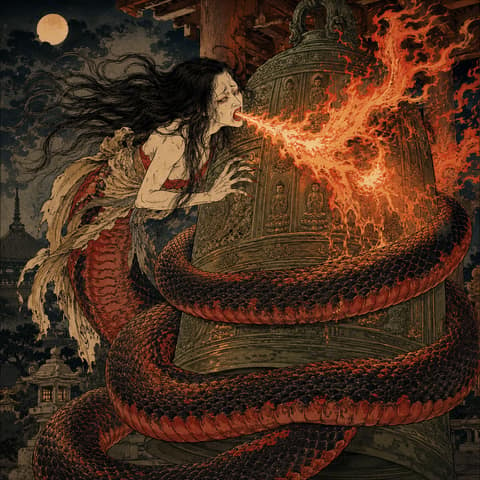
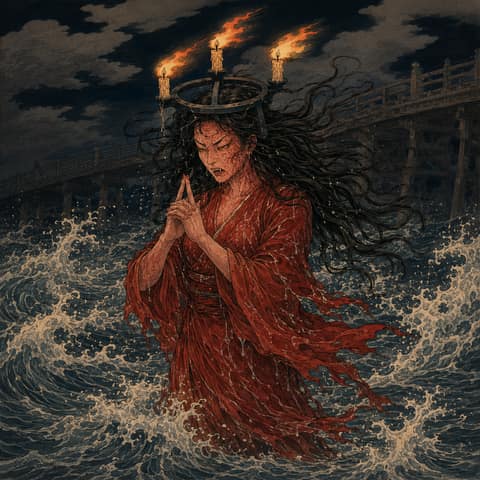
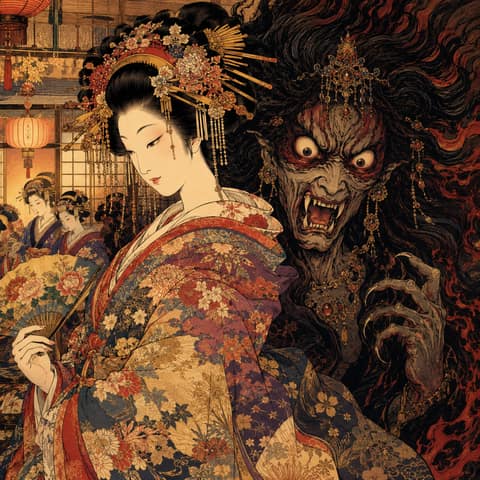
Stories where female forms overlap with demons or serpents engrave not only romantic passion and obsession but also how the narrators' society viewed female anger. Kiyohime is widely known for the tale where she pursues Anchin, transforms into a serpent, and spews flames upon the bell of Dōjōji. Hashihime, while initially the guardian deity of the Uji Bridge, was later molded into a woman who turns into an oni (demon) out of jealousy. Suzuka Gozen possesses multiple facets—as a goddess of Mount Suzuka, a celestial maiden, and the bandit Tate-eboshi—and her relationship with Sakanoue no Tamuramaro changes depending on the work.
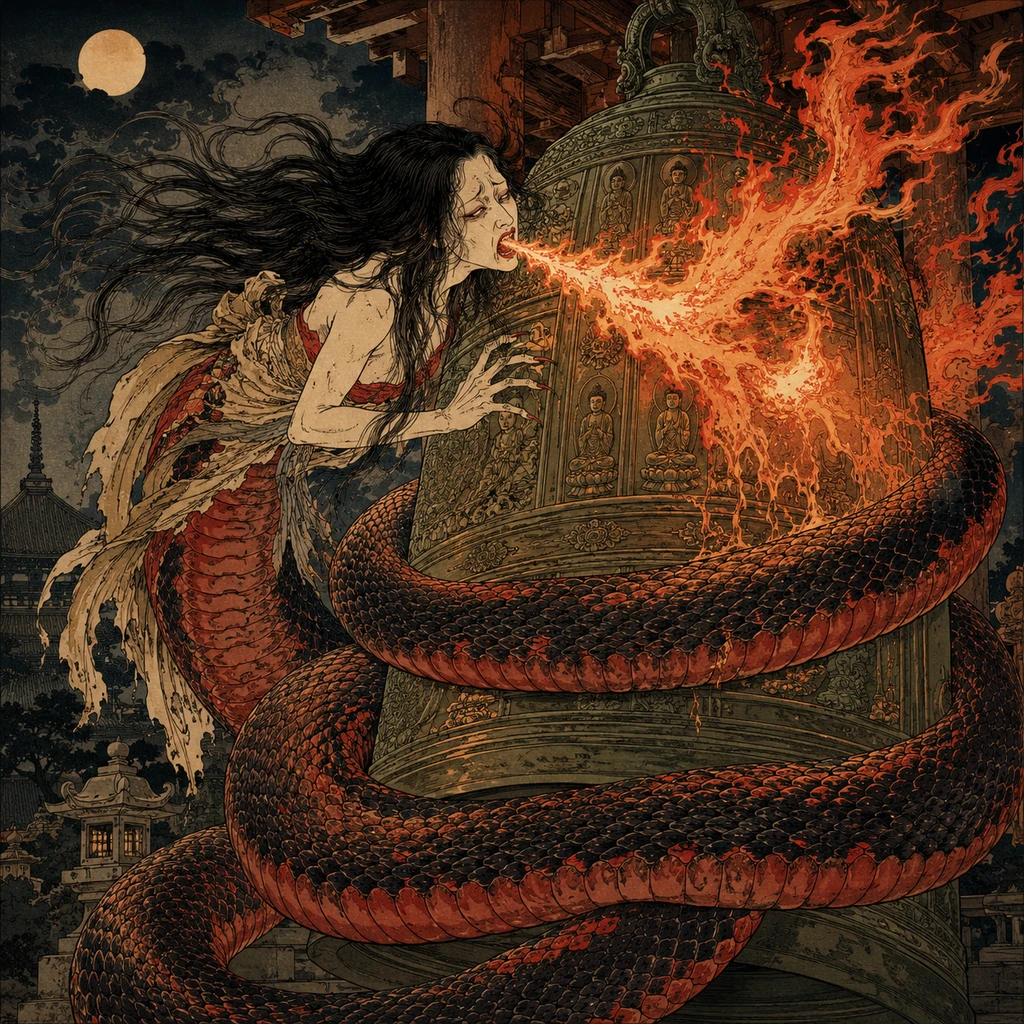 Kiyohimeきよひめ
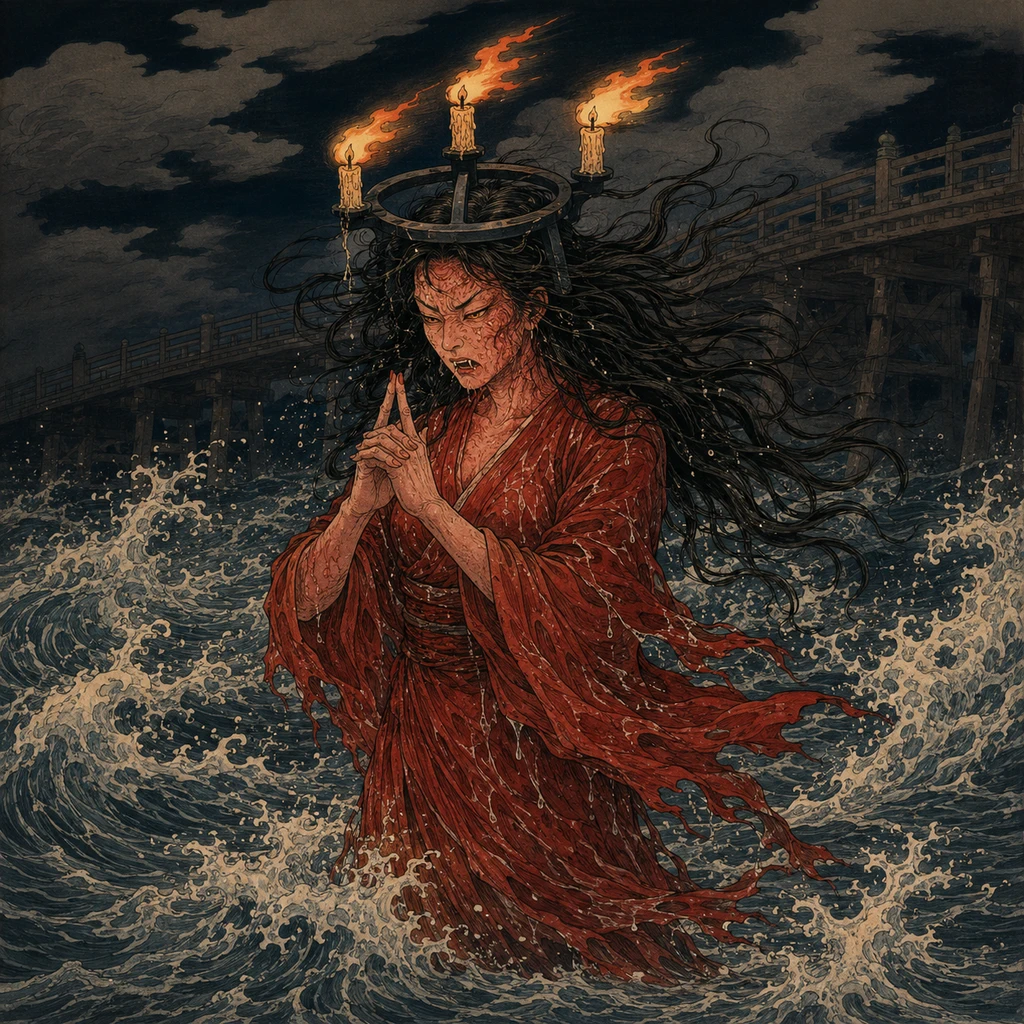 Hashihime (Bridge Princess)HAH-shee-HEE-meh
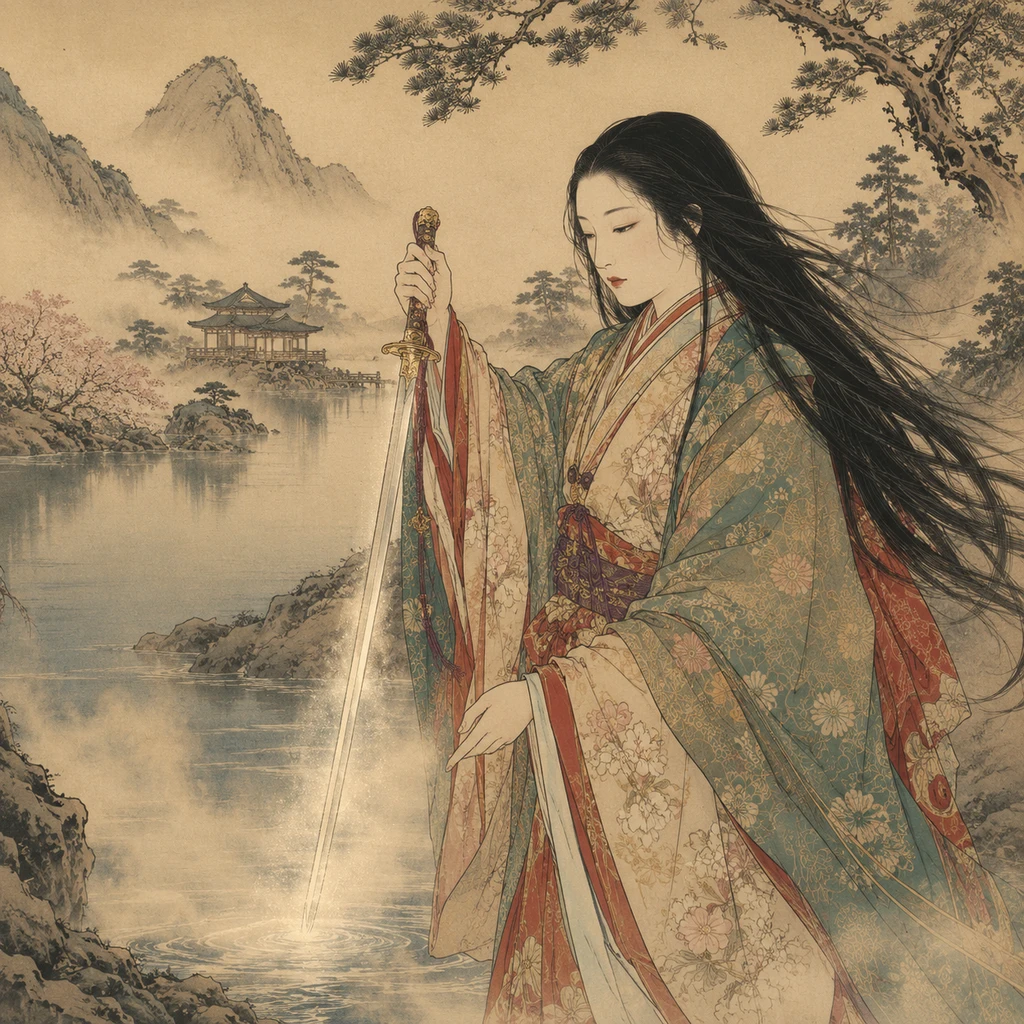 Suzuka Gozenすずかごぜん
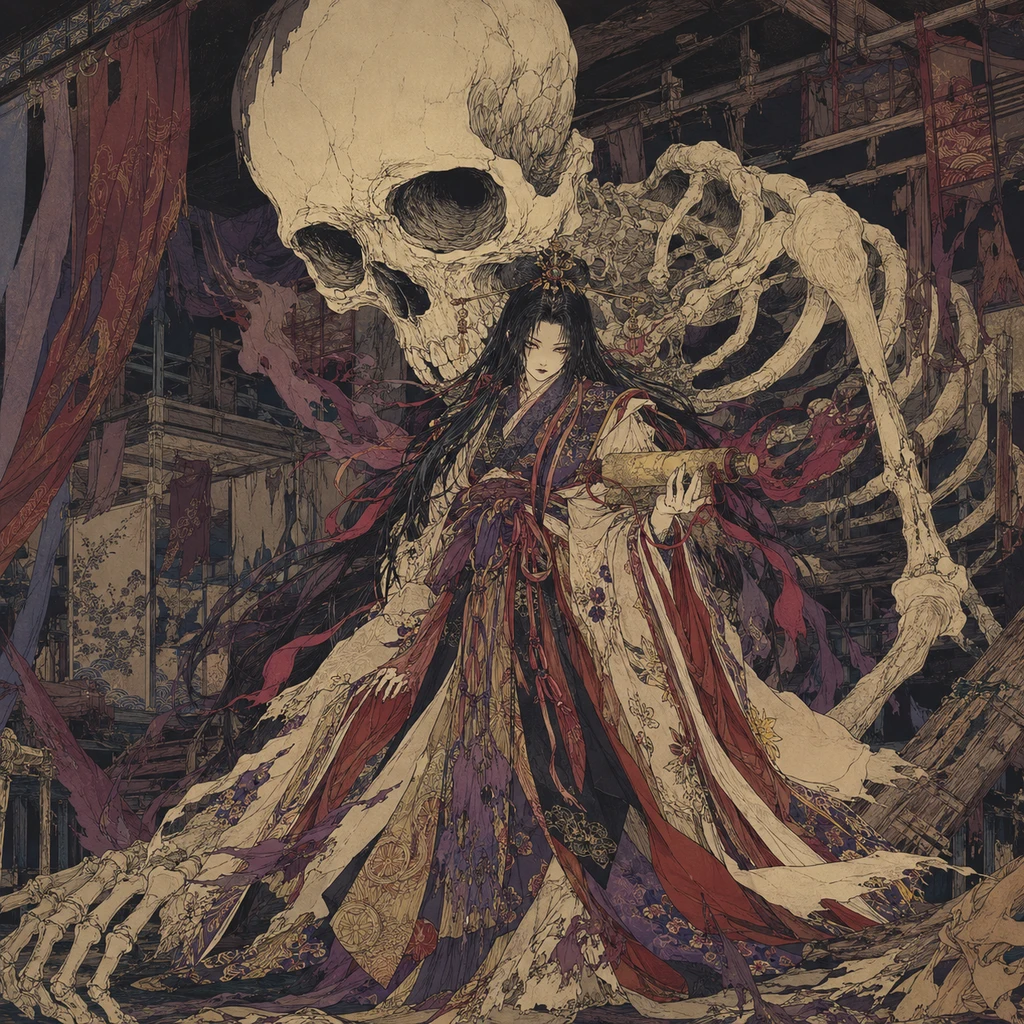 Takiyasha-himetakiyasha hime
Reducing these to mere stories of "scary women" obscures the nuances of local deities, performing arts, heroic sagas, and the societal standing of women. Beauty and terror coexist not because female emotion itself is an anomaly, but because tales of metamorphosis dramatically demonstrate the crossing of boundaries.
Hair, Robes, and Fragrance—The Details that Construct the Form
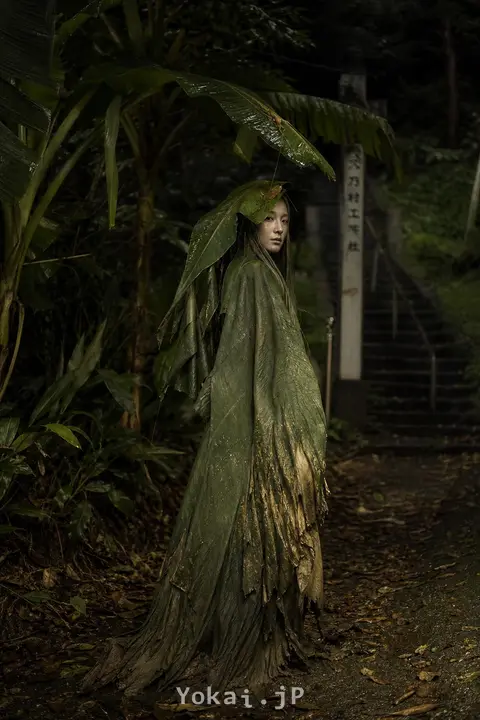
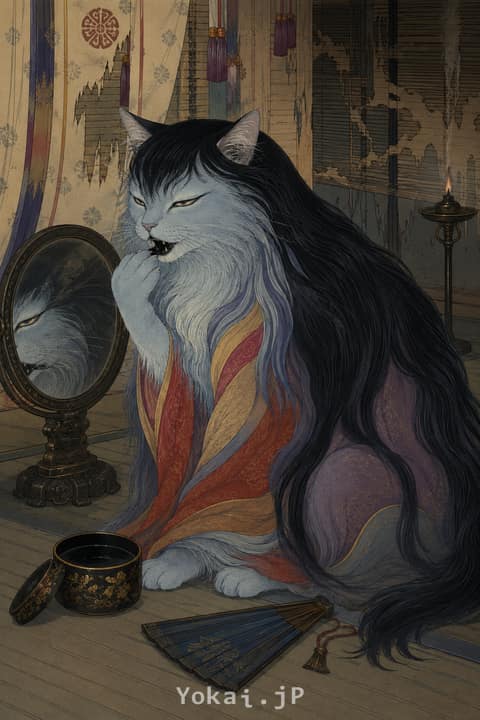
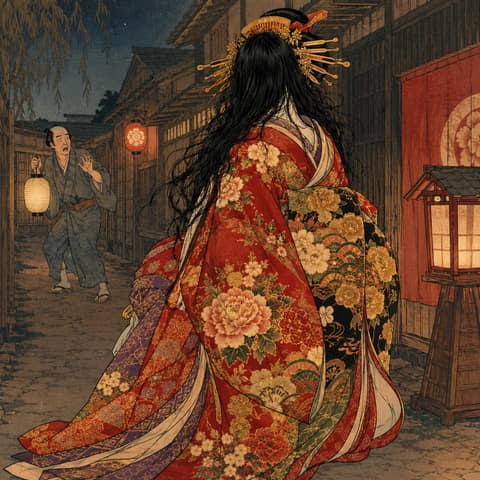
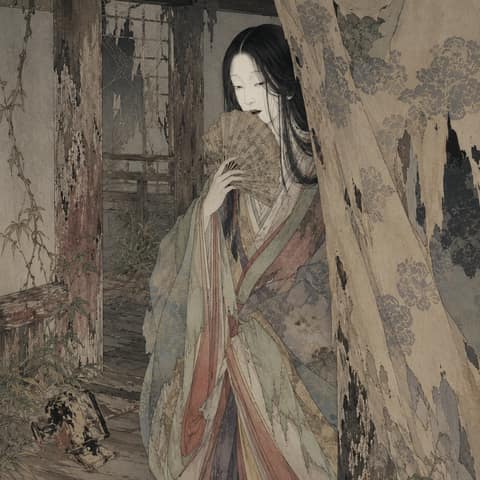
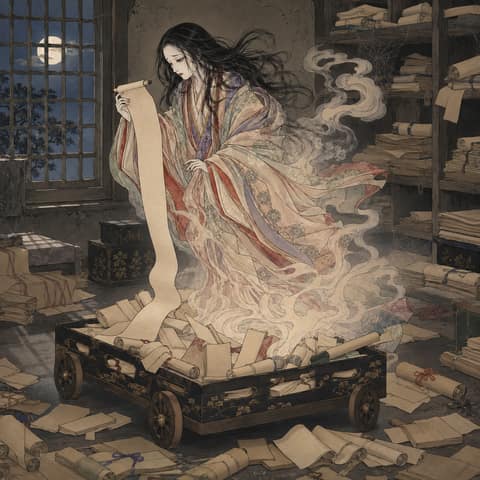
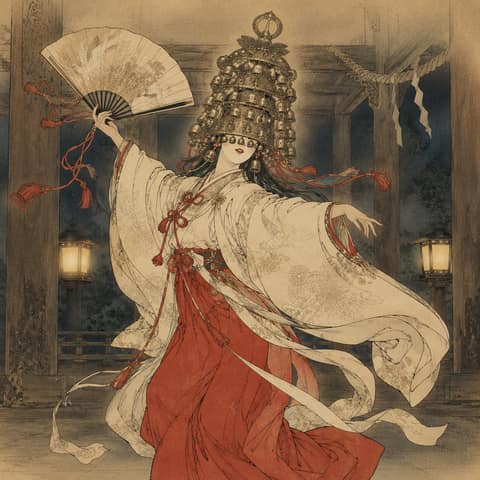
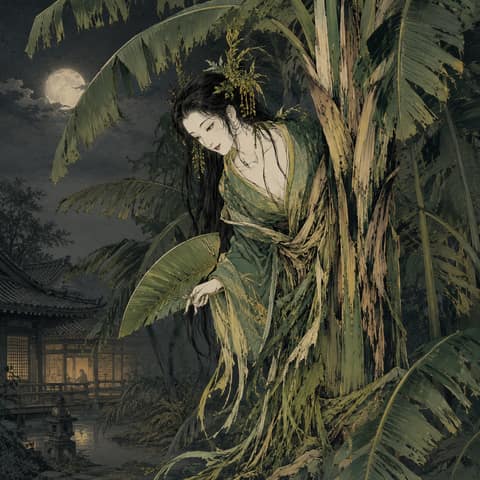
The Kejorō is a yōkai that stands with her long hair draped forward, concealing her face. The Ao-nyōbō takes the form of a court lady lingering in a ruined palace, while the Fuguruma-yōhi connects a pile of love letters to the figure of a woman. The Suzuhiko-hime integrates kagura bells with resplendent attire, and the Bashō-no-sei presents the classical beauty of transformation, where the spirit of a plant manifests as a woman.
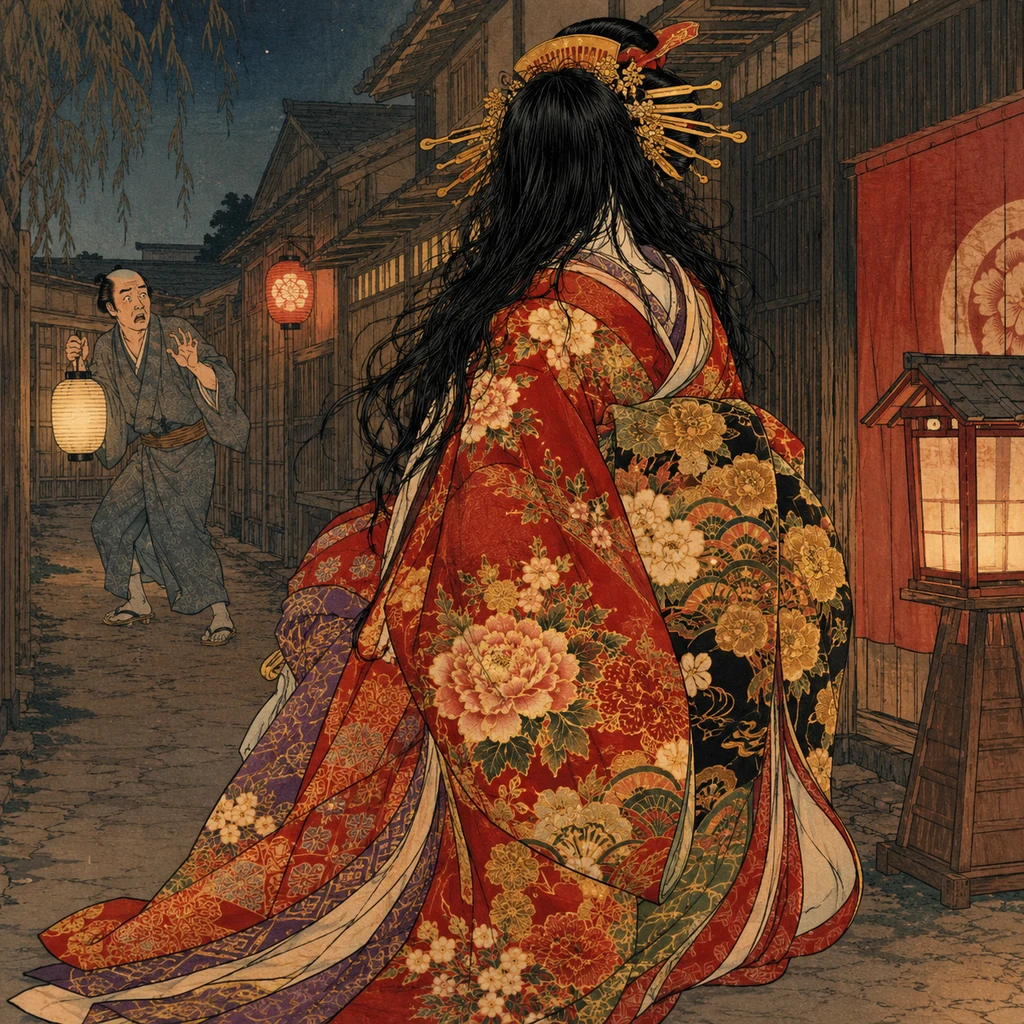 Kejōrō (Hair Courtesan)keh-JOH-roh
 Blue Lady-in-WaitingAH-oh NYOH-boh
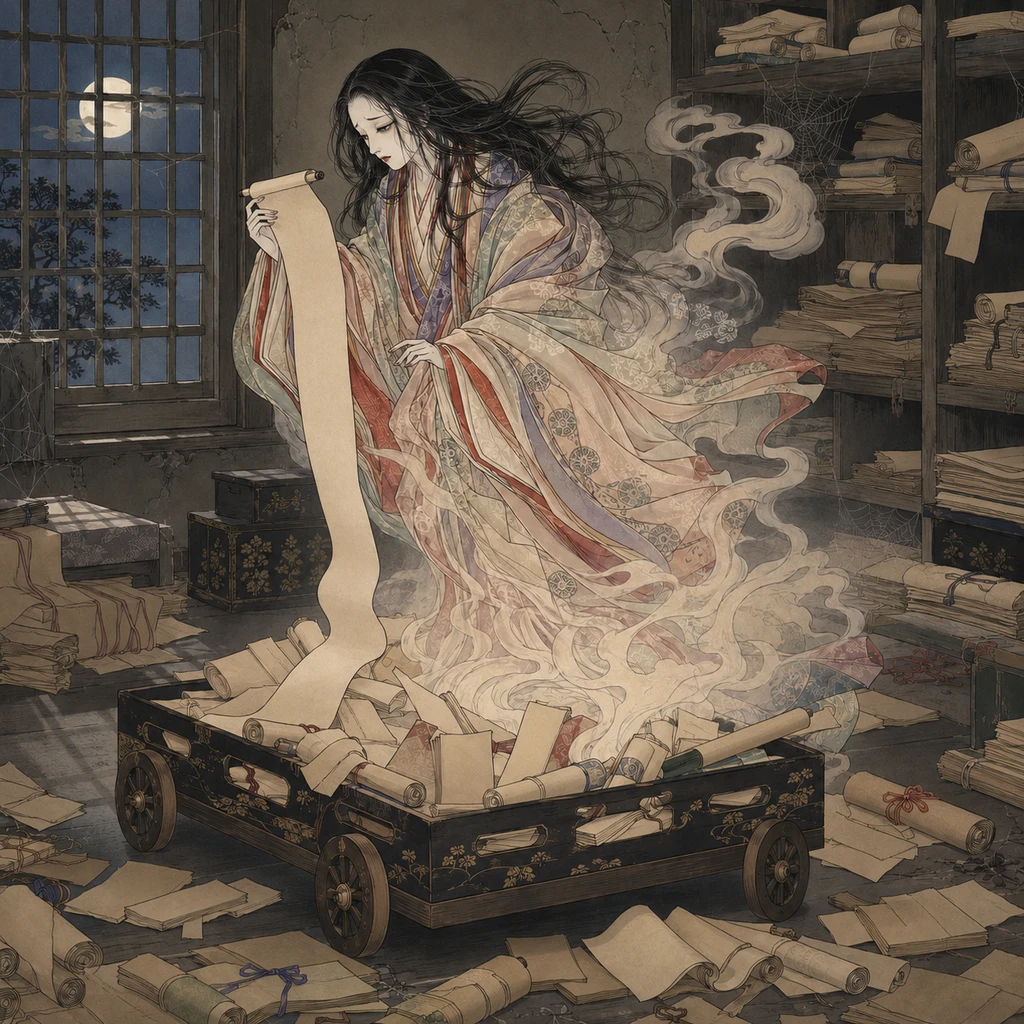 Fuguruma Yōhi (Letter-Carriage Enchantress)FOO-goo-ROO-mah YOH-hee
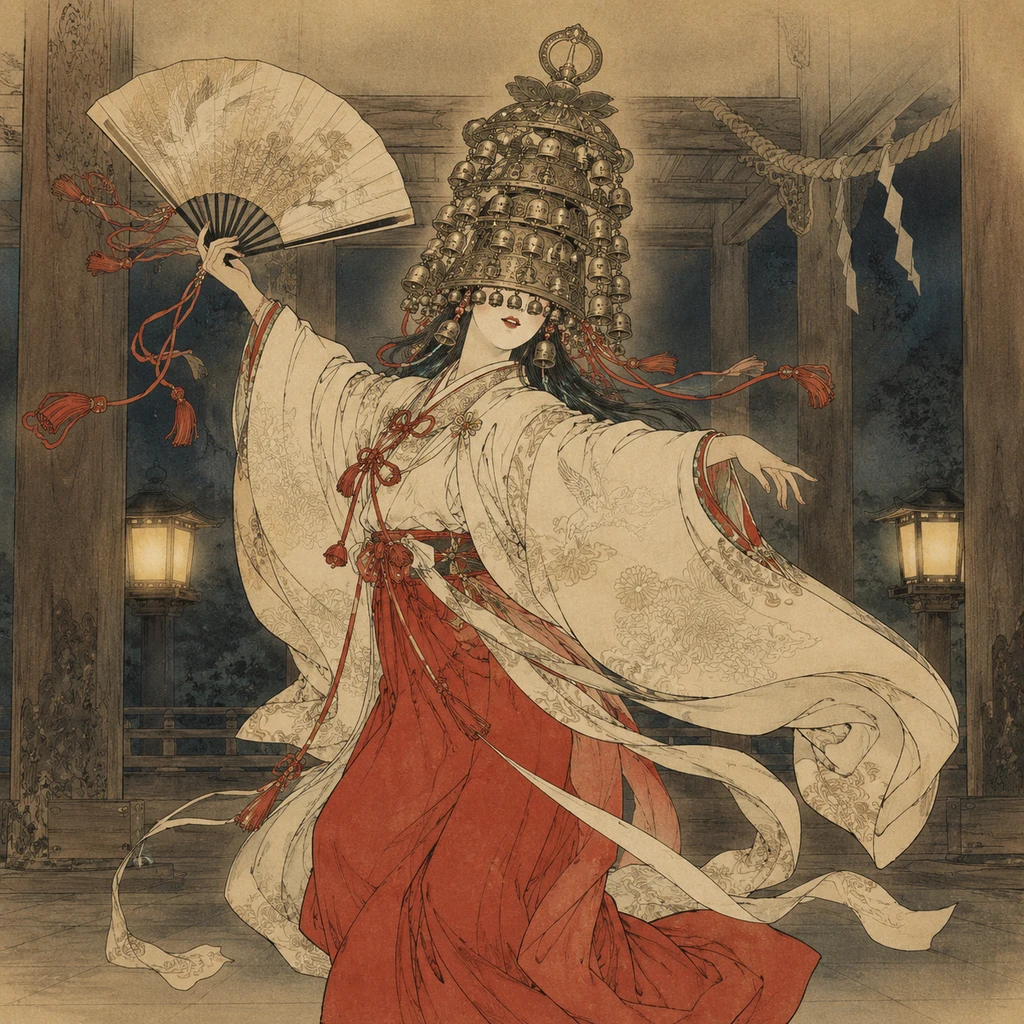 Suzuhiko-himeSuzuhiko-hime
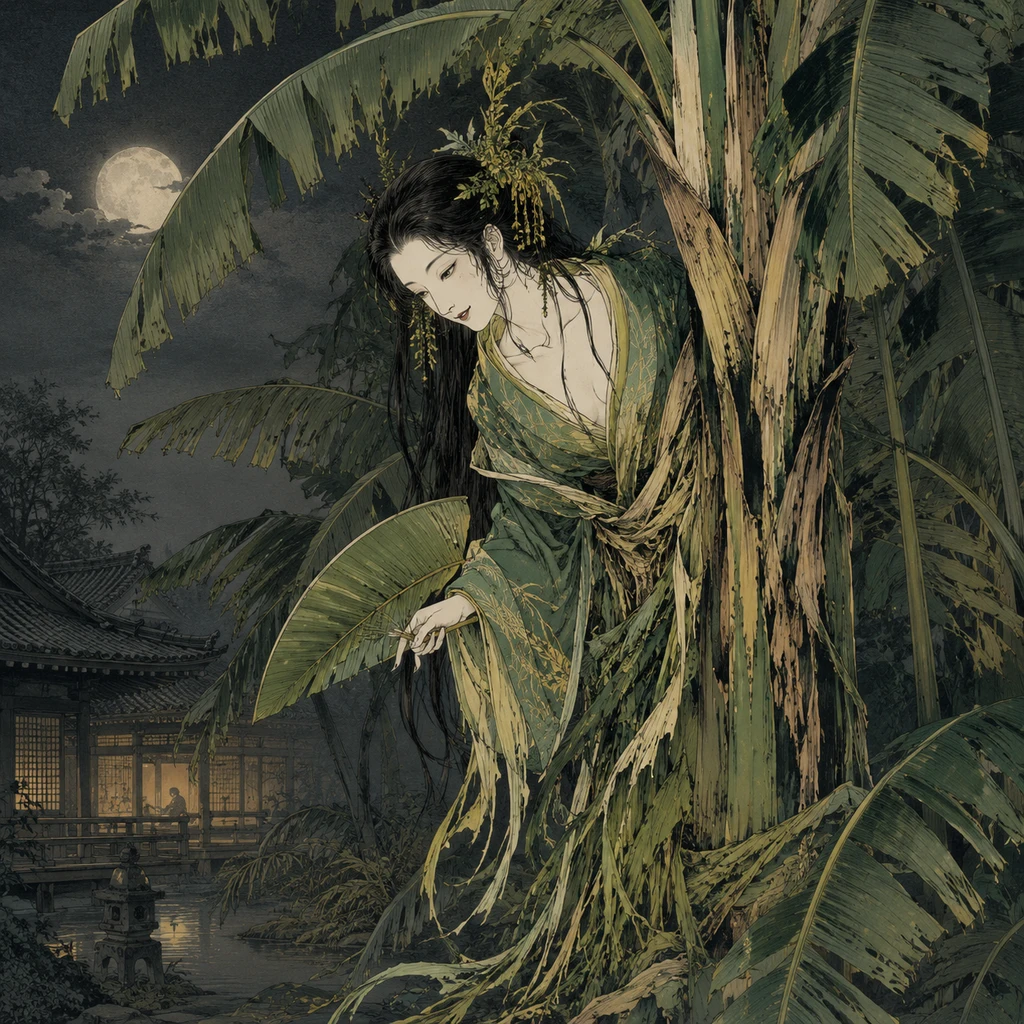 Banana-Plant Spiritbah-SHOW-noh-SAY
Toriyama Sekien's yōkai art books combined names, forms, and classical phrases, organizing anomalies into a format that could be appreciated one by one. Observing works like the *Konjaku Gazu Zoku Hyakki*[1] and *Gazu Hyakki Tsurezure Bukuro*[2], one understands that beauty is crafted not just through facial features, but through the flow of hair, the layering of robes, and visual metaphors with objects.
The Dead Retaining the Visage of the Living—Hone-onna and Yao Bikuni
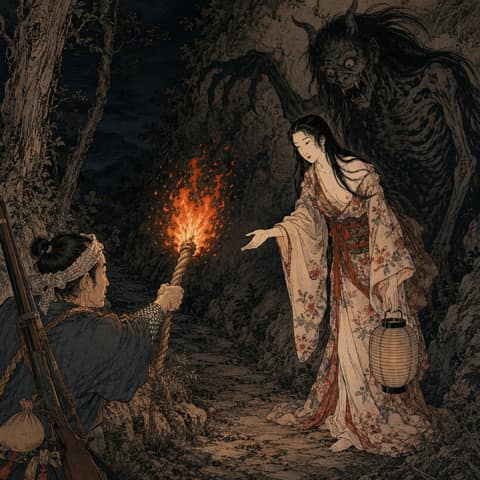
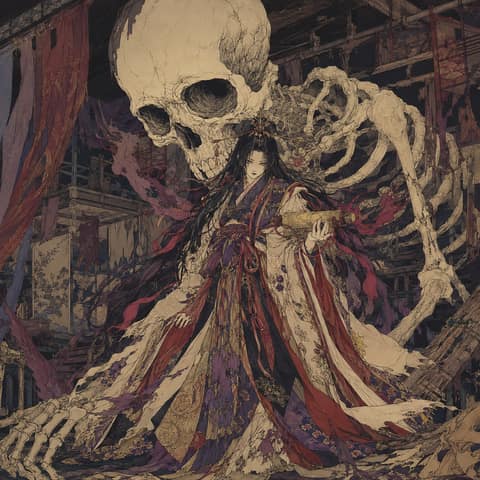
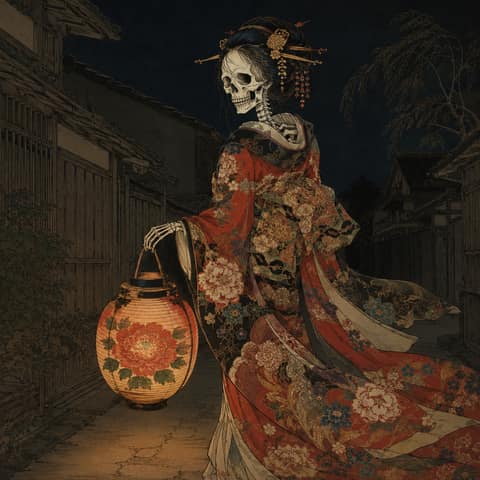
The Hone-onna is depicted as an anomaly who, despite being a skeleton, retains her living appearance to visit the one she yearns for. In this trope, famously retold by Lafcadio Hearn, the dual perspective—where the beloved sees the deceased as she once was, while a third party sees only bone—drives the narrative forward. The Yao Bikuni is a woman who gained longevity by eating the flesh of a mermaid; maintaining her youthful beauty is not a blessing, but rather the fate of enduring countless, endless farewells.
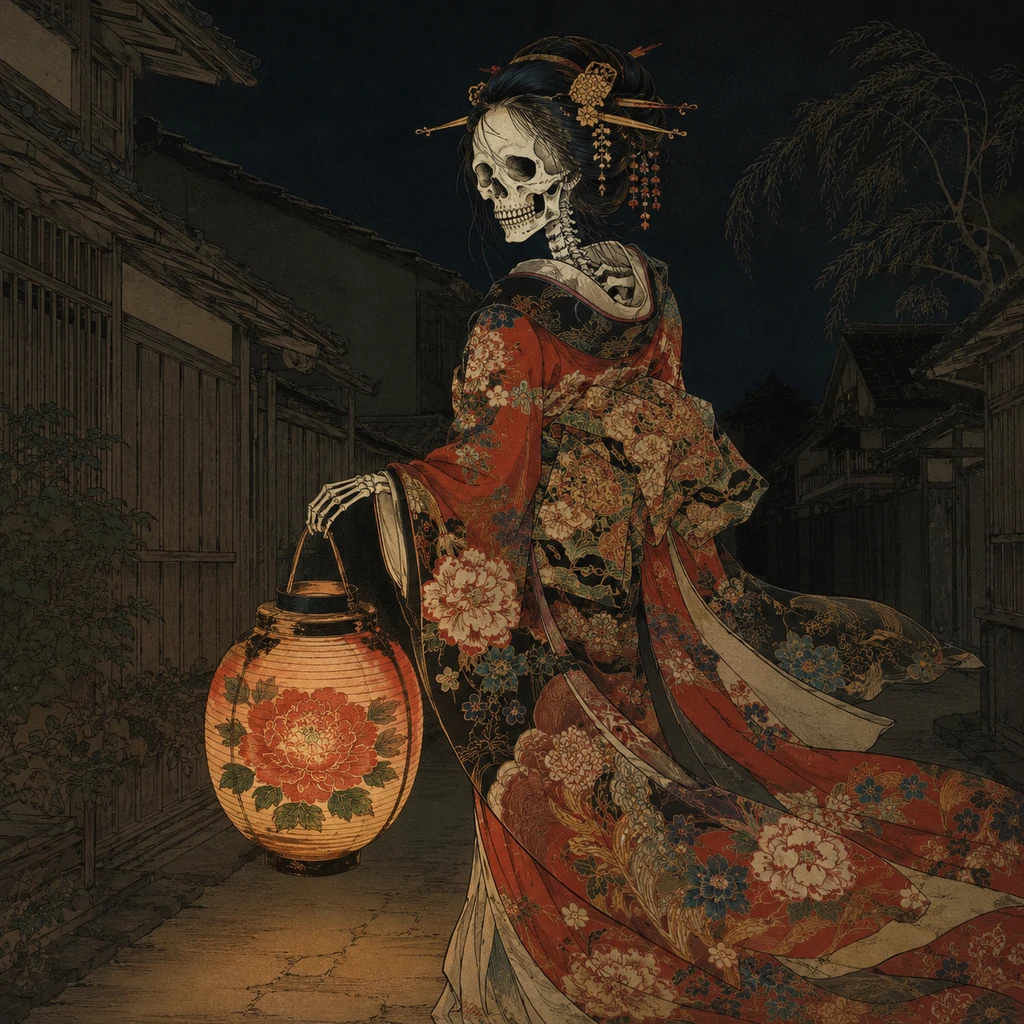
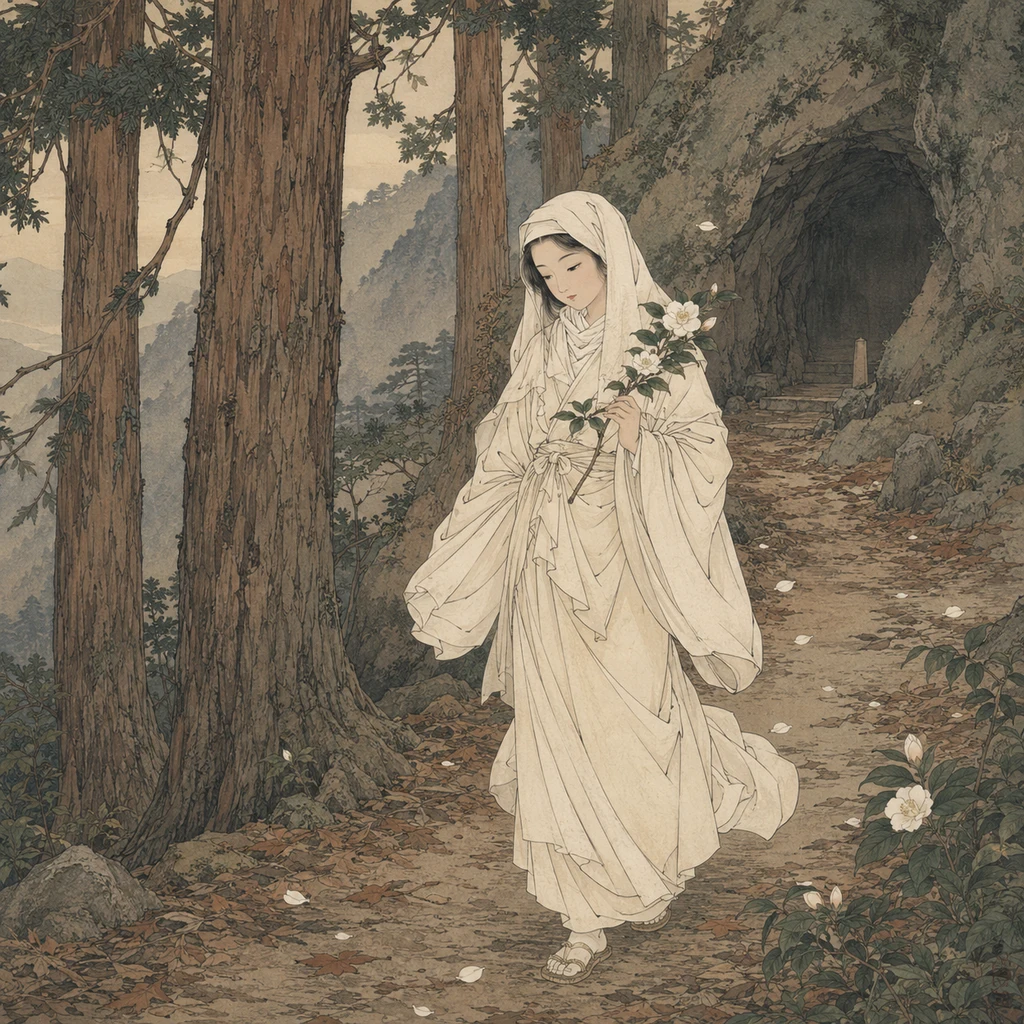

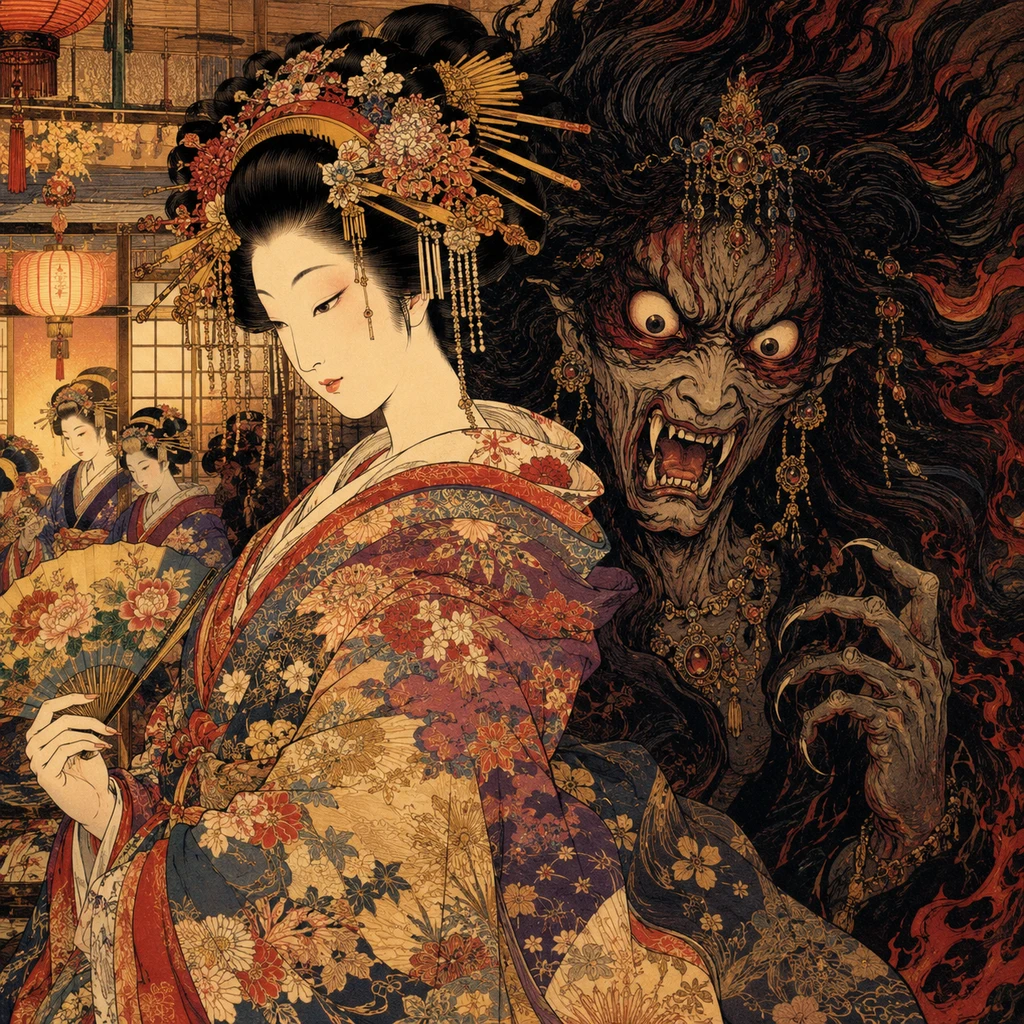
The Iso-onna and Hino-enma also feature captivating female forms, yet their origins differ significantly between regional folklore and the didactic creations of the Edo period. By verifying the regional records in the Yokai and Kaii Database[3] separately from the iconography of picture books and art collections, one can avoid the misconception that they were "always the same beautiful yōkai."
Because They Are Beautiful, Do Not Rush to Define Them
The forms of beautiful yōkai have been refined over time by painters, storytellers, performers, and readers of each era. The appearances so well-known today were not necessarily described in detail in the original tales; in some cases, later paintings or theatrical performances cemented the impression. Furthermore, entities that traverse the realms of divinity, the otherworldly, and human heroism—such as the Ryūjo and Suzuka Gozen—cannot be wholly confined to the label of "yōkai."
In the "Included Yōkai" section below, we have gathered incarnations of nature, shapeshifting animals, demonesses, the dead, tsukumogami (tool spirits), and even deities. Start with the one whose appearance first captivated you, delve into its locale, original texts, and variant legends, and discover exactly what message its beauty was chosen to convey.