"Seven Wonders," But Not Seven
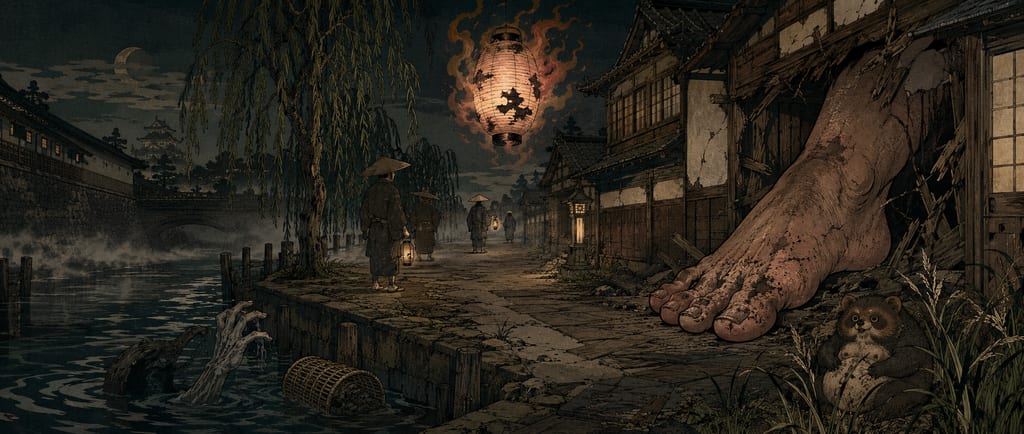
When researching the Seven Wonders of Honjo, you will find that the number and selection of stories vary depending on the list. This is not because errors have crept in, but rather because "Seven Wonders" was not a strict constant, but a generic term used to group and remember mysterious tales. Sumida Ward's official commentary[1] also explains that there are more than seven stories, and only Oiteke-bori and Kataha-no-Ashi are common to every version.
On this page, we introduce nine ghost stories currently recorded in our database, but we do not claim this to be the single definitive version. Instead, we look at which stories transformed the sensory experiences of Honjo's moats, samurai mansions, temples, soba shops, and night roads into the supernatural.
Watersides that Echo Voices: Oiteke-bori
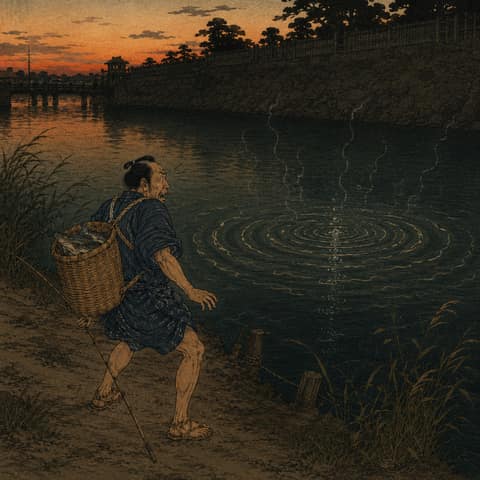
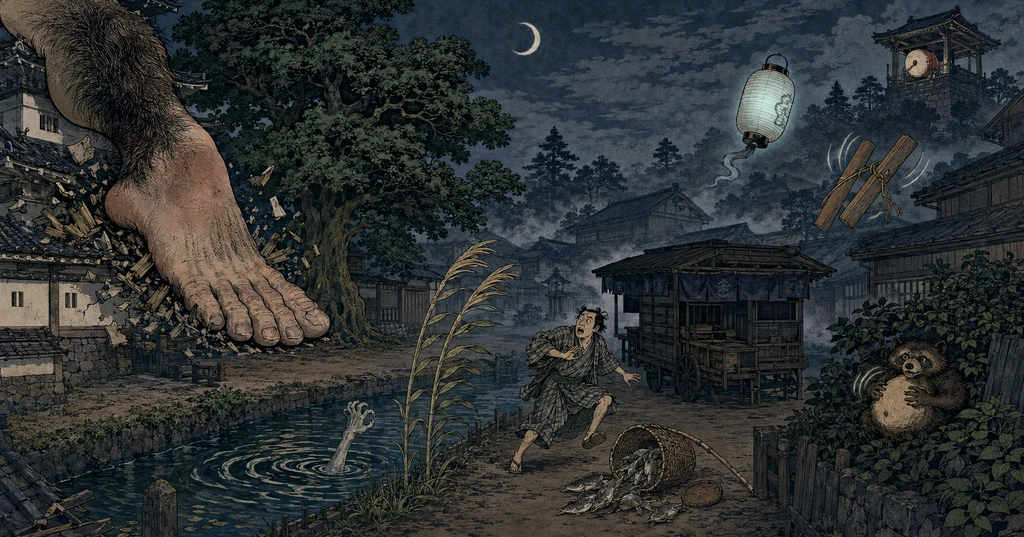
Oiteke-bori is a ghost story where an angler catching fish in a moat hears a voice from the water commanding, "Leave it, leave it." If they refuse, terrible things will happen. There are multiple theories about the location, and later explanations attribute it to a Kappa or Tanuki, but the original story cannot be pinned down to a single type of yokai.
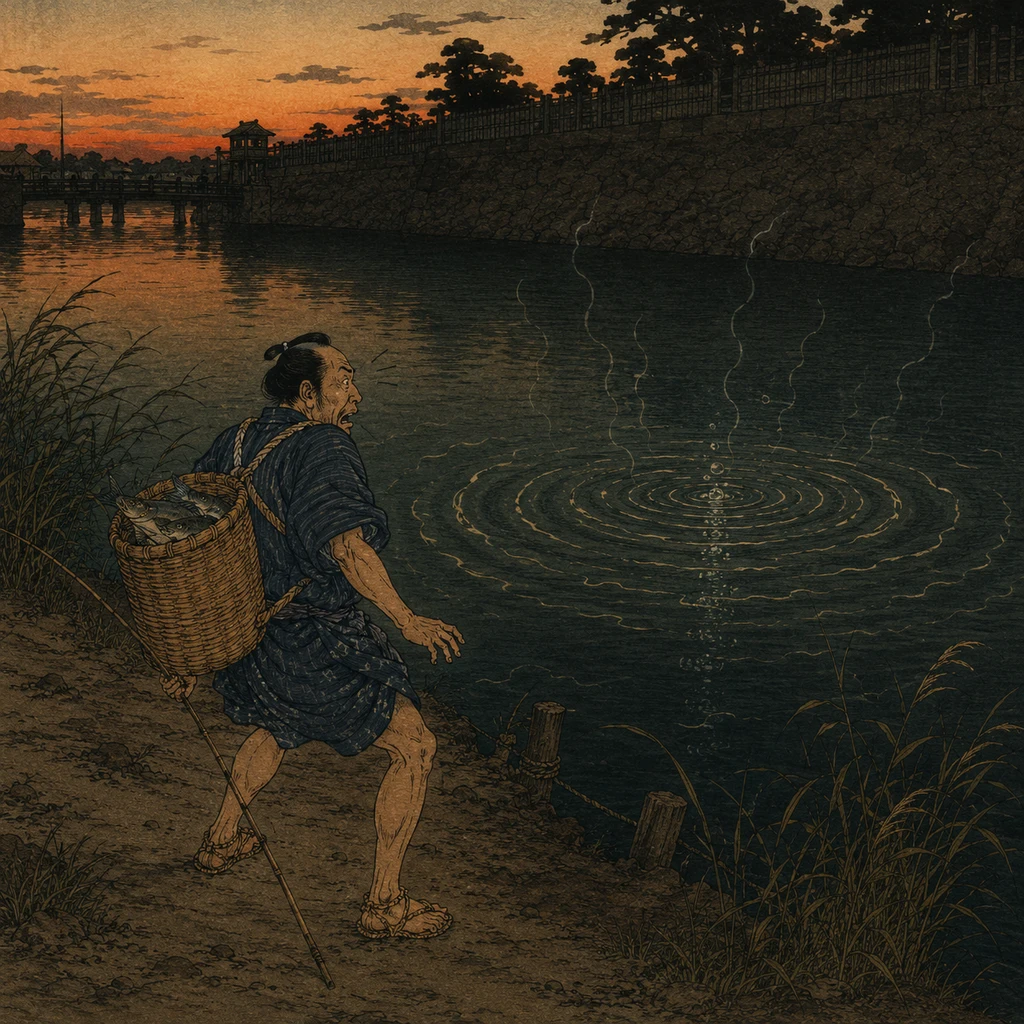
Its association with the phrase "oitekebori" (being left behind) also boosted its fame. In Honjo, an area with many waterways, the moat at dusk and the catch one tries to take home combine to create a brief moment of terror.
A Giant Foot Descends upon a Mansion: Ashiarai Yashiki
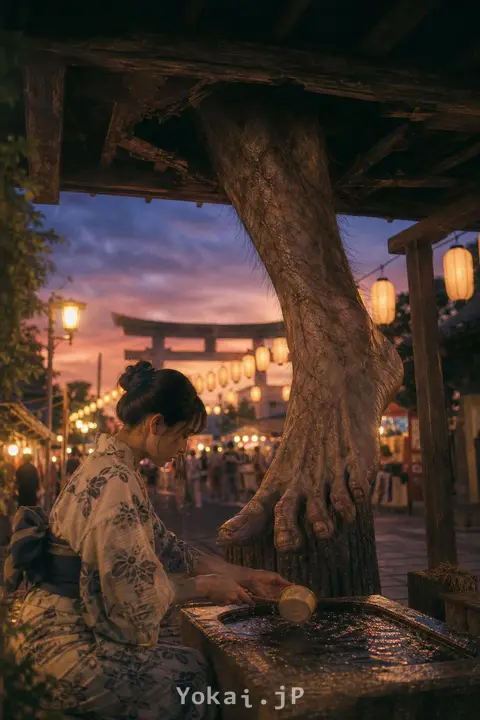
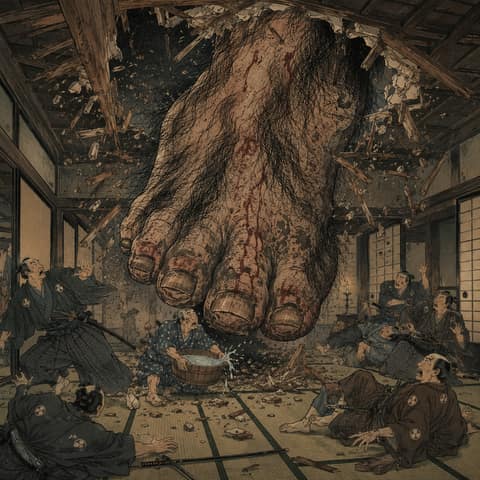
In the tale of Ashiarai Yashiki, an enormous, hairy foot crashes through the roof of a samurai mansion at night, demanding, "Wash my foot!" If the household washes it, it vanishes; if they refuse, it is said to destroy the mansion. By inserting only a foot into the everyday space without showing a massive full body, it instantly shatters the safety and hierarchical sense of the mansion.
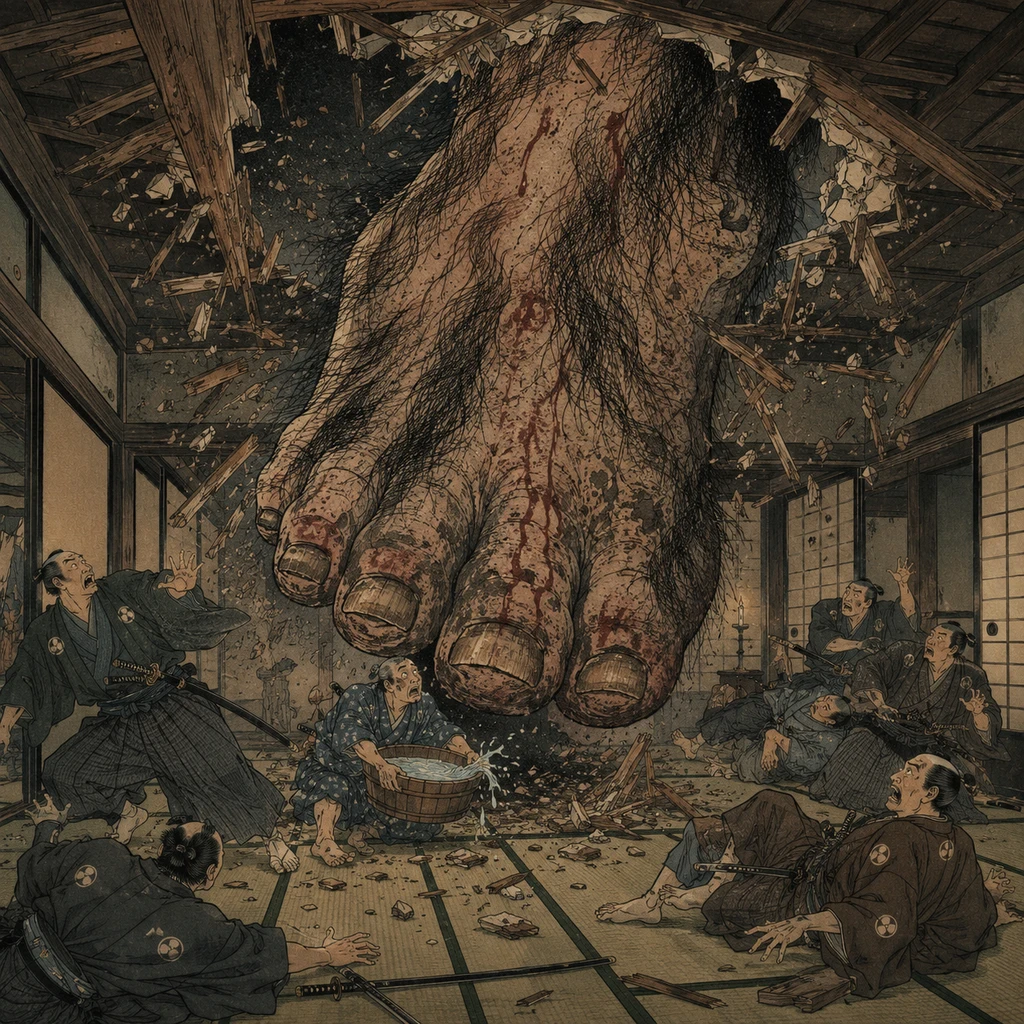
There are different theories about whose mansion it was and why the foot appeared. Rather than determining a specific origin, it is better to look at the composition of an external supernatural force invading the closed space of a samurai residence.
Leaves on Only One Side: Kataha-no-Ashi
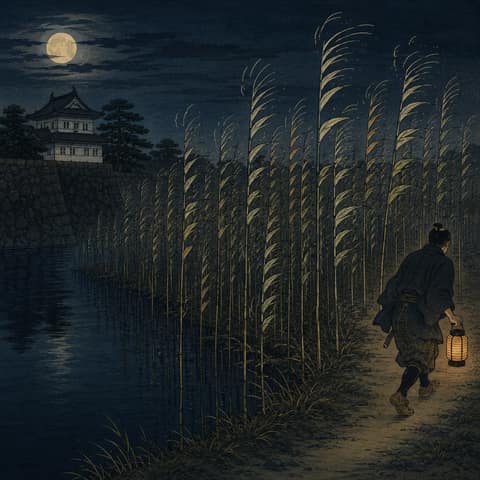
Kataha-no-Ashi is a ghost story that links the reason why reeds in a certain place grow leaves on only one side to the grudge of a murdered woman or a local incident. A small anomaly in plant morphology points to a forgotten death. Among the Seven Wonders of Honjo, it is a story common to many lists, alongside Oiteke-bori.
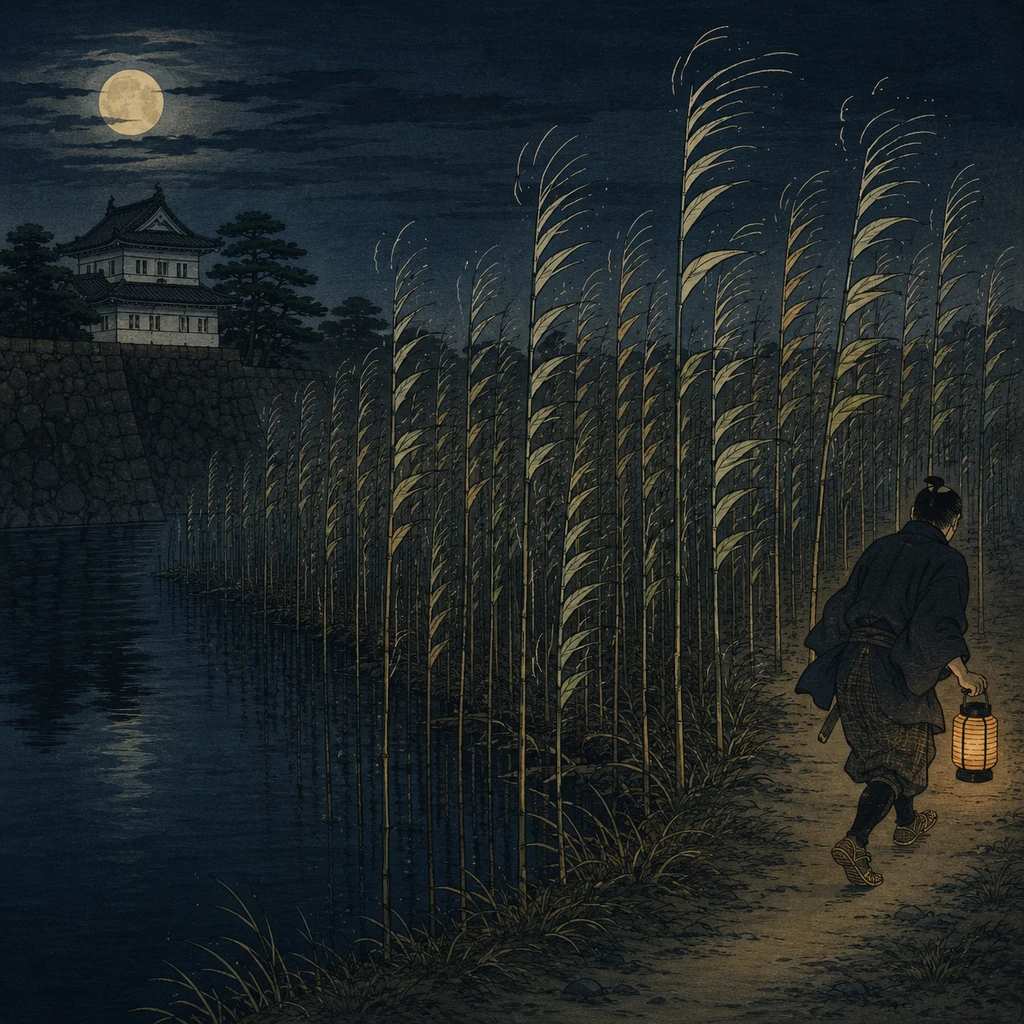
Plant lore of the same name exists in other regions as well. It is necessary to avoid mixing the Honjo tale with nationwide "Kataha" legends, and instead confirm the collection site and the characters of the story.
Light and Sound Coming from Behind: Okuri Chōchin, Okuri Hyōshigi
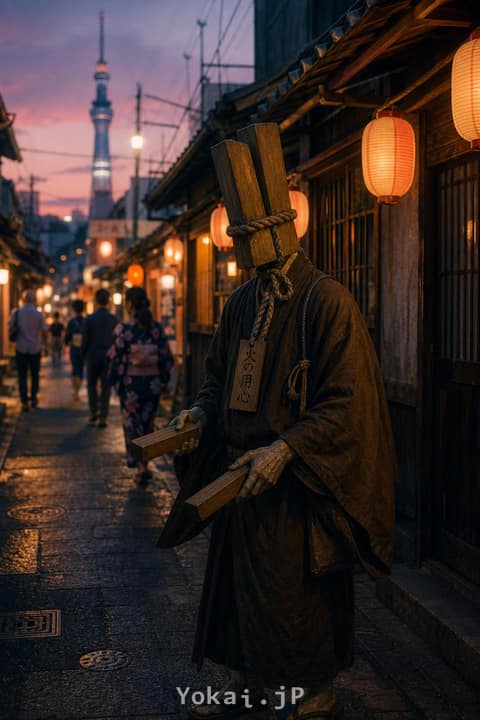
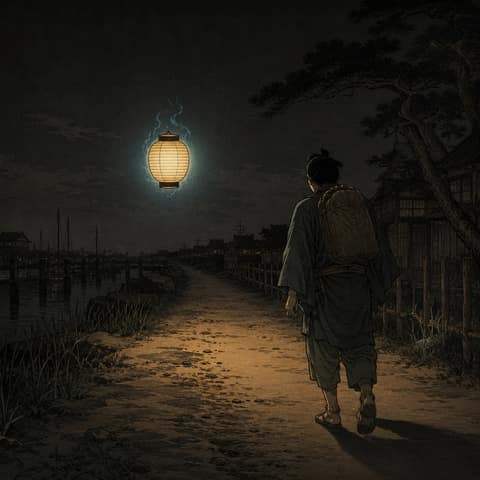
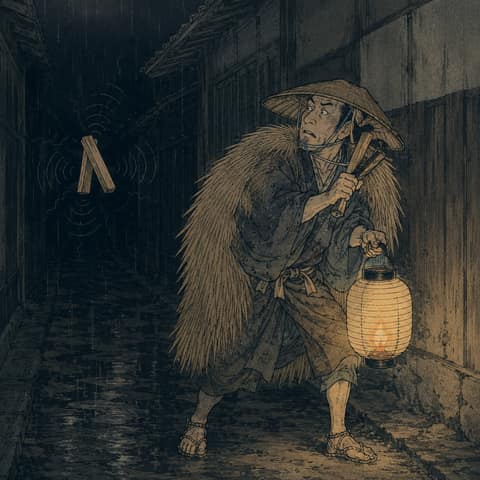
Okuri Chōchin is an anomaly where the light of a lantern follows a person walking down a night road. In Okuri Hyōshigi, the invisible sound of clappers follows, maintaining its distance. Even if you turn around, the source is unseen, but when you walk, it follows again. Through sight and hearing alone, it creates the sensation that you are not alone.
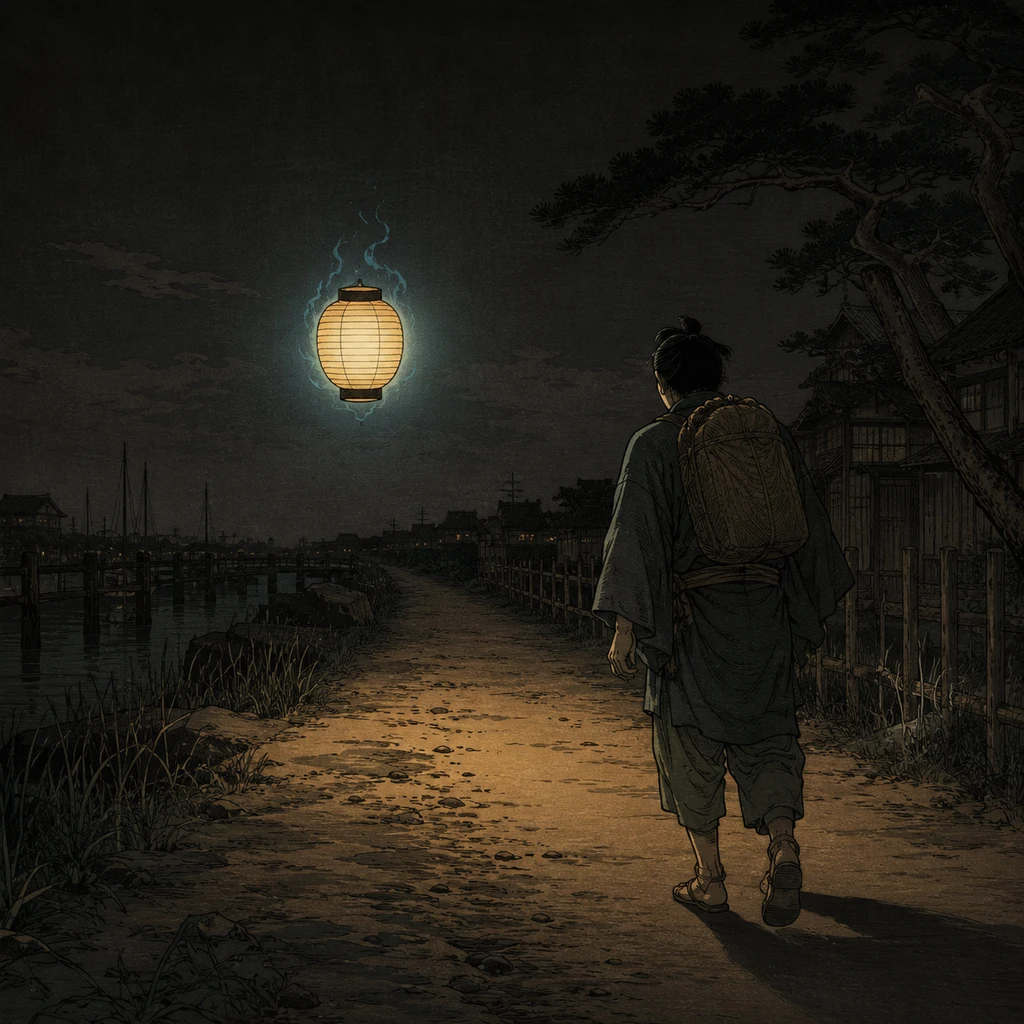
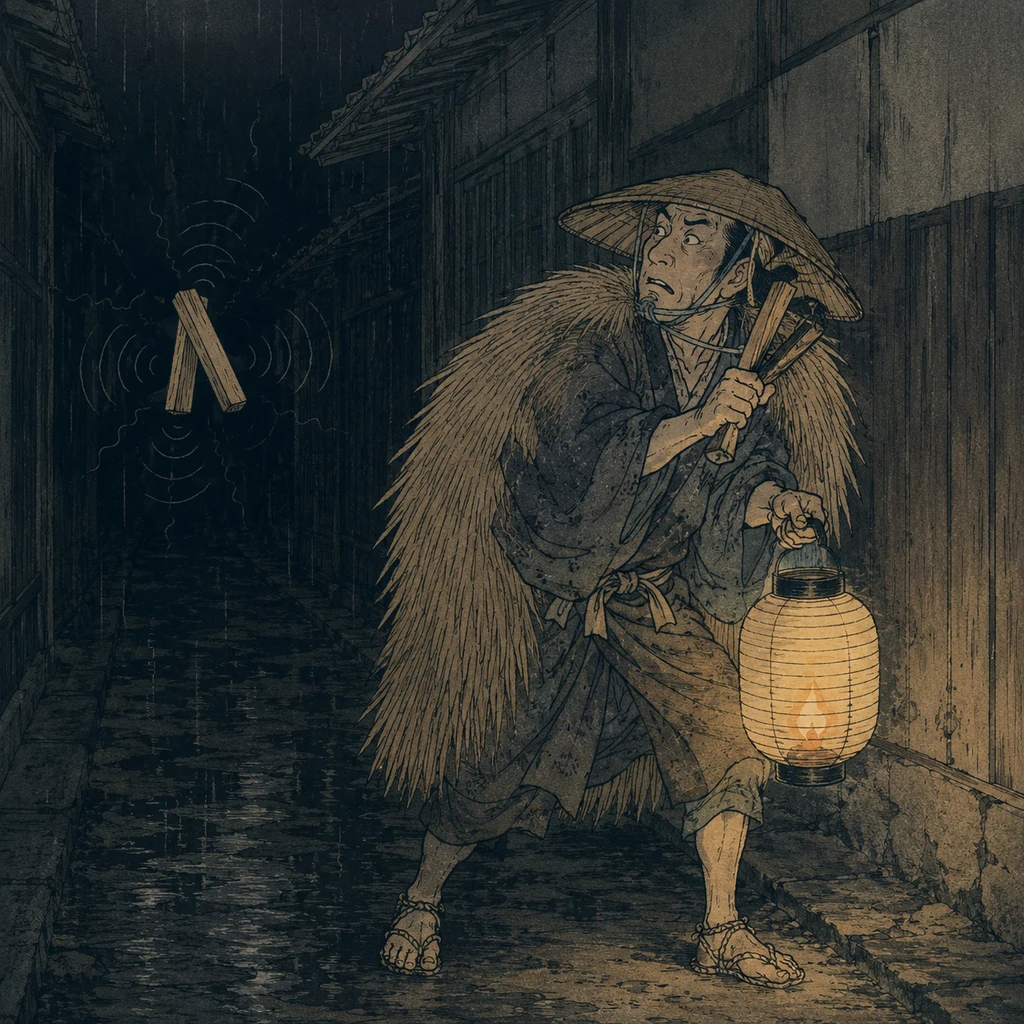
Invisible Festival Sounds: Tanuki Bayashi and Tsugaru-no-Taiko
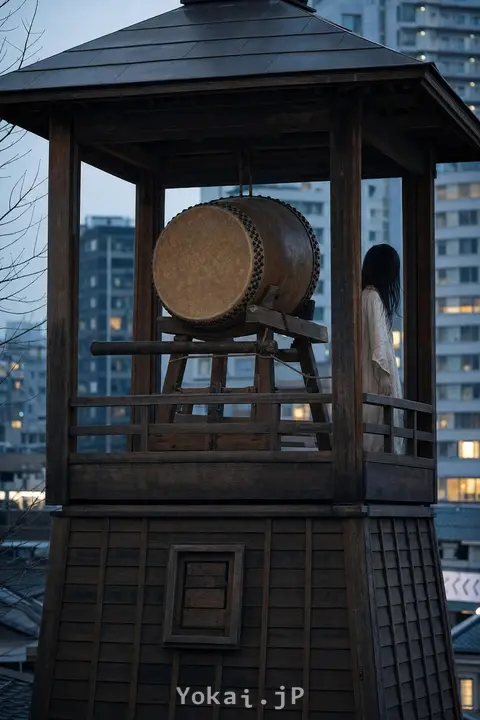
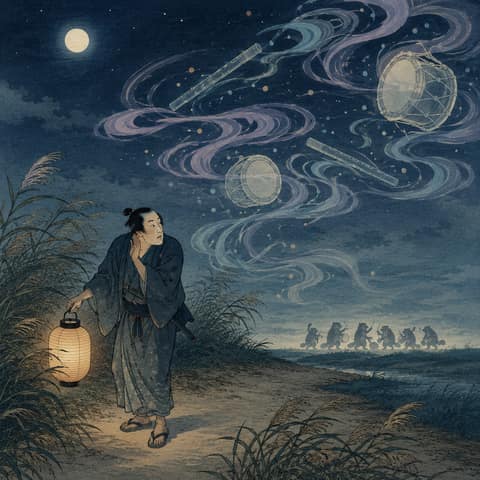
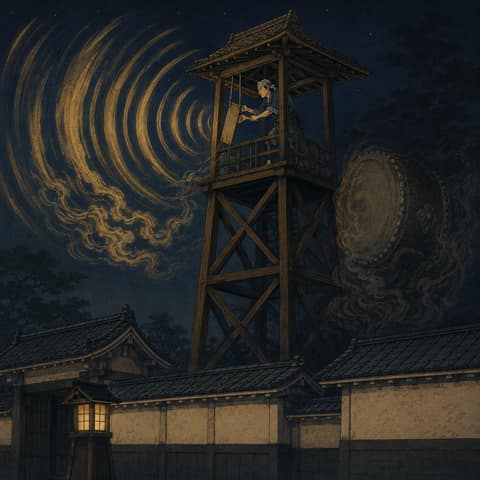
Tanuki Bayashi is an anomaly where festival music (hayashi) is heard at night, but even if you approach, you cannot reach the source. Tsugaru-no-Taiko is also counted as an alternate version of the Seven Wonders, concerning abnormal sounds revolving around the bells and drums of temples. Sound echoes off walls and waterways, misguiding one's direction. Precisely because the true form is unseen, it feels as if there is a festival or another world just outside the town.
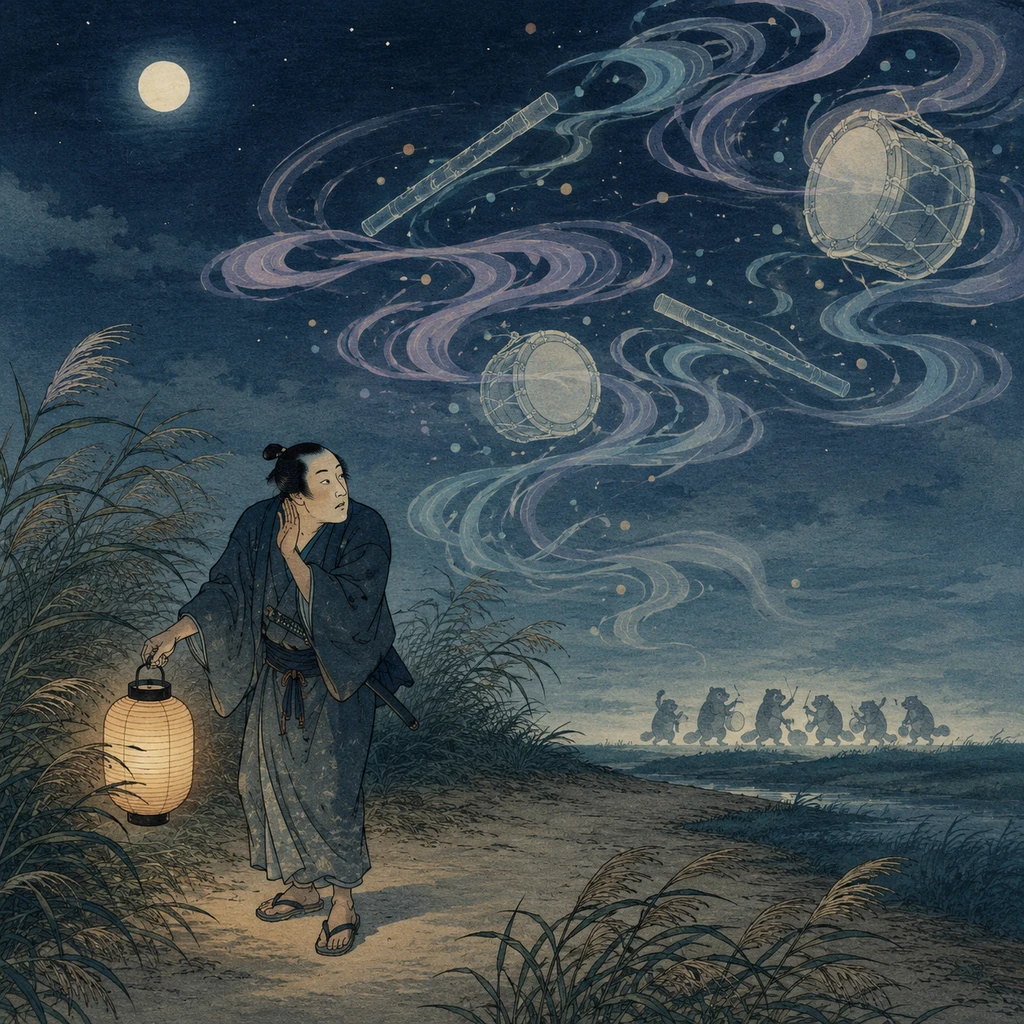 Tanuki Bayashi (Raccoon Dog Festival Drums)tah-NOO-kee bah-YAH-shee
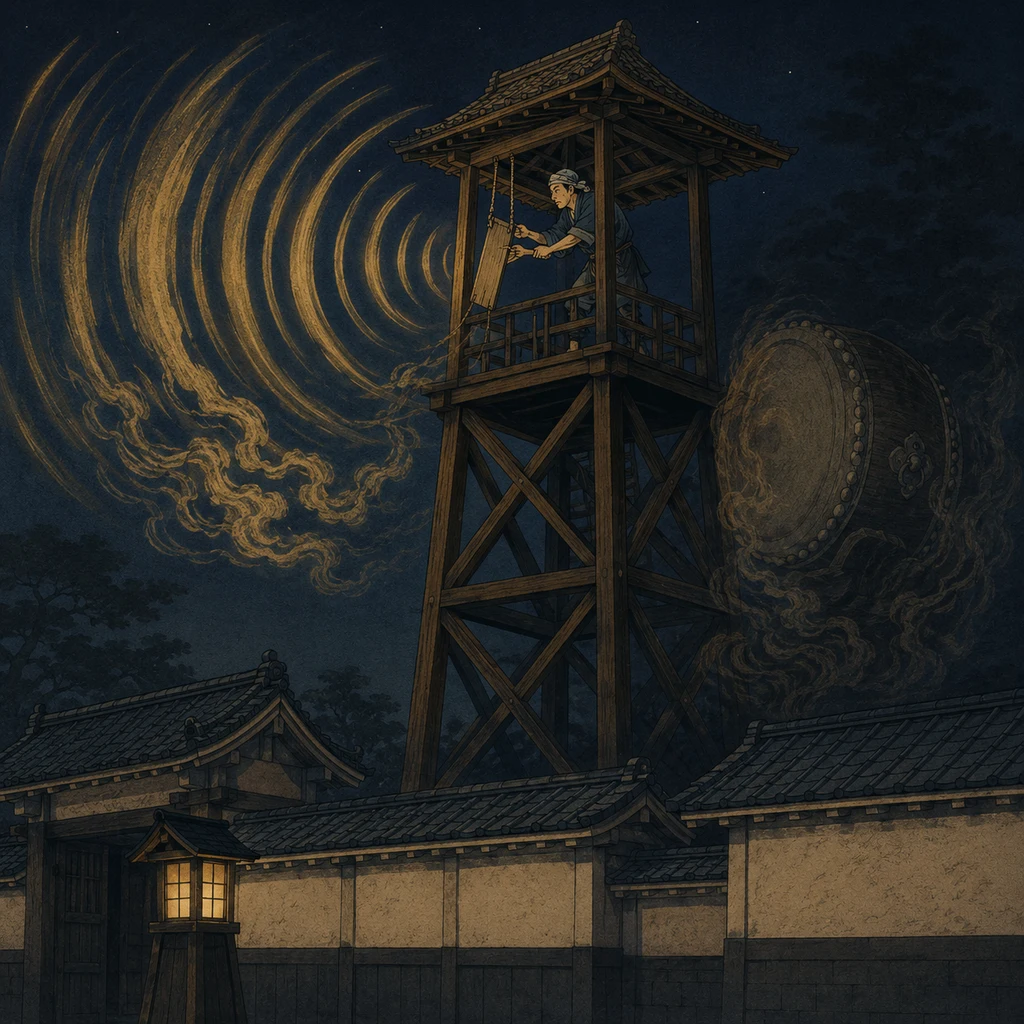 The Tsugaru Drum of Honjotsu-GAH-roo no TIE-koh
Unlit Shops and Leaves that Won't Fall: Akari-nashi Soba, Ochiba-naki Shii
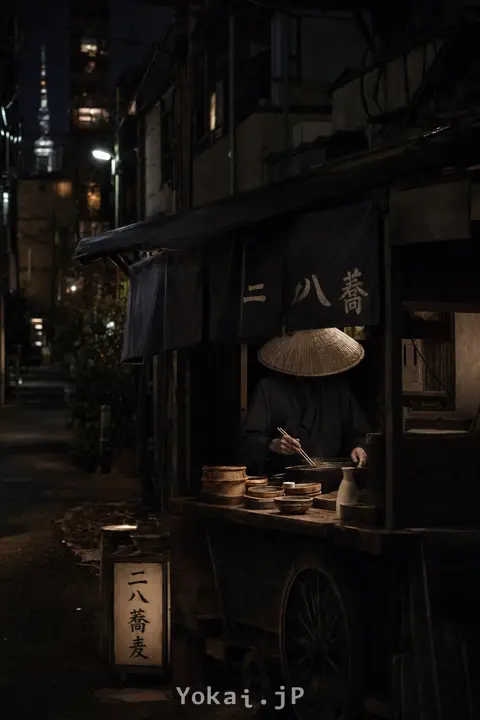
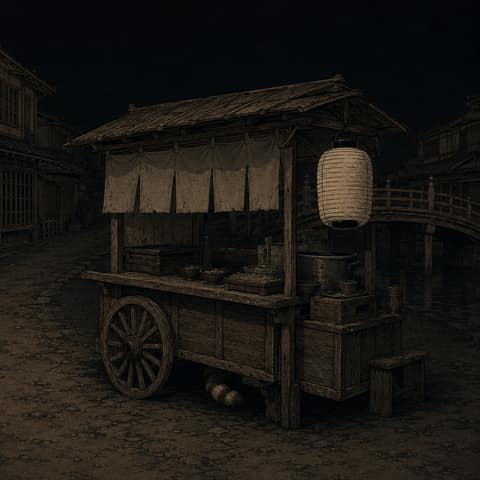
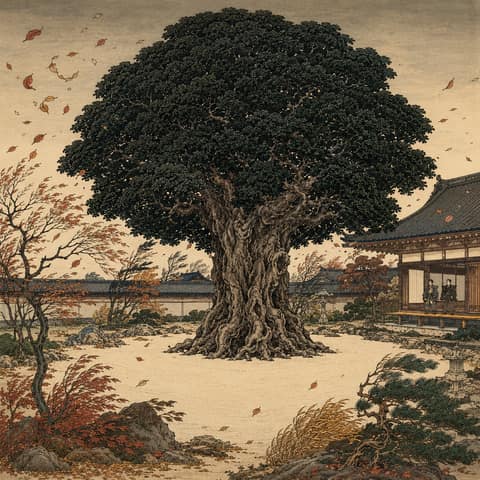
Akari-nashi Soba is a ghost story concerning a soba shop that remains dark at night, despite the fact that a night business should have a lantern lit. Ochiba-naki Shii tells of an anomaly of a tree that does not shed its leaves even when the season arrives. Without bringing out a large monster, anxiety is born solely from deviations in rules: "a light that should be there is missing" or "leaves that should fall do not."
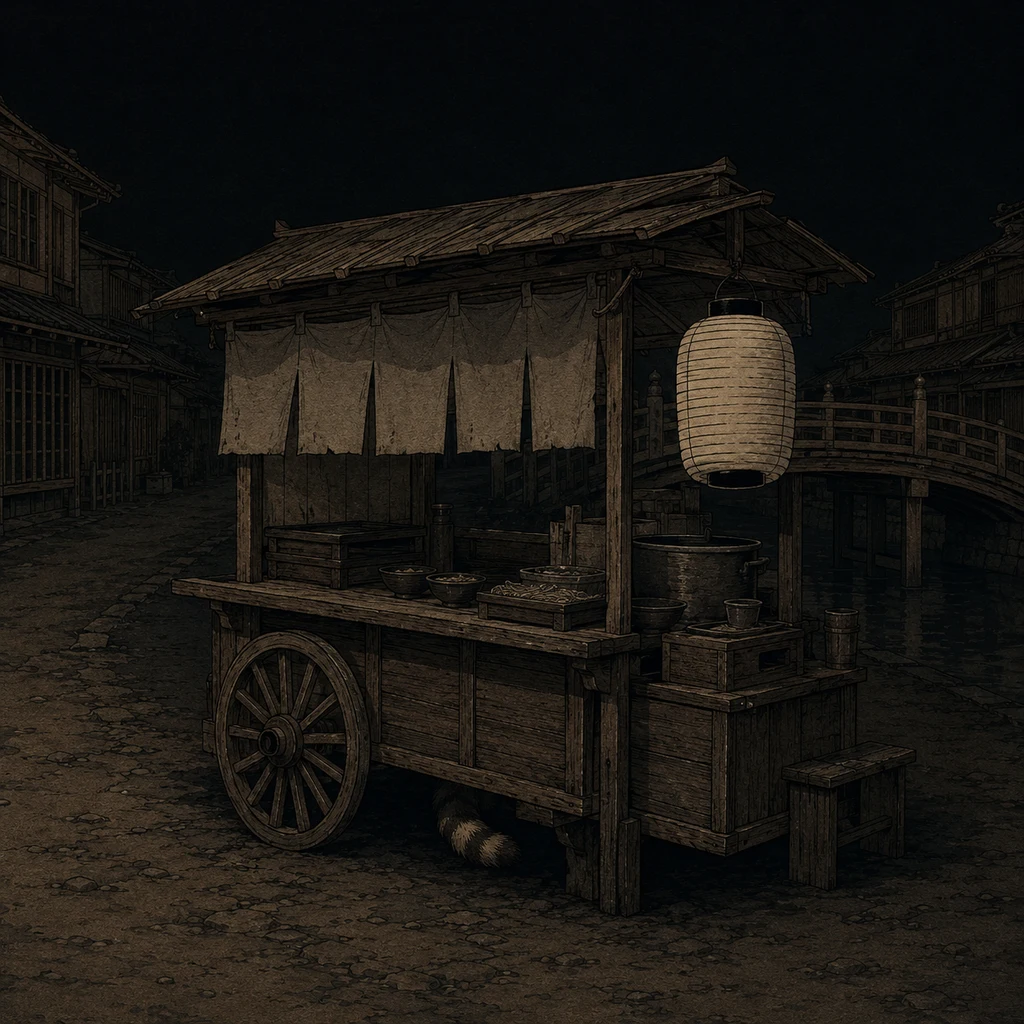 Lamp-less Soba Stallah-kah-ree NAH-shee SOH-bah
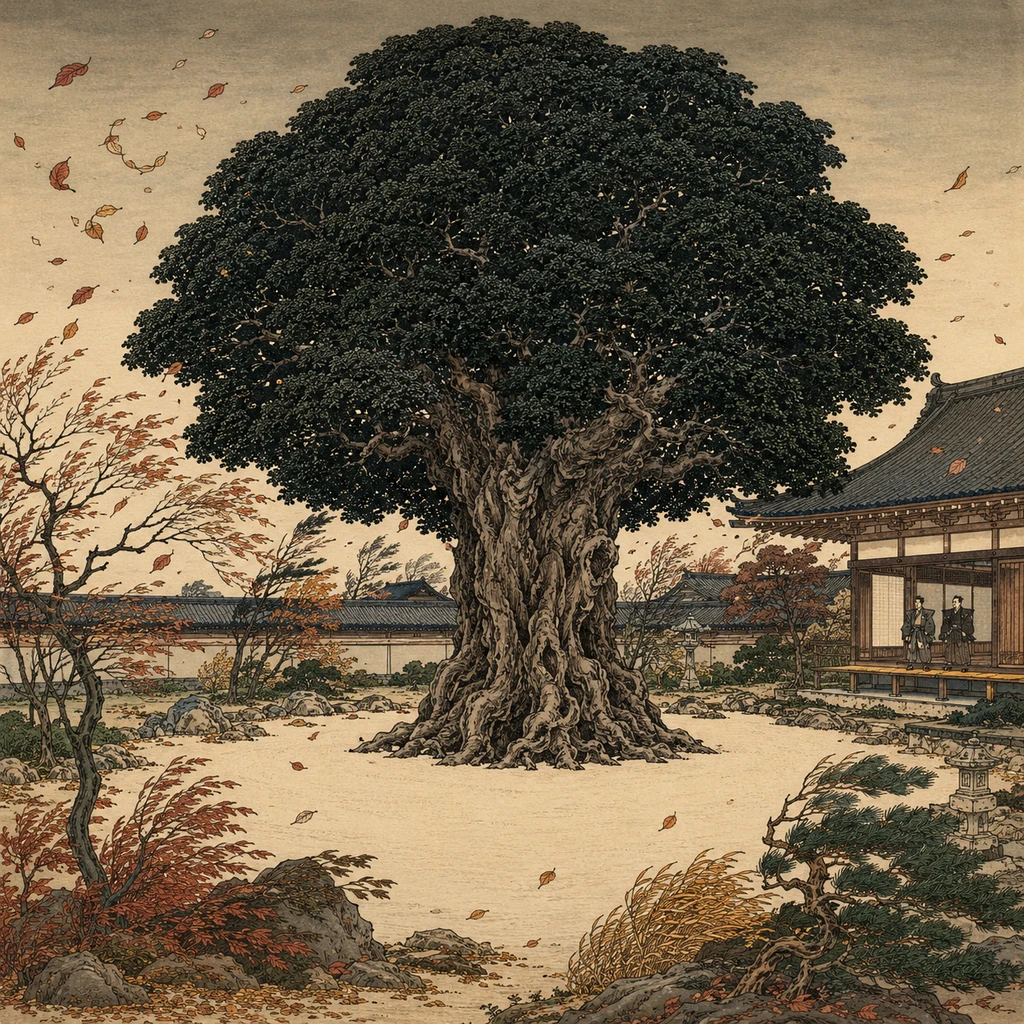 The Oak That Never Shed Its Leavesoh-chee-bah-NAH-kee SHEE-ee
Edo's Maps and Modern Sumida Ward
Honjo was a town developed on low-lying marshlands, where moats, bridges, samurai mansions, temples, and townspeople's districts were in close proximity. This is why the anomalies of water, night roads, sounds, businesses, and mansions coalesce into a single regional lore. However, some locations cannot be pinpointed as a single dot on modern maps, and the positions of monuments and reliefs are not necessarily the "only place where the incident occurred."
The value of the Seven Wonders of Honjo lies not in collecting the correct seven entities, but in walking and confirming where the people of Edo felt uncertainty in the town. Choose one story from the "Recorded Yokai" below, and try comparing the alternate versions with the area's current local history.