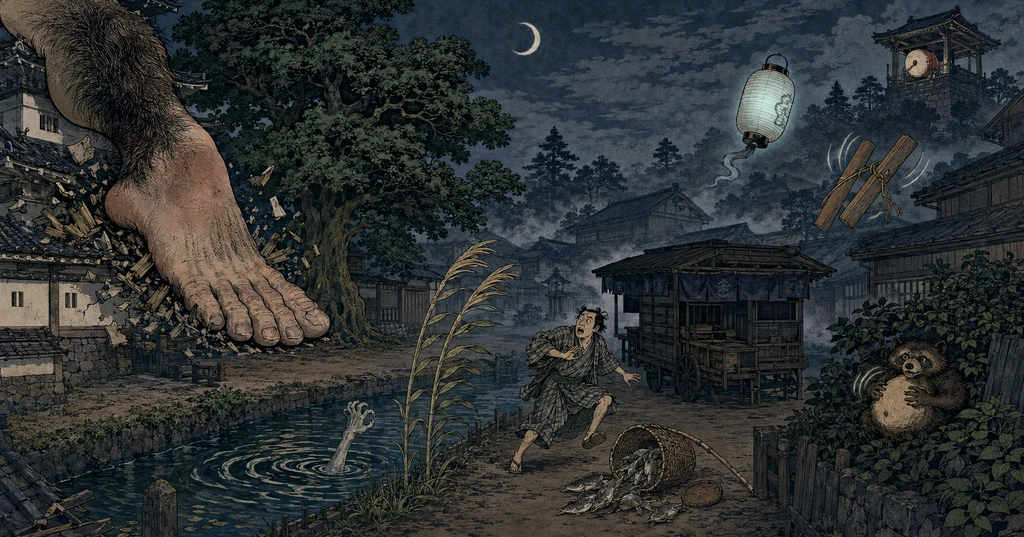
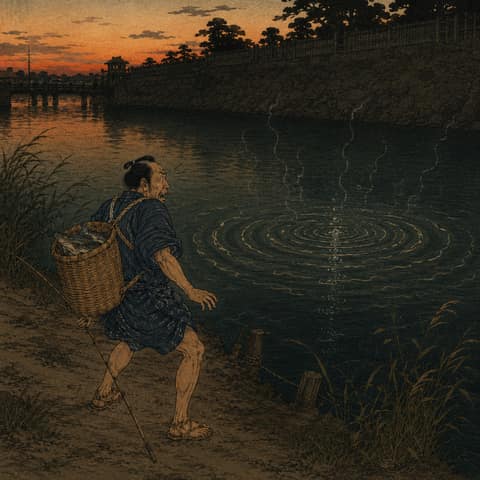
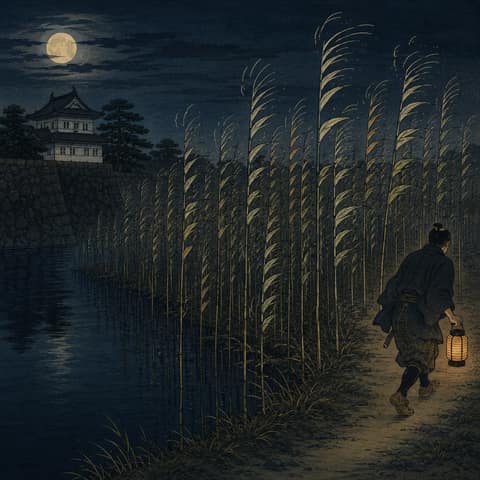
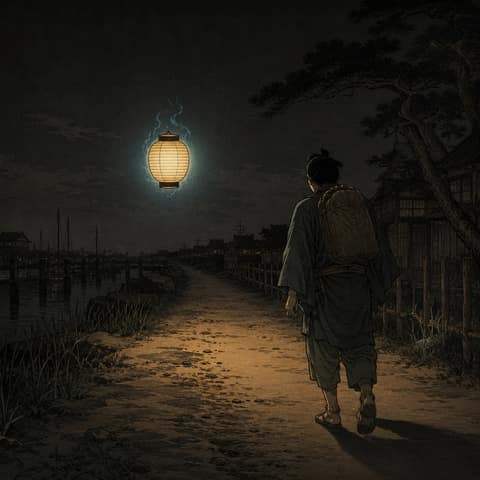
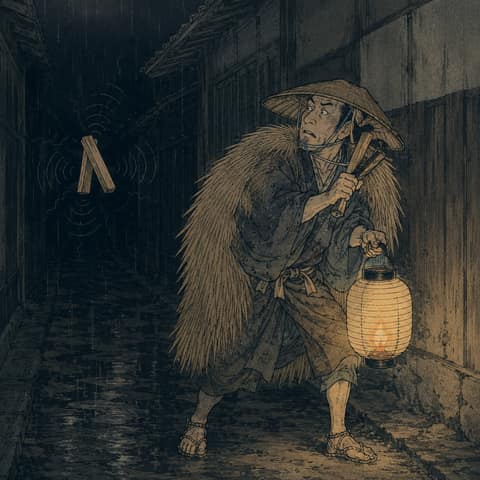
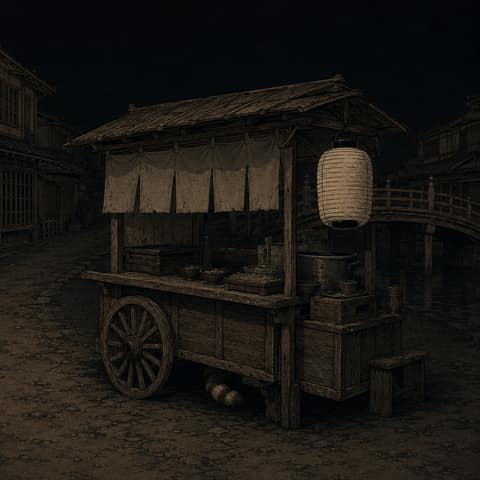
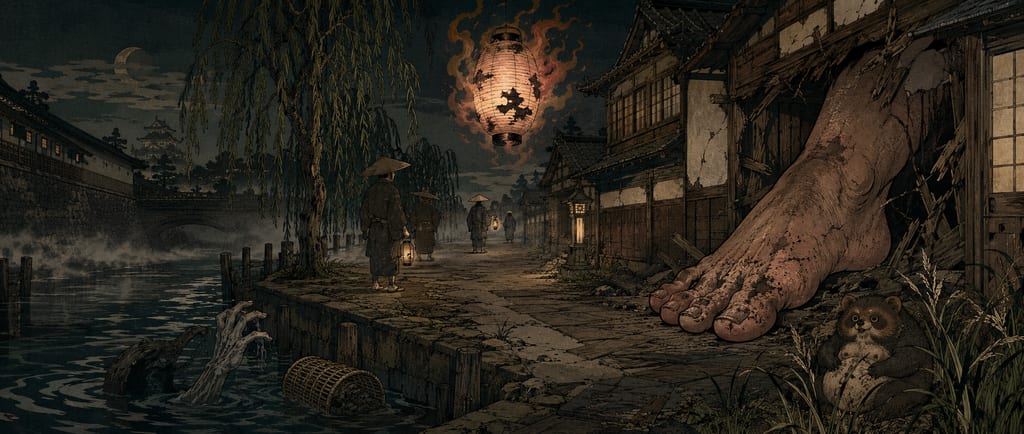
Spoken of as a haunting tied to canals and irrigation ditches in Edo’s low wetlands, it functioned as both a warning against greedy overfishing and a folkloric device marking taboos on the water. The entity has no fixed form and is often only a voice, though in some regions it is identified with known shapeshifters like kappa or tanuki. Its stage centers on Honjo’s Kinshi-bori and Sendai-bori and along the Sumida River, with variants in Kameido, Horikiri, and Kawagoe. A typical pattern is the three-step “big catch—departing voice—loss of fish,” accompanied by etiquette tales that aver misfortune can be avoided by sharing the catch or releasing a few fish. It appears in curious tale collections and local lore around the Kansei era and later took root through rakugo storytelling. Natural sounds and animal behavior became the raw material of the uncanny, and the tale served to symbolize rules for ditch maintenance and norms for shared resources.
Character Profile
This section is our own creative profile for storytelling. It is not historical fact or scholarship.
Yokai Type - Traditional Yokai
Category - Aquatic Spirits
Rarity - Uncommon
Personality - obsessive and taciturn, stern toward those who trespass boundaries
Compatibility - low friction with those who honor waterside taboos and the customs of sharing and release
Abilities - threatening voices from the watermaking fish in baskets vanishinducing disorientation and sleep paralysisenforcing sacrificial offerings and fair distribution as social norms
Weaknesses - observing the custom of releasing or sharing fish, promptly leaving the waterside, refraining from noisy behavior in groups
Habitat - ditches and canals across Honjo including Kinshi-bori and Sendai-bori, waterways around Kameido, ponds near Horikiri, ditches in the Kawagoe area of Musashi Province