YOKAI.JP
Illustrated Bag of a Hundred Idle Tools

Illustrated Bag of a Hundred Idle Tools

48 yokai
Custom

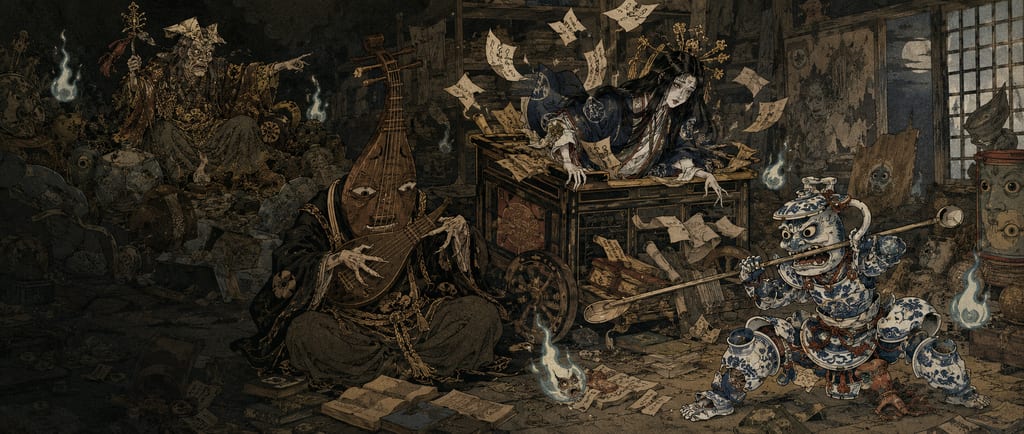
Hyakki Tsurezure Bukuro (“The Bag of a Hundred Idle Tools”) is a yokai picture collection by Toriyama Sekien, published in Tenmei 4 (1784). Following Gazu Hyakki Yagyo, Konjaku Gazu Zoku Hyakki, and Konjaku Hyakki Shui, it is a late-period work in three volumes. Drawing on the tradition of the Muromachi–Edo “Night Parade of One Hundred Demons” scrolls, this book uniquely reorganizes the theme around animated household implements, featuring many tsukumogami—spirits of things—such as trivet braziers, washbasins, and sake ewers. In his preface, Sekien writes that after viewing night-parade scrolls, he painted the yokai who appeared to him in dreams, giving this work stronger unity of theme and originality than its predecessors. Seven Lucky Gods and the Treasure Ship frame the opening and closing, signaling the book’s overarching conceit, much like “Hidden Village” in Konjaku Hyakki Shui and “Sunrise” in Konjaku Gazu Zoku Hyakki. Sources include Essays in Idleness and Noh chants; Sekien expands on stories and poems tied to objects, crafting names and forms for yokai where pictorial tradition, textual learning, and his own dreams converge. Chiritzuka Kaiō and Funchasha Hime, for example, adapt figures from night-parade scrolls while incorporating the set phrase from Tsurezure Bukuro—“the dust of the dust-mound, the writings of the document-cart”—as yokai names, showcasing Sekien’s inventive vocabulary. Scholars note that multiple lineages of scrolls may be referenced, giving the work a distinctive place in emaki studies. Overall, Hyakki Tsurezure Bukuro is a late masterpiece that foregrounds the animism of tools and the phantasm of the night parade, emblematic of a “world of tsukumogami” rising on the boundary between dream and the real.

Updated: 1/12/2026
yokai collectiontsukumogamiToriyama SekienJapanese folkloreHyakki YagyoEdo period artemakiJapanese yokaisupernatural creaturesnight parade

Included Yokai

48 yokai are included

These yokai also have art cards

40 cards — ukiyo-e, modern Japan & more

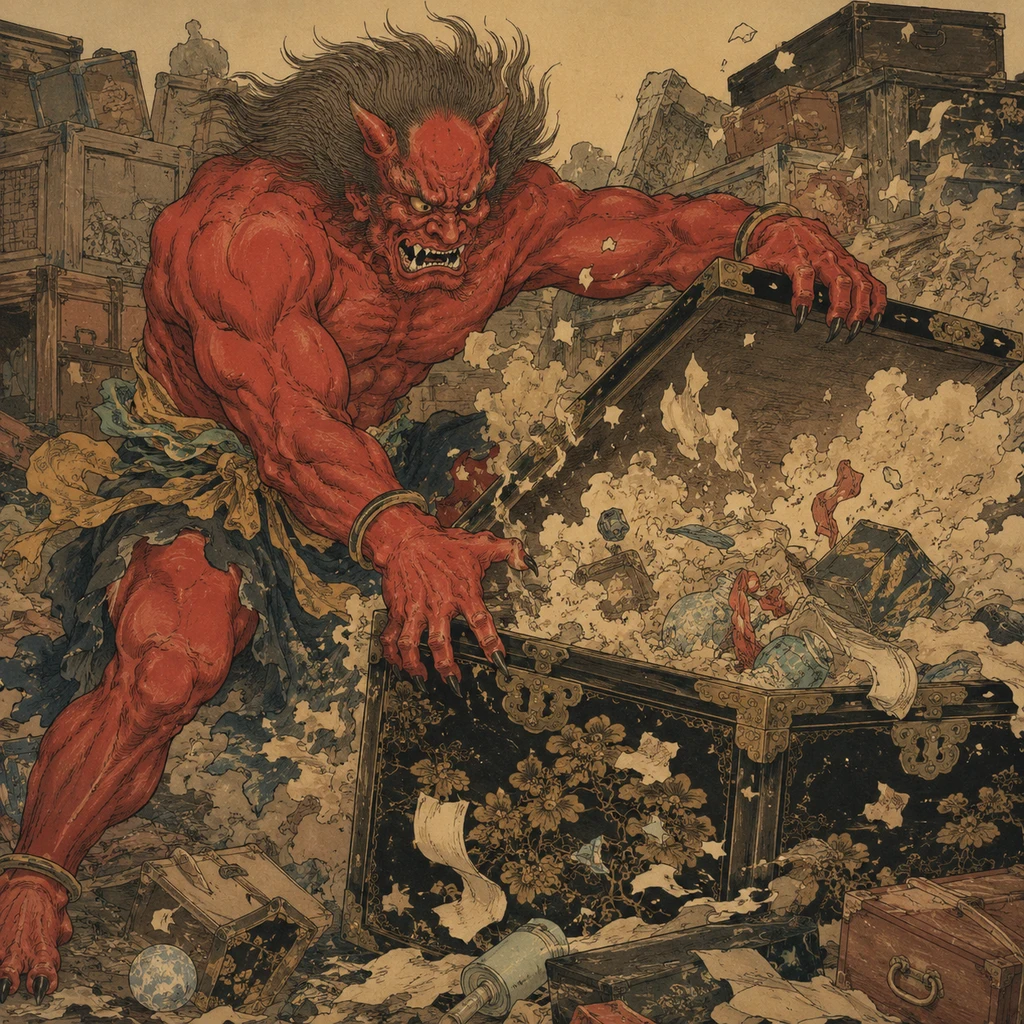
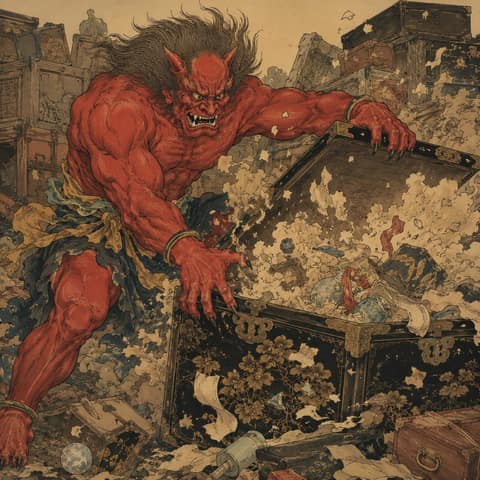
Dust-Heap Demon King

Dust-Heap Demon King

Rare

chee-ree-ZOO-kah KAI-oh

唐櫃割りの塵王・塵塚怪王

Animated Objects & UndeadJapanese folklore

A yokai depicted by Toriyama Sekien in his art book Hyakki Tsurezure Bukuro. Shown as a monstrous ogre prying open a karabitsu (Chinese-style chest), it appears to stylize earlier images of a red oni splitting such chests in Night Parade scrolls and echoes the word chinzuka (“dust heap”) from Essays in Idleness. Although one note hints at a link to the yamamba (mountain crone), no direct tales survive, and its nature and origins remain unclear. Later readers sometimes interpret it as the lord of dust and discarded things.

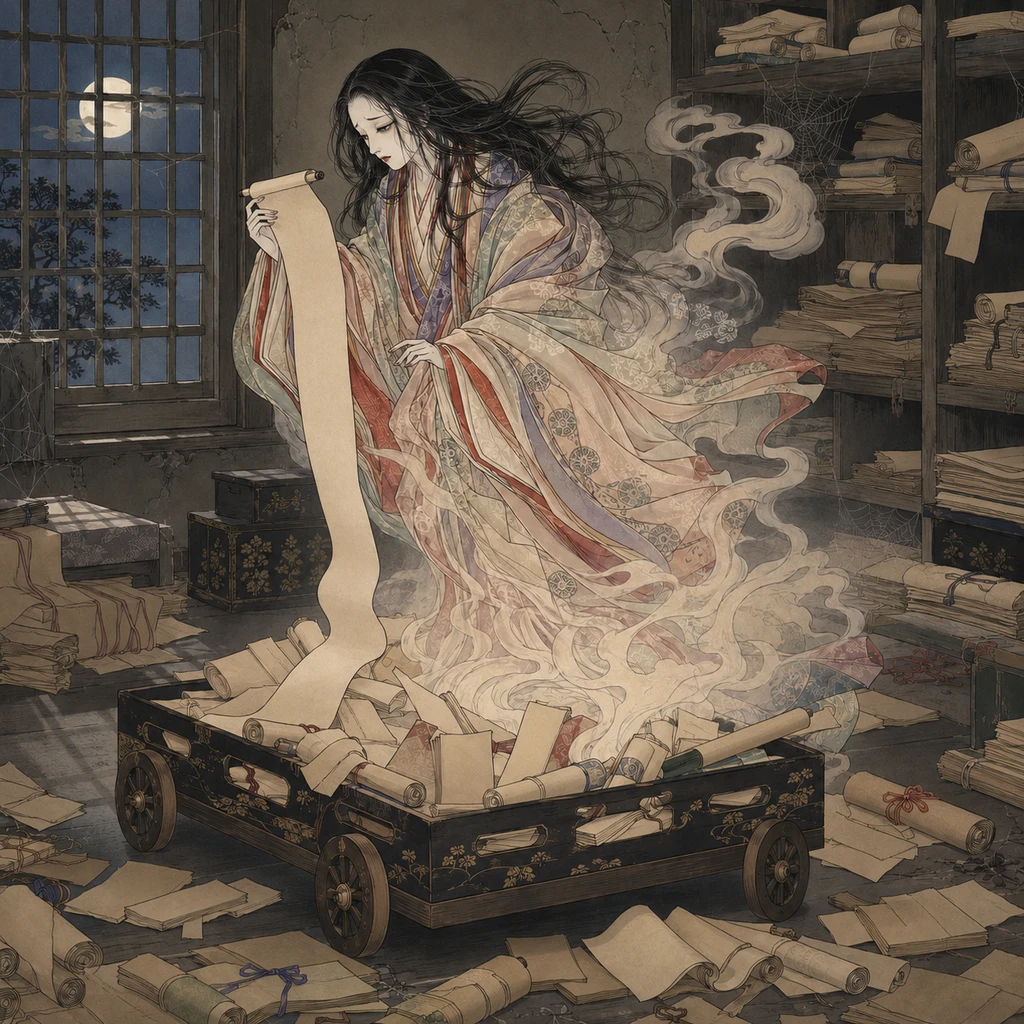
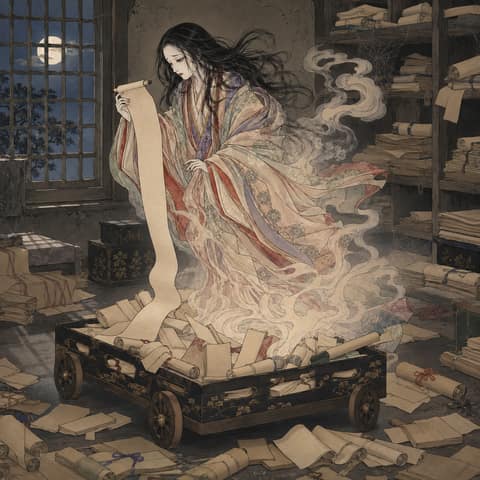
Fuguruma Yōhi (Letter-Carriage Enchantress)

Fuguruma Yōhi (Letter-Carriage Enchantress)

Rare

FOO-goo-ROO-mah YOH-hee

積年恋文の女霊・文車妖妃

Animated Objects & UndeadEdo period

A yokai depicted in Toriyama Sekien’s Hyakki Tsurezure Bukuro. Named after the document cart (fuguruma) used to carry letters, it is understood as the embodiment of attachment and passions accumulated in old love letters. Shown as a woman holding a scroll, it is a creative yokai inspired by Tsurezuregusa section 72 (“The Letters on the Cart”), widely interpreted as a tsukumogami in which the spirit of love letters fuses with that of an object.

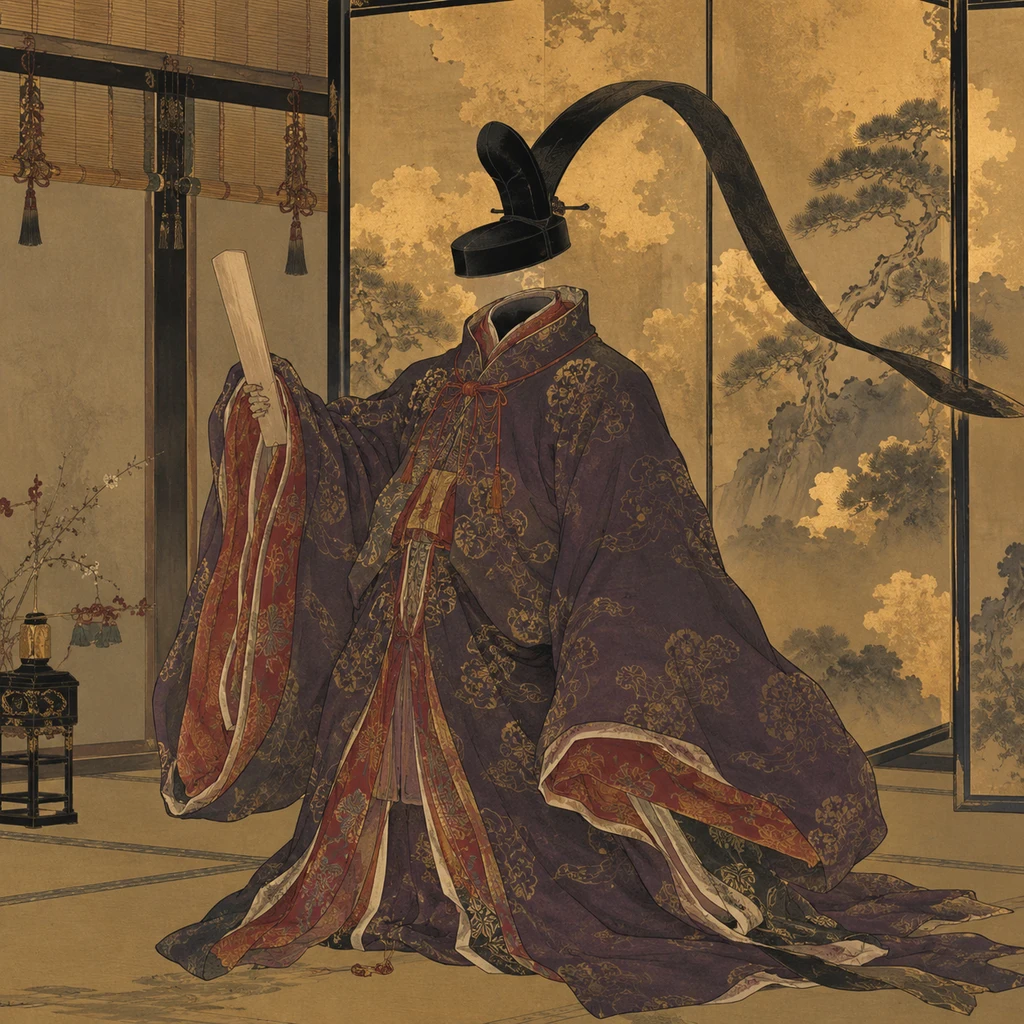
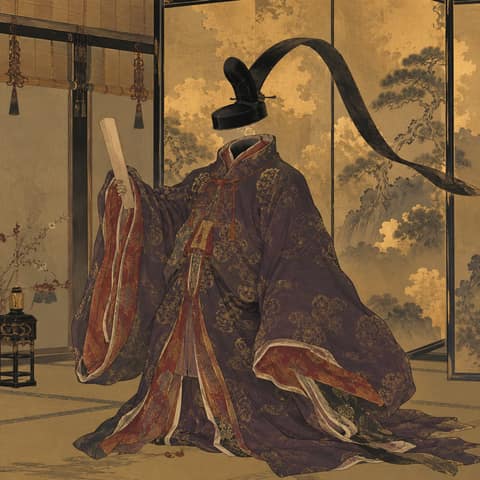
Long Crown

Long Crown

Rare

oh-sah-KOH-buh-ree

保身固執の冠・長冠

Household SpiritsJapanese folklore

A crown-turned-yokai depicted by Toriyama Sekien in Hyakki Tsurezurebukuro. It wears court robes and carries a ritual baton, its head becoming a coiled-tailed court cap (kanmuri). Sekien alludes to a tale of a “wise man who hung his cap on the capital’s gate,” suggesting this specter embodies those who cling to office for self-preservation and refuse to let go of their rank. The crown—symbol of authority—turns monstrous when attached to a heart that has lost moral integrity, making the creature a moral emblem.

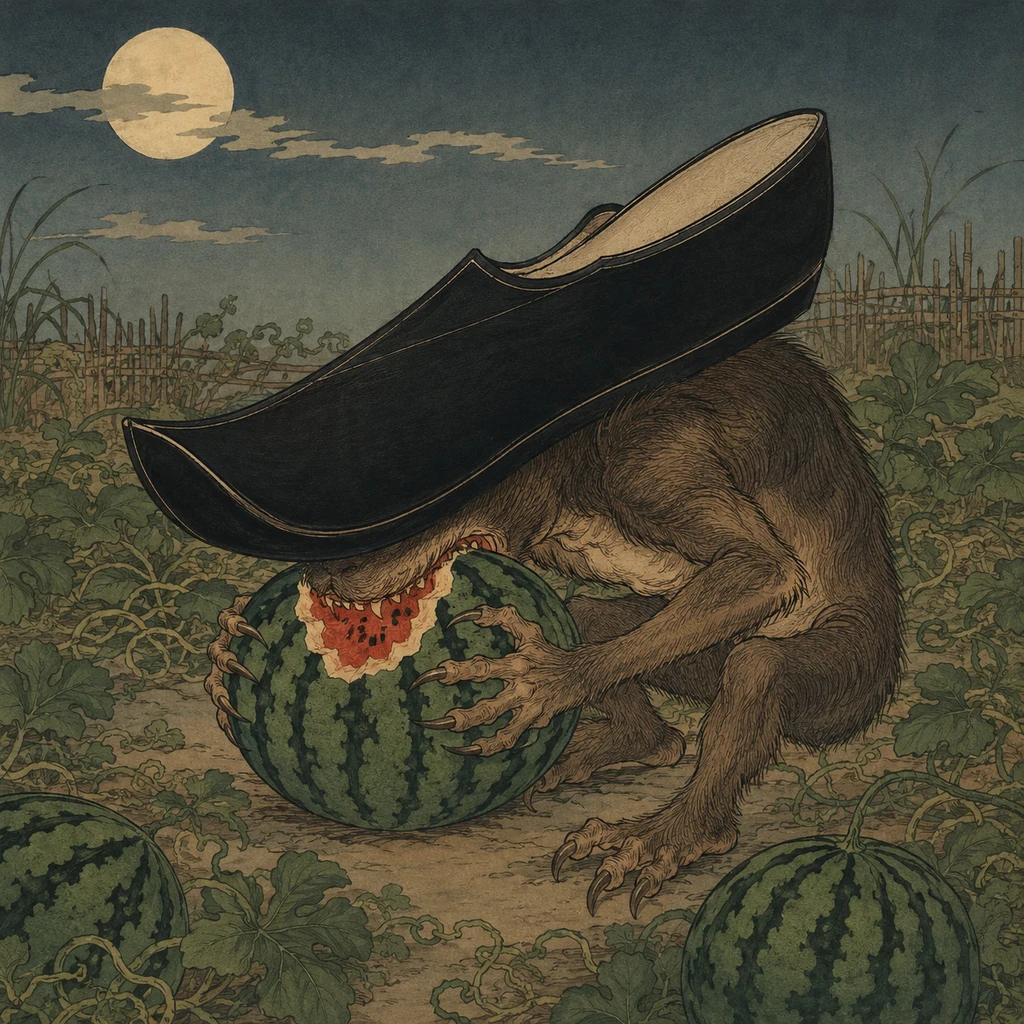
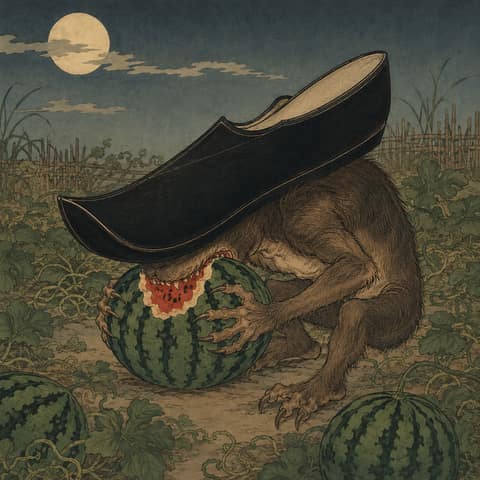
Kutsutsura

Kutsutsura

Rare

koo-TSOO-TSOO-rah

浅沓を載す瓜畑の怪・沓頬

Animated Objects & UndeadJapanese folklore

A yokai depicted by Toriyama Sekien in Hyakki Tsurezurebukuro. It appears like a creature halfway between animal and human, shown with a shallow wooden clog (asa-gutsu) set atop it. The name is understood as an ateji blend of “kutsu (clog)” and “tsura (face).” Sekien alludes to the Chinese proverb Guatian lixià (“in the melon patch, under the plum tree”) and cites a tale of a melon-field monster driven off by a talisman, suggesting this entity belongs to that type. Beyond Sekien’s illustration and citation, concrete traits or locales are uncertain and later tradition is sparse.

Bake no Kawagoromo

Bake no Kawagoromo

Rare

ba-ke no ka-wa-go-ro-mo

北斗祈念の化生狐・ばけの皮衣

Animal ShapeshiftersUnknown (a fox-transformation figure recorded in Sekien’s Hyakki Tsurezure Bukuro)

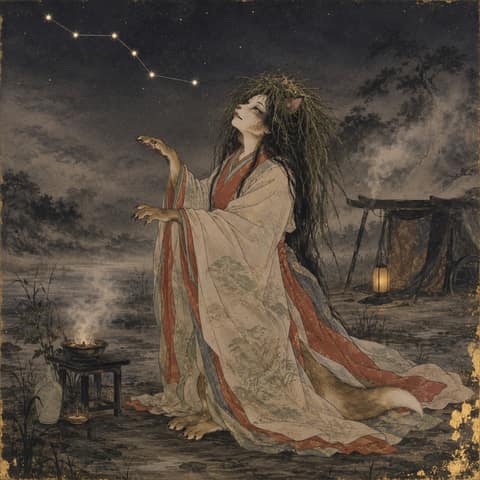
The Bake no Kawagoromo is a fox spirit drawn in the first volume of Toriyama Sekien’s picture-book Hyakki Tsurezure Bukuro. A fox that has lived three thousand years dons water-weed upon its head, bows in worship to the Big Dipper, and by this rite turns itself into a beautiful woman. In his caption Sekien writes, “A fox that has passed three thousand years, wearing algae and worshipping the Dipper, becomes a beautiful woman — surely this is what I have seen in the writings of China,” framing the whole as something mused within a dream. The Hyakki Tsurezure Bukuro is, by design, a book of tsukumogami — the spirits that dwell in worn-out tools and objects. A fox could slip in among these things only by virtue of its name. “Kawagoromo” means a garment of fur, and so reads almost as a piece of clothing, a “thing”; at the same time it sounds out the idiom “bake no kawa” — the skin of a disguise, which, once it peels away, lays the fox’s true form bare. Through this wordplay Sekien quietly smuggled a transforming beast, in truth an animal, into the ranks of the tool-spirits. For all that the name suggests the splendor of transformation, the creature carries no local legend tied to any particular place or person. It is, in the end, a fox known only through Sekien’s picture and caption — an image-born yokai that distills into a single illustration the age-old notion, inherited from China, that a fox grows able to become a beautiful woman as it ages.

Korōka (Ancient Lantern Fire)

Korōka (Ancient Lantern Fire)

Rare

koh-ROH-kah

石灯籠に座す火霊・古籠火

Household SpiritsJapanese folklore

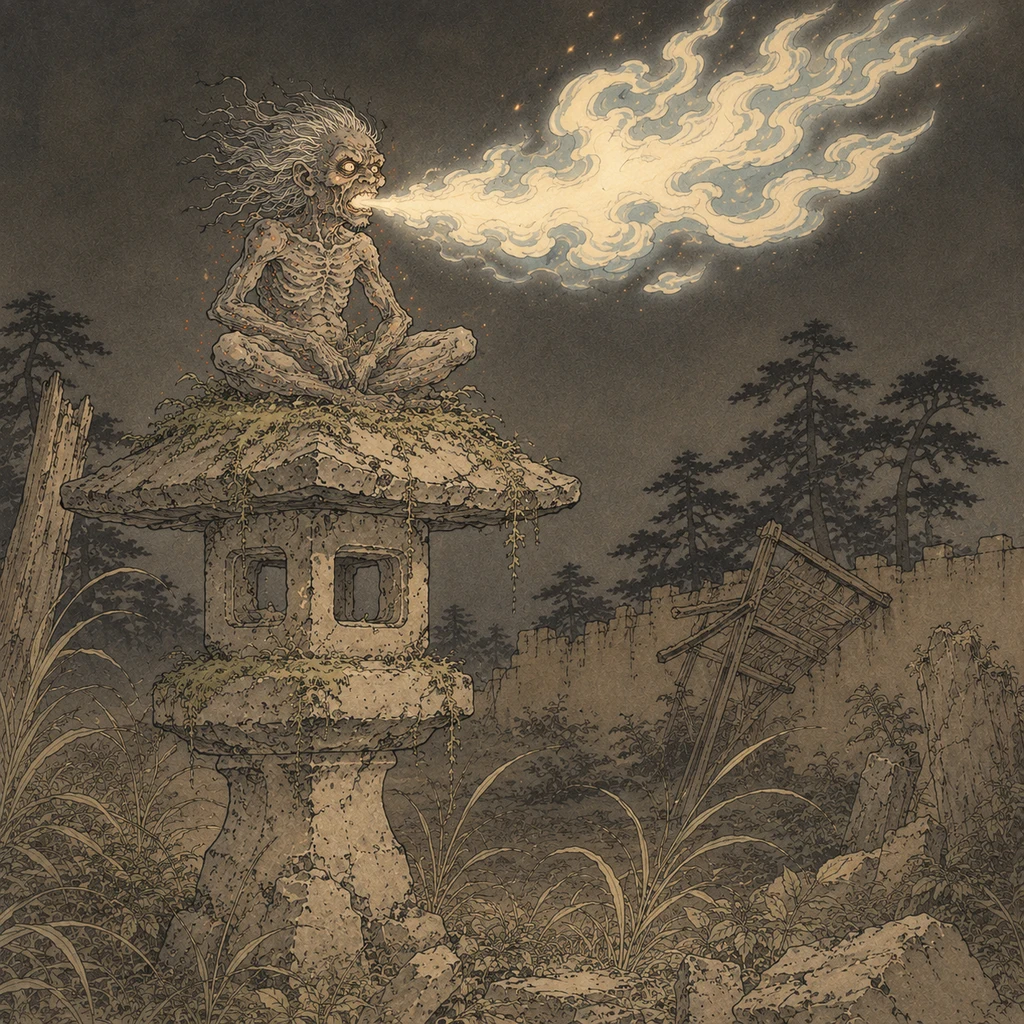
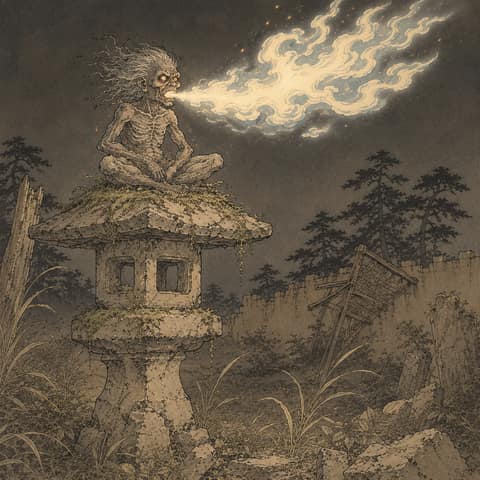
Korōka is a yokai associated with stone lanterns, depicted in Toriyama Sekien’s Hyakki Tsurezurebukuro. It sits atop a stone lantern and breathes fire, likely visualizing the lantern’s flame as a spirit turned monster. Sekien alludes to battlefield will-o’-the-wisp tales but notes no classical source for a lantern’s flame becoming a yokai, making his image highly inventive. Later retellings sometimes describe lanterns that light themselves, though such claims are often disputed.

Ceiling Licker

Ceiling Licker

Epic

TEN-joh-NAH-meh

古家天井を嘗む・天井嘗

Household SpiritsEdo period

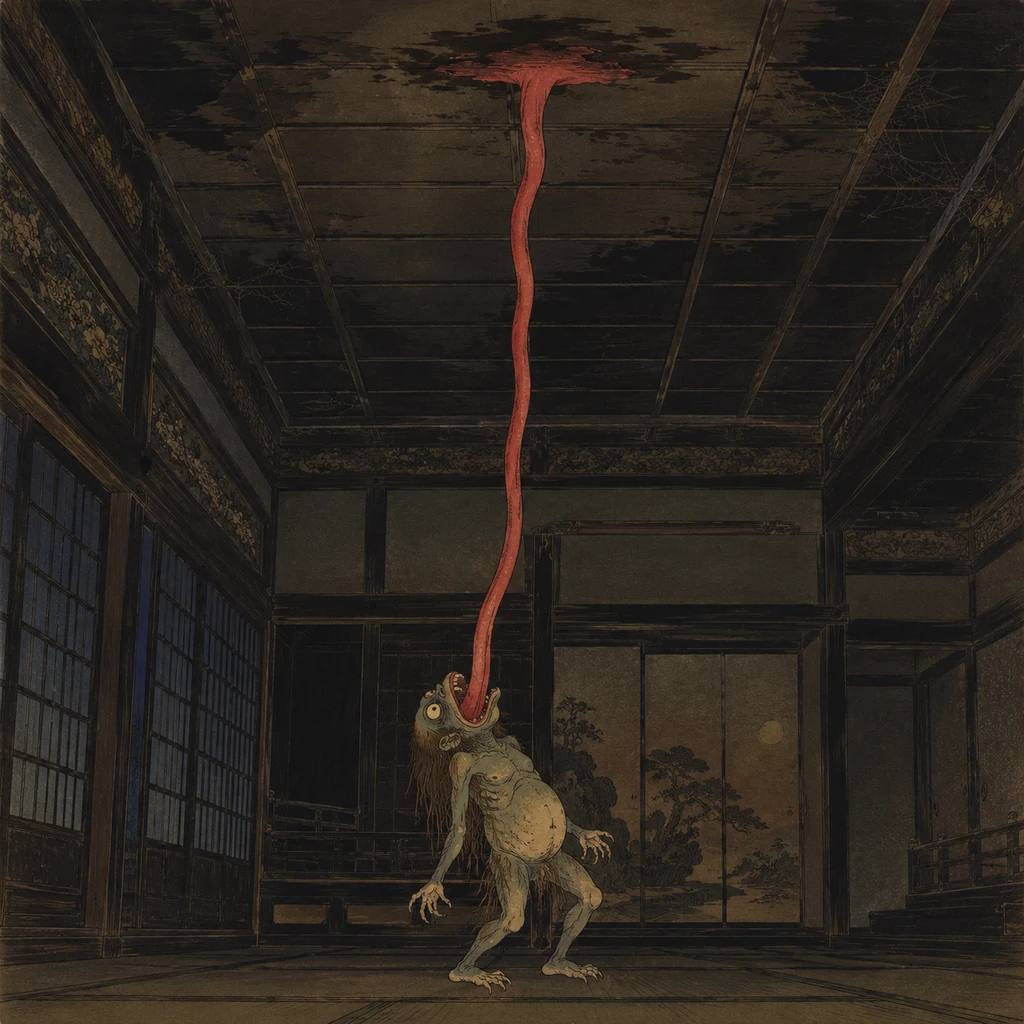
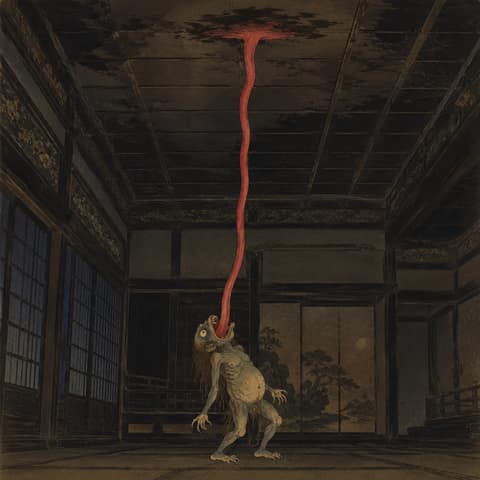
Ceiling Licker is a yokai depicted by Toriyama Sekien in his Hyakki Tsurezure Bukuro: a creature that extends an unnaturally long tongue to lick ceilings. Sekien hints that it brings winter chill and dim light, quoting a line from Essays in Idleness (section 55) in his gloss. The image draws on Muromachi-era Night Parade scrolls showing a figure lying on its back with a protruding tongue. In later times, stains and discolorations on ceilings or pillars were often explained as its lick marks.

Shirōneri

Shirōneri

Epic

shee-ROH-neh-ree

古布なびく怪・白溶裔

Animated Objects & UndeadJapanese folklore

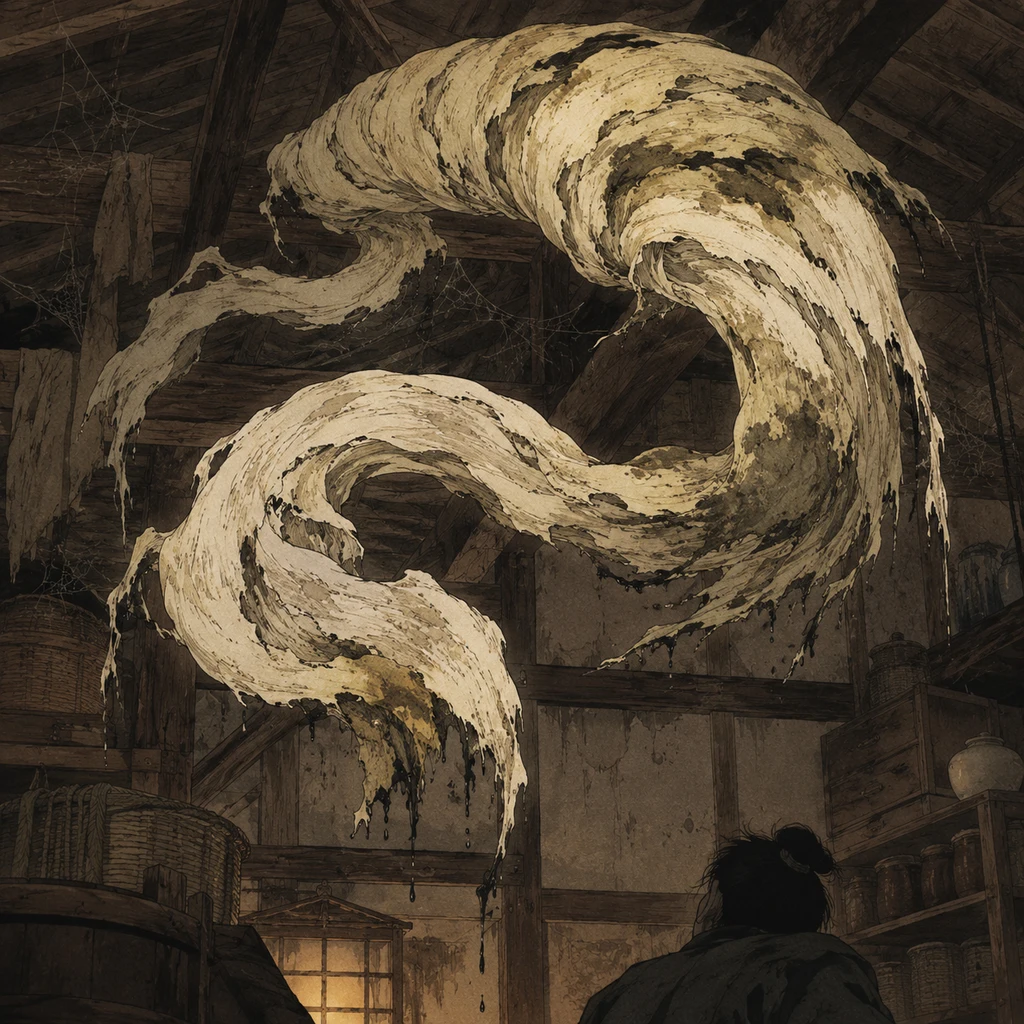
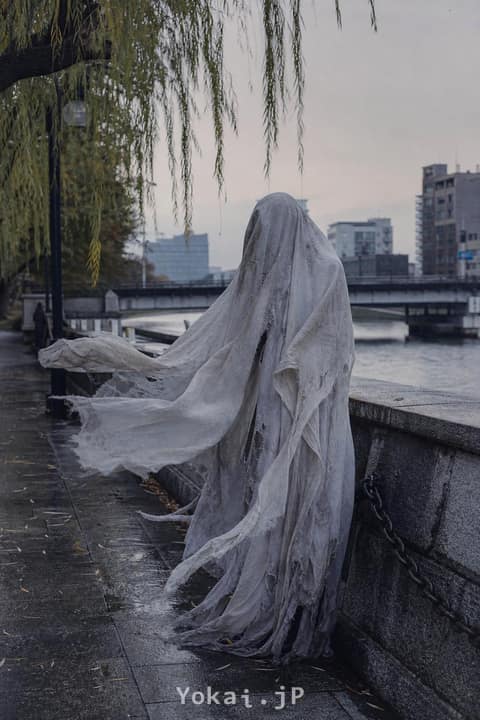
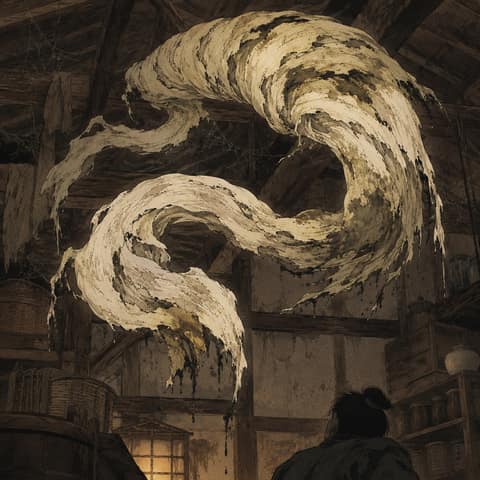
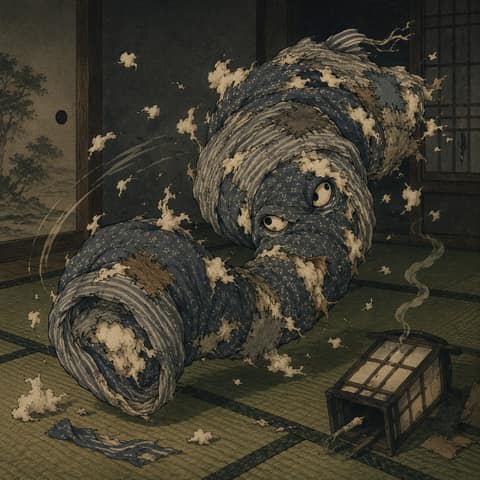
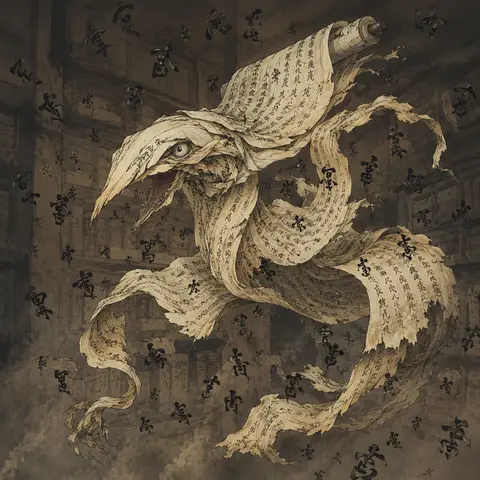
A yokai depicted by Toriyama Sekien in his Hyakki Tsurezurebukuro. It takes the form of a tattered cloth billowing like a dragon in the wind; Sekien glosses it as “an old wiping cloth that has transformed.” The name is thought to pun on “Shirōururi,” a figure from Essays in Idleness (Tsurezuregusa). It is generally understood as a tsukumogami created by Sekien’s design. The work does not detail specific harms or behavior, and later interpretations often add their own ideas.

Shōgorō (the Gong Spirit)

Shōgorō (the Gong Spirit)

Rare

SHOH-goh-ROH

鉦鼓に手足生ず・鉦五郎

Animated Objects & UndeadEdo period, Kamigata tradition (Osaka)

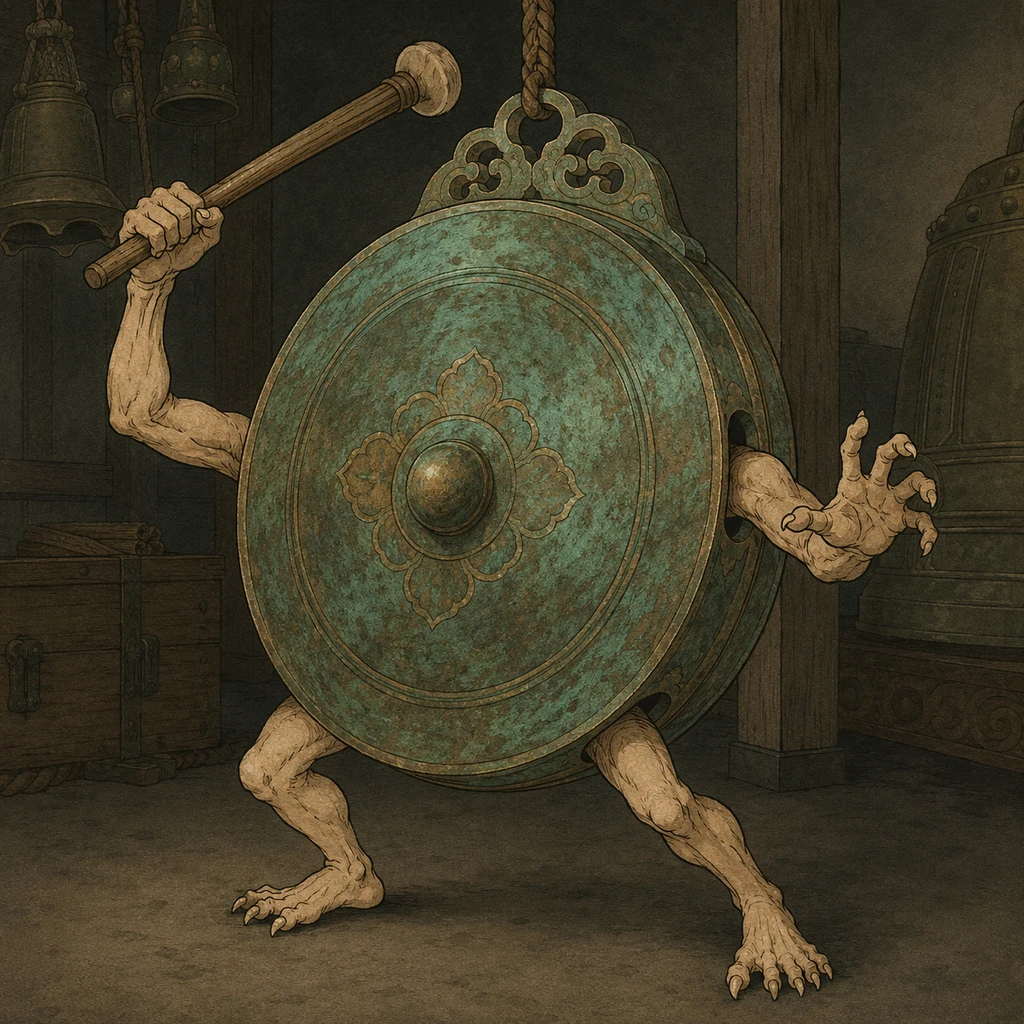
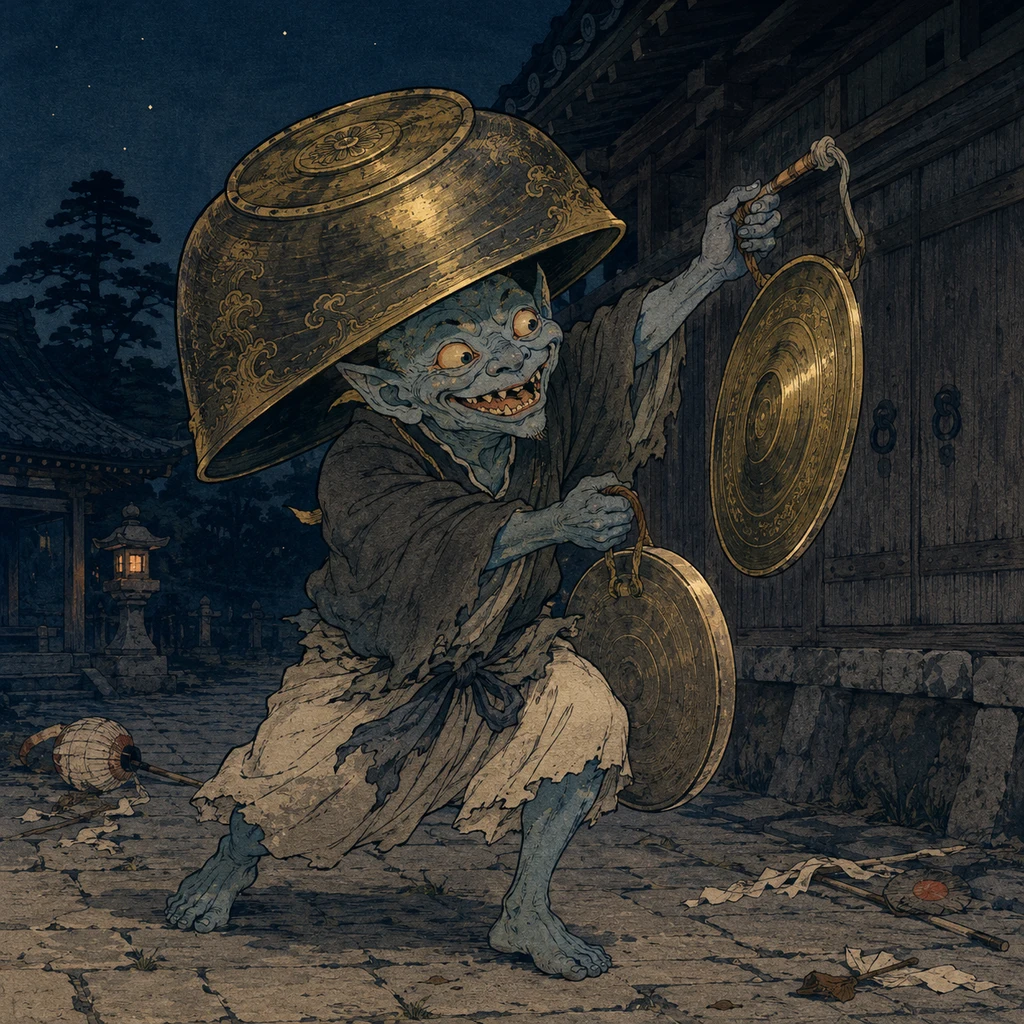
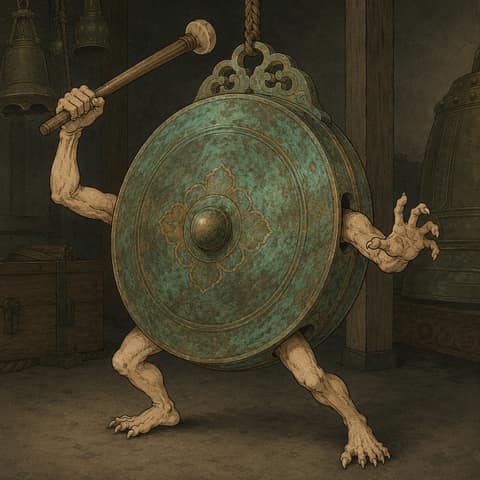
Shōgorō is a tsukumogami—a haunted ritual gong—depicted by Toriyama Sekien in his Hyakki Tsurezure Bukuro. Sekien plays on the famous Osaka merchant Yodoya Tatsugorō’s tale of the “golden rooster,” punning on gold (kogané), gong (kané), and the name Gorō. The image follows a lineage seen in Muromachi-period Night Parade scrolls, where a temple gong (wani-guchi) sprouts limbs. Concrete anecdotes are scarce; the yokai is chiefly known from artwork.

Hossumori, the Fly-Whisk Guardian

Hossumori, the Fly-Whisk Guardian

Rare

HOSS-soo-MOH-ree

禅坐する払子の精・払子守

Animated Objects & UndeadEdo period; derived from picture scrolls

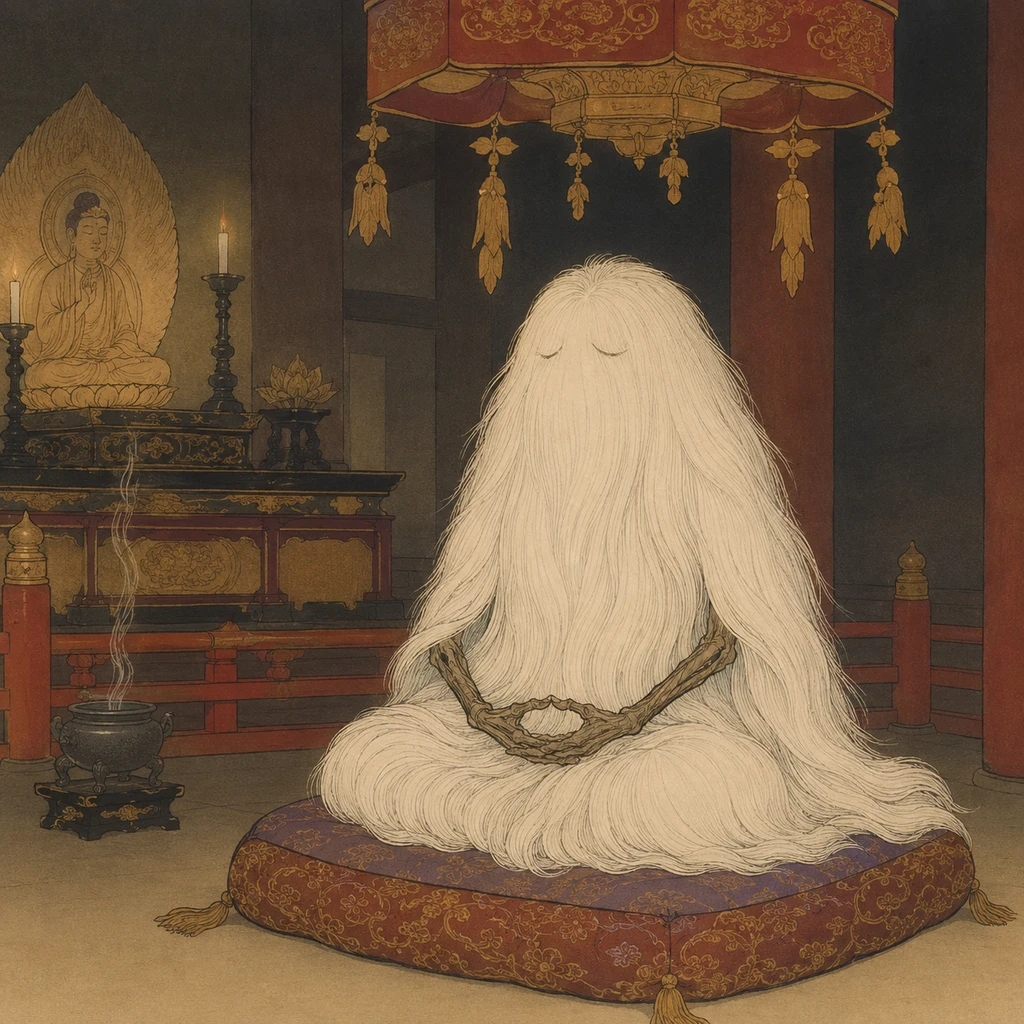
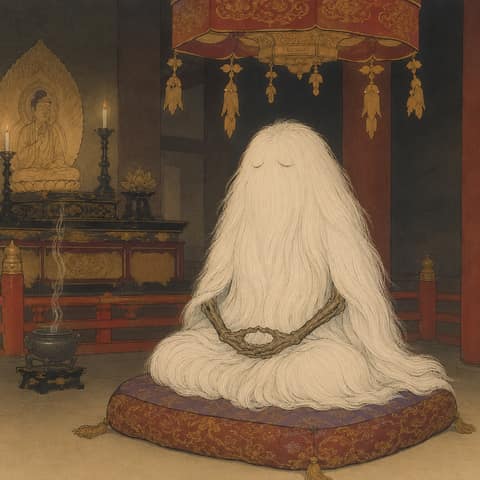
Hossumori is a tsukumogami—an artifact spirit—said to arise from a monk’s fly-whisk (hossu) used in Zen practice. In Toriyama Sekien’s Hyakki Tsurezure Bukuro, it is shown seated in full lotus beneath a canopy, absorbed in zazen. Sekien alludes to the Zen kōan of “a dog’s Buddha-nature,” suggesting that even a humble ritual tool can manifest Buddhahood. It embodies the idea of a long-used sacred implement gaining numinous presence and sitting in stillness to pursue enlightenment.

Sazae-oni (Turban Shell Ogre)

Sazae-oni (Turban Shell Ogre)

Epic

sah-ZAH-eh OH-nee

貝より変ずる海の鬼・栄螺鬼

Animal ShapeshiftersJapanese folklore

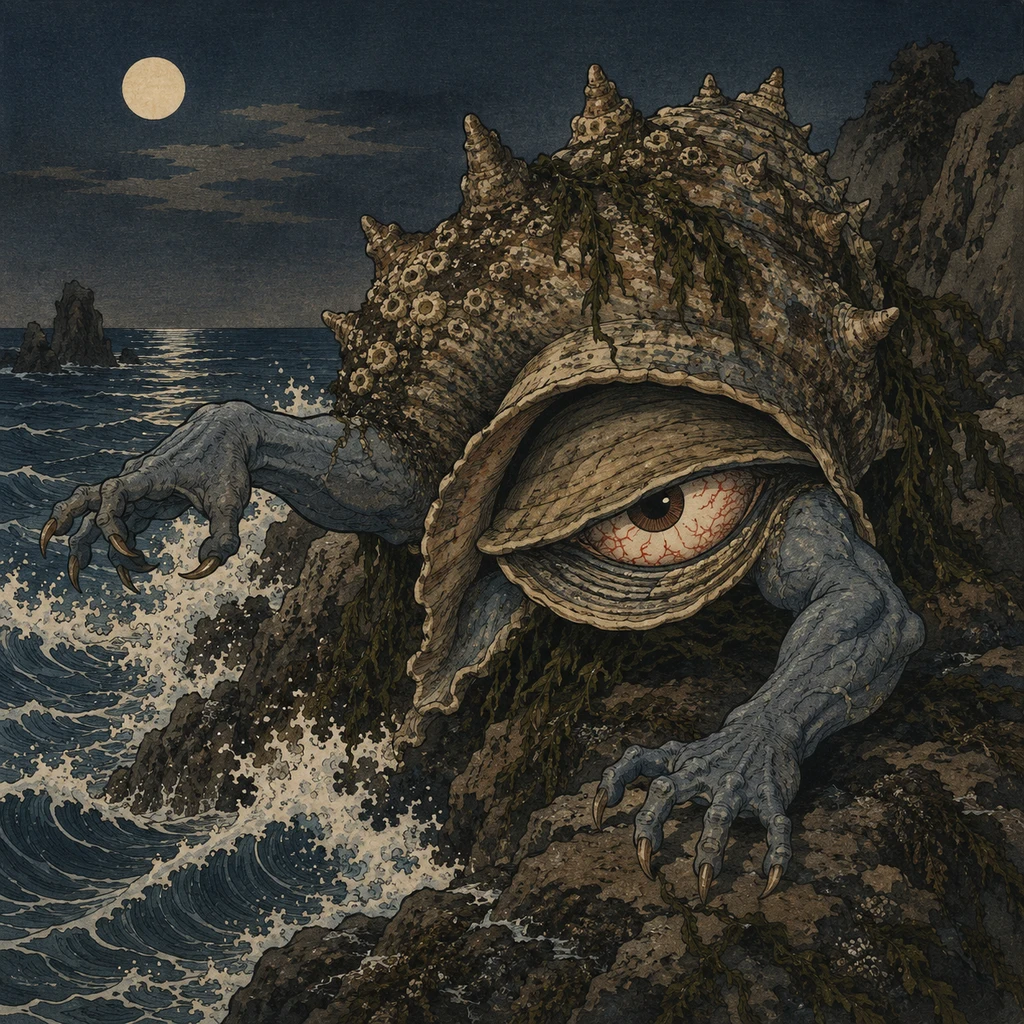
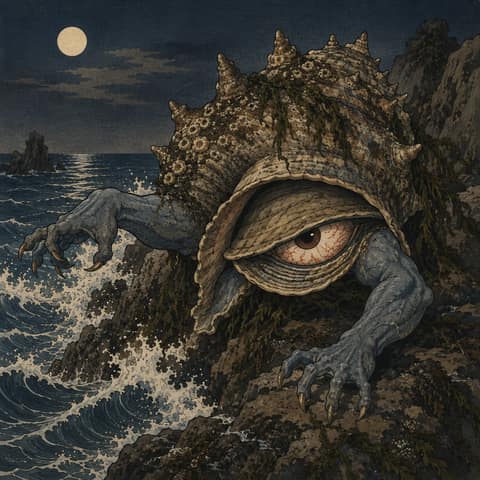
A yokai depicted by the Edo-period artist Toriyama Sekien in Hyakki Tsurezure-bukuro: a turban shell (sazae) transformed into an ogre. It is shown with humanlike arms and eyes sprouting from the meat and operculum, serving as an allegory of metamorphosis. Drawing on transformation tales from the Classic of Rites, the image explores nature’s uncanny shift into monstrous forms. Known more as an artistic and conceptual yokai than one tied to a specific local legend; similar figures appear in early modern picture scrolls.

Saddle Fiend

Saddle Fiend

Rare

KOO-rah-yah-ROH

武家の付喪鞍・鞍野郎

Animated Objects & UndeadJapanese folklore

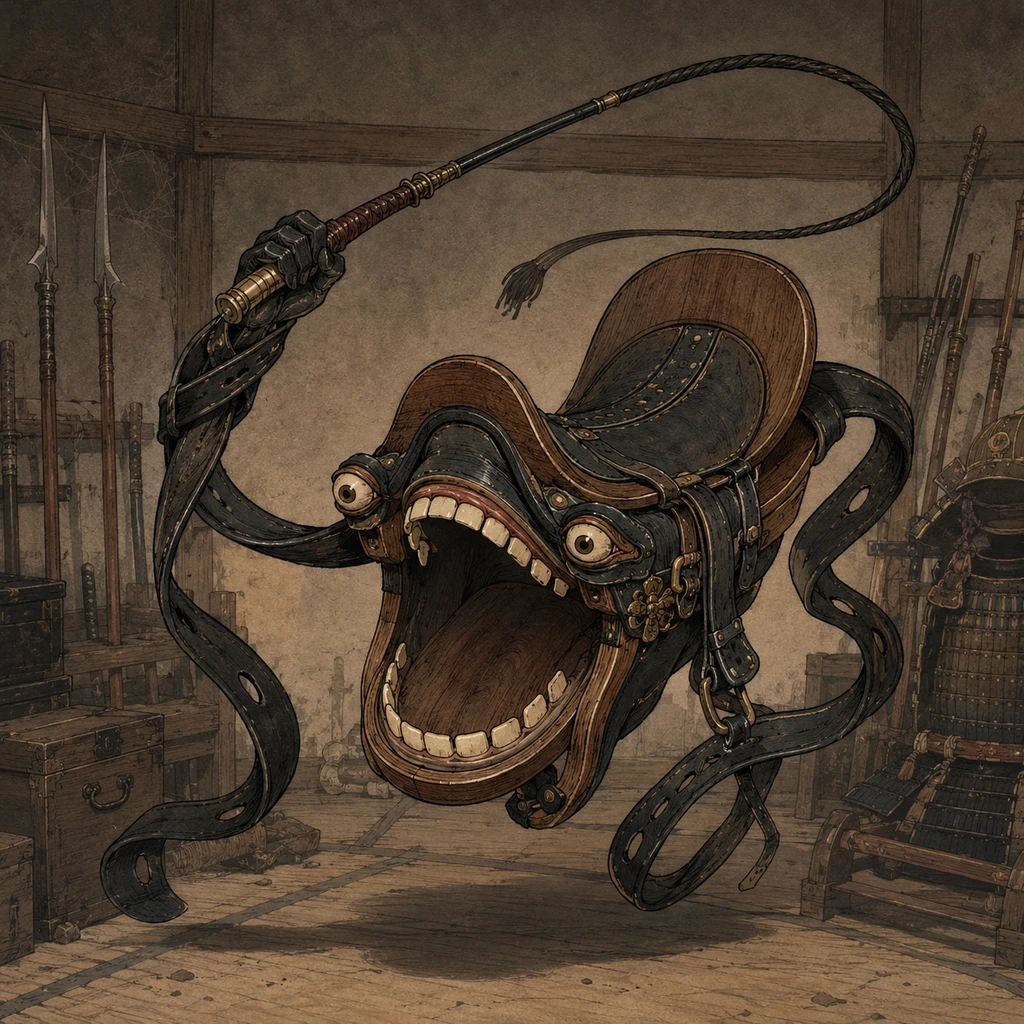
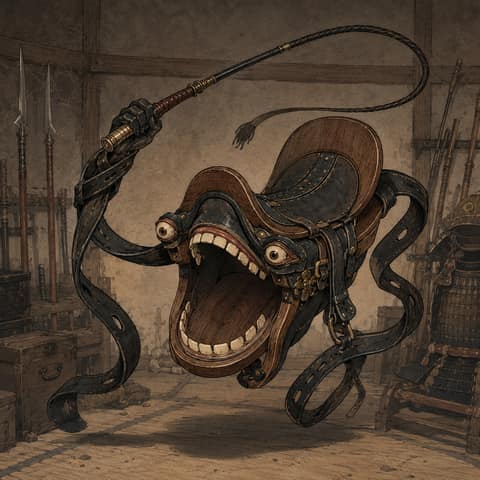
A tsukumogami depicted by the Edo-period artist Toriyama Sekien in Hyakki Tsurezure Bukuro: a horse saddle transformed into a yokai. It bears fangs and eyes and wields a whip with cord-like hands. Sekien pairs the image with a verse alluding to the Hōgen Rebellion, hinting at grudges and histories lingering in a warrior’s riding gear. On the same spread he includes a stirrup-mouth motif, shaping a didactic theme rooted in classical admonitions about horse tack.

Abumikuchi

Abumikuchi

Rare

ah-BOO-mee-KOO-chee

戦場跡の鐙・鐙口

Animated Objects & UndeadJapanese folklore

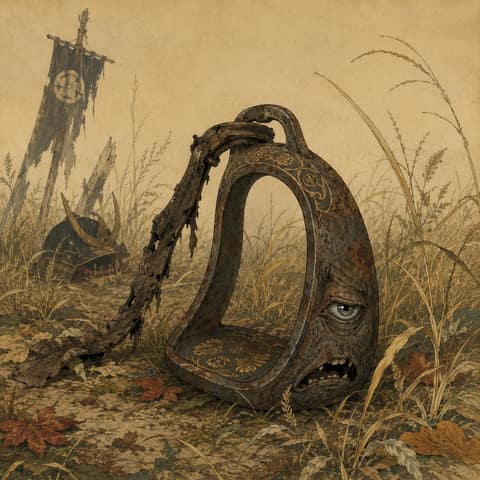
Abumikuchi is a tsukumogami depicted as a stirrup sprouting eyes and a mouth. It appears in Toriyama Sekien’s Hyakki Tsurezure Bukuro, where discarded arms and tack are said to gain a spirit over time. Sekien quotes a line from the Noh play Tomonaga, evoking battlefields, but offers no specific tale. The theme centers on the grudge and attachment of tools treated with neglect.

Taimatsumaru

Taimatsumaru

Rare

tie-MAHT-soo-mah-roo

妖火を帯ぶる怪鳥・松明丸

Mountain & Wilderness SpiritsJapanese folklore

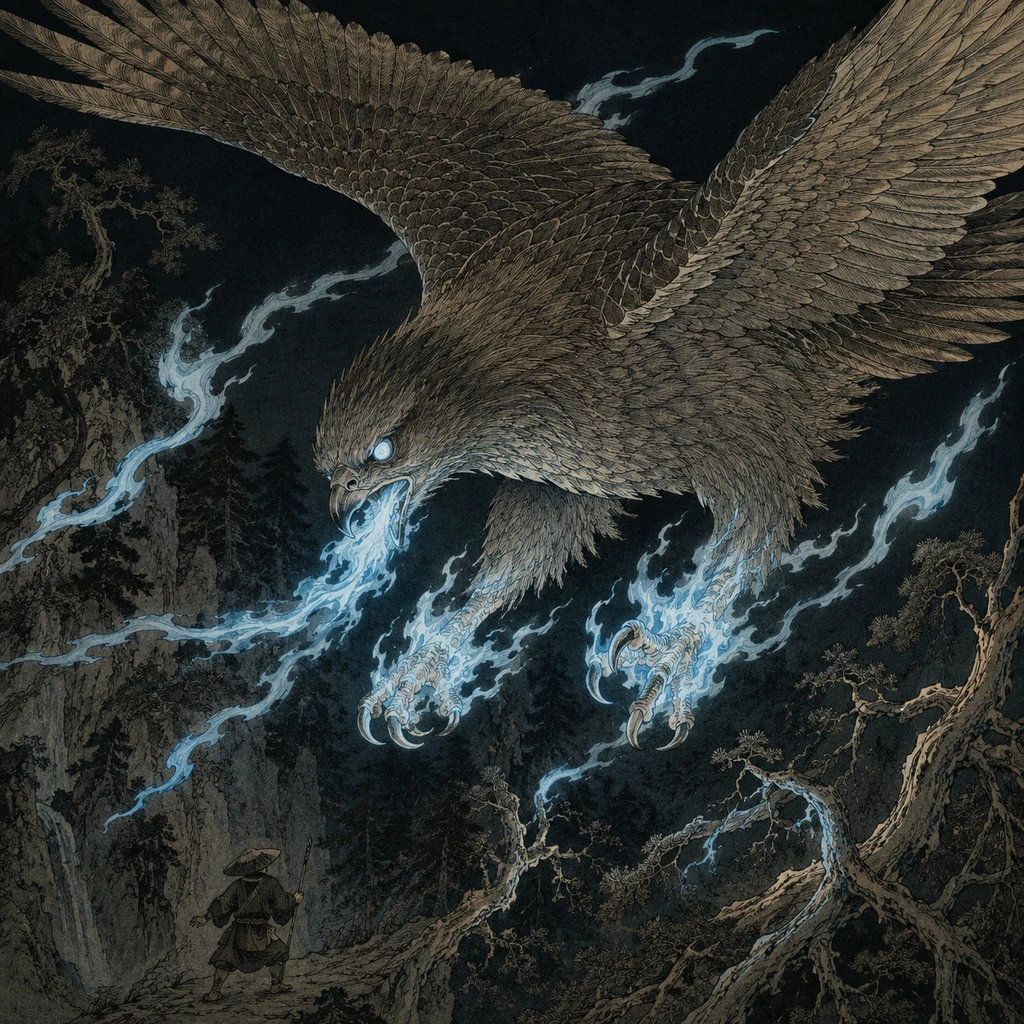
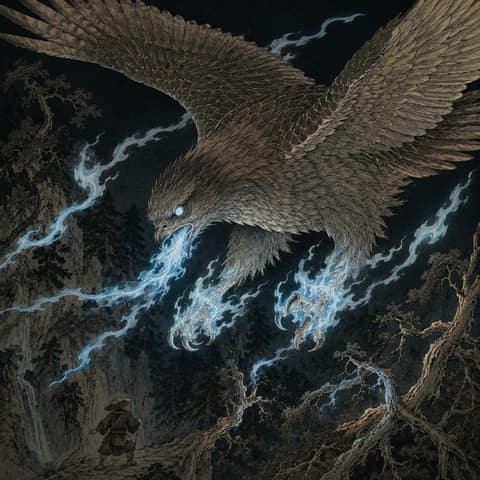
Taimatsumaru is a fire-bearing bird yokai depicted in Toriyama Sekien’s Hyakki Tsurezure Bukuro. Shown as a raptor wreathed in flames from beak and talons, it casts uncanny light across the deep mountain night. Sekien links it in his notes to the glow of the “tengu pebbles,” interpreting it as a force that hinders ascetics in training. Its fire is not a practical torch but a delusive flame that leads night travelers astray. No specific historical locations of appearance are recorded.

Furaku-Furaku (The Dangling Lantern Spirit)

Furaku-Furaku (The Dangling Lantern Spirit)

Rare

boo-RAH-boo-RAH

竹提灯の不落不落

Animated Objects & UndeadJapanese folklore

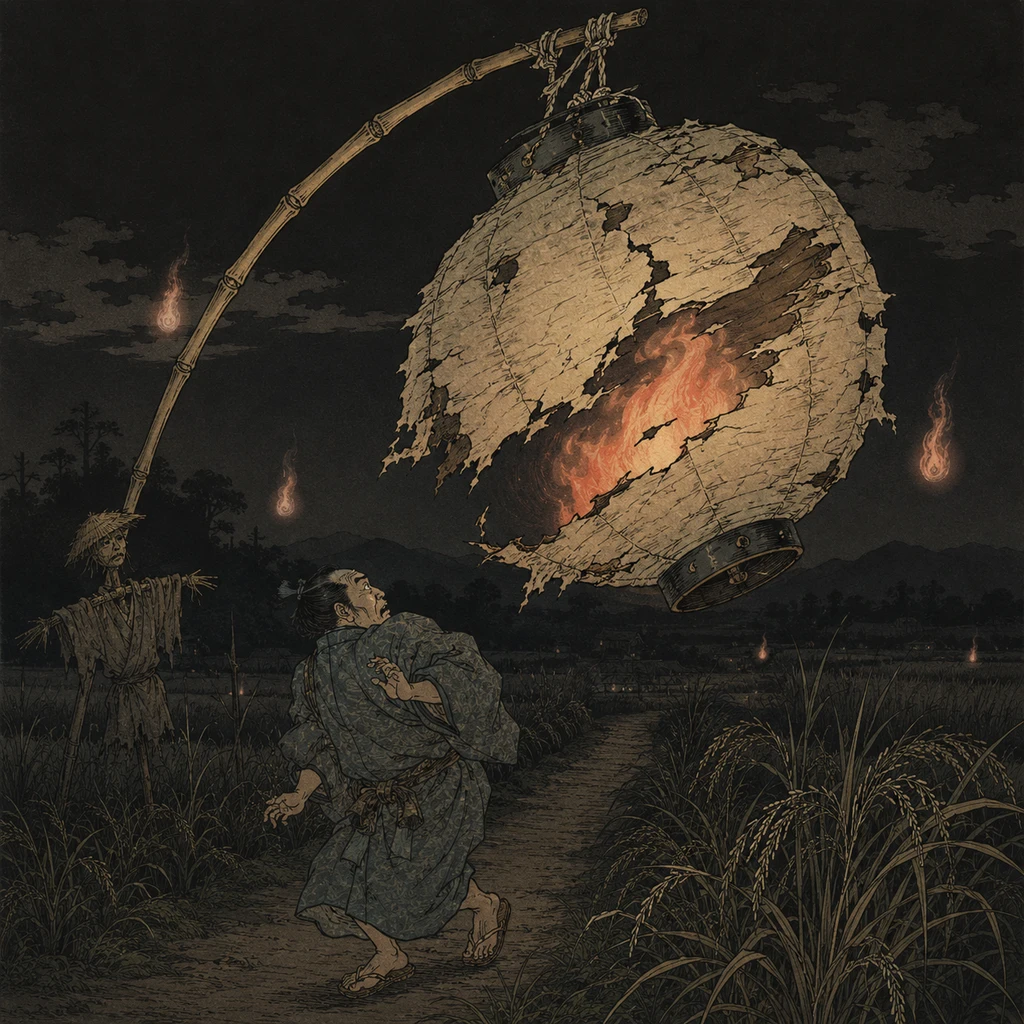
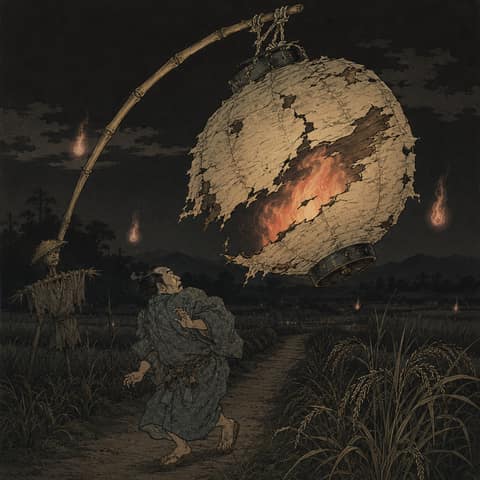
A lantern yokai depicted by Toriyama Sekien in Hyakki Tsurezure Bukuro. Tied to a bamboo pole, the torn lantern gapes like a mouth and droops over a path. The inscription hints it might be mistaken for a rice‑field lantern fire—or even foxfire—but Sekien groups it among animated tools, marking it as a tsukumogami, a lantern that has come to life. Sekien also notes the name as “不々落々,” though it is generally written “不落不落.”

Shell Child

Shell Child

Rare

KAI-chee-go

貝桶から這う這子・貝児

Household SpiritsJapanese folklore

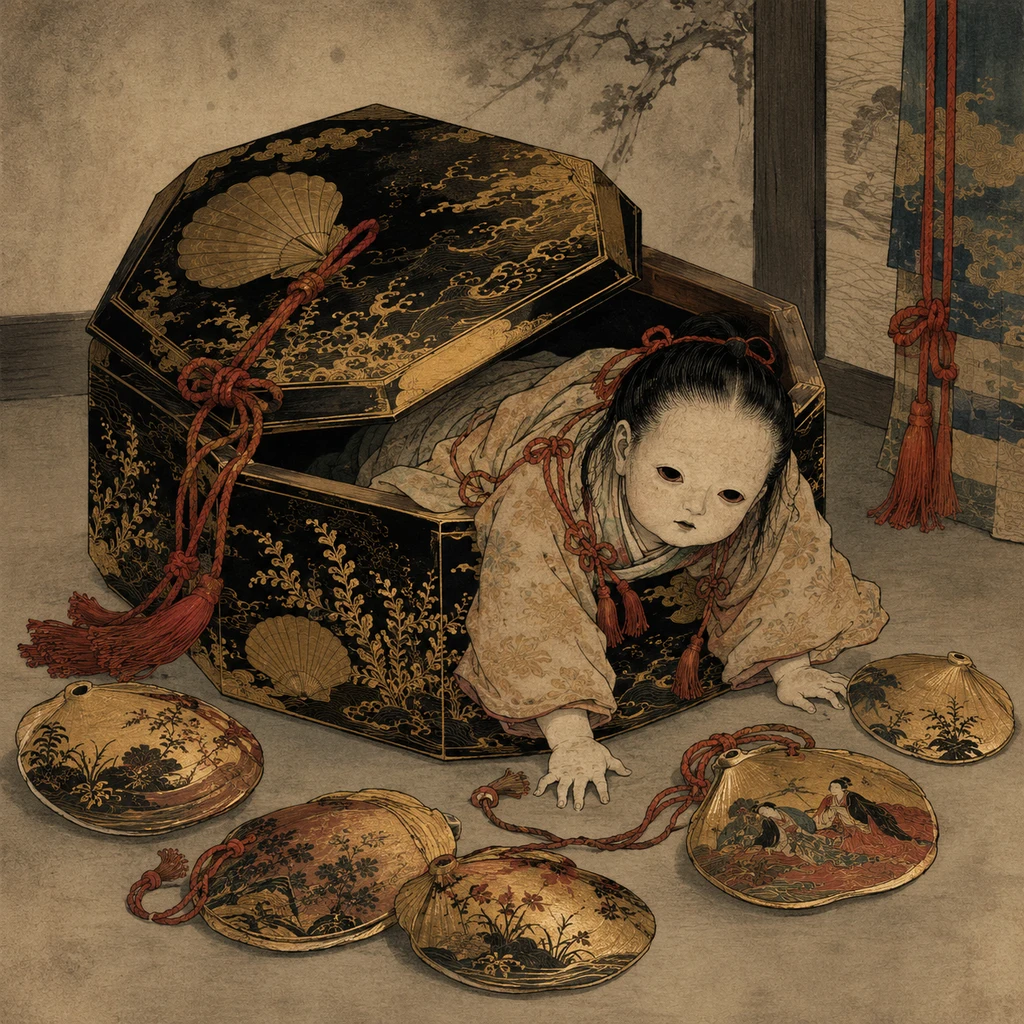
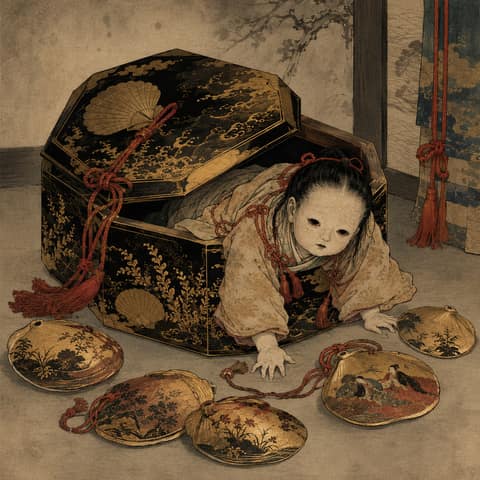
Shell Child is a tsukumogami-like object spirit illustrated by Edo-period artist Toriyama Sekien in Hyakki Tsurezure Bukuro. It depicts a toddler-like figure crawling out of a shell bucket used for the game of kai-awase (matching shells). Sekien glossed it with the remark, “Is it a sibling of the crawling doll?” likening it to the infant doll known as haiko. No concrete sighting tales survive; it is generally read as a shell bucket, or the clam shells themselves, gaining a soul through long years of use and turning uncanny.

Hair Oni (Kamikki)

Hair Oni (Kamikki)

Rare

KAH-mee-oh-nee

逆立つ怨念の髪・髪鬼

Animated Objects & UndeadJapanese folklore

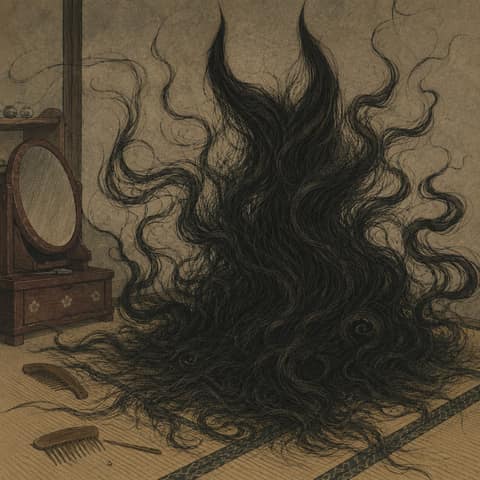
Kamikki is a hair-born yokai depicted by Toriyama Sekien in Hyakki Tsurezure Bukuro. It is said to arise when a woman’s grudges or jealousy permeate her hair, granting it will and turning it monstrous. The hair extends on its own, bristles, and writhes like oni horns. Even if cut, it grows without end, reflecting beliefs about the spiritual potency and impurity associated with hair. Sekien likely visualized long-standing taboos and magical notions surrounding hair.

Horned Washbasin Hanzō

Horned Washbasin Hanzō

Rare

TSOO-noh-HAHN-zoh

角立つ盥の付喪・角盥漱

Animated Objects & UndeadKyoto Prefecture (associated tradition)

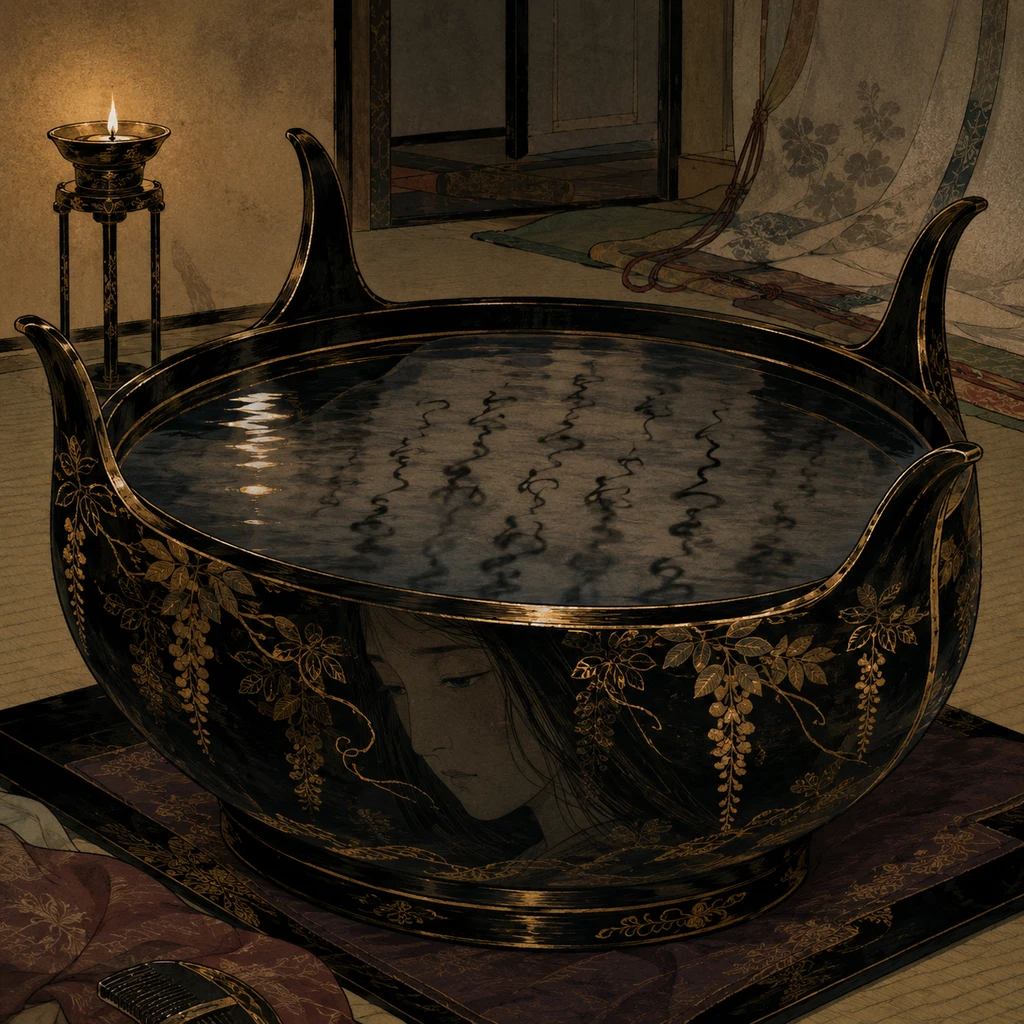
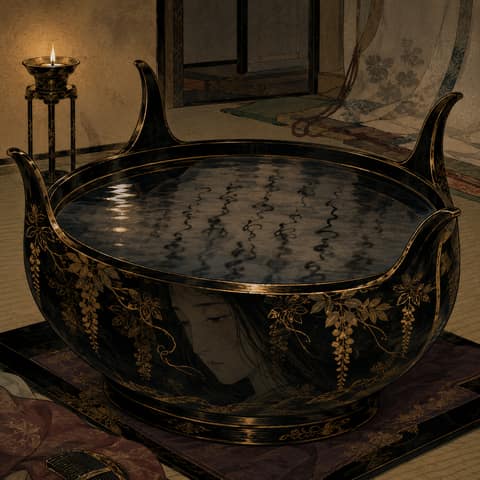
Tsunohanzō is a tsukumogami—an animated household object—depicted by Toriyama Sekien in Hyakki Tsurezure Bukuro as a lacquered ceremonial washbasin (kakutsubo/tsuno-darai) turned uncanny. Once used in the Heian court for cosmetics and handwashing, the vessel is said to gain spirit through long use and human intent, filling with water at night to reveal and wash away written characters. Many portrayals reference the legend of Ono no Komachi washing papers to expose truth from falsehood.

Fukuro Mujina (Bag Badger)

Fukuro Mujina (Bag Badger)

Rare

FOO-koo-roh MOO-jee-nah

宿直袋を担ぐ・袋狢

Animated Objects & UndeadEdo period

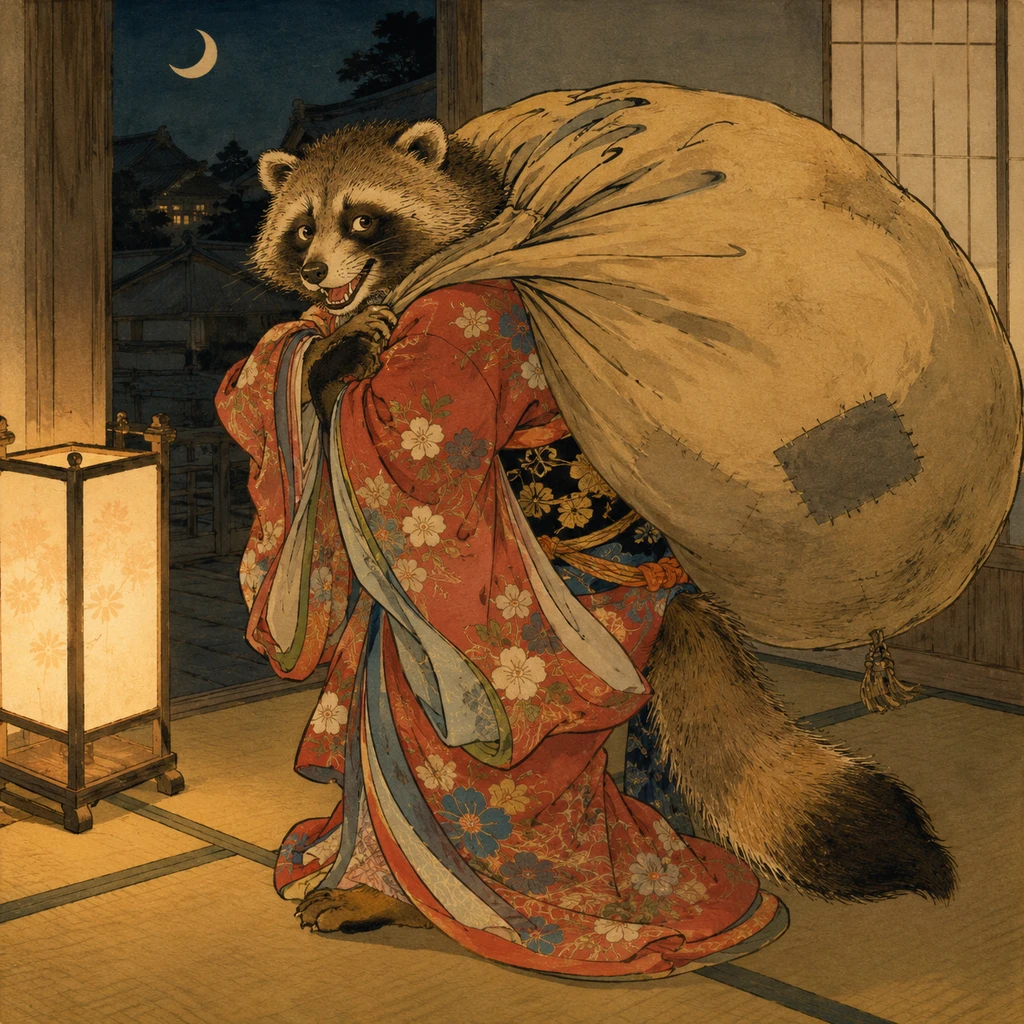
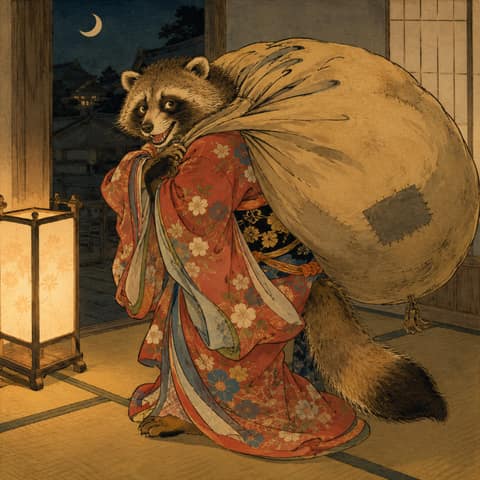
A yokai depicted by the Edo-period artist Toriyama Sekien in his Hyakki Tsurezure Bukuro. It appears as a female badger (mujina) carrying a night-duty bag, but given the book’s focus on tool-spirits, many read the bag itself as the true body. The design satirizes the saying “ana no mujina no nao o suru,” which warns that judging what you haven’t seen is difficult, and likely reworks a court-lady figure carrying a bag found in earlier night-parade scrolls.

Kotofurunushi

Kotofurunushi

Rare

koh-toh-koh-roo-NOO-shee

忘れられし筑紫箏・琴古主

Tsukumogami / MukurogaiFukuoka Prefecture (Former Tsukushi Province / Spirit of a forgotten Koto)

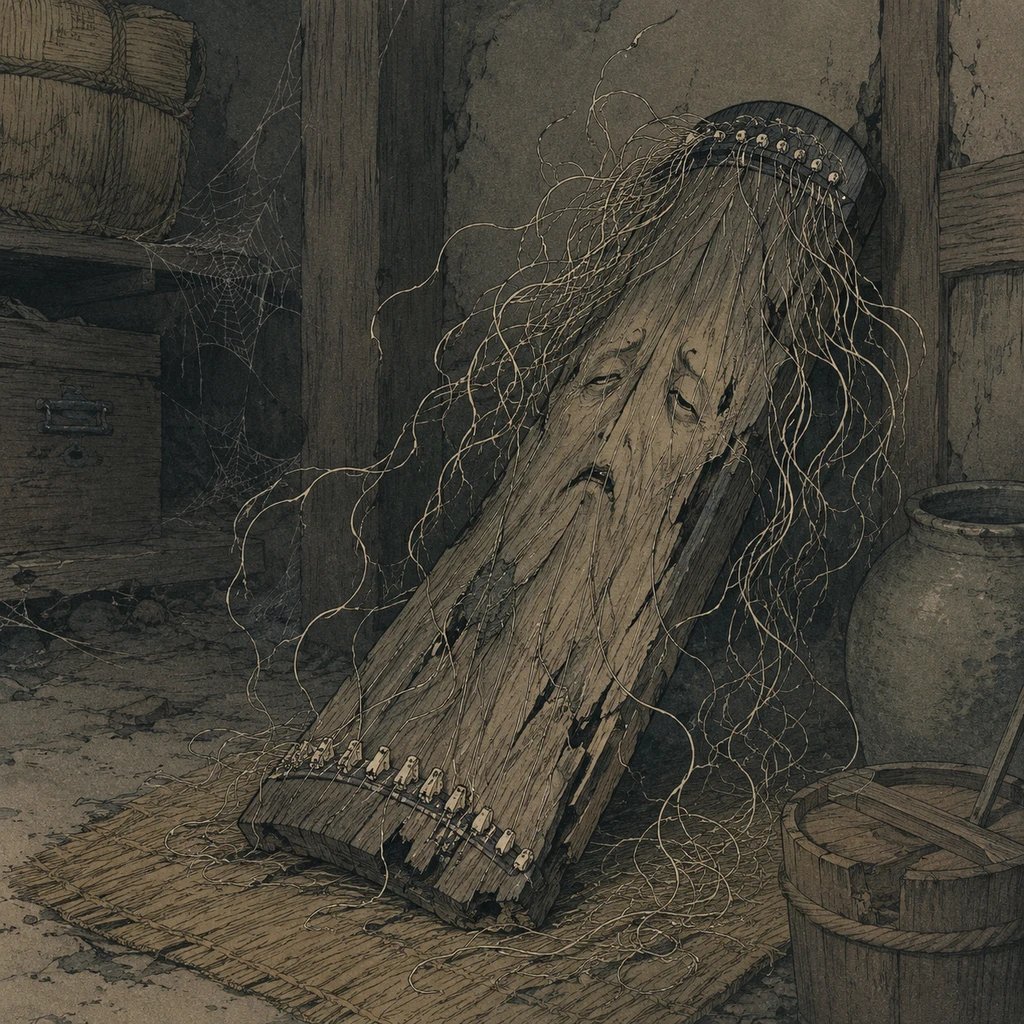
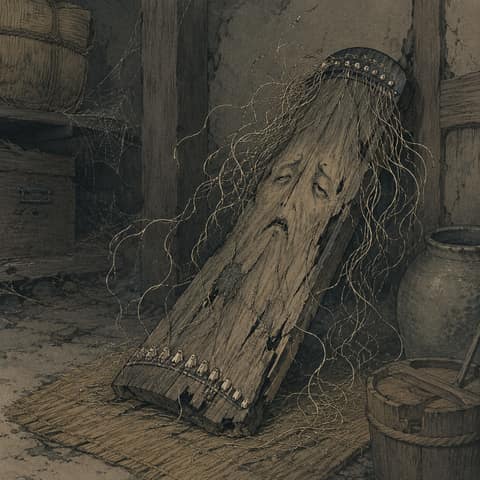
The Kotofurunushi is a tsukumogami (an artifact that has transformed into a yokai) born from an old koto, depicted in the Edo-period yokai bestiary *Hyakki Tsurezure Bukuro* by the artist Toriyama Sekien. Its visual design is highly striking: sorrowful eyes and a mouth emerge on the surface of an old, broken koto that has been abandoned for years, with countless snapped strings hanging down like the tangled hair of a deranged female demon. This is not merely an anthropomorphized object, but a visualization of the intense grudge of an instrument—a tool whose sole purpose is to produce sound—being forced into silence and left to rot. The deepest charm of this yokai lies in the cruel paradigm shift of Japanese music history hidden within Sekien's commentary accompanying the illustration. Sekien wrote: "Since the blind man Yatsuhashi reformed the melodies, the Tsukushi Koto exists in name only, and those who know its sound are exceedingly rare..." This refers to Yatsuhashi Kengyo, a genius blind musician of the early Edo period. Yatsuhashi Kengyo learned the traditional playing methods of the ancient "Tsukushi Koto," which had previously been played elegantly among aristocrats and monks primarily in northern Kyushu, and dramatically reformed it into a modern style (Sokyoku), gaining immense popularity. However, as the price for Yatsuhashi's new style sweeping the world, the good old "Tsukushi Koto" became completely obsolete, forgotten by history with no one left to play it. In other words, the Kotofurunushi is not just a monster of an old instrument; it is the incarnation of the sorrowful resentment of "loser's art" (the music of an old school)—eliminated by the advent of a genius (Yatsuhashi Kengyo) and left without an audience. It is an extremely cultural and musicological yokai.

Biwa Bokuboku

Biwa Bokuboku

Epic

BEE-wah BOH-koo-BOH-koo

琵琶頭の盲僧姿・琵琶牧々

Animated Objects & UndeadJapanese folklore

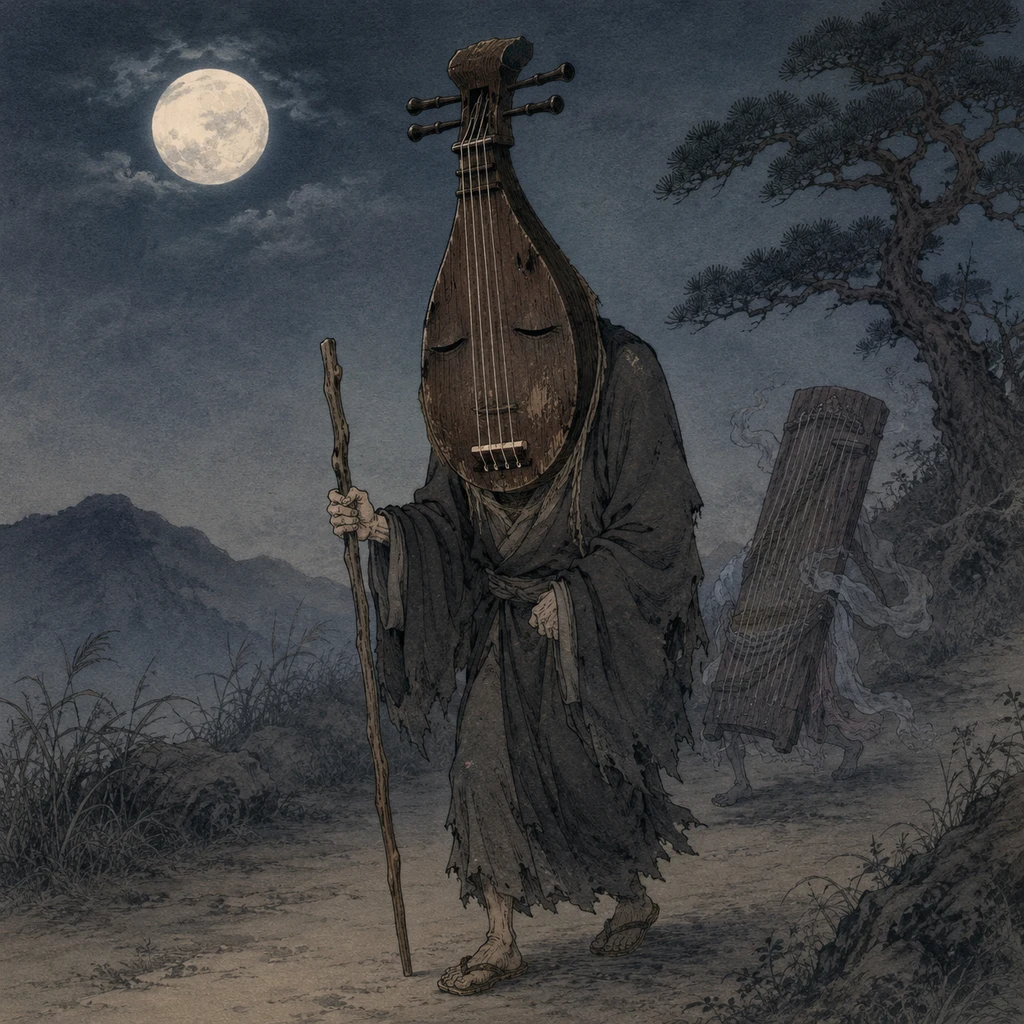
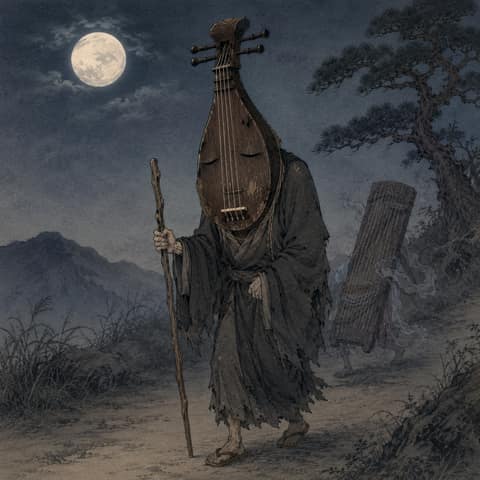
A tsukumogami in which a spirit inhabits a biwa lute and appears as a blind minstrel (zatō). Illustrated by Toriyama Sekien in Hyakki Tsurezure Bukuro, it bears a human body with the biwa’s pegbox as its head and leans on a staff. The name is said to allude to the famed instrument “Makiba,” and reflects the belief that old tools, after long use and the passage of time, awaken into autonomous beings. It adopts the guise of a blind musician, a classic image linking music and mendicant monks, and stands as a textbook case of a tool taking human form.

Elder Shamisen

Elder Shamisen

Rare

SHAH-mee-CHOH-loh

古三味線の長老姿・三味長老

Animated Objects & UndeadEdo period

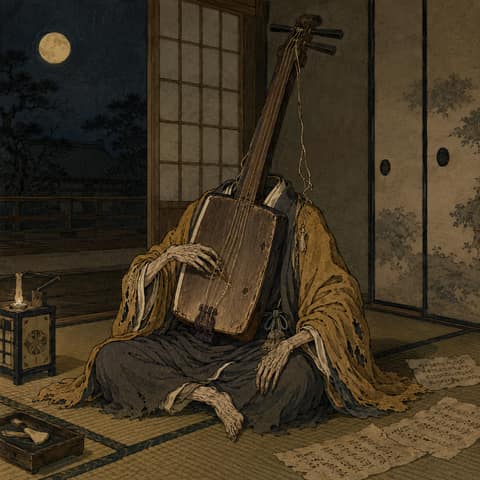
A tsukumogami (animated object yokai) depicted by Toriyama Sekien in Hyakki Tsurezure Bukuro. It is understood as a shamisen long used by a master, then discarded, that aged and came to house a spirit. Sekien’s note quotes the proverb “A novice monk never becomes an elder,” punning on shami (novice monk) and shamisen, and alludes to Essays in Idleness on “unrefined arts.” It satirizes both the animistic nature of instruments and the maturation of artistic skill.

Raised-Collar Robe

Raised-Collar Robe

Rare

eh-ree-TAH-teh-goh-ROH-moh

鞍馬僧正坊の僧衣・襟立衣

Household SpiritsJapanese folklore

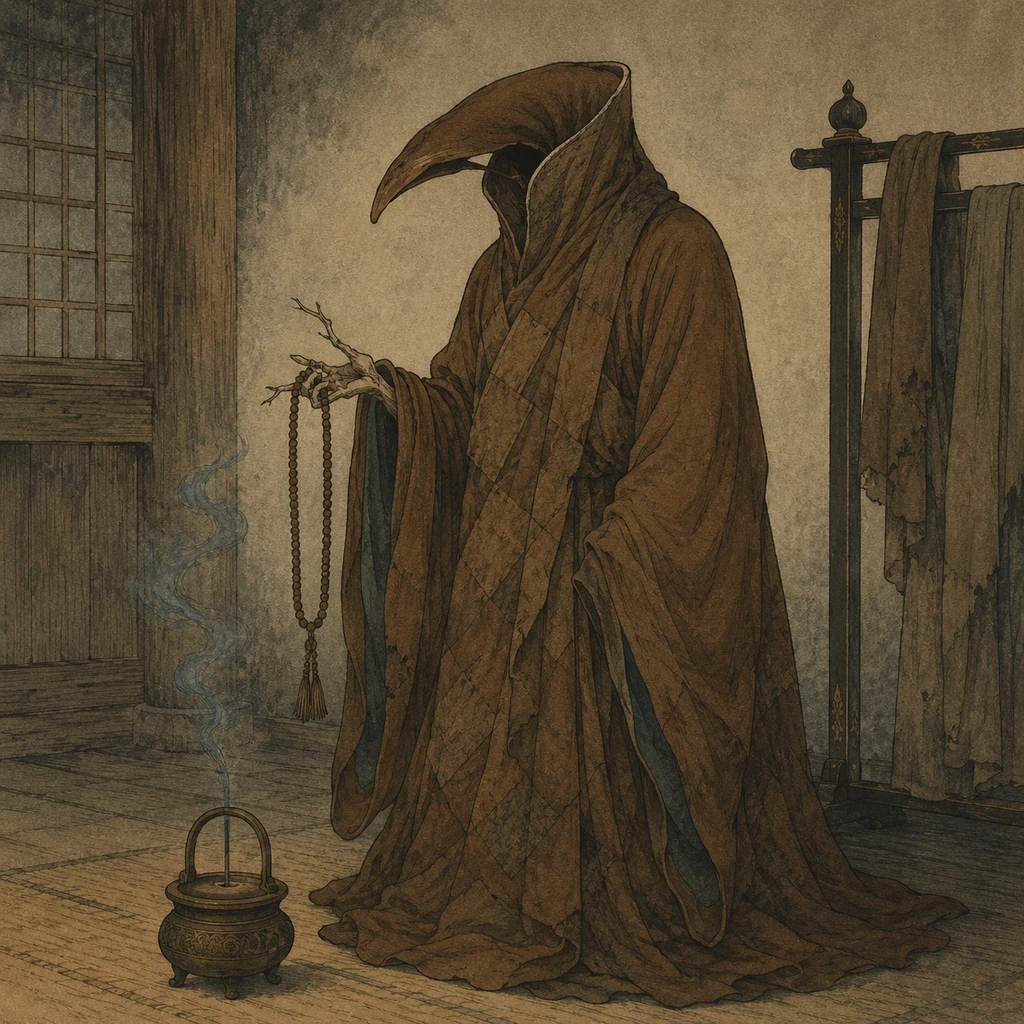
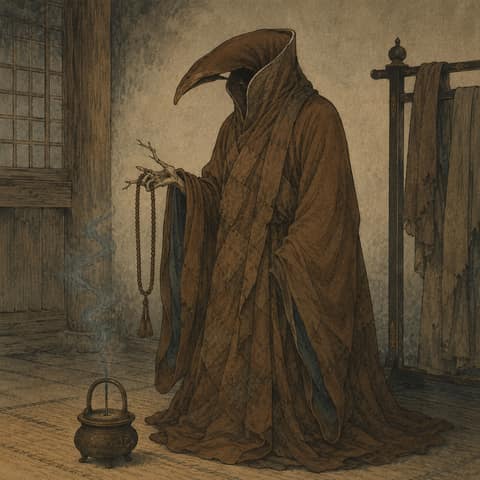
The Raised-Collar Robe is said to be a monk’s high-collared garment that, after many years, turned into a yokai. It appears in Toriyama Sekien’s Hyakki Tsurezure Bukuro, shown with a censer set before it and prayer beads in hand, its stiff standing collar drooping over the face like a beak. Sekien notes it “may be the raised-collar robe of Sōjōbō of Mount Kurama,” hinting that a tengu-related monk’s robe gained a spirit. Concrete episodes or folktales, however, are scarcely recorded.

Kyōrinrin (Scripture Spirit)

Kyōrinrin (Scripture Spirit)

Uncommon

KYOH-reen-reen

捨てられし経の怨・経凛々

Animated Objects & UndeadKyoto

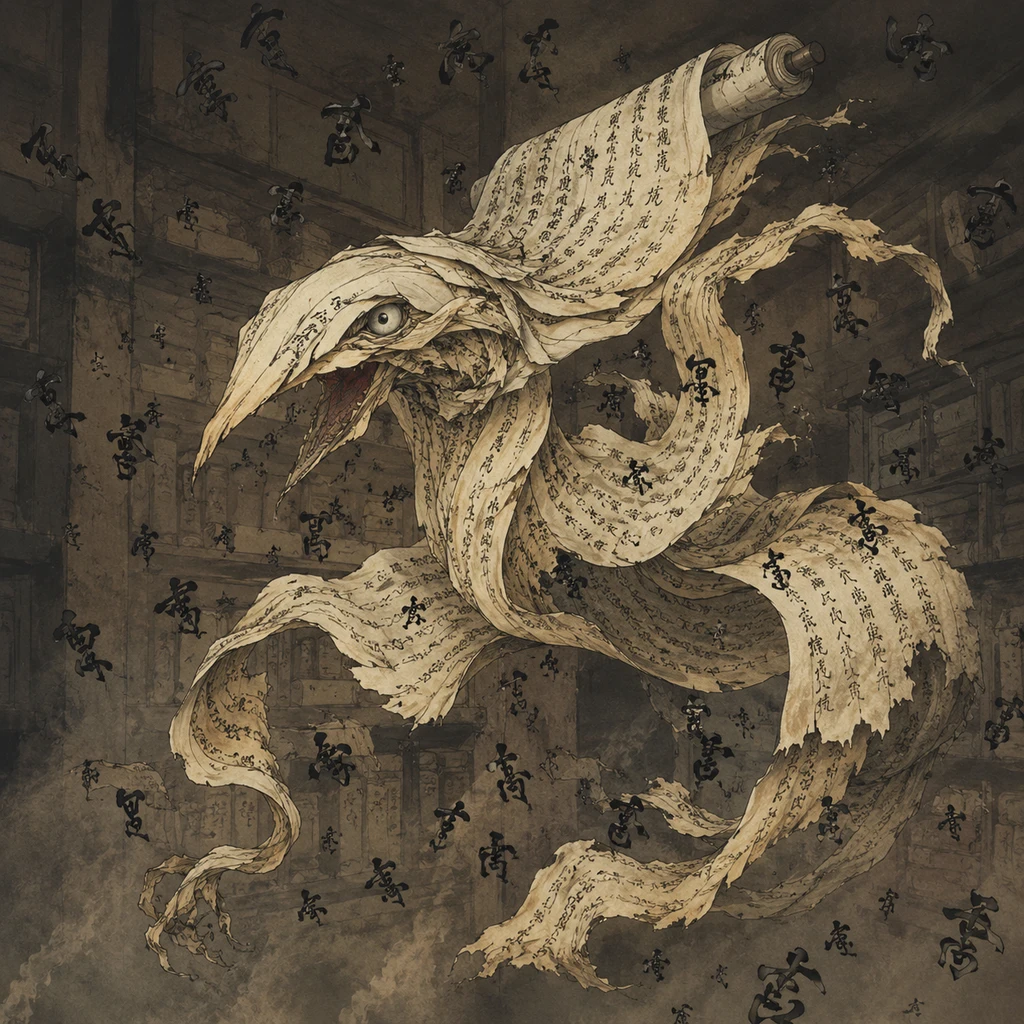
A yokai of Buddhist scriptures depicted by Toriyama Sekien in The Illustrated Bag of One Hundred Random Objects. A weathered sutra scroll gains a spirit, understands human speech, and moves on its own. Sekien links its origin to a tale in the Taiheiki about the magical rivalry between Shubin of Saiji and Kūkai of Tōji, suggesting the grudges of discarded, outlived sutras took form. Scholars also note a visual connection to a bird-headed figure wrapped with a sutra in Muromachi-period Night Parade of One Hundred Demons scrolls.

Mokugyo Daruma

Mokugyo Daruma

Rare

MOH-koo-gyoh dah-ROO-mah

達磨顔の不眠木魚・木魚達磨

Animated Objects & UndeadJapanese folklore

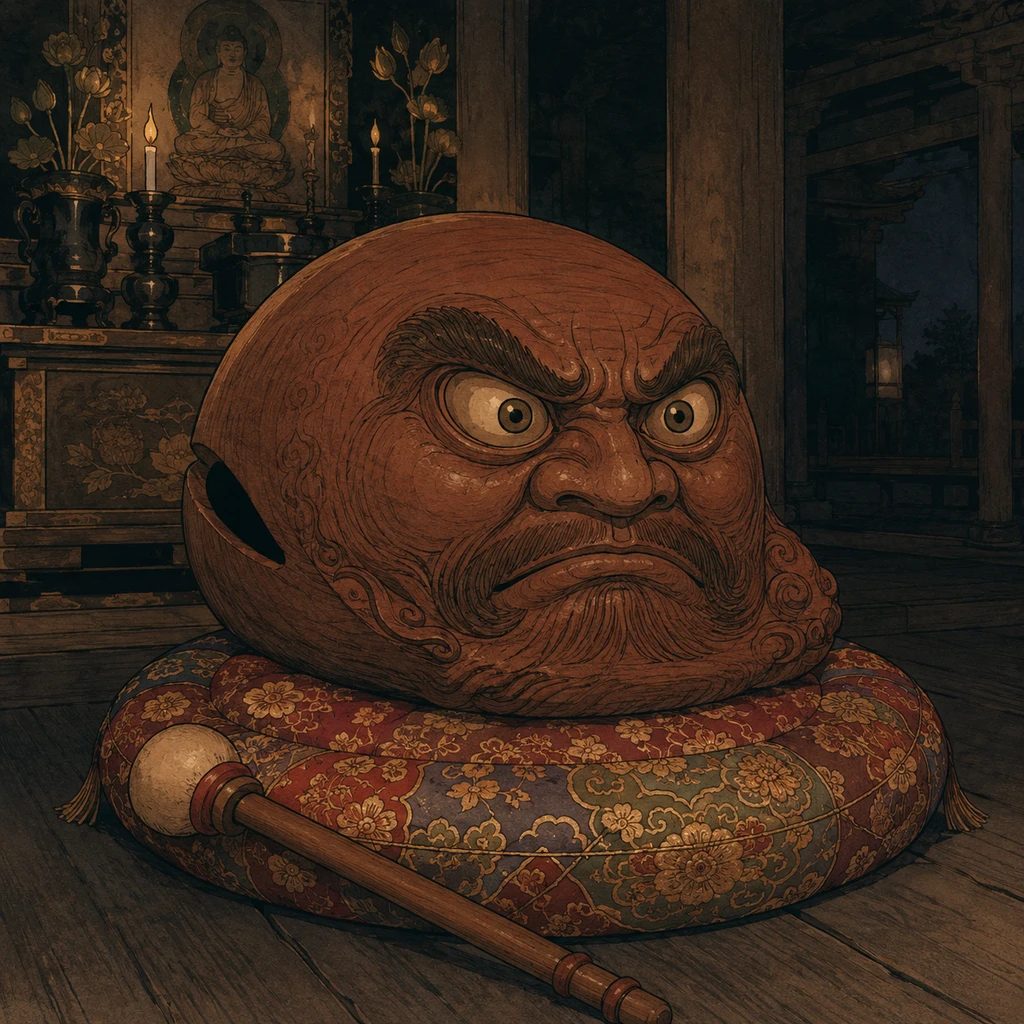
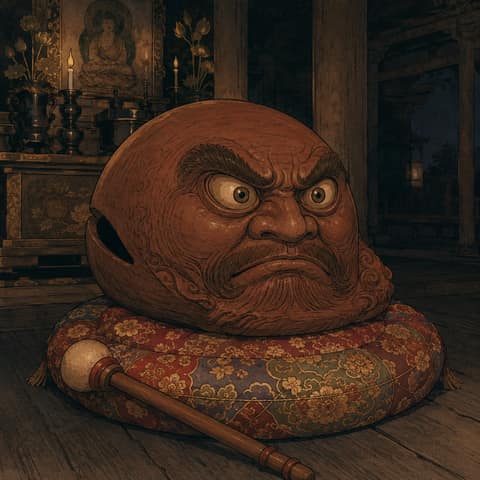
A yokai of Buddhist ritual implements depicted by Toriyama Sekien in Hyakki Tsurezurebukuro. It appears as a wooden fish (mokugyō) bearing a bearded face like Bodhidharma (Daruma), seated on a round cushion with eyes wide open. Sekien hints it is akin to the Buddhist-tool spirit Harisumori. Because fish were believed never to sleep or close their eyes, the mokugyō symbolizes sleepless diligence in monastic practice. Linked with the legend of Bodhidharma’s nine years without sleep, it is read as a visualization of the ideal of wakefulness.

Nyoi Jizai (Will-at-Will Scepter Spirit)

Nyoi Jizai (Will-at-Will Scepter Spirit)

Uncommon

NYOH-ee jee-ZAI

如意で背掻く付喪・如意自在

Animated Objects & UndeadJapanese folklore

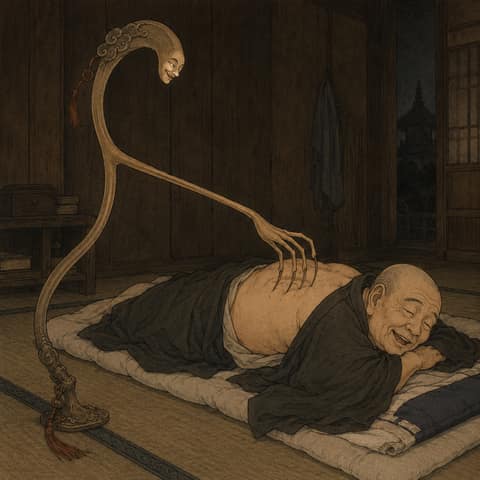
A utensil-spirit depicted by Edo-period artist Toriyama Sekien in Hyakki Tsurezure Bukuro. It is a nyoi or ruyi—an ornamental scepter used by Buddhist clergy—that, after long years, acquires spirit power. Its name plays on the nyoi’s ability to reach “where one wishes,” like a backscratcher, and images show variants: a flying nyoi sprouting wings, or a form with elongated arms and claws scratching a person’s back. These iconographic types build on Muromachi-period Night Parade scrolls that already portrayed nyoi as yokai.

Straw-Raincoat Sandals

Straw-Raincoat Sandals

Rare

MEE-noh WAH-rah-jee

雪の竹林に出る農具・蓑草鞋

Animated Objects & UndeadJapanese folklore

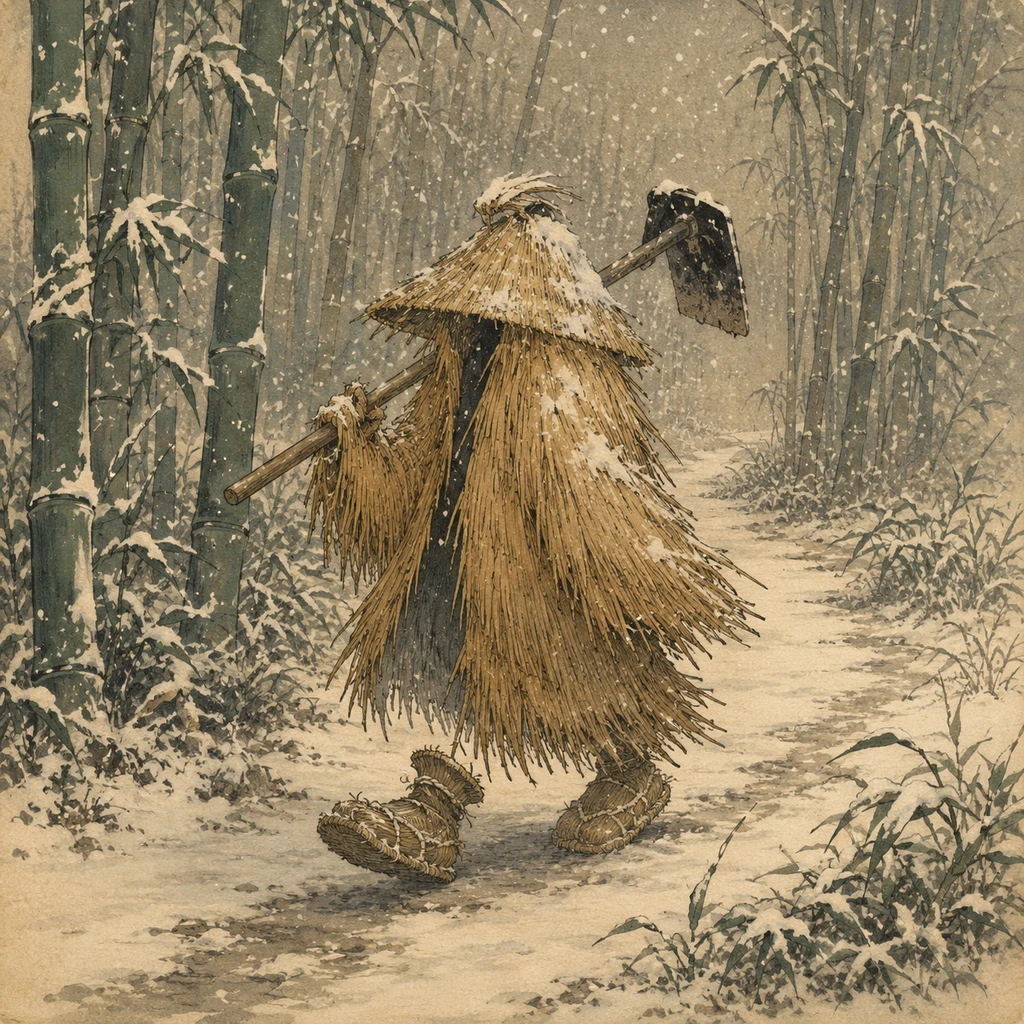
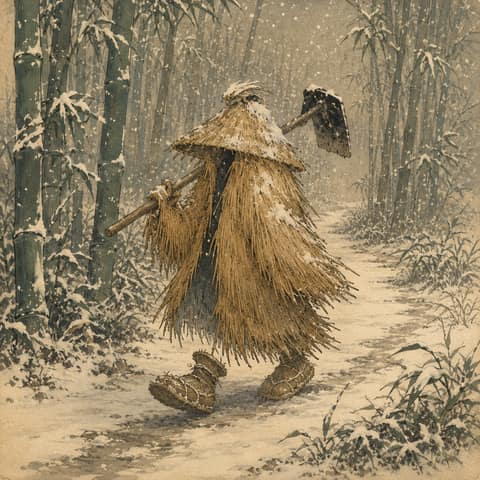
Mino-waraji is a tsukumogami—an animated household object—depicted by the Edo-period artist Toriyama Sekien in Hyakki Tsurezure Bukuro. It appears as a composite creature with a straw raincoat (mino) for a torso and straw sandals (waraji) for legs, shouldering a hoe and emerging in a snow-laden bamboo grove. Rooted in the belief that old tools and rain gear can gain spirits over time, the image blends earlier portrayals of mino and waraji yokai found in Hyakki Yagyō picture scrolls and Tsukumogami emaki. Little is recorded about its behavior; it survives mainly as a symbolic figure.

Menreiki

Menreiki

Epic

MEN-ray-kee

夜に並び舞う古面・面霊気

Animated Objects & UndeadJapanese folklore

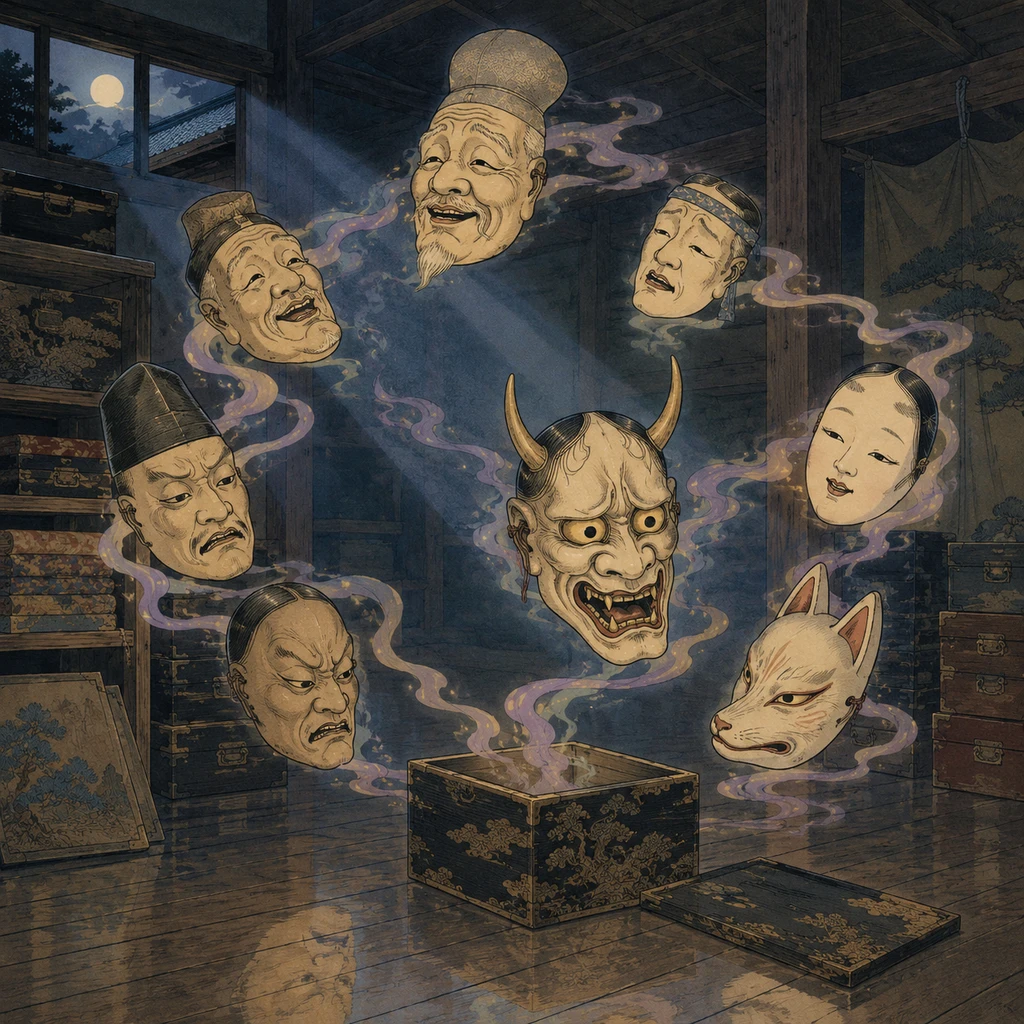
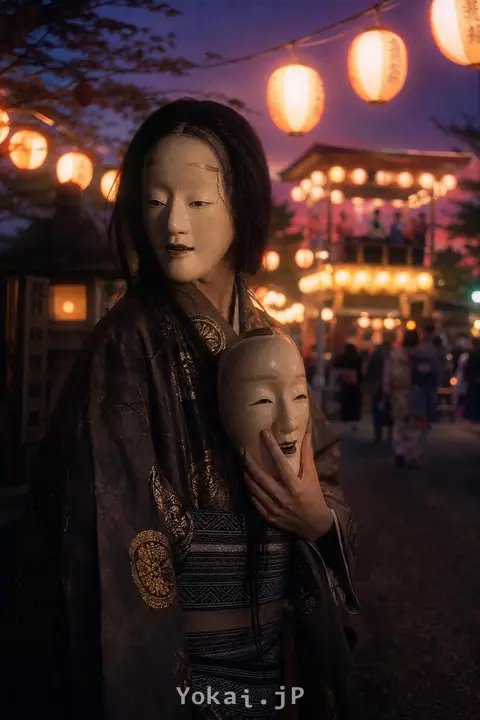
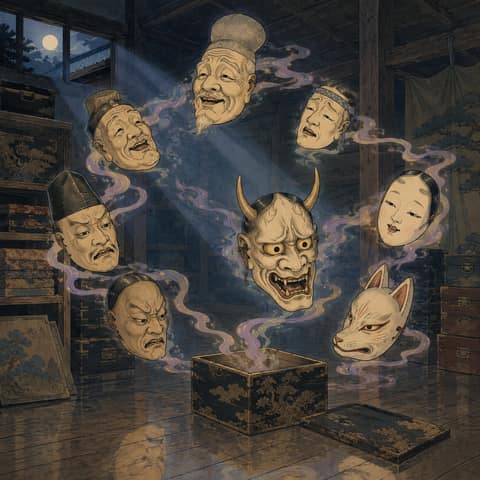
Menreiki is a mask yokai depicted by Toriyama Sekien in Hyakki Tsurezure Bukuro. Drawing on a legend that Hata no Kawakatsu crafted many masks in Prince Shōtoku’s era, Sekien imagines the uncanny presence of masks as if they were alive. Later commentators framed it as a tsukumogami: aged Noh or sarugaku masks that gain a spirit over time, move at night, and plead with their owners to treat them with due respect. It is a pictorial yokai grounded in traditions about historical figures rather than a localized monster with set tales.

Heiroku

Heiroku

Rare

HAY-roh-koo

御幣を振る荒鬼・幣六

Animated Objects & UndeadJapanese folklore

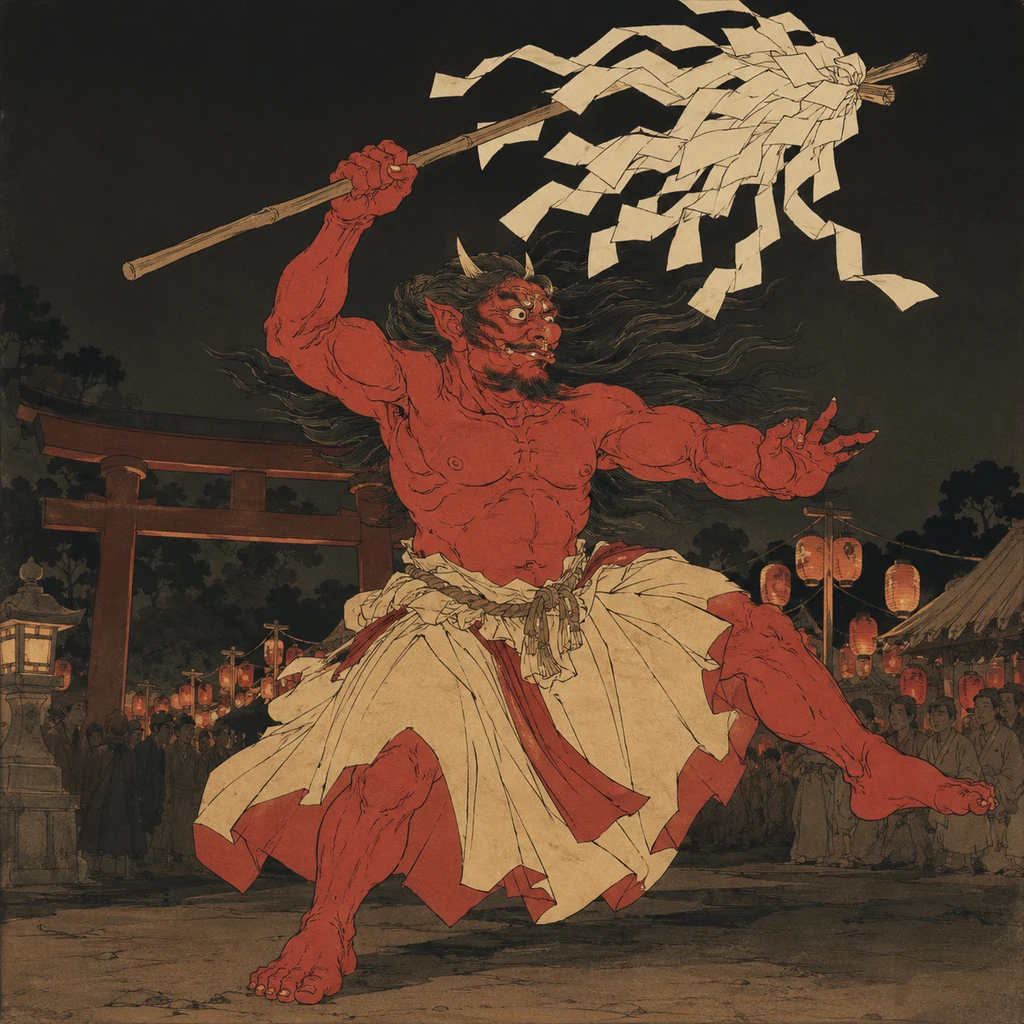
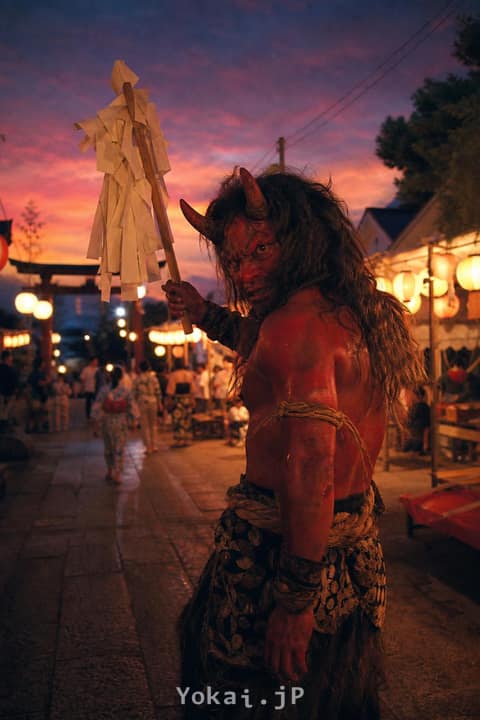
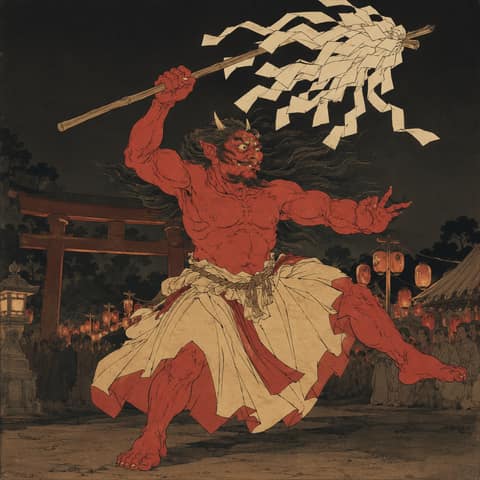
Heiroku is a yokai depicted by Toriyama Sekien in Hyakki Tsurezure Bukuro. Shown bare-chested and rough-hewn, he brandishes a gohei (shinto paper streamer wand) in his right hand. Sekien’s caption—“In the flower capital, shrines lack fixed rites…”—hints at disorder in worship and public unrest, though details are unclear. The image likely draws on Muromachi-period Night Parade scrolls showing a red, oni-like figure with a gohei. Later readers sometimes interpret Heiroku as a spirit inhabiting the gohei or a personification of festival turmoil.

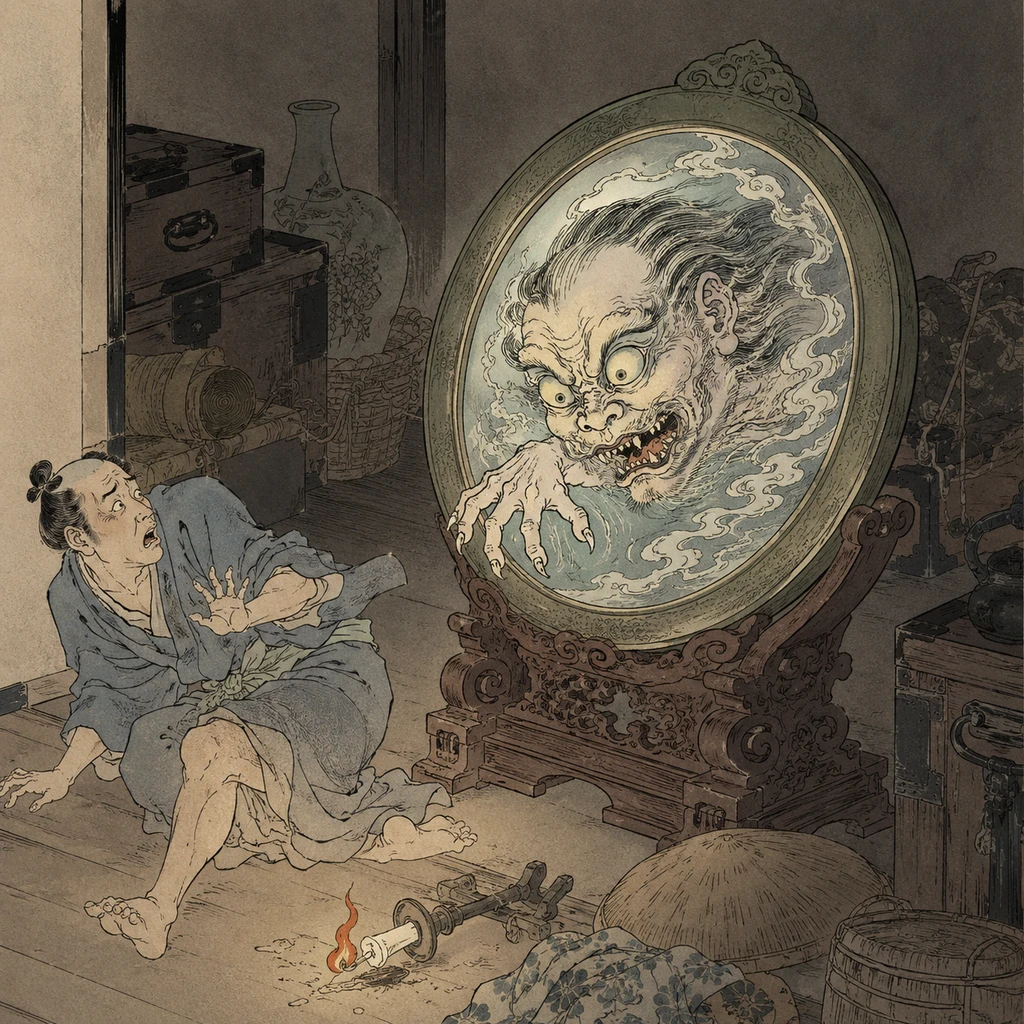
Ungai-kyō (Mirror from Beyond the Clouds)

Ungai-kyō (Mirror from Beyond the Clouds)

Rare

OON-guy-kyo (oon-GAH-ee-kyoh)

鏡に浮かぶ怪の貌・雲外鏡

Household SpiritsEdo period

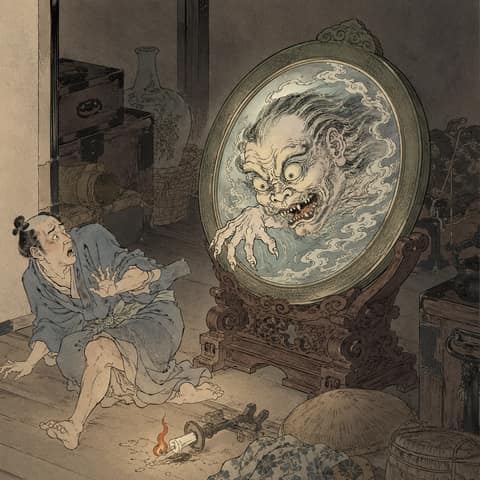
A mirror yokai depicted by Toriyama Sekien in the late Edo work Hyakki Tsurezurebukuro (1784). It appears as a round hand mirror set on an old wooden stand, within whose surface a strange face emerges. Sekien alludes to the legend of the shōma-kyō—“demon-revealing mirrors”—suggesting that the shadow of a yokai moved into such a mirror and came to life. Later traditions treat it as a tsukumogami: a mirror that has aged into sentience, merging with the concept of a truth-revealing mirror.

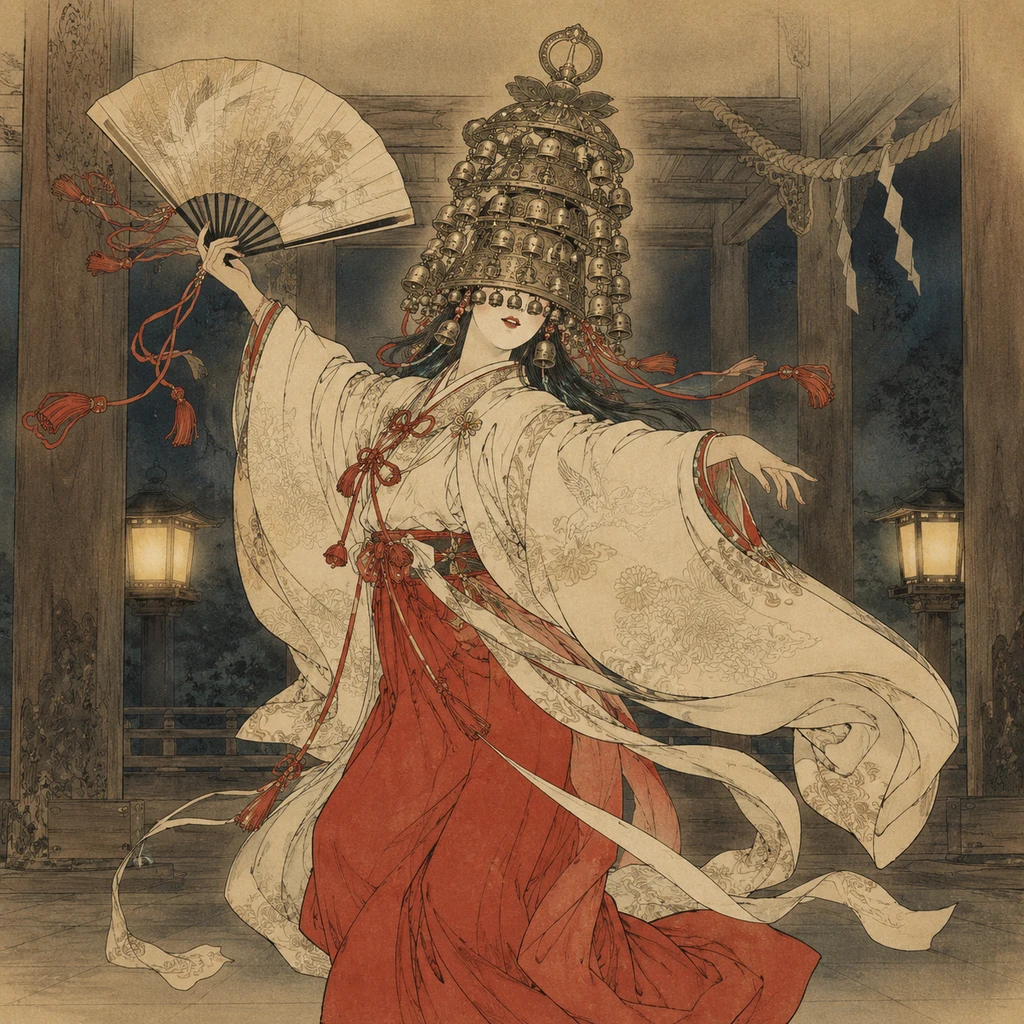
Suzu-hiko-hime

Suzu-hiko-hime

Rare

SOO-zoo-HEE-koh-hee-meh

神楽鈴を戴く女・鈴彦姫

Household SpiritsJapanese folklore

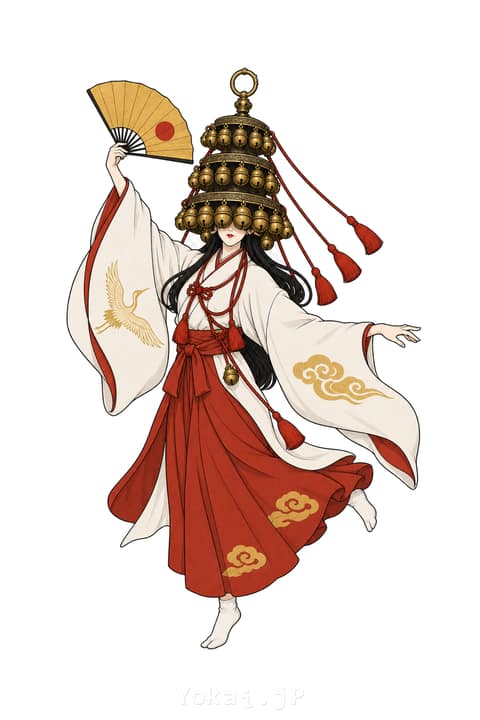
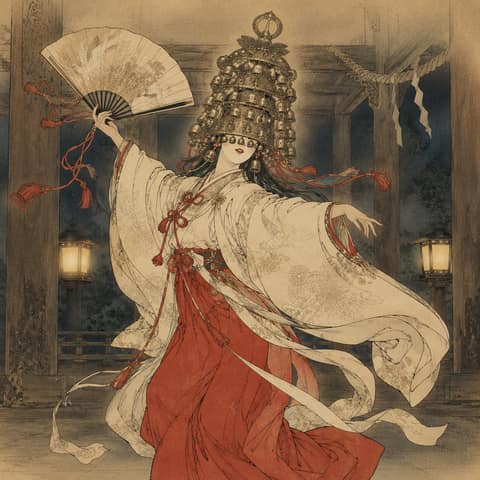
Suzu-hiko-hime is a yokai depicted by Toriyama Sekien in his Hyakki Tsurezure Bukuro. She appears as a woman balancing a kagura suzu (Shinto ritual bells) on her head, with features reminiscent of a bell. Sekien alludes to Ame-no-Uzume from the Amano-Iwato myth, hinting at ties to kagura, but leaves her origin and nature unstated. The image likely draws on medieval Night Parade scrolls that show monsters with kagura bells and on the idea of bells as instruments that “invite” or summon deities. No concrete sightings are recorded; she is an image-led, conceptual yokai.

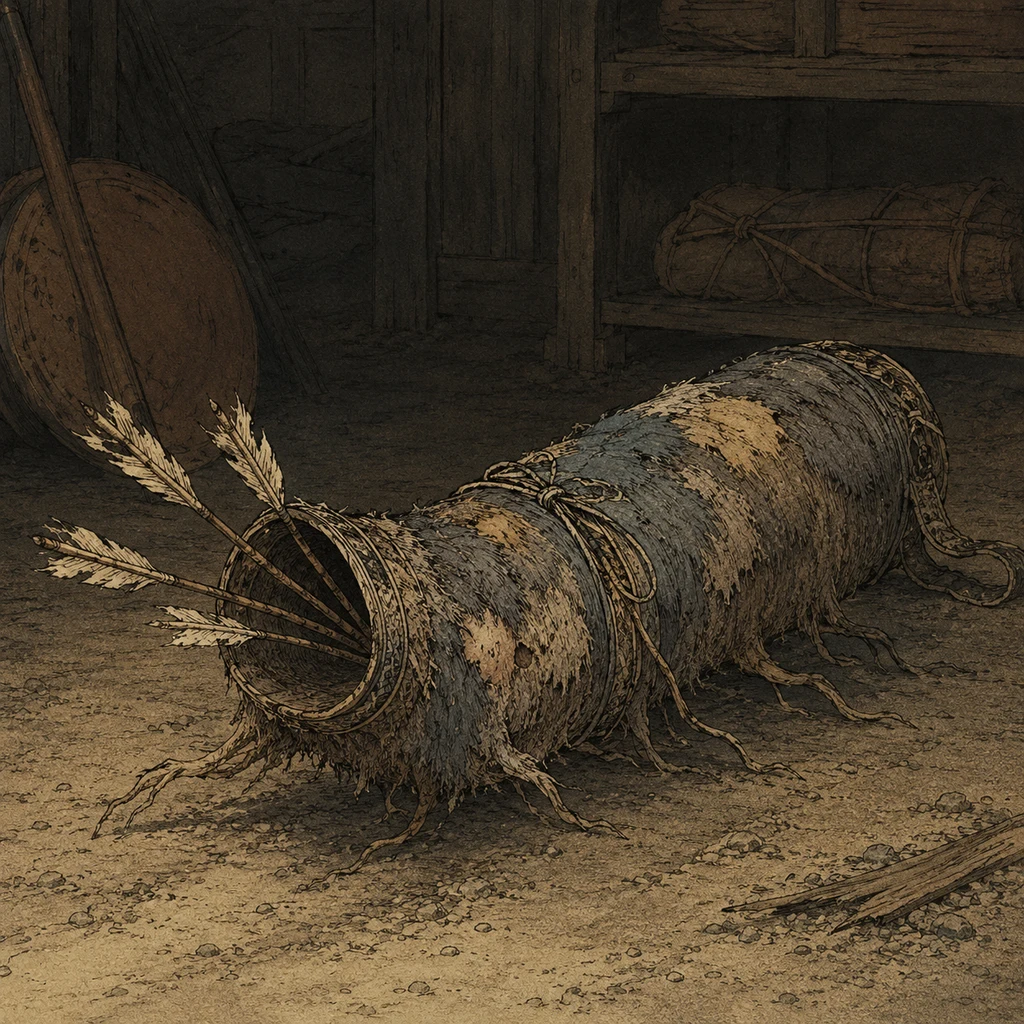
Furu-Utsubo (Aged Quiver Spirit)

Furu-Utsubo (Aged Quiver Spirit)

Rare

FOO-roo OOT-soh-boh

那須野武功の古靫・古空穂

Animated Objects & UndeadJapanese folklore

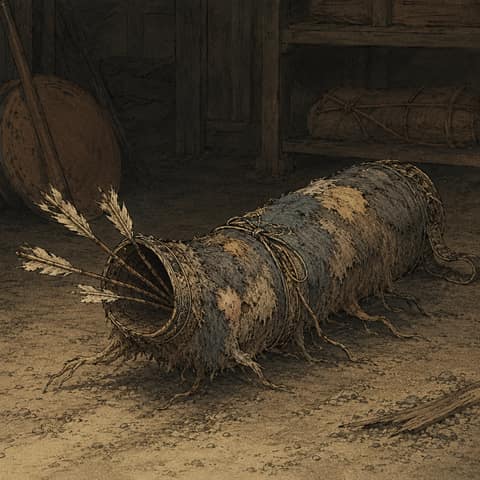
Furu-Utsubo is a tsukumogami—an animated household object—depicted by Toriyama Sekien in Hyakki Tsurezure Bukuro as a quiver (utsubo) that has aged into a wandering, anthropomorphic being. The quiver, a back-worn case for arrows, is shown moving under its own power after long years of use. In his caption, Sekien alludes to the warriors Miura-no-suke and Kazusa-no-suke who shot the “field fox” of Nasu Moor, hinting that an old quiver of theirs may have transformed. The image follows the lineage of weapon-bearing object-spirits seen in Muromachi-period Hyakki Yagyō picture scrolls.

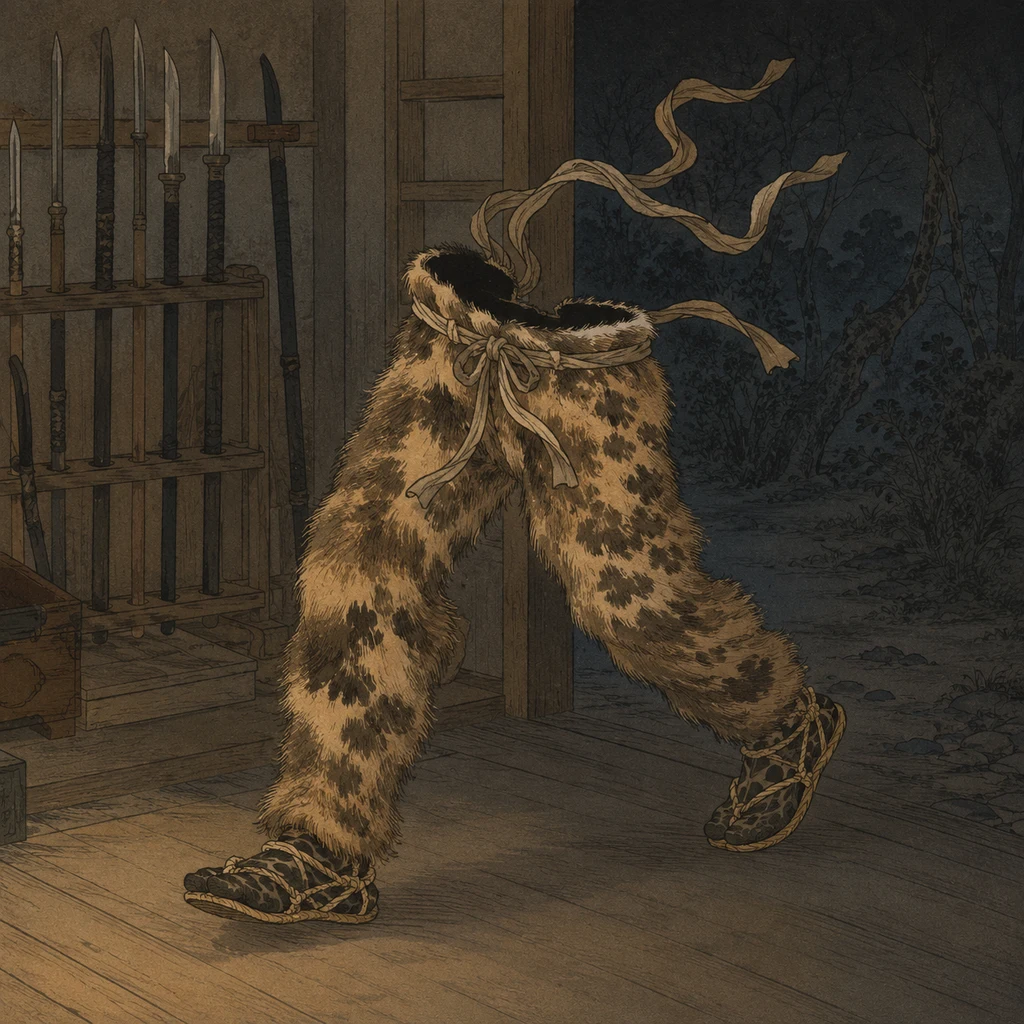
Muku-Mukabaki (Awakened Gaiters)

Muku-Mukabaki (Awakened Gaiters)

Uncommon

MOO-koo MOO-kah-bah-kee

曽我河津の行騰付喪・無垢行騰

Household SpiritsEdo period

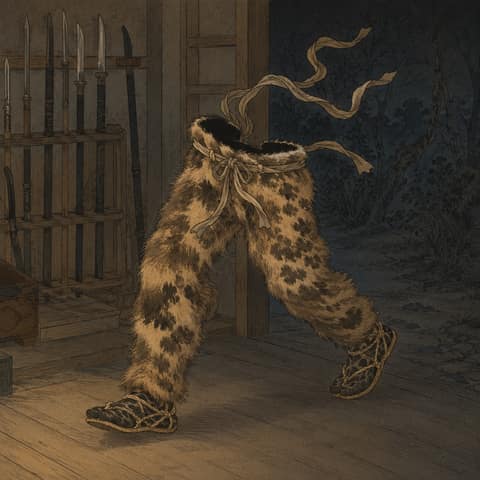
A tsukumogami (animated household object) depicted by Toriyama Sekien in Hyakki Tsurezure Bukuro. It is the spirit of mukabaki—fur leggings from a hunter’s outfit—that rises up with spiritual power, shown as a pelt standing and moving on its own. Sekien likened it to the mukabaki of Kawazu Saburō from The Tale of the Soga Brothers, yet no concrete revenge episode survives; its exact origin is unknown. It aligns with other emakimono images of gaiter-like apparitions among object-spirits.

Chokuboron

Chokuboron

Rare

CHOH-koo-BOH-ron

猪口被る虚無僧鬼・猪口暮露

Animal ShapeshiftersEdo period

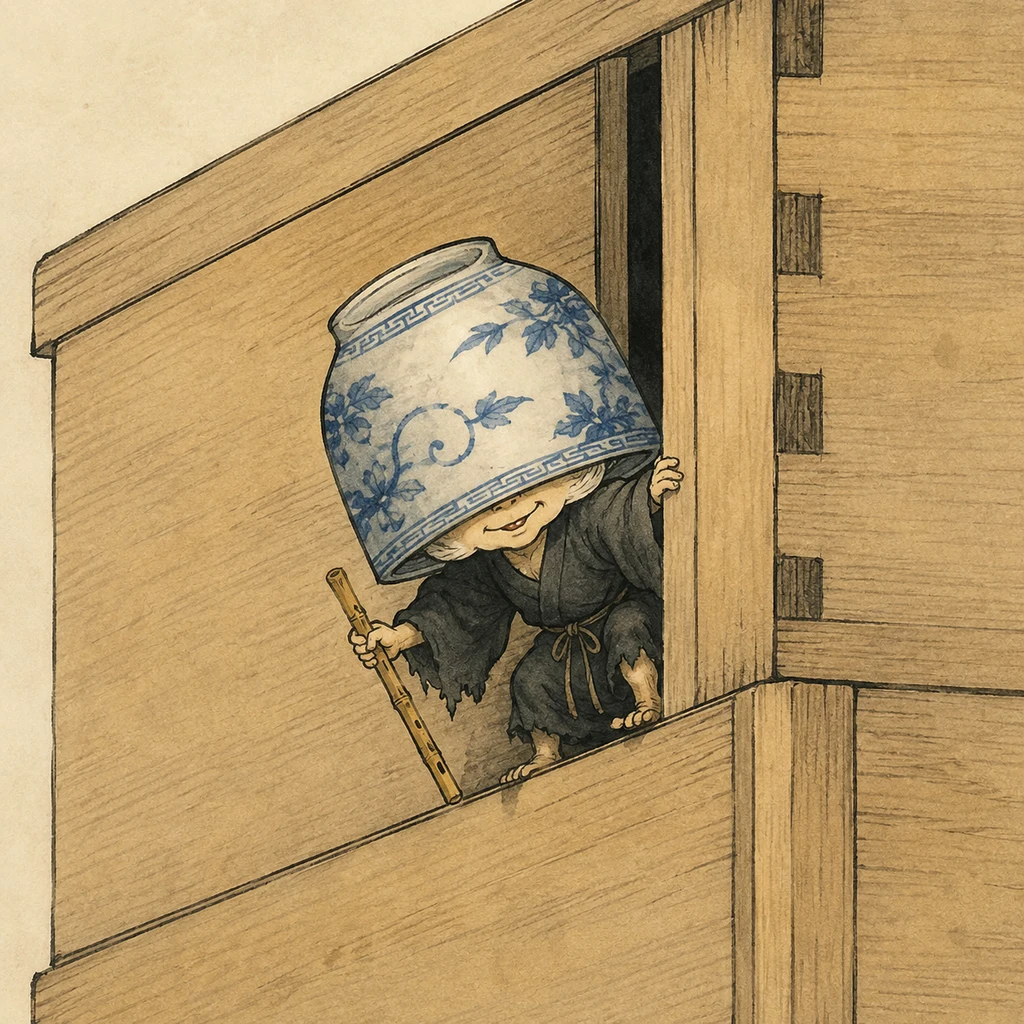
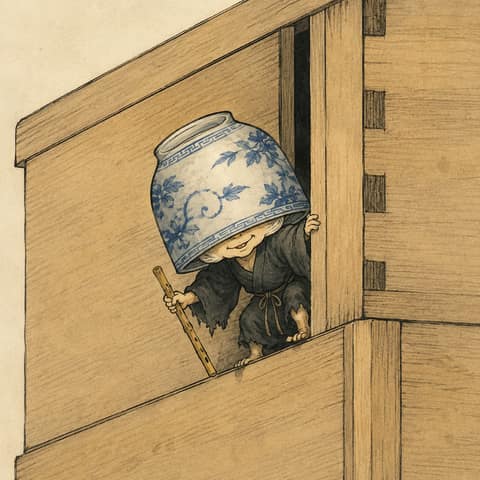
A yokai depicted by Toriyama Sekien in Hyakki Tsurezure Bukuro. It shows a small goblin, monk-like in a komusō style, popping out of a box with a sake choko cup perched on its head. Sekien’s note alludes to the Tang-era tale of an ink spirit appearing before Emperor Xuanzong, hinting that this creature belongs to the same family of animated objects. The name combines bōzu imagery of mendicant Zen monks (kōro/boro/“kure-boro” wordplay), the komusō-like appearance, and the sake cup (choko), suggesting a half-monk, half-lay figure born of punning and visual play.

Seto General

Seto General

Rare

SEH-toh TIE-shoh

瀬戸物寄せの武者・瀬戸大将

Animated Objects & UndeadUncertain (Edo-period pictorial works)

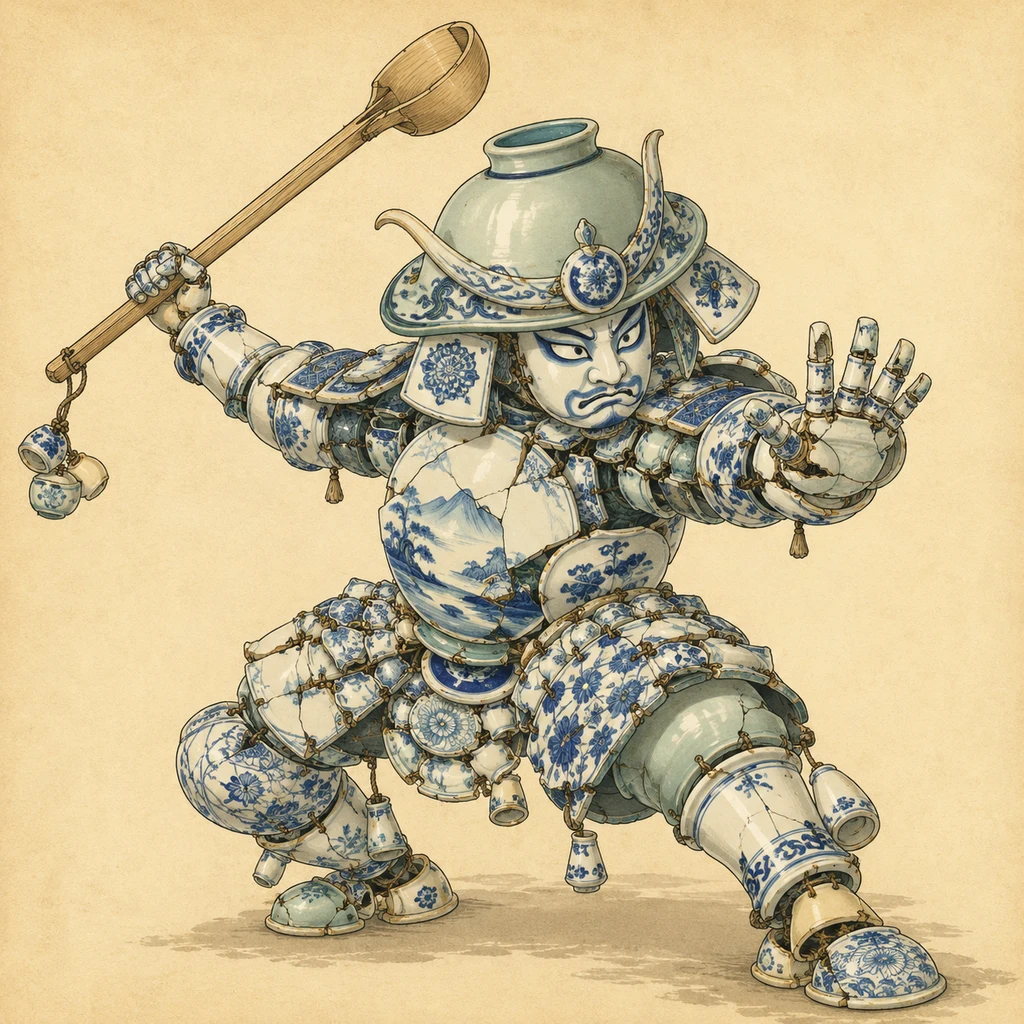
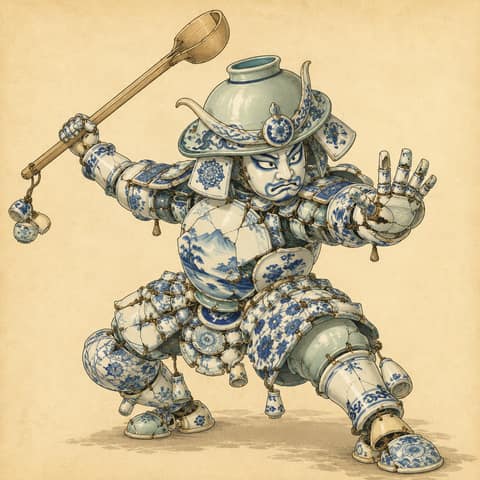
A tsukumogami-like figure from Toriyama Sekien’s Hyakki Tsurezure Bukuro: ceramic vessels and utensils gather to form an armored warrior. It plays on the aesthetic contrast between Karatsu ware and Seto ware, depicting utensils as rival factions. The motif is not based on oral lore or local tradition; Sekien’s image and accompanying verse are the principal sources.

Gotoku Neko (Trivet Cat)

Gotoku Neko (Trivet Cat)

Rare

GOH-toh-koo NEH-koh

囲炉裏の二尾化け猫・五徳猫

Animal ShapeshiftersJapanese folklore

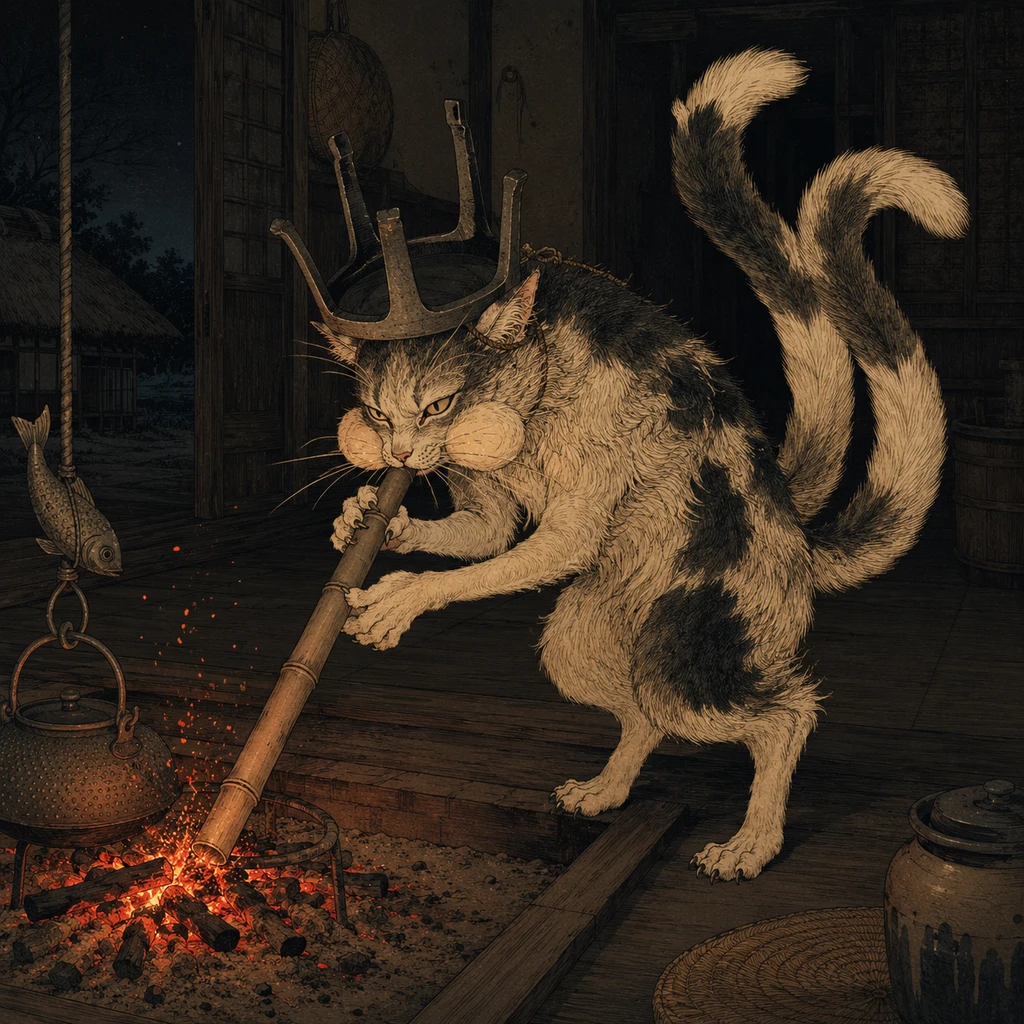
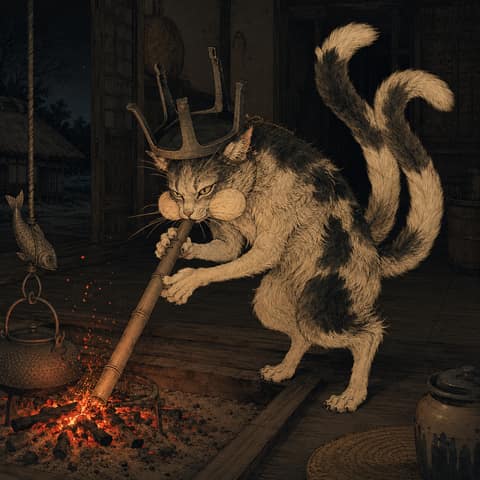
A shape-shifting bakeneko depicted by Toriyama Sekien in Hyakki Tsurezurebukuro. It is a split-tailed cat balancing a gotoku—an iron trivet for a hearth—like a crown, fanning the fire with a blowpipe. Sekien plays on the phrase “gotoku-no-kanja” from Tsurezuregusa, punning on the utensil name. Scholars note continuity with Muromachi-period Night Parade scrolls that show figures wearing trivets, placing this design within that iconographic lineage.

Roaring Cauldron (Narigama)

Roaring Cauldron (Narigama)

Uncommon

nah-ree-GAH-mah

夜鳴る古釜の付喪・鳴釜

Household SpiritsOkayama

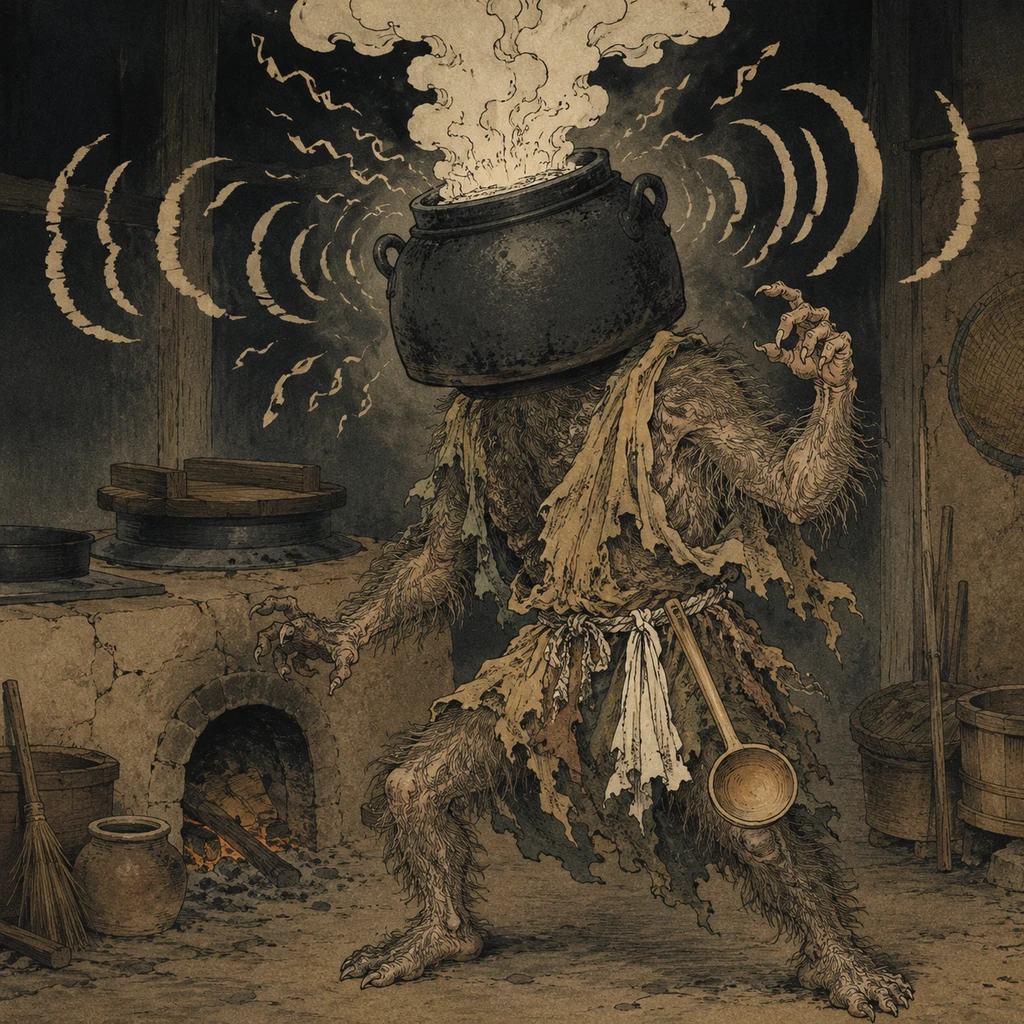
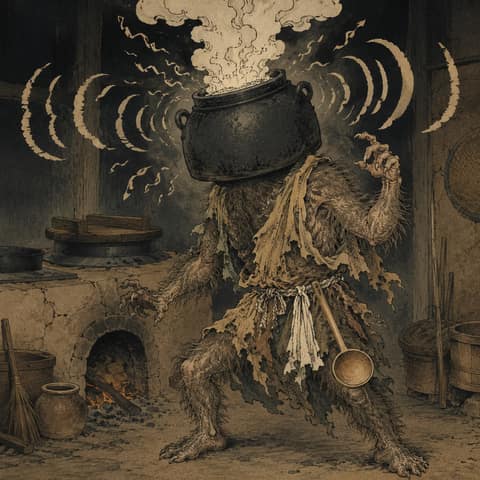
A tsukumogami said to arise when an iron cooking cauldron, used for many years, gains a spirit and takes on a humanlike form. The name ties to old beliefs that the rumbling or moaning a kettle makes during cooking could foretell good or bad fortune, with its tones read as omens. In paintings it appears with a cauldron for a head, emerging late at night to make ringing sounds and test people’s hearts.

Yamaoroshi

Yamaoroshi

Rare

yah-mah-oh-ROH-shee

頭がおろし金・山颪

Animated Objects & UndeadJapanese folklore

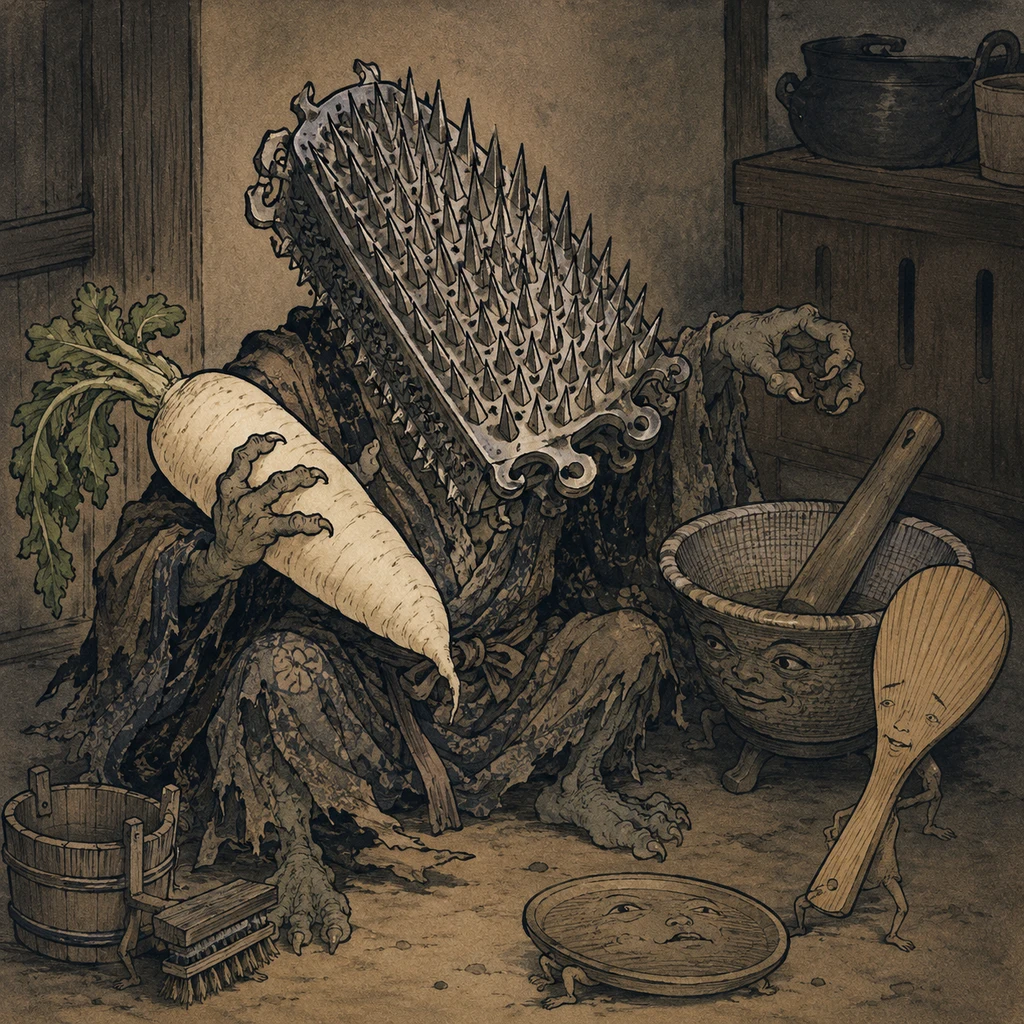
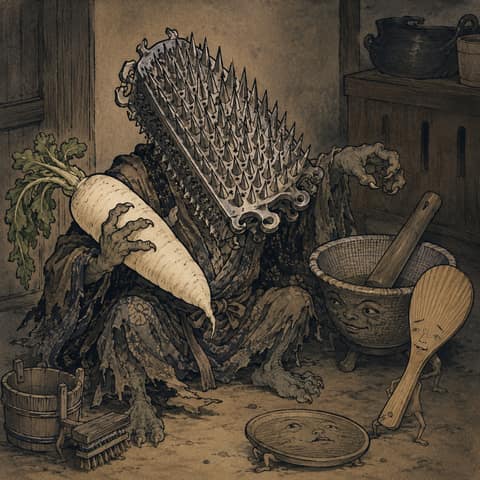
A human-shaped yokai depicted by Toriyama Sekien in Hyakki Tsurezurebukuro. Its head is covered with countless protrusions like a grater, and kitchen tools—daikon radish, suribachi mortar, and a shell ladle—appear at its side. Sekien notes the resemblance to the porcupine (yamaarashi) and plays on the similar sound to “yama-oyaji,” linking the name and form. The figure strongly reflects pictorial invention based on early modern artworks and is often read as a tsukumogami of utensils or a pun-based conceit.

Kameosa

Kameosa

Rare

KAH-meh-OH-sah

尽きぬ水の瑞兆・瓶長

Animated Objects & UndeadEdo period

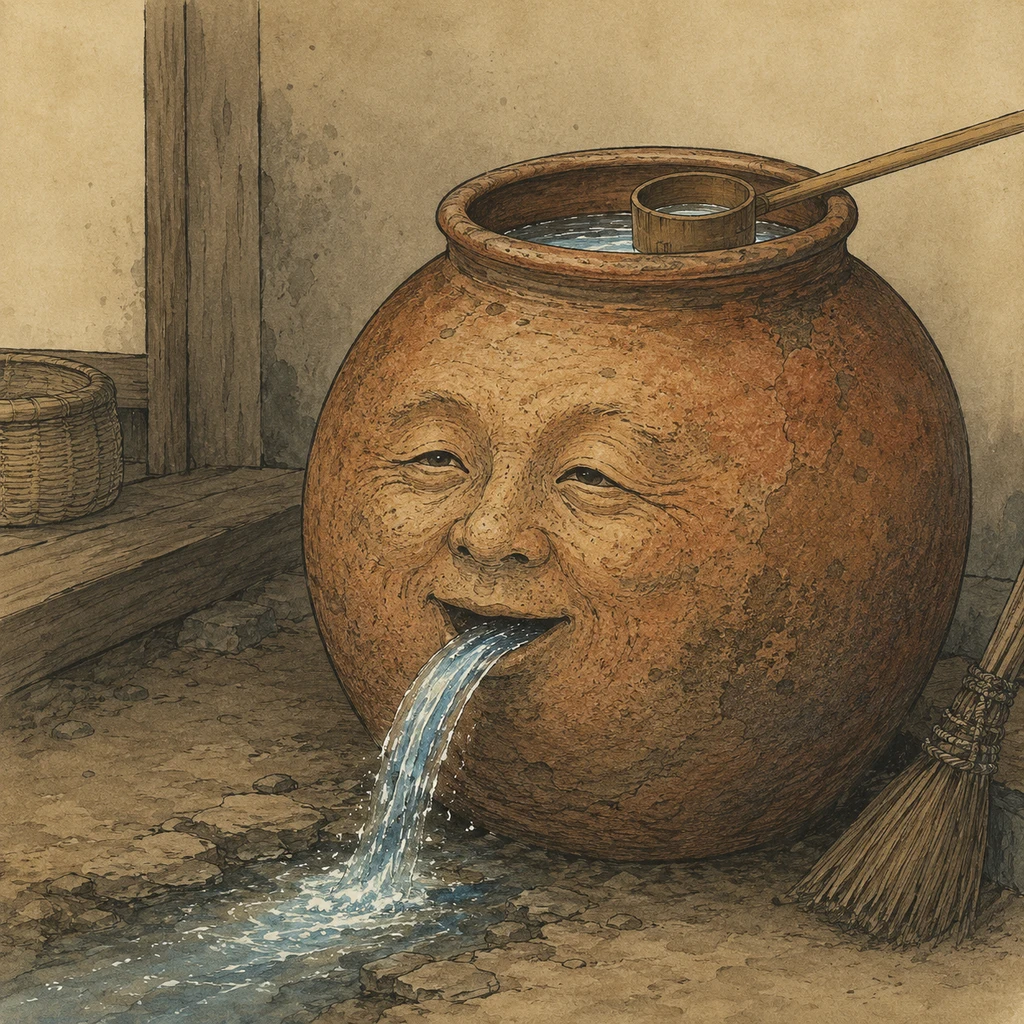
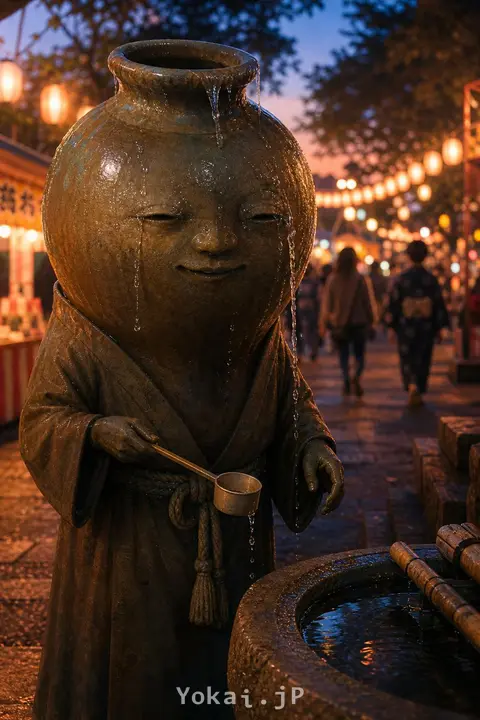
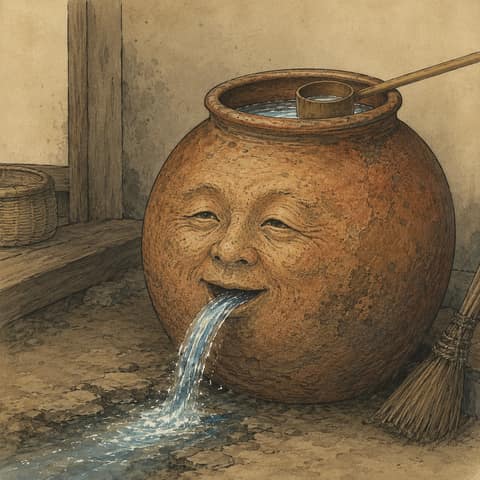
A utensil yokai depicted by Toriyama Sekien in Hyakki Tsurezure Bukuro. It appears as a water jar given eyes, nose, and mouth, praised as a felicitous vessel that never runs dry. The entry is accompanied by celebratory verse and is often read as a coda to the volume. No local folk tradition is known; it is generally considered Sekien’s creation, later interpreted as a tsukumogami.

Treasure Ship

Treasure Ship

Divine

TAH-kah-rah-boo-neh

七福神乗る吉祥船・宝船

Deities & Divine SpiritsAcross Japan

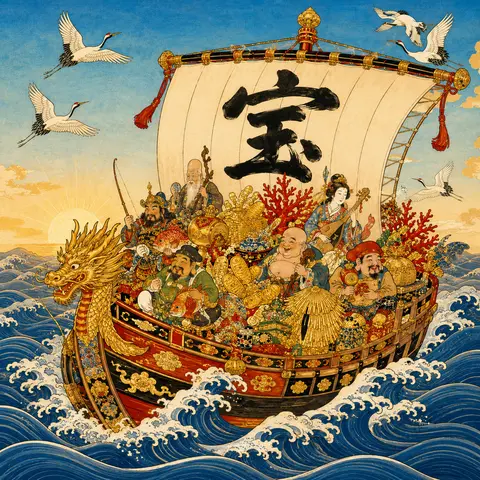
The Treasure Ship is a New Year’s icon and good‑luck charm depicted as a sailing ship loaded with coral, gold and silver, and wish‑granting jewels, often carrying the Seven Lucky Gods. From the Muromachi period onward it became tied to first‑dream traditions, with characters like “treasure,” “fortune,” or “longevity” painted on the sail. It likely originated from earlier “dream‑averting” boat images meant to carry bad dreams away, later shifting to a stronger focus on inviting fortune.
Broom Spirit (Hōkigami)

Broom Spirit (Hōkigami)

Epic

HOH-kee-gah-mee

家を清める箒の神・箒神

Deities & Divine SpiritsVarious regions across Japan

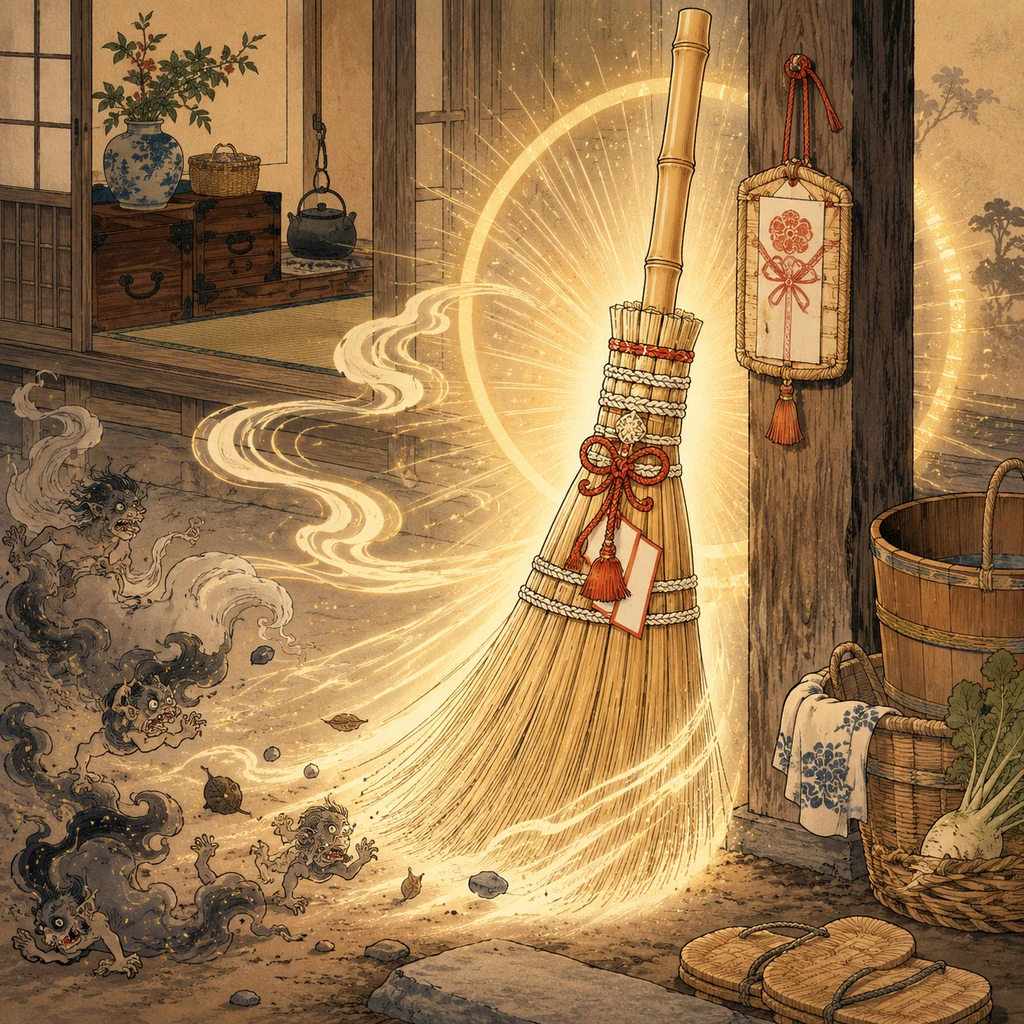
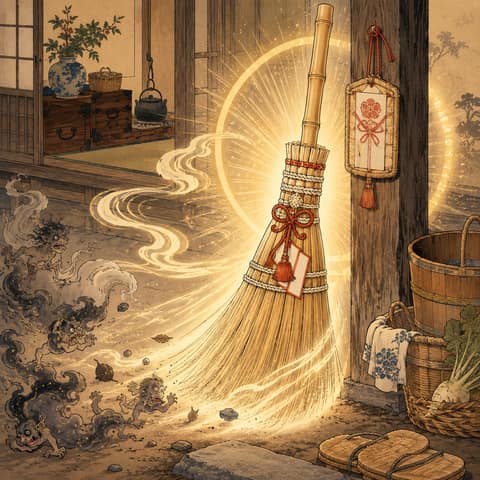
Hōkigami is a tutelary spirit believed to dwell in household brooms. In folk belief, the act of sweeping carries powers of purification and gathering, tying the broom to rites of cleansing doorways and childbirth. In some areas the broom is venerated as a sacred vessel, and taboos warn against stepping over or on it. Practices include standing a broom upside-down to send lingering guests home and placing one by the pillow as a charm for safe delivery. Toriyama Sekien also depicted it as a tsukumogami (tool-turned-spirit).

Boroboroton

Boroboroton

Rare

boh-roh-boh-roh-TOHN

跳ね布団の暮露暮露団

Animated Objects & UndeadEdo period, Japan

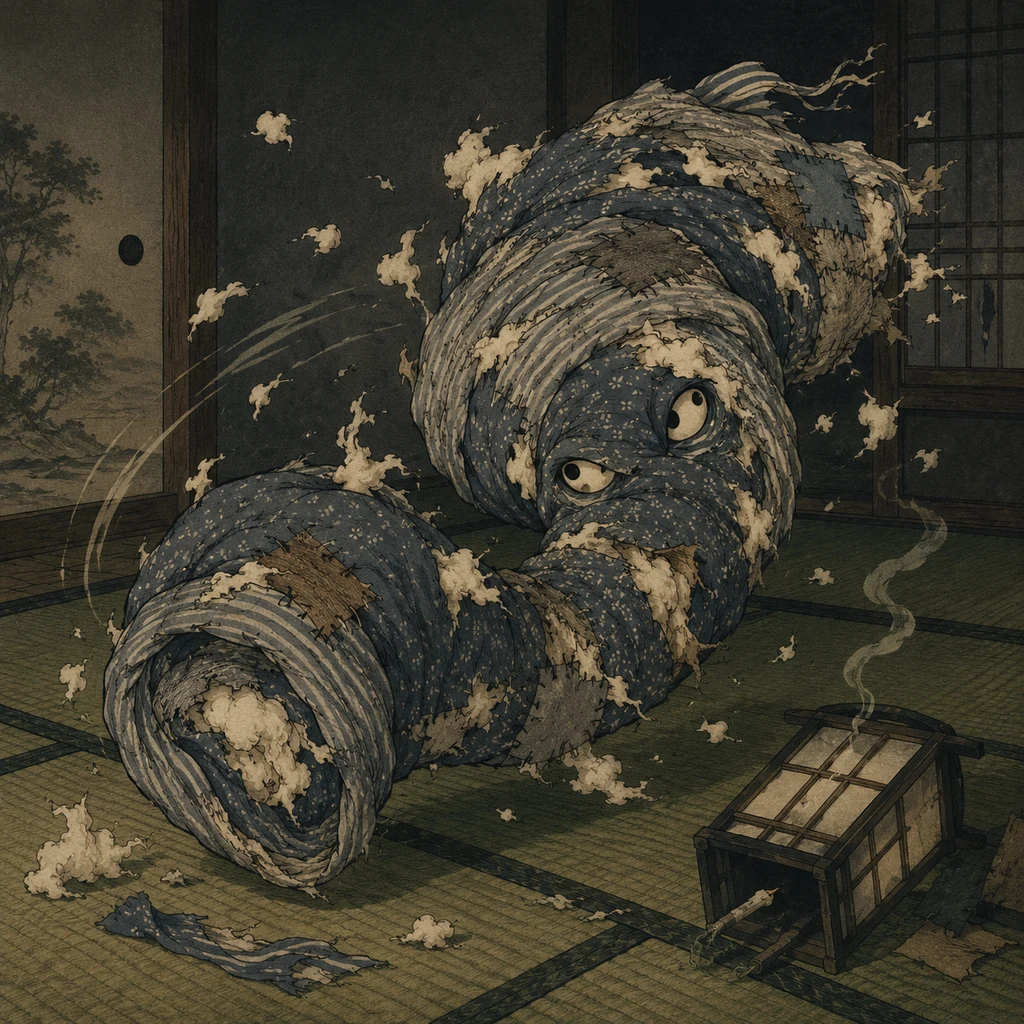
Boroboroton is a tsukumogami: an old, torn futon that gains a spirit after long years of use. It appears in Toriyama Sekien’s Edo-period Hyakki Tsurezurebukuro, where its name plays on boroboro (“tattered”) and possibly a term for mendicant monks. Lacking widespread oral lore, it is largely Sekien’s creation. At night the futon hops about and startles people, more prankster than menace.

Hyōtan Kozō (Gourd Boy)

Hyōtan Kozō (Gourd Boy)

Rare

HYOH-tahn koh-ZOH

瓢箪頭の小僧・瓢箪小僧

Animated Objects & UndeadJapanese folklore

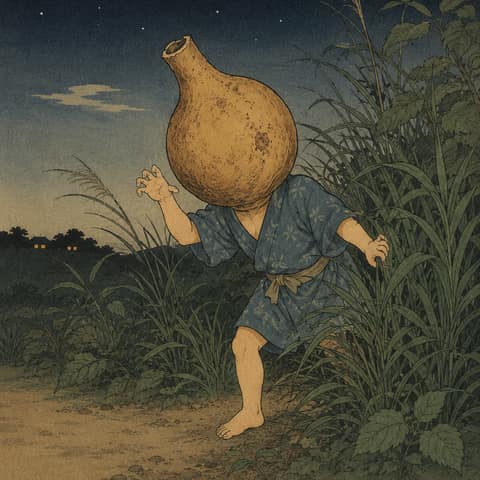
A yokai based on a gourd, depicted by Toriyama Sekien in Hyakki Tsurezurebukuro. It appears as a boy with a gourd for a head and is often paired with Nyūhai-bō. Beyond Sekien’s illustration, little is recorded about its traits. It is generally interpreted as a tsukumogami—an elaborately prepared and long-used gourd (fukube or hisago) that has acquired spirit power. The name and design likely draw on earlier gourd monsters in Hyakki Yagyō picture scrolls.

Nyūbachibō

Nyūbachibō

Rare

nyoo-bah-chee-BOH

銅盤を戴く鳴り物・乳鉢坊

Household SpiritsJapanese folklore

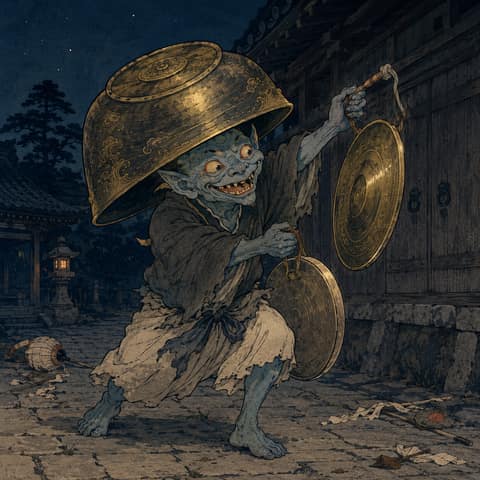
A utensil yokai depicted by Toriyama Sekien in Hyakki Tsurezure Bukuro. It resembles a human figure wearing a bronze gong or cymbals on its head and is often shown beside the Hyōtan Kozō. Similar imagery appears in Muromachi-period Night Parade of One Hundred Demons scrolls, suggesting Sekien named it from that tradition. Its specific traits aren’t stated in the source, but later writers often interpret it as a spirit of noisemaking instruments.

Zen-Gama-no-Shō (Zen Kettle Monk)

Zen-Gama-no-Shō (Zen Kettle Monk)

Rare

ZEN-gah-mah-noh SHOH

茶釜の付喪神和尚・禅釜尚

Animated Objects & UndeadJapanese folklore

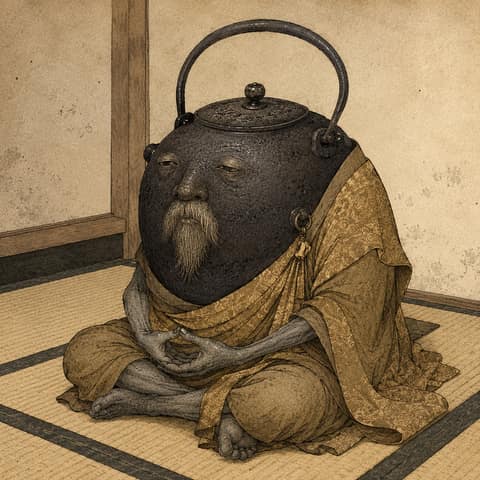
Zen-Gama-no-Shō is a tea-kettle yokai depicted by Toriyama Sekien in the Edo-period collection Hyakki Tsurezure Bukuro (Middle Volume). The name likely puns on “Zen oshō” (a Zen priest), reflecting the historical ties between chanoyu tea culture and Zen Buddhism. The image appears to draw on the three-eyed monster motif seen in Muromachi-period Night Parade of One Hundred Demons scrolls, and it is often pictured alongside Tora-Inryō and Yarikechō, though their relationship is unclear. It is understood as a tsukumogami—an object that has acquired a spirit.

Koinryō

Koinryō

Rare

koh-EEN-ryoh

千里駆ける革巾着・虎隠良

Animated Objects & UndeadJapanese folklore

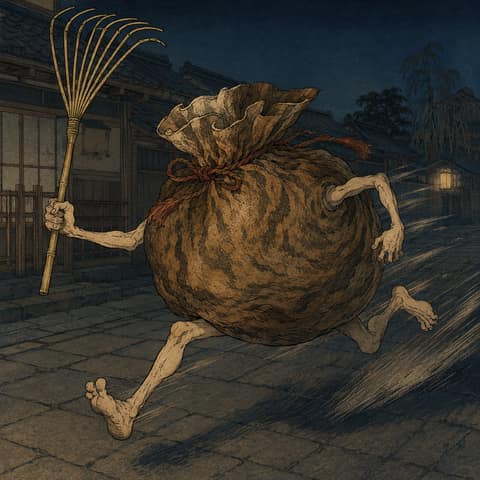
A yokai depicted in Toriyama Sekien’s Edo-period Hyakki Tsurezure Bukuro. Sekien notes it as a “purse made of leather,” understood as a tsukumogami born from a drawstring pouch. It carries a rake-like tool and is said to run with extraordinary speed, “racing a thousand ri.” The name’s origin is uncertain; some link it to a tiger-skin inrō, but this is not established. It exemplifies the idea of spirits inhabiting old implements.

Yarikechō (Spear Tuft Spirit)

Yarikechō (Spear Tuft Spirit)

Rare

yah-ree-keh-CHOH

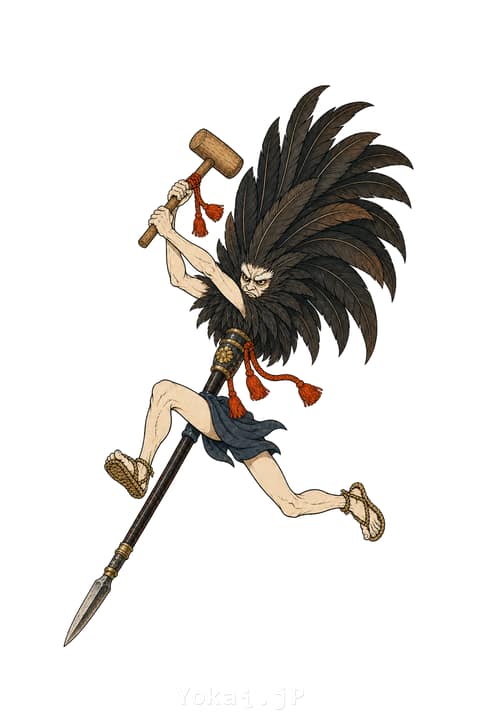
毛槍が木槌掲ぐ・槍毛長

Animated Objects & UndeadEdo period, Japan

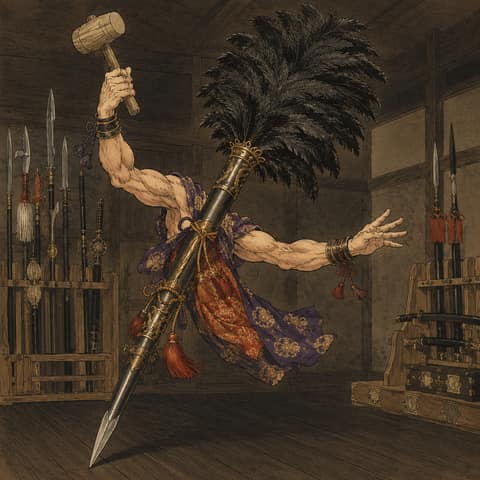
A tsukumogami of a feather-crested spear (ke-yari) depicted by Edo-period artist Toriyama Sekien in Hyakki Tsurezure Bukuro. The spear, adorned with bird plumes at its tip, is said to have gained spirit through long years and storied use. Sekien portrays it leaping about brandishing a mallet. His note hints that a peerless warrior once wielded the weapon, suggesting the renown of a famous spear could awaken its numinous power—an example of an object becoming ensouled.

Kinutanuki

Kinutanuki

Rare

kee-noo-tah-NOO-kee

八丈絹を纏う狸・絹狸

Animated Objects & UndeadEdo (place of publication)

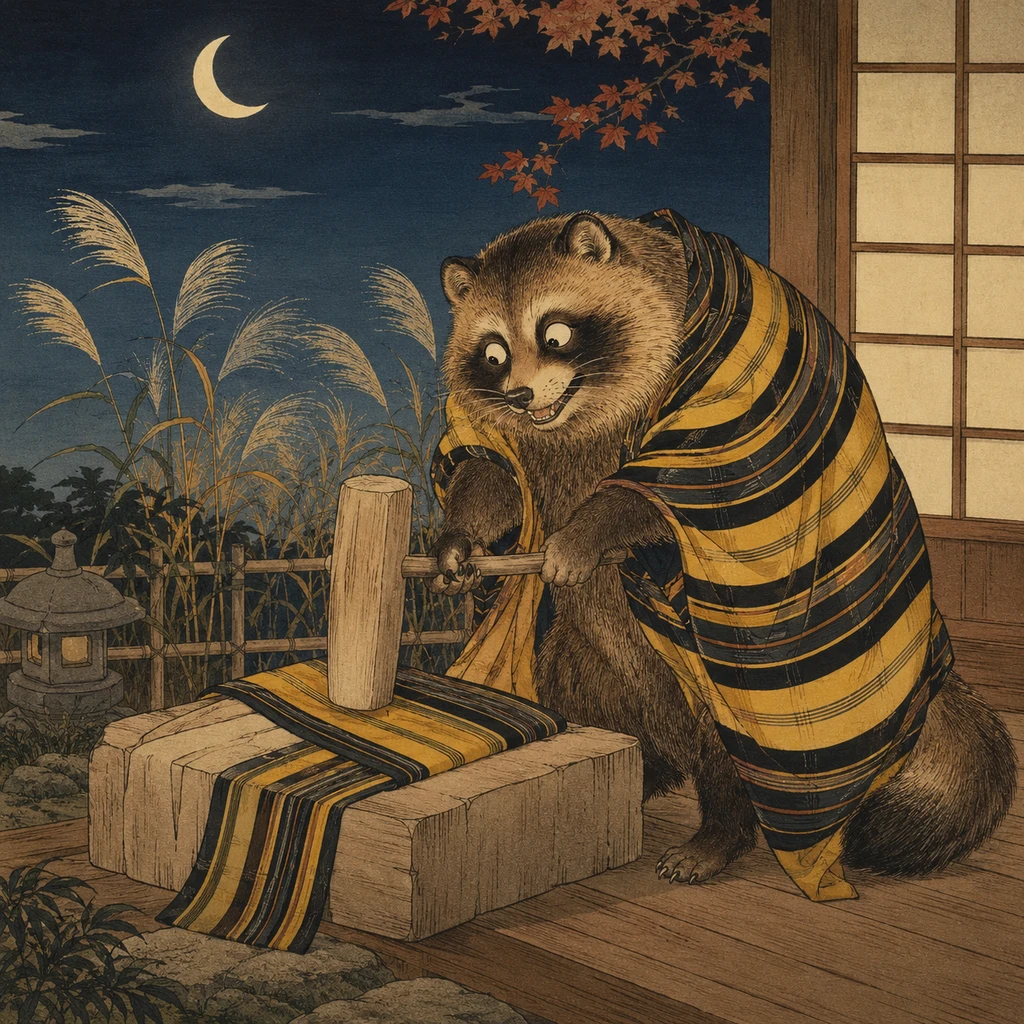
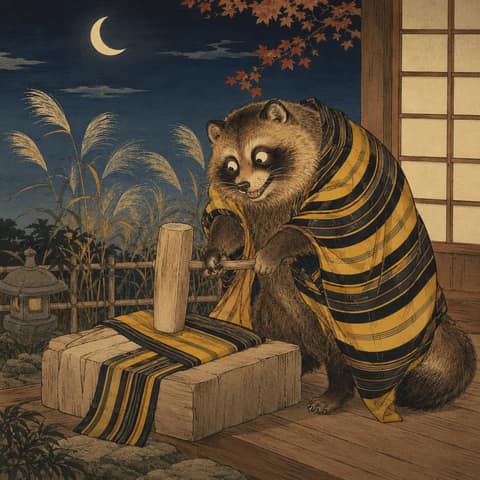
Kinutanuki is a yokai strongly shaped by the imagination of Edo-period artist Toriyama Sekien, who depicted it in his Hyakki Tsurezure Bukuro. It fuses Hachijō-jima’s famed Hachijō silk with the popular trope of the shape-shifting tanuki, shown as a single form where silk cloth and raccoon dog are one. The name plays on kinuta (cloth-fulling mallet) as well as the sound of “kinu” (silk) and “tanuki.” No concrete wonder tale survives; it’s known as a visual and wordplay-based yokai.