YOKAI.JP

Menreiki

MEN-ray-kee

Menreiki

Menreiki

Their soul is listening — speak, and they will answer.

Basic Description

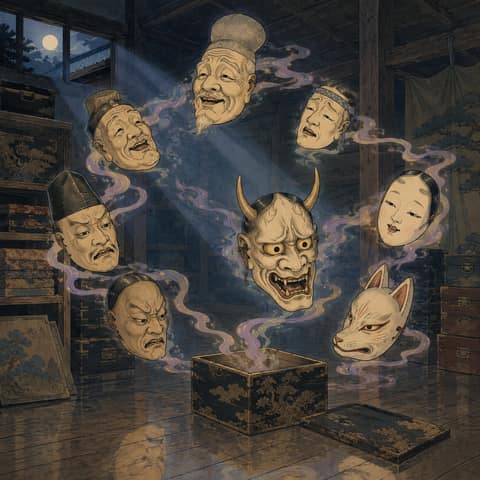
Menreiki is a mask yokai depicted by Toriyama Sekien in Hyakki Tsurezure Bukuro. Drawing on a legend that Hata no Kawakatsu crafted many masks in Prince Shōtoku’s era, Sekien imagines the uncanny presence of masks as if they were alive. Later commentators framed it as a tsukumogami: aged Noh or sarugaku masks that gain a spirit over time, move at night, and plead with their owners to treat them with due respect. It is a pictorial yokai grounded in traditions about historical figures rather than a localized monster with set tales.

Folklore & Legends

In his note, Sekien cites an old tradition that in Prince Shōtoku’s time, Hata no Kawakatsu made numerous masks, so exquisitely fashioned they seemed to possess living vitality. Stories that trace the origins of Noh and sarugaku to the prince and Kawakatsu appear in works like Fūshikaden, along with lore about sixty-six arts and sixty-six masks. Later explanations classify Menreiki among tsukumogami—venerable Noh masks that acquire spirits—yet no fixed locale or distinct anecdotes are firmly attached to it.

Yokai Cards2

Menreiki across multiple art-style decks

Card gallery

Menreiki: One-by-One Q&A

Q1

What is Menreiki?

A:

Menreiki is a mask yokai recorded by Toriyama Sekien in Hyakki Tsurezure Bukuro. It represents the uncanny “living aura” of theatrical masks—particularly Noh and sarugaku masks—that have gathered spiritual energy over centuries. Rather than a monster with a fixed story, Menreiki is a pictorial yokai born from history, craftsmanship, and artistic imagination.

Q2

Where does the idea come from?

A:

Sekien cites a legend that Hata no Kawakatsu, an early performer and mask-maker in Prince Shōtoku’s era, crafted masks so refined they seemed alive. This artistic vitality became the seed for Menreiki as a yokai concept.

Q3

Is Menreiki a tsukumogami (tool spirit)?

A:

In later periods, yes. Commentators reinterpreted Menreiki as a tsukumogami—old masks that, after long years of use, gain spirits, move by themselves, or voice resentment when treated poorly. However, in Sekien’s original depiction, the focus is artistic aura, not vengeance.

Q4

What does Menreiki look like?

A:

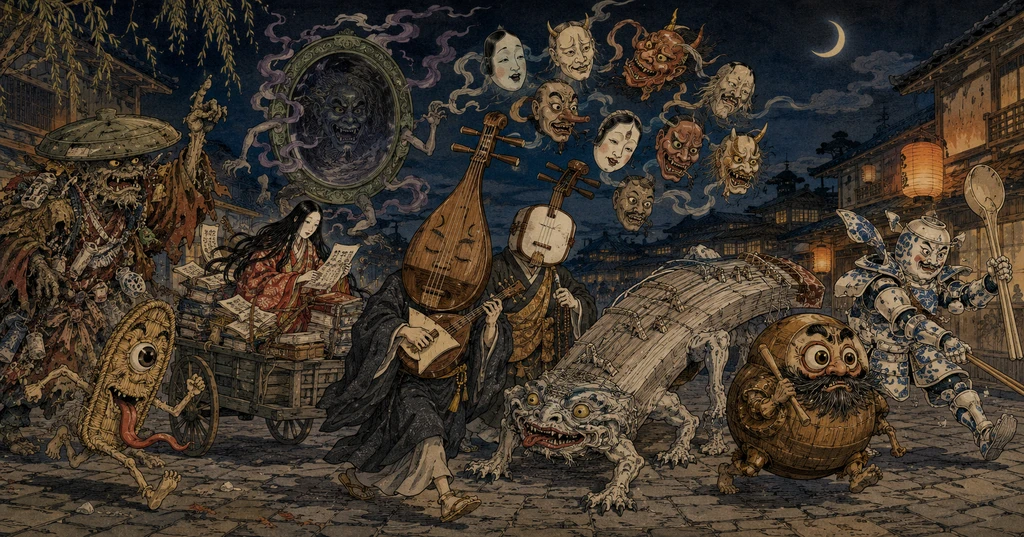
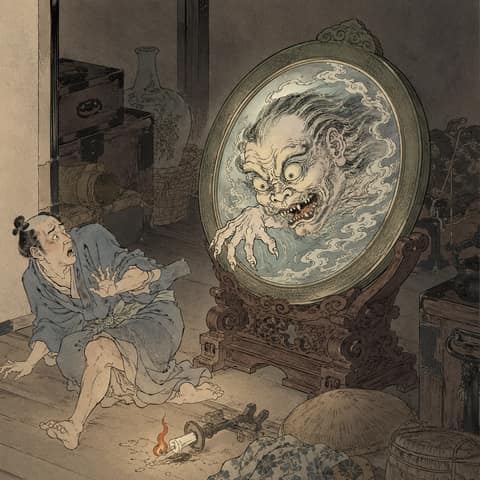
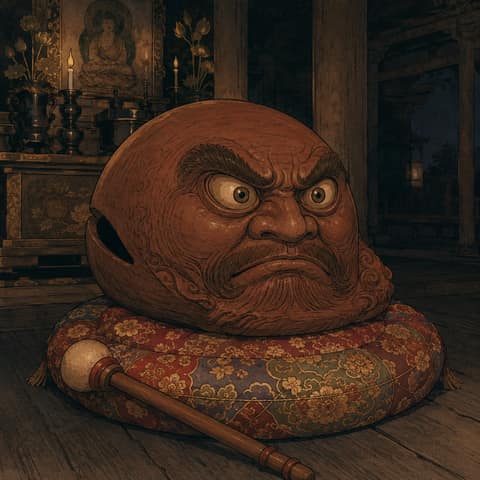
It is usually depicted as a cluster of masks acting with a single will, or a mask with a faintly human presence. The imagery evokes the feeling that old masks, when left in the dark, might whisper or shift as if breathing.

Q5

Does Menreiki harm people?

A:

Rarely. Menreiki expresses resentment only when masks are handled roughly, neglected, or disrespected. Otherwise, they merely move at night, dance, or line up on shelves, showing the lingering spirit of performance.

Q6

Why do masks become yokai at all?

A:

Masks absorb the breath, sweat, prayers, and emotions of performers for decades. This accumulated ki (vital energy) makes them feel “alive,” especially in households or theaters that honor the arts. Menreiki reflects the belief that art itself gains a soul.

Q7

How were such masks treated historically?

A:

In families that practiced Noh or kept heirloom masks, they were: aired and purified on special days; stored in boxes with care; offered words of blessing. This was to calm their numinous presence and show respect to both the mask’s craft and spirit.

Q8

Are there local legends of Menreiki sightings?

A:

Not specific ones. Unlike yokai tied to a region, Menreiki is a conceptual, artistic yokai, created through Sekien’s imagination and cultural references. Its “sightings” are metaphorical—felt in the presence of ancient masks.

Q9

Why is Menreiki still popular today?

A:

Because it resonates with modern interests in: tsukumogami stories; the eerie beauty of traditional Japanese masks; the idea that crafted objects have souls; It also appears in games, anime, and modern yokai guides as a symbol of the mystery of art.

Tsukumogami
Centennial tools possessed by spirits ── the artifact yokai depicted in Sekien's Hyakki Tsurezure Bukuro

Tsukumogami

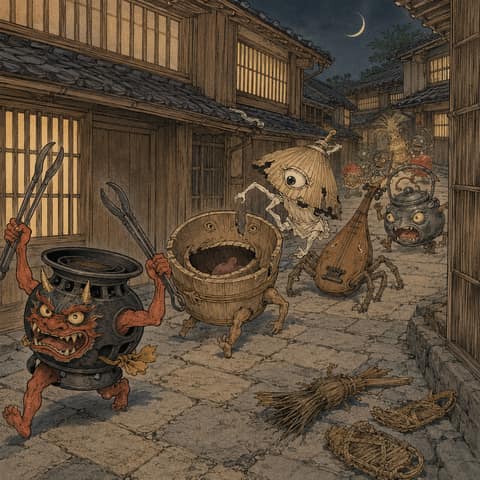
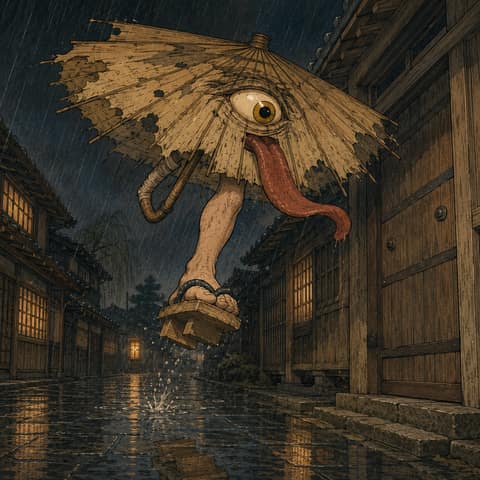
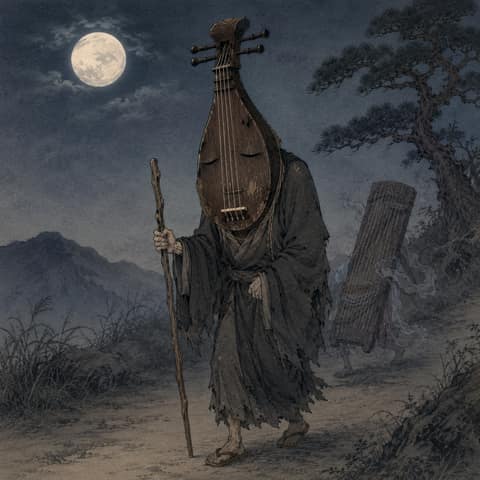
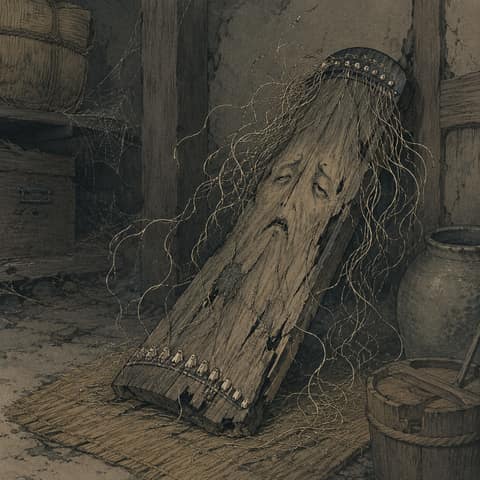
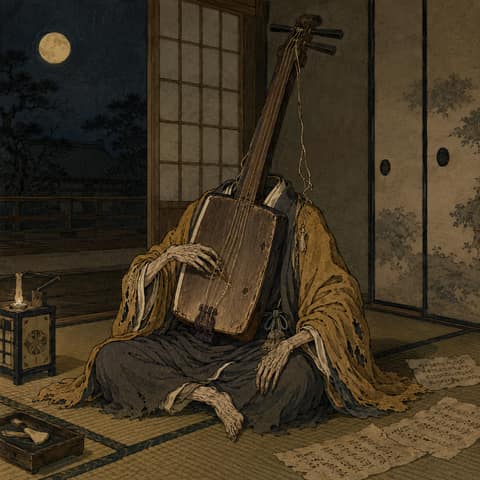
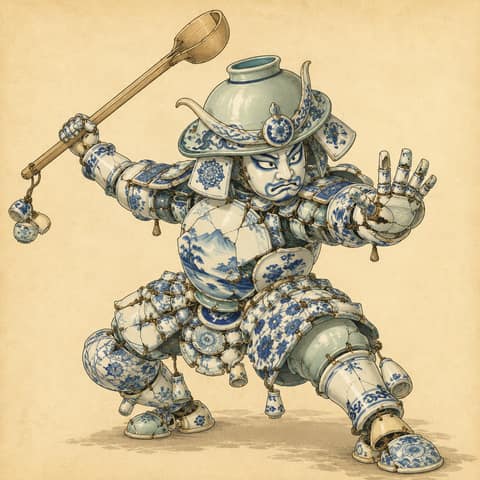
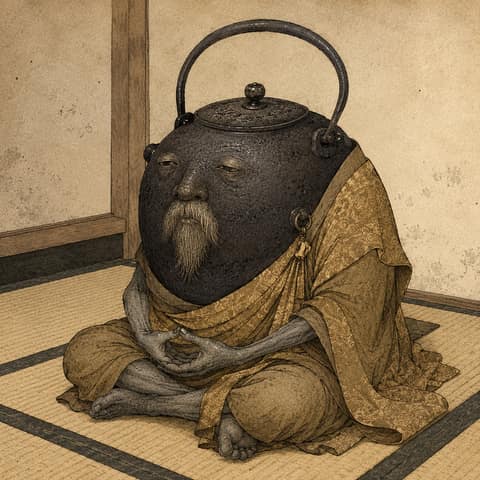
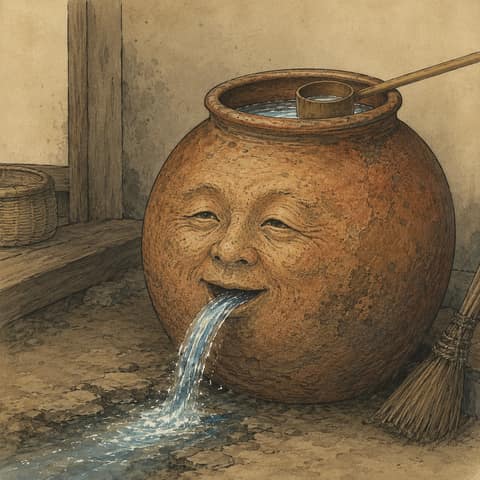
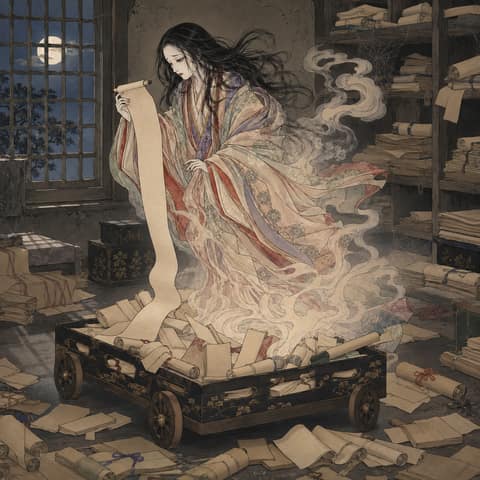
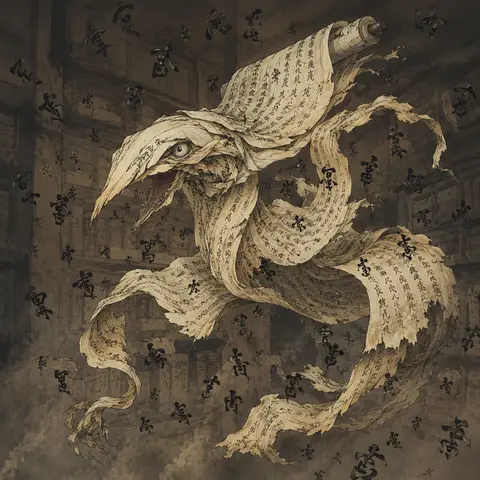
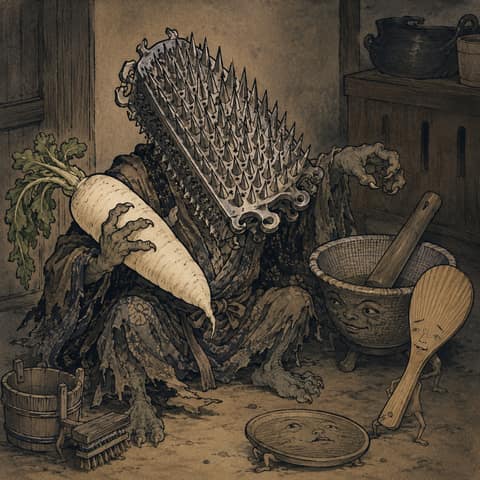
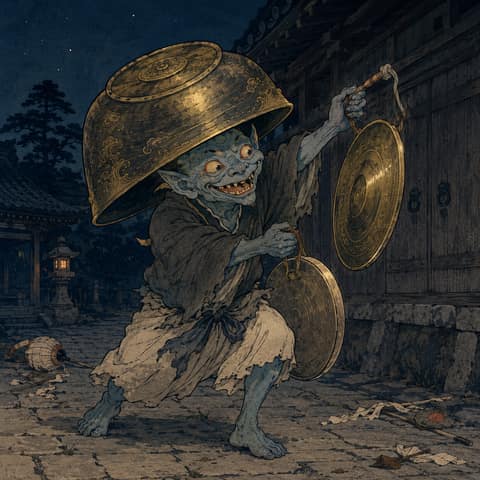
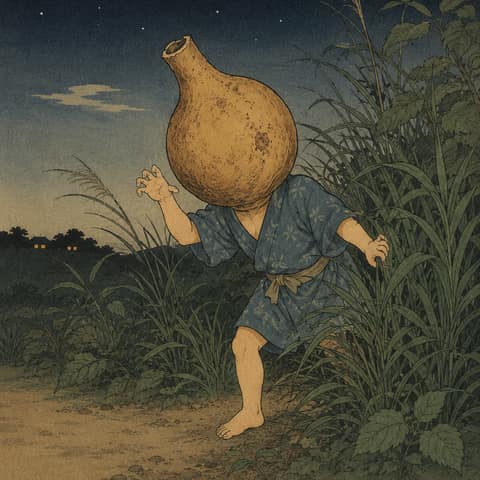
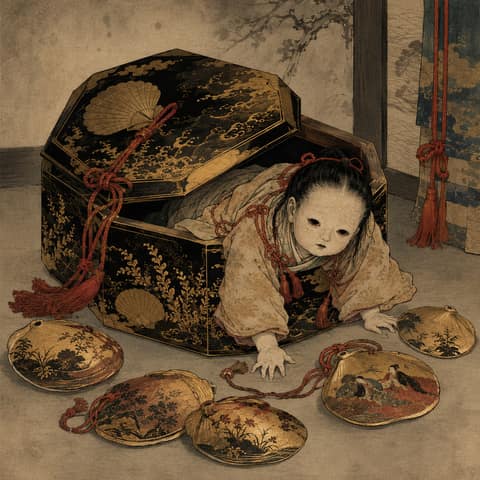
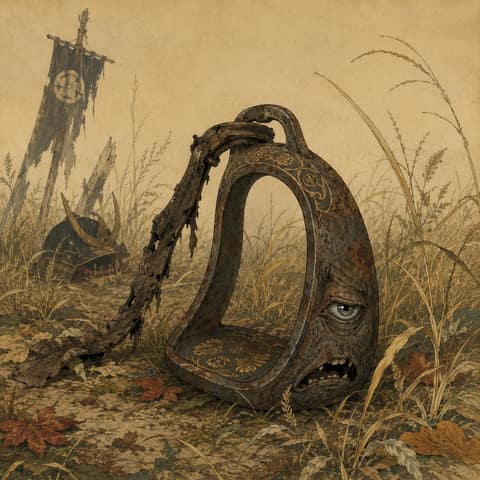
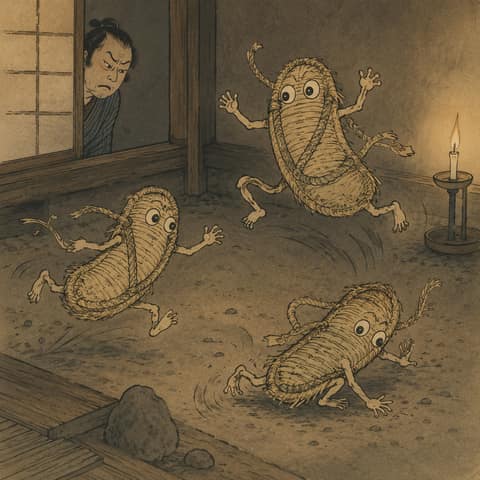
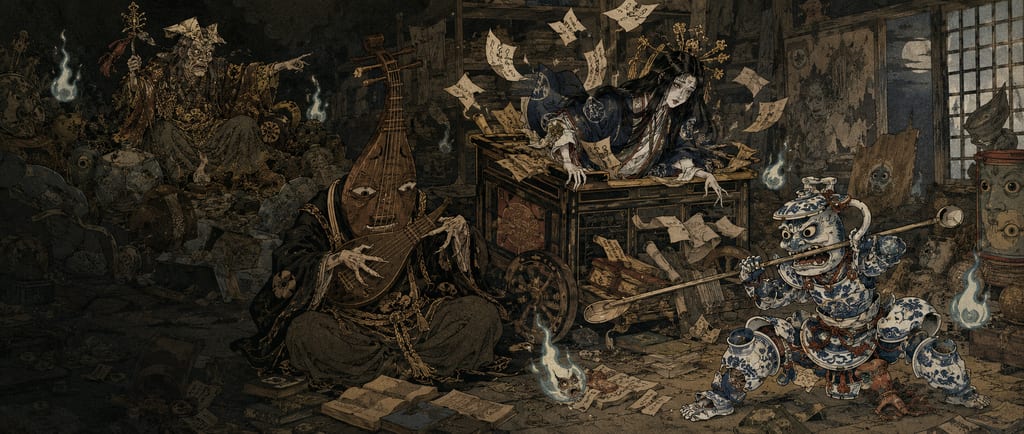
Tools and vessels used over long years are said to acquire spiritual life and transform when discarded and neglected, becoming beings known as tsukumogami. In the Muromachi-period "Tsukumogami Emaki", it was preached that tools transformed after a hundred years; the scroll depicted old implements, thrown away during house-cleaning, marching in a procession on the night of Setsubun holding grudges against humans. In the Edo period, Toriyama Sekien synthesized this worldview in his "Hyakki Tsurezure Bukuro" (The Illustrated Bag of One Hundred Random Demons), bestowing charming yokai forms upon individual objects such as biwa lutes, shamisen, koto, tea kettles, sutra scrolls, masks, and book carts, woven together with wordplay and historical anecdotes. Gathered here are the souls inhabiting tools, reflecting human sentiments—used, forgotten, yet impossible to fully discard.

Detailed Analysis

Based on Toriyama Sekien’s illustration and notes, this version interprets Noh and Sarugaku masks as having accumulated vital aura over long years. The spiritual qi residing in the masks is said to rise at night, slip out from shelves and boxes, line up, and dance. They do not harm people without cause, showing resentment only when treated roughly, a later tsukumogami-like trait, yet at its core the phenomenon is an allegory for the living vitality born from the masks’ refinement. In households that revere the arts, they are enshrined and purified, with words of blessing offered during airing and maintenance to calm their numinous power.

Character Profile

This section is our own creative profile for storytelling. It is not historical fact or scholarship.

Rarity
Epic
Personality
serene, dignified, self-possessed
Compatibility
favorable to those who honor the performing arts and festivals
Abilities
manifestation of spiritual aura that lends lifelikeness to inanimate objects, nocturnal self-movement to line up and dance, suggestive influence that mirrors the owner’s heart
Weaknesses
becomes wrathful in response to disrespect or rough handling, said to shrink from light and open flame and to retreat in dryness, calmed by salt and pure ritual norito
Habitat
prop stores of Noh stages, mask boxes in shrines and temples, storerooms of old houses
🔮Yokai Compatibility Test

For more detailed information and diagnosis results about Classical Iconographic Interpretation, please click here.

Interested in this type of yokai?

Discover the yokai most similar to your personality with our yokai diagnosis

Start Yokai Diagnosis

Meet your guardian yokai at the shrine

Draw an omikuji fortune and discover the yokai watching over you today.