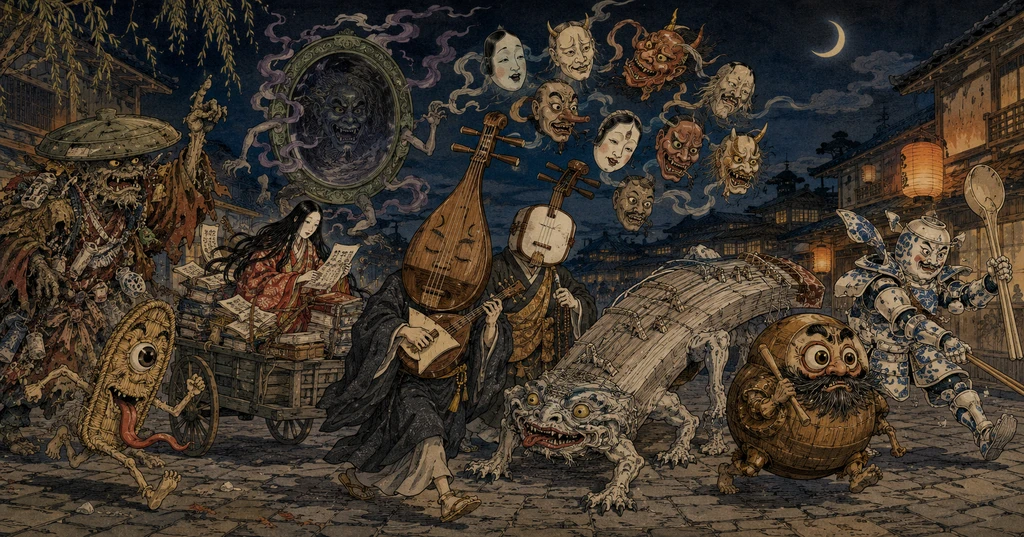
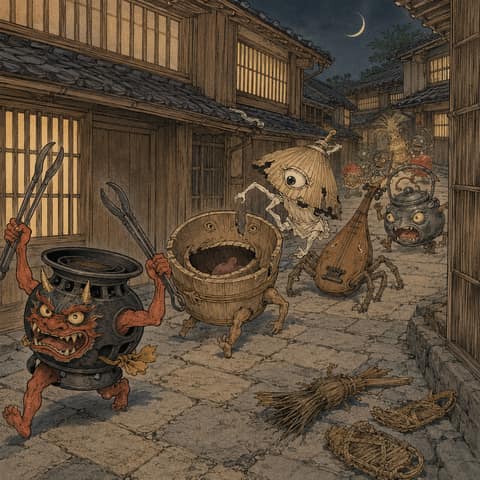
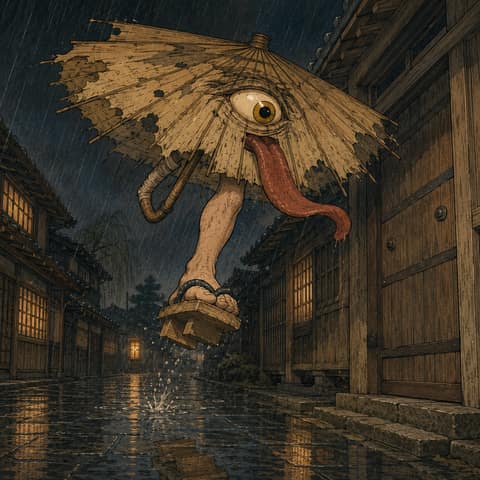
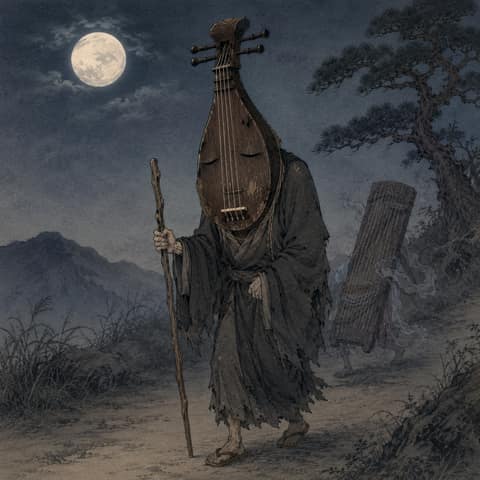
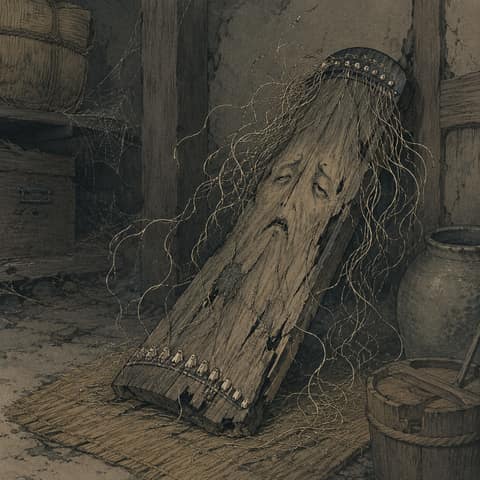
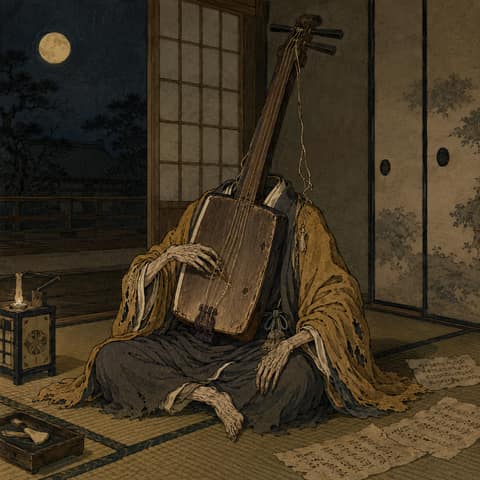
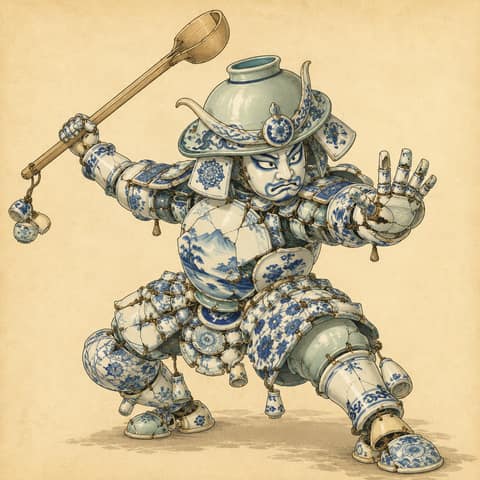
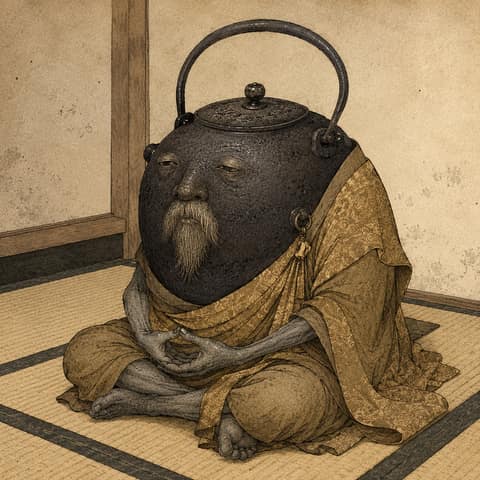
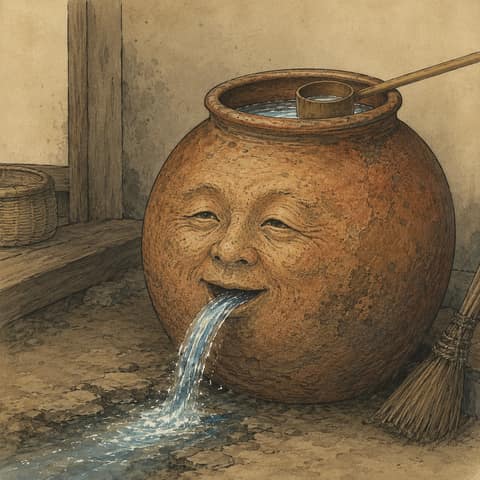
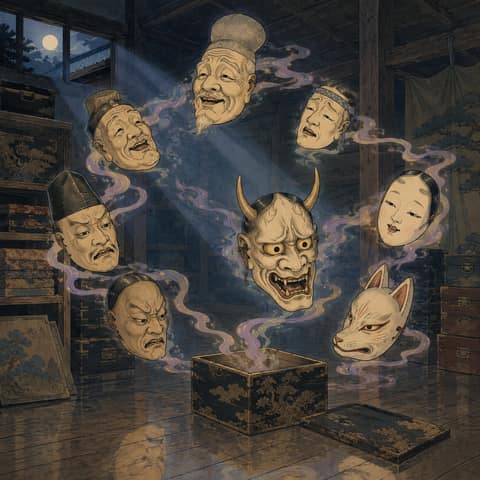
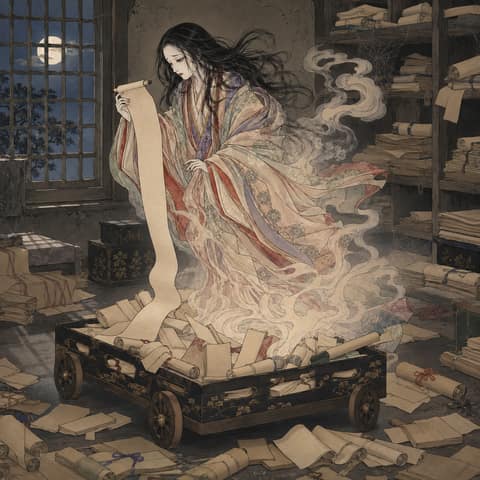
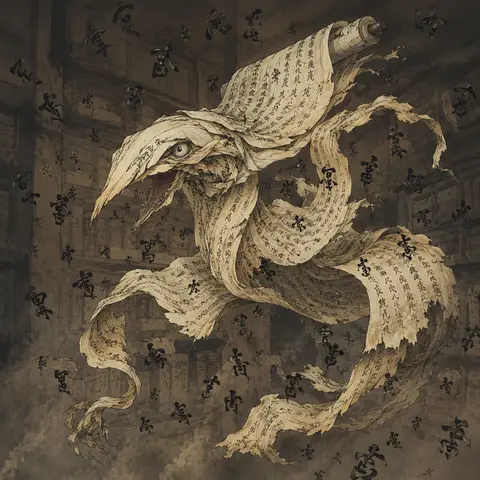
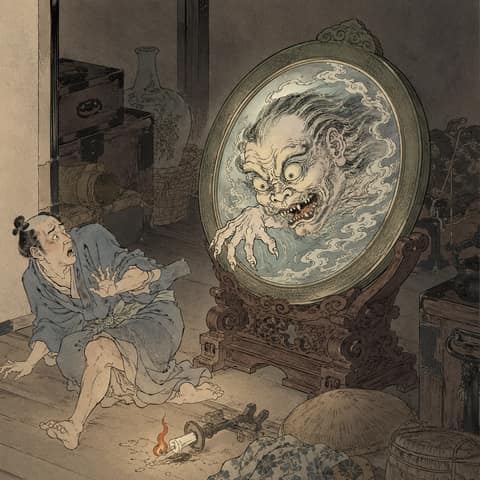
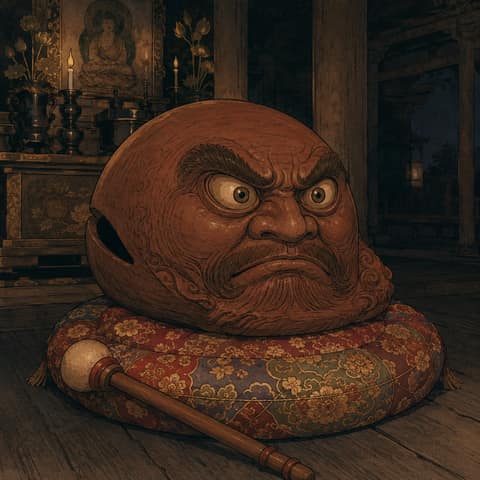
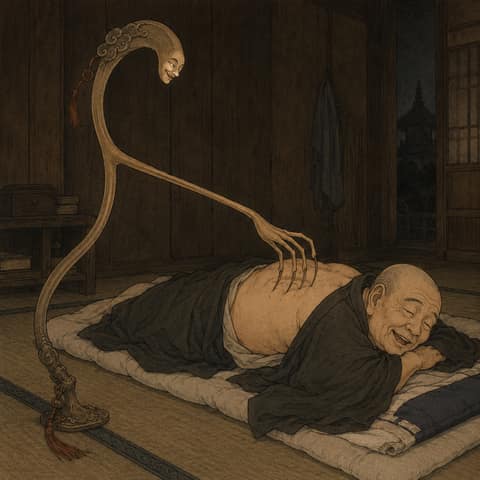
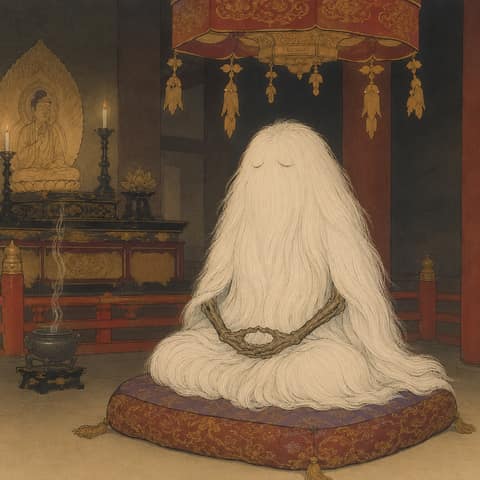
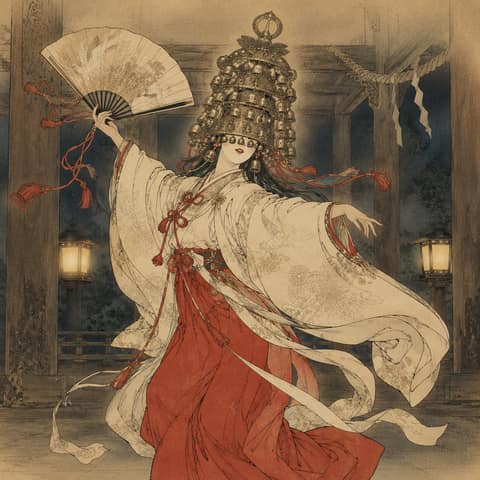
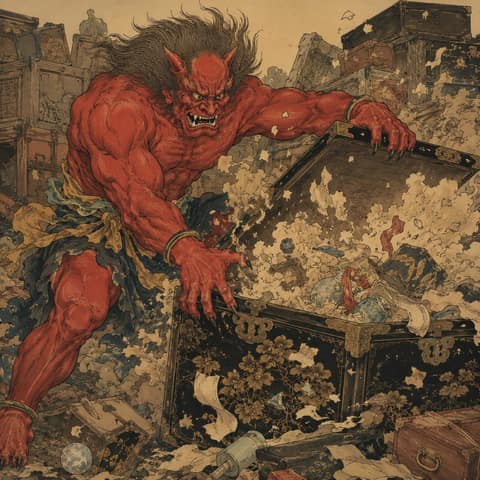
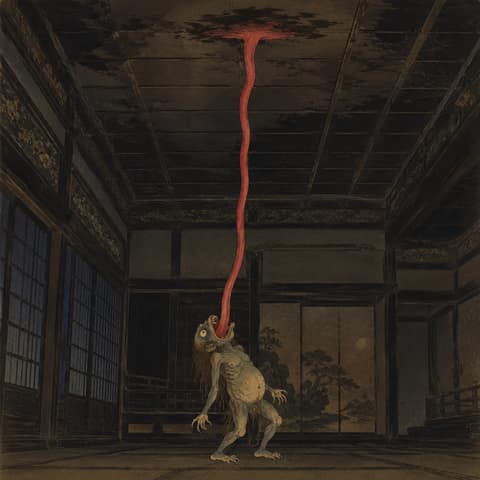
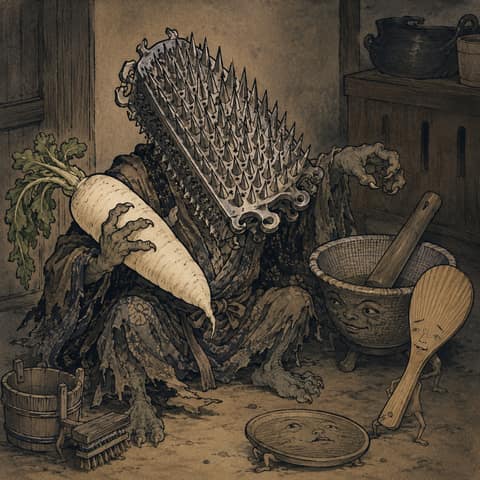
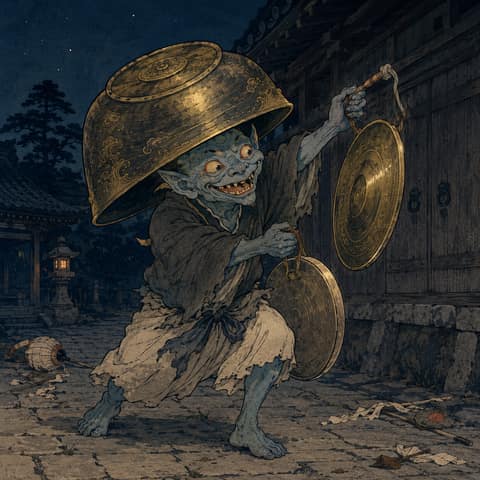
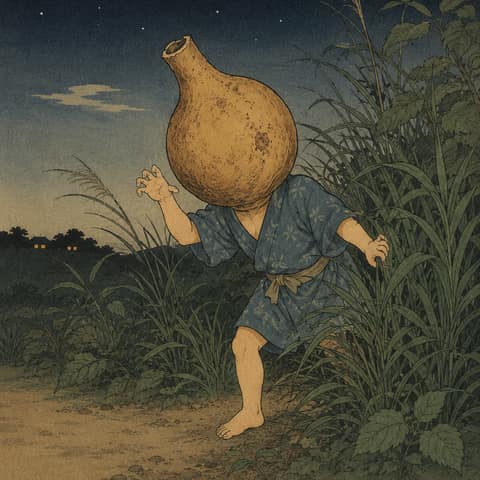
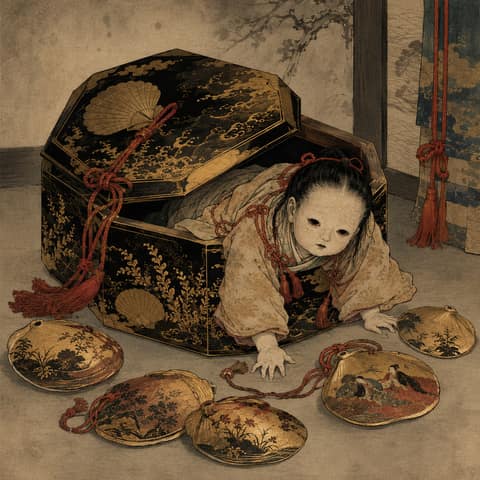
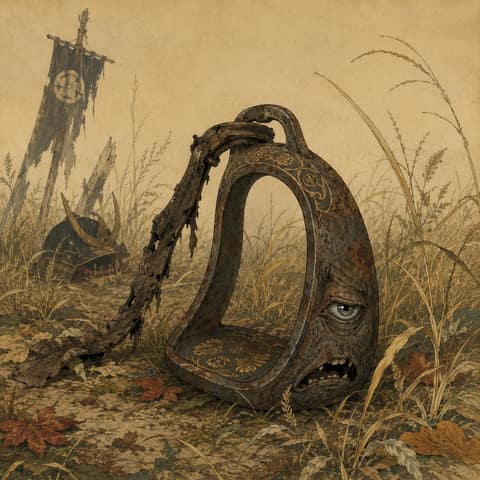
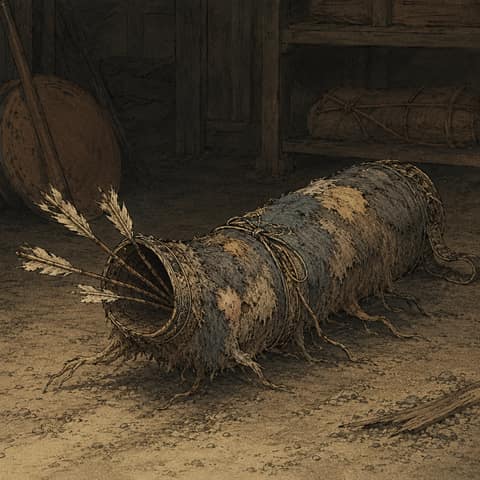
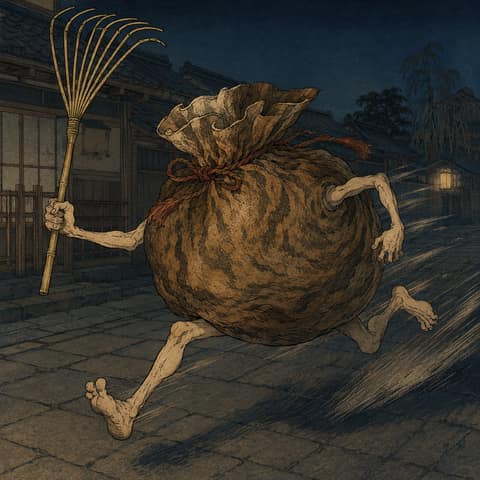
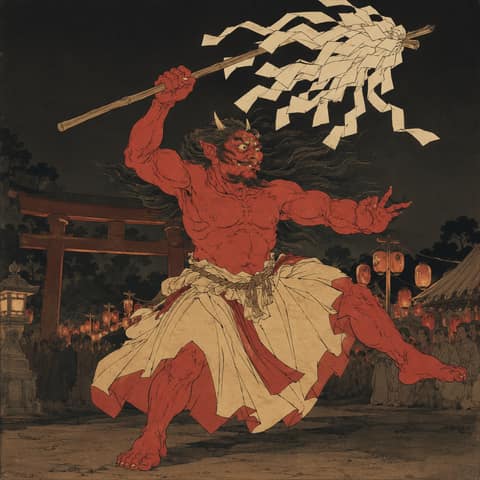
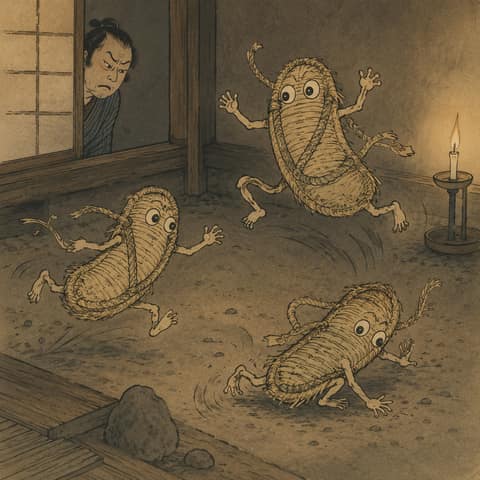
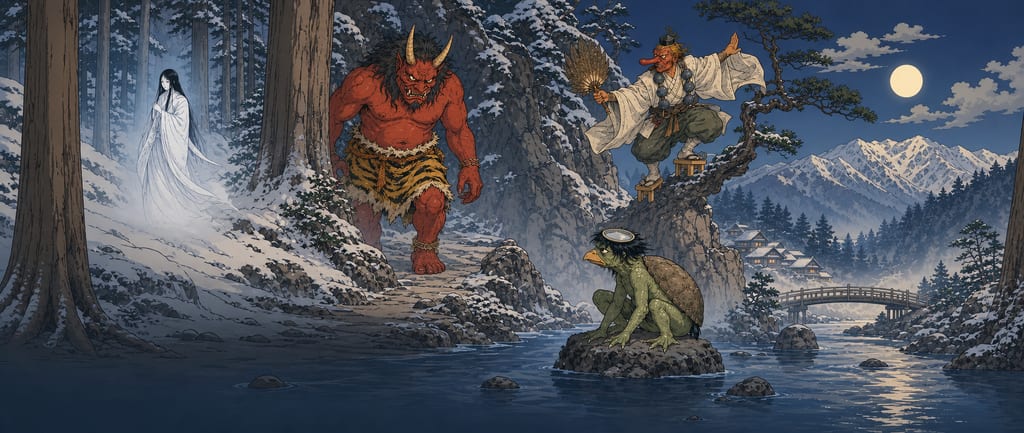
This traditional image is based on the band of old tools described in the Kyoto University manuscript of the *Tsukumogami Emaki*[1], copied in the early modern period. The setting is the capital during the Kōhō era (964–968). During the year-end soot-sweeping, tools that had served households for a long time are thrown into the alleys inside and outside the capital. Cast out without reward into places where they would be trampled by oxen and horses, the implements resent the callousness of humans and begin consulting on how to become monsters (yōbutsu) and exact their revenge.
Only one, Ichiren Nyūdō, a prayer bead rosary, objects. Accepting being discarded as karma, he advises them to "repay enmity with grace," but he is beaten so badly by the angry hand-staff Aratarō that his fasteners break, and he retreats with the help of his disciples. Then, Master Kobun brings up the logic of yin and yang. He explains that all things merely manifest temporary forms according to yin and yang; if they cast away their lives on Setsubun—when yin and yang switch places—and entrust themselves to the Creator God, even implements can obtain a different form.
On the night of Setsubun, the old tools end their own lives as taught. They then all at once transform into yōbutsu that no longer fit their original purposes—men and women, the elderly and children, various goblins, and beasts. They make their home deep in Nagasaka, behind Mount Funaoka, a place close to the capital where food is easily obtained. They venture into the capital to snatch and devour people and livestock, and upon returning, they pour sake, dance, and compose waka and Chinese poetry. Those who were once "objects" used by humans now re-enact human culture, claiming it as their own.
The picture scroll does not depict this transformation as magic that completely erases the original tools. Because faces sprout on the implements discarded by the roadside, and then human, demonic, or bestial bodies are granted to them, the viewer can trace back what became which yōbutsu. The people of the capital cannot see their forms and cannot pursue them by force of arms, so they have no choice but to pray to the gods and Buddhas. Meanwhile, the yōbutsu master Go, Sugoroku, Kemari (kickball), archery, and poetry; they are shaped not merely as a mob, but as a group that excessively mirrors the refinement and pleasures of human society.
Before long, the band decides that failing to show respect to the Creator God who gave them their forms would make them no better than heartless trees and stones, so they build a shrine and name it "Henge Daimyōjin" (Apparition Great Deity). They install a head priest, shrine maidens, and ritual musicians, and even prepare a portable shrine. On the dead of night on the 5th day of the 4th month, they form a splendid procession and head east on Ichijō Avenue, only to encounter the retinue of the Chancellor (Kampaku), who is heading west for a provisional appointment ceremony. The attendants fall from their horses, but the Chancellor stares down the yōbutsu from within his carriage. Inside the amulet he wears is a Sonshō Dharani written by a certain high priest; flames erupt from it, scattering the procession.
Receiving the report, the Emperor orders divination, offerings to shrines, and prayers at various temples. When the high priest who wrote the Sonshō Dharani performs the great Nyohō Sonshō ritual at the Seiryōden, on the sixth day, seven or eight protective child-deities (Gohō Dōji) wielding swords and jeweled staffs appear in the light. The child-deities fly north and assault the yōbutsu's castle. However, they do not massacre them; they declare that their lives will be spared if they cease harming people and revere the Buddhist law. The defeated old tools do not simply blame their predicament on humans, but recognize it as retribution for taking life, and awaken to the desire for enlightenment.
The one they look up to as their master is Ichiren Shōnin, whom they had previously banished. They visit his hermitage deep in the mountains, and Aratarō, in particular, apologizes for the sin of striking him. Ichiren forgives them, saying that it was precisely because of that blow that he himself was able to awaken to the path, and he has them all take the tonsure. The old tools inquire about the depths of various sects, seeking the teaching that leads most swiftly to enlightenment. Ichiren preaches the Shingon esoteric doctrine of "becoming a Buddha in this very body" (Sokushin Jōbutsu), and imparts the path of mudras, mantras, and visualization. There is a play on words embedded here: because many of them were originally "vessels" (ki), they are also "great vessels" (taiki) capable of receiving the teachings.
In this scene, the explanation that a divine spirit possesses the vessel from the outside and animates it is also rejected. It is precisely because the implements themselves changed their forms, became aware of their sins, listened to the teachings, and practiced asceticism that they can become the subjects of enlightenment. Citing the legend that Kōbō Daishi manifested the form of Dainichi Nyorai at the imperial court, Ichiren preaches that Shingon teachings are the most superior for swift enlightenment. While the story uses ghost stories of implements as an entry point, it ultimately compares the teachings of various sects, guiding the reader into a religious discourse where the path of Buddha-nature and practice is opened even to those deemed heartless.
Ichiren achieves Buddhahood at the age of 108, and the remaining disciples enter separate deep mountains and dark valleys to sever their dependence on one another. Building hermitages among rocks or under pines, after intense practice, they each become different Buddhas. The conclusion of the story does not show raging old tools being tamed by humans to become guardian spirits. It is a drama of "Hijō Jōbutsu," demonstrating that even implements deemed to have no heart can achieve Buddhahood if they repent, receive teachings, and practice asceticism of their own accord. This traditional image does not add the character of a "gentle guardian deity who grants good fortune if cherished"—which is absent from the historical sources—but instead centers on the immense transformation from resentment, to imitation, defeat, religious awakening, and finally enlightenment.
Character Profile
This section is our own creative profile for storytelling. It is not historical fact or scholarship.
Yokai Type - Traditional Yokai
Category - Household Spirits
Rarity - Legendary
Personality - Though enraged by the resentment of being discarded, they accept teachings if they acknowledge their faults.
Compatibility - Highly compatible with those who use tools for a long time and show respect even when letting them go.
Abilities - Transforming by borrowing the power of the Creator God during the yin-yang inversion of SetsubunTaking diverse forms such as men and women, old and young, various goblins, and beastsHiding their forms to attack people and livestock in the capitalImitating human poetry, entertainment, and festivals
Weaknesses - Flames from an amulet containing the Sonshō Dharani
- Protective child-deities (Gohō Dōji) manifested by the Nyohō Sonshō ritual
- Repentance for taking life and conversion to Buddhism
Habitat - Alleys inside and outside the capital where old tools were discarded at year-end / Deep in Nagasaka, behind Mount Funaoka / Ichijō Avenue on the night of the 5th day of the 4th month