
YOKAI.JP

Koinryō

koh-EEN-ryoh

Koinryō

Koinryō

Their soul is listening — speak, and they will answer.

Basic Description

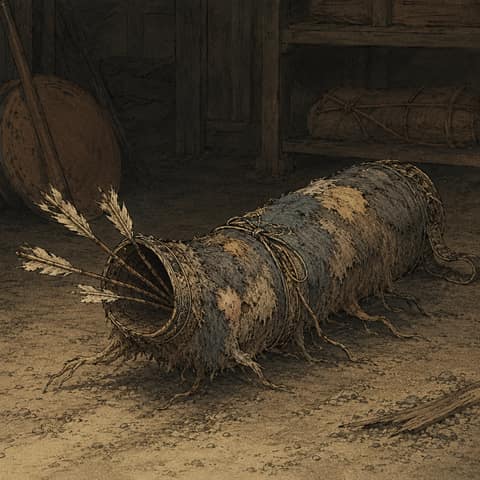
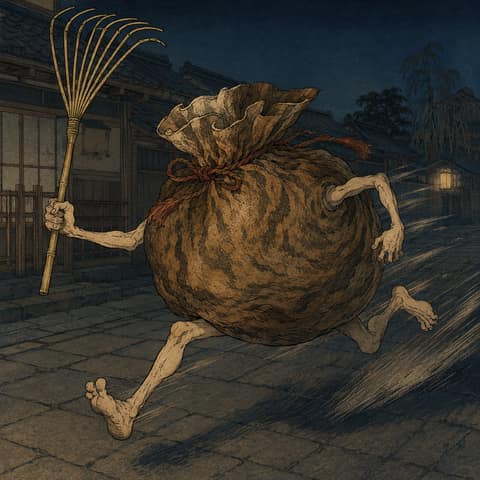
A yokai depicted in Toriyama Sekien’s Edo-period Hyakki Tsurezure Bukuro. Sekien notes it as a “purse made of leather,” understood as a tsukumogami born from a drawstring pouch. It carries a rake-like tool and is said to run with extraordinary speed, “racing a thousand ri.” The name’s origin is uncertain; some link it to a tiger-skin inrō, but this is not established. It exemplifies the idea of spirits inhabiting old implements.

Folklore & Legends

Medieval Night Parade of One Hundred Demons scrolls show similar figures brandishing rakes, and Sekien’s design likely draws on that lineage. In Hyakki Tsurezure Bukuro it appears alongside Yakumonagae and Zengamanashi, situating it within images of aged utensils on nocturnal procession. No specific local legends survive; the picture and its caption are the primary sources. It is understood within the broader belief that timeworn objects become tsukumogami.

Tsukumogami
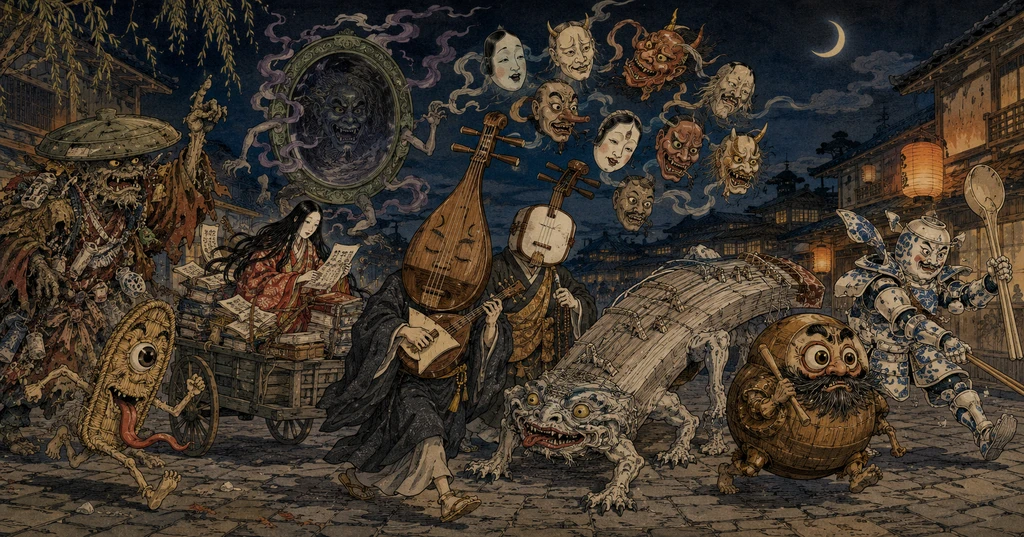
Centennial tools possessed by spirits ── the artifact yokai depicted in Sekien's Hyakki Tsurezure Bukuro

Tsukumogami

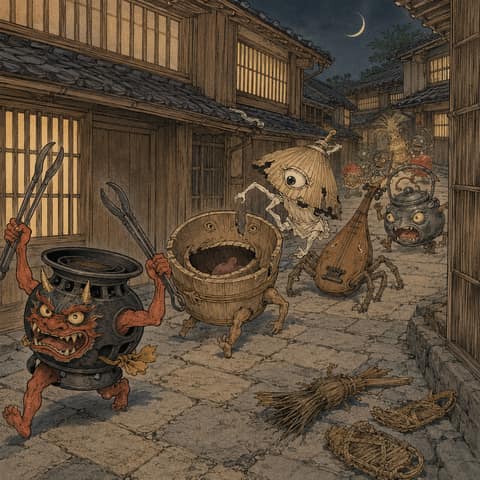
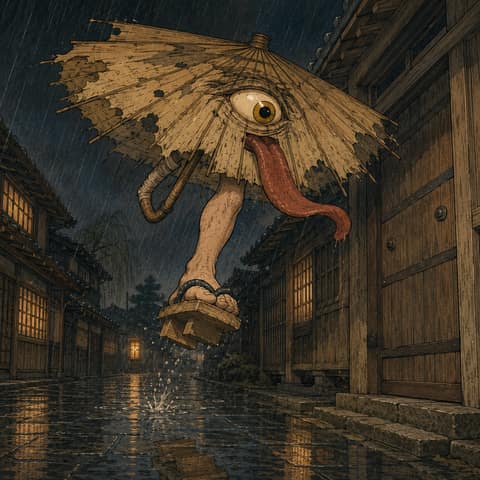
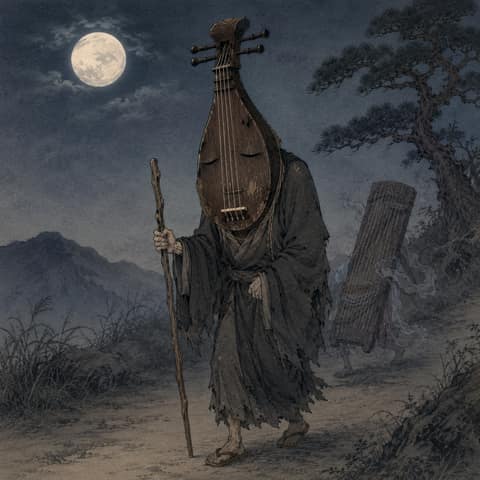
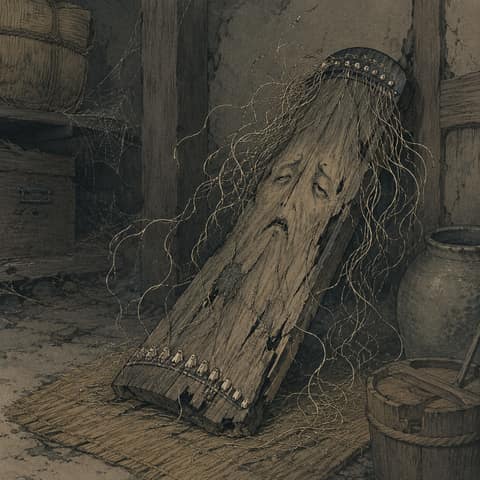
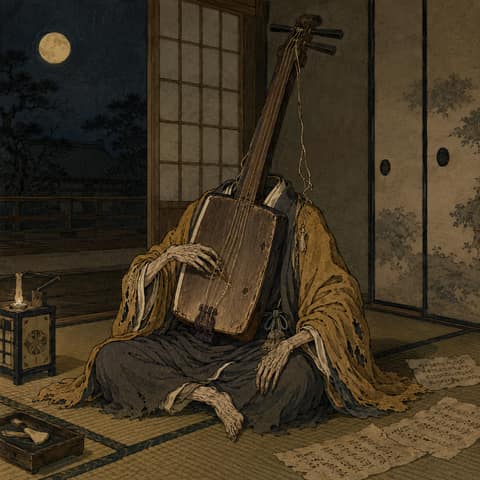
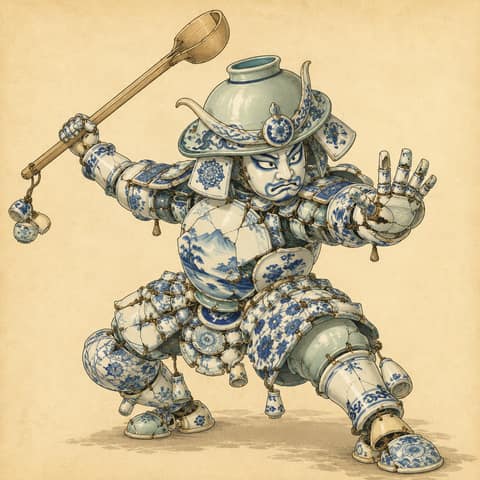
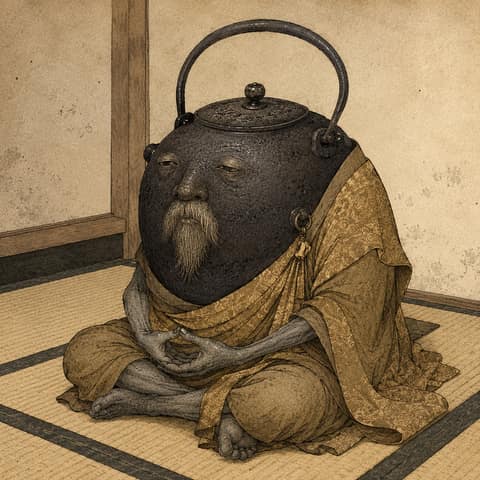
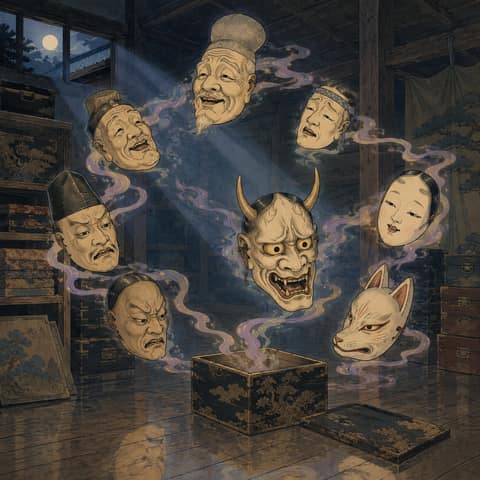
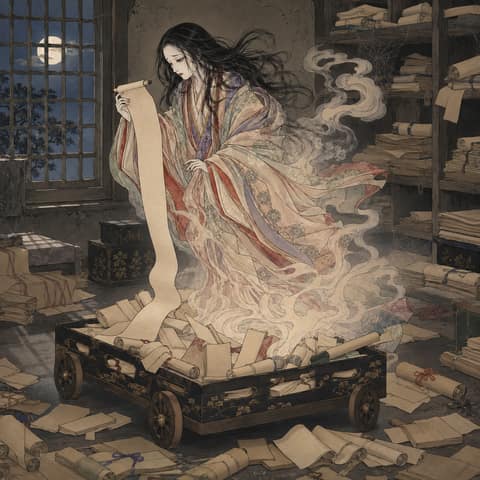
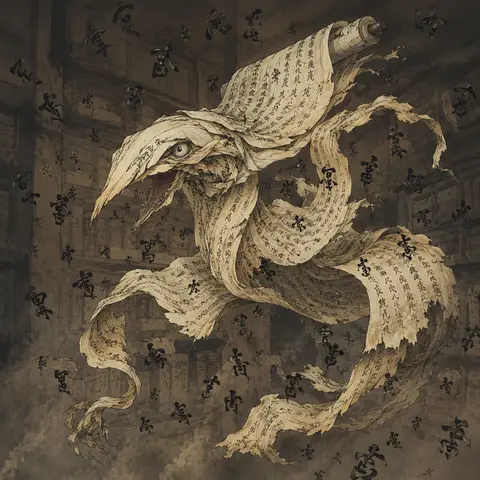
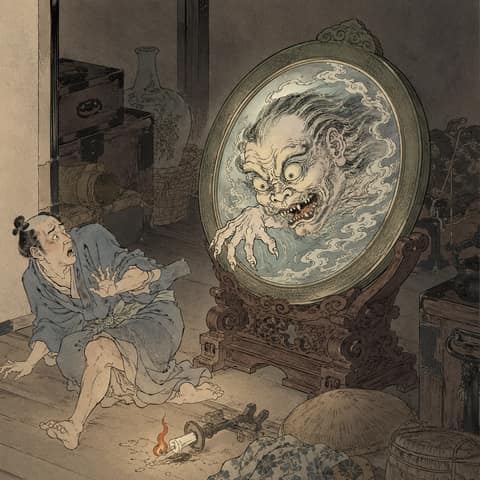
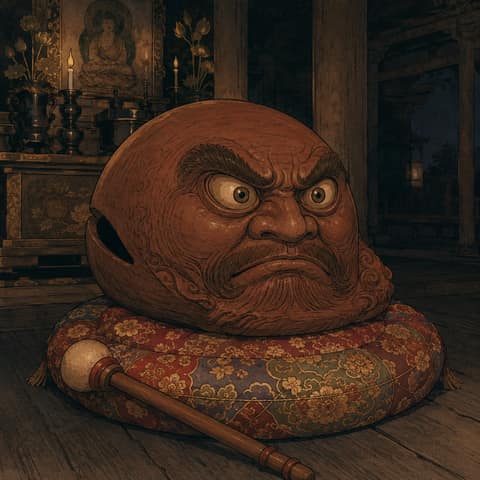
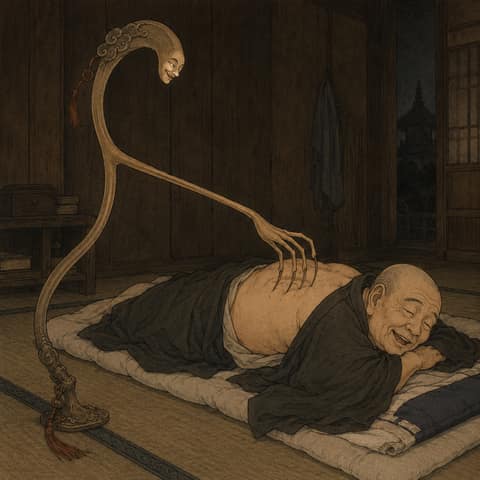
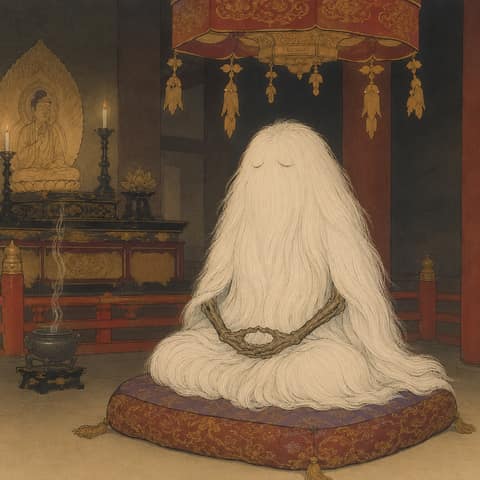
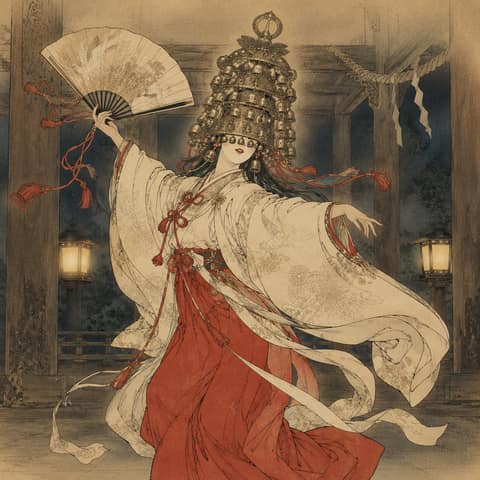
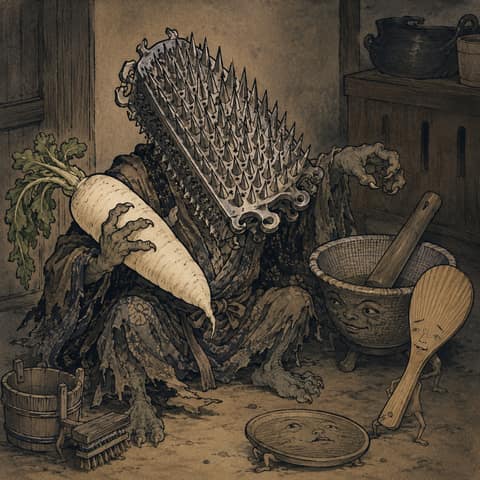
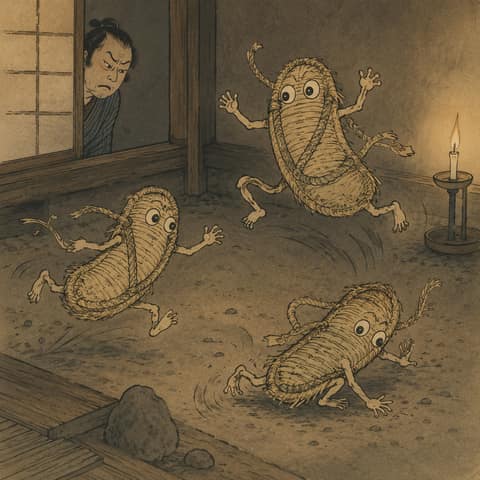
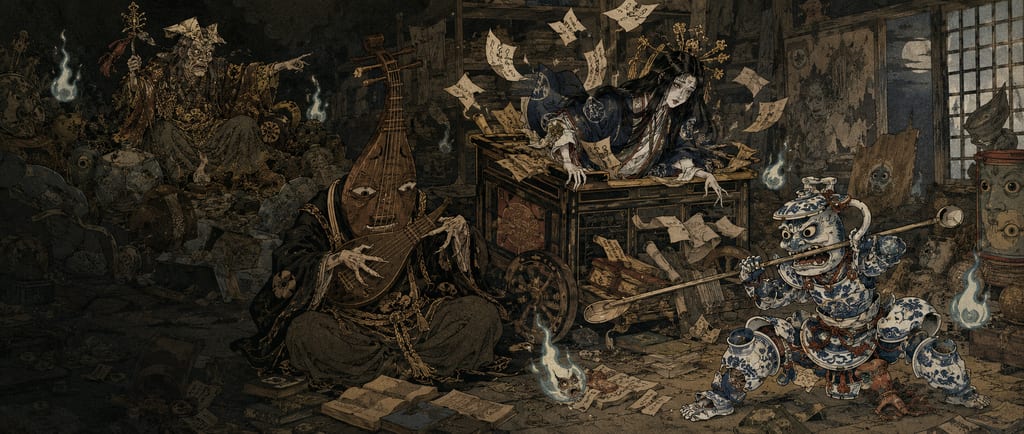
Tools and vessels used over long years are said to acquire spiritual life and transform when discarded and neglected, becoming beings known as tsukumogami. In the Muromachi-period "Tsukumogami Emaki", it was preached that tools transformed after a hundred years; the scroll depicted old implements, thrown away during house-cleaning, marching in a procession on the night of Setsubun holding grudges against humans. In the Edo period, Toriyama Sekien synthesized this worldview in his "Hyakki Tsurezure Bukuro" (The Illustrated Bag of One Hundred Random Demons), bestowing charming yokai forms upon individual objects such as biwa lutes, shamisen, koto, tea kettles, sutra scrolls, masks, and book carts, woven together with wordplay and historical anecdotes. Gathered here are the souls inhabiting tools, reflecting human sentiments—used, forgotten, yet impossible to fully discard.

Detailed Analysis

A reconstructive reading based on Toriyama Sekien’s compositional layout and notes. The主体 is a leather coin pouch that, with age, has become a tsukumogami. Its rake-like implement echoes motifs from medieval picture scrolls and likely implies the act of sweeping up or gathering, though sources do not state this conclusively. It moves with great speed, dashing like a herald at the head of a procession, and is imagined merging with the motley ranks of the Night Parade of Haunted Tools. Its name suggests echoes of “tiger hide” and “inrō,” yet no citation is given and the origin remains unknown. No region-specific lore survives; from its placement alongside Yarikechō and Zenkamanasu within the work, it is understood as one among a group of antiquated implements. The entry avoids embellishment, limiting traits to Sekien’s notes and comparable iconography.

Character Profile

This section is our own creative profile for storytelling. It is not historical fact or scholarship.

Rarity
Rare
Personality
taciturn, relentless
Compatibility
resonates with old tools and obsolete implements
Abilities
blinding speed (described as running a thousand li), attunement to the Night Parade of tools (marching with other tsukumogami), gathering motion (using a rake-like tool to draw in small items as a design motif)
Weaknesses
no definitive weakness recorded due to unknown origin, general tsukumogami belief that renewal or repair pacifies its spirit
Habitat
unknown (within the work’s world), places where old tools accumulate, nighttime streets and alleys
🔮Yokai Compatibility Test

For more detailed information and diagnosis results about Edo Iconography Conformant, please click here.

Interested in this type of yokai?

Discover the yokai most similar to your personality with our yokai diagnosis

Start Yokai Diagnosis

Meet your guardian yokai at the shrine

Draw an omikuji fortune and discover the yokai watching over you today.