YOKAI.JP

Yamaoroshi

yah-mah-oh-ROH-shee

Yamaoroshi

Yamaoroshi

Their soul is listening — speak, and they will answer.

Basic Description

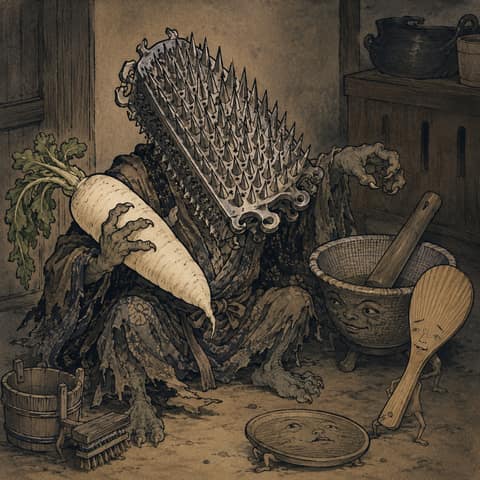
A human-shaped yokai depicted by Toriyama Sekien in Hyakki Tsurezurebukuro. Its head is covered with countless protrusions like a grater, and kitchen tools—daikon radish, suribachi mortar, and a shell ladle—appear at its side. Sekien notes the resemblance to the porcupine (yamaarashi) and plays on the similar sound to “yama-oyaji,” linking the name and form. The figure strongly reflects pictorial invention based on early modern artworks and is often read as a tsukumogami of utensils or a pun-based conceit.

Folklore & Legends

No fixed oral legends are recorded; main sources are picture scrolls and painting manuals. Scholars note links to spiky beast forms and monsters wearing shallow wooden clogs in Muromachi-period Night Parade scrolls, while Sekien’s comments draw on the porcupine entry in the Wakan Sansai Zue. Later readers sometimes interpret it as a grater tsukumogami or, by association with the word “oroshi” (down-slope wind), as a mountain-wind spirit, but documentary support is limited. No specific locales or rites are known.

Yokai Cards1

Yamaoroshi across multiple art-style decks

Card gallery
Tsukumogami
Centennial tools possessed by spirits ── the artifact yokai depicted in Sekien's Hyakki Tsurezure Bukuro

Tsukumogami

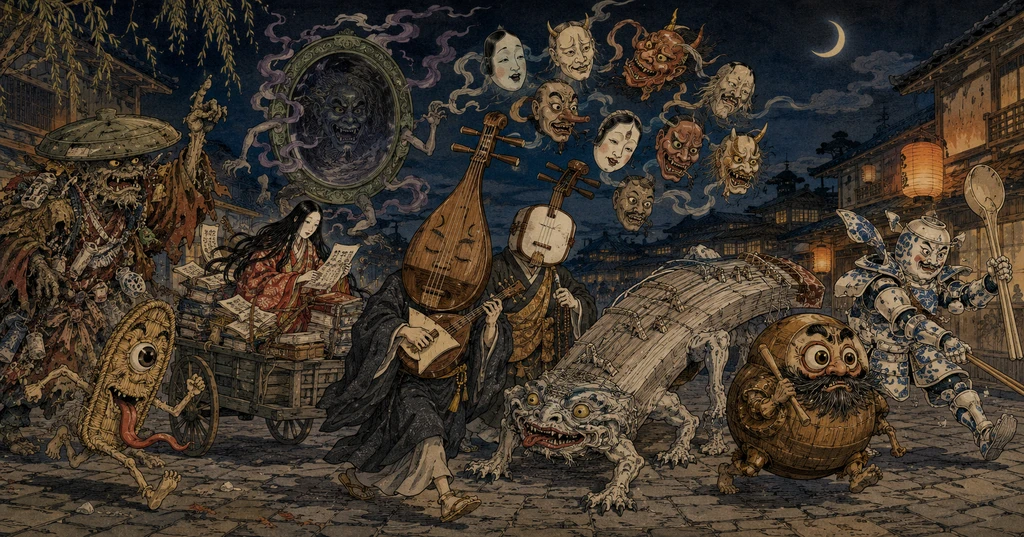
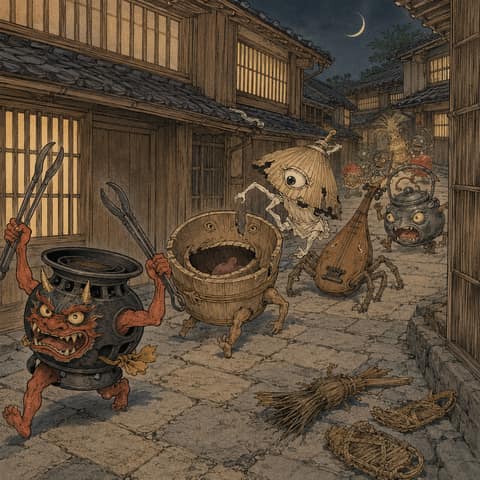
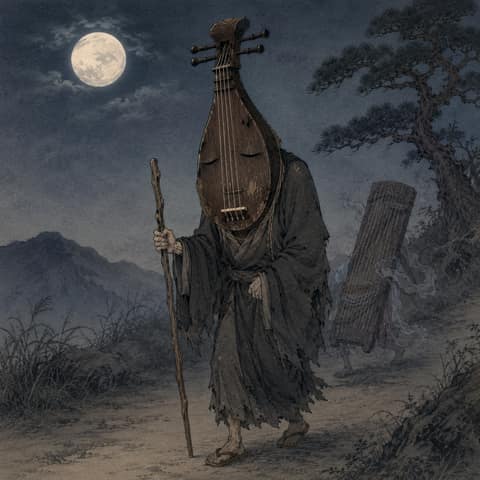
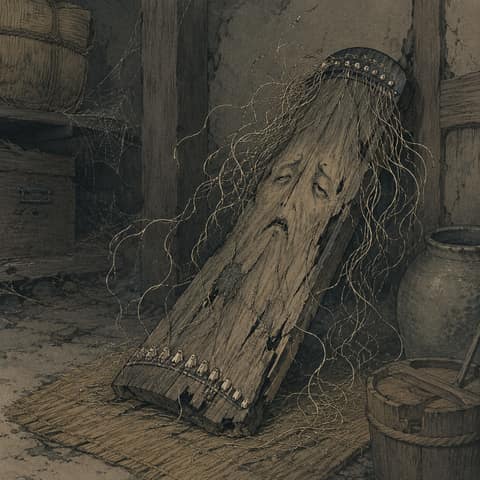
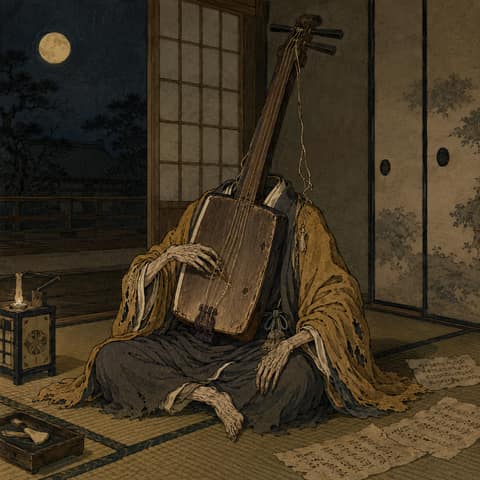
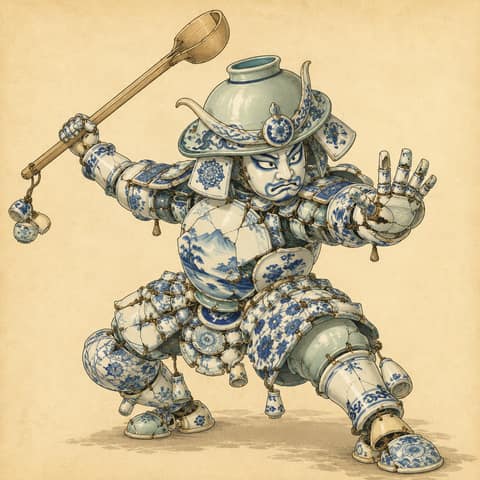
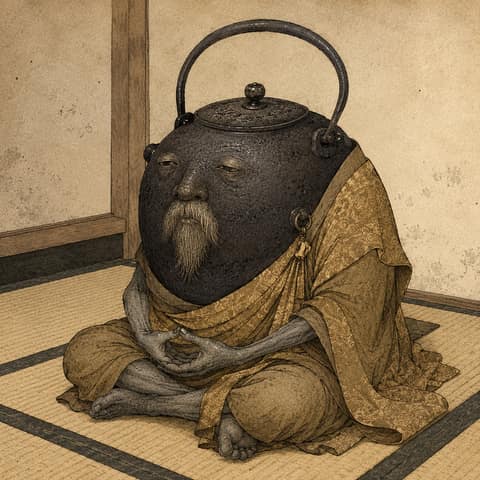
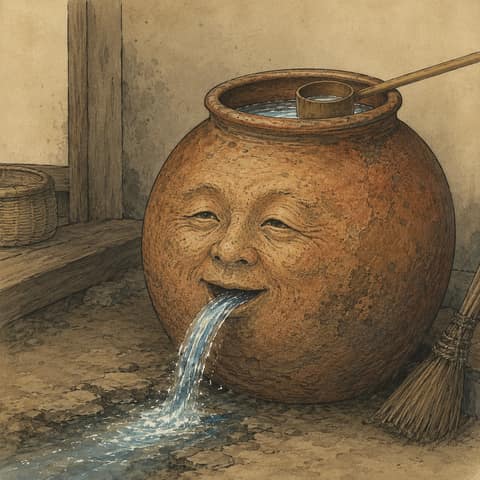
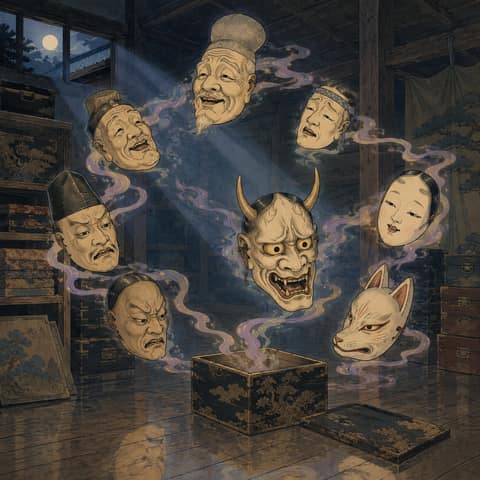
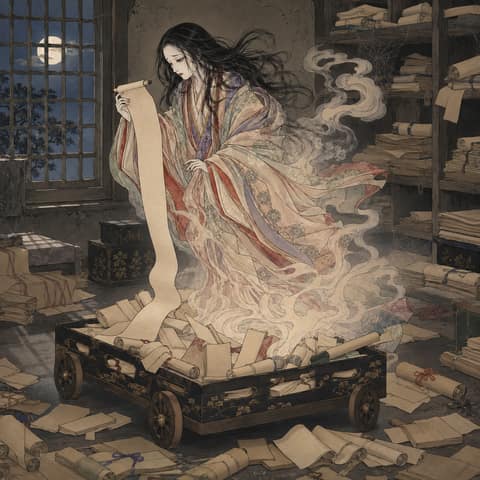
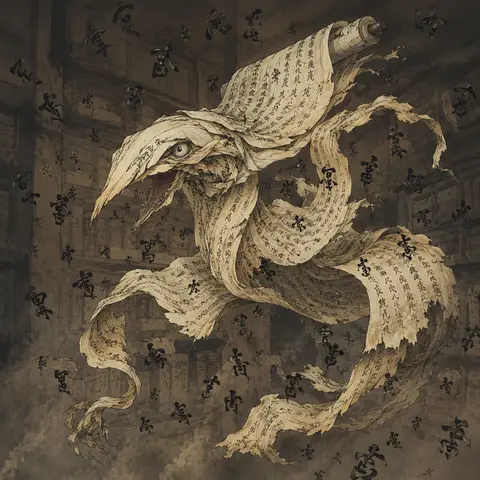
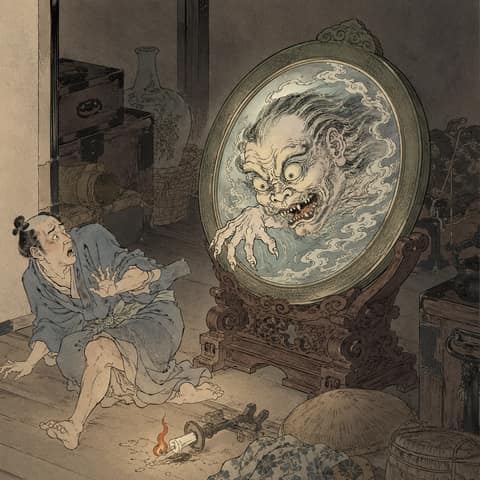
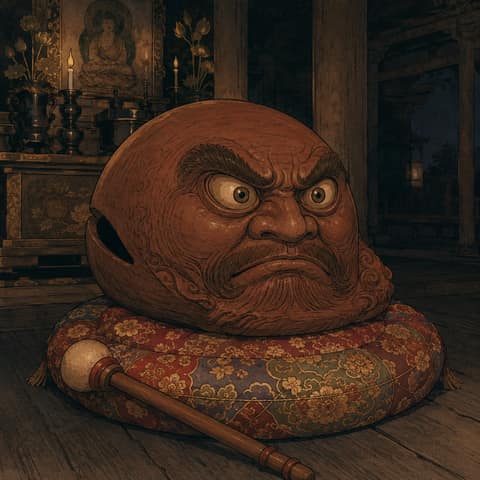
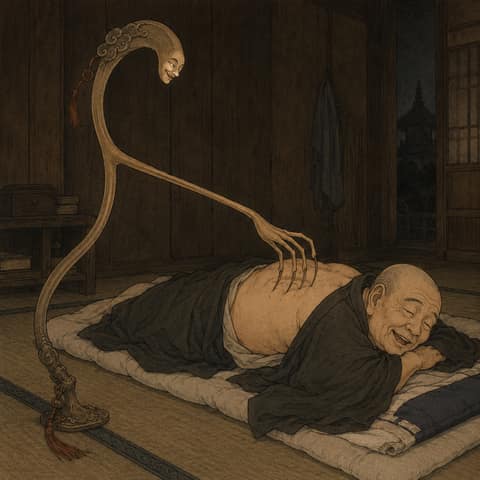
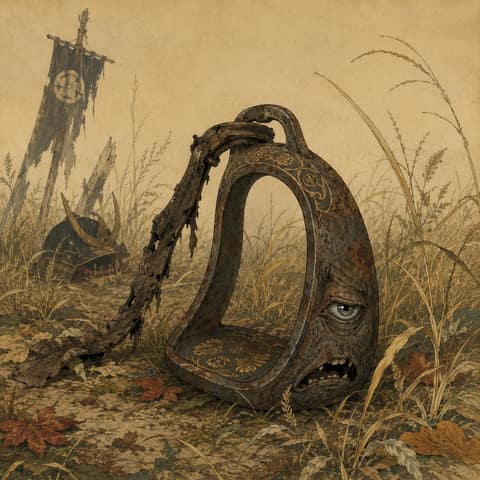
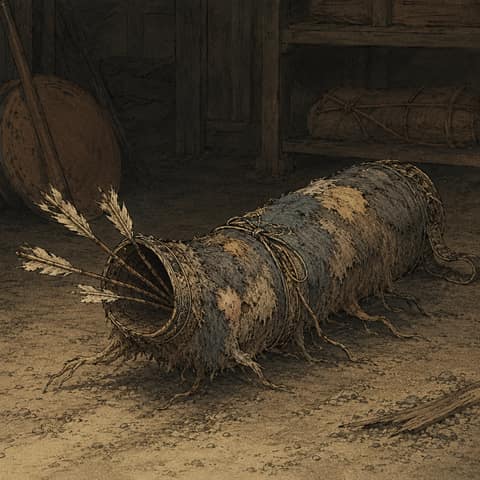
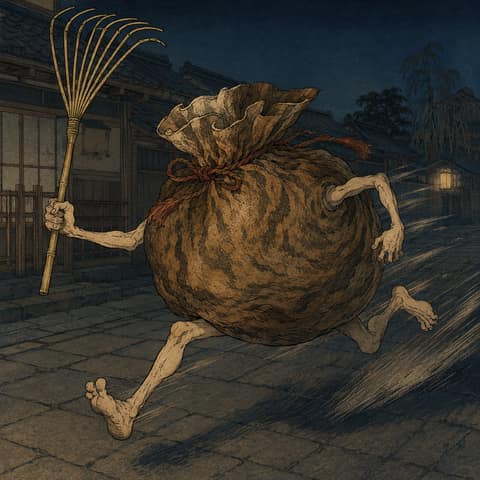
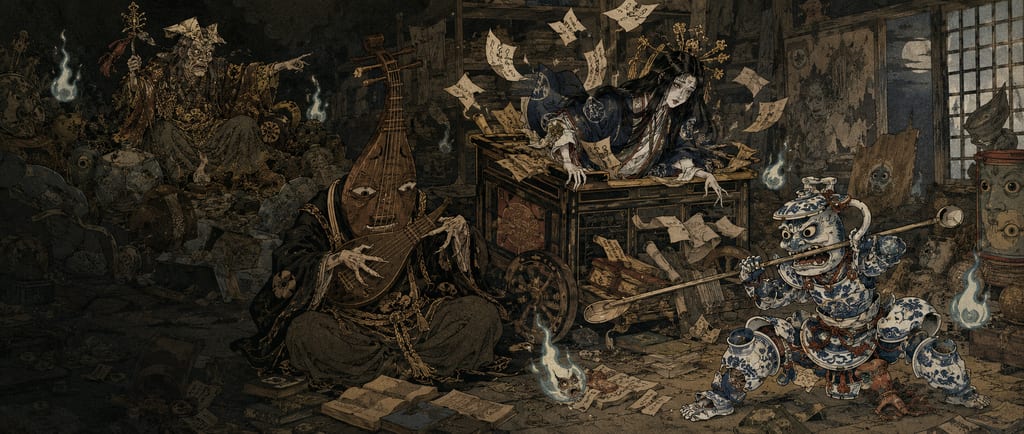
Tools and vessels used over long years are said to acquire spiritual life and transform when discarded and neglected, becoming beings known as tsukumogami. In the Muromachi-period "Tsukumogami Emaki", it was preached that tools transformed after a hundred years; the scroll depicted old implements, thrown away during house-cleaning, marching in a procession on the night of Setsubun holding grudges against humans. In the Edo period, Toriyama Sekien synthesized this worldview in his "Hyakki Tsurezure Bukuro" (The Illustrated Bag of One Hundred Random Demons), bestowing charming yokai forms upon individual objects such as biwa lutes, shamisen, koto, tea kettles, sutra scrolls, masks, and book carts, woven together with wordplay and historical anecdotes. Gathered here are the souls inhabiting tools, reflecting human sentiments—used, forgotten, yet impossible to fully discard.

Detailed Analysis

Character Profile

This section is our own creative profile for storytelling. It is not historical fact or scholarship.

Rarity
Rare

For more detailed information and diagnosis results about 頭がおろし金・山颪, please click here.

Interested in this type of yokai?

Discover the yokai most similar to your personality with our yokai diagnosis

Start Yokai Diagnosis

Meet your guardian yokai at the shrine

Draw an omikuji fortune and discover the yokai watching over you today.