YOKAI.JP

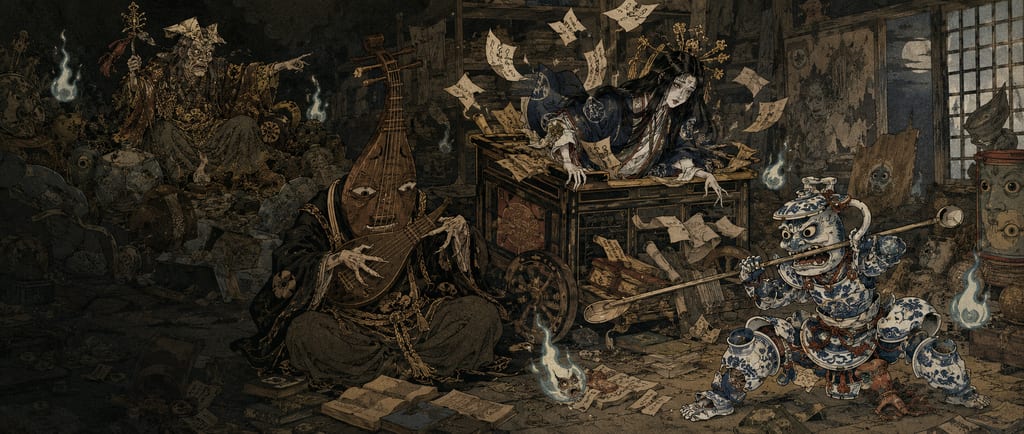
Zen-Gama-no-Shō (Zen Kettle Monk)

ZEN-gah-mah-noh SHOH

Zen-Gama-no-Shō (Zen Kettle Monk)

Zen-Gama-no-Shō (Zen Kettle Monk)

Their soul is listening — speak, and they will answer.

Basic Description

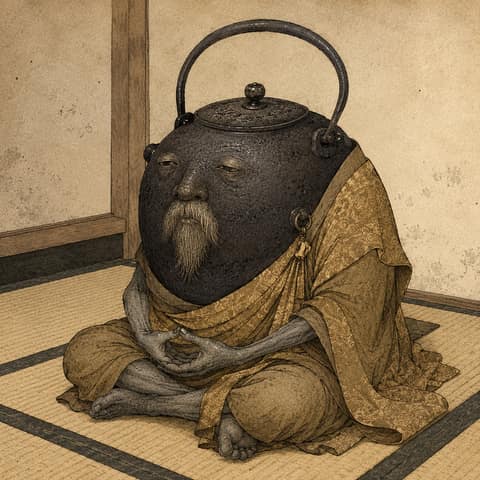
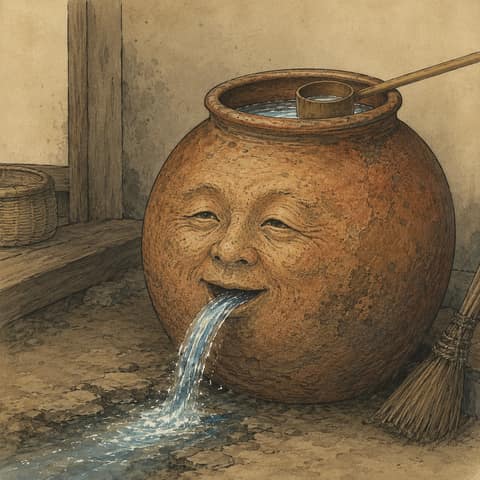
Zen-Gama-no-Shō is a tea-kettle yokai depicted by Toriyama Sekien in the Edo-period collection Hyakki Tsurezure Bukuro (Middle Volume). The name likely puns on “Zen oshō” (a Zen priest), reflecting the historical ties between chanoyu tea culture and Zen Buddhism. The image appears to draw on the three-eyed monster motif seen in Muromachi-period Night Parade of One Hundred Demons scrolls, and it is often pictured alongside Tora-Inryō and Yarikechō, though their relationship is unclear. It is understood as a tsukumogami—an object that has acquired a spirit.

Folklore & Legends

This is an image-based yokai attested in early-modern picture scrolls and yokai albums, with little in the way of local, place-bound lore. Sekien’s Hyakki Tsurezure Bukuro presents a series of strange phenomena arising from old utensils, and Zen-Gama-no-Shō is one entry in that cycle. The motif was carried into the Meiji era; artists such as Tsukioka Yoshitoshi referenced it in works like his Hyakki Yagyō. Later writers sometimes add vignettes—such as it springing from the grass to startle passersby—but these lack firm grounding in regional oral tradition.

Yokai Cards1

Zen-Gama-no-Shō (Zen Kettle Monk) across multiple art-style decks

Card gallery
Tsukumogami
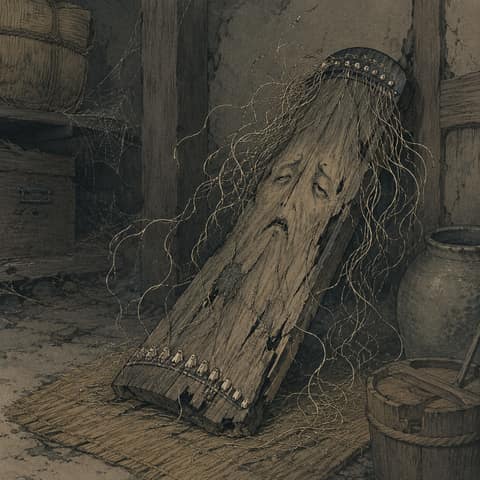
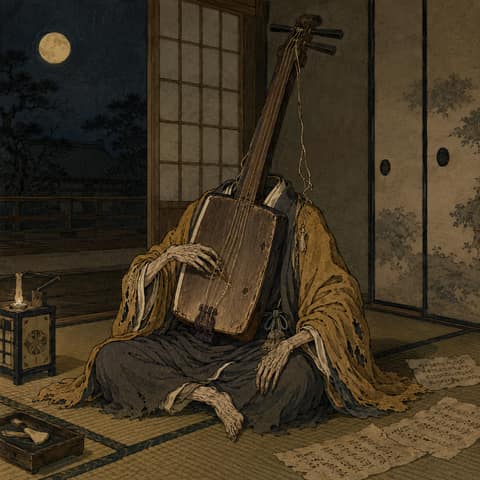
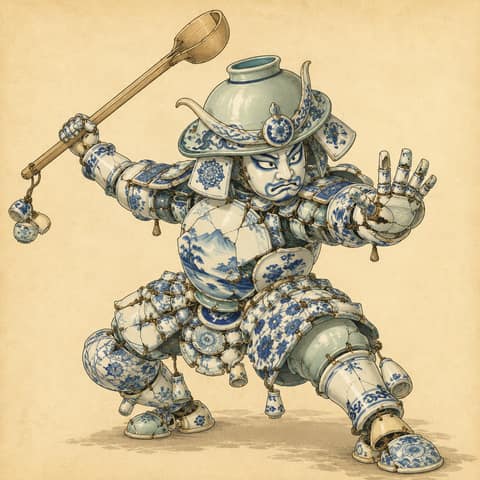
Centennial tools possessed by spirits ── the artifact yokai depicted in Sekien's Hyakki Tsurezure Bukuro

Tsukumogami

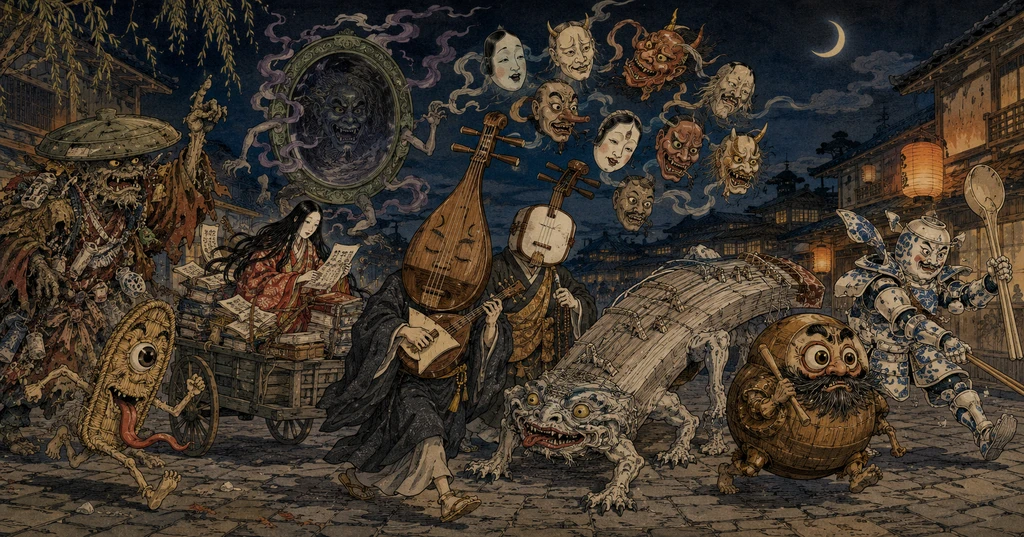
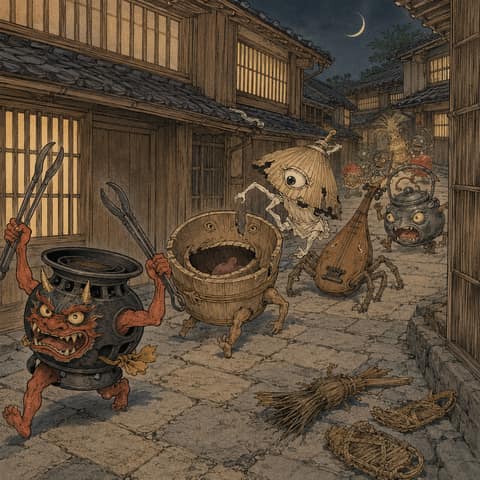
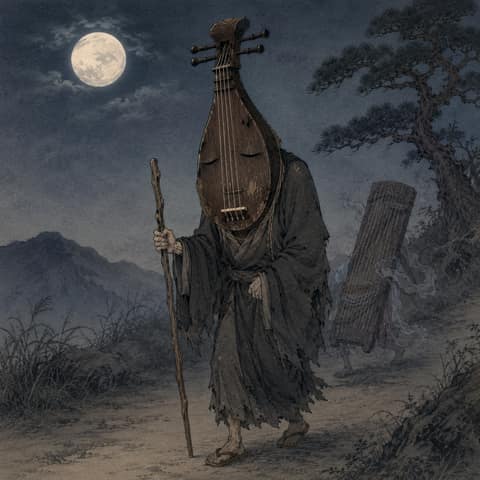
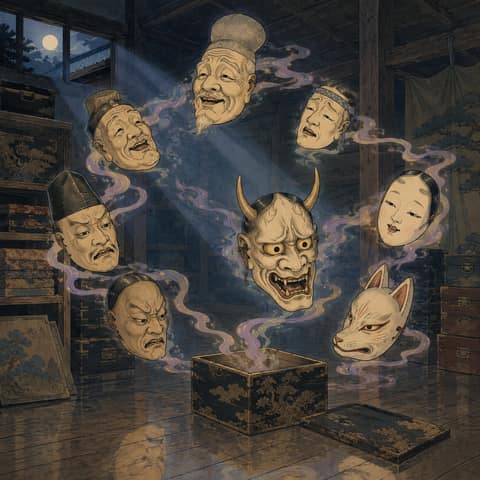
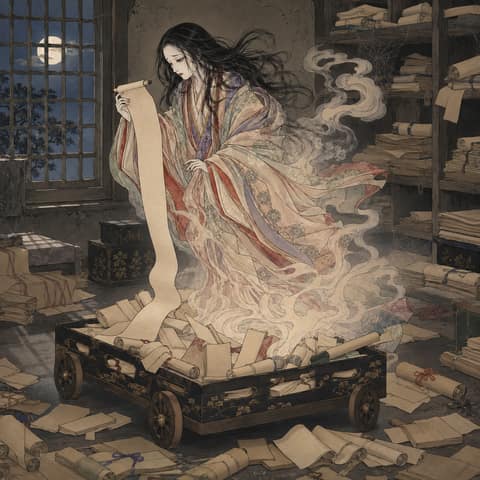
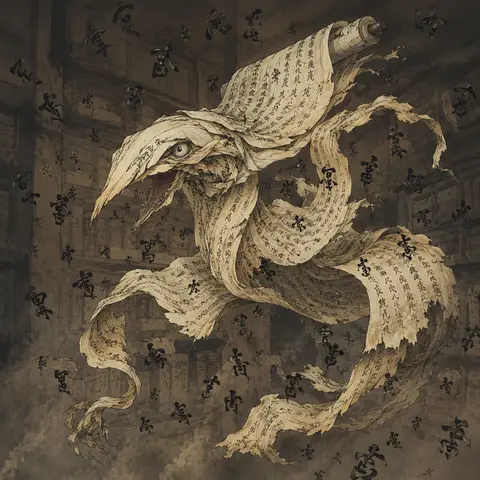
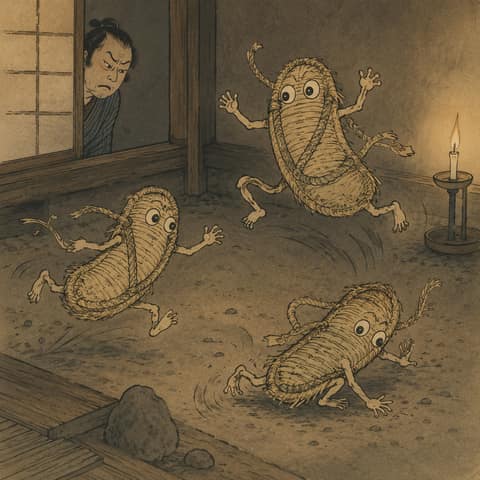
Tools and vessels used over long years are said to acquire spiritual life and transform when discarded and neglected, becoming beings known as tsukumogami. In the Muromachi-period "Tsukumogami Emaki", it was preached that tools transformed after a hundred years; the scroll depicted old implements, thrown away during house-cleaning, marching in a procession on the night of Setsubun holding grudges against humans. In the Edo period, Toriyama Sekien synthesized this worldview in his "Hyakki Tsurezure Bukuro" (The Illustrated Bag of One Hundred Random Demons), bestowing charming yokai forms upon individual objects such as biwa lutes, shamisen, koto, tea kettles, sutra scrolls, masks, and book carts, woven together with wordplay and historical anecdotes. Gathered here are the souls inhabiting tools, reflecting human sentiments—used, forgotten, yet impossible to fully discard.

Detailed Analysis

Based on examples by Toriyama Sekien, this image depicts an aged tea kettle manifesting with spiritual authority. Its posture and arrangement inherit compositional methods akin to the Night Parade of One Hundred Demons scrolls, often shown marching alongside Torakakushi and Yarinaga. The name plays on the kinship between chanoyu and Zen, hinting at a caricature of a Buddhist priest. By the logic of mononari, tools long used or neglected accrue ki, appear before people, and inspire awe. Meiji painters continued this iconographic lineage, and yokai catalogues and dictionaries classify it as a type of tsukumogami, though specific local legends are scant. Later commentaries add anecdotes of startling humans, but early records offer little confirmation, so it is understood chiefly through its iconographic tradition.

Character Profile

This section is our own creative profile for storytelling. It is not historical fact or scholarship.

Rarity
Rare
Personality
taciturn, relentless
Compatibility
harmonious with those who treat old tools with care
Abilities
appearing before people to startle them, embodying the grudge and spirituality of old implements, prompting responses from other yokai within procession scenes
Weaknesses
calms when given careful maintenance and memorial rites, unlikely to manifest where objects are treated respectfully
Habitat
around tearooms, old tool storerooms, city crossroads, grassy patches
🔮Yokai Compatibility Test

For more detailed information and diagnosis results about Iconographic Tradition: Tsukumogami Kettle, please click here.

Interested in this type of yokai?

Discover the yokai most similar to your personality with our yokai diagnosis

Start Yokai Diagnosis

Meet your guardian yokai at the shrine

Draw an omikuji fortune and discover the yokai watching over you today.