YOKAI.JP

Elder Shamisen

SHAH-mee-CHOH-loh

Elder Shamisen

Elder Shamisen

Their soul is listening — speak, and they will answer.

Basic Description

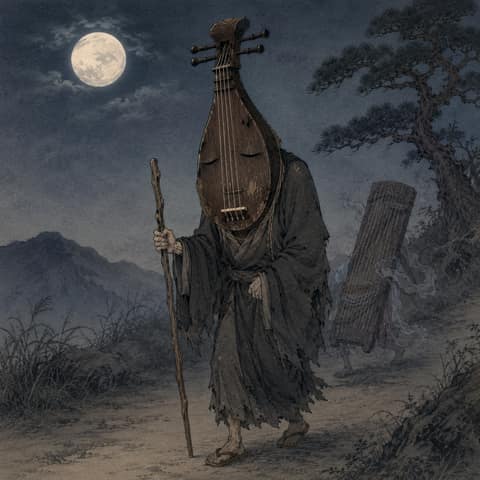
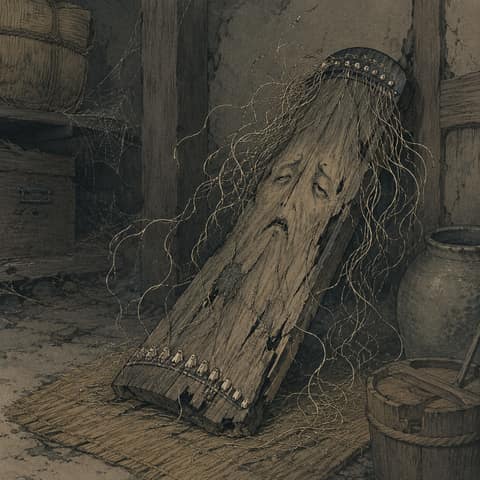
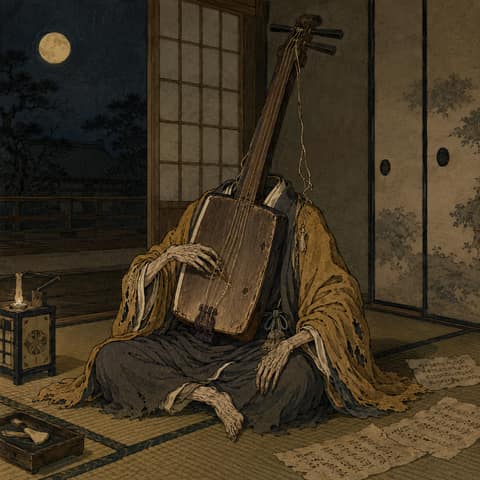
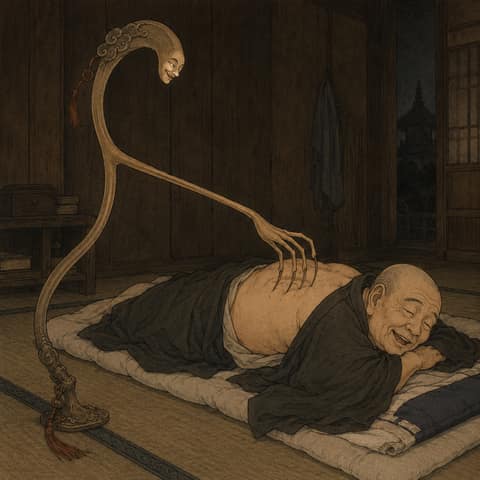
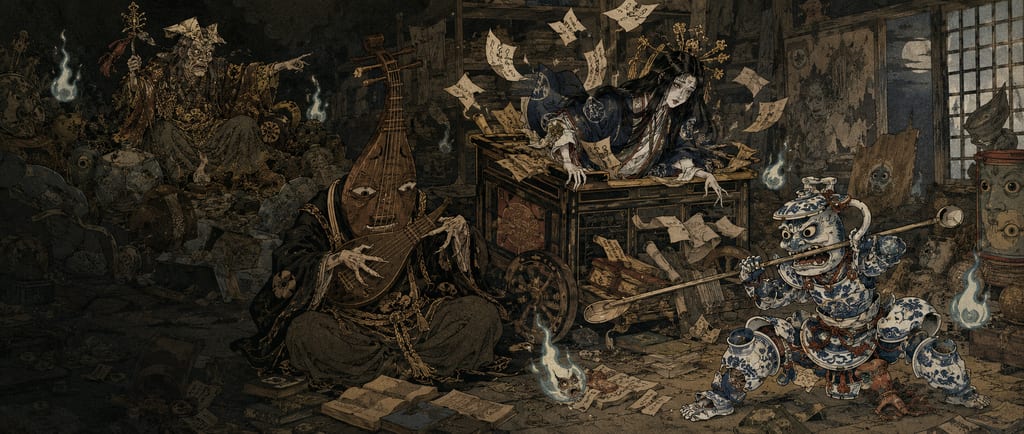
A tsukumogami (animated object yokai) depicted by Toriyama Sekien in Hyakki Tsurezure Bukuro. It is understood as a shamisen long used by a master, then discarded, that aged and came to house a spirit. Sekien’s note quotes the proverb “A novice monk never becomes an elder,” punning on shami (novice monk) and shamisen, and alludes to Essays in Idleness on “unrefined arts.” It satirizes both the animistic nature of instruments and the maturation of artistic skill.

Folklore & Legends

Rather than a place-based legend, its tradition comes from picture scrolls and art books. Sekien’s illustration and caption are the primary source, expressing the tsukumogami idea of a well-worn shamisen transforming over years. Later yokai encyclopedias and nishiki-e followed this, with Tsukioka Yoshitoshi drawing similar examples, and Shigeru Mizuki explaining it as a shamisen turned yokai after long decades. Specific oral tales are unknown; the figure circulates mainly through visual tradition.

Yokai Cards1

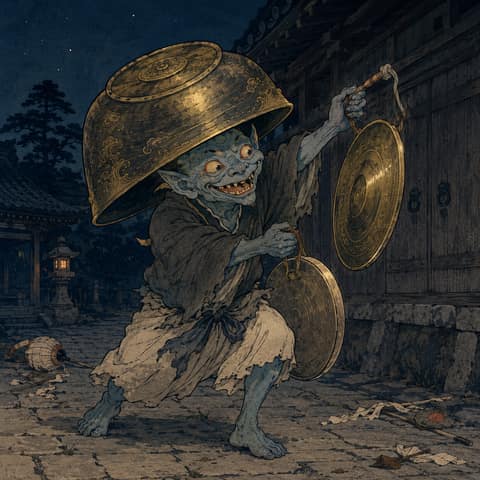
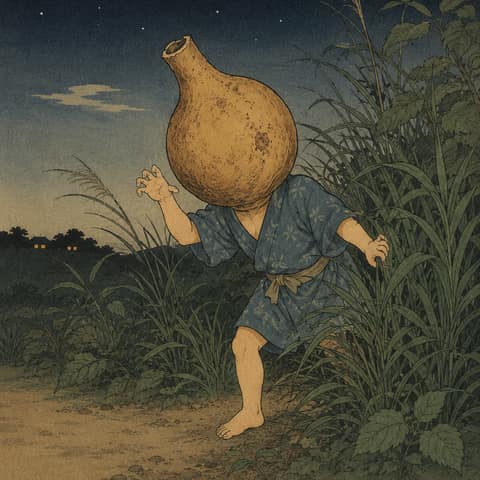
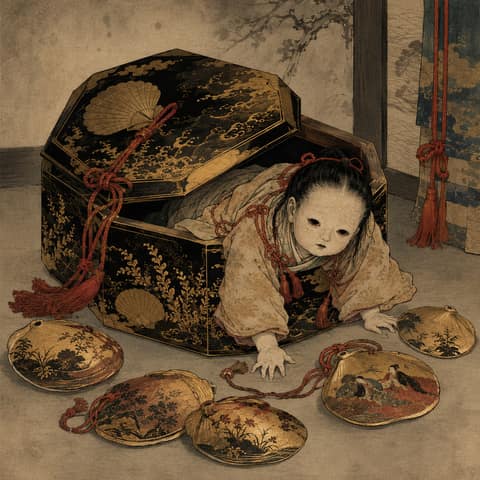
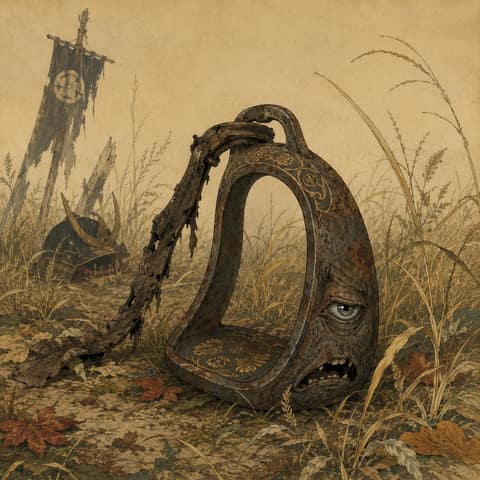
Elder Shamisen across multiple art-style decks

Card gallery
Tsukumogami
Centennial tools possessed by spirits ── the artifact yokai depicted in Sekien's Hyakki Tsurezure Bukuro

Tsukumogami

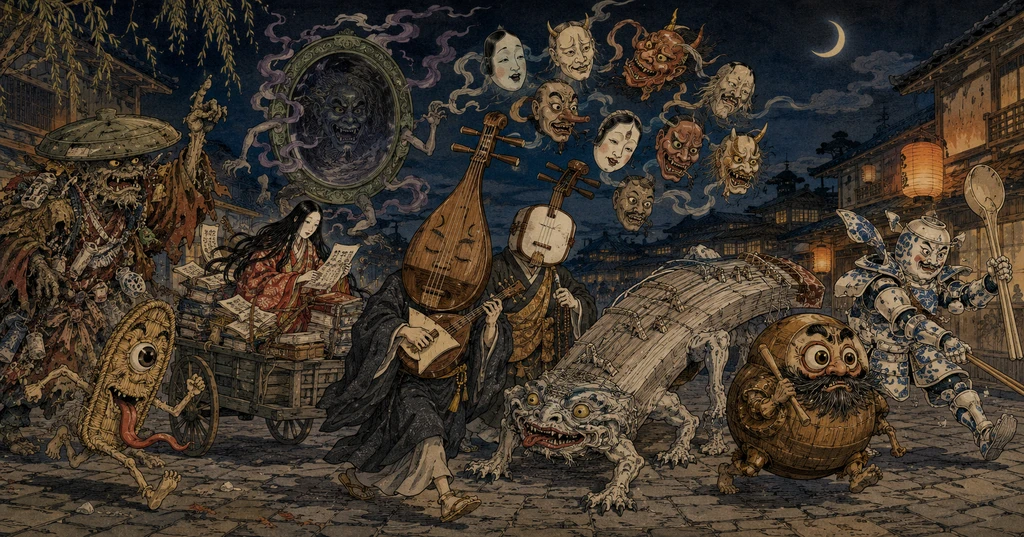
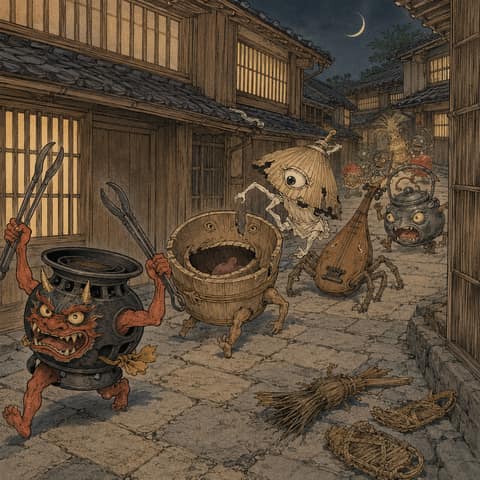
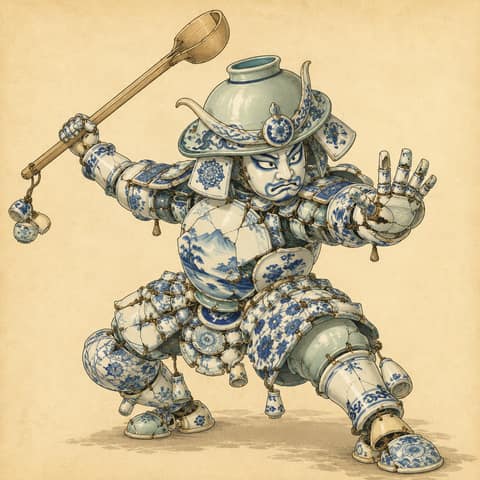
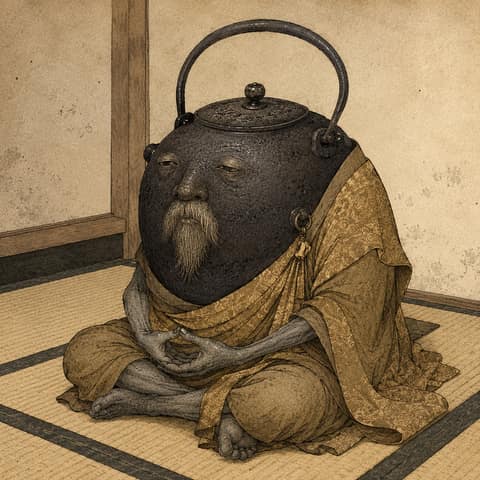
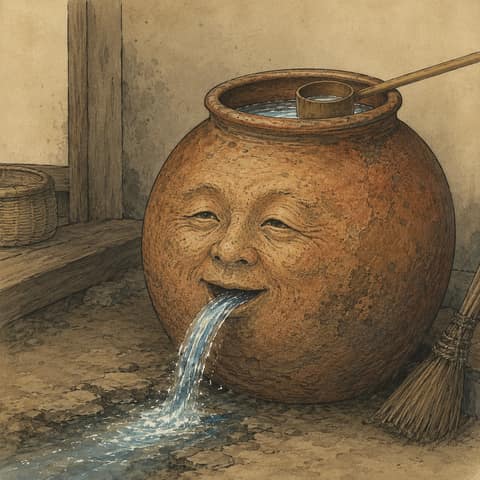
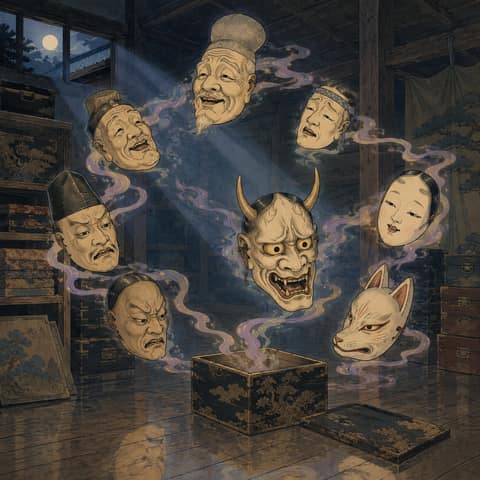
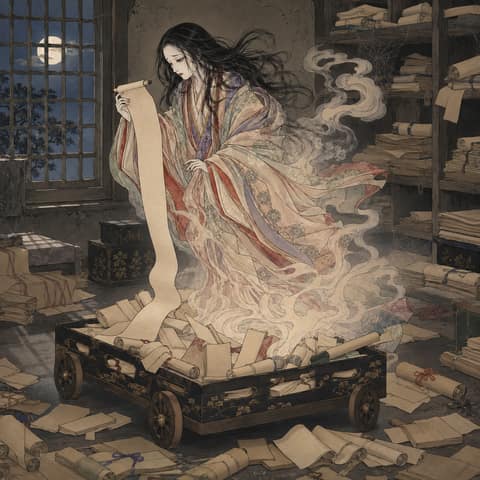
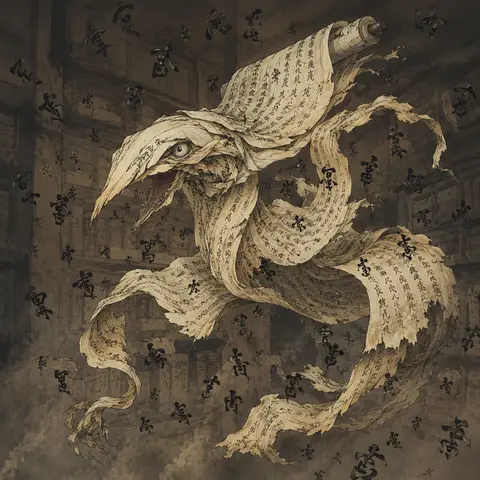
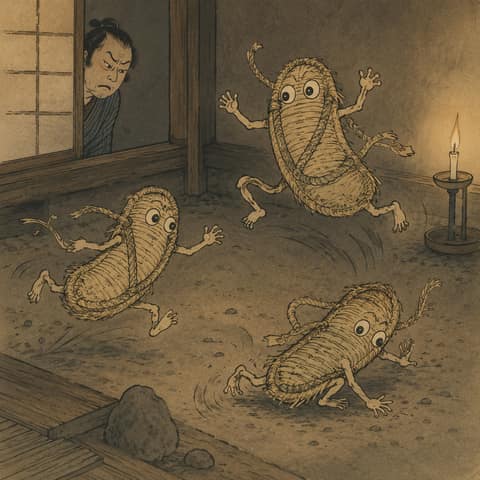
Tools and vessels used over long years are said to acquire spiritual life and transform when discarded and neglected, becoming beings known as tsukumogami. In the Muromachi-period "Tsukumogami Emaki", it was preached that tools transformed after a hundred years; the scroll depicted old implements, thrown away during house-cleaning, marching in a procession on the night of Setsubun holding grudges against humans. In the Edo period, Toriyama Sekien synthesized this worldview in his "Hyakki Tsurezure Bukuro" (The Illustrated Bag of One Hundred Random Demons), bestowing charming yokai forms upon individual objects such as biwa lutes, shamisen, koto, tea kettles, sutra scrolls, masks, and book carts, woven together with wordplay and historical anecdotes. Gathered here are the souls inhabiting tools, reflecting human sentiments—used, forgotten, yet impossible to fully discard.

Detailed Analysis

An interpretation grounded in the pictorial tradition of Toriyama Sekien’s Hyakki Tsurezure-bukuro. A shamisen that has gained a soul through long use is depicted like an aged monk, with robe-like garb and staff-like fittings. It plays on the proverb “a novice cannot leap straight to elder,” reinforcing the lesson that one must advance step by step in the arts, and it also cautions against mistreating tools. Similar images appear in Tsukioka Yoshitoshi’s prints, and later yokai encyclopedias introduce it as a representative tsukumogami. Lacking many named folktales, it spread chiefly through paintings and printed books.

Character Profile

This section is our own creative profile for storytelling. It is not historical fact or scholarship.

Rarity
Rare
Personality
satirical, world-weary, senior-like
Compatibility
harmonious with those devoted to the arts, strict toward the ill-mannered
Abilities
invites music (said to set its strings resonating late at night), offers hints that spur diligence in the performing arts, symbolizes the awakening of spirit in old utensils
Weaknesses
loses power through crude repairs or snapped strings, vulnerable to deterioration from getting wet
Habitat
tatami rooms, backstage dressing rooms, storehouses
🔮Yokai Compatibility Test

For more detailed information and diagnosis results about Sekien Zue Version, please click here.

Interested in this type of yokai?

Discover the yokai most similar to your personality with our yokai diagnosis

Start Yokai Diagnosis

Meet your guardian yokai at the shrine

Draw an omikuji fortune and discover the yokai watching over you today.