
YOKAI.JP

Biwa Bokuboku

BEE-wah BOH-koo-BOH-koo

Biwa Bokuboku

Biwa Bokuboku

Their soul is listening — speak, and they will answer.

Basic Description

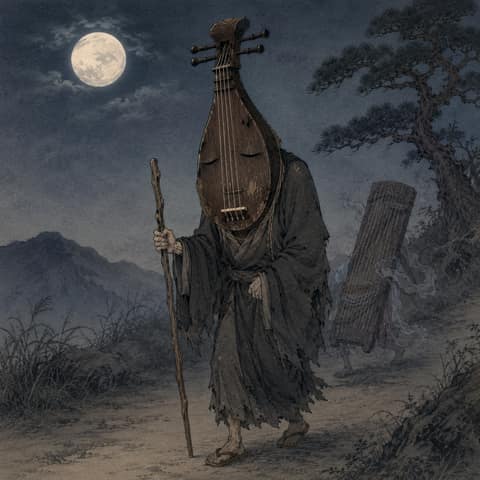
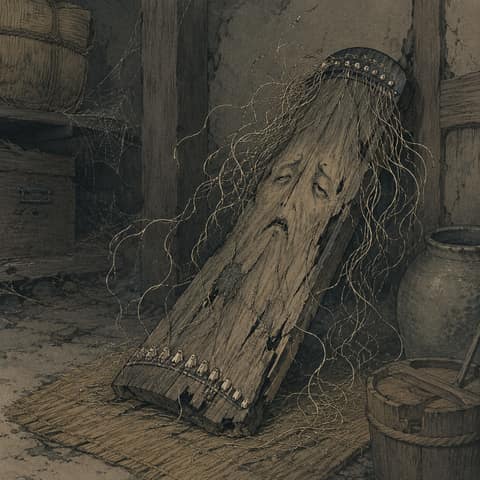
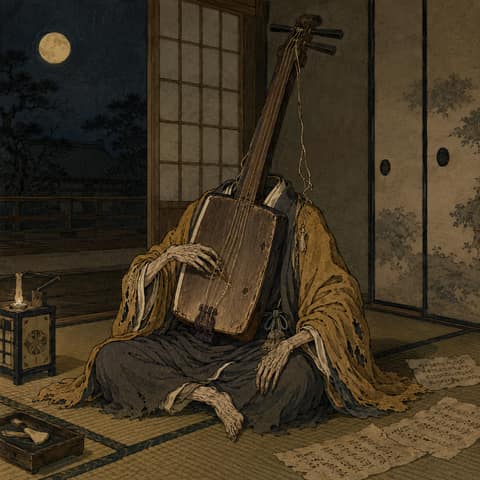
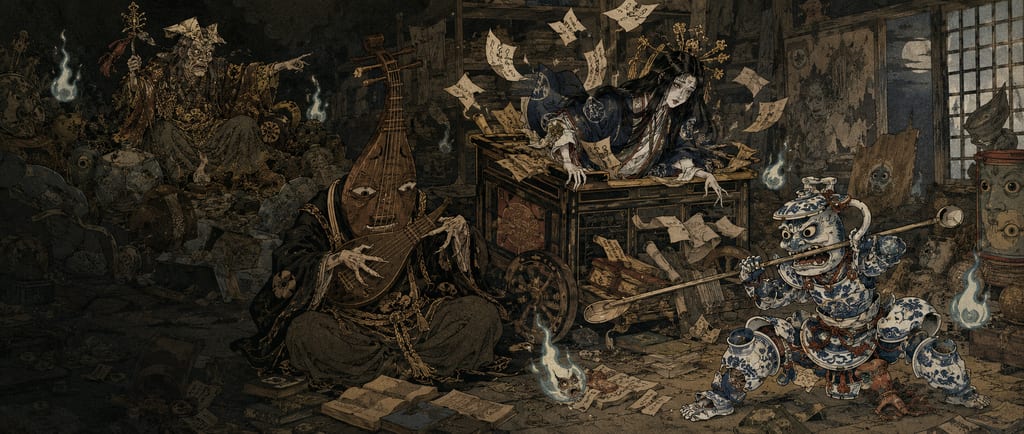
A tsukumogami in which a spirit inhabits a biwa lute and appears as a blind minstrel (zatō). Illustrated by Toriyama Sekien in Hyakki Tsurezure Bukuro, it bears a human body with the biwa’s pegbox as its head and leans on a staff. The name is said to allude to the famed instrument “Makiba,” and reflects the belief that old tools, after long use and the passage of time, awaken into autonomous beings. It adopts the guise of a blind musician, a classic image linking music and mendicant monks, and stands as a textbook case of a tool taking human form.

Folklore & Legends

Sekien notes that the ancient masterpieces Genjō and Makiba were shrouded in marvels, calling this being “bokuboku” from Makiba’s name. The Kinhishō records strange tales of Genjō and Makiba moving on their own, and of demons so enchanted that they stole and hung them up. Its iconographic roots trace to musical-instrument yokai in Muromachi-period Hyakki Yagyō picture scrolls, later echoed by artists like Tsukioka Yoshitoshi. No specific regional oral lore is singled out; it is treated as a type of old-instrument spirit tale.

Yokai Cards2

Biwa Bokuboku across multiple art-style decks

Card gallery
Tsukumogami
Centennial tools possessed by spirits ── the artifact yokai depicted in Sekien's Hyakki Tsurezure Bukuro

Tsukumogami

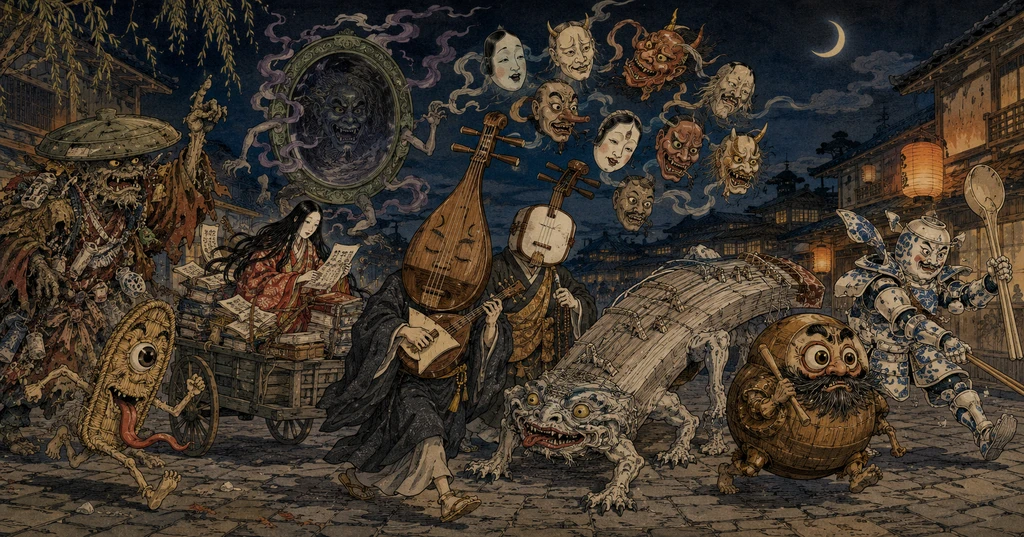
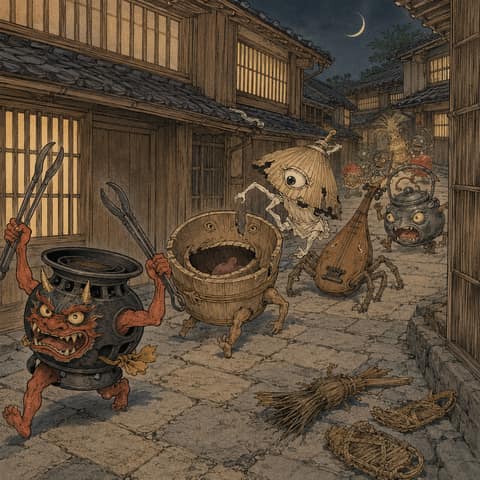
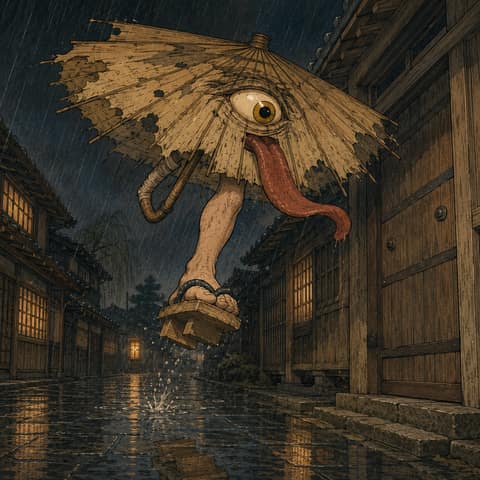
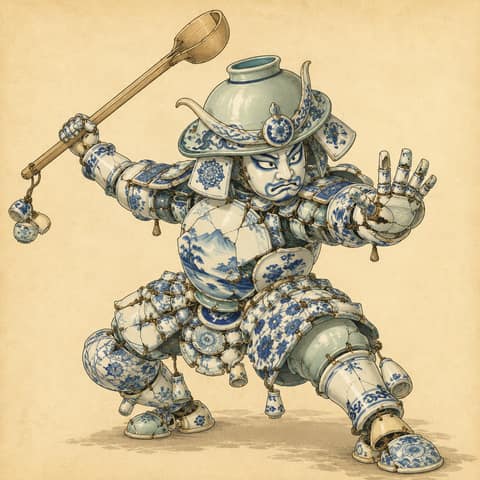
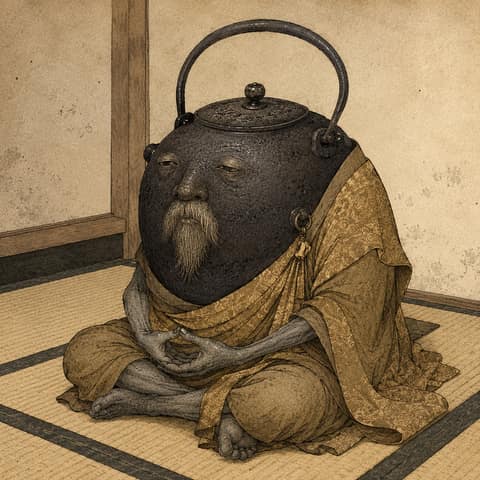
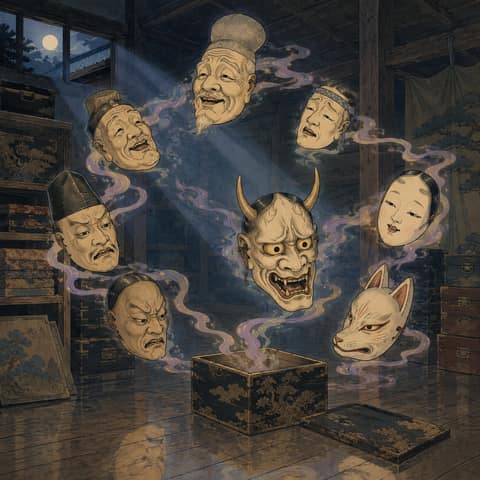
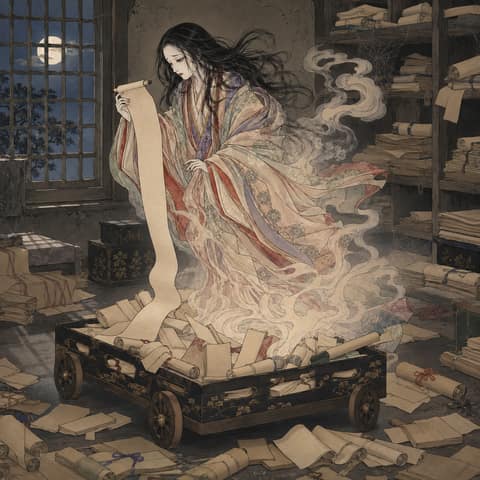
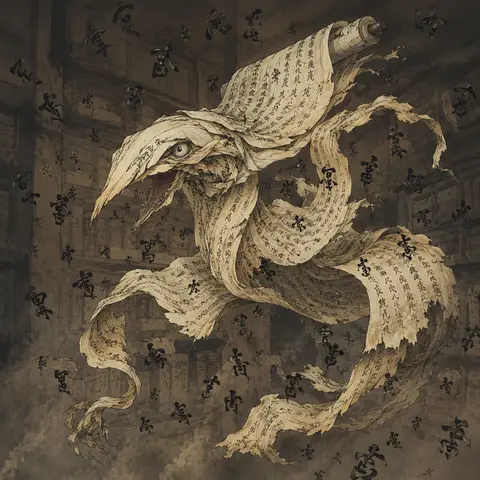
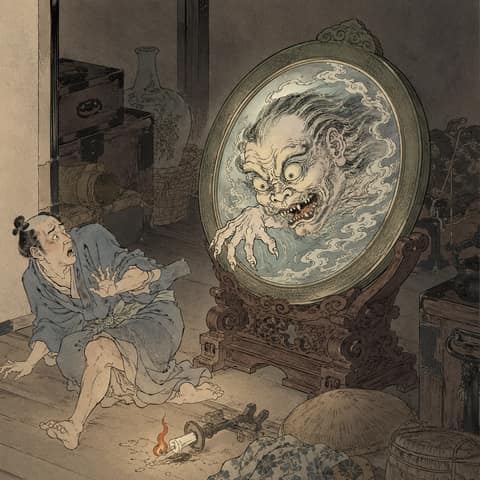
Tools and vessels used over long years are said to acquire spiritual life and transform when discarded and neglected, becoming beings known as tsukumogami. In the Muromachi-period "Tsukumogami Emaki", it was preached that tools transformed after a hundred years; the scroll depicted old implements, thrown away during house-cleaning, marching in a procession on the night of Setsubun holding grudges against humans. In the Edo period, Toriyama Sekien synthesized this worldview in his "Hyakki Tsurezure Bukuro" (The Illustrated Bag of One Hundred Random Demons), bestowing charming yokai forms upon individual objects such as biwa lutes, shamisen, koto, tea kettles, sutra scrolls, masks, and book carts, woven together with wordplay and historical anecdotes. Gathered here are the souls inhabiting tools, reflecting human sentiments—used, forgotten, yet impossible to fully discard.

Detailed Analysis

A standard reading grounded in Sekien’s imagery and the lineage of Muromachi picture scrolls. A biwa long played and cherished attains spirit, joins the night parade clad like a blind lute priest. Its tone captivates the heart and carries an allegory urging awe and respect for venerable instruments. It does not hinge on particular biographies or local lore; praise of crafted objects and cautionary reverence are its themes. Tales tied to famed instruments such as Genjō and Makiba serve only to frame the tsukumogami worldview, while the conduct of the Biwa Moku-moku itself survives chiefly in pictorial form. In images it walks with eyes closed, leaning on a staff, sometimes paired on the same spread with a koto tsukumogami.

Character Profile

This section is our own creative profile for storytelling. It is not historical fact or scholarship.

Rarity
Epic
Personality
taciturn, single-minded, steadfast
Compatibility
prefers silence and fine tuning, dislikes clamor and roughness
Abilities
plays soothing tones that calm the heart in response to tuning, awakens the presence of old instruments, walks as if leading the night parade
Weaknesses
snapped strings or a cracked body, rough handling, prolonged mis-tuning
Habitat
storehouses of old temples, parlor closets, backstage instrument chests
🔮Yokai Compatibility Test

💕Love Yokai Type Test

For more detailed information and diagnosis results about Canonical Iconography, please click here.

Interested in this type of yokai?

Discover the yokai most similar to your personality with our yokai diagnosis

Start Yokai Diagnosis

Meet your guardian yokai at the shrine

Draw an omikuji fortune and discover the yokai watching over you today.