YOKAI.JP

Abumikuchi(ah-BOO-mee-KOO-chee)

Basic Description

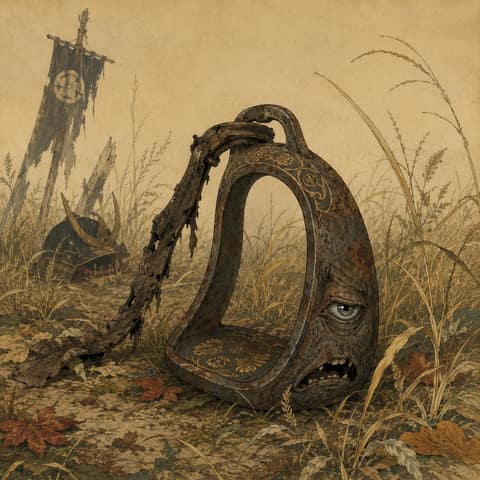
Abumikuchi is a tsukumogami depicted as a stirrup sprouting eyes and a mouth. It appears in Toriyama Sekien’s Hyakki Tsurezure Bukuro, where discarded arms and tack are said to gain a spirit over time. Sekien quotes a line from the Noh play Tomonaga, evoking battlefields, but offers no specific tale. The theme centers on the grudge and attachment of tools treated with neglect.

Folklore & Legends

Situated within the Edo-period tradition of animated tools in picture scrolls and books, Abumikuchi is paired with the “Saddle Fellow” in Hyakki Tsurezure Bukuro. The common reading is that stirrups left on fields after war acquire numinous power, though no place names or characters are tied to a fixed oral tale. Modern authors sometimes describe it as waiting for its master, but that motif does not appear in Sekien’s original entry.

Yokai Cards1

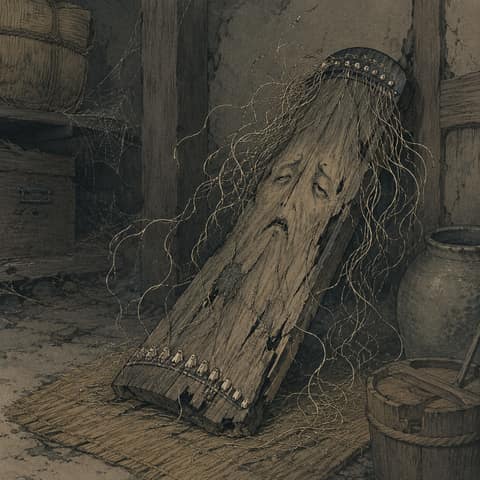
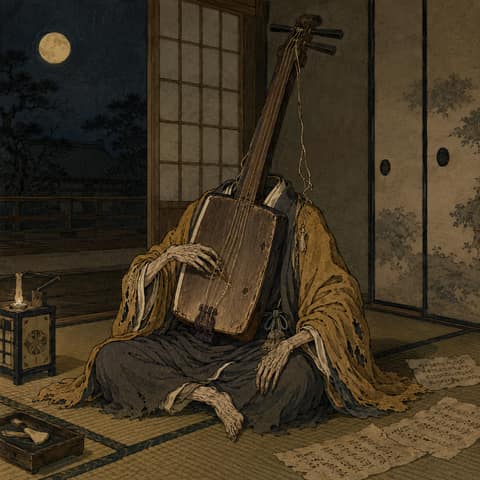
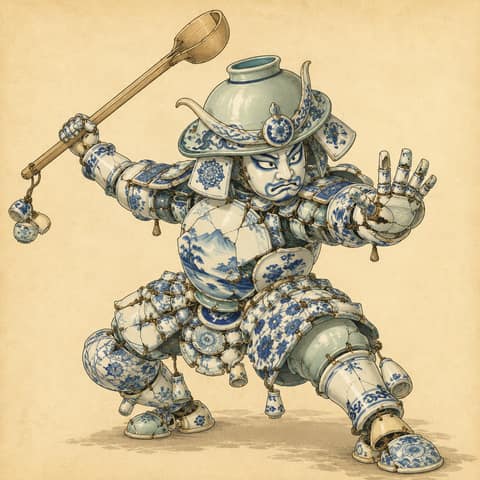
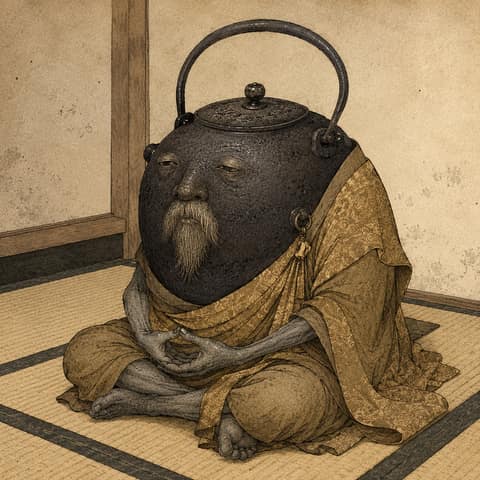
Abumikuchi across multiple art-style decks

Card gallery
Tsukumogami
Centennial tools possessed by spirits ── the artifact yokai depicted in Sekien's Hyakki Tsurezure Bukuro

Tsukumogami

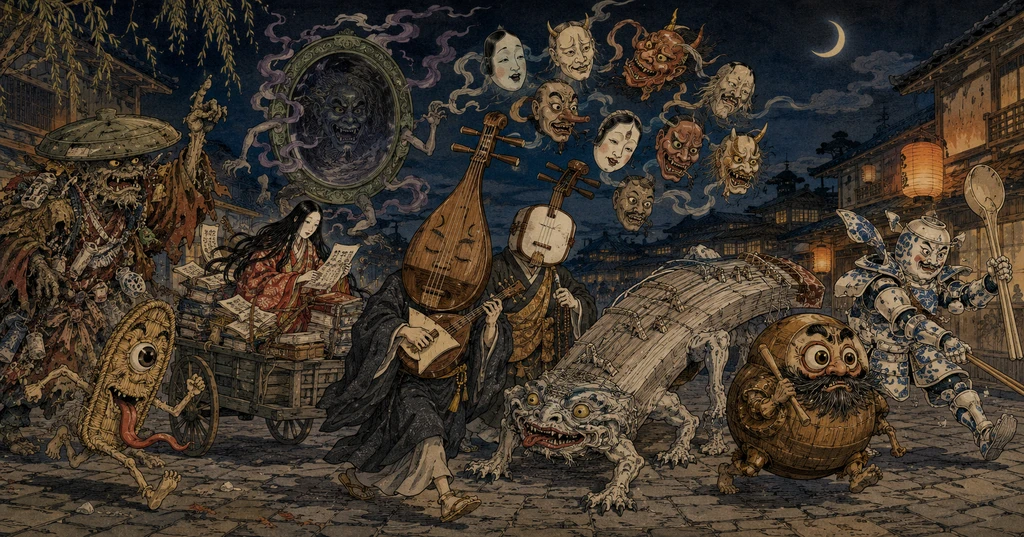
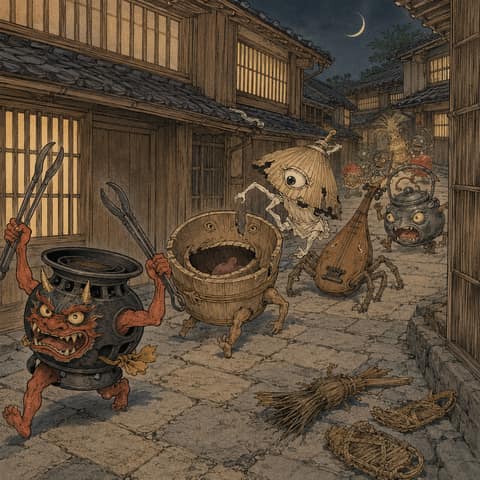
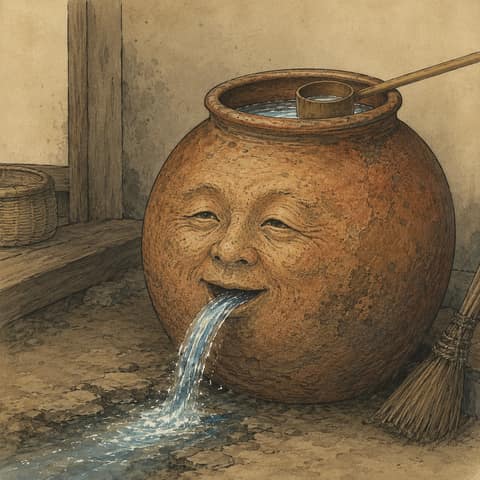
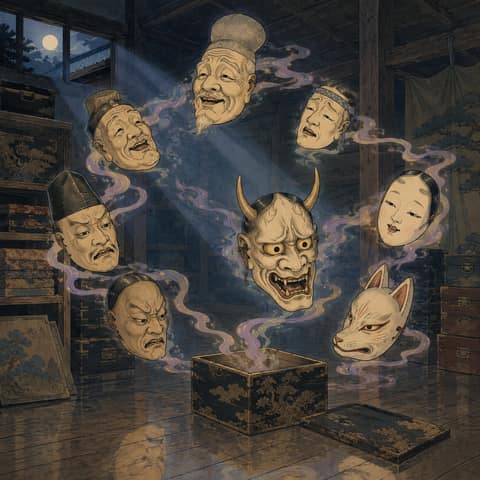
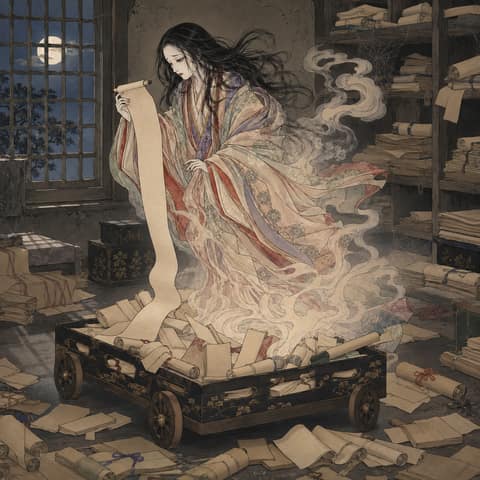
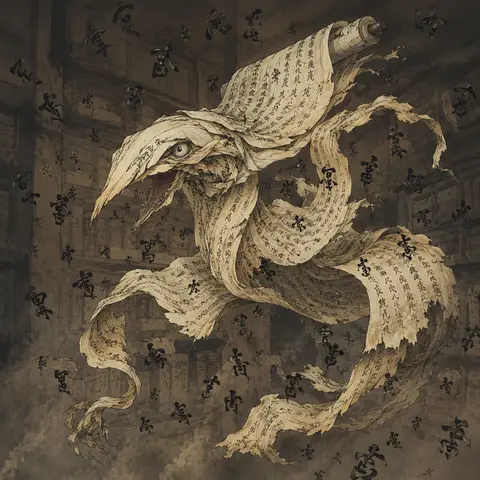
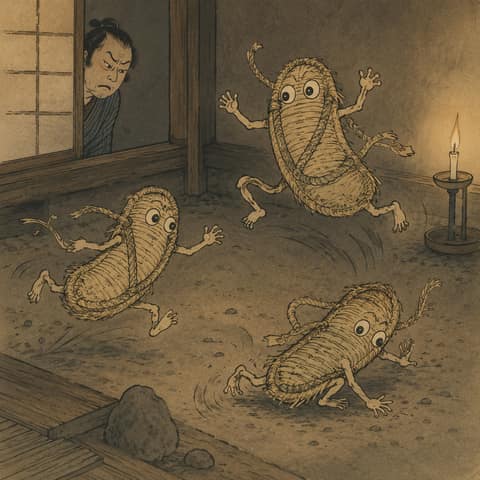
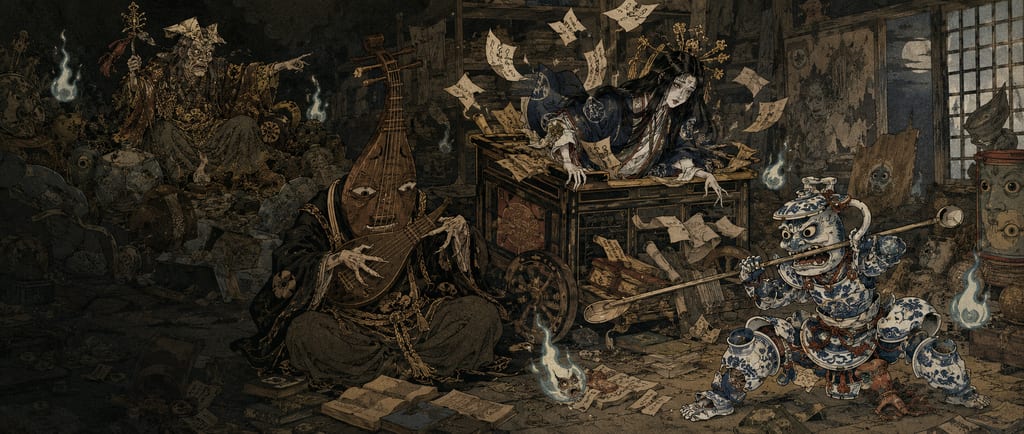
Tools and vessels used over long years are said to acquire spiritual life and transform when discarded and neglected, becoming beings known as tsukumogami. In the Muromachi-period "Tsukumogami Emaki", it was preached that tools transformed after a hundred years; the scroll depicted old implements, thrown away during house-cleaning, marching in a procession on the night of Setsubun holding grudges against humans. In the Edo period, Toriyama Sekien synthesized this worldview in his "Hyakki Tsurezure Bukuro" (The Illustrated Bag of One Hundred Random Demons), bestowing charming yokai forms upon individual objects such as biwa lutes, shamisen, koto, tea kettles, sutra scrolls, masks, and book carts, woven together with wordplay and historical anecdotes. Gathered here are the souls inhabiting tools, reflecting human sentiments—used, forgotten, yet impossible to fully discard.

Detailed Analysis

An abumiguchi depicted per Toriyama Sekien’s Illustrated Bag of a Hundred Tools. An ancient stirrup sprouts eyes and a mouth, shown lying on the ground or dragging its straps. A quoted line from the Noh play Tomonaga invites readings of battlefields and fallen warriors in the background, yet no concrete deeds or harms are recorded. Following tsukumogami conventions, it is the resentment and lingering attachment of a tool long used then discarded given form. This aligns with Edo-period essays that teach “cherish your implements,” and likely reflects the Tsurezuregusa passage warning about horse gear, echoed in its pairing with the Saddle Fellow. The modern retelling that it “awaits its master,” seen in Mizuki Shigeru’s notes, lacks support in older sources and is not adopted here. No verified field traditions are known, and no region is specified.

Character Profile

This section is our own creative profile for storytelling. It is not historical fact or scholarship.

Rarity
Rare
Personality
taciturn, deeply fixated
Compatibility
ill-suited to those who mistreat tack or weapons
Abilities
clanging metallic sounds late at night (interpretive reconstruction)stirring anxiety or regret in the human heartoccasionally moving its own straps or leather thongs
Weaknesses
respectful memorial rites or repair and reuse, purification rites with salt or fire, not being left neglected for long
Habitat
old battlefields and open fields (provisional), corners of barns or stables, places where old tools gather
Interested in this type of yokai?

Discover the yokai most similar to your personality with our yokai diagnosis

Start Yokai Diagnosis

Yokai Compatibility Test

The diagram below is a diagnostic evaluation chart for Sekien Zue Conformant. The higher the value of each item, the stronger that characteristic is expressed.

Meet your guardian yokai at the shrine

Draw an omikuji fortune and discover the yokai watching over you today.