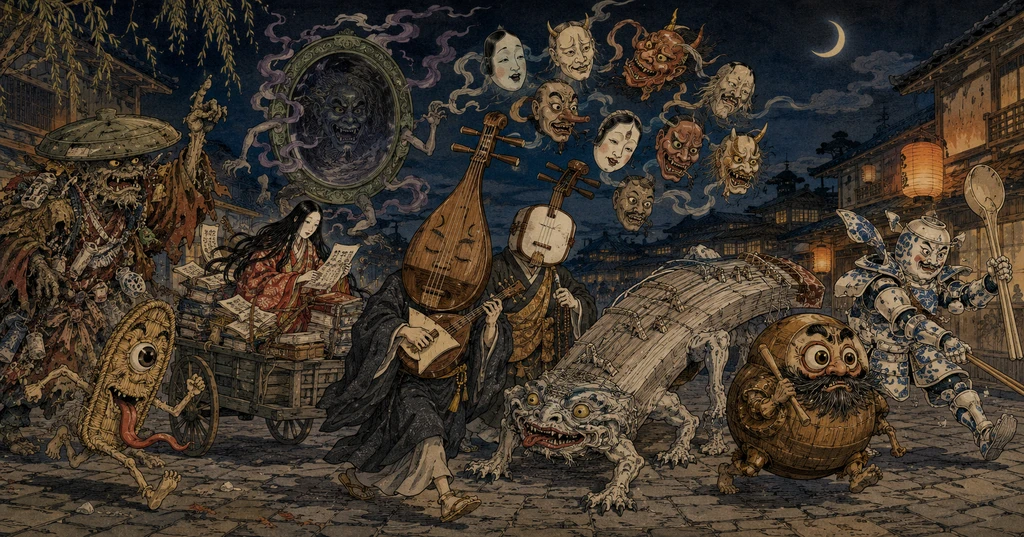
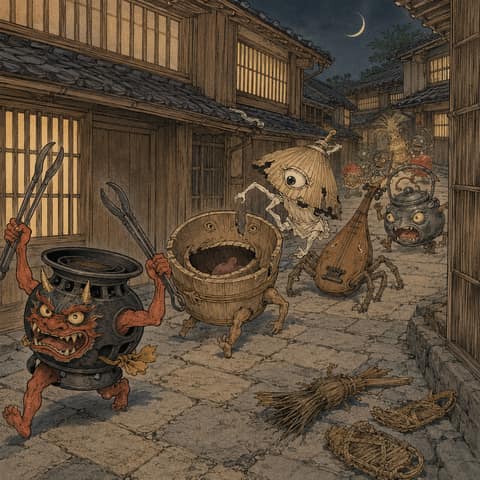
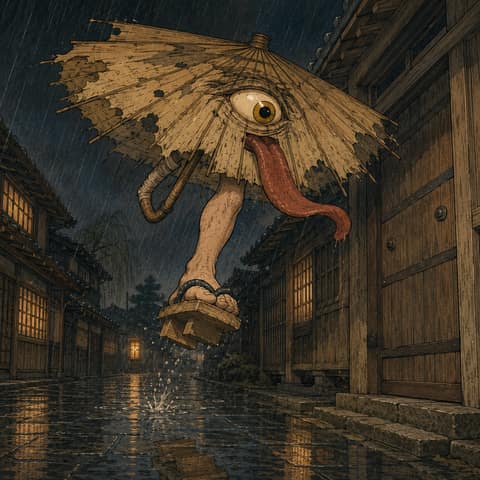
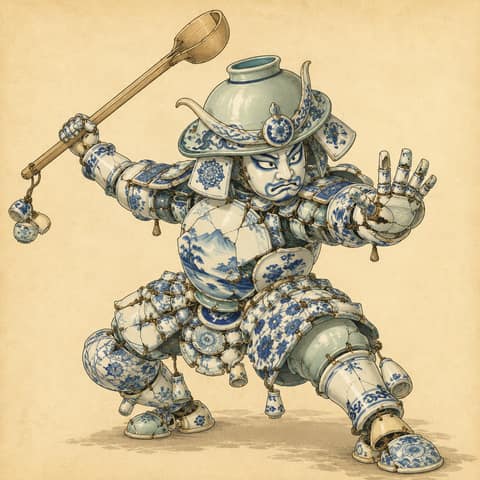
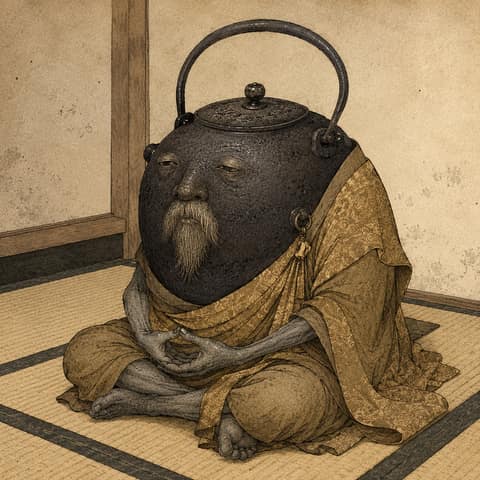
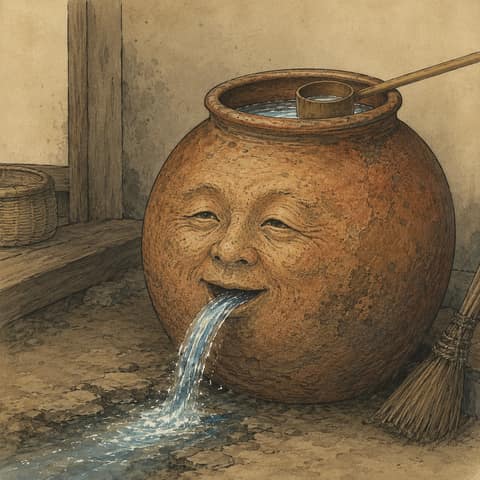
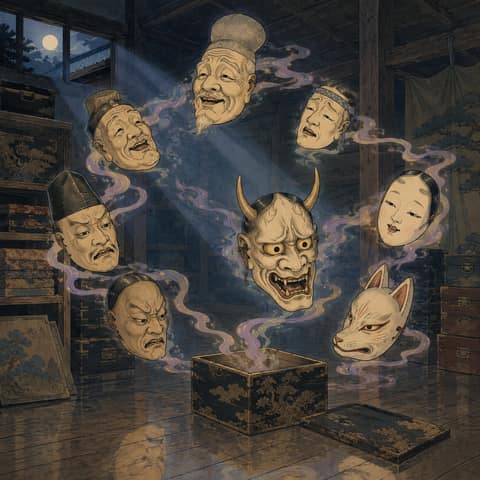
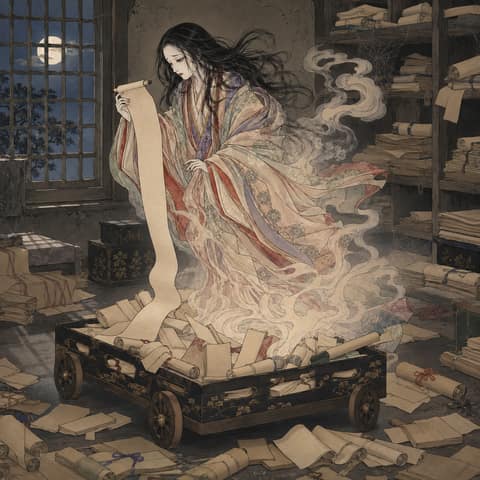
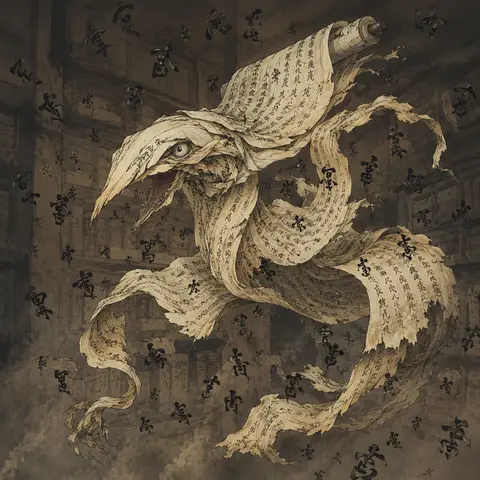
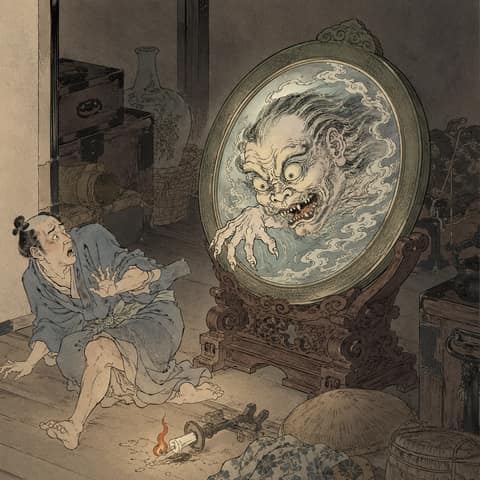
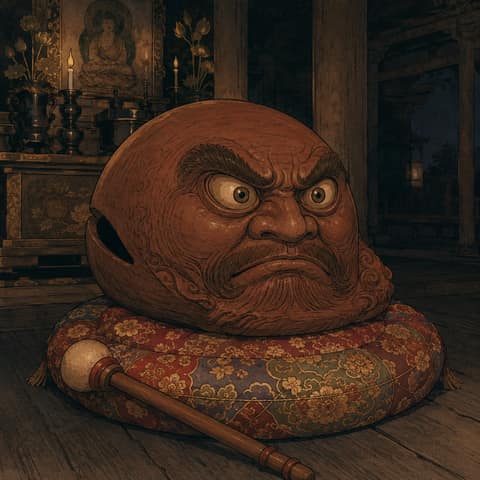
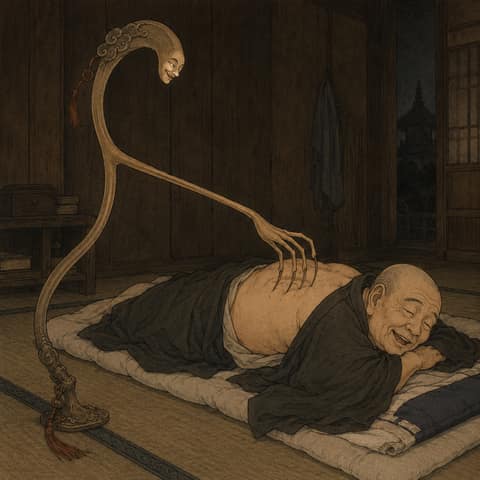
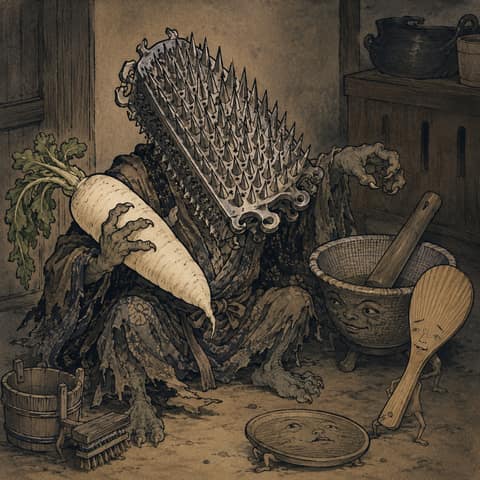
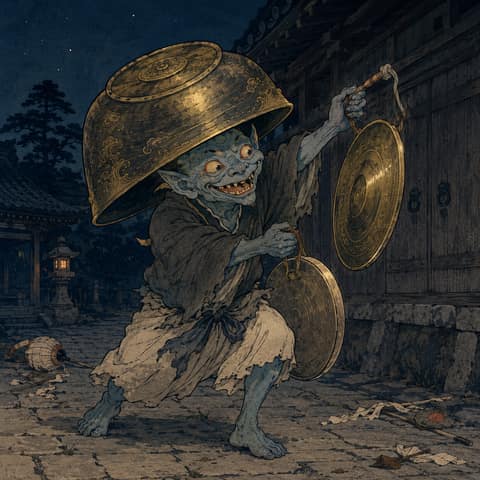
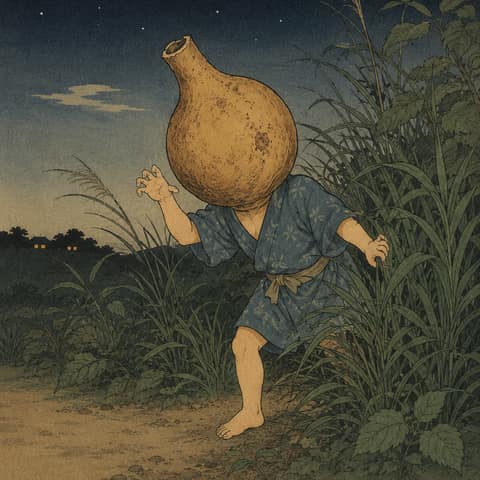
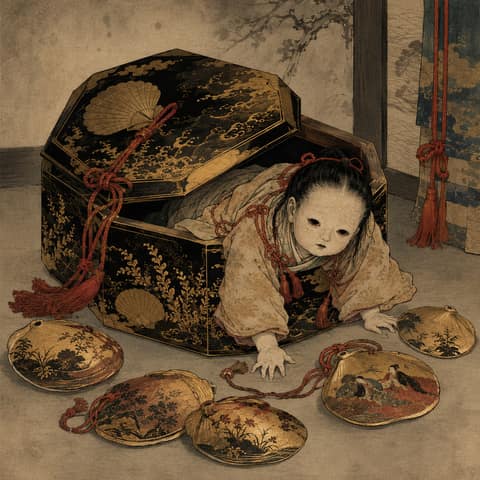
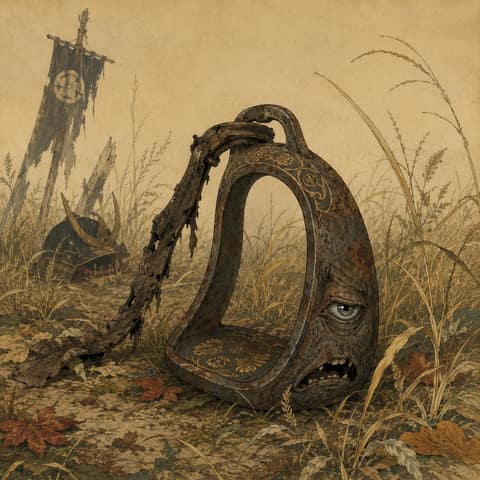
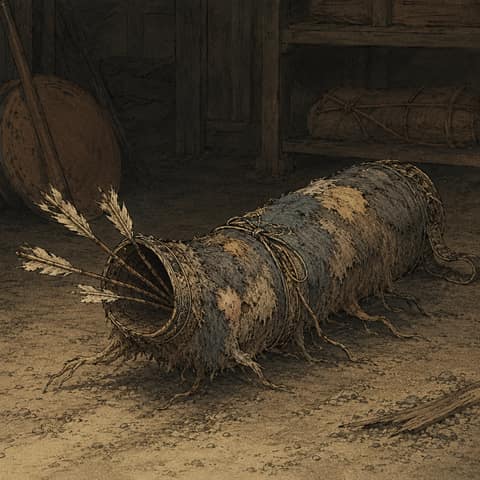
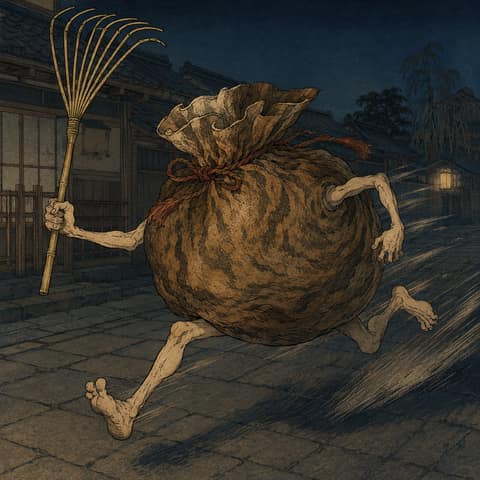
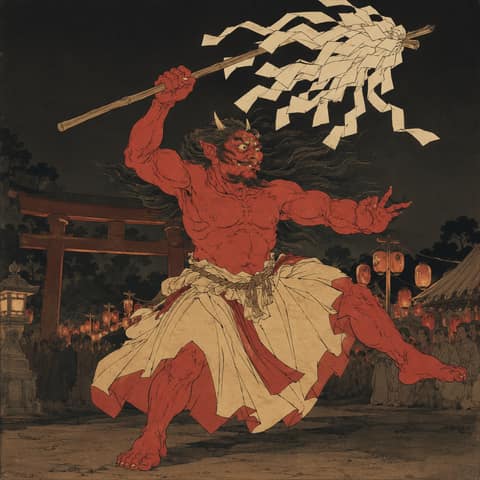
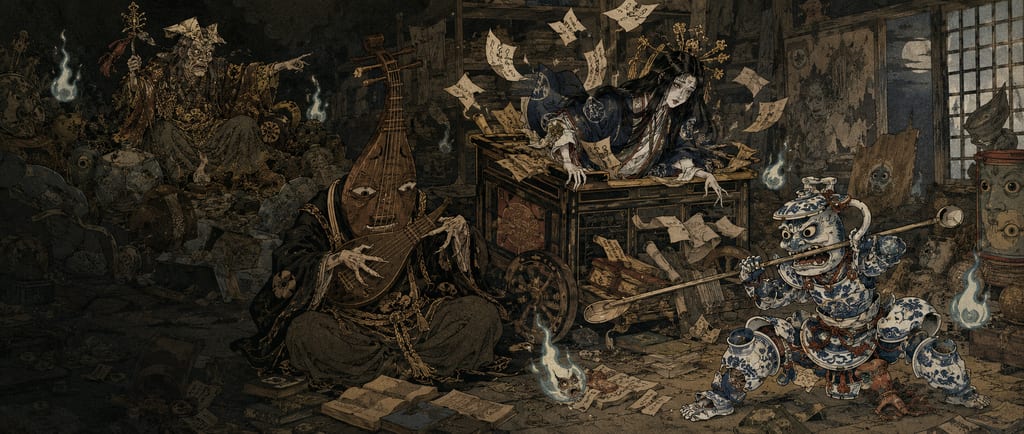
Rooted in Sekien’s picture manuals, this tsukumogami-style portrayal recasts rivalry among ceramic centers like Seto and Karatsu into the guise of a warrior effigy. The body is a composite of cups, sake flasks, warming pans, and plates arranged as armor, while the accompanying text brims with wit, blending diction from Chinese classics and military tales. Rather than a field-sighted apparition, it crystallizes the idea of spirits inhabiting objects and the Edo-period literacy that likened trends and the prestige of named masterpieces to a “battle.” The motif continued into Meiji-era ukiyo-e and is viewed as a classic in the lineage of the Night Parade of One Hundred Demons.
Character Profile
This section is our own creative profile for storytelling. It is not historical fact or scholarship.
Yokai Type - Traditional Yokai
Category - Animated Objects & Undead
Rarity - Rare
Personality - stern and dignified, values proper decorum, avoids needless conflict
Compatibility - favorable toward those who treat implements with care
Abilities - command of implements as a general of the Hyakki Yagyōmetamorphosis of appearance by composing a warrior from vesselsintimidation and display that symbolize authority through mitate
Weaknesses - no specific folklore record, interpretive vulnerability that the form collapses if component vessels are missing
Habitat - the visual realm of picture scrolls, picture manuals, and nishiki-e prints, within common views of implements and the tsukumogami concept