物語が少ないのに、
なぜ誰もが知っているのか
からかさ小僧の最大の特徴は、古い物語の少なさと、現代の知名度が釣り合っていないことである。河童や雪女には、遭遇した人物、怪異の経過、助かる方法、物語の結末まで備えた説話が数多くある。それに対して、からかさ小僧につながる資料は、化物一覧の一語、役者絵の役名、双六の一枠、化物尽くしの一図といった短いものが中心である。何を望み、誰を襲い、最後にどうなったのかを語る共通の物語はほとんど見えてこない。
それでも広く知られるようになったのは、姿そのものに強い記憶力があるからだ。丸い傘、一つ目、一本足、長い舌という輪郭は、細かな説明を読まなくても識別できる。『百種怪談妖物双六』のような小さな画面にも収まり、[6]舞台では一本足の踊りとして見せ場をつくる。からかさ小僧は、長い物語より先に、ひと目で伝わる視覚記号として成長した妖怪なのである。
傘そのものが身体の設計図になる
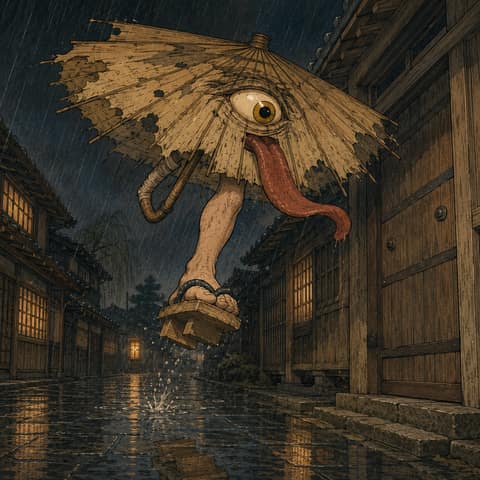
からかさ小僧の造形は、実物の傘の構造をほとんど壊さずに生き物へ変えている。開いた傘の円は大きな頭や顔になり、中央には一つの目を置ける。傘の縁の下へ口と舌を加えれば、少ない線だけで表情が生まれる。中心から伸びる一本の柄は、そのまま一本脚として読める。
この変換の巧みさは、単なる奇抜さにとどまらない。人間の身体をすべて与えるのではなく、目、口、脚など最低限の部分だけを付け加えるため、見る側は最後まで「傘である」と理解できる。道具と生物の境界が一枚の絵のなかに残ることが、器物妖怪らしい不思議さを生んでいる。
一つ目は最初からの決まりではない
現在もっとも有名な一つ目型を、年代の確かな資料で確認できる早い例が、安政5年(1858)の「鷺淵の一本足」である。傘の中央に一つ目を置き、赤い舌と一本脚を加えた姿は、今日のからかさ小僧にきわめて近い。[7]
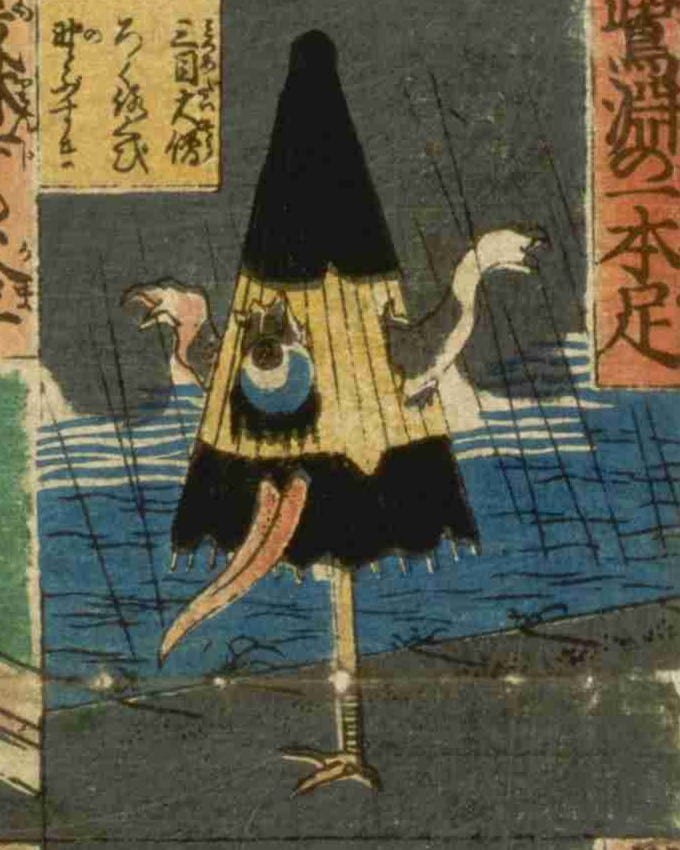
しかし、その前年の「壱本足ノお化」では、閉じた傘のような胴から役者の顔と両腕が突き出している。[8]歌川芳盛の『しん板化物尽し』では、傘の面に二つの目があるように見える。[9]わずかな作例を比べるだけでも、人面、一つ目、二つ目という三つの型が並ぶ。
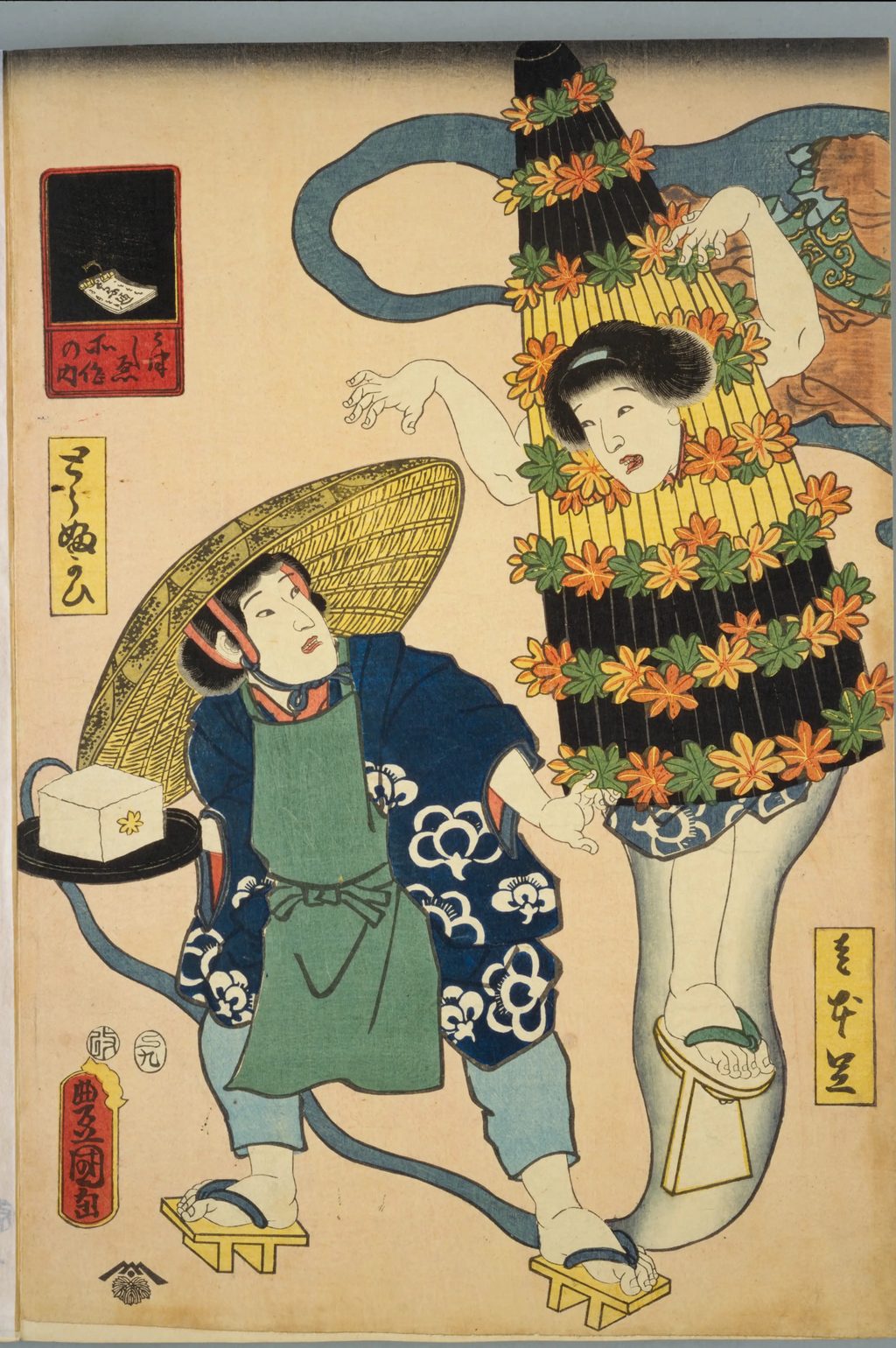
一つ目は、古来の傘妖怪すべてに共通する身体的条件ではなかった。大きな目を中央へ一つ置けば、小さな印刷物でも顔だとわかりやすく、左右対称の傘ともよく合う。現在の一つ目型は、複数の試みのなかから、もっとも簡潔で記憶しやすい姿として選ばれていったと考えられる。
一本足はどこから来たのか
一本足は妖怪を異形に見せる強い記号であり、一本だたらなど、ほかの一足の怪異との関係が想像されることもある。しかし、姿が似ているだけで、山の神や鍛冶の伝承からからかさ小僧が生まれたと結論づけることはできない。直接の系譜を示す文献は確認されていない。
傘妖怪の場合、もっとも素直な説明は傘の構造そのものにある。中央の柄を脚へ読み替えれば、一本足の身体が自然に成立する。さらに1857年の舞台では、「壱本足」が役者の踊る身体として演じられていた。一本足には、絵のなかで傘らしさを保つ働きと、舞台で跳ねたり回ったりする動きを強調する働きの両方があった。
1858年の「鷺淵の一本足」では、鷺が片脚で立つ姿も重ねられている。一本足を一つの古い信仰だけに求めるより、傘の柄、役者の身体、鷺の姿、絵の簡潔さが重なった造形として見るほうが、現存資料にはよく合う。
長い舌は「人を舐める能力」ではない
長い舌は、一つ目と並んで現代のからかさ小僧を特徴づける部分である。1858年の「鷺淵の一本足」には赤い舌があり、芳盛の傘妖怪も口から舌を出している。舌を突き出した顔は、笑い、挑発、愚弄、驚き、異様さを一度に表現できる。静止した絵に動きと感情を与える、効果的な造形だった。
だが、舌が描かれていることと、舌で人を舐めたという物語は同じではない。確認できる古い資料には、夜道で通行人の顔を舐める場面も、その舌に毒や麻痺などの力があるという記述もない。図像から想像しやすい行動が、後世の創作や妖怪図鑑で具体的な能力へ育った可能性はあるが、それを古来の伝承として遡らせることはできない。
腕と下駄がつくと、
道具が役者になる
腕も下駄も、すべての傘妖怪に備わる部分ではない。芳盛の「からかさのおばけ」には二本の腕があり、一本脚の先には下駄が履かされている。一方、1858年の「鷺淵の一本足」では、傘、目、口、舌、脚が中心となり、腕や下駄は目立たない。
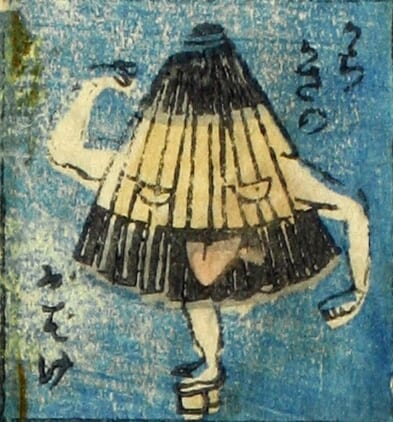
腕を加えると、傘は物を持ったり身振りをしたりできる人型へ近づく。下駄を履かせると、一本の柄にすぎなかった部分が、地面を踏む脚としてはっきり見える。これらは固定した生態ではなく、道具を舞台役者のように振る舞わせるための造形上の選択だった。作品ごとの差を残すことで、傘が少しずつ人間の身体を獲得していく過程が見えてくる。
「小僧」は子どもの姿を意味しない
現在名に含まれる「小僧」は、この妖怪が少年の姿をしているという意味ではない。一つ目小僧や豆腐小僧のように、妖怪名の「小僧」は、小型で親しみや滑稽味のある化物を示す呼び名としても用いられる。
しかも、1762年の表記は「東花坊のからかさ」、1857年は「壱本足ノお化」、1858年は「鷺淵の一本足」であり、いずれにも「小僧」は付かない。「からかさ小僧」という標準名がいつ定着したかは、現存するこれらの資料からは決められない。古い作品を紹介するときは原題を保ち、現在名を過去へさかのぼって書き込まないことが、この妖怪の変化を正しく見るうえで欠かせない。
「唐傘」は中国の妖怪という意味ではない
「唐傘」は妖怪固有の言葉ではなく、柄を持って差す和風の傘を指す普通名詞である。『日本大百科全書』の「唐傘」項目は、柄が付くことから「柄傘」とする説明と、舶来品であることを示す「唐」の字を当てた説明を紹介している。ほかにも古くから複数の語源説があり、一つに定まってはいない。[10]
したがって、「唐」の字を根拠に、中国から来た妖怪と解釈することはできない。また、「からかさ」という普通名詞が古くから使われていたことと、「からかさ小僧」という妖怪名が同じ時代に成立していたことも別問題である。表記は現在「からかさ小僧」と「唐傘小僧」の両方が用いられるが、原典の名称とは区別して考える必要がある。
付喪神という分類と、
個別の来歴
からかさ小僧を付喪神の一種と考えることには、器物妖怪を整理するうえで一定の妥当性がある。古傘という道具が顔と脚を得て動く姿は、器物が生命を持つという付喪神の考え方とよく響き合う。
ただし、分類上の近さは、そのまま個別の伝記にはならない。『付喪神絵巻』に描かれる、百年を経た古道具、持ち主に捨てられた怒り、人間への復讐、仏道への帰依という筋書きは、からかさ小僧の古い記録には現れない。[11]からかさ小僧を「器物妖怪」または「後世に付喪神の一種とされる妖怪」と説明することと、「百年を経た傘が怨念でこの姿になった」と断定することの間には、大きな違いがある。
滑稽な顔から性格は決められない
からかさ小僧の図像は、恐ろしいというより、滑稽で愛嬌深く見えることが多い。舌を出した顔、一本足で跳ねそうな姿、舞台で踊る役者の身体は、見る者を楽しませる。双六や化物尽くしのような遊びの媒体に入ったことも、親しみやすい印象を強めただろう。
しかし、楽しげに見えることは、本人が陽気で善良だという証拠ではない。古い資料には、人を助ける、殺す、騙す、驚かして喜ぶといった一貫した行動が記されていない。「害を与えた話が見つからない」ことと、「絶対に無害である」ことも同じではない。歴史上の性格は不詳であり、現在親しまれているいたずら者の人格は、後世の受容によって育ったものと見るのが適切である。
能力、
弱点、
住処はわかるのか
一本足で跳ぶ、踊る、舌を伸ばすといった動きは、図像や舞台から容易に想像できる。だが、超自然的な速度で追跡する、空を飛ぶ、雨を呼ぶ、傘の骨や紐を操るといった力を裏づける古い記録はない。絵に描かれた姿と、物語のなかで実際に使った能力を区別する必要がある。
弱点についても同様である。紙が破れれば弱る、骨が折れれば力を失う、火や強い光を恐れるという説明は、傘という道具の物性から連想されたものにすぎない。伝承上の退治法、封じ方、嫌うものはわかっていない。
決まった住処も確認できない。1762年には興福寺の東花坊に名が現れるが、そこを唯一の発祥地とは呼べない。軒下、蔵、夜道、路地の辻といった場所は傘妖怪に似合う舞台ではあっても、古い記録に共通する生息地ではない。からかさ小僧は、特定の土地に棲み続けた妖怪というより、舞台や印刷物を渡り歩くことで広まった妖怪だった。
異なる時代の部品から生まれた名姿
今日のからかさ小僧は、一つの古典作品を忠実に再現した姿ではない。一つ目は1858年の双六に明瞭で、一本足はそれ以前の舞台にも現れ、長い舌や下駄、腕は作品ごとに組み合わせが異なる。そこへ後世の「小僧」という親しみやすい名前と、付喪神という分類が重なった。
この合成性は、由来が曖昧だという欠点ではない。むしろ、絵師、役者、版元、遊ぶ子ども、妖怪を語り直す人々が、時代ごとに傘の身体をつくり替えてきた証拠である。からかさ小僧の魅力は、失われた長い物語ではなく、一本の傘からどれほど多様な顔と動きを引き出せるかという、視覚文化の豊かさにある。
Character Profile
This section is our own creative profile for storytelling. It is not historical fact or scholarship.
Yokai Type - Traditional Yokai
Category - Household Spirits
Rarity - Common
Personality - Surprises people but is not thought to take lives.
Compatibility - Shows itself to frighten children and the curious, but avoids those who are cautious.
Abilities - Surprises by jumping and suddenly appearing in the dark nightOnomatopoeic supernatural phenomena of rattling its frame in tune with the wind and rainThe strange act of stretching out a long tongue to stroke a faceManipulating its carrying string and ribs to shake objects
Weaknesses - Tends to hide when exposed to strong light, loses strength if its frame or paper is damaged, avoids crowded places
Habitat - Under eaves, dirt floors, storehouses of shrines and temples, crossroads in alleyways