YOKAI.JP
Konjaku Hyakki Shūi (Later Gleanings of a Hundred Ghosts)

Konjaku Hyakki Shūi (Later Gleanings of a Hundred Ghosts)

47 yokai
Thematic

Konjaku Hyakki Shūi is a yokai picture book by the Edo-period artist Toriyama Sekien, published in 1781. It belongs to the later phase of his “Hyakki” series, following Gazu Hyakki Yagyō and Konjaku Gazu Zoku Hyakki, and—as the title suggests—“gleans” the yokai that hadn’t yet been depicted. Unlike Gazu Hyakki Yagyō, which relies mostly on images, this volume pairs each illustration with a brief note or verse, inviting readers to imagine the creatures’ origins and associations. The yokai are remarkably diverse: some draw on older sources like the Wakan Sansai Zue, others come from the worlds of Noh and Kabuki, and many appear to be Sekien’s own inventions—an engaging blend of tradition and imagination. The work is said to have three fascicles—Clouds, Mist, and Rain—but only the Rain volume survives today, leaving the whole still uncertain. Colored editions once existed, prompting speculation about how readers originally encountered the book. This volume epitomizes Sekien’s approach to yokai: not merely as objects of fear, but as beings to observe, ponder, and enjoy.
Updated: 1/13/2026
yokaiJapanese folkloreToriyama SekienHyakki YagyoEdo period artKonjaku Hyakki Shūisupernatural creaturesghost storiesyokai collection

Included Yokai

47 yokai are included

These yokai also have art cards

42 cards — ukiyo-e, modern Japan & more

Mirage (Shinkirō)

Mirage (Shinkirō)

Epic

shin-kee-ROH

蜃の吐く楼閣・蜃気楼

Natural Phenomena SpiritsCoastal regions across Japan

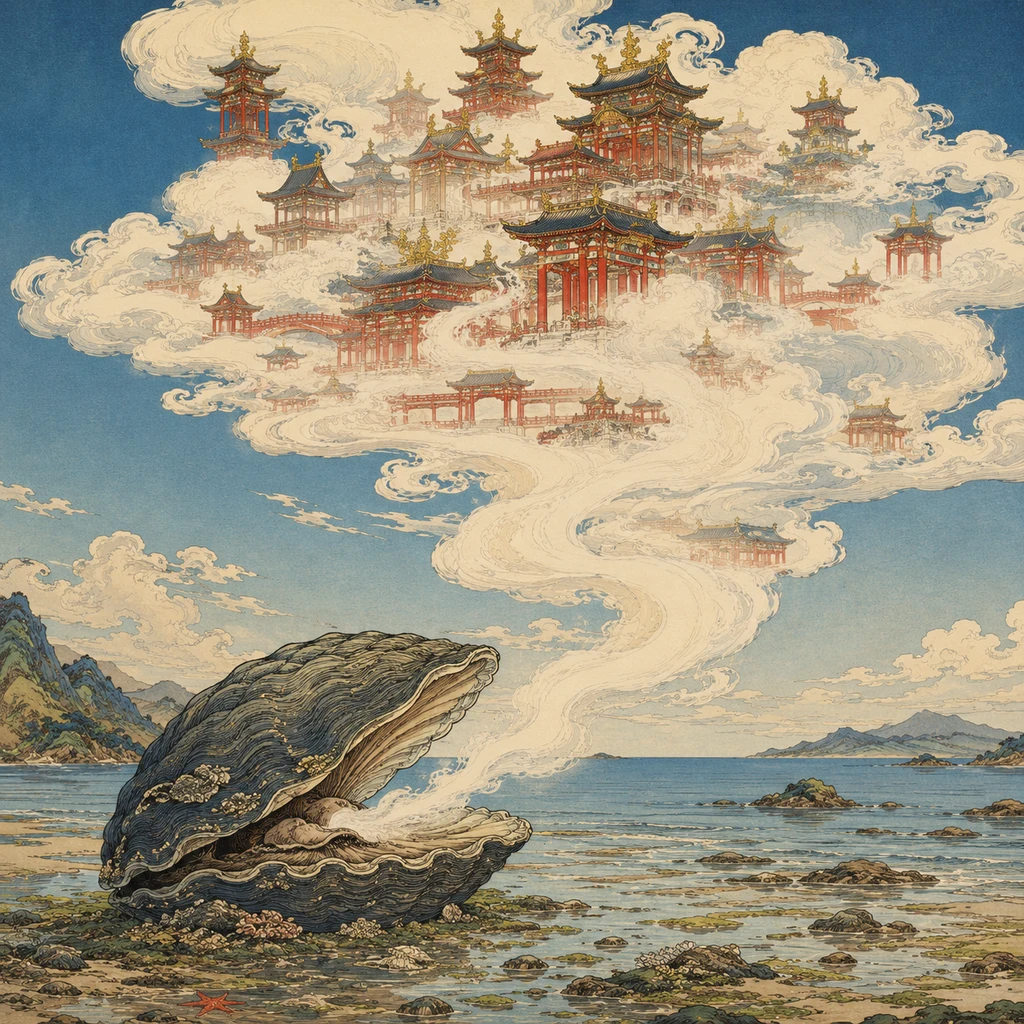
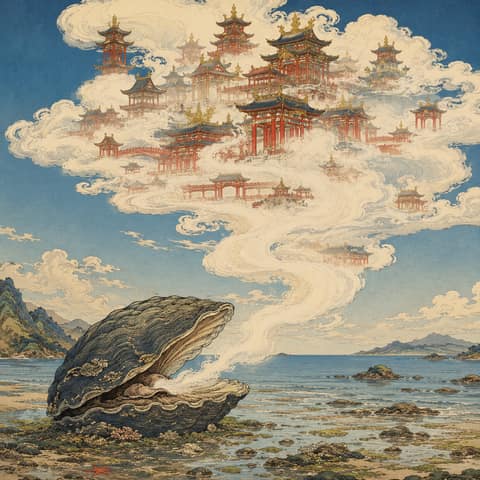
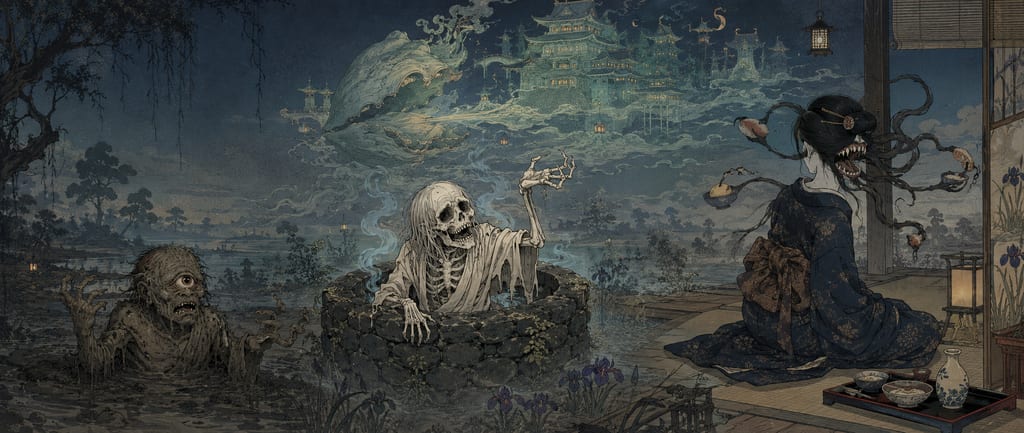
Shinkirō—literally “clam’s mirage”—is a term for the distant images of towers and palaces that seem to float above beaches and seas. In classical lore, the great clam (shin, a giant venus clam) exhales a vapor that projects these visions. The idea traces back to Chinese sources like the Records of the Grand Historian and, in Japan, spread through paintings and tales that attributed seascape mirages to the clam’s breath.
Shokuin (Zhu Yin)

Shokuin (Zhu Yin)

Epic

SHOH-koo-een

山海経北方の蛇身神・燭陰

Deities & Divine SpiritsUncertain; derived from the Classic of Mountains and Seas (Shan Hai Jing), transmitted to Japan through texts

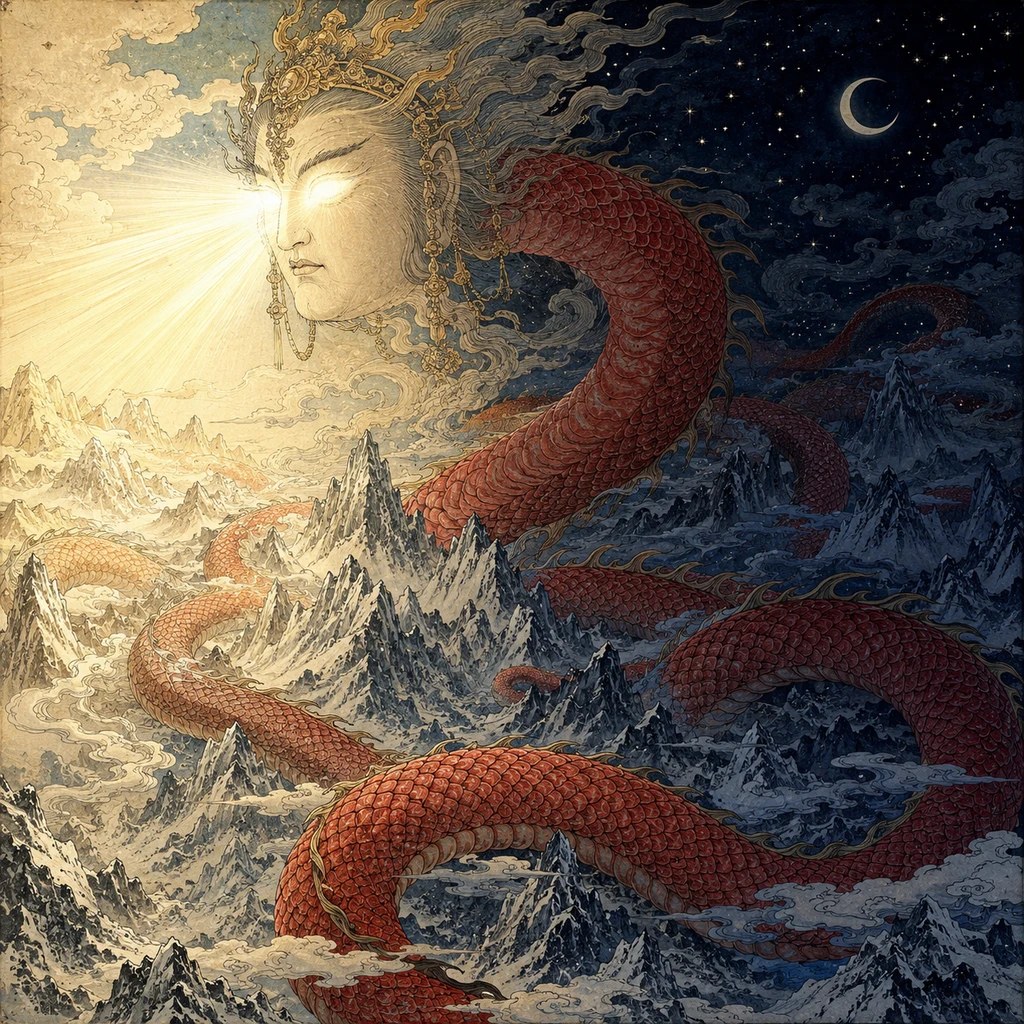
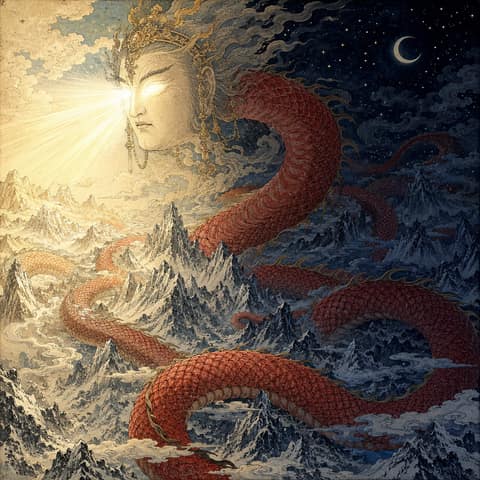
Shokuin is a northern divinity described in the Shan Hai Jing, depicted with a human face and a serpent’s body. When its eyes open, day begins; when they close, night falls. Its breath brings winter, and its call ushers in summer—thus governing the cycle of day and night and the turning of the seasons. The text reached Japan in antiquity, and early modern yokai picture scrolls introduced Shokuin as a foreign deity. Japanese sources offer little on its specific rites or behavior.
Human-Faced Tree

Human-Faced Tree

Rare

neen-MEN-joo

人面花の異木・人面樹

Natural Phenomena SpiritsUnknown; said in sources to grow in the distant land of Dashi ("Great Food" country) to the southwest

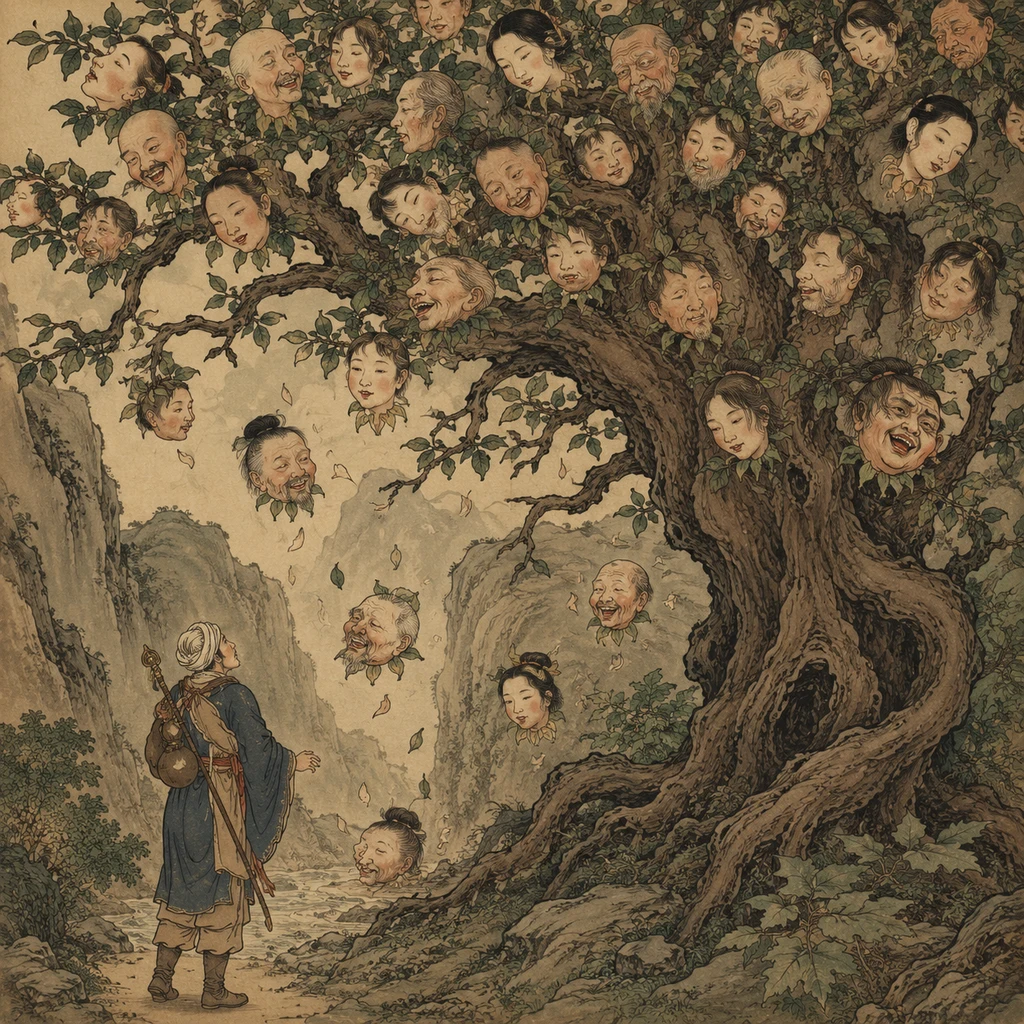
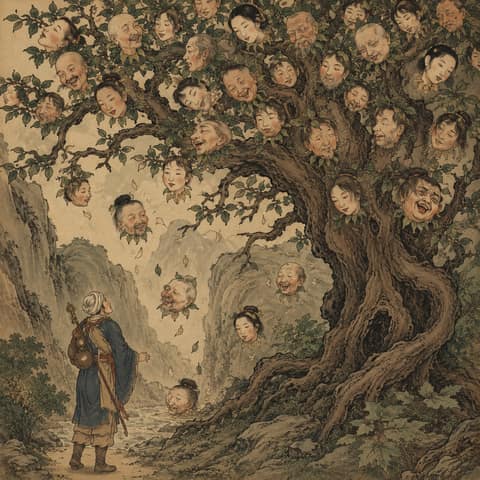
The Human-Faced Tree is a strange tree said to bear blossoms like human heads. It appears in Toriyama Sekien’s Konjaku Hyakki Shūi and in Wakan Sansai Zue, which cites the Chinese Sancai Tuhui. The flowers do not understand speech; when addressed, they only smile. If they keep laughing, the blossoms wither and fall. The creature is known more as a bibliographic, proto-natural-history marvel than as a native Japanese folk belief.

Resurrection Incense

Resurrection Incense

Uncommon

hahn-GOHN-koh

煙に亡き影・反魂香

Household SpiritsUnknown

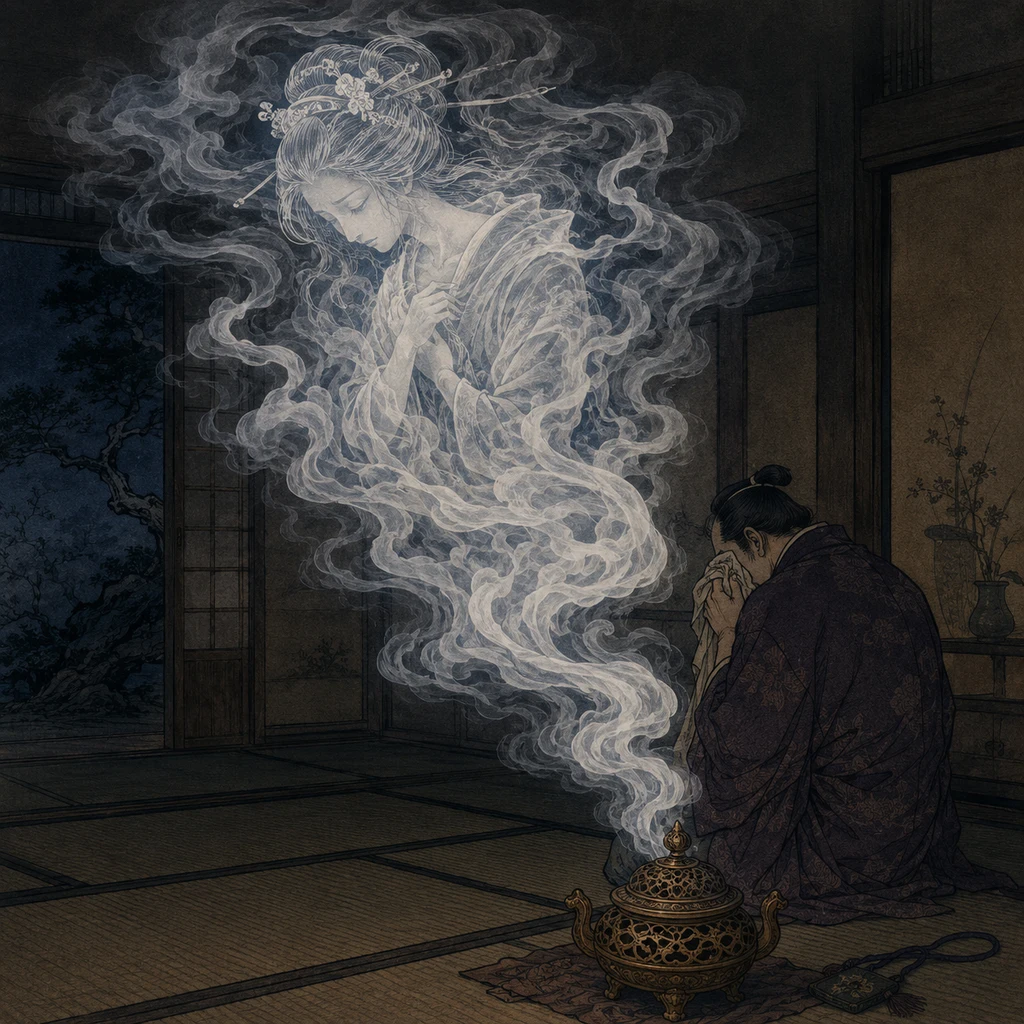
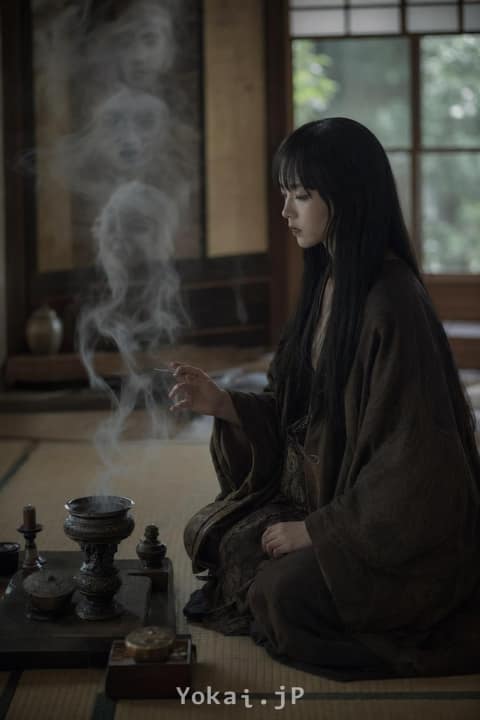
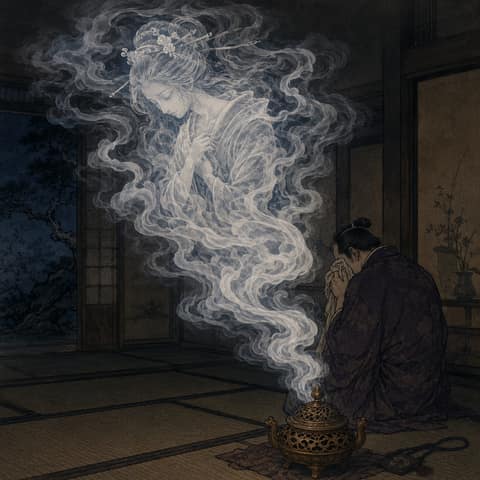
A legendary incense said to reveal the image of the dead within its smoke when burned. Rooted in Chinese anecdote literature, it spread in Japan through Edo-period yomihon, joruri and kabuki plays, and rakugo. Rather than a real substance, it functions as a symbolic, miracle-working incense in ghost tales, letting the bereaved glimpse the departed for a moment. Some stories call it an onmyoji’s secret remedy, but its actual existence is doubtful.

Penghou

Penghou

Uncommon

POONG-hoh

老樹に宿る人面犬・彭侯

Natural Phenomena SpiritsIntroduced from China (appearing in Japanese bibliographies and picture scrolls as a foreign yokai)

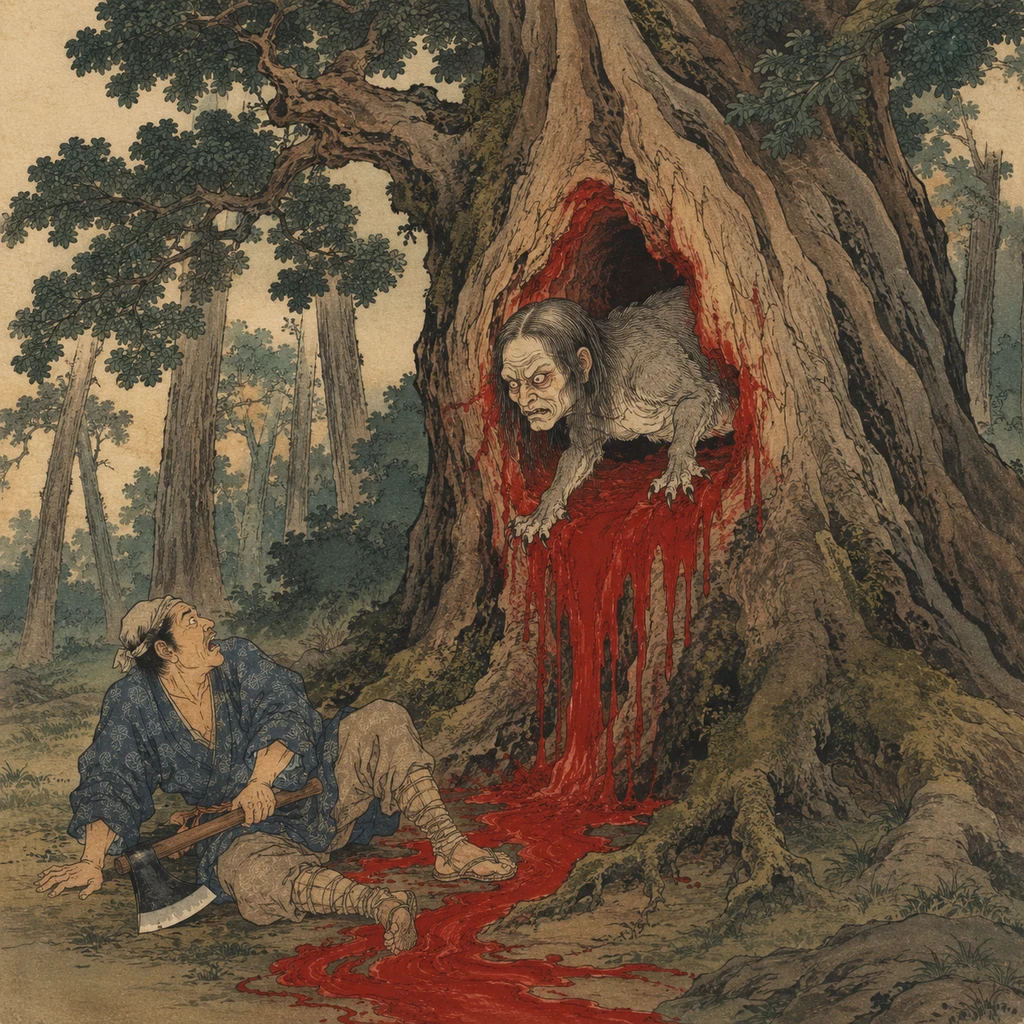
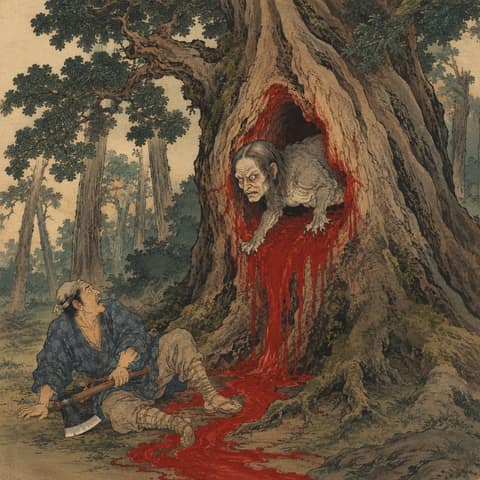
A tree spirit from Chinese lore, said to inhabit venerable old trees. In the Soushenji, it emerges from a camphor tree, bleeding and appearing like a dog with a human face. In Japan, Edo-period natural histories and yokai picture scrolls present it as a Chinese entity akin to kimyō or kodama—tree spirits. Linked to beliefs about echoes in the mountains, it has been discussed as an antecedent to the dog-shaped image of Yamabiko.

Tōdaiki (Human Candelabrum)

Tōdaiki (Human Candelabrum)

Rare

toh-dai-kee

唐土で頭に燭台・灯台鬼

Ghosts & SpiritsUnknown (said to be in Tang China in the tales)

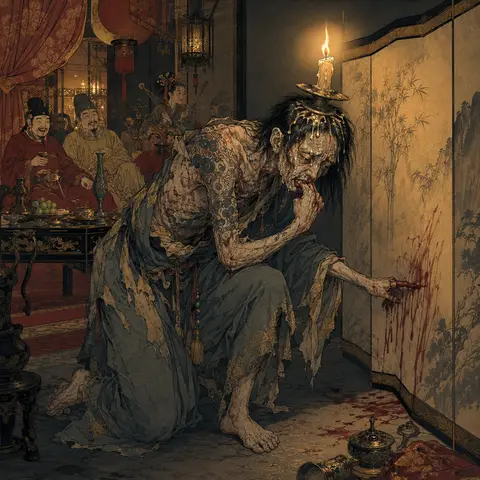
Tōdaiki refers to a figure forced to stand with a candlestick fixed atop the head—a “human candelabrum.” It appears in works like The Tale of the Heike, The Rise and Fall of the Genpei, and Wakan Sansai Zue. In these accounts, a Japanese person who sailed to Tang China as an envoy vanishes, is robbed of speech, tattooed, and made to bear a candlestick. In Toriyama Sekien’s Konjaku Hyakki Shūi it is drawn in Tang-style dress and explicitly shown to be human. The tale is known in the context of filial-piety narratives.

Powdered-Hag

Powdered-Hag

Epic

oh-shee-ROH-ee bah-BAH

雪夜の乞酒老女・白粉婆

Half-Human BeingsNara

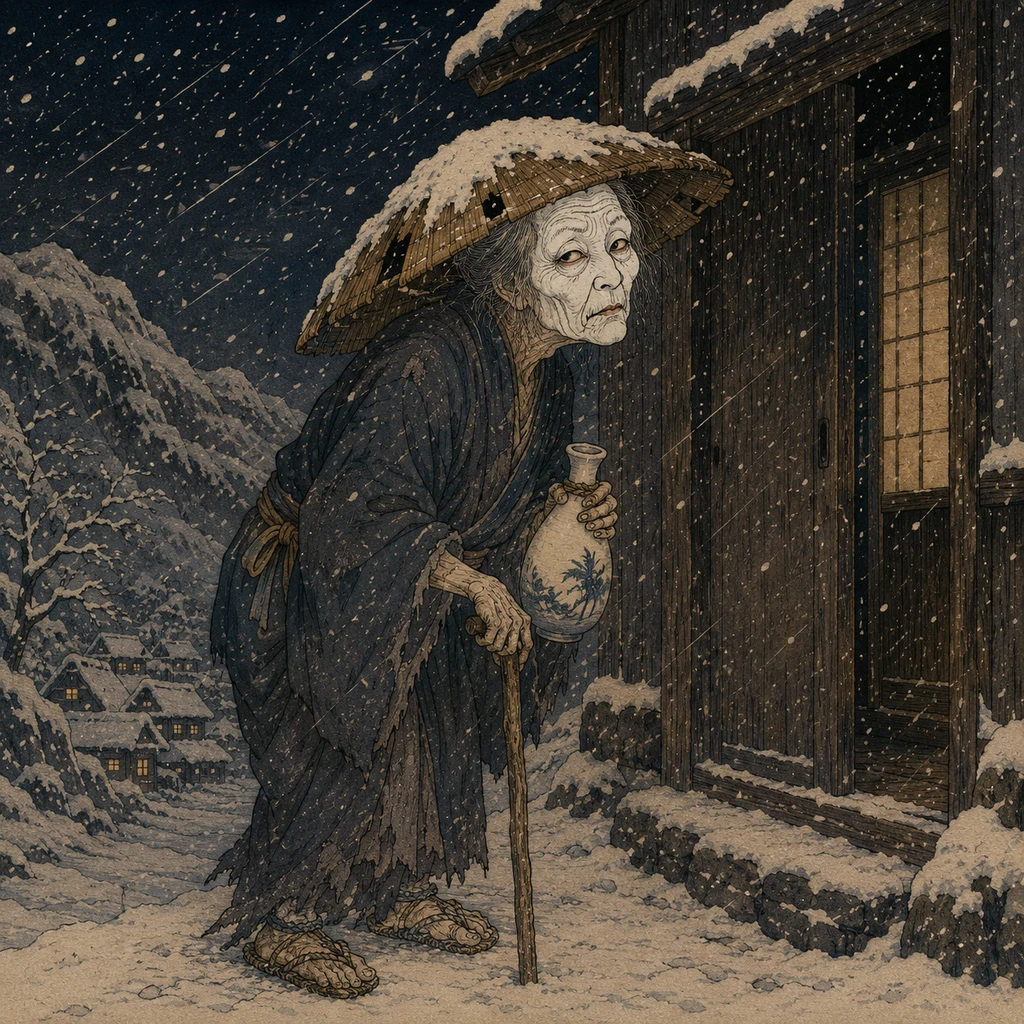
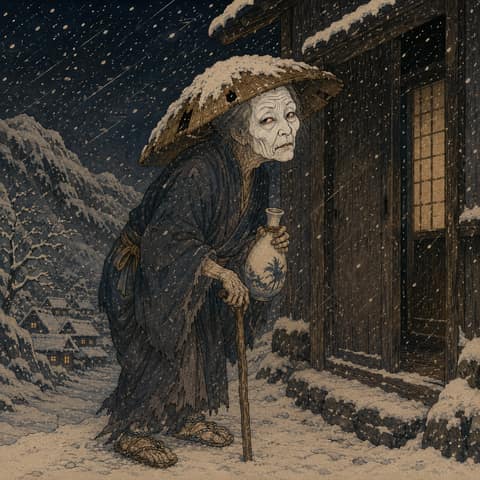
An old woman yokai with her face caked in white face powder, wearing a torn sedge hat. She appears on snowy roads, leaning on a staff with a sake flask at her side, and asks travelers for a drink. She is said to stand at doorways, drawn by the scent of amazake or sake. If given a little, she causes no harm; if refused, she knocks at the door until late into the night. Tales portray her as a wintertime admonition in poor villages and a reminder of hospitality toward visitors.

Snake-Bone Hag

Snake-Bone Hag

Epic

jah-KOHTS-bah-bah

蛇を纏う老婆・蛇骨婆

General ClassificationsJapanese folklore

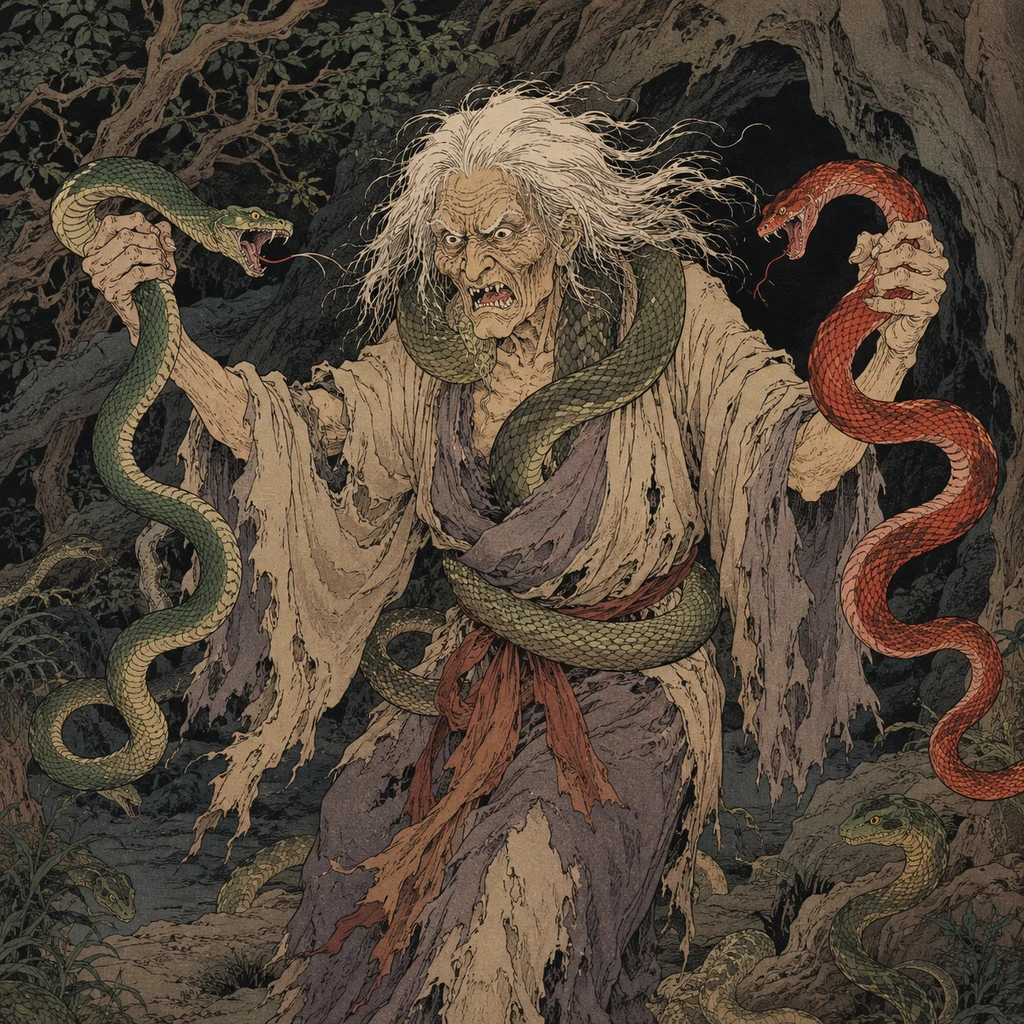
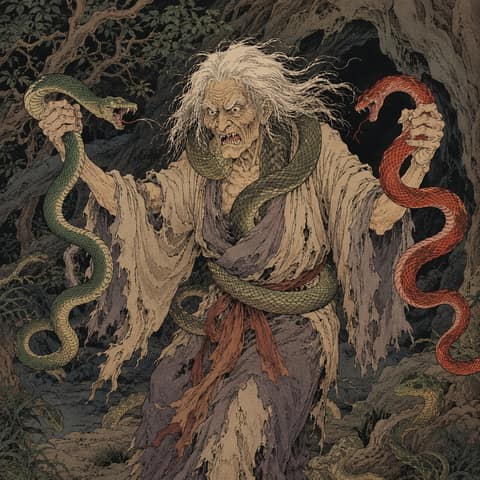
The yokai name of an old-woman figure appearing in the Edo-period artist Toriyama Sekien’s Konjaku Hyakki Shūi. In the illustration she is a crone draped with a giant serpent. Sekien references a tale from the Chinese Classic of Mountains and Seas about people of the Wu Xian country who bear a blue snake in the right hand and a red snake in the left, yet he notes the origin of this yokai as “unknown.” In early modern Japan, the term also circulated as a derogatory word for “old woman,” which Sekien likely reimagined and visualized as a yokai.

Shadow Woman

Shadow Woman

Uncommon

KAH-geh-OHN-nah

障子に映る月夜の影・影女

Half-Human BeingsUncertain (pictorial sources point to Edo–Kyoto area)

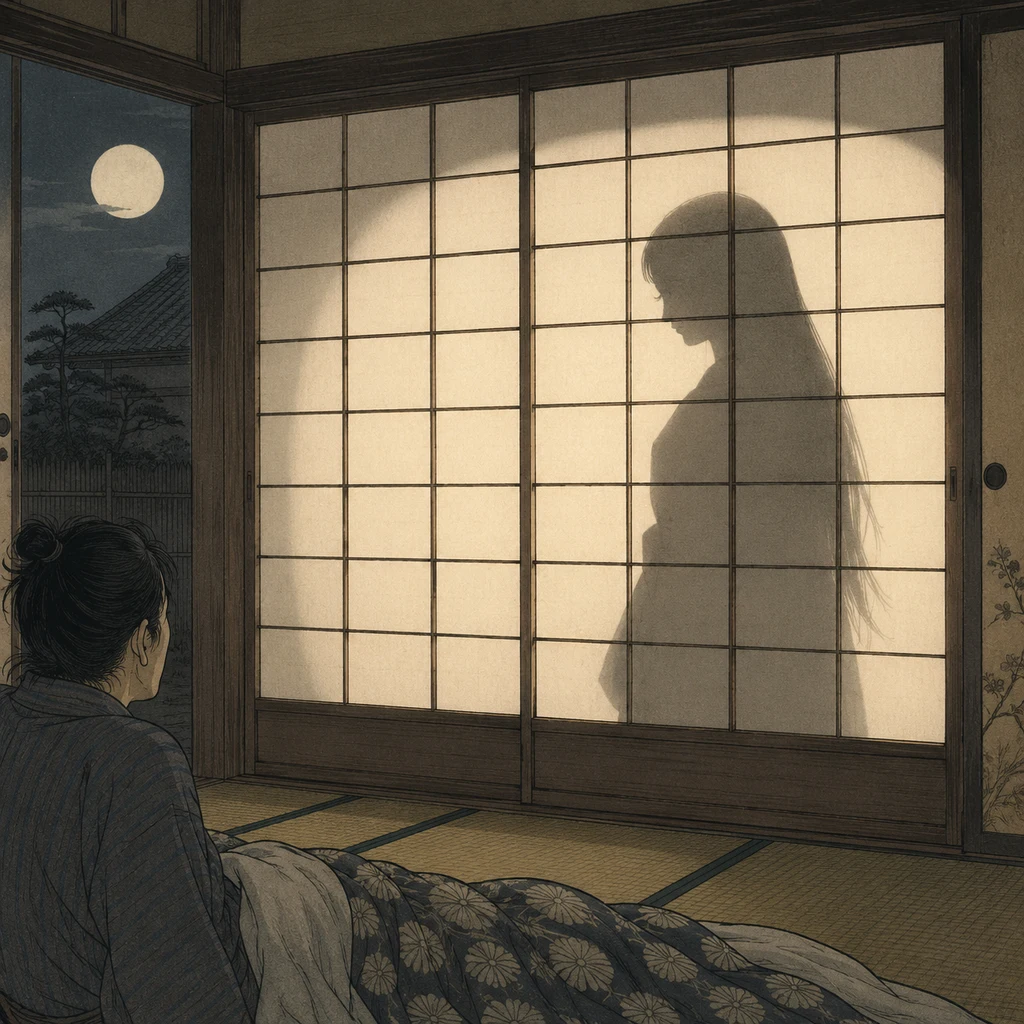
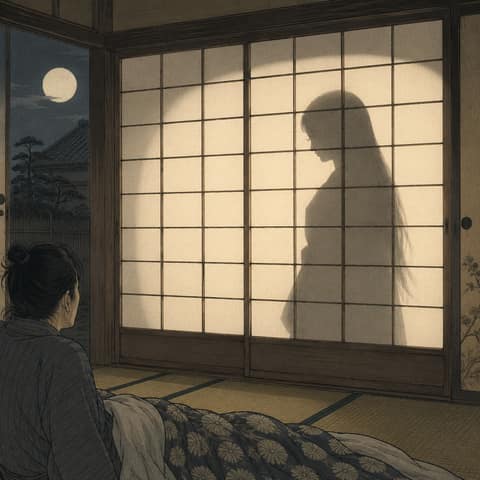
The Shadow Woman is a feminine apparition drawn by Toriyama Sekien in Konjaku Hyakki Shūi. In houses haunted by spirits, only the silhouette of a woman appears on the shoji under moonlight. She manifests as a shadow, with no clear physical body. Sightings occur at night—especially in strong moonlight—and are described less as attacks and more as an ominous sign. Explanations vary: a restless ghost, a house-bound entity, or a spirit of moonlight; her true nature remains unknown.

Kera-kera Woman

Kera-kera Woman

Rare

keh-rah KEH-rah OHN-nah

塀越しの艶笑女霊・倩兮女

Ghosts & SpiritsJapanese folklore

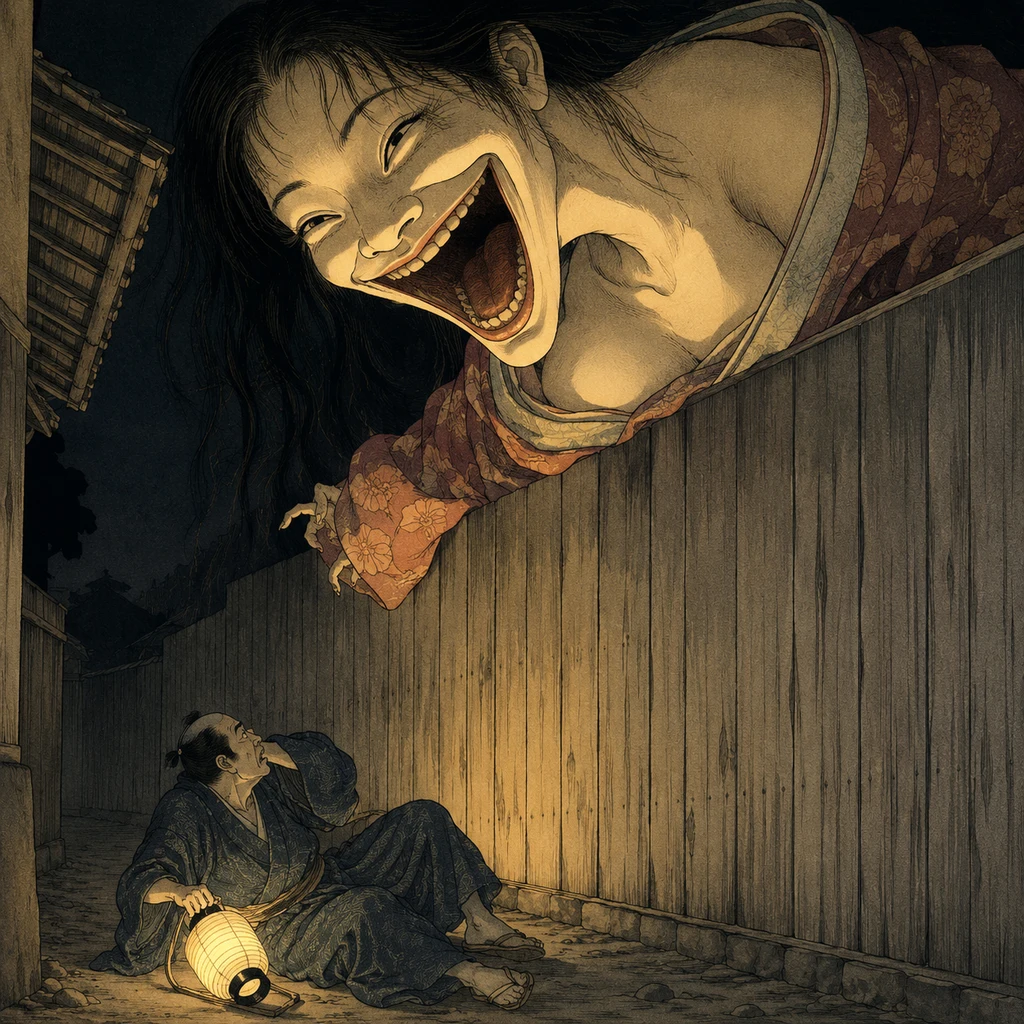
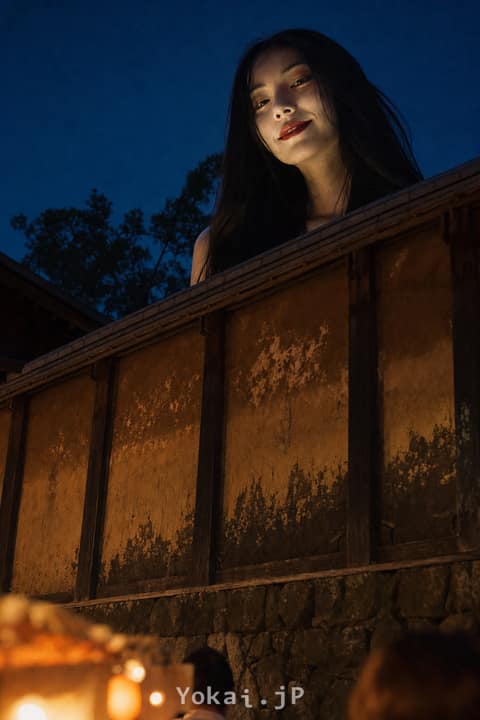
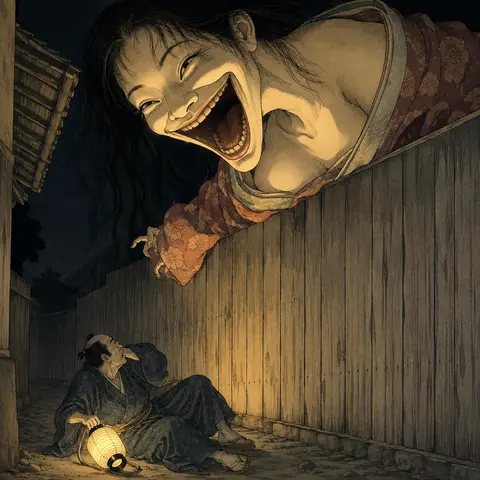
A female yokai depicted by the Edo-period artist Toriyama Sekien in Konjaku Hyakki Shūi. She peers over a wall with her mouth agape, cackling kera-kera to bewilder passersby. Sekien alludes to a Chinese anecdote by Song Yu, likening her to the spirit of a woman whose coquettish laughter unsettled hearts. No specific locale or backstory is given; later tradition remembers her as a eerie, laughing apparition.

Enenra

Enenra

Epic

eh-NEHN-rah

囲炉裏の薄羅煙・煙々羅

Household SpiritsJapanese folklore

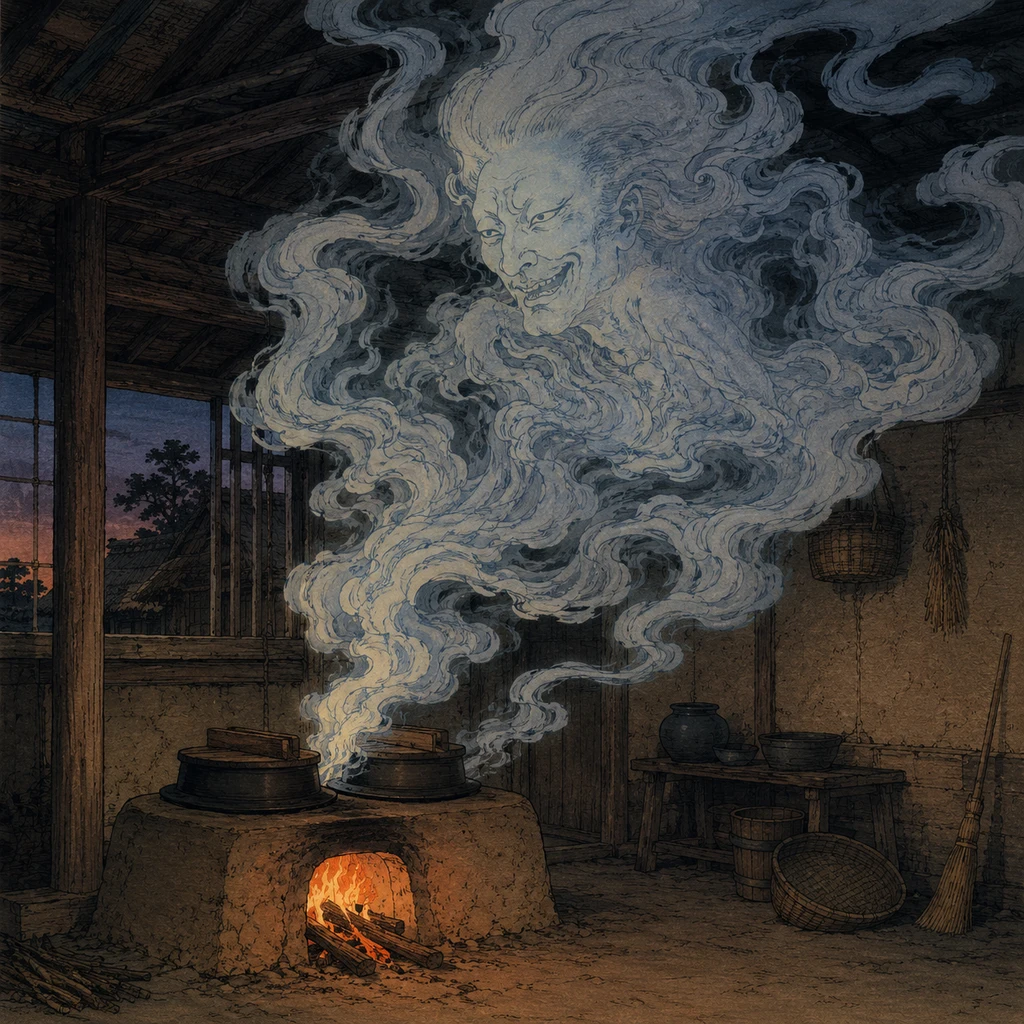
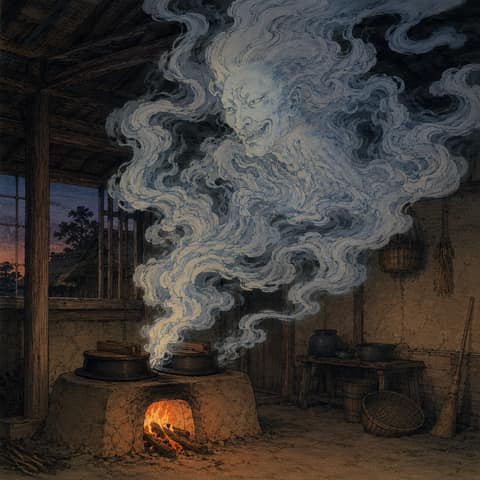
A smoke-born yokai depicted by Toriyama Sekien in Konjaku Hyakki Shūi. The “ra” in its name refers to a thin gauze, evoking a spirit of smoke that drifts like sheer fabric. Rooted in the age-old sense of presence within hearth and stove smoke, it appears as a formless, drifting entity. In sources, Sekien’s illustration is the primary standard; no specific harm or blessing is defined, and it’s understood as the very essence of smoke made animate.

Oboroguruma (The Hazy Carriage)

Oboroguruma (The Hazy Carriage)

Rare

oh-BOH-roh-goo-ROO-mah

朧夜に軋む車争い・朧車

Household SpiritsKyoto

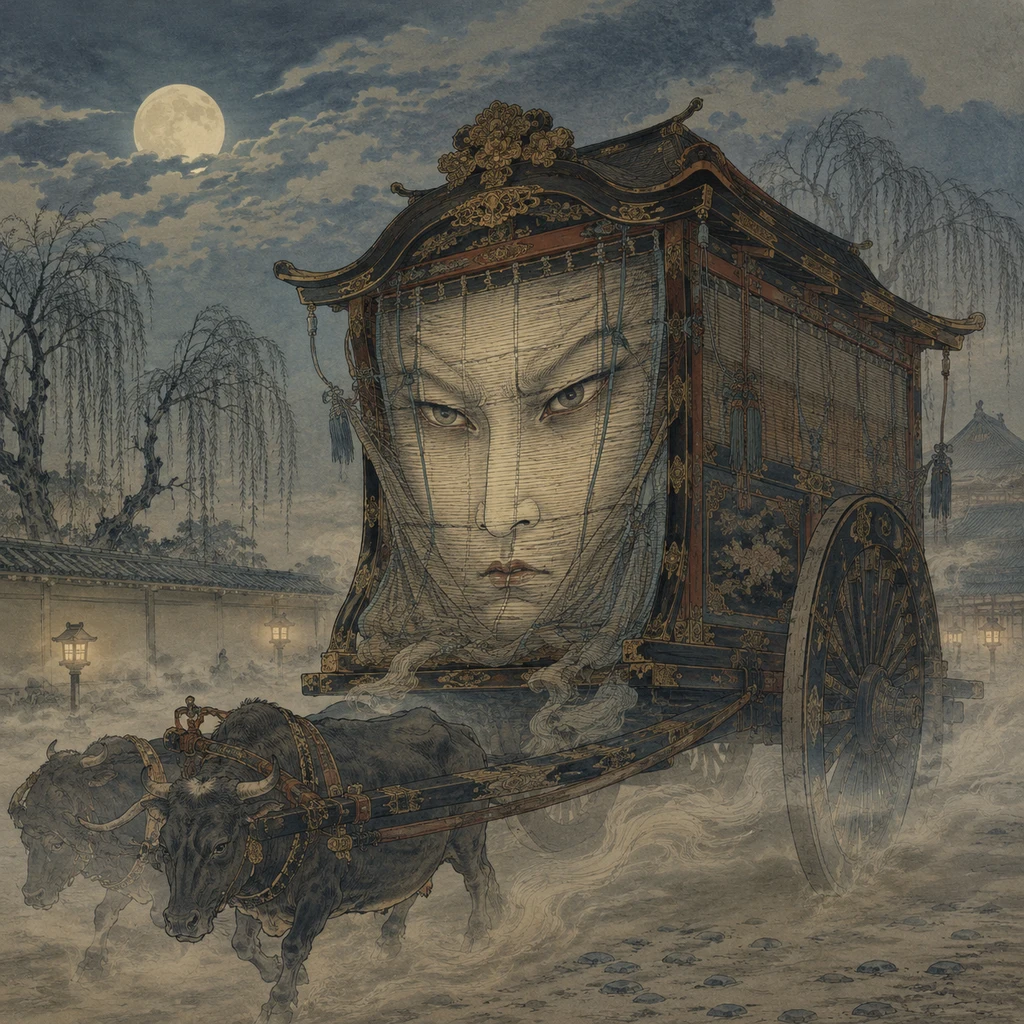
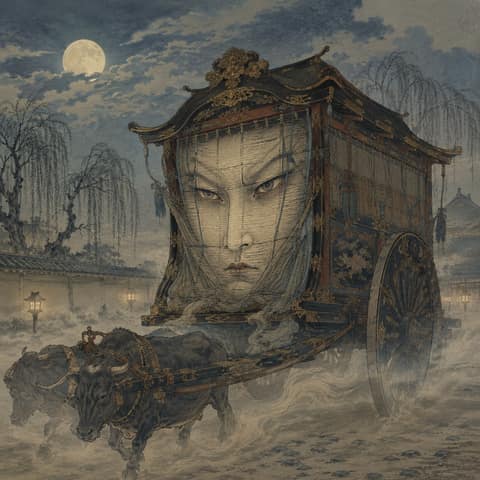
Oboroguruma is a haunted ox-drawn carriage depicted by the Edo-period artist Toriyama Sekien in Konjaku Hyakki Shūi. On hazy nights it arrives with creaking wheels, a gigantic face peering from where the carriage blinds would be. It is often read as the manifestation of grudges born from Heian-era “carriage disputes,” tied to court processions and the Kamo Festival. Scholars link it to the Night Parade of One Hundred Demons and classify it among haunted tools (tsukumogami).

Ao-andon

Ao-andon

Epic

AH-oh AHN-dohn

百物語の鬼女・青行燈

Dwelling / ArtifactTokyo

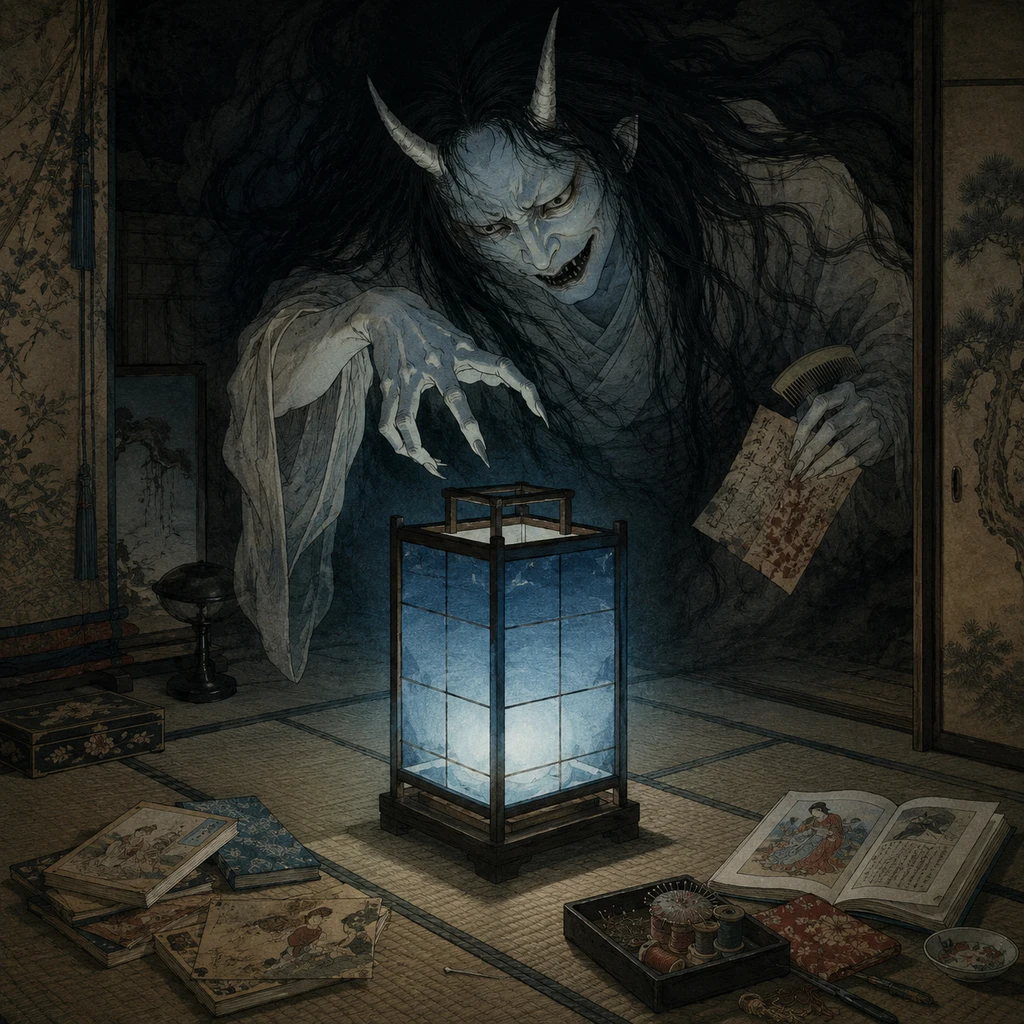
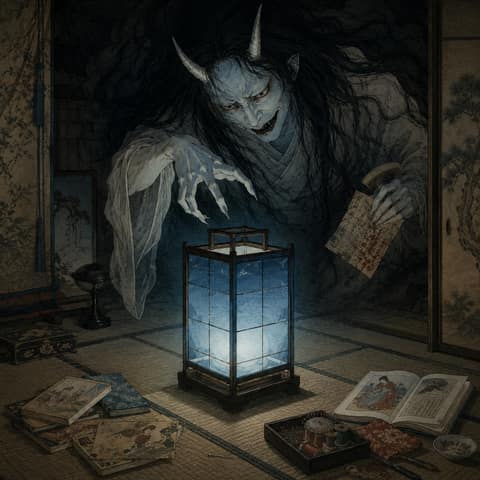
The Ao-andon (Blue Paper Lantern) is an extremely unique "ritualistic and psychological yokai" said to appear at the climax of the "Hyakumonogatari" (100 Ghost Stories), a ghost story gathering highly popular during the Edo period. A lantern covered in blue paper is lit with one hundred wicks (or candles), and one is extinguished after each ghost story is told. It refers to the general term for the bizarre phenomena, or the apparition itself, that emerges the moment the 100th and final light is extinguished, plunging the room into total darkness. Its visual image was solidified in Toriyama Sekien's yokai illustration collection *Konjaku Hyakki Shui*, where it was depicted as a ghastly demoness with black hair, horns, and blackened teeth. Unlike naturally occurring yokai living in specific mountains or rivers, it can be considered a pioneer of "urban legend-style meta-yokai," incarnated as the physical manifestation of kotodama (the spirit of words) created by the accumulation of human words (ghost stories) and fear.

Rain Woman

Rain Woman

Epic

AH-meh-ON-nah

雨夜に子を攫う雨女

Weather & Calamity SpiritsNagano

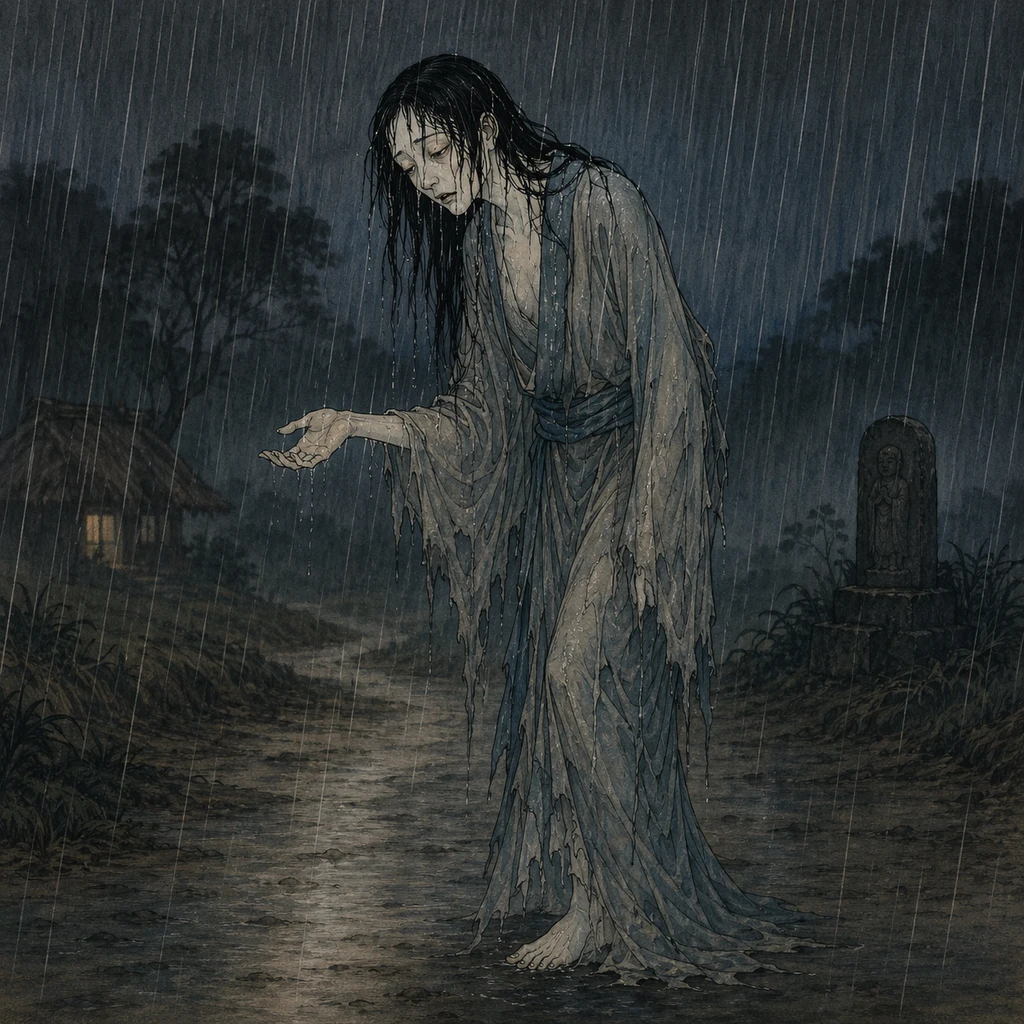
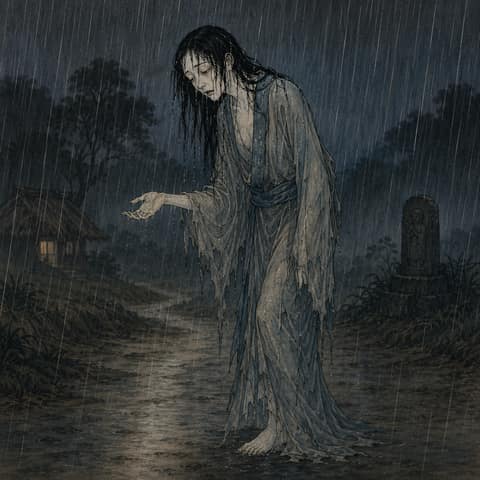
A feminine yokai or spirit associated with calling rain. Toriyama Sekien includes the subject “Ame-onna” in Konjaku Hyakki Shūi, but his treatment leans on the Chu poet Song Yu’s tale of “morning cloud, evening rain,” using it satirically rather than defining a concrete monster. In folk belief she is feared as a figure who appears on rainy days to snatch children, yet also revered as a rain-bringing spirit who ends drought.

Kosame-bō (Little Rain Monk)

Kosame-bō (Little Rain Monk)

Rare

koh-sah-meh-BOH

大峰葛城の雨夜僧・小雨坊

Mountain & Wilderness SpiritsNara

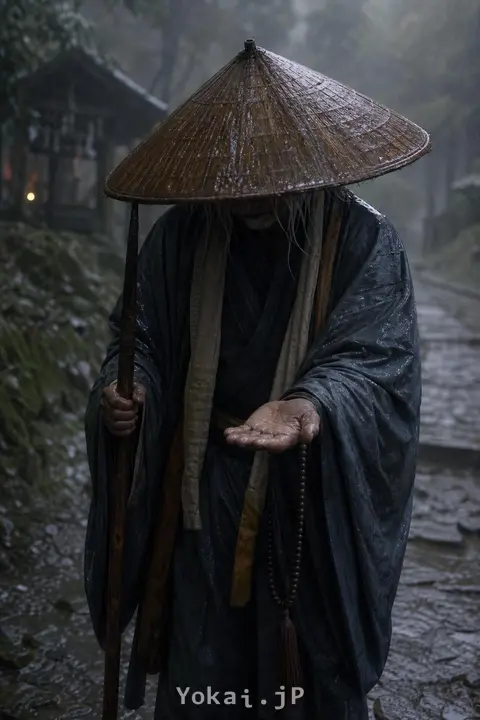
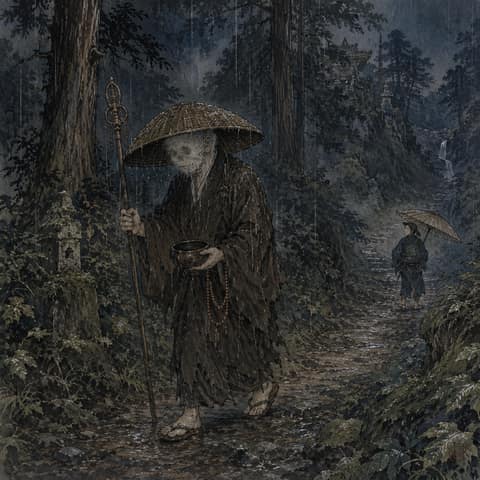
A monk-shaped yokai seen in Toriyama Sekien’s Edo-period work Konjaku Hyakki Shūi, depicted in the rain. Sekien notes it “wanders the mountains of Ōmine and Katsuragi on rainy nights, begging for alms,” portraying it as an apparition of the shugendō sacred peaks that appears on wet nights to solicit offerings. Beyond the image, its traits and origins are uncertain, and there is little evidence tying it to a specific regional oral tradition. Later writers emphasize a mendicant-monk character, but sources are limited.

Gangi Kozō

Gangi Kozō

Uncommon

GAHN-ghee koh-ZOH

川岸で魚を捕る・岸涯小僧

Aquatic SpiritsUncertain (appears in Edo-period picture books)

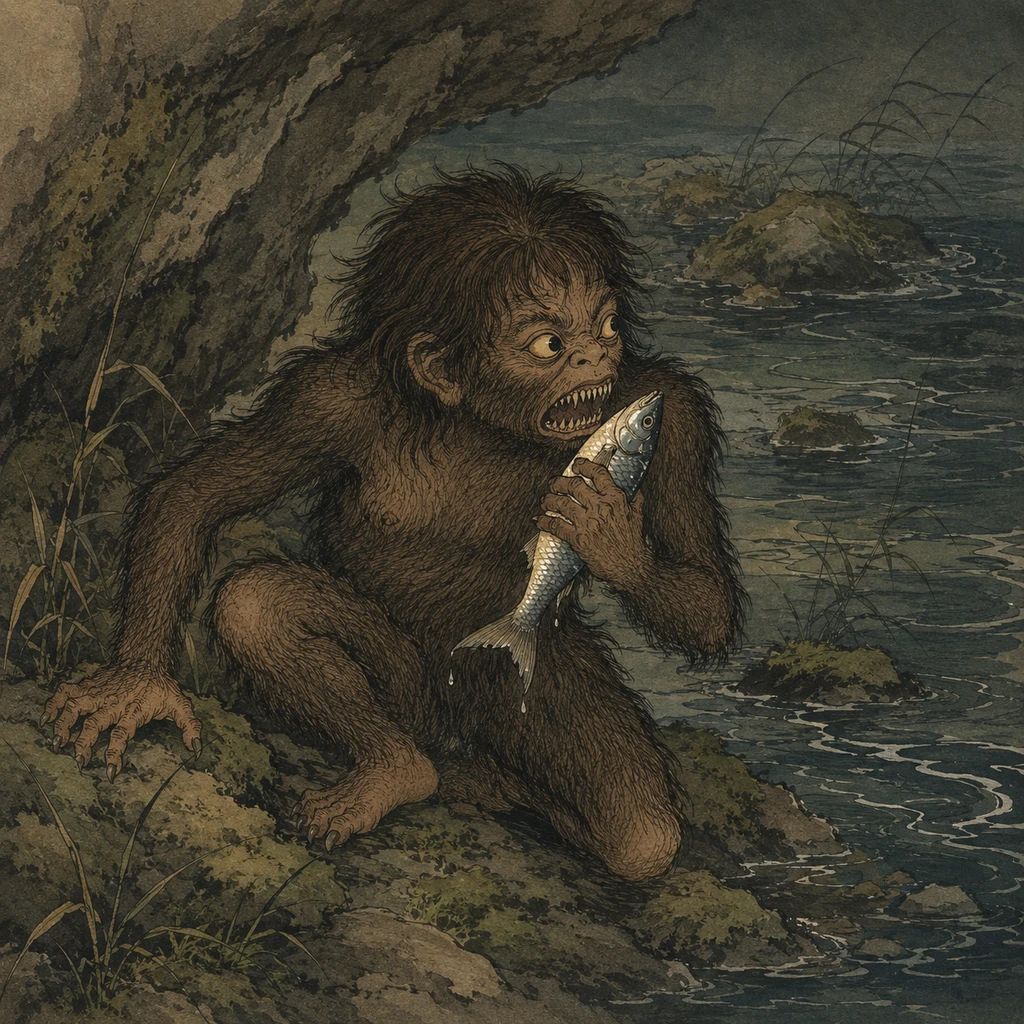
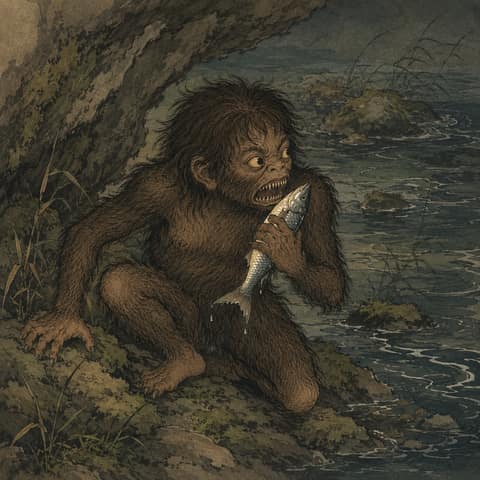
A waterside yokai depicted by Edo-period artist Toriyama Sekien in Konjaku Hyakki Shūi. Covered head to toe in hair and armed with file-like teeth, it is shown catching fish along a riverbank. The name also appears as “Kishigai Kozō.” While it evokes kappa-type creatures, equating them requires caution. It is chiefly known as a being that exists within Sekien’s paintings, with few solid mentions in classical texts or regional lore.

Ayakashi

Ayakashi

Epic

ah-yah-KAH-shee

西海の海上怪火・アヤカシ

General ClassificationsCoastal regions across Japan, especially Western Japan

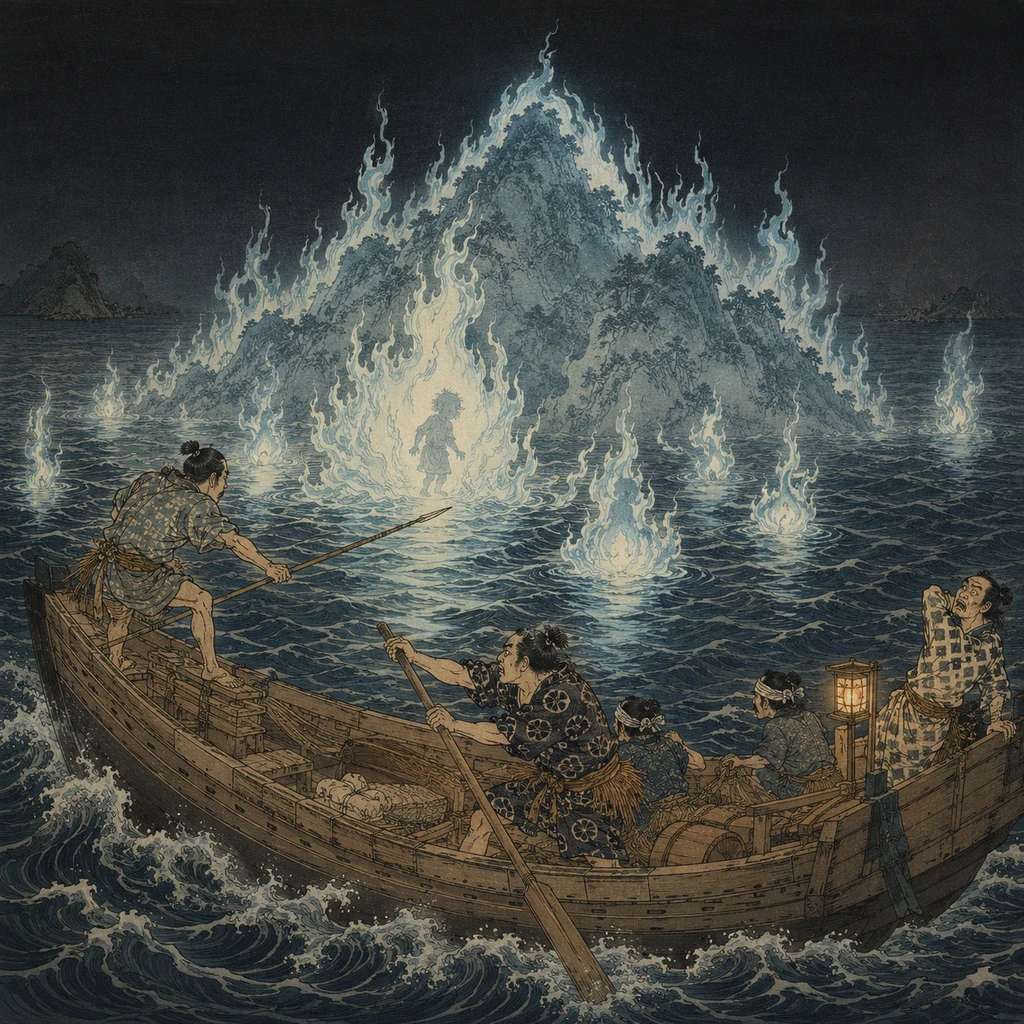
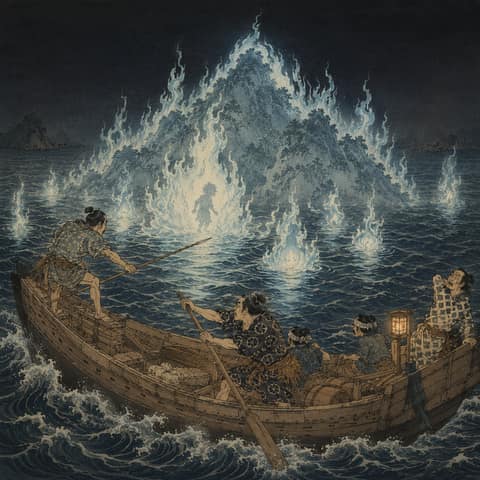
Ayakashi is a catch-all term for supernatural phenomena appearing at sea. What it refers to varies by region and may include ghostly fires, vengeful boat ghosts, and maritime mirages. In Nagasaki it can mean mysterious flames over the water; in Yamaguchi and Saga, spirits that harm boats. On Tsushima, a vast will-o’-the-wisp is said to appear on the beach and, offshore, take the shape of a mountain that blocks a ship’s course. In some areas the belief merges with folk ideas about the remora fish, and the ayakashi serves as an explanation for shipwrecks and maritime misfortune.

Himamushi Nyūdō

Himamushi Nyūdō

Rare

HEE-mah-moo-shee nyoo-DOH

縁の下の油嘗め・火間虫入道

Household SpiritsEdo period

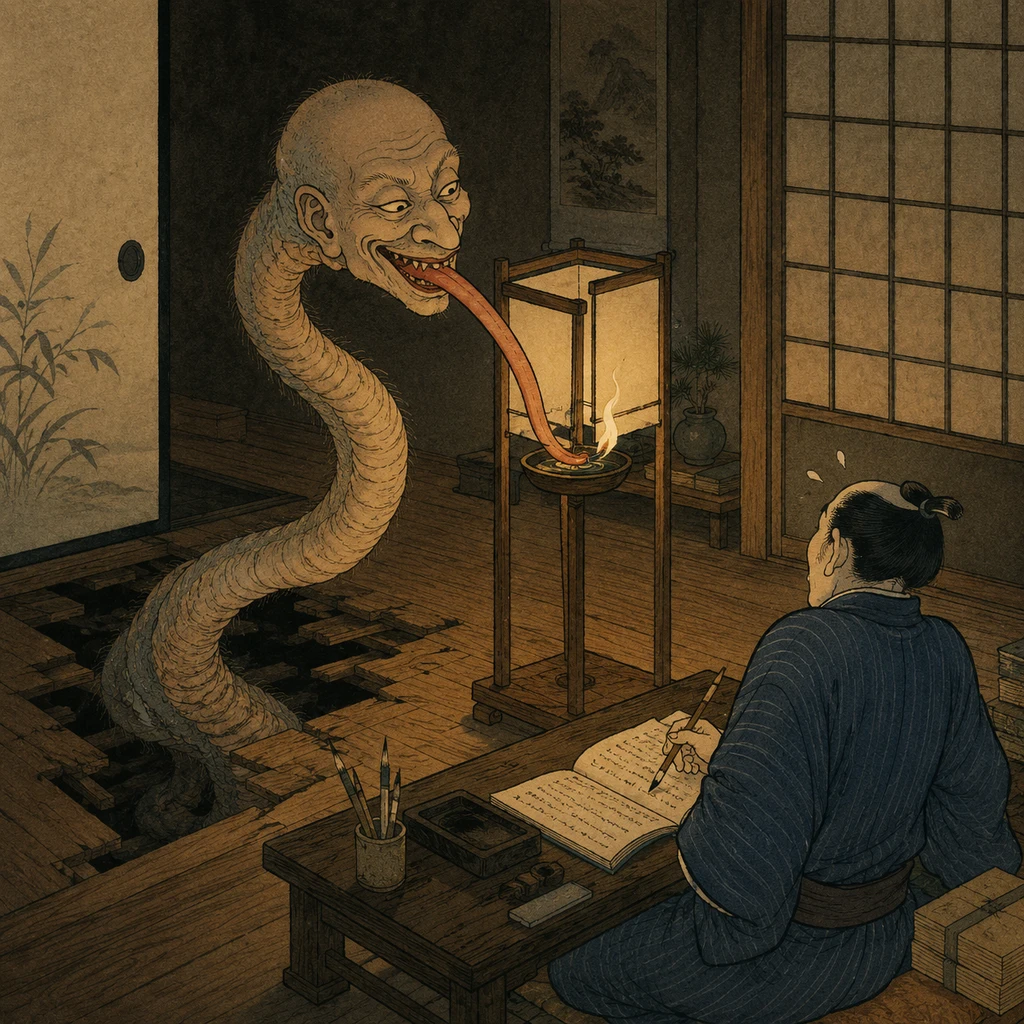
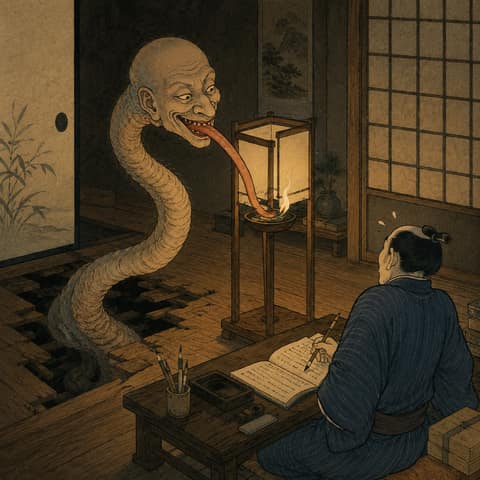
A yokai depicted by Edo-period artist Toriyama Sekien in Konjaku Hyakki Shūi. It rises from beneath the floorboards, licking the oil of an andon lamp and disrupting night work. Sekien notes it as the spirit of someone who shirked duties in life, becoming a “Himamushi Night Nyūdō” after death to lick lamp oil and hinder late-night tasks. The name is linked to a visual wordplay on “Hemamushi-nyūdō,” commonly read as a moral against laziness and sloth.

Killing Stone

Killing Stone

Epic

Sesshōseki

那須の毒気石・殺生石

Dwellings and ObjectsTochigi

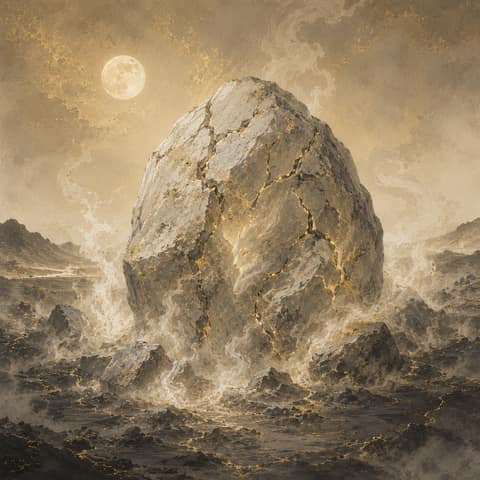
The Killing Stone is a great mass of lava beside the Nasu Yumoto hot springs in Tochigi Prefecture, long feared as a poison stone that takes the life of any creature that draws near. The whole area is a volcanic fumarole zone, where toxic volcanic gases such as hydrogen sulfide and sulfur dioxide vent ceaselessly from fissures in the ground. Because these gases are heavier than air and pool in hollows, birds, insects, and small beasts that venture near are poisoned and die. From this—a stone that kills living things—it came to be called the “Sesshōseki,” the Killing Stone. The barren, sulfur-reeking waste where no plant grows is called the Sai-no-Kawara, lined with countless Jizō statues. Matsuo Bashō, who visited in 1689, wrote in Oku no Hosomichi (The Narrow Road to the Deep North) that bees, butterflies, and the like lay dead in such heaps, killed by the poisonous fumes, that the color of the sand could not be seen. By legend, this stone is the transformed shape of the slain nine-tailed fox (Tamamo-no-Mae), though that tale is told in full elsewhere.

The Kettle of Morinji

The Kettle of Morinji

Uncommon

moh-RIN-jee no KAH-mah

守鶴狸の尽きぬ釜・茂林寺の釜

Animal ShapeshiftersGunma

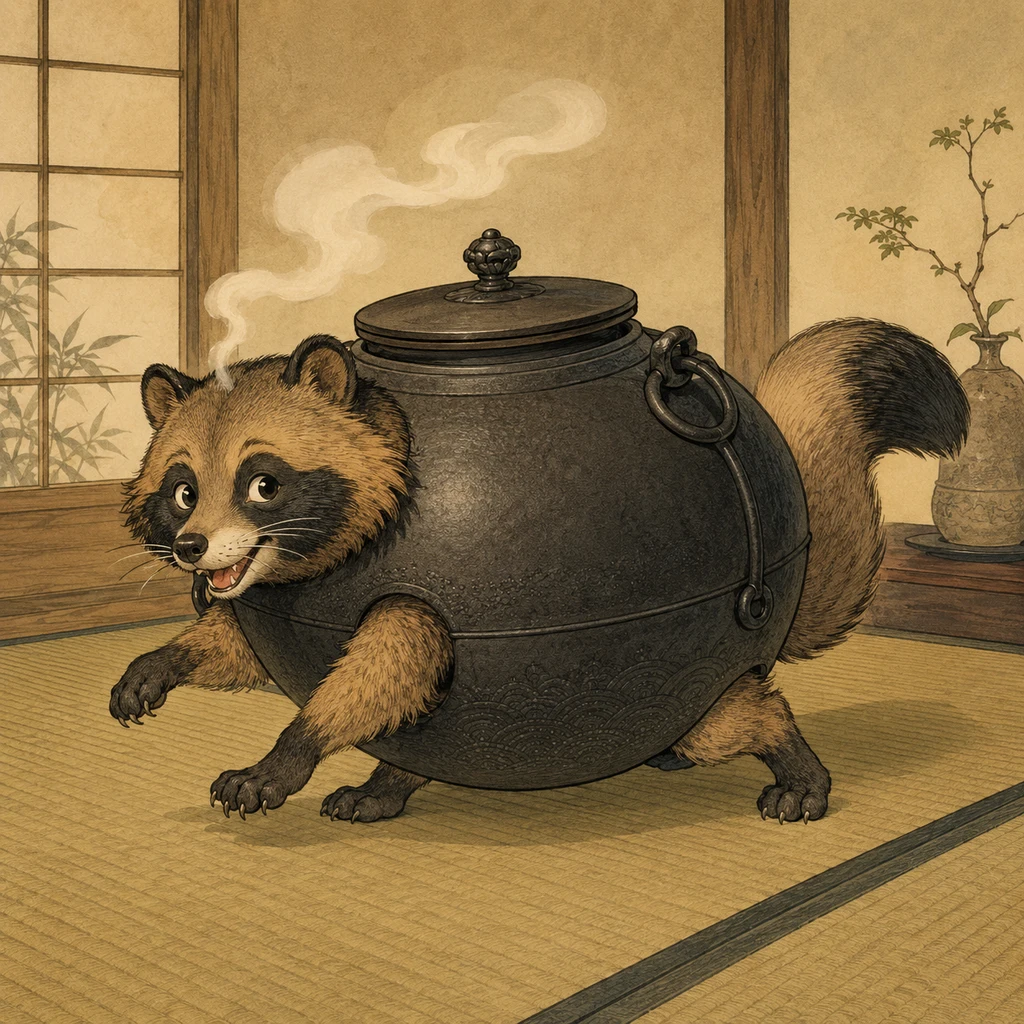
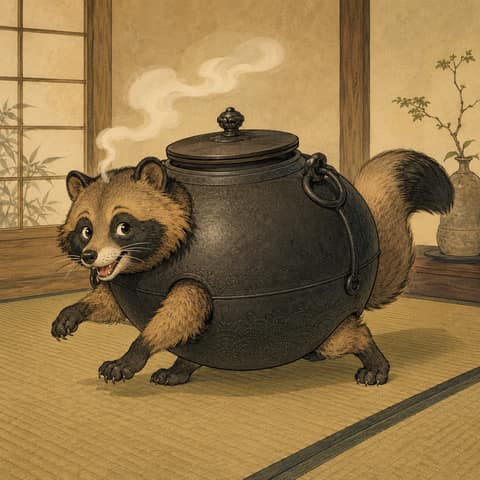
A mysterious tea kettle linked to Shukaku, the shape-shifting tanuki of Morinji recorded in Kōshi Yawa. The kettle poured endless hot water to serve tea to monks—said to be Shukaku’s sorcery. Shukaku’s true form is an ancient tanuki who heard the Dharma in distant India and came to Japan via China. The tale is regarded as the prototype of the later folktale "Bunbuku Chagama" and became entwined with the temple’s treasures and local lore.

Oni of Rajōmon (Rashōmon Demon)

Oni of Rajōmon (Rashōmon Demon)

Epic

rah-JOH-mohn no OH-nee

渡辺綱に腕斬らるる・羅城門鬼

Demons & GiantsKyoto

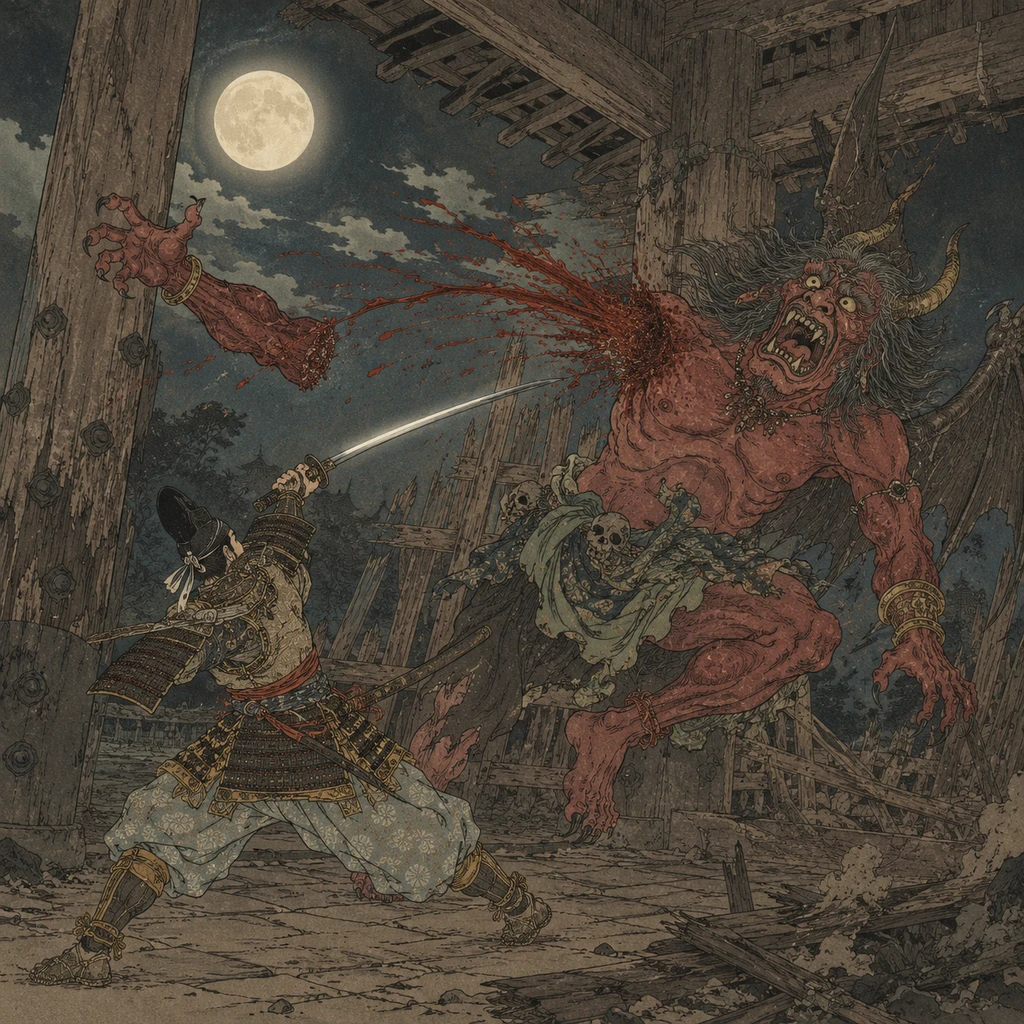
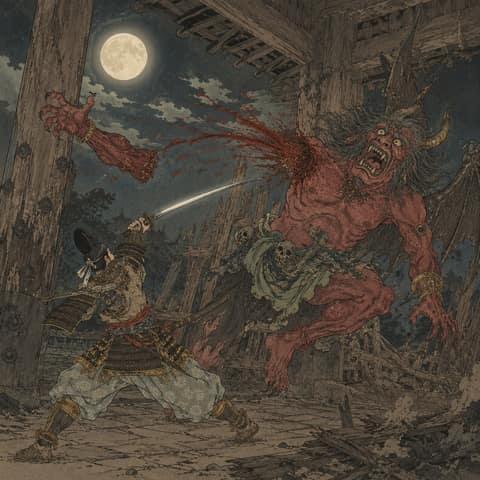
A demon said to have haunted Rajōmon, the main gate of Heian-kyō. It is famed from the tale in which Minamoto no Yorimitsu’s retainer Watanabe no Tsuna rode out alone to confront it and cut off its arm after a fierce struggle. Variants appear in The Tale of the Heike, which shifts the scene to Ichijō Modori-bashi, while the Noh play Rashōmon places the fight at the gate. The later story of the demon returning to reclaim its severed arm branches into Ibaraki and is often identified with the oni Ibaraki-dōji.

Weeping Stone

Weeping Stone

Uncommon

yo-NAH-kee ee-shi

小夜中山の泣く石・夜泣き石

Mountain & Wilderness SpiritsShizuoka

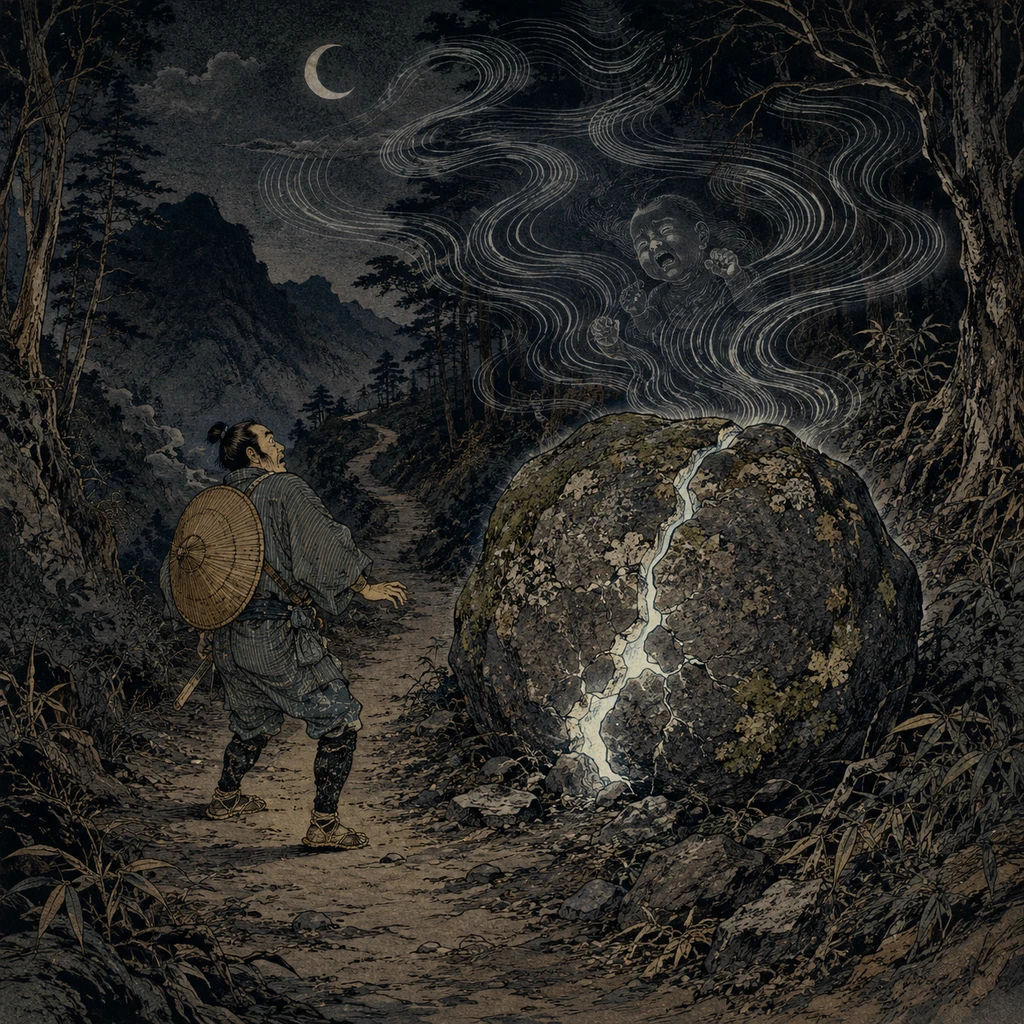
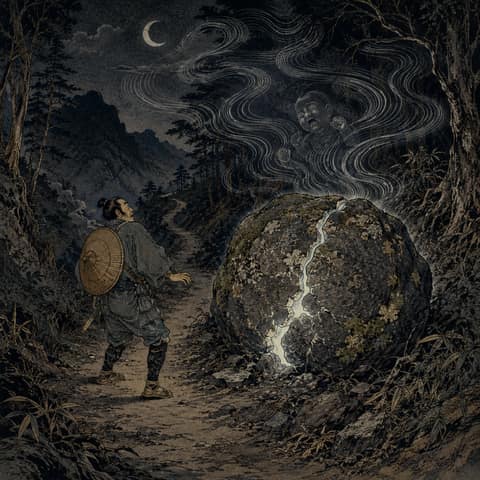
A catch-all term for stones said to cry or moan at night. In some tales the stone itself emits eerie sounds; in others, a restless spirit inhabits it and laments. The Weeping Stone of Sayo no Nakayama in Shizuoka is famous and often linked to tragic mother-and-child legends. Elsewhere, certain stones are enshrined as talismans to soothe a child’s night crying, blending beliefs in a stone’s numinous power, potential curse, and pacification.

Banana-Plant Spirit

Banana-Plant Spirit

Rare

bah-SHOW-noh-SAY

大葉に宿る化女・芭蕉精

Natural Phenomena SpiritsNagano

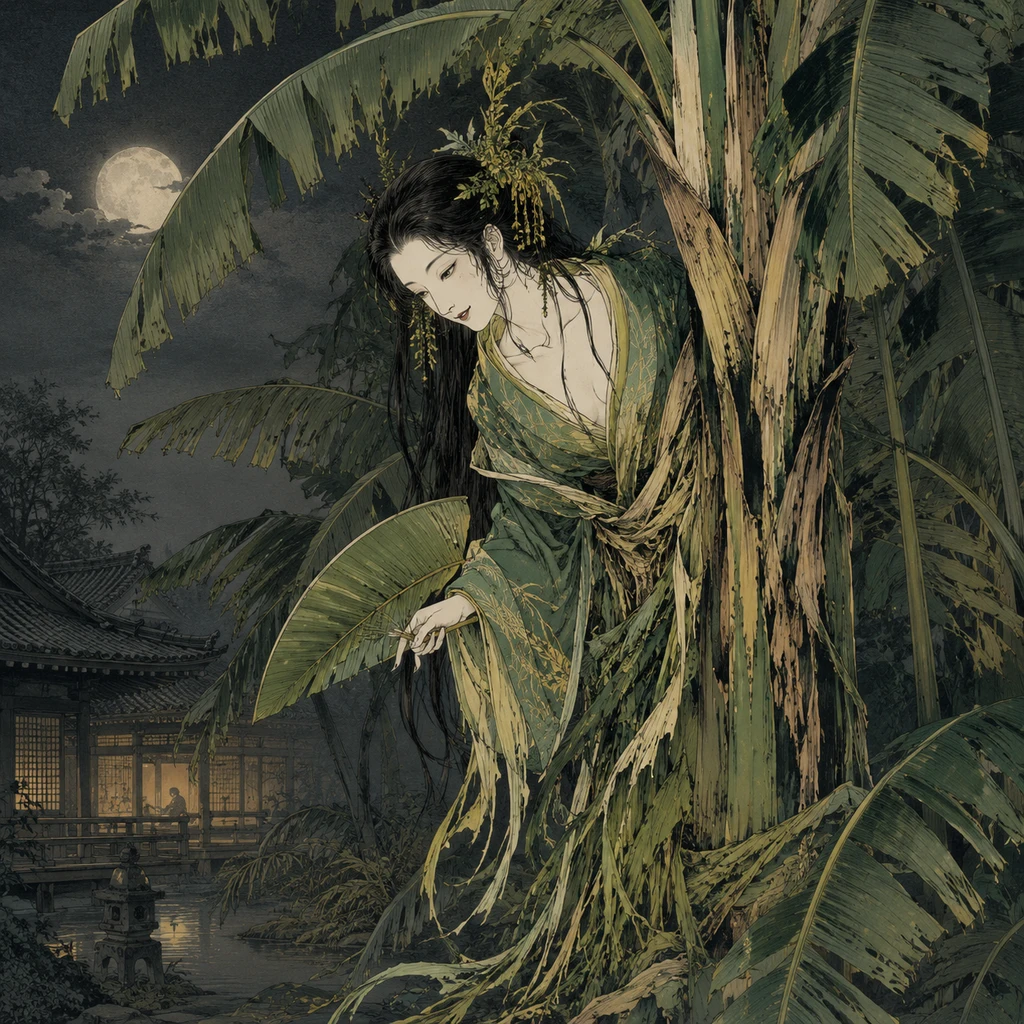
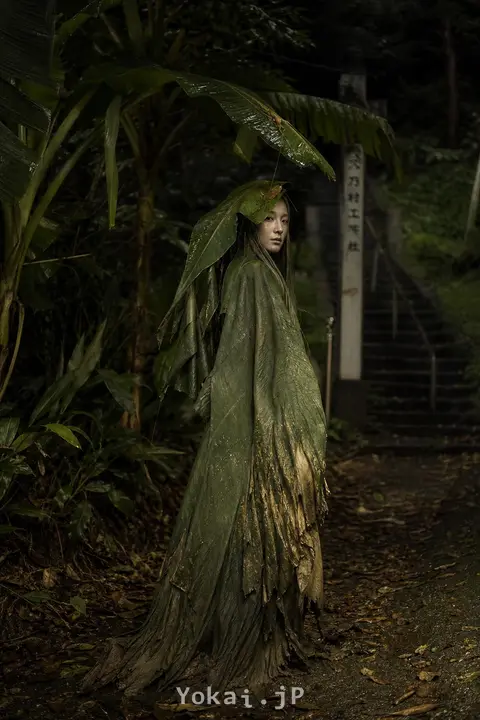
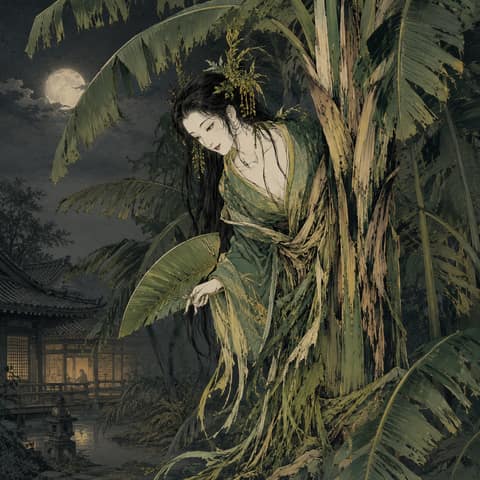
A spirit said to dwell in the leaves of the banana plant (basho), or the vital essence of an aged plant taking human form. Illustrated by Toriyama Sekien in Konjaku Hyakki Shui, whose notes cite Chinese anecdotes and the Noh chant-play Basho. Tales across Japan describe it appearing as a beautiful woman to test monks or startling travelers on night roads; many accounts say it rarely causes direct harm.

Suzuri-no-tamashii

Suzuri-no-tamashii

Rare

sue-ZOO-ree no tah-mah-SHEE

壇ノ浦の幻影・赤間硯の精

Tsukumogami / GaikaiYamaguchi

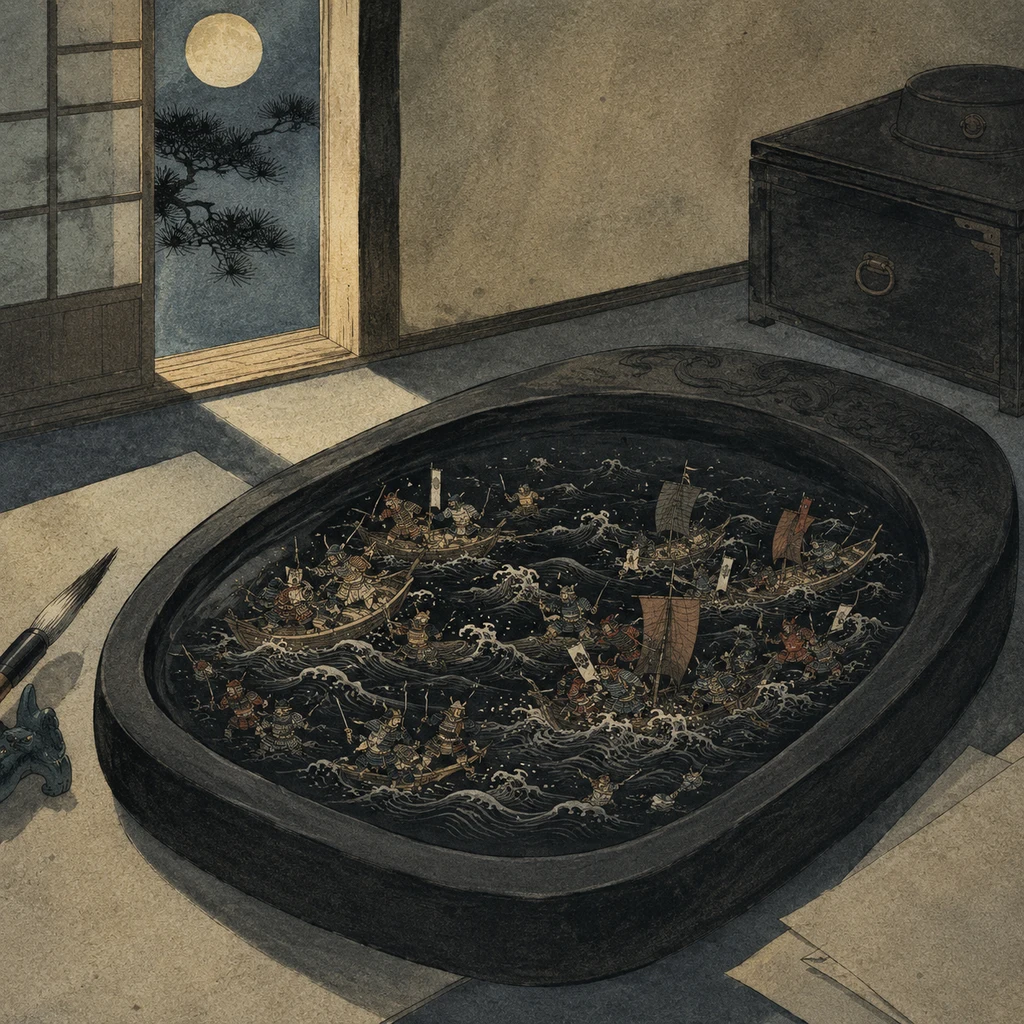
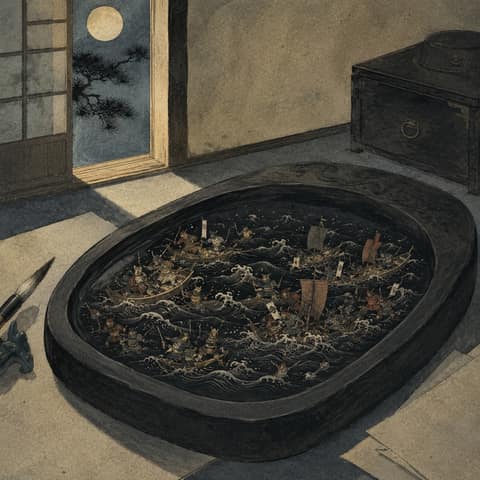
Suzuri-no-tamashii (the Spirit of the Inkstone) is a highly literary and romantic *tsukumogami* (artifact spirit) created by the Edo-period yokai artist Toriyama Sekien in his art collection *Konjaku Hyakki Shui* (Supplement to The Hundred Demons from the Present and the Past). It is not a terrifying monster that threatens or harms people, but rather a beautiful yet sorrowful phantom that appears only in the fleeting moment when the memories dwelling in stationery intersect with the user's deep "immersion in literature." The greatest charm of this yokai lies in the brilliant fusion of "wordplay" and "historical background" orchestrated by Sekien. In calligraphy, the shallow depression in an inkstone (suzuri) where the liquid ink pools is called the "umi" (sea or ink sea). Sekien established that the inkstone favored by a certain literatus was specifically set as an "Akama stone inkstone" produced in "Akamagaseki" (present-day Shimonoseki City, Yamaguchi Prefecture), known as a masterpiece. Akamagaseki is not merely a production site for high-quality inkstones; it is the very stage of the "Battle of Dan-no-ura," the final decisive battle of the Genpei War, where the Heike (Taira) clan met their tragic end alongside the young Emperor Antoku. One quiet night, while the literatus was rubbing ink on this Akama inkstone and reading *The Tale of the Heike*, he dozed off. Suddenly, real waves swelled in the "sea" of the inkstone, and amidst the vast ocean of black ink, the warships of the Minamoto (Genji) and Taira (Heike) clans clashed chaotically, vividly recreating the fierce battle of Dan-no-ura as a phantom across hundreds of years. This phenomenon occurs because the Akama stone, steeped in the blood and lingering regrets of the Heike, projected memories of the past through the black sea of ink. It is one of the most poetic supernatural anomalies in the history of Japanese yokai, perfectly uniting the three elements of the "inkstone's sea," the "origin of the Akama stone," and the "fall of the Heike" in flawless aesthetic harmony.

Byōbu-Nozoki (Screen-Peeker)

Byōbu-Nozoki (Screen-Peeker)

Rare

BYOH-boo no-ZOH-kee

寝所覗きの屏風闚

Animated Objects & UndeadJapanese folklore

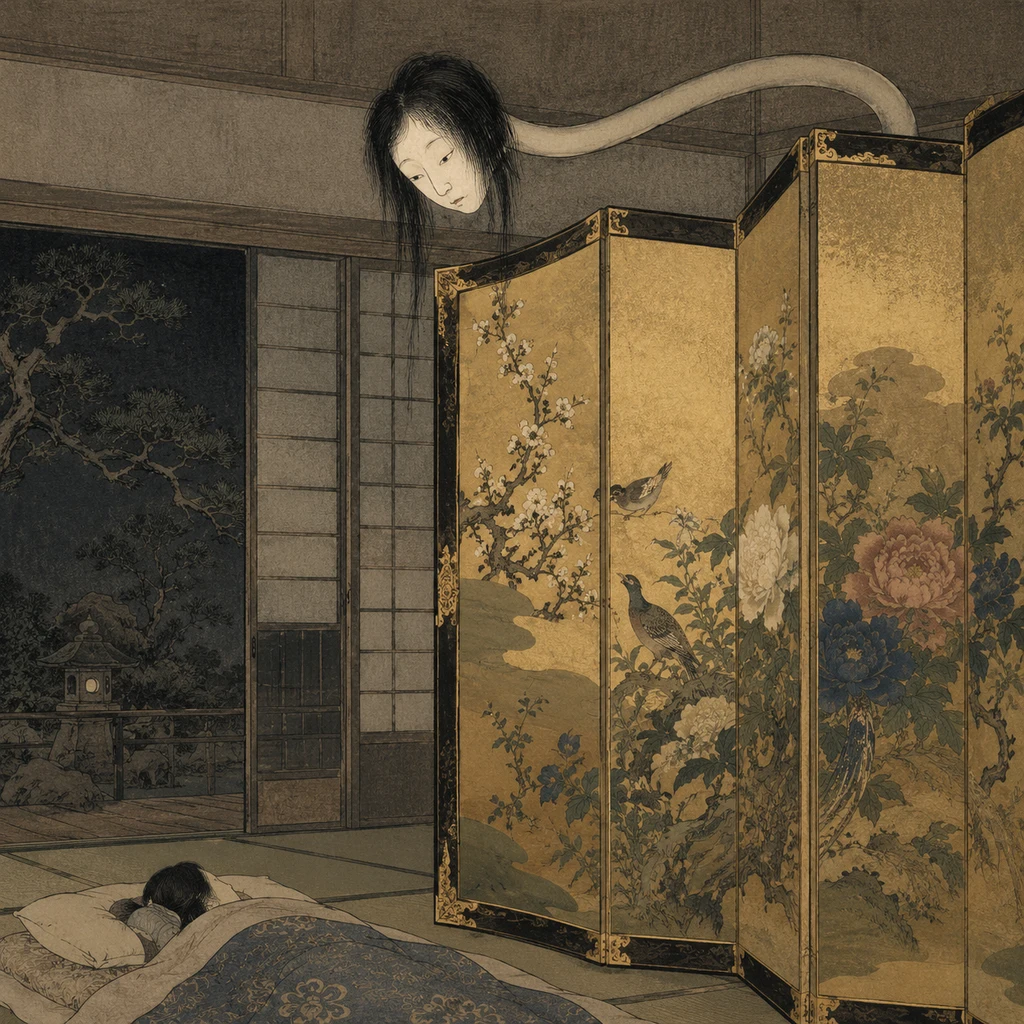
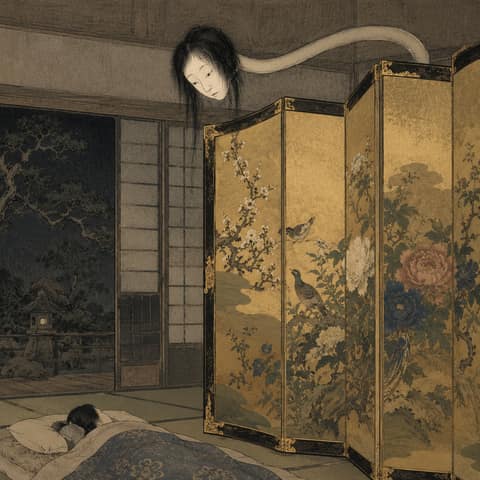
A yokai illustrated by Edo-period artist Toriyama Sekien in Konjaku Hyakki Shūi. It is said to spy on human affairs from behind a folding screen (byōbu), peeking even over a seven-shaku-tall screen. Some regard it as a visual invention drawing on Chinese classical anecdotes, while others interpret it as a tsukumogami—an aged screen that transformed after long years of witnessing bedroom secrets. It lacks strong place-based lore, with its identity largely defined by pictorial sources.

Keukegen

Keukegen

Epic

KAY-oo-kay-gen

希有希見の毛獣・毛羽毛現

General ClassificationsJapanese folklore

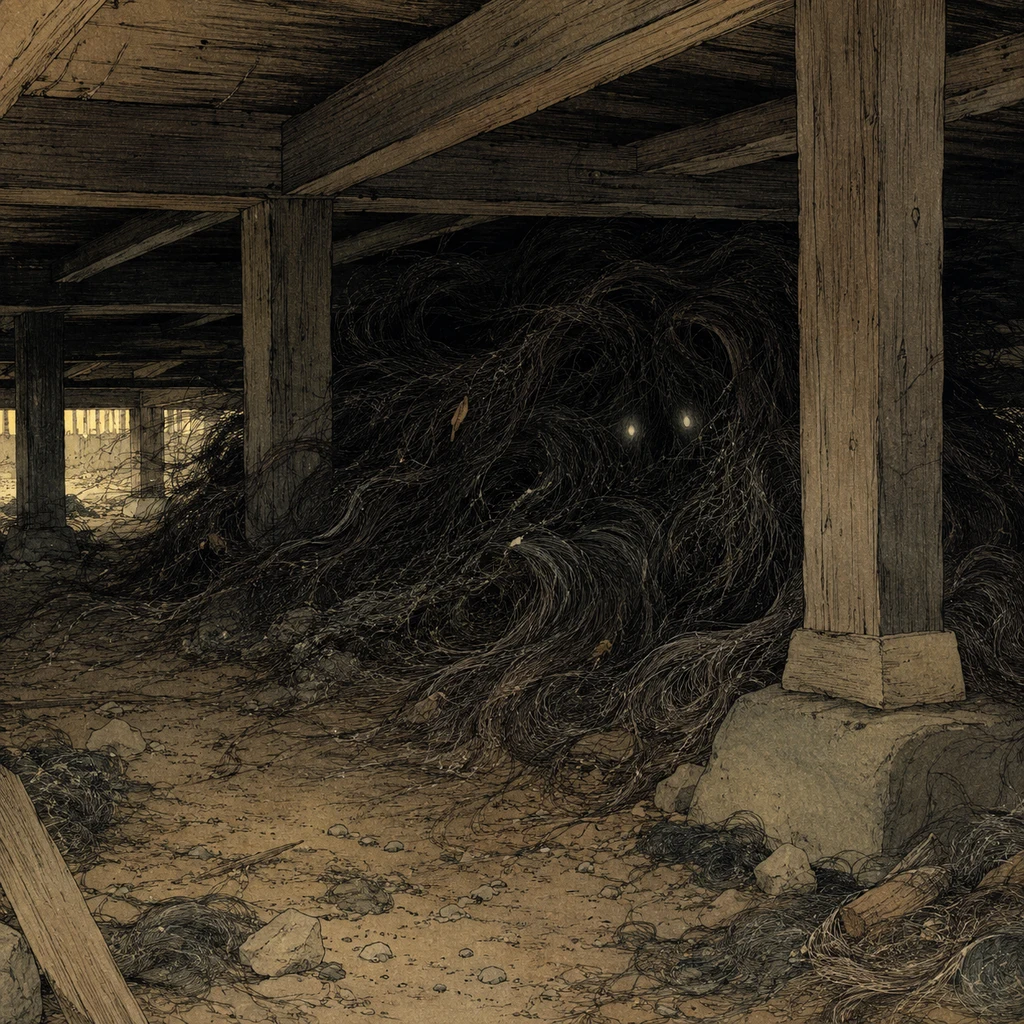
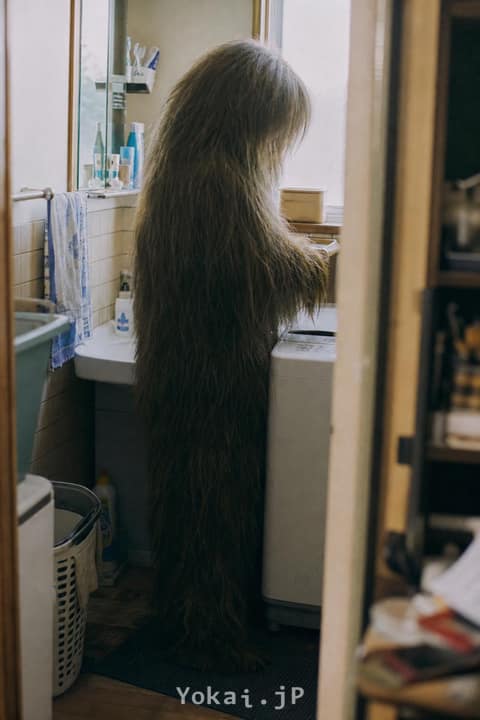
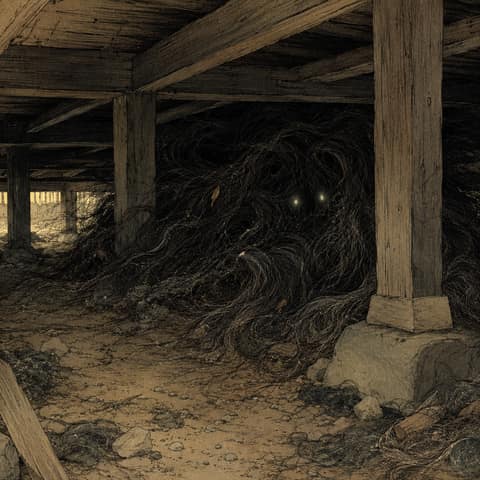
A shaggy, seldom-seen yokai sketched by Toriyama Sekien in Konjaku Hyakki Shūi. Sekien glosses its name as “Keu-kemi” (written 希有希見, “rarely seen”), underscoring its elusiveness. He likens its form to a hair-covered “hair-woman,” yet offers little on its nature or habits. Later writers proposed it lurks in damp corners of houses, but Edo-period sources do not confirm this.

Mokumokuren

Mokumokuren

Epic

MOH-koo-moh-koo-REN

障子一面の眼群・目目連

Household SpiritsJapanese folklore

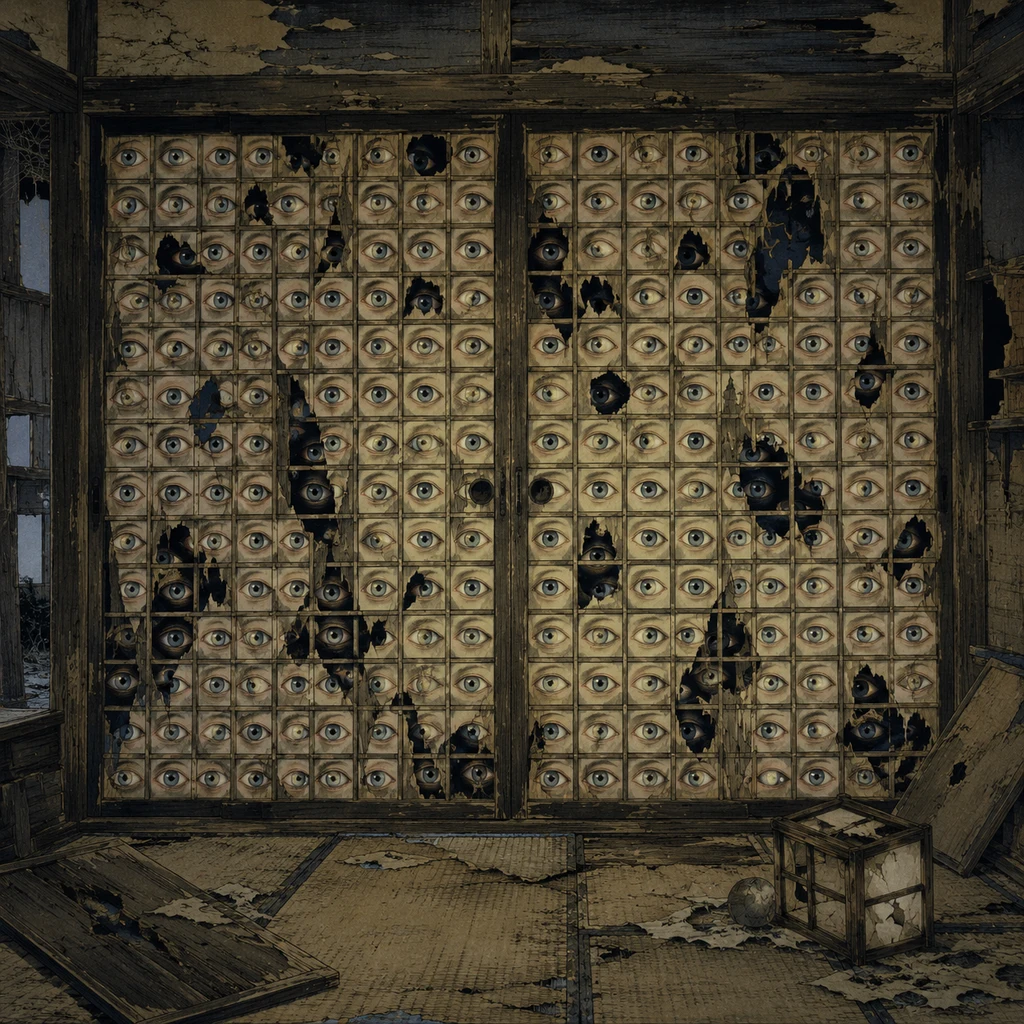
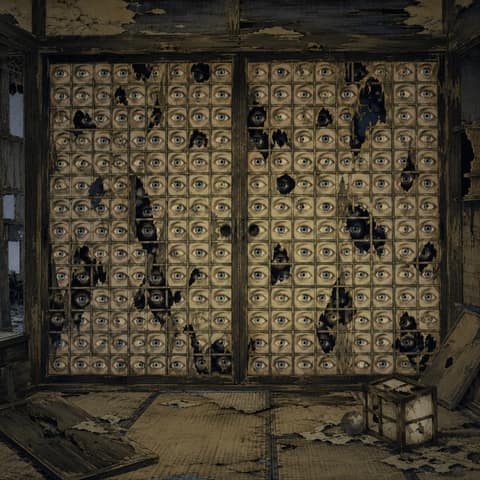
A yokai depicted by Toriyama Sekien in Konjaku Hyakki Shūi. Countless eyes appear across the paper screen doors of a dilapidated house, staring back at intruders. Sekien’s note suggests a go player’s obsession spread from the board to the entire house, framing it as a haunt residing in the shoji itself. Later encyclopedias call it a literary creation, yet it endures as an emblem of the eerie patterns and dim light cast through shoji screens.
Kyōkotsu (Mad Bone)

Kyōkotsu (Mad Bone)

Epic

KYOH-koh-tsu

井戸底の浮上骨・狂骨

Animated Objects & UndeadEdo period

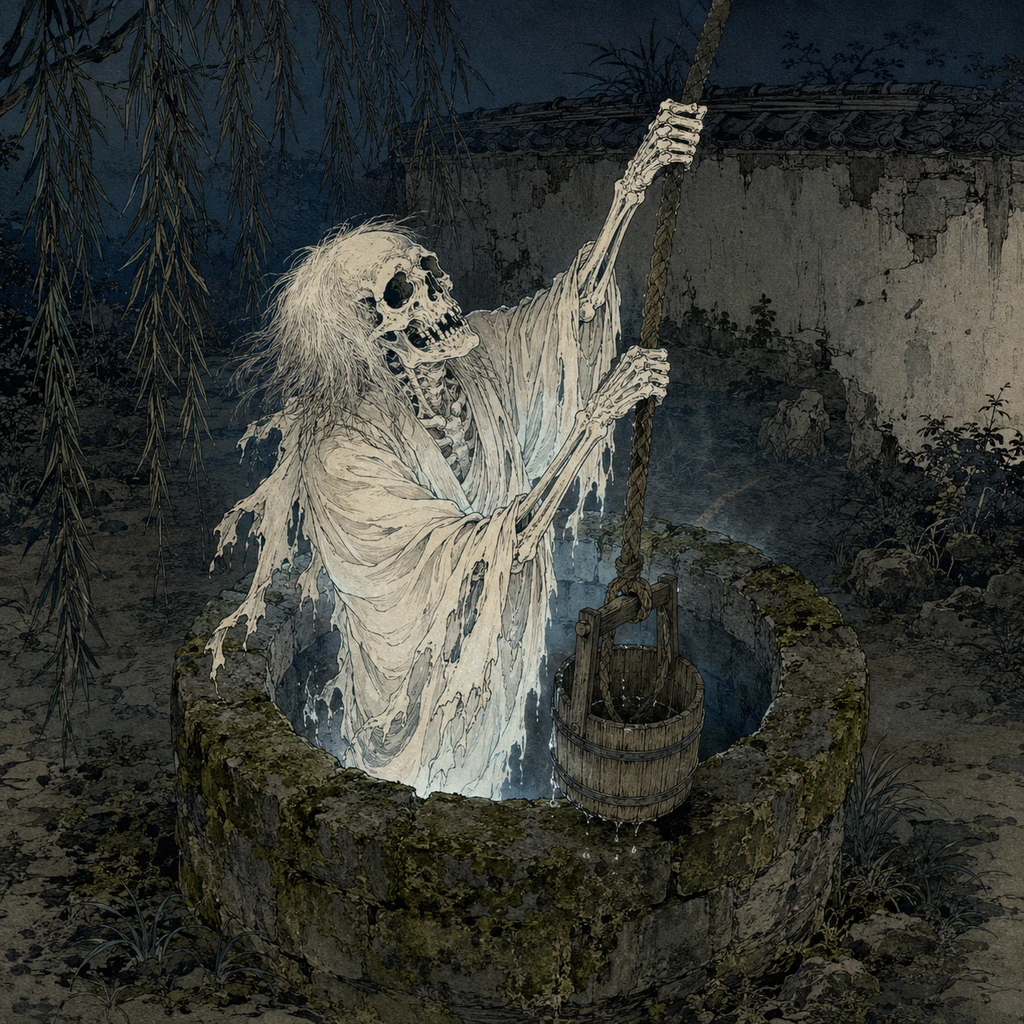
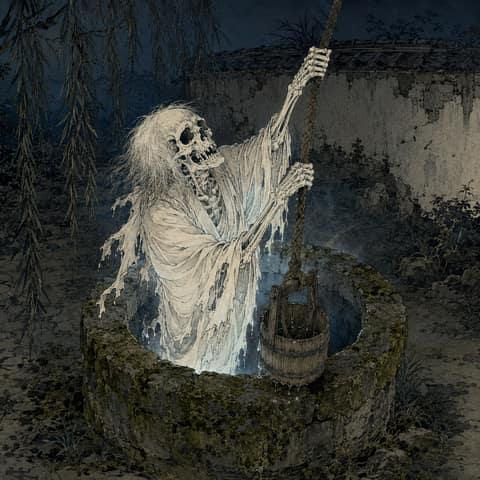
A skeletal yokai illustrated by Toriyama Sekien in Konjaku Hyakki Shūi. It depicts a white-haired skeleton in white robes dangling from a well’s bucket rope, captioned, “Kyōkotsu is a white bone from within a well.” Often read as a being steeped in rancor, but Sekien’s text gives no details of its nature or backstory, and no historical oral name is attested. Scholars view it as a pictorial invention linked to puns, proverbs, or dialectal wordplay.

Eye Standoff

Eye Standoff

Rare

MEH-koo-RAH-beh

福原邸の髑髏集・目競

Ghosts & SpiritsHyogo

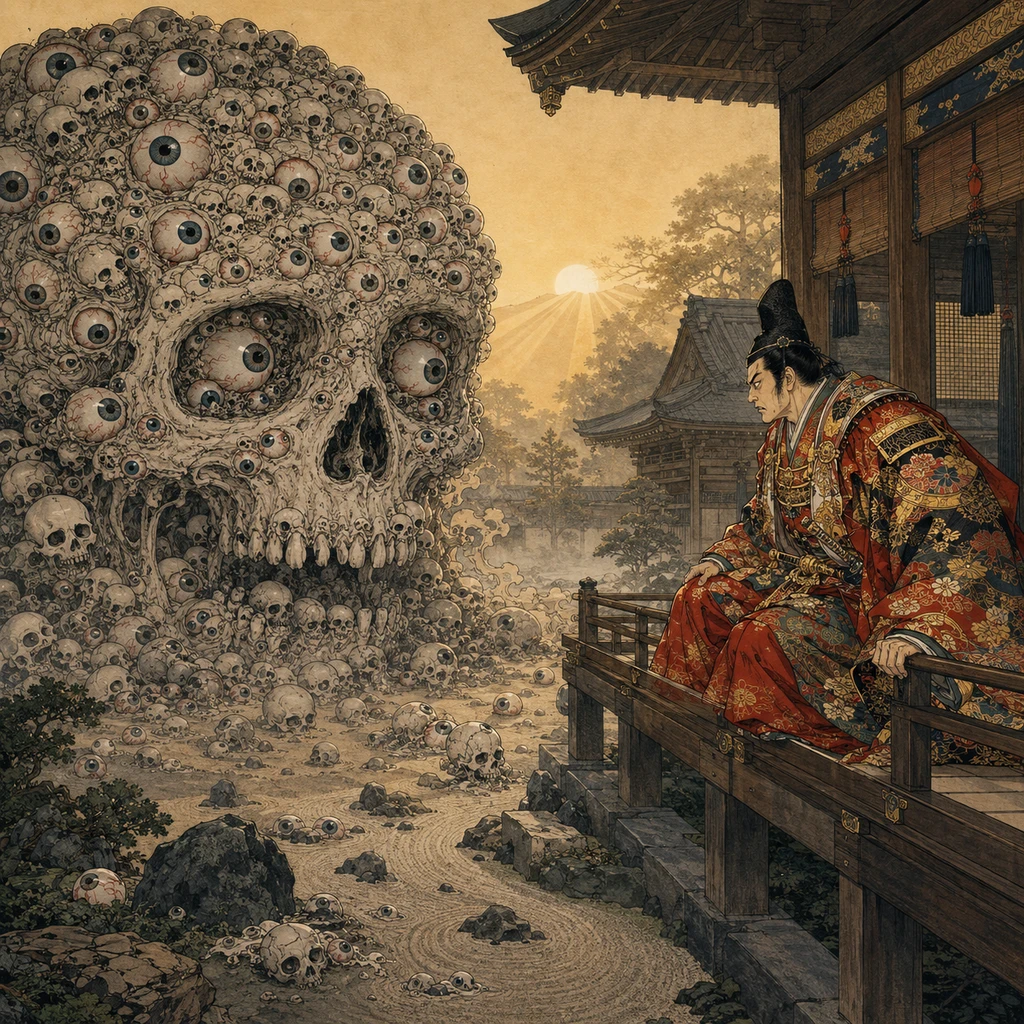
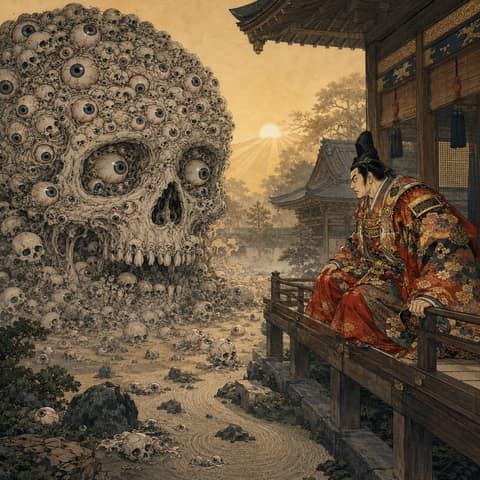
Eye Standoff is a yokai depicted by Toriyama Sekien in Konjaku Hyakki Shūi; the name itself is Sekien’s coinage. Its source is a tale in The Tale of the Heike (Book Five, “On Monsters and Portents”) describing a haunting at Taira no Kiyomori’s Fukuhara residence: countless skulls rolled about and gathered into one gigantic skull that glared at him. When Kiyomori glared back, the apparition vanished. It is often read as a mass vision of dead spirits manifesting as skulls.
Ushirogami (The Back-Hair Spirit)

Ushirogami (The Back-Hair Spirit)

Rare

oo-SHEE-roh-gah-mee

後ろ髪引く一つ目女・後神

Ghosts & SpiritsAcross Japan (primarily Edo-period and Tsuyama traditions)

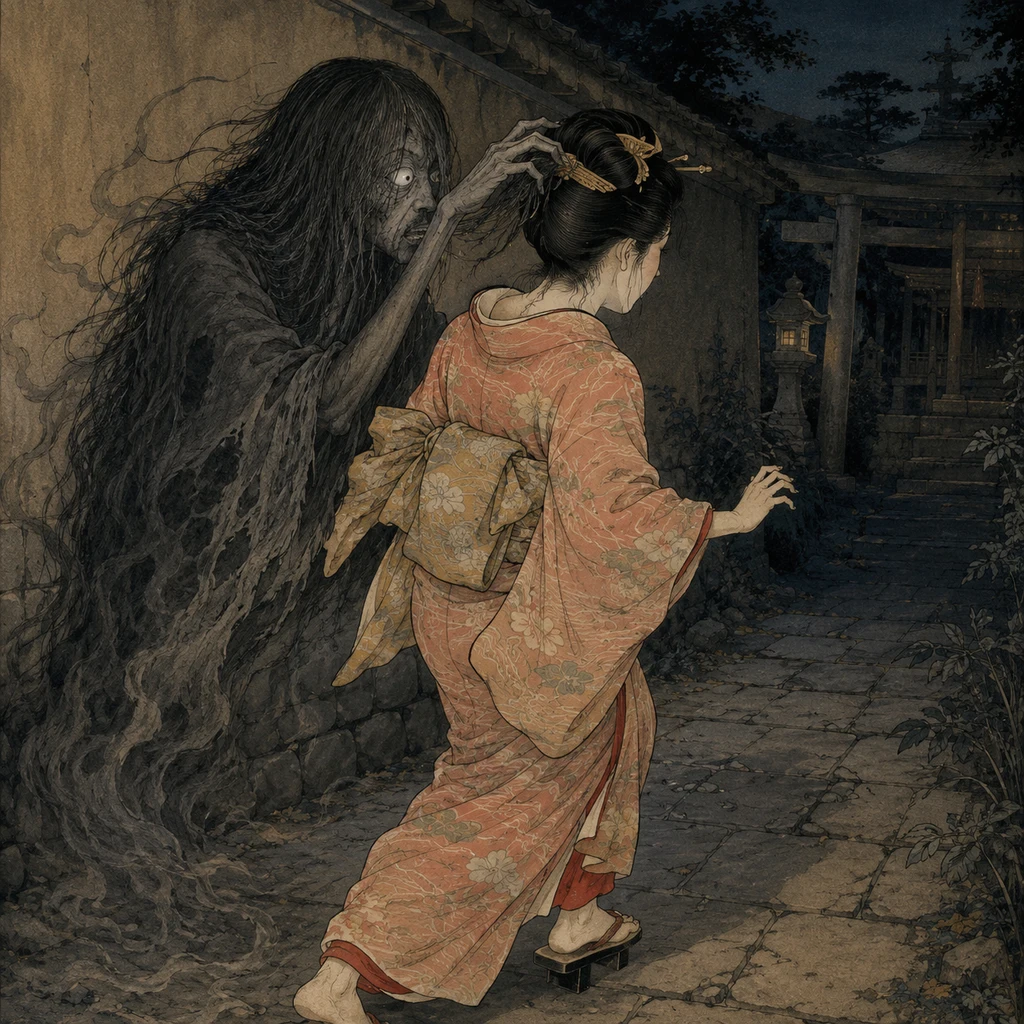
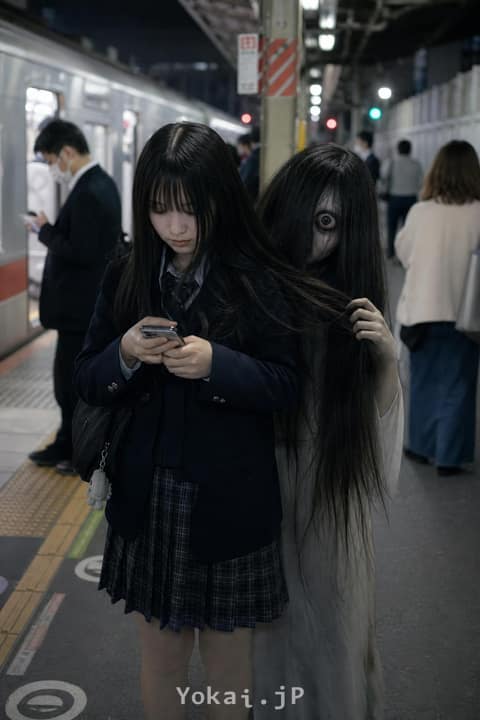
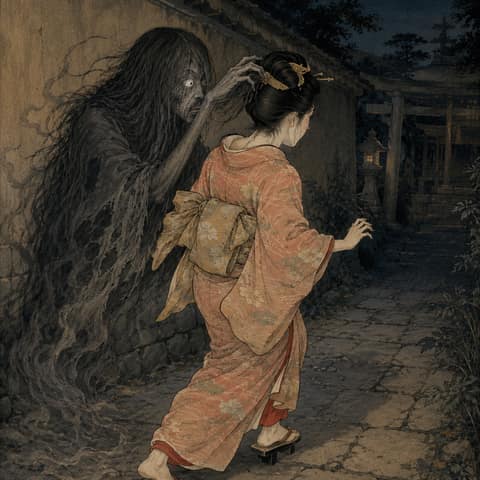
Ushirogami is a specter said to appear behind a person and tug their back hair. In Toriyama Sekien’s Konjaku Hyakki Shūi it is drawn as a one-eyed woman, interpreted as the personification of hesitation and lingering regrets. It haunts the timid or indecisive, amplifying the reluctance that keeps them from acting. The name’s wordplay reinforces its role, and in folk belief it is grouped with “cowardice spirits.”
Iyaya (Negaya)

Iyaya (Negaya)

Rare

ee-YAH-yah

水面に老顔映す美女・否哉

Household SpiritsUncertain; Japanese folklore

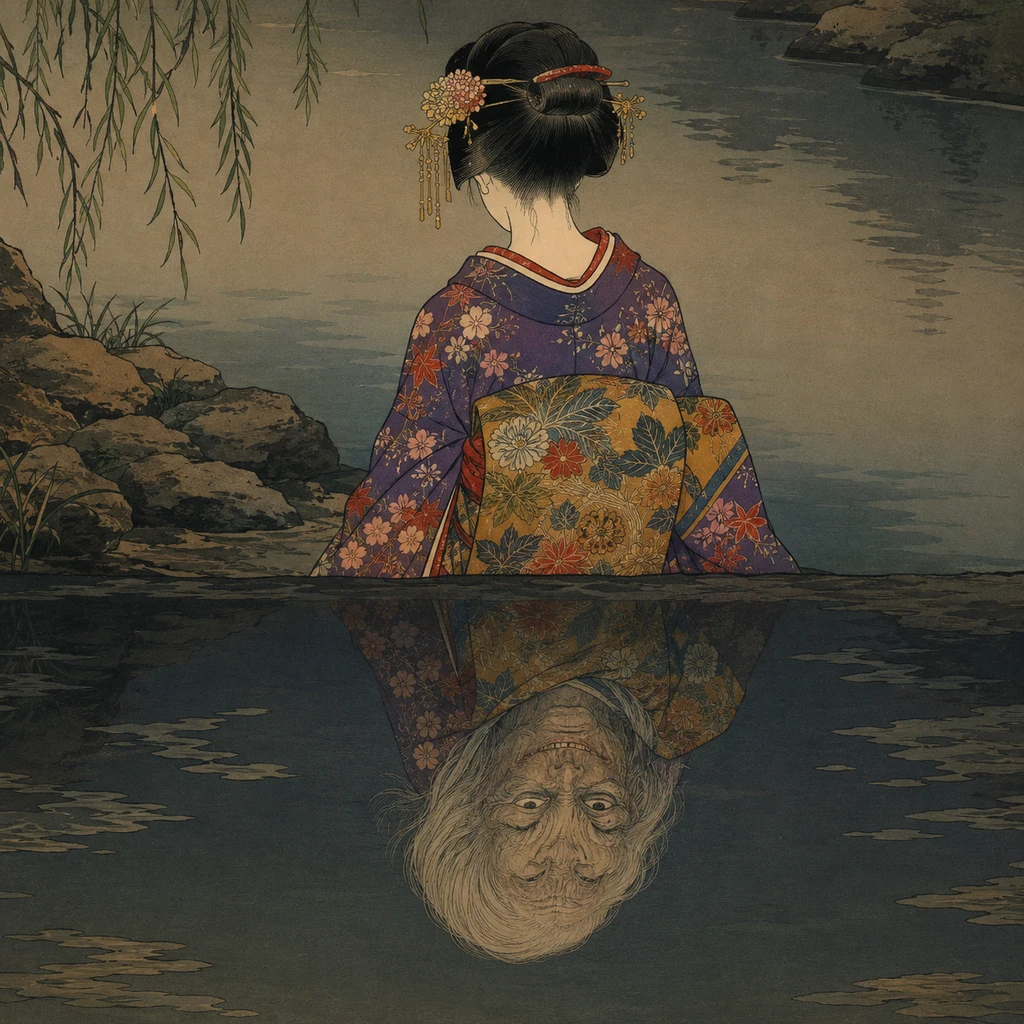
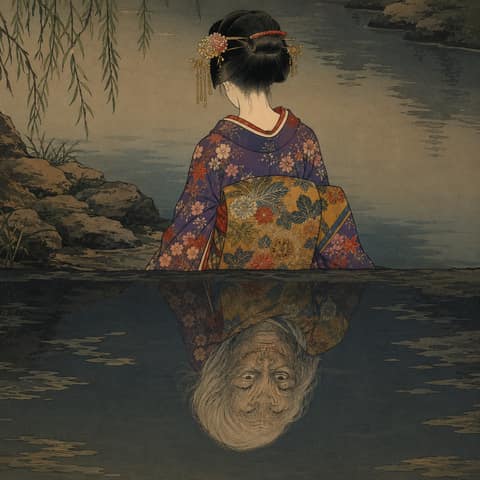
A yokai depicted by the Edo-period painter Toriyama Sekien in Konjaku Hyakki Shūi. Shown as a beauty from behind, yet the reflection on the water reveals a deeply wrinkled old face. Sekien notes he modeled its name “Iyaya” after the Chinese tale of the insect called “Guai zai” (“strange!”), rendering it as 否哉; no concrete traits are described. Later sources mention it under names like Iyami or Ijiami, but its existence in genuine tradition is doubtful.

King of the Waterfall Spirit

King of the Waterfall Spirit

Epic

tah-kee RAY-oh

滝壺顕現の不動・滝霊王

Deities & Divine SpiritsShiga

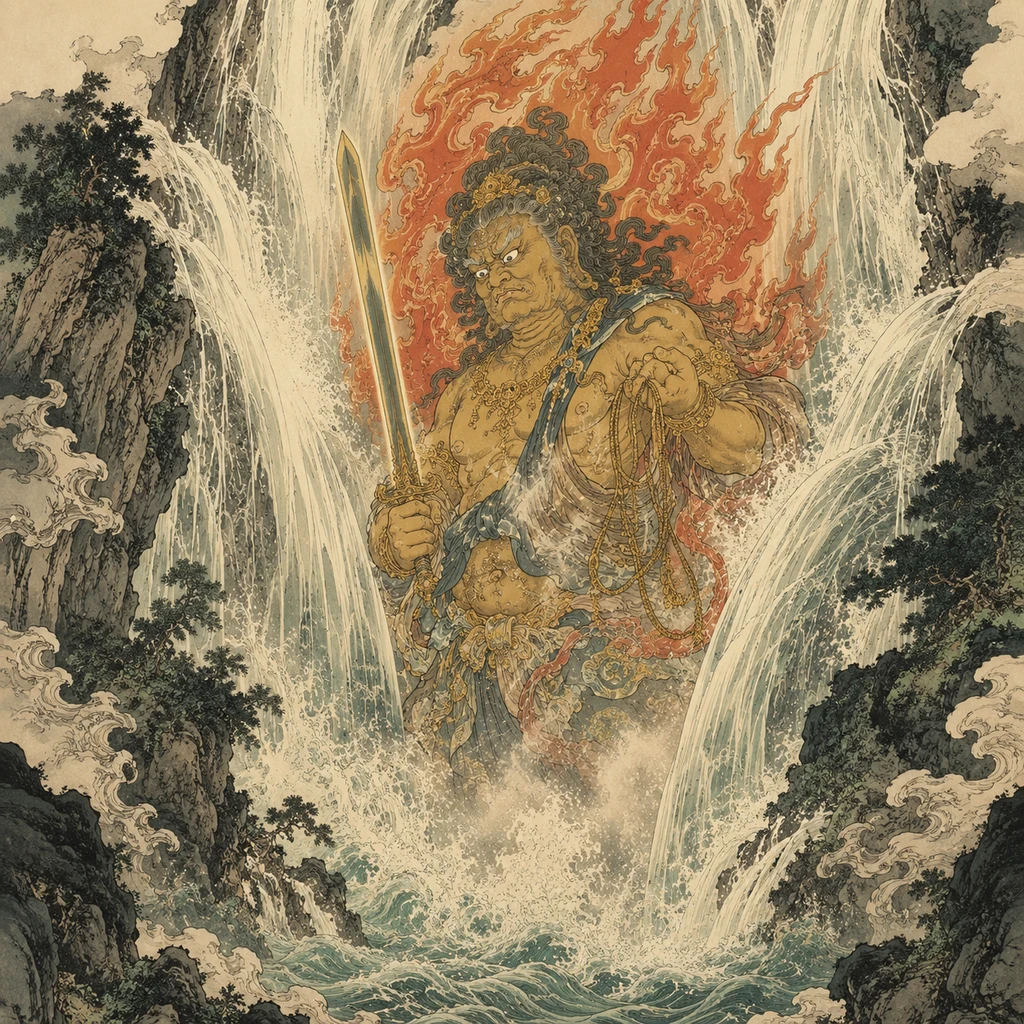
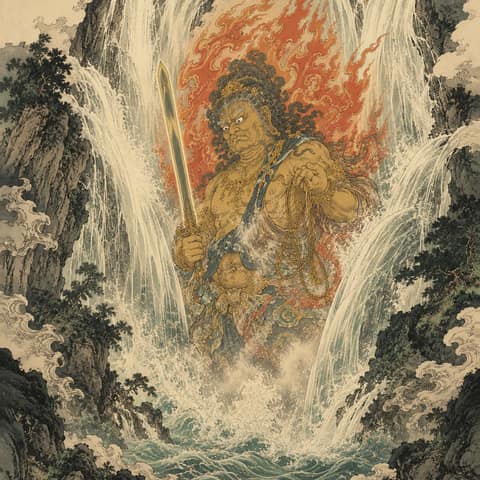
A name found in the Edo-period artist Toriyama Sekien’s Konjaku Hyakki Shūi, depicting the aspect of Fudō Myōō manifesting within a waterfall. Sekien annotated it as “appearing from plunge pools across the provinces,” citing the Qinglong shu to state it “subdues all demons and obstacles.” Rather than a yokai proper, it is regarded as a visual emblem of Myōō worship manifesting at waterfalls; the title itself appears to be Sekien’s coinage. Detailed tradition is scarce, and regional aliases or concrete cases are unknown.

Hakutaku (White Marsh)

Hakutaku (White Marsh)

Divine

hah-koo-TAH-koo

万事を見通す瑞獣・白沢

Deities & Divine SpiritsIntroduced from China (widely circulated across Japan as apotropaic images)

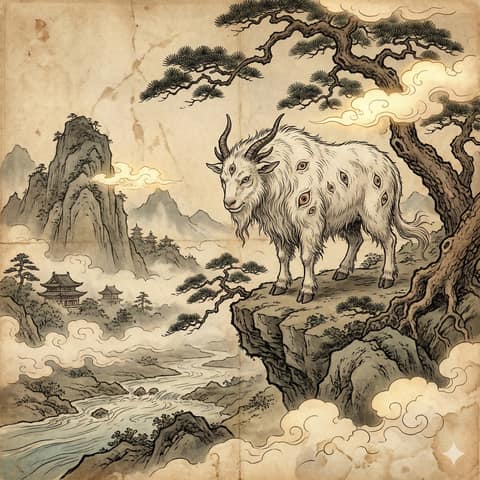
Hakutaku is an auspicious beast from ancient Chinese lore said to understand human speech and to know all manner of monsters, demons, and calamities. It appears in eras of virtuous rulership, and the famed Hakutaku Chart records creatures of anomaly and methods to counter them. In Japan, such images spread in the Edo period as talismans against misfortune, carried for safe travel and protection from illness. Depictions show a white beast, with features varying by period.

Doro-danbō (Mud Rice-Field Wraith)

Doro-danbō (Mud Rice-Field Wraith)

Rare

DOH-roh-dahn-BOH

田を返せの泥田坊

山野の怪Uncertain (Toriyama Sekien notes “the northern provinces”); otherwise Japanese folklore

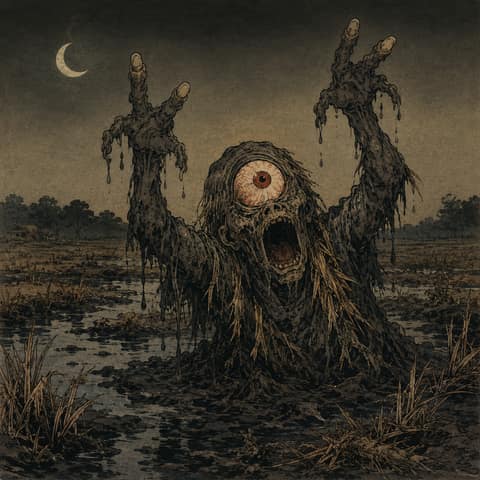
A yokai illustrated by Edo-period artist Toriyama Sekien in Konjaku Hyakki Shūi. It rises half-bodied from a muddy rice field, one-eyed with three fingers, and is said to appear at night crying, “Return the fields!” Beyond Sekien’s vignette, reliable early-modern attestations are scarce and concrete folk sources are thin. Later interpreters treated it as a moral emblem tied to farming virtue, diligence, and a warning against dissipation.

The Dōjōji Bell

The Dōjōji Bell

Rare

doh-JOH-jee no kah-NEH

紀伊安珍の蛇巻き鐘・道成寺鐘

住居・器物Wakayama

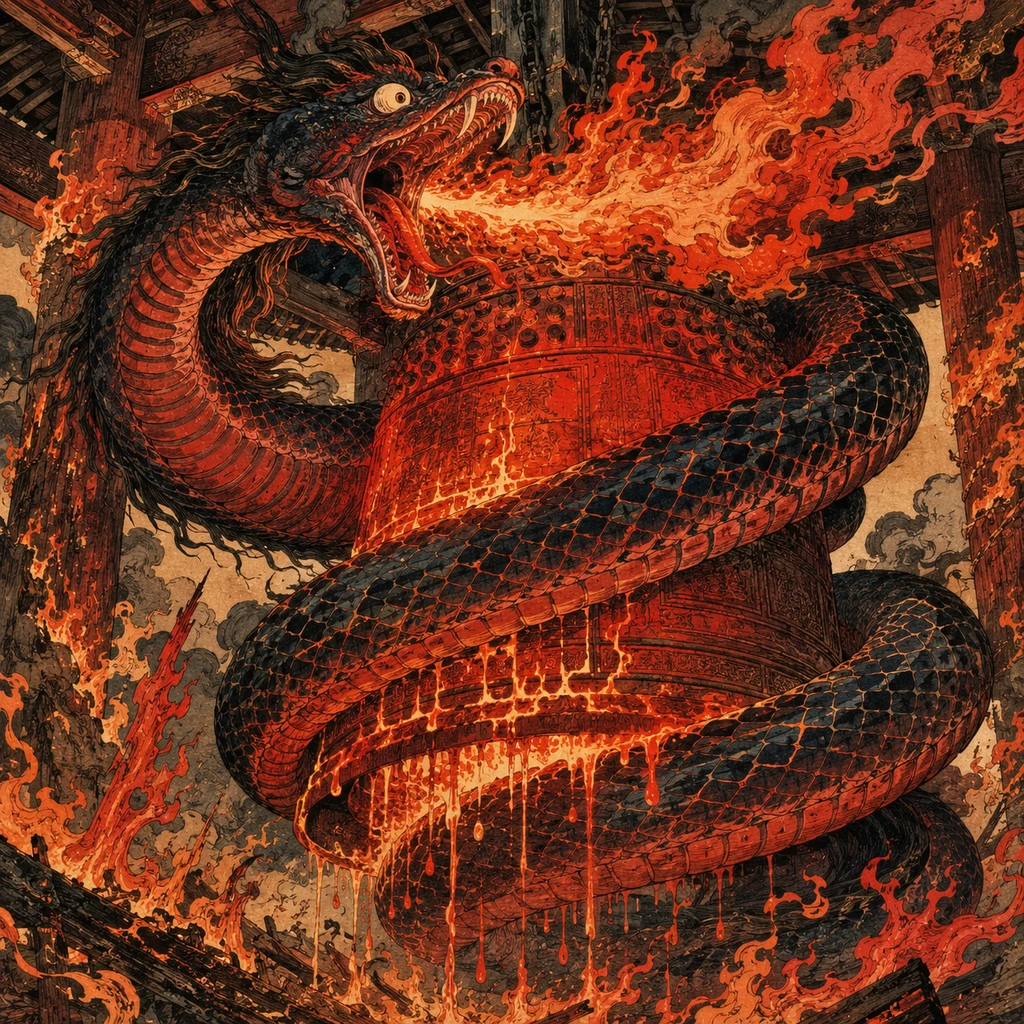
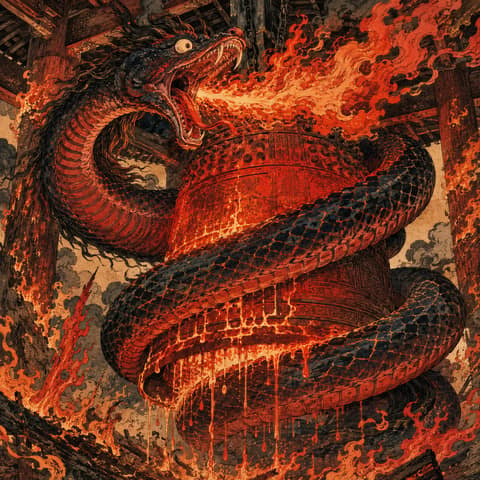
The great temple bell famed in the Dōjōji legend. When the monk Anchin hid inside the bell, a woman whose love had turned to vengeful fury transformed into a serpent, coiled around it, and scorched it with searing heat. Traditions diverge: some describe a Noh-style image of the bell turning to boiling water that swallows the monk, while other engi accounts say the fire was quenched and the bell survived. Toriyama Sekien illustrated this variant as “Dōjōji Bell” in Konjaku Hyakki Shūi.

Tengu Pebble Shower

Tengu Pebble Shower

Uncommon

TEN-goo TSU-boo-teh

投擲者見えぬ礫・天狗礫

自然現象・自然霊Various regions of Japan (noted in Kaga and Edo records)

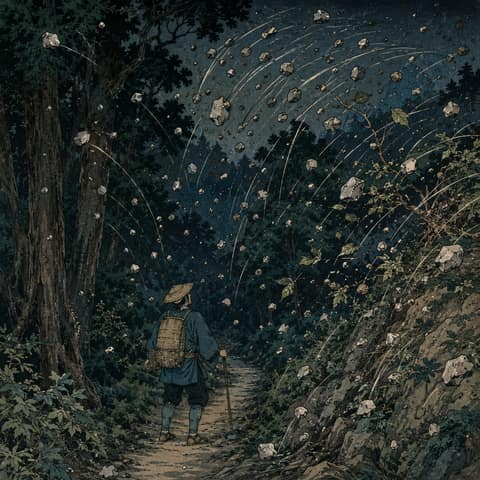
Tengu Pebble Shower refers to uncanny incidents where tiny stones rain down from nowhere. No thrower can be found; people hear the sound and feel the impacts, yet the stones may be invisible or leave no marks. The phenomenon is often attributed to tengu as a warning, or to foxes and raccoon dogs. Folklore says those struck may fall ill or have poor luck in hunting. Toriyama Sekien illustrated it, and reports appear from Edo to the Hokuriku region.

Kokuri Baba (Temple Kitchen Hag)

Kokuri Baba (Temple Kitchen Hag)

Rare

KOH-koo-ree bah-BAH

庫裏に潜む墓荒し婆・古庫裏婆

住居・器物Japanese folklore

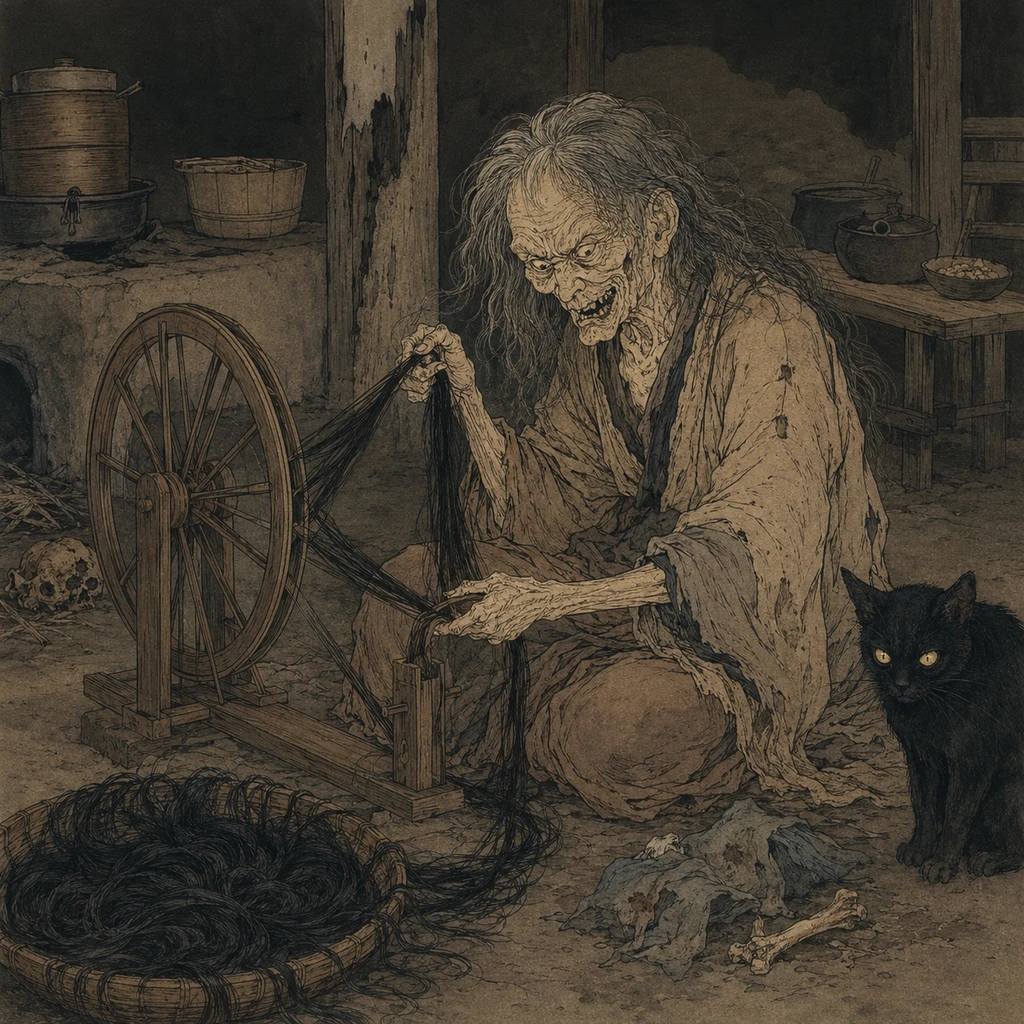
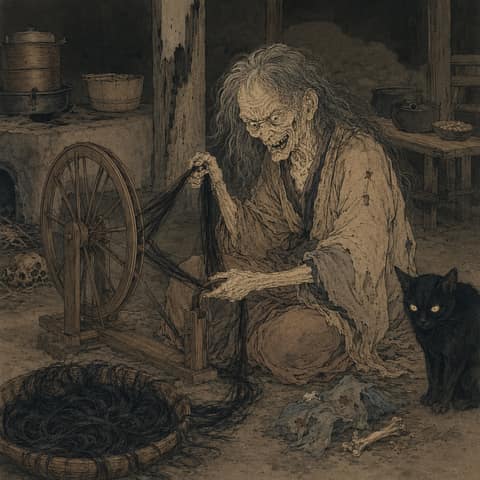
An old-woman yokai illustrated by Edo-period artist Toriyama Sekien in Konjaku Hyakki Shūi. Said to haunt a temple’s kuri (monastic kitchen/quarters), she steals offerings and money from parishioners, desecrates graves to weave garments from the dead’s hair, flays skin, and eats corpses. In Sekien’s image she appears as an elderly woman spinning thread with a cat at her side, often read as satire on clerical corruption and decaying temple morals. Reliable region-specific oral traditions are uncertain.

Kazembō (Fire-Monk of Toribe Hill)

Kazembō (Fire-Monk of Toribe Hill)

Uncommon

kah-ZEN-boh

京鳥部山の僧霊火・火前坊

霊・亡霊Kyoto

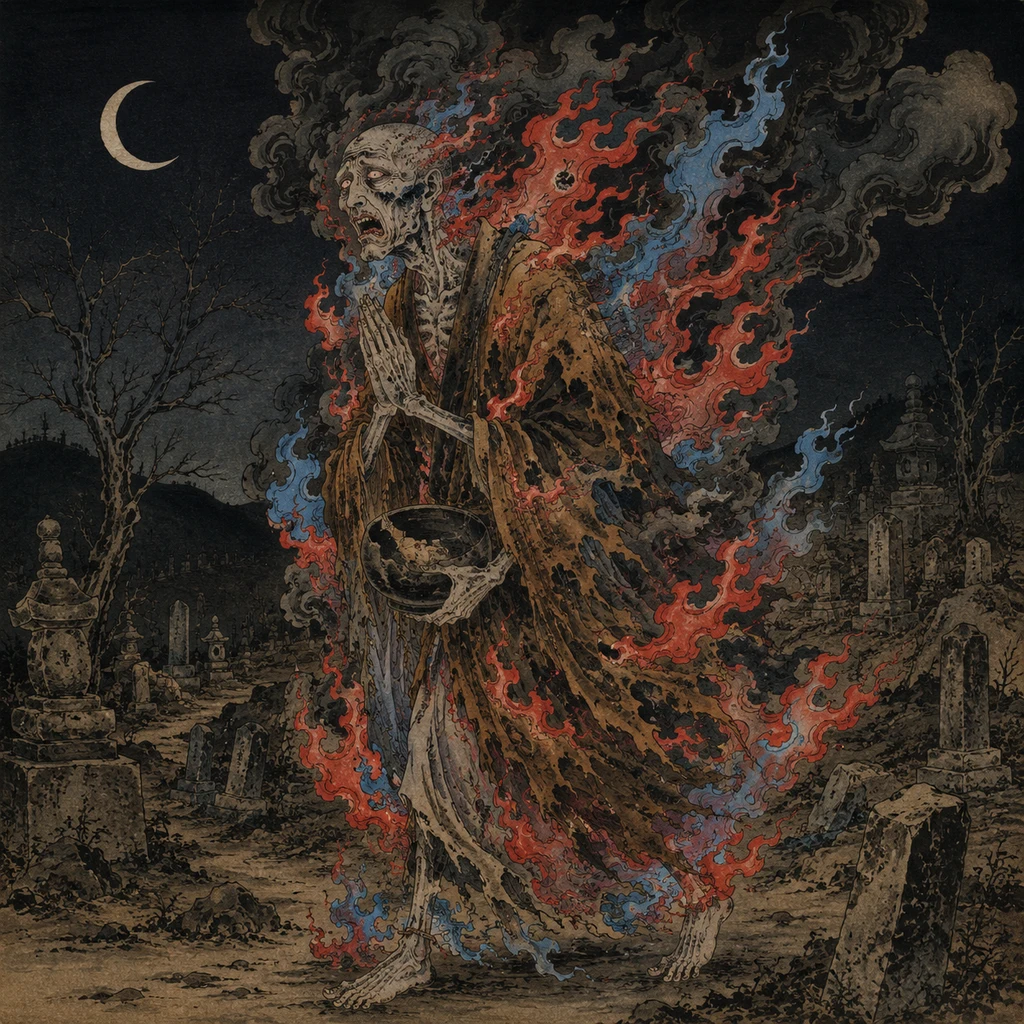
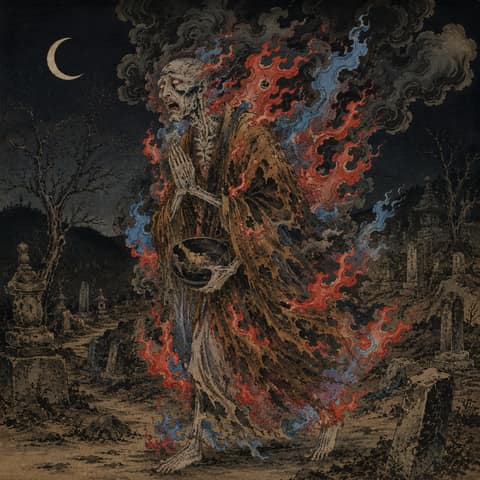
Kazembō is a yokai depicted by Toriyama Sekien in Konjaku Hyakki Shūi: a monk-shaped will-o’-the-wisp said to appear at Toribe Hill, Kyoto’s historic cremation ground. Shown as a beggar-monk wreathed in flames and smoke, it is often interpreted as the spirit-fire of a monk who sought self-cremation for salvation but, shackled by earthly attachments, failed to pass on. Sekien’s image is the primary source; the name and appearance were later cataloged in yokai encyclopedias.

Minobi (Rain-cloak Fire)

Minobi (Rain-cloak Fire)

Uncommon

MEE-noh-bee

琵琶湖雨夜の蓑光・蓑火

自然現象・自然霊Shiga

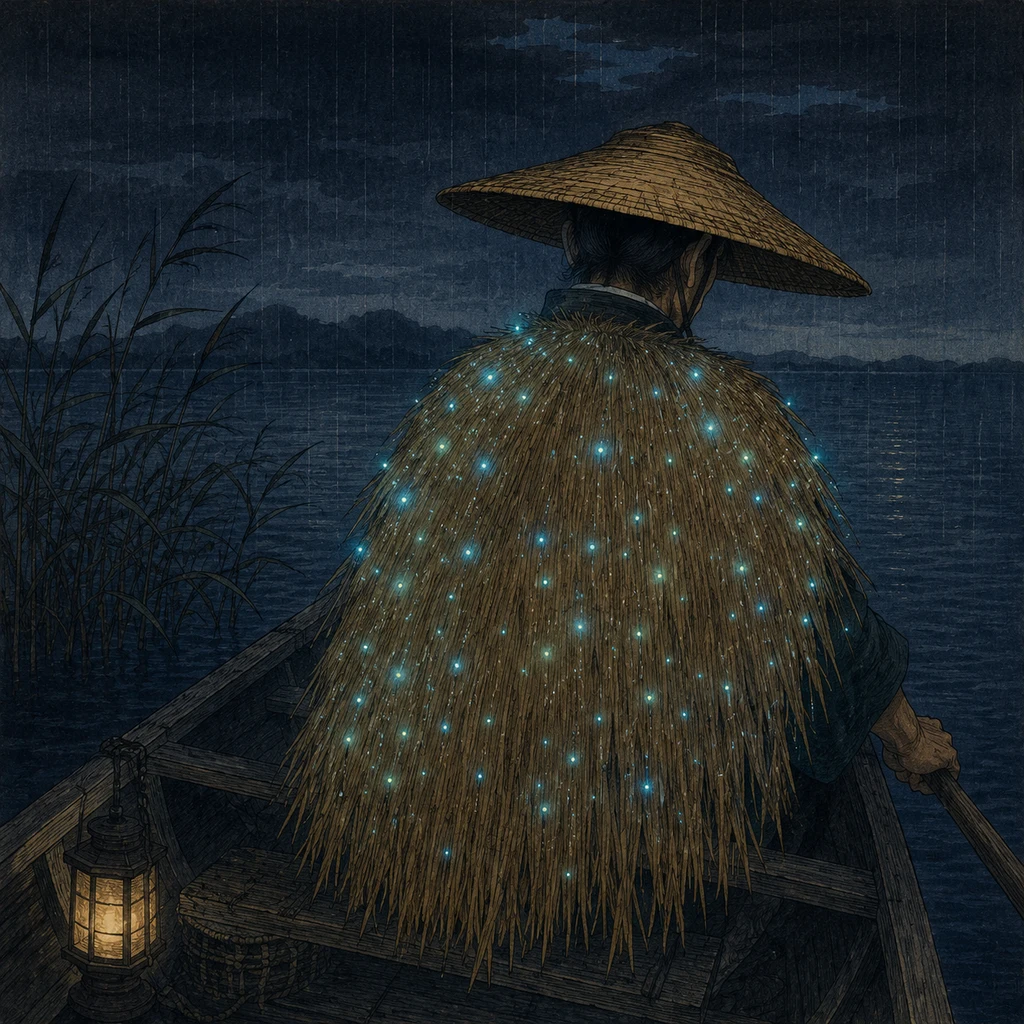
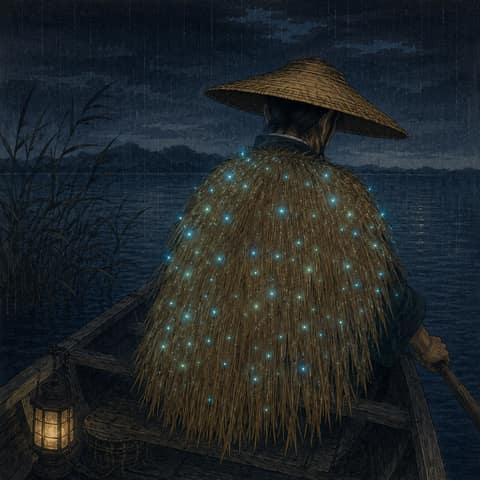
Minobi is a will-o’-the-wisp–like fire said to appear as tiny lights dotting a straw rain cloak on boats crossing Lake Biwa, especially on rainy nights in the rainy season. It neither burns nor spreads; if the cloak is removed, the lights vanish. Brushing at them makes them multiply, glittering like starlight. Some traditions call it the manifestation of drowned spirits, while modern views liken it to a kind of gaseous luminescence; similar reports exist across Japan.

Snake-Obi

Snake-Obi

Rare

jah-TIE

嫉妬女の毒蛇帯・蛇帯

住居・器物Edo period; derived from painted sources

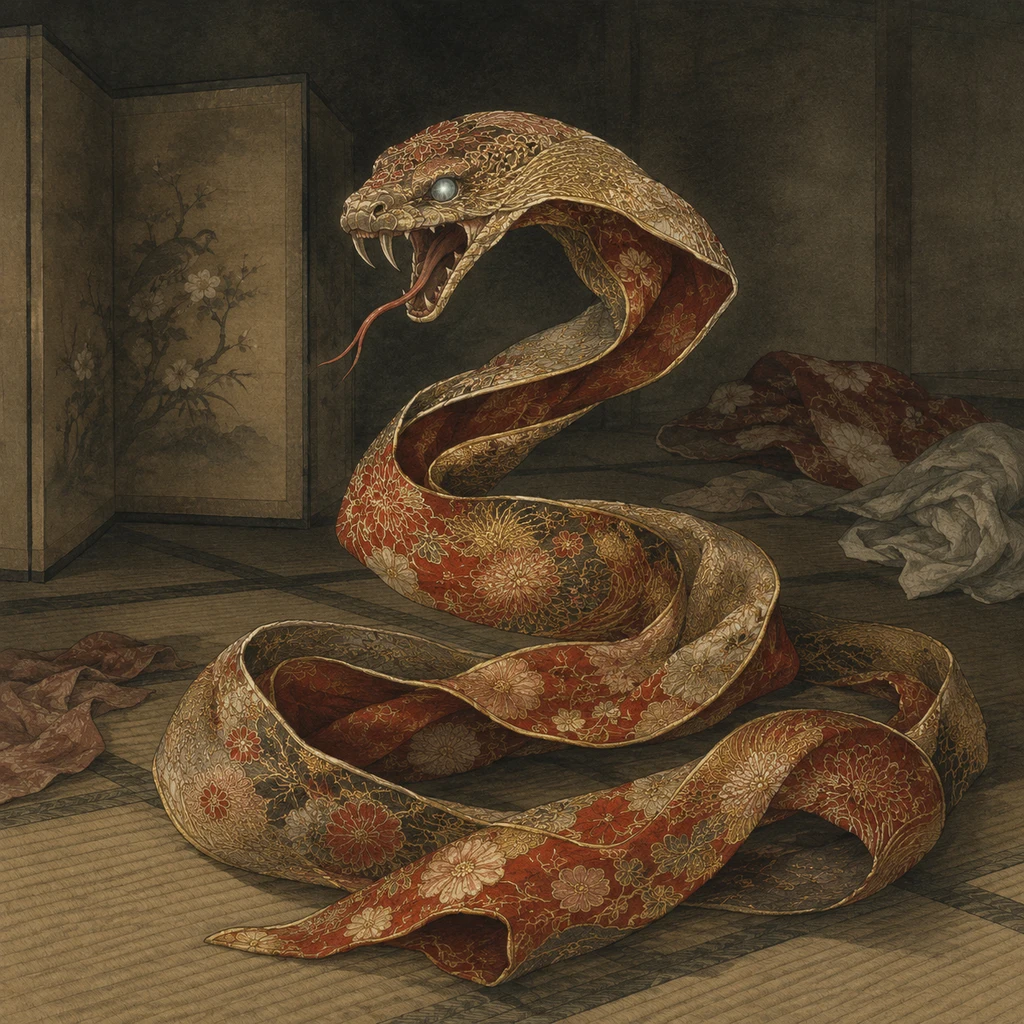
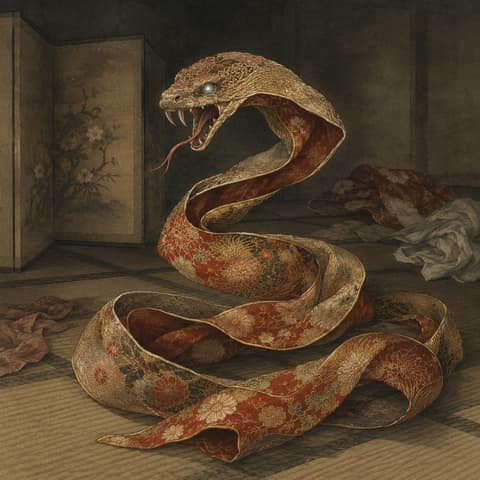
Snake-Obi is a yokai depicted by Toriyama Sekien in Konjaku Hyakki Shūi: a sash (obi) that takes on the form of a snake. Drawing on the Chinese Bowuzhi claim that sleeping on a sash makes one dream of snakes, it links obi and serpent-dreams with the idea of corrupt intent. Sekien notes that a jealous woman’s sash becomes a venomous serpent, symbolically expressing the passions that dwell in familiar objects and their ties to dreams.

Great Zato (The Blind Masseur Yokai)

Great Zato (The Blind Masseur Yokai)

Epic

OH-zah-TOH

雨夜の三味弾き座頭・大座頭

人妖・半人半妖Edo period

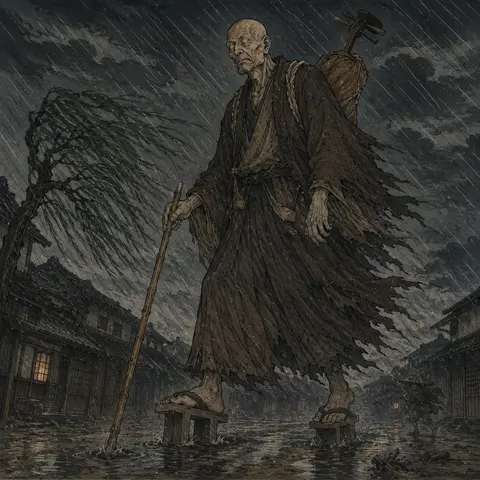
The Great Zato is a yokai depiction of a blind guildsman (zato) illustrated by Toriyama Sekien in Konjaku Hyakki Shūi. Wearing tattered hakama, wooden clogs, and leaning on a staff, it roams the main roads on stormy nights. When questioned, it replies that it “always plays the shamisen at brothels.” The image caricatures the nighttime presence of professional blind performers, blending otherness and social satire into a yokai form.

Hatahiro

Hatahiro

Rare

HAH-tah-HEE-roh

布に宿る蛇身の恨・機尋

付喪神・骸怪Japanese folklore

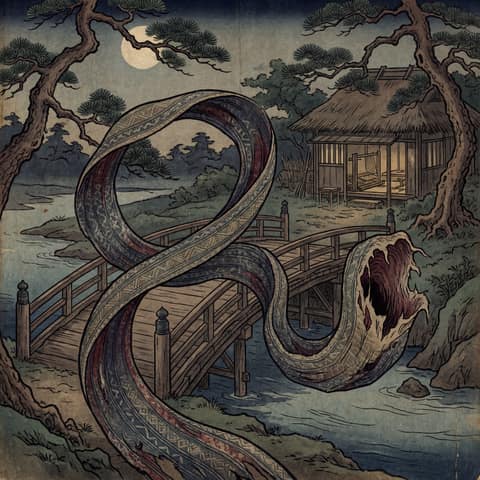
Hatahiro is a cloth yokai depicted by Toriyama Sekien in his Konjaku Hyakki Shūi. It represents a grudge that has seeped into woven fabric, taking the form of a serpentine body that roams in search of people. Sekien’s note explains that a woman’s passion and resentment, as she weaves while waiting for a husband who never returns, transform the fabric. No living oral tradition has been verified; the figure is regarded in art history as an idea-driven apparition originating from Sekien’s imagination.

Hand from a Kosode Sleeve

Hand from a Kosode Sleeve

Rare

koh-SOH-deh no TEH

袖口から伸ぶ白手・小袖の手

住居・器物Edo period

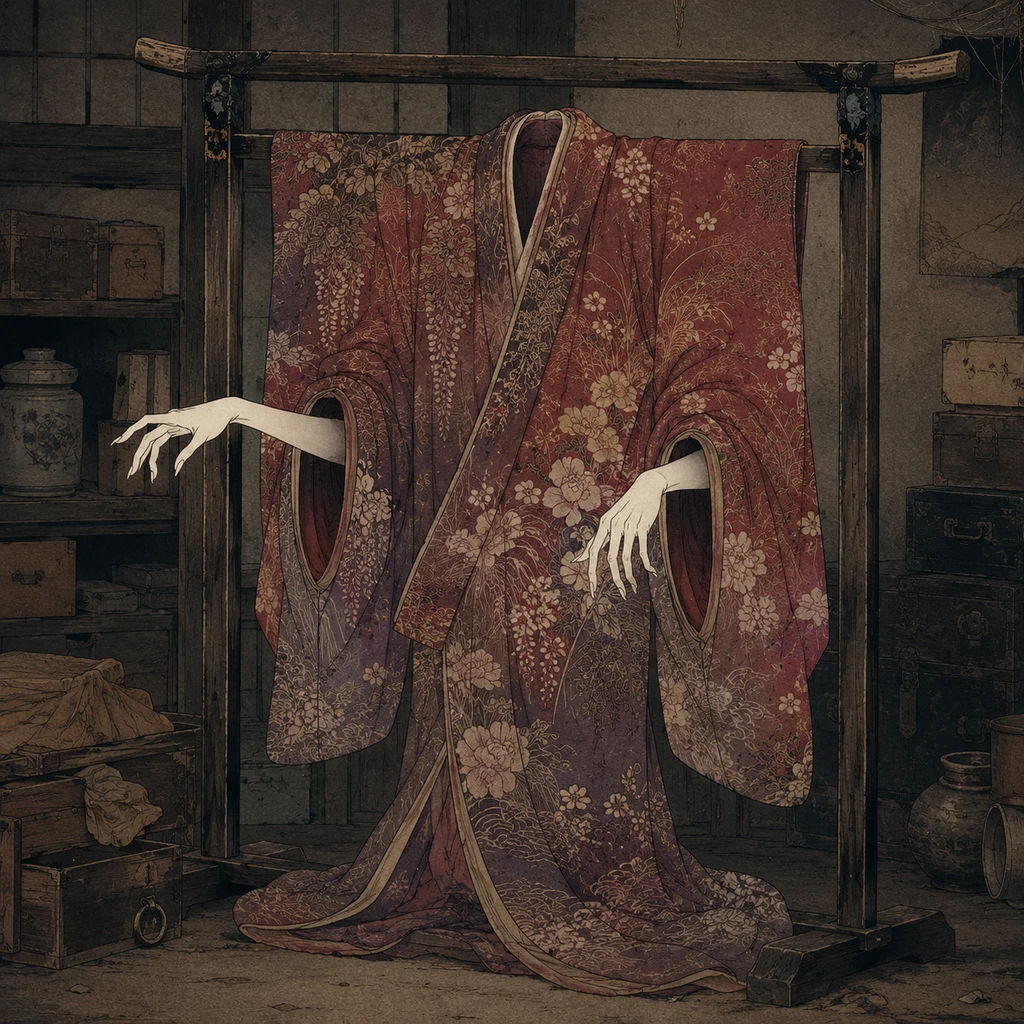
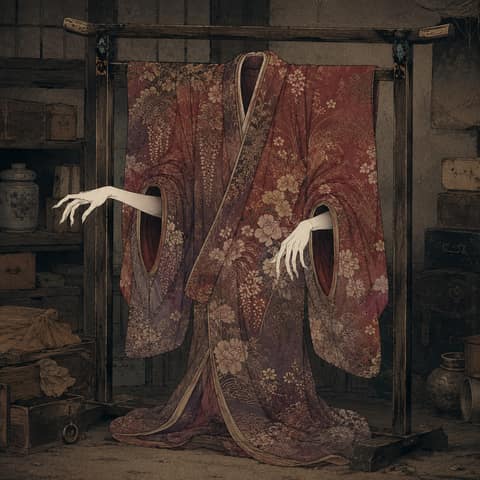
A specter illustrated by Edo-period artist Toriyama Sekien in Konjaku Hyakki Shūi. It appears as a pale woman’s hand reaching out from the cuff of a kosode (short-sleeved kimono). The image is read as the lingering attachment of courtesans or women to clothing they left behind. Linked to practices of dedicating a deceased person’s garments to temples, or to keepsakes and resold clothing, it fuses social satire with the notion that emotions can cling to garments.

Fūri (Wind Tanuki)

Fūri (Wind Tanuki)

Uncommon

FOO-ree

風を起こす獣怪・風狸

動物変化Imported from China (accounts found across Japan)

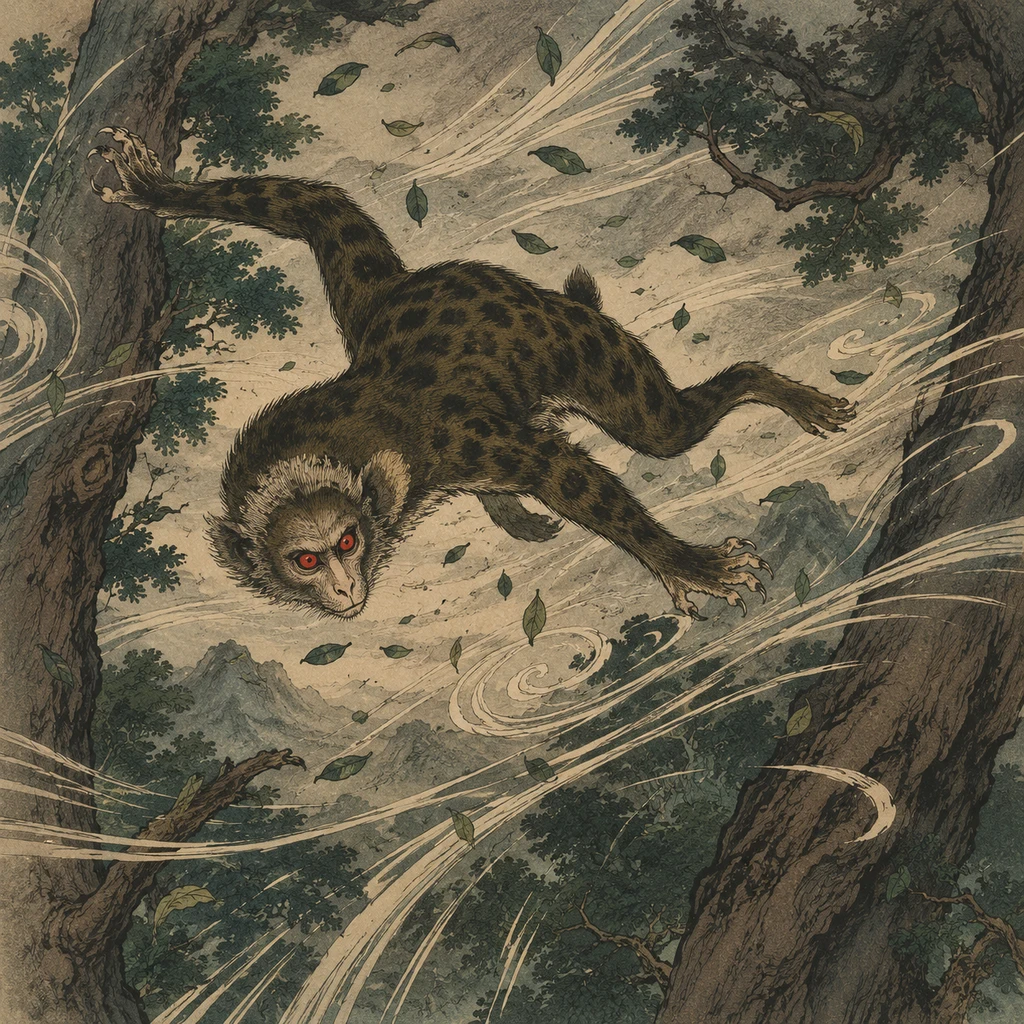
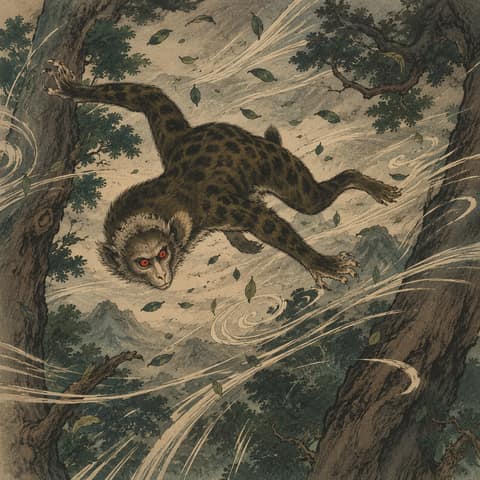
Fūri is the name of a beastly yokai found in Chinese natural histories and zhiguai records, with scattered mentions in Edo-period Japanese essays and natural studies. Descriptions vary: it is likened to a small monkey, marten, tanuki, or hare; said to have a short tail, red eyes, and mottled yellow-green or dark fur. It is rumored to whip up sudden gusts to startle people and livestock, or to appear without warning and leave scratches. Its existence is doubtful, and identifications differ widely by region and source.

Momijigari (The Demon of the Maple Viewing)

Momijigari (The Demon of the Maple Viewing)

Uncommon

moh-MEE-jee-GAH-ree

戸隠山の鬼女紅葉・紅葉狩

鬼・巨怪Nagano

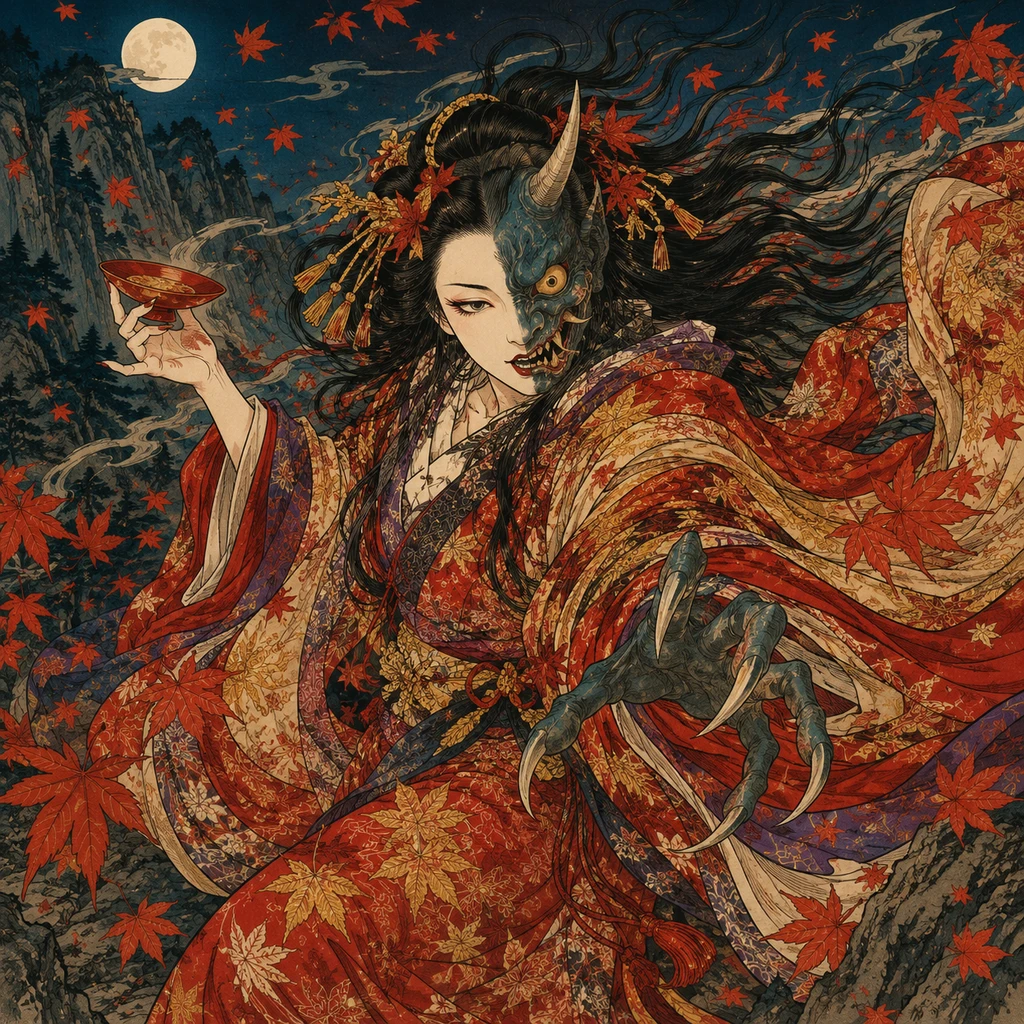
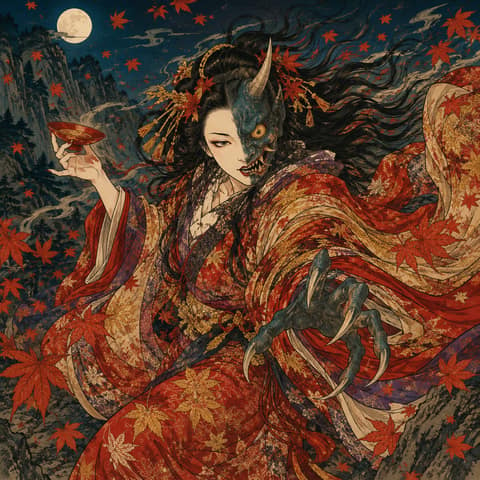
“Momijigari” is the title and theme of a famous tale, widely preserved in medieval and later performing arts and literature, in which the warrior Taira no Koremochi slays a demoness dwelling on Mount Togakushi in Shinano. In Noh, joruri, and kabuki, elegant ladies enjoying the autumn maples are revealed to be the demoness Momiji; aided by divine protection, the warrior sees through the disguise and defeats her. Best known as the title of stage works, the demoness image formed where local legend and the theater tradition intersected.

Hōsōshi (Exorcist of the Great Exorcism)

Hōsōshi (Exorcist of the Great Exorcism)

Epic

HOH-soh-shee

宮中追儺の四つ目・方相氏

神霊・神格Imperial court (continental ritual imported to Japan)

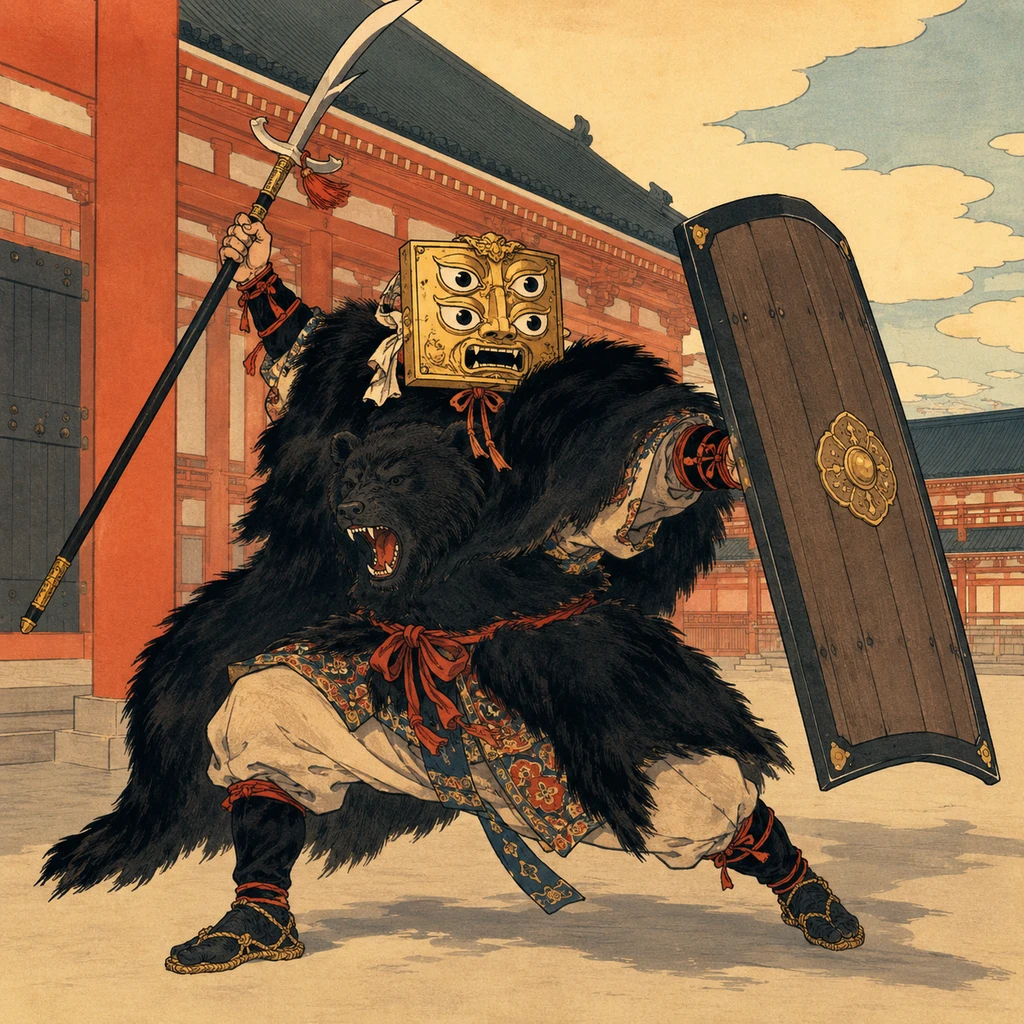
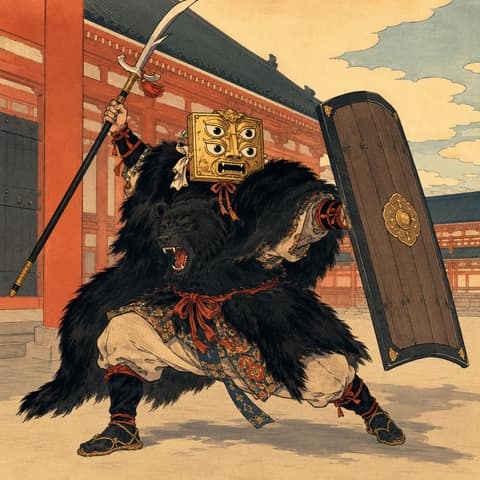
Originating as the demon-expelling role in China’s Great Nuo exorcism, the Hōsōshi became the lead figure in Japan’s imperial Ōna/tsuina rites, driving out plague spirits. Early records describe a square mask with four eyes symbolizing power over the four directions, a halberd in the right hand, a great shield in the left, and a bearskin costume. Accompanied by attendants, they circled the palace to expel epidemics beyond the gates, becoming a fixture of annual court ceremonies.

Hidden Hamlet

Hidden Hamlet

Rare

kah-koo-reh-ZAH-toh

山奥の福授集落・隠里

山野の怪Japanese folklore

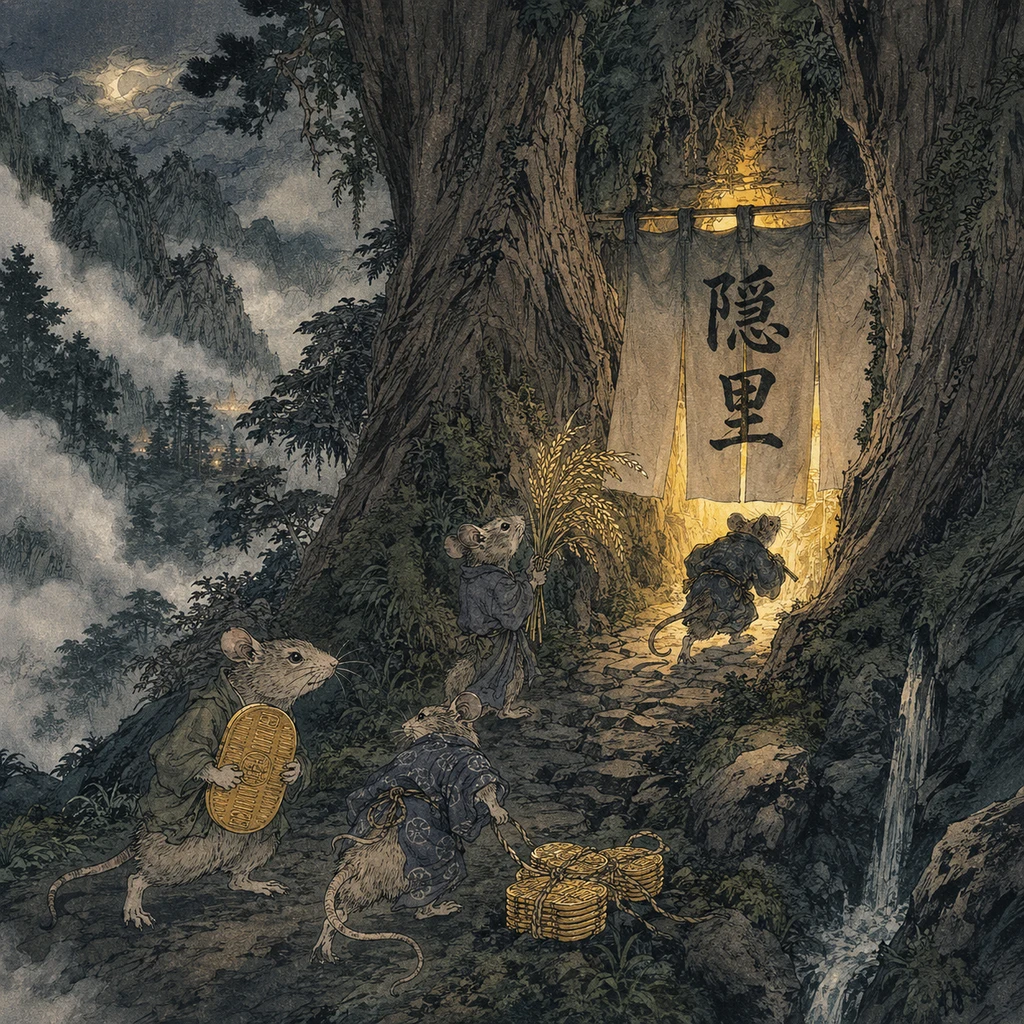
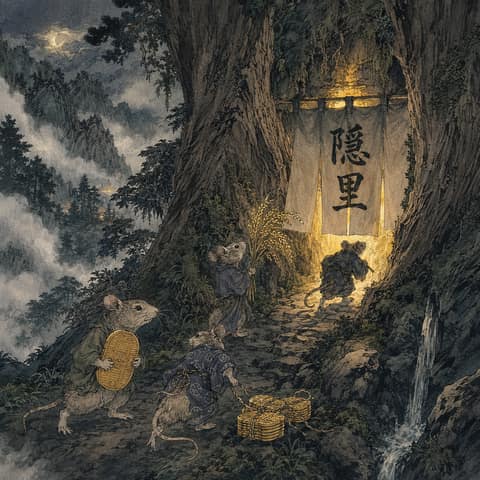
Hidden Hamlet refers to a secluded settlement or boundary realm concealed in mountain valleys, scarcely visible to ordinary eyes, and treated as a yokai-like presence in art. In Toriyama Sekien’s Konjaku Hyakki Shūi, a shop-curtain reading “Hidden Village” hangs, with lucky mice and koban coins arranged around it. When a person’s ties to the human world thin, this place appears without warning—sometimes bestowing wealth or food, sometimes vanishing without a trace—embodying the idea of a liminal, protective barrier.