YOKAI.JP

Hōsōshi

hō-sō-shi

Hōsōshi

Hōsōshi

Their soul is listening — speak, and they will answer.

Basic Description

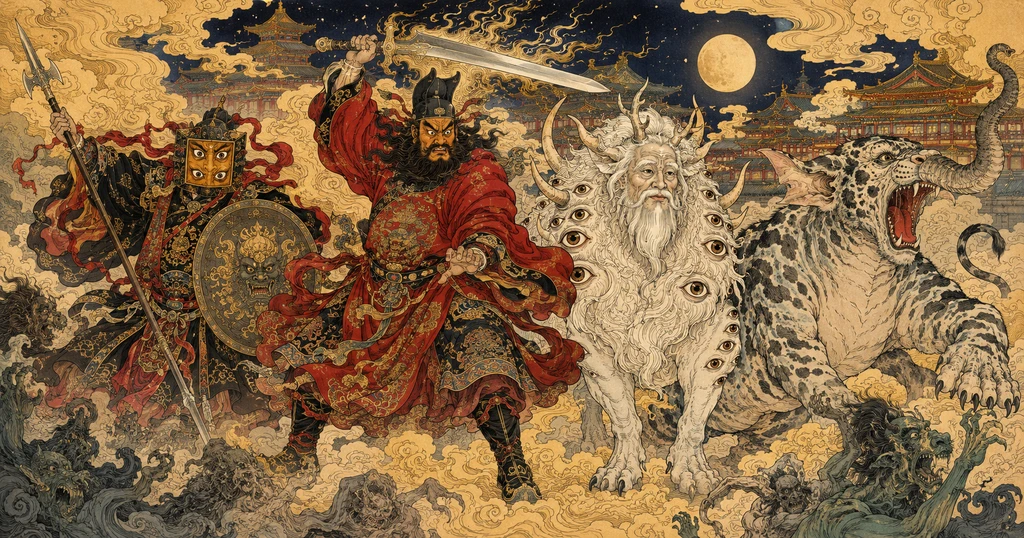
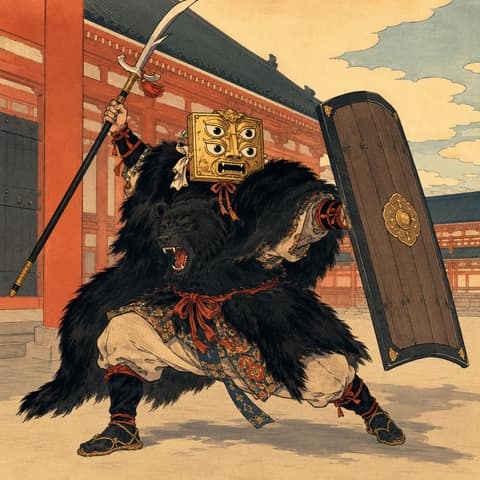
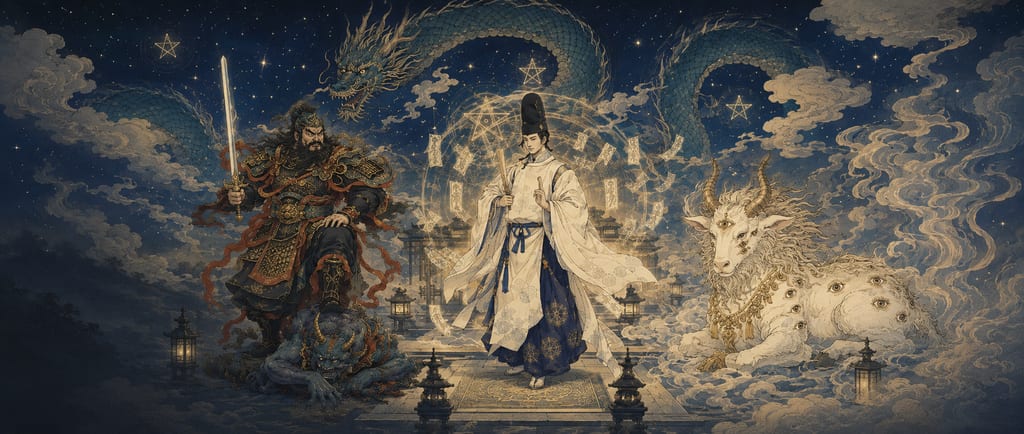
The Hōsōshi originated as the figure charged with driving away evil in China’s Great Nuo ceremony. In Japan, the Hōsōshi became the central performer in the court’s Ōna and tsuina rites, expelling spirits believed to cause epidemics. Early records describe a square, four-eyed mask symbolizing command of the four directions, a halberd in the right hand, a great shield in the left, and a bearskin costume. Accompanied by ritual attendants known as shinshi and nanin, the Hōsōshi processed through the imperial palace and drove pestilence beyond its gates. The ceremony eventually became part of the annual court calendar.

Folklore & Legends

At the Japanese court, the Hōsōshi appeared in the Great Exorcism performed at year’s end, later known as tsuina. The procession moved through the palace as an onmyōji recited the ritual text, then forced the oni out through the gates. The nanin carried bows and arrows made of peach wood and reed, while the shinshi followed as attendants. During the Heian period, the roles within the ceremony changed: some accounts show the Hōsōshi and shinshi shifting from the pursuers to visible stand-ins for the oni, with arrows aimed at them. The rite also influenced demon-chasing ceremonies at temples and shrines, and traces of it survive in annual observances across Japan.

Yokai Cards1

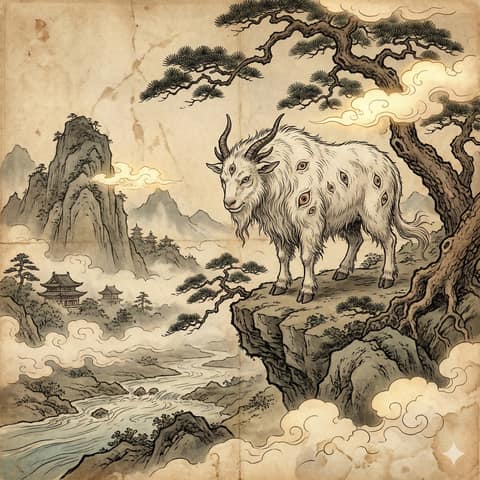
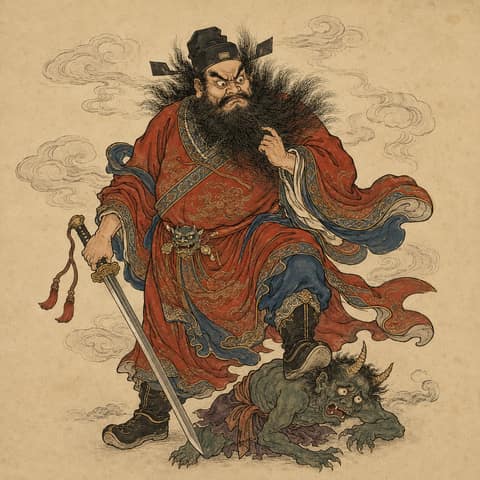
Hōsōshi across multiple art-style decks

Card gallery

Detailed Analysis

In the imperial court’s Great Tsuina exorcism, this figure confronts and drives out pestilential oni. Wearing a four-eyed square mask, bear hide, and armed with a halberd and great shield, he leads pages and tsuina attendants to circuit the four directions of the palace. The rite follows set forms—onmyoji invocations, drum cues, and expulsion beyond the gates—and later influenced demon-chasing observances at temples and shrines. By the late Heian period, shifts in the term tsuina saw him at times enact a visible “oni role.” Though attire, implements, and routes changed with ceremonial norms, the core purpose remained the banishment of epidemics and ill fortune.

Character Profile

This section is our own creative profile for storytelling. It is not historical fact or scholarship.

Rarity
Epic
Personality
solemn, severe, scrupulously ritual-bound
Compatibility
shuns defilement and plague, favors purity and restraint
Abilities
apotropaic warding and banishment, pacifying through an intimidating dance, four-directional circuits that purge boundary defilement, command of processions pages and tsuina men
Weaknesses
regarded with awe and avoidance due to proximity to defilement and funerary rites, powerless outside formal ritual
Habitat
imperial palace precincts and gates, temples and shrines during tsuina and demon-chasing rites
🔮Yokai Compatibility Test

For more detailed information and diagnosis results about Hōsōshi of the Courtly Tsuina Rite, please click here.

Interested in this type of yokai?

Discover the yokai most similar to your personality with our yokai diagnosis

Start Yokai Diagnosis

Meet your guardian yokai at the shrine

Draw an omikuji fortune and discover the yokai watching over you today.