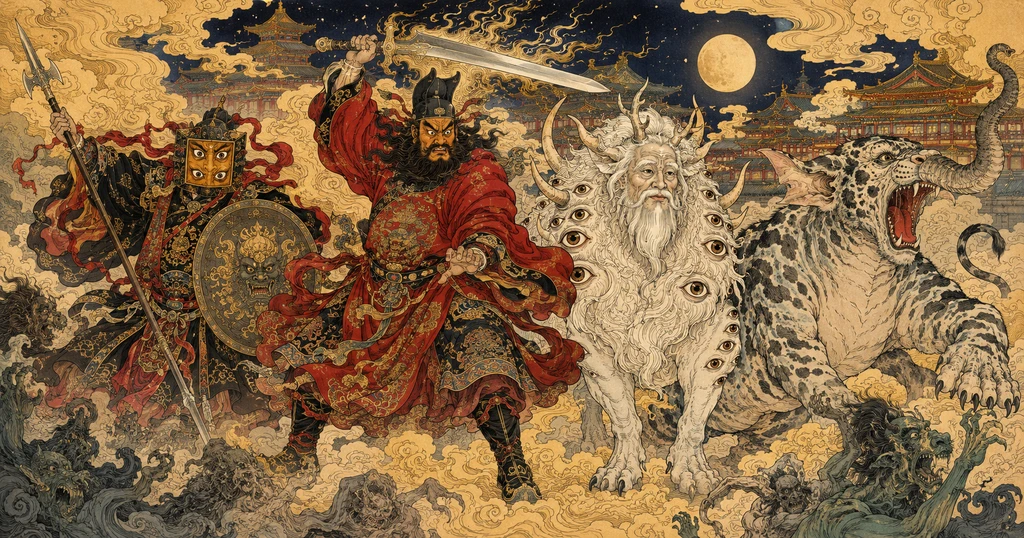
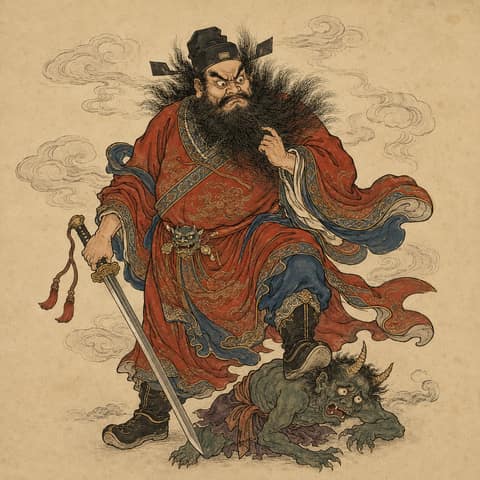
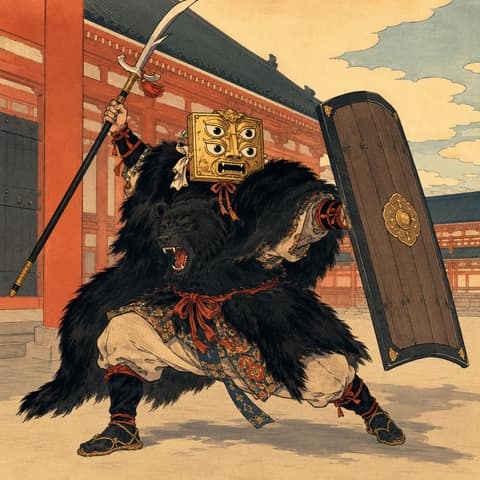
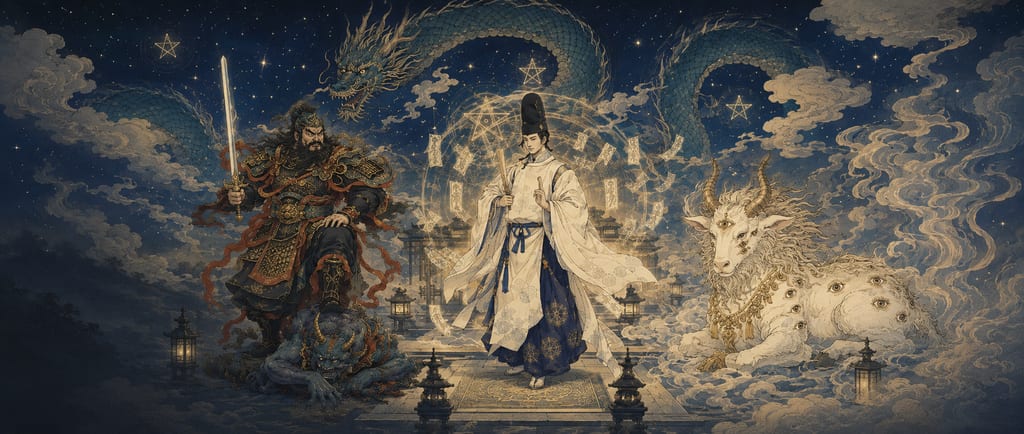
Shoki, a demon-quelling deity spread across East Asia from Tang dynasty lore, took root in Japan as a talismanic power against calamity and smallpox. He is depicted as a bearded martial figure in official robes and cap, glaring with fierce eyes and wielding a sword in one or both hands. He often appears hunting, trampling, or bagging small demons. At New Year and Boys’ Festival he is displayed on hanging scrolls, banners, and screens, and many townhouses placed ceramic Shoki figures on eaves or roof corners. In Japan the earliest examples trace back to late Heian apotropaic paintings; from the Muromachi period the theme became established, and by late Edo he also appeared as May Festival dolls. Images and figures were hung at entrances, gates, or the upper seat of reception rooms to stop plague deities and malign spirits. Although dedicated shrines are limited today, regional folk belief since early modern times continues, and rooftop Shoki statues are still found from Kinki through the Chubu region. His powers are symbolized by the subduing glare and swordplay that drive off evil sprites, functioning as amulets against drug harm and epidemics.
Character Profile
This section is our own creative profile for storytelling. It is not historical fact or scholarship.
Yokai Type - Traditional Yokai
Category - Deities & Divine Spirits
Rarity - Divine
Personality - steadfast, righteous
Compatibility - shuns pestilence and evil sprites, protects household thresholds and gates
Abilities - banishment of evil sprites and plague deitiesapotropaic protection of the household gate through plaques scrolls and figuresfocus of prayers for recovery from illnesspatronage for academic success
Weaknesses - efficacy wanes without proper faith and rite, power is believed to diminish if images or statues are damaged
Habitat - rooftops of townhouses from Kyoto and the Kinki region to Chubu, alcoves and reception rooms of temples and private homes, seasonal displays for Tango no Sekku and New Year