
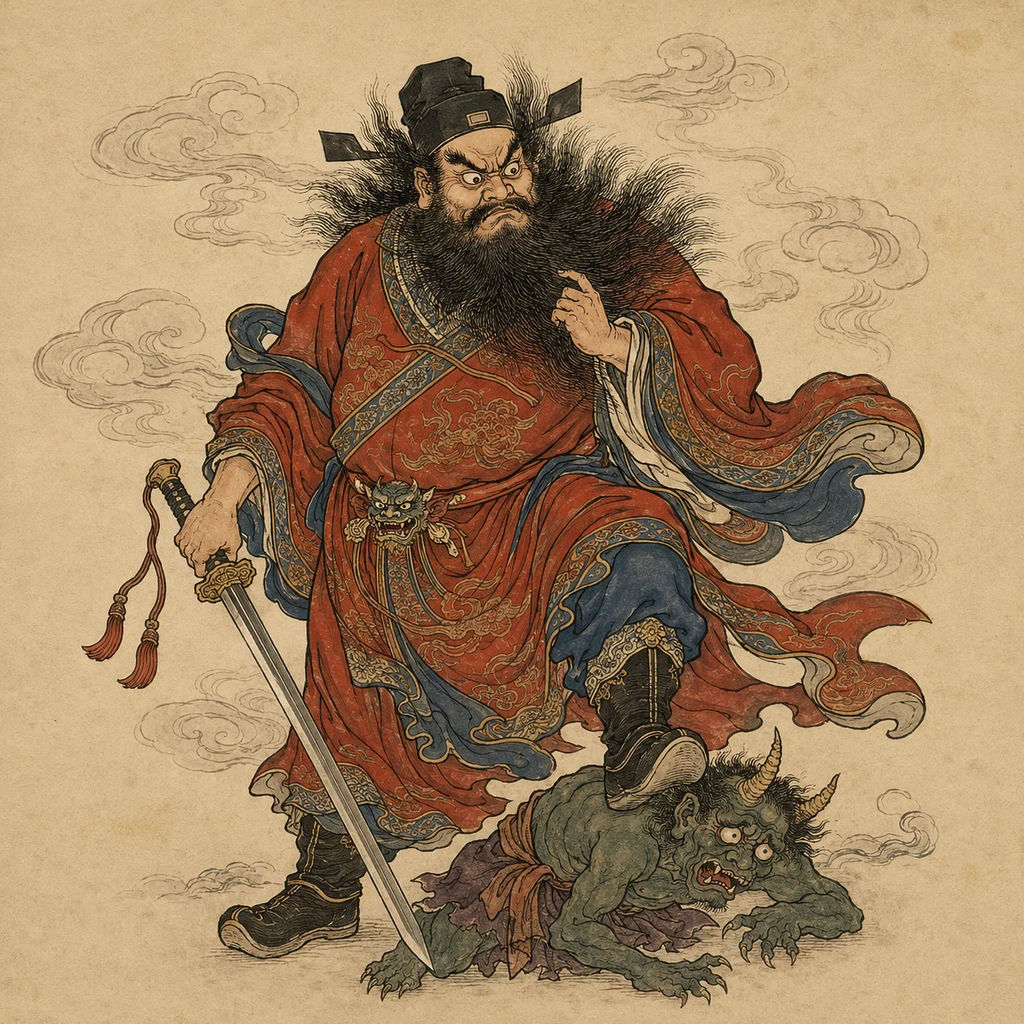
Zhong Kui (Shōki)Traditional Iconography Shoki, Warding Demon-Queller
SHOH-kee
Detailed Description
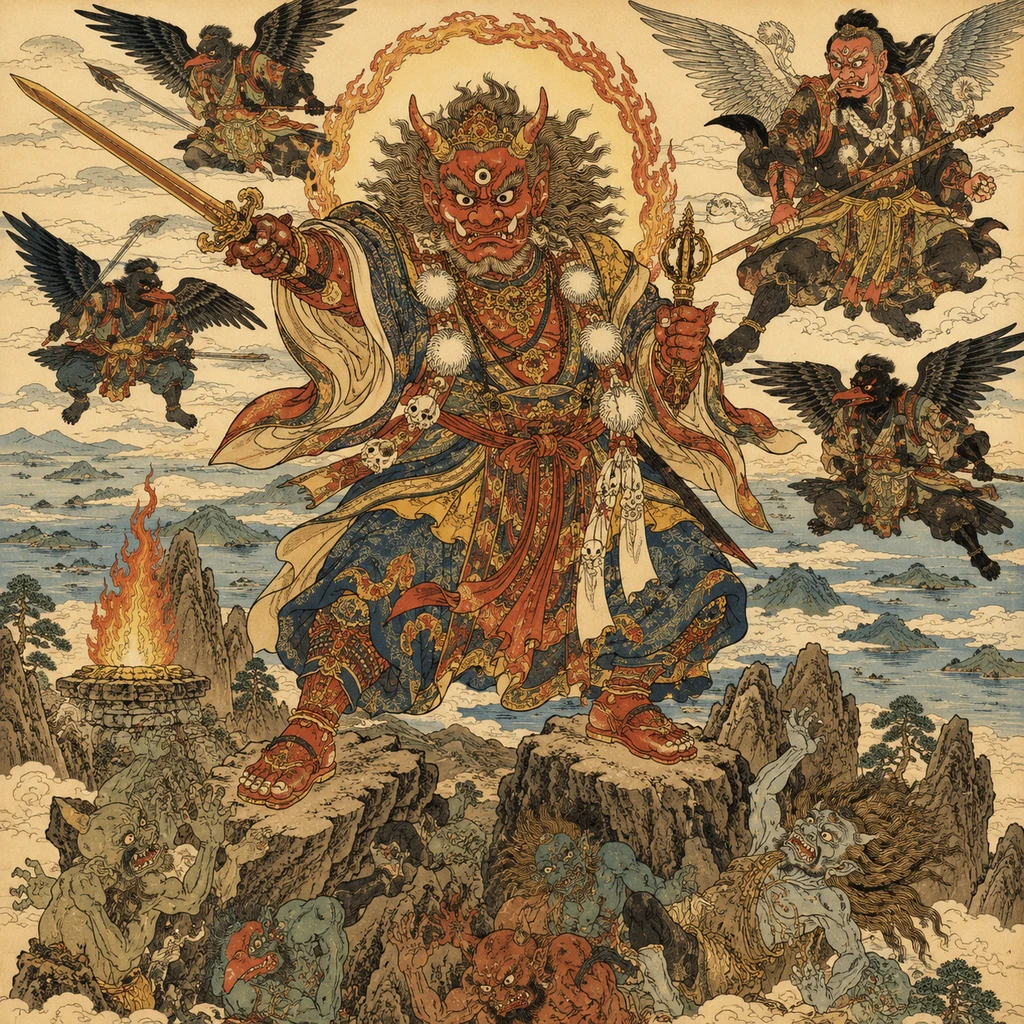
Shoki, a demon-quelling deity spread across East Asia from Tang dynasty lore, took root in Japan as a talismanic power against calamity and smallpox. He is depicted as a bearded martial figure in official robes and cap, glaring with fierce eyes and wielding a sword in one or both hands. He often appears hunting, trampling, or bagging small demons. At New Year and Boys’ Festival he is displayed on hanging scrolls, banners, and screens, and many townhouses placed ceramic Shoki figures on eaves or roof corners. In Japan the earliest examples trace back to late Heian apotropaic paintings; from the Muromachi period the theme became established, and by late Edo he also appeared as May Festival dolls. Images and figures were hung at entrances, gates, or the upper seat of reception rooms to stop plague deities and malign spirits. Although dedicated shrines are limited today, regional folk belief since early modern times continues, and rooftop Shoki statues are still found from Kinki through the Chubu region. His powers are symbolized by the subduing glare and swordplay that drive off evil sprites, functioning as amulets against drug harm and epidemics.
Source Information
種類全体の出典primary
京の鍾馗さん(屋根の鍾馗瓦の民俗)
著者: (京都の町家民俗・口碑)
年代: 江戸後期以降
出版社: (三条の薬屋の鬼瓦由来譚など、京都・近畿の屋根像習俗)
種類全体の出典primary
夢渓筆談(補筆談)
著者: 沈括
年代: 北宋・元祐年間(1086-1093)ごろ
出版社: (鍾馗説話の現存最古級の記録。玄宗の瘧病・呉道子図を載せる)
種類全体の出典primary
天中記(引『唐逸史』)
著者: 陳耀文 編
年代: 明・万暦17年(1589)ごろ
出版社: (『唐逸史』の鍾馗説話を収め、終南進士・落第自害の筋を定型化)
Personality
steadfast, righteous
Compatibility
shuns pestilence and evil sprites, protects household thresholds and gates
Abilities & Skills
Weaknesses
efficacy wanes without proper faith and rite, power is believed to diminish if images or statues are damaged
Collection Inclusion
This yokai is included in the following collections:
Cool Yokai | Japanese Folklore through Power, Speed, and Monstrous Beauty
Discover 68 cool yokai like Shuten-doji, Tengu, and Nine-Tailed Fox. Explore their charm through power, speed, majestic presence, monstrous beauty, and folklore.
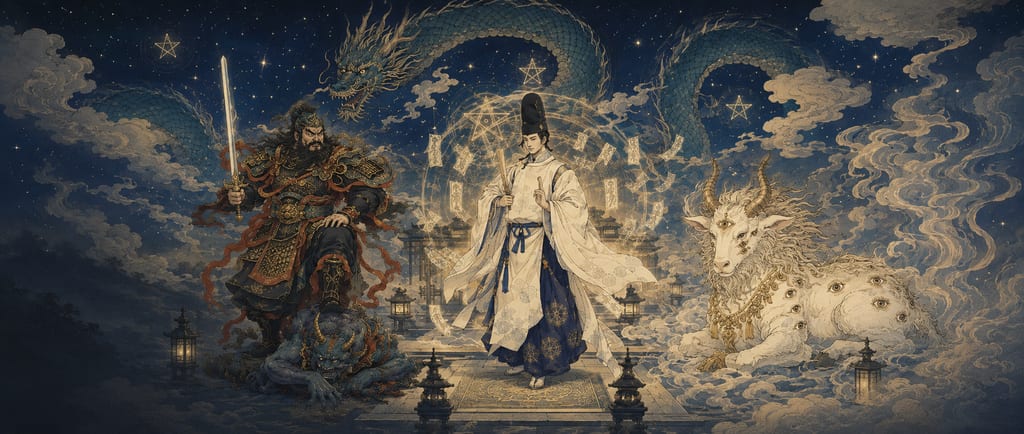
What is Onmyōdō?|Abe no Seimei, shikigami, the Four Symbols and protection from evil
What was Onmyōdō? Separate history from legend through Abe no Seimei, shikigami, the Four Symbols, Hōsōshi, Hakutaku and Shōki.
診断評価
妖怪バウンダリー・タイプ指標
いたずら濃度
-3.0high: 戯 low: 護
📝 メモ
邪鬼・疫神を退け、家門の魔除けや病気平癒を担う辟邪の守護神
変化適応
0.0high: 化 low: 定
📝 メモ
夢に現れる逸話はあるが、図像・像としての固定した守護姿が主となる
夜話度
0.0high: 夜 low: 昼
📝 メモ
屋根上や掛幅、端午や年末年始の信仰対象で、夜に限定されない
情の深さ
1.0high: 縁 low: 境
📝 メモ
家門や学業の祈願対象として人に応じるが、個人への情念より守護職能が中心
結界強度
2.0high: 律 low: 流
📝 メモ
町家屋根上、門符、座敷の像として家の境を守る
表舞台圧
3.0high: 表 low: 影
📝 メモ
濃い髭と剣で鬼を睨み踏み伏す図像が強く、疫鬼退治の威を正面に示す
妖怪相性診断
喜び
2.0喜びと楽しさの程度
📝 メモ
祝祭で飾られるが、表情は厳めしく喜悦の情は前面に出ない。
怒り
8.0怒りの激しさの程度
📝 メモ
鬼を睨み斬る怒りの相が中心。邪悪に向けた義憤として強い。
慈悲深い
6.5慈悲深さの程度
📝 メモ
人々の病苦・災厄から救う慈悲は強いが、表現は威圧的で直接的な情愛描写は少ない。
憂鬱
3.5憂鬱で思慮深い程度
📝 メモ
憂いの情は主要モチーフではない。歴史的背景に病厄はあるが、像自体は憂愁より闘志。
静寂
5.5内なる平静の程度
📝 メモ
剣を帯びつつも鎮座・掛幅として静的に守護する側面があり中庸。
いたずら好き
1.0いたずら好きで活発な程度
📝 メモ
いたずら性は皆無。小鬼を制する厳粛な守護像。
やさしい
3.0やさしく親しみやすい程度
📝 メモ
剛毅で鬼を威圧する守護神像であり、親しみやすさより威厳重視。弱者救済はするが態度は柔和ではない。
厳格
9.0厳格で真面目な程度
📝 メモ
官人装束・規範・作法重視で厳格。信仰作法を欠くと霊験が弱まるとされる点も高い。
守護的
10.0他者を守る傾向
📝 メモ
本質が厄除け・疫病除け・門守護で最大級。日本各地で実践的に家門を守る機能を担う。
神秘的
6.5神秘的で不思議な程度
📝 メモ
夢に現れ病を癒す逸話や辟邪の霊験など神秘性は高いが、図像・作法が体系化されており秘儀性は中程度。
霊性の深さ
8.5精神的境界の深さ
📝 メモ
中国由来の辟邪神が日本で民間信仰と図像学として深く定着。疫神観・護符思想に通底し霊性は厚い。
Similar Yokai
Yokai with similar personality and characteristics to Traditional Iconography Shoki, Warding Demon-Queller
Opposite Yokai
Yokai with opposite personality and characteristics to Traditional Iconography Shoki, Warding Demon-Queller
🔮Test your compatibility with Zhong Kui (Shōki) now!
Analyze your personality and values to get a detailed compatibility rating with this yokai.
Free, simple, and results in just minutes.
Like this yokai?
Visit a shrine to discover your guardian yokai