Naraなら
26 yokai rooted in Nara (Kinki region). Explore the legends tied to this land.
Legendary places in this prefecture
Specific places within Nara — mountains, shrines, pools — where yokai are told. Visit each.

神格 Kannon
kannon
Bodhisattva of 33 Forms and Infinite Compassion
神霊・神格浅草寺 (現·東京都台東区浅草、628 年聖観音示現·都内最古寺院) / 清水寺 (現·京都府京都市東山区、798 年延鎮開基·十一面千手観音) / 長谷寺 (現·奈良県桜井市初瀬、736 年·十一面観音総本山) / 三十三間堂 (現·京都府京都市東山区、1164 年·千手観音 1001 体) / 西国三十三所霊場 (近畿 33 寺·718 年徳道上人開創)Ultimate Metamorphosis and Empathy. The greatest characteristic of Kannon Bodhisattva lies in having no fixed form, possessing the ability of "Fumon Jigen" to infinitely transform into the most suitable form (a Buddha, a god, a human, or even a non-human entity) to save the other person. This is not mere magic; it is the manifestation of an "ultimate empathic ability (compassion)," standing at the exact same eye level as the suffering other and sharing their pain as one's own. Kannon has served as the emotional pillar for the Japanese people for over a millennium precisely because Kannon does not reign as an absolute, transcendent dictator, but descends into the mud-stained living spaces of humans to weep alongside them. Attendant to Amida Nyorai and Care at the Moment of Death. Kannon Bodhisattva is not only worshipped independently but also plays a crucial role as an attendant (assistant) to Amida Nyorai, the Lord of the Western Paradise (Pure Land). When a person reaches the end of their life, it is Kannon's duty to appear riding on a cloud alongside Amida Nyorai (Raigo) to welcome the deceased, placing their soul on a lotus pedestal to guide them to paradise. Kannon was not only a savior from all the hardships of the present world but also the "ultimate deity of terminal care" who alleviated the fear of death and guaranteed the soul's destination. The "Hidden Christians" and Maria Kannon. The vast tolerance of Kannon worship (the flexibility to take any form) proved its worth even in the harshest phases of history. Under the ban on Christianity during the Edo period, oppressed "Kakure Kirishitan" (Hidden Christians) secretly continued their worship by venerating statues of the "Jibo Kannon" (Koyasu Kannon, holding a child) as the Virgin Mary. By embracing even the god of a foreign religion as a variation of its own form and receiving the prayers of persecuted people, the "Maria Kannon" demonstrates the absolute zenith of Kannon worship's function as an asylum (sanctuary).

神格 Kumano Gongen
kumano-gongen
The Three Mountains Syncretized: Kumano Gongen
神霊・神格熊野本宮大社 (現·和歌山県田辺市本宮町本宮·主祭神家都美御子大神=ケツミミコ=スサノオ習合·阿弥陀如来本地) / 熊野速玉大社 (現·和歌山県新宮市新宮·主祭神熊野速玉大神=イザナギ習合·薬師如来本地) / 熊野那智大社 (現·和歌山県東牟婁郡那智勝浦町那智山·主祭神熊野夫須美大神=イザナミ習合·千手観音本地·那智滝信仰) / 全国 3000 社余の熊野神社The Perfected Form of Honji Suijaku. Kumano Gongen is the most elaborately systematized example of "Honji Suijaku," the Japanese philosophy of Shinto-Buddhist syncretism. Each of the main deities of the Kumano Sanzan was assigned a Buddhist "original ground" (Honji Butsu). For instance, Ketsumimiko-no-Okami of Hongu was identified as Amida Nyorai; Kumano Hayatama-no-Okami of Hayatama Taisha as Yakushi Nyorai; and Kumano Fusumi-no-Okami of Nachi Taisha as Senju Kannon (Thousand-Armed Avalokitesvara). Consequently, a pilgrimage to Kumano functioned as a complete salvation system spanning the past, present, and future: erasing the sins of past lives (Yakushi), gaining benefits in this world (Senju Kannon), and securing a promise of rebirth in the Pure Land in the next life (Amida). Institutionalization and Networks of Shugendo. Kumano is one of the birthplaces of Shugendo, and rather than just a place of prayer, it was a rigorous training ground. From the medieval period onward, Shugendo developed into massive religious organizations such as the Honzan-ha (Tendai sect lineage) and Tozan-ha (Shingon sect lineage), building a nationwide network backed by the religious authority of Kumano. The establishment of "Kumano Shrines" (Junisho Gongen) in various regions was the result of propagation activities through this network of ascetics. The fact that thousands of these shrines still exist nationwide today demonstrates the deep penetration of Kumano Gongen into local communities. The Religious Nature of the "Path" Itself. When discussing the Kumano Gongen faith, the existence of the "Kumano Kodo" (Kumano Ancient Trail) cannot be overlooked. The journey to Kumano was extremely arduous, dotted with numerous small shrines called "Tsukumo Oji." Pilgrims were not merely aiming for a destination; the act of walking the treacherous mountain paths and enduring hardships was itself considered ascetic training to extinguish sins (Dochu Shugyo). Even from the perspective of modern public history, the Kumano Kodo retains its value not just as historical heritage, but as a "space to practice faith" where one purifies the mind using one's own body.

神格 Hachiman
hachiman
Triune Guardian of War and State
神霊・神格宇佐神宮 (現·大分県宇佐市南宇佐、八幡神総本宮、725 年神亀 2 年聖武天皇勅命創建) / 石清水八幡宮 (現·京都府八幡市八幡高坊、860 年貞観 2 年勧請) / 鶴岡八幡宮 (現·神奈川県鎌倉市雪ノ下、1063 年源頼義勧請) / 東大寺手向山八幡宮 (現·奈良県奈良市)A Hybrid Deity Integrating the Emperor, Samurai, and Buddhism. The essence of Hachiman lies in his astonishing "ability to update (history of syncretism)." Starting out as an obscure local indigenous deity of blacksmiths and mines, he saved a national crisis (the construction of the Great Buddha) to become a protector of Buddhism (Bodhisattva). He then syncretized with the spirit of Emperor Ojin to connect with the imperial family's ancestral gods (imperial authority), and ultimately became the guardian deity of the samurai class leader (the Minamoto clan) who seized power by force. Hachiman is present at every node in the transformation of Japan's power structure (from emperor/aristocrats to samurai, and the fusion of Shinto and Buddhism). He is the "ultimate hybrid divinity" born from the complex intertwining of the Japanese people's views on religion and the state. The Terror of Political Intervention via Oracles. What is particularly noteworthy in ancient Hachiman worship is that he frequently intervened directly in national politics through "oracles" delivered by shrine maidens (spirit possession). In the most famous incident, the "Usa Hachimangu Oracle Incident" (the Dokyo Incident), against the monk Dokyo who plotted to usurp the imperial throne, Hachiman delivered a fierce oracle: "No one other than the imperial lineage shall become emperor," thereby preventing the subversion of the state. He is not merely a god who watches over silently; in times of national crisis, he is an intensely political and raw god of power who possesses a strong will and intervenes on the main stage of history. Ancient Memories Hidden within "Himegami". Among the Hachiman Triad, the entity preserving the oldest form of worship is the unidentified "Himegami" (Goddess). Although generally interpreted as the Three Goddesses of Munakata (gods of maritime safety), in folklore studies, a prominent theory suggests she is the deification of ancient shamans (shrine maidens) from the Usa region, or that she retains the form of the "primordial local land deity (indigenous goddess)" from before Hachiman syncretized with Buddhism and the imperial spirit. Sitting quietly in the shadows of the massive, subsequently attached authorities of the War God and the Imperial Ancestral God, the very existence of Himegami is the secret to why the Hachiman faith was never completely swallowed by the state and maintained its vitality as a foundational local belief.

伝説 Takemikazuchi
たけみかづちのかみ
God of Thunder, Swords, Martial Arts, Sumo, and Earthquake Pacification
Divine Spirit / DeityKashima Shrine (Kashima City, Ibaraki) / Kasuga Grand Shrine (Nara City, Nara, enshrined 768)The Unique Position of the 'God of War'. While many deities in ancient Japanese mythology center around agriculture and nature, Takemikazuchi uniquely symbolizes 'war, swords, power, and conquest' as a rare male war god. This reflects Japan's complex history of unification through military force, symbolizing the justification and sanctification of military power in ancient national mythology. The Kuniyuzuri Myth ── Mythologization of Ancient Political History. The test of strength with Takeminakata mythologically represents the political integration of the central Yamato court and the regional Izumo and Suwa factions. The narrative of deciding matters through a legitimate trial of strength rather than sheer oppression served to secure religious justification during this integration process. The Ancestral God of Ancient Military Clans. The Futsu-no-Mitama sword became the core of worship for the Mononobe clan, the ancient military clan of Japan. Takemikazuchi concurrently supported the tutelary worship of both the Nakatomi/Fujiwara and Mononobe clans, making him a central figure in ancient Japanese religion, politics, and military affairs. The Two Great Shrines of Kashima and Katori. Kashima Shrine and Katori Shrine have historically formed the core of ancient military worship in the Kanto region. They served as the highest religious authorities in eastern Japan, standing alongside Ise and Izumo in the ancient Shinto shrine system. Earthquake Pacification. The Kaname-ishi (Keystone) belief at Kashima Shrine added a new attribute to Takemikazuchi as a guardian against earthquakes. This represents a significant evolution of an ancient mythological deity into a figure of early modern disaster folklore. Two Thousand Years of Sumo. The religious essence of sumo, persisting from ancient court rituals to the modern Grand Sumo, stems from Takemikazuchi's mythological origins. Sumo remains a rare example of a globalized sport retaining its ancient mythological roots. Takemikazuchi in the 21st Century. Today, he is revered as a guardian of martial artists, the ancestral god of sumo, and a protector against disasters. As Japanese martial arts spread globally, his worship garners international attention as the religious origin of these disciplines.

伝説 Sunakake-baba
sunakake-baba
The Invisible Sand Hag: Sunakake-baba
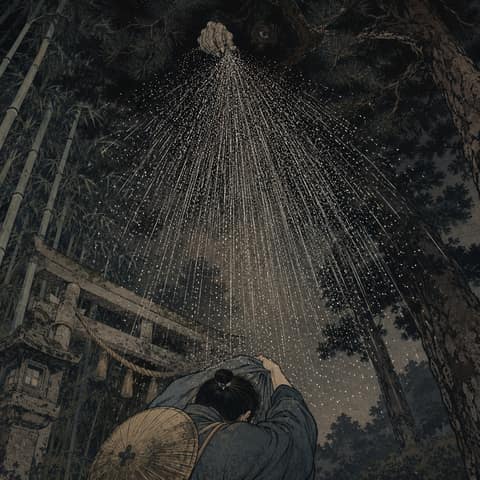
山野の怪奈良県大和地方·兵庫県阪神間 (尼崎·西宮·神戸)·滋賀県草津市The Folkloric Anomaly of the "Formless Yokai". While the basic overview highlighted the Sunakake-baba's narrative structure, this deep dive explores the profound academic significance of her "lack of visual representation." The mid-to-late Edo period saw a massive wave of yokai visualization (cataloging via illustration), spearheaded by Toriyama Sekien's *Gazu Hyakki Yagyo*. The Sunakake-baba is a remarkably rare entity that entirely missed this wave. She appears in no classical picture scrolls, and prior to Shigeru Mizuki, she was represented solely by "the sound of falling sand and the sand itself." When Kunio Yanagita explicitly noted in *Yokai Dangi* that "no one has ever seen her form," he was recognizing this visual absence as a critical academic subject. The Sunakake-baba holds a vital position in folkloristics because she preserves the primal archetype of the yokai concept: an invisible presence felt only through atmosphere, sound, and touch. Sandbar Topography and Boundary Spiritualism. It is no mere coincidence that the Sunakake-baba's primary lore locations—Nara (the Yamato River basin), Amagasaki (Ebisu Bridge, Josho-ji Temple, which sit on former sandbars), and Nishinomiya (coastal pine groves)—are all areas where "sand is exposed on the earth's surface." Sandbars, beaches, and sandy geological strata have historically commanded a strong folkloric presence as boundaries between water and land, serving as liminal corridors between humans and the otherworld. As highlighted by a Kobe Shimbun field report (December 2022), the phenomenon of sand liquefaction erupting in Amagasaki's former sandbar areas during the 1995 Great Hanshin Earthquake proves that yokai lore is deeply entwined with geological and topographical history. The Sunakake-baba is a textbook case of geographical yokai studies. The Festival Origin Theory: Mechanisms of Yokai Generation. Bintaro Yamaguchi's proposed "Hirose Shrine Sunakake Festival Origin Theory" provides a crucial perspective for unpacking how yokai are generated. A Shinto rainmaking ritual where participants throw sand to simulate rain, playfully jeering "It's the Sunakake-baba!", may have served as the incubator for the legend of a "sand-throwing hag." This illustrates the folkloric process where a yokai is generated on the margins of a festival—a phenomenon similarly observed with Setsubun demons, Obon spirits, and autumn festival tengu. It reinforces the view that religious rituals are not merely ceremonies, but active generators of folkloric imagination. Shirosaku Sawada and the Role of Local Folklorists. Dr. Shirosaku Sawada's *Yamato Mukashibanashi* is a prime example of folklore collection by local intellectuals during the pre-war and wartime eras. The development of Japanese folkloristics relied heavily on a network where local doctors, teachers, and historians collected oral traditions in the field and forwarded them to central figures like Kunio Yanagita and Shinobu Orikuchi. The Sunakake-baba's inclusion in Yanagita's *Yokai Dangi* is the direct result of this "center-periphery" collaborative research system. The excavation of local materials that supports 21st-century yokai studies is built entirely upon the painstaking groundwork laid by these local folklorists. Shigeru Mizuki's "Visual Reconstruction" and Cultural Ethics. Shigeru Mizuki (1922-2015) bestowed the Sunakake-baba with the appearance of an old woman in a kimono, creating a wholly original iconography inspired by the "Ondaiko" demon masks of Sado Island. This is a definitive example of post-war yokai culture, where mass media assigns a visual form to a traditionally formless entity. In *GeGeGe no Kitaro*, she was depicted as a righteous ally of the Kitaro family, completely erasing the localized, malicious trait of "startling humans." This Mizuki intervention sparks divided opinions in the modern history of yokai culture: while lauded for contributing to the national popularization and preservation of local lore, it is simultaneously criticized for altering the fundamental meaning of the original legend. It serves as an excellent case study for examining the ethical dilemmas of cultural production at the intersection of folkloristics and pop culture. Fukusaki, Koryo, and Hanshin: The Modern Geography of Yokai Tourism. In the 21st century, the Sunakake-baba has been aggressively developed into a tourism asset across her legendary homelands. Fukusaki Town in Hyogo Prefecture (Yanagita's birthplace) launched a "Yokai Bench" series, featuring a highly popular Sunakake-baba bench. The Sunakake Festival at Hirose Shrine in Koryo Town, Nara, garners significant tourism attention as an Intangible Folk Cultural Property. In the Hanshin cities of Amagasaki and Nishinomiya, yokai walking tours linking local history with toponymy have been established. In the context of post-war regional revitalization—where yokai function not merely as "old tales" but as modern regional brands, tourism drivers, and educational tools—the Sunakake-baba stands as an iconic symbol alongside Konaki-jiji and Ittan-momen. The Modern Paradigm Shift: From "Yokai Studies" to "Yokai Culture". The contemporary discourse surrounding the Sunakake-baba represents an intersection of two paradigms: the traditional view of treating yokai as academic subjects (folkloristics, historical verification), and the modern view of treating yokai culture as a living, breathing phenomenon (mass media, tourism, education). The modern trajectory—from the collection records of Yanagita and Sawada, through Mizuki's post-war visual reconstruction, and circulating back into 21st-century regional revitalization and tourism—proves that yokai are not "faiths of the past," but "cultural productions in progress." Modern yokai studies demands an approach that does not simply consume her as a "minor legend from Nara and Hyogo," but actively interrogates the history of knowledge, geology, and cultural production that stands behind her.

伝説 Ōmine Zenkibō
Ōmine Zenkibō
The Dharma-Guarding Tengu Turned from an Oni — Ōmine Zenkibō
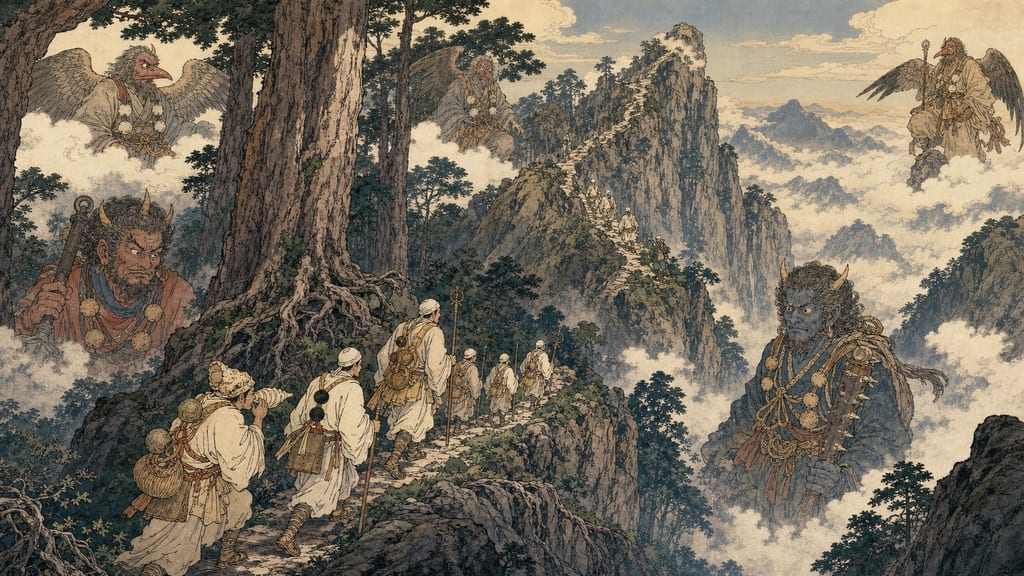
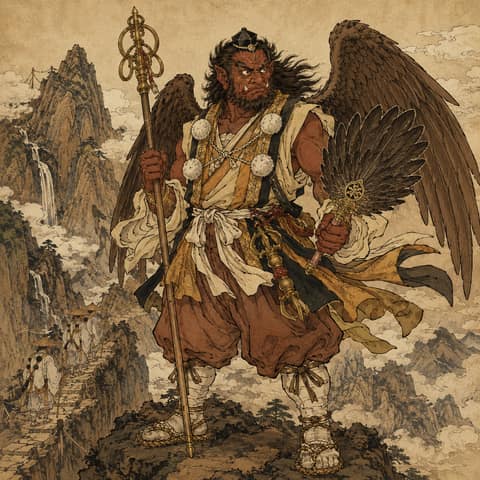
Mountain & Wilderness SpiritsMt. Ōmine, Yamato Province (Yoshino District, Nara)The essence of Ōmine Zenkibō lies in the structure of rebirth: "an oni turning into a tengu." It is a tale that embodies the heart of Shugendō in a single being. His source lies in the old tales of En no Gyōja and the oni. The oldest extant text depicting En no Ozunu is the Nihon Ryōiki (early Heian), which portrays him as a thaumaturge who flew through the air commanding demons. The Konjaku Monogatarishū, Book 11 carries the tale of En no Gyōja having demons build a bridge across the mountains, showing the fixing of the image of En no Gyōja as one who commands demons. Zenki was originally a violent oni who carried off human children. En no Gyōja captured him with the secret rite of Fudō Myōō and reformed him into an attendant. By one account, En no Gyōja hid the youngest child of the Zenki couple in an iron cauldron and, through the grief of having one's own child taken, brought them to realize the sin of carrying off the children of others. The reformed Zenki and Goki became dharma-protecting oni and supported En no Gyōja's practice. This Zenki, sublimated into a great tengu at the end of long austerities, is Ōmine Zenkibō. This plot, of a violent being turning into a guardian of the Buddhist law, shows most clearly that the dread of a child-snatching tengu and the faith in a tengu who guards people share a single root. The Ōmine on which Zenkibō sits is the holy ground of Shugendō. The Ōmine training ground founded by En no Gyōja, and the Ōmine Okugake-michi registered as World Heritage, is a perilous route that ascetics still tread at the risk of their lives, and Zenkibō was conceived as its guardian. He is chanted as "the band of Zenki of Ōmine" in the Muromachi Noh play Kurama Tengu, and stands among the forty-eight tengu of the Tengu-kyō (some sources give "Nachi Takimoto Zenkibō"). And the heaviest single point of this lore is that the bloodline of Zenki is said to live on into the present. Of the five lodges kept by the five children of Zenki and Goki, only the Onakabō of the Gokijo family remains today, and the present-day Gokijo Yoshiyuki continues to receive the ascetics of the Ōmine Okugake-michi. This genealogy is hard to source explicitly in old documents and is transmitted as the oral lore of the surviving lodge; yet this real continuity—descendants of a reformed oni guarding the path of Shugendō beyond thirteen hundred years—makes Ōmine Zenkibō not a mere legend but a symbol of living faith. Chigiri Kōsai of tengu scholarship, too, placed him within the system of the great tengu of the many mountains.

伝説 Tengu
Tengu
What Is a Tengu? An Overview of Types and Iconography
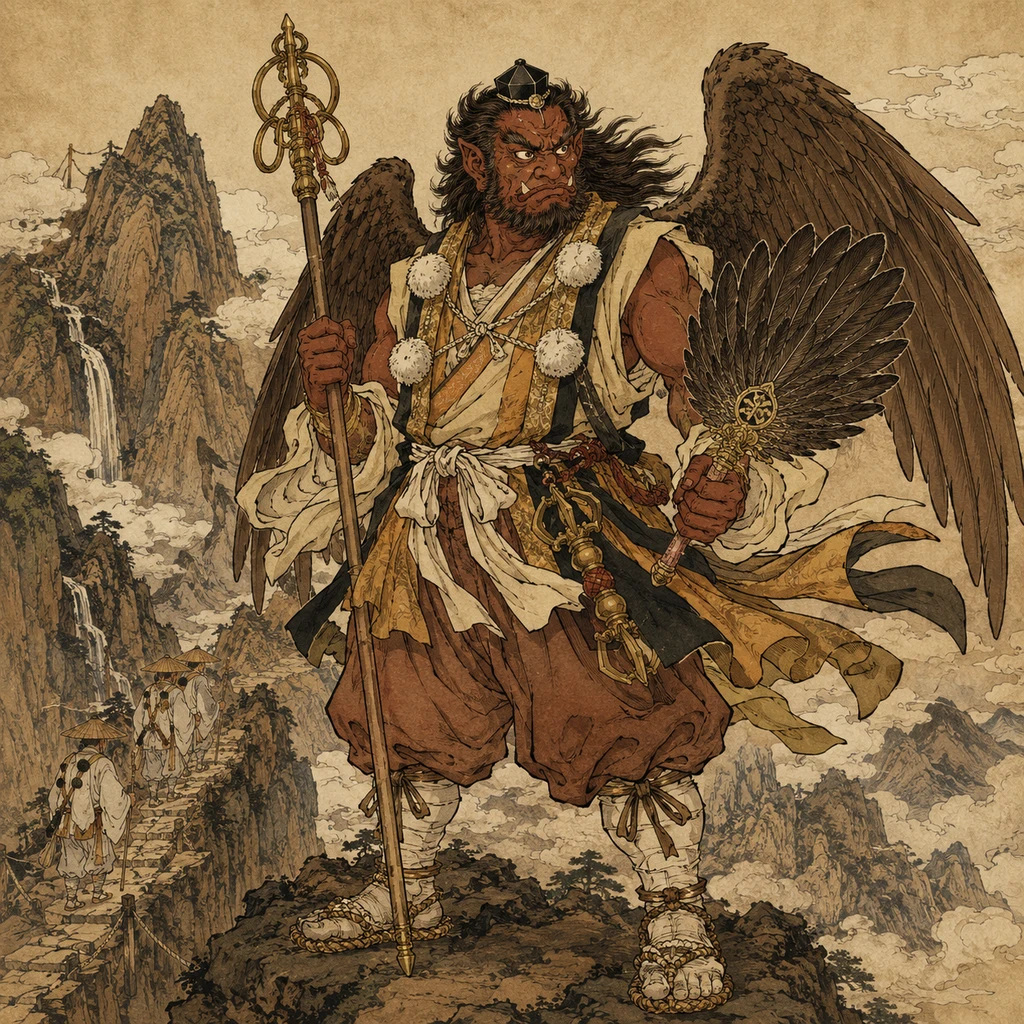
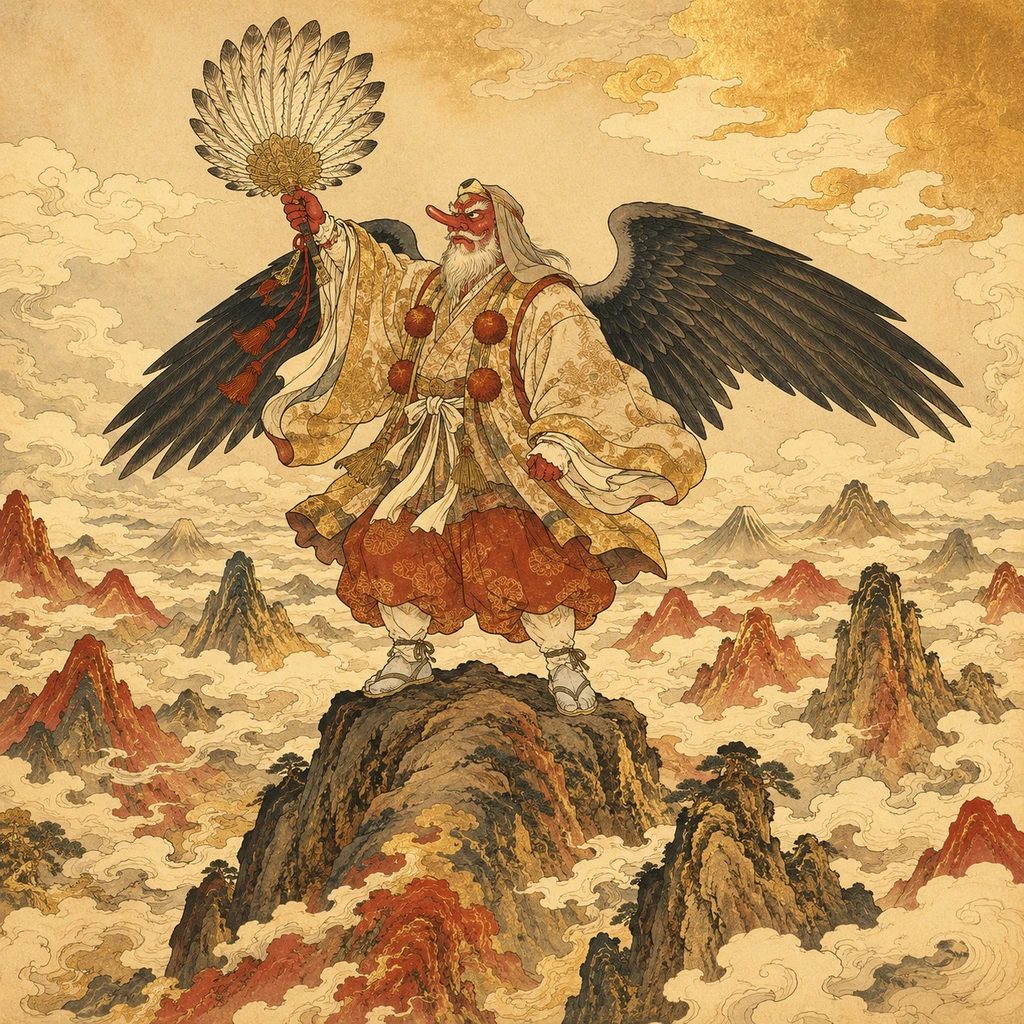
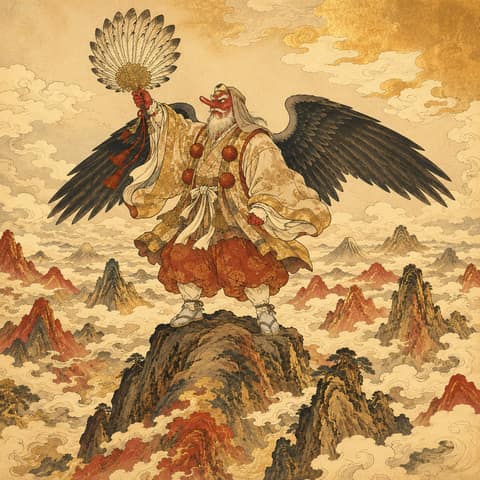
Mountain & Wilderness SpiritsKyoto, Shiga, and Wakayama Prefectures (the seats of the great tengu on the various sacred mountains)This edition is not about a single seat on a particular sacred mountain, but a general treatise that thoroughly unravels "what a tengu is" from the history of its iconography and types. The individual traditions of each seat are left to the page of each great tengu. The form of the tengu is not uniform. The first type is the long-nosed tengu—ruddy face and high nose, clad in the ascetic's headcloth (tokin) and the suzukake robe, a feather fan in hand and one-toothed high clogs on the feet. The second is the crow tengu, with a crow's beak and wings, grasping a sword or a vajra staff. The third are the lesser tengu called leaf tengu and wood-chip tengu, held to be weak and numerous kin. Rather than a fixed classification, these reflect the breadth of the tengu image across eras and regions. The iconography shifted over time. The Heian-period tengu was first conceived as a bird like a black kite, and the image of the crow tengu retains that vestige. The long nose grows prominent only from the late Kamakura period; the Zegaibō Emaki depicts a scene in which a tengu that had disguised itself as a human has its nose lengthen as it returns to bird form. As for the origin of the long nose, there are theories that derive it from the high-nosed Jidō mask of gigaku and link the crow tengu to the Karura (Garuda) mask, and a view that sees the long nose as an iconographic vestige of a bird's beak—but none can be called settled doctrine. It was overlaid with the god Sarutahiko, described in the Nihon Shoki as having a nose seven hand-spans long, and the custom arose of using a tengu mask for the role of Sarutahiko in festivals. The tengu's dual nature is rooted in the Buddhist notion of the way of the tengu. Because it studies the Buddhist path it does not fall into hell, and because it handles heterodox arts it cannot reach paradise either—an intermediate state, and the one who falls there was held to be the arrogant monk. The Tengu Zōshi depicts this notion as satire of the monks of the seven great temples, yet Chigiri Kōsai too warns that the simplification "only arrogant monks become tengu" goes too far. Demon though it is, once subdued it turns to guardianship, and it was held that if a Shugendō practitioner recites the Tengu Sutra he may summon the tengu of the various provinces to grant his wishes—this amplitude between guardian and demon is the very core of the tengu. The certain medieval source for the grouping called the "Eight Great Tengu" lies in the libretto of the Muromachi-period Noh play Kurama Tengu. The passage in which the great tengu calls up the tengu of the provinces he commands in geographical order—"In Tsukushi, Buzenbō of Hiko-san; in the four provinces of Shikoku, Sagamibō of Shiramine; Hōkibō of Ōyama; Saburō of Iizuna… the host of Zenki of Ōmine, Takama of Katsuragi"—shows that the Eight Great Tengu were rooted in medieval belief and performing arts, not an Edo invention. Still, the composition wavers by source, with a variant that adds Hōkibō of Ishizuchi-san; it is no fixed roster.

伝説 Tsuchigumo (Earth Spider)
TSOO-chee-GOO-moh
Tsuchigumo of the Raikō Extermination Tale
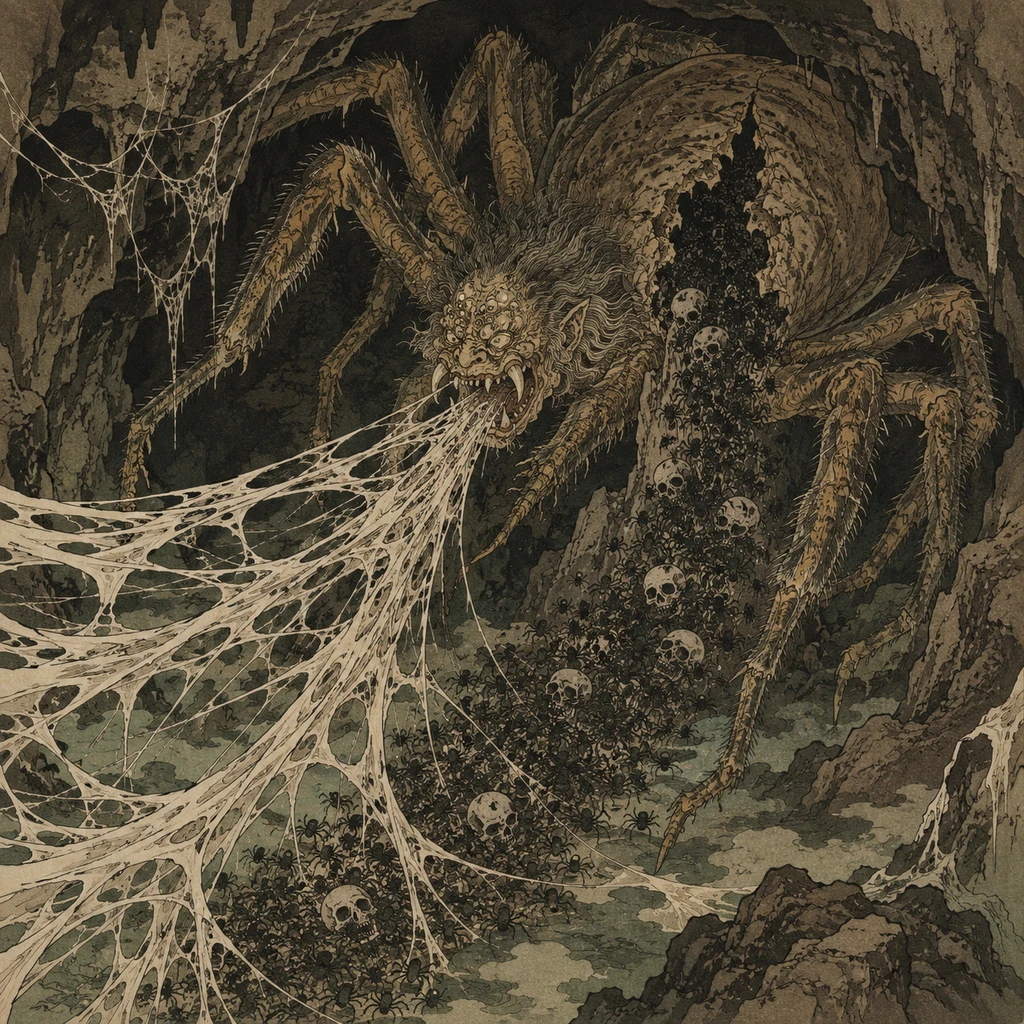
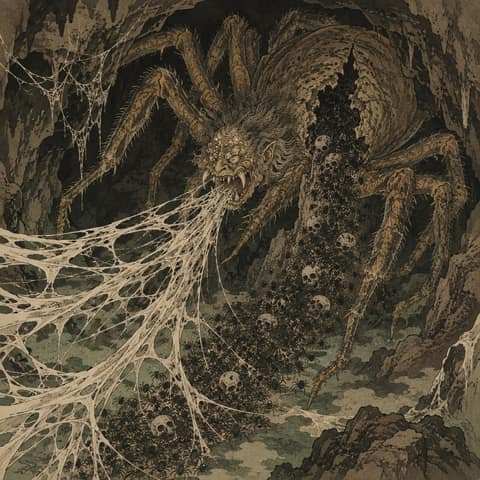
General ClassificationsYamato, Bungo, Hizen, and other regions across JapanA yokai image fixed in medieval narratives: as Minamoto no Raikō lies ill, a monk-like apparition appears at his pillow. When struck, it flees leaving white blood, and following the trail leads to a mound or cave where a giant spider lurks. In Noh it calls itself “the ancient spirit of Mount Katsuragi,” while picture scrolls show it beguiling people with manifold shapeshifts and illusions. Its grotesque form—countless heads and swarms of small spiders bursting from its belly—has been read as a symbol of all manner of demons. Early modern joruri and kabuki inherited this line, tying it to the martial exploits of Raikō’s Four Heavenly Kings. Although the ancient term tsuchigumo once referred to local powers, that lineage diverges from the storybook yokai; only the name was carried over.

伝説 Bishamonten
びしゃもんてん
The Armed God of Fortune and Bearer of Six Stages of Multifaceted Faith: Bishamonten
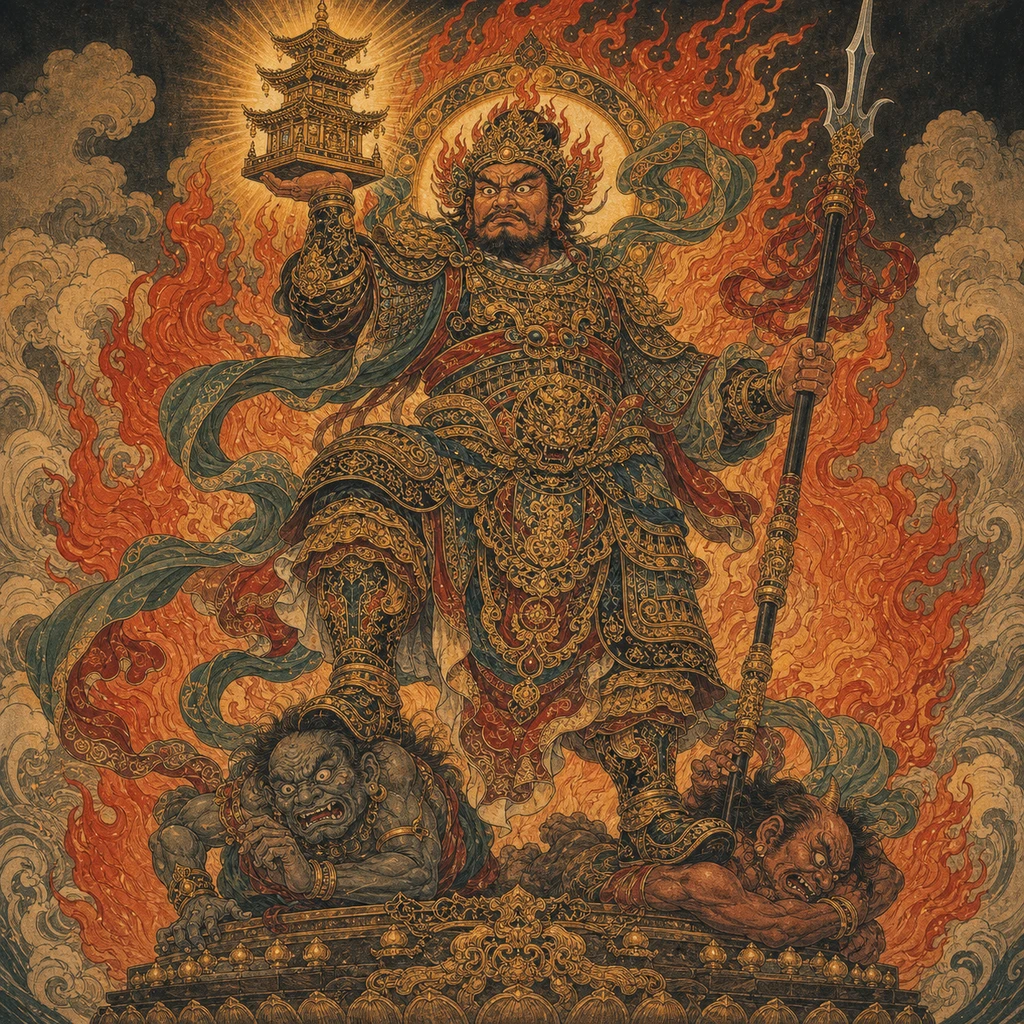
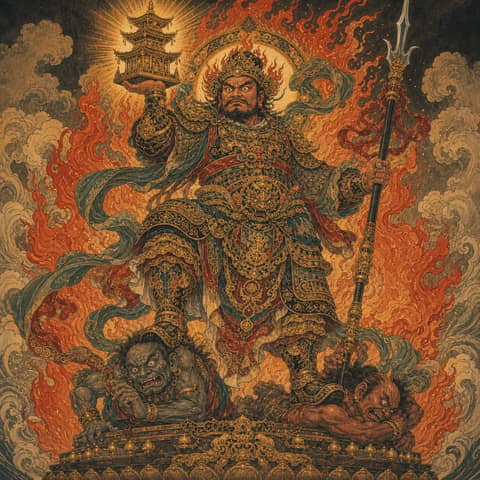
Divine Spirit / DeityAncient India (Kubera) / Shigisan Chogosonshi-ji (Present-day Heguri, Ikoma District, Nara Prefecture) / Kurama-dera (Present-day Sakyo Ward, Kyoto City, Kyoto Prefecture)From Kubera to Vaiśravaṇa: Over a Millennium of Cultural Evolution. While the basic description touches upon Bishamonten's primary attributes, this comprehensive exposition delves into the thousand-year cultural evolution from the ancient Indian Kubera to the modern Japanese Bishamonten. Kubera was an important deity in ancient Indian mythology, serving as the Hindu god of wealth, guardian of the north, and lord of the Yakshas. After being adopted into Buddhism, he became the Dharma protector Vaiśravaṇa and spread to Central Asia, China, and Japan. In each cultural sphere, he underwent unique semantic transformations. In Japan, this produced a multifaceted lineage of faith: the Shigisan Engi involving Prince Shotoku, national protection during the Heian period, victory prayers of Sengoku warlords, and his inclusion among the Seven Lucky Gods in the Edo period. He is a quintessential example of a single deity evolving across centuries and multiple cultural spheres. The Privileged Position of Tamonten in the Four Heavenly Kings System. In Buddhist cosmology, the Four Heavenly Kings—Jikokuten (East), Zochoten (South), Komokuten (West), and Tamonten (North)—guard the four directions on the slopes of Mount Sumeru. Bishamonten, equivalent to Tamonten, is the only one among them to be worshipped independently as the most highly revered figure. This is the result of Kubera's original high status (as god of wealth and northern guardian) in ancient India being preserved even after his adoption into Buddhism. While Shitenno-ji (established by Prince Shotoku in 593) served as the fundamental training ground for Buddhist state religion enshrining all four kings, Bishamonten (Tamonten) independently developed his own following, leading to the formation of temple networks centered around Shigisan, Kurama, and Todai-ji. This dual nature of being both "one of the Four Heavenly Kings" and an "independent deity" is the defining characteristic of Bishamonten worship. The Shigisan Engi and Prince Shotoku: The Origin Myth of Japanese Buddhist State Religion. The founding legend of Shigisan Chogosonshi-ji—where Prince Shotoku received a secret treasure of victory from Bishamonten on the year, day, and hour of the Tiger during his campaign against Mononobe no Moriya—is a representative example of the origin myth of Japan's Buddhist state religion. The Battle of Shigisan in 587 was Japan's first religious war over the acceptance of Buddhism, pitting Soga no Umako and Prince Shotoku (pro-Buddhism) against Mononobe no Moriya (Shinto/anti-Buddhism). The victory of the Soga faction solidified the acceptance of Buddhism in Japan. The legend of Bishamonten appearing as the guardian of victory at this historical juncture acts as a religious narrative device that grounds the origin of Japan's Buddhist state religion in Bishamonten worship. The association between the tiger and Bishamonten developed uniquely in Japan stemming from this very legend. Kurama-dera and the Legend of Minamoto no Yoshitsune: The Evolution of Heian Faith. Kurama-dera in Sakyo Ward, Kyoto, is an ancient temple founded in the early Heian period (traditionally in 770 by Gantei) with Bishamonten as its principal deity, tasked with protecting the north of Heian-kyo and defending the nation. The National Treasure standing statue of Bishamonten (early Heian period) is one of the pinnacle works of Japanese Bishamonten sculpture and a vital cultural asset in ancient sculptural history. Kurama-dera later became the stage for hero legends, such as Minamoto no Yoshitsune (Ushiwakamaru) learning swordsmanship on Mount Kurama from Tengu (considered familiars of Bishamonten), establishing it as a crucial sacred site for samurai faith and heroic lore from the late Heian to early Kamakura periods. This is a prime example of Bishamonten worship expanding from ancient state religion to medieval samurai culture. Uesugi Kenshin: The "Bi" Banner and the God of War. The apex of Bishamonten worship in Sengoku Japan was Uesugi Kenshin (1530-1578), the powerful daimyo of Echigo. Born in the Year of the Tiger and named "Torachiyo," Kenshin believed he was the reincarnation of Bishamonten, riding into battle under a banner bearing the single character "Bi" (毘). The Bishamon Hall at Kasugayama Castle (present-day Joetsu City, Niigata) formed Kenshin's religious core, where he held prayers during crucial moments before deployments, after victories, and during peace treaties. This stands as a representative example of the trinity of religion, military might, and politics in the Sengoku period, showcasing the typical religious individuality of warlords, comparable to Takeda Shingen's devotion to Fudo Myoo or Oda Nobunaga's reverence for a syncretic Namban deity. Incorporation into the Seven Lucky Gods and Edo Popular Faith. In the late Muromachi period, the worship of the Seven Lucky Gods was established, and Bishamonten was included as the armed deity of fortune presiding over "martial luck, victory, and wealth." While the other members of the Seven Lucky Gods are depicted with gentle appearances, Bishamonten is the only one who retains his fully armed guise (armor, pagoda, baton, trampling a demon), giving him a unique presence within this belief system. In the Edo period, Bishamonten played an important role in Takarabune (treasure ship) paintings, New Year's Seven Lucky Gods pilgrimages, and prayers for business prosperity and academic success. He became the core of popular religious culture that aggregated multiple layers of heritage: the ancient Indian wealth god Kubera, the protector of the Heian state, the victory deity of Sengoku warlords, and the popular lucky god of the Edo period. Bishamonten in the 21st Century: Modern Continuity of Multifaceted Faith. Today in the 21st century, Bishamonten is a rare deity that bears a six-stage multifaceted heritage: (1) wealth and northern guardian from ancient India, (2) Tamonten of the Buddhist Four Heavenly Kings, (3) victory guardian of Prince Shotoku and the Shigisan Engi, (4) the faith of Sengoku warlords like Uesugi Kenshin, (5) the armed lucky god of the Edo Seven Lucky Gods, and (6) the modern deity answering prayers for business, exams, and sports victories. He is devoutly worshipped at Shigisan Chogosonshi-ji, Kurama-dera, Todai-ji, and Bishamonten temples and shrines nationwide. Furthermore, he is continuously reimagined in subculture works (such as the games "Nobunaga's Ambition," "Sengoku BASARA," "Megami Tensei," and the manga "Demon Slayer: Kimetsu no Yaiba"). He remains a symbolic figure of Japanese Buddhism, religion, and samurai culture, embodying the unbroken continuity of cultural heritage from antiquity to the present day.

伝説 Tsukumogami
tsoo-KOO-moh-gah-mee
Tsukumogami (Classical Depiction)
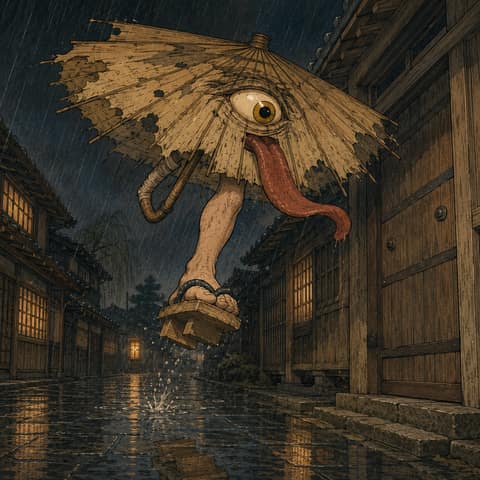
Household SpiritsMedieval Japan, chiefly the Kinai regionRooted in Muromachi-period picture scrolls, this portrayal centers on tools and household objects that gain spirit through long use. When discarded carelessly, they bear resentment and cause disturbances, yet they can be calmed by Buddhist rites, prayers, or renewed respectful use, and may act protectively thereafter. The number of one hundred years is symbolic, expressing the accumulated time that grants spiritual potency. Their forms vary widely—humanoid, demonic, bestial—with everyday implements such as braziers, washbasins, and sake pourers often depicted transforming. Although the name spread less in the early modern era, tool-spirits continued to appear in Night Parade of One Hundred Demons imagery, reflecting attitudes toward tools and impermanence. Local names are not fixed, and sources chiefly trace to the Tsukumogami picture scrolls and old glosses. The tales avoid fanciful additions, serving as moral lessons urging people to cherish and respect their tools.

伝説 Benzaiten
べんざいてん
Default
Deities & Divine SpiritsAncient India (Sarasvatī) / Enoshima Shrine (Fujisawa City, Kanagawa; founded 552) / Itsukushima Shrine (Hatsukaichi City, Hiroshima) / Hogon-ji Temple on Chikubu Island (Nagahama City, Shiga) / Tenkawa Daibenzaiten-sha (Tenkawa Village, Nara)From Sarasvatī to Benzaiten — Two Thousand Years of Cultural Transformation. While the basic description touches on Benzaiten's major sanctuaries and folk beliefs, this in-depth analysis explores her cultural evolution spanning over two millennia from ancient India's Sarasvatī to modern Japan's Benzaiten. Sarasvatī is one of the oldest deities in the Rigveda (c. 1500–1200 BCE), governing river flows, music, arts, language, and poetry. After being adopted into Buddhism, she was transformed into a tutelary deity in the Golden Light Sutra and Lotus Sutra, spreading to China, Korea, and Japan. In Japan, she evolved through several stages: (1) as a scriptural protector during the ancient Ritsuryo Buddhist period (7th–9th centuries); (2) merging with Ugajin to form Uga-Benzaiten in the medieval Kamakura period; (3) becoming a deity of wealth and a member of the Seven Lucky Gods in the early modern Edo period; (4) having her enshrined identity frequently altered to Ichikishimahime during the Meiji era's separation of Shinto and Buddhism; and (5) transitioning into a subject of modern superstitions, tourism, and subculture. She stands as a prime example of an ancient deity's cultural evolution, continuously transmitting her legacy while altering her appearance, attributes, and name over two millennia. Ugajin — The Mysterious Human-Headed Snake Deity. Ugajin, who merged with Benzaiten from the Kamakura period onward, is a bizarre figure depicted with a human head and a coiled snake body, and remains a mystery in academic studies. While the etymology of "Uga" points to the grain deity Ukanomitama from the Kojiki and Nihon Shoki, the origins of the serpent imagery are debated, with theories citing influences from the Chinese creator deities Fuxi and Nuwa, the Indian Naga (serpent gods), and indigenous Japanese snake worship from sites like Mount Miwa and Suwa. The amalgamation of a "uniquely Japanese snake deity of unknown origin" with a "Buddhist goddess of Indian origin" to form Uga-Benzaiten is a symbolic testament to the syncretism, creativity, and mysticism of medieval Japanese religious culture. Two-Armed vs. Eight-Armed Statues — Dual Iconographic Lineages. There are two main lineages of Benzaiten statues. (1) Two-Armed Statues: Depicting an elegant heavenly maiden playing a biwa (lute). This lineage inherits the original musical goddess nature of Sarasvatī and has been the traditional form in Japan since the Heian period. (2) Eight-Armed Statues: Depicting a heavily armed warrior goddess holding eight weapons and ritual implements such as a sword, jewel, bow, arrow, axe, halberd, dharma wheel, and vajra. This form, described in the 5th–6th century Chinese translation of the Golden Light Sutra, emphasizes her role as a protector of the state. The eight-armed figure embodies a fierce martial nature quite distinct from the "elegant goddess of arts" image. Combined with the medieval serpentine form of Ugajin, Benzaiten evolved into an immensely complex deity integrating "elegance, martial prowess, magic, and wealth." The Folklore of Serpentine Transformation — A Layering of Water, Wealth, and Fertility Gods. The transformation of Benzaiten (Uga-Benzaiten) into a snake deity is a folkloric phenomenon deeply intertwined with ancient Japanese snake worship (Mount Miwa, Suwa, Usa, Kumano, etc.). In ancient Japan, the snake was revered as a deity uniting four attributes: water (shrines by rivers, ponds, and the sea), wealth (shedding skin, infinite multiplication), fertility (grain and land), and healing (medicine and taboos). As a result of Benzaiten's fusion with Ugajin and acquisition of snake deity traits, all layers of ancient snake worship—waterside shrines, snakes in wallets, shed skin amulets, and prayers for healing—have been inherited as part of "Benzaiten faith." Even today, modern superstitions like "money-washing water, wallet snakes, and relationship-severing" vividly demonstrate the living heritage of a folk culture where ancient snake gods, medieval Benzaiten, early modern wealth deities, and modern tourism intersect. The Couples' Taboo — Modern Superstition of a Jealous Goddess. At major Benzaiten sanctuaries (especially Enoshima and Itsukushima), a modern superstition prevails that "couples who visit together will incur the beautiful goddess's jealousy and break up." This is a modern variation of an ancient Indian fierce goddess nature (Sarasvatī is sometimes depicted as the wife of Brahma, possessing jealousy and passion), medieval Japanese snake attributes (snakes were symbols of jealousy and attachment), and ascetic taboos such as the historic ban on women on sacred mountains. Going beyond mere superstition, it stands as a fascinating phenomenon condensing the complex religious, folkloric, and psychological history from antiquity to the present, making it a subject of study in 21st-century folklore, psychology, and tourism studies. At the same time, connections with "relationship-severing shrines" (like Yasui Konpiragu in Kyoto) have been noted, showing how Benzaiten's taboo nature integrates with modern cultural practices of seeking separation. The Seven Lucky Gods Faith and Edo Commoner Culture. As the only female member of the Seven Lucky Gods (Ebisu, Daikoku, Bishamonten, Benzaiten, Fukurokuju, Jurojin, and Hotei) established in the Edo period, Benzaiten became a central figure in commoner culture. Practices such as the New Year's Seven Lucky Gods pilgrimage, placing a treasure ship picture under one's pillow, hatsumode (first shrine visit of the year), and praying for business prosperity deeply permeated Edo daily life. This represents a significant cultural shift from the medieval Uga-Benzaiten faith (esoteric Buddhism, mysticism, aristocratic culture) to the early modern Seven Lucky Gods faith (commoners, commerce, urban culture). Benzaiten's early modern worship marks a crucial milestone in an epic cultural transformation spanning over two millennia: from an ancient Indian goddess of arts, to a medieval Japanese esoteric deity, to an early modern Japanese deity of wealth, and finally into a subject of modern tourism and subculture. Benzaiten in the 21st Century — Tourism, Subculture, and Severing Ties. In the 21st century, Benzaiten's legacy continues as a tourism resource through the Three Great Benten Shrines, nationwide Benten shrines, and Seven Lucky Gods pilgrimages. Simultaneously, she is repeatedly reimagined in subculture works, such as the video games *Okami* and *Megami Tensei*, and the manga *Nura: Rise of the Yokai Clan*. She has become a multifaceted icon where ancient Indian goddess traits, medieval Japanese snake attributes, early modern wealth associations, and modern relationship-severing taboos intersect. As a rare example of a single deity embodying over two thousand years of cultural evolution—from Sarasvatī in ancient India to Benzaiten in modern Japan—she remains a vital subject of study in yokai studies, folklore, religious history, and comparative mythology.

名妖 Ippon-Datara
EE-pohn dah-TAH-rah
Kii–Kumano Tradition Variant
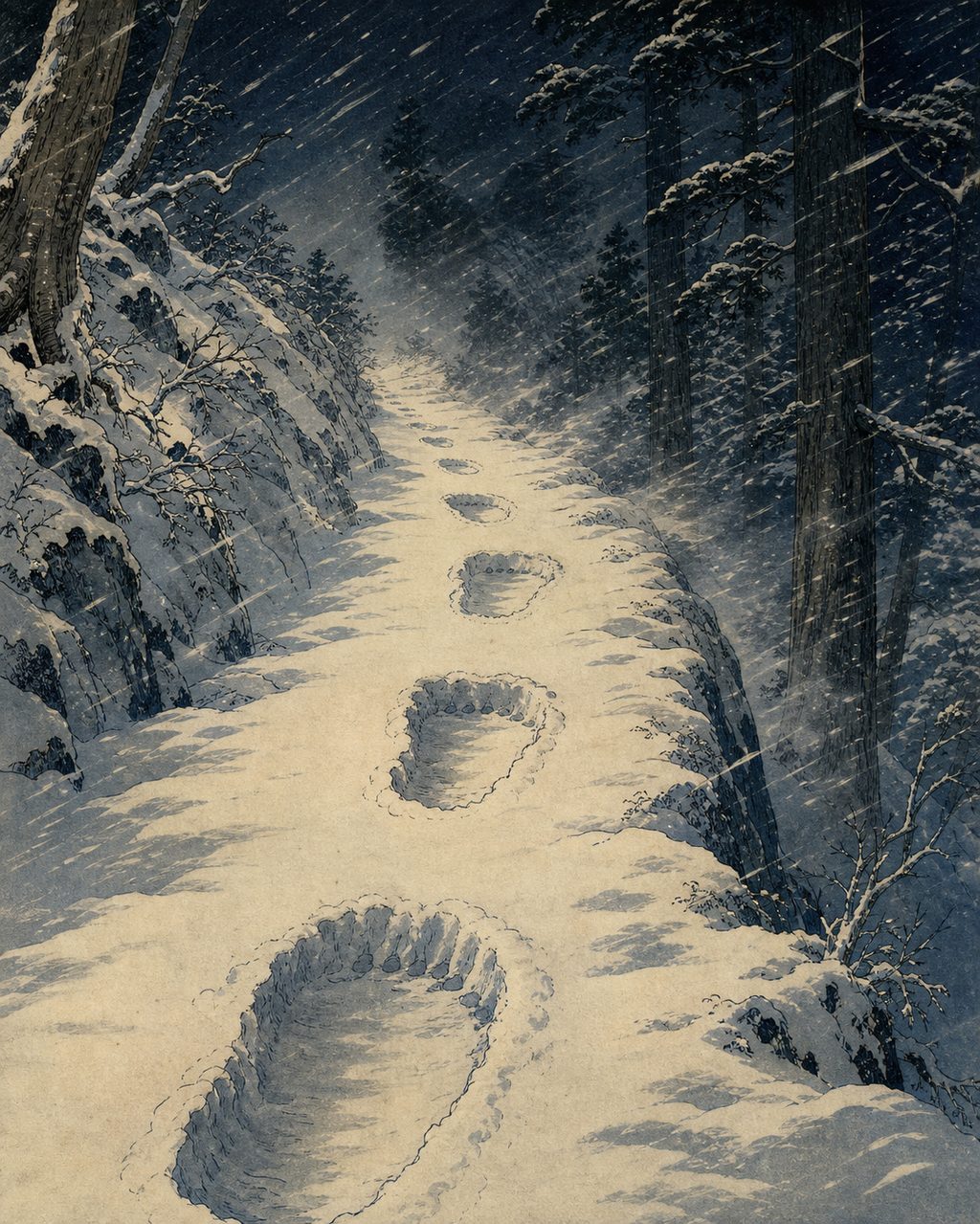
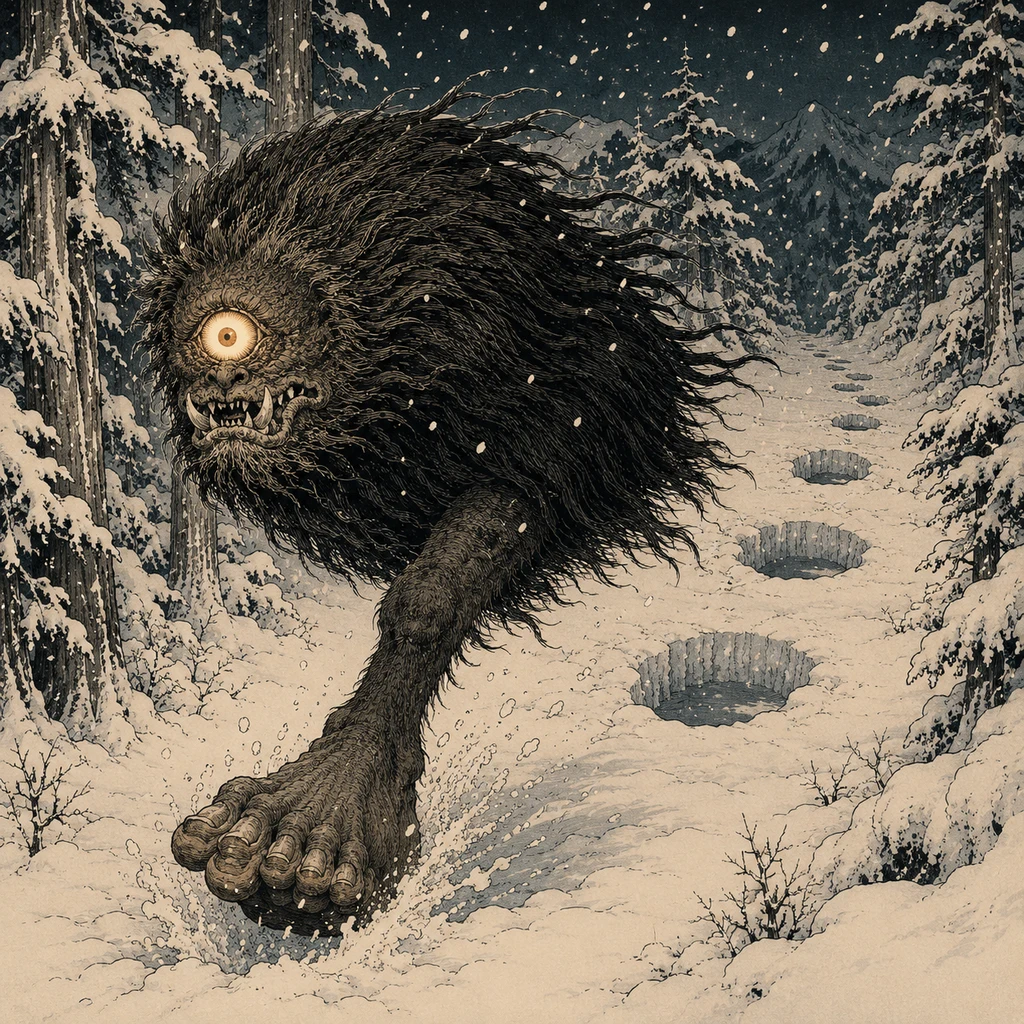
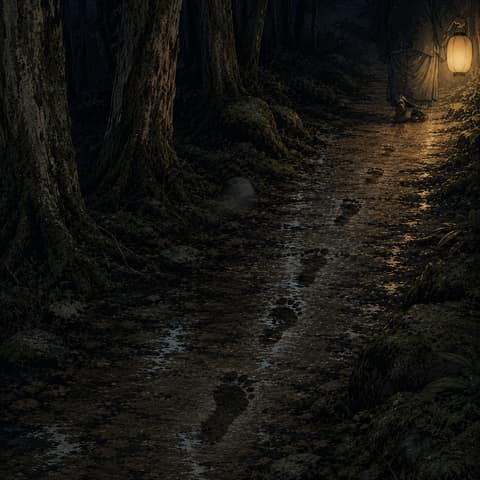
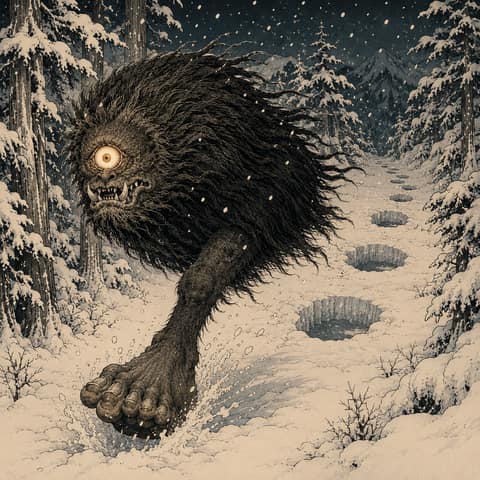
Mountain & Wilderness SpiritsKii Province (Kumano) and surrounding mountain regionsA portrayal of the Ippon-datara based on records from Kii and Kumano through Nara. It is said to be one-eyed and one-legged, but firsthand sightings are rare; in many regions a single large track left after snowfall is taken as proof of its presence. Its most notable trait is appearing on December 20, the “Hate-no-Hatsuka,” a day overlapping taboos of mountain deities and roads, effectively discouraging entry into the mountains. In its link to smithing, folklore explains the one-leg one-eye form as derived from the tatara blower treading the bellows with one foot and watching the furnace with one eye. In the Obagatōge lineage it is equated with the oni-god Inosasao, once a terror of the peak but sealed by a monk and released only once a year. In Kumano and Itsukushima it is said “only footprints appear, not the body,” feared yet seldom directly harmful. While stories of one-legged snow spirits (such as Yuki-nyūdō and Yukibō) have blended with it, this entry centers on the Kumano–Nara stream, emphasizing three points: the taboo day, the single track, and the blacksmith-origin theory.

名妖 Epidemic God
yahk-BYOH-gah-mee
Gyōekishin, Plague-Deity
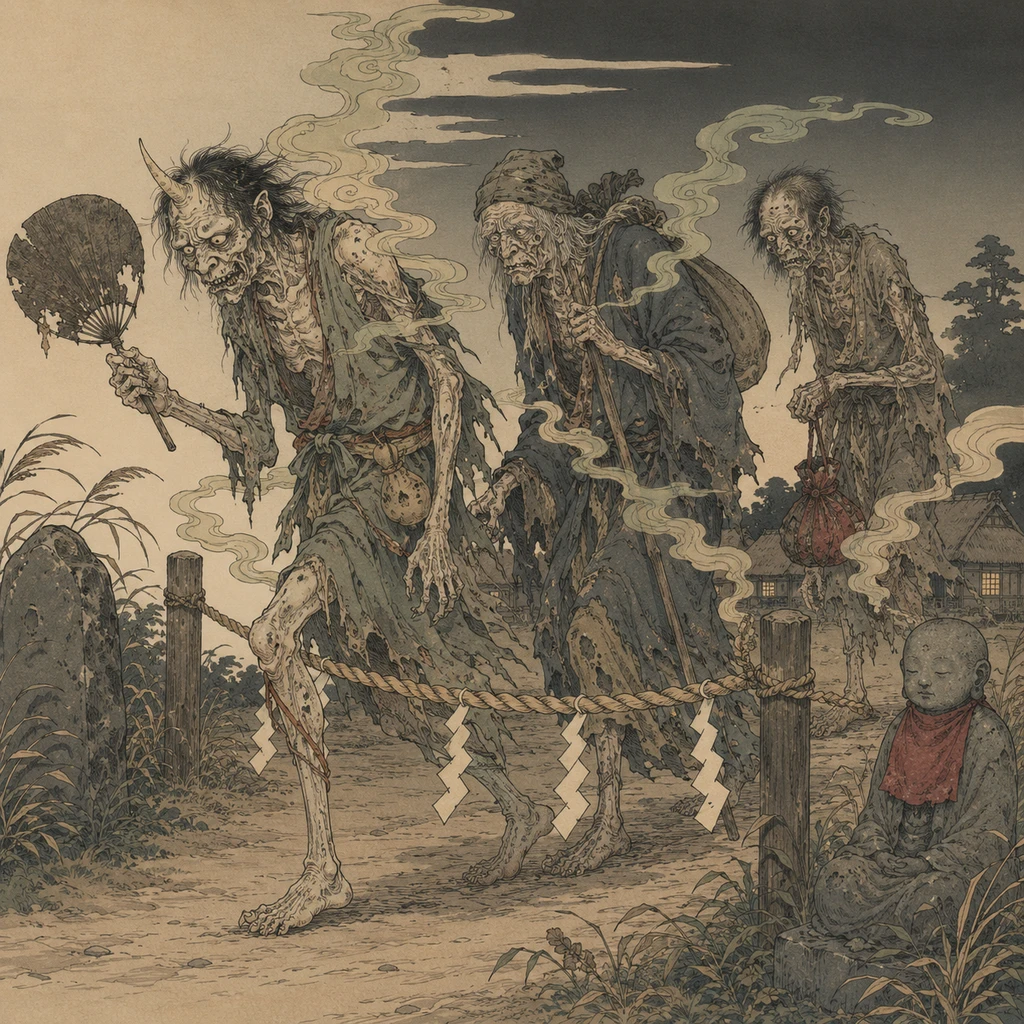
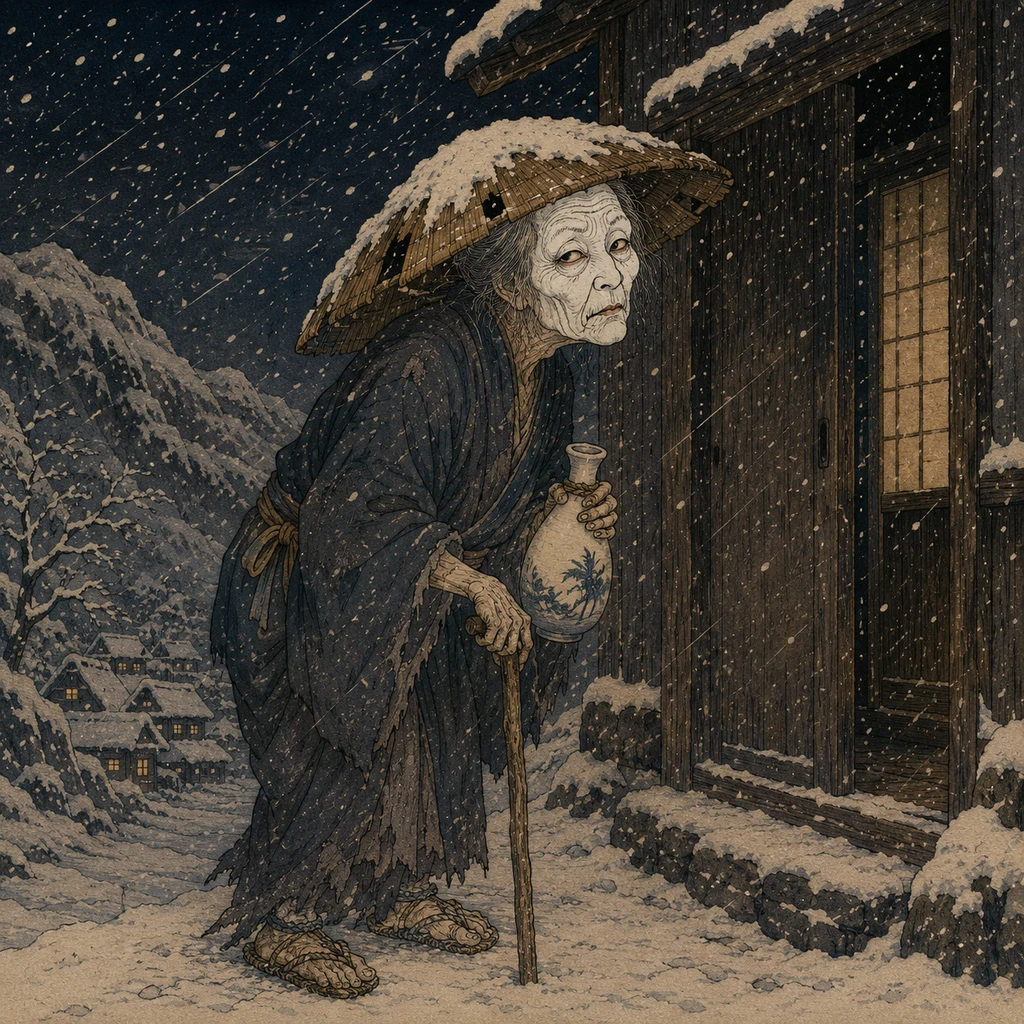
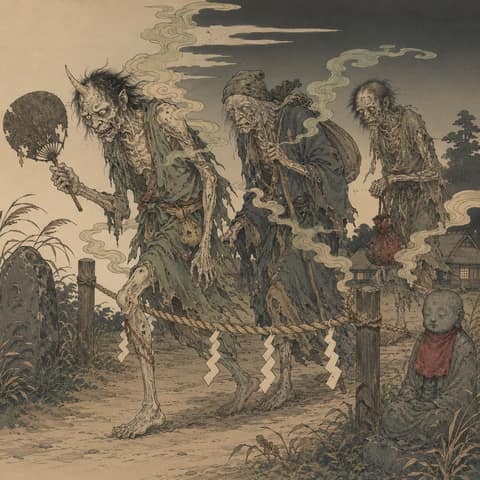
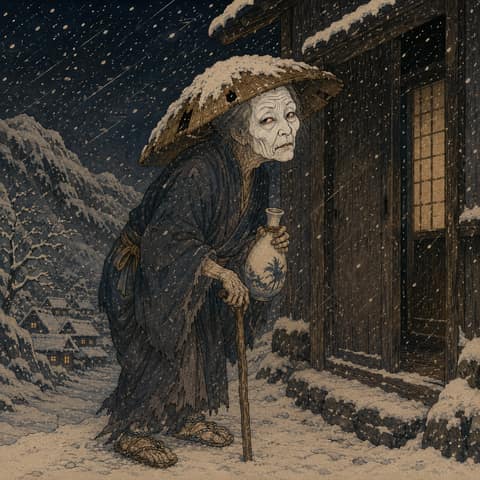
Deities & Divine SpiritsAcross Japan (many records from the Kinai/Kyōki region)An archaic image of the plague deity recognized in both court ritual and folk belief. Usually unseen, it gains force at seasonal turnings and when blossoms fall, entering through village bounds, crossroads, and riverbanks, spreading illness by seizing on household impurity and neglect. In paintings it appears as bands of oni-like or uncanny figures on the move, while tales say it stands at the door as a traveling old man or woman, disliking lapses in almsgiving or proper etiquette. Communal countermeasures include boundary festivals, rites of purification, offerings, displaying talismans, and sending off dolls, with porridge or other set foods prepared on fixed dates to ward it away. Its forms and names are not fixed, appearing in step with local customs and annual rites, so it varies by region, yet it is always told in connection with practices that “set the boundary and purge defilement.”

名妖 Oni of Gango-ji
GAHN-goh-jee no OH-nee
Canonical Folkloric Tradition
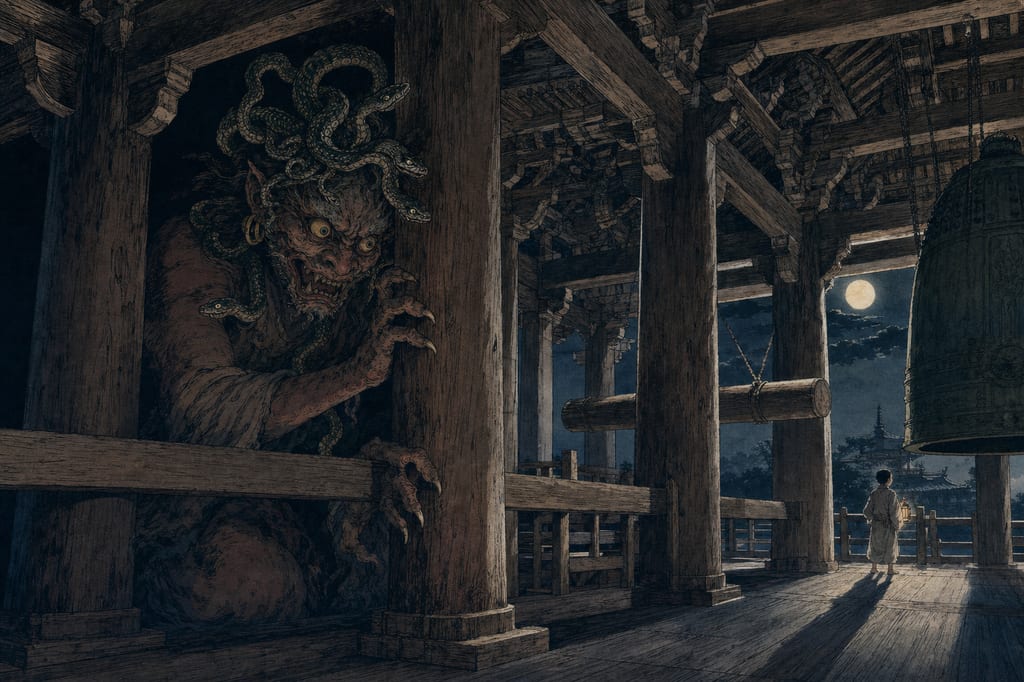
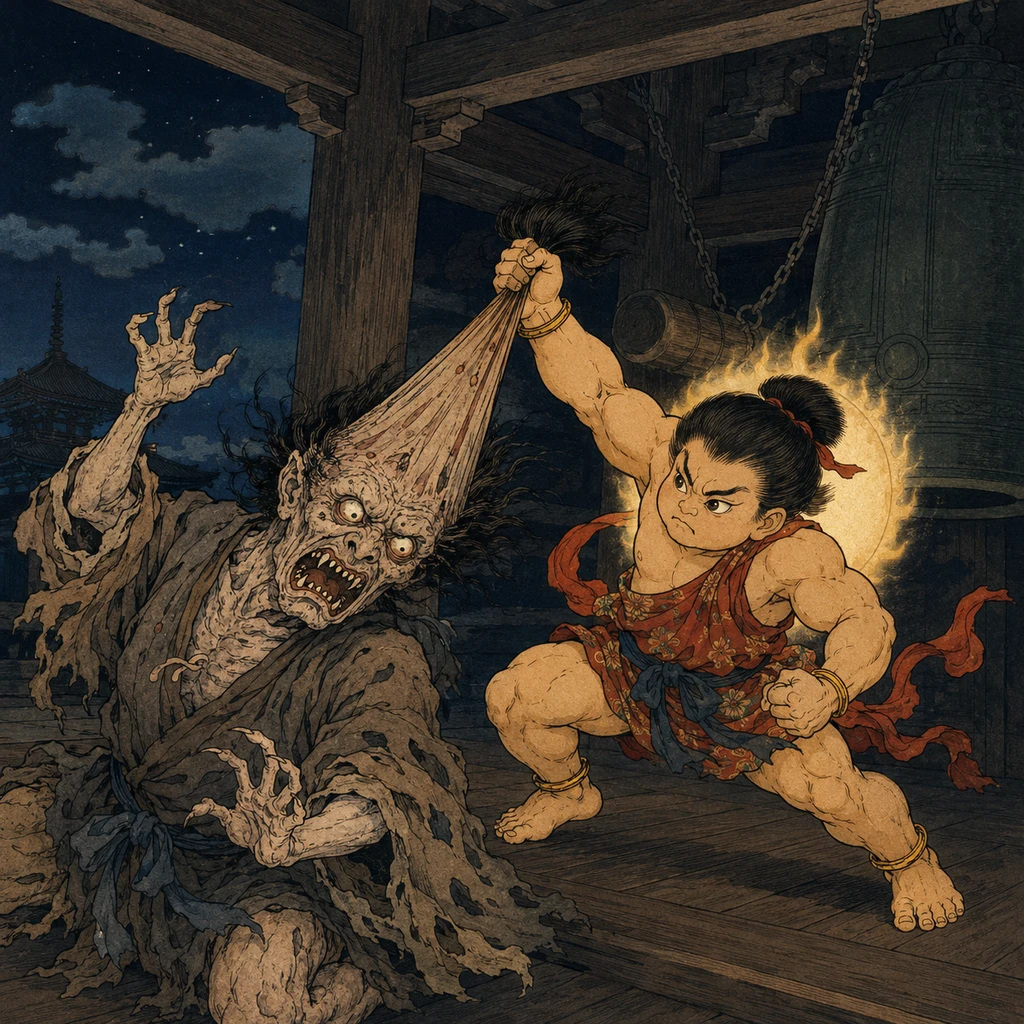
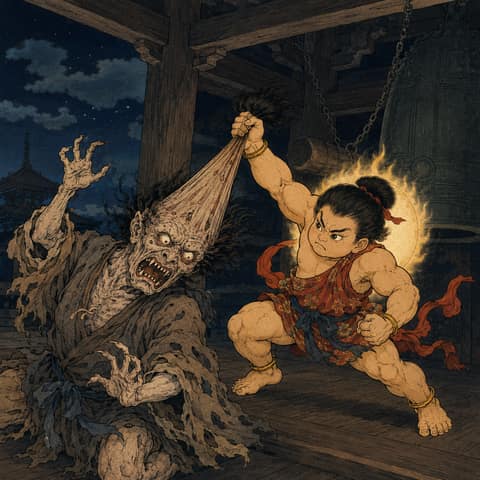
Ghosts & SpiritsYamato Province (modern Nara Prefecture)This version follows storylines found in Heian-period tale collections and represents the type fixed as the bell-tower apparition of Gangoji. The demon’s true form is the restless spirit of a servant connected to the temple, manifesting as a figure that frightens monks and children. It appears at midnight, and accounts say its form can be verified by lamplight, reflecting a folk view that sacred beings hide yet reveal themselves under certain conditions. A preceding thunder-god episode is linked as a strong-child birth tale, reinforcing the idea that the power of thunder can dwell in a person. The subjugation is not by beheading but by tactile restraint—“grabbing the hair,” “tearing it out”—with the hair remaining as a relic treasured by the temple. Thereafter the monster is calmed, and the child takes vows and is known as Dōjō Hōshi. Words like Gagoze and Gagoji appear regionally as generic terms for yokai, but their etymology is debated and left unspecified.

名妖 Blue Heron Fire
ah-oh-SAH-gee-bee
Canonical Folklore Version
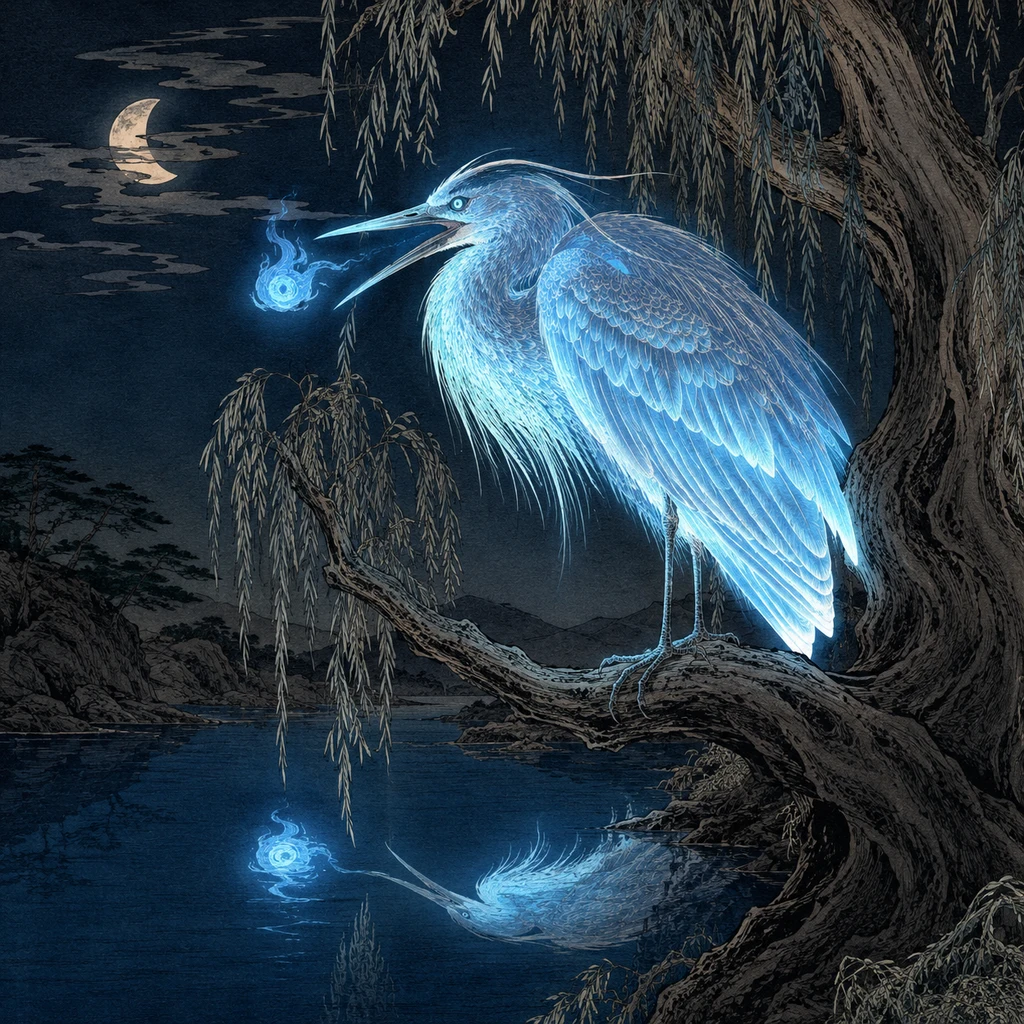
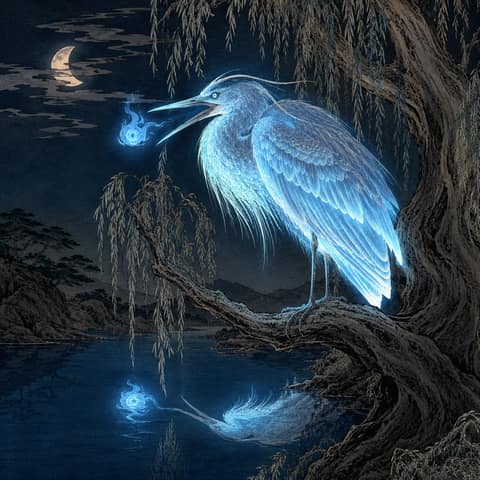
Animal ShapeshiftersVarious regions of Japan (notably Edo, Yamato, and Sado)Aosagibi is told as the pale blue glow seen around night‑active herons such as the black‑crowned night heron, appearing above water or against the night sky. In the Edo period it was depicted by Sekien and recorded widely in essays. Willows and ancient plum trees, river mouths and inlets, and shrine and temple precincts—places where “ki gathers”—were feared as haunts where mysterious fires would linger, and cases are told where a shot “ghost light” proved to be a heron. Explanations noted since early modern times include moonlight and water reflections, the sheen of wet feathers, the glare from white breast plumage, or microorganisms at the waterside, showing how people moved between natural causes and yokai tales. Other strands say old night herons faintly glow by season, turn into fireballs, or breathe fire, letting tales of ghost lights, strange birds, and dragon lamps intersect. Though eerie, many stories end with the creature merely being a bird once brought down, emphasizing its nature as a misperceived apparition.

名妖 Prince Sawara
SAH-wah-rah shin-NOH
Emperor Sudō as Vengeful Spirit – Traditional Goryō Version
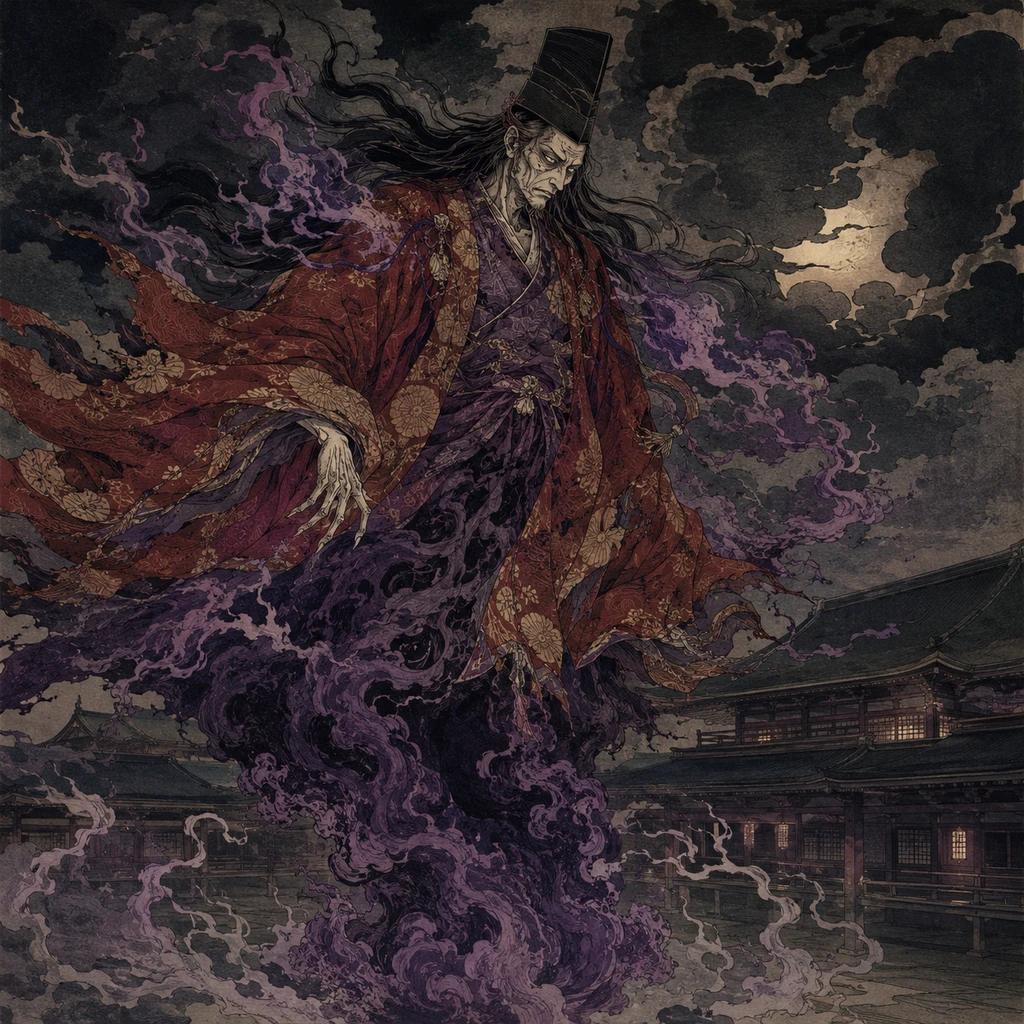
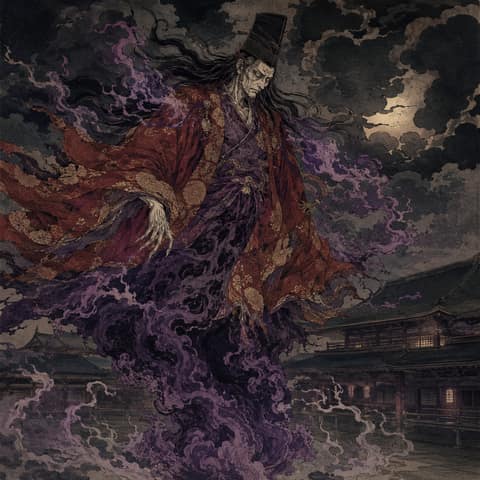
Ghosts & SpiritsYamato ProvinceAn image grounded in local and court memories that Prince Sawara’s resentment manifested as a goryō. Amid suspicion over his alleged crimes he died by fasting, and later plagues, famine, and illnesses afflicting the imperial line were seen as his curse. The court sought reconciliation through land donations, sutra recitations and esoteric rites, reburial, and posthumous honorific titles, carefully enshrining him as a goryō. Revered as a power that judges right and wrong, he received offerings at shrines and temples, seasonal services, and apologies at his mausoleum. In later years, rites centered on the Sudō Tennō Shrine took form, spreading protective faith between the capital and Yamato. His grudge was understood not as private spite but as a warning against political disorder and calumny, prompting rulers to vow purity and justice with sacrifices, written oaths, and sutra offerings. The spirit bears a wild aspect, yet when appeased turns to guardianship.

名妖 Amanojaku
ah-mah-noh-JAH-koo
Traditional Iconography and Folktale
Demons & GiantsVarious regions of Japan (ancient strands linked to Yamato and Izumo mythic cycles)Amanojaku is understood as a fusion of the trampled demon in Buddhist iconography and the folk image of a small imp fond of mimicry and speaking in reversals. Many temple and shrine statues of the Four Heavenly Kings or Shukongōshin place a small demon underfoot, signifying the subjugation of worldly desires and wicked intent. In stories, Amanojaku habitually reads people’s hidden thoughts, balks at requests, and does the opposite of commands to sow confusion. In mountain lore it is told as a being of tremendous strength, with unfinished stone piles, bridge piers, and toppled boulders on peaks attributed to its failed feats. Interpreting echoes as the voice of Amanojaku is a personification of natural phenomena, overlapping regionally with names like kodama and yamabiko. In fairy tales such as Uriko-hime, it serves as a touchstone-like adversary that preys on carelessness or greed, carrying a moral lesson. Overall, Amanojaku lives across iconography, folktales, and dialect traditions as a mirror of human contrariness and the gaps in the heart.

名妖 Hannya
HAHN-nyah
Hannya of the Traditional Noh Mask
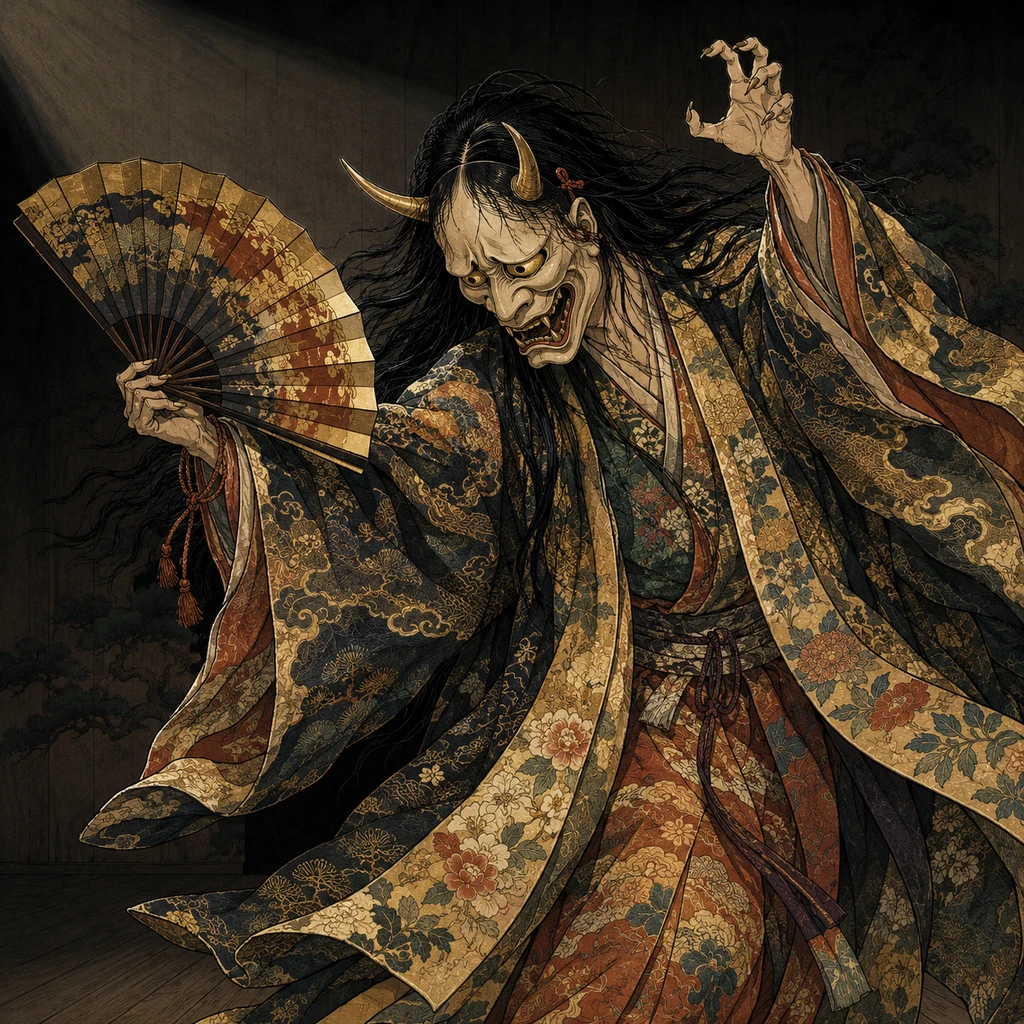
Demons & GiantsKyoto, Nara, and other regions of JapanThe Hannya visage fixed in Noh and Kyogen emerged where Heian-era vengeful-spirit beliefs intersected with medieval performance aesthetics. Horns, fangs, and upturned eyes signal rage, while shadows around the mouth and cheeks carry grief; on stage the expression shifts with angle. Tales repeat the pattern of a woman bound by attachment turning into a demon and being released through temple rites and chanting, stressing the idea of passion given form. Local names are not consistent, and it usually appears as a role within shrine-temple origin tales or Noh scripts. Though homophonous with the Buddhist term prajñā (hannya, wisdom), on stage the word denotes a demon-like visage. Mask colors such as white, red, and black mark deepening obsession, with details varying by school.

稀少 Temple Woodpecker
TEHM-puhl WUUD-peh-ker (teh-rah-TSOO-tsoo-kee)
Temple Woodpecker (Sekien Zufu depiction)
Animal ShapeshiftersYamato and Settsu regions (around present-day Nara and Osaka)A form based on Toriyama Sekien’s illustration and accounts in war chronicles. It bears the will to hinder the Buddhist Law, pecking at temple timbers late at night as an omen of ill fortune. Tradition ties its origin to the vengeful spirit of Mononobe no Moriya, though its shape follows that of a woodpecker. In strange tales the sound comes first, a shadow is seen, and its true body is rarely caught. Folklorically it fuses bird-borne calamity lore with etiologies for temple damage.

稀少 Kosame-bō (Little Rain Monk)
koh-sah-meh-BOH
Sekiens Iconography Edition
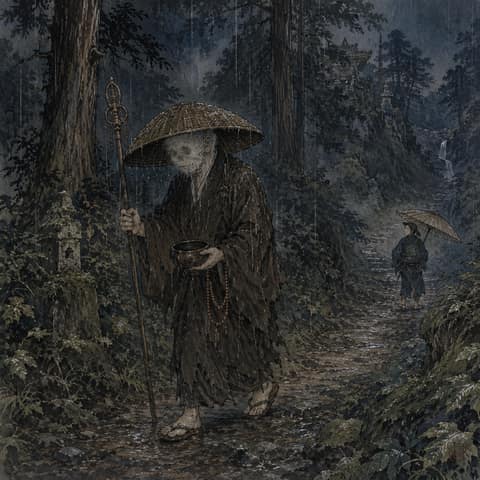
Mountain & Wilderness SpiritsAround Mount Ōmine and Mount Katsuragi (tradition)A reconstruction based on Toriyama Sekien’s image and brief note. It appears as a small monk drenched by rain, emerging on rainy nights in the mountains. It softly asks passersby for offerings due to a monk, but refusal does not necessarily bring harm. Its place is tied to the sacred Shugendō ranges of Ōmine and Katsuragi, yet no verified lore links it to specific temples or persons. Later sources that say it begs for food or small coins likely simplify Sekien’s term “sairyō” (offerings), with little direct oral backing. Its wandering is said to occur only on fine-threaded rainy nights, and reports from clear nights or downpours are uncertain. Methods to banish or summon it are unknown, and meetings on mountain paths are told merely as fleeting oddities.

珍しい Kanatsubute
kah-nah-TSOO-boo-teh
Canon-Conforming (Traditional Lore)
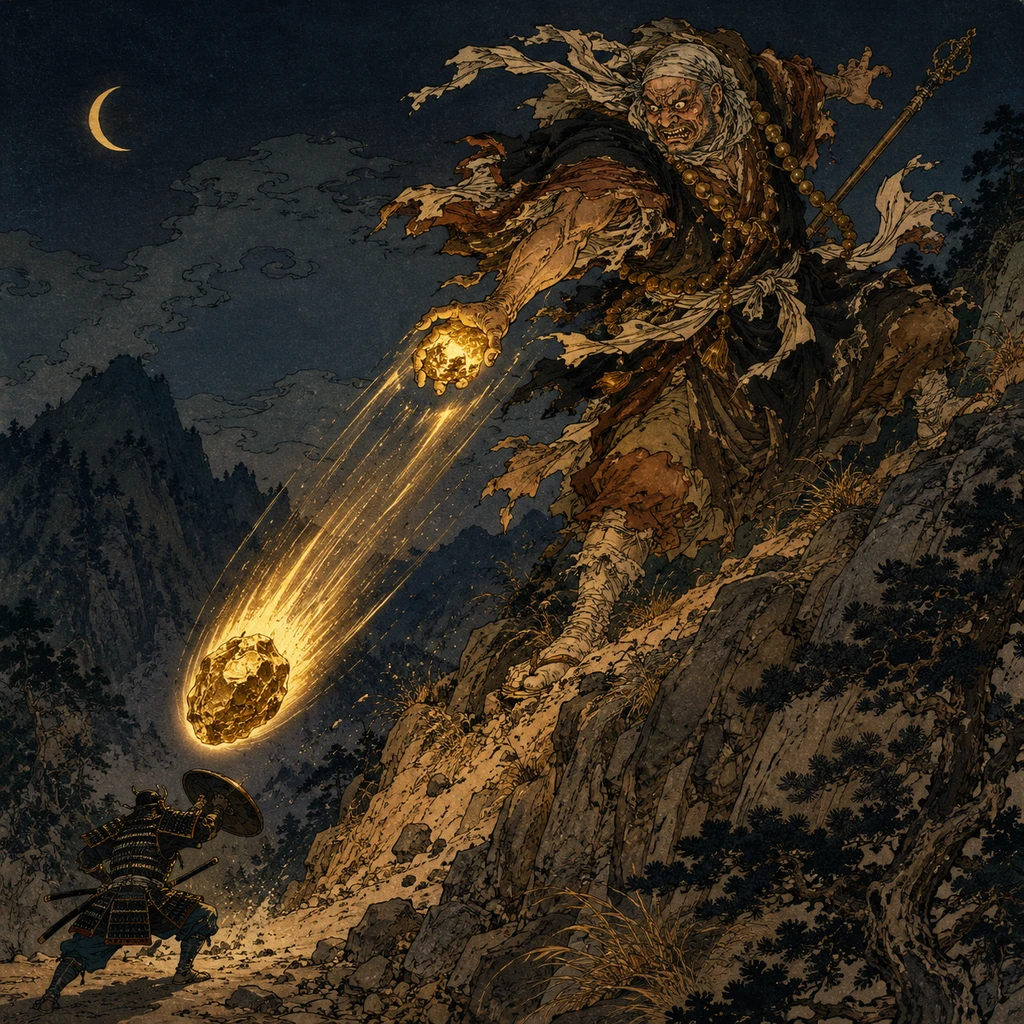
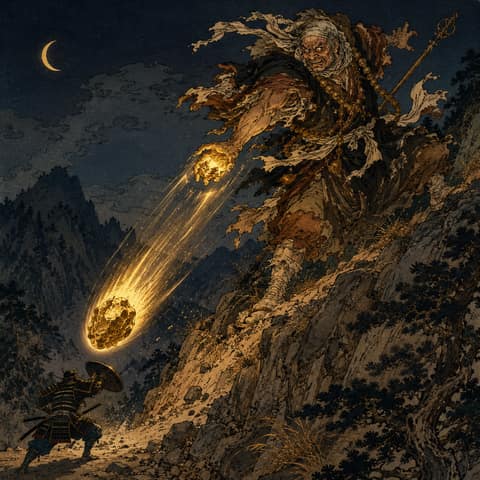
Demons & GiantsNarasaka, Yamato Province (Nara)Rooted in the Treasure Compendium account and given concrete form in the Otogizōshi Tamura tales, this type portrays the yokai as a shape-shifting brigand haunting the strategic pass at Narazaka, preying on travelers and tribute. The monk guise, gigantic body, and golden sling-stones became fixed traits. The golden stones are ranked as Tarō, Jirō, and Saburō, each escalating in power and boasted to shatter mountains and armor. The usual slayer is Inase Gorō Sakanoue no Toshimune, who leads troops, blunts the stones with traps and quick wits, and relentlessly pursues the creature with secret whistling arrows. The tale ends in surrender and execution, restoring safety to a key route. It is understood as a specter embodying the dangers and brigandage of local slopes and passes, emphasizing metallic gleam and the terror of flying stones.

珍しい Gambari Nyūdō
GAHN-bah-ree nyoo-DOH
Tradition-Concordant Version
Aquatic SpiritsVarious regions (Edo, Kinai, Sanyōdō, etc.)A synthesis based on Toriyama Sekien’s imagery and regional taboos and chants tied to privies. Since antiquity, latrines were seen as thresholds where impurity and boundary meet, with apparitions said to appear at liminal times such as midnight and New Year’s Eve. Sekien depicts a monk-like figure vomiting a bird and notes a charm invoking “Gambari Nyūdō Cuckoo.” Folklore records chants that decide fortune or misfortune, tales of transmutation to gold or koban alongside ominous encounters marked by hearing the cuckoo. Scholars note punning links with the graph for cuckoo and Chinese toilet deities, and strong regional variation and name fluidity, including Wakayama’s “Setsuin-bō” and blending with Okayama’s Mikoshi-nyūdō. Practices on how and when to enter the privy, cautions on time, and children’s nerve-testing customs intertwine with taboos over what to say and tales of invited luck.

珍しい Oni Hitokuchi
OH-nee HEE-toh-KOO-chee
Tradition-Faithful Edition
Demons & GiantsJapanese folkloreOni Hitokuchi appears in pre-medieval tales less as a fixed figure than as a term for a demonic being that fells a human with a single bite. It typically emerges in liminal scenes—at night, in thunderstorms, near storehouses or by the roadside—often intruding upon lovers’ trysts or flights. In The Tales of Ise (the Akutagawa episode), thunder drowns out the screams, and the lack of remains underscores the instantaneous “one bite.” Nihon Ryōiki and Konjaku Monogatari depict its mimicry as a man, serving as a warning against deviating from social bonds such as marriage or vows. After Sekien’s imagery fixed the name, folklore used it to reframe wartime, famine, and disaster disappearances as otherworldly devourings. Thus “Oni Hitokuchi” here is a type-name: its form is not fixed, and its essence is speed of consumption and absence of traces.

珍しい Escorting Sparrow
oh-KOO-ree soo-ZOO-meh
Systematized Folklore Edition
Mountain & Wilderness SpiritsKii and Yamato Provinces (Wakayama Prefecture; Higashiyoshino, Yoshino District, Nara Prefecture)Okuri-suzume has been framed as a harbinger and ill omen warning of dangers on mountain roads. Its calls precede, and are said to lead into, appearances of wolves or the escorting wolf, forming a narrative that encourages careful footing and avoiding delays in the wilds. The name “kuzusuzume” aligned with the real bird Black-faced Bunting (Aoji) is recorded, though its supposed nocturnality is debated. Sightings of its form are scarce, leaving its appearance unsettled, and in parts of Nara it is conflated with the night sparrow. Stories place it around Myohosan in Wakayama, and it is said to draw near lantern light. More than a threat itself, the lore centers on its “foreboding call,” giving it a strong character as a sound-based apparition.

珍しい Chōchin-bi (Lantern Fire)
CHOH-cheen-bee
Chochin-bi (Lantern-Flame, regional will-o’-the-wisp type)
Natural Phenomena SpiritsAcross Japan (notably Shikoku, Yamato, and Ōmi traditions)A regional catch-all name for ghostly lights about the size of a paper lantern. In some areas it is conflated with kitsune-bi and tanuki-bi, its name stemming from the idea of monsters lighting lanterns. It appears on rainy nights along riverbanks, dikes, and graveyards, drifting at a fixed height. Accounts vary by era and locale: vanishing when approached, splitting when struck, or marching in clusters. In folklore it portends untimely death or a curse and marks taboos along the roadside, anchoring tales that warn against pursuit or striking it. It appears in early modern essays and kaidan, sometimes gaining proper names (such as Koemon-bi) and lodging in local memory. Natural ignition and animal-origin theories coexist, and its true nature remains unsettled.