Kasuga-no-kami
kasuga-no-kami
The Divine Spirit of Kasuga Riding a White Deer to Protect Nara
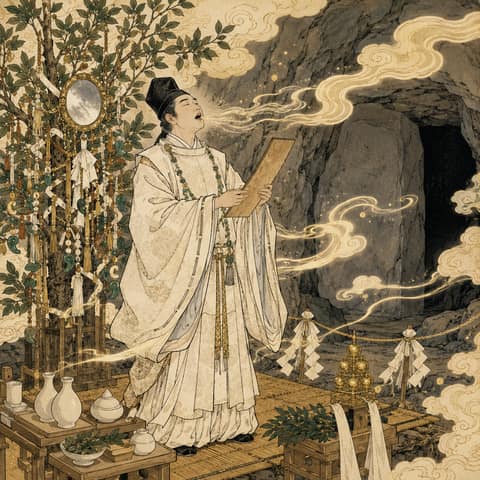
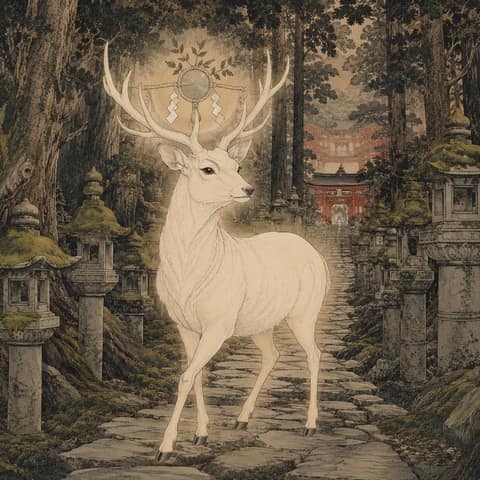
This version of Kasuga-no-kami is not a single character, but the totality of divine spirits overlapping the location of Nara. By enshrining Takemikazuchi-no-mikoto, Futsunushi-no-mikoto, Amenokoyane-no-mikoto, and Himegami in one shrine, Kasuga simultaneously takes on martial might, rituals, clan lineage, and feminine mystery. Rather than cutting it down by simple attributes, it is more accurate to read it as an ensemble of multiple deities. The arrival of Takemikazuchi riding a white deer is the most beautiful entrance to this version. The legend that the god moved from Kashima to Kasuga riding a white deer connects the distant sacred site to Nara's Mount Mikasa with a single spiritual path. The deer is a vehicle, a messenger, and a living sign of the sacred precinct. This story quietly teaches that the deer of Nara are not mere tourist resources. The sacred precinct of Kasuga Taisha lies on the boundary between the city and the forest. Despite being near Heijo-kyo, it bears the presence of Mount Mikasa and the Kasugayama Primeval Forest. Kasuga-no-kami is a god that protects the political center of the capital while also coming from the depths of the forest. This duality makes Kasuga feel not just like a rigid state ritual, but a soft sanctuary. In the world of Kasuga Mandalas and the "Kasuga Gongen Genki," the god is taken on a pilgrimage within paintings. The shrine buildings, mountains, deer, and trace manifestation Buddhas are combined, and the divine majesty of Kasuga becomes a single visual universe. This iconographic quality is important for a yokai/deity page. It is difficult to fix Kasuga-no-kami into a single form, but drawing the sacred deer, shrine buildings, and forest is enough to establish Kasuga-no-kami. The nature of being the tutelary deity of the Fujiwara clan gives Kasuga-no-kami historical depth. A clan enshrines its own ancestral and guardian gods, religiously supporting political legitimacy. Because the martial nature of Takemikazuchi and Futsunushi overlaps there, Kasuga-no-kami does not end with just the gentle image of a deer. The god protecting the capital casts a strong boundary when necessary. In modern cards and articles, explaining Kasuga-no-kami merely as "the deer god of Nara" makes it thin. By placing the arrival of the white deer, the Fujiwara clan, the four-deity composition, Shinto-Buddhist syncretic iconography, and the forest sanctuary together, you can naturally guide readers from an easily searchable entrance to a deep deity page. On YOKAI.JP's network, it becomes a crucial point connecting Takemikazuchi and Nara place articles. The terror of Kasuga-no-kami lies in its quietness. It does not scream like a vengeful spirit, nor attack like an oni, yet it watches the behavior of those who enter the sacred precinct. A deer crossing the path, the shadow of a lantern flickering, the wind blowing from the depths of the forest. Such small events create the feeling that the god is near. The divine aura of Kasuga appears more as the density of the place than as flashy miracles. The aspect of being the tutelary deity of the Fujiwara clan serves as an entrance to thinking about the relationship between politics and sacred sites. The clan enshrines the god, and the god supports the clan's legitimacy. Kasuga-no-kami bore this exchange for a long time. Therefore, the beauty of Kasuga also contains the history of power. Beyond the vermilion shrine buildings and the gentle figures of the deer, one also wants to show the strictness of the rituals that support the capital. On modern pages, Kasuga-no-kami can be used as a location hub. Nara, deer, Takemikazuchi, the Fujiwara clan, Shinto-Buddhist syncretism, Kasuga Mandalas, Wakamiya On-matsuri. Because these search terms connect naturally, the value of internal links is high, not just standalone traffic. While maintaining its dignity as a deity, it can provide a pathway that makes readers want to actually go to Nara.