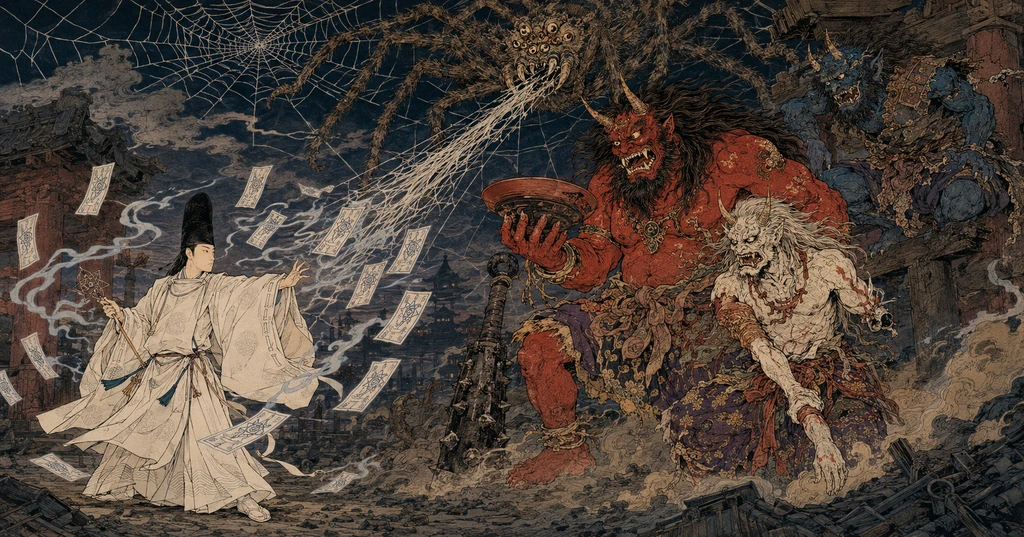
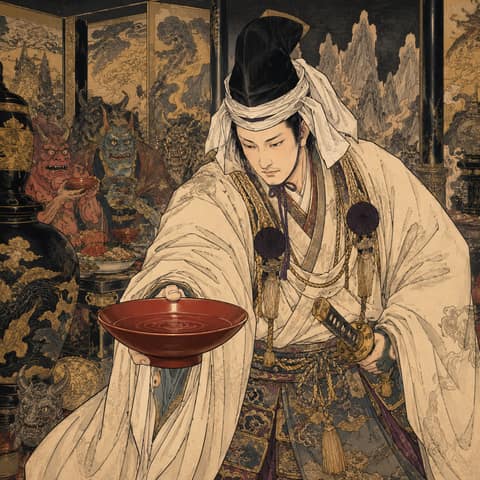
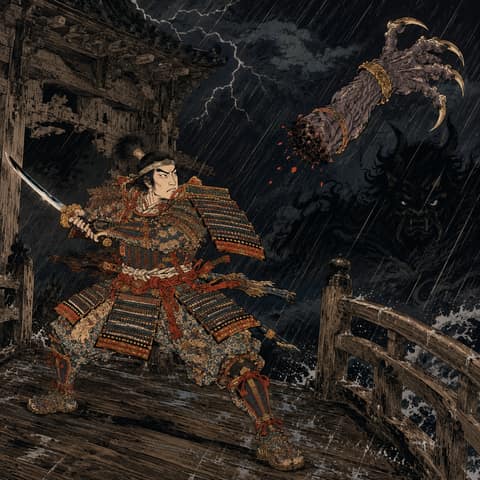
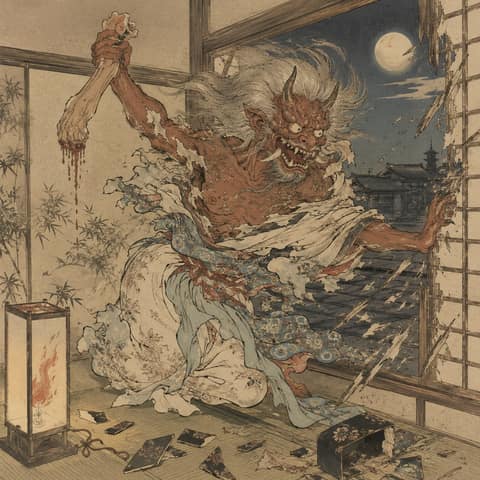
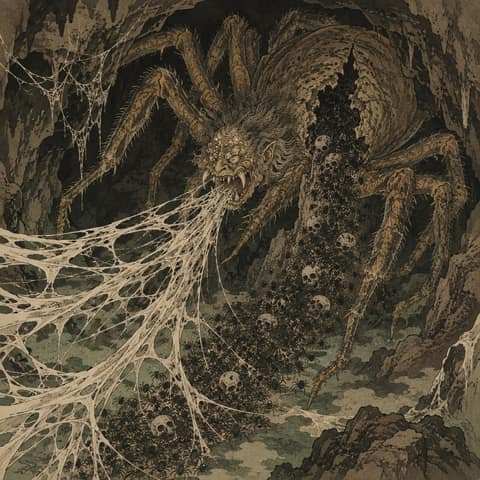
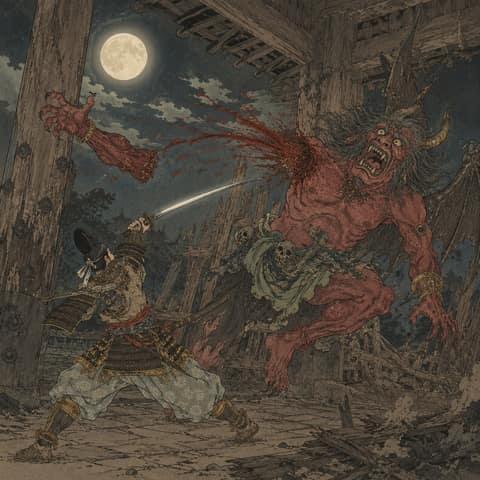
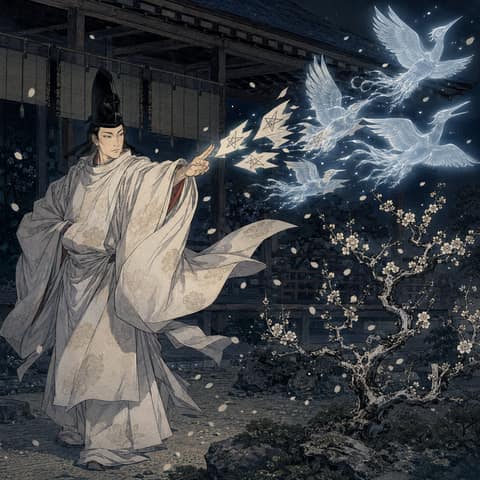
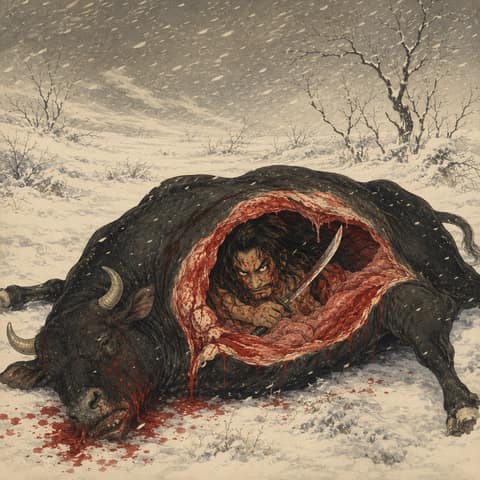
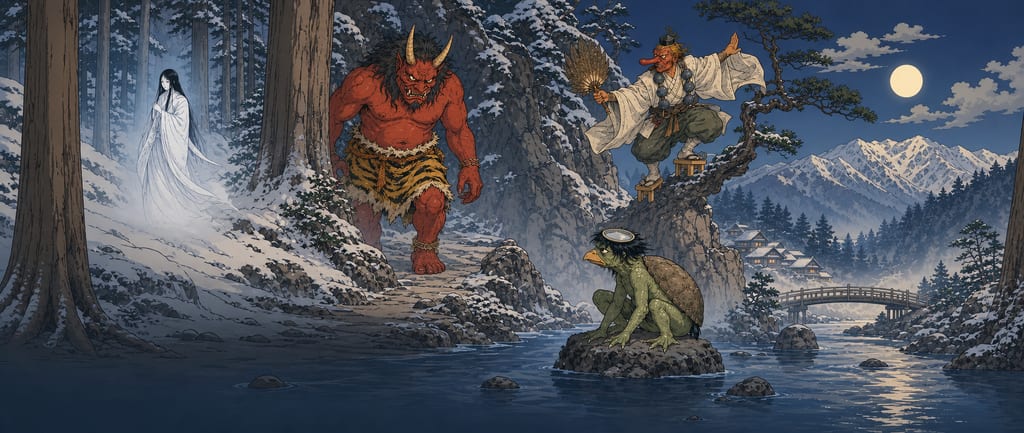
A yokai image fixed in medieval narratives: as Minamoto no Raikō lies ill, a monk-like apparition appears at his pillow. When struck, it flees leaving white blood, and following the trail leads to a mound or cave where a giant spider lurks. In Noh it calls itself “the ancient spirit of Mount Katsuragi,” while picture scrolls show it beguiling people with manifold shapeshifts and illusions. Its grotesque form—countless heads and swarms of small spiders bursting from its belly—has been read as a symbol of all manner of demons. Early modern joruri and kabuki inherited this line, tying it to the martial exploits of Raikō’s Four Heavenly Kings. Although the ancient term tsuchigumo once referred to local powers, that lineage diverges from the storybook yokai; only the name was carried over.
Character Profile
This section is our own creative profile for storytelling. It is not historical fact or scholarship.
Yokai Type - Traditional Yokai
Category - General Classifications
Rarity - Legendary
Personality - rancorous and relentless, cunning
Compatibility - shunned as a bringer of disease and human affliction
Abilities - illusion and shapeshifting (into monksbeautiesand crowds of phantoms)spinning threads to ensnare victimsclouding minds and inducing illnesshiding in caves or barrows and masking its presence
Weaknesses - cuts from keen blades (Hizamaru, Kumogiri), its spells weaken at dawn light, its white blood trail reveals its lair
Habitat - around Mount Katsuragi, the mound and old estate of Kitano, mountain caves and earthen grottos