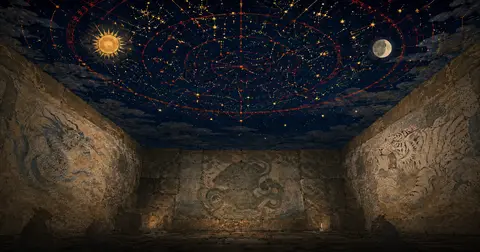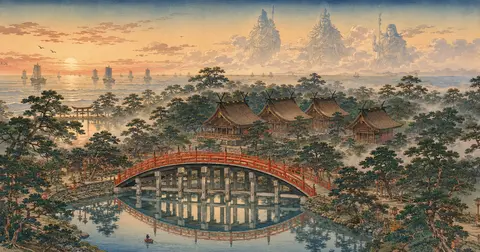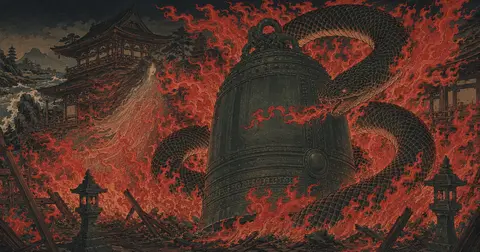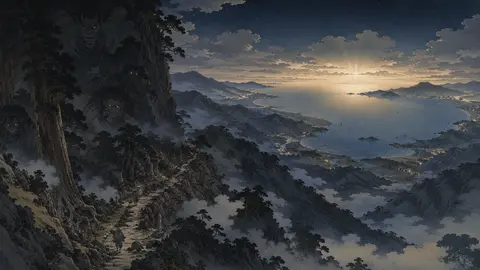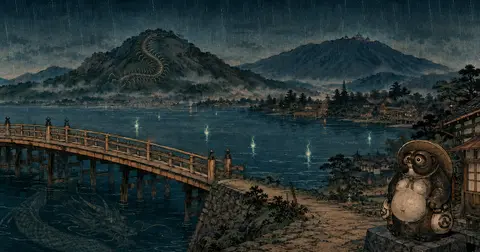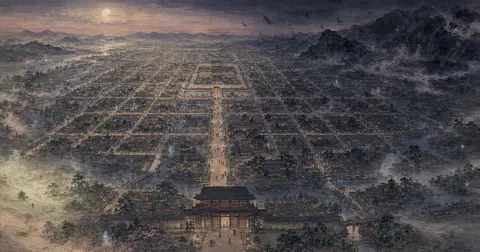
「山城」という字が当てられる前、この地は「山背(やましろ)」と書かれた。大和の都から見て、奈良山の背後にひろがる国 ── それが古い表記の意味である。延暦十三年(794)、桓武天皇が長岡京からこの地へ都を遷したとき、山河が襟帯して自然に城を成す形勝にちなみ、用字は山背から山城へと改められた[1]。妖怪を語るとき、私たちは平安京という都市の華やかな表層に目を奪われがちだが、その下には、都が来る前から続く令制国の地層が眠っている。

Nine-Tailed Fox
The Nine-Tailed Fox is a spirit-fox said to have lived so long and gathered so much power that its tail divided into nine. Yet the name does not simply mean a fox with many tails. In Japanese yokai imagery, the Nine-Tailed Fox is the largest and most complicated fox figure of all: it joins fox worship, Inari belief, fox possession, tales of beauties who unsettle royal power, and the narrative line that runs from Tamamo-no-Mae to the Sesshoseki killing stone. Its source lies in Chinese antiquity. In the Nanshan jing section of the Shan Hai Jing, Mount Qingqiu is home to a beast shaped like a fox, with nine tails, a cry like an infant, and a taste for human flesh. This fox is monstrous; yet in ancient China the nine-tailed fox could also be a propitious beast, an omen of peace. Later Chinese and Japanese texts layered the auspicious fox and the bewitching fox onto one another, turning the nine-tailed fox into both a sacred beast and a nation-ruining spirit. In Japan, fox lore spread in two directions. On one side stood the white fox, messenger of the Inari deity, guardian of fields, business, and household prosperity. According to Fushimi Inari Taisha, Inari descended on Mount Inari in 711, and the faith now extends to roughly thirty thousand shrines across Japan. On the other side stood the wild foxes and possessing spirits that deceive people, cling to households, or take hold of a region: yako, kuda-gitsune, osaki, izuna, and others. The Nine-Tailed Fox stands between these poles. It has the noble aura of a near-divine white fox, but also the danger of entering human society from within and shaking power itself. In Japan, the figure was fixed above all by the stories of Tamamo-no-Mae and the Sesshoseki. Tamamo-no-Mae is told as a peerless beauty loved by the retired Emperor Toba; exposed as a fox, she flees to Nasu, is slain, and becomes a poisonous stone. The three names are related, but they are not interchangeable. The Nine-Tailed Fox is the true form; Tamamo-no-Mae is the courtly incarnation; the Sesshoseki is what remains after death. Once those stages are joined, the fox is no longer just an animal that tricks humans. It becomes a great spirit-fox carrying beauty, intellect, politics, death, and pacification.
Read more平安京 1200 年の宏観 ── 結界都市の地理、御霊信仰、付喪神の系譜 ── は京都府の妖怪事典で辿った。本記事はそこから時間軸を遡り、令制国・山城国という古代の器に焦点を絞る。秦氏の渡来、稲荷と賀茂の古信仰、宇治と木津川の水際 ── 都が築かれる以前から土地に刻まれていた記憶が、後の妖怪たちの母胎になっていく。
八郡の器 ── 山城国という古代の地誌
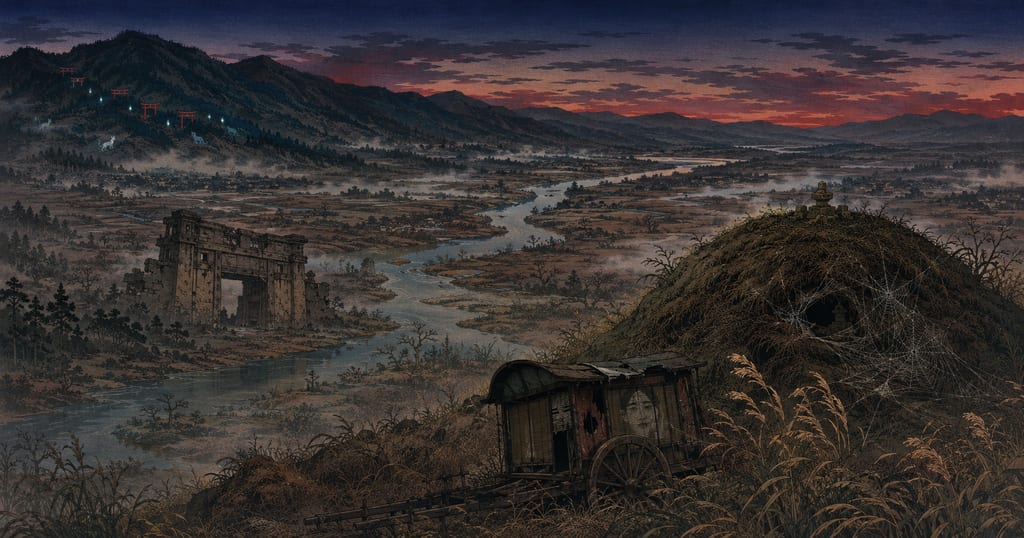
平安中期の『和名類聚抄』[2]は、山城国を八つの郡に分ける。北から、乙訓(おとくに)・葛野(かどの)・愛宕(おたぎ)・紀伊(きい)・宇治(うじ)・久世(くぜ)・綴喜(つづき)・相楽(さがらか)。この八郡は、北の山々から南の木津川流域へと、ゆるやかに下る盆地の地形そのものを写している。北辺の葛野・愛宕は後に平安京が乗る台地であり、南端の相楽は奈良に接して国分寺が置かれた。山城は最初から「都の予定地」だったのではない。むしろ、奈良の都に向き合う後背地として、渡来の民と古い神々が層を成して暮らす土地だった。
この器に都が降りてくるのは、長い前史の果てである。山城は『延喜式』に上国と記され、奈良時代から平安初期にかけて、相楽・葛野・乙訓と都の予定地が転々とした。怪異を辿るうえで重要なのは、平安京という碁盤目が引かれる前から、この土地には固有の信仰と地名の記憶があったという一点だ。羅城門の鬼も、賀茂の車争いの怨念も、その古層の上に後から積もった堆積物にすぎない。
山城を貫くもう一つの軸は、水である。北の賀茂川と西の桂川は南で淀川へ合し、東南の宇治郡では宇治川が、相楽郡では木津川が、それぞれ盆地の縁を縫って流れる。宇治は都の貴族が別業を構えた風景の地でありながら、同時に『源氏物語』宇治十帖が描くように、死と再生の境界としても記憶された。木津川は奈良と都を結ぶ水運の道であり、相楽郡に置かれた山城国分寺は、この川の畔に律令国家の祈りを刻んだ。山城の妖怪に水際の怪 ── 橋の鬼、河原の怪、川辺の感精神話 ── が多いのは、この国が川によって幾筋にも分かたれた土地だったことと無縁ではない。
渡来の民と稲荷の狐
山城の古代を語って秦氏(はたうじ)を外すことはできない。大陸からの渡来系氏族である秦氏は、葛野郡の太秦(うずまさ)を本拠に、桂川に大堰を築いて灌漑をひらき、養蚕と機織で財をなした。彼らが氏神として祀ったのが、桂川西岸の松尾山に鎮まる松尾大社(大宝元年・701 創建と伝わる)であり、そして深草の里に祀ったのが伏見稲荷である。
Nine-Tailed Fox
The Nine-Tailed Fox is a spirit-fox said to have lived so long and gathered so much power that its tail divided into nine. Yet the name does not simply mean a fox with many tails. In Japanese yokai imagery, the Nine-Tailed Fox is the largest and most complicated fox figure of all: it joins fox worship, Inari belief, fox possession, tales of beauties who unsettle royal power, and the narrative line that runs from Tamamo-no-Mae to the Sesshoseki killing stone. Its source lies in Chinese antiquity. In the Nanshan jing section of the Shan Hai Jing, Mount Qingqiu is home to a beast shaped like a fox, with nine tails, a cry like an infant, and a taste for human flesh. This fox is monstrous; yet in ancient China the nine-tailed fox could also be a propitious beast, an omen of peace. Later Chinese and Japanese texts layered the auspicious fox and the bewitching fox onto one another, turning the nine-tailed fox into both a sacred beast and a nation-ruining spirit. In Japan, fox lore spread in two directions. On one side stood the white fox, messenger of the Inari deity, guardian of fields, business, and household prosperity. According to Fushimi Inari Taisha, Inari descended on Mount Inari in 711, and the faith now extends to roughly thirty thousand shrines across Japan. On the other side stood the wild foxes and possessing spirits that deceive people, cling to households, or take hold of a region: yako, kuda-gitsune, osaki, izuna, and others. The Nine-Tailed Fox stands between these poles. It has the noble aura of a near-divine white fox, but also the danger of entering human society from within and shaking power itself. In Japan, the figure was fixed above all by the stories of Tamamo-no-Mae and the Sesshoseki. Tamamo-no-Mae is told as a peerless beauty loved by the retired Emperor Toba; exposed as a fox, she flees to Nasu, is slain, and becomes a poisonous stone. The three names are related, but they are not interchangeable. The Nine-Tailed Fox is the true form; Tamamo-no-Mae is the courtly incarnation; the Sesshoseki is what remains after death. Once those stages are joined, the fox is no longer just an animal that tricks humans. It becomes a great spirit-fox carrying beauty, intellect, politics, death, and pacification.
Read more稲荷の起こりを、『山城国風土記』逸文[3]はこう伝える。秦氏の祖・伊侶具(いろぐ)が裕福に驕り、餅を的に矢を射たところ、餅は白鳥となって飛び立ち、山の峰に降りた所に稲(いね)が生えた ── そこから「いなり」の社名が起こったという。伏見稲荷大社[4]は、和銅四年(711)に稲荷山三ヶ峰へ神が鎮まったとする由緒を持ち、今や全国約三万社の稲荷の総本宮である。狐はこの稲荷信仰のなかで、神そのものではなく神意を運ぶ眷属 ── 田の実りと倉の鍵を媒介する白狐 ── として聖性を帯びていった。
ここで見落としてはならないのは、山城の狐が二つの顔を同時に育てた点である。一方には稲荷の神狐があり、他方には人を惑わす妖狐の系譜がある。鳥羽院を傾けた白面金毛の九尾狐・玉藻前の本相は、まさにこの土地が、聖なる狐と国を傾ける狐の像を同じ稲荷山の麓で抱え込んできたことの帰結だった。狐が福徳と祟りの境目に立つのは、それが田と倉という生活の核に近すぎる獣だったからである。玉藻前が宮中で正体を露わにする劇は平安京内裏の舞台で語られるが、その狐の像の根は、秦氏が稲荷を祀った深草の古層にある。
賀茂社もまた、山城の古信仰の柱である。葛野・愛宕の境を流れる賀茂川のほとり、賀茂別雷神社(上賀茂)[5]とその下流の賀茂御祖神社(下鴨)に祀られる神々の縁起を、『山城国風土記』逸文[3]は語る。玉依日売(たまよりひめ)が賀茂川で遊んでいると、川上から丹塗(にぬり)の矢が流れてきた。それを床に置いて寝たところ懐妊し、生まれたのが賀茂別雷命(かもわけいかづちのみこと)だったという。矢が神となって女に子を孕ませる ── この感精神話の古層が、後に賀茂の祭礼を、そして祭礼に伴う妖怪を生む土壌になる。
羅城門の鬼 ── 茨木童子と都の南辺
平安京が築かれると、その南端に都の正門・羅城門が立った。だが計画都市にとって最も危ういのは、線が断たれる場所 ── 門と橋と国境である。羅城門は中期以降に倒壊して廃墟と化し、都の「最も荘厳であるべき正面」が、鬼と死体の集まる境界へと反転していった。
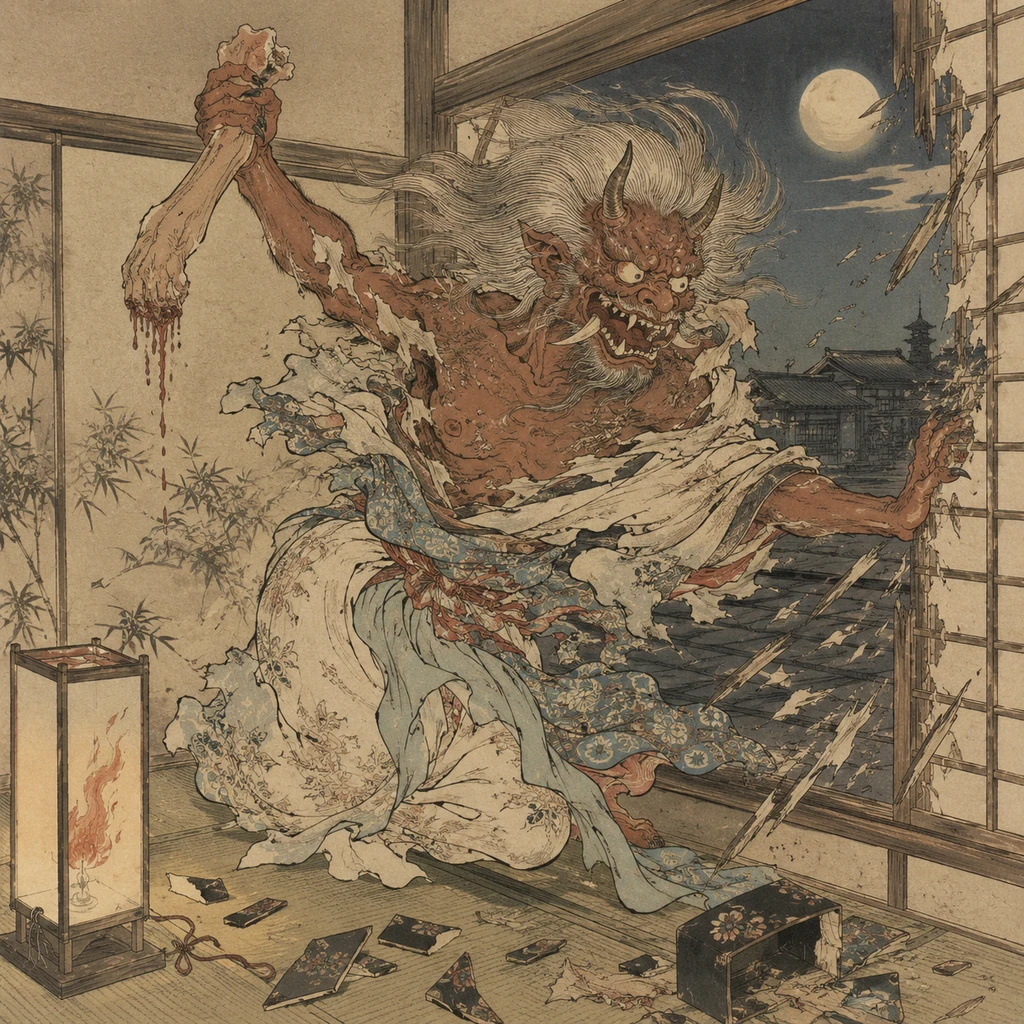
Ibaraki-dōji
A demon (oni) of the Heian period, famed as the right-hand of Shuten-dōji. Accounts place Ibaraki-dōji’s birth either in Settsu (Tomatsu/Ibaraki) or Echigo (Koshi District, Karuizawa). From childhood the figure showed an uncanny appearance and prodigious strength. Joining the bandits of Mount Ōe, Ibaraki-dōji helped terrorize the capital until Minamoto no Yorimitsu (Raikō) and his retainers crushed the gang, whereupon Ibaraki narrowly escaped. Later, the warrior Watanabe no Tsuna cut off the demon’s arm; in later tales, the demon disguises itself and steals the arm back—episodes retold across medieval setsuwa, Noh, and Kabuki.
Read moreこの羅城門に結びついた最も有名な鬼が茨木童子である。『平家物語』剣巻[6]は、渡辺綱が一条戻橋で美女に出会い馬に乗せたところ、女が鬼と化して綱の髻を掴み、愛宕山へ攫おうとしたと語る。綱は名刀髭切で鬼の片腕を斬り落とし、以後この刀は鬼切と呼ばれた。綱が斬った腕を持ち帰って物忌みするうち、伯母に化けた鬼が訪れ、腕を取り返して飛び去ったという。ただし剣巻そのものは鬼の名を明示しておらず、この鬼を茨木童子と同定するのは後世の付会である。出生も摂津国(富松・茨木の里)説と越後説があり、いずれも山城の土着ではない。
それでも茨木童子が山城の妖怪として記憶されるのは、舞台が一条戻橋・羅城門・愛宕山という、都の縁を縫う山城の地名で固められているからだ。摂津に生まれた鬼が、大江山の酒呑童子の説話圏と、羅城門の鬼斬り譚の二つを接続点として、山城の土地に縫いつけられていく。説話が地名を呼び、地名が説話を呼び戻す ── 山城の妖怪に典型的なこの往還が、ここに見える。
都に湧く土蜘蛛と鬼女
都の中心に近づくほど、妖怪は山野の獣型から、権力と情念に食い込む型へと変わっていく。源頼光の土蜘蛛退治と、嫉妬が鬼へ転じる般若は、その代表である。
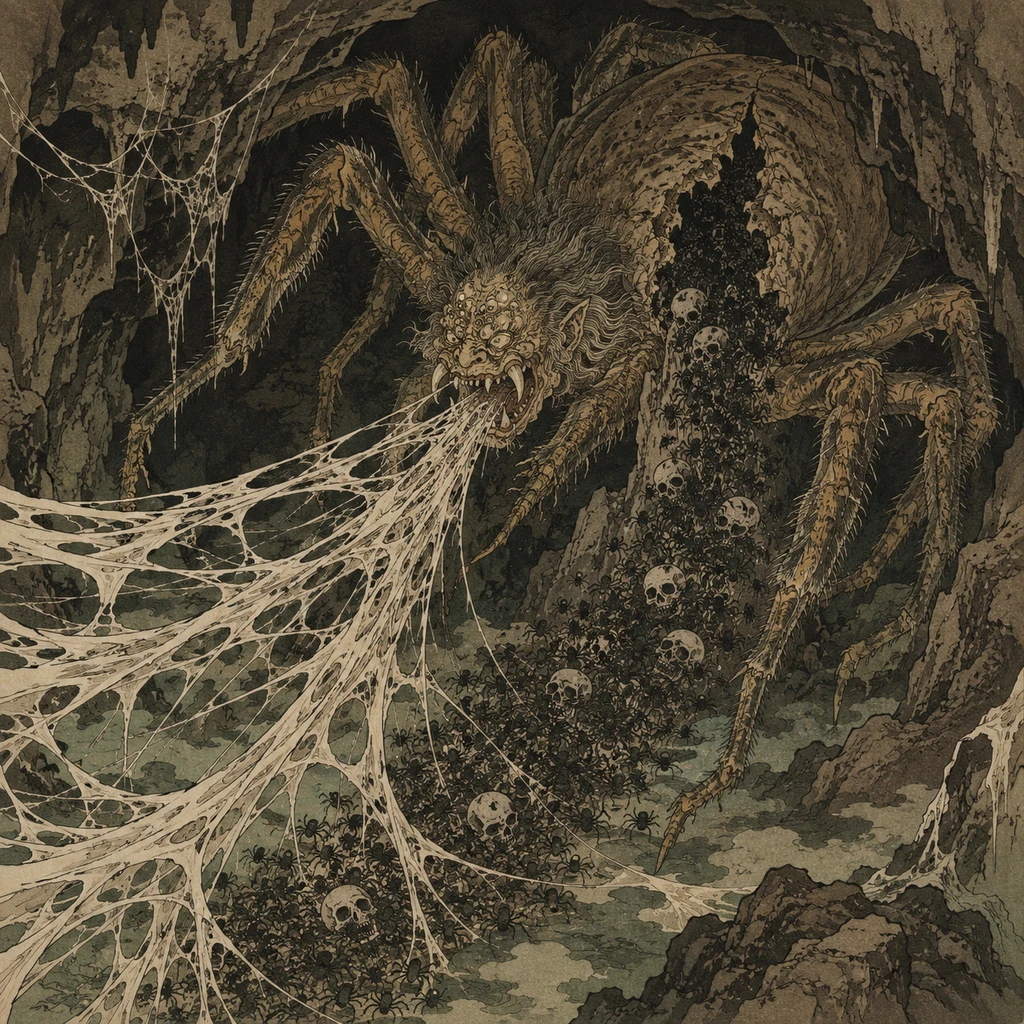
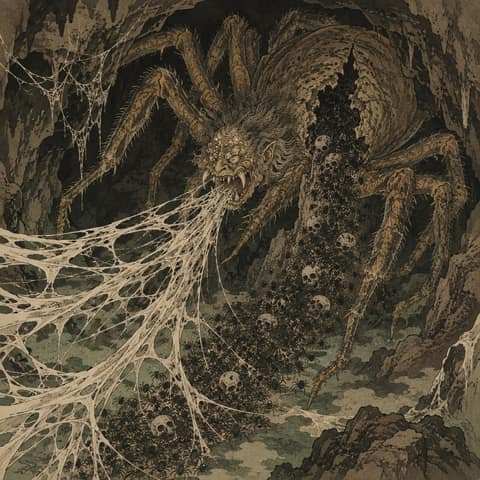
土蜘蛛は、もともと謡曲『土蜘蛛』[7]や南北朝期の『土蜘蛛草紙』[8]で妖怪化した怪である。本来「土蜘蛛」は、古代の朝廷に従わなかった在地の首長を指す蔑称で、正史では生物の蜘蛛とは無関係だった。それが中世に巨大な蜘蛛の化生として造型され、病臥する源頼光に僧形で忍び寄り、千筋の糸で苦しめる怪となる。頼光が名刀膝丸で斬りつけると、刀は以後蜘蛛切と呼ばれた。『土蜘蛛草紙』では、頼光と渡辺綱が北山(洛外の北郊)の古塚で土蜘蛛と怪異に遭う筋が描かれる。山城の北辺、都の外縁の塚 ── 国家に統べられた中心から零れ落ちる「まつろわぬ者」が、洛外に潜む蜘蛛として可視化されたのである。
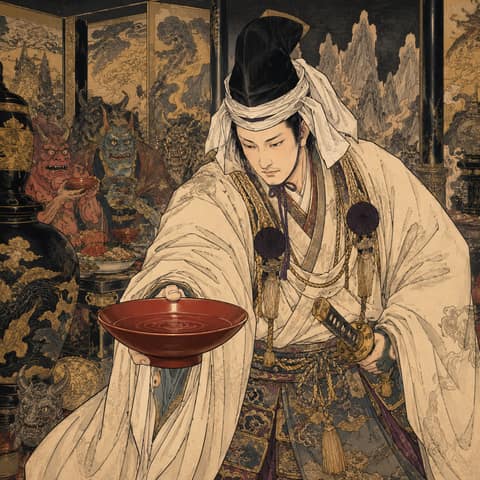
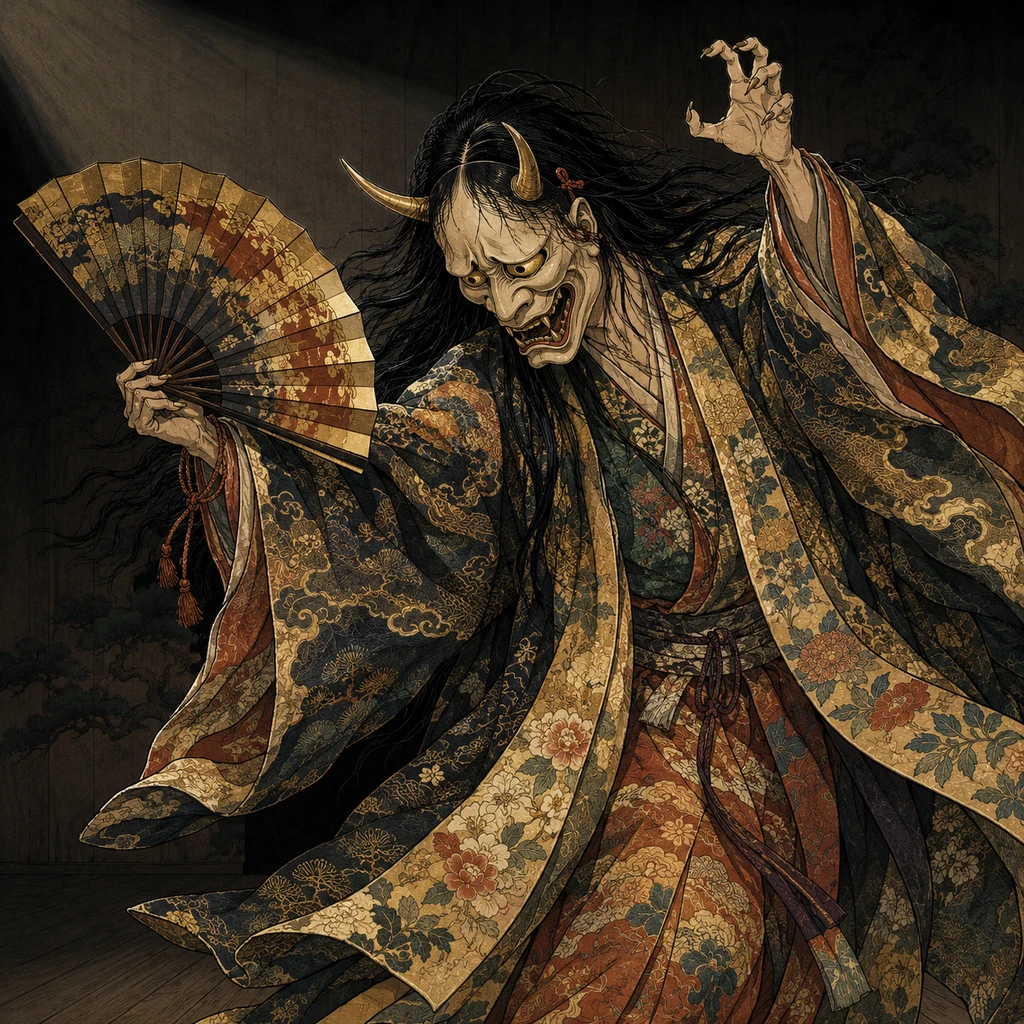
般若は、土蜘蛛とは逆に、都の内側 ── 宮廷の女の心の内 ── から湧く鬼である。謡曲『葵上』[9]では、光源氏の愛人・六条御息所の生霊が舞台に現れる。彼女を苦しめるのは、源氏の訪れが遠のいた寂しさと、賀茂祭の車争いで葵上側に押しのけられた屈辱だった。行き場のない思いは女の鬼として形を取り、祈祷によって鎮められる。ここで重要なのは、般若が外から来た怪物ではなく、貴婦人の内側にあった感情が舞台上で可視化された姿だという点である。そして、その引き金が賀茂の祭礼の場所争いだったことは、山城の妖怪を読むうえで決定的に大きい。
牛車と車輪の怨念 ── 朧車と片輪車
賀茂祭の車争いが生んだ屈辱と怨念は、般若という人型の鬼に結晶しただけではなかった。それは牛車という物そのものにも憑いた。山城の妖怪に、車の怪が二つあるのは偶然ではない。
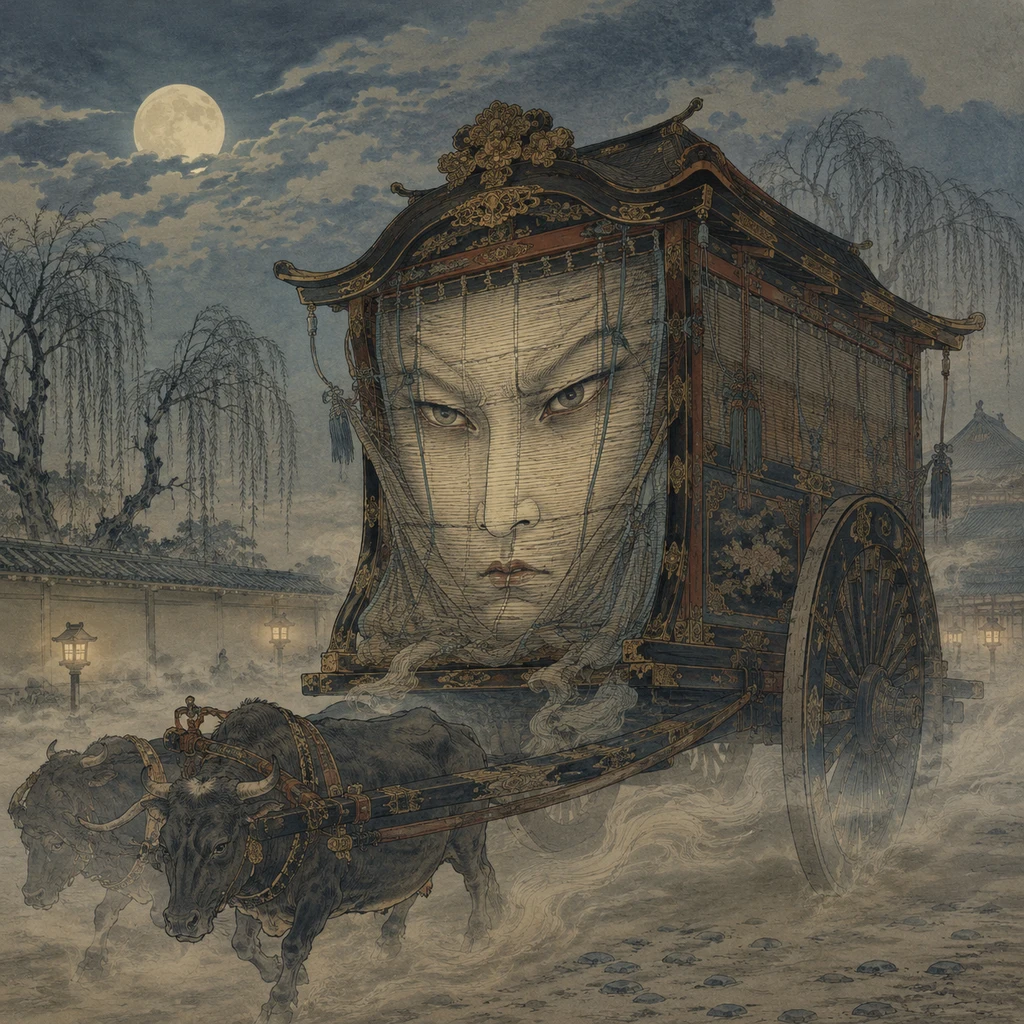 Oboroguruma (The Hazy Carriage)oh-BOH-roh-goo-ROO-mah
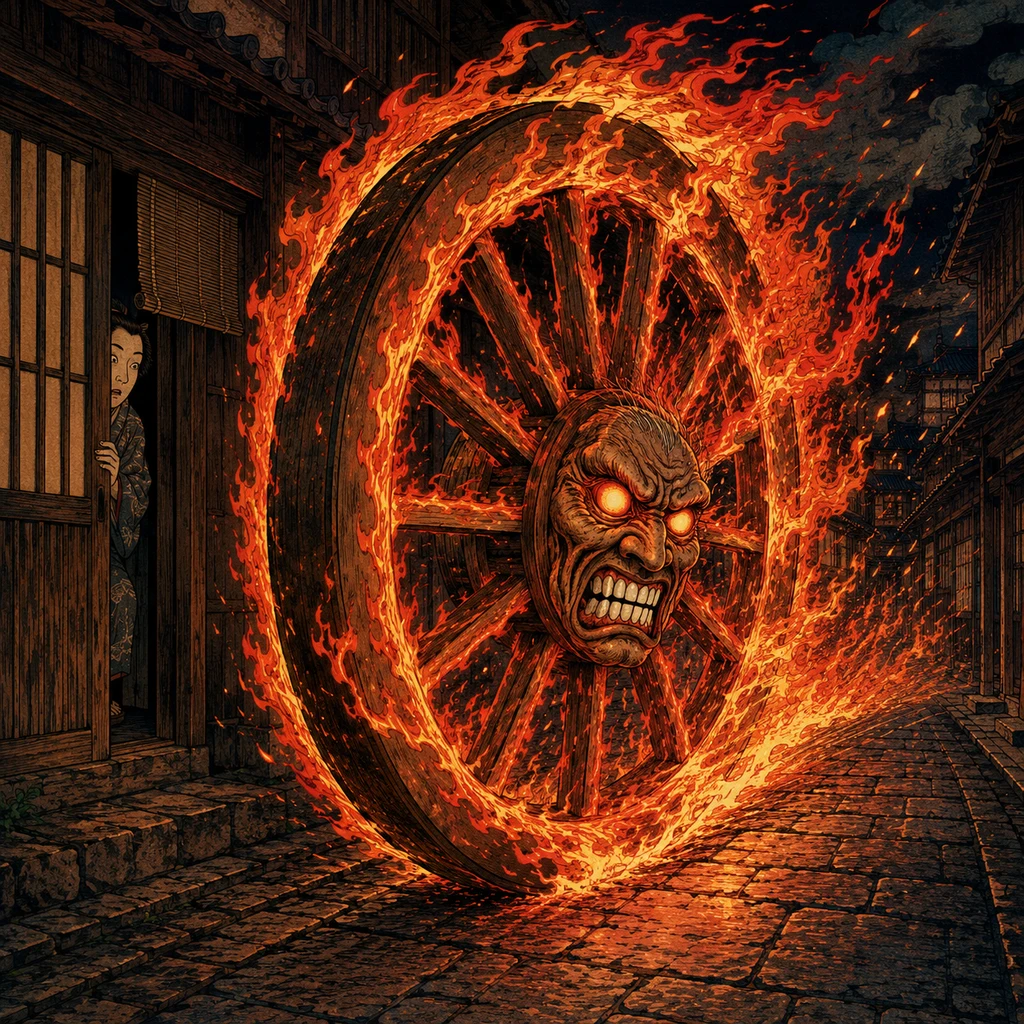 Katawaguruma (One-Wheeled Carriage)kah-tah-wah-GOO-roo-mah
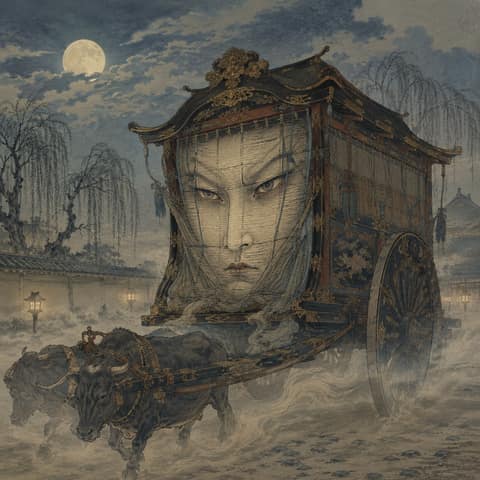
朧車は、江戸の鳥山石燕が『今昔百鬼拾遺』[10]に描いた牛車の怪である。石燕は「むかし賀茂の大路をおぼろ夜に車のきしる音しけり。出てみれば異形のもの也。車争の遺恨にや」と記した。朧夜に軋む車音とともに現れ、牛車の簾のあるべき位置に巨大な顔が嵌るように覗く。その由来を石燕自身が賀茂の車争いの遺恨に求めている点は見逃せない。『源氏物語』の六条御息所の車争いの怨念が、人を経ず、直に牛車という器へ宿った姿 ── それが朧車である。山城の祭礼の華やぎの裏で軋んだ嫉妬が、夜の大路を行く異形の車として戻ってくる。
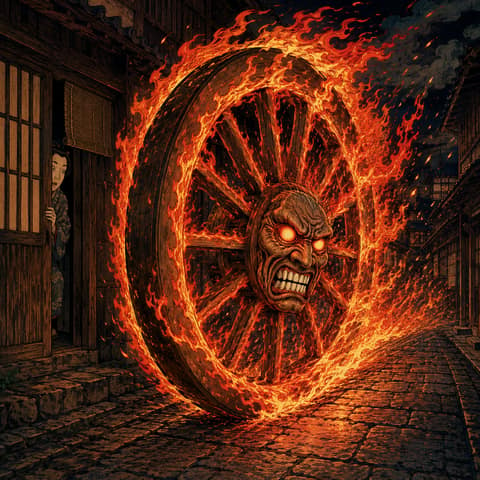
片輪車は、より古い怪談に根を持つ。延宝五年(1677)刊の『諸国百物語』[11]巻一「京東洞院かたわ車の事」は、京の東洞院に火の片輪車が現れ、車輪中央の凄まじい男面が小児の足をくわえて「我を見るより我が子を見よ」と叫び、覗き見た女の子の足が裂かれていたと語る。一方、寛保三年(1743)刊の『諸国里人談』[12]では近江国甲賀郡に女の乗る片輪車が現れ、覗いた女が和歌を戸口に貼ると怪はそれを詠んで子を返し消えたとする。男面が子を奪う京(山城)の話型と、女が乗り和歌で子を取り戻す近江の話型が併存する点に、この怪の異形性がにじむ。山城の片輪車は「覗くこと」そのものを罰する怪 ── 都市の路地に、見てはならぬ境界を引く存在だった。
夜道の怪 ── 手の目と釣瓶火
都の華やかな表層から離れ、山城の野や河原、樹下の闇に目を移すと、そこには名もなき弱者の怨みや、樹の精に近い怪火が漂っている。
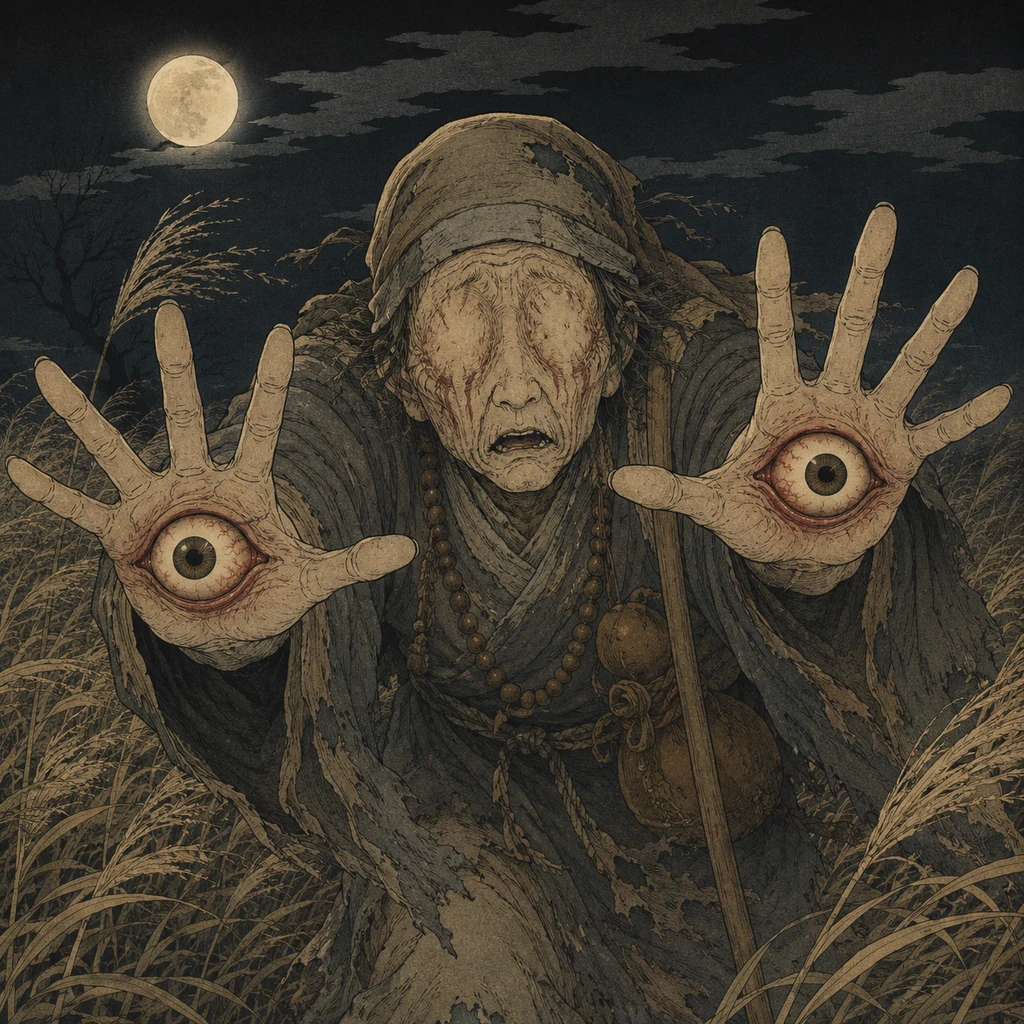
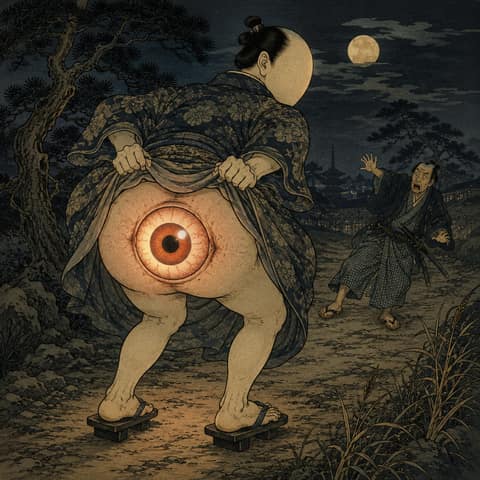
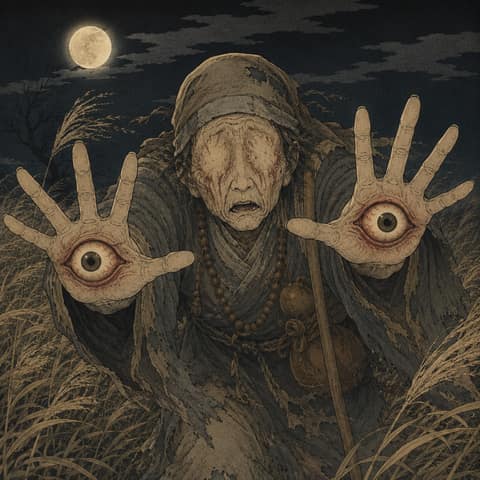
手の目は、鳥山石燕『画図百鬼夜行』[13]に描かれた、両の眼が顔ではなく左右の手のひらに開いた座頭(盲人)の姿の怪である。石燕は来歴を語らないが、その図想の母胎には『諸国百物語』[11]巻五の説話があると考えられている ── 京都・七条河原を夜更けに通った男が、手のひらに目をもつ老怪に襲われ、寺へ逃げ込むも追ってきた怪に骨を残らず抜かれて皮ばかりにされた、という話だ。後世、これに「野で殺された座頭の無念が、見えぬ眼の代わりに掌の目で下手人を探す」という由来が結びつく。山城の河原 ── 都が「外」へ追いやった葬送と賤の場 ── に、弱き盲人の怨みが掌の目として湧くのである。
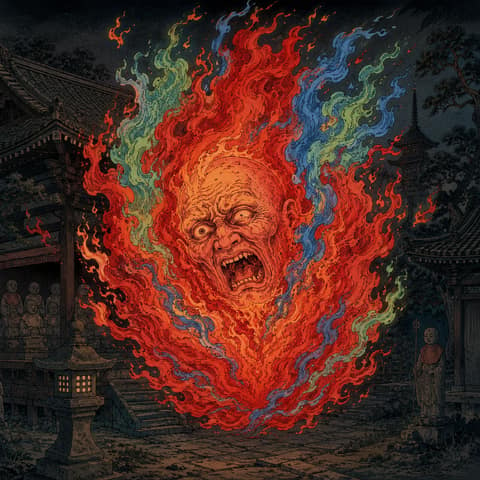
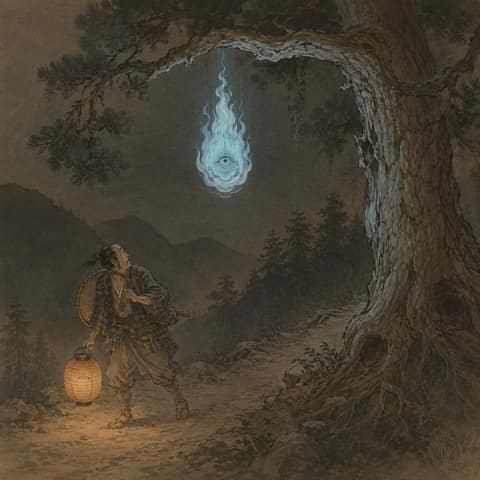
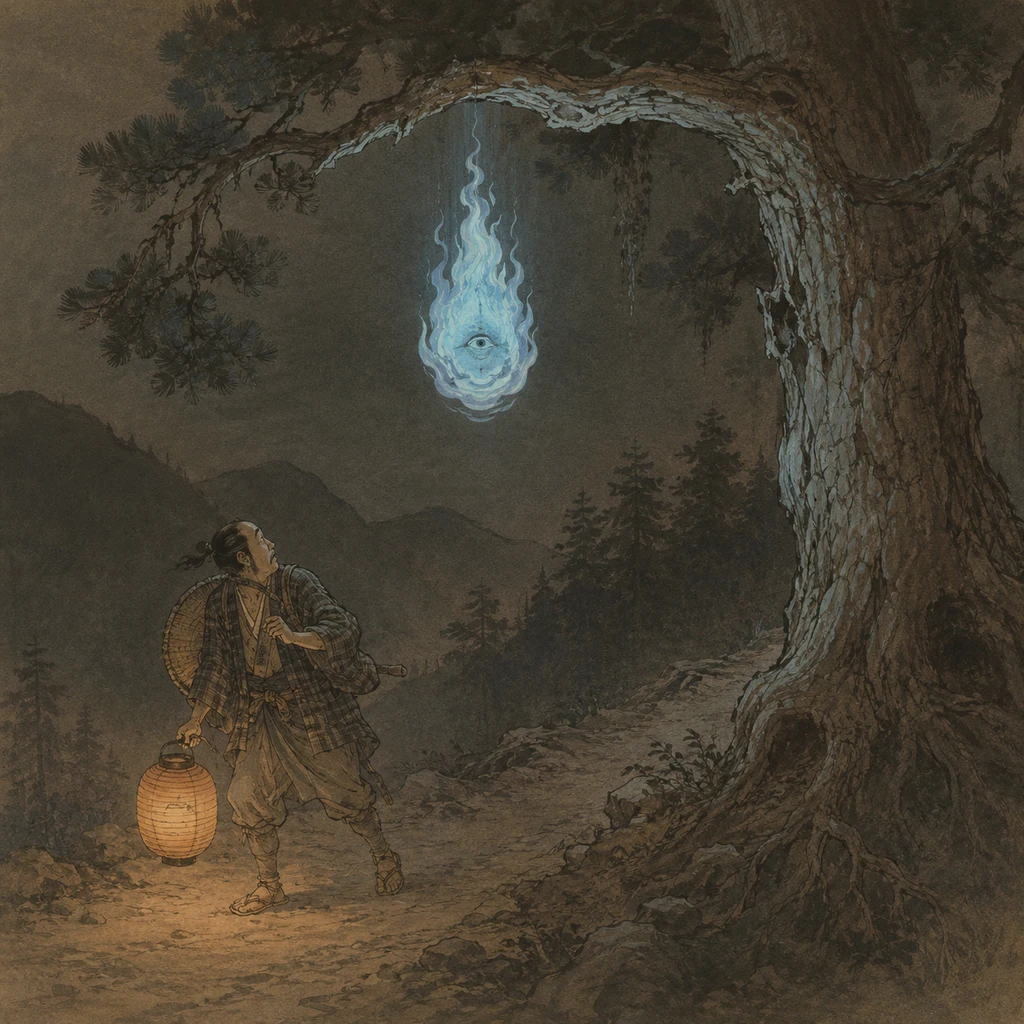
釣瓶火は、夜道の樹上から井戸の釣瓶のように上下する怪火である。石燕『画図百鬼夜行』[13]に図像が見え、その典拠を『古今百物語評判』(貞享三年・1686)[14]が論評する京都西岡の「釣瓶おろし」の怪火に求める解釈がある。西岡は乙訓郡の旧称 ── 桂川西岸の、まさに秦氏ゆかりの地である。樹上に静かに下がり、炎は物を焼かず、時に人獣の顔が浮かぶと伝わる釣瓶火は、山城の闇に潜む樹の精の系譜に連なる。「秋の日は釣瓶落とし」という言い回しが、日の短い秋の夕暮れの不安を釣瓶の落下に重ねたように、この怪火もまた、暮れゆく山城の夜道に対する人びとの怖れを写している。
結び ── 都の前に器があった
山城国の妖怪を辿ると、平安京という華麗な都市装置の下に、もう一段古い地層が透けて見える。秦氏が稲荷山に祀った狐、賀茂川に流れた丹塗矢の神話、八郡に刻まれた地名 ── これらは都が来る前からこの土地にあり、後の妖怪たちの母胎になった。稲荷の神狐は妖狐・玉藻前の像を育て、賀茂祭の車争いは般若と朧車を生み、都の南辺の境界は羅城門の鬼を呼んだ。
つまり、京の妖怪の多くは「平安京が生んだ」のではなく、山城という古代の器が先にあり、そこへ都が降りてきて化学反応を起こした結果なのだ。山背から山城へと字を改めたこの国の地誌を知ることは、京都の怪異を一段深い時間から読み直すことに等しい。八郡の名 ── 乙訓・葛野・愛宕・紀伊・宇治・久世・綴喜・相楽 ── は今も京都の地名や郡境にうっすらと残り、稲荷山の朱の鳥居も、上賀茂・下鴨の杜も、千年を超えて同じ場所に立ち続けている。妖怪はその古い地名と神域のほつれた縁に、繰り返し湧いてきた。都の宏観は京都府の妖怪事典へ、帝の御座所の怪異は平安京内裏へ ── 本記事は、その手前にひろがる古代の地層を担っている。