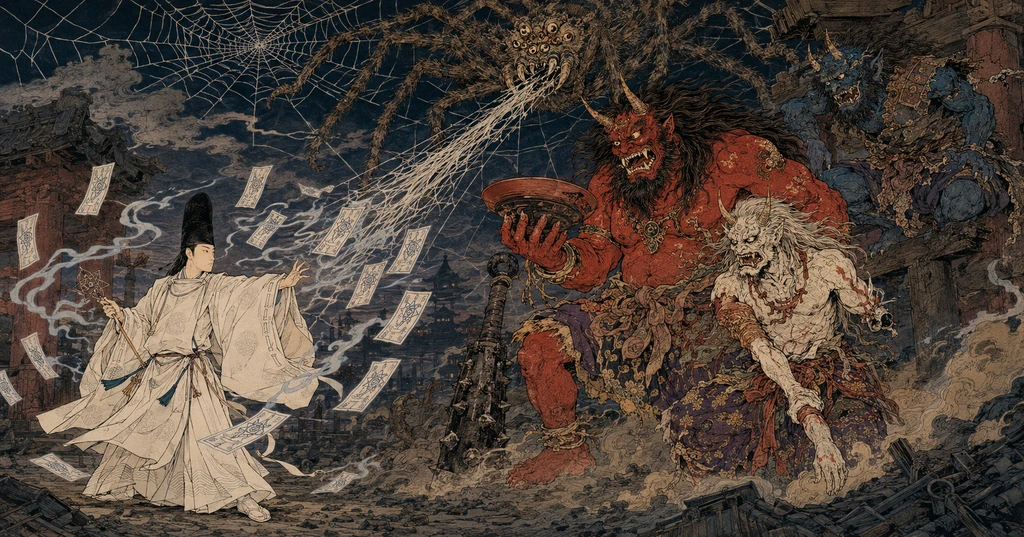
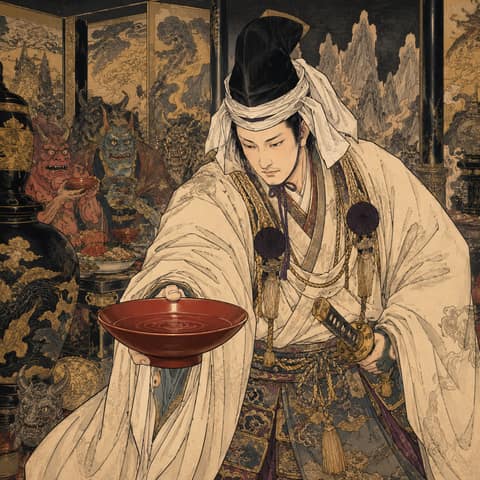
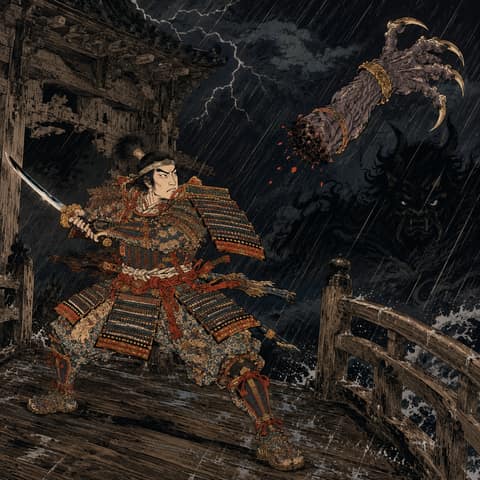
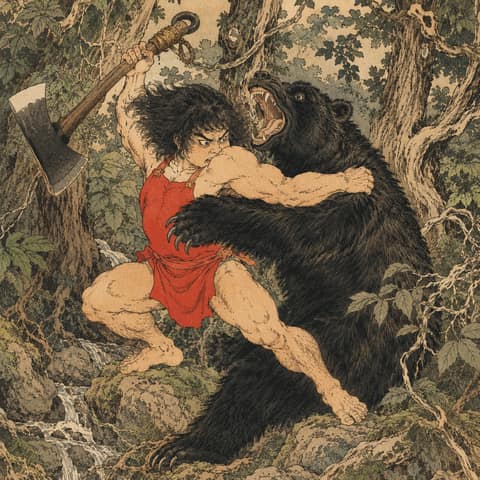
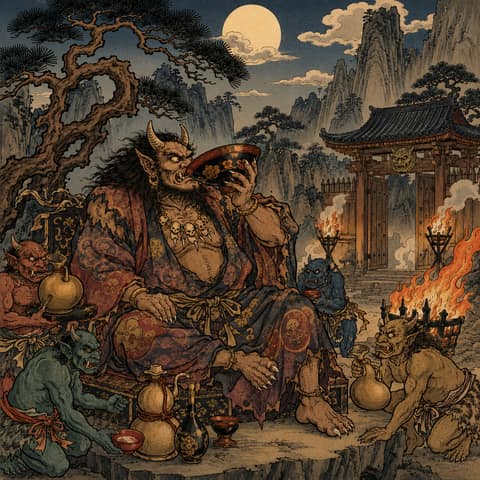
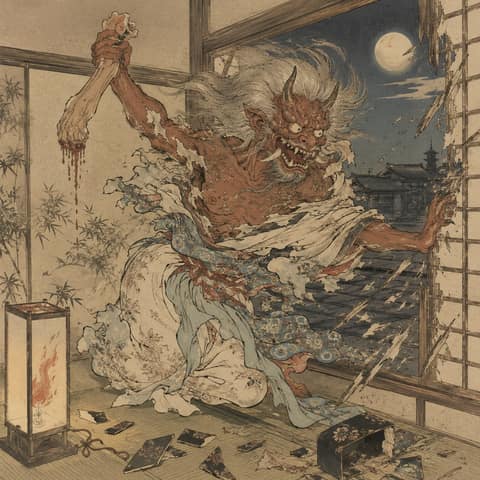
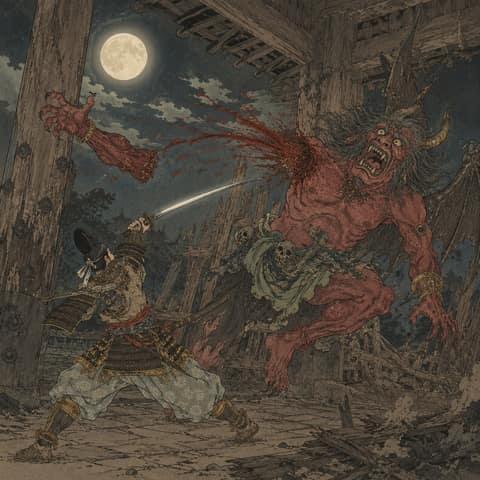
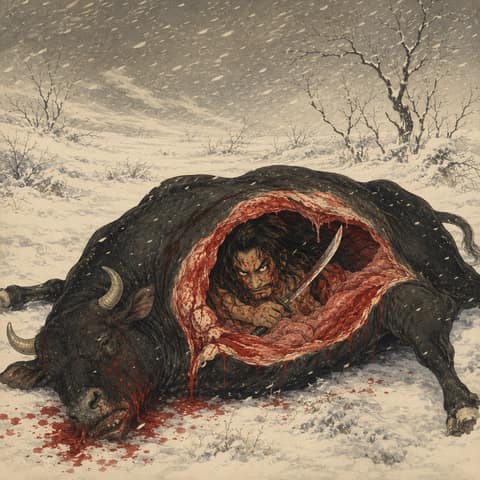
An interpretation shaped by medieval war tales, otogizōshi storybooks, and early modern theater. As Shuten-dōji’s foremost lieutenant, Ibaraki-dōji held Mount Ōe and was routed by Raikō’s ruse. Later tales tell of Watanabe no Tsuna cutting off and reclaiming an arm at Ichijō Modoribashi or at Rashōmon. Accounts vary on birthplace and even gender, with traces in Settsu and Echigo traditions. This version follows the most widely circulated storyline in the sources and avoids embellishment.
Character Profile
This section is our own creative profile for storytelling. It is not historical fact or scholarship.
Yokai Type - Traditional Yokai
Category - Half-Human Beings
Rarity - Legendary
Personality - dauntless, deeply dutiful, often portrayed as vengeful
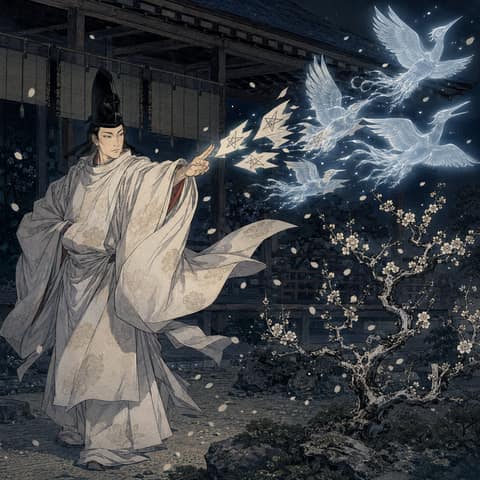
Compatibility - aligns with the bold and martial, conflicts with Buddhist exorcism and Onmyōdō
Abilities - peerless brute strengthshapeshifting into an old woman or beautygreat leaps and headlong sprintsendurance that shrugs off sword cuts
Weaknesses - prayers and talismans, divine and Buddhist protection, carelessness and drunken revelry
Habitat - around Mount Ōe in Tanba Province, near Ichijō Modoribashi in Yamashiro Province, traditional sites in Settsu and Echigo