Sakata no Kintoki

sakata-no-kintoki

Sakata no Kintoki

Sakata no Kintoki

Their soul is listening — speak, and they will answer.

Basic Description

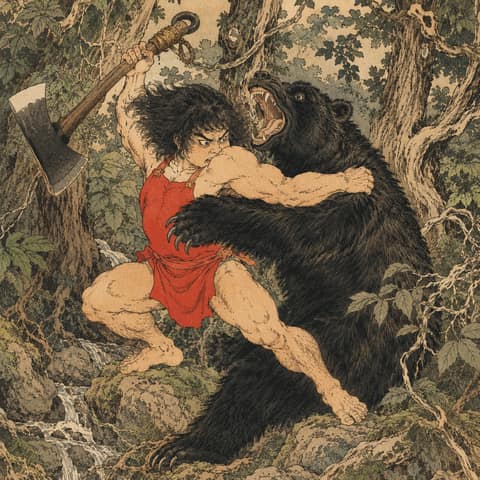
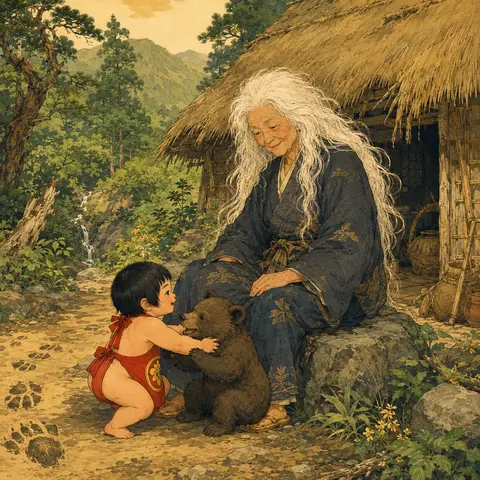
Sakata no Kintoki is a general known as one of Minamoto no Yorimitsu's Four Heavenly Kings, and is widely beloved in later eras as the boy with superhuman strength known by his childhood name, "Kintaro." As an adult, Kintoki serves Yorimitsu and appears in the otogizoshi tale "Shuten-doji" as a warrior participating in the subjugation of the demons at Mt. Oe[1]. On the other hand, the image of Kintaro—a boy raised by a yamanba (mountain crone) on Mt. Ashigara, who wrestles bears, carries a broadaxe, and wears a red haragake (bib)—was greatly expanded upon in folk tales, picture books, and Boys' Day dolls from the early modern period onwards.

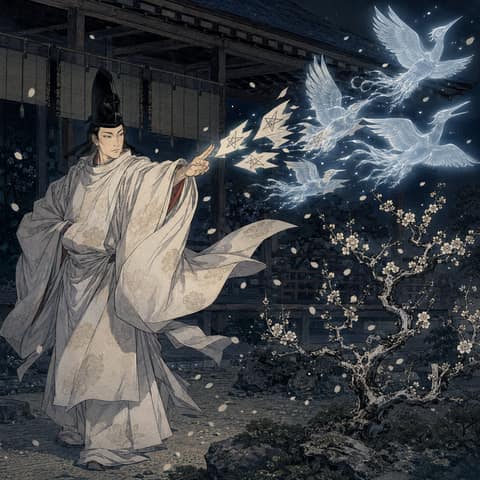
The charm of Kintoki lies in how his power, which borders on the otherworldly realm of the mountains, is converted into martial valor for the human side under Yorimitsu. The Yorimitsu legends of the "Zen-Taiheiki" lineage connect Kintoki from a boy with superhuman strength in the mountains to a member of the Four Heavenly Kings, weaving the lore of the yamanba and Mt. Ashigara into samurai heroic tales[2]. Although Kintoki is not a yokai himself, his childhood image of being raised by a yamanba and being intimate with beasts places him on the boundary between humans and mountain anomalies. Therefore, during the subjugation of Shuten-doji, he becomes the presence that brings the physicality of the mountains into the samurai band of the capital.

Viewing Kintoki merely as a fairy-tale hero dilutes his importance in yokai tales. At his roots, there is a sense bordering on an "otherworldly birth" as a child raised by a yamanba. The fascination of the Kintoki legend is that a body forged not in an ordinary village or the capital, but in the world of mountains and beasts, is later incorporated into Yorimitsu's military might.

Folklore & Legends

The story of Kintoki is established by the overlapping of his childhood legend as Kintaro and his warrior legend as one of Yorimitsu's Four Heavenly Kings. Kintaro of Mt. Ashigara is raised by a yamanba, plays with bears and monkeys, and possesses strength beyond an ordinary child. This is the story of a child growing up in the otherworldly realm of the mountains, emphasizing a physicality acquired outside human society. In the tales of the "Zen-Taiheiki" lineage, this boy of superhuman strength is discovered by Yorimitsu and enters the world of samurai as Sakata no Kintoki[2].

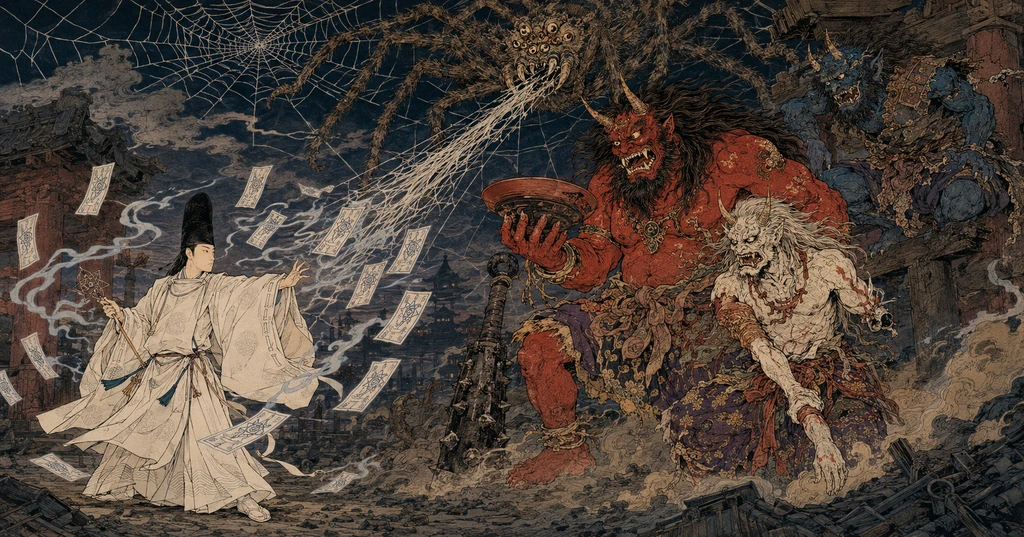
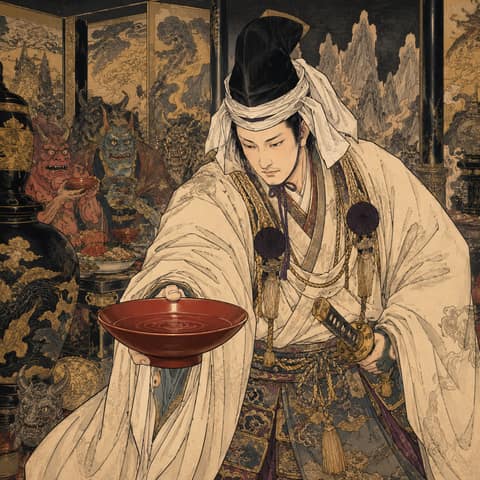
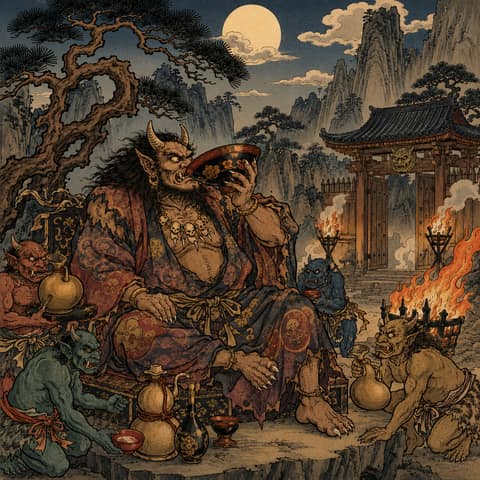
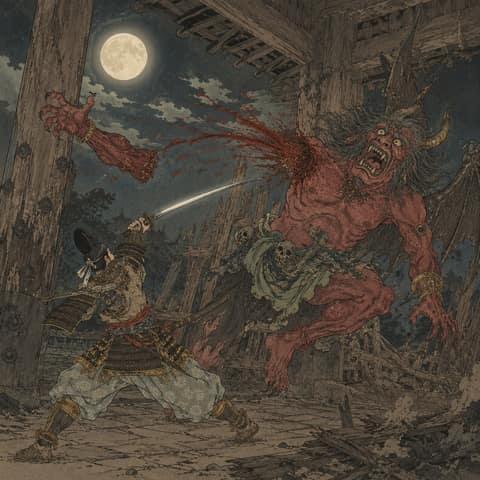
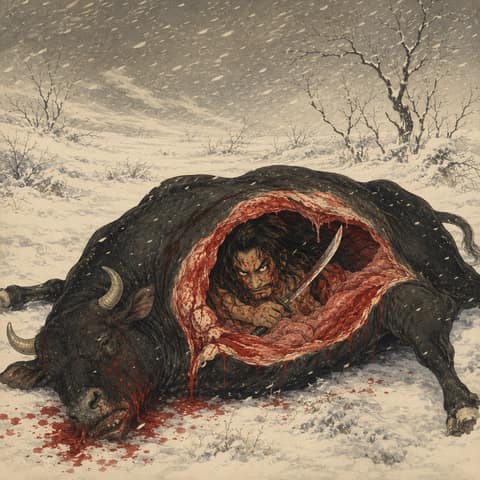
In the subjugation of Shuten-doji at Mt. Oe, Kintoki follows Yorimitsu as a member of the Four Heavenly Kings[1]. Here, the power he nurtured in the mountains transforms into legitimate military force to slay demons. Demons are otherworldly beings living in the mountains, and Kintoki also possesses power from the mountains. Thus, while having a body close to the intermediate state between demons and humans, he works as a warrior belonging to the order of the human side.

The image of Kintaro from the early modern period onwards became tied to the Boys' Festival (Tango no Sekku), May dolls, and prayers for children's health, bringing a wholesome boyish image to the forefront rather than his anomalous nature. However, behind that bright iconography remains the outline close to mountain anomalies—a child raised by a yamanba, intimate with beasts, and possessing abnormal strength. The significance of reading Sakata no Kintoki in a yokai encyclopedia lies in not overlooking the otherworldly nature of the mountains behind this bright heroic image.

The premise of being raised by a yamanba places Kintoki on the fringes of human society. A yamanba is a terrifying yokai, but simultaneously a being that raises a child as a mother of the mountain. The narrative arc of that child returning to human society and becoming a hero is a story of absorbing otherworldly power and bringing it back to order.

The image of Kintaro at the Boys' Festival transformed Kintoki's anomalous nature into a domestic wish. A child strong enough to wrestle bears became a symbol of children's health and growth. However, the strength depicted there is originally akin to the beasts of the mountains and the yamanba. Even in the bright imagery of celebration, the otherworldly realm of the mountains faintly remains.

As one of Yorimitsu's Four Heavenly Kings, Kintoki directs the power of the mountains towards demon subjugation. Because Shuten-doji is also a king of the mountain's otherworldly realm, Kintoki appears as an antagonist who has diverted the same mountain power to the human side. Reading this correspondence, Kintoki is not merely a strongman, but bears the narrative choice of which side to place otherworldly power.

Therefore, the legend of Kintoki coexists with brightness for children and the mystery that touched the otherworldly realm of the mountains. Behind the healthy boy stands the yamanba, the beasts, and superhuman strength. By preserving this duality, the image of Kintaro serves not just as a folk tale, but also as an entrance into the yokai world.

Related Yokai

Yokai deeply tied to this one in legend.

Related1

Detailed Analysis

In this version, we read Sakata no Kintoki as "the warrior who brings the power of Mt. Ashigara back to the capital." Kintoki does not appear as a polished samurai from the start. As Kintaro, he is a boy of superhuman strength raised by a yamanba, intimate with bears and beasts, carrying a broadaxe[2]. This childhood image retains the strangeness of a child raised outside human society.

The scene where he is discovered by Yorimitsu is the moment the direction of Kintoki's power changes. The superhuman strength naturally exerted in the mountains is converted into the abilities of a warrior serving a lord. This is also a story of civilizing wild power. Kintoki does not discard the otherworldly realm of the mountains, but enters the Four Heavenly Kings carrying that power. Because of this, he possesses an exceptional body within the samurai band of the capital.

In the subjugation of Shuten-doji, Kintoki is a figure who confronts the demons of the mountains using the power of the mountains[1]. The demons of Mt. Oe are anomalies secluded outside the capital, and Kintoki likewise possesses power from the otherworldly realm of Mt. Ashigara. The two can be seen as entities that have distributed the same mountain power to different sides. If the demon is the otherworldly power threatening human society, Kintoki is the warrior who has reclaimed that power for the human side.

The brightness of Kintaro's image was greatly emphasized in its reception in later eras. In May dolls and children's songs, Kintaro becomes a symbol of health, robustness, and growth. However, if we only look at that healthy boyish image, yokai-like elements such as the yamanba, beasts, and superhuman strength fade away. In this version, we read him while retaining the outline of the prodigy raised in the mountains behind the cheerful folk character.

Sakata no Kintoki is not a yokai, but he represents "supernatural ability on the human side" in yokai tales. He does not confront the demons from completely within human society; he confronts them with a power nurtured in a place close to mountain anomalies. Therefore, even among Yorimitsu's Four Heavenly Kings, he is a presence standing on the boundary between the capital and the mountains, child and warrior, hero and abnormality.

Kintoki's superhuman strength is not just about being strong; it raises the question of where that power came from. Is he strong because he was raised with beasts on Mt. Ashigara, or did he gain otherworldly power through the yamanba's blood or upbringing? The legends do not answer clearly. That ambiguity places Kintoki on the border between humans and yokai.

Being summoned by Yorimitsu is a socialization for Kintoki. He, who was a free boy of superhuman strength in the mountains, gains a lord, a name, and becomes a member of the Four Heavenly Kings. The power of the otherworldly realm changes into the power of a samurai family by being given a name and a role. Herein lies the great transformation from Kintaro to Sakata no Kintoki.

In this version, we also do not take the brightness of the Boys' Festival lightly. When households wishing for their children's growth display Kintaro dolls, the superhuman strength of the mountains turns into a blessing. Yokai-like power, rather than being feared, becomes a symbol of protecting and raising children. Kintoki is also a rare example where otherworldly power was gently converted into domestic wishes.

The story of Kintoki is not one of eliminating otherworldly power, but of re-nurturing it. The power nurtured under the yamanba does not disappear even when he comes to the capital. Rather, by gaining a role under Yorimitsu, it turns into the power necessary for demon subjugation. This is where the fascination of bringing yokai-like elements to one's own side lies.

This gentle transformation is what makes Kintoki an intimately familiar hero even today.

Character Profile

This section is our own creative profile for storytelling. It is not historical fact or scholarship.

Rarity
Epic
Personality
Simple and incredibly strong, he retains a wildness that connects with beasts, while becoming a loyal warrior under his lord. Beneath his brightness, he holds the otherworldly nature of the mountains.
Compatibility
怪力童子、山姥、英雄になる前の異能児に惹かれる人と相性がよい。金太郎像の奥を読みたい人にも向く。
Abilities
Superhuman strengthAffinity with beastsPhysicality of being mountain-raisedBroadaxe wieldingMartial valor as one of the Four Heavenly KingsMt. Oe expeditionSymbolization of child protection
Weaknesses
Because Kintaro's cheerful boyish image is too famous, the layers of him as the historical Sakata no Kintoki or the warrior of Mt. Oe become harder to see.
Habitat
Mt. Ashigara in Sagami Province, mountains where yamanba live, legends of Yorimitsu's Four Heavenly Kings, demon subjugation at Mt. Oe, the iconography of the Boys' Festival and May dolls.
For more detailed information and diagnosis results about The Herculean Boy of Mt. Ashigara: Sakata no Kintoki, please click here.

Sources & References

2
  1. 御伽草子『酒呑童子』(作者未詳)((御伽草子・古活字本ほか), 室町-江戸期) [古典文献] Reference丹波大江山の鬼の首領・酒呑童子を源頼光と四天王が討つ説話。人を攫う大鬼の典型像を広めた。
  2. 前太平記(作者未詳、江戸前期成立)((軍記物語), 元禄年間(17世紀後半)) [古典文献] Reference

Interested in this type of yokai?

Discover the yokai most similar to your personality with our yokai diagnosis

Start Yokai Diagnosis

Meet your guardian yokai at the shrine

Draw an omikuji fortune and discover the yokai watching over you today.